My daughter started preschool a month before she turned three. She was too young. The facility was wonderful, the teachers kind, the activities entirely age-appropriate but she resisted the structure. It didn’t make sense to her that she was asked to learn color words she already knew. Or that she had to perform with her classmates at the annual holiday show after she’d already practiced the song and movement pieces well beyond her boredom tolerance. She did what she was told but she wasn’t happy.
I know why I was eager for her to start. Pregnant with her brother, I felt nauseated all the time and hoped preschool would feed her active mind. Or perhaps because she had been chronically ill nearly all of her first three years. Now she was finally better and I suspect, unconsciously, I signed her up to assure myself she was as healthy as any other little girl.
When I talked with her teachers about my child’s frustrations they emphasized how important it was to follow rules, even if she didn’t see the logic herself, because it prepared her to conform to many more rules in “real” school. That didn’t make sense to me either and we finally pulled her out of preschool.
Once she was a preschool dropout we went back to our ordinary, richly educational lives of chores and play. We played outside, hiked in the woods, made up songs, went to the library, visited friends and family, took trips to museums, snuggled, and read. She filled her free time with make-believe play as well as hours of drawing while listening to story tapes. If I had to do it over again, I’d have skipped preschool entirely. I’m not against the concept, just troubled by how much emphasis is placed on adult-led educational structure.
Take a look at promotional material for preschools in your area. Chances are they tout early math, pre-reading, and other academics. This approach sells. Most people I know sign their children up at the age of two or three to attend specialized enrichment programs that claim to boost abilities in science, art, sports, music, or language. In addition, nearly everyone I know is sure their children benefit from a few hours each day using electronics that “teach.”
Well-intentioned parents operate on a mindset that’s hard to dismiss in today’s society. They are convinced that learning flows from instruction. Logically then, early instruction will help maximize their child’s potential. But learning in young children (and perhaps at all ages) has much more to do with curiosity, exploration, and body-based activities. It has very little to do with structured activities, which may actually impair a child’s ability to set and reach goals independently.
Studies with four-year-olds show that, “Direct instruction really can limit young children’s learning.” Direct instruction also limits a child’s creativity, problem solving, and openness to ideas beyond the situation at hand. This is true when the instruction comes from parents as well as teachers.
As Wendy S. Grolnick explains in The Psychology of Parental Control: How Well-meant Parenting Backfires, research shows that rewards, praise, and evaluative comments actually undermine motivation and stifle learning in preschoolers as well as school-aged children. This is true when those actions come from parents or teachers.
Highly instructional preschool programs have been studied for years. Although they’re more popular than ever, the outcomes don’t hold up under scrutiny.
Researcher Rebecca Marcon evaluated children in preschool and kindergarten programs falling within three categories: play based, academically oriented, and those that combined both approaches. Her study checked up on these students as they progressed through primary school. Students who had been in early academically oriented programs gradually declined, falling behind their peers. Children who’d been in a combined approach program also showed achievement gaps. Who benefited the most? Children who’d been in play-based programs. Their academic success was greater than those in the other two types of programs and continued to gain. Marcon concluded,
Children’s later school success appears to be enhanced by more active, child-initiated learning experiences. Their long-term progress may be slowed by overly academic preschool experiences that introduce formalized learning experiences too early for most children’s developmental status. Pushing children too soon may actually backfire when children move into the later elementary school grades and are required to think more independently and take on greater responsibility for their own learning process.
Another study confirmed that future success has to do with the kinds of abilities gained through child-initiated, exploratory play. Compared to children in non-play-based preschool programs, the play-based group of children exhibited greater self-control, working memory, flexible thinking, and relational ability. These traits have more to do with academic success than testable abilities in math and reading, even more than IQ.
And when researchers in the High/Scope study followed high-risk children who attended different preschool environments they found even more resounding results. Some children were enrolled in an academic setting, others in a child-initiated play setting, and a third group in a preschool that balanced both approaches. By the middle grades, children from the play-oriented preschool were receiving the highest grades. They also showed the most social and emotional maturity. Those who had attended the academic preschool lagged behind in a significant way— poorer social skills. The differences became more apparent as these children got older. By age fifteen, students from the academic preschool program showed twice as much delinquent activity as the other two groups. And in adulthood, former students of the play preschool and balanced preschool showed higher levels of success across a whole spectrum of variables. The academic group did not attain the same level of education as the play group and required more years of treatment for emotional impairment. They also faced more felony arrests than the other two groups.
And now a resounding new study (2022) is out. It followed children across Tennessee who had attended high quality pre-K programs staffed by teachers with bachelor’s degrees as well as early childhood certification, using the best available curriculum. These children were matched with those who did not attend such a program. The academic group initially performed better than the control group at kindergarten age, but by third grade they fell behind the control group in school. They were also more likely to be disciplined and to have a diagnosed learning disorder. By sixth grade the academic group was even more likely to have a diagnosed learning disorder and were also much more likely to have exhibited violent behavior at school.
Today’s test heavy schools are burdening five-year-olds with a heavy load of academics. In 1998, 31 percent of kindergarten teachers studied believed students should learn to read in kindergarten. By 2010 that number had jumped to 80 percent. Play time, the arts, and recess had decreased in favor of worksheet and computer instruction. The study‘s co-author Daphna Bassok said, “We were surprised to see just how drastic the changes have been over a short period of time/ We expected to see changes on some of these dimensions but not nearly so systematically and not nearly of this magnitude.“
We know that free play, now so limited in the lives of most children, is actually essential for learning and character development. We also know that children learn more effectively when they’re the ones in charge of self-regulating. And we know loose parts play is far more valuable for a child’s development than adult structured activities.
My daughter mostly remembers the toy dinosaurs from preschool. I hope that pushing academics on toddlers itself becomes extinct.
Well, maybe. I haven’t seen anyone with pink hair in our small town, passing through or otherwise. But I’m contemplating it. Action may be necessary after what happened the other day.
I was out on the town engaging in a not-so-fascinating adventure: shopping for canning jar lids. I heard someone call out behind me from a distance. It was a stranger’s voice.
Using the logic bestowed on most members of our species, I assumed she was hailing some other person in the store so I ignored her. A moment later that stranger zoomed up behind me and said,
“Oh, I thought you were my mom.”
I’m a warm and motherly person, true. But I was not that stranger’s mother. Worse, she was in my approximate age group. Which means her own mother either looks like someone who gave birth as a kindergartener OR I look really old. (Particularly from behind.)
The stranger muttered something like, “Sorry, she has blonde hair too.”
Raised to be polite at all costs, I simply smiled at her (fist shake at Nice Girl upbringing). I’m not sure what an appropriate response might have been. Snort-enhanced laughter perhaps.
Wait, it gets worse.
I saw her join a woman one aisle over. I witnessed her call this woman “Mom.” Her mother was clearly 15 to 20 years old than I. And wearing tan stretch pants. With tennis shoes. And a quilted handbag.
Alas, I see I’ve fallen right into the basement of People Who Make Superficial Comments despite my regular attempts to be my Better Self.
I’m not mocking my elders, heck, I’m looking forward to being a rowdy old lady myself (which is how I’ll finally outgrow that Nice Girl upbringing). And I’m in no position to judge this woman’s appearance, especially after outing myself as a beauty flunky. As I tell my kids, everyone has a lovely gleaming soul. (Boy do they ever like to hit me back with that one when I get snarky.) But I’m finding the chronological escalator a bit too relentless.
When I was younger I took a constantly functional body and seemingly unlimited time ahead for granted. Now various parts creak and I realize I may not be able to fit all my enthusiasm into an ordinary lifespan. Sometimes I walk by the library windows, noticing a stumpy little woman in the reflection. Who is that woman, I wonder? Why is she carrying my purse? It takes a moment to sink in. That’s me. I may feel like a fourteen-year-old sneaking out of the house in a halter top, but instead I’m some lady wearing a scarf.
I was raised to use everything up. To smack the bottle till it was empty, then add a little water and shake it to get out the last lingering drops. I fully intend to do that with my life too. I’ll be using up every single bit. But if I get any more reminders about being old before my time, you may see me with pink hair. Or at least pink streaks. My quietly rebellious fourteen-year-old self would be proud. And the rowdy old lady I hope to become will understand.
When we come across a new truth we can see how it connects to larger truths. Sometimes that’s uncomfortable, strange, or paradigm-shifting. Sometimes it’s so logical we wonder how it’s not part of our everyday conversation.
Lately I’ve been reading new research findings. What I’m seeing amplifies what we can see on a larger scale—that we need to work with nature rather than try to control it. In terms of our health that means we must look very carefully at how tactics we’ve used to subvert nature’s designs (relying on chemical fertilizers and pesticides, feeding antibiotics and grains to ruminants, overprocessing foods, super obsessive hygiene, and so on) come back to affect us (and our planet) in ways we hadn’t anticipated. Let’s talk a little about Alzheimer’s research. It’s good news!
I got my first real job when I was 13. It was at a nursing home, where I fed residents who were unable to feed themselves. It was a heart-wrenching experience. There were a few people who suffered from cognitive decline, mostly due to stroke or hardening of the arteries. But most people were there because they couldn’t manage living alone after developing heart disease or emphysema, breaking a hip, going blind, or other overwhelming physical problem. Their frailty frightened me but I also learned a great deal from people 70 and 80 years older than me. In that 100 bed unit, back in the 1970’s, there wasn’t a single patient with Alzheimer’s disease.
Sure, the life-disintegrating disease was first identified in 1901. And yes, detection and diagnosis may very well change the way we track those numbers. Still it’s clear there’s an massive increase in the incidence of Alzheimer’s. It’s seen most often in the developed world, while in rural areas of India and China the risk is very slight. This devastating disease robs of us of our loved ones. It deprives our culture of the elder wisdom we so desperately need. I know of several people who developed it in their late 50’s and early 60’s. I know people suffering with it now. It’s not the new normal.
Recently, some amazing studies have emerged. They aren’t particularly useful to the pharmaceutical industry, where research is geared to big profits in prescription drugs. They aren’t easily applied by the medical establishment which leans toward medications, treatment, and surgeries. Instead they have much more to do with what we eat and the way we live. The clues lead to breakthroughs in understanding Alzheimer’s disease. Please read the linked information, as I’m only giving a brief overview.
We’ve been advised by experts for decades that dietary cholesterol causes heart disease (it doesn’t, no matter how exhaustively you look at the research). We’ve been prescribed a lifetime of statins when our cholesterol levels are deemed “too high” even though cholesterol is essential for brain function. We’ve been told to eat low fat diets, particularly to avoid foods that we humans have been eating for eons. We’re even told our friend the sun, which fuels all life on this planet, is an enemy best defeated with sunscreen.
Yet we are substantially fatter, developing autoimmune disorders at epidemic rates, with a terrifying surge in Alzheimer’s disease. A report in the New England Journal of Medicine forecasts a decline in life expectancy in the US. Clearly we’re on the wrong path.
Blood sugar surges, infection, and inflammation are a few of the many interrelated ways that our brains suffer from an unnatural diet. I urge you to read the technical but entirely worthwhile article by MIT researcher Stephanie Seneff, titled “APOE-4.” To me it reads like a detective work starting with how our brains function, then following clues the brain gives us. She explains how cholesterol contributes to healthy brain function, which is why she urges daily intake of natural fats along with high levels of protein. She also points to the importance of maintaining normal vitamin D and calcium levels while avoiding the rush of elevated blood sugar that comes from eating much of today’s processed foods. Following her recommendations helps to steer the body away from inflammation and infection which can seriously impair brain health. She also has nothing nice to say about statin drugs.
Her report is in keeping with more recent research (building on studies done over the last few years) that Alzheimer’s disease is related to damage caused by years of blood sugar spikes, which are the side effect of the average western diet. It’s being called diabetes of the brain or type 3 diabetes. This has been all over the news that last few weeks with headlines like “Junk food destroys the brain.” It’s quite a bit more complicated than that (for example, mindfulness practices like meditation reduces inflammation too) but those headlines aren’t lying.
This research also ties in to the increased incidence of autism. A low fat diet plus low vitamin D levels can cause changes to a fetus’ developing brain (please read all the way through this linked article for details). This sets off a cascade of issues, including poor calcium uptake and inflammation. Other promising research links a pregnant woman’s inflammatory response to higher rates of autism in her child. There are other underlying factors, including immune systems that are insufficiently challenged due to overly hygenic lifestyles and even the absence of parasites. And again, it’s much more complicated. It can be related to the father’s age, to gut bacteria, even to one’s ethnic group. Let’s recognize, autism may well be the next step in human development, opening us to wider neurodiversity. Neuratypical individuals have unique skills and perspectives that offer society new avenues for progress.
There’s no fault implied in any of these studies. We do the best we can with what we know. But maybe today’s brains are struggling to tell us that well-meaning attempts to make our lives better with sterile environments, processed food, and indoor lives simply takes us too far from our roots in nature. Maybe they’re telling us pollution, particularly ultrafine particle pollution, can cause degenerative brain diseases. More research needs to be done, but there’s plenty we can do right now.
When I was in college my professors enjoyed crushing what was left of our youthful optimism with miserable statistics about how bad everything was and how rapidly it was getting worse. (Even their cynicism was too small to envision our current issues.) I remember a semester-long course that had to do with reversing urban blight. After being taught about this dire and growing problem we were introduced to the standard remedies. Our professor scornfully dismissed every effort to reverse urban blight. The worst thing that could be done? Coming in from outside the community to impose a do-gooder solution. The only right thing to do was a vast overhaul of our economic structures. (Those structures are even shakier today.) I wrote sufficiently miserable papers to get an A but was left with quiet despair in my ever-hopeful heart.
Soon after that class I read about one woman’s experience of urban blight. She’d lived in the same house for decades, watching her neighborhood decline. There were few jobs and the ones available paid poorly, with no benefits or job security. She sadly listed the local businesses that had left, leaving her area with no grocery, beauty shop, or movie theater. The only places that remained were bars and corner stores selling little in the way of real food. People lost their homes and landlords took over, rarely keeping up the property. The city lost revenue, doing little to keep up with residents’ complaints. It seemed to her that young people were lost too. They swore in front of tiny children and their elders, hung out all hours on street corners, got into public fights, abused drugs. She was quoted as saying that people complained they got no respect from young people, when really the young people had no respect for themselves.
The reason she was being interviewed? She was credited with beginning a tiny urban renaissance that was evident on her street and slowly spreading through the neighborhood.
Here’s how it happened. She’d been in poor health and adjusting to widowhood. Her home had been well maintained over the years but like many wood-sided homes, it began to look shabby when too much time went by without new paint. After her husband died she didn’t do well keeping up with yard work and because the street had changed she rarely sat on the porch as she used to do in years past, chatting with neighbors and greeting young people by name as they went by. It wasn’t just friendliness. When everyone knows everyone, word of misdeeds travels home quicker than an unruly child can get in the door. And when a child really knows the elders on his or her street, they have many more potential role models to benefit them as they grow up. That’s the proverbial “village” it takes to raise a child.
This woman wanted to do something. All she could afford was a few packets of flower seeds. She got out on a spring day to plant the seeds in her long-unused window boxes. She started sitting on her porch every afternoon after watering them, greeting those who went by even though she didn’t know them. Renters in houses where her friends once lived began talking to her. By the time the flowers were in bloom she noticed a difference on the street. She said that people were sweeping their porches and planting flowers of their own. Because they were trying, she got out there to do her part, attempting to take better care of her lawn, telling people who passed by that it was a good way to get exercise she needed. Every time she couldn’t get her mower to start she’d ask a teenager walking down the street to help her. Then before starting to mow, she’d ask for his or her name, shake hands, and thank that youth for doing a good deed by helping her. She made sure to greet those young people by name every time she saw them afterwards.
That summer one family painted their front door. Someone else cleaned up an empty lot that had been a dumping place for trash. People started sitting on their porches, waving to each other, stopping for conversation. It began to feel like a neighborhood again. Building on what’s positive is powerful indeed.
There are plenty of ways people are revitalizing their communities these days. They’re reclaiming empty lots as gardens or play places for their kids, running micro-businesses out of their homes, starting up tool-shares and neighborhood work groups. They’re using social media to connect and collaborate with each other. They’re mentoring kids in the neighborhood and finding ways to get kids more involved in the larger community. Studies show that urban gardens and other revitalizing efforts make a difference, reducing the crime rate and fostering all sorts of positive relationships. An old theory, kind of the flip side of what I’m calling the Window Box Effect, was called Broken Windows Theory. It posited that minor examples of breakdown (like a few broken windows) leads to greater disorder, dragging down not only the appearance of an area but also leading to crime and property damage. This has largely been disproven because crime is actually deterred when people know they have the power to affect their communities and benefit from strong networks within those communities.
Sure, we have a lot to work to do rebuilding our sorry infrastructure and easing the ever-widening income gap. But it doesn’t hurt to remember that noticing a little beauty can amplify the greater beauty that’s everywhere, waiting to bloom.
There are plenty of ways to apply the Window Box Effect.
~How can you re-wire yourself to focus more on what’s valuable, lovely, and positive?
~How can you pay closer attention to delight in your work, your relationship with relatives, your parenting, your body, your home life, the moment you’re in right now?
Tell me how the Window Box Effect works in your life.
Want to cause a ruckus? Criticize attention-deficit meds.
Over three million U.S. kids take these drugs. Parents may not be thrilled to dose their children but they are following expert advice. They typically see results. And they don’t need to be judged.
But it helps to pay attention to what works for parents who don’t put or keep their kids on meds. My son was diagnosed with ADD when he was in first grade. There was a great deal of pressure from his teacher to put him on medication. As many parents do, I struggled to find ways to alleviate the problem without drugs. We found significant improvement when we changed his diet but that wasn’t enough to make the school setting truly work for him. The way he learned best and the way he flourished simply didn’t fit in the strictures of the school environment. He wasn’t wired to sit still and pay attention for hours. Once we began homeschooling we discovered that without classroom and homework pressure, what appeared to be ADD symptoms largely disappeared.
The newest studies of attention-deficit disorder medications now indicate that the calming effect of these drugs don’t necessarily indicate that those who take them have any sort of “brain deficit.” As L. Alan Sroufe, professor emeritus of psychology at the Universityof Minnesota’s Instituteof Child Development explains, such medications have a similar effect on all children as well as adults. “They enhance the ability to concentrate, especially on tasks that are not inherently interesting or when one is fatigued or bored, but they don’t improve broader learning abilities.”
Research shows the effect wanes in a few years without conferring any lasting benefit. Dr. Sroufe writes,
To date, no study has found any long-term benefit of attention-deficit medication on academic performance, peer relationships or behavior problems, the very things we would most want to improve.
While Dr. Sroute looks for a mental health answer, psychologist Bruce Levine looks to society. In a recent article he notes that rational responses to larger social conditions (depression due to economic crisis, for example) are being suppressed by medication rather than addressing underlying circumstances. In particular, he asserts that non-compliance with authority is labeled a mental health problem rather than a useful response. He writes,
Do we really want to diagnose and medicate everyone with “deficits in rule-governed behavior”?
Albert Einstein, as a youth, would have likely received an ADHD diagnosis, and maybe an ODD one as well. Albert didn’t pay attention to his teachers, failed his college entrance examinations twice, and had difficulty holding jobs. However Einstein biographer Ronald Clark (Einstein: The Life and Times) asserts that Albert’s problems did not stem from attention deficits but rather from his hatred of authoritarian, Prussian discipline in his schools. Einstein said, “The teachers in the elementary school appeared to me like sergeants and in the Gymnasium the teachers were like lieutenants.” At age 13, Einstein read Kant’s difficult Critique of Pure Reason— because he was interested in it . Clark also tells us Einstein refused to prepare himself for his college admissions as a rebellion against his father’s “unbearable” path of a “practical profession.” After he did enter college, one professor told Einstein, “You have one fault; one can’t tell you anything.” The very characteristics of Einstein that upset authorities so much were exactly the ones that allowed him to excel.
This is a big issue. I am lucky I eluded being put on meds to treat the problems I had as a child. I wouldn’t give up those years of painful churning for anything. That’s exactly what formed me into a person with my particularly intense focus and purpose.
I think we need to widen our focus. The issue asks us to look at how today’s children are restricted in movement, have less time for free play, and are exposed to unnecessarily early academics. It asks us to look at the quality of the air, water, food, and products in the lives of today’s children. It asks us to support all families as they are, recognizing that one-size-fits-all guidelines don’t embrace diverse ways of being. To me, particular hope lies in research showing that free time spent playing in natural settings significantly improved the behavior and focus of ADHD children. The more natural and wilderness-like the area, the greater the improvement.
Our wonderfully distractible, messy, impulsive children may be trying to tell us something.
For more answers beyond the prescription bottle, check out:
“Young children seem to recognize that knowledge is an essential shared resource, like air or water. They demand a fair share. They actively espouse the right to gain skill and comprehension in a way that’s necessary for them at the time. Often children seem to reject what they aren’t ready to learn, only to return to the same skill or concept later with ease. This is not only an expression of autonomy, it’s a clear indicator that each child is equipped with an learning guidance system of his or her own.”
I wrote these words two years ago in my book Free Range Learning. This concept is now being called the “Goldilocks effect.” According to a study published in the journal PLoS ONE, humans are cued to ignore information that is too simple or too complex. Instead we’re drawn to and best able learn from situations that are “just right.” It’s the educational equivalent of Goldilocks on a porridge-testing quest.
The study focused on how babies make sense of our complex world. For years researchers have noticed a contradiction. Sometimes babies prefer to look at familiar items, like a toy from home. Other times they prefer to look at unfamiliar items. Turns out this isn’t a contradiction at all. Babies self-regulate by choosing the amount of novelty and complexity that’s right for them at the time.
They also, according to the study, actively seek out the most reliable information and can predict what will happen next based on what they’ve seen. Babies are a great way to study human behavior. That’s because infants aren’t burdened with cultural and patterned responses. Babies indicate what all of us are like in our most basic form.
The Goldilocks effect has to do with learning at all ages. You are attracted to what holds just the right amount of challenge for you right now. Usually that means something that sparks your interest and holds it close to the edge of your abilities, encouraging you to push yourself to greater mastery. That’s the principle used to hold the player’s attention in video games. That’s what inspires artists, musicians, and athletes to ever greater accomplishments. That’s how kids who follow a fascination of their own tend to learn more than any prepared lesson could teach them.
How do we see this in action? By looking at children through the eyes of trust.
The little boy who’d rather stomp in muddy puddles after a rainstorm than attend story hour at the library may need that full sensory experience outdoors more than he needs, right now, to sit still in a group and listen quietly. He’d probably prefer hearing stories while sitting in a parent’s lap where he benefits from closeness and can ask questions as they occur to him.
The girl who prefers to draw pictures of animals and fairies rather than run outside to play with the neighborhood kids may need more time for quiet self-expression than other children. Her imaginative art fuels growth in all sorts of areas, one of which may be a sturdier sense of self that will help her interact more freely with others when she’s ready.
The teenager who drops out when she’s reached a high level of accomplishment in an area, say soccer or fencing or designing apps. What she’s learned in that field isn’t wasted. It’s taught her a whole range of skills and empowered her to move on. She may pursue other interests in what look like fits and starts of motivation. Or the learning situation that’s just right for her may look like boredom to others. She may need time to process, daydream, create, and grow from within before pushing ahead.
Children naturally focus on what they’re ready to take in and do their best to set aside the rest. Often what they set aside is exactly what adults push them to master. We call this stubbornness but really they show us, over and over, that human nature flourishes best without coercion. Efforts to structure learning too heavily are likely to fail (or more often, the student will fail) if it’s not understood that we’re all cued to learn in the ways best for us.
Equipment arrives at this dairy farm. (Image: fafaohio.org)
Have you heard about fracking? It may seem like it will have no impact on your or your family. But take a look at the facts.
A dairy farm not far from us is the first in our area to begin hydraulic fracturing. This process was developed to extract formerly unattainable gas and oil from rock a mile or more below the surface. Unlike old style wells bored straight down or at a slant, these go down and then proceed horizontally. Using a mixture of water, sand, and chemicals the rock is fractured (hence the name) to release fossil fuels. This is commonly called fracking.
I went to look for myself. The bucolic farm is snuggled along gentle hillsides. An Amish buggy went by as I took in the dissonant sight of Holsteins grazing and huge rigs marked Halliburton parked just off the narrow rural road. Drilling hadn’t started. I wondered if fracking chemicals could possibly affect those cows and wind up in their milk. How many of us know where our yogurt once grazed?
I’m as energy dependent as the next person. But I wanted to know more about fracking, especially how it might affect my family and community, so I started hunting down information.
Sorting through the confusion
My husband and I attended a public meeting held to promote leasing by landowners. There were lots of glossy handouts and a power point presentation. The speakers said that 60 years of gas well drilling had never caused a health or safety problem. I found the same reassuring claims by the oil and gas industry in advertising campaigns and online reports. Friends who’ve already signed fracking leases repeat this too.
It seems to me they’re blurring the distinction between decades of experience in vertical drilling methods and the much newer process of fracking. It’s not hard to find incidents around my hometown of older-style wells causing trouble. That includes homes with explosive levels of methane as well as a house explosion linked to inadequate cementing of well casings. Apparently such problems have occurred in both vertically drilled wells and fracked wells.
But technically, assertions that fracking is safe are largely true. That’s because industry and government regulatory agencies use the term “fracking” only as it relates to the actual process of pumping fluids into the ground to break apart rock. So when they make claims about fracking safety, they don’t include what happens while drilling, constructing the well, setting off explosions, dealing with blowouts or well fires, storing waste water in open containment basins, vapors emitted from condensate tanks, open flaring to burn off gasses, transporting waste, injecting waste water into deep disposal wells, or at any point in the future when the wells may leak.
That’s convenient, because a University of Texas study found that these are the activities actually contaminating air, water, and soil. So both sides are “right” in the fracking debate. The industry is correct when they say that fracking is largely safe because of their limited definition of the word. People concerned about the environmental and health consequences lump all activities associated with the process under the term “fracking,” making their claims of risk correct too.
I think it’s time we developed a new word or phrase to discuss the issue more clearly. For now I’ll use “fracking-related activity.”
Disclosure and rights
Those of us who live in areas said to be rich in shale oil are being romanced. Industry representatives hold open houses. Lawyers eager to get a share of leasing money by selling pooled rights do too. I’ve paid close attention at these meetings. The emphasis is mostly on how much money can be made. We’re told that those who get their land drilled first will have the highest yields and the most money. One speaker demonstrated with a straw and a cup of soda, showing that wherever drillers (his straw) first pierced would have access to the most gas (soda) below. He slurped loudly, then asked if anyone thought he’d leave much behind for those who leased their land later.
Many participants eagerly signed up. Any concerns raised were quickly soothed. At a meeting held in a rural church we were told that landowners would be left with trees, grass, and a single wellhead providing substantial income for 30 or more years. Big money, restored land–sounds good, right?
The promise of a hefty income rising from the ground well below our feet comes at a time when many Americans are reeling from unemployment, poor housing prices, and debt. And all over the country, property owners like small to medium dairy farms are losing their livestock and often their land because they can’t turn a profit. Fracking seems like a life line.
But when I talk to people who have already signed a lease many are upset, believing they haven’t gotten as much money as they deserved. Others believe they’ve been lied to about the environmental impact. Surely there are happy lease-holders out there, I just keep running into those who feel they’ve been deceived.
At an open house meeting last fall, a conversation between an Ohio property owner and industry representatives was tape recorded. The property owner asked about chemicals used in fracking. He was told, “We don’t put any chemicals down in the ground. We just use regular, fresh water.” Another industry representative coming into the room later said the process uses household chemicals like dish washing detergent.
These are common claims. At one meeting we were told that fracking chemicals are no more dangerous than cleaning products in the average home. Cheerful articles online tell us that the same chemicals using in fracking can be found in hand sanitizer, fabric softener, even hot dogs. (I’ll take a brief look at why that’s not the whole story in a bit.)
A majority of leases do not require companies to compensate landowners for water contamination or damages to the land.
Even if state regulations force industry to replace contaminated drinking water, not all costs are covered nor are needs of crops or livestock included.
Many consumer protection laws do not apply.
Some leases deduct costs such as hauling to or from the site.
Energy companies can use the property to build roads, store chemicals, cut down trees, run equipment 24 hours a day, and build containment ponds (in some instances covering them with dirt rather than hauling away the waste).
Few landowners are fully aware that their property becomes, in essence, an industrial site.
But local citizens have very little control over fracking. Depending where they live, fracking may occur under cemeteries and in state parks. Some cities as well as colleges are considering lease offers. Despite regulations that normally zone residential areas apart from industrial areas, drilling can take place near homes and schools. Residents in Colorado, Texas, West Virginia, and elsewhere are advocating for stronger regulations to protect schoolchildren from the noise and dust generated by these sites. In some areas drilling sites are only required to be 350 feet from schools and 200 feet from homes. (In New Mexico, one school playground is 150 feet from a well.) No matter how vehemently citizens object, the ability to pass local ordinances regulating gas and oil producers can be superseded by state or federal regulations. This provides the industry rights normally not allowed under the law.
For example, in 38 states you can’t say no to fracking on your land if others in your area have already signed leases. It’s called by all sorts of names such as “mandatory pooling” or “compulsory integration.” This means a horizontal drilling line can run under your property whether you want it there or not. It’s really eminent domain by private enterprise. Such laws make it easy for gas and oil representatives to tell people they might as well sign up, because underground reserves will be extracted anyway. That’s the reason people we know are signing leases. That there’s no legal recourse shocks some homeowners when drilling begins.
For many of us, fracking operations (called “plays”) seem like a distant threat. But they’re taking place not only in rural areas but cities, suburbs, and park lands with several hundred thousand new wells scheduled for drilling in the next few years.
Economics
We also heard lots of talk about how much good this gas and oil will do to boost the local economy and help our nation to get back national energy independence. These are laudable goals. I’m not sure they’re more than optimistic projections.
Any talk of jobs is likely to generate enthusiasm in our still flagging economy. Those of us living in shale oil areas have been told that an employment boom is around the corner. In Ohio we’re assured that our state will see 65,000 jobs and $3.3 billion in wages within two years. But analysis of data from states already experiencing a fracking boom finds only a modest rise in employment, even when factoring in supply chain jobs and increased spending by workers and landowners. Looking more closely at the numbers, it’s clear that the majority of the energy paychecks are going to out-of-state contract workers who handle drilling and hauling.
They don’t have the most enviable jobs. Oil field workers are exempt from certain safety rules, leading to a higher rate of accidents than other industries. In one state alone, police found that 40 percent of the 2,200 oil and gas industry trucks inspected were in such serious disrepair they were taken off the road. The Centers for Disease Control and Prevention reports that fatality rates for oil workers are seven times the national average.
Fracking-related activity actually places a heavy burden on municipalities. The industry estimates over 200,000 new wells will be fracked across the U.S. in the next decade. Each one requires 500 to 1,500 truck trips to haul equipment, water, and waste. Massively increased traffic brought by these heavy rigs is likely to hasten the deterioration of roads and bridges. The American Society of Civil Engineers (ASCE) puts out regular report cards on the country’s infrastructure. They note that bridges are normally built to last 50 years. The average U.S. bridge is now 43 years old. Overall, the ASCE gives U.S. infrastructure (including roads, bridges, and water supply) a grade of ”D.”
It costs in city services as well. Police have reported increased calls in some areas due to the surge in temporary workers associated with drilling. And first responders such as fire fighters and paramedics may not have the equipment, training, or funds to handle new perils that come with drilling and disposal operations.
Maybe this is the price we have to pay. After all, we’re told that fracking is a reliable means to achieve energy independence. I hear lots of these talking points repeated in meetings and in print, often along with some patriotic fervor tossed in for emphasis, but it isn’t easy to figure out energy facts in all the hubbub. As a concerned parent and citizen, I’m still trying to sort it out.
Here are some things I’m mulling over. The U.S. exports more gasoline than it imports, so energy independence isn’t as simple as the “drill, baby, drill” signs I see in my community. And shale oil, which can be extracted along with natural gas from the fracking process in some areas, is more expensive to extract and refine than crude oil. But most of the energy generated by fracking comes in the form of natural gases and liquid gases such as ethane, propane, and butane. Over the last ten years this industry has spent 20.5 million dollars on donations to Congress and 726 million dollars on lobbying to continue steering subsidies toward fossil fuel, keep regulation minimal, and boost incentives. Government policy decisions are locking in tax dollars for years to come on natural gas incentives based on industry and Wall Street speculation about the amount of gas that can be extracted. It will cost 700 billion to convert just some of our coal-fired plants to natural gas, a pricey venture when estimates of these reserves keep dropping.
At the same time, reports from financial and energy sectors indicate such speculation is shaky. Huge investments made in leasing and supplies are not returning profits as projected. The U.K.’s Financial Times called it the next economic bubble, comparing it to the financial disaster caused by real estate financing. For some companies, such as Chesapeake Energy, the bubble may already be bursting.
It’s not just a financial bubble, there’s also a gap between the industry’s wildly optimistic estimates and the realities of extraction. Petroleum engineers note that initial production rates are high but dropping. Although President Obama’s State of the Union address repeated industry claims that we’re sitting on a 100 year supply of natural gas, a week later the Energy Information Administration revised its estimatesof Marcellus Shale gas downward by 66 percent and overall potential U.S. reserves by 40 percent. ASlate report takes a close look at the numbers. The estimated supply actually lumps ”proved reserves” (meaning it’s known to exist and is recoverable) with those that are “probable,” “possible,” and “speculative.” In other words, most of the so-called surplus of gas may not exist or be recoverable. Only an 11 year supply falls into the “proven” category, and that’s if our usage doesn’t go up. As Slate dryly notes, “By the same logic, you can claim to be a multibillionaire, including all your ‘probable, possible, and speculative resources.’”
Government and industry continue to insist that a boom is on although a well-by-well analysis notes that gas production is much flatter than hyped and “the gold rush is over.” The number of drill rigs operating in North America continues to fall and production per well, on average, declines by 44 percent per year compared to 23 percent for wells in traditional gas fields.
Some people we know who have leased their property worry that the companies owning their leases are simply speculating in land and will sell those leases to foreign companies. I held up my hand at one meeting and asked an industry representative if any leases might ever be sold to non-U.S. companies. “Absolutely not,” I was told. “This is about American energy independence.”
I came home and looked it up. All sorts of huge foreign companies are buying up rights. For example, the Australian company BHP Billiton bought 4.75 billion worth of shale assets in Arkansas, the French company Total will pay 2.25 billion for shale assets in Texas and 2.32 billion for assets in Ohio, and the Chinese firm, Sinopec, is spending billions to scoop up assets across the U.S. from firms like Devon and Chesapeake. Selling these assets is, of course, the prerogative of any company owning them. Obscuring the truth about it to landowners before they sign the leases doesn’t seem to be a priority.
We also attended public meetings run by several area groups hastily formed to oppose fracking. They brought speakers in from across the state and beyond. I listened to Joe Logan, a representative of the Ohio Environmental Council, explain how fracking-related activity can affect the food we eat. His charts showed that heavy metals and chemicals migrate into air, soil, and water. These contaminants can diminish crop yield, affect the health of livestock, and imperil organic certification. He noted that current laws are not sufficient to protect the food supply or food producing areas from the effects of fracking.
I listened to Doug Shields, former member of the Pittsburgh City Council, explain how fracking-related activity is exempt from major environmental laws that currently protect the public. The oil and gas industry does not have to comply with key provisions of the Safe Drinking Water Act, Clean Air Act, Clean Water Act, Superfund Act, Resource Conservation and Recovery Act, the Environmental Policy Act, or the Emergency Planning and Community Right to Know Act.
A local man stood up with a jug of brown water from his once clear well. Since his land was fracked the water has been foul smelling and murky, although state officials told him it was okay to drink. Another woman said brine was dumped on a road by her house and when she paid to have it tested it was found to contain chemicals associated with fracking, although state officials declined to investigate. I talked to many other people at these meetings: college students, farmers, retirees, mothers with small children living near active fracking sites. The information they shared was alarming. Here’s a little of what I’ve been able to confirm.
Each fracking operation takes 1.2 million gallons to 5 million gallons of water, sometimes more. Each additional time a site is fracked more water is required. Water stress (an imbalance between water use and water resources) is fast becoming an alarming global issue. When water is withdrawn from natural sources for drinking, irrigation, and other typical uses it normally finds its way back into the global water supply. But a substantial portion (15 to 40 percent) of the water used in fracking operations is left deep in the ground. What does come back up (called “flowback” as well as “produced water” which naturally occurs in shale) is often put in deep injection wells for long-term storage. This method not only edges up the potential for earthquakes, it also takes much-needed water out of planetary circulation.
Chemical components make up only about 0.5 percent of fluids used in fracking-related activity, the rest being water and sand. This sounds like a reassuringly small amount, until you multiply the millions of gallons of water used per fracking site with the number of sites being fracked. Some estimate that 20 tons of chemicals are used per million gallons of fracking fluid. (This number does not include drilling fluids and other chemicals that augment fracking-related activity.)
A 2011 Congressional report lists 750 known fracking chemicals in order of most common usage. Here’s a partial account of those used in highest amounts.
Some of these chemicals are indeed similar to chemicals used around the home. But a 2011 analysis found that 25 percent are carcinogens; 37 percent are endocrine disruptors; more than 40 percent can impair the immune system and nervous system; and three-quarters can irritate the eyes and lungs. It’s important to remember that some chemicals are toxic in concentrations much less than one part-per-million and the synergistic effect of most chemicals is largely unknown.
The fluid that comes back up also contains ingredients that didn’t go in. This means naturally occurring matter such as heavy metals, volatile organic compounds (including benzene, toluene, xylene), radioactive materials (including lead, arsenic, strontium), even acidic microbes. It also means chemical compounds created by the reactions of chemicals during any stage of the process. Claims of air, ground, and water pollution due to fracking-related activity are often dismissed by industry and government officials because some contaminants are considered “naturally occurring.” And let’s not forget the water’s salinity. Fracking wastewater has two to three times more salt than sea water and more than 180 times the level considered acceptable to drink by the EPA.
Although the industry insists that all chemicals used in fracking are on the record there are still rules in place allowing them to claim chemicals are proprietary or to disclose what’s used only after the drilling has been completed. In several states including Pennsylvania and Ohio, physicians are bound by a “gag rule” which prevents doctors from sharing information about symptoms, diagnoses, and disease clusters related to fracking chemicals even with other doctors and public health officials. Some doctors say they’re not sure if the laws permit them to inform patients either. Frightening stories abound, like the one about a nurse treating a gas field worker whose clothes were drenched in chemicals. She fell ill herself. While she was in ICU with multiple organ failure the worker’s company refused to identify those chemicals. Turned out that story was true. (Her state of Colorado now has forms to get that information although doctors are still bound by non-disclosure rules.) Limited information hampers the ability ofmedical practitioners to link health problems to environmental contaminants.
How do these and other toxins linked to fracking-related activity get into the environment? Here are a few routes.
Leaks and spills during transportation, mixing, or other fracking-related activity. The industry reportsmillions of gallons spilled in one state alone.
Liners that leak or burst, spilling fluids into the soil. Birds and other wildlife are known to be affected.
Exhaust from diesel trucks and diesel generators running day and night.
Flaring of gas (burning into the air), venting of gas (directly releasing into the air), as well as air release via dehydration units and condensate tanks.
Evaporating unknown quantities of chemicals into the air from open containment “ponds” of fracking waste. Misters often spray the liquid in the air to speed up the process. This is standard across much of the industry.
Contamination of ground water at depths used for drinking water, typically caused by failures of well casings but also possibly due to increased permeability of rock layers.
Burning natural gas itself is cleaner than other forms of fossil fuel, as long as larger environmental costs of the energy-intensive and toxic process of fracking aren’t added to the equation. In fact a Cornell study concluded that as much as eight percent of the methane in shale oil leaks into the air due to fracking, twice the amount released by conventional gas production. Since methane is a far more damaging greenhouse gas than CO2, researcher Robert Howarth concluded that shale gas is less “clean” than conventional gas, coal, or oil. Studies released by the American Petroleum Institute and American Natural Gas Alliance show much lower methane emissions. Reports and research funded by the gas and oil industry tend to find results more favorable to that industry, putting the science itself into question.
There are always risks in fracking, ExxonMobil CEO Rex Tillerson said in a recent speech, but he believes the public has been alarmed by “manufactured fear.” As he sees it, the biggest problem is “taking an illiterate public and try to help them understand why we can manage these risks.”
For a variety of fracking perspectives, check out YouTube. You’ll find plenty of videos presenting the industry’s viewpoint, as well as stories of people living near fracking sites, and this quasi-humorous skewering of what’s being called an industry-wide cover-up of fracking dangers. It’s hard to find footage simply showing what a fracking operation looks like, but here’s one filmed by a Penn State extension service.
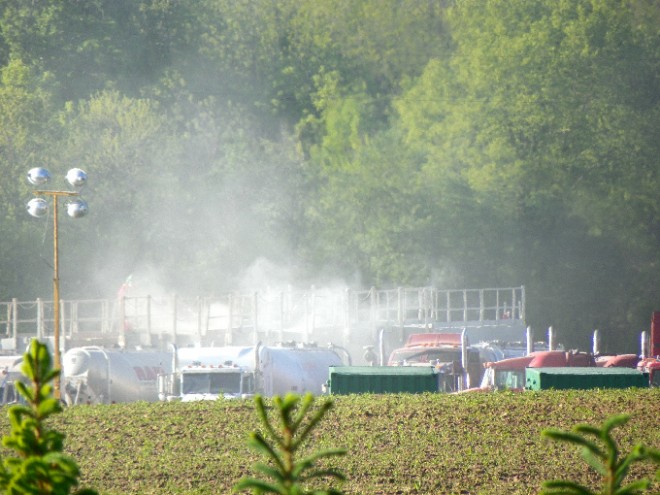
I went back to take another look at the dairy farm near us, now being fracked. The area was covered with heavy equipment. A few employees outfitted in fire retardant suits, masks, and hard hats worked in the distance. The quiet morning was filled with noise. Gray dust rose in the air and my throat burned.
When I set out to find out all I could about fracking I didn’t anticipate such disturbing information. I couldn’t have known fracking would soon intrude on our lives. I recently learned that fracking leases have been signed within sight of us to the west, north, and south. I’m concerned about our land where our cows graze and our chickens scratch. I’m concerned about my family’s health. And I’m wondering if you’re concerned too.
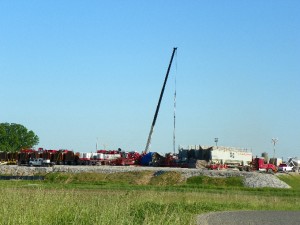
This is what fracking looks like. (Image:fafaohio.org)
Does the net affect our memories? Yes, but maybe not the way we think it does.
My sister and I were talking on the phone about one of the family trips we took as children. Our schoolteacher father and our stay-at-home mother hitched a tiny travel trailer up to the car to take their children to as many educational sites as possible each summer. That they managed months-long trips with two often squabbly girls and our toddler brother was remarkable. That they kept to a necessarily minuscule budget, even more so. They did this by never once buying prepared food of any kind. Every day at lunchtime we ate sandwiches on store brand white bread washed down with not-too-cold fruit drink, then got back in the car to keep driving. My mother cobbled together every evening meal using two aluminum pans, washing those pans and our plastic plates in a shoebox-sized sink. To me, an ungrateful and hermit-y little girl prone to motion sickness, these trips were a sort of educational hell.
Thankfully, one of our stops was in St. Louis to visit with my father’s only brother and his family. After weeks in a cramped trailer and even more cramped car, it was wonderful to spend the night sleeping in a roomy basement with cousins we hadn’t seen in years. We were even allowed to babysit ourselves while our parents went out to a restaurant. The adults brought us a rare treat, McDonalds, and we stayed up late talking and laughing. We showed our cousins how to draw grids on notebook paper to play Battleship. They showed us new card games. The next morning our aunt purchased some kind of St. Louis specialty for breakfast. Growing up in a household where doughnuts and store-bought cakes never crossed the threshold, this was unimaginable luxury. My sister and I remembered the sweet sticky coffee cake but not its unusual name.
After I got off the phone with her I got online to look it up. I got waylaid by flood warnings for St. Louis, so I checked maps to see if the water was rising by my uncle’s house. Then I was distracted by an article about pharmaceutical residue found in waterways. And of course I got sidelined by emails with editing questions, new article deadlines, some G chats that pleasantly used up too much time. Totally forgot my initial quest.
The next morning I saw the note I’d scribbled while talking to my sister. This time I vowed to focus for the few seconds necessary to Google it. I found the name of the confection almost immediately. It’s called Gooey Butter. I fussed around reading about how the cake is based on a baker’s mistake made back in the 1930’s and how customers swear allegiance to specific variations sold by different stores in St. Louis. I even looked at a few images, although none of them looked nearly as enticing as the cake I remember. Then I scrolled over to recipes. I was disappointed to note that nearly every one started with a yellow cake mix. I closed those screens sadly. I meant to email my sister the name of the cake but I’m pretty sure I instantly got caught up in the time flush that happens online. Probably never got around to it.
I realize with uncomfortable clarity that slurping up information online does little to deepen our experiences. It would have been better to leave the cake unnamed in our memories, held on unfamiliar plates as we clustered around a vinyl tablecloth listening to our aunt say, “You’ve never had anything like it” while we tried the first sweet bite.
I succeeded in finding links to scratch recipes. Here’s the cream cheese version and the non-cream cheese version. I made the cream cheese version for my family, marginally healthier with organic ingredients. And if you ask someone who hails from St. Louis, be careful to avoid expressing your Gooey Butter preferences. Chances are, theirs are much more fervent.
Today’s kids sit more than ever. Babies spend hours confined in car seats and carriers rather than crawling, toddling, or being carried. As they get older their days are often heavily scheduled between educational activities and organized events. Children have 35 percent less time for free play than they did a generation ago, and that’s before factoring in distractions like TV or video games.
Left to their own devices, children move. They hold hands and whirl in a circle till they fall down laughing. They beg to take part in interesting tasks with adults. They want to face challenges and try again after making mistakes. They climb, dig, and run. When they’re tired they like to be rocked or snuggled. According to the authors of A Moving Child Is A Learning Child, stifling these full body needs actually impairs their ability to learn.
Large muscle activities like climbing, running, lifting, carrying, rolling, jumping, throwing, and balancing not only build strength and coordination, they are also critical for reading and writing readiness since they develop proximal muscles (including trunk and upper arms). This in turn helps develop distal muscles in hands and fingers. Efficient coordination of large muscles progresses to the elbow, then wrist, then hand — making writing and drawing possible.
We know that our little ones walk and talk on their own timetables. No rewards or punishments are necessary to “teach” them. Yet children are expected to read, write and spell starting at five and six years old as if they develop the same way at the same time. Academics are pushed on young children with the assumption this will make them better students. This approach is not only unnecessary, it may be contributing to problems such as learning disorders, attention deficits, and long term stress.
Studies contrasting reading instruction at age five compared to instruction at age seven find earlier lessons may damage reading development. By the time children reach the age of 11, students who were instructed earlier show poorer text comprehension and less positive attitudes toward reading than children whose instruction started later.
Children pushed to read early (not those who naturally pick it up) tend to rely on right brain processes because that area matures more quickly. These early readers are likely to guess at unknown words using clues such as appearance, context, beginning and ending letters. Their main tactic is memorizing sight words. These are valuable methods but not a balanced approach to reading. Such children may quickly tire after reading short passages or read smoothly but have difficulty deriving meaning from what they read. The procedure they use to decode words can make the content hard to comprehend. These reading problems can persist.
On the other hand, children benefit when they learn to read naturally or are taught later. That’s because, as the left brain matures and the pathway between both hemispheres develops, it becomes easier for them to sound out words, to visualize meanings, and mentally tinker with abstractions. They memorize short sight words but sound out longer words, an approach that is less taxing. As they incorporate more words into their reading vocabulary they more easily picture and understand what they are reading.
In order for children to read, write and spell they must be developmentally ready. Some are ready at the age of four or five, some not for many years later. This readiness includes complex neurological pathways and kinesthetic awareness. It includes the proprioceptive sense developed through sensory receptors in the muscles, joints, and tendons: a form of maturation essential for a physical sense of self (even essential for learning how to modulate one’s voice and to hold objects carefully).
Such readiness isn’t created by workbooks or computer programs. It’s the result of brain maturation as well as rich experiences found in bodily sensation and movement.
These experiences happen as children play and work, particularly in ways that cross the midline. They includes expansive movements such as climbing, jumping, digging, swimming, playing hopscotch and catch, riding bikes, sweeping, running. They also include fine movements such as chopping vegetables, drawing, building, playing rhyming and clapping games, using scissors, and playing in sand. And of course there’s the essential growth that comes from snuggling, listening to stories, singing, trying new tastes, enjoying make believe. Children are drawn to such experiences. Without these bodily experiences, warns pediatric occupational therapist Angela Hanscom, they won’t have a strong foundation for learning. (Find out more in her book Balanced and Barefoot: How Unrestricted Outdoor Play Makes for Strong, Confident, and Capable Children.)
These activities stimulate the child’s brain to develop new neural pathways. Such activities also build confidence, smooth sensory processing, and create a bank of direct experience that helps the child visualize abstract concepts. Well-intended adults may think a good use of a rainy afternoon is a long car ride to an educational exhibit. A young child is likely to derive more developmental value (and fun) from stomping in puddles and digging in mud followed by play time in the tub.
There are many other factors contributing to reading readiness. Perhaps most important is a supportive family life where play, reading, and conversation are an enjoyable part of each day. But it helps to remember that young children want to participate in the purposeful work of making meals, fixing what’s broken, and planting the garden. They also need free time without the built-in entertainment of specialized toys, television, or video games. Their development is cued to movement. These bodily experiences prepare children for the magic found when shapes become words, words become stories, and they become readers.
His name was Vincent. He may have entered Pine Elementary School when we were both in 5th grade or may have been in my classes all along, but that spring he moved directly to the center of my awareness. He had silky black hair that fell low over astonishingly blue eyes. Unlike other grubby, snickering elementary school boys he was quiet and attentive.
It was probably no coincidence that I fell for Vincent soon after hearing Don McLean’s classic American Piealbum. It was his song about Vincent Van Gogh that captivated me. The lyrics told of a misunderstood visionary, a man with “eyes of China blue” whose soul was too beautiful for an uncaring world.
Although I’d never really paid attention to boys before, somehow I merged the intensity of those words with a look I was sure I saw in Vincent’s eyes. My girlfriends claimed to have crushes all the time over celebrities. The symptoms of their crushes included shrieking and silliness. I had none of these signs.
Once, as the teacher told us to line up at the door for music class, I found myself standing behind Vincent. I was sure he was aware of my presence. There could be no other explanation for the sudden frisson between us. Surely his skin prickled and his breath deepened as mine did. I wanted to touch his dark hair. I wanted him to turn and smile at me with causal ease even though I knew that was not possible at school. The boys’ loud obliviousness and the girls’ sharp watchfulness kept any such thing from happening. Boys and girls were friends only in books. Together they wandered moors or solved crimes or dreamed up new inventions. They talked openly and sometimes held hands. I wanted that with a longing more intense than I’d ever known.
Vincent kept me awake at night. His reserved nature made it easy to develop idealized concepts about him. I decided that he was smart and kind. I imagined that he was secretly drawn to me, but too shy to look my way. As I lay in bed, sleepless, I felt the injustice of being eleven years old. Too young to have love taken seriously, too young for anything.
Yet I felt old. Sorrows I’d carried for years became more intense because I’d lost the childhood distraction of play. I was on the verge of adolescence without sports or hobbies to keep me busy. All I had was this secret love for a boy named Vincent.
Over summer vacation I painted my toenails, rode my bike, tried to write poetry, and wondered if God existed. What kept me awake now was worry over how I might make myself pretty enough for Vincent. But I was also dreading the prospect that he might reveal himself to be something less that the person I’d imagined.
Vincent didn’t come back to school for sixth grade. No one knew where he’d gone. That made him, in my mind, more mysteriously alluring than ever. Sometimes at night I opened my bedroom window to breathe in the night air and look at stars. I hoped he might be at his own window. I no longer ached to hold his hand, I only wanted him to be happy.
I can still easily picture Vincent’s face even if I’ve forgotten his last name. My secret love for him taught me the first gentle lesson in becoming a woman. Unrequited love isn’t always painful. Sometimes it’s as tender as a moment never shared with a beautiful blue-eyed boy.


 by Stuart Brown and Christopher Vaughan






 . This concept is now being called the “Goldilocks effect.” According to a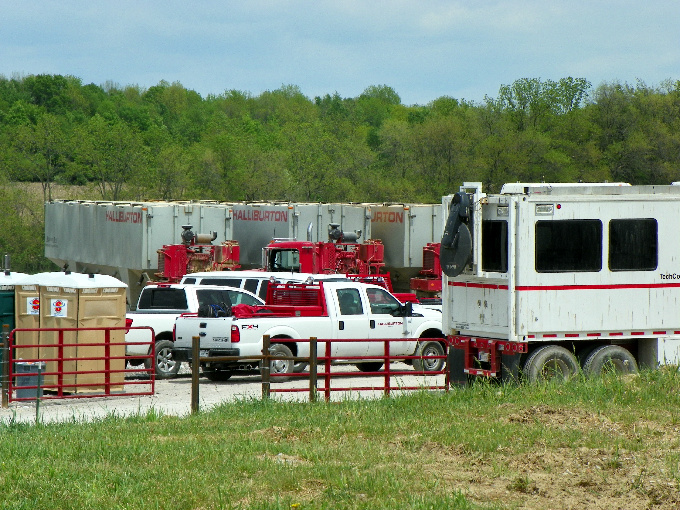





 album. It was his song about Vincent Van Gogh that captivated me. The lyrics told of a misunderstood visionary, a man with “eyes of China blue” whose soul was too beautiful for an uncaring world.
 Laura Grace Weldon