Pride Goes Before Tiny Bite Marks

prideful parents, mom's downfall, don't take credit for your kids, my child bites,

I don’t take credit for my children’s many accomplishments. They are their own remarkable people.

As a new mother I didn’t have this quite figured out. Yes, I knew that babies arrive on this planet with all sorts of traits wired in. I knew it’s up to us to gently nurture them, shelter them from harm (including the damage cynicism can do), allow them to take on challenges, help them learn to trust themselves, and let learning unfold in delight.

But I had a few early years when I thought, probably with obnoxious smugness, that my wonderful parenting had something to do with how well my kids were turning out. They were very young and so was I.

My oldest, a boy, was thoughtful and clever. He liked to take my face between his little hands and call me every superlative he could think of like“dear, sweet, wonderful Mama. (Isn’t this positively swoonable?) He rescued insects from the sidewalk, telling them “go in peace little brother,” a line he picked up from one of his favorite picture books. When his father and I tried to talk over our little one’s head about issues we thought he shouldn’t hear, we used Shakespearean language to obscure our meaning. We had to stop, because our toddler began regularly using words like “doth” and “whence.”  What made things work fascinated this little boy, from the bones in our bodies to the engine in our cars, and he insisted on learning about them.

My next child, a daughter, was assertive and talented. She drew, danced, and sang made-up songs of such pure wonder that, I kid you not, birds clustered in trees near her. The force of personality in that tiny girl led us all to laugh at her improbable jokes and enter into her complicated realms of make-believe. Born into a home without pets, her drive to be close to animals was so intense that she kept trying to make worms her friends. Entirely due to her persistence we ended up with several pets by the time she was three.

Although our beautiful little children had medical problems, we had money problems, and other crises kept popping up I felt as if I lived in paradise each day. There’s something remarkable about seeing the world anew through the eyes of the planet’s most recent inhabitants. It’s like using an awe-shaped lens.

But I still had a lot to learn about parenting.

I recall being quietly horrified at a Le Leche League meeting when one toddler bit another. I thought about it for days, wondering what parenting might create such an impulsive child. All the parenting books I read, all the non-violence courses I taught, assured me there was a right way. Of course my comeuppance would arrive.

My third child was born soon after. This endearing, curious, and constantly cheerful little boy possessed relentless energy. Evidence? I’ve got evidence.

  • By the time he was 14 months old we had to twine rope around all the chairs, lashing them to the table between meals, otherwise this diapered chap would drag a chair across the room to climb on top of furniture in the few seconds it took me to fill a teakettle.
  • Before he could say more than a few words he’d learned to slide open our windows, unclip the safety latches on the screens, and toss the screens to the ground. 
  • He liked to grab the hand vacuum for experiments on his sister’s hair, houseplants, and other normally non-suckable items.
  • He watched with fascination as drips from his sippy cup fell into heat vents, the hamster cage, the pile of laundry I was folding.
  • He liked to take off all his clothes and climb on the windowsill facing the street, hooting like a giddy chimpanzee as he danced in naked glee.
  • We had no idea he could climb out of his crib till the evening he opened all the wrapped Christmas presents I had hidden in my room (keeping them safe from him) while we thought he was in bed. The look of complete joy on his face nearly made up for the hours of work it took me to rewrap.

I found myself making up new rules I never thought I’d utter, like:

“I know throwing is faster but we carry things down the stairs.”

We never run with straws up our noses.”

“Don’t poop in Daddy’s hat!”

He became a little more civilized by the time he was three, but not, as you might imagine, before he bit a few children.

Utterly besotted by the bright-eyed charm and endless curiosity of this dear little boy, I never suspected the labels doctors and schools so easily affix on non-conformist kids might be slapped on my child.  I never realized how much he would teach me about what real motivation and learning look like. And I never imagined how much he’d show me about what it means to pursue success on one’s own terms.

Today he is one accomplished young man, in part because he continues to see the world through an awe-shaped lens. And I am still learning from the four remarkable people who came to this world as my children.

38 Unexpected Ways To Revel In Snail Mail

literacy skills, mail art, mail exchanges, snail mail fun,

The Force is strong with snail mail. (Image: CC by 2.0 Wikimedia Kev pittsburgh,pa)

Most of us don’t get anything interesting in the mail. Opening a personal letter seems like a pleasure from another era, irrelevant as a starched collar. Lets reclaim that experience. (The letter, not the collar.)

But first a rant. Here in the U.S. our postal service is often described as inefficient and unprofitable. I beg to differ. When I mail a letter in Ohio, it’s often delivered in Boston or Denver the next afternoon. I’ve mailed plenty of letters to distant countries. They show up in a week, tops. A few ounces of paper arrives in the one place in the world I want it to go, all for less than a buck. That’s pretty impressive. And the post office lets me mail unwrapped shovels too (more on that later).

Unprofitable? That’s not the real issue, unless you count the postal system having to pre-fund it’s retirement system 70-some years in advance. Name a company that can do that and stay in business.

I’m all about going postal. Sending and receiving mail helps us slow down, savoring time in a way that’s often missed in our terabyte-speed lives. Here are some ways you can make snail mail a pleasure.

Mail something unwrapped.

1. Try mailing a full-sized paintbrush, a basketball, a flip flop. All you need is a legible address and the correct postage. You might feel a little silly standing in line at the post office with an address-adorned plastic dinosaur, but it’ll be worth the look on your recipient’s face. I’ve mailed all sorts of silly things to a friend, mostly in response to oddities she mails to me. The strangest thing I’ve sent was a two foot metal shovel with a wooden handle. I used a permanent marker to write a note to her on the handle and the address on the metal part. It got there just fine.

2. For more ideas on what you can send through the mail, check out the Pinterest board 13 ounces or less. Check USPS regulations on what cannot be sent by mail.

Investigate the peculiar history of unwrapped mail.

3. In 1914, five-year-old Charlotte May Pierstorff was sent via U.S. mail as a package to visit her grandparents. It was the only way her parents could afford the trip. My kids and I learned about her journey from the picture book, Mailing May, by Michael O. Tunnell. She’s not the only person to be sent as cargo.

4. The most inspiring example is Henry Box Brown, who in 1849 was enslaved in Virginia. Using his savings to pay for the clandestine delivery, he had himself mailed to an abolitionist in Philadelphia. The trip took 27 hours, much of it upside down despite “this side up” instructions on the box.

5. The quirkiest unwrapped mail history I’ve run across involves W. Reginald Bray. In 1898 this British accountant began to send all sorts of unwrapped objects via mail. That included, but wasn’t limited to, a rabbit skull, a bowler hat, a turnip, his Irish terrier, and a bicycle punk. He also mailed himself, twice. He liked to test the logic of postal employees by mailing cards with addresses written as puzzles or clues. You can find out more about Bray in, The Englishman who Posted Himself and Other Curious Objects by John Tingey.

Get back in the habit of writing letters.

6. Send a letter to your great aunt or a former neighbor.

7. Write letters to deployed service members.

8. A mailed letter has a greater impact on your elected officials than calls or emails, so if an issue is troubling you take the time to write out your concerns. Only a tiny fraction of the country’s citizens have ever done this.

9. Write to an author (his or her publishing house will forward your letter).

10. Write to a business. My son once wrote to a pen company to settle a bet he had with me. He said my habit of leaving pens uncapped  would dry them out. He not only got a response confirming that he was correct, but the pen company’s PR person sent eight different pens for him to enjoy as well as an admonition to keep after his pen-wrecking mother. For other ways to inspire kids (or the kid in you) to write letters, check out any of Letters from a Nut books by Ted Nancy.

11. Groups of kids (classes, scouts, homeschool groups) can participate in letter exchanges with Peace Corps volunteers through the Coverdell World Wise Global Connections correspondence program and with long distance truckers via Trucker Buddy.

12. Find a snail mail correspondent through The Letter Exchange.

Make your own envelope out of something unexpected.

13. Use a leftover scrap of wrapping paper, a torn out magazine page, a file folder scribbled with equations, an old map, whatever you’d like.The simplest way is to pull apart an envelope to use as a template, sealing your new envelope with a glue stick once you’ve popped a letter inside. For more detailed instructions, head over to Instructables.

14. If you don’t want to seal your one-of-a-kind envelope with ordinary tape or glue, make your own flavored envelope glue.

15. Or hide your letter from prying eyes using ancient techniques of letterlocking.   These are clever methods of tucking, folding, and sealing used before envelopes were invented. One version is called the “daggar-trap!” More about that here.

Let your stamp make a statement.

16. There are amazing USPS stamps out there reflecting practically every interest, but they don’t stick around (stick, hah) very long. Every time I go to the post office I check to see what they’ve got available. No flag stamps for me. I’m particularly fond of stamps commemorating nature, science, and the arts.

17. You can also make your own customized postage. Our cows’ faces could be stamps, the smiling cactus your kid drew could be stamps. USPS authorized vendors include stamps.compictureitpostage.com, and zazzle.com.

Send postcards, get postcards.

18. Register with Postcrossing. When you send a postcard you’ll receive a postcard back from another participant anywhere in the world. So far, 16 million Postcrossing postcards have been exchanged.

19. To set up a specific postcard exchange (or other snail mail swaps) put up a request on Swap-Bot.

20. When you’re out, even on a day trip, encourage young children to mail postcards to themselves or their siblings. Just a quick sentence helps establish the day as memorable (and reinforces literacy skills). It’s also fun when that postcard arrives at your home in a day or two.

Get involved with or instigate a mail exchange.

21. I love art exchanges. I’ve participated in them on and off over the years, writing and decorating a page in a journal before sending it along to the next person or contributing to themed art challenges. My favorite was a Barbie art challenge. I glued a Barbie’s long hair into stiff twisting strands, gave her some theatening-looking facial features, and mounted her disembodied head into a tiny cardboard replica of a TV set with a “Medusa” remote. Find mail art calls through the International Union of Mail-Artists as well as Mail Art Projects.

22. Propose a mail exchange on a forum, blog, or other group. Make it themed, for example followers of a food blog send each other local foodstuffs. Fans of a particular musician send each other her lyrics re-imagined as comics or movie scenes.

23. All sorts of parenting lists host exchanges for kids who want a postcard from each state, a letter answering the same 10 questions from 100 participants, or favorite jokes. Suggest an exchange your kids would like.

Write to kids.

24. Chances are you know children who would adore getting mail addressed to them, either your own kids or kids in your extended family. Try for at least a once-a-year tradition like a note on the child’s birthday. Or more memorably, on a quirky day. How about a letter every year on Waffle Day (March 25) or Go Barefoot Day (June 1)?

25. Consider writing letters as if from an imaginary creature telling a series of tales, perhaps the adventures of a rollerblading squirrel and her sidekick, a jogging possum. No less than J.R.R. Tolkien wrote and illustrated a holiday letter for his children every year, arriving as if from the North Pole. See his drawings and text in Letters From Father Christmas

26. Write about your experiences when you were the child’s age.

27. Encourage return communication when you write to kids. At the very least, send them pre-addressed envelopes with stamps. You might write with a challenge. (Okay, a better one than the following example!) How about enclosing a length of string and the question: How many ways can you use this string?  Maybe offer a prize if they write back with more than a dozen ideas.  Or send response letters you’ve made with fill-in blanks to answer questions like:  This week I was surprised when ________. If I could go anywhere tomorrow I’d like to go _________. If I ran the country, the first thing I’d do is __________. Most people don’t know that ______.

28. Write to toddlers well before they can read. Print a simple sentence or two, replacing some nouns and verbs with rebus pictures. (If you’re not familiar with this, it means drawing a cat face instead of writing the word “cat.”) Add something to the envelope that the child might find interesting, like stickers.

Mail a simple thank you note.

29. Even a few lines of thanks come across differently when they’re written on paper and sent by mail. They seem more earnest and carry more meaning than the same few lines in a text or email. John Kralik discovered this when he was at the lowest point in his life and vowed to mail one thank you note every day for a year. Somehow, the effort of thanking others  brought unexpected returns to his life including business success, weight loss, and richer friendships. Read his story in A Simple Act of Gratitude: How Learning to Say Thank You Changed My Life.

30. Send a thank you to a favorite teacher, a former mentor, the local bookstore owner whose business you appreciate, someone who did you a kindness that you haven’t forgotten.

31. Consider writing a letter to someone you see everyday. Your child, your spouse, your co-worker. Tell them something you cherish about them or how they enrich your life.

When the situation calls for it, tell your truth with an un-thank you note.

32. Of course it’s best to handle negative situations immediately, but I’ve gotten some dire predictions from professionals that proved false over time. This surgery is absolutely necessary. You’ll have a maladjusted child if you homeschool. Ritalin is the only solution for that behavior.  It’s my contention that sending a respectful letter updating a doctor, teacher, or other expert is a kindness to the people they will advise in the future. There are ways to write a useful unthank you note. Chances are you won’t get a response but you’ll feel lighter.

33. If you want to tell the world the truth anonymously, mail a postcard to PostSecret. Keep up with these powerful, often artfully shared secrets via Facebook and check out the TED talk by founder Frank Warren.

  Use handwritten notes to advance professionally.

34. It seems counterintuitive when there are faster ways to communicate, but that’s the point. A letter to a business contact makes a lasting impression and does so at just the right speed.

35. The go-to guide for this is Business Notes: Writing Personal Notes That Build Professional Relationships by Florence Isaacs.


Inspire yourself to write letters by reading epistolary novels.

36. The Color Purple is told through letters and if you haven’t read it, this book isn’t to be missed. The Historian centers on a medieval book that opens clues to Dracula’s existence. The Guernsey Literary and Potato Peel Pie Society reveals memorable characters living on the island of Guernsey during the Nazi occupation. Any of the Griffin & Sabine books have intriguing tiny envelopes inside, giving the reader the sense of peeking at private correspondence.

37. For teens: Sorcery and Cecelia or The Enchanted Chocolate Pot, about two cousins drawn up in a alternative universe complete with romance, wit, and magical chocolate. Or for more romance plus intrigue at Australian high schools, two very popular books by the same author, Feeling Sorry for Celia and The Year of Secret Assignments

38. For young children: Help Me, Mr. Mutt!: Expert Answers for Dogs with People Problems as well as any of the many books starring the ever-clever letter-writing dog Ike LaRue.

For more motivation, spend time with those who exult in snail mail.

365 Letters

Mail Me Art

Letter Matters

Letters of Note

Always First Class: The Pleasure of Personal Letters

Respecting A Child’s Urge To Discover

theory of loose parts, kid innovators, creativity, learning is discovery, self-motivation,

misspenthopesxx.deviantart.com

The kids had a bunch of boards, some old nails, a hand saw, and a few hammers. They also had the two most important ingredients, the desire to make something and the freedom to do so.

They spent an afternoon planning their tree fort, enthusiastically arguing over whose plan was best. Their first few attempts failed spectacularly. They were undaunted, even bragged a little bit about the noise the boards made falling down. Several of them asked family members for advice. A few others paged through books and watched YouTube videos as they tried to figure out basic construction techniques. They started again, measuring more carefully as they built a frame. The process took much longer than they’d expected but they stuck with it. When they ran out of materials they scavenged tree lawns on garbage pickup day, dragging back pieces of wood. They got a few cuts and bruises. They were proud of those too. As they worked they talked about how they’d use their clubhouse. It didn’t occur to them how much they were learning.

Conventional thinking tells us that children benefit from the newest educational toys and electronics, lessons, coached sports, and other adult-designed, adult-led endeavors. Well-intentioned parents work hard to provide their children with these advantages. They do this because they believe that learning flows from instruction. By that logic the more avenues of adult-directed learning, the more their children will benefit.

But learning has much more to do with curiosity, exploration, problem solving, and innovation. For example, if baby encounters a toy she’s never seen before, she will investigate to figure out the best way or a number of different ways to use it. That is, unless an adult demonstrates how to use it. Then all those other potential avenues tend to close. Studies show that “helpful” adults providing direct instruction actually impede a child’s innate drive to creatively solve problems. This experience is repeated thousands of times a year in a child’s life, teaching her to look to authorities for solutions, and is known to shape more linear, less creative thinking That’s true of a baby as well as older children and teens.

Young people are also cued to ignore information that is too simple or too complex. Research indicates that people are drawn to learn from situations that are “just right” for them.  They may make plenty of mistakes along the way, just as babies fall when learning to walk, but facing those challenges and making those mistakes are pivotal steps in maturity.

It’s also well-known that a child’s natural motivation tends to diminish in adult-led activities. Unless they’ve been raised on a steady diet of ready-made entertainment, children are naturally drawn to free play. They pretend, make up games, daydream, wonder, and launch their own projects. They are discovering not only the world around them but a rich inner life as well.

Of course adults are vital to young people’s lives. They provide safety, guidance, love, and much more. Kids know they can ask trusted adults for help or advice. They do so more eagerly when they recognize these adults won’t overwhelm them with information, quiz them on what they are learning, or take over. Adult responses simply need to stay in proportion to a young person’s request.

For an example of how powerful the drive to discover can be, let’s take a brief detour to two Ethiopian villages. These places may be rich in intangibles like family and tradition, but they are poor in every other way. The illiteracy rate is practically 100 percent. There aren’t even written words around for children to see: no books, no labels on packaged foods, no street signs. That’s where the One Laptop Per Child (OLPC) project dropped off 1,000 tablet PCs with solar chargers. They weren’t handed out in a school, but to kids. The devices were pre-loaded with English-language operating systems and software that tracked how the tablets were used. The boxes were taped shut, with no instruction given at all.

In less than five minutes, one child (who’d never seen an on/off switch) powered up a system. The kids collaborated as they learned. Within a few days they were using 47 apps per child, within five months they were taking pictures. That took a while since the kids had to teach themselves to hack Android because the tablet cameras were mistakenly deactivated. The OLPC project is finding, all over the world, that kids are learning to read and speak in multiple languages. They easily search, program, and connect using inexpensive tablets. These kids are also teaching adults in their villages to read and use computers. They’re doing it without adult instruction.

So how did our fort-builders do? They had three sides framed and were working on the fourth when one boy’s father stepped in to help. His help may have been welcomed if they’d asked or if he simply contributed to the team effort, but this very well-meaning man decided the kids weren’t doing a good job. He took over, telling the kids to re-do some of their work and to build the rest of it according to his instructions. They did, but without much gusto. The resulting fort was more sturdily built yet they only used it a few times.

A year or so later they scavenged some boards from it to make a go-cart, and then another go-cart. This time they welcomed the help of another child’s grandfather who worked alongside them, learning together as the project unfolded. Their enthusiasm had returned.

Conduct Human Experiments of the Word Kind

bring back obscure words, get people to say strange words,

Human experimentation is banned unless the subjects are volunteers who have provided their informed consent. I believe the more casual research my son recently tried is exempt from those rules.

Let me explain.

Over the summer he worked with the grounds crew for a local park system. Being the sort who enjoys occupying his mind with more lively endeavors than weed whacking, he found other ways to keep himself amused. It may be helpful to point out that he and his siblings know many more words than they can pronounce. Their vocabularies are considered odd by others. Their dinner table discussions are, at best, eccentric. These tendencies can be almost entirely blamed one habit: avid reading.

He used this social liability as the basis for the human experimentation trials he conducted on his unwitting co-workers. The research took all summer. His subjects were not aware that they were part of the study until it was too late. The damage had been done. The results are now in. His experiment was a resounding success. I’m going to tell you how to conduct the same experiment.

Purpose. 

You, the experimenter, can bring  nearly extinct words and phrases back into regular usage. (See, you’re providing a service to an endangered vocabulary.)

Hypothesis. 

Employing an outmoded word or phrase on a daily basis will subtly promote its usefulness and stimulate others to add it to their ordinary lexicon. Yes, you get people to say funny words.

Materials.

1. You will need subjects. Rely on people you see everyday. Your children, co-workers, neighbors, and friends are excellent victims candidates for your experiment. The more the merrier. If you want to get all science-y, choose a group of people you interact with separately from all other groups. They will form your experimental group, while everyone else in your life will be your control group.

2. You will need a word or phrase you think shouldn’t have fallen out of popular usage. My son chose “dagnabbit,” one of the many oddly amusing words his grandfather used without a hint of irony. (That was a rich well indeed. Other possibilities from my paternal line included “holy mackerel,” “jehoshaphat,”  and “tarnation.”)

Method.

This is a casual experiment, best done over a long period of time. Begin using your chosen word or phrase regularly but naturally in your conversation. Pay no obvious heed to the word as it is adopted by others.

If people make a fuss over your use of the word, you might choose to insist it is back in style. Or you might use the opportunity to expand the experiment by promoting those subjects to fellow experimenters. Explain what you are doing in the most noble terms possible, then implore the person use his or her own outdated word or phrase in daily conversation. You’re simply enlarging this Human Experiments of the Word Kind study, surely to enhance the world as we know it.

Observation.

See how long it takes to firmly embed your word or phrase in other people’s regular discourse.

Conclusion. 

Have you gotten subjects to saying funny words? Then you’ve proven the hypothesis and done your part to save endangered terms. Another successful Human Experiment of the Word Kind!

Don’t Deprive Kids Of Risk

let kids take risks, don't overprotect,

jessicareeder’s flickr photostream

I publicly admitted to letting my teen take risks that would make most parents shudder. I’m not talking about the month long backpacking trip my 16-year-old took with his older brother and a friend. Nope, I’m talking about letting him meet up with middle-aged guys he talks to online.

The circumstances were perfectly suited to advancing his maturity as well as his skills. But to most parents, that decision marks me as a very bad mother. I’ll take that risk. Parenting has a lot to do with drawing the line between safe and unsafe. And then there’s that pesky line between good and bad.

It found it easier to see absolutes when my kids were babies. Bottle or breast, free play or playpen, guiding or scolding. The choices seemed easy. As they got older I didn’t lose my cherished parenting philosophies and obnoxiously healthy dietary scruples, but I did relax into the gray area. Some would say I’ve gotten too relaxed.

Every day I watch as parents pile their cars with their darling backpack-laden children, then transport them all the way to the end of the driveway where they sit, engines idling, until the school bus arrives. The reverse process takes place in the afternoon. These kids are spared more than the exercise required to get from house to curb. Presumably they’re also kept safe from potential child abduction. I don’t know if this is the case in your neighborhood but it’s a standard practice around here, even though I live in a rural township so small that it doesn’t have a single traffic light. (It’s rumored we may get lines painted on the streets.)

Despite the pastoral beauty of our area, kids rarely play outside. Clearly their parents are quite a bit more cautious than I am. Apparently this is a major trend. With the very best intentions kids are kept indoorswatched closely, even monitored. But why?

According to How to Live Dangerously by Warwick Cairns, “stranger danger” is so vastly overblown that you’d have to leave your child outside (statistically speaking) for about 500,000 years before he or she would be abducted by a stranger.

Violence against kids has markedly decreased and the overall crime rate continues to plummet. A teen is three times safer today than a teen in 1979. Sure, there was no Internet in the 70’s but online, the real danger to kids tends to be peer harassment. A larger danger? Kids who have no experience with real challenges.

Kids require escalating responsibility as well as escalating risk in order to grow toward a healthy adulthood. The common practice of delaying risk (and often responsibility as well) stems from the best motivations: love, concern for their safety, interest in staying closely involved. But today’s highly cautious approach to parenting actually inhibits a young person’s healthy development, according to Too Safe for Their Own Good: How Risk and Responsibility Help Teens Thrive by resilience expert Michael Ungar. It can result in young people who are overly anxious or who take unnecessarily dangerous risks. It can also leave them unprepared for adulthood.
The decisions I make for my family probably aren’t the ones you make for yours. I give my kids the go-ahead to build spud cannons in the name of science but I wouldn’t dream of giving them non-organic celery. I encourage them to join online special interest forums but abhor movies with gratuitous violence. It’s not easy to keep looking at where we draw the line, but just like you, I’ll risk anything for my kids.

We Don’t Need No Age Segregation

open-source teen learning, active learning, teen unschooling,

My teenaged son just spent the day with middle-aged guys he met online.

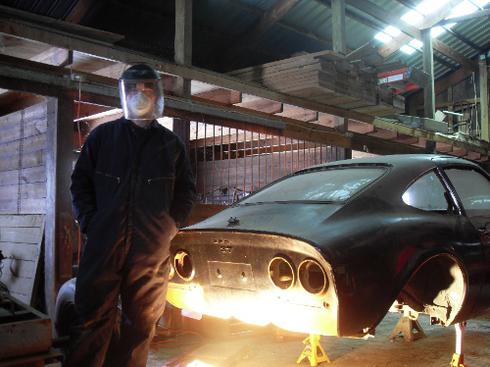
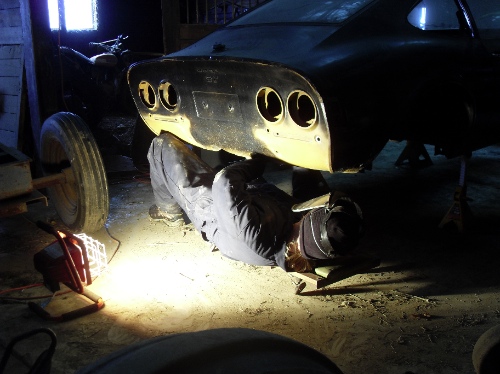
Let me explain. Before he could drive, my son earned enough money shoveling out horse stalls to buy a 1973 Opel GT. Or what was left of one.

The car sits out back in a dark barn, its classic little outline like a rough sketch waiting for functional automotive details to be filled in again. He is restoring it himself, but not alone. He’s in touch with an online community of automotive enthusiasts from around the world. They eagerly share experiences and resources on forums. They also boast, complain, and talk about their interests just as any friends do.

My son and his father have met some of these folks at auto meets and car shows. When my son discovered an Opel club not far from our family farm he was invited to join. Today he and his older brother drove out for a day-long gathering. Although my boys were the youngest by decades they enjoyed an open-hearted welcome.

Yes, I realize there are significant concerns about teens talking online with adults, let alone meeting them. I try to keep those concerns in perspective. Studies of online behavior by youth indicate the biggest risk they face is peer harassment, not sexual predation. Today’s young people are much more overprotected than previous generations even though violence against kids has markedly decreased and the overall crime rate continues to plummet. Overly cautious, restrictive parenting practices actually inhibit a teen’s growth toward maturity and responsibility. So I watch, ask questions, and recognize that my son benefits from online friends and mentors.

It’s a pivotal coming of age experience to be accepted by elders one admires. Until that time it’s hard to feel like an adult. These experiences are frequently depicted in movies, but children and teens in our culture are almost entirely segregated from meaningful and regular involvement with adults.

These days kids spend their formative years with age mates in day care, school, sports, and other activities. So their adult role models are largely those whose main function is to manage children. This subverts the way youth have learned and matured throughout human history. Children are drawn to watch, imitate, and gain useful skills. They want to see how people they admire handle a crisis, build a business, compose music, repair a car, and fall in love. Separate kids from purposeful, interesting interaction with adults and they have little to guide them other than their peers and the entertainment industry. That’s because our species learns by example. Ask any child development expert, neuroscientist, or great grandparent.

There are plenty of educational initiatives to bridge this gap, particularly for teens. These programs connect students with mentors or bring community members into schools to talk about their careers. While these efforts are admirable, such stopgap measures aren’t the way young people learn best. They need to spend appreciable time with people of all ages—observing, conversing, and taking on responsibility. Real responsibilities, real relationships.

Because my kids are homeschooled they’ve have more opportunities (and a lot more time) to hang out with interesting adults. My daughter volunteers for hours each week alongside a woman who rehabilitates birds of prey. Another of my sons has played bagpipes for years with an 80-something gent who once served as a Pipe Major for Scotland’s Black Watch. The age range of my kids’ friends spans decades. Natural mentors such as these are a rich source of authentic experience. And they’re in every community. It’s not hard to find them.

Along with other homeschooling families, my kids have also taken a close look at the workaday adult world. The owner of a steel drum company explained the history and science of drum-making, talked about the rewards and risks of entrepreneurship, then encouraged us to play the drums displayed there. An engineer took us through his testing facility and showed us how materials are developed for the space program. We’ve spent days with potters, woodworkers, architects, chemists, archeologists, stagehands, chefs, paramedics and others.

People rarely turn us down when we request the chance to learn from them. Perhaps the desire to pass along wisdom and experience to the next generation is encoded in our genes. Age segregation goes both ways–adults are also separated from most youth in our society. After an afternoon together we’ve gotten the same feedback again and again. These adults say they had no idea the work they do would be so interesting to kids. They marvel at the questions asked, observations made, and ideas proffered by youth that the media portrays as disaffected or worse. They shake hands with young people who a few hours ago were strangers and say, “Come back in a few years, I’d like to have you intern here,” or “We could use an engineer who thinks the way you do. Think about going into the field,” or “Thanks for coming. I’ve never had this much fun at work.”

So today my teenaged son hung out with fellow Opel aficionados. They trust he will drive his car out of the dark barn and into the sunlight soon. It will be a shared accomplishment, the kind of thing that happens all the time when young people aren’t separated from the wider community.

unschooling teens, homeschooling teens, teens free to learn,

I wrote this piece nearly two years ago for Shareable.com. Since then this son of mine has become a mechanical engineering student at a private college. His fellow classmates brought with them years of advanced placement math and science classes. The advantage he brought? Lots of hands-on experience, an active approach to learning, and insatiable curiosity. He’s at the top of his class.   

Educating Too Early

A1

My daughter started preschool a month before she turned three. She was too young. The facility was wonderful, the teachers kind, the activities entirely age-appropriate but she resisted the structure. It didn’t make sense to her that she was asked to learn color words she already knew. Or that she had to perform with her classmates at the annual holiday show after she’d already practiced the song and movement pieces well beyond her boredom tolerance. She did what she was told but she wasn’t happy.

I know why I was eager for her to start. Pregnant with her brother, I felt nauseated all the time and hoped preschool would feed her active mind. Or perhaps because she had been chronically ill nearly all of her first three years. Now she was finally better and I suspect, unconsciously, I signed her up to assure myself she was as healthy as any other little girl.

When I talked with her teachers about my child’s frustrations they emphasized how important it was to follow rules, even if she didn’t see the logic herself, because it prepared her to conform to many more rules in “real” school. That didn’t make sense to me either and we finally pulled her out of preschool.

Once she was a preschool dropout we went back to our ordinary, richly educational lives of chores and play. We played outside, hiked in the woods, made up songs, went to the library, visited friends and family, took trips to museums, snuggled, and read. She filled her free time with make-believe play as well as hours of drawing while listening to story tapes. If I had to do it over again, I’d have skipped preschool entirely. I’m not against the concept, just troubled by how much emphasis is placed on adult-led educational structure.

Take a look at promotional material for preschools in your area. Chances are they tout early math, pre-reading, and other academics. This approach sells.  Most people I know sign their children up at the age of two or three to attend specialized enrichment programs that claim to boost abilities in science, art, sports, music, or language. In addition, nearly everyone I know is sure their children benefit from a few hours each day using electronics that “teach.”

a1 (6)

Well-intentioned parents operate on a mindset that’s hard to dismiss in today’s society. They are convinced that learning flows from instruction. Logically then, early instruction will help maximize their child’s potential. But learning in young children (and perhaps at all ages) has much more to do with curiosity, exploration, and body-based activities. It has very little to do with structured activities, which may actually impair a child’s ability to set and reach goals independently.

Studies with four-year-olds show that, “Direct instruction really can limit young children’s learning.” Direct instruction also limits a child’s creativity, problem solving, and openness to ideas beyond the situation at hand. This is true when the instruction comes from parents as well as teachers.

As Wendy S. Grolnick explains in The Psychology of Parental Control: How Well-meant Parenting Backfires, research shows that rewards, praise, and evaluative comments actually undermine motivation and stifle learning in preschoolers as well as school-aged children. This is true when those actions come from parents or teachers.

Highly instructional preschool programs have been studied for years. Although they’re more popular than ever, the outcomes don’t hold up under scrutiny. 

a (1) (2)

Researcher Rebecca Marcon evaluated children in preschool and kindergarten programs falling within three categories: play based, academically oriented, and those that combined both approaches. Her study checked up on these students as they progressed through primary school. Students who had been in early academically oriented programs gradually declined, falling behind their peers. Children who’d been in a combined approach program also showed achievement gaps. Who benefited the most? Children who’d been in play-based programs. Their academic success was greater than those in the other two types of programs and continued to gain. Marcon concluded,

Children’s later school success appears to be enhanced by more active, child-initiated learning experiences. Their long-term progress may be slowed by overly academic preschool experiences that introduce formalized learning experiences too early for most children’s developmental status. Pushing children too soon may actually backfire when children move into the later elementary school grades and are required to think more independently and take on greater responsibility for their own learning process.

Another study confirmed that future success has to do with the kinds of abilities gained  through child-initiated, exploratory play. Compared to children in non-play-based preschool programs, the play-based group of children exhibited greater self-control, working memory, flexible thinking, and relational ability. These traits have more to do with academic success than testable abilities in math and reading, even more than IQ.

And when researchers  in the High/Scope study followed high-risk children who attended different preschool environments they found even more resounding results.  Some children were enrolled in an academic setting, others in a child-initiated play setting, and a third group in a preschool that balanced both approaches. By the middle grades, children from the play-oriented preschool were receiving the highest grades. They also showed the most social and emotional maturity.  Those who had attended the academic preschool lagged behind in a significant way— poorer social skills. The differences became more apparent as these children got older. By age fifteen, students from the academic preschool program showed twice as much delinquent activity as the other two groups. And in adulthood, former students of the play preschool and balanced preschool showed higher levels of success across a whole spectrum of variables. The academic group did not attain the same level of education as the play group and required more years of treatment for emotional impairment. They also faced more felony arrests than the other two groups.

And now a resounding new study (2022) is out. It followed children across Tennessee who had attended high quality pre-K programs staffed by teachers with bachelor’s degrees as well as early childhood certification, using the best available curriculum. These children were matched with those who did not attend such a program. The academic group initially performed better than the control group at kindergarten age, but by third grade they fell behind the control group in school. They were also more likely to be disciplined and to have a diagnosed learning disorder. By sixth grade the academic group was even more likely to have a diagnosed learning disorder and were also much more likely to have exhibited violent behavior at school.

a2

Today’s test heavy schools are burdening five-year-olds with a heavy load of academics. In 1998, 31 percent of kindergarten teachers studied believed students should learn to read in kindergarten. By 2010 that number had jumped to 80 percent. Play time, the arts, and recess had decreased in favor of worksheet and computer instruction. The study‘s co-author Daphna Bassok said, “We were surprised to see just how drastic the changes have been over a short period of time/ We expected to see changes on some of these dimensions but not nearly so systematically and not nearly of this magnitude.“

We know that free play, now so limited in the lives of most children, is actually essential for learning and character development. We also know that children learn more effectively when they’re the ones in charge of self-regulating. And we know loose parts play is far more valuable for a child’s development than adult structured activities.

My daughter mostly remembers the toy dinosaurs from preschool. I hope that pushing academics on toddlers itself becomes extinct.

a3

Additional resources

Free To Learn by Peter Gray

Reading Instruction in Kindergarten: Little to Gain, Much to Lose” summary of research by Alliance for Childhood

Balanced and Barefoot: How Unrestricted Outdoor Play Makes For Strong, Confident, and Capable Children  by Angela Hanscom

Play: How it Shapes the Brain, Opens the Imagination, and Invigorates the Soul by  Stuart Brown and Christopher Vaughan

Einstein Never Used Flashcards: How Our Children Really Learn–and Why They Need to Play More and Memorize Less by Roberta Golinkoff, Kathy Hirsh-Pasek, and Diane Eyer

The Power of Play: Learning What Comes Naturally by David Elkind

ADHD Meds Provide No Long-Term Benefits

no benefit to Ritalin, ADD drugs no long-term benefit, should I medicate my child's behavior,

Want to cause a ruckus? Criticize attention-deficit meds.

Over three million U.S. kids take these drugs. Parents may not be thrilled to dose their children but they are following expert advice.  They typically see results. And they don’t need to be judged.

But it helps to pay attention to what works for parents who don’t put or keep their kids on meds. My son was diagnosed with ADD when he was in first grade.  There was a great deal of pressure from his teacher to put him on medication. As many parents do, I struggled to find ways to alleviate the problem without drugs. We found significant improvement when we changed his diet but that wasn’t enough to make the school setting truly work for him. The way he learned best and the way he flourished simply didn’t fit in the strictures of the school environment. He wasn’t wired to sit still and pay attention for hours. Once we began homeschooling we discovered that without classroom and homework pressure, what appeared to be ADD symptoms largely disappeared.

The newest studies of attention-deficit disorder medications now indicate that the calming effect of these drugs don’t necessarily indicate that those who take them have any sort of “brain deficit.”  As L. Alan Sroufe, professor emeritus of psychology at the Universityof Minnesota’s Instituteof Child Development explains, such medications have a similar effect on all children as well as adults. “They enhance the ability to concentrate, especially on tasks that are not inherently interesting or when one is fatigued or bored, but they don’t improve broader learning abilities.”

Research shows the effect wanes in a few years without conferring any lasting benefit. Dr. Sroufe writes,

To date, no study has found any long-term benefit of attention-deficit medication on academic performance, peer relationships or behavior problems, the very things we would most want to improve.

While Dr. Sroute looks for a mental health answer, psychologist Bruce Levine looks to society. In a recent article he notes that rational responses to larger social conditions (depression due to economic crisis, for example) are being suppressed by medication rather than addressing underlying circumstances. In particular, he asserts that non-compliance with authority is labeled a mental health problem rather than a useful response. He writes,

Do we really want to diagnose and medicate everyone with “deficits in rule-governed behavior”?

Albert Einstein, as a youth, would have likely received an ADHD diagnosis, and maybe an ODD one as well.  Albert didn’t pay attention to his teachers, failed his college entrance examinations twice, and had difficulty holding jobs. However Einstein biographer Ronald Clark (Einstein: The Life and Times) asserts that Albert’s problems did not stem from attention deficits but rather from his hatred of authoritarian, Prussian discipline in his schools. Einstein said, “The teachers in the elementary school appeared to me like sergeants and in the Gymnasium the teachers were like lieutenants.” At age 13, Einstein read Kant’s difficult  Critique of Pure Reason— because he was interested in it Clark also tells us Einstein refused to prepare himself for his college admissions as a rebellion against his father’s “unbearable” path of a “practical profession.” After he did enter college, one professor told Einstein, “You have one fault; one can’t tell you anything.” The very characteristics of Einstein that upset authorities so much were exactly the ones that allowed him to excel.

This is a big issue. I am lucky I eluded being put on meds to treat the problems I had as a child. I wouldn’t give up those years of painful churning for anything. That’s exactly what formed me into a person with my particularly intense focus and purpose.

I think we need to widen our focus. The issue asks us to look at how today’s children are restricted in movement, have less time for free play, and are exposed to unnecessarily early academics.  It asks us to look at the quality of the air, water, food, and products in the lives of today’s children. It asks us to support all families as they are, recognizing that one-size-fits-all guidelines don’t embrace diverse ways of being. To me, particular hope lies in research showing that free time spent playing in natural settings significantly improved the behavior and focus of ADHD children. The more natural and wilderness-like the area, the greater the improvement.

Our wonderfully distractible, messy, impulsive children may be trying to tell us something.

For more answers beyond the prescription bottle, check out:

Ritalin Nation: Rapid-Fire Culture and the Transformation of Human Consciousness

The Gift of ADHD: How to Transform Your Child’s Problems into Strengths

Dreamers, Discoverers & Dynamos: How to Help the Child Who Is Bright, Bored and Having Problems in School (Formerly Titled ‘The Edison Trait’)

ADHD Without Drugs – A Guide to the Natural Care of Children with ADHD ~ By One of America’s Leading Integrative Pediatrician

Is This Your Child?

Healing ADD: The Breakthrough Program That Allows You to See and Heal the 6 Types of ADD

Observe The “Goldilocks Effect” In Action

 learning happens when it's "just right"

“Young children seem to recognize that knowledge is an essential shared resource, like air or water. They demand a fair share. They actively espouse the right to gain skill and comprehension in a way that’s necessary for them at the time. Often children seem to reject what they aren’t ready to learn, only to return to the same skill or concept later with ease. This is not only an expression of autonomy, it’s a clear indicator that each child is equipped with an learning guidance system of his or her own.”

I wrote these words two years ago in my book Free Range Learning. This concept is now being called the “Goldilocks effect.” According to a study published in the journal PLoS ONE, humans are cued to ignore information that is too simple or too complex. Instead we’re drawn to and best able learn from situations that are “just right.” It’s the educational equivalent of Goldilocks on a porridge-testing quest.

The study focused on how babies make sense of our complex world. For years researchers have noticed a contradiction. Sometimes babies prefer to look at familiar items, like a toy from home. Other times they prefer to look at unfamiliar items. Turns out this isn’t a contradiction at all. Babies self-regulate by choosing the amount of novelty and complexity that’s right for them at the time.

They also, according to the study, actively seek out the most reliable information and can predict what will happen next based on what they’ve seen. Babies are a great way to study human behavior. That’s because infants aren’t burdened with cultural and patterned responses. Babies indicate what all of us are like in our most basic form.

The Goldilocks effect has to do with learning at all ages. You are attracted to what holds just the right amount of challenge for you right now. Usually that means something that sparks your interest and holds it close to the edge of your abilities, encouraging you to push yourself to greater mastery. That’s the principle used to hold the player’s attention in video games. That’s what inspires artists, musicians, and athletes to ever greater accomplishments. That’s how kids who follow a fascination of their own tend to learn more than any prepared lesson could teach them.

How do we see this in action? By looking at children through the eyes of trust.

The little boy who’d rather stomp in muddy puddles after a rainstorm than attend story hour at the library may need that full sensory experience outdoors more than he needs, right now, to sit still in a group and listen quietly. He’d probably prefer hearing stories while sitting in a parent’s lap where he benefits from closeness and can ask questions as they occur to him.

The girl who prefers to draw pictures of animals and fairies rather than run outside to play with the neighborhood kids may need more time for quiet self-expression than other children. Her imaginative art fuels growth in all sorts of areas, one of which may be a sturdier sense of self that will help her interact more freely with others when she’s ready.

The teenager who drops out when she’s reached a high level of accomplishment in an area, say soccer or fencing or designing apps. What she’s learned in that field isn’t wasted. It’s taught her a whole range of skills and empowered her to move on. She may pursue other interests in what look like fits and starts of motivation. Or the learning situation that’s just right for her may look like boredom to others. She may need time to process, daydream, create, and grow from within before pushing ahead.

Children naturally focus on what they’re ready to take in and do their best to set aside the rest. Often what they set aside is exactly what adults push them to master. We call this stubbornness but really they show us, over and over, that human nature flourishes best without coercion. Efforts to structure learning too heavily are likely to fail (or more often, the student will fail) if it’s not understood that we’re all cued to learn in the ways best for us.