Before he was born, his mother decided her son would have no toys. Abandoned by the father, she was already a single parent. She made a living cleaning for other people. Most days she took the bus to affluent streets where children never seemed to play outside. As she vacuumed and scrubbed beautiful homes overfilled with possessions she paid close attention to what children did all day. Often they were gone at lessons, after school programs, or playdates. When they were home they usually sat staring at screens. Toys in their carefully decorated rooms appeared to be tossed around as if the small owners had no idea how to play, only how to root restlessly for entertainment.
She thought about it, talked to the oldest people she knew, and read everything she could. Then she informed anyone who cared to listen that her child would not have toys. Not a single purchased plaything.
Will (name changed) and his mother live in a small mobile home park. By most standards they are poor. Their income is well below the poverty line. They don’t have a TV or computer (although Will uses the computer at the library and watches the occasional TV program at babysitters’ homes). But their lives are rich in what matters. Together Will and his mom grow food on several shares of a community garden, bartering when they have extra produce. They make all their meals from scratch. These routines activate a whole array of learning opportunities for Will, quite naturally.
They are close to most of their neighbors in proximity as well as in friendliness. While his mother is working Will is cared for by several different seniors in their trailer park. He not only likes to help his mother garden, cook, and take care of their small home but he also likes to take part in helping his neighbors with small tasks. He carries groceries for certain ladies, helps an older gentleman with a birdhouse building hobby, and sometimes gets to assist another neighbor in automotive repairs. He gets a lot out of these meaningful tasks. Children long to take on real responsibility and make useful contributions. Giving them these opportunities promotes their development in important ways.
Sounds nice. But what about play?
When Will was a baby his mother made all sorts of toys. Most took no time at all. Food containers became stacking toys, a small water bottle with beans inside became a rattle, a sock stuffed with drier fuzz and tied in knots became a soft animal.
Will is now six years old. He plays as any child naturally does. He makes up games and turns all sorts of objects into toys. His mother saves money by not owning a car, so Will has commandeered a large portion of the shed that would normally be used as a garage. Mostly he uses it to stockpile his own resources. He has scrap wood, a few tools, and cans of nails. He likes to straighten bent nails for future projects, working carefully now that he recently discovered what smacking his fingers with a hammer feels like. Recently he found a discarded lawn mower tire, so he’s looking for three more tires to make a go-cart. In the evenings he likes to draw elaborate pictures of this upcoming project. He particularly enjoys playing in the soft dirt along the side of the shed where “robot men” he makes out of kitchen utensils use their potato peeler and wisk limbs to churn through the soil, leaving tracks as they clink. When he visits friends he happily plays with their toys, although he doesn’t always “get” that certain TV or movie-themed toys are limited to the plot-related storylines. So far he seems to have no urge to possess the same toys.
What about birthdays and holidays? Will’s mother does give him gifts. But she limits her gifts to useful items—crayons, clothes, tools, a compass. Each weekend her folk band practices at their mobile home. Will quickly mastered the harmonica and begged for time on the fiddle, so her big gift to him this year was a used child-sized fiddle. She urges the other adults in his life to gift him with experiences—a trip to the beach, a day of horseback riding, a visit to a museum. Out-of-town relatives now renew a children’s magazine subscription and send him regular snail mail letters, both of which are helping him learn to read with very little prompting.
Will’s childhood has a lot in common with the way children have learned and grown throughout history. As historian Howard Chudacoff notes in Children at Play: An American History, play is vital to development. It’s has everything to do with autonomy, exploration, imagination, and fun. It has very little to do with purchased playthings. In fact, structured programs and commercial toys actually tend to co-opt play.
Studies with rodents show those raised in enriched environments (toys and changing items in cage) have enhanced brain development compared to rats raised in a standard environment (plain cage, unchanging). We’ve misinterpreted these results. Rats don’t naturally live in boring, unchanging cages. They live in nature, which is by definition a challenging often constantly changing environment. In nature rats have far more complex lives than they ever might in a cage. Such an interesting life IS an enriched environment. It’s the same for children.
Sure there are devices that will “read” to a child. These are not more enriching than being read to by a responsive adult. And there are all sorts of adult-designed games. They’re not more fun or enticing than games kids make up on their own or with friends.
In fact, the overstimulation of blinking, beeping, passive entertainment isn’t beneficial for children. Joseph Chilton Pearce wrote in Evolution’s End: Claiming the Potential of Our Intelligence that the overload of television, electronics, and too many toys limits a child’s sensory awareness. Their brains and nervous systems accommodate intense bursts of sound, light, and color during their earliest years. Rather than developing the subtle awareness fostered by time spent in nature, in conversation, and in play they instead are wired to expect overstimulation. Without it, says Peace, they’re bored.
And yet, so many people are amused when tiny children are clearly pushed to the limits by a toy too overwhelming for them. (Every search for a video to illustrate this seems to think “baby scared by toy” is funny.)
The children Will’s mother cleans for, who are kept busy in adult-run programs and have access to electronic distractions, don’t have Will’s advantages. As he plays and innovates he’s actually promoting the kind of learning that translates to a lifetime of passionate interests. Studies show that children who are free to explore their interests without adult pressure and interference are more autonomous, eagerly pursuing excellence through healthy engagement rather than heavy-handed adult pressure.
Ask the oldest person you know to share some memories about play from his or her childhood. Chances are you’ll hear about pick-up games, handmade toys, and free time that spun long summer days into marvels of imagination. That’s what Will’s mother wants for her child.
His parents let him traipse around with his wagon on garbage collection day. He’d take home pieces of wood, carefully pulling out nails to store in a can, so he and his friends would have the necessary materials to build forts or go-carts. Occasionally he found small engines that he’d do his best to fix. No one intervened to tell him his pursuits weren’t safe, although he was expected to clean up any mess as well help around the house.
His neighbors didn’t mind having this kid appear whenever they did something interesting—fix a car, build a shed, tend a greenhouse full of plants, run a garage sale. He was eager to learn and even more eager to help, so they did what adults have done throughout time. They shooed him away occasionally but mostly they shared what they knew.
He made use of what he learned. By the time he was 12 or 13 years old, these neighbors let him take on their home and car repairs, recognizing he was able to do a more exacting job than they might have done themselves. He gained more than skills from the adults in his life. He may have been leaning over a car hood with Clyde, but he was also learning how to understand the function of each system by paying attention. It seemed he was only helping Mr. Christman with the heavy tasks of operated a greenhouse but he was also taking in something important about growing old with dignity. It appeared he was working alongside his grandfather but he was also seeing how reputation, honesty, and treating each person with respect builds a small business.
Because he developed richly rewarding relationships with people of all ages, relatives as well as neighbors, he had plenty of examples to draw on as he matured. He saw how different people handled decisions, disciplined their children, laughed off trouble, solved problems, stayed in love.
His experience was rare. It’s becoming rarer all the time.
Throughout nearly all of their childhood and teen years our kids are segregated in day care, school, sports, and other activities. Even when they benefit from the very best programs, if they’re restricted to the company of same-aged peers doing what adults consider educational and enriching they are deprived of the riches found through fully engaging in the wider world. This subverts the way youth have matured throughout human history, when children learned right in the context of family and community—freely able to watch, imitate, and foster relationships with people of all ages.
We put kids in an oddly uncomfortable position when most adults in their lives are focused on them. Children want to center themselves, not have adult attention centered on them. Kids long to model themselves after adults who are engaged in meaningful, interesting, and useful activities of their own. When their experience of adults is limited to those who are there to care for, educate, or entertain children (important callings but not all that adults can do) the dynamic is shifted. The age-old desire to gain mastery and take on responsibility, eagerly becoming a capable adult, doesn’t have the same pull.
There are plenty of educational initiatives to bridge this gap, particularly for teens. These programs connect students with mentors or bring community members into schools to talk about their careers. While these efforts are admirable, such stopgap measures aren’t the way young people learn best. They need to spend appreciable time with people of all ages—observing, conversing and taking on responsibility. Real responsibilities, real relationships.
The science of epigenetics shows that the choices we make today will resonate in the minds and bodies of our grandchildren.
How? Each of us has biochemical markers that signal our genes in response to input such as nutrients, toxins, even behavior. As a result potential gene expression is switched on or off.
Nucleosome Wikipedia
These epigenetic changes persist well after the original stimulus for change is gone. Some of them pass on through generations like biologic memories of what our ancestors ate and breathed, as well has how they felt about their experiences. This also means that our personal choices today can become a living inheritance sent on to those we won’t live to see.
As Duke University genetics researcher Randy Jirtle, Ph. D recently commented,
We can no longer argue whether genes or environment has a greater impact on our health and development, because both are inextricably linked. Each nutrient, each interaction, each experience can manifest itself through biochemical changes that ultimately dictate gene expression, whether at birth or 40 years down the road.
Image courtesy of corazondedios.deviantart.com
Much of the research about epigenetics correlates to earlier studies showing that parental stress has a negative and long-lasting effect on their children, often well into adulthood. That’s true of the effect of prenatal stress, parental stress during early childhood, parental depression, conflict in the home, unemployment, poverty, and homelessness. Epigenetics may, in part, explain the strong correlation between these stressors and resulting poor mental and physical health in the next generation.
But there’s good news too. Studies have shown that early nurturance can flip “dimmer switches” on genes related to stress, permanently shaping offspring to be calmer and better able to handle new situations. Healthier too.
Chances are good that I was born with genes predisposing me to anxiety or depression. My sorrowful grandmother nurtured my own mother as best she could despite very stressful circumstances. In turn, I was lovingly nurtured and well attached to my parents. As a result, these predispositions were more likely to be dimmed or switched off in me. I hope to carry on this legacy of positive epigenetic changes by gently parenting my children. Epigenetics show us that grandparents and parents can bless children to come (including foster children and adopted children) even if they don’t live to see those children.
As a society, we’ve known for a long time that serious parental stress leaves a legacy of pain into the next generation. Maybe the science of epigenetics will be enough to convince us that parental support and nurturance doesn’t just benefit the child. It also benefits society as a whole.
I don’t meditate at an ashram or study ancient tracts.
I do laundry.
I’ve found a certain peace in this mundane task. When my family cries out, “Where are you?” I answer from the laundry room, “I’m looking for the meaning of life.” (If I’m cooking, I answer, “Saving the world.”) I used to say this sarcastically.
Sure, sometimes I resent the messy parts of motherhood. I was raised to believe I could be anything I wanted to be. Right now I want to be right where I am, but when I’m gripping a pair of mud-encrusted socks my United Nations career aspirations do provide a stark contrast.
Wisdom gathers slowly. Very gradually I’ve learned that meaning can be encountered in everyday tasks. Even laundering. Gratitude comes to mind first. Conveniences do the real work. Right now my washing machine is purposefully churning away dirt and worse with my homemade laundry soap. Being clean is a luxury I take for granted. I don’t have to haul and boil water, then scrub clothes with caustic lye soap. Generations before me labored this way. What’s saved is the most precious resource, time. It’s up to me to honor that resource by the way I spend my time elsewhere.
I’ve found that doing for others without expecting notice, let alone acclaim, also deepens my perspective. The simple physical act of sorting and folding causes my thoughts to drift effortlessly to my family. As our children grow, laundry tasks change. Booties give way to socks. Diapers to undies. We tuck matching outfits together for one child, clean away evidence of bedwetting for another, soak out menstrual blood for the newest of women. Their hand-me-downs remind us cousins and friends. The fibers themselves hold the bodies we love.
We may loathe inside out shirts and socks wadded into tight fists, but turning them right side out again is a simple gesture of kindness. The cycle of reciprocity may be largely invisible when children are small but my children are old enough to be of real service around our home and farm. Yes, I unfold their shirts but they bring in the eggs, stack firewood, wash the floors, and shovel manure. It’s a good trade off.
Sometimes symbolism pops up as a teacher. My underwear works its way into a sleeve of my mate’s shirt, asking me how much closeness we have shared recently. A disregarded sock toy hides behind the laundry basket till missed and appreciated again. My oldest son, a man now, keeps T-shirts that are too small. They mark the path behind him as he forges ahead in his quiet, earnest manner. Sometimes the lint tray is resplendent with fuschia or blue fluff when a new towel graces the drier. We’ve made clay from this dryer lint which, when cured, looks like artfully molded felt. I guess meaning is wherever we see it.
Oddly, I was pleased when our drier kept giving out. The repair guy came to our house so often that the company gave up and exchanged the machine for a new one. By then I was used to hanging laundry outside. It didn’t take much extra time. I loved to see the clothes swaying in the wind, them fold them against my belly as my grandmother used to do. There is a cycle apparent in laundry just as there is in nature. As clothes wear out in that circle of wear-wash-fold, wear-wash-fold, they remind me of eternity. I try to repurpose old pillowcases and jeans to give them a better shot at that eternity. And I still hang clothes most of the year.
The last gift of insight offered by laundry? Humor, a hint that one is on the right path, is often present when I pay attention to ordinary life. I ‘lost’ something the other day. It wasn’t something I’d go around asking about. I’d been wearing rayon pants at the time. I laundered them without a thought to my missing item. I noticed nothing different when I pulled them on at the start of another busy day. But then in a crowded elevator I saw something white creeping from the inside of my pant leg and, in a moment of ill advised curiosity, pulled it out. It was my missing pantyliner, adhesive backing now mottled with lint. Apparently it had survived the rigors of laundering and nestled in my pant’s leg the whole day waiting for the right moment to give me the gift of laughter and humility. (I don’t think anyone on the elevator noticed what I was doing, but my snickering was hard to miss.)
Every task has truth to teach, something I hope my children learn from weekly chores. The other day while my youngest child was washing the kitchen floor he said, “I can see pictures in the tiles that aren’t there from farther away. It makes a difference how you look at things doesn’t it?”
It’s the quiet reminder found in old buildings, tall trees and important decisions. It is present in the way we do things, although we rarely stop to realize that we do things a certain way because it was done that way in the past. When children ask “why” we often realize we don’t know. Figuring out the answer invariably leads us back to history.
Each of us is the product of history. Our lives today are evidence that our ancestors survived unbelievable odds stretching back to prehistory. The ground we stand on and the flesh we are composed of is not new, each atom has history.
Taking a fresh look at the past is a great way to provide meaning for our lives today. Here are some ways to make history come alive for you and your family.
Imagine history. Take a walk in a natural area while thinking about how earlier peoples used resources they encountered. What could be utilized to hold water, provide shelter and heat, to cut or pound foods, to heal, to defend? How would natural conditions affect the stories, celebrations and religion of the region? What evidence might be left behind by the earliest inhabitants?
Take a walk in the city and ask children to imagine it as it was long ago. Notice buildings that were standing more than 100 years ago, talk about what sounds may have been heard then, ask what sort of businesses and transportation they would have seen.
Investigate the past in your backyard. See what you find in the ground before putting in a new garden or extending the patio. Learn about the people who lived in the area long before you by researching the settlement of the town, early explorers, and original inhabitants. Discover what you can about the history of your home and previous owners. Check out Discovering the History of Your House: And Your Neighborhood by Betsy J. Green.
Develop a book of family lore. Compile family recipes and any anecdotes that go with these foods. Add family sayings, funny stories, traditions, timelines, anything you’d like to record for coming generations.
Enjoy history brought to life. Check out Living History offerings to witness life as it was in the past. Enter terms such as “open air museum,” “folk museum,” “living history” and “living farm museum” into a search engine to find listings for your area. Such places provide immersion experiences, hands-on workshops, and history theater.
Don’t forget historical reenactments. Reenactment organizations use meticulous care to replay pivotal events. And there are the ever popular Renaissance fairs filled with entertainment, jousting tournaments, art and foods.
Emphasize the importance of primary documents. Rather than relying on the interpretations of others, discover what history has to say through letters, photos, deeds and more. Consider Eyewitness to History and American Memory Project. For information on using primary documents go to The National Archives.
Use the past today. When facing an ordinary quandary, think back to how the same sort of problem was handled in the past. This is particularly effective on a personal level. History helps us learn from the actions of others. We can see the long term effects of mistakes and faulty reasoning. We can also see the results of highly ethical choices. A consideration of history helps develop good judgment.
Explore your heritage. It’s likely your family tree branches out into several regions or countries. Find out about the stories, customs, foods, inventions, struggles, and successes that make up your cultural background.
Dig into archeology. This field connects history, anthropology, art, geography and more. History is underground awaiting discovery, just as our era will someday be a mystery to future archeologists. Children may be inspired to set up a backyard dig. They may want to wire bleached chicken bones back into a skeleton or excavate a garbage can for lifestyle “clues.”
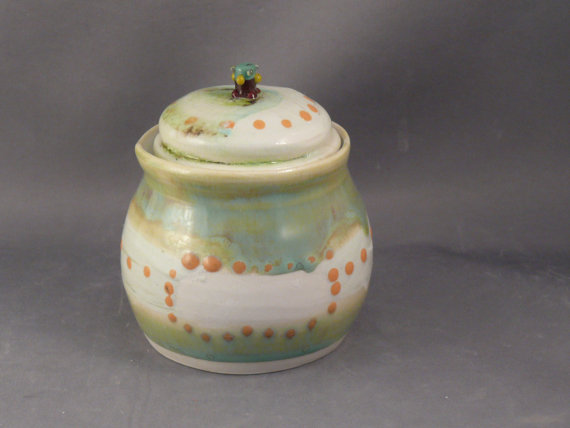
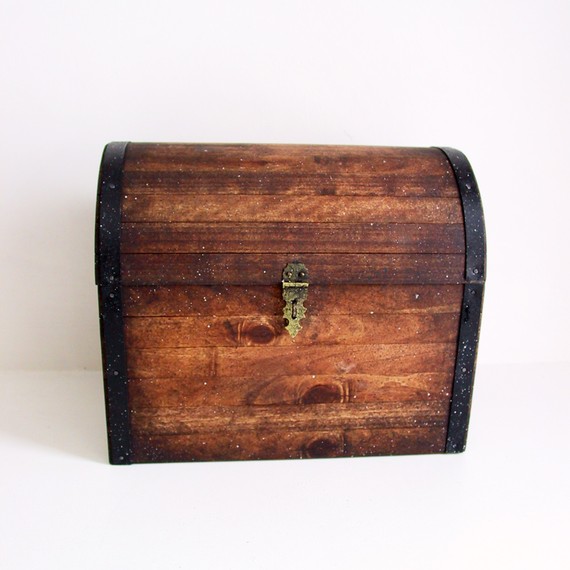
Maintain a special trunk, box or storage container as a personal history cache for each child. Keep copies of photos, artwork, letters, special ticket stubs and programs, mementos such as a forgotten toddler toy, notes about the child’s humorous sayings, a lock of hair, even a few baby teeth saved from the Tooth Fairy.
Indulge in biographies and autobiographies. This is a great way to learn how the conditions of the time impacted individual lives. It also gives insight into character formation. It’s helpful to let your child choose who he or she would like to read about. Even if your child tends to prefer specific biographies, say only sports bios, he’ll be learning how different eras shape a person’s life.
Gain perspective by playing historical games. Playing long-forgotten games helps us recognize that people in earlier eras were also youngsters who longed to have fun. For example, nineteenth century immigrant children in crowded U.S. cities played games that fit on stoops, sidewalks or a section of the street. Classic pastimes like stickball, scully (bottle caps), marbles, and hopscotch were inexpensive amusements for children even in the poorest families. Enjoy games from other cultures. Check out or the book Kids Around the World Play!: The Best Fun and Games from Many Lands by Arlette N. Braman
Value stories from your own family history. Tell your children stories of your childhood and what current events were going on at the time. Solicit stories from older members of the family. Encourage your children to ask their elders questions such as, “What made your family come to this country?” and “What was your first job?” and “What was it like when you were my age?” Display photos of ancestors and mention what you knew of their history. This provides children with a sense of continuity. It also helps them recognize that those who came before them contributed to who they are now.
Record oral history. Family members are a good way to start, but consider those in the community as well. Everyone has stories to tell, it’s a matter of finding out what topics are the catalyst. Be prepared with questions but remember to avoid interrupting. Start out with comfortable topics and work toward any that may be more intense. Let the interviewee talk and the conversation go in unexpected directions.
You may want to collect oral histories of a specific era, relevant to your ancestry or on a topic of interest. Augment this oral history with photographs, music and artwork.
Springboard into history using interests. If your daughter is an adventurer at heart, she can learn how explorers, inventors, navigators, and wanderers changed the course of history with the same intrepid desire to “find out” that she has. If your son likes cartoons, he can discover similar drawings made for political commentary, social satire, and storytelling that show such artists as unafraid to advance ideas through deceptively simple sketches. Those earlier cartoonists made the medium what it is today.
There’s a historical angle to any interest. Whether your child has a passion for airplanes, stand-up comedy, glassblowing, or skiing there’s a back story to be discovered that makes history relevant to who your child is right now.
Act it out. Learning about Napoléon? As a child the future emperor was bullied by older students, that is until he led younger boys to rout their elders in a successful snowball battle (hinting at his nascent leadership skills). It might look something like this. Dramatic moments in history are perfect to reenact in the back yard or park.
Learn about time capsules. Documents and artifacts are vital historical evidence. Sometimes such evidence is discovered hidden away in an attic, trunk or archeological dig, creating a kind of unintentional time capsule. Many people leave time capsules, either to be opened themselves a few decades later or to leave for future generations. Make a time capsule together, filling it with personally and historically relevant items.
Learn about Golden Record included in both Voyager spacecraft launched in the late 1970s. Find out what it included and why. This message was sent along: “This is a present from a small, distant world, a token of our sounds, our science, our images, our music, our thoughts and our feelings. We are attempting to survive our time so we may live into yours.”
Put yourself in history with fiction. Good books help young people imagine themselves in another place or era. Try an activity mentioned in the book such as darning a sock, shooting a slingshot, or foretelling the future through dreams. A Book in Time offers a chronological list of children’s books, plus crafts and other project ideas.
Time travel. Ask yourself “what if” questions to stimulate thinking about different outcomes. “What if the Black Plague never occurred?” or “What if the Allies had lost World War I?” Ask what event or decision in history you would most like to see altered, and why. Ask what person from the past you would most like to meet, and what you would ask him or her.
Let periodicals bring history to your door. A freshly delivered magazine is enticing. There are wonderful historical and cultural magazines for children including Calliope: World History for Kids, Cobblestone: American History for Kids and Faces: People, Places and Cultures.
Make a gift of family history. Give the tiny leather case with great grandma’s reading glasses to your daughter, along with your memory of this lady who loved to write. This might mean a great deal to a teenager who harbors ambitions of becoming a novelist. The pocketknife from a great uncle who left to seek his fortune as a merchant marine, and who sent letters from ports all over the world may be a meaningful gift for your son who talks of setting off on his own travels.
Cook historically. Try some of the characteristic foods and preparation techniques from the past. Cook stew over a fire, taste plantain, make hasty pudding, grind buckwheat. Ever wonder when people began eating certain foods or developing distinct recipes? The Food Timeline offers a look back, with each foodstuff clickable to an historical article.
Hold a fair. Some homeschool and enrichment groups have a yearly fair oriented toward history or social studies. Consider a biography fair, genealogy fair, history fair, or international fair. For example, at an international fair each young person sets up a display for the country or region they’ve chosen. They might have posters, projects, foods to sample, crafts and interactive activities. Each participant comes prepared to lead a game from the country they studied, making the fair a lively event. Some groups might also require each participant to provide a hand-out so that everyone leaves with information about all countries featured at the fair.
Visit graveyards. Cemeteries have stories to tell. Children can learn about family size, immigration and wartime. They can look for the most unusual names, notice the frequency of childhood death in different eras, write down interesting epitaphs. Discuss in advance the necessity for showing respect for gravesites and acting with decorum.
Oakland Chinatown StreetFest
Explore the impact of culture. Immerse yourself in a culture’s art, music and stories. Learn about legends and beliefs. How do these aspects affect the way those people organized their societies and lived their lives? Who would you be in that society? How would your worldview change if that were your culture? Notice similarities and differences in current times.
Look at your life as an historian or anthropologist might. What’s called “folklife” is simply the everyday creativity surrounding us right now. Jump rope chants, ghost stories, jokes, the way your parents or grandparents warn you to behave, celebrations and daily rituals—these are folklife. The memories you are building right now are history in the making.
Today is a wonderfully ordinary day. Lots of laughter and no squabbles. Will we remember any of it? Probably not.
It’s hard to understand why we hang on to some memories but not others. The process isn’t about how much effort or money we expend trying to make something memorable.
Long-term retrievable memories are built by what we notice, fully notice, with our minds as well as our bodies. (They aren’t made when we multitask.) Look back at any particular memory. What you recall is constructed from the sights, sounds, tastes, thoughts, and feelings unique to your experience. The way you pay attention to those elements forms your memories. The shocking part? Looking back and realizing how few rich and full memories we really form.
That’s because we only really latch on to memories when we pay attention. When we’re engaged in the moment. Recall the last really memorable meal you had. It probably wasn’t one you ate in the car or standing at the kitchen counter. It was one you savored with full awareness of flavor, texture, scent. Most likely there were other important elements as well. Perhaps it was a meal shared with a new friend or made from a challenging cookbook. Perhaps it was a last meal you had before a loved one passed away, a meal you now try reconstruct in detail.
Emotion plays a part in memory formation. And our five senses are integral when forming strong memories.Particularly smell, perhaps because the olfactory bulb is closely connected to the hippocampus (related to learning) and the amygdale (related to emotion).
For years I’ve encouraged my family to take “sensory snapshots.” We may be standing out back together, having just finished stacking firewood (because togetherness on our little farm often has to do with work) and I urge them to remember the moment in their bodies as well as their minds. We notice the scent of blackberry and milkweed blossoms, listen to frogs croaking in the pond, feel the evening’s coolness on our skin, look at the fireflies beginning to arc through the dusky sky. I don’t just want the moment to linger, I want to be able to retrieve it long after today. I want to hang on to our easy banter and feeling of shared accomplishment.
That’s where memory-storing traditions come into play. Yes, it’s easier than ever to take photos and videos. But there’s something about writing down our impressions that augments the process of locking them into place.
One tradition you might want to start in your family is a memory jar. Grab any jar, name it the Memory Jar, and keep it in an accessible place. Filling it is pretty easy. Encourage your family members to scrawl memories on any piece of paper, sign their names, add a date if they can, and stuff these memory scraps in the jar. Let the youngest ones dictate their memories to you and pop them in as well.
You’ll be interested to note what different family members regard as significant enough for the memory jar. Good grades on a test probably won’t get in. Watching the neighbor’s puppies born probably will. Your five year old may stuff in a new memory each day, your teenager may add one only at your prompting, you may tend to write down funny things the kids say. But if they’re not noted and saved, chances are they’re lost.
It’s helpful to have a “no grudge” rule. Memories don’t have to be happy, of course. The most powerful are probably those that aren’t. Your daughter may write,
“I was really scared when Max fell off the slide. We went right from the park to the hospital. We waited a long time and I fell asleep watching a TV high on the wall. Max got a green cast on his arm and I was first to sign it. I was mad my name didn’t come out too good because it’s not easy writing on a cast. The letters are kinda bumpy. We were so hungry Mom stopped for ice cream on the way home. I got peach, Max got chocolate chip, Mom got a smoothie. I think it would be fun to have a cast too but I don’t want to fall off a slide to get it.”
There are plenty of options that go along with opening and sharing the tidbits from your Memory Jar. You might choose to have a memory ceremony once a year. That’s a day when the jar is opened and the memories are read. You might want to do this on Thanksgiving, New Year’s Day, or every July 13th because that’s your family’s yearly Dad Finished His Tour of Duty party.
And you’ll want to store these memories safely. It’s easiest to start a new jar every year. Label last year’s jar and tuck it in the back of your closet. If you’re ambitious, carefully scrapbook each slip of paper next to photos or turn them into a photo collage to hang on the wall. Or, your family may prefer to keep adding to a collective jar of memories without going over the contents together, happy to make the jar a sort of time capsule to be opened well into their adult years.
While a memory jar is well-suited for family use, there are other great ways to use this random-memories-on-scraps-of-paper approach.
For couples, why not start a Memory Bank? This is best made with an opening no bigger than a piggybank. This way the memories each of you contribute can’t be fished out and read in private. It’s a way of noting little tidbits about your lives together without the pressure to contribute. Of course a “no grudge” rule is still important. And when a Memory Bank is shared by a couple, it’s best to make it a long-term project. Vow to keep it sealed until your 25th anniversary or some other far off date. By then neither of you will care if she contributed 95% of the memories, you’ll both simply have fun going over recollections you thought were long gone.
Perhaps the best impetus for storing and retrieve memories is in partnership with the oldest members of the family. On each Father’s Day card I used to share a reminiscence about my childhood to let my Dad know how much he factored into my happiness then and my resilience now. I thought I was doing it for him but I know now that sharing these memories was one way I strengthened a link with someone so dear to me.
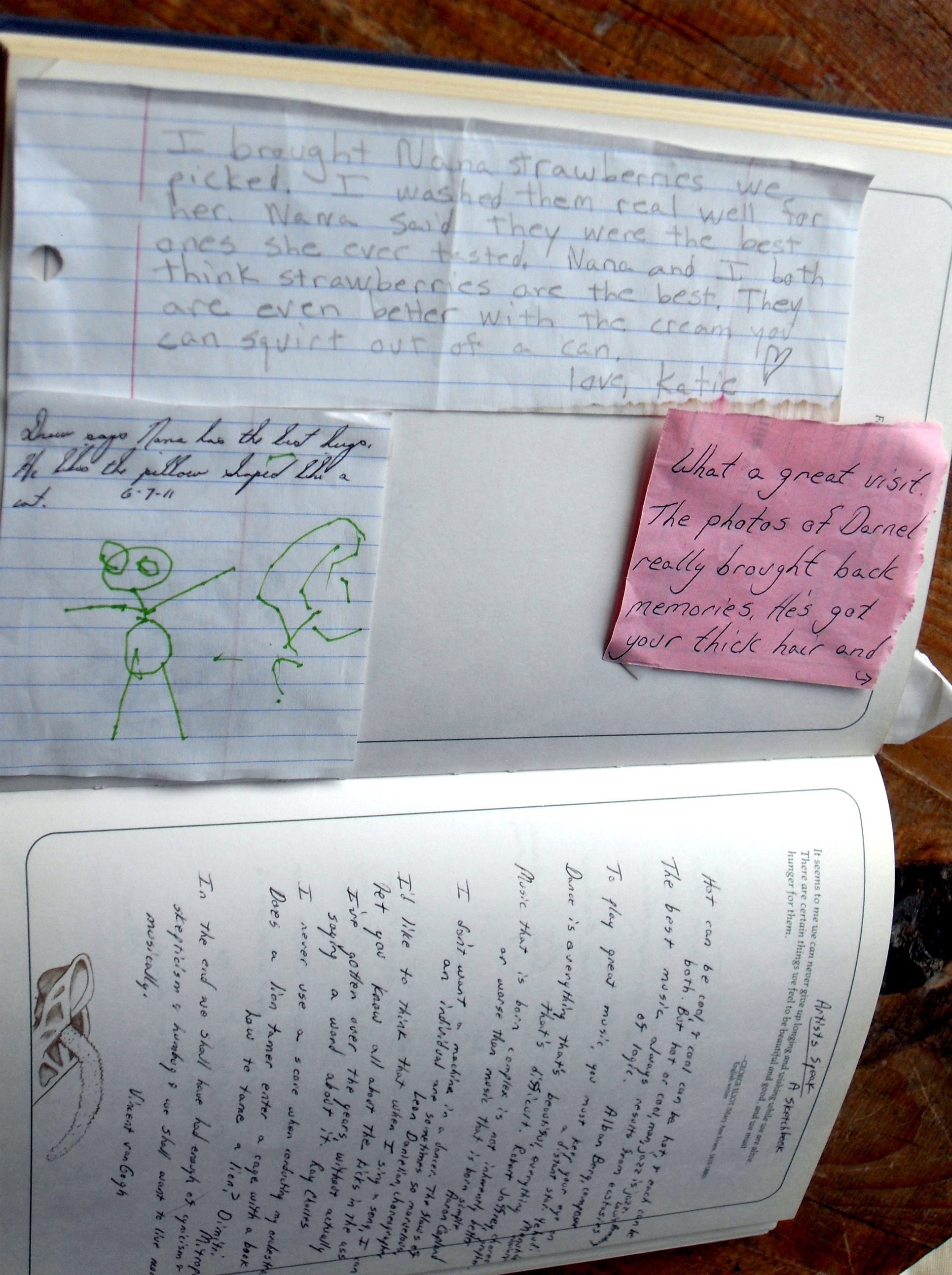
You can keep track of up-to-date memories with the elders in your family using a Memory Book, one that’s always open. A large format blank book is especially good for this purpose. With each visit write down a recollection (old or new) to paste in the log book. Add drawings and photos. If you’ve exchanged memorable phone calls, texts, and other communications remember to add notes about them when you visit. The Memory Book is a warm reminder of your affection. It’s also helpful if your loved one is in an assisted living facility or nursing home because other visitors can flip through the pages, starting conversations by talking about these and other memories while making new ones.
Thinking about the ways we form and hold on to memories is inspiring me to have more fun with my family than stacking firewood!
Sophie is a single mother raising a five-year-old boy. She’s working to establish her own house cleaning business after losing her job nearly two years ago. Sophie and her son live in a small trailer home.
Marissa and Jack run a thriving dental practice while raising five-year-old twin daughters. They live in a suburban home on several acres.
The five-year-olds from these families are at opposite ends of the economic spectrum. But their parents are raising them in remarkably similar ways. Frugally.
Although Sophie would prefer a more reliable income, she wouldn’t spend a cent more than she already does on herself or her son. She adheres closely to simple living tenets. Sophie grows as much food as possible in a community garden plot and makes meals from scratch. She and her son fully enjoy the free benefits of the local library and park system. On weekends, Sophie’s folk band crowds into her trailer for practice sessions. Her son is already learning how to play the harmonica and fiddle. Sophie believes he should rely on his imagination for fun rather than on toys. When she does buy him gifts, they tend to be modest items such as crayons or socks, or ones that have long- term use such as simple tools or sheet music.
Marissa and Jack choose to live simply in their own way. They buy clothing and their children’s playthings from thrift stores, exchange only homemade gifts, and emphasize having fun outdoors. They carefully consider expenditures based on their ethics. Health is a priority, so they buy only organic foods and belong to a CSA. Supporting the arts is another priority so they invest in original works to hang on their walls and regularly attend plays, concerts, and gallery events. They strongly believe in the importance of international travel. When they go to far-off places, they get around by bike or local mass transit, a method they find brings them closer to the cultures they’re visiting.
Many of us are living more frugally. It certainly eases financial strain. It also makes a difference in wider ways, from reducing our ecological footprint to promoting social justice.
Today’s relentlessly materialistic culture tells young people in every way possible that their identity is built on wearing, playing with, and using the very latest consumer products. That’s a heavy tide to fight against on the home front. But that tide is worth turning.
Living simply puts the emphasis on exactly the conditions that are best for our kids, now and as they grow into adulthood.
Shelter From Commercialism
Humanity has always raised her children with the stories, foods, rituals, and values of particular meaning to the people close to them. While there are undeniable benefits to today’s connections and conveniences, a major drawback is the way advertisers have insinuated themselves into the lives of even the youngest children. Nowadays, a child’s stories, foods, rituals, and values are more likely than ever provided by the marketplace. And we know what’s preached there – that meaning comes from what can be bought.
Every year, a 15 to 17 billion dollar marketing industry is aimed at our kids. That money is spent because it’s effective. It’s estimated that 565 billion dollars in purchases are influenced by four- to twelve-year-olds.
Susan Linn, who teaches psychiatry at Harvard Medical School, notes in Consuming Kids: The Hostile Takeover of Childhood, that psychological and neurological research is used to exploit the vulnerabilities of children. She writes, “The explosion of marketing aimed at kids today is precisely targeted, refined by scientific method, and honed by child psychologists – in short, it is more pervasive and intrusive than ever before.”
These strategies are not only employed in advertising itself but are embedded in Internet sites, video games, television, and movies. They’re designed into packaging, implicit in many playthings, and nearly ubiquitous in schools.
Those of us who live simply shelter our kids in different ways and to differing degrees. No matter what approach we take, it’s neither possible nor desirable to shelter teens the same way we shelter toddlers. That’s why it’s vital to raise our kids to be critical thinkers with a strong sense of self. Then they’re empowered to make their own fully informed choices.
Delayed Gratification
This is a biggie in the “you’ll thank me later” department because kids who are able to delay gratification are much more likely to do well as they grow up.
We model delayed gratification each time we choose to save, make do, or make it ourselves. We demonstrate it when the whole family adds coins to a jar until there’s enough to finance an anticipated event. We teach it when we help children find ways to earn and save for their own aims. And we show that it’s expected whether our kids have to wait to see a movie until it’s available at the library or wait until the next birthday for a new pair of jeans.
This may seem negative, particularly when popular culture constantly screams “have it now” and “get what you want.” But there are enormous positives. Our children become familiar with the pleasures of anticipation, which multiplies the eventual delight when a goal is reached. They also begin to internalize the ability to delay gratification. In multiple studies (cited in Daniel Goleman’s book Emotional Intelligence) children who were able to defer gratification grew into teens and young adults who were more socially competent, better able to deal with frustration, more dependable, reached higher educational attainments, and were effectively able to make and reach long-term goals.
Delayed gratification is related to impulse control. Research shows that a child’s ability to control his or her impulses at an early age is predictive of success even decades later as a healthy, financially stable, and positive member of the community. There are many ways to help kids gain the positive coping skills that help them control their impulses and delay gratification. It may be about waiting, but the outcome is extraordinary.
Happiness
Despite advertisers’ images of happy children playing with new toys and giddy teens dancing in designer hoodies, the facts are glaringly obvious. Things don’t make us happier. Children seem to understand the “time is money” conundrum. When their parents spend more time away from home earning an income, they have less time to spend with the family. In a nationwide poll of American kids ages nine to fourteen, ninety percent said they’d prefer increased time with friends and family over material possessions. And when asked if they could have one wish to change their parents’ jobs, sixty-three percent said they would like their mom or dad to have a job that gave them more time to do things together. Only thirteen percent wished their parents made more money.
The more materialistic young people are, the unhappier they tend to be. According to research cited in The High Price of Materialism by Tim Kasser, people who hold materialistic values are more likely to suffer from a whole dumpster load of problems. This includes aggressive behavior, insecurity, depression, low self-esteem, narcissism, even physical maladies. And when people place high value on material aims, they’re prone to have trouble with interpersonal relationships and intimacy. Materialism is also related to less independent thinking and lower value placed on being “true to oneself.” Of course, we want to spare our kids this festering personal mess.
How? We recognize that a sense of well-being depends on intangible qualities like warm interpersonal relationships and reasonable autonomy in one’s choices, exactly those things that money can’t buy. But what’s interesting is that materialism and unhappiness seem to “cause” each other. We all know people who exemplify this. Unhappy people tend to seek status and satisfaction in more transitory ways such as acquisition and appearance. When they do, they feel a temporary boost in happiness, which reinforces even greater materialism.
Studies show that happiness has much more to do with experiences than with possessions. A family camping trip will provide more lasting pleasure than a large purchase. That may be due to the way we access memories. Long after the experience is over, we have fuller sensory-based recall that’s invariably richer than any a purchase can provide.
It’s important to model a cheerful approach to simple living for our kids, but that’s not enough. To ward off materialistic attitudes, our children need the personal strength found in the self- worth that comes from supportive relationships and a sense of accomplishment. In a marvelous example of synchronicity, these are precisely what simple living reinforces in our daily lives. We consciously choose to do for our- selves, to spend more family time together, and to focus on active rather than passive entertainment.
Creativity and Enthusiasm
Many adults seem determined to keep kids busy by enrolling them in supervised activities. And they provide kids with plenty of distractions like toys, video games, and television. Unintentionally, these efforts teach children that fallow time is undesirable. But brain studies show that daydreaming, contemplation, even that uncomfortable condition we identify as “boredom” is vitally important. These natural periods of down time are necessary to incorporate higher level learning and to generate new ideas.
If we expect children to resolve their own boredom without resorting to electronic or other distractions, we help them access a wellspring of ideas that seem to come from nowhere, a wellspring they discover within. Frugal living is one way to preserve a slow pace and minimal distraction load, letting our children become familiar with generating their own ideas.
When we live frugally, we also tend to avoid popular methods of “enriching” our children’s lives such as academic preschool, specialty classes, coached sports, and other paid programs. That saves on fees. It also fosters the kind of expansive learning that’s natural for our species. Research continues to show that when adults are highly directive and exert influence even in the form of rewards or evaluation, their efforts actually diminish a child’s motivation, enthusiasm, creativity, and ability to innovate. Well-intended efforts to hone a child’s abilities through early instruction tend to be counterproductive.
That’s also true of play. Our kids don’t need expensive toys or games. Children’s creativity and resourcefulness flourish when they play without the structure imposed by most playthings. Imagination flows freely when they use what they find in the backyard to play act, build hideouts, or create their own games. In contrast, a toy linked to a movie release or a game with structured rules has predetermined uses and children are much less likely to innovate.
Stuart Brown and Christopher Vaughn write in Play: How it Shapes the Brain, Opens the Imagination, and Invigorates the Soul that, “play lies at the core of creativity and innovation.” It enhances development in areas such as emotional health, social skills, motivation, confidence, a sense of justice, and much more. Young people who maintain a playful nature into adulthood are, according to Brown and Vaughn, remarkably well suited for success. A playful adult is more flexible, humorous, optimistic, and efficient. They note that throughout life, “the ability to play is critical not only to being happy, but also to sustaining social relationships and being a creative, innovative person.”
When our frugal homes provide plenty of raw materials necessary for play without up-to-the-minute popular toys, we’re putting into place the best conditions for sustaining creativity and playfulness.
Self-Reliance And Responsibility
There’s a resoundingly positive impact on our children when we include them in the real work of maintaining our family home, yard, vehicles, and more. Children growing up in frugal households often have regular chores. While some complaining is natural, chores help children understand how things work. They see the benefits of saving as they do calculations for the family budget. They recognize what happens if they forget to take the dog out or don’t bring the laundry in from the line before it rains. They take extra pleasure in the warm fire from firewood they helped to stack. Chores also enable children to master useful skills that will help them become more self-reliant adults.
Taking on early responsibility brings long-term consequences. A study, starting in the 1930s, followed men from young adulthood to death. These men had very different lives; some were affluent Harvard graduates and others were impoverished inner city residents. The men who helped out with regular tasks starting at a young age were most likely to enjoy stability and good mental health.
And there’s more evidence. A long-term study followed children from early childhood to their mid-twenties. What led to success? Balancing all other variables, it was found that the best predictor of a young adult’s success was participation in household tasks at a young age. And we’re talking resounding success – including educational attainment, high intellectual capabilities, a career, and good relationships with family and friends.
The optimum age to get started is three or four years old. According to researchers, starting in the preteen or teen years doesn’t have a strong association with success, although children who take an active role early continue to help out as teens. It’s important to gear the task to the child. Parents should take care to present tasks that aren’t too difficult and that fit the child’s learning style, and not to “pay” for tasks directly or through an allowance tied to the work. Researchers also suggest that children be involved in choosing tasks, perhaps through family meetings or rotating chore charts.
They key to success may also lie in the sensory riches gained by hands-on tasks. Those of us who live simply tend to do more for ourselves. We may grind our own grain and make our own bread, we may raise chickens and barter the extra eggs for a local beekeeper’s honey, we may fix rather than replace what’s broken. And when our kids take part they also gain learning experiences that apply to many other areas of life.
Neurologist Frank Wilson explains in The Hand: How Its Use Shapes the Brain, Language, and Human Culture that brain development and hand use is inextricably connected. And Wilson found a transfer effect. As he studied people who were masters in all sorts of fields (surgeon, puppeteer, and guitarist to name a few), he found each of them had engaged in regular hands-on efforts during their formative years. Whether they grew up doing farm work, playing a musical instrument, or helping grandpa build birdhouses,Wilson says the hand-brain link activated “hidden physical roots . . . of passionate and creative work.”
Starting our kids on tasks at an early age blesses them with self-reliance and a greater likelihood of success. It also demonstrates to them day after day that their efforts are needed. A child can see the outcome of his or her efforts in a meal the whole family worked to get on the table. It feels good. It feels even better is when a parent says, “Thanks, I couldn’t have done it without you.” There’s not a commercial product out there that can create the same genuine satisfaction.
Sophie’s little boy and Marissa and Jack’s twin daughters know that satisfaction. Their young lives have ample time for play, working alongside adults, and warm family conversation. The children soak up their parents’ values while learning and growing largely free of commercial influences, at least for now. Their parents have never met each other but they have the same focus. They see simple living as an integral way to bring forth a more conscious and life sustaining future for their children.
A little girl about three years old trails behind her mother in the store. She seems tired and distracted, as if it’s difficult for her to keep up. Her mother is busily shopping while pushing a cart with a baby in a carrier at the front, oblivious as her daughter lags farther behind. Every minute or so the girl says, “Mommy,” but her mother doesn’t look back so the girl hurries to catch up. Not long after the mother turns to another aisle the little girl loses sight of her and wails loudly. Her mother, surely distracted and now embarrassed, hustles back to grab the child, shakes her, and through clenched teeth issues a threat. The child cries quietly and resumes following, more closely at first but again lags behind in the crowded store. A few aisles over she loses sight of her mother again. This time the mother picks the child up by the arm to smack her fiercely.
The problem continues to escalate. The entire time this family is in the store the mother repeatedly threatens and hits a child who may be ill, or needing a nap, or simply isn’t able to keep up. No one intervenes. In the checkout line they stand under an overhead TV screen blaring with news. Crime, war, and looting at the scene of a disaster are shown in vivid video clips. The little girl, tears still drying on her face, reaches up to the baby sleeping in the carrier and squeezes his toes until he too is crying.
Many of us probably see such scenes on a regular basis. Those of us who are parents know full well that gently nurturing a child’s growing body and mind isn’t always easy. Sometime days it feels as if good parenting requires sainthood. But gentle nurturance is the way that we adults constantly demonstrate, in hundreds of seemingly insignificant ways, that a child is a person worthy of love and consideration. We wipe a face softly rather than harshly, we take an extra moment to see what a child sees, we find ways to distract a grumpy toddler or a moody teenager, we share real work with our children so they know the satisfaction of a job well done, we turn away from our own amusements to take part in what delights our children, we teach our children to wait their turn, we cuddle and guide and care.
This doesn’t mean we empower children to do whatever they want or raise them without limits. It simply means that it’s possible to touch a child with kindness and respect, to consider situations from the child’s point of view, and whenever possible, to listen to what a child has to say.
Gentle nurturance resounds through a child’s entire life, bringing forth a greater potential for happiness and success. Children treated with love and consideration become adults who treat others well too.
There’s plenty of evidence that this is the case. Let’s take one example, that of corporal punishment. Ninety percent of American parents say they have spanked a toddler, 61 percent in the same week they were asked. If it “worked” parents who spank would have more compliant children. But that’s not the case. In fact, children tended to act out again within a few minutes after being spanked or hit by a parent.
Spanking leads to children who are more easily frustrated, have more frequent temper tantrums, demonstrate greater defiance, and who are more likely to physically harm others.
Spanking is also associated with lowered IQ scores. A U.S. study found children who were spanked had lower IQs four years later compared to those who were not spanked. The more frequently the children were spanked, the slower their intellectual development. Researchers speculate one factor may be that regular physical punishment is a chronic stressor for young children.
Negative consequences aren’t limited to childhood. Children who are punished by spanking, slapping, or grabbing even occasionally run a higher risk of growing up to have mental health problems, according to a study of nearly 35,000 people. Those issues include depression, anxiety, and drug or alcohol abuse as well as more complex illnesses such as narcissism and antisocial behavior.
Even crime is associated with physical punishment. Take time to read this linked article, titled “The Influence of Corporal Punishment on Crime” by Adah Maurer, Ph.D. and James S. Wallerstein (courtesy of The Natural Child Project) which features data including the following chart:
Degree of physical punishment
Never
Rare
Moderate
Severe
Extreme
Violent inmates at San Quentin
0%
0%
0%
0%
100%
Juvenile Delinquents
0%
2%
3%
31%
64%
High School drop-outs
0%
7%
23%
69%
0%
College freshmen
2%
23%
40%
33%
0%
Professionals
5%
40%
36%
17%
0%
Corporal punishment is just one factor among many. There are plenty of other elements to consider as we raise children to respect themselves and others. Here are just a few.
It has to do with consistent and fair family rules.
It has to do with understanding a child’s temperament.
But corporal punishment is the example I’ve used because there are larger cultural factors to consider when force is used on children, whether physical or other forms of coercion. There’s a connection between harsh treatment of children and harsh societies. Researchers Carol and Melvin Ember, in a journal article titled “Explaining Corporal Punishment of Children: A Cross-Cultural Study” conclude that force is commonly used against children in highly stratified societies, societies with low levels of democracy, and those with a propensity toward violence.
And there’s more evidence. James W. Prescott, former administrator at the National Institute of Child Health and Human Development, analyzed cross cultural data using 20,000 statistically significant correlations from 400 studies. The information included presence of physical punishment, freedom or repression of sexual practices, social status of women, degree of affection toward children. He concluded that societies based on affection were highly unlikely to be violent.
These conclusions are of global significance to you, me, and everyone else in today’s world.
This isn’t easy to see on an individual basis. Plenty of anecdotal accounts contradict these assertions, but individual exceptions don’t prove the point. I was raised by loving parents who, yes, spanked a few times and yes, tended to lose me in stores. I don’t see many after effects . (Well, I detest shopping.) The point remains. A gentler world can emerge from gently raised children.
This starts in our homes, stores, everywhere. I know what it’s like to shop with kids (I have four) so I can understand the time pressure and distraction the mother of that three-year-old girl must have been under. But each moment of parenting provides us with an opportunity to help our kids find positive solutions. This builds inner strength and fosters skills they’ll need to deal with future difficulties. Trouble is, parenting skills take patience, conscious attention, and lots of opportunities to observe other parents we admire. The time required is exactly what’s missing in the lives of busy parents. What are some things that could have helped when the little girl couldn’t keep up with her mother?
Connect. “Mommy needs to see where you are. I miss you when you lag behind.”
Empathize. “Oh Sweetie, you’re having trouble keeping up with Mommy.”
Problem solve. “How can we stay together?”
Engage her help. “Can you help me find the cereal you like? Do you remember if it’s in a yellow package?”
Distract her. “Let’s count all the other _____ in the store today (little girls, women with hats, times the loudspeaker interrupts, etc).”
Celebrate and appreciate. “I’m so glad you’re staying with Mommy and helping me watch the baby. Let’s _____ after we get home.”
And it would have helped if this mother had the resources to avoid taking a child to the store who was tired, or sick, or needing closer attention.
It’s important to recognize that in our society, parents tend to be isolated. A whole tribe of extended friends and family aren’t there to watch, guide, nurture, and enjoy each other’s children. Cultural forces of work and time pressure and distance divide us. Parenting is too often a solitary venture, performed under the gaze of strangers who judge one’s parenting in every store and sidewalk.
As Urie Bronfenbrenner noted, we need to understand what forces affect family so we can to best enable them “to perform the magic feat of which they alone are capable: making and keeping human beings human.”
I’m waiting in a movie theater line behind two women who are clearly friends. And rivals.
“Max won front line seats to this weekend’s game. It’s the first month the school is offering prizes for the highest overall score and Max is their first winner. Already we can see the advantages of this new school.”
“That’s so nice for him. Jeffrey really prefers playing football to just sitting there watching it. The coach keeps telling us that Jeffrey is a natural and sure to get a Big Ten scholarship.”
“Don’t you worry about him tackling when he’s so young? I heard that high school football players can get brain damage and Jeffrey is only 14, probably smaller than the other players. It’s such a risk.”
“That’s so sweet of you to be concerned. But Jeffrey isn’t taking a risk. He’s learning to look out for himself. That makes a difference in the real world. I’m more concerned for Max, insulated by that private school from experiences that could toughen him up. He’s such a nice guy, I’m worried for him.”
Barbed remarks just kept coming from their smiling mouths.
Yes, I’m a biased observer. I prefer what’s gentle, inclusive, and nature-based. This generally works for me. I say “generally” because I’m hampered when communicating with certain people—those who one-up each over with how perfect their lives are or, conversely, spar about who has it worse. I’m well aware that it’s best to listen with empathy but sometimes I can’t help myself. I just want to get out of the way. That’s because these conversations remind me of angry primates flinging poo.
Turns out there’s something to that image. Biological anthropologist Gwen Dewar noted that the “verbal sniping, snobbery, one-ups-manship, and cruelty” of mean moms has a striking parallel in the animal kingdom. Yup, she’s talking about monkeys and apes.
Females in certain monkey societies live in dominance hierarchies. There are perks for those at the top of the social ladder such as better food and first choice of sleeping places. In bad times, higher ranking females and their offspring are more likely to survive. Social rankings don’t budge. Top monkey moms make sure their daughters share their status. Low-ranking monkey moms can’t do anything to help their daughters move from up from the bottom. And middle-ranking moms can only ensure that their daughters stay in that relatively comfortable spot.
This stratification happens because monkey mothers are pushy. Top monkey moms enlist their powerful relatives in an ongoing campaign to make low-ranking monkeys defer to their daughters. As Dewar puts it, “These girls learn to be snobs. To form social cliques. To harass their social inferiors and toady to their social betters.” At a young age, monkeys know who pushes and who gets pushed. They work hard to assert their own status in order to pass that status (and the survival benefits) along to their daughters.
The analogy isn’t perfect. Humans are pushy for reasons more complex than access to food and better choices of sleeping spots. Plus, we have even more reasonsnot to be pushy.
But even primates are hard to categorize. Only certain species, like baboons, live in groups with the female dominance hierarchies that Dewar likened to “mean moms.” Other species are wonderfully egalitarian, with strong female alliances, like the bonobos.
Bonobos live in matriarchal peace-loving groups. One of the many ways they get along is by frequently offering each other casual sexual stimulation, which rules out suggesting bonobo style friendship to moms waiting in line at the movie theater.
Putting that particular bonobo feel-good formula aside, what primate-like politics do you observe in your fellow humans? How about you? Baboon or bonobo?
A few decades ago I indulged in some concerns about the likelihood of Santa’s existence while playing with a neighbor kid. A reasonably science-minded kindergartener, I wondered aloud how reindeer could fly without wings. I speculated about the chimney girth problem and the issue of children who lived in fireplace-free homes. And then, as if no one else had encountered these breaches in holiday logic, I asked how Santa could fly across the whole world in one night.
I was torn, wanting my friend to take me seriously but also hoping he’d prop up my fading sense of magic. I was disappointed when he dismissed every one of my speculations.
Later that day his mother called my mother. Her son was upset. According to her I’d ruined his belief in Santa. She said I wasn’t a nice little girl at all. That we were the same age didn’t seem to matter. My mother, who held politeness up there with God and cleanliness, insisted I apologize to Mrs. Barton right there on the phone.
After that particular trauma I badgered my mother for days until she fessed up. The truth stung. My older sister was in on the falsehood. Other kids at school probably were too, but by some twist of propriety they knew better than to tell believers, even if they felt superior to Santa holdouts. Clearly a victim of my mother’s politeness gene, I felt awful when it hit me that I’d been opening packages every year thinking that Santa owed me for my good behavior when all along those gifts were lovingly bought and wrapped by my parents. And I’d never even thanked them.
Fast forward a few decades. I vowed I would not follow the collective Santa lie with my own children. Sure, the truth might lead them right into the same minefield of logic versus belief with some other kid. That isn’t a bad thing, it’s how kids learn to think for themselves (as long as their parents don’t run interference). But I had no intention of killing Santa entirely. That’s because small children inhabit a different world than the rest of us. They don’t make clear distinctions between fantasy and reality. There’s probably something to that. Ever notice how happy little kids are? So I wanted an approach that kept wonder and excitement alive.
The philosophy I decided to use with my own four kids was based on the classic 1897 newspaper column titled “Yes Virginia, There Is A Santa Claus” written by Francis Pharcellus Church. It reads, in part,
“Yes, Virginia, there is a Santa Claus. He exists as certainly as love and generosity and devotion exist, and you know that they abound and give to your life its highest beauty and joy. Alas! how dreary would be the world if there were no Santa Claus. It would be as dreary as if there were no VIRGINIAS. There would be no childlike faith then, no poetry, no romance to make tolerable this existence. We should have no enjoyment, except in sense and sight. The eternal light with which childhood fills the world would be extinguished.”
I took the casual approach. I never hyped Santa, any more than I promoted the whole commercial side of Christmas. No “better be good for Santa.” No Santa at the mall (pretty easy with our mall avoidance lifestyle).
Sure, we still like Christmas carols that mention Santa. And my family cheerfully accommodates the thing I have for that early 60’s special, Rudolph The Red Nosed Reindeer, even welcoming my teary-eyed joy at the scene when hope returns to the Island of Misfit Toys. But we keep the holidays simple.
My reply to “Is Santa real?” has always been, “Everyone who loves children can be Santa’s helper.” The few times I’ve gotten more questions, which happened rarely because kids like to keep that possibility alive, I explained that even grown-ups like to believe too. By the time kids reach a certain age, they know what my answer means. Either it means there’s no Santa or their Mom is a believer. Maybe I am. I’ve lived long enough to know that there’s magic everywhere. I just call it by different names: love, hope, faith, and compassion.
Oh yeah, and forgiveness. By the next day Mrs. Barton’s kid was already over it.




 by Richard C. Francis
 by Dawson Church
 by David Shenk






 by Betsy J. Green.

 by Kate Duke. For preteens, look into
  by Richard Panchyk.
 and Roanoke:
  both by authors Jane Yolen and Heidi Elisabet Y Stemple. For older youth, enjoy

 by Arlette N. Braman


 by Kathy Ceceri
 by Anne Millard
 by Philip Steele
 by Cathy Travis
 by Ellen Jackson
 by Phillip Hoose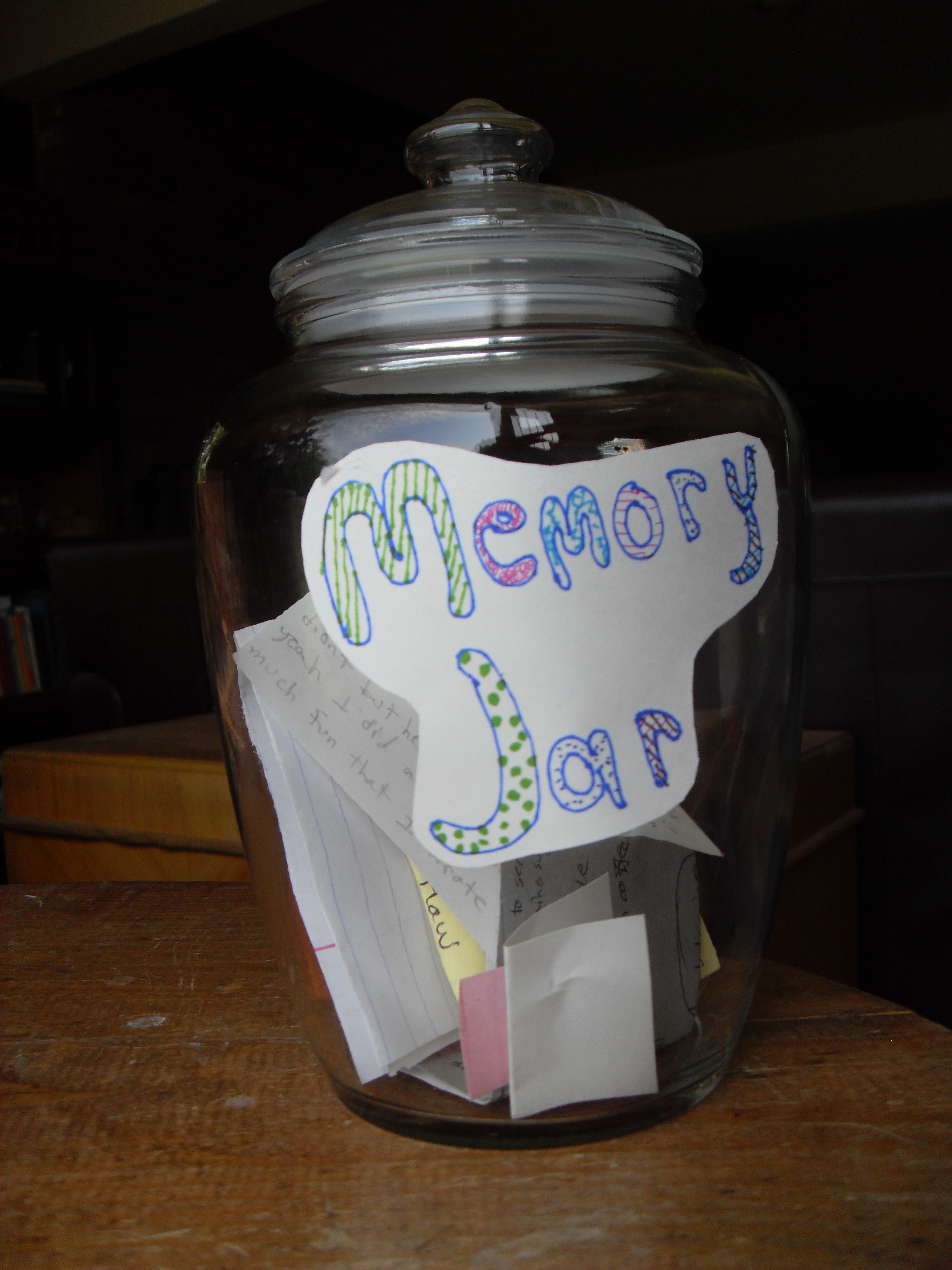


 , that psychological and neurological research is used to exploit the vulnerabilities of children. She writes, “The explosion of marketing aimed at kids today is precisely targeted, refined by scientific method, and honed by child psychologists – in short, it is more pervasive and intrusive than ever before.”
 by Tim Kasser, people who hold materialistic values are more likely to suffer from a whole dumpster load of problems. This includes aggressive behavior, insecurity, depression, low self-esteem, narcissism, even physical maladies. And when people place high value on material aims, they’re prone to have trouble with interpersonal relationships and intimacy. Materialism is also related to less independent thinking and lower value placed on being “true to oneself.” Of course, we want to spare our kids this festering personal mess.
 that, “play lies at the core of creativity and innovation.” It enhances development in areas such as emotional health, social skills, motivation, confidence, a sense of justice, and much more. Young people who maintain a playful nature into adulthood are, according to Brown and Vaughn, remarkably well suited for success. A playful adult is more flexible, humorous, optimistic, and efficient. They note that throughout life, “the ability to play is critical not only to being happy, but also to sustaining social relationships and being a creative, innovative person.”
 that brain development and hand use is inextricably connected. And Wilson found a transfer effect. As he studied people who were masters in all sorts of fields (surgeon, puppeteer, and guitarist to name a few), he found each of them had engaged in regular hands-on efforts during their formative years. Whether they grew up doing farm work, playing a musical instrument, or helping grandpa build birdhouses,Wilson says the hand-brain link activated “hidden physical roots . . . of passionate and creative work.”




 even welcoming my teary-eyed joy at the scene when hope returns to the Island of Misfit Toys. But we keep the
  Laura Grace Weldon