Not My Real Name

child

We learn early on that our names are serious business.

  • One of the main questions we’re asked as toddlers when out in public is “What’s your name?”
  • As we grow up, our parents tend to address us with nicknames or endearments, unless we’re in trouble. Then, full name at top volume.
  • Once we go to school we put our names on assignments and tests day after day. Sometimes classmates use our names to taunt us too.
  • Our names are right there for the world to see on diplomas and resumes and emails.
  • The names we’re given can affect the way people perceive us and even our career success.

Sometimes I feel as if the potential our parents saw when they breathed our names aloud for the first time is diluted by sheer overuse.

So I play with my name. If I don’t absolutely have to give my real name I use any other name that occurs to me, entirely on an inspiration basis.

When leaving a name for reservations at a restaurant, I usually make one up. It adds a little levity to my life. It’s also a decent short term memory exercise. If I’ve given the name “Snape,” I have to remember they’re talking about us when they call, “Snape, party of six.” Not as easy as it sounds. Try it some time. My default name for restaurant reservations is Ferdinand, in honor of the classic children’s book about a peaceful bull. It’s a quiet homage to the book and, of course, a secret acknowledgment that the name I’ve given is technically bull.

I use alternate names for mail order items, too.  Sometimes I give myself a new first or last name, sometimes an item comes addressed to one of our farm animals or dogs, sometimes I use a name I’ve made up. A magazine subscription comes addressed to Sarcasm Collective, Netflix envelopes arrive for Angelic Presence, and catalogs arrive under all sorts of use a pseudonyms such as Canning Whoop Ass and Ms. Procrastinator. It’s a remarkably effective way to track who is selling your information. For example, when ordering a piece of camping gear for one of my kids, I gave myself the first name “Spelunker.” The next few months I got camping gear advertisements addressed to that name, as expected, but also advertisements for motocross racing, yoga supplies, and silk underwear.

I bestow my love of alternative names on others too. My friends and family are accustomed to getting a card, package, or voice mail with something added to their names. At last month’s food co-op, the treasurer complained that her kitchen drawers seem to be taken over by twist ties.  When I sent in the check for my order, the envelope was addressed to her in care of Institute For Twist Tie Preservation. Not the best example, but the most recent. I’ve sent packages to my son’s college mailbox with odd name changes as well. (You may want to avoid this if your loved ones aren’t likely to appreciate or at least tolerate it.)

I also find it provides a moment’s amusement to use nonsensical names, fictional names, or the names of long-dead luminaries when writing something non-essential. I’ve recently signed for packages as A. Earhart, Scout Finch,  and Hubert J. Farnsworth. I filled out a farmer’s market poll as Susan B. Anthony. I added myself to a mailing list for local arts events as V. Woolf. The name I most recently put a waiting list was Ima Wench.

Maybe my name games are a reaction to the stress we all face in an uncertain world. Or maybe I simply find that a little silliness keeps me more gruntled than disgruntled.

Just remember, if you’re meeting me for dinner I’ve probably given the name “Ferdinand.”

A New Curse Word

 relax your words,

We hear it all the time. Chances are we say it all the time.

I swear (hah!) it’s the curse of our era.

What’s up with you?

Busy

How’s work?

Busy

How are the kids?

Busy

What was your vacation like?

Busy

What’s next week like for you?

Busy

Ack!

We are busy, pulled in so many directions that we don’t have words powerful enough to describe how time starved we feel. Swamped, hectic, rushed, hurried, slammed, or crazy busy can’t come close.

I suspect that we aren’t busier, in terms of obligations using up our time, than someone our age might have been 100 years ago. Chances are those folks kept the house warm with coal shoveled into a furnace; worked long hours for poor pay in factories, mines, slaughterhouses or worse; traveled at low speeds to get where they were going; struggled to stay healthy in a population easily ravaged by flu, tuberculosis, polio, and other diseases; and put a lot of hands-on hours looking after their homes and families. Talk about busy.

But there’s something going on, because so many of us are constantly overwhelmed. I planned to have some handy studies to cite but the books I meant to consult, The Distraction Addiction and Time Warped were overdue before I’d gotten more than a few chapters in. (Partially the fault of more alluring library books like Someone, The Name of the WindAnd the Mountains Echoed.) And I was busy!

Since the sun’s magnetic field is about to flip, I’d be happy to blame our time hunger on a wavering magnetic sheet and extra cosmic rays but science tells us there’s not a noticeable effect.

Mostly, I’m tempted to point the finger at all those things fracturing our attention. I’m pretty sure that ample time for daydreaming and contemplation is essential to a sense of peace, no matter what’s going on in our lives.

Which gets me back to the curse word of our times, busy. I’ve decided that using it is a form of negative self-talk. So I’m not saying it anymore. It is banished from my vocabulary.

My friend Margaret is sure that our perception of time will slow down to a more manageable pace if we replace frantically busy words with words that describe a slower, more relaxed attitude. Maybe then our lives will slow down too. She suggests words like,

meander

amble

mosey

saunter

dawdle

You may be flinging yourself from store to store to get errands done. But consider describing it to yourself as strolling through stores, pondering some purchases, relaxing in check-out lines. A time-shift may just happen.

But give that attitude shift time, lots of room-to-stretch time.

no time, slow vocabulary, slow conversation, self-talk

Delight-Driven Willpower

positive habits, joyous willpower, happy habits,

Willpower isn’t a trait mastered by the strongest among us. It’s a form of energy that wears down if overused.

When you exert a lot of effort to stop several habits, you may be subtracting the very energy necessary to fulfill your intentions. For example, if frugality is new to you, you might vow to give up the morning latte, lunch out, buying magazines at the newsstand, and scrolling through online stores. You may give up so many habits at once that your willpower is taxed and you find yourself spending more or drinking more or arguing more once the weekend arrives. I don’t have a spending problem, not even close, but I do have plenty of habits I’d like to drop. They jangle at me like annoying wind chimes made entirely of what I want to change about myself.

We’re more likely to be successful when we take on one or two changes at a time, letting them become comfortable patterns before adding more. It’s commonly said that it takes at least 21 days to create a habit. Not too sure about that. If it’s a rewarding new habit it may have significant sticking power in a few days. If it’s a tough habit to drop (like my departure from eating wheat), it may still seem alluring years later. I know all about this. (Pizza, why do you call my name?)

And we have to remember there’s typically a gap between what we know and how well we apply it to our lives. A big gap that extends through four stages of competence. No wonder it’s hard to change.

We often associate self-discipline with the loss of short term pleasure (lose weight, save money, stop wasting so much time on Facebook). But for some of us with pretty decent impulse control, self-discipline can too easily tip into self-berating. Negativity gets us nowhere. It’s essential to be attuned to the positive, to see how we’re making progress rather than focusing on where we’re going wrong.

I think we should use willpower to cultivate delight in our lives rather than seeing it as a way of dropping bad habits. Those lovely new joys we’re practicing may very well nudge out what we don’t want in our lives as a side benefit.

Oh, and one more thought. Sharing our goals is a way of augmenting our willpower. That’s why I’m sharing my list.

Delights to Cultivate

1. Be a person who wears interesting hats.

2. Lie in the grass whenever possible.

3. Lean toward single-tasking. (That means you Pinterest.)

4. Tune in to sensory pleasure: birdsong, soft blankets, wind in the trees, warm soup. 

5. Keep ice water by my desk to inspire hydration (not to inspire klutz moves that might dampen my keyboard or phone).

6. Say positive things about myself (no more predicting future klutz moves).

7. Sigh whenever I want to, because it stimulates the vagus nerve. Ahhhh, that feels good.

8. Go barefoot more often.

9. Send oddities via snail mail.

10. Use gifts given to me rather than setting them aside for “good.”

11. Develop life lists.

12. Stretch my creativity by sketching for fun, without judgment.

13. Be happy with what I’m getting done rather than focus on what I haven’t accomplished.

14. Go on out-of-the-ordinary dates with my beloved. Maybe I can talk him into glassblowing lessons!

15.  Dye my hair pink. Okay, maybe a few streaks.

16. Honor the wisdom found in doing nothing.

What delights do YOU want to cultivate?

positive willpower, habits of joy,

Image:pixoti.deviantart.com

School Violence Led Us To Homeschooling

bullying leads to homeschooling, school violence, guns in school,

We became homeschoolers suddenly. One morning my oldest son, a freshman in an award-winning suburban high school, called home right before the first class of the day. The teen who’d been harassing him had just showed him a gun, saying it would be his last day to live.

“Get out now,” I said. “Run home.”

I phoned the principal to tell him about the gun. I insisted that he not call the teen to the office on the intercom but remove him directly from his classroom. “Please,” I begged. “I’m worried about every other child still in the building.”

Throughout the school year my son told us what he heard about this youth and a few other kids. They’d sexually assaulted a girl in the school bathroom, broken the arm of a student’s father when he tried to reason with them, fought a gang-style skirmish near the football field with the assistance of older relatives. When I asked school officials about these allegations they scoffed. I assumed they were baseless.

My son’s situation was pretty standard. Honors student versus tough kid. My son used sarcasm as his defensive weapon. A few days earlier he’d retorted back to the taunting with, “Bad mood? Drug dealer not giving you credit?”

That morning the principal seemed only mildly perturbed by my frantic call. I insisted my son told me these kids stashed weapons in their cars. He seemed more interested in containing what he called a “rumor.” When the principal didn’t get back to me, my husband and I called the police. Detectives sat at our table and confirmed every story. The girl assaulted, the father’s arm broken, the gang fight. In fact area businesses had been warned to notify police immediately if groups of teens assembled, in case another gang fight was brewing. Parents were not informed.

I’d assumed that police had been called to the school after my report of a student with a gun. They weren’t. Instead, the student in question was summoned to the office on the intercom. Other students said he went outside to the trunk of his car before heading to the office.

I met with the superintendent the next day. In my work life I taught non-violence to community groups, including school systems. I told him I’d teach this program free of charge to staff and students in our district. The superintendent turned me down, admitting that it might be safer if we homeschooled. My son never returned to school.

I’d always been committed to the idea of public schools. I believed it was not only right but necessary to work within systems to improve them. Plus, I had plenty of misconceptions about homeschooling. Yet I realized that school had never really “worked” for my kids. Our four-year-old already knew how to read but had to practice sight words in pre-school anyway. Our sweet but inattentive second-grader was deemed a good candidate for Ritalin by his teacher. Our fifth-grader could do college level work, but due to cuts in the gifted program had to follow grade level curriculum along with the rest of her class. And our freshman detested the rote tasks that filled his days and the hours of homework each night.

Overnight, I faced homeschooling kids who were eager to learn on their own terms. I learned right along with them. I learned how essential imagination is to innovative thinking, how freedom to play is vital for creativity (and fun!), and how pursuing their own interests can translate into advanced comprehension across a range of subjects. I learned how they sought out challenges and insisted on meaningful involvement. I saw what they gained from daily activities at home and how easily they could learn directly from people of all ages right in our community.

The ADD symptoms my third child exhibited at school were no longer present once we began homeschooling. The hurry-up days that roped my kids in from morning bus to evening homework were gratefully left behind. Instead we read books for hours, indulged in long-term science projects, went on adventures with friends, found role models in all sorts of fields, and let real learning unfold. The crisis that hurled my children out of school created a way of being far richer life than any of us could have imagined.

suddenly homeschooling, school versus homeschool, school violence,

(Image: artamusica.deviantart.com)

This piece originally appeared on Wired.

For A Fresher & Juicier Experience, Mix It Up!

This doesn’t bode well. I’ve been talked into a day-long workshop and I don’t know where to go.

There are two large conference rooms at the Cleveland Marriott. Their doors open across the hall from each other. There are also two different groups convening today, but someone has neglected to post signs at either one.

Now, to figure out which group is mine.

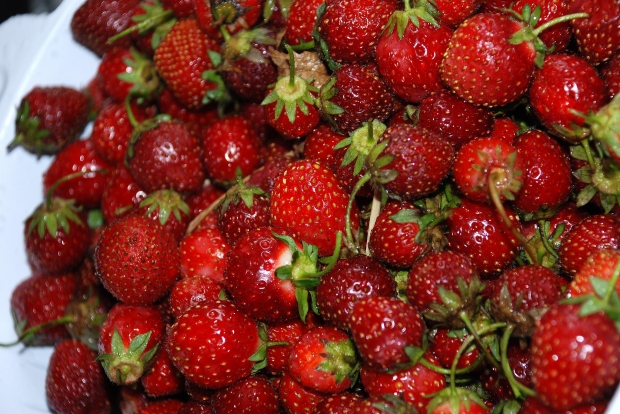
On one side waiters roll in carts of muffins, fresh fruit, and coffee. A tray of bright red strawberries passes tantalizingly close to me. I long to taste just one from the tray, but show uncharacteristic restraint due to the press of people entering that conference. Through those doors walk people who are impeccably dressed. Not only suits on the men but shined shoes, not only dresses on the women but elaborate hats. The attendees are all African-American.  I spy a few Bibles.  Seems to be an evangelical gathering of some sort.

On the other side there’s a lone table with water pitchers and glasses.  Folks are moseying in slowly. Their clothing is more diverse than their skin tone.  I spot Indonesian, African, and Japanese prints.  In front of me a man with long gray hair in a pony tail is saying something to a companion about “passing through a portal of enhanced energy.” I assume he is making an ironic comment about walking through such a blandly generic doorway, but he goes on to remark that this was the name of a workshop he’d attended in Phoenix recently.  Yup, this is my side of the hallway.

I find the friends who invited me and silently promise myself to sit still. (I’m not much for staying put.) Music starts, we sing, and I’m ready to have my consciousness raised.

I’ll give her this, the speaker is interesting.  She sets off my “Oh sheesh” meter a few times thanks to her quasi-scientific quantum physics references, but I already agree with what she’s saying. Each of us can be light workers who spread hope, and ultimately greater peace, through our daily words and actions.  We participate in group meditations, activating ourselves to take on greater responsibilities for uplifting others.  While not new, her message is certainly valuable.

But all that time we’re stuck in a meeting room. I don’t know how anyone can sit that long. I tend to wiggle and my mind wanders when my body is uncomfortable. I wonder how our brethren across the way are faring. When the fidgets get the best of me I excuse myself for a hallway ramble. I notice through open doors on the other side of the hall that those participants are also chair-bound, staring straight ahead with the glazed look that comes from hours of immobility.  Likely we are gathered in both conferences for similar purposes—-to enliven our spiritual lives and bring greater harmony to our bit of the planet.  And surely the experience is enriching.  But both meetings could be so much more if only we weren’t locked into a school-like format.

We humans learn as we make discoveries and face challenges. We learn by translating our experiences into story, song, art, into something created.  We learn through the wisdom of our bodies. We don’t learn as fully when passively sitting still and shutting up for long periods of time indoors. Opening conferences (and any educational venture) to more direct involvement lets the lessons sink in deeper, making whatever we’ve learned more easily applied in our real lives.

I’ve worked for years teaching non-violence techniques to teachers and community groups (and I hope making the workshop experience a lively one).  A key ingredient is finding common ground with those you perceive as dissimilar to yourself.  Connecting with others leads to rich possibilities.  The new combinations can be awesome.

Returning to my chair I can’t help but remember an old 80’s advertisement for candy.  Chocolate and peanut butter collide and find that together they are more delicious, creating a whole new confection that the world loves.

I imagine the doors to both conference rooms bursting wide open and the participants merging. Meditations combining with prayers.  Affirmations mixing with hymns. Our mutual dislike of sitting too long in these chairs turning into a joyous celebration that dances beyond the doors.  How much we all have to share with each other.

And yes, maybe I do imagine tasting those strawberries at last.

child

Play Outside After Dark

The word "lunar" derives from lunaticus, meaning "of the moon" or "moonstruck".

The word “lunar” derives from lunaticus, meaning “of the moon” or “moonstruck”.

The wheel of the year is turning toward shorter days. Early darkness adds a whole new dimension to the evening. There’s something magical about being outside as the sun goes down and dusk turns to night.

Tonight, go outside.

It might bring on awed contemplation. It might inspire conversation. It might turn ordinary fun into something extraordinary.  

Try one of these eleven ideas. They aren’t just for kids. Why not invite friends over or create a “backyard merriment” meetup or use some of these ideas for an upcoming family reunion? (The game Sardines takes on a whole different vibe when you’re playing with adults.) Free fun shouldn’t stop once childhood does.

“Play is the exaltation of the possible.” Martin Buber


1. Start the tradition of taking a walk when the moon is full. You’ll find inspiration in the delightful children’s books Owl Moon by Jane Yolen and Walk When the Moon Is Full
by Frances Hamerstrom. Our full moon walks are simply walks around the neighborhood, sometimes just around the yard. Familiar landmarks look different and the walk takes on a sort of enchanted feeling that only happens after dark.

2. Go outside and sing. Yes, really. It’s somehow more freeing to lift up your voice in the dark. I used to get together with friends who loved to go caroling any time of year. I know it sounds strange but it made an ordinary evening entirely celebratory. We waited until after dusk, then strolled nearby streets singing. (Rounds are particularly nice for anytime caroling.) After caroling a few times near Lake Erie we decided that singing to nature felt particularly wonderful and, if we weren’t by the lake, dedicated our songs to the trees and grass and sky. 

3. Sit around a fire. If you can’t build a campfire, use a fire bowl or fire pit. There’s something timeless about watching flames. Silence feels comfortable and thoughts drift. Each generation of our ancestors, stretching back to earliest humanity, sat before flames too. Perhaps the reflective mood evoked by fire has been passed down by those ancestors.

4. Eat outside. Take your dinner to the park or the beach or far in the back yard. If at all possible, cook some of it outside over a flame. Anything you cook together, outside under night skies, somehow tastes better.   

5. Shine a light onto the house or fence or a sheet hanging on the clothesline, setting the stage for some shadow puppets. Try hand shadow puppetry, called shadowgraphy or ombromanie, to cast moving images with your hands. Or put together some shadow puppets out of black posterboard and wire

6. Sleep outside on an open porch or in a hammock slung between trees or in a backyard tent. If your kids are small, sleep out there with them, maybe just one kid at a time for some special adult-child togetherness. When kids get older, let them do it on their own. One of my kids loved to do this when he was around eleven years old. He’d haul a tent and supplies as far out back as possible, taking along a camp lantern and books to read and plenty of food. He’d set up a tiny camp stove to make a late supper. Sometimes he did this alone, sometimes with friends. It’s a not-too-threatening way for kids to challenge themselves. For grown-ups, a night outdoors can be a much-needed respite from those distracting screens that take up so much of our time.

7. Go out on the steps or the swing or the grass to make music. When it’s too dark to see sheet music you’re more likely to improvise. Your neighbors probably won’t appreciate tuba practice at night but the soft chords of an acoustic guitar or sweet notes from a flute will flavor the air with mystery. 

8. Play with flashlights.  Darkness fun amps up when kids have flashlights. Everything looks a little different in that not-so-bright gleam. They’ll discover for themselves how creepy they look shining the light straight up from their chins or inside their mouths. For people of any age, flashlight games are fun. Here are two such games. 

Statues. One person is It and the other players strike a statue pose. The person who is It walks up to each player in turn, shines a light on them, and tries (without touching them) to make them laugh. First player to laugh is the next person to be It. Strange noises and silly faces will happen. 

Follow the firefly. One person is selected to be the firefly and hides outside in the dark, away from the other players. After counting to 20 everyone goes in search of the firefly, who is constantly moving around from hiding spot to hiding spot. Every 60 seconds, the firefly must quickly flick his or her flashlight on and off. When caught, a new firefly is appointed. This is best played with a small pocket flashlight so that the beam is not too easy to spot. For extra fun, and to reassure small children, let every player have a flashlight they can turn on and off but cover each light with different colored tissue or plastic. That way the yard will flicker with twinkling lights, but players concentrate on finding the color of that round’s firefly.  

9. Play after dark games. 

Sardines: This is like reverse hide-and-seek. One person is the hider and finds a place to hide while the rest of the players count to 50 with their eyes shut. Then everyone splits up to search for the hider. Once the hider is found, each person must squeeze into the same hiding spot along with the hider, being careful not to make any noise. The first person to find the hider is the next person to be the new hider. But that round isn’t over until there’s only one person left searching.

Ghost in the Graveyard: Designate the boundaries of the graveyard/playing field. Pick a home base where players can stand or all touch at the same time such as a large tree, front stoop, or back patio. Choose the ghost. Everyone but the ghost stays at home base while the ghost hides. Players chant, “One o’clock… two o’clock… three o’clock…” and so on, up to twelve o’clock, then shout, “Midnight! I hope I don’t see the ghost tonight!” Players leave the home base and search for the ghost. The ghost’s job is to jump out, surprise, and tag players. When anyone encounters the ghost they yell, “Ghost in the graveyard!” and try to run away. Home base is safe, where no one can be tagged. All the people who are caught also become ghosts and hide with (or close to) the original ghost. Continue the game until everyone is caught. The last person caught becomes the ghost for the next round.

10. Darkness lends itself to imagination, making it a perfect backdrop for telling tales. Try true stories, Darwin Awards, scary stories, funny stories, and tall tales. Don’t forget to share memories—of your kids as babies, of your own growing up years, of long-gone loved ones. And try round-robin storytelling. Someone starts off the story, then after adding a dramatic twist turns it over to the next person, and so on. The ritual of telling tales after it becomes too dark to work is nearly as old as language.

11. Look at the stars, not only to find constellations but to widen your perspective. The best way is to lie on your back, maybe in some nice soft grass. If you look long enough you’ll get the impression that you’re not facing up, but out, with the cosmos surrounding you. Possible bonus: shooting stars.

International Hosting: How Strangers Become Family

Children of Chernobyl, host a child,

Tanya’s portrait.

“It’s a decision of the heart.”

Director Patty Knable sat at our kitchen table interviewing my family as potential hosts for the Children of Chernobyl Project.  It had taken almost two years to get the Ohio branch of this non-profit to consider us (based in Youngstown, they preferred families nearby). I hoped we passed muster.

The Children of Chernobyl Project brought kids each year from contaminated areas in Belarus to stay for the summer with host families. Vast amounts of radiation were released in the 1986 catastrophe at the Chernobyl nuclear power station. Radionuclides spread from the Ukraine across Europe, leaving 23 percent of the territory in Belarus highly contaminated. Food, water, even the dust exposed people to radiation. (It will continue to do so for countless generations.) The result? Much higher risks of cancers, genetic mutations, and other health problems. Getting kids out of that area for a few months each year to live with host families helped to boost their immune systems. We were told it had to do with eating uncontaminated food and getting medical care. Patty said extra happiness helped too.

I asked how she matched a child with a host family. She said it was hard to explain. She looked at the names of the children on her list, thought about the families who had applied, and let something past intuition guide her. “It’s amazing how it works out,” she said. “It’s a decision of the heart.”

A few weeks later we were told the little girl who would stay with us that summer was Tatiana, seven years old. We learned very little about her in advance other than she was an only child.

I knew she had to be a very brave little girl to travel thousands of miles away from home to stay with strangers, people who didn’t even speak her language. I knew her parents must be even braver. I wondered if I’d be able to muster the courage to send my children away if I were in the same situation. (Our home is closer to two nuclear power plants, along the shores of Lake Erie, than Tatiana’s family was to the ruined Chernobyl plant, so the consideration is important.) I’d long been driven to act in opposition to the splitting of the atom, but preparing to host this little girl felt entirely different than petitions and rallies and lobbying. It felt like simply extending a hand of friendship from our family to hers.

Finally the day arrived. We’d set up a bedroom for her with art supplies and puzzles, some new clothes, and simple wrapped gifts.  I’d ordered all sorts of Russian language kid’s books and audiotapes from the library. We’d hung a banner over the front porch with WELCOME in Cyrillic letters as well as English. And we’d prepared by learning Russian words and phrases. I even taped cheat sheets in the inside of cupboard doors so I could ask her questions like what she wanted for breakfast.

It was a long drive to the Youngstown airport, although nothing like the trip this little girl had been enduring. She’d been traveling with a group of other children and volunteers. The last leg of their trip would be in small aircraft flown by volunteer pilots. The tiny airport was aswirl with families welcoming kids returning for repeat visits. As each plane landed we stood at high fences watching their young passengers disembark. When seasoned host families,  carrying balloons and gifts, spotted a returning child they waved and screamed their names. Many planes landed before I saw a little girl with a honey-colored ponytail and a red baseball cap get off the plane. My heart leaped. I’d never seen a picture of her but I was sure this was our child.

When our names were finally called to the room where the children were waiting we were introduced to a different girl. Okay, I thought, my intuition was wrong. I knelt down to say privet to her. Just then she was pulled back by the volunteers, who apologized for the mix-up. Another girl was brought forward. The girl with the honey-colored hair and the red cap. Yes, my heart said, yes.

From the very first day this darling little girl’s personality shone brightly. She made it clear she preferred to be called “Tanya.” She told us, almost entirely through gestures, about her first plane ride by showing us that her seatmate Yulia cried for her Mama, that Yulia retched, that the stewardessa droned on in “angleesh.”

We thought we’d learned enough Russian to speak to her. We were wrong. But our pronunciation gave her something to laugh about, which helped. We spent a lot of time flipping through our illustrated Russian/English dictionary pointing and giggling at each other’s languages. My kids adored the Russian words she taught us (the belly button is called “poop”) and the Russian drinking songs she sang for us. That first night, thanks to library materials, we danced to the Hokey Pokey in Russian.

Tanya was horrified by my vegetarian meals, refused to participate in the activities my outdoor-loving children preferred, and let us know that she hadn’t traveled so far to live like a peasant. She wanted to be entertained!

Children of Chernobyl.

Amusing my new daughter from Belarus.

My scruples fell by the wayside. Like anthropologists to our own culture we explored shopping malls and tourist sites, went to amusement parks rather than wilderness areas, even bought some fast food meals. Tanya picked up English quickly. She displayed her brilliance in many other ways too, typically beating any of us at board games we’d played for years and she’d just learned.

She made friends in the neighborhood and particularly adored spending time with my daughter, her American sister. Her time here changed all of us, especially my four kids. She became a member of our family, a family that now joyfully extends to Belarus.

host a child, international hosting, homestay programs,

She stayed with us every summer until she turned thirteen.

That last summer she’d been hosted as many times as the program could allow. We did our best to stay in touch by sending letters as well as holiday and birthday gifts. We got a few letters back from her, each one ending with how much she loved and missed us and hoped we remembered her. Then those letters didn’t come any more. Finally she got computer access and got in touch. We learned she’d received none of our gifts the last few years and thought we’d forgotten her.

This year we managed to help her get a travel visa, not easy in a country like hers, and flew her here to stay with us. She’s a new university graduate now, a gracious and lovely young woman. She just left to return home few days ago. We can’t wait to visit her some day, to meet her parents and immerse ourselves in her culture. She’s a forever member of our family, a daughter of our hearts.

Children of Chernobyl, become a host, international hosting opportunities,

Our beloved Tanya, all grown up, enjoying one of our favorite restaurants.

Become a Host! 

I think we all need to love specific individuals in different places in the world instead of staying on our own little street corners. One way to do this is by hosting people in your home. You can do this informally, inviting far-off online friends or people you’ve met through other long-distance connections to stay if they come your way. There are also plenty of programs that bring people to your door, people who may very well become family to you in a short time. Here are a few ways.

Host a child:

There are many organizations with the name Children of Chernobyl operating in the UK, Canada, and the US, most with similar guidelines for hosting families.

Urban kids in the US are matched up with families living outside the city, where the kids stay for a week or two, via the Fresh Air Fund. This link is for the NYC program, but you may find one in your area. We hosted an engaging little boy through a similar Cleveland program, called Friendly Town, which no longer seems to be in operation. He came one summer, then a few weekends, but moved out of state before we could host him the next summer.

Exchange students are a lively way to connect. Some programs are short stay, others are a full school year. Check out well-established programs with support personnel in your area like American Field ServiceYouth for UnderstandingRotary Youth Exchange, or World Exchange. Friends of ours have hosted a high school student every year for the last 11 years. They stay in touch with these young people and their families, and have visited nearly every student in his or her home country.

Host an adult:

Check out groups you are affiliated with such as religious institution, charity, or club. Oftentimes these groups will need short term lodging for a speaker or visitor.

Welcome a visiting professional through the Fulbright Scholar Program. We know a retired couple who have opened their home for years to educators and researchers from dozens of countries around the world through this program.

Register with the AFS Intercultural Program to host young people performing community service or teachers doing foreign exchange service at a nearby school.

Sign up with the National Council for International Visitors. This organization connects visiting leaders from other countries to people in the community. You might welcome them for a meal, show them the highlights in your area, or host them for a few days.

Join Servas, the oldest of international exchange programs. You can serve as a day host or offer a homestay.

The Dart Collection

summer enrichment?, kids and collections, free range summer,

I’m thrilled to offer a guest post by Margaret Swift. She writes about a neighborhood of free ranging kids and the girl whose mysterious summer project surprised them all.  

When I was five years old, we moved to a neighborhood that contained a wealth of little girls around my age. After living on a farm with no one to play with but three rotten older brothers, this was heaven. During summer vacation, we girls scrambled around together playing jacks on cement porches, dressing Barbie dolls under picnic tables, holding roller derbies on cracked and heaved-up sidewalks, and catching tadpoles in local ponds. We’d generally eat lunch at the home of the mother unlucky enough to be closest when our stomachs started growling. We wandered from one activity to the next in gentle summer chaos.

But just as every rule has to have its exception, our neighborhood of scrape-kneed, ragamuffin girls also contained Mr. and Mrs. Dart and the five little Darts: Mary, Mindy, Mandy, Molly, and Mavis.

Most of us dressed each morning in the first clothes that came to hand, in a wild rush to get outside and fall off our bikes or crawl through the grass in search of lost Barbie shoes. The Dart girls were always immaculately turned out in pressed white cotton shirts, navy or red shorts, terribly white socks, and tennis shoes that were never anything but blazingly white. The rest of us had wild kinky hair (long before it was fashionable) or lumpy uneven braids or ponytails escaping from rubber bands. The Dart girls had short bobs with picture-perfect bangs always half an inch above their eyebrows. And while the rest of us roamed wild and free, Mrs. Dart felt her girls’ growing minds would best be developed by Summer Projects.

So every summer, on the first day of vacation, Mrs. Dart would meet with her girls to outline The Project. One summer it involved physical fitness, and a flurry of swimming, tennis, and horseback riding lessons ensued, all skillfully and cheerfully taught by the indomitable Mrs. Dart. Another summer occasioned the Household Arts Project, during which the girls learned baking, knitting, dressmaking, and how best to wield a dust rag.

Mrs. Dart always graciouisly invited us to join in, and often we eagerly began, but we never lasted long. One by one, we’d fall off the Projects wagon. Later we’d be found lying in the dust poking sticks at anthills or arguing over whose turn is was at the Monopoly game we’d started three weeks earlier. We lacked the diligence to stick to a Dart Project, but occasional bouts of boredom led us up on the Darts’ steps for progress reports, and during the Dart girls’ two free hours every afternoon, when they joined us in tag or jump rope or bike riding, they filled us in.

In my tenth year, Mrs. Dart announced the Summer of the Collections. She expounded on the delight, education, and camaraderie to be gained from joining the legions who gathered this and that. She then sent the girls to the library to decide what they would collect.

Mary, two years old than I, decided on foreign recipes. She spent her summer carefully copying curries, crepes, pilafs, and stews into a loose-leaf folder. Once a week she cooked a recipe whose ingredients weren’t impossible to come by or too objectionable to a good Lutheran family. (This particular collection must have been hard on Mr. Dart, a staunch meat-and-potatoes man. He tried. He persevered. But he drew the line at chocolate-covered bees and bull testicles in aspic.)

Mindy and Mandy, the twins one year my senior, decided on tried-and-true collections: butterflies and matchbooks. Mindy was much too kindhearted to actually kill a butterfly, so instead she made a scrapbook of pictures cut from magazines and nature pamphlets. Under each picture she entered, in a neat hand, each specimen’s common and Latin names, locale, habits, and any other tidbits she could cull. We all found her book quite impressive.

Mandy was allowed to collect matchbooks on the condition she bring them to her mother or father to have the matches removed. In those days, every bank, restaurant, gas station, and hair salon had bowls of matching sitting out. Relatives traveling to New York or Hawaii sent back exotic samples. Mandy even made friends with a local printer who saved her a matchbook from every wedding he handled.

Seven-year-old Mavis, the baby, took a short cut. The girls’ grandparents had brought back a basket of seashells from a trip to Florida. She simply looked the shells up and then glued the shells to sheets of posterboard, printing their names in bold block letters underneath. Nini Fizzarelli commented that they didn’t look real because they didn’t look wet, and Patsy McMullen suggested clear nail polish. Mavis nearly asphyxiated herself, but at the end of two days every shell was covered and did indeed look perpetually wet.

That left nine-year-old Molly. She came up with an idea which she happily hugged to herself and would not share. She had always been the perfect little Dart, following through Projects without a qualm. But this summer she begged Mrs. Dart to let her work on her project privately and surprise them all at the end of the season. When the Dart girls joined us in the afternoons, Molly refused to talk. The more we questioned, the more tight-lipped she became. It was maddening. We pretended not to care.

August came and the day approached when the girls would exhibit their completed collections. The grandparents were invited, a backyard picnic was planned, and excitement mounted in the neighborhood. We knew we’d be invited over to see the collections and to share homemade peach-vanilla ice cream. Two more weeks…nine more days…

On day minus-five it happened. I overheard my dad whispering to my mom. The Dart girls had been out with their grandparents, and Mr. Dart came home to find Mrs. Dart in a swoon on Molly and Mavis’ bedroom floor. Evidently she had finished the laundry and was putting away Molly’s white socks when she saw in the back of the drawer the nine-by-twelve inch clear plastic box Molly had requested to house her collection.

Inside the box, Mrs. Dart saw rows of cotton balls, each with a label declaring a date and body part, such as “July 3, elbow.” There was something else on each cotton ball. Molly had acquired a collection of scabs.

We found out later that she had carefully lifted off the souvenir of every bump and scrape she’d gotten over the summer and had paid Billy Barnstrom on the block behind us for several of his scabs as well. (The well-mannered Molly just didn’t bang herself up enough.)

At the picnic, Molly made an official announcement, under her mother’s stern eye, that her collection had gotten misplaced somewhere, though it seemed clear from the buzz and a couple of odd jokes made by Grandfather Dart that everyone knew all about it.

Summer came to a close and school began again. The following summer, Mrs. Dart enforced a Full Disclosure Act on all Summer Projects.

By the way, I hear Molly now lives in Washington State and is a well-respected hematologist.

~

Margaret Swift is a free spirit with metanoic* tendencies. She’s a writer, fiber artist, calligrapher, energy healer, meditation teacher, spiritual counselor, and ardent gardener. She likes to sip enticing drinks (tea or wine depending on the time of day) and is an insatiable knitter. To find out more about her about her work, contact her at margaret.a.swift@gmail.com 

*met·a·noi·a  [met-uh-noi-uh]  noun:   a profound, usually spiritual, transformation

How To Learn From Experts

learn from experts, senior knowledge bank, skills clinic, DIY education, DIY homeschooling, cheap homeschooling, community learning, learn together, community apprenticeships, collaborative learning,

Image: drumminhands’ flickr photostream

Successful societies have always respected what the the wise can teach us. But it’s not easy to learn directly from people whose grasp of any subject well exceeds our own, in part because person-to-person learning is easily supplanted by online engagement.

I spend plenty of time staring at screens, yet I know from years of facilitating non-violence workshops that something important happens as we discuss, practice, and hone our skills together. Real learning is like a spark transferred. Going online is practically a reflex for us, but if our learning is confined there what’s lost is rich perspective and valuable hands-on experience.

If you know where to look you can find sculptors, farmers, astronomers, welders, storytellers, clock repair experts, and cartoonists right in your community. Let’s take my hometown of Cleveland as an example. I can learn glass blowing at the Glass Bubble Project, eviscerate and stuff a rat to look like a tiny tie-wearing butler during a taxidermy workshop at Sweet Not Salty, apply Brian Swimme’s cosmology to my life direction at River’s Edge, march with the Red Hackle Pipes & Drums band as I learn to play bagpipes from a former Pipe Major of Scotland’s Black Watch, let kids partner with working scientists at the Cleveland Museum of Natural History’s future scientist program, volunteer to rehabilitate injured birds at the Medina Raptor Center, and learn to make handmade books at the Cleveland Institute of Art. Museums, libraries, colleges and universities, cultural and ethnic organizations, recreational centers, and plenty of other places in your neighborhood are brimming with great workshops and classes for adults as well as kids.

This can happen more informally as well. As homeschoolers, we’ve found it doesn’t hurt to ask people to share a little of what they know. A steel drum company owner welcomed our group for a visit. He explained the history and science of drum-making, talked about the rewards and risks of entrepreneurship, then encouraged us to play the drums displayed there. A NASA engineer took us through a testing facility and showed us how materials are developed for the space program. A potter talked to us about the nature of clay, taught us how to form vessels on a wheel, then invited us back for the opening of his kiln to see our creations emerge.

We’ve spent days with woodworkers, architects, chemists, archaeologists, stagehands, chefs, paramedics, and many others. Despite offers of barter or pay, we’ve gotten all this expert instruction for free. People rarely turn us down when we request the chance to learn from them. Perhaps the desire to pass along wisdom and experience to the next generation is encoded in our genes. If someone possesses knowledge or abilities you’d like to gain, try asking. (Ask them to share their interests, not “teach” to get a positive response!) And don’t forget to look close to home. You might master pinochle while spending time with your brother-in-law, learn coding from your niece, gain new appreciation for fly fishing from your dad’s business partner, go bird-watching with your neighbor, and as we all know, learn more from your own kids than you’d ever imagined. I call these knowledge networks. Here’s how to activate yours.

Of course, there are plenty of platforms promoting person-to-person wisdom. Here are a few.

DIY and Maker movements have opened all sorts of avenues, with Maker Faires happening in more and more places. (Not in your area? Check out the Mini Maker Faire Starter Kit.) Find hackerspaces like NoisebridgePumping Station OneNYC ResistorTechShops, and Artisan’s Asylum. Or start your own hackerspace.

Trade School is a barter-based learning space, meaning you don’t have to pay to learn. You might barter for a class with a homemade pie or art supplies or research help. The founders describe it as “a global movement for community, connection, and educational justice.” The first Trade School was started by three friends in a NYC storefront in 2010. Now self-organized Trade Schools are opening up or running in places like Milan, Cologne, Virginia, Oakland, Singapore, New Delhi, and Paris. Want to start one in your area? Here’s how.

The Amazings offer non-traditional workshops and classes set up by ”amazings,” people over 50 with a passion to share what they know. Their site explains, “We want to make learning more fun, more friendly, more social, and more personal.” So far they have 45 people offering expertise in areas such as bookbinding, perfume making, foraging, carpentry, jazz guitar, philosophy, and corset making. The first branch is based in London, but they’re open to starting more around the world.

FreeSkools are created by participants. There’s no central organizing manifesto on one site or in one book. Some are informal gatherings to share knowledge, others are active networks meeting in parks, living rooms, and community centers. All are devoted to learning freely. You’ll find them in IthicaSanta Cruz, and dozens of other cities in the U.S., Canada, and U.K. Check out piece in Yes! about what to consider when setting up a FreeSkool.

Skillshare is like the eBay of localized education. You can learn what you want from someone in your community as well as teach others what you know. Some of the classes offered right now are Building Mobile Apps for Android Devices, Rock Poster Design from Concept to Execution, and Launch Your Startup for Less than $1,000. There’s a fee and many of these classes aren’t taught in person, but online.

The School of Life is teeming with great stuff. They feature secular sermons with big thinkers talking about big ideas. Classes by experts with titles like How to Be Creative and Finding a Job You Love. Bibliotherapy: basically book prescriptions custom-designed with your reading history, dilemmas, and desires in mind. The place is also teeming with activity beyond the sit still and think variety. There are engaging programs with transformative potential and weekend adventures developed by scientists, artists, and others. Oh, and what they call Utopian Feasts. So far there’s one in London with a branch opening in Australia. Not in London or Sydney? Start up something similar in your community.

Citizen Circles are small groups of people who meet to learn together for a limited period of time with an emphasis on collective learning and action. There’s no fee. Some Citizen Circle topics have included women as social innovators, systems dynamics, exploring indigenous knowledge, and design thinking. There’s plenty of information to help you start your own.

(un)classes are casual ways to meet and learn from local people. So far the idea has taken root in the San Francisco area. Any fees go to a designated charity and participants walk away with new knowledge as well as new connections. A recent class taught how to make gnocchi while benefiting the area food bank while another taught documentary photography while benefiting a scholarship program.

School of Everything, based in the U.K., connects those who want to learn with those who can share what they know. In Glasgow, for example, you can find instructors to teach you Mandarin, classical piano, acting audition techniques, hypnosis, and the tango. Some instructors charge for classes, others do not.

Go ahead. Get your hands right in that dirt, clay, dough, or paint as you build your expertise. Feel the spark. There’s else nothing like it.

Image: drumminhands' flickr photostream

Image: drumminhands’ flickr photostream

Growing Up Sarcastic & Self-Sufficient On The Farm

homeschooling self-sufficiency, homeschooled siblings, diverse siblings, happy sibling rivalry,

Isabelle the cow. (Image: Claire Weldon)

“Come here Slug Weasel,” my daughter commands. Obediently her youngest brother does as she bids, helping her carry 50 pound bags of chicken feed to the barn on our little farm. They chat pleasantly on the way.

By pleasantly I mean he doesn’t just point out that her flip-flop clad feet are dirty. He says that they are festering toxic bacteria unknown to science and should be classified as biological weapons.

She doesn’t just notice he’s squinting, she pretends to worry about his sudden exposure to sunlight and insists that swiveling in a computer chair probably doesn’t afford him the musculature to carry more than the weight of his own hair. They laugh and talk all the way to the barn.  I smile in adoration.

I was raised to be quiet and deferential to others. (Fist-shake at outdated values.) Perhaps as a direct result, I wanted to insure that my own children felt free to be themselves. Homeschooling has given us that freedom. Natural learning and all sorts of friends serves as an antidote to cultural factors relentlessly trying to pressure young people into sameness.

There’s not much sameness going on here. My four offspring can fix old tractors, diagnose a chicken in respiratory distress, compose a bagpipe tune, design custom air cooling systems for computers, discuss the chytrid fungus currently decimating amphibian populations, randomly quote from old Futurama episodes, weld sculptures, and roast fantastically spicy potatoes. They get science on everything. They don’t, however, pay attention to fashion trends or celebrity gossip.

We’re all still in headlong pursuit of our interests. But now that everyone is older I’m left with wonderful memories of early learning, the kind that shifted easily between relaxation and adventure. We read for hours together sprawled on couches, managing to get out of pajamas and into clothes before lunch if we had places to go. My kids launched into ambitious projects, from building a trebuchet that propelled pumpkins across the pond to entering a national science contest that landed them prizes including a visit with an astronaut. Other equally ambitious ideas, like making a hovercraft, were more notable for their humorous failures. We gave homemade gifts that stemmed from woodworking, sewing and soldering projects. Other gifts, like a handmade theremin, were not as well received. We called exploding experiments “science,” invited everyone we knew for large-scale projects, threw strangely amusing parties, jaunted all over for concerts and plays, maxed out our library cards each week, hosted an international guest for six summers, and whenever possible learned directly from people who thrived on work they loved.

It’s not all in the realm of memory. My grown and nearly grown kids seek each other out for hours long discussions as well as weeks long backpacking trips. Conversation around the dinner table is a gallery of fervent opinions, esoteric interests, and very dry wit. I’m still smiling in adoration. Well, I’m also smiling because someone else carries all that chicken feed.

farm homeschooling, teen homeschooling,

Fowl demonstrating free ranging. (Image: Claire Weldon)

This post originally appeared on Radio Free School