Summer. Perfect for lounging around doing nothing more than gazing at clouds. It’s a completely free pastime.
The traditional spot to indulge in this pleasurable activity is sitting in the grass. Better yet, lying on the grass. Stay there as clouds drift into view over treetops and roofs, slowly changing form. Linger long enough, you might insist you can feel the planet moving.
Looking at clouds is a perfect way to disengage from all the buzzing, ringing distractions that claw our attention to shreds. Those puffs of air vapor seem to invite contemplation. And that’s good. Daydreaming isso rejuvenating that it can boost creativity. It also helps us to relax, review emotion-laden situations calmly, generate new ideas, and get to know ourselves better.
When we let our minds wander, we’re in what neuroscience calls the “default mode network.” An L.A. Times article titled, “An Idle Brain May Be The Self’s Workshop” notes,
“Just as sleep appears to play an important role in learning, memory consolidation and maintaining the body’s metabolic function, some scientists wonder whether unstructured mental time — time to zone out and daydream — might also play a key role in our mental well-being. If so, that’s a cautionary tale for a society that prizes productivity and takes a dim view of mind-wandering.”
Even when you don’t have time to lie in the grass, take the time to look up. You may notice there’s really no such thing as a less-than-fascinating sky. Raining, snowing, overcast, starry, it’s all lovely and always in a slightly different way. It has to do with seeing, really seeing.
I learned this when I helped conduct a psychology study in college. We went to urban office buildings and asked people two questions. First, we asked each person to describe his or her mood. Second, we asked them to describe the current appearance of the sky. These people were in their offices or hallways when we talked to them and the windows in most buildings were shuttered with horizontal blinds ubiquitous during that decade, so the only way they could have described the sky is if they had paid attention on their way to work or during a break. Here’s the interesting part. The people who identified themselves as pessimistic, angry, depressed or in other negative terms were also the ones unable to describe the sky’s appearance. You guessed it. The happiest and most optimistic people either correctly described the sky or came very close.
That study was never published, but research these days now indicates that pausing to experience nature in our daily lives is powerfully positive. Just a few minutes of regular exposure has been shown to improve our emotional and physical health. It leads us to be more generous, to enhance relationships and value community. The effect of nature, even looking out a window at nearby trees, seems to lead us, as one researcher noted, to be “our best selves.”
Go ahead, look at some clouds right now. You may see a cloud pig sailing a cloud boat. The sailboat may morph into French fries before the whole thing breaks apart into a shape resembling a bongo-playing octopus. Good thing the images we see in clouds aren’t a meterological Rorschach test.
Check out the Cloud Appreciation Society. You can post photos to the online gallery, chat about all things cloudy on the forum, and live by their manifesto which includes a pledge to fight “blue-sky thinking.”
Consider becoming cloud collectors. Bird watchers keep a life list of their sightings, now cloud watchers can do the same with The Cloud Collector’s Handbook by Gavin Pretor-Pinney. Packed with beautiful photos, this is a perfect book for adults and kids to share as they “collect” different cloud types.
You might want to keep a handbook near a window or in your car, ready to help with identifications. Two of the best are The Cloudspotter’s Guide: The Science, History, and Culture of Clouds also by Gavin Pretor-Pinney and The Book of Clouds by John A. Day, who was known through his long career as Cloudman. Check out resources on Cloudman’s site including instructions for making a cloud discovery notebook, tips for photographing clouds, and cloud history.
The distance between a baby in arms and nursing mother is eight to 15 inches, perfect for the focusing ability of a newborn. Even the youngest babies speak with their eyes. They hunger for eye contact and tell us how to respond to them by looking delighted, looking away, watching intently, or drifting off to sleep. When babies are cared for by people who are nurturing and responsive they learn to trust.
When a baby is a few months old, he or she is held upright in a parent’s arms, still in close facial range. Such young children, still new to speech, pay close attention to a parent’s expression especially in new or unsettling situations. Eye contact is paired with the comfort of close body proximity. The child’s nerve endings continually input the sensation of being held safely but gently while correlating movement, smells, tastes, and sounds they experience.
Close proximity to loved ones. (dhgoodman’s flickr photostream)
As children get older they still are in close proximity to caregivers and family members, but also become close to friends. Face to face contact is likely with a few close friends as the child matures, and perhaps some face time with a disciplining teacher or coach also makes a pretty strong impact.
I’m not heading in the direction you suspect. This isn’t about growing up with insufficient eye contact, although when everyone is distracted by handheld screens this may be an increasingly sorrowful issue.
There are cultural variations in personal space as we become adults but in general, close personal contact has a lot to do with close emotional connections. We care about the people we’re closest to, literally, and our emotional health hinges on whether they care about us. In fact, two studies showed that strangers who were asked to maintain eye contact for two full minutes reacted by not only liking the other person but feeling “passionate love” for that person. Talk about the power of eyes, up close!
We also have, whether we recognize it or not, close associations between their facial expressions and our own self image. Closeness to another person’s face also means sensory experiences—smell, touch, taste, and movement that helps us continually form a sense of ourselves in relation to other people. That may be why brief sexual encounters and bad relationships are so emotionally damaging, not enough time spent looking with affection at one another’s faces along with insufficient eye contact. We’re left feeling as if we aren’t fully ourselves in the relationship, we’re not SEEN for who we are. That may be the case in unhealthy family dynamics too—-not enough face time or face time associated with unresponsive nurturing (either inattentive or intrusive). And inappropriate facial closeness, a screaming boss or threatening bully or dangerous intruder, can strip away this very essential boundary we establish early on that only welcomes those people who nurture us in some way to get that close.
How many people have you been in close facial proximity to over and over, so many times that their faces are more known to you than your own face? I’m guessing not that many. In childhood it was likely your parents, maybe a grandparent, and a close sibling or two. In adulthood it may be a partner (or several partners over time) and your own children. Tally that up. Perhaps a dozen people in total?
I know, I’m slow getting around to my point but here it is. We are primed to care about and expect reciprocal caring from people whose faces we regularly see up-close, to know we have a place in each other’s lives. Screens change all that.
Movies, television, videos, and some video games bring other faces into personal range. You aren’t nose to nose with the screen but zoom shots bring those expressive lips and eyes up close, letting our brains experience an intimacy that isn’t there. That’s the only way acting and filming techniques work, when viewers suspend reality by believing what’s on the screen. These screens have been around a scrap of time in the long expanse of human history. We’ve evolved to care intensely for and do everything we can to stay in touch with to those who have been repeatedly in close eye contact with us. They are, our bodies and minds believe, the core members of our tribe. Now there’s a good chance you see close-up faces of broadcasters, movie stars, and sports figures at least as many hours a day, probably more, than you do your close friends and family.
I deeply appreciate the way technology allows us to learn and connect. I’m also a movie-watcher and fan of several TV series, so I’m not pointing any fingers. But I am intrigued about the way technology intersects with, perhaps intrudes upon, the unspoken essence of loving connection.
I wonder if this explains obsession with celebrities and absorption with lives of reality TV participants. I wonder if this relates to widespread problems in sustaining relationships, to general malaise, and to the fact that ten times more people are suffering major depression than than during World War II. (Yes, there are other factors.)
If we expect reciprocal attention and care from those whose faces are close to us, yet those faces can’t see us, it may very well reinforce a sense of loneliness and misery. It would drive us back to those screens, to look again and again at eyes that for the moment seem so close.
The concept seems laughable, but still I wonder. What do you think?
My mother tried throughout her pregnancies to get hospitals and doctors to change their rules. She wanted a natural birth, she wanted her husband with her, she wanted to hold her babies after they were born. Instead regulations were followed— every decision excluding her. That meant her labors were induced, she was given painkillers, my father had to stay in the waiting room, and except for standard in-room hours her babies were kept apart from her in the hospital nursery. Such procedures made it easier for the institution and less trouble for doctors.
By the time I had babies her futile requests were standard policy. Every woman was encouraged to have one or more support people with her, to room in with her baby, and to give birth naturally. It took change-makers to turn those policies around. Those change-makers were ordinary people who had a vision of something better. Some of them actively worked to see those changes happen but I suspect most of them simply talked, read, wrote, and otherwise carried on with what looked like everyday lives while activating awareness in people around them.
This is how real progress happens. Yes, there’s the much cited quote by Margaret Mead, “Never doubt that a small group of thoughtful, committed citizens can change the world. Indeed, it is the only thing that ever has.” And yes, there are torchbearers for our big changes who are often misunderstood, even persecuted, while they lead the way. But lets not assume that we don’t qualify as “thoughtful, committed citizens” if we aren’t at the front of any movement. It’s about action but it’s also about attitude. Those attitudes make justice, ecological harmony, and peace possible.
Those “in charge” are often well behind the consciousness of the people they supposedly lead. Many in authority impose the same order, same rules, same limited thinking on people who have opened themselves to bigger possibilities. That’s true when we look at mainstream medicine, education, organized religion, finance and banking, government, science for hire, and multinational corporations. Such established institutions tend to become more rigid in response to vital change shaking their structures loose. The lower levels of moral reasoning that often hold those structures so restrictively in place (might makes right, or an eye for an eye, or conformity to norms) have less relevance when more and more people are in touch with deeper wisdom.
You may be activating change right now by the content of your conversations, the ideas you see taking hold around you, the way you stay informed, the way you raise your children and treat your friends, how you choose to spend your money and not spend your money, the way you make a living, the causes you advocate and believe in, and how you interact with our living planet. You, like so many change-makers, may already be living through deeply felt, personally lived ethics. That itself causes rippling change. Torchbearers of the last century who brought about so much good could do so because awareness shifted and deepened.
It may seem that small personal efforts make little difference when the problems facing the world are so huge. But bemoaning what’s wrong usually doesn’t effect much positive change. It may very well just entrench the feeling that we’re victims of all that’s Big and Bad. Instead we can see how truly interconnected everything is. Mind and matter, internal and external, thought and deed–all are aspects of the same essential aliveness in a universe where nothing is really separate.
My mother didn’t go looking for causes but when they were in front of her, she stood up for what was right. This happened often when she was a young registered nurse working in a large Chicago hospital. She defied rules requiring nurses to stop laboring women from delivering until a physician was present (perhaps to collect higher fees for attending the birth). Nurses were expected to keep women from pushing, and in extreme cases, to hold back the head of the emerging baby. As you might imagine, some infants were deprived of oxygen or worse. My mother refused to follow the policy, more than once delivering a baby herself if the doctor didn’t arrive in time. She also refused to follow the policy that restricted incubators to private pay patients. When necessary she simply went to another ward, took an incubator, and faced the consequences. She got in trouble over and over. She did it anyway.
Once she had children of her own, my mother spent much of her life as what she’d call a homemaker. She did all sorts of good on a small level. She herself been a lonely child, perhaps as a result she was remarkably skilled at staying closely connected with and supportive of people. My mother functioned as a sort of informal Wikipedia for her wide network of friends, always putting her hands on information to help others. I often didn’t agree with her political opinions but I saw from her example that activating change often has more to do with living as if compassion is not just necessary, it is essential.
Who or what in your life reminds you that progress is happening, even on a small personal level?
There must be an ideal age floating around in our collective unconscious. This is such a fixed part of our media-driven culture that it’s hard to focus on it. But let’s give it a try. Allow a number come to you as you consider the following questions.
What age do parents have in mind as they groom their kids for success?
What age do kids have in mind as they imagine growing up?
What age do older adults have in mind as they try to look and act younger?
I’m guessing it’s somewhere between 21 and 35, a time when we’re supposed to be brimming with youthful good looks and potential. Or maybe it’s not a number but just a fundamental belief that young adulthood is some sort of peak. Everything before that is preparation, everything after a slide toward old age.
Consciously or unconsciously, believing in this ideal age uses up a large part of all our other ages.
Consider how relentlessly the adult world prods children to get (or at least act) older. I know I’m somewhat guilty. I did my very best to savor the baby and toddler years but honestly, it’s hard. I found myself thinking that it would just get better after they finished teething, or could talk, or finally mastered toilet training. Even the most sainted in-the-moment parent will find him or herself bombarded with well-intended, future-oriented inquiries from others like, “Is she sleeping through the night?” and “Does he talk in sentences yet?” Such questions don’t stop as the child gets older, instead they have to do with bigger topics like academic abilities, athletic achievement, even popularity. Admiration is heaped on little ones who act much older than their developmental age, especially those children who exhibit social poise beyond their years, as if six-year-olds who act like six-year-olds are already somehow behind.
The pressure becomes more intense with each passing year. Parents often find themselves buying all sorts of educational toys and electronics, filling what could be free time with an ambitious schedule of practices and enrichment programs, and of course, pushing educational achievement. We’re told that these efforts “count” as if there’s a permanent record for eight-year-olds or 13-year-olds. There isn’t.
We’re assured that getting kids ahead in sports or hobbies will create passionate engagement, but research affirms that children build rewardingly intense interests when they are free to explore activities without adult pressure and interference
We’re led to believe that early academic accomplishment is the path to later success. Too often, that’s not true either. Success is closely linked to much more nuanced personal factors which develop quite nicely, research tells us, during free play, early participation in household tasks, conversation, and other experiences that foster self- control as well as an internal locus of control.
Pushing our children toward adulthood takes us (and them) away from seeing that each of us are whole people exactly as we are. A baby is not an unformed child, a child is not an ungrown adult, an elder is not an age-ruined version of a once younger self.
Each of us is wonderfully unique. Of course we’re flawed and often foundering. But at the same time we are also brimming with emerging possibilities. We don’t have to paddle away from the moment we live in toward some ideal age. Doing so doesn’t just wish away right now, it also condemns every other age we live in to be something less.
Truly seeing our children and our elders as complete and whole, right now, means seeing ourselves that way too.
When I was in college my professors enjoyed crushing what was left of our youthful optimism with miserable statistics about how bad everything was and how rapidly it was getting worse. (Even their cynicism was too small to envision our current issues.) I remember a semester-long course that had to do with reversing urban blight. After being taught about this dire and growing problem we were introduced to the standard remedies. Our professor scornfully dismissed every effort to reverse urban blight. The worst thing that could be done? Coming in from outside the community to impose a do-gooder solution. The only right thing to do was a vast overhaul of our economic structures. (Those structures are even shakier today.) I wrote sufficiently miserable papers to get an A but was left with quiet despair in my ever-hopeful heart.
Soon after that class I read about one woman’s experience of urban blight. She’d lived in the same house for decades, watching her neighborhood decline. There were few jobs and the ones available paid poorly, with no benefits or job security. She sadly listed the local businesses that had left, leaving her area with no grocery, beauty shop, or movie theater. The only places that remained were bars and corner stores selling little in the way of real food. People lost their homes and landlords took over, rarely keeping up the property. The city lost revenue, doing little to keep up with residents’ complaints. It seemed to her that young people were lost too. They swore in front of tiny children and their elders, hung out all hours on street corners, got into public fights, abused drugs. She was quoted as saying that people complained they got no respect from young people, when really the young people had no respect for themselves.
The reason she was being interviewed? She was credited with beginning a tiny urban renaissance that was evident on her street and slowly spreading through the neighborhood.
Here’s how it happened. She’d been in poor health and adjusting to widowhood. Her home had been well maintained over the years but like many wood-sided homes, it began to look shabby when too much time went by without new paint. After her husband died she didn’t do well keeping up with yard work and because the street had changed she rarely sat on the porch as she used to do in years past, chatting with neighbors and greeting young people by name as they went by. It wasn’t just friendliness. When everyone knows everyone, word of misdeeds travels home quicker than an unruly child can get in the door. And when a child really knows the elders on his or her street, they have many more potential role models to benefit them as they grow up. That’s the proverbial “village” it takes to raise a child.
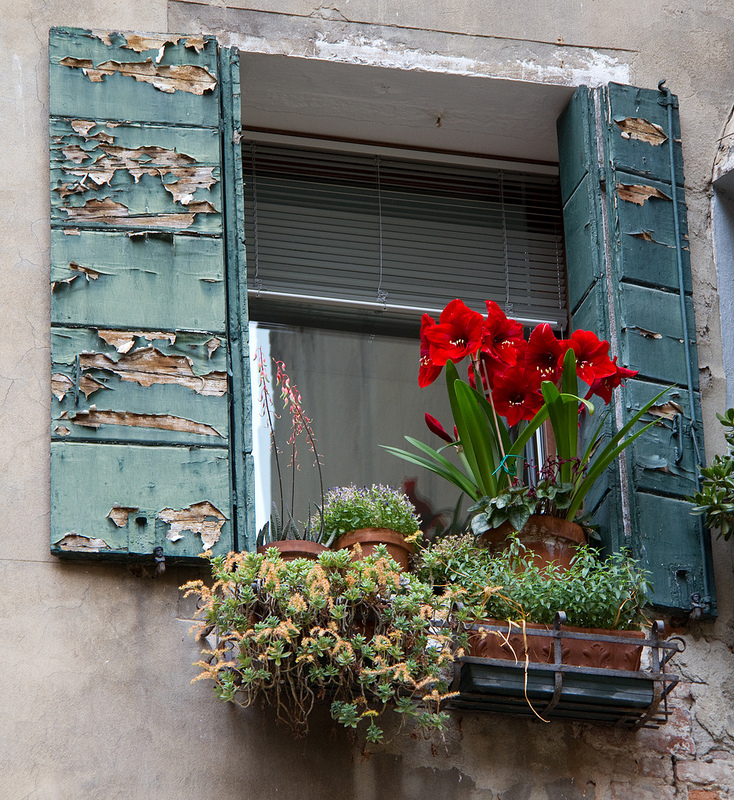
This woman wanted to do something. All she could afford was a few packets of flower seeds. She got out on a spring day to plant the seeds in her long-unused window boxes. She started sitting on her porch every afternoon after watering them, greeting those who went by even though she didn’t know them. Renters in houses where her friends once lived began talking to her. By the time the flowers were in bloom she noticed a difference on the street. She said that people were sweeping their porches and planting flowers of their own. Because they were trying, she got out there to do her part, attempting to take better care of her lawn, telling people who passed by that it was a good way to get exercise she needed. Every time she couldn’t get her mower to start she’d ask a teenager walking down the street to help her. Then before starting to mow, she’d ask for his or her name, shake hands, and thank that youth for doing a good deed by helping her. She made sure to greet those young people by name every time she saw them afterwards.
That summer one family painted their front door. Someone else cleaned up an empty lot that had been a dumping place for trash. People started sitting on their porches, waving to each other, stopping for conversation. It began to feel like a neighborhood again. Building on what’s positive is powerful indeed.
There are plenty of ways people are revitalizing their communities these days. They’re reclaiming empty lots as gardens or play places for their kids, running micro-businesses out of their homes, starting up tool-shares and neighborhood work groups. They’re using social media to connect and collaborate with each other. They’re mentoring kids in the neighborhood and finding ways to get kids more involved in the larger community. Studies show that urban gardens and other revitalizing efforts make a difference, reducing the crime rate and fostering all sorts of positive relationships. An old theory, kind of the flip side of what I’m calling the Window Box Effect, was called Broken Windows Theory. It posited that minor examples of breakdown (like a few broken windows) leads to greater disorder, dragging down not only the appearance of an area but also leading to crime and property damage. This has largely been disproven because crime is actually deterred when people know they have the power to affect their communities and benefit from strong networks within those communities.
Sure, we have a lot to work to do rebuilding our sorry infrastructure and easing the ever-widening income gap. But it doesn’t hurt to remember that noticing a little beauty can amplify the greater beauty that’s everywhere, waiting to bloom.
There are plenty of ways to apply the Window Box Effect.
~How can you re-wire yourself to focus more on what’s valuable, lovely, and positive?
~How can you pay closer attention to delight in your work, your relationship with relatives, your parenting, your body, your home life, the moment you’re in right now?
Tell me how the Window Box Effect works in your life.
I am burdened by positive motivations. I am convinced that I’m on this planet to spread peace, deepen truth, and create joy. Unfortunately details get in the way.
This is my daily to-do list:
1. Live fully
2. Work for the greatest good.
3. Make family life about levity as well as empathy.
4. Minimize my addiction to books (or at least pretend to listen to people who interrupt me while I’m reading).
5. Emphasize creativity, ethical truth, and deeper spiritual meaning in all I do.
6. Floss
7. Oh yeah, stand up straight.
See what I mean? Where is the time for all that bigger peace, truth, and joy stuff? When am I gonna change the world?
Other things get in the way too: the pesky allure of social networking, earning bucks to pay bills, making cheese and herbal tinctures, doing laundry, walking dogs, watching foreign films, plus lying awake nights thinking about my quest. I let these things block my life’s work all the time.
This path I have taken, entertaining grandiose visions while submerging myself in mundane necessities, is contradictory but comfortable. I’m too comfortable with those contradictions.
I’ve been known to blame this on my parents. They were the loving, nurturing types who encouraged their offspring to believe they could accomplish anything. Anything? That’s a heavy burden to carry around.
I’ve blamed society, the society that promises success to those willing to sacrifice important things like relationships and health.
I’ve blamed the Do What You Love, The Money Will Follow mentality which deluded me into believing that I could work at saving the world, get a paycheck, and still be home in time to make a healthful dinner brimming with those all important omega 3 fatty acids.
I’ve taken refuge behind my theory about stages in life, this being my Busy With Everything stage and my Noble Heroine stage coming up at some nebulous time in the future.
But I’m on to my newest excuse—–beneficial thought waves. I run errands, but my mind is sending loving energy to those suffering from fear or pain or despair. I sit through a meeting, but I am praying for the wholeness of the planet. I do laundry, but I am meditating on Unity of All.
I remain convinced I’m here to carry out my quest, yet how much is still undone weighs on me.
“We become what we think about all day long.” Ralph Waldo Emerson
Anastasiya Markovich
Long before I became an adult I launched a quest. This was inspired by a something that weighed on my childish mind, an urgent calling to alleviate the suffering of others. Even when I was a misbehaving little girl who ignored her chores and fought with her sister (often), I still felt the weight of this obligation. My parents cancelled their subscriptions to news magazines to avoid my questions as well as my despair over every sorrowful photograph. And my entire family dreaded driving past a chained puppy or crying baby, knowing that I would agonize the rest of the day over this momentary glimpse out the car window.
For some reason my quest took the form of trying to understand why people acted cruelly. So in my spare time I read everything I could find on the history of suffering, evil, and misery. I learned about the Inquisition, U.S.betrayals of Native Americans, the Holocaust, the genocide ordered by the Khmer Rouge in Cambodia—if it was awful I studied it. I worked my way through every book and resource possible.
Fritz Fuhrken
This project of mine stretched well into my teen and early adult years. It was grim. It haunted my dreams and colored what should have been youthful optimism. I began to realize that every single human has the capacity for cruelty. We just pretend we don’t. A bad mood may be contagious but the shadow we hide can wreak havoc on a personal and even a global level.
One day as I sat in the sunshine while my firstborn played nearby in the grass, my dear friend Leslie came over for a visit. She found me reading yet another horrific book, a stack of similarly dire non-fiction at my side. And she’d had it. She told me I was ignoring the beauty all around me to immerse myself in misery. She told me to look at the light shining on my child’s face, the bright green grass, and all the love in my life.
She was right, of course.
Still I defended my quest. I told her it was an obligation to know what was wrong with the world in order to right it. I waved around books that described the evils of pesticides, the horrors of factory farms, and the title I was currently reading, something about political prisoners.
She disagreed. She said it was time to focus on what was good.
I told her I was I finding good. What I read exposed me to heart-expanding accounts of people who demonstrated the best of humanity no matter their circumstances. Those who were dying of hunger, yet gave their last bit of food to others. Those who had no reason for hope but who kept art and music alive. Those who faced the worst despair, but did not give in to it. The best lesson I learned from years of study? Every single person has a choice, even if it seems there are no choices. That choice is the attitude they take.
Fluxx
It was time to work on my own attitude.
Gradually I stopped trying to understand and fight against all the reasons for suffering. I also became a little less frantic about doing everything possible to counterbalance the wrong I saw everywhere. I noticed that people in activist groups I belonged to faced the world with the same despair I felt, battling evil so fiercely that they had no way to expand on all the good that also flourishes.
So I began volunteering less time to lost causes, marched in fewer protest rallies, and gave up stomping around with petitions. I did more that seemed to boost the positive—gardening, singing to my babies, and guerilla acts of encouragement.
I became certified to teach non-violence workshops which I taught to school systems, incarcerated teens, and senior citizens. As I taught, the lessons sunk in ever more deeply. The long and life-affirming history of non-violence can’t help but heal a heart heavy with the world’s troubles. The process of non-violence—reacting with love rather than hate—is more empowering than any other force we humans have ever used. It transforms greed, intolerance, and cruelty. It’s humanity’s way forward.
It may seem difficult to sustain a positive outlook these days. My own family has been through grief, injustice, unemployment, and other sorrows. And our world struggles while formerly stable structures crumble. Just look at what’s happening to prescribe-and-placate medical models, inflexible financial institutions, condemning religious frameworks, and rigid corporations. But I believe these current conditions of breakup, economic chaos, and environmental decline are exactly those which are (slowly) leading to beneficial change. Collectively we’re waking up to the weakness of limited thinking and short-term fixes. Hopefully we’re also waking up to the reality that we’re in this together—rich and poor, developed and developing nations, young and old, left and right.
Jules Henri Lengrand
I’ve come to believe a better world is made by building on what works rather than focusing on what’s broken, as long as the truth is told about that brokenness and healing is sought.
The world has seen a 70 percent decline in the number of high-intensity conflicts since the end of the Cold War era. Genocide is down 80 percent. Weapons sales between countries have diminished by 33 percent and the number of refugees has fallen by 45 percent. Even measuring from as little as 15 years ago, the number of armed conflicts has dropped from 44 to 28.
Why? Project Ploughshares credits peace building efforts.
Chances are, the reasons for peace are complex. Yet a stronger international resolve to focus on peace building and basic human rights is taking place. Imagine the far larger potential for enduring peace if we intentionally educate our children and ourselves in the proven methods of non-violence—-negotiation, mediation, reconciliation, even basic listening skills.
2. Freedom is stretching across the planet.
By evaluating variables including civil liberties, democratic institutions, and independent media it’s possible to assess how free each nation in the world really is. Back in 1973, 29 percent of nations were deemed free, 25 percent partially free, and 46 percent not free.
In a little over 35 years, the number of nations ruled by authoritarian regimes dropped from 90 to 30. Countries around the world considered to be free increased by 50 percent while those not free had dropped by more than half.
Independence has a long way to go. But positive signs—protests, dissent, political upheaval show us that ordinary people are speaking up for freedom.
3. Longevity is improving yet total population faces a downturn
Fulfilling the cherished hopes of their parents, more children around the world are born healthy. Mortality rates for those under five years of age have fallen by 60 percent since 1960.
Meanwhile, life expectancy has risen 21 years since the mid 1950’s. Try to suppress your optimism while looking at this analysis of longer lived well-being around the world.
This doesn’t mean the planet will be too crowded. Overall population will continue to rise for several more decades but we’re facing a major downturn. Already birth rates are near or below replacement rate in countries all over the world. Increased education and affluence tend to inspire women, no matter what country they live in, to invest their time and resources in fewer children. As Fred Pearce clearly explains in The Coming Population Crash: and Our Planet’s Surprising Future, our little Earth will likely reach a (painful) peak of 8 billion people around the year 2040, then the total number of human will begin to decline so rapidly that nations will struggle to keep their populations levels from slipping too low. They may create perks for becoming parents and incentives to attract immigrants.
4. Literacy rates continue to improve.
Global adult literacy rates have shot up from 56 percent in 1950 to nearly 84 percent today, the highest ever.
Women’s rates haven’t risen as quickly due to inequality and poverty, but in some areas, particularlyEast Asia, 90 percent more girls are able to read than 10 years ago. As female literacy goes up, other overall positive indicators tend to follow including decreased domestic violence, improved public health and greater financial stability.
5. Intelligence is on an upswing.
From generation to generation, we’re getting smarter. In fact, to accommodate continuously increasing intelligence the IQ test must be renormalized (standardized to keep the average test results at the 100). This is called the Flynn Effect.
Between 1932 and 1978, mean IQ scores in theU.S.rose 13.8 points. If your grandparent received IQ score results of 98 back in 1932 they’d have been deemed of average intelligence. That same grandparent, if administered today’s tests, would be considered to have a borderline mental disability by current scoring standards. IQ scores have risen even higher in some other countries. Of late, developing countries seem to be experiencing the biggest surge.
Plenty of explanations have been proposed, but the increase can’t be definitively pinned on genetic improvements, improved nutrition, greater familiarity with testing or better schooling.
According to Cornell professor Stephen J. Ceci, the most direct gains are not in subjects that aretaught (math, vocabulary) but are shown in parts of the test that seem unrelated to schooling (matrices, detecting similarities). In fact, test gains have been enormous in areas requiring the child to apply his or her own reasoning, such as arranging pictures to tell a story or putting shapes in a series. Although teaching children does return positive results, what a child learns through the natural stimulation of everyday life has a more profound effect. For example, a study to determine the effect of schooling on rural children inIndia found that the increase in overall intelligence from a year of age is twice the increase from that of attending a year of school.
IQ test scores don’t relate to what truly provides satisfaction in life. But the Flynn Effect is intriguing. Factors we can’t completely explain are giving us the intellectual capacities to deal with an ever more challenging world.
6. Compassion is huge.
Never before in history have so many people worked tirelessly and selflessly to benefit others. Paul Hawken writes in Blessed Unrest: How the Largest Movement in the World Came into Being and Why No One Saw It Coming that the abolitionist movement was the first major movement by human beings to advocate on behalf of others without seeking advantage for themselves or their particular social or political group. Since that time, such efforts have grown with astonishing vigor.
There are now over a million organizations on the planet working for environmental stewardship, social justice, the preservation of indigenous cultures, and much more. These groups don’t seek wider acclaim, they seek to make a difference for the greater good.
Humanity, which is clever and kind enough to bring about so much improvement, is also awakening to the vital importance of living more sustainably on Earth.
I know we can live more peacefully and wisely.
Thank you Leslie.
Salvatore Di Giovanna
“When I despair, I remember that all through history the ways of truth and love have always won. There have been tyrants, and murderers, and for a time they can seem invincible, but in the end they always fall. Think of it … always.” Mahatma Gandhi
We are one being, linked in profound and essential ways even though we rarely pause to consider them.
The surface of Earth is seventy percent water just as we are made up of seventy percent water. This is the same water that has been on Earth for four and a half billion years. It flows in and out of each one of us. In cycles too infinite to imagine this water has been drawn up in plant cells, swirled in oceans, circulated in bloodstreams, sweated, excreted, wept out tearfully, drunk up thirstily, formed into new life, risen into vapor, and locked into ice. The saliva in your mouth is made of water molecules intimately shared with beings that lived long ago and will be shared with all who come after us.
We breathe about 600 million breaths in a lifetime. The air we rely on is a balance of nitrogen, oxygen, argon, carbon dioxide, and a dozen or so other gases perfect suited to our existence. It circulates through endless forms and uses, moved by the wind of our planet and by each exhale of living beings—-trees, crows, humpback whales, and newborn babies. It recycles just as the calcium in your jawbone may well have been quicklime poured on a criminal’s grave, a garnet on a nobleman’s finger, cheese carried by a nomadic herder, and a coral reef in a tropical ocean.
Nothing about our bodies is separate from what’s around us. We are nourished by what has grown from the sun’s energy and we remake ourselves constantly, replacing millions of cells every second using only the materials that have been on this planet for millennia.
Quantum physics tells us the principle of entanglement explains how particles, once linked, can remain connected even when physically separated by vast distances, possibly even by time. Entanglement occurs between living beings as well, both human and animal, indicating a greater connection same call a morphic field and others call a holographic universe.
On this planet we are linked to every particle and every life form so intimately that science is beginning to echo what poets and sages have been saying for thousands of years. We. Are. One.
Each person is truly your kin. Our human connection begins with common ancestors. Genealogist Gary Boyd Roberts estimates that everyone on the planet is at least a 40th cousin. That’s because the family tree expands as each generation traces back. You have eight great-grandparents. Their parents had 16 parents. Go back 40 generations and you’d find a trillion grandparents at a time when there were fewer than 15 million people on the planet. That means we share 40th great-grandparents. In that way you are connected to eighty percent of the people on this planet. That includes the guy driving the delivery truck right outside your window and the woman thousands of miles away struggling to find water in a drought.
The smallest children seem to recognize that existence is an “alive poem.” They find kinship with rocks, animals, as well as people. Our human family, built on kindness and cooperation, helps one another heroically. We are waking to the ways our Earth sustains us, working harder than ever to restore justice and ecological balance. We are reaching out to share, laugh, explain, and find kinship with one another.
We are entangled in a universe so holographic that we can’t help but sense the oneness that has been there all along.
Quick, describe your neighbor. The friend you just talked to on the phone. And one other person you know.
Tally up the negatives and positives. What do they indicate?
Actually, they say a lot more about you than the people you’re describing.
Sages, poets and mystics have told us all along that what we perceive is who we are. Research indicates they were right. Our perceptions of others actually say much more about us.
According to a study in the July 2010 issue of Journal of Personality and Social Psychology, the tendency to assess people in our social networks positively is linked to our own
enthusiasm,
happiness,
kind-heartedness,
politeness,
emotional stability,
life satisfaction,
even how much others like us.
A lead researcher says, “Seeing others positively reveals our own positive traits.”
The opposite is also true. The study found that how negatively we view others is linked to our own unhappiness as well as a greater likelihood of problems such as depression, narcissism and antisocial behavior.
That explains a lot.
Sure, any three people we know are likely to have annoying traits. Who doesn’t? But as Carl Jung said, “Everything that irritates us about others can lead us to an understanding of ourselves.”
Often people whose behavior is most challenging turn out, in retrospect, to bring out new strengths in us. They illuminate what we don’t want to see, make us more aware and teach us to be better people ourselves. Perhaps we’re drawn to the sandpaper that smoothes us our own imperfections.
It isn’t reasonable to cast a wholly positive light on every person. But knowing that what we see is what we enhance in ourselves, that can make all the difference.
Okay, radical sounds hip. I can live with that. But homemaker? The last few decades that word has been a synonym for drudgery. Besides, ask my kids who really does the dusting and vacuuming around here. They do.
What’s radical homemaking? Shannon Hayes wrote a wonderful book called Radical Homemakers: Reclaiming Domesticity from a Consumer Culture. Yes, I thought when I heard the term. Naming something gives it momentum. And the lifestyles of people defining for themselves what The Good Life is all about haven’t gone unnoticed so much as undefined. It doesn’t seem radical in the slightest to many of us who try to live simply, it just makes sense.
Thankfully Shannon pulls the pieces together. As she writes,
…each of us has a calling or right livelihood that enables us to serve the common good, and in finding this calling, we will be most happy. Few, if any spiritual teachings call us to seek the accumulation of money, stuff, power, or other purely selfish interests. Further, in a life-serving economy, we individually accept responsibility for creating our own joys and pleasures. We do not rely upon corporate America to sell us these things. We take personal and collective responsibility for supplying many of our needs. In taking these steps, we discover that true economic assets, unlike money, are intangible.
There’s nothing new about this. Most of our foremothers and fathers upheld frugality and scorned excess. Throughout history people have been growing and preserving food, making gifts, providing hands-on care for the young and old, repurposing materials, and finding meaning in pleasures that aren’t necessarily linked to spending money.
This sort of lifestyle simmers along quietly and purposefully while consumer culture runs at a full boil, generating heat over every new trend and news flash.
Somehow, in a world bristling with radical homemakers, I’ve been outed as one of the representatives. “A poster child,” claimed the journalist who trekked out to our little farm with her notebook in hand last week. I’m more comfortable interviewing others rather than being interviewed, but I put my trust in her expertise. I thought it wouldn’t be too difficult to talk about trying to place our interests beyond the shallow values of appearance as I sat there wearing a thrift shop shirt that had to be 20 years old. Well, until the photographer showed up. Judging by the anxiety that generated I’m still the product of an appearance-indicates-worth society. The irony wasn’t lost on me. I gave up all hope of looking 20 pounds lighter or remotely put together and kept talking.
And laughing. Her questions struck me funny. In fact, she came right out and asked, “Don’t people treat you as if you’re odd?”
Maybe they do but I always thought that’s because I’m sarcastic and tend to sing songs with made-up lyrics.
I told her about homeschooling and the intrinsic value of meaningful learning. I told her about our local food co-op, about making homemade tinctures and about using things until they wear out.
I tried to explain why I preferred to make sandwich buns over the weekend for a party here rather than buy them. “Was it part of your philosophy?” she asked. “Was it cheaper?”
I haven’t priced such buns at a store, I told her. I ground the grain, used eggs from our chickens, milk from our cow, and honey from our bees, then kneaded the dough and baked them that morning. It cost almost nothing in ingredients and very little in time. Yet it had more to do with deeper choices. But don’t write about the buns, I said, it makes me sound really annoying.
I’m sure I’m annoying (just ask my kids) but also I’m pretty relaxed. I’m comfortable with weeds in the garden (nature doesn’t like bare dirt anyway) and stacks of reading material everywhere. I make homemade pizza all the time but that doesn’t mean we don’t occasionally succumb to the greasy allure of what my kids call “real pizza” from a little carry out nearby. We don’t have money for things like vacations or video games, we do have time to sit around talking long after dinner is over.
When I was fresh out of college I planned to save the world. I’m beginning to see it’s possible to do so, simply by saving what’s important right in front of us.
*
Postscript: Thankfully I’m a small part of the finished article. After the other radical homemaker piece I’ve been interviewed for in Ladies Home Journal, I’m saying no to future interviews. Why? Because it’s titled “Extreme Housewives.” (The promo reads, “A small but passionate group of women across America have embraced the kind of back-to-basics homemaking our grandmothers did-from scratch, by hand, grown in the backyard. And they’ve never been happier.” Oy vey.






 . Yes, I thought when I heard the term. Naming something gives it momentum. And the lifestyles of people defining for themselves what The Good Life is all about haven’t gone unnoticed so much as undefined. It doesn’t seem radical in the slightest to many of us who try to live simply, it just makes sense.
 Laura Grace Weldon