What’s The Perfect Age?

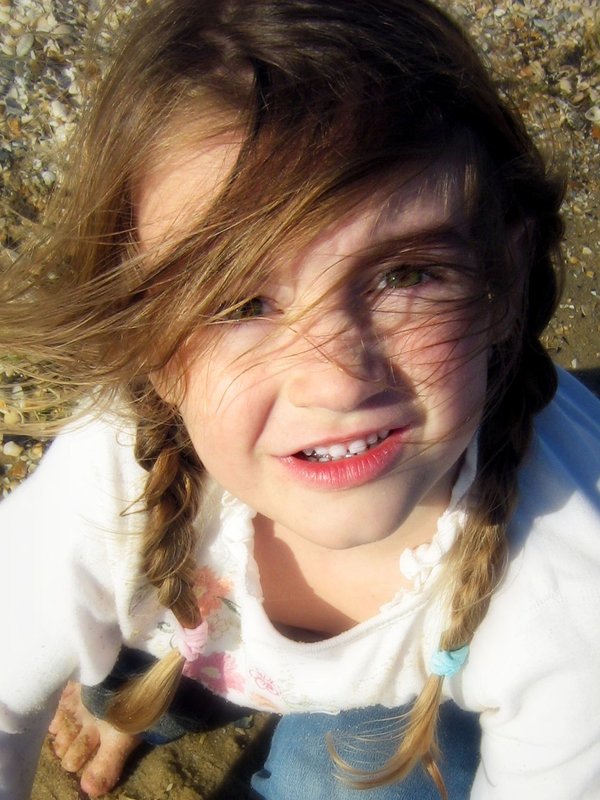
what is the perfect age,growing older is perfect, child is not an ungrown adult, baby is not an unformed child,

(Image:littlefantasy.deviantart.com)

There must be an ideal age floating around in our collective unconscious. This is such a fixed part of our media-driven culture that it’s hard to focus on it. But let’s give it a try. Allow a number come to you as you consider the following questions.

 What age do parents have in mind as they groom their kids for success?

 What age do kids have in mind as they imagine growing up?

 What age do older adults have in mind as they try to look and act younger?

I’m guessing it’s somewhere between 21 and 35, a time when we’re supposed to be brimming with youthful good looks and potential. Or maybe it’s not a number but just a fundamental belief that young adulthood is some sort of peak. Everything before that is preparation, everything after a slide toward old age.

Consciously or unconsciously, believing in this ideal age uses up a large part of all our other ages.

Consider how relentlessly the adult world prods children to get (or at least act) older. I know I’m somewhat guilty. I did my very best to savor the baby and toddler years but honestly, it’s hard. I found myself thinking that it would just get better after they finished teething, or could talk, or finally mastered toilet training. Even the most sainted in-the-moment parent will find him or herself bombarded with well-intended, future-oriented inquiries from others like, “Is she sleeping through the night?” and “Does he talk in sentences yet?” Such questions don’t stop as the child gets older, instead they have to do with bigger topics like academic abilities, athletic achievement, even popularity. Admiration is heaped on little ones who act much older than their developmental age, especially those children who exhibit social poise beyond their years, as if six-year-olds who act like six-year-olds are already somehow behind.

The pressure becomes more intense with each passing year. Parents often find themselves buying all sorts of educational toys and electronics, filling what could be free time with an ambitious schedule of practices and enrichment programs, and of course, pushing educational achievement. We’re told that these efforts “count” as if there’s a permanent record for eight-year-olds or 13-year-olds. There isn’t.

We’re assured that getting kids ahead in sports or hobbies will create passionate engagement, but research affirms that children build rewardingly intense interests when they are free to explore activities without adult pressure and interference

We’re led to believe that early academic accomplishment is the path to later success. Too often, that’s not true either. Success is closely linked to much more nuanced personal factors which develop quite nicely, research tells us, during free play, early participation in household tasks, conversation, and other experiences that foster self- control as well as an internal locus of control

Pushing our children toward adulthood takes us (and them) away from seeing that each of us are whole people exactly as we are. A baby is not an unformed child, a child is not an ungrown adult, an elder is not an age-ruined version of a once younger self.

Each of us is wonderfully unique. Of course we’re flawed and often foundering. But at the same time we are also brimming with emerging possibilities. We don’t have to paddle away from the moment we live in toward some ideal age. Doing so doesn’t just wish away right now, it also condemns every other age we live in to be something less.

Truly seeing our children and our elders as complete and whole, right now, means seeing ourselves that way too.

Engage The Window Box Effect

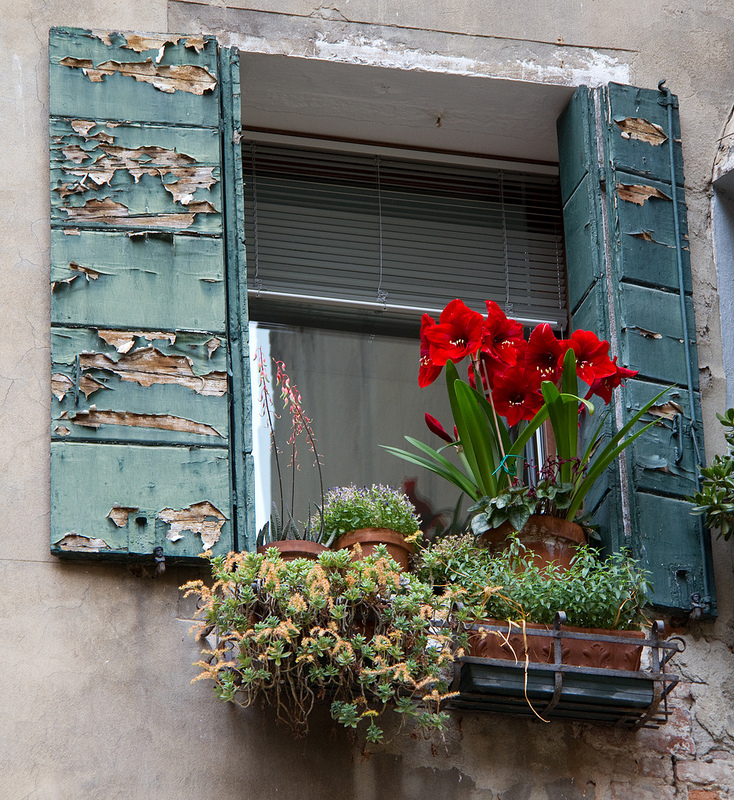
beauty heals, finding the positive, reversing urban decay, building a neighborhood,

CC 2.0 by ahisgett

When I was in college my professors enjoyed crushing what was left of our youthful optimism with miserable statistics about how bad everything was and how rapidly it was getting worse. (Even their cynicism was too small to envision our current issues.) I remember a semester-long course that had to do with reversing urban blight. After being taught about this dire and growing problem we were introduced to the standard remedies. Our professor scornfully dismissed every effort to reverse urban blight. The worst thing that could be done? Coming in from outside the community to impose a do-gooder solution. The only right thing to do was a vast overhaul of our economic structures. (Those structures are even shakier today.) I wrote sufficiently miserable papers to get an A but was left with quiet despair in my ever-hopeful heart.

Soon after that class I read about one woman’s experience of urban blight. She’d lived in the same house for decades, watching her neighborhood decline. There were few jobs and the ones available paid poorly, with no benefits or job security. She sadly listed the local businesses that had left, leaving her area with no grocery, beauty shop, or movie theater. The only places that remained were bars and corner stores selling little in the way of real food. People lost their homes and landlords took over, rarely keeping up the property. The city lost revenue, doing little to keep up with residents’ complaints. It seemed to her that young people were lost too. They swore in front of tiny children and their elders, hung out all hours on street corners, got into public fights, abused drugs. She was quoted as saying that people complained they got no respect from young people, when really the young people had no respect for themselves.

The reason she was being interviewed? She was credited with beginning a tiny urban renaissance that was evident on her street and slowly spreading through the neighborhood.

Here’s how it happened. She’d been in poor health and adjusting to widowhood. Her home had been well maintained over the years but like many wood-sided homes, it began to look shabby when too much time went by without new paint. After her husband died she didn’t do well keeping up with yard work and because the street had changed she rarely sat on the porch as she used to do in years past, chatting with neighbors and greeting young people by name as they went by. It wasn’t just friendliness. When everyone knows everyone, word of misdeeds travels home quicker than an unruly child can get in the door. And when a child really knows the elders on his or her street, they have many more potential role models to benefit them as they grow up. That’s the proverbial “village” it takes to raise a child.

This woman wanted to do something. All she could afford was a few packets of flower seeds. She got out on a spring day to plant the seeds in her long-unused window boxes. She started sitting on her porch every afternoon after watering them, greeting those who went by even though she didn’t know them. Renters in houses where her friends once lived began talking to her. By the time the flowers were in bloom she noticed a difference on the street. She said that people were sweeping their porches and planting flowers of their own. Because they were trying, she got out there to do her part, attempting to take better care of her lawn, telling people who passed by that it was a good way to get exercise she needed. Every time she couldn’t get her mower to start she’d ask a teenager walking down the street to help her. Then before starting to mow, she’d ask for his or her name, shake hands, and thank that youth for doing a good deed by helping her. She made sure to greet those young people by name every time she saw them afterwards.

That summer one family painted their front door. Someone else cleaned up an empty lot that had been a dumping place for trash. People started sitting on their porches, waving to each other, stopping for conversation. It began to feel like a neighborhood again. Building on what’s positive is powerful indeed.

There are plenty of ways people are revitalizing their communities these days. They’re reclaiming empty lots as gardens or play places for their kids, running micro-businesses out of their homes, starting up tool-shares and neighborhood work groups. They’re using social media to connect and collaborate with each other. They’re mentoring kids in the neighborhood and finding ways to get kids more involved in the larger community.  Studies show that urban gardens and other revitalizing efforts make a difference, reducing the crime rate and fostering all sorts of positive relationships. An old theory, kind of the flip side of what I’m calling the Window Box Effect, was called Broken Windows Theory. It posited that minor examples of breakdown (like a few broken windows) leads to greater disorder, dragging down not only the appearance of an area but also leading to crime and property damage. This has largely been disproven because crime is actually deterred when people know they have the power to affect their communities and benefit from strong networks within those communities.

Sure, we have a lot to work to do rebuilding our sorry infrastructure and easing the ever-widening income gap. But it doesn’t hurt to remember that noticing a little beauty can amplify the greater beauty that’s everywhere, waiting to bloom.

There are plenty of ways to apply the Window Box Effect.

Tell me how the Window Box Effect works in your life.

We Choose Our Own Role Models

role models, mentors, how role models shape, impact of role models,

Image courtesy of s2-s2.deviantart.com

There’s no predicting who we choose as our role models. Teachers, coaches, and religious leaders are held out as exemplary choices and for good reason, since mentors are linked to greater success in adulthood. Despite adults’ well-meaning efforts to foster or even assign mentors, each one of us is drawn to people we find inspiring. It’s only in looking back that we can see more clearly how our childhood role models play a part in shaping who we become.

This is obvious looking at my husband’s growing up years. He wanted to understand how the world around him worked, and like most children, he wanted to find out by getting right in the midst of what fascinated him rather than play with plastic hammers and screwdrivers. So he sought out neighbors who let him fix cars alongside them and who welcomed his help running their small businesses. What he gained from these experiences still benefit him.

It’s not as obvious in my life so I have to strain to make those connections. I had plenty of freedom to ride my bike and play without too much parental supervision, but seeking out other grown-ups never occurred to me. In fact I can only think of a single adult outside my family who made a lasting impression. Her name was Mrs. Dosey.

I met her during a criminal investigation. Well, sort of.

When I was around eight, my older sister developed a brief infatuation with espionage. She deemed herself a private investigator and permitted me to be her sidekick. We practiced sidling around without being seen, took notes on people’s behavior, and looked for a mystery to solve. My sister hit the jackpot when she discovered bones in a field across the street. Bones! This could be dangerous. My sister identified the house in closest proximity to the bones. It seemed like a strange place. The yard had almost no grass. Instead the front was crowded with strangely cropped trees and the back sported a clothesline (unheard of in our suburban neighborhood) and a jumble of fenced-in areas—sinister indeed. We practically trembled with fearful anticipation.  My sister instructed me to remain completely silent, she’d question the suspect.

When she rang the doorbell it was promptly opened by a sturdy middle-aged woman wearing an apron and orthopedic shoes, her hair mashed down by a hairnet. When she invited us in I noticed she had a trace of an accent. Against all parental advice about strangers, we walked meekly inside.

Mrs. Dosey was busy in the kitchen but gladly welcomed two girl detectives. She didn’t raise an eyebrow when questioned about bones. She explained that she raised ducks, which she slaughtered for meals on special occasions. Although it wasn’t the murder we anticipated, it was death nonetheless. My sister and I shivered.

Mrs. Dosey talked to us as she went back to her culinary project. We learned that the cropped trees in her front yard were an apple orchard and the back yard was crowded with vegetable gardens, berry bushes, and poultry pens. She served us milk and homemade cookies. We stayed quite a while, curiously watching her work.

Mrs. Dosey was assembling a wedding cake she’d made from scratch. She showed us how she was separating the layers using tiny soda bottles between them, to be covered by flowers from her yard. Finally she said we could come back another time, she had a few more things to finish before her daughter’s wedding that was taking place the next day. My sister and I weren’t even disappointed that our murder case had collapsed. We’d met someone who seemed like a different creature than the frosted hair moms of our generation.

It didn’t occur to me till years later that Mrs. Dosey was completely matter-of-fact about two little girls sitting at her kitchen table, inches from this towering confection. She was entirely unruffled on a day most mothers of the bride are harried, even though she’d made the dress, the cake, and if memory serves, was making the reception food as well.

I never knocked on Mrs. Dosey’s door again. My sister and I dropped the private eye business to become girl scientists. We waded into the pond in sight of Mrs. Dosey’s house observing duck behavior and slogged home covered with what we optimistically called “duck muck.” My mother, who began buying apples from Mrs. Dosey every fall, seemed to regard the woman as an oppressed version of her gender. She pointed out Mrs. Dosey’s heavy labor around the house and yard, noting that this woman rode a bike with a basket to the store every few days for groceries. The emphasis seemed to rest on evidence that Mr. Dosey didn’t share those burdens. To me, Mrs. Dosey seemed remarkably happy. And savvy as well. She waved when my sister and I were out but was wise enough to spare us that social indignity if we were waiting with friends at the school crossing near her house. I saw her on that bike for years after I left home. She never looked any older or any less cheerful.

I credit my husband’s role models for helping him grow up to be capable, positive, and wonderfully open-hearted. But not for a single moment have I ever linked my own life choices to Mrs. Dosey’s example. After all, I planned to change the world by elevating peace, ecological harmony, and justice. If I had time I hoped to fit in writing novels. And parenting. Okay, I also wanted thick hair and thin thighs.

None of that happened. I’m not a UN peace negotiator, my activism is local and my writing is gentle. I’m not blocking whaling ships with my fellow Greenpeace buddies, instead I tend to vegetable gardens and haul buckets of kitchen scraps to our livestock. My choices look more like Mrs. Dosey’s, although I can’t pretend for a moment that I’ll ever have her patience. I was raised to believe I could be accomplish anything if I worked hard enough but I’m learning that we can save the world right where we are. In part, that means opening the door on our busiest day ever to welcome the questions of little girls.

Who in your growing years made an impression on you and how do you see their impact in your life today?

The Boy With No Toys

why toys are bad for kids, overstimulated kids,

Before he was born, his mother decided her son would have no toys. Abandoned by the father, she was already a single parent. She made a living cleaning for other people. Most days she took the bus to affluent streets where children never seemed to play outside. As she vacuumed and scrubbed beautiful homes overfilled with possessions she paid close attention to what children did all day. Often they were gone at lessons, after school programs, or playdates. When they were home they usually sat staring at screens. Toys in their carefully decorated rooms appeared to be tossed around as if the small owners had no idea how to play, only how to root restlessly for entertainment.

She thought about it, talked to the oldest people she knew, and read everything she could. Then she informed anyone who cared to listen that her child would not have toys. Not a single purchased plaything.

Will (name changed) and his mother live in a small mobile home park. By most standards they are poor. Their income is well below the poverty line. They don’t have a TV or computer (although Will uses the computer at the library and watches the occasional TV program at babysitters’ homes). But their lives are rich in what matters. Together Will and his mom grow food on several shares of a community garden, bartering when they have extra produce. They make all their meals from scratch. These routines activate a whole array of learning opportunities for Will, quite naturally.

They are close to most of their neighbors in proximity as well as in friendliness. While his mother is working Will is cared for by several different seniors in their trailer park. He not only likes to help his mother garden, cook, and take care of their small home but he also likes to take part in helping his neighbors with small tasks. He carries groceries for certain ladies, helps an older gentleman with a birdhouse building hobby, and sometimes gets to assist another neighbor in automotive repairs.  He gets a lot out of these meaningful tasks.  Children long to take on real responsibility and make useful contributions. Giving them these opportunities promotes their development in important ways.

Sounds nice. But what about play?

natural play best for kids, free play, no toys,

When Will was a baby his mother made all sorts of toys. Most took no time at all. Food containers became stacking toys, a small water bottle with beans inside became a rattle, a sock stuffed with drier fuzz and tied in knots became a soft animal.

Will is now six years old. He plays as any child naturally does. He makes up games and turns all sorts of objects into toys. His mother saves money by not owning a car, so Will has commandeered a large portion of the shed that would normally be used as a garage. Mostly he uses it to stockpile his own resources. He has scrap wood, a few tools, and cans of nails. He likes to straighten bent nails for future projects, working carefully now that he recently discovered what smacking his fingers with a hammer feels like. Recently he found a discarded lawn mower tire, so he’s looking for three more tires to make a go-cart. In the evenings he likes to draw elaborate pictures of this upcoming project. He particularly enjoys playing in the soft dirt along the side of the shed where “robot men” he makes out of kitchen utensils use their potato peeler and wisk limbs to churn through the soil, leaving tracks as they clink. When he visits friends he happily plays with their toys, although he doesn’t always “get” that certain TV or movie-themed toys are limited to the plot-related storylines. So far he seems to have no urge to possess the same toys.

What about birthdays and holidays? Will’s mother does give him gifts. But she limits her gifts to useful items—crayons, clothes, tools, a compass. Each weekend her folk band practices at their mobile home. Will quickly mastered the harmonica and begged for time on the fiddle, so her big gift to him this year was a used child-sized fiddle. She urges the other adults in his life to gift him with experiences—a trip to the beach, a day of horseback riding, a visit to a museum. Out-of-town relatives now renew a children’s magazine subscription and send him regular snail mail letters, both of which are helping him learn to read with very little prompting.

natural child development,

Will’s childhood has a lot in common with the way children have learned and grown throughout history. As historian Howard Chudacoff notes in Children at Play: An American History, play is vital to development. It’s has everything to do with autonomy, exploration, imagination, and fun. It has very little to do with purchased playthings. In fact, structured programs and commercial toys actually tend to co-opt play.

Studies with rodents show those raised in enriched environments (toys and changing items in cage) have enhanced brain development compared to rats raised in a standard environment (plain cage, unchanging). We’ve misinterpreted these results. Rats don’t naturally live in boring, unchanging cages. They live in nature, which is by definition a challenging often constantly changing environment. In nature rats have far more complex lives than they ever might in a cage. Such an interesting life IS an enriched environment. It’s the same for children.

Sure there are devices that will “read” to a child. These are not more enriching than being read to by a responsive adult. And there are all sorts of adult-designed games. They’re not more fun or enticing than games kids make up on their own or with friends.

In fact, the overstimulation of blinking, beeping, passive entertainment isn’t beneficial for children. Joseph Chilton Pearce wrote in Evolution’s End: Claiming the Potential of Our Intelligence that the overload of television, electronics, and too many toys limits a child’s sensory awareness. Their brains and nervous systems accommodate intense bursts of sound, light, and color during their earliest years. Rather than developing the subtle awareness fostered by time spent in nature, in conversation, and in play they instead are wired to expect overstimulation. Without it, says Peace, they’re bored.

And yet, so many people are amused when tiny children are clearly pushed to the limits by a toy too overwhelming for them. (Every search for a video to illustrate this seems to think “baby scared by toy” is funny.)

The children Will’s mother cleans for, who are kept busy in adult-run programs and have access to electronic distractions, don’t have Will’s advantages. As he plays and innovates he’s actually promoting the kind of learning that translates to a lifetime of passionate interests. Studies show that children who are free to explore their interests without adult pressure and interference  are more autonomous, eagerly pursuing excellence through healthy engagement rather than heavy-handed adult pressure.

Ask the oldest person you know to share some memories about play from his or her childhood. Chances are you’ll hear about pick-up games, handmade toys, and free time that spun long summer days into marvels of imagination. That’s what Will’s mother wants for her child.

play develops intelligence, benefits of free play, deprive your kids of toys, handmade toys,

First published in Natural Life Magazine

Mentor: Fancy Name For Grown-Ups Kids Need

mentor, role model, adult pals for kids, children in the neighborhood, real work for kids,

image courtesy of LisaW123’s Flickr photostream

The little boy just wanted to “do stuff.”

His parents let him traipse around with his wagon on garbage collection day. He’d take home pieces of wood, carefully pulling out nails to store in a can, so he and his friends would have the necessary materials to build forts or go-carts. Occasionally he found small engines that he’d do his best to fix. No one intervened to tell him his pursuits weren’t safe, although he was expected to clean up any mess as well help around the house.

His neighbors didn’t mind having this kid appear whenever they did something interesting—fix a car, build a shed, tend a greenhouse full of plants, run a garage sale. He was eager to learn and even more eager to help, so they did what adults have done throughout time. They shooed him away occasionally but mostly they shared what they knew.

He made use of what he learned. By the time he was 12 or 13 years old, these neighbors let him take on their home and car repairs, recognizing he was able to do a more exacting job than they might have done themselves. He gained more than skills from the adults in his life. He may have been leaning over a car hood with Clyde, but he was also learning how to understand the function of each system by paying attention. It seemed he was only helping Mr. Christman with the heavy tasks of operated a greenhouse but he was also taking in something important about growing old with dignity. It appeared he was working alongside his grandfather but he was also seeing how reputation, honesty, and treating each person with respect builds a small business.

Because he developed richly rewarding relationships with people of all ages, relatives as well as neighbors, he had plenty of examples to draw on as he matured. He saw how different people handled decisions, disciplined their children, laughed off trouble, solved problems, stayed in love.

His experience was rare. It’s becoming rarer all the time.

Throughout nearly all of their childhood and teen years our kids are segregated in day care, school, sports, and other activities. Even when they benefit from the very best programs, if they’re restricted to the company of same-aged peers doing what adults consider educational and enriching they are deprived of the riches found through fully engaging in the wider world. This subverts the way youth have matured throughout human history, when children learned right in the context of family and community—freely able to watch, imitate, and foster relationships with people of all ages.

We put kids in an oddly uncomfortable position when most adults in their lives are focused on them. Children want to center themselves, not have adult attention centered on them. Kids long to model themselves after adults who are engaged in meaningful, interesting, and useful activities of their own. When their experience of adults is limited to those who are there to care for, educate, or entertain children (important callings but not all that adults can do) the dynamic is shifted. The age-old desire to gain mastery and take on responsibility, eagerly becoming a capable adult, doesn’t have the same pull.

There are plenty of educational initiatives to bridge this gap, particularly for teens. These programs connect students with mentors or bring community members into schools to talk about their careers. While these efforts are admirable, such stopgap measures aren’t the way young people learn best. They need to spend appreciable time with people of all ages—observing, conversing and taking on responsibility. Real responsibilities, real relationships.

How can we remedy this?

That little boy? He grew up to be a remarkably capable, beautifully open-hearted, and endlessly positive person. I married him.

mentor, building competence through imitation, children at work,

Bringing Kids Back To The Commons

involve kids in community, end age segregation, youth volunteers, business engagement with community, non-profit engagement with community, babies in nursing homes, daycare in nursing home,

Image by mollicles420.deviantart.com

Surely my baby was as good as a dog.

I’d read that nursing home residents benefited enormously from contact with therapy dogs. During and after dog visits these elders were more alert and in better moods. So I figured, why not bring my baby to a nursing home?

I contacted a nursing home around the corner. The administrator was enthusiastic. Then I talked friends into forming a nursing home-based playgroup for our infants and toddlers. They were somewhat wary, but agreed to give it a try. Finally I got a local store to donate a carpet remnant for our little ones to crawl and play on. Between visits, the nursing home could roll it up for storage. We were ready.

We met regularly at that nursing home for several years. Our babies grew into toddlers, the elders became our friends. Residents’ families and staff members often told us that our visits stimulated memories, generated activity, even inspired people who were mostly mute to say a few words. We were awed. Something as simple as our presence, sitting on the carpet playing with our children, made a difference to people whose once full lives were now constricted. We benefited too. We learned the value of advice given by people older than our grandparents. And we noticed how completely our toddlers accepted the physical and mental differences around them with natural grace. (Here’s how to set up your own playgroup in a nursing home.)

I’m still not sure why the very old and young are kept apart from life on the commons. Vital and engaged communities are made up of all ages. And children have fewer opportunities to take an active part than almost any adult. This shortchanges everyone.

Throughout history, the young of our species have learned by getting involved. Children long to take on real responsibilities and make useful contributions. This is how they advance in skill and maturity. That is, unless we restrict them to child-centered activities.

Young people are also drawn to seek mentors. They want to see how all sorts of people handle crises, start new enterprises, settle disputes, and stay in love. But today’s young people are largely kept from meaningful engagement with the wider community. They’re segregated by age not only in day care and school but also in most spheres of recreation, religion, and enrichment. When we keep kids from purposeful and interesting involvement with people of all ages they are pushed to find satisfaction in other (often less beneficial) ways. Meanwhile, our communities are deprived of their youthful energy and innovative outlook.

It doesn’t have to be that way. There are ways to reconnect children with our communities.

  1. Involve children by giving them real input and responsibility in civic groups, churches, co-ops, CSA’s, arts organizations, clubs, and neighborhood organizations. What about a child who is a dedicated rock enthusiast but the local lapidary club only accepts adult members? Propose a joint adult/child membership, giving that child the same (age factored) opportunities to build social capital in the club. A similar approach can be taken with organizations that refuse to take youthful volunteers. Offer to give your time in partnership with the child, a two-for-one volunteer bargain. Adult advocates are often necessary to pave the way for genuine youth involvement in many groups.
  2. Give children contact with the workaday world. They need to know people with a range of hobbies and careers. Seek out those who are passionate about chemistry, bird watching, farming, the Civil War, engineering, astronomy,  geology, blacksmithing, wood carving, well, you get the idea. Something vital is transmitted when one person’s enthusiasm sets off a spark of interest in a child. We’re rarely turned down when we ask to learn from others. People who love what they do can’t help but inspire kids and, they often tell me, the kids reignite their hope for the future of their work.
  3. Help local businesses tune in to children’s interests. For example, a bakery might hang children’s art on the walls, make meeting space available for a kids’ chess club, host Invent A Cookie contests, open the kitchen for tours, offer apprenticeships to aspiring young pastry chefs, teach parent-child baking classes, invite speakers to explain the science of yeast and flour, give cupcakes as prizes for youth community volunteer hours, etc. Businesses that are truly engaged in this way inspire loyal customers, they also enliven the community.
  4. Create age-bridging partnerships, as we did with babies and nursing home residents. Non-profit organizations are great places to start. One successful program called Girlfriend Circle started due to complaints. A group of women at a senior center often told a volunteer that they had no hope for the future because children “nowadays” are rude. The volunteer offered to set up a tea party for the ladies that included her daughters and their friends. At that first event the girls were seated between their older hostesses. Everyone enjoyed a lesson in napkin origami. Then they took part in a Q&A to learn about one another. After sharing refreshments both age groups were eager to meet again. The Girlfriend Circle met bi-monthly for several years, finding their friendships instructive and rewarding.
  5. Include young people in civic affairs, giving them genuine input into programs and policies. This works in Hampton, Virginia. Young people take leadership roles by holding conferences and open forums, advising municipal divisions, and helping to run the Hampton Youth Teen Center. City administration also includes a Youth Commission, with 24 youth commissioners, 3 youth planners, and one youth secretary–all high school age.
  6. Develop a tradition of service, starting at an early age. Need ideas? Here are 40 ways kids can volunteer, toddler to teen.

This comes full circle for me, right back to dogs and volunteering. A boy who’d once been a pint-sized member of the play group we held at the nursing home talked his family into raising puppies to be trained as service dogs. By the time he was 12 years old, this boy gave promotional talks about this program to clubs and schools. I attended one of his speeches. He started off with some anecdotes about exasperating puppies. Then he went on to describe the generosity and hope his family felt each time they attended graduation ceremonies for fully trained dogs, ready to serve. I know community involvement is a path to wholeness. I’m convinced it has a lot to do with this boy’s smile too.

Portions of this piece excerpted from Free Range Learning.

Save Moments In A Memory Jar

make a memory jar, how to save family memories,

Today is a wonderfully ordinary day. Lots of laughter and no squabbles. Will we remember any of it? Probably not.

It’s hard to understand why we hang on to some memories but not others. The process isn’t about how much effort or money we expend trying to make something memorable.

Long-term retrievable memories are built by what we notice, fully notice, with our minds as well as our bodies. (They aren’t made when we multitask.) Look back at any particular memory. What you recall is constructed from the sights, sounds, tastes, thoughts, and feelings unique to your experience. The way you pay attention to those elements forms your memories. The shocking part? Looking back and realizing how few rich and full memories we really form.

That’s because we only really latch on to memories when we pay attention. When we’re engaged in the moment. Recall the last really memorable meal you had. It probably wasn’t one you ate in the car or standing at the kitchen counter. It was one you savored with full awareness of flavor, texture, scent. Most likely there were other important elements as well. Perhaps it was a meal shared with a new friend or made from a challenging cookbook. Perhaps it was a last meal you had before a loved one passed away, a meal you now try reconstruct in detail.

Emotion plays a part in memory formation. And our five senses are integral when forming strong memories. Particularly smell, perhaps because the olfactory bulb is closely connected to the hippocampus (related to learning) and the amygdale (related to emotion).

For years I’ve encouraged my family to take “sensory snapshots.” We may be standing out back together, having just finished stacking firewood (because togetherness on our little farm often has to do with work) and I urge them to remember the moment in their bodies as well as their minds. We notice the scent of blackberry and milkweed blossoms, listen to frogs croaking in the pond, feel the evening’s coolness on our skin, look at the fireflies beginning to arc through the dusky sky. I don’t just want the moment to linger, I want to be able to retrieve it long after today. I want to hang on to our easy banter and feeling of shared accomplishment.

That’s where memory-storing traditions come into play. Yes, it’s easier than ever to take photos and videos. But there’s something about writing down our impressions that augments the process of locking them into place.

hang on to memories, write down family memories, unique memory traditions,

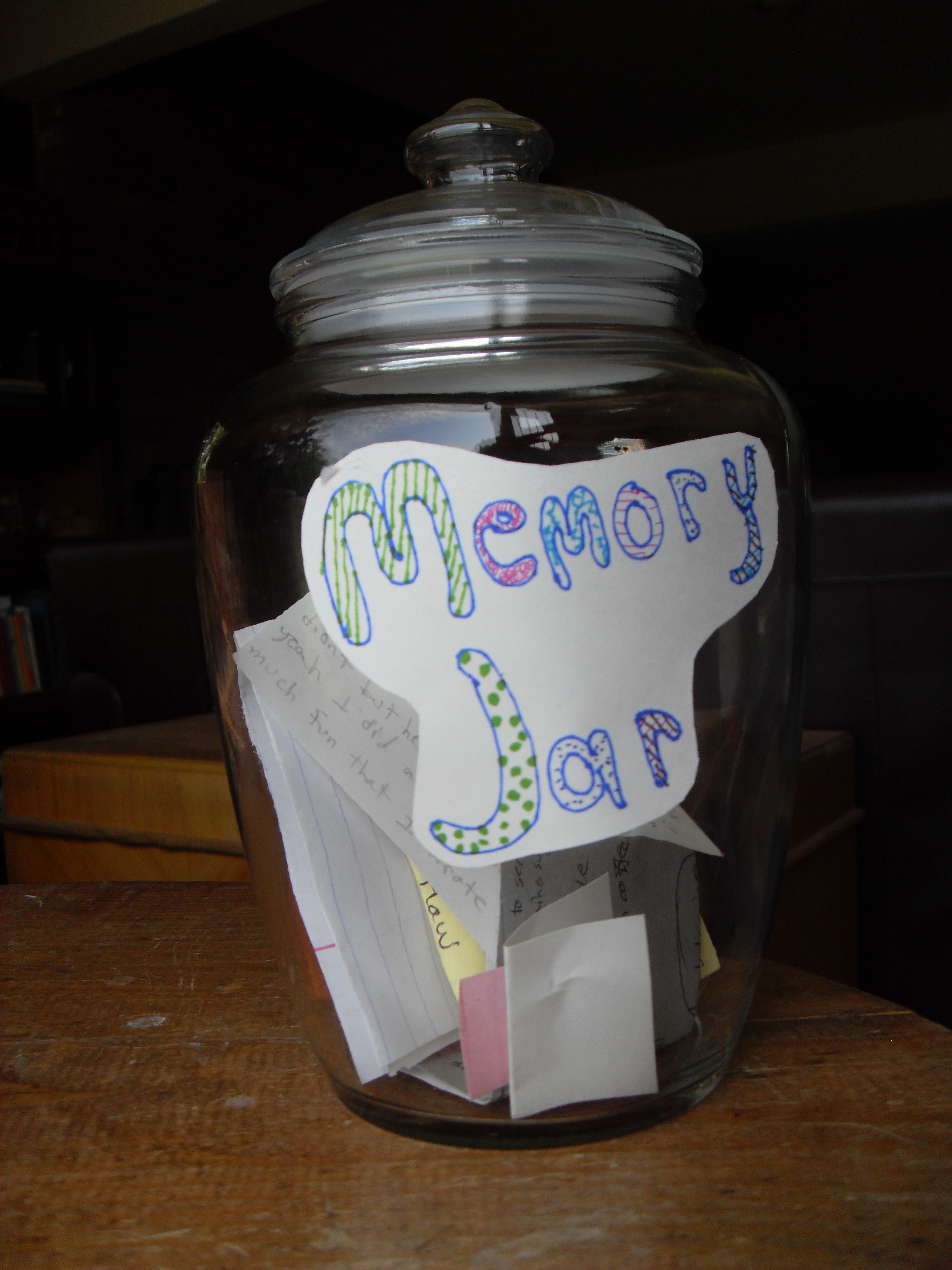
One tradition you might want to start in your family is a memory jar. Grab any jar, name it the Memory Jar, and keep it in an accessible place. Filling it is pretty easy. Encourage your family members to scrawl memories on any piece of paper, sign their names, add a date if they can, and stuff these memory scraps in the jar. Let the youngest ones dictate their memories to you and pop them in as well.

You’ll be interested to note what different family members regard as significant enough for the memory jar. Good grades on a test probably won’t get in. Watching the neighbor’s puppies born probably will. Your five year old may stuff in a new memory each day, your teenager may add one only at your prompting, you may tend to write down funny things the kids say. But if they’re not noted and saved, chances are they’re lost.

It’s helpful to have a “no grudge” rule. Memories don’t have to be happy, of course. The most powerful are probably those that aren’t. Your daughter may write,

“I was really scared when Max fell off the slide. We went right from the park to the hospital. We waited a long time and I fell asleep watching a TV high on the wall. Max got a green cast on his arm and I was first to sign it. I was mad my name didn’t come out too good because it’s not easy writing on a cast. The letters are kinda bumpy. We were so hungry Mom stopped for ice cream on the way home. I got peach, Max got chocolate chip, Mom got a smoothie. I think it would be fun to have a cast too but I don’t want to fall off a slide to get it.”

There are plenty of options that go along with opening and sharing the tidbits from your Memory Jar. You might choose to have a memory ceremony once a year. That’s a day when the jar is opened and the memories are read. You might want to do this on Thanksgiving, New Year’s Day, or every July 13th because that’s your family’s yearly Dad Finished His Tour of Duty party.

And you’ll want to store these memories safely. It’s easiest to start a new jar every year. Label last year’s jar and tuck it in the back of your closet. If you’re ambitious, carefully scrapbook each slip of paper next to photos or turn them into a photo collage to hang on the wall. Or, your family may prefer to keep adding to a collective jar of memories without going over the contents together, happy to make the jar a sort of time capsule to be opened well into their adult years.

While a memory jar is well-suited for family use, there are other great ways to use this random-memories-on-scraps-of-paper approach.

how to hang on to memories, memory-making for couples

For couples, why not start a Memory Bank? This is best made with an opening no bigger than a piggybank. This way the memories each of you contribute can’t be fished out and read in private. It’s a way of noting little tidbits about your lives together without the pressure to contribute. Of course a “no grudge” rule is still important. And when a Memory Bank is shared by a couple, it’s best to make it a long-term project. Vow to keep it sealed until your 25th anniversary or some other far off date. By then neither of you will care if she contributed 95% of the memories, you’ll both simply have fun going over recollections you thought were long gone.

Perhaps the best impetus for storing and retrieve memories is in partnership with the oldest members of the family. On each Father’s Day card I used to share a reminiscence about my childhood to let my Dad know how much he factored into my happiness then and my resilience now. I thought I was doing it for him but I know now that sharing these memories was one way I strengthened a link with someone so dear to me.

preserve memories with your elders, keep a memory book, daily log book for seniors,

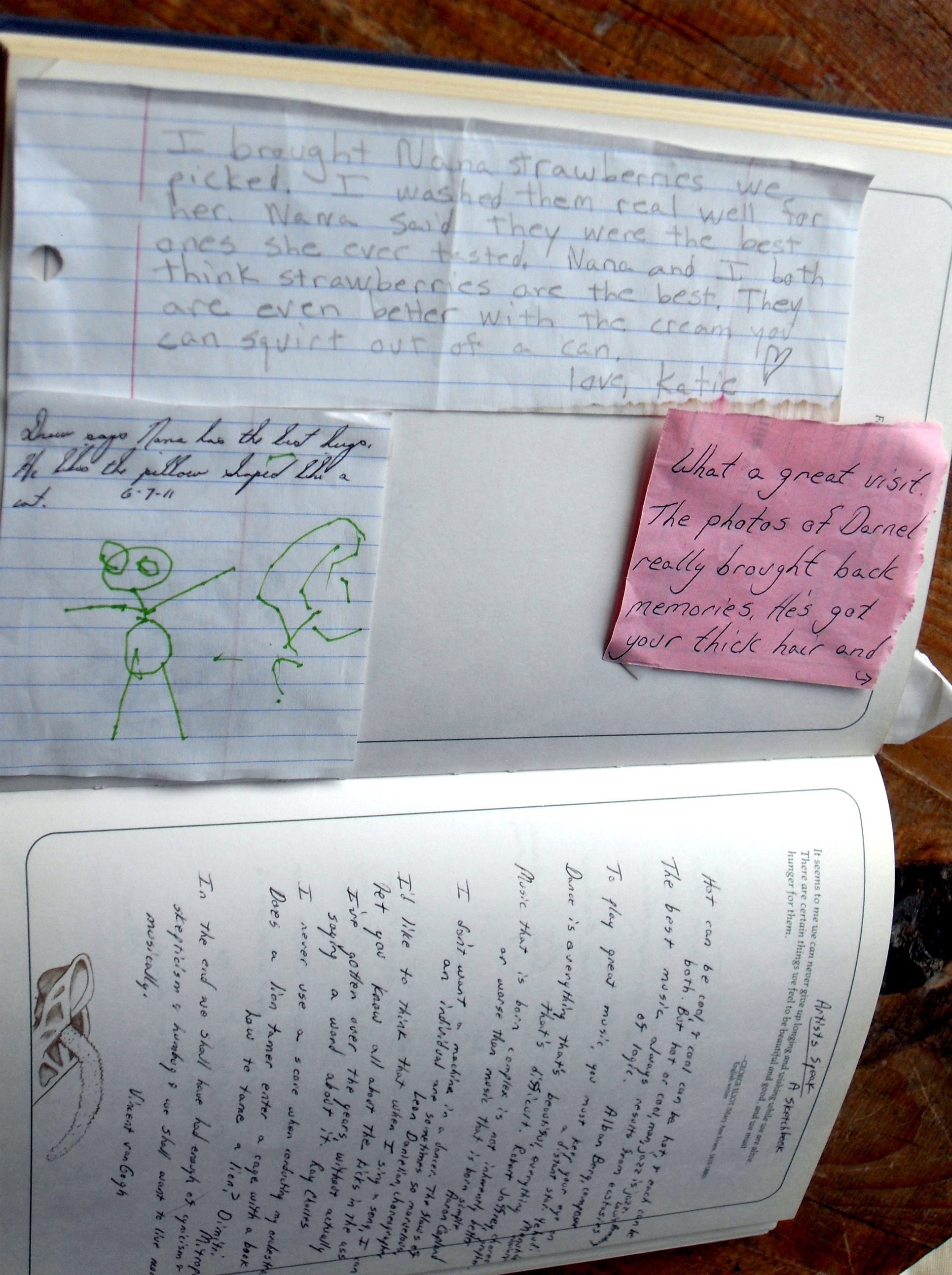
You can keep track of up-to-date memories with the elders in your family using a Memory Book, one that’s always open. A large format blank book is especially good for this purpose. With each visit write down a recollection (old or new) to paste in the log book. Add drawings and photos. If you’ve exchanged memorable phone calls, texts, and other communications remember to add notes about them when you visit. The Memory Book is a warm reminder of your affection. It’s also helpful if your loved one is in an assisted living facility or nursing home because other visitors can flip through the pages, starting conversations by talking about these and other memories while making new ones.

Thinking about the ways we form and hold on to memories is inspiring me to have more fun with my family than stacking firewood!

Ask The Most Powerful Question

wisdom of elders, ask the most powerful question, what should I know, is there something you want to tell me,

Image courtesy of dimkatm.deviantart.com

“I ask once or twice a year,” she told me. “But it’s a powerful question. It should only be used wisely.”

I was interviewing a woman I’ll call Ms. C. for an article on faith and spirituality. She was truly an elder. I don’t mean age-wise, although she appeared to be in her mid-seventies or beyond. By elder I mean the sort of person who lives deeply and gladly passes along what she has learned.

Ms. C. dressed up for our meeting. She wore a navy blue suit and dazzlingly patterned silk shirt, a tiny hat perched on her elaborately coiffed hair, and bright red lipstick that made her dark skin glow. The pants and sweater I’d tossed on looked pretty casual by comparison.

Ms. C talked about seeing the divine in all things. She spoke precisely, with poetic imagery, but also slid easily into humorous retorts. I felt a wondrous enlargement of spirit in her presence and was, frankly, reluctant to end our interview.

Then she mentioned that she employed the most powerful question of all.

I waited to find out what that might be.

She told me that it should be asked only when the questioner felt strong and ready for the answers. And it should only be asked of those who loved you and could be trusted to tell the truth.

She told me she asked her husband (of 42 years) every now and then. She also asked her sisters and close friends, usually when she felt prompted by some unknown impulse.

The question seems simple: “Is there something I should know?”

She said the answers it evokes are rarely simple.

When Ms. C. kept receiving important and sometimes surprising answers to that question it inspired her friends to take up the question too. She gave me a few examples.

~A neighbor was told by everyone she asked that she needed to seek medical help for a condition she thought was under control.

~A friend was advised to stop wearing clothes that were too tight and too young for her.

~A fellow churchgoer found out that his son was back on drugs.

~One person was informed that a long-standing habit of his infuriated his best friend.

~A former co-worker learned that she came across as haughty and cold, and needed to learn how to get past her shyness to let people see her warmth.

~A friend was told that a secret he thought had been buried long ago was out but no one had wanted to break the news to him.

Ms. C. says that she mostly listens to what the Quakers call the “small still voice” inside her but she has one ear open to what else she might need to know.

I tend to think there’s peace right beyond the need of answers but I won’t deny that Ms. C’s question has its uses. Nor will I deny that truth-telling feels wonderfully liberating.

Do you have a truth just itching to get free, if only a certain person would ask you?

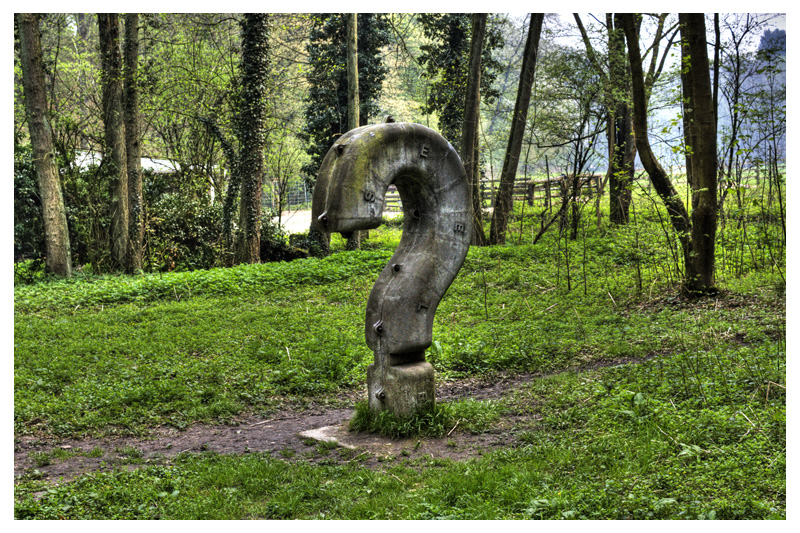
And what about truth seeking? Will you be asking the most powerful question?

Thanks To Mom, We Tried Turkey Farming

I offered to host Thanksgiving year after year. My mother turned me down each time. She liked hosting the family get-together even though her kids and grandkids lived close enough to visit weekly. She preferred her wedding china and linens to my mismatched dishes and homespun tablecloth. Mostly she wanted to ensure that the meal featured homemade white crescent rolls and a large Butterball turkey filled with her own stuffing recipe. She was afraid that her annoyingly whole foods vegetarian daughter might prepare something horribly non-traditional, like nutloaf with chestnut wild rice dressing instead of turkey. Valid point.

But her health kept declining. I took to coming over early on Thanksgiving Day to stuff the turkey with her and hoist it in the oven. We all came back a few hours later with side dishes. I always brought homemade crescent rolls that looked suspiciously brown and healthy. Our meals continued to be lively events and we worked hard to make sure my mother didn’t notice how much we all helped out.

I knew she’d reached a new low in her energy level when she offered to let me host Thanksgiving a few years ago. She said I had to agree to one condition. I had to make a real turkey (not a Tofurky, she hastened to add) and stuff it with her stuffing recipe. I had to promise. I wanted to cry, knowing that she was much sicker than she let on. I promised.

But there was no way I was going to cook a typical grocery store turkey. I know these birds spend their short lives in tightly confined spaces, eating foods that aren’t natural to them. We raise pastured livestock on our little farm, so we drove nearly an hour to buy a similarly pastured turkey directly from the farmer. I felt particularly solemn as I prepared that first Thanksgiving meal at our house, knowing it was difficult enough for my mother to get from the car to the house so she could spend the day with us. At least the turkey was a hit. According to the meat-eaters in the bunch, it was the best they’d ever had. It was also so juicy that it overflowed the pan. That’s something grocery store birds don’t do, even though they’re injected with a “7% solution containing water, salt, modified food starch, sodium phosphate and natural flavors.”

But that pastured turkey was astonishingly expensive. We thought we might be able to raise a flock of our own more cheaply. We were wrong. But I’m getting ahead of myself.

Nearby farmers gently told us that we were foolhardy. They warned us to keep turkeys “on wire,” indoors, and away from what they said were the disease-carrying dangers of grass. They said our plan to avoid feed pumped up with medications and synthetic vitamins would leave us with a dying flock. Online articles repeated these woeful predictions.

Still, the next spring we bought turkey chicks. They were raised in the warmth of an Amish kitchen until they were old enough to live outdoors.

On our place they lived in what’s called a “tractor.” This is a moveable coop, allowing the birds access to fresh areas to forage. My husband and oldest son built it with roosts and feeders. We soon learned turkeys toss food from feeders and don’t like to roost. Out came both of those modifications. Then to forestall problems with predators we added a moveable electric fence.

How much our rapidly growing chicks ate surprised us. In addition to the roots, grasses, leaves, and bugs they scratched up on their own we provided them with a locally grown and ground mix of seeds and grain. And we gave them fresh organic produce from the garden each day. They had strong preferences. One day they might eagerly eat cucumbers and squash, the next day they refused to eat those veggies but enjoyed tomatoes. They turned up their beaks at plenty of other treats, like broccoli and rutabagas.

We found turkeys quite interesting. When they’re young they peep and squawk. Then the gobble develops, something we found relentlessly amusing. Hens don’t gobble. They chirp and cluck in their own quiet manner while the toms are prone to showy displays of exaggerated feather fluffing. The toms gobbled at any noisy airborne attraction including Canada geese, crows, and helicopters. When annoyed, their heads turned iridescent blue and sometimes they engaged in snood-grabbing jousts. Our dogs were fascinated by the turkeys, but the turkeys showed little interest in creatures beyond their own genus.

All day, every day the flock had a visitor. A little brown hen moseyed up from the back of our property to visit her fowl friends. She stayed close. She pecked at grass and bugs, sometimes a few feet away and sometimes a few inches away. When we gave the turkeys a treat from the garden like a monster zucchini she’d cluck at me, waiting for her own piece. Quite often the turkeys, in their zucchini-enhanced exuberance, tossed flecks of what they were eating almost as if to share. Their friend the hen was right there waiting for those offerings. I never saw the turkeys peck at her.

What we learned about turkeys wasn’t entirely charming. Full grown turkeys are huge. Some of ours were over 80 pounds. Their poo, I’m sorry to say, was also huge. I never realized just how foul it was until I slipped and fell in it. And despite the overall health and vitality of our flock, once we factored in all the expenses there wasn’t any profit at all. Plus, after feeding and chatting with them for six months, it felt like a horrible betrayal to take them to the butcher.

This year we let the turkey farming venture go. We’re gratefully buying a pastured turkey, knowing that it’s worth the cost. It’ll be cooked with my mother’s stuffing recipe. I’ll also be using my mother’s china and linens. We’ll sit here at a table filled with friends and family, fully aware that our blessings include those made of memory.

I’ll smile this Thanksgiving at all who are here with me. I’ll leave the sob in my throat, choosing instead to share fond and funny stories of my parents who I miss every day. I realize now why every generation goes on celebrating even after the elders who made the traditions meaningful have gone. Holidays are a sort of bridge between past and future, a way of steadying ourselves with the idea that some things stay the same. When the time comes for me to pass along the honor of hosting Thanksgiving dinner, I’ll try passing along my mother’s stuffing recipe too.

honoring memories at Thanksgiving, how to raise pastured turkeys, small farm turkey story, missing mom at Thanksgiving,

Image: Karuntribs