The Dart Collection

summer enrichment?, kids and collections, free range summer,

I’m thrilled to offer a guest post by Margaret Swift. She writes about a neighborhood of free ranging kids and the girl whose mysterious summer project surprised them all.  

When I was five years old, we moved to a neighborhood that contained a wealth of little girls around my age. After living on a farm with no one to play with but three rotten older brothers, this was heaven. During summer vacation, we girls scrambled around together playing jacks on cement porches, dressing Barbie dolls under picnic tables, holding roller derbies on cracked and heaved-up sidewalks, and catching tadpoles in local ponds. We’d generally eat lunch at the home of the mother unlucky enough to be closest when our stomachs started growling. We wandered from one activity to the next in gentle summer chaos.

But just as every rule has to have its exception, our neighborhood of scrape-kneed, ragamuffin girls also contained Mr. and Mrs. Dart and the five little Darts: Mary, Mindy, Mandy, Molly, and Mavis.

Most of us dressed each morning in the first clothes that came to hand, in a wild rush to get outside and fall off our bikes or crawl through the grass in search of lost Barbie shoes. The Dart girls were always immaculately turned out in pressed white cotton shirts, navy or red shorts, terribly white socks, and tennis shoes that were never anything but blazingly white. The rest of us had wild kinky hair (long before it was fashionable) or lumpy uneven braids or ponytails escaping from rubber bands. The Dart girls had short bobs with picture-perfect bangs always half an inch above their eyebrows. And while the rest of us roamed wild and free, Mrs. Dart felt her girls’ growing minds would best be developed by Summer Projects.

So every summer, on the first day of vacation, Mrs. Dart would meet with her girls to outline The Project. One summer it involved physical fitness, and a flurry of swimming, tennis, and horseback riding lessons ensued, all skillfully and cheerfully taught by the indomitable Mrs. Dart. Another summer occasioned the Household Arts Project, during which the girls learned baking, knitting, dressmaking, and how best to wield a dust rag.

Mrs. Dart always graciouisly invited us to join in, and often we eagerly began, but we never lasted long. One by one, we’d fall off the Projects wagon. Later we’d be found lying in the dust poking sticks at anthills or arguing over whose turn is was at the Monopoly game we’d started three weeks earlier. We lacked the diligence to stick to a Dart Project, but occasional bouts of boredom led us up on the Darts’ steps for progress reports, and during the Dart girls’ two free hours every afternoon, when they joined us in tag or jump rope or bike riding, they filled us in.

In my tenth year, Mrs. Dart announced the Summer of the Collections. She expounded on the delight, education, and camaraderie to be gained from joining the legions who gathered this and that. She then sent the girls to the library to decide what they would collect.

Mary, two years old than I, decided on foreign recipes. She spent her summer carefully copying curries, crepes, pilafs, and stews into a loose-leaf folder. Once a week she cooked a recipe whose ingredients weren’t impossible to come by or too objectionable to a good Lutheran family. (This particular collection must have been hard on Mr. Dart, a staunch meat-and-potatoes man. He tried. He persevered. But he drew the line at chocolate-covered bees and bull testicles in aspic.)

Mindy and Mandy, the twins one year my senior, decided on tried-and-true collections: butterflies and matchbooks. Mindy was much too kindhearted to actually kill a butterfly, so instead she made a scrapbook of pictures cut from magazines and nature pamphlets. Under each picture she entered, in a neat hand, each specimen’s common and Latin names, locale, habits, and any other tidbits she could cull. We all found her book quite impressive.

Mandy was allowed to collect matchbooks on the condition she bring them to her mother or father to have the matches removed. In those days, every bank, restaurant, gas station, and hair salon had bowls of matching sitting out. Relatives traveling to New York or Hawaii sent back exotic samples. Mandy even made friends with a local printer who saved her a matchbook from every wedding he handled.

Seven-year-old Mavis, the baby, took a short cut. The girls’ grandparents had brought back a basket of seashells from a trip to Florida. She simply looked the shells up and then glued the shells to sheets of posterboard, printing their names in bold block letters underneath. Nini Fizzarelli commented that they didn’t look real because they didn’t look wet, and Patsy McMullen suggested clear nail polish. Mavis nearly asphyxiated herself, but at the end of two days every shell was covered and did indeed look perpetually wet.

That left nine-year-old Molly. She came up with an idea which she happily hugged to herself and would not share. She had always been the perfect little Dart, following through Projects without a qualm. But this summer she begged Mrs. Dart to let her work on her project privately and surprise them all at the end of the season. When the Dart girls joined us in the afternoons, Molly refused to talk. The more we questioned, the more tight-lipped she became. It was maddening. We pretended not to care.

August came and the day approached when the girls would exhibit their completed collections. The grandparents were invited, a backyard picnic was planned, and excitement mounted in the neighborhood. We knew we’d be invited over to see the collections and to share homemade peach-vanilla ice cream. Two more weeks…nine more days…

On day minus-five it happened. I overheard my dad whispering to my mom. The Dart girls had been out with their grandparents, and Mr. Dart came home to find Mrs. Dart in a swoon on Molly and Mavis’ bedroom floor. Evidently she had finished the laundry and was putting away Molly’s white socks when she saw in the back of the drawer the nine-by-twelve inch clear plastic box Molly had requested to house her collection.

Inside the box, Mrs. Dart saw rows of cotton balls, each with a label declaring a date and body part, such as “July 3, elbow.” There was something else on each cotton ball. Molly had acquired a collection of scabs.

We found out later that she had carefully lifted off the souvenir of every bump and scrape she’d gotten over the summer and had paid Billy Barnstrom on the block behind us for several of his scabs as well. (The well-mannered Molly just didn’t bang herself up enough.)

At the picnic, Molly made an official announcement, under her mother’s stern eye, that her collection had gotten misplaced somewhere, though it seemed clear from the buzz and a couple of odd jokes made by Grandfather Dart that everyone knew all about it.

Summer came to a close and school began again. The following summer, Mrs. Dart enforced a Full Disclosure Act on all Summer Projects.

By the way, I hear Molly now lives in Washington State and is a well-respected hematologist.

~

Margaret Swift is a free spirit with metanoic* tendencies. She’s a writer, fiber artist, calligrapher, energy healer, meditation teacher, spiritual counselor, and ardent gardener. She likes to sip enticing drinks (tea or wine depending on the time of day) and is an insatiable knitter. To find out more about her about her work, contact her at margaret.a.swift@gmail.com 
*met·a·noi·a  [met-uh-noi-uh]  noun:   a profound, usually spiritual, transformation

How To Learn From Experts

learn from experts, senior knowledge bank, skills clinic, DIY education, DIY homeschooling, cheap homeschooling, community learning, learn together, community apprenticeships, collaborative learning,

Image: drumminhands’ flickr photostream

Successful societies have always respected what the the wise can teach us. But it’s not easy to learn directly from people whose grasp of any subject well exceeds our own, in part because person-to-person learning is easily supplanted by online engagement.

I spend plenty of time staring at screens, yet I know from years of facilitating non-violence workshops that something important happens as we discuss, practice, and hone our skills together. Real learning is like a spark transferred. Going online is practically a reflex for us, but if our learning is confined there what’s lost is rich perspective and valuable hands-on experience.

If you know where to look you can find sculptors, farmers, astronomers, welders, storytellers, clock repair experts, and cartoonists right in your community. Let’s take my hometown of Cleveland as an example. I can learn glass blowing at the Glass Bubble Project, eviscerate and stuff a rat to look like a tiny tie-wearing butler during a taxidermy workshop at Sweet Not Salty, apply Brian Swimme’s cosmology to my life direction at River’s Edge, march with the Red Hackle Pipes & Drums band as I learn to play bagpipes from a former Pipe Major of Scotland’s Black Watch, let kids partner with working scientists at the Cleveland Museum of Natural History’s future scientist program, volunteer to rehabilitate injured birds at the Medina Raptor Center, and learn to make handmade books at the Cleveland Institute of Art. Museums, libraries, colleges and universities, cultural and ethnic organizations, recreational centers, and plenty of other places in your neighborhood are brimming with great workshops and classes for adults as well as kids.

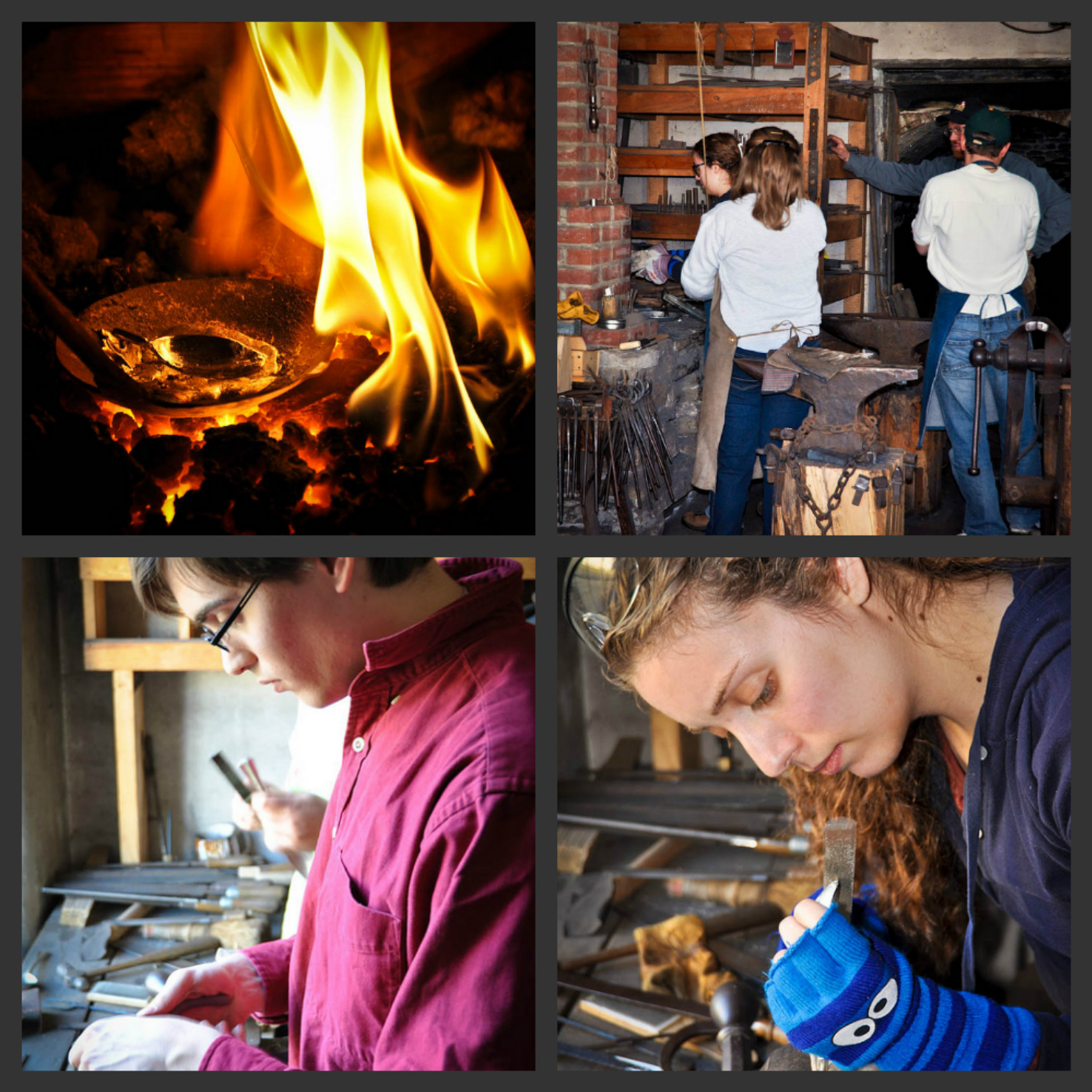
This can happen more informally as well. As homeschoolers, we’ve found it doesn’t hurt to ask people to share a little of what they know. A steel drum company owner welcomed our group for a visit. He explained the history and science of drum-making, talked about the rewards and risks of entrepreneurship, then encouraged us to play the drums displayed there. A NASA engineer took us through a testing facility and showed us how materials are developed for the space program. A potter talked to us about the nature of clay, taught us how to form vessels on a wheel, then invited us back for the opening of his kiln to see our creations emerge.

We’ve spent days with woodworkers, architects, chemists, archaeologists, stagehands, chefs, paramedics, and many others. Despite offers of barter or pay, we’ve gotten all this expert instruction for free. People rarely turn us down when we request the chance to learn from them. Perhaps the desire to pass along wisdom and experience to the next generation is encoded in our genes. If someone possesses knowledge or abilities you’d like to gain, try asking. (Ask them to share their interests, not “teach” to get a positive response!) And don’t forget to look close to home. You might master pinochle while spending time with your brother-in-law, learn coding from your niece, gain new appreciation for fly fishing from your dad’s business partner, go bird-watching with your neighbor, and as we all know, learn more from your own kids than you’d ever imagined. I call these knowledge networks. Here’s how to activate yours.

Of course, there are plenty of platforms promoting person-to-person wisdom. Here are a few.

DIY and Maker movements have opened all sorts of avenues, with Maker Faires happening in more and more places. (Not in your area? Check out the Mini Maker Faire Starter Kit.) Find hackerspaces like NoisebridgePumping Station OneNYC ResistorTechShops, and Artisan’s Asylum. Or start your own hackerspace.

Trade School is a barter-based learning space, meaning you don’t have to pay to learn. You might barter for a class with a homemade pie or art supplies or research help. The founders describe it as “a global movement for community, connection, and educational justice.” The first Trade School was started by three friends in a NYC storefront in 2010. Now self-organized Trade Schools are opening up or running in places like Milan, Cologne, Virginia, Oakland, Singapore, New Delhi, and Paris. Want to start one in your area? Here’s how.

The Amazings offer non-traditional workshops and classes set up by ”amazings,” people over 50 with a passion to share what they know. Their site explains, “We want to make learning more fun, more friendly, more social, and more personal.” So far they have 45 people offering expertise in areas such as bookbinding, perfume making, foraging, carpentry, jazz guitar, philosophy, and corset making. The first branch is based in London, but they’re open to starting more around the world.

FreeSkools are created by participants. There’s no central organizing manifesto on one site or in one book. Some are informal gatherings to share knowledge, others are active networks meeting in parks, living rooms, and community centers. All are devoted to learning freely. You’ll find them in IthicaSanta Cruz, and dozens of other cities in the U.S., Canada, and U.K. Check out piece in Yes! about what to consider when setting up a FreeSkool.

Skillshare is like the eBay of localized education. You can learn what you want from someone in your community as well as teach others what you know. Some of the classes offered right now are Building Mobile Apps for Android Devices, Rock Poster Design from Concept to Execution, and Launch Your Startup for Less than $1,000. There’s a fee and many of these classes aren’t taught in person, but online.

The School of Life is teeming with great stuff. They feature secular sermons with big thinkers talking about big ideas. Classes by experts with titles like How to Be Creative and Finding a Job You Love. Bibliotherapy: basically book prescriptions custom-designed with your reading history, dilemmas, and desires in mind. The place is also teeming with activity beyond the sit still and think variety. There are engaging programs with transformative potential and weekend adventures developed by scientists, artists, and others. Oh, and what they call Utopian Feasts. So far there’s one in London with a branch opening in Australia. Not in London or Sydney? Start up something similar in your community.

Citizen Circles are small groups of people who meet to learn together for a limited period of time with an emphasis on collective learning and action. There’s no fee. Some Citizen Circle topics have included women as social innovators, systems dynamics, exploring indigenous knowledge, and design thinking. There’s plenty of information to help you start your own.

(un)classes are casual ways to meet and learn from local people. So far the idea has taken root in the San Francisco area. Any fees go to a designated charity and participants walk away with new knowledge as well as new connections. A recent class taught how to make gnocchi while benefiting the area food bank while another taught documentary photography while benefiting a scholarship program.

School of Everything, based in the U.K., connects those who want to learn with those who can share what they know. In Glasgow, for example, you can find instructors to teach you Mandarin, classical piano, acting audition techniques, hypnosis, and the tango. Some instructors charge for classes, others do not.

Go ahead. Get your hands right in that dirt, clay, dough, or paint as you build your expertise. Feel the spark. There’s else nothing like it.

Image: drumminhands' flickr photostream

Image: drumminhands’ flickr photostream

Homeschool Worries: Erased With Research & Experience

school versus homeschool, homeschooling research,

I never planned to homeschool. I am the daughter, niece, and granddaughter of excellent public school teachers. I cheerfully volunteered in my children’s classrooms and worked on parent committees. I believed in doing my best to change a flawed system from within.

Yet I kept seeing school wasn’t a good fit for my children. Our four-year-old already knew how to read, but had to practice sight words in preschool anyway. Our sweet but inattentive second-grader was deemed a good candidate for Ritalin by his teacher. Our fifth-grader could do college level work, but due to cuts in the gifted program had to follow grade-level curriculum along with the rest of her class. Our freshman was an honors student but detested school, not only the hours of homework but the trial of dealing with a few teens who were harassing him.

We became homeschoolers overnight when those teens pulled a gun on my oldest in the school hallway, telling him he wouldn’t live to see the end of the day. School officials, who had done nothing to ease the harassment, didn’t even call the police. The next morning every reason I had to avoid homeschooling stared me in the face. So did my kids. They were eager to learn on their own terms.

Here are a few of the misconceptions homeschooling erased for me.

growth mindset, homeschool, children's self-regulation,

1. Education that counts happens in school. My kids were growing up in an enriching home. We read aloud every day and enjoyed wide-ranging conversations. We went to parks, museums, and plays. But I was raised to believe that formal education is something separate and measurable.

Still, I saw that my kids learned most eagerly when filled with the aliveness we call curiosity. That’s true of all of us: learning sticks when we’re interested. When we’re not, much of what we learn tends to become inaccessible after the grade is earned. Hard as it is to believe, studies show that that shallow thinking is actually related to higher test scores. (Maybe we acknowledge this reality when we prepare kids for tests by saying, “Don’t overthink it.”)

When we’re curious we not only retain what we learn, we’re also inspired to pursue the interconnected directions it leads us. I saw this the summer before we began homeschooling. My eight-year-old, the one who barely paid attention in school, was playing with balsa airplanes brought to a picnic by a family friend who piloted his own plane. Other kids gave up after the planes broke, but my son worked to fashion the pieces into newly workable aircraft. This gentleman showed him a few modifications and the unlikely looking planes flew. After that my son was on a quest. He loaded up on books at each library visit, telling us about Bernoulli’s principle, aviation history, and experimental aircraft. He begged for balsa to make models of his own design, each somewhat more sophisticated as he overcame earlier mistakes. The next time we met up with this friend my son was offered a ride on his Cessna. It was the highlight of his summer. His interest in planes eventually waned, but not the knowledge he gained. He’d taught himself history, science, math, and more importantly, shown himself just how capable he was.

His pursuit is what researcher Carol Dweck, in her book Mindset, calls a growth mindset. It’s the understanding that achievement comes from purposeful engagement, that talent and smarts are not fixed traits but are developed through persistence. A growth mindset is linked to resilience and accomplishment throughout life. That’s education that counts!
late reading, early reading, homeschooling,

2. Kids have to follow grade-level standards. I once thought homeschoolers had to follow conventional school standards. You know what I mean, if it’s second grade it’s time to learn about ancient Rome, multiplication, and adverbs. For my family, an overly school-ish approach never made sense. I can give dozens of reasons, but here’s one that springs to mind.

Kids develop unevenly. They may be way ahead in reading and struggle in math, able to make up imaginative stories but not coordinated enough to easily to write or type them. If they don’t advance evenly in school, quite a bit of attention is focused on where they’re lacking (extra help, easier and more repetitive work, labels, poor grades). But outside of school it’s easy to emphasize their strengths while other areas are mastered gradually without ever being considered “deficiencies.” This has a basis in current research which shows that children are remarkably good at self-regulating. They’re cued to ignore information that’s too simple or too complex, but instead are drawn to learn from situations that offer the right amount of challenge.

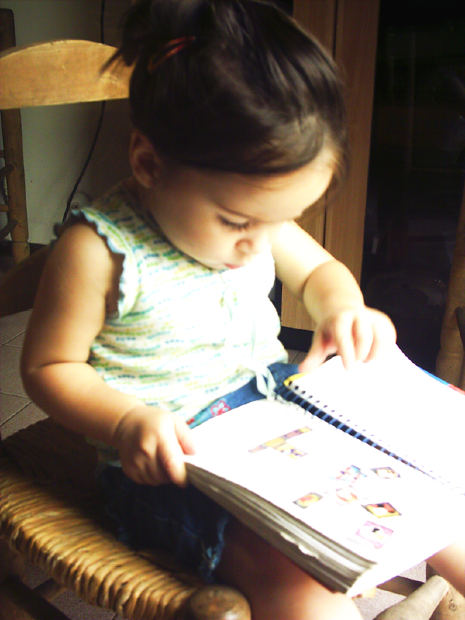
For example, it’s well known in the homeschooling community that many kids aren’t ready to read at five or six. Some aren’t ready until they’re several years older. In school that’s a crisis, because every subject is taught using reading. The child who can’t read not only grows disheartened, he also feels stigmatized. But as a homeschooler he remains immersed in a learning-rich lifestyle whether he reads or not because homeschooling is infinitely adaptable. Stories abound of homeschooled children who move quickly from non-reading to zipping through Harry Potter books once they’re ready. A recent study showed that homeschooled children whose parents don’t push them to learn to read, but instead emphasize the joy of reading, end up with kids who are avid readers no matter if these kids started reading early or late. In our family, we found our kids eagerly accomplished far more in a whole range of subjects over time. “Grade-level” expectations were, to us, limitations.

easy homeschooling,

3. The parent has to be teacher/coach/principal. Being a mother to my children has always been richly rewarding (okay, maybe not in the colicky phase). I didn’t want to take on other roles. Turns out I didn’t have to. We found homeschooling to be an immediate stress reduction. My kids got enough sleep, woke rested, and don’t have to rush through the day. Instead they had ample time for conversation, reading, indulging in art projects and experiments, finding the answers to questions, and going on adventures. Our live were guided by fascination, not bells. Much less control on my part was required.

I found that our cultural emphasis on adult-led activities is somewhat counterproductive. We assume children benefit from the newest educational toys and electronics, coached sports, lots of lessons, and other adult-designed, adult-led endeavors. Well-intentioned parents work hard to provide their children with these advantages although there’s limited evidence that all this effort has value. We do this because we believe that learning stems from instruction. By that logic the more avenues of adult-directed learning, the more children will benefit.

But studies show that a child’s innate drive to creatively solve problems is actually impeded when adults provide direct instruction. This experience is repeated thousands of times a year in a child’s life, teaching her to look to authorities for solutions, and is known to shape more linear, less innovative thinking.

Research also shows that a child’s natural motivation tends to diminish in adult-led activities. Unless they’ve been raised on a steady diet of ready-made entertainment, children are naturally drawn to free play and discovery-based learning. They make up games, daydream, pretend, and launch their own projects–freely seeking out adults for resources and guidance when necessary. They are naturally drawn to achieve mastery. My kids have shown me how motivated self-direction can go into high gear in the teen years. They’ve earned their own money by shoveling stalls, which they spent to buy and restore a vintage car, go on a month-long backpacking trip, and build a bedroom-sized recording studio. And they have stick-to-it-iveness, devoting years to pursuits like a bagpipe band, wildlife rehabilitation, farming, and their own intensive scholarship. Homeschooling has helped us foster a young person’s growing need for independence while providing useful guidance.

hands-on learning, homeschooling,

4. I can’t afford to provide a decent education. Like many new homeschoolers, I thought I’d have to replicate everything from music class to chemistry lab. I knew I’d never have the time, energy, or money. But we quickly discovered we can activate our own knowledge networks and that the community around us is filled with people eager to impart skills and knowledge to the next generation, almost always for free.  They’re found at ethnic centers, museums, libraries, colleges, churches, service organizations, plus clubs like those for rock hounds, ham radio enthusiasts, and astronomy buffs. My children’s lives have been illuminated by spending time with biologists, potters, engineers, geologists, entrepreneurs, archaeologists, organic farmers, model railroaders, meteorologists—the list could take up this page. People seem honored when asked to share a little of what they know. It’s sad that young people are customarily segregated from adults doing fascinating things right in their own communities, especially in the teen years when they so desperately want more role models.

We’ve also gotten together with fellow homeschoolers for countless field trips, enrichment programs, game days, clubs, and learning co-op classes. My kids have re-enacted Shakespearean duels, toured factories, sheared sheep, raced sailboats, learned chemistry from a Ph.D chemist, debated Constitutional challenges, competed in robotics tournaments, built a hovercraft of their own design, learned fencing, calculated the position of the stars, played with world-class musicians, and spent an afternoon with an astronaut after winning a science contest. All free or practically free. When certain subjects got really challenging we easily bartered with an expert or found a community college class to cover it. And we’ve saved thousands by relying on the remarkable resources of our library system.

Sure, I envy those homeschooling families who learn while bike riding in Ecuador or rambling through European castles. But I realize my kids haven’t missed anything despite my penny pinching, especially since surveys indicate two-thirds of school kids say they’re bored in class.   Deep scholarship and hands-on learning are simply another homeschooling perk.

homeschool socialization, peer segregation,

5. Homeschooling will deprive my kids of friends.  I realized the school day isn’t really set up for socializing, although we’d come to rely on school as a source of same-age friendship. Sadly, according to Beyond the Classroom by Laurence Steinberg,
less than five percent of school kids belong to peer groups that value academic achievement, while pressure from prevailing peers steer young people toward underachievement. Even high-achieving students, when asked, say they’d prefer popularity over academic success.  That comes at a price, because members of those lower achievement groups are more likely to demonstrate negative behaviors like conduct problems and drug use. Not the kind of influence parents expect.

And it turns out studies show homeschooled children have better social skills and fewer behavior problems than their demographically matched schooled peers. Homeschooling families also tend to be more active in the community. Initially it took me a while to get used to homeschool gatherings where kids hung out with a wide range of ages and abilities. Sure, they’re kids and not beacons of perfection, but I was pleased to see so much overall good cheer.

As for friends, my kids kept many of their school friends. They also made more as we widened our circle of acquaintances. Many of their new friends were around the same age but some were decades older, bringing perspectives shaped by widely varying experiences. They offered my children a route to maturity they couldn’t have found in school among kids similar to themselves. Their friends include a Scottish gentleman in his 70’s, a group of automotive restoration enthusiasts, a wildlife rehabilitator in her 60’s, fellow backpackers, people with differing physical challenges, Christians, Buddhists, atheists, Wiccans, well, you get the idea. These friendships happened because they had the time to stretch in all sorts of interesting directions.

homeschool success, homeschool misconceptions,

6. Homeschooling is an experiment. Like any other parent, I’m driven to provide my children with the essential ingredients that lead to life-long happiness and success. Late at night, unable to sleep, I’ve entertained my share of doubts. What if homeschooling will limit their chances?  I finally realized I was looking at it from too narrow a perspective. Schooling is the experiment. For 99 percent of all our time on earth, the human race never conceived of this institution. Our species nurtured children close to extended family, within the rich educational milieu of the community, trusting that young people would grow into responsible adulthood. Worked like a charm for eons.

Taking my kids out of school liberated them from the test-heavy approach of today’s schools, one that actually has nothing to do with adult success. Instead of spending over 1,200 hours each year in school, they could devote time to what more directly builds happiness as well as future success. Things like innovation, hands-on learning, and meaningful responsibility. That doesn’t mean I lost all my doubts. Some days, all right, months, I worried. It’s hard to unlearn a mindset

Now all four of my kids are in college or launched into careers. I sat at a recent dinner with my family, appreciating our closeness. My kids take on challenges with grace, react with droll wit even under pressure, and haven’t lost their zest for learning. We laughed as their lively conversation covered Norse mythology, caddisfly pheromones, zeppelin history, and lines from new movies. I’m not sure how much I can credit to homeschooling, but I know it’s given my kids freedom to explore their own possibilities. That’s more than enough.


Portions of this post excerpted from Free Range Learning.

How To Walk Your Talk

walk your talk, unconscious to conscious competence, cultivating good habits, being your best self,

Emilian Robert Vicol’s flickr photostream

Chances are you’ve never heard of Richard Enty. He’s the executive director of Metro Regional Transit in Akron, Ohio where there are firm safety policies in effect. Consider texting. For the first texting/phoning offense, a bus driver will be suspended for three days (executives will be suspended for five days). Second offense requires a 15-day suspension and a third offense can result in dismissal. The policy applies specifically to those who are driving revenue-producing vehicles, such as buses or trains.

Enty is tuned in to accident prevention. He was once a passenger when two trains collided, an accident that cost another passenger both legs. His current job involves ensuring a climate of safety. So one day when was driving his own car, just as a bus pulled up next to him, he was startled to realize what he was doing. He had a texting problem. Even though he wasn’t driving a revenue-producing vehicle, he decided to turn himself in. The board wanted to respond with a letter of reprimand but Enty asked to be treated like anyone else. So he was suspended without pay for five days. He tells the local newspaper,

As the leader of an organization that stresses safety and always striving to do the right things, even when no one is looking, I had to make this [decision]. Because, again, we are all human, we all have certain habits and what I have learned in accident investigations…is that accidents usually result from series of bad habits that go unchecked over a period of days, weeks, months, or possibly even years.”

This man walks his talk.

Truly living out what we believe is never easy. It’s essential to be attuned to the positive, to see how we’re making progress rather than focusing on where we’re going wrong. That said, we’re never going to live up to our ideals all of the time. Not even close.

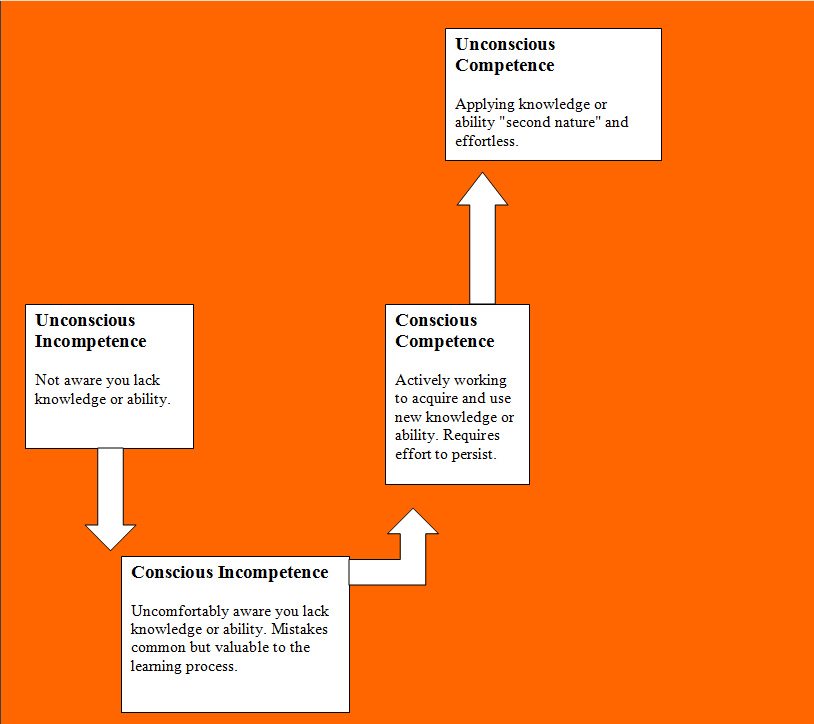
It helps to understand what’s called the four stages of competence as we learn a skill or act on new knowledge. For example, say you became aware of an issue a few years back such as sweatshop labor. You were troubled to realize how much your purchases contributed to the problem as you grabbed great deals without thinking. You were in the first stage. Finding out, becoming conscious of your incompetence, is the next stage. It can be a blisteringly self-conscious process as you struggle to figure out what you didn’t know and how to react. You’re aware of what you’ve done wrong without having sufficient tactics or information to do a whole lot better, although you try. Working to adopt new behaviors is the third stage and it requires sustained effort. For this particular issue, it might be shopping less, seeking out sustainable and local sources, thrifting, advocating for change, and more. You’ll still make mistakes, falling into old patterns when you’re stressed or rushed. The fourth stage is effortless. The knowledge and skills you once sought simply become habit.

unconscious to conscious competence, walk your talk, creating good habits,

I’m somewhere between the Conscious Incompetence and Conscious Competence in many parts of my life. Blurting out what’s on my mind before thinking. Starting projects I don’t have time to finish. Not making enough time for those projects in the first place. Worrying. Pouring another glass of wine. Not remembering conflict resolution tactics until after the moment has passed. Skipping pleasure for work when I know damn well life is to be savored. But castigating myself isn’t useful. Paying attention is.

Kids certainly do their best to assist. They have a way of spotting hypocrisy and tossing our words back in our faces. I can’t rant about a crazy driver or duplicitous politician without getting one of my adages right back at me, like, “Everyone has a beautiful gleaming soul.” Ouch. Yeah, I believe it but don’t always feel like applying it. I have all sorts of standards I don’t entirely live up to. That’s okay, it’s a process.

Those four stages aren’t comfortable. That’s just who we are, people continually unfolding. We make mistakes, struggle, and slowly grow to new ways of being. Even our small personal changes make a difference to the larger reality. I’ve spent a lot of time teaching courses on non-violence. When I work with teens, many weeks into our time together, we start talking about what is important to us. Everyone has strong opinions, everything from “being respected” to “making the planet a better place.” Then they come up with how to live that in their daily lives, from acting in ways that draw respect to making decisions that benefit the ecosystem. When they’re ready, I get out permanent markers and we write on the soles of our feet, reminding us to walk our talk.

That’s why I want to remember Richard Enty. He knows it’s easier to mandate how others should behave rather than follow it ourselves. He’s walking his talk even if it costs him five day’s pay and more public attention than he expected. He seems fine with that. I bet it’ll help him move on to the next stage.

Do you see yourself in Enty’s story? How are you trying to walk your own talk?

Getting Science On Everything

raising scientists, toddler science, teen science, unschooling science, supporting kids' curiosity, science at home, science happens naturally,

crystals of vitamin B6 ( CC by 3.0 Josef Reischig)

 We spread thick layers of science on everything at our house. Yes, occasionally it smells.

Sometimes our science-y obsessions are entirely nonsense, such as a typical dinner table conversation about how many citrus batteries it might take to start a car. Ideas were proposed for this never-to-occur project, including the use of lemon juice instead of whole fruit.

Sometimes that science is pseudo-educational, such as the time we swabbed between our toes and let the bacteria grow in petri dishes. The “winner’s” dish had such virulent growth that she felt sure it deserved to live. She gave it a name and tried feeding it extra glucose and agar. It quite effectively kept her siblings out of her room. I insisted she throw it away when it began creeping past the lid. I am still blamed for the demise of this biological fright.

encouraging young scientists, love of science starts early,

Sometimes it goes on and on. My offspring seem driven to find out. They can’t spot a spider without observing it, wanting to identify it, and then going on about the hydraulic features that are basic arachnid operating equipment. Then there was a certain months-long project that involved observing and sketching the decomposition of a muskrat. They have to discuss all possible angles of a problem, often in such depth that my far more superficial mind drifts off. They tend to walk into a room announcing odd factoids which invariably leads to strange conversations about recently de-classified Russian research, turbo charged engines, or riparian ecology. Or all three. They insist I look at video clips that go on much longer than my attention span. Woe to me if I question a postulate put forth by one of my kids. They will entertain my doubts playfully, as a cat toys with a mouse, then bombard me with facts proving their points. Lots of facts. I’ve tried to uphold my side in science disputes but it’s like using a spork to battle a light saber.

making math relevant, raising young scientists,

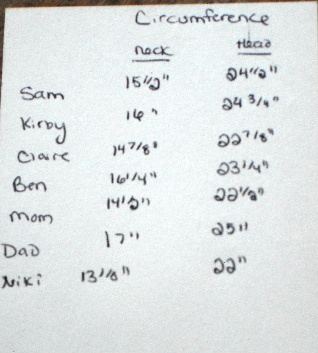
Other family homes probably have video game controllers. Our house has stacks of books and periodicals (who took the neutrino issue of New Scientist, someone yells); tubs overflowing with one son’s beakers, tubing, and flasks; culturing products in the kitchen (like the jar with a note that says “Leave me alone, I am becoming sauerkraut”); and random sounds of saws, welders, and air compressors as something entirely uncommon is being constructed or deconstructed. I know other families have nice normal pictures on their refrigerators. Ours tends to post odd information. The longest-running fridge feature here is a card listing the head circumference of every person in the family. By the time the youngest was 11, my head was the smallest.

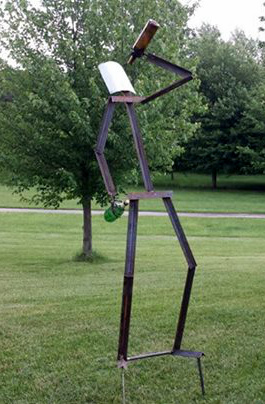
And then there’s the front yard. By the garage door a headstone leans. It has nothing to do with Halloween. Our youngest is teaching himself stone carving using hand tools. This stemmed from his interest in ancient Norse language and myth and lifestyles. That led to a study of runes, leading to old runic carvings, well, you get the idea. He’s already carved runes in a few stones. So of course his brother got him a headstone as a birthday gift. Entirely natural. Also in the yard, a giant sculpture another son welded out of scrap metal. He’s never taken a welding course, or an art course for that matter. No problem. He measured his own limbs to translate into the correct human form. He thought it was funny to make it a two-fisted drinker. I’m plotting to put a trumpet in one of the metal man’s hands so it looks like a rowdy jazz player. And recently my daughter spent the afternoon in front of the house cleaning an entire deer skeleton she found in our woods. She was entirely happy identifying bones, scrubbing, and assembling it into the likeness of a very hungry  deer. Maybe our front yard is why our mail carrier seems a little wary.

raising scientists, natural curiosity makes scientists,

Science shouldn’t be confined to a formal study. My husband and I have never worked in science fields. But we’ve found that keeping scientific curiosity alive isn’t hard.  It’s about an attitude of “yes.” Projects that are messy, time-consuming, and have uncertain outcomes are a form of experimentation. They are real science in action. When a kid wants to know, they want to find out. Not later, not next week, right away. Finding out is engaging. It leads to ever widening curiosity. In our family this process of discovery-to-mastery started early.

When my oldest was just a baby he was horrified by vacuums. Even the sight of one made him scream with This Will Kill Me volume. So we let him learn he could control the “off” and “on” switch. His horror turned to fascination, leading him toward ever greater curiosity, heading in all sorts of directions.

When my daughter was barely able to walk, around 11 months old, she was fascinated by the stones at the end of our driveway. Day after day she wanted to toddle close to the street just to pick up those stones. It occurred to me that it would be a lot easier to satisfy her curiosity than to keep saying no and turning her back toward the house. So she and I went there together and sat in those stones. She was enthralled. I marveled at all the different ways she chose to experience them. Holding, dropping, picking up one at a time then picking up handfuls, handing them to me and taking them back, rubbing the smooth ones and, once I showed her, holding them up to the light. Sometimes she’d raise a stone to her mouth, then shake her head, reminding herself that stones weren’t for eating. Once or twice a stone did touch her lips. The result? I told her we were all done, picked her up, and went back to the safety of the lawn near the house. She remembered. I let her investigate stones day after day until she was done, her desire to know satisfied.

When one of my boys was three he was entranced by the lighters and matches his grandmother used to light her cigarettes. Since she lived with us and on occasion unintentionally left those fire generating devices out, his intense curiosity concerned me. He knew that children shouldn’t touch anything that makes fire, but he was so intensely curious and active (I’ve already described his chimpanzee-like abilities as a toddler) that I knew it was a matter of time before her forgetfulness might collide with his need for some hands-on experience. So, explaining this was only okay to do with an adult, I stood him on a stool at a sink full of water, letting him light match after match to drop in the water. He was a little afraid. His fingers were almost singed a few times. He also conquered the fascination with flame that compelled him to disobey. He asked a few times over a period of months to do this again. Then he was done. Warming about danger doesn’t have the same effect as a child getting close enough to know that matches do burn but can be conquered in the presence of a parent.

Some experiments shouldn’t have happened.  One of my little boys quietly carved a small hole in the drywall of his closet, then attempted to spackle it with the unlikely combination of toothpaste covered by an ostrich feather he’d saved from a field trip. We didn’t discover it until we were emptying that closet as he packed for college. We still laugh about that one.

My kids are much more science-savvy than I’ll ever be, but more importantly, they’re capable of discovering anything they want to know.

Pride Goes Before Tiny Bite Marks

prideful parents, mom's downfall, don't take credit for your kids, my child bites,

I don’t take credit for my children’s many accomplishments. They are their own remarkable people.

As a new mother I didn’t have this quite figured out. Yes, I knew that babies arrive on this planet with all sorts of traits wired in. I knew it’s up to us to gently nurture them, shelter them from harm (including the damage cynicism can do), allow them to take on challenges, help them learn to trust themselves, and let learning unfold in delight.

But I had a few early years when I thought, probably with obnoxious smugness, that my wonderful parenting had something to do with how well my kids were turning out. They were very young and so was I.

My oldest, a boy, was thoughtful and clever. He liked to take my face between his little hands and call me every superlative he could think of like“dear, sweet, wonderful Mama. (Isn’t this positively swoonable?) He rescued insects from the sidewalk, telling them “go in peace little brother,” a line he picked up from one of his favorite picture books. When his father and I tried to talk over our little one’s head about issues we thought he shouldn’t hear, we used Shakespearean language to obscure our meaning. We had to stop, because our toddler began regularly using words like “doth” and “whence.”  What made things work fascinated this little boy, from the bones in our bodies to the engine in our cars, and he insisted on learning about them.

My next child, a daughter, was assertive and talented. She drew, danced, and sang made-up songs of such pure wonder that, I kid you not, birds clustered in trees near her. The force of personality in that tiny girl led us all to laugh at her improbable jokes and enter into her complicated realms of make-believe. Born into a home without pets, her drive to be close to animals was so intense that she kept trying to make worms her friends. Entirely due to her persistence we ended up with several pets by the time she was three.

Although our beautiful little children had medical problems, we had money problems, and other crises kept popping up I felt as if I lived in paradise each day. There’s something remarkable about seeing the world anew through the eyes of the planet’s most recent inhabitants. It’s like using an awe-shaped lens.

But I still had a lot to learn about parenting.

I recall being quietly horrified at a Le Leche League meeting when one toddler bit another. I thought about it for days, wondering what parenting might create such an impulsive child. All the parenting books I read, all the non-violence courses I taught, assured me there was a right way. Of course my comeuppance would arrive.

My third child was born soon after. This endearing, curious, and constantly cheerful little boy possessed relentless energy. Evidence? I’ve got evidence.

  • By the time he was 14 months old we had to twine rope around all the chairs, lashing them to the table between meals, otherwise this diapered chap would drag a chair across the room to climb on top of furniture in the few seconds it took me to fill a teakettle.
  • Before he could say more than a few words he’d learned to slide open our windows, unclip the safety latches on the screens, and toss the screens to the ground. 
  • He liked to grab the hand vacuum for experiments on his sister’s hair, houseplants, and other normally non-suckable items.
  • He watched with fascination as drips from his sippy cup fell into heat vents, the hamster cage, the pile of laundry I was folding.
  • He liked to take off all his clothes and climb on the windowsill facing the street, hooting like a giddy chimpanzee as he danced in naked glee.
  • We had no idea he could climb out of his crib till the evening he opened all the wrapped Christmas presents I had hidden in my room (keeping them safe from him) while we thought he was in bed. The look of complete joy on his face nearly made up for the hours of work it took me to rewrap.

I found myself making up new rules I never thought I’d utter, like:

“I know throwing is faster but we carry things down the stairs.”

We never run with straws up our noses.”

“Don’t poop in Daddy’s hat!”

He became a little more civilized by the time he was three, but not, as you might imagine, before he bit a few children.

Utterly besotted by the bright-eyed charm and endless curiosity of this dear little boy, I never suspected the labels doctors and schools so easily affix on non-conformist kids might be slapped on my child.  I never realized how much he would teach me about what real motivation and learning look like. And I never imagined how much he’d show me about what it means to pursue success on one’s own terms.

Today he is one accomplished young man, in part because he continues to see the world through an awe-shaped lens. And I am still learning from the four remarkable people who came to this world as my children.

38 Unexpected Ways To Revel In Snail Mail

literacy skills, mail art, mail exchanges, snail mail fun,

The Force is strong with snail mail. (Image: CC by 2.0 Wikimedia Kev pittsburgh,pa)

Most of us don’t get anything interesting in the mail. Opening a personal letter seems like a pleasure from another era, irrelevant as a starched collar. Lets reclaim that experience. (The letter, not the collar.)

But first a rant. Here in the U.S. our postal service is often described as inefficient and unprofitable. I beg to differ. When I mail a letter in Ohio, it’s often delivered in Boston or Denver the next afternoon. I’ve mailed plenty of letters to distant countries. They show up in a week, tops. A few ounces of paper arrives in the one place in the world I want it to go, all for less than a buck. That’s pretty impressive. And the post office lets me mail unwrapped shovels too (more on that later).

Unprofitable? That’s not the real issue, unless you count the postal system having to pre-fund it’s retirement system 70-some years in advance. Name a company that can do that and stay in business.

I’m all about going postal. Sending and receiving mail helps us slow down, savoring time in a way that’s often missed in our terabyte-speed lives. Here are some ways you can make snail mail a pleasure.

Mail something unwrapped.

1. Try mailing a full-sized paintbrush, a basketball, a flip flop. All you need is a legible address and the correct postage. You might feel a little silly standing in line at the post office with an address-adorned plastic dinosaur, but it’ll be worth the look on your recipient’s face. I’ve mailed all sorts of silly things to a friend, mostly in response to oddities she mails to me. The strangest thing I’ve sent was a two foot metal shovel with a wooden handle. I used a permanent marker to write a note to her on the handle and the address on the metal part. It got there just fine.

2. For more ideas on what you can send through the mail, check out the Pinterest board 13 ounces or less. Check USPS regulations on what cannot be sent by mail.

Investigate the peculiar history of unwrapped mail.

3. In 1914, five-year-old Charlotte May Pierstorff was sent via U.S. mail as a package to visit her grandparents. It was the only way her parents could afford the trip. My kids and I learned about her journey from the picture book, Mailing May, by Michael O. Tunnell. She’s not the only person to be sent as cargo.

4. The most inspiring example is Henry Box Brown, who in 1849 was enslaved in Virginia. Using his savings to pay for the clandestine delivery, he had himself mailed to an abolitionist in Philadelphia. The trip took 27 hours, much of it upside down despite “this side up” instructions on the box.

5. The quirkiest unwrapped mail history I’ve run across involves W. Reginald Bray. In 1898 this British accountant began to send all sorts of unwrapped objects via mail. That included, but wasn’t limited to, a rabbit skull, a bowler hat, a turnip, his Irish terrier, and a bicycle punk. He also mailed himself, twice. He liked to test the logic of postal employees by mailing cards with addresses written as puzzles or clues. You can find out more about Bray in, The Englishman who Posted Himself and Other Curious Objects by John Tingey.

Get back in the habit of writing letters.

6. Send a letter to your great aunt or a former neighbor.

7. Write letters to deployed service members.

8. A mailed letter has a greater impact on your elected officials than calls or emails, so if an issue is troubling you take the time to write out your concerns. Only a tiny fraction of the country’s citizens have ever done this.

9. Write to an author (his or her publishing house will forward your letter).

10. Write to a business. My son once wrote to a pen company to settle a bet he had with me. He said my habit of leaving pens uncapped  would dry them out. He not only got a response confirming that he was correct, but the pen company’s PR person sent eight different pens for him to enjoy as well as an admonition to keep after his pen-wrecking mother. For other ways to inspire kids (or the kid in you) to write letters, check out any of Letters from a Nut books by Ted Nancy.

11. Groups of kids (classes, scouts, homeschool groups) can participate in letter exchanges with Peace Corps volunteers through the Coverdell World Wise Global Connections correspondence program and with long distance truckers via Trucker Buddy.

12. Find a snail mail correspondent through The Letter Exchange.

Make your own envelope out of something unexpected.

13. Use a leftover scrap of wrapping paper, a torn out magazine page, a file folder scribbled with equations, an old map, whatever you’d like.The simplest way is to pull apart an envelope to use as a template, sealing your new envelope with a glue stick once you’ve popped a letter inside. For more detailed instructions, head over to Instructables.

14. If you don’t want to seal your one-of-a-kind envelope with ordinary tape or glue, make your own flavored envelope glue.

15. Or hide your letter from prying eyes using ancient techniques of letterlocking.   These are clever methods of tucking, folding, and sealing used before envelopes were invented. One version is called the “daggar-trap!” More about that here.

Let your stamp make a statement.

16. There are amazing USPS stamps out there reflecting practically every interest, but they don’t stick around (stick, hah) very long. Every time I go to the post office I check to see what they’ve got available. No flag stamps for me. I’m particularly fond of stamps commemorating nature, science, and the arts.

17. You can also make your own customized postage. Our cows’ faces could be stamps, the smiling cactus your kid drew could be stamps. USPS authorized vendors include stamps.compictureitpostage.com, and zazzle.com.

Send postcards, get postcards.

18. Register with Postcrossing. When you send a postcard you’ll receive a postcard back from another participant anywhere in the world. So far, 16 million Postcrossing postcards have been exchanged.

19. To set up a specific postcard exchange (or other snail mail swaps) put up a request on Swap-Bot.

20. When you’re out, even on a day trip, encourage young children to mail postcards to themselves or their siblings. Just a quick sentence helps establish the day as memorable (and reinforces literacy skills). It’s also fun when that postcard arrives at your home in a day or two.

Get involved with or instigate a mail exchange.

21. I love art exchanges. I’ve participated in them on and off over the years, writing and decorating a page in a journal before sending it along to the next person or contributing to themed art challenges. My favorite was a Barbie art challenge. I glued a Barbie’s long hair into stiff twisting strands, gave her some theatening-looking facial features, and mounted her disembodied head into a tiny cardboard replica of a TV set with a “Medusa” remote. Find mail art calls through the International Union of Mail-Artists as well as Mail Art Projects.

22. Propose a mail exchange on a forum, blog, or other group. Make it themed, for example followers of a food blog send each other local foodstuffs. Fans of a particular musician send each other her lyrics re-imagined as comics or movie scenes.

23. All sorts of parenting lists host exchanges for kids who want a postcard from each state, a letter answering the same 10 questions from 100 participants, or favorite jokes. Suggest an exchange your kids would like.

Write to kids.

24. Chances are you know children who would adore getting mail addressed to them, either your own kids or kids in your extended family. Try for at least a once-a-year tradition like a note on the child’s birthday. Or more memorably, on a quirky day. How about a letter every year on Waffle Day (March 25) or Go Barefoot Day (June 1)?

25. Consider writing letters as if from an imaginary creature telling a series of tales, perhaps the adventures of a rollerblading squirrel and her sidekick, a jogging possum. No less than J.R.R. Tolkien wrote and illustrated a holiday letter for his children every year, arriving as if from the North Pole. See his drawings and text in Letters From Father Christmas

26. Write about your experiences when you were the child’s age.

27. Encourage return communication when you write to kids. At the very least, send them pre-addressed envelopes with stamps. You might write with a challenge. (Okay, a better one than the following example!) How about enclosing a length of string and the question: How many ways can you use this string?  Maybe offer a prize if they write back with more than a dozen ideas.  Or send response letters you’ve made with fill-in blanks to answer questions like:  This week I was surprised when ________. If I could go anywhere tomorrow I’d like to go _________. If I ran the country, the first thing I’d do is __________. Most people don’t know that ______.

28. Write to toddlers well before they can read. Print a simple sentence or two, replacing some nouns and verbs with rebus pictures. (If you’re not familiar with this, it means drawing a cat face instead of writing the word “cat.”) Add something to the envelope that the child might find interesting, like stickers.

Mail a simple thank you note.

29. Even a few lines of thanks come across differently when they’re written on paper and sent by mail. They seem more earnest and carry more meaning than the same few lines in a text or email. John Kralik discovered this when he was at the lowest point in his life and vowed to mail one thank you note every day for a year. Somehow, the effort of thanking others  brought unexpected returns to his life including business success, weight loss, and richer friendships. Read his story in A Simple Act of Gratitude: How Learning to Say Thank You Changed My Life.

30. Send a thank you to a favorite teacher, a former mentor, the local bookstore owner whose business you appreciate, someone who did you a kindness that you haven’t forgotten.

31. Consider writing a letter to someone you see everyday. Your child, your spouse, your co-worker. Tell them something you cherish about them or how they enrich your life.

When the situation calls for it, tell your truth with an un-thank you note.

32. Of course it’s best to handle negative situations immediately, but I’ve gotten some dire predictions from professionals that proved false over time. This surgery is absolutely necessary. You’ll have a maladjusted child if you homeschool. Ritalin is the only solution for that behavior.  It’s my contention that sending a respectful letter updating a doctor, teacher, or other expert is a kindness to the people they will advise in the future. There are ways to write a useful unthank you note. Chances are you won’t get a response but you’ll feel lighter.

33. If you want to tell the world the truth anonymously, mail a postcard to PostSecret. Keep up with these powerful, often artfully shared secrets via Facebook and check out the TED talk by founder Frank Warren.

  Use handwritten notes to advance professionally.

34. It seems counterintuitive when there are faster ways to communicate, but that’s the point. A letter to a business contact makes a lasting impression and does so at just the right speed.

35. The go-to guide for this is Business Notes: Writing Personal Notes That Build Professional Relationships by Florence Isaacs.


Inspire yourself to write letters by reading epistolary novels.

36. The Color Purple is told through letters and if you haven’t read it, this book isn’t to be missed. The Historian centers on a medieval book that opens clues to Dracula’s existence. The Guernsey Literary and Potato Peel Pie Society reveals memorable characters living on the island of Guernsey during the Nazi occupation. Any of the Griffin & Sabine books have intriguing tiny envelopes inside, giving the reader the sense of peeking at private correspondence.

37. For teens: Sorcery and Cecelia or The Enchanted Chocolate Pot, about two cousins drawn up in a alternative universe complete with romance, wit, and magical chocolate. Or for more romance plus intrigue at Australian high schools, two very popular books by the same author, Feeling Sorry for Celia and The Year of Secret Assignments

38. For young children: Help Me, Mr. Mutt!: Expert Answers for Dogs with People Problems as well as any of the many books starring the ever-clever letter-writing dog Ike LaRue.

For more motivation, spend time with those who exult in snail mail.

365 Letters

Mail Me Art

Letter Matters

Letters of Note

Always First Class: The Pleasure of Personal Letters

Respecting A Child’s Urge To Discover

theory of loose parts, kid innovators, creativity, learning is discovery, self-motivation,

misspenthopesxx.deviantart.com

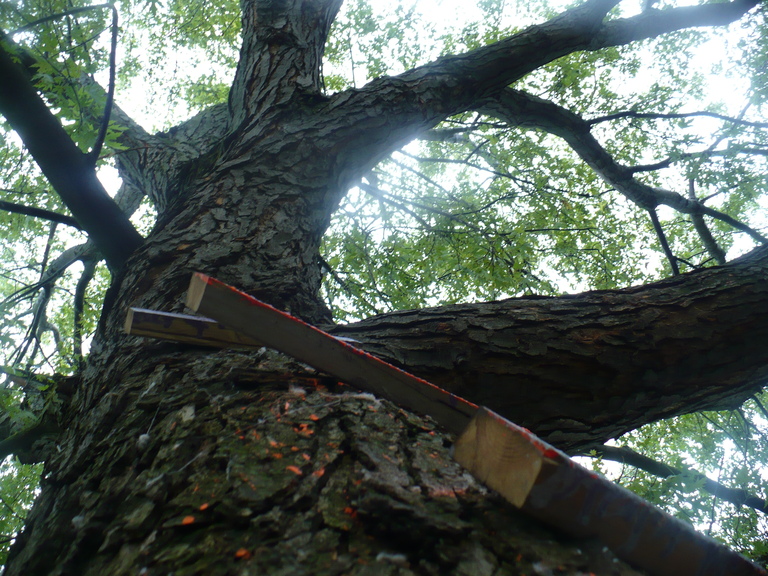
The kids had a bunch of boards, some old nails, a hand saw, and a few hammers. They also had the two most important ingredients, the desire to make something and the freedom to do so.

They spent an afternoon planning their tree fort, enthusiastically arguing over whose plan was best. Their first few attempts failed spectacularly. They were undaunted, even bragged a little bit about the noise the boards made falling down. Several of them asked family members for advice. A few others paged through books and watched YouTube videos as they tried to figure out basic construction techniques. They started again, measuring more carefully as they built a frame. The process took much longer than they’d expected but they stuck with it. When they ran out of materials they scavenged tree lawns on garbage pickup day, dragging back pieces of wood. They got a few cuts and bruises. They were proud of those too. As they worked they talked about how they’d use their clubhouse. It didn’t occur to them how much they were learning.

Conventional thinking tells us that children benefit from the newest educational toys and electronics, lessons, coached sports, and other adult-designed, adult-led endeavors. Well-intentioned parents work hard to provide their children with these advantages. They do this because they believe that learning flows from instruction. By that logic the more avenues of adult-directed learning, the more their children will benefit.

But learning has much more to do with curiosity, exploration, problem solving, and innovation. For example, if baby encounters a toy she’s never seen before, she will investigate to figure out the best way or a number of different ways to use it. That is, unless an adult demonstrates how to use it. Then all those other potential avenues tend to close. Studies show that “helpful” adults providing direct instruction actually impede a child’s innate drive to creatively solve problems. This experience is repeated thousands of times a year in a child’s life, teaching her to look to authorities for solutions, and is known to shape more linear, less creative thinking That’s true of a baby as well as older children and teens.

Young people are also cued to ignore information that is too simple or too complex. Research indicates that people are drawn to learn from situations that are “just right” for them.  They may make plenty of mistakes along the way, just as babies fall when learning to walk, but facing those challenges and making those mistakes are pivotal steps in maturity.

It’s also well-known that a child’s natural motivation tends to diminish in adult-led activities. Unless they’ve been raised on a steady diet of ready-made entertainment, children are naturally drawn to free play. They pretend, make up games, daydream, wonder, and launch their own projects. They are discovering not only the world around them but a rich inner life as well.

Of course adults are vital to young people’s lives. They provide safety, guidance, love, and much more. Kids know they can ask trusted adults for help or advice. They do so more eagerly when they recognize these adults won’t overwhelm them with information, quiz them on what they are learning, or take over. Adult responses simply need to stay in proportion to a young person’s request.

For an example of how powerful the drive to discover can be, let’s take a brief detour to two Ethiopian villages. These places may be rich in intangibles like family and tradition, but they are poor in every other way. The illiteracy rate is practically 100 percent. There aren’t even written words around for children to see: no books, no labels on packaged foods, no street signs. That’s where the One Laptop Per Child (OLPC) project dropped off 1,000 tablet PCs with solar chargers. They weren’t handed out in a school, but to kids. The devices were pre-loaded with English-language operating systems and software that tracked how the tablets were used. The boxes were taped shut, with no instruction given at all.

In less than five minutes, one child (who’d never seen an on/off switch) powered up a system. The kids collaborated as they learned. Within a few days they were using 47 apps per child, within five months they were taking pictures. That took a while since the kids had to teach themselves to hack Android because the tablet cameras were mistakenly deactivated. The OLPC project is finding, all over the world, that kids are learning to read and speak in multiple languages. They easily search, program, and connect using inexpensive tablets. These kids are also teaching adults in their villages to read and use computers. They’re doing it without adult instruction.

So how did our fort-builders do? They had three sides framed and were working on the fourth when one boy’s father stepped in to help. His help may have been welcomed if they’d asked or if he simply contributed to the team effort, but this very well-meaning man decided the kids weren’t doing a good job. He took over, telling the kids to re-do some of their work and to build the rest of it according to his instructions. They did, but without much gusto. The resulting fort was more sturdily built yet they only used it a few times.

A year or so later they scavenged some boards from it to make a go-cart, and then another go-cart. This time they welcomed the help of another child’s grandfather who worked alongside them, learning together as the project unfolded. Their enthusiasm had returned.

A Child’s Place Is In The Kitchen

kids learn in the kitchen, kids learn by helping, kids help in the kitchen, what kids can cook,

flickr.com/photos/eyeliam

It’s easier to cook when kids aren’t in the way. Bubbling pots and sharp knives, after all, are hardly child-friendly. But the kitchen shouldn’t be off-limits to kids.

Yes, dinner takes longer to make when Mason snips the cilantro to shreds and Sophie reads the recipe out loud. And you’ve got places to go — probably places to take your darling children, like T-ball practice or that great science program at the museum.

But how much, really, do our beloved kids benefit from a steady schedule of, well, scheduled activities? Those educational, adult-led activities may very well be counterproductive. We tend to forget that ordinary things like cooking together are flexible, hands-on, purposeful learning experiences.

As they snip, read, and converse with us, our kids are learning physical, mental, and social skills. Here’s how cooking can be educational for them.

Mirror neurons. Even a baby in an infant seat benefits from time in the kitchen. She pays attention to your actions. She’s delighted when you talk to her and show her what you’re doing. Due to mirror neurons in our brains, all of us mentally duplicate actions and emotions we see. This inborn way of learning means that we’re continually participating in what we observe. Your baby’s mirror neurons allow her to vicariously experience what you’re doing. As she sees you wash, peel, and cut carrots, she’ll form a mental template for that task, essentially allowing her to practice in advance.

If you change an element of that familiar activity — perhaps by using garden-fresh carrots with long waving fronds instead of milled carrots from a plastic bag — your little one will pay heightened attention. If your knife slips and you cut yourself, she’ll react to your surprise and pain, making her understanding of sharp implements more real than any warning might accomplish.

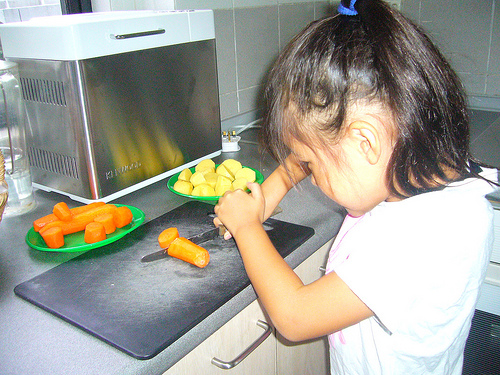
Meaning. Young children clamor to be included. When a preschooler begs to help prepare dinner, he doesn’t want to play with a toy cooking set; he wants to participate in the real work that’s taking place. It slows us down to let him cut fresh mushrooms with a butter knife (and restraint to avoid criticizing or re-cutting), but your child recognizes his contribution toward dinner. He’s also more likely to eat it.

Responsibility. Research has shown that children who participated in household tasks starting at age three or four were more likely to succeed in adulthood. I’m talking really succeed: educational completion, career success, and good relationships with family and friends. Even I.Q. scores had a weaker correlation with success than giving children early responsibilities. And waiting until children were older tends to backfire. We spend much time and money on enriching activities and products for our children, but if they don’t get the chance to take on real responsibilities, we’re depriving them of key components of adult competency.

Higher-level learning. Kitchen-related tasks allow kids to learn more than how dry pinto beans can transform into enticingly tasty refried beans. Kids begin to see scientific principles at work. They develop personal qualities such as patience. They are motivated to apply what they’re learning to more challenging endeavors. Sure, it doesn’t hurt to know what it takes to grow the tomatoes, make the sauce, and prepare the beans for tonight’s enchiladas. But more importantly, as children become proficient in the kitchen, they also see themselves as capable learners. That perception transfers across all endeavors. 

Sensory learning. Full sensory learning has staying power. Apart from nature, it’s hard to find a more sensory-rich environment than the kitchen. As your child’s little fingers crumble blue cheese into dressing, add raisins to a measuring cup, or tear mint leaves for chutney, the tactile and olfactory pleasure help encode specific memories. Perhaps the happiness your daughter feels making mint chutney with you today will be evoked each time she smells mint in the future. We humans must see, hear, smell, touch, and, yes, taste to form the complex associations that make up true comprehension.

Active learning. Childhood is a period of major neuroplasticity, when learning actually changes the brain’s functional anatomy. Hands-on experiences are particularly vital at this time. In fact, the child who spends plenty of time with manipulatives (arranging veggie on a platter, sifting flour, washing silverware) and using real-world math (measuring ingredients, counting celery stalks, following recipes) has a strong foundation of representational experience, which in turn enables better understanding of abstract mathematical concepts. These movement-oriented activities also contribute to reading readiness. Another benefit of kitchen learning? Cooking and tasting the results a short time later provides wonderful lessons in cause and effect.

Simplicity. Children accustomed to blinking, beeping toys and rapidly changing screen images may become so wired to this overstimulation that without it, they’re bored. The slower pace of kitchen conversation and cooking tasks can be an important antidote, especially when we’re willing to go at a child’s pace. Young children tend to balk when they’re hurried. They show us, stubbornly and often loudly, that there’s nothing more important to them than the here and now. So whenever possible, simplify so you can make your time together in the kitchen enjoyable. Slowing down is better for digestion, concentration, and overall happiness. Letting a small child spread his own peanut butter, cut his own sandwich, and pour milk from a tiny pitcher into his cup is a way of affirming the value of the present moment. It also makes for an effortless tea party.

Skill building. There’s no denying that children who help out in the kitchen pick up useful skills. They learn that a cake takes lots of mixing, but muffins very little. They can set the table, toss a salad, make a sandwich, and boil pasta. Not right away, but eventually. They also learn from the examples we show them, such as how to handle pressure and ways to learn from mistakes. Whether we’re four years old or 40 years old, gaining competency feels good. It doesn’t hurt to give credit where it’s due. So if your child has been busy peeling potatoes and crumbling bacon, try renaming the entrée “Max’s special potato soup” for extra reinforcement.

Purpose. When we prepare a family meal, bake a cake to celebrate a friend’s good news, or change a favorite recipe to accommodate Grandpa’s diabetes, our efforts have noticeable value. As our children participate along with us, they feel that same satisfaction. So many educational tasks put before our children serve no purpose other than to instruct. But when learning is connected to something truly purposeful, it can’t help but spark enthusiasm. Children feel honored to be included in real work that includes real challenges. If we pay attention, we’ll see that’s just what they pretend to do when they play.

kids help in the kitchen, how kids can cook, preschoolers help in kitchen,

flickr.com/photos/limevelyn

Getting Started

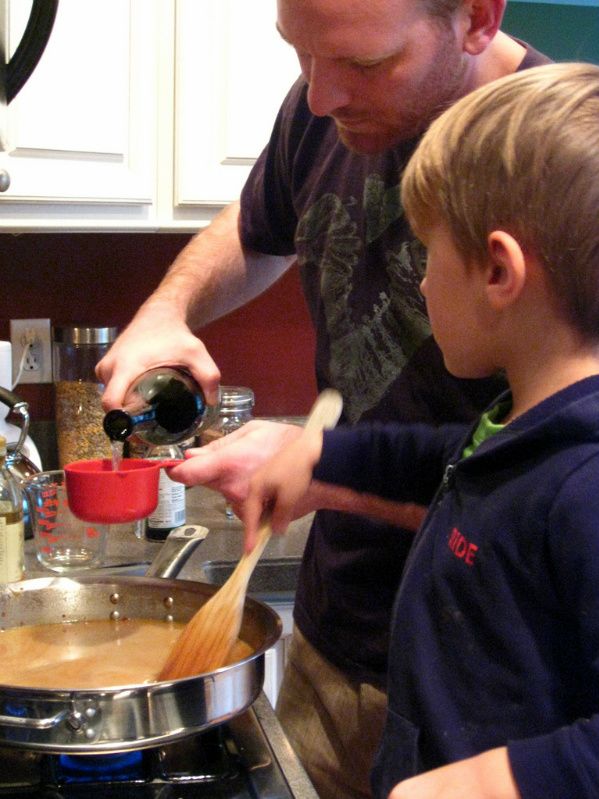
Even toddlers can help. Let small children cut mushrooms, pears, bananas, and other soft items with a blunt knife. Encourage them to stir (as long as you or they hold the bowl). They’ll be happy to add ingredients, tear lettuces, and grate cheese. When putting together forgiving dishes like soups or casseroles, have them help you choose herbs and spices by smell before you toss in a pinch or two.

Encourage your small fry to wash unbreakable items in a sink of warm soapy water. Let them clean up crumbs on the floor with a small whisk broom or handheld vacuum. Put them in charge of setting out napkins on the table and calling family members to dinner.

Give them the job of stacking unbreakable containers in a low cabinet. Solicit their opinions on aroma, taste, and appearance as you cook together. And remember to thank them for their assistance.

As they get older, children can read recipes, plan meals, and do nearly every task required to make the dishes they enjoy. The time will come when they won’t want you in the room explaining how to fix a lumpy cream sauce or talking about how Nana always mixed pastry dough with her fingers. They’re on their way to making the kitchen a proving ground for their own culinary adventures. Hopefully you’ll be invited to taste-test while you relax for a change.

Parking the kids in front of the TV while we dash to get dinner ready may be efficient, but it’s not the way young people have matured throughout human history. Children need to watch, imitate, and gain useful skills. They’re drawn to see how their elders handle a crisis, fix a car, create a soufflé, build a bookshelf, heal what’s broken, and fall in love.

So welcome your little ones into the kitchen. Let the cooking begin.


First published in Culinate.com