Five Ways Frugal Living Benefits Kids

Sophie is a single mother raising a five-year-old boy. She’s working to establish her own house cleaning business after losing her job nearly two years ago. Sophie and her son live in a small trailer home.

Marissa and Jack run a thriving dental practice while raising five-year-old twin daughters. They live in a suburban home on several acres.

The five-year-olds from these families are at opposite ends of the economic spectrum. But their parents are raising them in remarkably similar ways. Frugally.

Although Sophie would prefer a more reliable income, she wouldn’t spend a cent more than she already does on herself or her son. She adheres closely to simple living tenets. Sophie grows as much food as possible in a community garden plot and makes meals from scratch. She and her son fully enjoy the free benefits of the local library and park system. On weekends, Sophie’s folk band crowds into her trailer for practice sessions. Her son is already learning how to play the harmonica and fiddle. Sophie believes he should rely on his imagination for fun rather than on toys. When she does buy him gifts, they tend to be modest items such as crayons or socks, or ones that have long- term use such as simple tools or sheet music.

Marissa and Jack choose to live simply in their own way. They buy clothing and their children’s playthings from thrift stores, exchange only homemade gifts, and emphasize having fun outdoors. They carefully consider expenditures based on their ethics. Health is a priority, so they buy only organic foods and belong to a CSA. Supporting the arts is another priority so they invest in original works to hang on their walls and regularly attend plays, concerts, and gallery events. They strongly believe in the importance of international travel. When they go to far-off places, they get around by bike or local mass transit, a method they find brings them closer to the cultures they’re visiting.

Many of us are living more frugally. It certainly eases financial strain. It also makes a difference in wider ways, from reducing our ecological footprint to promoting social justice.

Today’s relentlessly materialistic culture tells young people in every way possible that their identity is built on wearing, playing with, and using the very latest consumer products. That’s a heavy tide to fight against on the home front. But that tide is worth turning.

Living simply puts the emphasis on exactly the conditions that are best for our kids, now and as they grow into adulthood.
Shelter From Commercialism

Humanity has always raised her children with the stories, foods, rituals, and values of particular meaning to the people close to them. While there are undeniable benefits to today’s connections and conveniences, a major drawback is the way advertisers have insinuated themselves into the lives of even the youngest children. Nowadays, a child’s stories, foods, rituals, and values are more likely than ever provided by the marketplace. And we know what’s preached there – that meaning comes from what can be bought.

Every year, a 15 to 17 billion dollar marketing industry is aimed at our kids. That money is spent because it’s effective. It’s estimated that 565 billion dollars in purchases are influenced by four- to twelve-year-olds.

Susan Linn, who teaches psychiatry at Harvard Medical School, notes in Consuming Kids: The Hostile Takeover of Childhood, that psychological and neurological research is used to exploit the vulnerabilities of children. She writes, “The explosion of marketing aimed at kids today is precisely targeted, refined by scientific method, and honed by child psychologists – in short, it is more pervasive and intrusive than ever before.”

These strategies are not only employed in advertising itself but are embedded in Internet sites, video games, television, and movies. They’re designed into packaging, implicit in many playthings, and nearly ubiquitous in schools.

Young people have minimal defenses against such tactics. Children under the age of eight aren’t even able to understand the persuasive intent of advertising. And studies show that a network in the brain necessary for many introspective abilities – forming a self-image, understanding the ongoing story of one’s own life, and gaining insight into other people’s behavior – is profoundly weaker in young people. Those brain networks aren’t fully established until adulthood. Just at the stage when selfhood is forming, our children are most vulnerable to the messages of a consumer culture.

Those of us who live simply shelter our kids in different ways and to differing degrees. No matter what approach we take, it’s neither possible nor desirable to shelter teens the same way we shelter toddlers. That’s why it’s vital to raise our kids to be critical thinkers with a strong sense of self. Then they’re empowered to make their own fully informed choices.

Delayed Gratification

This is a biggie in the “you’ll thank me later” department because kids who are able to delay gratification are much more likely to do well as they grow up.

We model delayed gratification each time we choose to save, make do, or make it ourselves. We demonstrate it when the whole family adds coins to a jar until there’s enough to finance an anticipated event. We teach it when we help children find ways to earn and save for their own aims. And we show that it’s expected whether our kids have to wait to see a movie until it’s available at the library or wait until the next birthday for a new pair of jeans.

This may seem negative, particularly when popular culture constantly screams “have it now” and “get what you want.” But there are enormous positives. Our children become familiar with the pleasures of anticipation, which multiplies the eventual delight when a goal is reached. They also begin to internalize the ability to delay gratification. In multiple studies (cited in Daniel Goleman’s book Emotional Intelligence) children who were able to defer gratification grew into teens and young adults who were more socially competent, better able to deal with frustration, more dependable, reached higher educational attainments, and were effectively able to make and reach long-term goals.

Delayed gratification is related to impulse control. Research shows that a child’s ability to control his or her impulses at an early age is predictive of success even decades later as a healthy, financially stable, and positive member of the community. There are many ways to help kids gain the positive coping skills that help them control their impulses and delay gratification. It may be about waiting, but the outcome is extraordinary.
Happiness

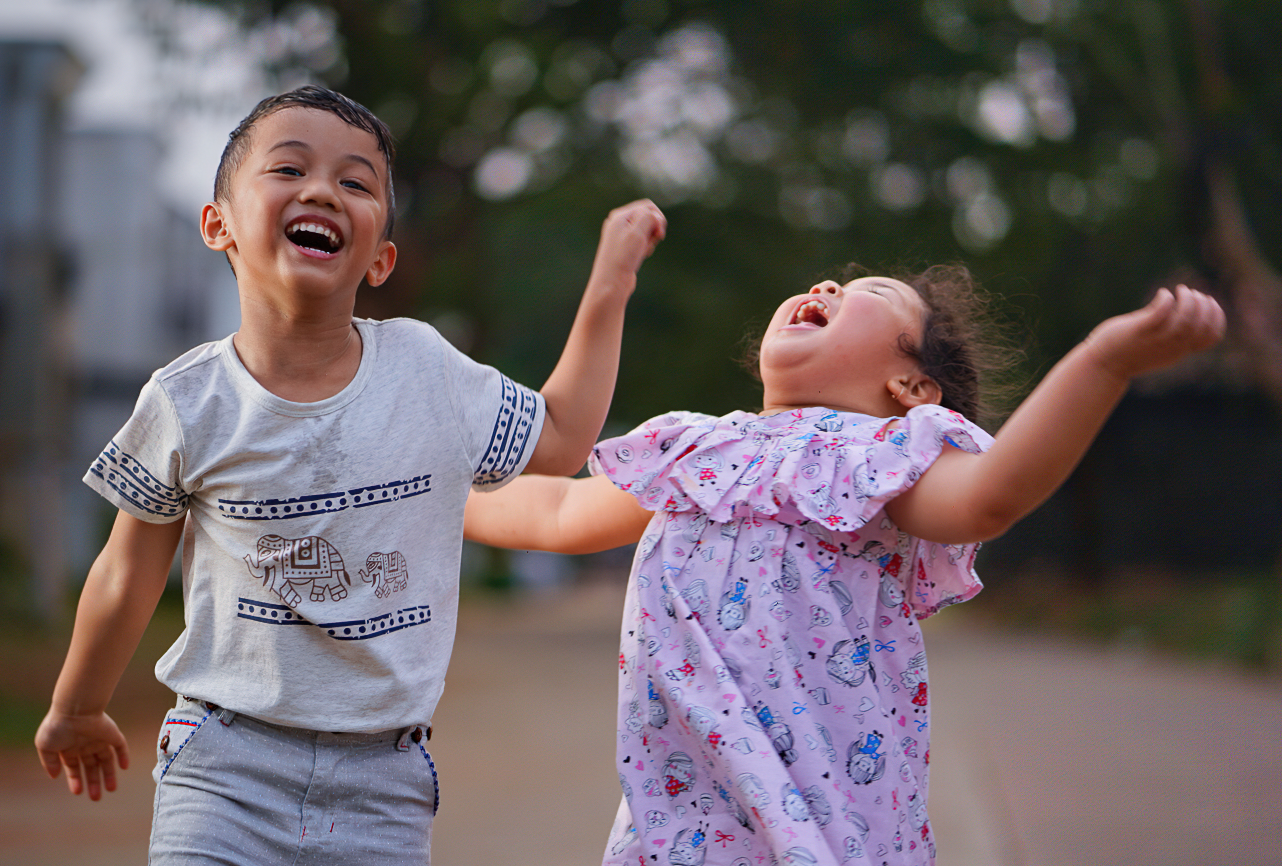
Despite advertisers’ images of happy children playing with new toys and giddy teens dancing in designer hoodies, the facts are glaringly obvious. Things don’t make us happier. Children seem to understand the “time is money” conundrum. When their parents spend more time away from home earning an income, they have less time to spend with the family. In a nationwide poll of American kids ages nine to fourteen, ninety percent said they’d prefer increased time with friends and family over material possessions. And when asked if they could have one wish to change their parents’ jobs, sixty-three percent said they would like their mom or dad to have a job that gave them more time to do things together. Only thirteen percent wished their parents made more money.

The more materialistic young people are, the unhappier they tend to be. According to research cited in The High Price of Materialism by Tim Kasser, people who hold materialistic values are more likely to suffer from a whole dumpster load of problems. This includes aggressive behavior, insecurity, depression, low self-esteem, narcissism, even physical maladies. And when people place high value on material aims, they’re prone to have trouble with interpersonal relationships and intimacy. Materialism is also related to less independent thinking and lower value placed on being “true to oneself.” Of course, we want to spare our kids this festering personal mess.

How? We recognize that a sense of well-being depends on intangible qualities like warm interpersonal relationships and reasonable autonomy in one’s choices, exactly those things that money can’t buy. But what’s interesting is that materialism and unhappiness seem to “cause” each other. We all know people who exemplify this. Unhappy people tend to seek status and satisfaction in more transitory ways such as acquisition and appearance. When they do, they feel a temporary boost in happiness, which reinforces even greater materialism.

Studies show that happiness has much more to do with experiences than with possessions. A family camping trip will provide more lasting pleasure than a large purchase. That may be due to the way we access memories. Long after the experience is over, we have fuller sensory-based recall that’s invariably richer than any a purchase can provide.

It’s important to model a cheerful approach to simple living for our kids, but that’s not enough. To ward off materialistic attitudes, our children need the personal strength found in the self- worth that comes from supportive relationships and a sense of accomplishment. In a marvelous example of synchronicity, these are precisely what simple living reinforces in our daily lives. We consciously choose to do for our- selves, to spend more family time together, and to focus on active rather than passive entertainment.
Creativity and Enthusiasm

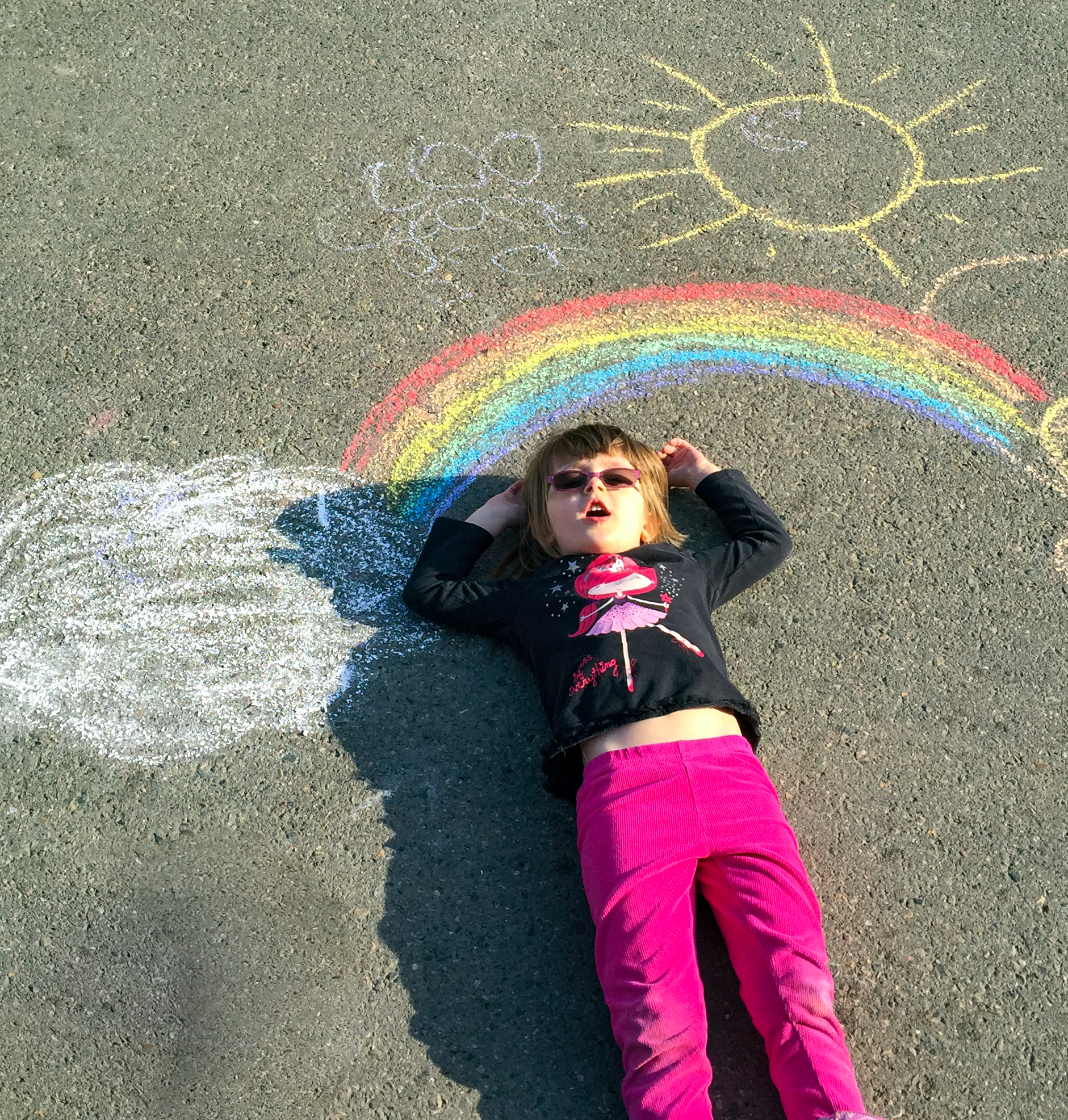
Many adults seem determined to keep kids busy by enrolling them in supervised activities. And they provide kids with plenty of distractions like toys, video games, and television. Unintentionally, these efforts teach children that fallow time is undesirable. But brain studies show that daydreaming, contemplation, even that uncomfortable condition we identify as “boredom” is vitally important. These natural periods of down time are necessary to incorporate higher level learning and to generate new ideas.

If we expect children to resolve their own boredom without resorting to electronic or other distractions, we help them access a wellspring of ideas that seem to come from nowhere, a wellspring they discover within. Frugal living is one way to preserve a slow pace and minimal distraction load, letting our children become familiar with generating their own ideas.

When we live frugally, we also tend to avoid popular methods of “enriching” our children’s lives such as academic preschool, specialty classes, coached sports, and other paid programs. That saves on fees. It also fosters the kind of expansive learning that’s natural for our species. Research continues to show that when adults are highly directive and exert influence even in the form of rewards or evaluation, their efforts actually diminish a child’s motivation, enthusiasm, creativity, and ability to innovate. Well-intended efforts to hone a child’s abilities through early instruction tend to be counterproductive.

That’s also true of play. Our kids don’t need expensive toys or games. Children’s creativity and resourcefulness flourish when they play without the structure imposed by most playthings. Imagination flows freely when they use what they find in the backyard to play act, build hideouts, or create their own games. In contrast, a toy linked to a movie release or a game with structured rules has predetermined uses and children are much less likely to innovate.

Stuart Brown and Christopher Vaughn write in Play: How it Shapes the Brain, Opens the Imagination, and Invigorates the Soul that, “play lies at the core of creativity and innovation.” It enhances development in areas such as emotional health, social skills, motivation, confidence, a sense of justice, and much more. Young people who maintain a playful nature into adulthood are, according to Brown and Vaughn, remarkably well suited for success. A playful adult is more flexible, humorous, optimistic, and efficient. They note that throughout life, “the ability to play is critical not only to being happy, but also to sustaining social relationships and being a creative, innovative person.”

When our frugal homes provide plenty of raw materials necessary for play without up-to-the-minute popular toys, we’re putting into place the best conditions for sustaining creativity and playfulness.

Self-Reliance And Responsibility

There’s a resoundingly positive impact on our children when we include them in the real work of maintaining our family home, yard, vehicles, and more. Children growing up in frugal households often have regular chores. While some complaining is natural, chores help children understand how things work. They see the benefits of saving as they do calculations for the family budget. They recognize what happens if they forget to take the dog out or don’t bring the laundry in from the line before it rains. They take extra pleasure in the warm fire from firewood they helped to stack. Chores also enable children to master useful skills that will help them become more self-reliant adults.

Taking on early responsibility brings long-term consequences. A study, starting in the 1930s, followed men from young adulthood to death. These men had very different lives; some were affluent Harvard graduates and others were impoverished inner city residents. The men who helped out with regular tasks starting at a young age were most likely to enjoy stability and good mental health.

And there’s more evidence. A long-term study followed children from early childhood to their mid-twenties. What led to success? Balancing all other variables, it was found that the best predictor of a young adult’s success was participation in household tasks at a young age. And we’re talking resounding success – including educational attainment, high intellectual capabilities, a career, and good relationships with family and friends.

The optimum age to get started is three or four years old. According to researchers, starting in the preteen or teen years doesn’t have a strong association with success, although children who take an active role early continue to help out as teens. It’s important to gear the task to the child. Parents should take care to present tasks that aren’t too difficult and that fit the child’s learning style, and not to “pay” for tasks directly or through an allowance tied to the work. Researchers also suggest that children be involved in choosing tasks, perhaps through family meetings or rotating chore charts.

They key to success may also lie in the sensory riches gained by hands-on tasks. Those of us who live simply tend to do more for ourselves. We may grind our own grain and make our own bread, we may raise chickens and barter the extra eggs for a local beekeeper’s honey, we may fix rather than replace what’s broken. And when our kids take part they also gain learning experiences that apply to many other areas of life.

Neurologist Frank Wilson explains in The Hand: How Its Use Shapes the Brain, Language, and Human Culture that brain development and hand use is inextricably connected. And Wilson found a transfer effect. As he studied people who were masters in all sorts of fields (surgeon, puppeteer, and guitarist to name a few), he found each of them had engaged in regular hands-on efforts during their formative years. Whether they grew up doing farm work, playing a musical instrument, or helping grandpa build birdhouses,Wilson says the hand-brain link activated “hidden physical roots . . . of passionate and creative work.”

Starting our kids on tasks at an early age blesses them with self-reliance and a greater likelihood of success. It also demonstrates to them day after day that their efforts are needed. A child can see the outcome of his or her efforts in a meal the whole family worked to get on the table. It feels good. It feels even better is when a parent says, “Thanks, I couldn’t have done it without you.” There’s not a commercial product out there that can create the same genuine satisfaction.

Sophie’s little boy and Marissa and Jack’s twin daughters know that satisfaction. Their young lives have ample time for play, working alongside adults, and warm family conversation. The children soak up their parents’ values while learning and growing largely free of commercial influences, at least for now. Their parents have never met each other but they have the same focus. They see simple living as an integral way to bring forth a more conscious and life sustaining future for their children.

First published in Natural Life Magazine  

Resources

Fairplay: childhood beyond brands

Alliance For Childhood

Shareable: solutions for the common good

Gentle Nurturance=Gentle World?


A little girl about three years old trails behind her mother in the store. She seems tired and distracted, as if it’s difficult for her to keep up. Her mother is busily shopping while pushing a cart with a baby in a carrier at the front, oblivious as her daughter lags farther behind. Every minute or so the girl says, “Mommy,” but her mother doesn’t look back so the girl hurries to catch up. Not long after the mother turns to another aisle the little girl loses sight of her and wails loudly. Her mother, surely distracted and now embarrassed, hustles back to grab the child, shakes her, and through clenched teeth issues a threat. The child cries quietly and resumes following, more closely at first but again lags behind in the crowded store. A few aisles over she loses sight of her mother again. This time the mother picks the child up by the arm to smack her fiercely.

The problem continues to escalate. The entire time this family is in the store the mother repeatedly threatens and hits a child who may be ill, or needing a nap, or simply isn’t able to keep up. No one intervenes. In the checkout line they stand under an overhead TV screen blaring with news. Crime, war, and looting at the scene of a disaster are shown in vivid video clips. The little girl, tears still drying on her face, reaches up to the baby sleeping in the carrier and squeezes his toes until he too is crying.

Many of us probably see such scenes on a regular basis. Those of us who are parents know full well that gently nurturing a child’s growing body and mind isn’t always easy. Sometime days it feels as if good parenting requires sainthood. But gentle nurturance is the way that we adults constantly demonstrate, in hundreds of seemingly insignificant ways, that a child is a person worthy of love and consideration. We wipe a face softly rather than harshly, we take an extra moment to see what a child sees, we find ways to distract a grumpy toddler or a moody teenager, we share real work with our children so they know the satisfaction of a job well done, we turn away from our own amusements to take part in what delights our children, we teach our children to wait their turn, we cuddle and guide and care.

raise children tenderly for a more peaceful world

This doesn’t mean we empower children to do whatever they want or raise them without limits. It simply means that it’s possible to touch a child with kindness and respect, to consider situations from the child’s point of view, and whenever possible, to listen to what a child has to say.

Gentle nurturance resounds through a child’s entire life, bringing forth a greater potential for happiness and success. Children treated with love and consideration become adults who treat others well too.

no spanking leads to better behavior

There’s plenty of evidence that this is the case. Let’s take one example, that of corporal punishment. Ninety percent of American parents say they have spanked a toddler, 61 percent in the same week they were asked. If it “worked” parents who spank would have more compliant children. But that’s not the case. In fact, children tended to act out again within a few minutes after being spanked or hit by a parent.

Spanking leads to children who are more easily frustrated, have more frequent temper tantrums, demonstrate greater defiance, and who are more likely to physically harm others.

Spanking is also associated with lowered IQ scores. A U.S. study found children who were spanked had lower IQs four years later compared to those who were not spanked. The more frequently the children were spanked, the slower their intellectual development. Researchers speculate one factor may be that regular physical punishment is a chronic stressor for young children.

Negative consequences aren’t limited to childhood. Children who are punished by spanking, slapping, or grabbing even occasionally run a higher risk of growing up to have mental health problems, according to a study of nearly 35,000 people. Those issues include depression, anxiety, and drug or alcohol abuse as well as more complex illnesses such as narcissism and antisocial behavior.  

Even crime is associated with physical punishment. Take time to read this linked article, titled “The Influence of Corporal Punishment on Crime” by Adah Maurer, Ph.D. and James S. Wallerstein (courtesy of The Natural Child Project) which features data including the following chart:


Degree of physical punishment


Never

Rare

Moderate

Severe

Extreme

Violent inmates
at San Quentin

0%

0%

0%

0%

100%

Juvenile
Delinquents

0%

2%

3%

31%

64%

High School
drop-outs

0%

7%

23%

69%

0%

College
freshmen

2%

23%

40%

33%

0%

Professionals

5%

40%

36%

17%

0%

Corporal punishment is just one factor among many. There are plenty of other elements to consider as we raise children to respect themselves and others. Here are just a few. 

raising children peacefully

It has to do with consistent and fair family rules. 

It has to do with understanding a child’s temperament.

It has to do with free play  and plenty of time in nature.

It has to do with our expectations and our ability to listen.

It has to do with responsible media exposure.

It has to do with an understanding that we as a species are innately kind and cooperative.

And so much more.

But corporal punishment is the example I’ve used because there are larger cultural factors to consider when force is used on children, whether physical or other forms of coercion. There’s a connection between harsh treatment of children and harsh societies. Researchers Carol and Melvin Ember, in a journal article titled “Explaining Corporal Punishment of Children: A Cross-Cultural Study” conclude that force is commonly used against children in highly stratified societies, societies with low levels of democracy, and those with a propensity toward violence.

And there’s more evidence. James W. Prescott, former administrator at the National Institute of Child Health and Human Development, analyzed cross cultural data using 20,000 statistically significant correlations from 400 studies. The information included presence of physical punishment, freedom or repression of sexual practices, social status of women, degree of affection toward children. He concluded that societies based on affection were highly unlikely to be violent.

These conclusions are of global significance to you, me, and everyone else in today’s world.

peaceful world starts with parenting

This isn’t easy to see on an individual basis. Plenty of anecdotal accounts contradict these assertions, but individual exceptions don’t prove the point. I was raised by loving parents who, yes, spanked a few times and yes, tended to lose me in stores. I don’t see many after effects . (Well, I detest shopping.) The point remains. A gentler world can emerge from gently raised children.

This starts in our homes, stores, everywhere. I know what it’s like to shop with kids (I have four) so I can understand the time pressure and distraction the mother of that three-year-old girl must have been under. But each moment of parenting provides us with an opportunity to help our kids find positive solutions. This builds inner strength and fosters skills they’ll need to deal with future difficulties. Trouble is, parenting skills take patience, conscious attention, and lots of opportunities to observe other parents we admire. The time required is exactly what’s missing in the lives of busy parents. What are some things that could have helped when the little girl couldn’t keep up with her mother?

Connect. “Mommy needs to see where you are. I miss you when you lag behind.”

Empathize. “Oh Sweetie, you’re having trouble keeping up with Mommy.”

Problem solve. “How can we stay together?”

Engage her help. “Can you help me find the cereal you like? Do you remember if it’s in a yellow package?”

Distract her. “Let’s count all the other _____ in the store today (little girls, women with hats, times the loudspeaker interrupts, etc).”

Celebrate and appreciate. “I’m so glad you’re staying with Mommy and helping me watch the baby. Let’s _____ after we get home.”

And it would have helped if this mother had the resources to avoid taking a child to the store who was tired, or sick, or needing closer attention.

It’s important to recognize that in our society, parents tend to be isolated. A whole tribe of extended friends and family aren’t there to watch, guide, nurture, and enjoy each other’s children. Cultural forces of work and time pressure and distance divide us. Parenting is too often a solitary venture, performed under the gaze of strangers who judge one’s parenting in every store and sidewalk.

As Urie Bronfenbrenner noted, we need to understand what forces affect family so we can to best enable them  “to perform the magic feat of which they alone are capable: making  and keeping  human beings  human.”

Ima

Are You A Baboon Or A Bonobo?

competitive parents, parenting one upmanship

I’m waiting in a movie theater line behind two women who are clearly friends. And rivals.

“Max won front line seats to this weekend’s game. It’s the first month the school is offering prizes for the highest overall score and Max is their first winner. Already we can see the advantages of this new school.”

“That’s so nice for him. Jeffrey really prefers playing football to just sitting there watching it. The coach keeps telling us that Jeffrey is a natural and sure to get a Big Ten scholarship.”

“Don’t you worry about him tackling when he’s so young? I heard that high school football players can get brain damage and Jeffrey is only 14, probably smaller than the other players. It’s such a risk.”

“That’s so sweet of you to be concerned. But Jeffrey isn’t taking a risk. He’s learning to look out for himself. That makes a difference in the real world. I’m more concerned for Max, insulated by that private school from experiences that could toughen him up. He’s such a nice guy, I’m worried for him.”

Barbed remarks just kept coming from their smiling mouths.

Yes, I’m a biased observer. I prefer what’s gentle, inclusive, and nature-based. This generally works for me. I say “generally” because I’m hampered when communicating with certain people—those who one-up each over with how perfect their lives are or, conversely, spar about who has it worse. I’m well aware that it’s best to listen with empathy but sometimes I can’t help myself. I just want to get out of the way. That’s because these conversations remind me of angry primates flinging poo.

Turns out there’s something to that image. Biological anthropologist Gwen Dewar noted that the “verbal sniping, snobbery, one-ups-manship, and cruelty” of mean moms has a striking parallel in the animal kingdom. Yup, she’s talking about monkeys and apes.

Females in certain monkey societies live in dominance hierarchies. There are perks for those at the top of the social ladder such as better food and first choice of sleeping places. In bad times, higher ranking females and their offspring are more likely to survive. Social rankings don’t budge. Top monkey moms make sure their daughters share their status. Low-ranking monkey moms can’t do anything to help their daughters move from up from the bottom. And middle-ranking moms can only ensure that their daughters stay in that relatively comfortable spot.

This stratification happens because monkey mothers are pushy. Top monkey moms enlist their powerful relatives in an ongoing campaign to make low-ranking monkeys defer to their daughters. As Dewar puts it, “These girls learn to be snobs. To form social cliques. To harass their social inferiors and toady to their social betters.” At a young age, monkeys know who pushes and who gets pushed. They work hard to assert their own status in order to pass that status (and the survival benefits) along to their daughters.

peaceful versus pushy parents,

The analogy isn’t perfect. Humans are pushy for reasons more complex than access to food and better choices of sleeping spots. Plus, we have even more reasons not to be pushy.

But even primates are hard to categorize. Only certain species, like baboons, live in groups with the female dominance hierarchies that Dewar likened to “mean moms.” Other species are wonderfully egalitarian, with strong female alliances, like the bonobos.

Bonobos live in matriarchal peace-loving groups. One of the many ways they get along is by frequently offering each other casual sexual stimulation, which rules out suggesting bonobo style friendship to moms waiting in line at the movie theater.

Putting that particular bonobo feel-good formula aside, what primate-like politics do you observe in your fellow humans? How about you? Baboon or bonobo?

Imaginary Motherhood

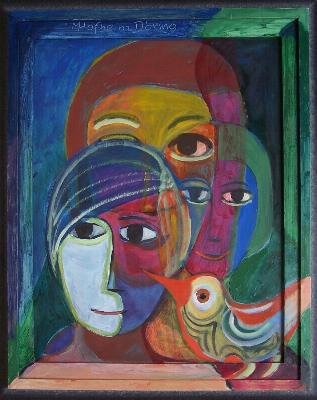
Belakane und Feirefil by Margret Hofheinz-Döring

I’m a much better mother in my imagination than in reality.

That imaginary mother has casual grace and unflappable calm. She doesn’t speak in funny accents or talk to inanimate objects. She also has the confidence to wear a bathing suit. In public. Without scuttling around using a small hut as a beach wrap. But I digress.

In my imagination I sparkle with enthusiasm for trigonometry and better yet, can explain it. I drive everywhere for everyone without grumbling about contributing to global warming. In fact, I am the mother my teens long for. I tell them I’ve secretly been saving up for one son’s trip to New Zealand to study spiders and another son’s year long trek along the Pan-American trail. As they leave I wave goodbye cheerfully.

The real me doesn’t sparkle unless craft supplies get loose.

I’m guilty of excusing myself to hide in the bathroom when my offspring go into lengthy monologues about topics I’ll never fathom. I ply my family with goodies in a not-so-subtle way of getting them to watch the documentaries I want to watch, even though it is entirely necessity after that endless German film about Mongolian salt miners. The stories retold with great hilarity by my kids usually feature my tendency to trip over invisible objects and my exaggerated startle reflex.

In my imagination I cook using recipes instead of improvising. When my children ask, “What are we having for dinner?” I’m able to answer with the names of actual dishes. This reassures them that someone, somewhere has taste-tested the food before them. This also spares me the daily trauma of watching my offspring tolerate meals made with home grown vegetables, dark scary grains, spontaneously seasoned sauces, and no names for anything.

“Why,” my son once asked, “can’t we try the kind of macaroni and cheese that comes in a box? It’s really bright yellow!” He regretted the question instantly, because unlike that imaginary mother who laughs sweetly at such questions, the real mother explains things. Or according to the daughter in the family, she rants.

In my imagination I am never preoccupied, never busy. When sought out I’m fully attentive. When my children look up from their pursuits they find my adoring eyes, but not often enough that they think I’m creepy and plot to institutionalize me. My wonderfully creative life inspires my children to live their own dreams (while still getting their omega-3 fatty acids and sufficient rest).

The real me falls terribly short.

I kvetch. I get tears in my eyes easily, even from poignant long distance ads. I juggle obligations badly while tossing out sarcastic asides like a performing seal. I plot giant world-saving accomplishments while forgetting to water the plants. I fuss and grumble and speaking of short, I’m also shorter than everyone in the house. That can’t be right. In my imagination I am tall.

In my imagination our family spends every evening together as we used to when the kids were small, back when we snuggled on the couch reading books, making puppets out of our socks, and making up games out of nothing. Although now we wouldn’t all fit on the same couch and the kids would suffer withdrawal symptoms away from glowing screens and friends.

But still, the vision of togetherness keeps the imaginary mother in me happy. She is able to hold on to every moment of the kids’ earliest years. She builds precise memories of each squabble and laugh and each child’s way of drifting slowly toward his or her larger self because she knows the actual mother, me, never could have imagined how fast time would go by. For real.

bittersweet motherhood, children nearly grown, being a better mom,

Nachtgespräch by Margret Hofheinz-Döring


Do You Tell The Truth About Santa?

A few decades ago I indulged in some concerns about the likelihood of Santa’s existence while playing with a neighbor kid. A reasonably science-minded kindergartener, I wondered aloud how reindeer could fly without wings. I speculated about the chimney girth problem and the issue of children who lived in fireplace-free homes. And then, as if no one else had encountered these breaches in holiday logic, I asked how Santa could fly across the whole world in one night.

I was torn, wanting my friend to take me seriously but also hoping he’d prop up my fading sense of magic. I was disappointed when he dismissed every one of my speculations.

Later that day his mother called my mother. Her son was upset. According to her I’d ruined his belief in Santa. She said I wasn’t a nice little girl at all. That we were the same age didn’t seem to matter. My mother, who held politeness up there with God and cleanliness, insisted I apologize to Mrs. Barton right there on the phone.

After that particular trauma I badgered my mother for days until she fessed up. The truth stung. My older sister was in on the falsehood. Other kids at school probably were too, but by some twist of propriety they knew better than to tell believers, even if they felt superior to Santa holdouts. Clearly a victim of my mother’s politeness gene, I felt awful when it hit me that I’d been opening packages every year thinking that Santa owed me for my good behavior when all along those gifts were lovingly bought and wrapped by my parents. And I’d never even thanked them.

Fast forward a few decades. I vowed I would not follow the collective Santa lie with my own children. Sure, the truth might lead them right into the same minefield of logic versus belief with some other kid. That isn’t a bad thing, it’s how kids learn to think for themselves (as long as their parents don’t run interference). But I had no intention of killing Santa entirely. That’s because small children inhabit a different world than the rest of us. They don’t make clear distinctions between fantasy and reality. There’s probably something to that. Ever notice how happy little kids are? So I wanted an approach that kept wonder and excitement alive.

The philosophy I decided to use with my own four kids was based on the classic 1897 newspaper column titled “Yes Virginia, There Is A Santa Claus” written by Francis Pharcellus Church. It reads, in part,

“Yes, Virginia, there is a Santa Claus. He exists as certainly as love and generosity and devotion exist, and you know that they abound and give to your life its highest beauty and joy. Alas! how dreary would be the world if there were no Santa Claus. It would be as dreary as if there were no VIRGINIAS. There would be no childlike faith then, no poetry, no romance to make tolerable this existence. We should have no enjoyment, except in sense and sight. The eternal light with which childhood fills the world would be extinguished.”

I took the casual approach. I never hyped Santa, any more than I promoted the whole commercial side of Christmas. No “better be good for Santa.” No Santa at the mall (pretty easy with our mall avoidance lifestyle).

Sure, we still like Christmas carols that mention Santa. And my family cheerfully accommodates the thing I have for that early 60’s special, Rudolph The Red Nosed Reindeer, even welcoming my teary-eyed joy at the scene when hope returns to the Island of Misfit Toys. But we keep the holidays simple.

My reply to “Is Santa real?” has always been, “Everyone who loves children can be Santa’s helper.” The few times I’ve gotten more questions, which happened rarely because kids like to keep that possibility alive, I explained that even grown-ups like to believe too. By the time kids reach a certain age, they know what my answer means. Either it means there’s no Santa or their Mom is a believer. Maybe I am. I’ve lived long enough to know that there’s magic everywhere. I just call it by different names: love, hope, faith, and compassion.

Oh yeah, and forgiveness. By the next day Mrs. Barton’s kid was already over it.

Thanks To Mom, We Tried Turkey Farming

I offered to host Thanksgiving year after year. My mother turned me down each time. She liked hosting the family get-together even though her kids and grandkids lived close enough to visit weekly. She preferred her wedding china and linens to my mismatched dishes and homespun tablecloth. Mostly she wanted to ensure that the meal featured homemade white crescent rolls and a large Butterball turkey filled with her own stuffing recipe. She was afraid that her annoyingly whole foods vegetarian daughter might prepare something horribly non-traditional, like nutloaf with chestnut wild rice dressing instead of turkey. Valid point.

But her health kept declining. I took to coming over early on Thanksgiving Day to stuff the turkey with her and hoist it in the oven. We all came back a few hours later with side dishes. I always brought homemade crescent rolls that looked suspiciously brown and healthy. Our meals continued to be lively events and we worked hard to make sure my mother didn’t notice how much we all helped out.

I knew she’d reached a new low in her energy level when she offered to let me host Thanksgiving a few years ago. She said I had to agree to one condition. I had to make a real turkey (not a Tofurky, she hastened to add) and stuff it with her stuffing recipe. I had to promise. I wanted to cry, knowing that she was much sicker than she let on. I promised.

But there was no way I was going to cook a typical grocery store turkey. I know these birds spend their short lives in tightly confined spaces, eating foods that aren’t natural to them. We raise pastured livestock on our little farm, so we drove nearly an hour to buy a similarly pastured turkey directly from the farmer. I felt particularly solemn as I prepared that first Thanksgiving meal at our house, knowing it was difficult enough for my mother to get from the car to the house so she could spend the day with us. At least the turkey was a hit. According to the meat-eaters in the bunch, it was the best they’d ever had. It was also so juicy that it overflowed the pan. That’s something grocery store birds don’t do, even though they’re injected with a “7% solution containing water, salt, modified food starch, sodium phosphate and natural flavors.”

But that pastured turkey was astonishingly expensive. We thought we might be able to raise a flock of our own more cheaply. We were wrong. But I’m getting ahead of myself.

Nearby farmers gently told us that we were foolhardy. They warned us to keep turkeys “on wire,” indoors, and away from what they said were the disease-carrying dangers of grass. They said our plan to avoid feed pumped up with medications and synthetic vitamins would leave us with a dying flock. Online articles repeated these woeful predictions.

Still, the next spring we bought turkey chicks. They were raised in the warmth of an Amish kitchen until they were old enough to live outdoors.

On our place they lived in what’s called a “tractor.” This is a moveable coop, allowing the birds access to fresh areas to forage. My husband and oldest son built it with roosts and feeders. We soon learned turkeys toss food from feeders and don’t like to roost. Out came both of those modifications. Then to forestall problems with predators we added a moveable electric fence.

How much our rapidly growing chicks ate surprised us. In addition to the roots, grasses, leaves, and bugs they scratched up on their own we provided them with a locally grown and ground mix of seeds and grain. And we gave them fresh organic produce from the garden each day. They had strong preferences. One day they might eagerly eat cucumbers and squash, the next day they refused to eat those veggies but enjoyed tomatoes. They turned up their beaks at plenty of other treats, like broccoli and rutabagas.

We found turkeys quite interesting. When they’re young they peep and squawk. Then the gobble develops, something we found relentlessly amusing. Hens don’t gobble. They chirp and cluck in their own quiet manner while the toms are prone to showy displays of exaggerated feather fluffing. The toms gobbled at any noisy airborne attraction including Canada geese, crows, and helicopters. When annoyed, their heads turned iridescent blue and sometimes they engaged in snood-grabbing jousts. Our dogs were fascinated by the turkeys, but the turkeys showed little interest in creatures beyond their own genus.

All day, every day the flock had a visitor. A little brown hen moseyed up from the back of our property to visit her fowl friends. She stayed close. She pecked at grass and bugs, sometimes a few feet away and sometimes a few inches away. When we gave the turkeys a treat from the garden like a monster zucchini she’d cluck at me, waiting for her own piece. Quite often the turkeys, in their zucchini-enhanced exuberance, tossed flecks of what they were eating almost as if to share. Their friend the hen was right there waiting for those offerings. I never saw the turkeys peck at her.

What we learned about turkeys wasn’t entirely charming. Full grown turkeys are huge. Some of ours were over 80 pounds. Their poo, I’m sorry to say, was also huge. I never realized just how foul it was until I slipped and fell in it. And despite the overall health and vitality of our flock, once we factored in all the expenses there wasn’t any profit at all. Plus, after feeding and chatting with them for six months, it felt like a horrible betrayal to take them to the butcher.

This year we let the turkey farming venture go. We’re gratefully buying a pastured turkey, knowing that it’s worth the cost. It’ll be cooked with my mother’s stuffing recipe. I’ll also be using my mother’s china and linens. We’ll sit here at a table filled with friends and family, fully aware that our blessings include those made of memory.

I’ll smile this Thanksgiving at all who are here with me. I’ll leave the sob in my throat, choosing instead to share fond and funny stories of my parents who I miss every day. I realize now why every generation goes on celebrating even after the elders who made the traditions meaningful have gone. Holidays are a sort of bridge between past and future, a way of steadying ourselves with the idea that some things stay the same. When the time comes for me to pass along the honor of hosting Thanksgiving dinner, I’ll try passing along my mother’s stuffing recipe too.

honoring memories at Thanksgiving, how to raise pastured turkeys, small farm turkey story, missing mom at Thanksgiving,

Image: Karuntribs


Do You Suffer From Mean World Syndrome?

tv overload, mean world syndrome, george gerbner, pessimism, fearful of strangers,

Do you turn on TV news most days? You’re probably not doing yourself or your family any favors.

What you bring into your home is tragedy, violence and the worst of human behavior. Study after study has shown that news programming tends to breed cynicism and helplessness.

Yes it’s important to be informed, but the kind of coverage found in network and cable news is usually superficial. And worse, it’s skewed to visuals and headlines chosen for shock value. That’s what boosts rating. In-depth information that advances real comprehension isn’t what TV news delivers. As a result, viewers are more likely to become pessimistic, fearful and unable to gauge reality.

Yes, really.

The phenomenon is called Mean World Syndrome.

It’s based on the research of George Gerbner. His analysis showed that the violent content of news and entertainment convinces viewers that the world is more dangerous than it actually is. Back when Gerbner did the bulk of his work, media was a smaller and quieter place. Now we have 24 hour access to news channels, movies, and shows as well as all kinds of net content.

Gerbner wrote,

Our studies have shown that growing up from infancy with this unprecedented diet of violence has three consequences, which, in combination, I call the “mean world syndrome.” What this means is that if you are growing up in a home where there is more than say three hours of television per day, for all practical purposes you live in a meaner world – and act accordingly – than your next-door neighbor who lives in the same world but watches less television. The programming reinforces the worst fears and apprehensions and paranoia of people.

And those who are convinced the world around them is a highly dangerous, unpredictable and unforgiving place have more than a heightened sense of insecurity. They are more likely to see violence as a solution to problems rather than to reason in more nuanced ways. Fear also drives them to take hard-line political and social attitudes.

When Gerbner testified before a congressional subcommittee in 1981, he said

Fearful people are more dependent, more easily manipulated and controlled, more susceptible to deceptively simple, strong, tough measures and hard-line measures…

mean world syndrome, news overload, cynicism and mass media, happy family without tv news,Hmmm.

Fact is, the world is NOT more violent.

Center for Media and Public Affairs did a study on network coverage of murder. Between 1990 and 1995, the murder rate in the U.S. went down thirteen percent. (It continues to go down.) But during that same period, network coverage of murders increased three hundred percent.

Try this antidote, an excerpt of a Steven Pinker article titled “We’re Getting Nicer Every Day: A History of Violence,”

The criminologist Manuel Eisner has assembled hundreds of homicide estimates from Western European localities that kept records at some point between 1200 and the mid-1990s. In every country he analyzed, murder rates declined steeply–for example, from 24 homicides per 100,000 Englishmen in the fourteenth century to 0.6 per 100,000 by the early 1960s.

On the scale of decades, comprehensive data again paint a shockingly happy picture:

Global violence has fallen steadily since the middle of the twentieth century.

According to the Human Security Brief 2006, the number of battle deaths in interstate wars has declined from more than 65,000 per year in the 1950s to less than 2,000 per year in this decade. In Western Europe and the Americas, the second half of the century saw a steep decline in the number of wars, military coups, and deadly ethnic riots.

Zooming in by a further power of ten exposes yet another reduction. After the cold war, every part of the world saw a steep drop-off in state-based conflicts, and those that do occur are more likely to end in negotiated settlements rather than being fought to the bitter end. Meanwhile, according to political scientist Barbara Harff, between 1989 and 2005 the number of campaigns of mass killing of civilians decreased by 90 percent.

The decline of killing and cruelty poses several challenges to our ability to make sense of the world. To begin with, how could so many people be so wrong about something so important? Partly, it’s because of a cognitive illusion: We estimate the probability of an event from how easy it is to recall examples. Scenes of carnage are more likely to be relayed to our living rooms and burned into our memories than footage of people dying of old age.”

Yes, we face harsh realities. I hardly need to recount them to you. But when crime, disaster, ecological devastation, famine, and other tragedies are presented as random occurrences nothing constructive is gained. Emotions like anger, fear, and sorrow can rouse us to positive action but only if action is an option. Sometimes that’s direct action, sometimes it’s seeking deeper understanding of how to prevent these occurrences from happening again.

Problems portrayed on movies and shows, problems relentlessly hyped in the news and by pundits—-well, they just seem so pervasive, so disconnected from causes, so impossible to change that we feel helpless to do anything about it. That’s another effect of Mean World Syndrome.

We end up pessimistic, which is bad for our own health and bad for the planet.

True, we humans may be more likely to pay attention to negatives than positives, a trait that probably helped us to survive in saber-tooth tiger days. But long progress of humanity has much more to do with our tendency to cooperate, form close relationships, and to care. We are hard-wired for compassion, not for the imaginary mean world.

*

*


Fight Mean World Syndrome

Get your news from sources that adhere closely to the highest journalistic standards.

Consider widening your perspective with international news.

Check out Center for Media Literacy. They offer resources to help young people develop critical thinking skills related to our world of mass media.

Read magazines about people and groups working for positive changes such as Ode and YES.

Enjoy some heartening news with Good News Network and Great News Network.

*

*

*


Fear image courtesy of Jimee, Jackie, Tom & Asha’s Flickr photostream.

If Jane Goodall Were An Alien

view of U.S. childhood, impeding humanity, how to better raise our children,

Imagine someone with Jane Goodall’s observational powers coming from outer space to observe us for a few days.

Let’s narrow this alien’s study down to something relatively simple. Our imaginary alien doesn’t have time to report on Earth’s progress toward peace, justice, and environmental balance. Our imaginary alien doesn’t even have time to cast her gaze across the whole planet.

Instead, the alien watches a few children in a typical American suburb before filing this report. (Alien disclaimer:  this report isn’t representational of all humans or all time spans on Earth.)

*

How to Impede Humanity

Each human is born with vast potential which unfolds in ways unique to that person’s talents and experiences. Human culture starts immediately to prevent that newborn’s potential from being fully realized.

The smallest humans are kept for much of their waking day in devices called car seats, booster seats, high chairs, playpens, cribs and strollers. Without sufficient and varied movement, learning can be impeded.

They are kept indoors most of the time. This limits their vision, their sense of connectedness, and their happiness.

Instead of foods harvested directly from nearby sources, the taste preferences of these small humans are developed on diets of lower nutrient but more expensive packaged substances. The health effects of these foods is beyond the scope of this report. It is, however, noted that transporting and purchasing these foods has an economic impact on the families of these small humans.

Humans are a people of story and image. As small humans get older they more readily absorb the lessons surrounding them from such objects as billboards, magazines, television, video games, and toys. These stories and images teach humans that success and happiness come through power, the right possessions, perfect appearance, rare skill, and of course, wealth. Small humans learn this quickly.

For example, appearance. They are repeatedly exposed to images of impossible bodies.  Note evidence—-a process called retouching applied to human Jennifer Anniston and to humans Twiggy and Keira Knightley.  As a result, five year old females judge their bodies harshly. By what humans call adolescence, 92 percent of females are unhappy with their bodily appearance.

Males also experience self-loathing due to impossible body images and behavior of heroes in movies, video games, and comics.

Movies, television, politics, and pundits teach small humans that the world is more violent than it is and games teach them that aggression is the best response.

The whole market-driven culture pushes materialistic values on young humans, which can leave them depressed, anxious and unhappy when they most need the powerful boost of optimism.

Even though young humans are perfectly suited to learn in ways matched to their abilities and interests without coercion, even though humanity has evolved throughout time by learning directly from wisdom-bearers in their own fields, these youth are put in institutions called schools. There each young human is judged by pre-determined standards. A large percentage don’t measure up.

It has been determined that the primary need of young humans is for self-expression, reasonably consistent guidance, and what on Earth is called love.

It is beyond the scope of this field report to discuss all the factors impeding humans but this observer notes that humanity flourishes due in large part to the overwhelming ability of human families to raise children using tools of kindness, laughter, and true affection. These behaviors are observed every moment, shared freely. This seems to be the essence of this species, so the report overall views humanity’s progress as positive.

(We prefer, however, that humans stick to their own planet. See the following video update.)

Image courtesy of Jean Kern’s flickr photostream 

Ancestors Live On in Our Lives

ancestry, emotional resonance, quantum physics, consciousness, celebration,

We all grow up with the weight of history on us. Our ancestors dwell in the attics of our brains as they do in the spiraling chains of knowledge hidden in every cell of our bodies.

~Shirley Abbott


When my east coast cousin visited she asked for updates on our extended family. I told her about surgery an uncle had on a drooping eyelid.  She was intrigued because her doctor recommended she have surgery for the same thing. He told her the problem came from stretching tender skin around her eyes as she put in contacts.  How could she have known the tendency ran in the family?  Later, as we looked through old photographs we saw the same prematurely sagging eyelids in a few of our ancestors.  Orphaned children, stoic immigrants who left loved ones behind, farmers who’d lost their land shared this feature—-they looked as if they’d stopped fully opening their eyes.  She and I considered the emotional resonance.  When she left she was still mulling over what it might mean in her own life.

There are many traits passed down in families.  We’re familiar with inheritance of physical features but it seems that other tendencies run through the generations as well.  In my family we’re prone to heart palpitations, stomach problems, anxiety.  We error on the side of caution.  We tend to make a living as teachers, clergy, academics, scientists.  This is true of the living and those long gone.  Such facts can be easily traced.

Some things are less easily traced but just as pronounced. When I was a new parent, the legacy from my ancestors rarely occurred to me. I saw my newborns as wondrously made beings with talents and personalities that would unfold in time. But as I held, nursed and rocked my babies I found in myself certain ingrained beliefs that surely had passed to me through bloodlines or through ways of thinking that were tight as hidden stitching.

My parents were warm and loving with their children, but they also fought against a palpable sense of worthlessness that pervaded their daily lives. As a child I sensed this in my mother’s suppressed anger and in my father’s hidden sorrow. My father whistled as he worked on chores and hugged us each night before bed, but his posture often showed sorrow. My mother read to us, played games with us and wore bright red lipstick but she was on guard against a hard world. When my children were babies my own feelings of worthlessness came out in me full force. By what means had these feelings become mine?

Then I remembered how fully I identified with my parents. My father’s frugality was learned during a difficult childhood and was passed on to help his own children learn economy. But his despair had an exaggerated effect on me, in fact I felt unworthy when given praise or gifts. I’d absorbed my father’s childhood pain.

My mother emphasized her sacrifices on behalf of others, hoping for enough appreciation to fill hungry gaps in her life. I learned to sacrifice as quietly as possible so that I would gather no perfunctory gratitude, absorbing her childhood misery without the redemption she sought.

These were not healthy adaptations, yet I’ve come to believe children take on the angst of those who are close to them as if by osmosis. My parents overcame the painful realities of their early years through hard work, faith and loving attention to people around them. But they also took on the stories of their own parents and grandparents. Of course we are strengthened by adversity, but when we repress the hidden impact of generational suffering it’s more difficult to heal and grow.  That I was raised in a happy home yet felt this pain makes this obvious.

It is one of the tasks of humanity to steer one’s tribe toward the light of greater understanding. The legacy of sorrow and suffering we take on can be overcome, and in some way the overcoming is not only a victory for ourselves but also a triumph for our ancestors. Each generation can heal not only itself but ancestral pain as well. Changing the energy around who we are affects who our loved ones have been. The more I learn about quantum physics the more I understand this to be possible.

It’s not all about overcoming difficulty. It’s also about living out the gifts passed on by those who have gone before us. Those abilities and interests we call our own, so often are legacies from those long gone. As my children get older I find something ‘clicks’ when I notice attributes in them that were present in their relatives. I see these traits all the time. My research-minded, highly technical grandfather would recognize these traits manifested abundantly in my sons. A grandmother and great-great uncle who taught Latin and the classics would find kinship with my daughter. I see myself in relatives who wrote, searched for spiritual meaning and had highly idealistic views of the future. Even in day-to-day preferences I see commonality. My own mother loved mysteries, scorned shoes in favor of sandals and adored rich desserts much like my daughter. My husband’s grandfather was always tinkering with equipment much like my sons.

When I come across things these relatives left behind I give them to my children. A ring, a book, a pair of binoculars once owned by long-gone relatives carry meaning, especially because I tell my children what they have in common with the people who used them. I also try to keep alive the stories of their relatives’ lives as best I can. In this way we retain the living memory of those who have gone before us. We learn from the pain, celebrate the gifts and hold their light aloft for future generations.

To be aware of this is to consciously carry forward what we choose from our rebellious, curious, compassionate, inventive, wild, spirited, loving, angry and freedom-seeking ancestors. That we exist at all is a testament to their endurance. Who we are is a choice, made in the context of many who lived so very fully before us.

*

*

*

In memory of my gentle father, who left us 7-26-2010. Too soon.

Me, a Radical Homemaker?

radical homemaker, frugal, simplicity, homeschool, farm, peace,

Okay, radical sounds hip. I can live with that. But homemaker?  The last few decades that word has been a synonym for drudgery. Besides, ask my kids who really does the dusting and vacuuming around here. They do.

What’s radical homemaking? Shannon Hayes wrote a wonderful book called Radical Homemakers: Reclaiming Domesticity from a Consumer CultureYes, I thought when I heard the term. Naming something gives it momentum. And the lifestyles of people defining for themselves what The Good Life is all about haven’t gone unnoticed so much as undefined. It doesn’t seem radical in the slightest to many of us who try to live simply, it just makes sense.

Thankfully Shannon pulls the pieces together. As she writes,

…each of us has a calling or right livelihood that enables us to serve the common good, and in finding this calling, we will be most happy. Few, if any spiritual teachings call us to seek the accumulation of money, stuff, power, or other purely selfish interests.  Further, in a life-serving economy, we individually accept responsibility for creating our own joys and pleasures.  We do not rely upon corporate America to sell us these things.  We take personal and collective responsibility for supplying many of our needs.  In taking these steps, we discover that true economic assets, unlike money, are intangible.

There’s nothing new about this. Most of our foremothers and fathers upheld frugality and scorned excess. Throughout history people have been growing and preserving food, making gifts, providing hands-on care for the young and old, repurposing materials, and finding meaning in pleasures that aren’t necessarily linked to spending money.

This sort of lifestyle simmers along quietly and purposefully while consumer culture runs at a full boil, generating heat over every new trend and news flash.

Somehow, in a world bristling with radical homemakers, I’ve been outed as one of the representatives. “A poster child,” claimed the journalist who trekked out to our little farm with her notebook in hand last week. I’m more comfortable interviewing others rather than being interviewed, but I put my trust in her expertise. I thought it wouldn’t be too difficult to talk about trying to place our interests beyond the shallow values of appearance as I sat there wearing a thrift shop shirt that had to be 20 years old. Well, until the photographer showed up. Judging by the anxiety that generated I’m still the product of an appearance-indicates-worth society. The irony wasn’t lost on me. I gave up all hope of looking 20 pounds lighter or remotely put together and kept talking.

And laughing. Her questions struck me funny. In fact, she came right out and asked, “Don’t people treat you as if you’re odd?”

Maybe they do but I always thought that’s because I’m sarcastic and tend to sing songs with made-up lyrics.

I told her about homeschooling and the intrinsic value of meaningful learning. I told her about our local food co-op, about making homemade tinctures and about using things until they wear out.

I tried to explain why I preferred to make sandwich buns over the weekend for a party here rather than buy them. “Was it part of your philosophy?” she asked. “Was it cheaper?”

I haven’t priced such buns at a store, I told her. I ground the grain, used eggs from our chickens, milk from our cow, and honey from our bees, then kneaded the dough and baked them that morning. It cost almost nothing in ingredients and very little in time. Yet it had more to do with deeper choices. But don’t write about the buns, I said, it makes me sound really annoying.

I’m sure I’m annoying (just ask my kids) but also I’m pretty relaxed. I’m comfortable with weeds in the garden (nature doesn’t like bare dirt anyway) and stacks of reading material everywhere. I make homemade pizza all the time but that doesn’t mean we don’t occasionally succumb to the greasy allure of what my kids call “real pizza” from a little carry out nearby. We don’t have money for things like vacations or video games, we do have time to sit around talking long after dinner is over.

When I was fresh out of college I planned to save the world. I’m beginning to see it’s possible to do so, simply by saving what’s important right in front of us.

*

Postscript: Thankfully I’m a small part of the finished article.  After the other radical homemaker piece I’ve been interviewed for in Ladies Home Journal, I’m saying no to future interviews. Why? Because it’s titled “Extreme Housewives.” (The promo reads, “A small but passionate group of women across America have embraced the kind of back-to-basics homemaking our grandmothers did-from scratch, by hand, grown in the backyard. And they’ve never been happier.” Oy vey.