Monday Hearts For Madalene

art from found objects, love made visible,

Page Hodel

A heart-shaped anything used to seem overly sentimental, even mawkish, to me until I encountered those created by Page Hodel. Her hearts are ephemeral and made from the unexpected. Things like chile peppers, paper clips, postage stamps, kumquats, metal bolts, cast-off sneakers, green onions, all sorts of colorful objects.

The story behind her art is equally unexpected and poignant. Page is a disc jockey whose presence unifies and enlivens a crowd. Billboard magazine named her one of the country’s best. She also works for the non-profit Rhythmic Concepts to foster jazz education. Before she started making hearts her hands-on creative efforts took place on a larger scale, including the renovation of large vehicles and homes. Her life seemed full. Then she met her neighbor, Madalene Louise Rodriguez, a librarian and glass artist. The moment they met, they both fell in love. As Page writes on her site,

There is something extraordinary about falling so deeply in love later in your life. The profound awareness of the miracle of finding the love you have looked for all your life, and the realization of how much you each have to share having lived so long and experienced so much.

Page began making hearts out of buttons, leaves, anything she could find to leave on Madalene’s doorstep late each Sunday night. That way when Madalene stepped out to go to work the next morning, she’d be greeting by a beautiful reminder of their love.

Page Hodel

Page Hodel

Only seven months after they met, Madalene was diagnosed with late stage ovarian cancer. Page promised to continue making hearts for her each week, no matter what. After a courageous battle, four months later Madalene died.

Page never intended the hearts she created to be anything more than a private way of expressing her feelings. Thanks to a request by Madalene’s brother, she gradually began sending online photos of each week’s heart to loved ones, inviting them to forward the images as a way of putting more love out in the world.

Page initially refused offers to collect the photos into a book. The feeling associated with them was too painful. But she kept hearing from strangers whose lives were affected by the hearts. She realized that her love for Madalene could touch others.

Now you can find 100 hearts collected in a beautiful volume titled Monday Hearts for Madalene as well as Hearts for Madalene Notecards. Page donates a portion of the proceeds from each sale to the Women’s Cancer Resource Center.  Anyone who would like to receive a weekly email with the newest Monday Hearts For Madalene, simply email  page.hodel@gmail.com with “subscribe” in the subject line.

Seeing these images, hearts can’t help but take on a larger meaning.

Page Hodel

Page Hodel

Throw Strangely Amusing Parties

throw an art party,

We used to throw strangely amusing parties on a more regular basis. Box parties where kids made forts and mazes and castles out of huge boxes. Tie dye and batik parties that were a messy extravaganza of color. Science-y gatherings where everyone worked on the same ridiculous experiment with vastly different results. Even an election commiseration event where everyone had to bring a few jokes about a certain president whose name rhymed with “tush.”

The longest lasting tradition? Our summer pig pen parties. These were grand messy BYOB affairs, as in bring your own bucket—of dirt. It was dumped in a backyard kiddie pool and mixed by all children in attendance into perfectly creamy mud, which they used to coat themselves until they were recognizable only by bathing suit outlines. We put a garden hose at the top of our slide and the kids careened down in glorious streaks of mud. We handed out cans of shaving cream for use as body décor (with firm instructions to avoid faces because it’s not fun in the eyes). We brought out ample water balloon supplies. And we insisted the kids eat without utensils or hands, just direct face to plate. Like pigs. Of course these parties got out of hand once the grown-ups refused to sit in lawn chairs watching their kids have all the fun. Some neighbors showed up in pig masks, others showed up with water balloons sneakily hidden in baby strollers and red wagons, others brought massive auxiliary supplies of shaving cream. Normally well-behaved men used hoses to fill garbage cans with water, which they dumped over the heads of the few civilized mommies who thought they’d keep their hair looking nice. One year the entire assemblage of pig pen partiers were incensed that a regular pig pen attendee decided to stay home to repair a fence. All of us walked down to the street in wet, muddy, shaving cream streaked glory to drag him to the party. His police chief father who was there helping him make the repairs looked seriously alarmed. We dragged him anyway.

I’ve been fantasizing about a backyard Jackson Pollack party where everyone brings leftover paint to fling at canvases, maybe even using the giant trebuchet our kids built for some super-charged paint tossing. I can just see us all in splattered clothes, posing for a group picture with candy cigarettes hanging out of our mouths. What’s stopping me? I live with practical people who wonder if paint will get tracked in the house because partygoers are human and will eventually need to use the bathroom.

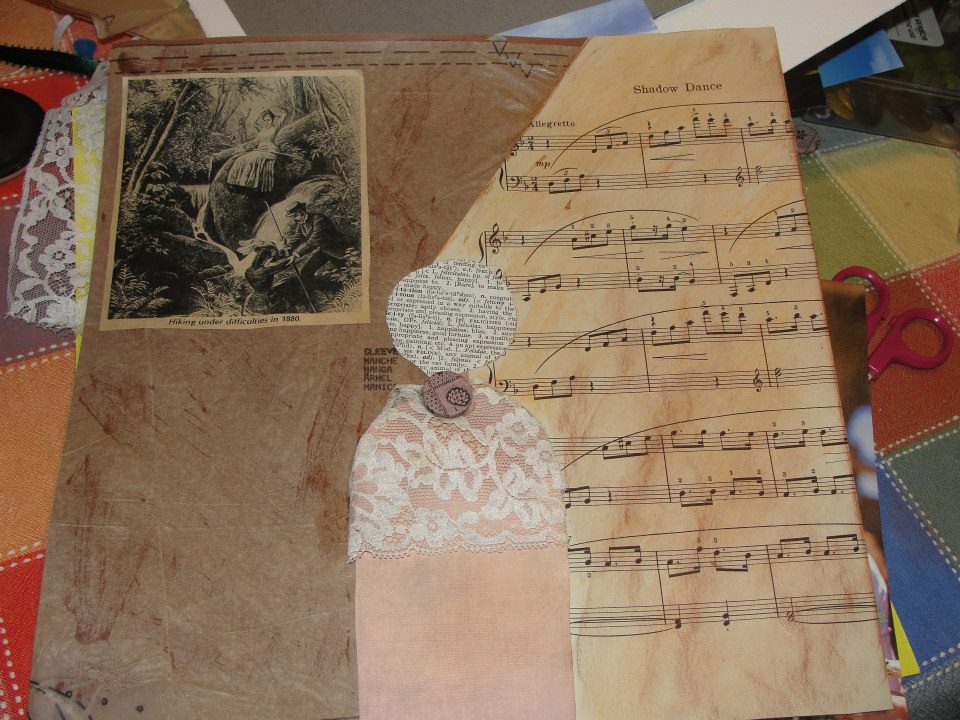
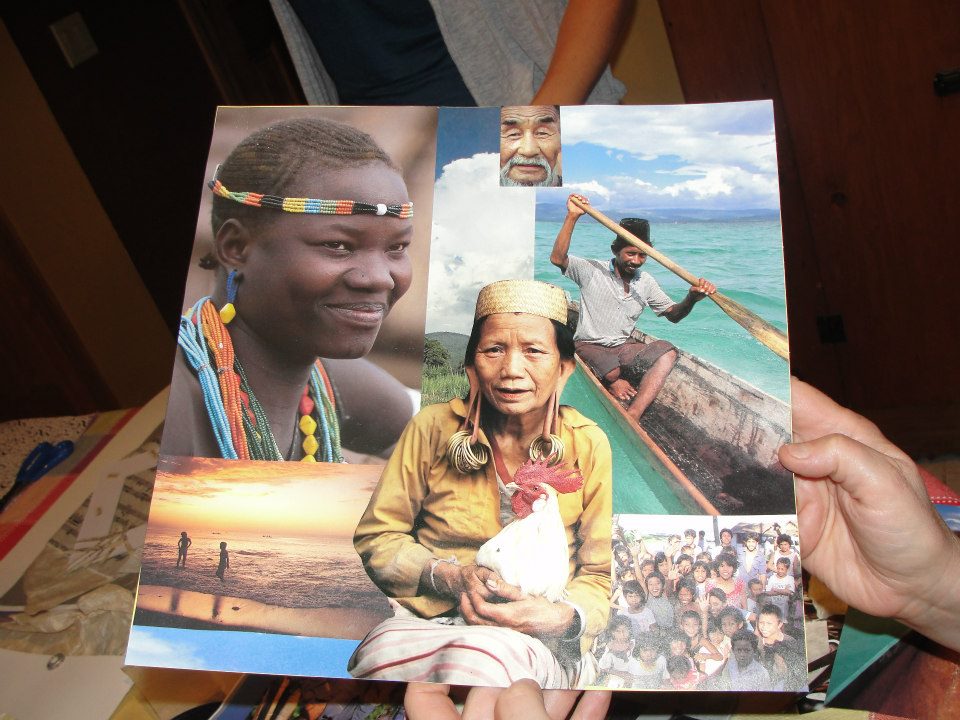
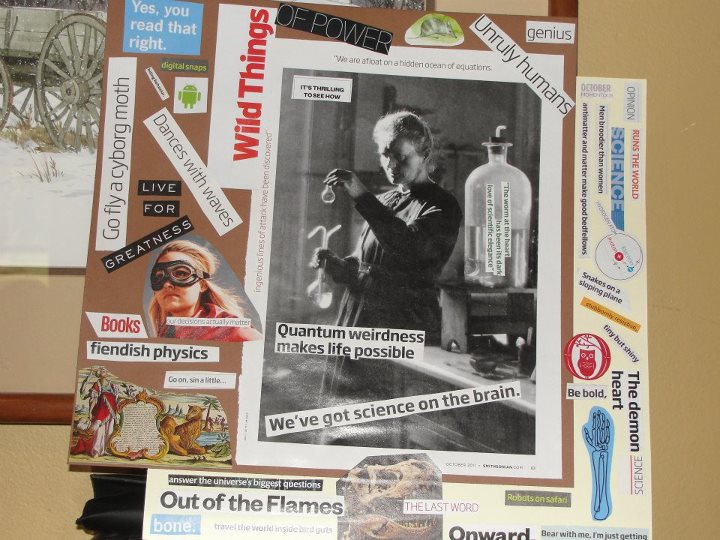
My recent event was a quietly civilized affair: a collage party for some artful cutting and pasting. I have all sorts of glue-able stuff here. Old sheet music, sewing patterns, stockbooks, wallpaper, tiny do-dads, lace, game pieces. All I asked people to bring were their own scissors, marked with their names (because scissors are migratory beasts) and a potluck offering. They brought a lot more glue-able stuff to share. I thought we’d stick down some background, let it dry while we ate and drank, then finish and move on to a second or third one each. But my friends ate and drank and talked while collaging. They didn’t want to stop cutting and arranging. It’s as if we all have too little time for something as simply satisfying as placing a scrap of paper on a page exactly as it pleases us. The event was less lively than the average pig pen party, that’s for sure. But it was restorative. No phones. No screens. Nothing else to do but indulge in the kind of play we call creating. I guess that doesn’t happen unless we make time for it.

Here’s a sample of collage party creations. (Some are backgrounds awaiting finishing touches.)

And let me know your ideas for strangely amusing events. I plan to steal them.

turn junk into collage,

art party,

make a collage, throw a collage party,

science collage,

Batik Party: Color To Last A Lifetime

how to batik, backyard batik, ironing memories,

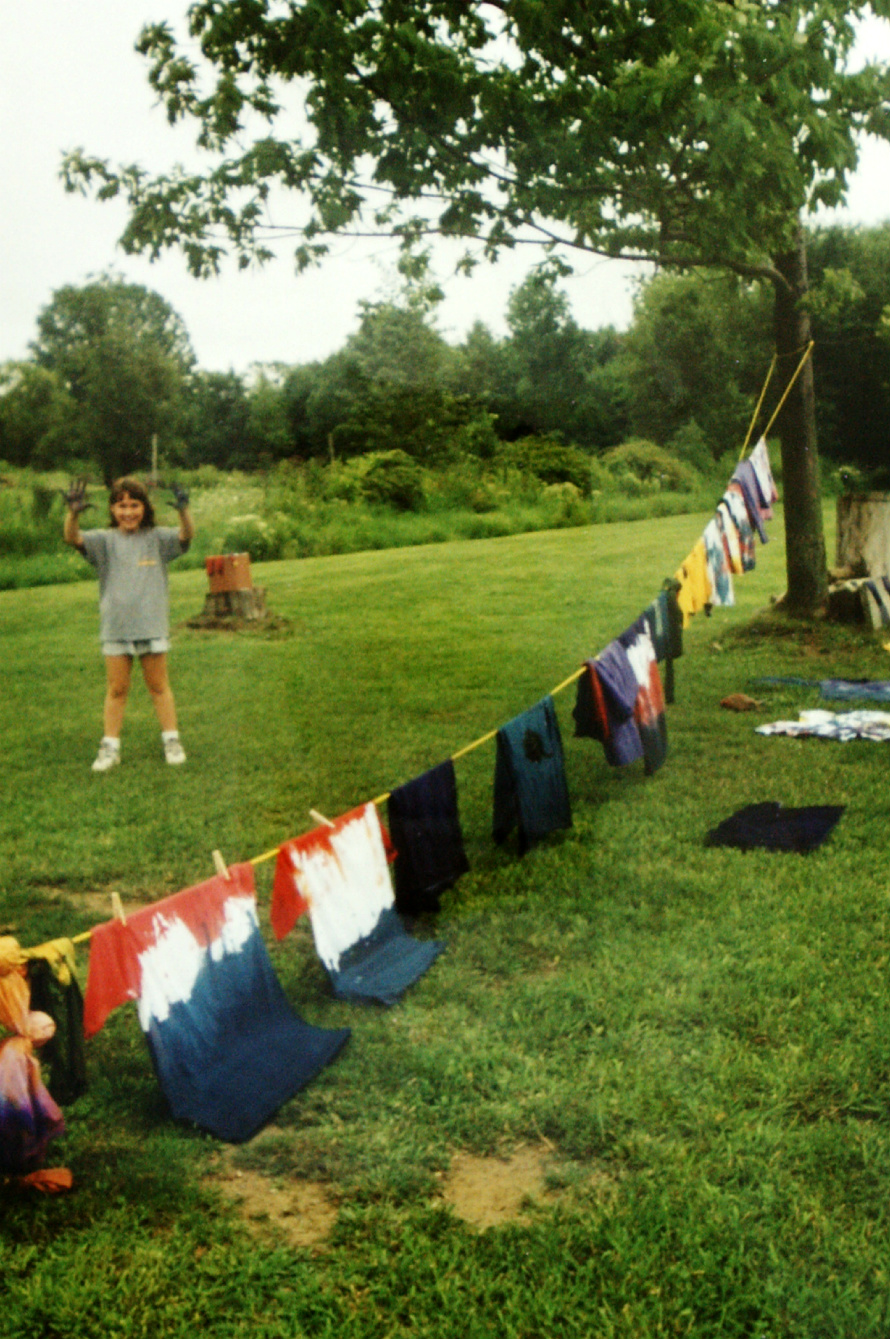
The grass is spread with dyed shirts drying in the sun. It seems fuchsia, cobalt blue, and orange are the favored colors of our backyard batik party.

We approach this ancient art using shortcuts that would make a purist shriek. First we peel faded paper from old crayons, revealing the richer hues underneath. The crayons are melted in tin cans bubbling in a big pot of water on our camp stove. Then grandmothers, mothers, and children together, we crowd around picnic tables and paint the gooey wax onto cotton shirts, pillowcases, and tote bags. Some of us splash abstract designs, others draw intricate pictures. Eager conversations quiet as artists concentrate on their work.

Next we dunk them into pails of dye—gumdrop yellow, indigo, rose, pale green or sky blue. Children set their projects out on the grass to dry in the sun, then run off to play. To complete the process the wax has to be melted out of the fabric, ironed over and over on newspaper until no more will seep out under the press of a hot iron. Nothing of the crayons will remain but color locked into the fibers, wax resisting dye.

I drag my wooden ironing board out of the dark closet and pull it into the bright yard. My sister gave it to me as a humorous wedding shower gift but my mother’s friends in attendance thought it refreshingly practical. I’ve only used for the odd art project. The rickety wooden legs have to be forced into warped slots which hold them in place. The children come from catching frogs in the creek, from roasting marshmallows over the fire, from all over our property just to watch their mamas stand over the ironing board.  “Can I try?” and “Wow” is the standard kid response. Cautioning them to hold their fingers only on the handle and to keep the iron moving we let them work the wax out of the batik designs. Recognizing the possibility of danger they are entranced, as if we’ve let them use power tools.

They wait impatiently for their turns while the seven of us women sit at the picnic table eating hummus, Greek salad, and chocolate cake. We talk of how far we’ve come from our own mothers’ ironing boards here in the slow-to-evolve Midwest. Christie describes her mother as a “laundry fascist” who did her wash on Monday and ironing on Tuesday, regarding stains with the same disgust as sins.  Holding to such an immutable schedule of laundering was what her mother believed “good women” did. The moral character of others could be determined in part by the cleanliness of their clothes, making the world a more easily understood place. Christie’s mother still gives advice on stain removal, valuable irony-tinged information for those of us trying to live simply.

Debra remembers looking for a summer job in back when classifieds in her hometown paper were displayed in separate columns: Men Wanted, Women Wanted.  As a high school sophomore she had difficulty deciphering descriptions like “Gal Friday” and “sturdy middle-aged woman.” She avoided waitress jobs, not only because of the potential pats on the rear but to spare herself the necessity of ironing a uniform each day.

I volunteer memories of downtown shopping trips each summer. My mother put me in a crisply ironed dress and tied matching ribbons at the bottom of my braids. My grandmother never left the house unless impeccably clad. She sewed her own lined suits, wore stockings and girdle every day, and carried dress gloves in her purse no matter the season. I recall waiting as they shopped at iconic Cleveland department stores Halles and Higbees, then they took me and my sister to the tea room. A trip to the ladies lounge followed.  I remember hopping up to the toilet, admiring my shiny shoes as my feet swung off the floor.  But I was afraid to unlatch the door because frightening noises often came from other stalls in that fancy pink restroom. Ladies who moments ago were delicately patting their lipsticked mouths with heavy cloth napkins were now making groaning noises.  I knew full well at the age of four that ladies did not make such noises, particularly in public.  Something bad had to be happening.  I pictured them transformed into monsters.  When I finally left the stall and made my way to the line of sinks I watched in the mirror as other doors opened.  Demure ladies stepped out as if they’d made no such sounds. Only years later did I realize that these women were struggling with heavy girdles which cut into their summer-weary flesh.

We laugh at domestic memories as our children finish the exotic task of ironing. When we look up from our reverie they have started a game of hide and seek. Their voices sound distant in the gathering darkness. Their small shirts are now bobbing from wire hangers along the porch. One by one we iron our own shirts as the sun goes down. The smell of crayons hangs in the evening, imprinting memories to last a lifetime.

I think our next art party will involve candy cigarettes and paint flinging, ala Jackson Pollack.

easy batik, iron in some memories,

How To Host A Batik Party

This process isn’t “real” batik. It’s an approximation that’s fun and basic. It’s also time consuming, messy, requires close attention when wax is near heat, and can stain anything from driveways to flesh. That’s why you should make it into a gathering of friends who will share the effort and joy. And why you should do it over grass as much as possible.

Supplies

  • lots of newspaper
  • old crayons with paper removed, sorted by color
  • chunks of paraffin
  • empty cans (16 oz or larger food cans), paper wrappers and tops removed
  • large disposable roasting pan
  • thick and thin paintbrushes you’re willing to throw out afterwards
  • old camp stove or electric skillet you’ve willing to have wax spilled on
  • fire extinguisher
  • metal sheeting for safety (we found a piece in the garbage)
  • tarp
  • ironing board
  • picnic table and/or sturdy tables to work on
  • clothesline
  • clothes iron (it too may get waxy)
  • clothing dye (can use Rit Dye or order more professional dyes from Dharma Trading)
  • large buckets for dye (you can often get them free from store bakeries and delis, food is delivered in them)

Method

Ask everyone to wear old clothes, hair tied up where applicable, and to bring food and drinks to share. They also must bring items to batik. That might be t-shirts, tote bags, curtains, pillowcases, skirts, ties, etc. The best are all-natural fabrics such as cotton, hemp, silk. If it’s a blend, a high natural content is preferable.

Preparation: Mix dyes in buckets. Most dyes need hot water to dissolve. Some need other ingredients so make sure you’ve checked in advance. You’ll want at three to five separate dye colors. If kids are involved, you may not want too many conflicting colors. Repeated dips will leave them with brown or grays. (Educational but possibly not what they intended.) Leave the buckets out in the yard as dye stations.

Spread the tarp over the picnic table and/or work area. Put the metal sheeting down where the camp stove/electric skillet will sit.

Step One: Put different colors of crayons in the empty cans. Add a few slivers of paraffin to each can. You also want a can with only paraffin for clear resist areas. Put the cans in the roasting pan. Fill the pan with several inches of water, about a third of the way up. Keep a pitcher of water nearby to keep filling as water evaporates. You do not want to spill water in the wax.  Heat gently to melt the crayons and paraffin. Once it’s liquified turn the heat off and it will remain liquid quite a while.

Caution. SUPERVISE CHILDREN, hot wax burns. NEVER leave wax over heat unattended. NEVER put out a wax fire with water, which spreads it. Instead it must be smothered (fire extinguisher or fireproof lid over it, we kept an old grill lid handy).

Step Two: It’s time to paint designs or pictures on fabric. Just dip brushes in melted wax. Make sure you return the right brushes to the right container. Use clear paraffin in areas where you want the fabric color to show within or around your design.

Step Three: Dip all or select portions of your fabric into dye of choice.

Step Four: Hang on clothesline. Do another fabric item or simply wait for your item to dry.

Step Five: Put several sheets of newspaper under and several over a single layer of your dry fabric. Iron to melt the wax out of the fabric. You’ll need to replace the newspaper sheets several times until wax no longer melts from the fabric.

1,000 Ways To Play With A Cardboard Box

imaginative play, cardboard box playthings, build your own toys, cardboard village,

CC 2.0 Flickr photostream mollypop

A large appliance box waiting at the curb has always been a call to action. We’ve done whatever is necessary to get it home, mostly dragging it behind our bikes or lashing it to the car roof. That because every refrigerator or washing machine box (as well as every smaller box) has another life waiting for it. One dreamed up by children.

When I was a little girl, we played for months with a tall furniture box. My mother fashioned a door and windows that opened like shutters. It stood in our basement ready to serve as a palace, fort, or playhouse. This box was large enough to fit my sister and me and a few of our friends. It lasted through the winter before sagging into uselessness. (Check out a wonderful gallery of cardboard creations on MyMakeDo.)

build a cardboard city, play with cardboard boxes, host a box party, Bring Your Own Box party, let kids build with cardboard,

CC 2.0 edenpictures Flickr photostream

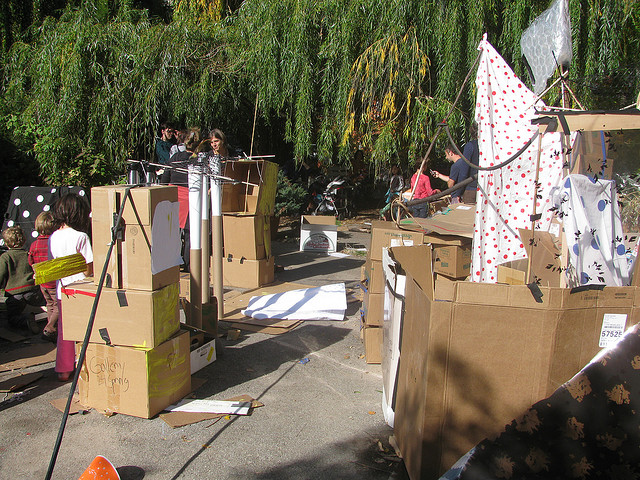
One of my favorite events to throw for the kids of friends and neighbors is a BYOB gathering. As in Bring Your Own Box. Guests are invited to show up with cardboard boxes of all sizes. We supply masking tape, duct tape, markers, paint, and plenty of room on our property. The adults wield mat knifes, cutting where the kids direct. Sometimes more than a dozen huge boxes are transformed into cardboard rooms featuring turrets and rope-opening drawbridges. Sometimes they are a connected series of tunnels leading to a fort under a tree. Once the kids made a child-sized passageway they invited to adults to enter, giggling as we stooped and crawled and squeezed our way through. The biggest thrill for kids seems to be in the planning, arguing for one vision or another, then working together to make the project a reality. Of course, playing in it afterwards is fun too. The benefit of hosting it here? Plenty of days to play in the box creation after the event is over.

A cardboard box-related program we ran at enrichment classes was a hit. We called it Junk Science. We saved cardboard boxes and cardboard tubes of all sizes, along with string, rubber bands, lids, paper clips, yogurt cups, and other creativity-inspiring loose parts. Each child or team was given equal amounts of this “junk” and on free days allowed to build whatever he or she choose. On other days they were given a specific challenge, similar to the old TV series Junkyard Wars.  The kids built sorters that sent pennies down one chute and dimes down another, bridges that held weight, catapults that tossed ping pong balls, and much more. They preferred the specific challenges to free days, perhaps enjoying the way their ideas took off while solving a problem.

I know a boy who used to make vehicles and trains out of cardboard boxes. He hitched them together with ropes and dragged them around. This made cleaning up toys more fun, and conveying groceries from the front door to the cupboards became his favorite job. And I know a girl who used to make mazes out of boxes for her pet rats to scurry through, kissing them on their pink noses when they emerged to find a treat at the end.

I also know a child who made a world out of a refrigerator box, a world that continutes to absorb his interest for hours on end day after day.

You may have thought I’d list 955 other ways to play with cardboard boxes but any child can do that. Who wants to limit creativity to a list anyway? Start saving those free toys called boxes.


7 Ways To Make Your Day More Magical

try on new identity, pretend to be someone else,

Creative Commons image Flickr photostream of Estadão.com.br

1. Head off to an interesting destination with your family or friends for an Alternative Identity Day. On the way, everyone makes up his or her own identity. Throughout the day make an effort to play along with that identity: call each other by the chosen faux names, enjoy elaborating on your character’s backstory, and interact with strangers through that identity. At the end of the experiment talk about how it felt to try on an alternative self. And if you’ve taken photos, check to see if anyone held their faces or bodies differently. The sense of observing yourself from the lens of another persona can be illuminating.

toast, ritual of the toast, make today significant, make today magical,

Wikimedia Commons

2. Start your meal with a toast. It may be as simple as raising your glass of orange juice in the morning, saying “Here’s to a wonderful day ahead.” Or as heartfelt as an unexpected toast to a friend in thanks for all you’ve shared. A toast is a ritual for adding significance to the moment. Why not make more moments significant?

Creative Commons image from Flickr photostream of Gj IMAGEWORKS

3. Don’t let a day go by without generating some music. You might sing along with the radio or whistle to make a chore go faster. If you play an instrument, even if you haven’t practiced in a long time, get it out (suspending all judgment) and get reacquainted. If you’ve always hankered to play an instrument but never tried, sign up for some introductory lessons.

An easy way to incorporate music into your life is to make up lyrics to familiar tunes. This is particularly satisfying when you’re annoyed. (Whoever passed down the traditional “Rock A Bye Baby” lullaby knew that grumpy lyrics go quite nicely with a sweet tune.) To the tune of “Row, Row, Row, Your Boat” try singing,

Wait, wait, wait on hold
Till I want to scream
Knowing from experience
Service is a dream.
 

See what other experiences you can transform using music.


encouraging banner,

Image: L. Weldon

4. Make an encouraging banner. This project was inspired by the collaborative art project Learning To Love You More. Assignment number 63 was to make an encouraging banner and hang it.  Participants hung banners in their bedrooms, across overpasses, in junkyards, alongside roadways, in parking lots—all over the place. In all sorts of colors and shapes their banners announced:

Don’t forget you are beautiful
It’s okay to ask for help
Life is art
Let’s hear it for love
Lose track of “I”
This is the land of milk & honey
You are incomparable
Less do, more be
You can trust what you can’t explain
Farm magic
 

What phrase gives you hope? Make a banner, either one you plan to hang in your home or to share with the public. You might want to photograph it in various places. The phrase you love comes alive in different settings.

treehouse, what you wanted as a child,

Creative Commons image from Flickr photostream of Karen Roe

5. Sketch something you wanted as a child. The perfect treehouse, a fairy godmother, that toy Santa never brought, a first place trophy, a real best friend. Maybe make a few sketches to get the details just the way you want them. Add some labels if that helps. Now close your eyes, imagine yourself as a child, and give this earlier version of yourself that gift. You may scoff but the disappointed child in you just might appreciate the attention.

Creative Commons image from Flickr photostream of Tomorrow Never Knows

6. Look for metaphors in the ordinary. Challenge yourself to discern a “message” in the first news item you hear in the day or the first visual that appears when you flick on the TV. Ask yourself why a certain song is playing in your head—does it remind you of something, perhaps a feeling or memory the music evokes? Ask yourself why you might have a certain ache, is your body is speaking to you the only way it can? Look for coincidences, synchronicity, and little delights—these can be signposts indicating you are exactly where you need to be.

In particular, pay attention to the messages found in your dreams. Before going to sleep tell yourself that you will remember your dreams. You may want to ask a question before drifting off. When you wake, don’t jump right out of bed. Instead lie quietly and let dreams rise to your awareness. Although their images and stories often make no logical sense dreams speak in symbols with meaning specific to you. Let those symbols linger with you through the day. Even last night’s giant parking meters demanding soup may start to make sense, metaphorically speaking.

eyebombing, fun with googly eyes,

Creative Commons image from Flickr photostream of katerha

7. Heard of eyebombing? Very simply, it’s the act of putting sticky googly eyes on inanimate objects. As described on eyebombing.com, “Ultimately the goal is to humanize the streets, and bring sunshine to people passing by.”

This is an inexpensive and intentionally silly exercise.  Buy a package or two of googly eyes and start looking for where they belong. For inspiration, check out the eyebombing flickr group.  Then enjoy your quest.  Anthropomorphizing a mustard bottle never seemed so right.


Making Beauty From Bombs

melt bombs into jewelry, fund peace through gifts, cluster bombs into gifts,

peace-bomb.com

Every time I hear of armed conflict taking place somewhere on this blue green planet I want it to reverse. If these intractable conflicts could somehow go back to the starting point, back to the earliest signs of difficulty, they could more easily be resolved instead of leading to destruction, refugees fleeing a ruined homeland, and death. That’s what the non-violence principle of de-escalation clearly shows.

Although our world is indeed more peaceful we humans are still learning hard lessons from the tragedy of war and military aggression.

These lessons are particularly poignant when we look at people who manage to transmute horror into beauty.  That’s the case with Project Peacebomb.

Between 1964 and 1973 the U.S. secretly bombed Laos. The equivalent of one B 52 bomb load showered on this thickly forested country every 8 minutes, 24 hours a day, for nine years. Thirty percent of the bombs dropped did not detonate, continuing to injure and kill people today.

In 1975 a Laotian man traveled back over the mountains toward home. He collected shrapnel and melted it in an earthen kiln, then cast it in hand-sculpted molds to make spoons to earn a little money. Eventually he taught the craft to his son. Today, ten families supplement their farming income by repurposing the shrapnel that still scars their homeland.

Now the spoon makers are collaborating with sustainable development groups to make ornaments and jewelry from bombs.  Each bracelet purchased helps support artisan families while also helping to fund the clearance of unexploded ordnance fromLaos.

The simple beauty of this jewelry, creation wrought from destruction, reminds me of a passage from Kurt Vonnegut’s Slaughterhouse-Five, where the novel’s character sees American bombers in WW II flying in reverse.

American planes, full of holes and wounded men and corpses took off backwards from an airfield in England. Over Francea few German fighter planes flew at them backwards, sucked bullets and shell fragments from some of the planes and crewmen. They did the same for wrecked American bombers on the ground, and those planes flew up backwards to join the formation.

The formation flew backwards over a German city that was in flames. The bombers opened their bomb bay doors, exerted a miraculous magnetism which shrunk the fires, gathered them into cylindrical steel containers, and lifted the containers into the bellies of the planes. The containers were stored neatly in racks. The Germans below had miraculous devices of their own, which were long steel tubes. They used them to suck more fragments from the crewmen and planes. But there were still a few wounded Americans, though, and some of the bombers were in bad repair. Over France, though, German fighters came up again, made everything and everybody as good as new.

When the bombers got back to their base, the steel cylinders were taken from the racks and shipped back to the United States of America, where factories were operating night and day, dismantling the cylinders, separating the dangerous contents into minerals. Touchingly, it was mainly women who did this work. The minerals were then shipped to specialists in remote areas. It was their business to put them into the ground., to hide them cleverly, so they would never hurt anybody ever again.

peace ornament

peace-bomb.com

Take action against today’s use of cluster munitions.

Purchase PeaceBomb items.

Don’t Say It, Draw It: Non-Threatening Sketching Inspirations

Quick, draw something important to you. Try to do it in five minutes or less.

Is it an object, a person, an idea, a goal, a value, or something else entirely?
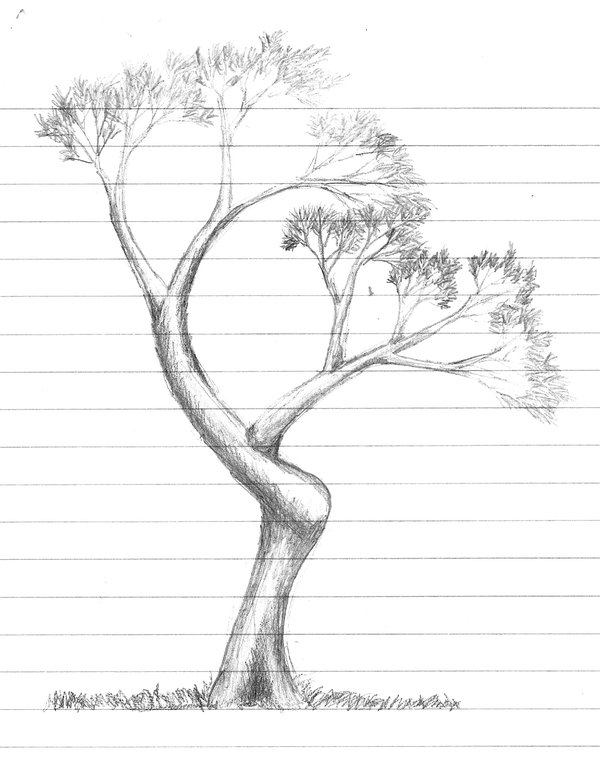
drawing to explore feelings, drawing as meditation,

Image courtesy of jhannah42590.deviantart.com

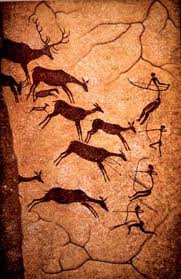
Those of us who don’t draw often (or ever) may be uncomfortable taking pencil in hand to create an image. But if we draw something without criticizing, erasing, and apologizing for the result we find that the process itself pulls us out of our habitual patterns of thinking. Like a form of meditation, sketching can take us to a still point in ourselves.

We may rely heavy on the written word throughout the day but our species used images long, long before formalized symbols such as words. Images are much more primary. When we generate those images we’re going deeper, beyond the chatter and clamor of daily life.
drawing for non-artists, why we draw,

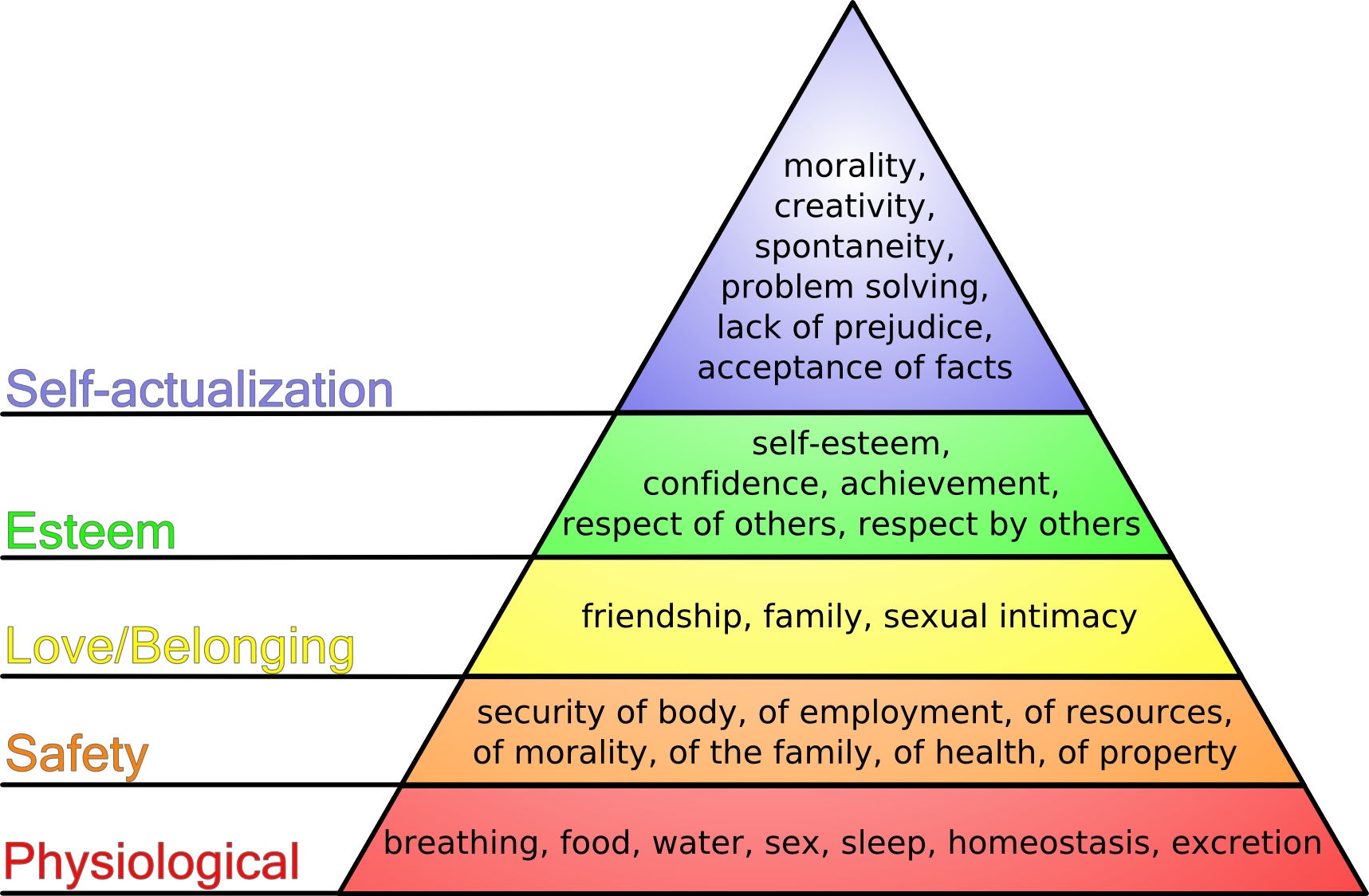
Back in college I was assigned a psychology class project. It was supposed to demonstrate Maslow’s hierarchy of needs. Maslow insisted that most people are focused on basic needs, fewer are able to move up to higher level needs, and the rarest make it to what he called self-actualization.
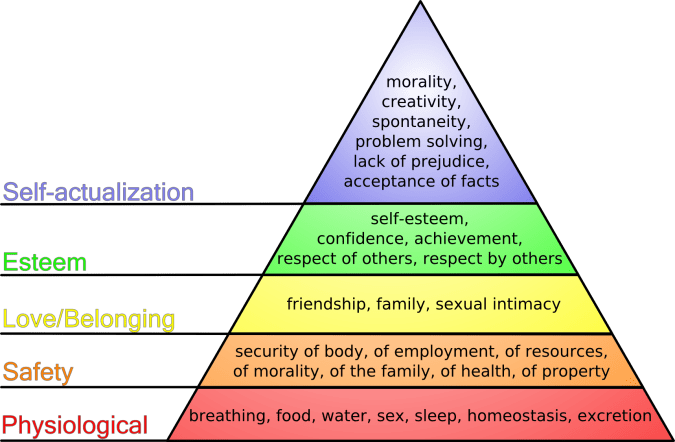
I designed my project to be simple and get me a good grade. I also hoped that it would disprove Maslow just a bit. I had nothing against the guy, I’m just not fond of stuffing people in categories. And besides, I already I knew people whose most basic needs were barely met, but were damn close to the top of the scale. They not only cared deeply but consistently reached out to help others. Or they worked tirelessly for a greater good without ever seeking acclaim. Or they lived creatively and according to their own unique vision, inspiring others by example.

My project was easy. I asked people to make a quick sketch of something important to them. I asked college students, people on the bus, neighbors, strangers in coffee shops, college professors. Invariably they insisted they couldn’t draw. (Neither can I.) At least a third of the people I asked turned me down. Drawing is apparently pretty threatening. Or short blonde college students are, not sure which. But those who did participate created pretty interesting results. I got the expected number of humorous liquor and sex-related drawings from guys, shopping and chocolate drawings from girls. (These were hardly character-defining, after all, it was a spur-of-the-moment request.)

Many more drawings focused on subjects like family, educational goals (probably related to the preponderance of college students in my project), and activities of all kinds.

A surprising number of people drew something less tangible. Love, compassion, happiness, making a difference, God, higher consciousness. These were represented by abstract drawings or symbols.

The majority of people weren’t content to let the images speak for themselves. They also used words. They added labels, explanations, entire sentences—seeking to make their meaning clear.

Back then, I presented my project as evidence that Maslow’s hierarchy wasn’t proof positive that we’re all pedaling along on different tracks. I postulated that we operate across many levels depending on all sorts of variables. That assertion annoyed my professor, who was not amused by a student who dared question an icon in the field and who did so in a paper filled with drawings. He wrote nasty remarks all over my paper (right over the drawings I collected) even though I closed with a lovely quote by Maslow.

“The concept of creativeness and the concept of the healthy, self-actualizing, fully human person seem to be coming closer and closer together, and may perhaps turn out to be the same thing.” Abraham Maslow

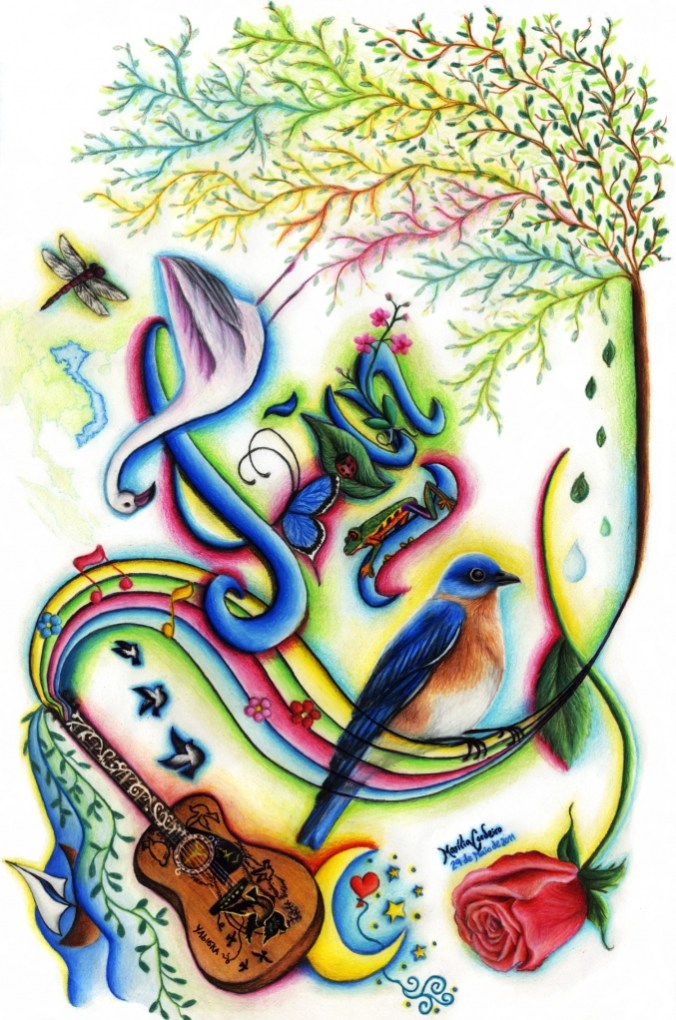
The range of images drawn for my college paper were very similar to those collected in a project by Catherine Young for the Schoolof Visual Arts MFA Interaction Design Program. Catherine explored how people around the world represent what makes them happy.  The response to Draw Happy  was so great that the project remains ongoing, with hundreds of participant’s drawings.
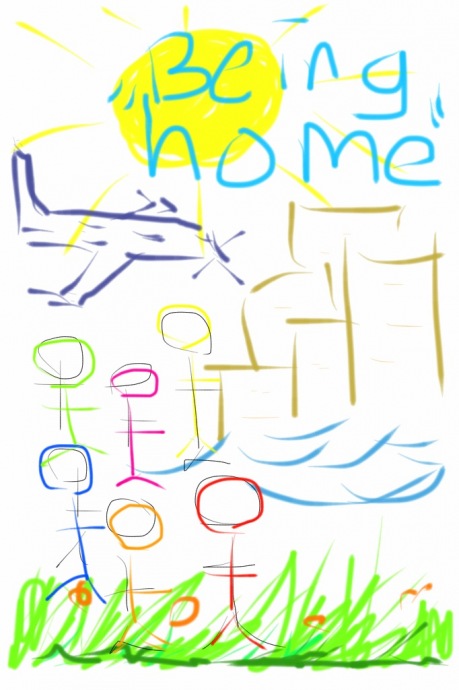
Canada drawhappy.wordpress.com
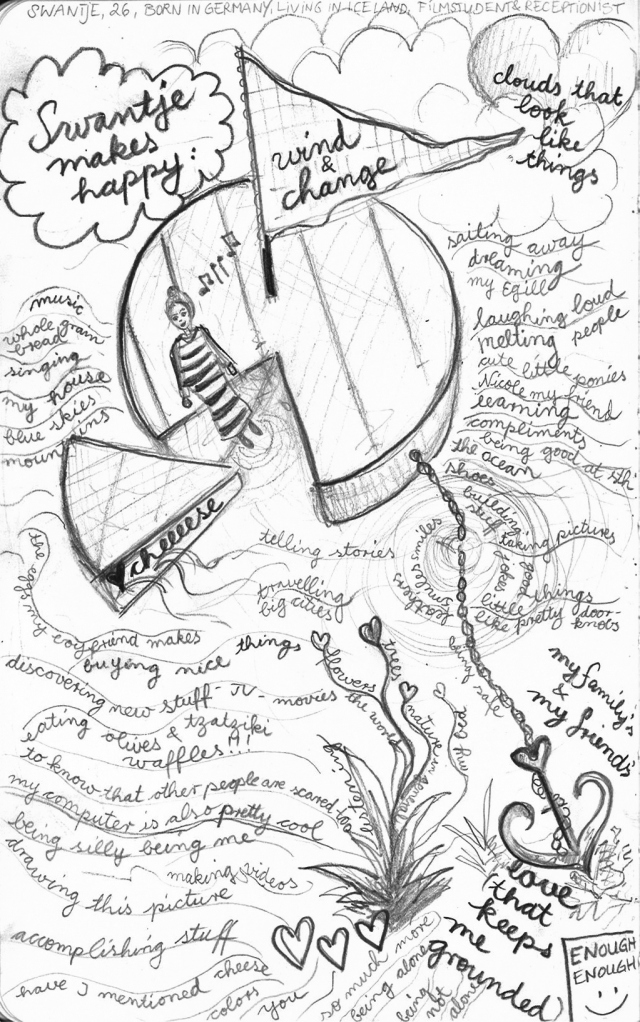
Germany drawhappy.wordpress.com
Portugal drawhappy.wordpress.com

I have no beef with Maslow. But I’m still interested in what drawing does for us as whole beings. Those of us who aren’t artists might consider drawing as an unexplored avenue. Down this particular road are new ways to express ourselves, expand our creativity, and take a break from our relentless multitasking.

I harbor fantasies of indulging in illustrated journals and like to pore over an enticing selection of books on the topic but the fact is, I don’t even write in a journal. And my vows of sitting down to sketch at least once a week have never taken hold.

But there are much easier ways to spur ourselves to draw.

How can you add some non-threatening sketch time to your life?

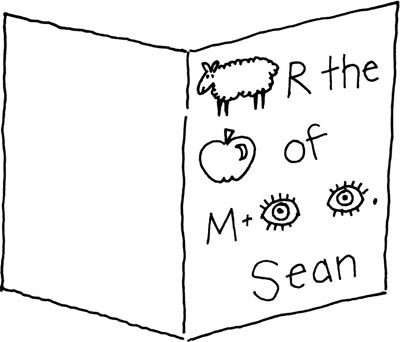
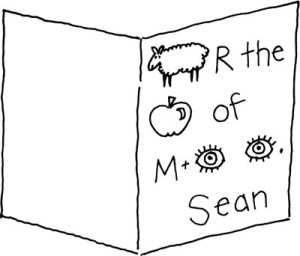
Draw rebus pictures     Chances are you don’t write to-do lists out by hand. And most people text rather than write notes (let alone postcards). Try this. Occasionally write these things longhand using rebus pictures. You’ll inject some personality in a fun, cartoonish way. Rebus, if you don’t remember from preschool, are simple pictures used to replace words. Even a quickly rendered image is pretty easy to recognize.
tlc.howstuffworks.com


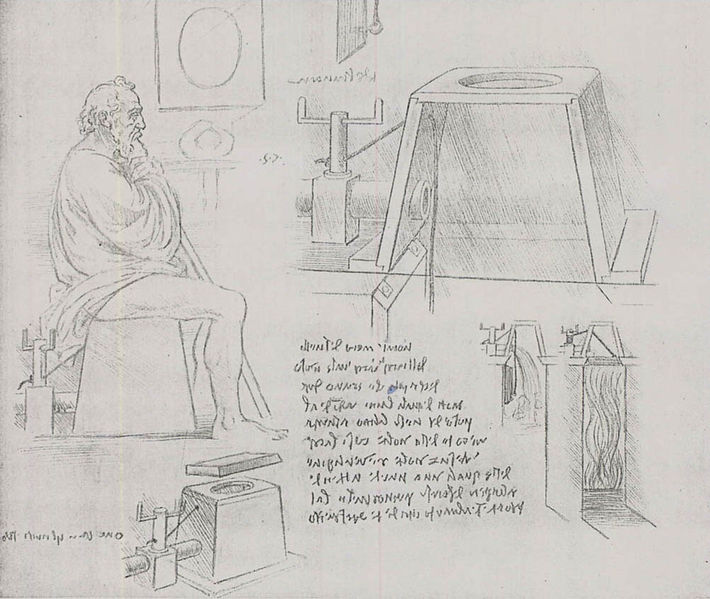
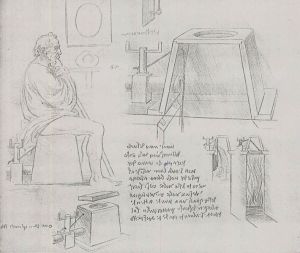
Draw studies     Keep a supply of blank note cards or a tiny sketchbook for this project. You might choose to draw only saltshakers, or lamps, or shoes. DaVinci did all sorts of studies of this sort. He drew page after page of noses, bird’s wings, running water. This is a daydreamy exercise that invites you to find all sorts of nuances in your subject. You may not only become proficient in drawing saltshakers, but may notice saltshakers wherever you go.
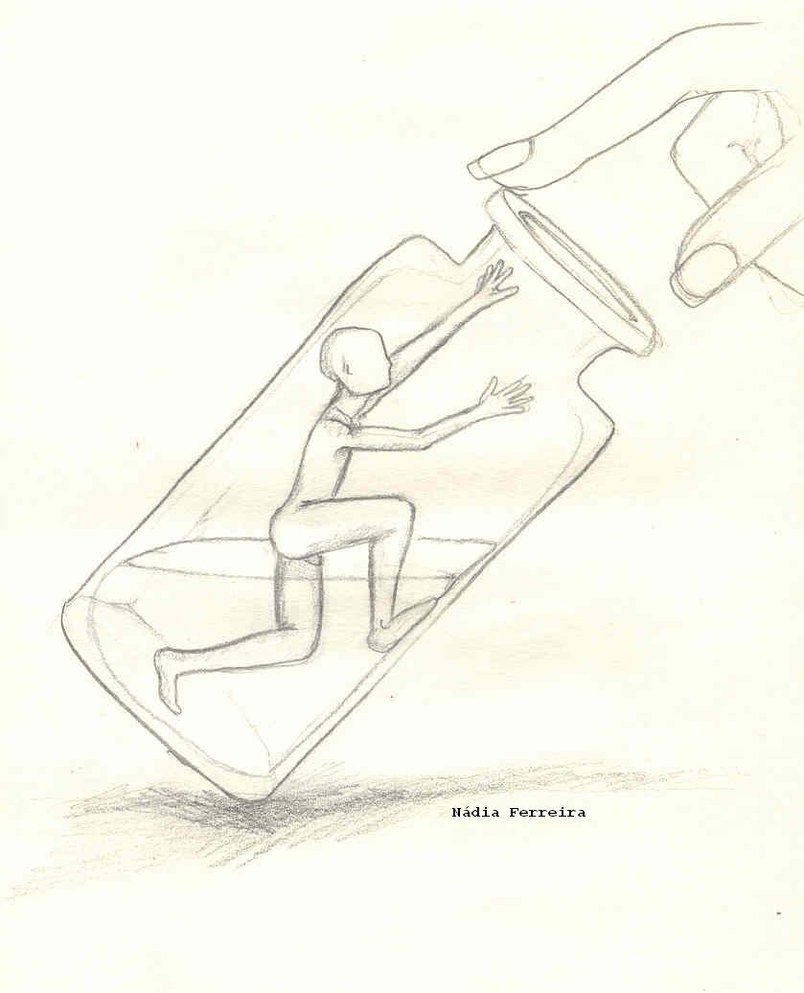
drawing as self-discovery,

Draw the same thing repeatedly     Draw something you regularly encounter. Draw the tree in your back yard as it appears in different seasons and times of day. Draw that souvenir bottle on your windowsill–in light and shadow, surrounded by clutter, filled with flowers. Draw the same scene over and over from different angles, as it might have appeared a hundred years ago, as it might look to a creature that sees only in temperature, or from a worm’s eye view.
drawing to release stress,

autumnwhisper.deviantart.com

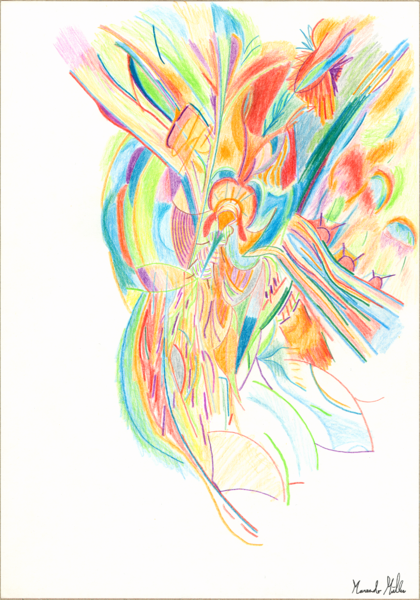
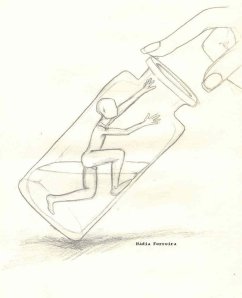
Draw your feelings     We don’t have a lot of creative outlets to express reactions to bad news, personal disappointments, big changes, grief, haunting regrets. Our feelings don’t go away while surfing the net. Whip out some colored pencils to illustrate your fervent opinion in satisfyingly jagged lines. Render your angst in exactly the right shade of gray, magenta, and orange. Or pull together your fractured ideals in a twisting vine that reaches across a wall you’ve drawn brick by brick. Chances are your mood will lift. Drawing might just empower you to take bolder action.
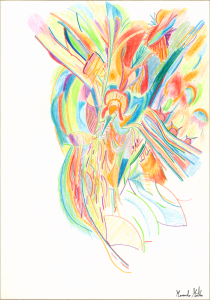
sketch your way to peace,

Marendo Müller

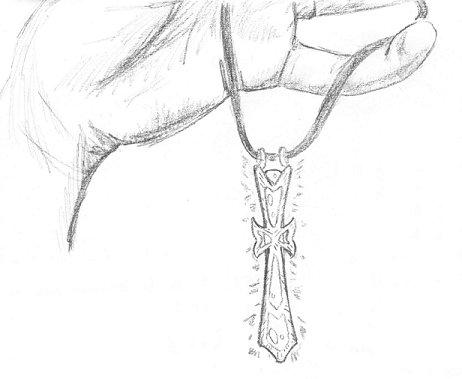
Draw on memories     The past continually inhabits the present. Try bringing it forth non-verbally by sketching it. Draw a favorite toy from childhood, the necklace your mother used to wear every day, your view of the chalkboard back in fifth grade, the door of your first apartment. You’ll be surprised what these drawings evoke.
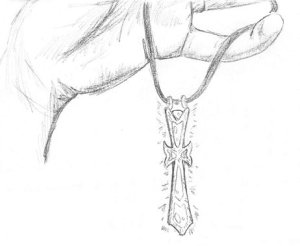
drawing memories, drawing feelings,

molicalynden.deviantart.com

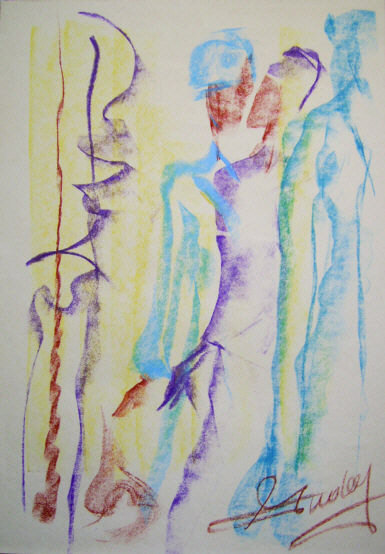
Draw abstractly     Take away the burden of recreating representational images. Draw a favorite smell, a new idea, a mood, a strong impression left when waking from a dream already forgotten, a taste, a laugh.
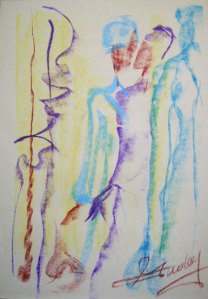
sketch your way to relaxation

Alfons Anders “Begegnung”

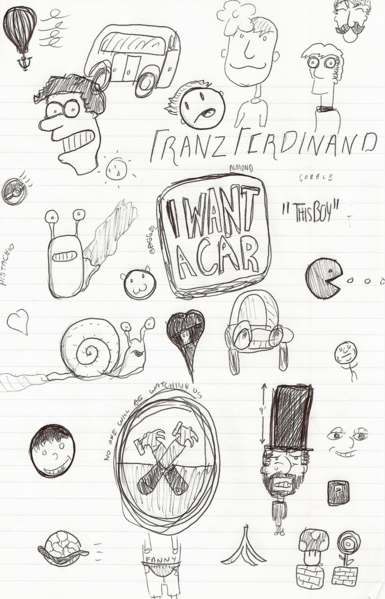
Doodle  Doodling is great practice for those of us who don’t want to call what we’re doing “drawing.”  And this non-directed activity is a great way to allow your brain to idle while creative impulses emerge.
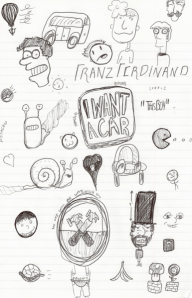
“A drawing is simply a line going for a walk.”  Paul Klee

Resources

Drawing Lab for Mixed-Media Artists: 52 Creative Exercises to Make Drawing Fun

Keeping a Nature Journal: Discover a Whole New Way of Seeing the World Around You

The Creative License: Giving Yourself Permission to Be The Artist You Truly Are

16 Ways To Spark Creativity

how to be creative,

1. Get out of your head and back to your senses. Touch, smell, and taste. Reach out and feel the texture of bricks as you walk by a building. Forgo utensils to eat with your hands. Notice the sensation of cool water sliding down your throat as you drink. Be in your body.

2. Avoid your playlist. Listen to music from a genre or part of the world completely unfamiliar to you. Music is a language more evocative than speech.

spark your creativity,

3. Better yet, try silence. The constant presence of media playing in our homes, cars, and public places dulls the essential connection we have to our inner selves.

eliminate blocks to productivity,

4. List your aggravations. Highlight the ones you have control over. Cross out the ones you don’t have control over. It’s a smaller list now isn’t it? Once you stop fretting so much you have energy for more generative pursuits.

why you should doodle,

5. Doodle. What seems like an aimless activity is a great way to allow your brain to idle while creative impulses emerge. And the doodles themselves may tell you something.

fun is good for your brain,

6. Play. We function best mentally and physically when we indulge in the free form fun sort of play that calls on us to improvise, move, and laugh. If you’ve forgotten how, consult a three-year-old.

Mateo Inurria: Daydream

7. Welcome daydreams, they fuel our creative lives.

Familia

8. Seek metaphors. Challenge yourself to discern a “message” in the first billboard you see, first sentence you hear when you turn on music, or first visual that appears when you flick on the TV.

Margret Hofheinz-Döring/ Galerie Brigitte Mauch Göppingen

9. Listen to your dreams. Before falling asleep, ask for a dream message. Remind yourself to remember the dream. As you waken, pull the threads of your dream into your conscious awareness and let it inform your day.

“Sprich! Ich höre Dir zu”

10. Imagine your own burning questions are being asked of you by someone you love dearly. Then answer as if you’re talking to that person. Your responses tend to be more wide open, innovative, and kind when responding to someone you love, much narrower within your own “self-talk.”

spark your creativity,

11. Keep creative thinking notebooks, as da Vinci did. Use them to make quick sketches and doodles, note ideas, write observations, free associate, draw mindmaps, and keep track of your inspirations.

creativity exercises,

Bjørn Christian Tørrissen

12. View issues from all angles. Don’t accept what you’re told or think what you’re expected to think.

Danny Gregory

13. Don’t wait till you have more time or life gets easier. Cultivate a passion that has been dormant too long. Pick up that paintbrush, practice your guitar, try out for that play, take those glassblowing classes, learn to sail. For inspiration, take a look at Everyday Matters. Author Danny Gregory’s wife became paralyzed in an accident. While caring for her and their infant son, Gregory decided to start drawing. His study of color, value, and ordinary beauty helped to heal their family too. And you don’t want to miss his extraordinary new book, Art Before Breakfast: A Zillion Ways to be More Creative No Matter How Busy You Are.

teach yourself to be more creative,

14. Make an effort to connect regularly with something in nature. Watch the same tree as it changes throughout the seasons, pay attention to a body of water in different weather conditions, take an evening walk (no matter the temperature) each time there’s full moon.

Mary Barnes

15. Cultivate flow, what’s also called being “in the zone.” That’s the feeling of being fully absorbed in your activity. Time is irrelevant, in fact you may feel at one with the project whether it’s sailing, gardening, sculpting, composing, or welding.

16. Do something unusual (for you) every day. Try an unfamiliar food, drive a different route, make up your own lyrics to a song, compliment a stranger, make a unique board game out of an old one, laugh off an irritation, use a new word three different times, lie in the grass, write affirmations on your underwear, leave encouraging notes in books, compose an anti-thank you letter, go on a media fast, use binoculars, chew every bite ten times, do somersaults.

There is a vitality, a life force, an energy, a quickening that is translated through you into action, and because there is only one of you in all of time, this expression is unique. And if you block it, it will never exist through any other medium and it will be lost. The world will not have it. It is not your business to determine how good it is nor how valuable nor how it compares with other expressions. It is your business to keep it yours clearly and directly, to keep the channel open. You do not even have to believe in yourself or your work. You have to keep yourself open and aware to the urges that motivate you. Keep the channel open.       -Martha Graham

Poetry Diet

struggling poet, making money as a poet, appreciating poets, life of a poet,

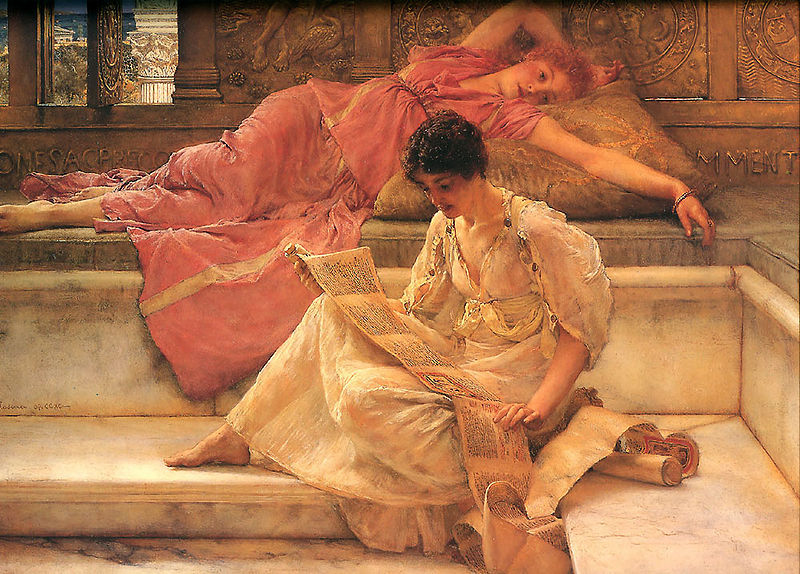
“Favourite Poete” by Lawrence Alma-Tadema

Poetry is thoughts that breathe, and words that burn.  ~Thomas Gray

The term Poetry Diet might imply a rare appetite. The sort of longing only appeased by words strung spare and stark, like a meal so desired that imagination keeps creating it anew.

Ink runs from the corners of my mouth
There is no happiness like mine.
I have been eating poetry.
~Mark Strand

Or Poetry Diet could imply hunger for that rare current some call inspiration, the elusive muse carrying phrases from ether to pen.

Everything in creation has its appointed painter or poet and remains in bondage like the princess in the fairy tale ’til its appropriate liberator comes to set it free.  ~Ralph Waldo Emerson

However in this case, what I’m calling the Poetry Diet is something much more mundane.  It simply means to eat nothing but what is purchased with money earned from one’s poetry. Reading, teaching, publishing, wearing them on your naked body, selling poems painted on scrap metal, whatever it takes. If I started a Poetry Diet now I’d be svelte in a week, thin rather soon. Before long, starving artist might be a literal (hah!) condition.

Surely a Poetry Diet would provide a vast incentive to write and, here’s the rub, send out one’s work. It could also leave the poet so imperiled that friends might stage a poetry reading to raise funds to feed the annoyingly hollow wordsmith.

Thus far I’m not dedicated or foolhardy enough to attempt a Poetry Diet. Mostly because I’m already trying to live by patching together the Essay Diet, Columnist Diet, and Editor Diet. But also because I know how long it takes from inspiration to paycheck. Right now I’m waiting for one of my poems to appear in Christian Science Monitor, two in Trillium Literary Journal, two more in J Journal. The total pay will amount to, well, let us not speak of actual numbers. I wouldn’t last long on the Poetry Diet. Surely that says something about the quality of my poetry but it also says something about our culture as well.

Poets aren’t very useful
Because they aren’t consumeful or very produceful.
~Ogden Nash

I hardly expect to live by poetry alone, although I have been sustained by the work of other poets in ways more vital than any meal. I long to see greater support for artists of all kinds. I have dear friends who devote their lives to perfecting a craft. They act, compose, weave, calligraph, paint, weld, invent, write, bake, work with wood, sing, and throw pots. They are driven to explore the intersection of art and cosmology, continually refining what it means to create. Yet most of them spend their days at jobs that are unrelated in order to survive. They wait tables or work in accounts receivable. Their real gifts emerge during precious hours plucked from mundane obligations.

It’s quite possible to attend a production at a local playhouse and see performances that shift the way you experience the world. You walk out a changed person for the extraordinary art you’ve enjoyed. Chances are that director, those actors, that playwright are unable to support themselves with their work, vital though it is.

I’m certainly not in league with those whose work is transformative. My poetry is about ordinary things like opening doors, moving stones, forgetting a name.

Perhaps I should head in a new direction—food poems. That way I’d feel nourished while contemplating the swirling curds and whey in the next batch of cheese I make. I’d also be answering Chesterton.

Poets have been mysteriously silent on the subject of cheese.  ~G.K. Chesterton

Six Ways Introduce Fine Arts Using The Happy Idiot Method

Artwork by Samuka

“You’re a frigging idiot.”

That’s what the guy behind us said. He spoke so loudly that two rows of concert-goers heard it. He didn’t even wait until the intermission to announce he considered us boorish.

I’m still not sure what upset him so much. My seven-year-old daughter had begged to attend what she called a “real performance” after enjoying a number of the Cleveland Orchestra’s Musical Rainbows concerts for young children. Nearly every day since she’d been three years old she put on recordings such as Beethoven Lives Upstairs,
Prokofiev – Peter and the Wolf,  Song of the Unicorn, and Mr. Bach Comes to Call.Sometimes she played,  sometimes she danced but mostly she drew pictures as she listened to compelling music woven around stories.

Going together to the concert was a rare night out for the two of us but I knew her three brothers weren’t as entranced by classical music. So that evening she and I dressed up, taking our eagerness to velvety seats not far from the stage. As the concert hall filled many people greeted us kindly. The musicians began to tune up and my daughter nodded at me. She knew this was her cue to be quiet until intermission.

Then the man behind us arrived. He squeezed past others, sat down and said aloud, “Oh no.” Because he exhaled so repeatedly and in such an exaggerated manner I wondered if he’d sat on something awful. Nope, the something awful was us.

Just as the conductor lifted his baton, the man behind us leaned forward as if to whisper, but his hissed words weren’t quiet at all. He said, “I paid good money for this seat. Your kid better not wreck it.” Then he muttered “idiot” under his breath. I turned around to look at him, more surprised than annoyed, but he wasn’t looking at me. He was glaring hatefully at my beautiful child.

The performance started and my daughter was enraptured. At times she looked over at me, squeezed my hand or leaned her head against me. Sometimes her hands floated just above her lap as if carried by sound. I paid close attention, hoping to hold the whole experience in my memory.

As the applause died down after the first piece the man behind us started sighing in exasperation. And he kept it up. I tried to notice what might have been bothering him. My daughter didn’t speak, didn’t hum along. She simply adored the music. But when the man started bumping my seat I turned my head to look at him. He was still glaring at my child.

For reasons of his own he was fed up. He looked at me and said loudly, “You’re a frigging idiot.”

The moment intermission began he stomped off and didn’t return. I hoped he’d find some peace despite possession by keep-children-out-of-concert-halls demons. But I’m no saint, I was pretty thrilled he left.

The woman next to my daughter assured us we weren’t the problem. An elderly gentleman at the end of our row, an orchestra patron for thirty years, said he hoped to see more children who loved classical music. By the time the musicians filed back some people had chatted with my daughter, happy to learn about her specific knowledge of that evening’s program. Others said, quite tactfully, that it was rare to see youngsters attend an evening concert.

A common perception is revealed by this experience. Fine arts and eager children don’t go together.

It’s not just one guy convinced the presence of a kid will ruin his evening. Most people set the arts aside as something special or worse, something for those who really know what they’re reading/seeing/hearing.

To me that’s the sort of separatist thinking that keeps fine arts in the underfunded, under appreciated realm where nearly extinct things go to die. But that’s how they’re introduced to most young people. Arts are imposed using the old “eat this spinach or you’ll be punished” method. Great way to inspire a hatred of spinach. And art. It isn’t woven into their lives and it doesn’t grab them (or at least many of them) in a way that’s personally meaningful. Instead fine arts are introduced in later grades. Students are lectured, assigned work, and graded. If they’re lucky they get extra doses of the arts doled out in guided museum visits and a class trip to see Shakespeare performed after weeks of preparation. The vitality is bled right out.

In Shakespeare’s time his plays were part of popular culture. People from all social classes crowded into the Globe Theatre where they enjoyed the bard’s social commentary, melodrama and comedy. Chances are they didn’t bother to analyze a thing. Chances are those plays did for them what art does when it means something to any of us, it illuminates.

I love the way young people discover and appreciate art when it isn’t imposed on them. These days my kids are older (teens and young adults). They enjoy fresh visual arts on YouTube, soaring new classical music scored for video games, and performances everywhere. Better yet, they aren’t passive. They connect and engage with it. During a recent discussion I overheard my kids relate the theme of a recent movie to Homer’s Odyssey, tie that to quotes from a Terry Pratchett book, then they were off parodying the theme using quotes from movies and song lyrics. Lightening fast, funny, and sharp. No curricula could possibly keep up.

My kids swam in the current of fine arts from the very beginning, as it flowed naturally with all the other influences in their lives.

Here’s the enjoyment-based, jump-right-in way we’ve always gotten comfy with fine arts in my family. (Caution, some may deem it idiotic.)

  1. Build in some fun. If you’re going to a concert in the park take along silent amusements for small people—a tiny stuffed animal that just might want to dance on its owner’s lap, drawing materials to capture impressions of the performers or the feeling of the music, a small treat that’s specific to concerts (consider bending that no lollipop rule). And if it isn’t much fun don’t stick around. Mosey off and wait until your children are older. And once your kids are older the experience is a greater pleasure for them if you let them invite a friend. We were often surprised to find that our 10th trip to a museum, where my kids clamored to see favorite sculptures and new exhibits, was the first trip for their friends.
  2. Make it an adventure. When you journey any distance to see a music performance, attend a play, or ramble through galleries make that stop one of several anticipated events.  Try to spot murals or other public art on the way. (When they were little my kids knew we’d arrived when they waved at the Guardians of Traffic pylons as we drove over the bridge to Cleveland.) Take a break in an ornate big city library, eat a packed lunch in a park, stroll through an open air market, pick up unusual snacks at an ethnic grocery, and let your child’s curiosity help guide the day’s events.  If part of the day incorporates a lot of sit down time (including the ride to and fro) be sure to balance that with movement, exploration, and sensory adventure.
  3. Tune it to the child’s level. Let preschoolers stroll as interest leads them through museums, especially art museums. You might decide to look for something specific on the way (one of my sons liked to spot animals, another son made it his quest to find anything airborne—birds, planes, angels, flying carpets).Make galleries a place of discovery. chat, ask questions, and when they lose interest it’s time to go.
  4. Make it an ordinary part of life. As with anything, it’s what you pay attention to that you magnify. Conversations about music, philosophy, or logic are just regular mealtime topics, brought up with the same casual interest as sports or the weather. Literary discussion with a four-year-old is easy. Simply talk about the picture book you’ve just read together. How could it have ended differently or gone on longer? Why do you think the main character acted that way or made that decision? Which character would you like to be in the story? Why?
  5. Start early. Listen to music as you nurse babies to sleep, imagining the wonderful association that child is making between sound and comfort (whether Bach or the blues). Hold up tiny ones to get a better look at paintings or sculpture. Indulge in sock puppet conversations with your toddlers. Dance and sing together unselfconsciously. Display your child’s artwork in frames and on shelves. Make CD’s available to kids for bedtime listening or quiet time, especially those by professional storytellers such as Odds Bodkins (who started my kids’ love of Homer’s Odyssey) and Jim Weiss. A great selection is available at Gentle Wind, Chinaberry, and your local library.
  6. Enjoy it the way you choose. Shakespeare’s work may spark fascination in a lavishly illustrated picture book such as Coville’s William Shakespeare’s The Tempest (Picture Yearling Book), an early chapter book such as Mayer’s The Tempest, or maybe a graphic novel like The Tempest The Graphic Novel (American English, Original Text). See The Tempest in any number of movies from productions done in 1928 to the newest, recasting Prospero as a woman. Check out how The Tempest has been interpreted by artists throughout the years. My kids appreciate a stage performance best after they know the story well, on their own terms, after bumping into it in books or movies or music. After seeing the play, one of my kids noted that it was written 400 years ago but names from The Tempest are still popular today— Miranda, Ariel, Antonio,Iris, Sebastian. That reminds me that the roots of what we care about today go much farther back than we imagine.

*

Find more suggestions in Free Range Learning.

*

*


*