Slacker New Year’s Eve

stay home on New Year's Eve, family time on New Year's, slow down on New years,

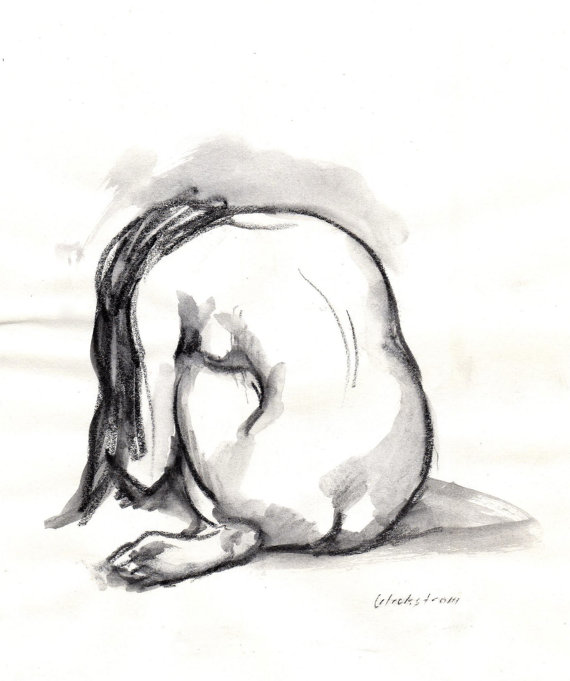
Years ago we started a new tradition. Slacker New Year’s Eve. No more loud, crowded events. No more babysitting nightmares. And no more driving back home in the early morning hours on icy roads. What a relief.

Instead we stay home with the kids. We put lots of goodies on the table, including snacks that are rarely seen in our fussy-about-nutrition household. We get out amusements like board games and videos, build a fire in the fireplace, and basically slouch around together. It’s fantastic. After all the holiday rush it feels downright indulgent.

A key element of Slacker New Year’s Eve is the no-bedtime promise. On this one night we’ve always told our kids they can stay up all night if they want. For years our kids have tucked us in bed not long after midnight, then done their best to stay up until dawn. A few times they’ve made it. Then they sleep in at least till noon. That tends to result in a nice quiet New Year’s Day morning for mom and dad.

Now our kids are old enough to make their own choices about Slacker New Year’s Eve. I think they’re all staying in and slacking. Me? I’m looking forward to warm jammies, chilled champagne, and hanging out with the people I love. This isn’t about renouncing anything. Slacker New Year’s Eve lets the old year slide out without a fuss and celebrates the upcoming year without effort. Ahhh.

Making Beauty From Bombs

melt bombs into jewelry, fund peace through gifts, cluster bombs into gifts,

peace-bomb.com

Every time I hear of armed conflict taking place somewhere on this blue green planet I want it to reverse. If these intractable conflicts could somehow go back to the starting point, back to the earliest signs of difficulty, they could more easily be resolved instead of leading to destruction, refugees fleeing a ruined homeland, and death. That’s what the non-violence principle of de-escalation clearly shows.

Although our world is indeed more peaceful we humans are still learning hard lessons from the tragedy of war and military aggression.

These lessons are particularly poignant when we look at people who manage to transmute horror into beauty.  That’s the case with Project Peacebomb.

Between 1964 and 1973 the U.S. secretly bombed Laos. The equivalent of one B 52 bomb load showered on this thickly forested country every 8 minutes, 24 hours a day, for nine years. Thirty percent of the bombs dropped did not detonate, continuing to injure and kill people today.

In 1975 a Laotian man traveled back over the mountains toward home. He collected shrapnel and melted it in an earthen kiln, then cast it in hand-sculpted molds to make spoons to earn a little money. Eventually he taught the craft to his son. Today, ten families supplement their farming income by repurposing the shrapnel that still scars their homeland.

Now the spoon makers are collaborating with sustainable development groups to make ornaments and jewelry from bombs.  Each bracelet purchased helps support artisan families while also helping to fund the clearance of unexploded ordnance fromLaos.

The simple beauty of this jewelry, creation wrought from destruction, reminds me of a passage from Kurt Vonnegut’s Slaughterhouse-Five, where the novel’s character sees American bombers in WW II flying in reverse.

American planes, full of holes and wounded men and corpses took off backwards from an airfield in England. Over Francea few German fighter planes flew at them backwards, sucked bullets and shell fragments from some of the planes and crewmen. They did the same for wrecked American bombers on the ground, and those planes flew up backwards to join the formation.

The formation flew backwards over a German city that was in flames. The bombers opened their bomb bay doors, exerted a miraculous magnetism which shrunk the fires, gathered them into cylindrical steel containers, and lifted the containers into the bellies of the planes. The containers were stored neatly in racks. The Germans below had miraculous devices of their own, which were long steel tubes. They used them to suck more fragments from the crewmen and planes. But there were still a few wounded Americans, though, and some of the bombers were in bad repair. Over France, though, German fighters came up again, made everything and everybody as good as new.

When the bombers got back to their base, the steel cylinders were taken from the racks and shipped back to the United States of America, where factories were operating night and day, dismantling the cylinders, separating the dangerous contents into minerals. Touchingly, it was mainly women who did this work. The minerals were then shipped to specialists in remote areas. It was their business to put them into the ground., to hide them cleverly, so they would never hurt anybody ever again.

peace ornament

peace-bomb.com

Take action against today’s use of cluster munitions.

Purchase PeaceBomb items.

Let The Youngest Teach You Mindfulness

child-paced, slow down, slow to appreciate,

Image from jesse.millan’s Flickr photostream

Ask any child. When adults meet them for the first time, standard questions include, “What do you want to be when you grow up?” right after classics like, “What grade are you in?” and “What’s your favorite subject?”

Such questions, unintentionally, gauge a child’s progress toward adulthood. That’s because adults tend to be future oriented. We’re distracted from the present moment by the need to plan and work toward any number of goals—what to do about dinner, how to juggle next week’s schedule, when bills can be paid. These distractions take our attention away from what is in the here and now. When we think ahead so often we have less time to notice, let alone appreciate, what makes up our lives minute by minute.

What is impatience except denying the value of the present moment? The watercolor effect of rain on the window, the meandering quality of a child’s conversation, the long wait for a pot to boil—these can be occasions to experience impatience or opportunities to breathe deeply and be present, gratefully.

Leaning so often toward the future unconsciously demonstrates to our children that later is more important than now. Yet as we know, later never comes. As long as we’re alive there’s always “later” to strive toward. Worse, we are surrounded by advertiser-driven messages telling us that we aren’t there yet, that we need to do more or become something more in order to have friends, be successful, find love.

The nature of early childhood is the perfect antidote to this hurry-up attitude. That is, if adults truly pay attention to the lessons the youngest model for us. Young children who are not yet pulled by the adult world’s messages are oriented to the present moment. When forced to disregard what is vital to their bodies and spirits—pretending, daydreaming, playing, snuggling—they rebel. They are who they are, where they are. They’re not caught up in the future tense which dimishes the here and now. They demonstrate the oldest way of knowing.

Pay close attention to the youngest children in your life. Let them help you learn solutions to our cultural overdrive.

As we slow down we have time to truly know each other and to truly know ourselves. We’re more aware of the messages our bodies send us and can act on those signals before they become symptoms. We have time to reflect. Time to remember our dreams when we awaken. After all, time is the only true wealth we have to spend.

slowing down, slow movement, child-pace, mindfulness, mindful living, mindful parenting,

Image from kla!’s Flicrk photostream

Use Your Body Up

While waiting with other members of our food co-op, someone who should think of other ways to start a conversation asked me a cuttingly critical question. I couldn’t even come up with an answer. That’s not like me. The best response I could muster was a fake laugh, as if to acknowledge that she must have been joking. (She wasn’t.) Her question seemed to be more curious than mean spirited but it forced me to think about how other people see me.

I thought I’d let Beauty go, along with her twin sister, Shame, long ago. Apparently not.

Some people look amazing all the time and at any age.  They know what clothes are in, what accessories to use, how to walk in fussy shoes gracefully. I’m impressed by them even if they seem like a species only faintly related to my comfortably slouchy self.

My presence makes people who are fashion backward and technologically inept feel much better about themselves. Clearly there are perks for hanging out with me. But apparently I give so little thought to my appearance that others might come away with the wrong impression. As my questioner put it, “You really leave the house looking like that? It must be easy when you don’t care.”

I do care.

I care about practically everything.

It’s exhausting.

I churn through my days trying, and sometimes succeeding, in doing what good I can do even if on the smallest scale. I talk to people and animals kindly, try to listen more than react,  and when I’m upset ask myself what darkness in myself lets me see shadows elsewhere. I write about natural learning and sustainability and peace. I support good causes and when times are hard, as they tend to be, I attach myself to hope like a barnacle.  This leaves very little energy for personal beautification. Heck, I rarely muster up the ooompf to keep weeds from towering over my vegetable plants so there’s no way I’ll get around to using a blow dryer or nail polish. I’ve never had the money let alone the inclination to have a manicure or pedicure, go to a spa, or have my hair styled. Well, I’ve never actually had a hair style….

When I came home I emailed a few close friends. I explained I’d been at the co-op, where we unload a truck and do other labors befitting less-than-great clothes, so I wore jeans and an old embroidered cotton shirt, my hair tied up and scuffed clogs on my feet. Because I’m no saint, I described the unflattering horizontal stripes of the shirt my questioner wore and how it was a so tight that her form-fitting pants pushed bulges of flesh through at least three of those stripes. (I try to be non-judgmental. That day I failed.) Then I asked the most important question. I’ve never steered that question to appearances before. My friends were all ridiculously nice when really, I was hoping to know if it’s time to start dying my hair or stop wearing my daughter’s hand-me-ups.

I know we broadcast something about our self-esteem via our appearance. Still, I’m not any more motivated than I was before that day at the co-op. I tweezed an eyebrow once, back when I was a teen. It hurt at the tears-in-my-eyes level. Won’t do that again. There’s no way I’ll bother wearing earrings or remembering hand lotion.

But I’ve realized an appearance-based truth from all of this. My body, like everyone else’s body, gets used up by life. And that’s exactly how it’s supposed to be. Years of changing diapers, gardening, canning, washing dishes, kneading dough, and taking walks no matter the weather have left me with creaking knees and hands that belong on someone much older. These are all ways of using my body for a purpose. When I stroll off the planet I want to know that I’ve enjoyed all the health, vigor, pleasure, and meaningful work my body can generate.

During yesterday’s walk the wind was intense and it started to rain. My face and hands were pelted with icy drops from a beautiful still-bright sky. I should have left the house with a scarf and gloves but I didn’t turn around. I walked right into the wind, letting it toss my hair as freely as it blew the last leaves off the trees. I felt completely alive.

enjoy your body not your looks, beyond beauty, beyond body perfection, die used up,

Aja-ann Trier /www.etsy.com/shop/SagittariusGallery

The Bomb & Me

alive because of the bomb, believe in fate, anti-war, nonviolence, anti-nuclear activist,

Why do we take any one path in our lives? Perhaps a mix of choices and abilities are simply stirred in the cauldron we call childhood. Or maybe there are elements we can’t fathom.

Here’s one reason for my wonderment.

I was one of those kids who worried about every chained dog and crying baby. I wanted to understand why the world contained cruelty and more, how I could fix it.  When I was ten years old I learned about the splitting of the atom. It struck me with cold horror, although I couldn’t articulate why. Before that I assumed most adults were looking out for the welfare of kids and trees and animals under their care. But once that information sank in I was afraid that grown ups were terribly misguided. When I asked questions I found out my country had dropped two atom bombs on Japan and that it now used nuclear power. Adult logic suddenly seemed like a fairy tale. It wasn’t until years later that I heard what J. Robert Oppenheimer, called the “father of the atomic bomb,” thought when the first one was detonated. A verse from the Bhagavad Gita came to his mind: “Now, I am become Death, the destroyer of worlds.” Cold horror indeed. Even on sunny days I thought about death.

As the child of conservative parents, I don’t recall any family discussions about nuclear weapons or nuclear energy, pro or con. The few times I asked I was told the bombs had to be dropped to end the war and nuclear power was a safe, clean form of energy. I kept to myself the chilling fear I felt whenever I thought about the splitting of atoms. That is, until my father’s old college roommate was in town. Before his visit I was told he was a smart man who had done well for himself. (In other words, little girls must be extra polite.) And I knew my father hadn’t seen this friend since before I was born. All good reasons to mind my manners and listen quietly to the adults talk. Which I did, until I heard him mention he was an engineer for a nuclear power plant. I gasped (not a polite response) and asked him about the dangers of radioactive waste.

He gestured to the light switch on the wall dismissively, asking, “Do you expect the lights to go on or do you know how to generate your own electricity?” As a child still afraid of the dark, I didn’t have much to say. But his response didn’t ease my concerns. That experience taught me to get the facts before I introduced a subject and also to do something about my concerns. Thank you sir.

I’m sure my ten-year-old self would be disappointed with me. I haven’t devoted myself to freeing the world of nuclear waste and nuclear weapons, nor to advancing peace. But it’s an issue that has resounded in my life. I worked with anti-nuclear weapons activist groups for years and taught nonviolence workshops even longer. I campaigned and testified against the opening of two nuclear plants in Ohio (unsuccessfully) and against a five state radioactive waste dump (successfully). When my children were small we attended Hiroshima Day observances each year, floating traditional lantern boats with messages of peace to commemorate the lives lost.  We also hosted a child from the Chernobyl region for five summers, a child we grew to love and whose health is still threatened by elevated background radiation in her homeland.

Then I learned what splitting the atom meant to me, personally.

My father never had much to say about serving in the U.S. Navy in the closing months of World War II except that he had been a radar man. But in the last years of his life we heard more. He told us about one day in particular. He and the entire crew of their ship were called on deck. They thought it was to formally welcome a new commander. Instead they were given a classified briefing.

They were told all leaves were cancelled and all communication with home would be heavily censored. Their ship was being retrofitted to leave for an upcoming top-secret coordinated air and sea attack on Japan. Their ship would be third in line of the first fleet. It was considered a “sacrifice” ship. My father, a quiet religious teen who got drafted right out of high school, faced certain death along with the rest of his shipmates.

The US had commissioned a study on the human toll of invading Japan. It was estimated that somewhere between 1.7 to four million Allied casualties with between 400,000 to 800,000 lives lost, while a far more horrific five to ten million Japanese lives lost. The United States manufactured a half million Purple Hearts they expected to award after this invasion, so many that today they’re still using of the stockpile of those medals 80 years later.

A very short time later, the U.S. dropped two atomic bombs on Japan. My father lived to attend college, become a teacher, get married, and have a family because of the unspeakable violence wrought by those bombs. I am alive because of those bombs.

That I’ve felt driven since earliest childhood to advance a peaceful, nuclear free world now seems to have roots more mysterious than I can comprehend. I don’t know if that’s destiny at work,  but it calls me to believe that our paths are far more complex than we imagine.

fate, destiny, predestination, peacemaker, Now, I am become Death, the destroyer of worlds

Mentor: Fancy Name For Grown-Ups Kids Need

mentor, role model, adult pals for kids, children in the neighborhood, real work for kids,

image courtesy of LisaW123’s Flickr photostream

The little boy just wanted to “do stuff.”

His parents let him traipse around with his wagon on garbage collection day. He’d take home pieces of wood, carefully pulling out nails to store in a can, so he and his friends would have the necessary materials to build forts or go-carts. Occasionally he found small engines that he’d do his best to fix. No one intervened to tell him his pursuits weren’t safe, although he was expected to clean up any mess as well help around the house.

His neighbors didn’t mind having this kid appear whenever they did something interesting—fix a car, build a shed, tend a greenhouse full of plants, run a garage sale. He was eager to learn and even more eager to help, so they did what adults have done throughout time. They shooed him away occasionally but mostly they shared what they knew.

He made use of what he learned. By the time he was 12 or 13 years old, these neighbors let him take on their home and car repairs, recognizing he was able to do a more exacting job than they might have done themselves. He gained more than skills from the adults in his life. He may have been leaning over a car hood with Clyde, but he was also learning how to understand the function of each system by paying attention. It seemed he was only helping Mr. Christman with the heavy tasks of operated a greenhouse but he was also taking in something important about growing old with dignity. It appeared he was working alongside his grandfather but he was also seeing how reputation, honesty, and treating each person with respect builds a small business.

Because he developed richly rewarding relationships with people of all ages, relatives as well as neighbors, he had plenty of examples to draw on as he matured. He saw how different people handled decisions, disciplined their children, laughed off trouble, solved problems, stayed in love.

His experience was rare. It’s becoming rarer all the time.

Throughout nearly all of their childhood and teen years our kids are segregated in day care, school, sports, and other activities. Even when they benefit from the very best programs, if they’re restricted to the company of same-aged peers doing what adults consider educational and enriching they are deprived of the riches found through fully engaging in the wider world. This subverts the way youth have matured throughout human history, when children learned right in the context of family and community—freely able to watch, imitate, and foster relationships with people of all ages.

We put kids in an oddly uncomfortable position when most adults in their lives are focused on them. Children want to center themselves, not have adult attention centered on them. Kids long to model themselves after adults who are engaged in meaningful, interesting, and useful activities of their own. When their experience of adults is limited to those who are there to care for, educate, or entertain children (important callings but not all that adults can do) the dynamic is shifted. The age-old desire to gain mastery and take on responsibility, eagerly becoming a capable adult, doesn’t have the same pull.

There are plenty of educational initiatives to bridge this gap, particularly for teens. These programs connect students with mentors or bring community members into schools to talk about their careers. While these efforts are admirable, such stopgap measures aren’t the way young people learn best. They need to spend appreciable time with people of all ages—observing, conversing and taking on responsibility. Real responsibilities, real relationships.

How can we remedy this?

That little boy? He grew up to be a remarkably capable, beautifully open-hearted, and endlessly positive person. I married him.

mentor, building competence through imitation, children at work,

Emphasis On Testing Cheats Everyone

testing bad for kids, testing hurts world competivness, opt out of testing, why to opt out of testing, SAT cheating, why kids cheat,

SAT language scores aren’t near the levels seen in the early 1970’s.  Some test-takers resort to cheating, most recently seven teens from Great Neck, NY who hired an impersonator to stand in (well, sit in) for them. The company that administers the SAT estimates cheating, mostly by collaboration, occurs in only one-tenth of 1 percent of the 2.25 million students who take the test annually. That seems insignificant, but it underscores a larger problem—our test-obsessed educational system.

E. D. Hirsch Jr., author of The Making of Americans: Democracy and Our Schools wrote in a recent New York Times op-ed that declining verbal scores have to do with enduring school days stripped of “substantial and coherent lessons concerning the human and natural worlds…” He goes on to note,

The most credible analyses have shown that the chief causes were not demographics or TV watching, but vast curricular changes, especially in the critical early grades. In the decades before the Great Verbal Decline, a content-rich elementary school experience evolved into a content-light, skills-based, test-centered approach.

I don’t agree with Hirsch’s basic stance that a core curriculum be taught in every U.S. school but he’s got a point. It’s not a new point. Learning has taken a hit heavy hit from the emphasis on standardized tests. The zombifying effect on schools, teachers and kids brought by high stakes testing isn’t pretty.

Even in the best districts, attaining those all-important numbers eliminates opportunities for innovation and time to work with students’ interests. Less stellar districts see their schools under test-heavy siege charged with getting results or getting eliminated.  This drive also shapes the kind of material students see, relentlessly preparing them to reach higher for the Almighty Score while giving scant attention to more complex yet essential skills for higher learning like critical thinking, creativity, initiative, and persistence.

Why this emphasis on testing? We assume policy-makers know what they’re doing. Surely they haven’t been restructuring education based on bare numbers unless they have substantial proven results. Greater competiveness on the world market or at least greater individual success?

Nope.

Here are some eye-opening facts from my book:

National test scores

It’s widely assumed that national test score rankings are vitally important indicators of a country’s future. To improve those rankings, national core standards are imposed with more frequent assessments to determine student achievement (meaning more testing).

Do test scores actually make a difference to a nation’s future?

Results from international mathematics and science tests from a fifty-year period were compared to future economic competitiveness by those countries in a study by Christopher H. Tienken. Across all indicators he could find minimal evidence that students’ high test scores produce value for their countries. He concluded that higher student test scores were unrelated to any factors consistently predictive of a developed country’s growth and competitiveness.

In another such analysis, Keith Baker, a former researcher for the U.S. Department of Education, examined achievement studies across the world to see if they reflected the success of participating nations. Using numerous comparisons, including national wealth, degree of democracy, economic growth and even happiness, Baker found no association between test scores and the success of advanced countries. Merely average test scores were correlated with successful nations while top test scores were not. Baker explains, “In short, the higher a nation’s test score 40 years ago, the worse its economic performance . . .”   He goes on to speculate whether testing [or forms of education emphasizing testing] itself may be damaging to a nation’s future.

Individual test scores

What about individual success?

Educational reformer Alfie Kohn explains, “Research has repeatedly classified kids on the basis of whether they tend to be deep or shallow thinkers, and, for elementary, middle, and high school students, a positive correlation has been found between shallow thinking and how well kids do on standardized tests. So an individual student’s high test scores are not usually a good sign.”

Why do we push standardized tests if it has been demonstrated that the results are counterproductive? Well, we’ve been told that this is the price children must pay in order to achieve success. This is profound evidence of societal shallow thinking, because the evidence doesn’t stack up.

Research shows that high test scores in school don’t correlate with later accomplishments in adulthood such as career advancement or social leadership.

We’ve known this for a long time. Back in 1985, the research seeking to link academic success with later success was examined. It was appropriated titled “Do grades and tests predict adult accomplishment?

The conclusion?

No.

The criteria for academic success isn’t a direct line to lifetime success. Studies show that grades and test scores do not necessarily correlate to later accomplishments in such areas as social leadership, the arts, or the sciences. Grades and tests only do a good job at predicting how well youth will do in subsequent academic grades and tests. They are not good predictors of success in real-life problem solving or career advancement.

Kids certainly cheat because they haven’t prepared for the test, but they also may cheat because they simply see the whole testing game as a farce.  A survey of 43,000 high school students showed that 59 percent admitted cheating on a test during the past year.

What can we do?

Some of us homeschool.

Some parents submit compelling letters telling schools they will not permit their children to be tested, part of a larger opt out movement.

Some are heartened by the ever-growing list of four year colleges that don’t require the ACT or SAT for admission.

Do you think high-stakes testing cheats our kids?

Bringing Kids Back To The Commons

involve kids in community, end age segregation, youth volunteers, business engagement with community, non-profit engagement with community, babies in nursing homes, daycare in nursing home,

Image by mollicles420.deviantart.com

Surely my baby was as good as a dog.

I’d read that nursing home residents benefited enormously from contact with therapy dogs. During and after dog visits these elders were more alert and in better moods. So I figured, why not bring my baby to a nursing home?

I contacted a nursing home around the corner. The administrator was enthusiastic. Then I talked friends into forming a nursing home-based playgroup for our infants and toddlers. They were somewhat wary, but agreed to give it a try. Finally I got a local store to donate a carpet remnant for our little ones to crawl and play on. Between visits, the nursing home could roll it up for storage. We were ready.

We met regularly at that nursing home for several years. Our babies grew into toddlers, the elders became our friends. Residents’ families and staff members often told us that our visits stimulated memories, generated activity, even inspired people who were mostly mute to say a few words. We were awed. Something as simple as our presence, sitting on the carpet playing with our children, made a difference to people whose once full lives were now constricted. We benefited too. We learned the value of advice given by people older than our grandparents. And we noticed how completely our toddlers accepted the physical and mental differences around them with natural grace. (Here’s how to set up your own playgroup in a nursing home.)

I’m still not sure why the very old and young are kept apart from life on the commons. Vital and engaged communities are made up of all ages. And children have fewer opportunities to take an active part than almost any adult. This shortchanges everyone.

Throughout history, the young of our species have learned by getting involved. Children long to take on real responsibilities and make useful contributions. This is how they advance in skill and maturity. That is, unless we restrict them to child-centered activities.

Young people are also drawn to seek mentors. They want to see how all sorts of people handle crises, start new enterprises, settle disputes, and stay in love. But today’s young people are largely kept from meaningful engagement with the wider community. They’re segregated by age not only in day care and school but also in most spheres of recreation, religion, and enrichment. When we keep kids from purposeful and interesting involvement with people of all ages they are pushed to find satisfaction in other (often less beneficial) ways. Meanwhile, our communities are deprived of their youthful energy and innovative outlook.

It doesn’t have to be that way. There are ways to reconnect children with our communities.

  1. Involve children by giving them real input and responsibility in civic groups, churches, co-ops, CSA’s, arts organizations, clubs, and neighborhood organizations. What about a child who is a dedicated rock enthusiast but the local lapidary club only accepts adult members? Propose a joint adult/child membership, giving that child the same (age factored) opportunities to build social capital in the club. A similar approach can be taken with organizations that refuse to take youthful volunteers. Offer to give your time in partnership with the child, a two-for-one volunteer bargain. Adult advocates are often necessary to pave the way for genuine youth involvement in many groups.
  2. Give children contact with the workaday world. They need to know people with a range of hobbies and careers. Seek out those who are passionate about chemistry, bird watching, farming, the Civil War, engineering, astronomy,  geology, blacksmithing, wood carving, well, you get the idea. Something vital is transmitted when one person’s enthusiasm sets off a spark of interest in a child. We’re rarely turned down when we ask to learn from others. People who love what they do can’t help but inspire kids and, they often tell me, the kids reignite their hope for the future of their work.
  3. Help local businesses tune in to children’s interests. For example, a bakery might hang children’s art on the walls, make meeting space available for a kids’ chess club, host Invent A Cookie contests, open the kitchen for tours, offer apprenticeships to aspiring young pastry chefs, teach parent-child baking classes, invite speakers to explain the science of yeast and flour, give cupcakes as prizes for youth community volunteer hours, etc. Businesses that are truly engaged in this way inspire loyal customers, they also enliven the community.
  4. Create age-bridging partnerships, as we did with babies and nursing home residents. Non-profit organizations are great places to start. One successful program called Girlfriend Circle started due to complaints. A group of women at a senior center often told a volunteer that they had no hope for the future because children “nowadays” are rude. The volunteer offered to set up a tea party for the ladies that included her daughters and their friends. At that first event the girls were seated between their older hostesses. Everyone enjoyed a lesson in napkin origami. Then they took part in a Q&A to learn about one another. After sharing refreshments both age groups were eager to meet again. The Girlfriend Circle met bi-monthly for several years, finding their friendships instructive and rewarding.
  5. Include young people in civic affairs, giving them genuine input into programs and policies. This works in Hampton, Virginia. Young people take leadership roles by holding conferences and open forums, advising municipal divisions, and helping to run the Hampton Youth Teen Center. City administration also includes a Youth Commission, with 24 youth commissioners, 3 youth planners, and one youth secretary–all high school age.
  6. Develop a tradition of service, starting at an early age. Need ideas? Here are 40 ways kids can volunteer, toddler to teen.

This comes full circle for me, right back to dogs and volunteering. A boy who’d once been a pint-sized member of the play group we held at the nursing home talked his family into raising puppies to be trained as service dogs. By the time he was 12 years old, this boy gave promotional talks about this program to clubs and schools. I attended one of his speeches. He started off with some anecdotes about exasperating puppies. Then he went on to describe the generosity and hope his family felt each time they attended graduation ceremonies for fully trained dogs, ready to serve. I know community involvement is a path to wholeness. I’m convinced it has a lot to do with this boy’s smile too.

Portions of this piece excerpted from Free Range Learning.

Fun Theory

I’m not aware of any official Fun Theory in the field of learning. But fun shimmers under the surface of motivation and focus like a very big fish. And the fish named Fun shouldn’t be ignored.

I lifted the term Fun Theory from an old Volkswagen campaign. One of their videos shows busy commuters choosing an escalator instead of a staircase. People are rarely motivated to do otherwise. But when the same stairs were transformed into a giant electronic piano sixty-six percent more people chose to hop, dance and run up those musical steps. Fun works. (It also sends the Volkswagen logo around the world in a great example of viral marketing.)

It’s no surprise that pleasure is motivating, although what one person finds enjoyable may not be remotely engaging for the next person.

That’s the key. Fun is highly individual. It can’t be easily pre-packaged, even though promoters of textbooks, curricula, and enrichment programs assert their products do just that.

You can tell when educational materials and experiences don’t engage the young people in your life. They exhibit, shall we say, obvious symptoms. I won’t list them here. These symptoms tend to cause us all kinds of angst.

A child’s stubborn insistence that learning be meaningful and interesting is actually a sign of positive selfhood. We need to pay close attention to each child to really see what sparks enthusiasm, evokes awe, sharpens focus, builds on interests, and challenges abilities. That’s what advances learning.

The elements that make an activity or interest compelling for any one person can’t be neatly summed up, nor should they. A person is too complex to reduce to a List of Handy Motivators. But you might want to consider such factors if you’d like to understand why your child prefers to do things his or her way, or why some enriching activities “work” and others don’t. Below you’ll find brief notes about some of the factors that make learning intrinsically pleasurable and interesting. Think of your child as you read over the list. Think of yourself too. You’ll recognize many unique ways that lively, engaged learning happens quite naturally.

                Trial and Error 

Learning is fun when errors don’t feel like failures. Watch a group of friends figure out what tools and design elements they’ll use to make bracelets from a cast-off metal objects. Their initial results will likely be both positive and negative. Their mistakes will help to guide and refine their progress. Thomas Edison said of trial and error, “Results! Why man, I have gotten a lot of results. I know several thousand things that won’t work.”

When your child is building a fort out of branches she may experiment with several approaches. This open-ended process allows her to repeat successes and learn from errors, getting ever closer to the desired result. Trial and error often pulls the learner forward to greater mastery. It’s also tremendously enjoyable.

                 Meaning  

Full engagement in any pursuit that is meaningful to the individual may not sound like a prescription for fun. But it is, because it tends to lead to what is called flow:  a sense of focusing so fully that we lose sense of time, discomfort, even self.

Artists and athletes aren’t the only ones who experience flow, children easily merge into this state. A child may experience flow while engaging in make-believe, drawing, swinging on a backyard swing, playing the guitar, fixing a bicycle, even organizing a shelf.

You may not be able to predict what has meaning for your child, but chances are it fuels learning. Your daughter’s fascination with horses may lead her to equine-related mathematics, history and science. Her learning is enlivened with wonder and purpose. That absorption is also fun.

                Discovery/Exploration    

Discovery is highly motivating and feels quite a bit like fun. It lures babies to put everything into their mouths. It propels us to try new music, peer around forbidden corners, travel to distant places.

When a friend brings up an obscure bit of information, your preteen may check it out later only to find an unexpectedly engaging exploration through subjects that never interested her before. Or perhaps your son’s curiosity is piqued by a new venture he wants to try like making homemade cheese. The project opens up to ever wider explorations such as homesteading skills, the claims of raw milk advocates, and recipes using artisan cheeses. For most of us independent discovery has the greatest allure.

                Novelty

What is new and unexpected heightens attention and activates all kinds of interest. That’s why marketers are constantly coming out with newer versions of the same thing. Novelty leads readily to exploration or play. By itself, novelty wears off quickly. (Those commuters will tire of the musical stairs and probably go back to using the escalator.)

You can rely on something new to stimulate interest. Just remember that too much reliance on novelty doesn’t help children build their own deeper resources of attention and interest.

                Play

Play isn’t “just” for fun. It’s an essential component of learning. Stuart Brown, author of Play: How It Shapes the Brain, Opens the Imagination, and Invigorates the Soul said in an interview, “…evidence continues to accumulate that the learning of emotional control, social competency, personal resiliency and continuing curiosity plus other life benefits accrue largely through rich developmentally appropriate play experiences.”  Unstructured free play is particularly important. We already know it’s fun.

                Direct Experience

Hands-on efforts make learning come alive with pleasure and satisfaction. Frank R. Wilson notes in  The Hand: How Its Use Shapes the Brain, Language, and Human Culture that brain and hand use have always been connected. When a young child is put in charge of preparing vegetables for a stir fry dinner his efforts may not be entirely helpful, but the sensory experience of washing, chopping, and tasting offer him much more than growing competence in meal preparation. The sensory experiences enhance comprehension and lock in learning. When a child expresses interest in puppetry she may want the opportunity to make puppets, stage puppet shows, and go to puppet guild meetings. The more fully involved a child can be the more direct (and lasting) his or her learning will be.

                Challenge 

Challenges are fun as well as educational because they keep us right at the edge of our competence, pushing us on to the next level (exactly why video games are so compelling). A ten-year-old may enjoy the logical challenge of debating his older brother, the practical difficulties of planning and filming his own scary movie, the physical and social risks of showing off at the skating rink. These self-selected activities push him to advance a whole range of abilities. Challenges keep us too absorbed to grin but for our own good reasons.

There are plenty of other “fun in learning” factors such as relationship development, collaboration, sensory pleasure—surely you can think of more. All these elements are intertwined so completely that they only make sense when we see them as connected.

I think that’s why we need to pay attention to what’s fun about learning. Yes it’s different for each person. But what’s universal is that each of us is capable of fascination, excitement, and wonder. Why fish around for methods to motivate and sustain a child’s attention when joy is right there, showing us the way?

Portions of this post excerpted from Free Range Learning.