How To Learn From Experts

learn from experts, senior knowledge bank, skills clinic, DIY education, DIY homeschooling, cheap homeschooling, community learning, learn together, community apprenticeships, collaborative learning,

Image: drumminhands’ flickr photostream

Successful societies have always respected what the the wise can teach us. But it’s not easy to learn directly from people whose grasp of any subject well exceeds our own, in part because person-to-person learning is easily supplanted by online engagement.

I spend plenty of time staring at screens, yet I know from years of facilitating non-violence workshops that something important happens as we discuss, practice, and hone our skills together. Real learning is like a spark transferred. Going online is practically a reflex for us, but if our learning is confined there what’s lost is rich perspective and valuable hands-on experience.

If you know where to look you can find sculptors, farmers, astronomers, welders, storytellers, clock repair experts, and cartoonists right in your community. Let’s take my hometown of Cleveland as an example. I can learn glass blowing at the Glass Bubble Project, eviscerate and stuff a rat to look like a tiny tie-wearing butler during a taxidermy workshop at Sweet Not Salty, apply Brian Swimme’s cosmology to my life direction at River’s Edge, march with the Red Hackle Pipes & Drums band as I learn to play bagpipes from a former Pipe Major of Scotland’s Black Watch, let kids partner with working scientists at the Cleveland Museum of Natural History’s future scientist program, volunteer to rehabilitate injured birds at the Medina Raptor Center, and learn to make handmade books at the Cleveland Institute of Art. Museums, libraries, colleges and universities, cultural and ethnic organizations, recreational centers, and plenty of other places in your neighborhood are brimming with great workshops and classes for adults as well as kids.

This can happen more informally as well. As homeschoolers, we’ve found it doesn’t hurt to ask people to share a little of what they know. A steel drum company owner welcomed our group for a visit. He explained the history and science of drum-making, talked about the rewards and risks of entrepreneurship, then encouraged us to play the drums displayed there. A NASA engineer took us through a testing facility and showed us how materials are developed for the space program. A potter talked to us about the nature of clay, taught us how to form vessels on a wheel, then invited us back for the opening of his kiln to see our creations emerge.

We’ve spent days with woodworkers, architects, chemists, archaeologists, stagehands, chefs, paramedics, and many others. Despite offers of barter or pay, we’ve gotten all this expert instruction for free. People rarely turn us down when we request the chance to learn from them. Perhaps the desire to pass along wisdom and experience to the next generation is encoded in our genes. If someone possesses knowledge or abilities you’d like to gain, try asking. (Ask them to share their interests, not “teach” to get a positive response!) And don’t forget to look close to home. You might master pinochle while spending time with your brother-in-law, learn coding from your niece, gain new appreciation for fly fishing from your dad’s business partner, go bird-watching with your neighbor, and as we all know, learn more from your own kids than you’d ever imagined. I call these knowledge networks. Here’s how to activate yours.

Of course, there are plenty of platforms promoting person-to-person wisdom. Here are a few.

DIY and Maker movements have opened all sorts of avenues, with Maker Faires happening in more and more places. (Not in your area? Check out the Mini Maker Faire Starter Kit.) Find hackerspaces like NoisebridgePumping Station OneNYC ResistorTechShops, and Artisan’s Asylum. Or start your own hackerspace.

Trade School is a barter-based learning space, meaning you don’t have to pay to learn. You might barter for a class with a homemade pie or art supplies or research help. The founders describe it as “a global movement for community, connection, and educational justice.” The first Trade School was started by three friends in a NYC storefront in 2010. Now self-organized Trade Schools are opening up or running in places like Milan, Cologne, Virginia, Oakland, Singapore, New Delhi, and Paris. Want to start one in your area? Here’s how.

The Amazings offer non-traditional workshops and classes set up by ”amazings,” people over 50 with a passion to share what they know. Their site explains, “We want to make learning more fun, more friendly, more social, and more personal.” So far they have 45 people offering expertise in areas such as bookbinding, perfume making, foraging, carpentry, jazz guitar, philosophy, and corset making. The first branch is based in London, but they’re open to starting more around the world.

FreeSkools are created by participants. There’s no central organizing manifesto on one site or in one book. Some are informal gatherings to share knowledge, others are active networks meeting in parks, living rooms, and community centers. All are devoted to learning freely. You’ll find them in IthicaSanta Cruz, and dozens of other cities in the U.S., Canada, and U.K. Check out piece in Yes! about what to consider when setting up a FreeSkool.

Skillshare is like the eBay of localized education. You can learn what you want from someone in your community as well as teach others what you know. Some of the classes offered right now are Building Mobile Apps for Android Devices, Rock Poster Design from Concept to Execution, and Launch Your Startup for Less than $1,000. There’s a fee and many of these classes aren’t taught in person, but online.

The School of Life is teeming with great stuff. They feature secular sermons with big thinkers talking about big ideas. Classes by experts with titles like How to Be Creative and Finding a Job You Love. Bibliotherapy: basically book prescriptions custom-designed with your reading history, dilemmas, and desires in mind. The place is also teeming with activity beyond the sit still and think variety. There are engaging programs with transformative potential and weekend adventures developed by scientists, artists, and others. Oh, and what they call Utopian Feasts. So far there’s one in London with a branch opening in Australia. Not in London or Sydney? Start up something similar in your community.

Citizen Circles are small groups of people who meet to learn together for a limited period of time with an emphasis on collective learning and action. There’s no fee. Some Citizen Circle topics have included women as social innovators, systems dynamics, exploring indigenous knowledge, and design thinking. There’s plenty of information to help you start your own.

(un)classes are casual ways to meet and learn from local people. So far the idea has taken root in the San Francisco area. Any fees go to a designated charity and participants walk away with new knowledge as well as new connections. A recent class taught how to make gnocchi while benefiting the area food bank while another taught documentary photography while benefiting a scholarship program.

School of Everything, based in the U.K., connects those who want to learn with those who can share what they know. In Glasgow, for example, you can find instructors to teach you Mandarin, classical piano, acting audition techniques, hypnosis, and the tango. Some instructors charge for classes, others do not.

Go ahead. Get your hands right in that dirt, clay, dough, or paint as you build your expertise. Feel the spark. There’s else nothing like it.
Image: drumminhands' flickr photostream

Image: drumminhands’ flickr photostream
Growing Up Sarcastic & Self-Sufficient On The Farm

homeschooling self-sufficiency, homeschooled siblings, diverse siblings, happy sibling rivalry,

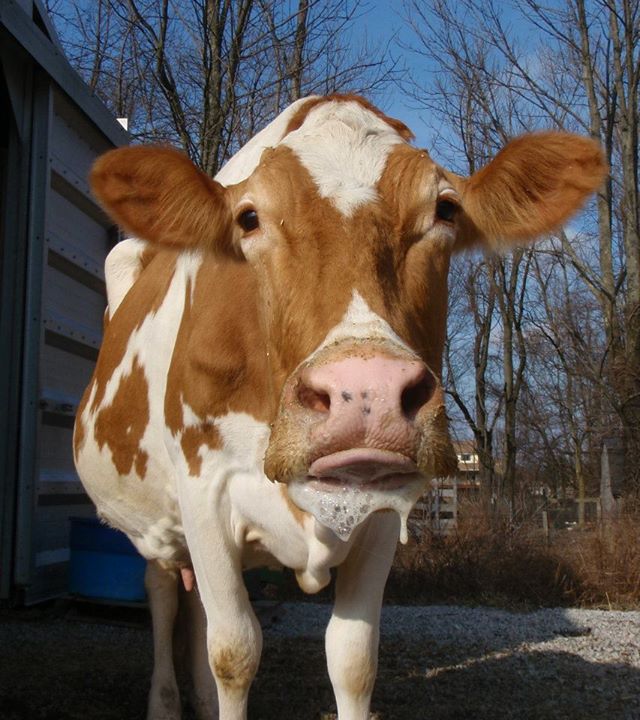
Isabelle the cow. (Image: Claire Weldon)

“Come here Slug Weasel,” my daughter commands. Obediently her youngest brother does as she bids, helping her carry 50 pound bags of chicken feed to the barn on our little farm. They chat pleasantly on the way.

By pleasantly I mean he doesn’t just point out that her flip-flop clad feet are dirty. He says that they are festering toxic bacteria unknown to science and should be classified as biological weapons.

She doesn’t just notice he’s squinting, she pretends to worry about his sudden exposure to sunlight and insists that swiveling in a computer chair probably doesn’t afford him the musculature to carry more than the weight of his own hair. They laugh and talk all the way to the barn.  I smile in adoration.

I was raised to be quiet and deferential to others. (Fist-shake at outdated values.) Perhaps as a direct result, I wanted to insure that my own children felt free to be themselves. Homeschooling has given us that freedom. Natural learning and all sorts of friends serves as an antidote to cultural factors relentlessly trying to pressure young people into sameness.

There’s not much sameness going on here. My four offspring can fix old tractors, diagnose a chicken in respiratory distress, compose a bagpipe tune, design custom air cooling systems for computers, discuss the chytrid fungus currently decimating amphibian populations, randomly quote from old Futurama episodes, weld sculptures, and roast fantastically spicy potatoes. They get science on everything. They don’t, however, pay attention to fashion trends or celebrity gossip.

We’re all still in headlong pursuit of our interests. But now that everyone is older I’m left with wonderful memories of early learning, the kind that shifted easily between relaxation and adventure. We read for hours together sprawled on couches, managing to get out of pajamas and into clothes before lunch if we had places to go. My kids launched into ambitious projects, from building a trebuchet that propelled pumpkins across the pond to entering a national science contest that landed them prizes including a visit with an astronaut. Other equally ambitious ideas, like making a hovercraft, were more notable for their humorous failures. We gave homemade gifts that stemmed from woodworking, sewing and soldering projects. Other gifts, like a handmade theremin, were not as well received. We called exploding experiments “science,” invited everyone we knew for large-scale projects, threw strangely amusing parties, jaunted all over for concerts and plays, maxed out our library cards each week, hosted an international guest for six summers, and whenever possible learned directly from people who thrived on work they loved.

It’s not all in the realm of memory. My grown and nearly grown kids seek each other out for hours long discussions as well as weeks long backpacking trips. Conversation around the dinner table is a gallery of fervent opinions, esoteric interests, and very dry wit. I’m still smiling in adoration. Well, I’m also smiling because someone else carries all that chicken feed.

farm homeschooling, teen homeschooling,

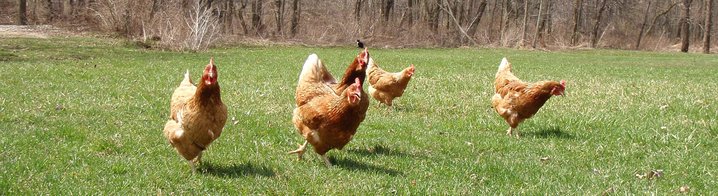
Fowl demonstrating free ranging. (Image: Claire Weldon)

This post originally appeared on Radio Free School

Look Up

nature exposure linked to nearsightedness, cloud appreciation, cloud collectors,

Summer. Perfect for lounging around doing nothing more than gazing at clouds. It’s a completely free pastime.

The traditional spot to indulge in this pleasurable activity is sitting in the grass. Better yet, lying on the grass. Stay there as clouds drift into view over treetops and roofs, slowly changing form. Linger long enough, you might insist you can feel the planet moving.

Looking at clouds is a perfect way to disengage from all the buzzing, ringing distractions that claw our attention to shreds. Those puffs of air vapor seem to invite contemplation. And that’s good. Daydreaming is so rejuvenating that it can boost creativity. It also helps us to relax, review emotion-laden situations calmly, generate new ideas, and get to know ourselves better.

When we let our minds wander, we’re in what neuroscience calls the “default mode network.”  An L.A. Times article titled, “An Idle Brain May Be The Self’s Workshop” notes,

“Just as sleep appears to play an important role in learning, memory consolidation and maintaining the body’s metabolic function, some scientists wonder whether unstructured mental time — time to zone out and daydream — might also play a key role in our mental well-being. If so, that’s a cautionary tale for a society that prizes productivity and takes a dim view of mind-wandering.”

Even when you don’t have time to lie in the grass, take the time to look up. You may notice there’s really no such thing as a less-than-fascinating sky. Raining, snowing, overcast, starry, it’s all lovely and always in a slightly different way.  It has to do with seeing, really seeing.

I learned this when I helped conduct a psychology study in college.  We went to urban office buildings and asked people two questions. First, we asked each person to describe his or her mood. Second, we asked them to describe the current appearance of the sky. These people were in their offices or hallways when we talked to them and the windows in most buildings were shuttered with horizontal blinds ubiquitous during that decade, so the only way they could have described the sky is if they had paid attention on their way to work or during a break. Here’s the interesting part. The people who identified themselves as pessimistic, angry, depressed or in other negative terms were also the ones unable to describe the sky’s appearance. You guessed it. The happiest and most optimistic people either correctly described the sky or came very close.

That study was never published, but research these days now indicates that pausing to experience nature in our daily lives is powerfully positive. Just a few minutes of regular exposure has been shown to improve our emotional and physical health. It leads us to be more generous, to enhance relationships and value community. The effect of nature, even looking out a window at nearby trees, seems to lead us, as one researcher noted, to be “our best selves.”

Go ahead, look at some clouds right now. You may see a cloud pig sailing a cloud boat. The sailboat may morph into French fries before the whole thing breaks apart into a shape resembling a bongo-playing octopus. Good thing the images we see in clouds aren’t a meterological Rorschach test.

stress relief, look at the sky,

Resources

Find out how nature-deprivation can affect your child’s eyesight.

Check out the Cloud Appreciation Society.  You can post photos to the online gallery, chat about all things cloudy on the forum, and live by their manifesto which includes a pledge to fight “blue-sky thinking.”

Consider becoming cloud collectors. Bird watchers keep a life list of their sightings, now cloud watchers can do the same with The Cloud Collector’s Handbook by Gavin Pretor-Pinney. Packed with beautiful photos, this is a perfect book for adults and kids to share as they “collect” different cloud types.

You might want to keep a handbook near a window or in your car, ready to help with identifications. Two of the best are The Cloudspotter’s Guide: The Science, History, and Culture of Clouds also by Gavin Pretor-Pinney and The Book of Clouds by John A. Day, who was known through his long career as Cloudman. Check out resources on Cloudman’s site including instructions for making a cloud discovery notebook, tips for photographing clouds, and cloud history.

More information available through the National Oceanic and Atmospheric Administration.

family fun cloud watching,

Homeschool Worries: Erased With Research & Experience

school versus homeschool, homeschooling research,

I never planned to homeschool. I am the daughter, niece, and granddaughter of excellent public school teachers. I cheerfully volunteered in my children’s classrooms and worked on parent committees. I believed in doing my best to change a flawed system from within.

Yet I kept seeing school wasn’t a good fit for my children. Our four-year-old already knew how to read, but had to practice sight words in preschool anyway. Our sweet but inattentive second-grader was deemed a good candidate for Ritalin by his teacher. Our fifth-grader could do college level work, but due to cuts in the gifted program had to follow grade-level curriculum along with the rest of her class. Our freshman was an honors student but detested school, not only the hours of homework but the trial of dealing with a few teens who were harassing him.

We became homeschoolers overnight when those teens pulled a gun on my oldest in the school hallway, telling him he wouldn’t live to see the end of the day. School officials, who had done nothing to ease the harassment, didn’t even call the police. The next morning every reason I had to avoid homeschooling stared me in the face. So did my kids. They were eager to learn on their own terms.

Here are a few of the misconceptions homeschooling erased for me.

growth mindset, homeschool, children's self-regulation,

1. Education that counts happens in school. My kids were growing up in an enriching home. We read aloud every day and enjoyed wide-ranging conversations. We went to parks, museums, and plays. But I was raised to believe that formal education is something separate and measurable.

Still, I saw that my kids learned most eagerly when filled with the aliveness we call curiosity. That’s true of all of us: learning sticks when we’re interested. When we’re not, much of what we learn tends to become inaccessible after the grade is earned. Hard as it is to believe, studies show that that shallow thinking is actually related to higher test scores. (Maybe we acknowledge this reality when we prepare kids for tests by saying, “Don’t overthink it.”)

When we’re curious we not only retain what we learn, we’re also inspired to pursue the interconnected directions it leads us. I saw this the summer before we began homeschooling. My eight-year-old, the one who barely paid attention in school, was playing with balsa airplanes brought to a picnic by a family friend who piloted his own plane. Other kids gave up after the planes broke, but my son worked to fashion the pieces into newly workable aircraft. This gentleman showed him a few modifications and the unlikely looking planes flew. After that my son was on a quest. He loaded up on books at each library visit, telling us about Bernoulli’s principle, aviation history, and experimental aircraft. He begged for balsa to make models of his own design, each somewhat more sophisticated as he overcame earlier mistakes. The next time we met up with this friend my son was offered a ride on his Cessna. It was the highlight of his summer. His interest in planes eventually waned, but not the knowledge he gained. He’d taught himself history, science, math, and more importantly, shown himself just how capable he was.

His pursuit is what researcher Carol Dweck, in her book Mindset, calls a growth mindset. It’s the understanding that achievement comes from purposeful engagement, that talent and smarts are not fixed traits but are developed through persistence. A growth mindset is linked to resilience and accomplishment throughout life. That’s education that counts!
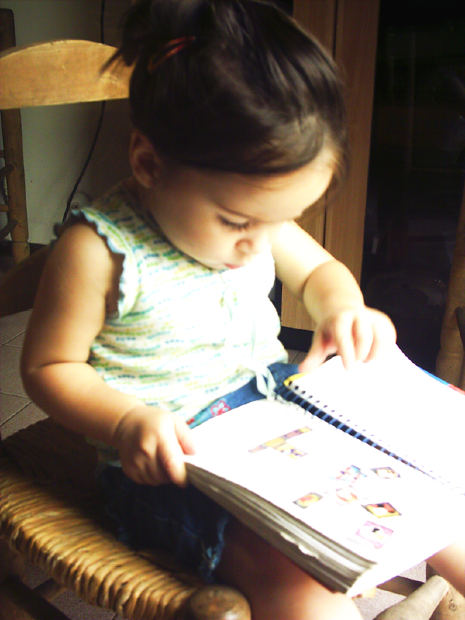
late reading, early reading, homeschooling,

2. Kids have to follow grade-level standards. I once thought homeschoolers had to follow conventional school standards. You know what I mean, if it’s second grade it’s time to learn about ancient Rome, multiplication, and adverbs. For my family, an overly school-ish approach never made sense. I can give dozens of reasons, but here’s one that springs to mind.

Kids develop unevenly. They may be way ahead in reading and struggle in math, able to make up imaginative stories but not coordinated enough to easily to write or type them. If they don’t advance evenly in school, quite a bit of attention is focused on where they’re lacking (extra help, easier and more repetitive work, labels, poor grades). But outside of school it’s easy to emphasize their strengths while other areas are mastered gradually without ever being considered “deficiencies.” This has a basis in current research which shows that children are remarkably good at self-regulating. They’re cued to ignore information that’s too simple or too complex, but instead are drawn to learn from situations that offer the right amount of challenge.

For example, it’s well known in the homeschooling community that many kids aren’t ready to read at five or six. Some aren’t ready until they’re several years older. In school that’s a crisis, because every subject is taught using reading. The child who can’t read not only grows disheartened, he also feels stigmatized. But as a homeschooler he remains immersed in a learning-rich lifestyle whether he reads or not because homeschooling is infinitely adaptable. Stories abound of homeschooled children who move quickly from non-reading to zipping through Harry Potter books once they’re ready. A recent study showed that homeschooled children whose parents don’t push them to learn to read, but instead emphasize the joy of reading, end up with kids who are avid readers no matter if these kids started reading early or late. In our family, we found our kids eagerly accomplished far more in a whole range of subjects over time. “Grade-level” expectations were, to us, limitations.

easy homeschooling,

3. The parent has to be teacher/coach/principal. Being a mother to my children has always been richly rewarding (okay, maybe not in the colicky phase). I didn’t want to take on other roles. Turns out I didn’t have to. We found homeschooling to be an immediate stress reduction. My kids got enough sleep, woke rested, and don’t have to rush through the day. Instead they had ample time for conversation, reading, indulging in art projects and experiments, finding the answers to questions, and going on adventures. Our live were guided by fascination, not bells. Much less control on my part was required.

I found that our cultural emphasis on adult-led activities is somewhat counterproductive. We assume children benefit from the newest educational toys and electronics, coached sports, lots of lessons, and other adult-designed, adult-led endeavors. Well-intentioned parents work hard to provide their children with these advantages although there’s limited evidence that all this effort has value. We do this because we believe that learning stems from instruction. By that logic the more avenues of adult-directed learning, the more children will benefit.

But studies show that a child’s innate drive to creatively solve problems is actually impeded when adults provide direct instruction. This experience is repeated thousands of times a year in a child’s life, teaching her to look to authorities for solutions, and is known to shape more linear, less innovative thinking.

Research also shows that a child’s natural motivation tends to diminish in adult-led activities. Unless they’ve been raised on a steady diet of ready-made entertainment, children are naturally drawn to free play and discovery-based learning. They make up games, daydream, pretend, and launch their own projects–freely seeking out adults for resources and guidance when necessary. They are naturally drawn to achieve mastery. My kids have shown me how motivated self-direction can go into high gear in the teen years. They’ve earned their own money by shoveling stalls, which they spent to buy and restore a vintage car, go on a month-long backpacking trip, and build a bedroom-sized recording studio. And they have stick-to-it-iveness, devoting years to pursuits like a bagpipe band, wildlife rehabilitation, farming, and their own intensive scholarship. Homeschooling has helped us foster a young person’s growing need for independence while providing useful guidance.

hands-on learning, homeschooling,

4. I can’t afford to provide a decent education. Like many new homeschoolers, I thought I’d have to replicate everything from music class to chemistry lab. I knew I’d never have the time, energy, or money. But we quickly discovered we can activate our own knowledge networks and that the community around us is filled with people eager to impart skills and knowledge to the next generation, almost always for free.  They’re found at ethnic centers, museums, libraries, colleges, churches, service organizations, plus clubs like those for rock hounds, ham radio enthusiasts, and astronomy buffs. My children’s lives have been illuminated by spending time with biologists, potters, engineers, geologists, entrepreneurs, archaeologists, organic farmers, model railroaders, meteorologists—the list could take up this page. People seem honored when asked to share a little of what they know. It’s sad that young people are customarily segregated from adults doing fascinating things right in their own communities, especially in the teen years when they so desperately want more role models.

We’ve also gotten together with fellow homeschoolers for countless field trips, enrichment programs, game days, clubs, and learning co-op classes. My kids have re-enacted Shakespearean duels, toured factories, sheared sheep, raced sailboats, learned chemistry from a Ph.D chemist, debated Constitutional challenges, competed in robotics tournaments, built a hovercraft of their own design, learned fencing, calculated the position of the stars, played with world-class musicians, and spent an afternoon with an astronaut after winning a science contest. All free or practically free. When certain subjects got really challenging we easily bartered with an expert or found a community college class to cover it. And we’ve saved thousands by relying on the remarkable resources of our library system.

Sure, I envy those homeschooling families who learn while bike riding in Ecuador or rambling through European castles. But I realize my kids haven’t missed anything despite my penny pinching, especially since surveys indicate two-thirds of school kids say they’re bored in class.   Deep scholarship and hands-on learning are simply another homeschooling perk.

homeschool socialization, peer segregation,

5. Homeschooling will deprive my kids of friends.  I realized the school day isn’t really set up for socializing, although we’d come to rely on school as a source of same-age friendship. Sadly, according to Beyond the Classroom by Laurence Steinberg,
less than five percent of school kids belong to peer groups that value academic achievement, while pressure from prevailing peers steer young people toward underachievement. Even high-achieving students, when asked, say they’d prefer popularity over academic success.  That comes at a price, because members of those lower achievement groups are more likely to demonstrate negative behaviors like conduct problems and drug use. Not the kind of influence parents expect.

And it turns out studies show homeschooled children have better social skills and fewer behavior problems than their demographically matched schooled peers. Homeschooling families also tend to be more active in the community. Initially it took me a while to get used to homeschool gatherings where kids hung out with a wide range of ages and abilities. Sure, they’re kids and not beacons of perfection, but I was pleased to see so much overall good cheer.

As for friends, my kids kept many of their school friends. They also made more as we widened our circle of acquaintances. Many of their new friends were around the same age but some were decades older, bringing perspectives shaped by widely varying experiences. They offered my children a route to maturity they couldn’t have found in school among kids similar to themselves. Their friends include a Scottish gentleman in his 70’s, a group of automotive restoration enthusiasts, a wildlife rehabilitator in her 60’s, fellow backpackers, people with differing physical challenges, Christians, Buddhists, atheists, Wiccans, well, you get the idea. These friendships happened because they had the time to stretch in all sorts of interesting directions.

homeschool success, homeschool misconceptions,

6. Homeschooling is an experiment. Like any other parent, I’m driven to provide my children with the essential ingredients that lead to life-long happiness and success. Late at night, unable to sleep, I’ve entertained my share of doubts. What if homeschooling will limit their chances?  I finally realized I was looking at it from too narrow a perspective. Schooling is the experiment. For 99 percent of all our time on earth, the human race never conceived of this institution. Our species nurtured children close to extended family, within the rich educational milieu of the community, trusting that young people would grow into responsible adulthood. Worked like a charm for eons.

Taking my kids out of school liberated them from the test-heavy approach of today’s schools, one that actually has nothing to do with adult success. Instead of spending over 1,200 hours each year in school, they could devote time to what more directly builds happiness as well as future success. Things like innovation, hands-on learning, and meaningful responsibility. That doesn’t mean I lost all my doubts. Some days, all right, months, I worried. It’s hard to unlearn a mindset

Now all four of my kids are in college or launched into careers. I sat at a recent dinner with my family, appreciating our closeness. My kids take on challenges with grace, react with droll wit even under pressure, and haven’t lost their zest for learning. We laughed as their lively conversation covered Norse mythology, caddisfly pheromones, zeppelin history, and lines from new movies. I’m not sure how much I can credit to homeschooling, but I know it’s given my kids freedom to explore their own possibilities. That’s more than enough.


Portions of this post excerpted from Free Range Learning.

Links & News 7-16-13

learning updates,

It’s clear these won’t be weekly links. Just occasional, hey you might want to look at this links.

As for our news from our little farm, this summer our Belarusian daughter Tanya is back! She came here every summer when she was a little girl through the Children of Chernobyl program. Now she’s a new university grad and it’s a delight to see her. Hopefully I’ll write a post about it before the summer is over. Right now I’m still struggling to find out how she likes to fill her days. Unlike her little girl self, she’s now so polite that she refuses to express much in the way of an opinion.

As for links, I share a lot of them via the Free Range Learning page on Facebook, but most people have more social media self-control than I do. So here are a few links for you to enjoy.

Hope

collateral repair project, iraqi christian refugees,


This Iraqi Christian family fled after receiving threats that the entire family would be killed. The father can find work a few days a month, CRP provides food vouchers, cleaning kits, and gifts for the kids. collateralrepairproject.org

One of my favorite causes, Collateral Repair Project – Helping You Help Iraqi Refugees has been awarded Top-Rated Nonprofit Status. This shoestring operation does amazing work. Zip over to their Facebook page or site to see the families they’re helping directly every day. They make even a few dollars in donations go a long way.

“This is the world I want to live in, the shared world.” Rediscover it through Naomi Shihab Nye’s story-poem, Gate 4-A, from her book Honeybee.

Fascination

child

Your life has been enhanced and/or twisted in ways you may not realize thanks to your name. The moniker you carry around affects your grades, job evaluations, even how others perceive you. Find out how in Does Your Name Help or Hinder?

Finding common ground with people who hold extreme opinions may be easier than you think. A recent study finds it has to do with asking them to explain an issue (nicely!). Find out more in The Less We Know, The Surer We Are.

Oy Vey

robot takeover, killer robots,

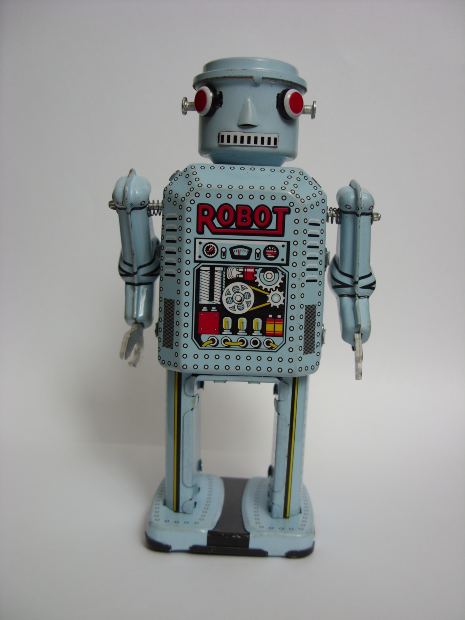
If my research holds true we humans may be on our way to becoming squishy fuel for autonomous machines. But no one likes hysterical articles, so I aim for a sardonic tone when writing about robots. (See if I’ve achieved it in my most recent piece Is a Robot Takeover Around the Corner?) Unfortunately the leading non-profit working on this issue has taken the easily mockable name Stop Killer Robots. And when the UN discusses lethal autonomous robotics (LARs), recommending a moratorium, media outlets are too busy with royal pregnancies and snarky politicians. I’m not entirely anti-robot, believe me. A robot vacuums my floors


Growing & Learning

child

Enthusiastic parents buy plenty of toys and games for little ones that marketers assure them will promote reading readiness. Balderdash. It has a lot more to do with movement and play. There are lots of no-cost ideas in Get Ready to Read By Playing.

Pediatrician Stephen Cowan, author of Fire Child, Water Child, has written a lovely piece titled 11 Things I Wish Every Parent Knew. These are things I wish everyone knew.

Transcendence

Extraordinary piece about an attempted murder, titled The Night I Died. Author Tracy Cochran writes, “Things happen, even terrible things, but they are not what they seem to be. And we aren’t alone. There is a light, a luminosity behind the appearances of this world.”

Auditory Yes!

Summer Family Fun: 55 Ideas

outdoor activity ideas, fun for kids, family fun, smart fun, food fun, summer fun,

)

1. Have a watermelon speed spitting contest. “Outside, I said outside!”

2. Set up a bike, trike, or scooter obstacle course. Mark the course with sidewalk chalk or masking tape. The course may lead them around cones, through a sprinkler, under crepe paper streamers hanging from a tree branch, and on to a finish line. Then encourage kids to set up their own obstacle courses.

3. Hang water-filled balloons from your backyard swing set or low tree branch as splashy pinatas.

4. Make popsicles with secret ingredients, create edible worms, drink burb juice, serve food in tiny dishes, encourage kids to cook together. Here are dozens of other summer food fun ideas to try.

5.  Make story stones and let the storytelling begin.

6. Set up backyard bowling. Save 10 empty plastic bottles, set them up in a triangular pattern, then roll a ball toward them. This makes a satisfying clatter on the driveway. If you like, teach your kids how to keep score.

7. Go on a camera scavenger hunt. First choose a theme, like Ten Things That Move or A Dozen Signs of Summer. Then send kids out to grab some images. Encourage them to find creative, funny, and unusual ways to interpret the theme.

8. Pan fry dandelion flowers into tasty appetizers.

9. Encourage loose parts play.

10. Build a bat house.

11. Make your own ice cream sandwiches. Just glob ice cream between homemade or purchased cookies, wrap in plastic wrap and chill. Try different cookie and ice cream variations. Mix-ins work too, like bananas mashed into strawberry ice cream and stuck between two oatmeal cookies. You’ll have to do some immediate taste testing, part of the burden of innovation.

12. Encourage grubby fun. Designate an area of the yard where kids can play right in the dirt. They might want to set up a mudpie kitchen with a few cast-offs from your real kitchen. They might want to use the area to build mountains and valleys for their toy dinosaurs, cars, or action figures. They might want to dig holes, perhaps looking for archaeological finds using Hands-On Archaeology: Real-Life Activities for Kids as a guide.

13. Since they’re going to get dirty, you might want to let them set up a washing station to wash outdoor toys. Maybe neighborhood friends’ toys too.

14. Play classic outdoor games, the ones every kid used to know.

15. Let each child plant one “crop” in the garden that is his or hers to tend. Fast-growing plants like sugar snap peas, radishes, and green beans are ideal. Let the kid farmer in charge be the one to check regularly for weeds, watering needs, and harvest times. For more ideas check out Gardening Projects for Kids and for those of you without yards or community garden plots, try Kids’ Container Gardening.

16. Make soda bottle rockets.

17. Mail yourselves postcards when you go somewhere for the day, even around town. Later in the week kids will think it’s a hoot to get a card from themselves. Check out 37 other ways to have fun with snail mail.

18. Make your own “lava lamp.”

19. Let yeast blow up a balloon. Have kids write their names on balloons with a permanent marker. Using a funnel, let them fill each balloon with 1 teaspoon sugar and 1 teaspoon dry yeast. Add a little warm water to each balloon, tie shut, and shake to mix. Then put them outside on a hot sunny day. Check to see how big the balloons have gotten every ten minutes or so. Guess what might happen to balloons that get too big.

20. Designate your yard as a nature area.

21. Give the kids a budget and let them plan what the family will do next Saturday.

22. Throw a BYOB party. This is cheap, imagination-driven fun. You wield cutting implements and supply lots of tape. Guests are charged with one simple task: Bring. Your. Own. Box. Together kids can construct a fort or spaceship or whatever they please out of the boxes, then spend hours playing in it. There are plenty of other ways to amuse kids with cardboard boxes too.

23. Get out a big, somewhat complicated puzzle and work on it when it’s too hot to go outside.

24. Work with kids to create an outdoor water wall.

25. Make a worm tower or indoor worm farm For more information, check out Worms Eat My Garbage: How to Set Up and Maintain a Worm Composting System.

26. Slap the label “memory jar” on any large container and encourage your family to toss in slips of paper describing an ordinary day, funny family sayings, silly happenings, and other things that might slip your minds. This memory jar can become an important family tradition.

27. Throw a backyard batik party and enjoy messy art-making with a crowd.

28. See how far everyone can advance their hula hooping skills. You’ll want to provide a good example of enthusiasm. Here’s how to make a hoop that will fit your, ahem, grown-up hips.

29. Get retro and experience a drive-in movie with your kids. You can search this database to find one nearest you. If there’s no hope of finding one remotely close by, set up a backyard movie theater. You might want to invite the neighborhood for an ’80s family film fest. To give it that drive-in vibe, kids can make their own cars out of cardboard boxes. That way during the movie they can sit with their feet up on a cardboard dash and spill popcorn all over the cardboard interior without anyone bugging them about it.

30. Set up a backyard zip-line between two trees.

31. Investigate solar power. Make solar prints by arranging objects on photo-sensitive sheets in a SunPrint Paper Kit, then set outside to print like magic. Build a solar-powered cockroach using these Instructables directions. Assemble your own solar cooker and make lunch using only the sun’s rays for heat. You can find all sorts of plans here.

32. Make your own bubble solution. Or try bouncing bubbles, a recipe for durable bubbles with no glycerin needed.

33. Let little ones “paint” the house, car, driveway, and everything else. All that’s needed are wide paintbrushes and an empty paint can or small bucket of water. Water wiped on with a brush temporarily darkens many surfaces, giving toddlers the satisfying impression they are “painting.”  It dries quickly so they can paint again.

34. Perform good deeds. These are easy to do, even with toddlers, when you focus on Guerrilla Encouragement Acts. For more family volunteering ideas, check 40 Ways to Volunteer, Toddler to Teen.

35. Keep fruits like bananas, mangoes, pineapple, strawberries, and peaches in separate containers in the freezer. On different days let each child take a turn concocting a smoothie for the family by blending his or her choice of fruit with juice and/or yogurt in the blender. Serve in tiny cups for taste testing. Encourage the creator to come up with a name for the frozen delight, like Toby’s Tooth Freeze or Sadie’s Strawberry Slush.

36. Use an old clay pot to make a toad house in the yard.

37. Make temporary designs with fizzing sidewalk paint.

38. Hand out old sheets so kids can hang them from tree branches and swing sets to make hideouts. Or make them using hula hoops.

39. Make rainbow bubble snakes.

40. Attach a hat to a wire. Take it and a pair of shoes different places (house and yard, or on the town), documenting how an invisible person spends the day via photos.

41. Freeze fancy ice cubes. Tuck mint leaves, fresh berries, lemon wedges, or cut up fruit bits in ice cubes trays. You can also freeze lemonade or juice. Hydration suddenly seems more flavorful.

42. Use a bleach pen to decorate t-shirts, pillow cases, hats, tote bags.  A plain dark-colored background gives the best results.

43. Set up relay races. It’s a great way to get your loved ones to hop in sacks and crawl with laundry baskets. When summer is gone you’ll want those photos.

44. Cook something over a campfire or fire pit together. Standards are a hot dog or marshmallow on a stick, although you can find 100 other ideas in Campfire Cooking

45. Bat balloons around with pool noodles. Yes, the kids will sword fight with them. It’s inevitable.

46. For older kids, give in and make foam swords. For peace of mind you may also want to make foam-covered shields, foam body pads, and operate on a no-running-hits/no-face-hits rule. Any violation and parents get to use the swords. Or simply fence with cardboard tubes. The Cardboard Tube Fighting League rules are worthy indeed.

47. Make homemade playdough  using one of these six recipes. No mess to clean up indoors when they use it on a picnic table.

48. Try geocaching or become an orienteering family. Exercise, map skills, and outdoor fun!

49. On clear nights, go outside to look for constellations. This is just one special way to enjoy together the ever-shorter evenings as summer progresses. Savor the darkness together with full moon walks, playing flashlight games, telling tall tales, making shadow puppets, and more.

50. Encourage kids to throw corn cobs in the grass at your next picnic. Legend in my family says it distracts the bugs. When it’s clean up time, whoever picks up the most cobs wins a coveted window seat on the way home. Surely you can come up with a similar cob-related perk. Added plus, everyone wants to wash their gooey hands before leaving.

51. Turn part of a fence into a homemade chalkboard. Perfect for signs, tic tac toe, or graffiti-style inspiration.

52. Make homemade chalk.

53. Take a meal outdoors, sit on the grass, and eat directly from the plate without hands or utensils. We call this “trough feeding” and it’s been a summer tradition. Bet you can’t do it without laughing through the whole meal. Bet you’ll also find yourselves talking about how different animals eat.

54. Make sponge bombs out of cheap household sponges, then soak and use for tossing games. (For example, a target drawn in chalk on the driveway.) Unlike water balloons, these will last all summer. They also make a lovely smacking sound when dropped on an unsuspecting sibling from the top of a slide. I warned you…

55. Fill your passports. Well, homemade passports. Give each child a small blank book. Together with your kids make a list of parks, fairs, festivals, and other events you’d like to attend. Each time you do, bring back a souvenir. It might be a leaf, a ticket stub, or a photo. Paste it in the blank book with a sentence or two about the adventure. At the end of summer you’ll have a book of memories.


Some activities from Free Range Learning.

How To Walk Your Talk

walk your talk, unconscious to conscious competence, cultivating good habits, being your best self,

Emilian Robert Vicol’s flickr photostream

Chances are you’ve never heard of Richard Enty. He’s the executive director of Metro Regional Transit in Akron, Ohio where there are firm safety policies in effect. Consider texting. For the first texting/phoning offense, a bus driver will be suspended for three days (executives will be suspended for five days). Second offense requires a 15-day suspension and a third offense can result in dismissal. The policy applies specifically to those who are driving revenue-producing vehicles, such as buses or trains.

Enty is tuned in to accident prevention. He was once a passenger when two trains collided, an accident that cost another passenger both legs. His current job involves ensuring a climate of safety. So one day when was driving his own car, just as a bus pulled up next to him, he was startled to realize what he was doing. He had a texting problem. Even though he wasn’t driving a revenue-producing vehicle, he decided to turn himself in. The board wanted to respond with a letter of reprimand but Enty asked to be treated like anyone else. So he was suspended without pay for five days. He tells the local newspaper,

As the leader of an organization that stresses safety and always striving to do the right things, even when no one is looking, I had to make this [decision]. Because, again, we are all human, we all have certain habits and what I have learned in accident investigations…is that accidents usually result from series of bad habits that go unchecked over a period of days, weeks, months, or possibly even years.”

This man walks his talk.

Truly living out what we believe is never easy. It’s essential to be attuned to the positive, to see how we’re making progress rather than focusing on where we’re going wrong. That said, we’re never going to live up to our ideals all of the time. Not even close.

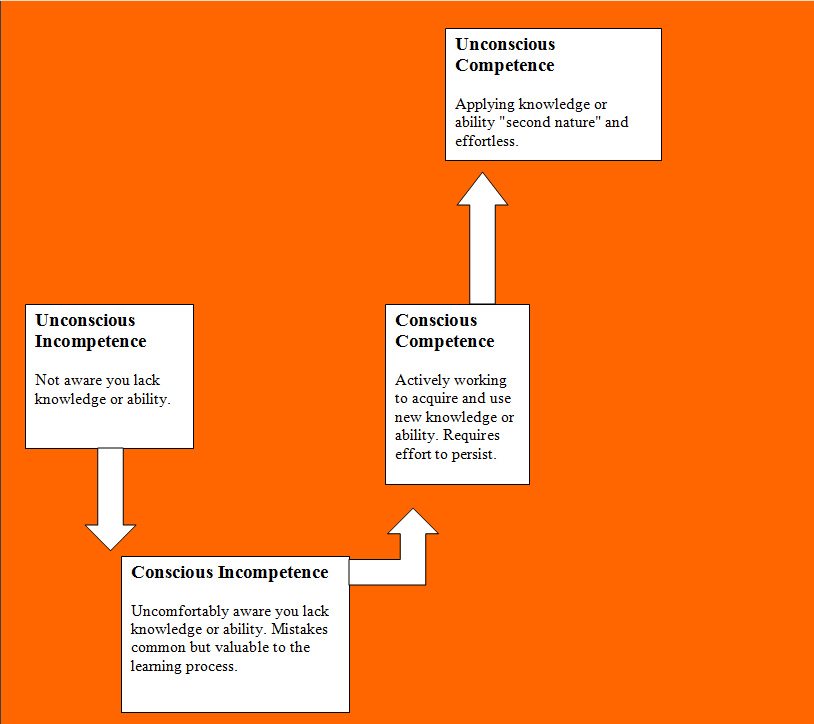
It helps to understand what’s called the four stages of competence as we learn a skill or act on new knowledge. For example, say you became aware of an issue a few years back such as sweatshop labor. You were troubled to realize how much your purchases contributed to the problem as you grabbed great deals without thinking. You were in the first stage. Finding out, becoming conscious of your incompetence, is the next stage. It can be a blisteringly self-conscious process as you struggle to figure out what you didn’t know and how to react. You’re aware of what you’ve done wrong without having sufficient tactics or information to do a whole lot better, although you try. Working to adopt new behaviors is the third stage and it requires sustained effort. For this particular issue, it might be shopping less, seeking out sustainable and local sources, thrifting, advocating for change, and more. You’ll still make mistakes, falling into old patterns when you’re stressed or rushed. The fourth stage is effortless. The knowledge and skills you once sought simply become habit.

unconscious to conscious competence, walk your talk, creating good habits,

I’m somewhere between the Conscious Incompetence and Conscious Competence in many parts of my life. Blurting out what’s on my mind before thinking. Starting projects I don’t have time to finish. Not making enough time for those projects in the first place. Worrying. Pouring another glass of wine. Not remembering conflict resolution tactics until after the moment has passed. Skipping pleasure for work when I know damn well life is to be savored. But castigating myself isn’t useful. Paying attention is.

Kids certainly do their best to assist. They have a way of spotting hypocrisy and tossing our words back in our faces. I can’t rant about a crazy driver or duplicitous politician without getting one of my adages right back at me, like, “Everyone has a beautiful gleaming soul.” Ouch. Yeah, I believe it but don’t always feel like applying it. I have all sorts of standards I don’t entirely live up to. That’s okay, it’s a process.

Those four stages aren’t comfortable. That’s just who we are, people continually unfolding. We make mistakes, struggle, and slowly grow to new ways of being. Even our small personal changes make a difference to the larger reality. I’ve spent a lot of time teaching courses on non-violence. When I work with teens, many weeks into our time together, we start talking about what is important to us. Everyone has strong opinions, everything from “being respected” to “making the planet a better place.” Then they come up with how to live that in their daily lives, from acting in ways that draw respect to making decisions that benefit the ecosystem. When they’re ready, I get out permanent markers and we write on the soles of our feet, reminding us to walk our talk.

That’s why I want to remember Richard Enty. He knows it’s easier to mandate how others should behave rather than follow it ourselves. He’s walking his talk even if it costs him five day’s pay and more public attention than he expected. He seems fine with that. I bet it’ll help him move on to the next stage.

Do you see yourself in Enty’s story? How are you trying to walk your own talk?

40 Ways Kids Can Volunteer, Toddler to Teen

teen volunteering, family service projects, service learning, young children can volunteer, family volunteering, kid volunteers,

“How wonderful that no one need wait a single moment to improve the world.”  Anne Frank

When we make service work a normal part of our lives we don’t simply teach our children strong core values, we demonstrate these values in action.

Often volunteering isn’t “official.” A family does yard work and errands for a housebound neighbor. Or they compile information and pass out fliers to get a safety initiative passed through city council. Or they put on a garage sale and donate all the proceeds to benefit a local shelter. They are making the community a better place through their own efforts. The side effect? They give their children a wonderful dose of can-do attitude.

When families reach out to help others, their children learn that this is a natural response. After all, the word “humane” is a variant of the word “human.” The definition of “humane” includes demonstrating better aspects of the human character such as kindness and compassion and showing respect for other people’s views. The word used to define us also describes the qualities essential to forging a society based on mutual regard.

And science tells us that giving makes us happy, from toddler on up.

There are many creative ways to volunteer based on local needs and your child’s interests.

1. Regularly visit a “grandfriend” at a nursing home, assisted living facility, or in the neighborhood. Play card games, do crafts together, teach each other new skills, make up stories, exchange advice, and build a real connection.

2, Volunteer to deliver Meals on Wheels in your neighborhood, perfect for parent and young children.

3. Raise a service dog, typically a puppy training commitment of two years. There are many organizations. Here’s a partial list:

4. Grow vegetables and offer extra produce to people who don’t have space to garden, to new parents who don’t have time to garden, to a hunger center.

5. Set up a playgroup for babies at your local nursing home or assisted living facility. This is something I did, which started a family tradition of getting kids involved in the community.

6. Have little kids draw special pictures. Use these as wrapping paper, tucking inside them a piece of wrapped candy or silk flower, along with a note like “thanks for being so nice” or “you made my day.” Then keep these in the diaper bag and when you’re out together, stay on the lookout for a nice cashier, helpful librarian, or kind friend to hand out a surprise package. It cues kids to see goodness everywhere.

7. Let little kids offer popsicles to garbage truck workers. For more ways the smallest kids can engage in acts of kindness, check here.

8. Create ways to share with your neighbors, from a toy swaps to co-ops. Consult the Center for a New American Dream guide and any of the great guides offered by Shareable.

9. As a family or with a group of kids, develop a program to present at a nearby library, daycare, or community center. It might be a puppet show, play, or craft project. Or get your dance class, choir, or martial arts school to give a demonstration at such places.

10. Form a band or acting troupe with friends and give free performances.

11.  Make some no-sew dog toys for animals in shelters using inexpensive fleece remnants or old torn jeans. Use old blankets, pillows, or fabric remnants to make pet beds for shelters. Ask if you can volunteer to walk dogs. Raise funds to buy food, litter, and other items the shelter needs. And consider adopting a rescue animal. There are rescue organizations for all sorts of companions, from horses to hamsters.

12. Do errands, cook for or otherwise help out a someone dealing with an illness.

13. Pick up litter in your neighborhood or wildlife area. It’s safest to do this wearing gloves and using a pick up tool or a reacher. Put each piece of trash in a box or garbage bag, then recycle or throw away when you’re done.

14. Protect natural, cultural, and historical resources by volunteering for the National Park Service Youth Conservation Corps (age 16 and up).

15. Work on sets, distribute tickets, usher patrons to their seats, or perform for your local community theater.

16. Learn rehabbing skills while volunteering with Habitat for Humanity. Rules may vary, in our area older kids can volunteer along with a parent or guardian.

17. See if your local food shelter will let families work together to stock supplies in the facility. Or more directly set tables, serve beverages, and clean up free meals. If not, you can raise funds to donate food. We know a family that twice-monthly cooks an entrée for 15 people, along with several other families cooking the same entrée, so it can be served that evening at a free dinner offering.

18. Walk dogs, collect mail, shovel snow, or rake leaves for someone in your neighborhood who needs the help.

19. Serve as unofficial welcoming friends for immigrants who could use help navigating unfamiliar streets and who need assistance learning the customs and colloquialisms that aren’t in any handbook. Check to see if your area has a resettlement agency, immigration project, or faith-based program available.

20. Repair and donate such items as toys, household items, bikes, or computers.

21. Volunteer with Red Cross Youth Services through your local Red Cross branch. And make sure kids and parents take a CPR/first-aid course so everyone is ready to volunteer lifesaving services if necessary.

22. Write letters to deployed service members. For more snail mail ideas, check out 38 Unexpected Ways to Revel in Snail Mail.

23. Produce a neighborhood newspaper or e-letter.

24. Volunteer to help out with Special Olympics.

25. Connect with teens around the world through Unicef-sponsored Voices of Youth.

26. Certify your backyard, even your apartment balcony, as a wildlife garden through the National Wildlife Federation.

27. Greet new people on your street with a small gift such as a houseplant or plate of cookies.

28. Network with other young people working on causes and get small grants to fund your project through Do Something.

29. Certify your dog as a therapy dog to volunteer in hospitals and schools.

30. Form a Peace Jam club and work on positive projects together. (pre-teen, teen)

31. Adopt a town monument and keep it clean.

32. Volunteer to help your library run an Edible Book Festival.  For more library-related service ideas, check out Celebrate Hug Your Librarian Day.

33. Make treats and deliver them to your local police or fire station.

34. Volunteer as a family to help at a Ronald McDonald House in your area.

35. Make warm scarves to donate. Collect clothing, blankets, toys, disposable diapers, and personal care items and donate to homeless shelters.

36. Get involved with Youth Volunteer Corps.

37. Plant extra seeds and share the plants. You might set up a seed or a plant exchange in your 4-H club, church, or other organization.

38. Organize to build a playground in your neighborhood.

39. Earn a President’s Volunteer Service Award for your volunteer work. People of all ages can sign up, track their hours, and search for volunteer opportunities through United We Serve.

40. Earn the Congressional Award, which recognizes initiative by American youth in four self-determined goals areas: Volunteer Public Service, Personal Development, Physical Fitness and Expedition/Exploration. The award is earned individually or with friends, at one’s own pace. 

Portions of this post are excerpted from Free Range Learning.


Many More Ideas 

The Giving Book: Open the Door to a Lifetime of Giving

The Busy Family’s Guide to Volunteering: Do Good, Have Fun, Make a Difference as a Family!

The Kid’s Guide to Service Projects: Over 500 Service Ideas for Young People Who Want to Make a Difference

The Teen Guide to Global Action: How to Connect with Others (Near & Far) to Create Social Change

It’s Your World–If You Don’t Like It, Change It: Activism for Teenagers

A Kids’ Guide to Protecting & Caring for Animals: How to Take Action! (How to Take Action! Series)

77 Creative Ways Kids Can Serve

How to Be an Everyday Philanthropist: 330 Ways to Make a Difference in Your Home, Community, and World – at No Cost!

Playborhood: Turn Your Neighborhood Into a Place for Play

The Great Neighborhood Book: A Do-it-Yourself Guide to Placemaking

Getting Science On Everything

raising scientists, toddler science, teen science, unschooling science, supporting kids' curiosity, science at home, science happens naturally,

crystals of vitamin B6 ( CC by 3.0 Josef Reischig)

 We spread thick layers of science on everything at our house. Yes, occasionally it smells.

Sometimes our science-y obsessions are entirely nonsense, such as a typical dinner table conversation about how many citrus batteries it might take to start a car. Ideas were proposed for this never-to-occur project, including the use of lemon juice instead of whole fruit.

Sometimes that science is pseudo-educational, such as the time we swabbed between our toes and let the bacteria grow in petri dishes. The “winner’s” dish had such virulent growth that she felt sure it deserved to live. She gave it a name and tried feeding it extra glucose and agar. It quite effectively kept her siblings out of her room. I insisted she throw it away when it began creeping past the lid. I am still blamed for the demise of this biological fright.

encouraging young scientists, love of science starts early,

Sometimes it goes on and on. My offspring seem driven to find out. They can’t spot a spider without observing it, wanting to identify it, and then going on about the hydraulic features that are basic arachnid operating equipment. Then there was a certain months-long project that involved observing and sketching the decomposition of a muskrat. They have to discuss all possible angles of a problem, often in such depth that my far more superficial mind drifts off. They tend to walk into a room announcing odd factoids which invariably leads to strange conversations about recently de-classified Russian research, turbo charged engines, or riparian ecology. Or all three. They insist I look at video clips that go on much longer than my attention span. Woe to me if I question a postulate put forth by one of my kids. They will entertain my doubts playfully, as a cat toys with a mouse, then bombard me with facts proving their points. Lots of facts. I’ve tried to uphold my side in science disputes but it’s like using a spork to battle a light saber.

making math relevant, raising young scientists,

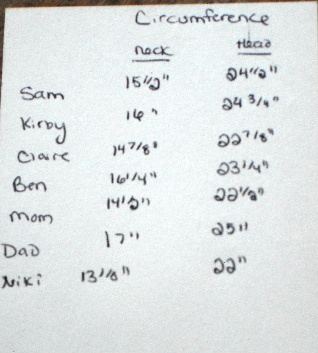
Other family homes probably have video game controllers. Our house has stacks of books and periodicals (who took the neutrino issue of New Scientist, someone yells); tubs overflowing with one son’s beakers, tubing, and flasks; culturing products in the kitchen (like the jar with a note that says “Leave me alone, I am becoming sauerkraut”); and random sounds of saws, welders, and air compressors as something entirely uncommon is being constructed or deconstructed. I know other families have nice normal pictures on their refrigerators. Ours tends to post odd information. The longest-running fridge feature here is a card listing the head circumference of every person in the family. By the time the youngest was 11, my head was the smallest.

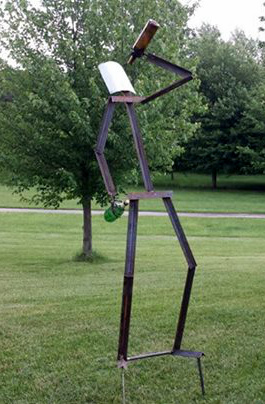
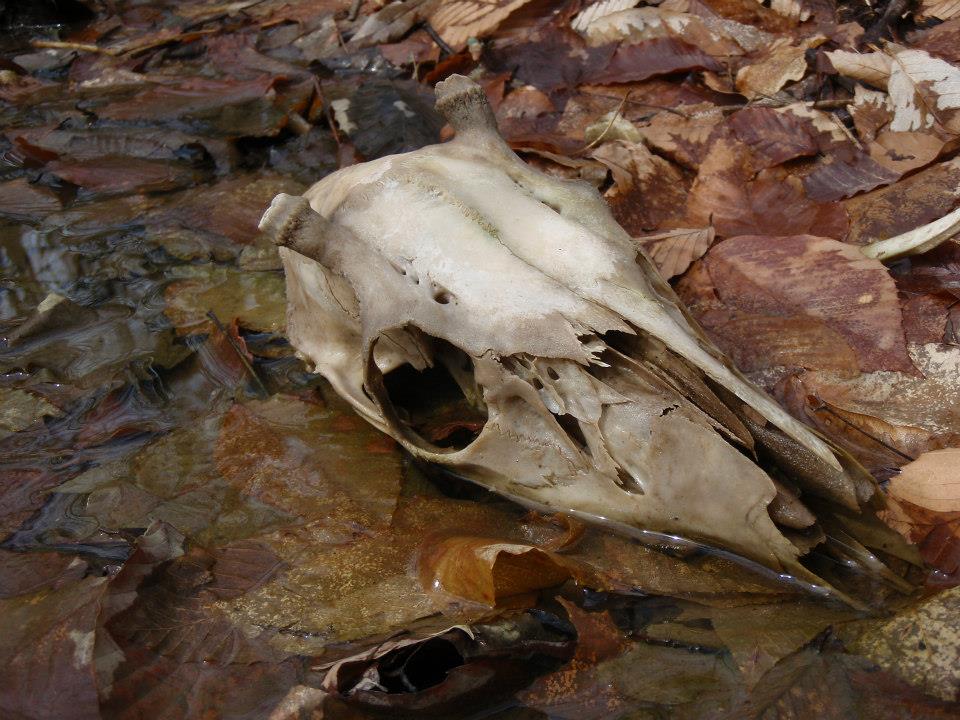
And then there’s the front yard. By the garage door a headstone leans. It has nothing to do with Halloween. Our youngest is teaching himself stone carving using hand tools. This stemmed from his interest in ancient Norse language and myth and lifestyles. That led to a study of runes, leading to old runic carvings, well, you get the idea. He’s already carved runes in a few stones. So of course his brother got him a headstone as a birthday gift. Entirely natural. Also in the yard, a giant sculpture another son welded out of scrap metal. He’s never taken a welding course, or an art course for that matter. No problem. He measured his own limbs to translate into the correct human form. He thought it was funny to make it a two-fisted drinker. I’m plotting to put a trumpet in one of the metal man’s hands so it looks like a rowdy jazz player. And recently my daughter spent the afternoon in front of the house cleaning an entire deer skeleton she found in our woods. She was entirely happy identifying bones, scrubbing, and assembling it into the likeness of a very hungry  deer. Maybe our front yard is why our mail carrier seems a little wary.

raising scientists, natural curiosity makes scientists,

Science shouldn’t be confined to a formal study. My husband and I have never worked in science fields. But we’ve found that keeping scientific curiosity alive isn’t hard.  It’s about an attitude of “yes.” Projects that are messy, time-consuming, and have uncertain outcomes are a form of experimentation. They are real science in action. When a kid wants to know, they want to find out. Not later, not next week, right away. Finding out is engaging. It leads to ever widening curiosity. In our family this process of discovery-to-mastery started early.

When my oldest was just a baby he was horrified by vacuums. Even the sight of one made him scream with This Will Kill Me volume. So we let him learn he could control the “off” and “on” switch. His horror turned to fascination, leading him toward ever greater curiosity, heading in all sorts of directions.

When my daughter was barely able to walk, around 11 months old, she was fascinated by the stones at the end of our driveway. Day after day she wanted to toddle close to the street just to pick up those stones. It occurred to me that it would be a lot easier to satisfy her curiosity than to keep saying no and turning her back toward the house. So she and I went there together and sat in those stones. She was enthralled. I marveled at all the different ways she chose to experience them. Holding, dropping, picking up one at a time then picking up handfuls, handing them to me and taking them back, rubbing the smooth ones and, once I showed her, holding them up to the light. Sometimes she’d raise a stone to her mouth, then shake her head, reminding herself that stones weren’t for eating. Once or twice a stone did touch her lips. The result? I told her we were all done, picked her up, and went back to the safety of the lawn near the house. She remembered. I let her investigate stones day after day until she was done, her desire to know satisfied.

When one of my boys was three he was entranced by the lighters and matches his grandmother used to light her cigarettes. Since she lived with us and on occasion unintentionally left those fire generating devices out, his intense curiosity concerned me. He knew that children shouldn’t touch anything that makes fire, but he was so intensely curious and active (I’ve already described his chimpanzee-like abilities as a toddler) that I knew it was a matter of time before her forgetfulness might collide with his need for some hands-on experience. So, explaining this was only okay to do with an adult, I stood him on a stool at a sink full of water, letting him light match after match to drop in the water. He was a little afraid. His fingers were almost singed a few times. He also conquered the fascination with flame that compelled him to disobey. He asked a few times over a period of months to do this again. Then he was done. Warming about danger doesn’t have the same effect as a child getting close enough to know that matches do burn but can be conquered in the presence of a parent.

Some experiments shouldn’t have happened.  One of my little boys quietly carved a small hole in the drywall of his closet, then attempted to spackle it with the unlikely combination of toothpaste covered by an ostrich feather he’d saved from a field trip. We didn’t discover it until we were emptying that closet as he packed for college. We still laugh about that one.

My kids are much more science-savvy than I’ll ever be, but more importantly, they’re capable of discovering anything they want to know.

Feeding Creativity With Constraints

Learning to Love You More, creativity thrives on constraints, innovation fueled by challenges, be odd, try something new,

Maybe an unusual assignment will amp up your creativity. Perhaps:

~make a poster of shadows

~write the phone call you wish you could have

~compose the saddest song

~describe your ideal government

~plant a surprise garden

~make a documentary video of a small child

These assignments were devised by artists Miranda July and Harrell Fletcher. Their work called them to be original every day, but they realized that their most enlivening experiences came when they worked under constraints. An assignment, a challenge, even an annoyance spurred them to different, sometimes more profoundly joyous productivity.

Although we set creative people off in a special category, being creative is simply part of the human experience. You’re creative all the time. You might change your approach to a difficult neighbor, tackle a work problem from a new angle, adapt a recipe to suit ingredients on hand, make up a game to amuse a fretful child, figure out another way to do your errands when a road is closed. We have to come up with new ideas and different tactics constantly. Often they’re imposed on us by obstacles. Annoying as constraints might be, as something original comes forth in response we’re likely to feel that zing of aliveness that creativity sparks.

Constraints can actually promote creativity. A study in The Journal of Personality and Social Psychology, titled “Stepping back to see the big picture: when obstacles elicit global processing” explains that obstacles blow open the approach we ordinarily take. This even has a spill-over effect into the way we approach other challenges. As the researchers explain,

These studies show that encountering an obstacle in one task can elicit a more global, Gestalt-like processing style that automatically carries over to unrelated tasks, leading people to broaden their perception, open up mental categories, and improve at integrating seemingly unrelated concepts.

That’s why artists July and Fletcher developed a project, called Learning to Love You More, back in 2002. The idea was to encourage the general public to take on assignments, then post the results on the project’s site. The assignments are themselves a sort of constraint, forcing us to do something within new boundaries, thereby provoking a shift in perception of ourselves and the world around us. Creativity has a way of doing that.

A few years ago I wrote an article about Learning to Love You More for the Canadian magazine Geez. To prepare for the piece I did about ten of the projects; some with friends, some with my kids, some alone. Each one felt entirely odd and yet liberating. And because they were so unusual, they stand out in my memory, as we want the moments of our lives to do. Some assignments felt delightfully silly, like drawing constellations made of freckles (#9). Some felt radical, like making a public information plaque to hang at the door of City Hall (#62). Some felt fun, like creating a wind chime from a coat hanger and old kitchen utensils to hang on a parking lot tree (#15). Some felt wrenchingly poignant as I carried out the assignment, like this one.

All Holy

Assignment #63:  Make an encouraging banner. I cut a worn blanket into squares and shaped felt into letters to create a banner reading, “It’s All Holy.” The blanket was once my mother’s. The project not only re-purposed a ripped blanket but also satisfied my restlessness, as the day I spent creating the banner was the first anniversary of her death.

I hiked through the snow to hang the message outside between winter-bare trees. Beyond the banner lay our land where carefully tended free-range cows and chickens live.  On the other side, the banner’s words faced a conventional farm where animals are confined and raised on unnatural feed. I believe it’s all holy, but faith isn’t easily applied to real life. Standing there on a bright cold day with those words lifting in the breeze I could almost imagine what it would mean to live beyond concepts of good and bad, sorrow and joy, ordinary and sacred.

Somehow creativity thrives on the limitations found within the constraints of a particular challenge. One family, captivated by the Learning to Love You More project, did every assignment together. They ended up showing their work at a local gallery, giving talks titled “Art is Where You Find It and Everyone Can Do Art.”

The site is no longer listing new assignments, although previous submissions can be viewed. And the founders have put out a Learning to Love You More book. But we carry it on as long as we recognize just how enlivening challenges can be for ourselves, our kids, our creative lives.  Constraints, annoying as they may be, can push us to engage in new ways of seeing and being.

A Few Creativity Generators

16 Ways to Spark Creativity

Don’t Say It, Draw It

Throw Strangely Amusing Parties

38 Unexpected Ways to Revel in Snail Mail

7 Ways to Make Your Day More Magical

Have some ideas for quirky, fun, or heart-expanding Learning To Love You More type assignments? Share them in the comments.