Leaving Little Love Letters

mother's love notes,

Image: Ebineyland

My mother regularly wrote little love letters to her children.  They started appearing on our pillows when we could first read, at least one every month or so. Sometimes her notes would reference something we did or said but mostly they simply gushed with affirmation. Her standard ran along the lines of, “You are the nicest, most wonderful seven-year-old in the whole world.”

Her one or two sentence notes were usually written on a scrap of paper. My mother made “scratch” paper out of junk mail and school fliers. She tore paper on the fold lines, getting three pieces out of a standard letter-sized sheet. This made the flip side of her little love letters unintentionally quirky, with references to bank policy or reminders about choir practice. My brother and sister got their own notes but we never mentioned them to each other. They were a private and cherished connection between mother and child.

By the time I was nine or ten years old I wrote little love letters to her too, hiding my notes in her shoe or tucked into her jewelry box. It was easy to tell when she’d found one. She’d dole out a big hug and whisper a line I’d written back to me.  It seems these notes meant as much to her as they did to me. After she died I ran across some of them stuffed into her favorite cookbook, effusive words penciled in my best handwriting.

I know all too well that family life sometimes scrapes us like sandpaper against those closest to us. We don’t talk enough about what amuses or delights us because we’re busy saying that the towels aren’t hung up, shoes are blocking the door, and food is left out on the counter. We may also be dealing with doubts kindled by worry and annoyances that can spark into anger.

Sure, we linger over tender moments that we wish could last forever. We praise the effort (as all those relationship experts tell us to do). But there’s something special when we take the time to write down our very best feelings for one another.  A note is a tangible expression unlike any other.

I won’t kid myself that I’ll ever write as many tiny love letters as my mother wrote in her life. But today I’ll be writing a few sentences to my loved ones and hiding those notes where they’ll find them. I know there’s a sense of completion when we say what’s in our hearts.

Witty Bitching

witty bitching, creative complaining, complaint choirs,

Image: tarelkin

I write a lot about mindfulness and gratitude. These are survival skill for many of us. I’m all about being positive, but I like to kvetch as much as the next person. It’s cathartic, necessary, and downright fun as long as it’s done with good humor.

Witty bitching, expressed with some measure of sensitivity, is actually one of the many ways nonviolence works. It’s a creative way to ease tension. More importantly, it humanizes us to whoever is annoying us while not denigrating the annoying person.

Let’s start with the easiest method—swearing. Apparently swearing is a good idea. Studies show that it can help relieve pain, but only for those of us who don’t swear often. It can also reduce stress, elevate endorphins, even promote group solidarity

I don’t swear often. I lean more toward creative cursing, you know, when you string together words that don’t usually go together for a specific-to-the-situation denunciation. Better yet are those phrases unique to your friends and family, memes within boundaries of shared experience, that are not only inside jokes but useful forms of communication. We have dozens of them. “You no see big thing like train?” is one. I’ll explain.

A friend drove a truck for a business started by an immigrant whose English wasn’t easy to understand. The business made money mostly because of the owner’s extreme frugality — he barely even maintained the truck. One day the friend was making a delivery when the truck’s brakes failed. Unfortunately they failed as he was approaching railroad tracks where a train was stopped. It was a heavily loaded truck and much as he tried he only managed to slow down. He crashed into the train. He was fine, the truck was not. He called his boss to explain. The boss yelled, “What, you no see big thing like train?” This line has proven itself handy in many circumstances, thankfully none involving real trains or failed brakes.

benefits of swearing, why swear,

Then there are written forms of bitching. I indulge in it regularly. For example, a few years ago a publication that had asked me to submit an article didn’t respond. It’s hard to remonstrate the very people who are supposed to pay you. So this is what I emailed.

Dear ___,

I can take rejection, really. But it’s nice to finally get rejected. I sent as requested  _________ on ________. I know, I know, I should have given up by now but hope is a feisty creature, not easily strangled by silence.

In case the clarity and understated wit of my piece knocked an editor to the floor, unintentionally hurtling my submission under a desk, it is attached again for your perusal.  Less dusty this way.

ever optimistically, Laura Weldon

They sent a very charming response that didn’t end up quite as I hoped. Turns out they were going out of business. (Story of what I call my writing career…)

Kvetch notes can be used to great effect on a neighbor’s door, the office coffeepot, and elsewhere.

kvetch, funny complaint, witty bitching,

Then there’s singing. In my family we tend to burst into spontaneous songs with made-up-in-the-moment lyrics. A mini opera about dog poo on the floor, a whining country-ish ditty when someone uses up the milk, a warbling ode to overflowing laundry baskets. Even Mozart wrote satirical tunes, including “Leck Mich Im Arsh” which, if you can’t tell, translates to something like “Lick my ass.”

The pinnacle of witty bitching? Complaint Choirs. The concept was dreamed up by Finnish artists Oliver Kochta-Kalleinen and Tellervo Kalleinen. Now people all over the world are putting their daily grievances to music. Their collaborative performances aren’t just hilarious, they build a sense of community. 

It’s all too easy to get mired in life’s minor irritations. A little witty bitching helps us move through them. That’s a survival skill too.

Welcome Kids Into The Workplace More Than One Day A Year

role models, peer segregation, children in workplace, take your child to work day,

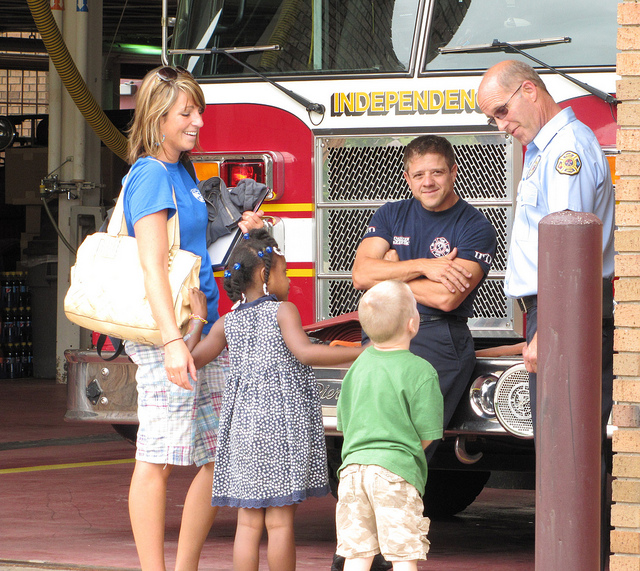
Finding out about real world work. (Clarkston SCAMP)

Twenty-some years ago, a radical idea was launched. One day out of the year take girls out of school and bring them to work for Take Our Daughters To Work Day. The practice was intended to give girls a glimpse into possible careers and break down barriers to success. From the start many parents brought both boys and girls. Then the project was officially expanded to include boys. Today it’s wildly popular. Last year 37 million people participated in the U.S. alone.

It’s hard to know how much impact one day a year has on a child’s career aspirations, let alone determine if it breaks down any barriers. According to the National Committee on Pay Equity,

The wage gap persists at all levels of education. In 2011, the typical woman in the United States with a high school diploma working full time, year round was paid only 74 cents for every dollar paid to her male counterpart. Among people with a bachelor’s degrees, the figure was also 74 cents…A typical woman who worked full time, year round would lose $443,360 in a 40-year period due to the wage gap. A woman would have to work almost 12 years longer to make up this gap.

Inequality remains firmly in place for women in business and the sciences. There are larger issues going on here, but spending more than one day a year observing the real world of work might help.

Throughout nearly all of their childhood and teen years our kids are segregated in day care, school, sports, and other activities. Even when they benefit from the very best programs, if they’re restricted to the company of same-aged peers they are deprived of the riches found through fully engaging in the larger community.

This subverts the way youth have matured throughout most of human history, when children learned right alongside people of all ages as they gathered food, built shelters, and performed every other skill necessary to sustain a community. Young people learned more than carving spears and tanning hides, they picked up character traits that would hold them in good stead through life.

Today’s kids still have the age-old desire to gain mastery in areas of interest and to model themselves after those they admire. There’s nothing like being exposed to people engaged in meaningful and useful activities to spark those desires. That’s why I’ve made a point of making sure my kids get the chance to see as much of the working world as possible. Along with members of our homeschool groups and 4-H club, my kids and their friends have gotten the chance to see, up close, the work of chemists, wood carvers, bankers, blacksmiths, forensic investigators, geologists, boomerang athletes, farmers, engineers, chefs, potters, horse trainers, entrepreneurs, and many other adults who are passionate about what they do.

Interestingly, when I’ve asked for our kids’ groups to observe or even take part in the work-a-day world people rarely turn us down. Perhaps the desire to pass along wisdom and experience to the next generation is encoded in our genes.

Age segregation goes both ways—adults are separated from most youth in our society too. After an afternoon together we’ve gotten the same feedback again and again. These adults say they had no idea the work they do would be so interesting to kids. They marvel at the questions asked, observations made, and ideas proffered by youth that the media often portrays as disaffected or worse. They shake hands with young people who a few hours ago were strangers and say, “Come back in a few years, I’d like to have you intern here,” or “We could use an engineer who thinks the way you do. Think about going into the field,” or “Thanks for coming. I’ve never had this much fun at work.”

If you want to help your kids benefit this way, here’s how to activate your knowledge networks and reconnect kids with the larger community.

April’s Energy Fingerprint

April tragedy, energy fingerprint, life energy,

image: andrewpoison.deviantart.com

April is a month for blooms unfurling and songbirds hatching. A month when gray skies turn blue. It’s a changeable month that promises new life.

Or not. A friend recently asked, “What is it about mid-April that brings so much tragedy?” She offered plenty of evidence. Even looking at tragedy specifically affecting the U.S., there’s a lot of it.

April 15

– Abraham Lincoln assassinated

– Titanic sank

– Great Mississippi Flood (1927, worst flood in US history)

-Boston Marathon bombing

April 16

– VA Tech shooting

April 17

-USS Iowa Explosion

-West Fertilizer Plant explosion

April 18

– 1906 earthquake in San Francisco

-US Embassy bombing in Lebanon

April 19

– Lethal end of the Branch Davidian standoff

– Oklahoma City bombing

April 20

– Columbine school shooting

– Deepwater Horizon explosion

Horrific events, every one. It’s entirely natural that our attention is drawn to such disasters, especially as they’re happening. Way back in prehistory, those who paid close attention when others were injured or killed were more likely to avoid the same fate. Their bodies and minds were primed with vividly awful but useful information, helping them to survive and pass along disaster-attentive genes. These days our attention is pulled toward all sorts of disasters, although the information isn’t useful in the same way. Too much attention to what’s wrong in the world, and we’re likely to end up with Mean World Syndrome.

Threat also compels us to engage our full potential, to “rise to the occasion” whatever it might be. No wonder that those who want us to marshal our resources for their own purposes try to convince us there’s a grave threat. This is done by football coaches trying to motivate teams right up to political pundits spewing angry conspiracy theories, because it works.

But rising to our full potential actually means we humans pull together in a crisis. Author Rebecca Solnit takes a close look at large-scale disasters including earthquakes, floods, and explosions in her book A Paradise Built in Hell: The Extraordinary Communities That Arise in Disaster. She finds tragedy and grief, but something else too, something rarely noticed. During and after horrific crises there shines from the wreckage something extraordinary. People rise up as if liberated, regardless of their differences, to act out of deep regard for one another. They improvise, coordinate, create new social ties, and pour themselves into work that has no personal gain other than a sense of meaning. Such people express strangely transcendent feelings of joy, envisioning a greater and more altruistic community in the making. Even those suffering the greatest misfortune often turn around to aid others and later remember it as the defining moment of their lives. This is a testament to the human spirit, as if disaster cracks us open to our better selves. Solnit says, “The possibility of paradise is already within us as a default setting.”

By some counts, mid-April leans closer to tragedy than many other times of the year. But let’s remember, this month is isn’t defined by disaster. Instead, like every moment on Earth, it’s packed with constant, unsung acts of cooperation and beauty.

I dreamed once that what each of us contribute to this world, maybe to worlds beyond, is an energy fingerprint. All our striving and accomplishments are wisps, quickly lost to time, but this fingerprint of energy remains and affects all other energy. It’s the overall attitude that matters—grateful or bitter, loving or hateful, aware or dismissive.

Whether my dream has any truth or not, I do believe that even in the midst of tragedy we can choose an attitude of hope and compassion. Anger, fear, and vindictiveness isn’t the fingerprint I want to leave.

April tragedy, April curse, energy imprint,

Image:michammer.deviantart.com

This is a repost from our farm blog

Hijab Games & Pink Shirt Days

bystander effect, stand up for others, hijab soccer, pink shirt day, anti-bullying,

“Whenever one person stands up and says, “Wait a minute, this is wrong,” it helps other people do the same.”  Gloria Steinem

A high school soccer referee barred Samah Aidah from her March 12th game because she wore a hijab, even though the association that governs soccer internationally had already lifted rules preventing players from wearing head covers.

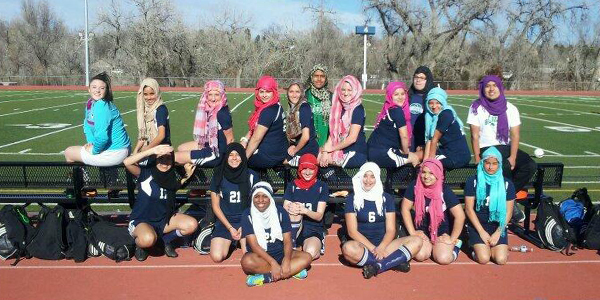
Samah’s teammates responded. At their next game, every single girl wore a hijab in playful solidarity with her.

bystander effect,

Samah Aidah and her teammates smiling together at Overland High School in Denver, Colorado
(aquila-style.com)

These girls took action rather than letting oppression go without comment. Whether they knew it or not, they followed a basic principle of nonviolence— that problems are most easily reversed at the early stages. If ignored, issues can become progressively more difficult to stop as they spiral to ever more intense levels. That’s the case whether we’re talking about so-called non-physical forms of violence such as humiliation, harassment, and prejudice. It’s also the case with physical forms of violence, from domestic abuse to war.

When people don’t intervene, assuming others will step in, they become bystanders who “permit” violence to happen. Studies show if an emergency unfolds before a group of people they’re less likely to take action, basing their decisions on the behavior of those around them. This is called “diffusion of responsibility.” If that same emergency presents itself in front of one person, that person is more likely to take action. We’ve all heard of these situations precisely because they’re so heinous.

Social scientists who study intervention in violent situations know that when others object or actively get involved their efforts tend to slow or stop the violence. Dr. Ervin Staub, who survived under Nazi rule, reports in The Roots of Evil that genocide perpetrated by the Khmer Rouge in Cambodia and the Nazis in Germany started with prejudicial statement and small acts of repression. Oppressors test the response, only escalating to greater atrocities once they determine that bystanders will allow to them continue. It requires the willingness of uninvolved people to step in, advocating for the victim or victims, in order to halt the escalation of violence and to uphold the common good. Such actions empower the victim and reduce the power of the aggressor.

We tend to believe that we’ll have the moral courage to speak up and help when someone is suffering. But when something happens we usually have only an instant to respond, either we listen to our doubts and turn away or step outside our comfort zone to intervene. What makes it more likely that we will help?

1. A sense of commonality with people who are unlike us is important, letting us see beyond “us versus them” and prompting us to act with empathy.

2. Past experience reacting positively in a crisis leads people to do so in the future. In that case, the girls wearing the hijab to support their teammate not only made the current situation better but also primed themselves to act compassionately next time it’s necessary.

3. People who feel freer to defy the norms and who are able to think for themselves are more likely to help. Pluralistic ignorance (going along with the crowd) dampens a person’s compassionate response.

That’s why learning about nonviolence is so important, because it gives us a background on which to base our actions.  For examples of individual bystanders who stepped up to make a difference, check out the heartening real-life examples in this piece:

How To Get Involved When It’s None of Your Business

And let’s enjoy another example of young people choosing to go beyond being bystanders.

A few years ago a new freshman arrived at a Nova Scotia high school on the first day back to class. He was wearing a pink shirt. Several students mocked him and threatened to beat him up.  No one intervened. But two senior boys heard about it and decided to respond. They bought dozens of pink shirts at a discount store, emailing their friends to let them know they’d be handing them out the next day. The news spread and hundreds of students showed up the next morning already wearing pink shirts.  The bullying stopped and now Pink Shirt Days are held yearly in many schools to spread awareness about bullying.


Resources

books

Above All, Be Kind: Raising a Humane Child in Challenging Times by Zoe Weil

Keeping the Peace: Practicing Cooperation and Conflict Resolution with Preschoolers by Susanne Wichert 

The Bully, the Bullied, and the Bystander: From Preschool to HighSchool–How Parents and Teachers Can Help Break the Cycle by Barbara Coloroso

Why Good Kids Act Cruel: The Hidden Truth about the Pre-Teen Years by Carl Pickhardt

Born to Be Good: The Science of a Meaningful Life by Dacher Keltner

Calm and Compassionate Children: A Handbook by Susan Dermond

books for kids

Bystander Power: Now with Anti-Bullying Action  by Phyllis Kaufman Goodstein

Just Kidding by Trudy Ludwig

My Secret Bully by Trudy Ludwig

Stand in My Shoes: Kids Learning About Empathy by Bob Sornson

Speak Up and Get Along!: Learn the Mighty Might, Thought Chop, and More Tools to Make Friends, Stop Teasing, and Feel Good About Yourself by Scott Cooper

other resources

Erase Bullying videos

Stop Bullying site


A Dozen Ways To Revel In Poetry

poetry fun, celebrate poetry, exquisite corpse, traveling poetry, set poems free,

It’s all about how the letters are arranged. (mosswaterss)

1. Leave poems where they’ll be discovered. Write a poem on the sidewalk with chalk, crayon it on your child’s lunch napkin, tack it on your market’s public notice board, or tuck it into a friend’s coat pocket.

2. Pull a poem from a hat. Romanian poet Tristan Tzara was denounced by his fellow Surrealists when he proposed making a poem by pulling words from a hat. Try the “Dada Manifesto on Feeble & Bitter Love” method.

Take a newspaper. Take some scissors. Choose from this paper an article the length you want to make your poem. Cut out the article. Next carefully cut out each of the words that make up this article and put them all in a bag. Shake gently. Next take out each cutting one after the other. Copy conscientiously in the order in which they left the bag. The poem will resemble you. And there you are—an infinitely original author of charming sensibility, even though unappreciated by the vulgar herd.

3. Dine with poetry. Linger over some beautiful lines as you savor each mouthful.  The poems don’t have to be about food, but that can add to your pleasure. Find a rich assortment in The Hungry Ear: Poems of Food and Drink edited by Kevin Young and in Appetite: Food as Metaphor: An Anthology of Women Poets edited by Phyllis Stowell and Jeanne Foster. Or let these poems nourish you.

~”From Blossoms” by Li-Young Lee

~”Perhaps the World Ends Here” by Joy Harjo

~”Love Poem with Toast” by Miller Williams

~”The Invention of Cuisine” by Carol Muske-Dukes

~”Onions” by William Matthews

4. Sign up for poem-a-day sites. This month my wonderful library system is offering 30 days of poetry by email, featuring the work of local poets along with prompts for your own work.  You may also want to subscribe to Poetry Daily.

5. Watch poetry-infused movies.

6. Play Exquisite Corpse. This strangely fascinating game was created by the Surrealists in Paris. To play with several people, each person writes a phrase on a sheet of paper, folds the paper to conceal the words, and passes it on to the next player to contribute the next line. Each participant must be unaware of what the others have written, thus producing an absurd but often delightful poem.

7. Let yourself fall in love with spoken word poetry. 

~”Human the Death Dance” by Buddy Wakefield

~”Drunk Text Message to God” by George Watsky

~”OCD” by Neil Hilborn

~”Shrinking Woman” by Lily Myers

~”Accents” by Denise Frohman

~”Place Matters” by Clint Smith

8. Go on a poetry diet.

9. Set poetry books free. Leave them where strangers can find them, perhaps a coffee shop, a hospital waiting room, a dentist’s office, a barber shop, or a muffler repair shop’s waiting room.  If you’d like, register them with BookCrossing.com to see where they travel.

10. Take a poem into nature. It doesn’t have to be wilderness, simply under a tree or near water, and the poems don’t need to reference nature although these do.

~”Catechism for a Witch’s Child” by J.L. Stanley

~”The Silence of the Stars” by David Wagoner

~”The Seven of Pentacles” by Marge Piercy

~”Sometimes” by Sheenagh Pugh

~”Hum” by Mary Oliver

11. Hang on to poetic life lines. Some lines read long ago wait in our memories, rising to awareness at just the right time. The Academy of American Poets offers some time-honored life lines.

This line by art historian Bernard Berenson came to my mind recently as a friend struggled with cancer.  “I would have stood at street corners hat in hand begging passers by to drop their unused minutes into it.”

12. Curate a collection of your favorite poems. If a poem truly resonates with you, save it. Print such poems out out and paste them in a lovely scrapbook, or copy them by hand in a journal, or calligraph them on fine paper, or (as I do much less artfully) keep them in a word doc. After a few years you’ll have a highly personal, completely invaluable collection.

A Slanty Line Approach To Learning

slanty line principle, Bernie DeKoven,

Image: feigenfrucht.deviantart.com)

 Playfulness guru Bernie DeKoven is an amazing guy. His new book A Playful Path brims with wisdom and an irrepressible spirit of delight. It’s so good I think everyone needs a copy as a reference book on How To Be Human. 

He cheerfully agreed to let me publish this guest post. Thanks Bernie! 

Bernie DeKoven wonders if you’re having fun (deepfun.com)

Bernie suggests having fun (deepfun.com)

There’s an elegant model, called the “Slanty Line” principle, developed by physical educator Muska Mosstonxiv that puts the concept of individually negotiable challenge very clearly into practice.

If you’re a Phys Ed teacher, one of the things you do with kids is help them develop their high-jumping skills. In “non-adaptive” Phys Ed, the way you did this was to hold jumping contests. You’d hang a high bar horizontal to a certain height and everybody would have to take a turn jumping over the high bar. If they succeeded, they’d get to the next round, and the high bar would be raised. The contest would continue until only one person was left. That person would be lavishly praised as the one who established the high jump record for the class.

The problem with this kind of competitive incentive structure is that the kids who need the most practice are the kids who get to jump the least often. The worse they are at jumping, the sooner they’re out of the game.

Try this. Make the high bar diagonal rather than parallel to the ground. This lets everybody jump over any part of the high bar and take as many turns as they want. And what do you get?

Instead of the teacher, each kid sets his/her own challenge. The jumpers who are not so good at jumping can still jump across the high bar as many times as anyone else, they just cross at a lower point. And, when they feel the need to increase the challenge they can just station themselves at a higher part of the high bar.

No one is eliminated. No one is given prizes. Everyone wins. Repeatedly.

Slant the high bar and the authority rolls right out of the hands of the teacher, out of, actually, any one body’s hands, into everybody’s. The challenge (jump as high as you can, and then jump higher) remains the same, but the challenger has changed. It’s not the Phys Ed instructor who increases the challenge, it’s the kids, themselves: the kids as a group, and the kids, individually.

A challenge that is determined by the individual player is more complex, because it requires “reflective action.” The player must evaluate not only his or her own success, but also the success of the challenge. And even though kids can get very competitive, the challenge is ultimately self-selected, ultimately guided by sheer fun.

Without an external evaluator, each kid can devise and revise the challenge. Of course, evaluation is going on, and whether the competition is inner-directed or outer-directed, the fact is that the teacher, your fellow jumpers (both higher and lower), your inner referee; somebody is evaluating your performance, challenging you to challenge your self.

Ideally, each kid should be seeking out his/her personal level of flow, driven by the natural desire for complexity into a deeper and healthier engagement with the relationships between the human body and gravity. But, in fact, there’s still something about the way the task is framed that draws the kids apart.

Even though nobody’s eliminated, even though everyone’s free to increase or decrease the challenge, even though you don’t even have to take turns, the fact is that the challenge is directed towards the individual. With the focus on individual performance, on how high who jumps; the relationship is fundamentally the same.

And what’s worse (or more complex), someone might be attaching meaning to your performance, as if how high you can jump says something about your character!

So, what if we completely redirected the challenge, away from the individual and towards the group? What if the entire class tried to jump holding hands? Or with their arms around each other’s shoulders? Or each other’s waist?

Shifting the focus of the game away from what they can do individually (ME), we focus, also, on what the kids can do together (WE) – on collective as well as individual performance.

To jump the Slanted Bar together, we need to make sure that each individual kid is going to make it. Even though the challenge is to the group, there are still plenty of challenges to the individual player. Each has to be stationed at the appropriate part of the high bar: too high and you might not get over, too low, you might make it harder for someone else. Each has to be able to ask for help, and provide help. Preparing for the big jump, synchronizing the preparatory, simultaneous squat, each individual is doubly challenged. And yet, not competing. Same slant, same task, but fundamentally shifted experience.

Raising the high bar, you intensify the competitive relationship between the diminishing few. The game, internally and externally, becomes one of increasingly isolated MEs (the “winners”) against an increasingly disempowered WE.

Slant the High Bar, and the relationship relaxes, becomes supportive, empowering, healthy, ME\WE.

self-regulating learning,

Image: excess1ve.deviantart.com

Stock Photo Bias: Youth Version

bias against kids, child stereotypes,

Search for “kids learning” stock photos. Image: bigstockphoto.com.

Female images typically found in stock photos are airbrushed models posing in starkly stereotypical scenes: sexy domestic, sexy business, and sexy-wearing-a-hardhat. These images have a great deal to say about societal perceptions of women and girls.

That’s why it’s good news that Getty Images is releasing the Lean In Collection. Their library of more than 2,500 images shows women and girls in real and powerful roles.

However, there’s another stock photo bias. Back in 2010 while layout for my book Free Range Learning was being finalized, the editors allowed me to choose the photos that would appear every few pages. I delved into the stock photo world expecting to find a whole range of relevant images, such as kids exploring nature, engaged in make-believe, being silly, spending time with people of all ages, you know, being kids. Because the book’s topic is homeschooling and alternative education, I also wanted to avoid images of young people in instructional settings (indoors or out).

No matter what search terms I tried, I kept coming up with the same limiting choices. Any variation of “learning” produced classroom-type results as well as endless photos of kids facing computer screens. It was extremely difficult to find representations of kids volunteering, doing chores, or engaged in any other purposeful work. It was even more impossible to find kids in mixed age groups (babies to elders) doing anything other than staring right at the camera with the fake merriment that seems to infest stock photos.

And gender bias was blatant. For example, any search term including “boys” showed many more active images than the same search term including “girls.” When I tried to find photos specifically of teenaged girls, the results  were downright alarming. Page after page showed two categories: grimly pensive faces or, more often, coy come-on faces.

Is this how our young people are seen?

Of course, there are many ways to measure limitations and bias. (I’m particularly fond of the way Sociological Images juxtaposes images with analysis.) And there are many filters through which the world is shown us. The filters themselves don’t just affect our perception, they affect the very people they intend to portray. Stock photo images and other portrayals of youth in our culture don’t come close to showing the vibrantly whole lives around us.

As for my efforts, I gave up after several days of bleary-eyed searching. I didn’t pick any stock photos for my book. Instead, I asked people from around the country to contribute pictures of their kids doing all sorts of things. The images are small and low res, but they’re a far more valid representation of today’s young people.

Links & Updates 3-18-14

I’ve been emerging from my hermit world a bit more lately. I blame it on birdsong, extra sunlight, and roads that are no longer chronically icy. Already, the first crocus!

Lately I’ve been giving a series of author talks through the Cleveland-area Cuyahoga County library system. Everyone who has attended so far has been full of questions, ideas, and anecdotes about their own family’s learning journey. I say “everyone” as if crowds have shown up. That’s not the case. Just a few people, six in the last session. That may be due to library systems’ cut-backs, leaving no money for fliers and publicity for such programs. Or it may be that this particular metropolitan area does not want to talk about learning of the free ranging sort. That’s fine too.

I was honored to discover that one woman, a fellow writer and a homeschooling parent, wrote a post about what she took away from my talk on her site Raising Lifelong Learners. Colleen, you made my day. No, my week!

There are three more talks scheduled. I’d love it if you’d spread the news.

Brecksville, Tuesday March 25th at 7 pm

Parma Snow, Wednesday April 23rd at 7 pm

North Royalton, Wednesday May 21st at 7 pm

Poetry-wise, a few extra joys. One of my poems appeared as the mindfulness poem of the day on A Year of Being Here.

I also wrote a guest post for BoneSpark about a writing prompt I recently learned (with the poem that prompt prompted).

Hope

100% Renewable Energy Is Feasible and Affordable, According to Stanford Proposal. Researchers have developed detailed plans for each state in the union to move to 100 percent wind, water, and solar power by 2050 using only technology that’s already available. The plan doesn’t rely, like many others, on dramatic energy efficiency regimes. Nor does it include biofuels or nuclear power, whose green credentials are the source of much debate.

I got to interview Andrea Crosta, the founder of WildLeaks. This non-profit organization provides a secure, anonymous platform so whistleblowers can report wildlife and forest crimes happening anywhere in the world. They’re already at work facilitating investigations and prosecutions made possible by tipsters. Bookmark the link to WildLeaks, because you never know when you’ll have the chance to make a difference.

Merriment

Here’s a peek inside the intelligently witty site The Man Who Is Not My Mother. It’s basically observations from a baby’s point of view, if that baby spoke in the droll manner of a seething aristocrat.

A perfect depiction of complex carbs, by artist Gemma Correll.

Okay, I may be teetering over the rudeness cliff, but I find delightful inspiration in the obituary Walter George Bruhl Jr. wrote for himself. Maybe we should jot down a few lines for our own obituaries? Here’s a sample of his:

Walt was preceded in death by his tonsils and adenoids in 1935; a spinal disc in 1974; a large piece of his thyroid gland in 1988; and his prostate on March 27, 2000.

Wonders

Ever since I read The Secret Life of Plants I’ve been fascinated with plant intelligence. Some of that book’s assertions have been denounced, but evidence keeps showing up that provide a glimpse into a world far more complex than we might imagine. Like this study. published in The American Naturalist, which found evidence of decision-making by European Barberry (Berberis vulgaris) plants.  The authors write, “Ecological evidence for complex decision making in plants thus includes a structural memory (the second seed), simple reasoning (integration of inner and outer conditions), conditional behavior (abortion), and anticipation of future risks (seed predation).”

If you want to delve deeper into this obsession there are some great books available, from the science-y to the mystical.

Mycelium Running: How Mushrooms Can Help Save the World

The Secret Garden: Dawn to Dusk in the Astonishing Hidden World of the Garden

The Secret Teachings of Plants: The Intelligence of the Heart in the Direct Perception of Nature

Oh, and we’re all cousins. Check out the charts on Wait But Why. I think we should plan a planetary-wide reunion weekend….

I Heckle, You Heckle, Let’s All Heckle

heckle, roots of word heckle, change the world,

I just got back from a workshop teaching us how to research injection wells for a citizen’s audit project. It’s boring and difficult. I’m appalled when I look closely at the data. I don’t want to do it, although I will because we’re currently mired in a struggle over fracking.

That may not be your issue but of course there are plenty of others that jab at our consciences. Drone strikes, refugees, melting polar regions and burning rainforests, poisons in our food, toxic tactics wielded by the powerful. The list goes on and on. We feel like screaming in the streets, but there are bills to pay and meals to make.

I haven’t thrown open my window to yell, “I’m mad as hell and I’m not going to take it any more.” But I want to affirm the heckling all of us do. These days the word “heckle” has entirely negative connotations. It conjures up images of rude people who interrupt performers and ruin the experience for everyone. Instead, lets hop on a wagon to the past where this word meant much more (as explained by Mark Forsyth in The Etymologicon).

Heckling originally referred to the process of combing sticks, burrs, and knots from sheep’s wool so it could be spun into usable fibers. Sheep tend to ramble around without any concern for fleece-related loveliness, so this is quite a task.  People who did the combing were naturally called hecklers.

Back in the eighteenth century, the wool trade flourished in the town of Dundee, Scotland. Hecklers worked long hours together. In the morning as they set to work heckling, one of their fellow hecklers read aloud from the day’s news.  There was plenty to read, since this was an era when all sorts of publishers put out lots of newspapers, broadsheets, and handbills. The hecklers were thus well-informed in many subjects.

When politicians and power brokers of the day addressed the public, the hecklers combed over their speeches as thoroughly as they combed wool. They raised objections, pointed out contradictory facts, called people to account for their behavior. In other words, they heckled. These hecklers formed what would now be called trade unions, using their collective efforts to bargain for better pay and perks. They also stirred up awareness of worker’s rights while empowering ordinary people to speak up against injustice.

Hecklers were people who were knowledgeable and alert to hypocrisy. They were aware how easily something nasty can snag what’s useful into uselessness until it’s pulled free, no matter how arduous and smelly the process.

Heckling is a potent way to question the powerful. Over the centuries the term implied thoughtful questions from the audience which a speaker would answer before going on. In parliamentary proceedings it remains a method of engaging in open discourse with a speaker by someone who isn’t entitled to the floor.

Nearly everyone I know is actually a heckler. We’re well-informed. We care. We lean toward positive change, willing it into being by our words and thoughts as well as our actions.

The poet Lawrence Ferlinghetti joins other writers and thinkers who claim the masses are sheep, as he does in this evocative poem.

PITY THE NATION
(After Khalil Gibran)

Pity the nation whose people are sheep
and whose shepherds mislead them.
Pity the nation whose leaders are liars,
whose sages are silenced
and whose bigots haunt the airwaves.
Pity the nation that raises not its voice
except  to praise conquerors
and acclaim the bully as hero
and aims to rule the world
by force and by torture.
Pity the nation that knows
no other language but its own
and no other culture but its own.
Pity the nation whose breath is money
and sleeps the sleep of the too well fed.
Pity the nation—oh pity the people
who allow their rights to  erode
and their freedoms to be washed away.
My country, tears of thee
Sweet land of liberty!

With respect to Mr. Ferlinghetti, I disagree. His poem is packed with truth but it doesn’t acknowledge how these exact circumstances also propel people to deeper understanding and stronger commitment to change.

I see eyes opening. I see loving hearts broken by Earth’s sorrows, knitted back together with hope. I see the sort of consciousness rising that wakens more and more people.

We aren’t the sheep. We’re the hecklers.

social change, heckler,

Heckling combs. Image: nimpsu.deviantart.com