Help Kids Learn About Business & Finance: 60+ Resources

money smart kids, teaching kids about money, finance education, financial literacy, young entrepreneurs,

“Money often costs too much.”—Ralph Waldo Emerson

 Our society is preoccupied with money, but on the most superficial level. The meaning underlying monetary choices is rarely discussed. Still, right now, we have a profound impact on our children’s attitudes about finances and spending. It’s useful to take a close look at the wisdom behind the choices we demonstrate to them.

Do our spending decisions reflect our values?

Do our careers foster our own abilities?

Who are our financial role models?

What does it mean to have enough?

Do we have ample time for our families, for activities we enjoy, for quiet reflection?

In Your Money or Your Life, authors Joe Dominguez and Vicki Robin redefine a transaction we take for granted, working. They describe it as trading life energy for money. That life energy is subtracted from the hours we have to live. The same goes for spending. If money represents hours of life energy expended, our use of money also expresses how we choose to literally “spend” our time. Not everyone would agree with the authors’ valuation. But most of us recognize the peace that comes of living in harmony with our own priorities.

Here are dozens of ideas and resources to help you raise money-wise young people.

Start budgeting and personal finance early. Some parents prefer to have all family members involved in running the household economy. They draw up a budget, talk over expenses, and pay bills together. This way children come to know what terms like “interest,” “finance charge,” and “invest” mean as they take part in this family chore, even if at a young age they are only putting stamps on envelopes and discussing what charities to support. Involved children are also less likely to wheedle for purchases because they understand exactly what it takes to save for longer-term goals such as a family vacation. And they see how personal decisions impact financial security.

Use real money. Adding up purchase prices, figuring percentages off, comparing costs, and calculating change make more sense using actual money. Practice at home, then empower children to use these new skills at the bank, farmer’s market, and movie theater.

Learn about economics through picture books. Check out  If the World Were a Village by David J. Smith, , Bananas: From Manolo to Margie by George Ancona,  A New Coat for Anna by Harriet Ziefert, Sam and the Lucky Money by Karen Chinn, How to Make an Apple Pie and See the World by Marjorie Priceman,  Abuela’s Weave by Omar Castaneda, Alexander, Who Used to Be Rich Last Sunday by Judith Viorst, One Hen: How One Small Loan Made a Big Difference by Kate Smith Milway, and Pigs Will Be Pigs: Fun with Math and Money by Amy Axelrod.

Tour local businesses. Field trips open a child’s sense of possibility in their own career aspirations.

Host an entrepreneurial fair. Invite children to create a product to sell. This may be a craft, service, invention, edible item, or work of art. Provide an area to promote and display their wares at a group meeting or public venue. They should have sufficient supplies of their product to meet demand, but as with any business the exact number is an educated guess. You may choose to have start-up meetings beforehand to discuss product development, displays, and other details. Encourage each child to keep track of expenses so they can evaluate the business potential of their product afterwards. Promote the fair to the public, invite extended family, and encourage your group to support the efforts of their youngest business people. Have a follow-up meeting with participants to talk about their earnings in relation to the time and expense of making their product.

Involve young people in a family business. Whether a small-scale Etsy business or a full time company, children can provide valuable assistance while learning what it takes to find customers, keep track of expenses, pay taxes, and build a strong business.

Seek learning relationships with adults who have careers or skills of interest through your own knowledge networks as well as person-to-person learning networks.

Have fun. Invent a new form of currency. Learn about bartering, then try it. Save up for a family adventure by selling things on Craigslist or eBay Turn lunch at home into a restaurant meal complete with menu listings, service, and bill. Write up movie descriptions with viewing times and prices for family video night.

Play board games such as The Farming GameThe Construction GameMonopolyPay DayThe Game of LifeLawsuit, and CASHFLOW for Kids

Teach kids to budget. Ensure that children make regular monetary decisions. Talk about needs versus wants, perhaps consulting Jennifer Larson’s book, Do I Need It? or Do I Want It?: Making Budget ChoicesAs with other learning experiences, young people need the opportunity to think through their choices, make mistakes, and try again.

You might choose to create three budget categories (long-term savings, short-term savings, donations) with your child. Between you, decide on a percentage of money for each category. If your child decides to change the percentage or the amount when his or her income fluctuates, recalculate.

Encourage budding enterprises before your children reach a typical hiring age. They might mow lawns, walk dogs, help parents entertain young children, sell homemade goodies, help with yard sales, assist with computer service, remove pet waste in yards, move garbage cans from house to street and back, rake leaves, be a child-minder during meetings, weed garden beds, set up/explain electronics, help with holiday decorations, watch pets, sell crafts, etc.

Hold a garage sale or charity fund-raiser. Involve children in all phases from planning to follow-up.

Learn how you vote with your dollars. Research products according to health value, corporate responsibility and other standards using Good Guide. Check out how those statistics are gathered and how ethical shopping choices can make an impact.

Invest. With your child, sign up for a joint account on e-Trade or other low minimum investment company. Choose stocks together and watch what happens.

Track mock Investments. Build a mock investment portfolio with your children. Have them list several companies they choose (perhaps related to their interests or favorite products). Help them locate ticker symbols and current stock prices. Every week, help them record the latest prices along with the date. Calculate the gains or losses. These are short-term fluctuations, so talk about longer term trends as well.

You might start a investment club. Using hypothetical funds, members research stocks and returns, competing for the best results. They may wish to use online stock market simulation sites or register for The Stock Market Game (which charges fees). 

Build skills and experience through community service. Here are 40 ways kids can volunteer.

Seek out finance lessons. Companies dealing in finance such as banking institutions, insurance companies, and brokerage firms may happily offer a speaker for a group meeting or materials for a class. As with any curricula offered by a business, be aware that there may be implied advertising for the company’s services or tendency to advance the company viewpoint. It’s often eye-opening to discuss this aspect with your children.

Make connections with area businesses. Find responsive businesses and career-related clubs willing to offer programs, workshops, classes, and volunteer opportunities for area youth. Your librarian as well as your local Chamber of Commerce can guide you to organizations, clubs and programs. Again, be wary of educational offerings for kids that are thinly disguised promotions.

Look at the larger economic picture (and remember that economic theory is just that, theoretical). Check out the financial platforms of different political parties. Explore how different countries handled the finance sector failures of 2008 (comparing US to Iceland is particularly interesting). Look at measures of income inequality in different countries. Learn about GNP, GDP, and Gross National Happiness.

Pay attention to the news with an eye to the impact on business and the economy. Talk about differing theories on what factors create high prices, inflation, unemployment, and more. Teens may enjoy Economics for the Impatient by C.A. Turner as well as The Cartoon Introduction to Economics: Volume One: Microeconomics
and The Cartoon Introduction to Economics: Volume Two: Macroeconomics both by Yoram Bauman.

Guess where income tax dollars are spent. Draw a pie chart and allocate resources where you think they are spent or where you think they should be spent. Then compare your chart to data based on actual government spending by searching online for “U.S. federal discretionary spending pie chart.”

Draw up a “flying the nest” budget. Ask teens where they’d like to live and what work they’d like to do in a few years. Your son wants to live on a boat and lead adventure tours? Check out houseboat rental costs and what income he might expect as a guide, as well as regular expenses like food, insurance, and phone coverage.

Take a clear look at college and college alternatives.

Participate in the collaborative consumption movement. It’s about sharing knowledge, skills, and resources. This trend not only helps save money and preserve resources, it connects us to people in meaningful ways. It’s part of what’s often called a gift economy. Teens and up can learn more about this by reading Charles Eisenstein’s wonderful book. Sacred Economics: Money, Gift, and Society in the Age of Transition.

De-emphasize the importance of “stuff.” There’s strong evidence that the more materialistic young people are, the unhappier they tend to be. Research shows that people who hold materialistic values are more likely to suffer from a whole dumpster load of problems. This includes aggressive behavior, insecurity, depression, low self -esteem, narcissism, even physical maladies. And when people place high value on material aims, they’re prone to have trouble with interpersonal relationships and intimacy. Materialism is also related to less independent thinking and lower value placed on being “true to oneself.” That’s a festering mess we’d like to avoid. (For more information and useful ideas, check out Five Ways Frugal Living Benefits Kids.)


Educational Game Resources

The Bakery Shop is a business game for young children, letting them decide what ingredients, baking mitts, and bakers will keep customers happy.

Coffee Shop is a business game for kids 8 and up. Players need to factor in variables including supplies, recipes, past sales, even weather predictions. Find many more math games at Cool Math.

Sense & Dollars is a set of games challenging kids on what they know about earning, spending, and saving money. Charge, for example, lets students choose luxury objects and pick a payment plan.  It then calculates the object’s real, eye-opening cost once credit card interest is calculated.

International Racing Squirrels provides amusing financial literacy through the trials of managing a team of racing squirrels.

The Great Piggy Bank Adventure lets players pursue goals through smart saving tactics.

Heifer International enables players to create sustainable solutions to poverty.

Sweatshop provides a wealth of real world moral dilemmas as players work to please bosses in the fashion industry.

ARGUS DIGITAL CAMERA

Online Resources

PBS Kids Don’t Buy It has a wealth of resources about advertising tricks, the effect of commercials on buying habits, and how to determine what a product is really worth.

The Story of Stuff Project offers programs and resources as well as highly informative videos including The Story of Stuff, The Story of Bottled Water, and The Story of Cosmetics.

Institute of Consumer Financial Education offers quizzes, tips and facts in the “Children and Money” section of the website. 

Interactive Mathematics Money Math lets young people find out what a $1,000 credit card debt looks like over time, how long it takes to double money based on the interest rate, and other personal finance calculations.

Junior Achievement (JA) provides volunteers from the business community to present JA curriculum to groups of students. Junior Achievement Student Center is a teen-friendly site geared to help explore careers, learn how to start up a business, and prepare for higher education.

Young America’s Business Trust is a non-profit established as an outreach effort of the Organization of American States.

Econedlink provides classroom style economic and personal finance resources for learning.

Foundation for Teaching Economics offers resources like videos made by kids, easily accessed benchmarks for the US economy, and teaching resources.

HiP provides tips to help entrepreneurs attract new consumers and organizations interested in supporting, investing, and buying from a new business. (Thanks Nick!)

Print Resources

Beyond the Traditional Lemonade Stand: Creative Business Stand Plans for Children of All Ages by Randi Lynn Millward

Money Sense for Kids by Hollis Page Harman

The Complete Guide to Personal Finance: For Teenagers by Tamsen Butler

~~~~~

Portions of this post excerpted from Free Range Learning.

finance, teaching about finances, money smart kids,

Image: kkart.deviantart.com

Lale Labuko: Cultural Superhero

Omo children, Lale Labuko, infanticide,

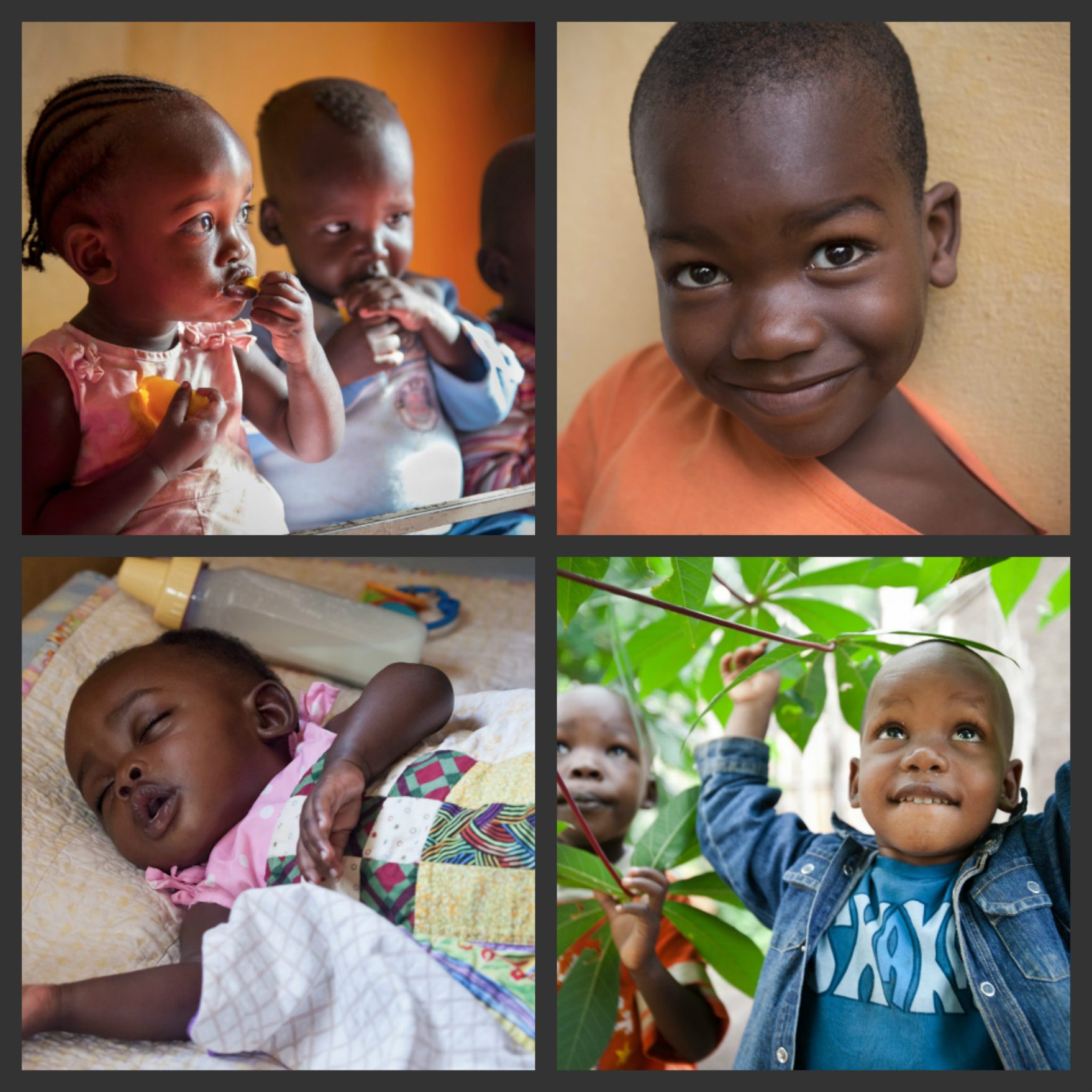
Images: omochild.org

An ancient tribal practice has killed tens of thousands of children over the centuries. I’m working to make sure my generation brings an end to it forever. —Lale Labuko

Lale Labuko was the first person from the Omo Valley to attend school. Each time he left his village for boarding school he walked 65 miles through desert wilderness, leaving a culture without written language in order to fulfill his father’s wish that he learn to read and write.

When Labuko was 15 years old, on a visit home, he witnessed an elder grab a two-year-old girl from her weeping mother’s arms. The elder hurried away toward the river and returned alone. Labuko asked his mother to explain. It was the first time he heard the word mingi. It was also the first time he learned that he had two sisters, both deemed mingi, who were killed before he was born.

Mingi is a term used by many tribes of the Omo River Valley in southwestern Ethiopia. It labels certain young children carriers of a curse. Babies can be deemed mingi for one of several reasons: they’re born out of wedlock, their married parents have not received the necessary three blessings by elders, or their top teeth come in before their bottom teeth.

Ancient traditions dictate that grievous harm will come to the village unless the mingi dies.

Labuko pledged to end this tradition. He’s doing so with respect for tribal culture while also changing ingrained fears. Several years ago he convinced elders to “Let me be the bush” as an alternative to leaving little ones in the bush, where they die of starvation and exposure.

Although a number of tribes continue to carry out the practice, Labuko’s tribe, the Kara, officially banned mingi in a 2012 ceremony. It’s said that if rains fall after any ceremony, the gods have bestowed their blessings. After this ceremony the rains were bountiful. And when the sun came out a rainbow appeared over the Kara village.

Labuko is now co-founder of Omo Child which works to end the horrific practice of mingi. His organization also rescues and cares for mingi children. So far they have saved 37 babies from death.  These children are being raised in a safe home and receiving an education.

National Geographic bio of Lale Labuko

Images of Omo children by photographer Steve McCurry

Get involved in the work of Omo Child

Dreaming of Halos

what's a halo mean, auras,

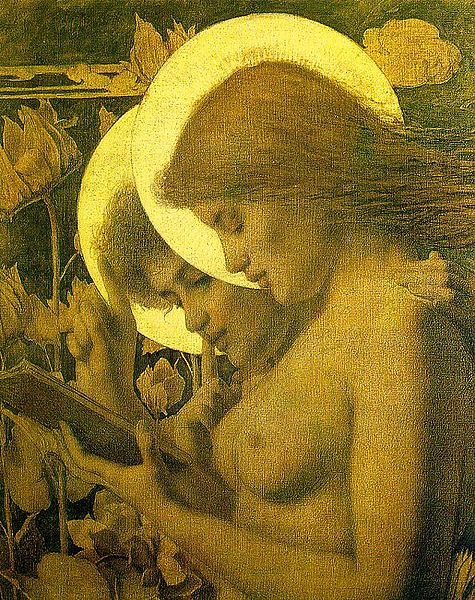
Louis Welden Hawkins – The Haloes, 1894

Dreams are a stairway to what’s beyond our ordinary awareness. That’s true of daytime dreams—aspirations that become more achievable as we help each other make our wishes come alive.  But here I mean dream dreams, you know, ones the dictionary defines as a “series of images, ideas, emotions, and sensations occurring involuntarily in the mind during certain stages of sleep.”

Some of us more easily recall dreams than others. Apparently this has to do with reactivity in certain regions of the brain, although experts insist we can train ourselves to more effectively remember dreams.

No matter the facts, I like to talk about dreams. I’m fascinated by cultures where dreams are discussed and used as a way of tapping into a stream of wisdom that’s forgotten in so-called advanced societies.

And I love to get together with friends for dreamwork sessions where we share and investigate our dreams, something we do far too infrequently but always find illuminating.

If I had better follow-through for this passion I’d be one of those people who keep illustrated dream journals where the guidance found in dreams is recognized. Alas, I’m not. I only write down dreams when they linger in my head long after I’ve woken, in a not-remotely-arty Word doc.  Though I started this particular doc back in 2000, I’ve recorded only a few dreams each year. Most of the time they ramble along in weirdly disjointed anti-logic, as dreams tend to do. But several feel like teachings. Here’s one from August 2007 that stays with me.

~~~~~~~~~~~~~~

A dark-haired child in medieval dress, somewhere between five and eight years old and with a wise aspect, was my guide in this brief dream.

She showed me a number of different paintings. They rose up before me from nowhere with complete darkness around them. Most were icons or close-ups of religious paintings, all with halos around people’s heads.

I thought to myself that the halos seemed like auras, trying to notice which were painted with solid lines and which were more diffuse. The moment I tried to apply logic the pictures stopped.

The child explained. She used words that were simple, beautiful, and had the resonance of the ages behind them. I cannot recall most of what she said, as it was well beyond my understanding, but I’ve retained the following meaning.

The accepted beliefs and worldview of an era form a sort of perimeter around each person. This is the way of people. Those who have been called mystics and saints are people who perceive what’s beyond these boundaries. This perception, this apprehension of something greater, causes the perimeter itself to glow. The breaching of what’s closed is powerful energy.

I wish I could express it better. In the dream I could feel what pulsed at the juncture of small human reality and larger Truth as a kind of electricity or creative force. It emitted light. The energy was generative and alive with possibility. I was awed to glimpse it, even as dream material.

The dream is the small hidden door in the deepest and most intimate sanctum of the soul, which opens to that primeval cosmic night that was soul long before there was conscious ego and will be soul far beyond what a conscious ego could ever reach. Carl Jung

~~~~~~~~~~~~~~~~~

Resources for those of you fascinated by the dream wisdom accessible to us all.

Original Wisdom: Stories of an Ancient Way of Knowing by Robert Wolff

anything by Carl Jung, such as The Essential Jung

anything by pioneer of Active Dreaming, Robert Moss

The Wayfinders: Why Ancient Wisdom Matters in the Modern World by Wade Davis

The Mind at Night: The New Science of How and Why We Dream by Andrea Rock

The Kin of Ata Are Waiting for You by Dorothy Bryant (sci-fi world where reality is shaped by dreams)
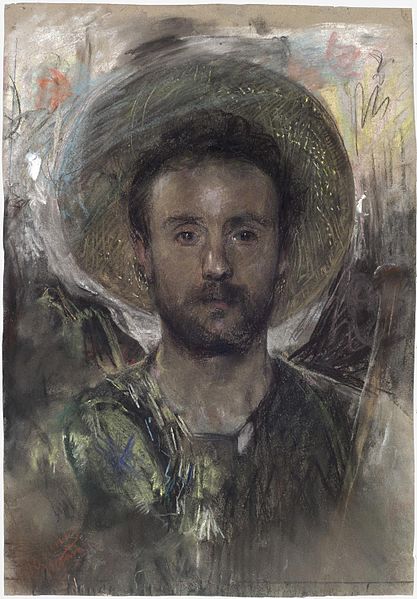

energy of halos,

Antonio Mancini- Self-Portrait, 1883

Links & Updates 2-17-14

I love winter. I know this isn’t a widely shared sentiment, especially after the winter we’ve had (in my view, a beautiful one thanks to bountiful snow).  In fact, I’m not at all eager for spring yet. I’m still busy enjoying what winter looks like on our little farm. Only a few more weeks to adore it, then it’ll be mud season.

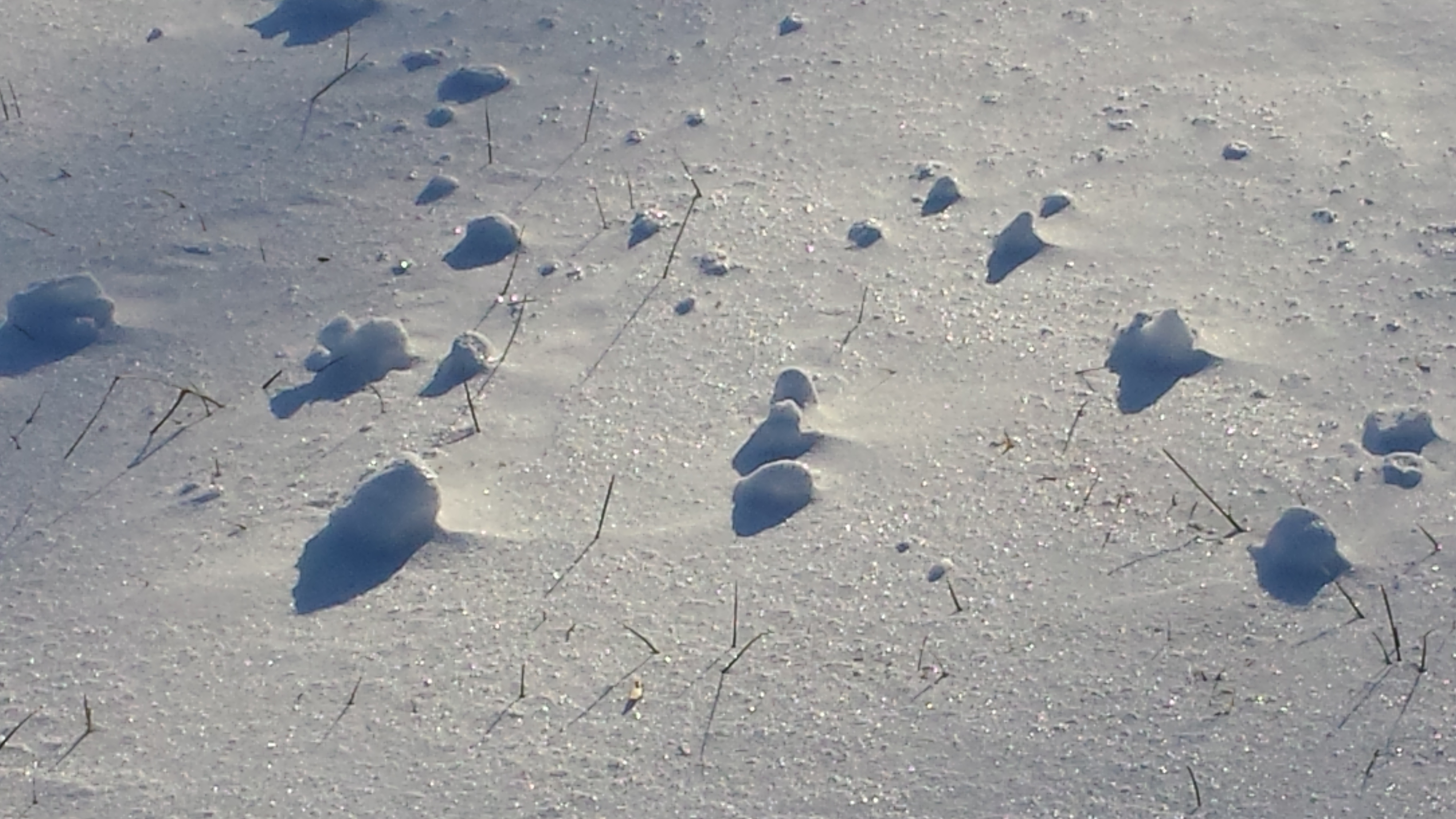
Here’s one gift of this winter. We got to see an unusual weather phenomenon called snow rollers right in our backyard.

20140128_163252

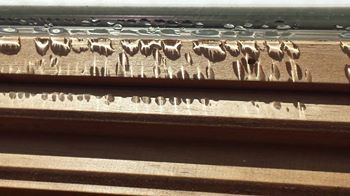
And hieroglyphics in melted windowsill frost.

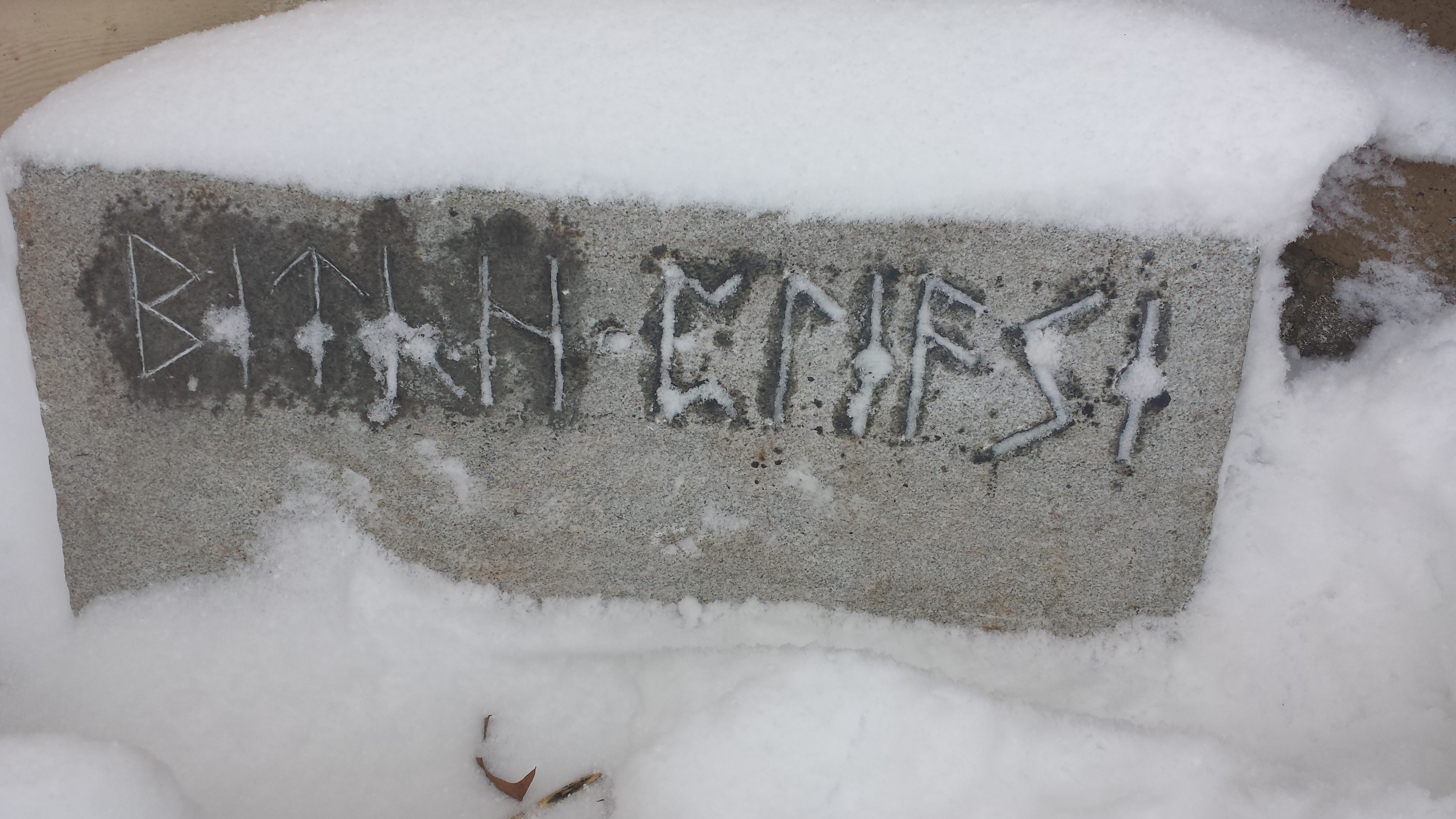
One more snow-related update. The tombstone up against the front porch foundation is now partially unburied (pun!) thanks to wind erasing the snow cover. Yes, a tombstone. (One of the many reasons even the mailman wonders about us.) Let me explain. One of my delightful offspring got interested in all things Norse about two years ago. He researched ancient mythology and runes, started learning to speak Swedish, and worked hard to teach himself stone carving using hand tools. It’s not easy to find exactly the right rock for such endeavors. His older brother, always considerate, bought a headstone that was deeply discounted thanks to a typo and presented it as a birthday gift. My Norse-a-phile ground the name and dates off the stone. Then using a rough runic alphabet, he carved a message in the stone. Want to guess what it says? I found it amusing so it’s a good bet it’s a little rude.

Okay, on to some links.

Merriment

My daughter suggests Barbie jeep racing as our new family sport. We’re looking for the right hill…

For far deeper merriment, I heartily recommend a book written by my friend and fun expert, Bernie DeKoven. Here’s a review of A Playful Path. And here’s where you can get an e-book version FOR FREE! (I bought several print versions as well for gifts because I consider this book essential.)

Hope

Activism and, more importantly, an increase on society’s ethical maturity is helping to advance the rights of tribal people. Check out good news at Survival International here and here.

Members of the Dongria Kondh tribe. (Image by Jason Taylor)

Members of the Dongria Kondh tribe. (Image by Jason Taylor)

Here’s nonviolence in action.

(Image: hotair.com)

(Image: hotair.com)

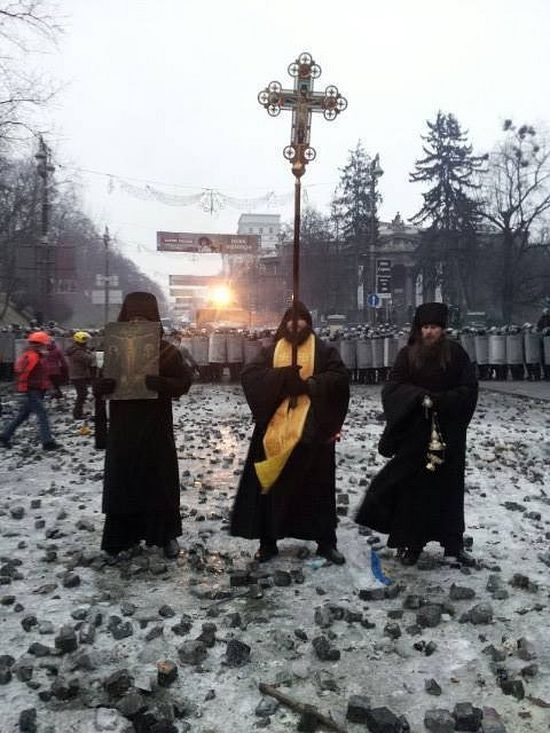
 Orthodox priests stood between the demonstrators and the Ukrainian special police force. Holding icons and crosses, they successfully stopped the conflict.

Poetry

Powerful spoken word poetry by Guante.

An extraordinary poem I’ve used when teaching nonviolence classes, “Invisible Work” by Alison Luterman.

I stopped and let myself lean
a moment, against the blue
shoulder of the air. The work
of my heart
is the work of the world’s heart.
There is no other art.

Read the full piece here.

And what feels like a gift, a very nice review of my book by We Drink Because We’re Poets.

Learning

child

25 STEM Leaders Who Were Homeschooled.

School Ditches Rules, Looses Bullies.

And what I’m learning—Imaginary Motherhood.

Okay, Bringing Winter Up Again

To drag some learning experiences out of the last snowfall, try making snow ice cream or conducting the clean snow experiment. It’s all here in 15 Smarty Pants Ways to Enjoy Snow.

If you’re stuck indoors, try yarnbombing furniture or communicating via banana. Check out more ideas in 40 Cabin Fever Cures for Kids.

Auditory Yes!

Un-Cliché Your Valentine’s Day

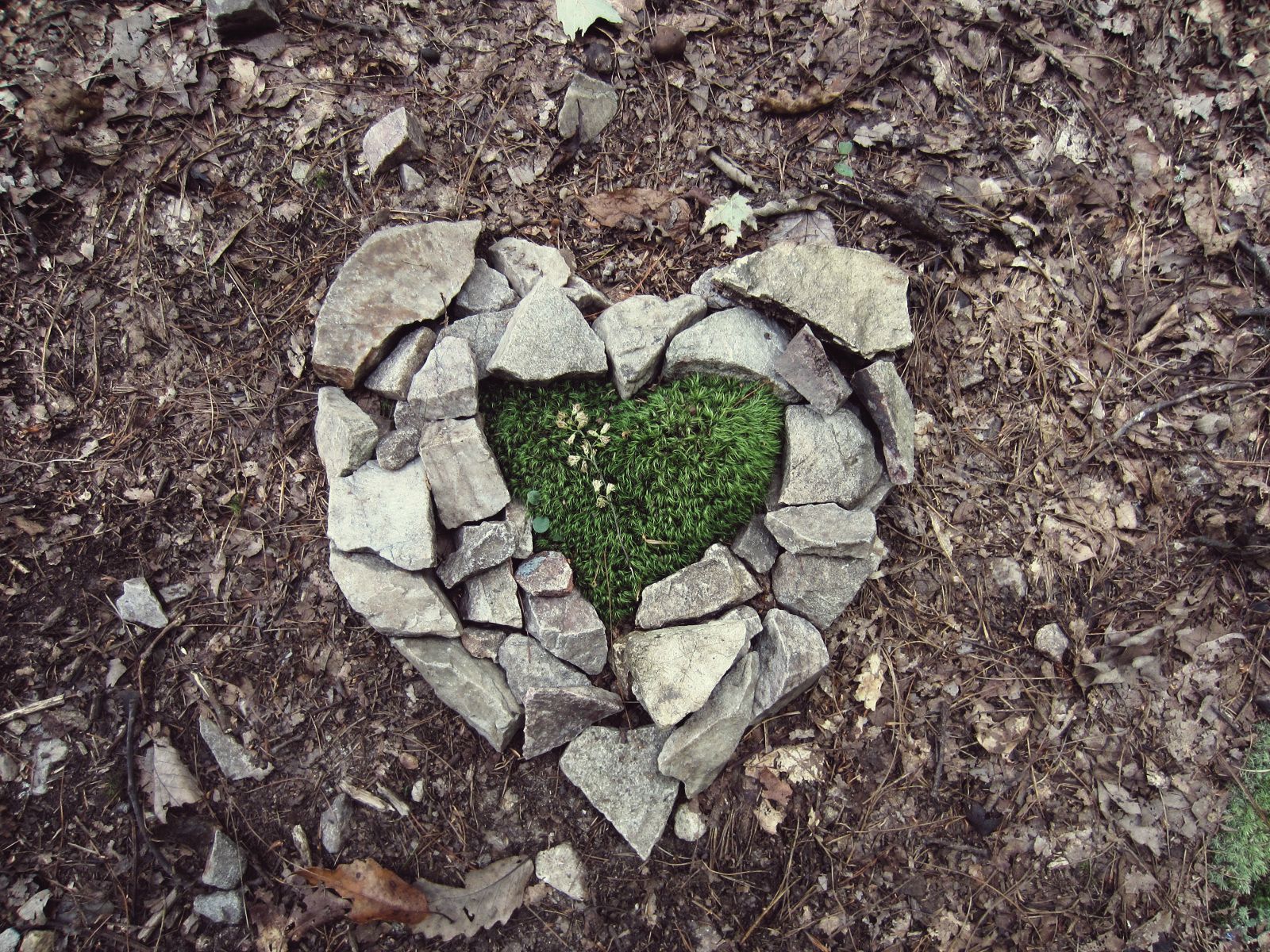
Heart made while hiking. (Image by Sam Weldon)

Heart made while hiking. (Image by Sam Weldon)

Valentine’s Day may be about love but it’s too often expressed with clichéd sentiments and perfunctory presents. Overall U.S. Valentine’s Day spending (updated for 2023) is estimated to be 25.9 billion. Yes, billion. In a world that needs more tenderness and less stuff, there are alternatives. That doesn’t mean giving up on cards, chocolate, and flowers if these expressions truly touch your heart. It means we can do more with the love we feel for people, our communities, and for the natural world—any day of the year.

Art-oriented

Find hearts everywhere. You can stop by a gallery or museum, finding hearts and other representations of love. Or challenge yourself to photograph hearts you see in nature and everyday objects.

Make original hearts. Create a heart out of something unexpected. Try Legos or spoons or hammers. Then photograph it. Send it out via social media or print the image on cards. For a wealth of inspiration, check out Monday Hearts for Madalene.

Learn about symbolism of the heart. This shape has been painted on cave walls by Cro-Magnon people, showed up in ancient Minoan art, and appeared on 15th century playing cards. Assign loving symbolism to some other shape and use it as your secret language.

Kindness-oriented

Appreciate people in your community. Use children’s drawings as wrapping paper, tucking inside each one a piece of wrapped candy or other goodie, along with a note like “thanks for being so nice” or “you made my day.” Then stay on the lookout for a cheery cashier, helpful librarian, or kind friend to hand a surprise package. Find more ways kids can perform community service, toddler to teen, here. No kids? No problem. Wrap up tiny gifts and do the same thing. It cues us to see goodness everywhere.

Put dollars to work. Give money out to your family and friends, with a caveat. Challenge recipients to do as much good as they can with $10 (or whatever denomination you choose), then report back with the results by a certain deadline. You might set up a Facebook event page for this so their ideas are shared. (Yup, side benefits. This boosts the happiness of the givers too.)

Say Thanks. Get in touch with Great Aunt Betty to say you appreciate advice she gave you decades ago, send a note of appreciation to a teacher who made a difference, call your parents to share a sweet memory from your childhood. (Again, side benefit, gratitude boosts your own health.)

Volunteer. Walk dogs at a shelter, or make care packs to share with people experiencing homelessness and hand them out, or deliver Meals on Wheels. For more ideas, check out Volunteer Match.

Commit good deeds anonymously.  Valentine’s week is also Random Act of Kindness week. Ideas? Smile at five strangers, leave quarters at the laundromat or in the change slot of vending machines, do someone else’s chore secretly, pay the tab for the next customer,  clean up someone else’s mess.

Gift-oriented

Make a scratch-off card. It takes paint and dish soap, that’s it. Make a love list card or one that reveals a surprise. Or come up with your own design.

Give gift certificates from locally owned businesses and organizations like a greenhouse, restaurant or coffee shop, massage therapist, art gallery, sports shop, bookstore. Or pay for a few hours of an local worker who specializes in home repair, house cleaning, or landscaping.

Give experiences. Go to the theater, take tai chi or weaving lessons, go horseback riding, attend a concert of music new to you, take a city tour, head to a skating rink, or rent a houseboat/

Give gifts for a good cause. There are all sorts of nonprofit stores and charitable shopping sites. Try Water.org, FreewatersSerrvGreater Good, Ten Thousand Villages. Or get a gift from the gift shop of a non-profit in your area.

Nature-oriented

Plant something. Start seeds indoors for your garden. You might start extras to set up a seed or plant exchange.

Get out there. Picnic outside no matter what the weather, or hike somewhere new to you, or go outside after dark to look at the stars.

Build together. Make a fairy house in the woods using nearby sticks and rocks. Build a snow fort. Make a hide-out in the attic or backyard or anywhere you can enter the magic of hidden spaces.

Re-experience childhood delights. Swing on the swings, climb a tree, run a footrace, cook marshmallows over a campfire, play outdoor games.

Romance-oriented

Revive the mix-tape tradition. Put together a collection of tunes that says what you feel. In this instance, sappy is good. Even better reaction, put together a sexy playlist

Do something that scares you, together. Go bungee jumping or rock climbing or whatever gets your heart racing. Even a scary movie can be good for the love life.

Talk about first loves. Maybe just first crushes. It’s a way of tenderly exploring the inner world of your partner’s earliest years.

Make date night fascinatingly unexpected. Try an alternative identity date. Make up your own triathlon (competing in air hockey, tongue twisters, and onion ring eating). Participate in a mud run. Here are 43 ideas for livelier date nights.

alternative Valentine's Day, do something fun,

Frosty front door handprints melt to reveal a surprise heart in my right palm. (Image: L. Weldon)

We Warp Time

slow time down, live each moment,

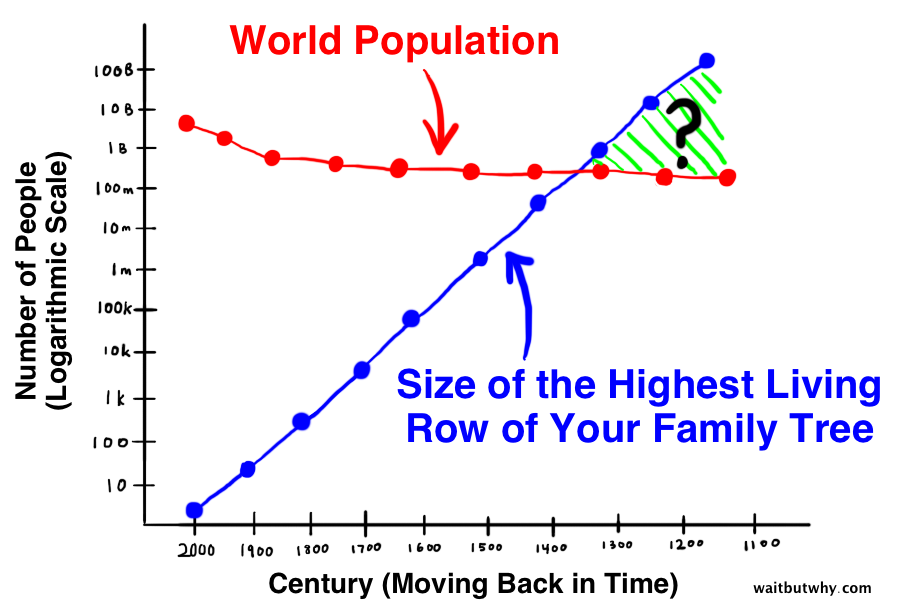
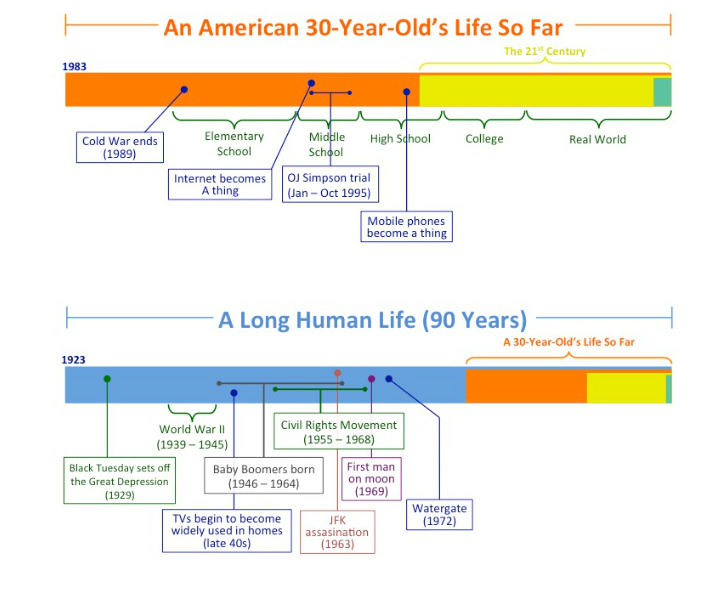
Remember sitting in third grade watching the minute hand move so slowly that dismissal time seemed weeks away?  Remember how your ninth birthday took almost forever to arrive? Yeah, that was childhood. Now months zip by with such speed that it’s becoming clear our elders hang on to handrails because time is practically knocking them down as it whips past.

This concept is brilliantly depicted at Wait But Why.

waitbutwhy.com/2013/08/putting-time-in-perspective.html

waitbutwhy.com/2013/08/putting-time-in-perspective.html

See how our perspective of time changes as the years go by?

Researcher Robert Lemlich studied the way we perceive this. According to him, 80 year olds have gone through 71 percent of their subjective experience of time by the age of 40, making the years between ages 60 and 80 seem like 13 percent of their lives. By his calculations, when we’re 20 years old we’re halfway through the felt experience of our lives, meaning that 60 additional years will seem to pass as quickly as the first 20. That’s a nasty blow.

It makes me wonder how the youngest among us sense time. If a baby cries when a parent leaves, does it feel like an eternity of sorrow to him? If a toddler’s plaything is grabbed by another toddler, does that frustration seem to stretch out forever? Maybe that’s not far from the truth.

It illustrates why our experience of time isn’t entirely explained by the proportional theory. If we think about it, we realize our perception of time has a great deal to do with what we’re experiencing. Time actually warps. Notice that it moves grindingly slow when we’re in physical or emotional pain. Time also elongates (far more wonderfully) when we’re fully present,  making even the most ordinary moments—a child’s squeal of laughter or a sip of cool water—into something larger. It stretches even further when we’re immersed in a wholly new experience—say first love or scuba diving or public speaking.

Far too often, our personal time warp goes the other way. It gathers speed because we’re busy, we’re multitasking, we’re in a rut, and thus less mindful of the passing moments that make up our days, weeks, and years.

We can get all quantum-y about it. There’s an experiment that seems to explain why time moves slower and faster according to our perception. But we don’t really need to study entangled photons to figure it out. We want to fully live the time we’re allotted on this planet.

I’m working on making my time more warpable. How do you stretch your sense of time?

slow down time, perception of time,

“The only reason for time is so that everything doesn’t happen at once.”  ~Albert Einstein

What A Cow Taught Us About Free Range Learning

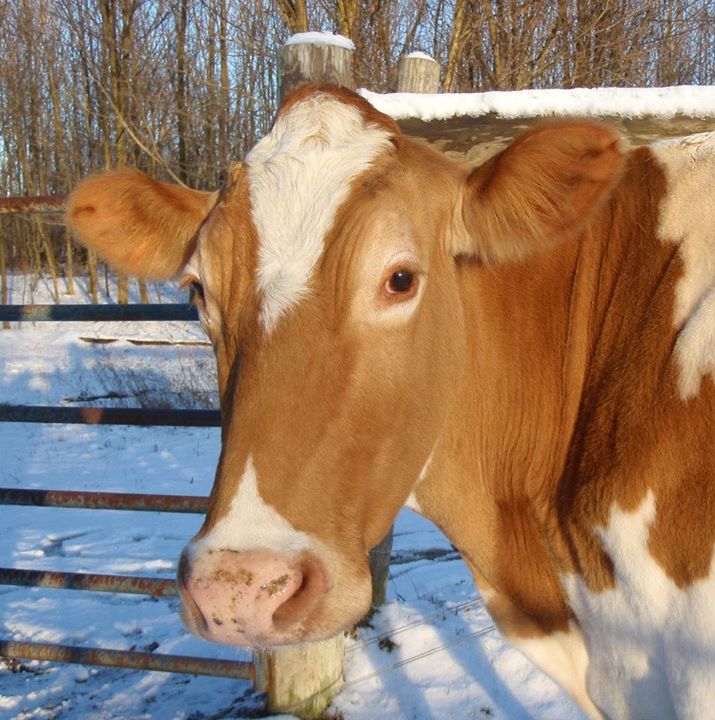
Isabelle. (Photo by Claire Weldon)

Isabelle. (Photo by Claire Weldon)

Look closely at any one thing long enough and you start to see how much more there is to know, stretching your mind (and often your heart) well beyond the supposed “right” answers. You also may notice the way this one thing interconnects with everything else. A cow helped us see that.

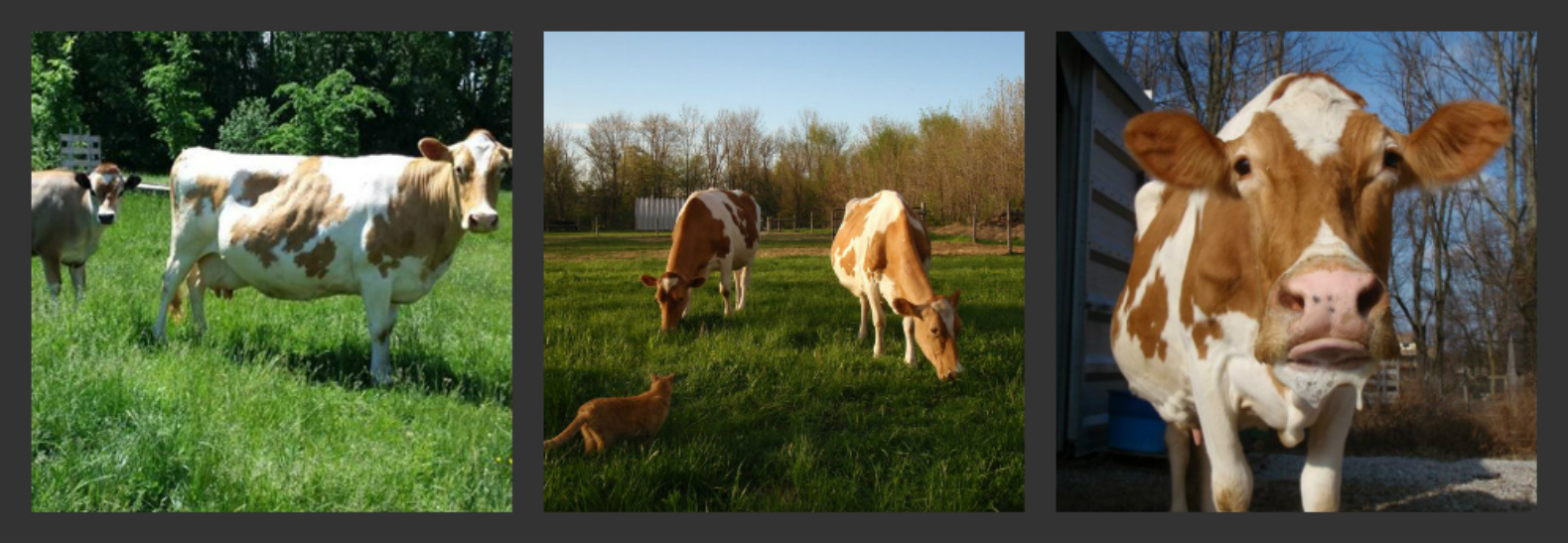
Years ago we were only raising chickens and honeybees on our small farm. My daughter researched, did the numbers, and convinced us that keeping a cow would not only provide an amazing learning experience but would be an excellent way to supply our own milk, butter, yogurt, and cheese. That’s why Isabelle, a gentle Guernsey, entered our lives. And every single day since my daughter has worked hard to care for her, without fail.

Isabelle taught us more than we could have imagined about thinking for ourselves, about tenderly raising animals, and much more. When it was time for college, my daughter wrote her entrance essay about this and was awarded an amazing scholarship.

Today Isabelle is 16 years old. She continues to teach us, our vet, and a community of people who participate in a family cow forum. To celebrate her birthday, I’ll be bringing her extra carrots and apples. I invite you to celebrate too by reading about Isabelle’s life on our farm

family cow, homestead dairy,

Isabelle (Photos by Claire Weldon)

It’s About Reading For Pleasure

One week during the summer I was twelve, I had a crisis.

I ran out of library books.

Sure I rode my bike, went swimming with friends, and listened to music trying to figure out what the lyrics meant but I also indulged in hours of reading every day. Books transported me. My mother would call me to dinner and I’d look up, astonished to find I wasn’t a wolf on the tundra but a girl in shorts lying on the carpet. Or someone would knock on the bathroom door and I’d remember that I was soaking in the tub, not eluding soldiers in a medieval battle.

My parents supported reading, but they had no problem saying “get your nose out of that book and go outside.” They didn’t take us to the library more than two or three times a month, so the stack of books each of us brought home had to last.

When I realized I was bookless, I turned in desperation to a volume my older sister read as a class requirement. It had tiny print and a not-too-inspiring title, The Scarlet Letter. “It’s too hard,” she told me. “It’s a classic.”

I didn’t know “classic” meant it was good for me, like a bitter vitamin tablet. I insisted I was out of other options.

I promptly fell into Nathaniel Hawthorne’s words. They were exquisite in a way I’d never experienced, centered on the inner life and all its convolutions, something I already knew well but didn’t have the sophistication to express. I wasn’t aware such books existed. Instead of racing through it, as I did with every other book, I savored it. It felt as if I could run my fingers over the page and feel the texture of shame and longing. When I finished I was newly in love with the idea of classics, so I got books by Charles Dickens out of the library. I worked my way through two of them that summer although they didn’t live up to my great expectations. I thought Dickens droned and was nothing like Hawthorne.

Several years later I had to read The Scarlet Letter for English class. Everyone grumbled when assigned more pages to read. Those piercing insights, when listed in bullet points on the board, didn’t sink into my heart. Lectures and assignments obscured the book’s beauty. I didn’t read it with a cloak thrown over my head or the prick of a rose thorn in my skin. It lay dead, like a victim on the autopsy table.

Then I realized that my love of books had developed entirely outside of the classroom. I’d never really fallen in love with any of the books assigned in school, although the ones our teachers read aloud after recess, a few pages a day or an entire chapter on special days, still stood out in my mind. Reading, for me, was about pleasure. It was more than a habit, it was an integral part of my being. The books I read helped form my outlook and character. I dare say that many of us, if we look back, will find that favorite books from childhood have a surprising link to who we are today.

If I could, I’d reclaim reading for all of us, from earliest childhood on, as pleasure first and foremost. Turning to the written word for information and edification then becomes a pleasure too.

Decision To Make? Ask Your Body

I tend to fuss over decisions, considering all possible options while weighing the benefits and risks for everyone involved. Sometimes I choose the most difficult path even when it clashes with my admittedly Hobbit-like nature, in part because I have the annoying idea that growth comes from taking on new challenges.

Unfortunately the process of logical decision-making tends to wedge us into what we intellectually determine is best even if it doesn’t feel right. (I’ve gotten myself into plenty of tough situations doing exactly that.) Many of us tap into our intuition as well, but we usually give much more weight to what reason has to say.

These days I’m trying to rely less on my head and more on gut feelings for decisions large and small. It doesn’t take much to realize the glad expansiveness in my chest is a “yes” while a heavy clenched feeling in my throat is a “no.”

I don’t always succeed at this. Recently I agreed to give a series of talks and already dread them. The process of trying to be more aware of what’s authentically right for me is gradual. (NOT public speaking, my body retorts.) I suspect many of us push ourselves until our bodies force us to start paying attention….

Let’s remember, each one of us is a whole person with intelligence coming from our hearts, our guts, maybe all of our cells. But our culture teaches us from our earliest years to be in our heads while ignoring, even shutting off inner knowing. When inner promptings are so strong they override the left hemisphere of the brain, children are often labeled something else entirely—-lazy, reluctant, stubborn, headstrong, picky, anxious, timid, fussy. In reality, our bodies are telling us we need:

1. time to process or time do things at a pace natural to us

2. to step away from a particular person/situation/food/obligation

3. to honor the voice inside that already knows the answer

This is the kind of awareness that people have used since the beginning of humankind to make decisions fully, in ways we rarely access in today’s world.

Here’s a recent example of what can happen through listening to body wisdom. I have poor posture. I fight it, when I think about it, by holding my head up straight for as long as I can remember and more recently, by learning to practice natural posture. But when I’m working at the computer my head tends to sink forward until I’m hunched like a half-conscious orangutan. I know that listening to the body means, in part, paying attention to the body’s messages. So one afternoon I stopped resisting, just for a few minutes.

I listened to what my slumped posture had to tell me. It didn’t say “sit up straight!” It said go with the slump. Feeling a little silly, I let my head sink forward to a ridiculously exaggerated degree. Instantly I recognized in my body the way my father slouched when he was sad, the way my mother’s head jutted forward and down with disappointment. Their postures are in me, speaking to me. I didn’t analyze this, I just sat with it, paying attention to my body in that posture. Strangely I felt relief, even comfort, as my upper body curled like a fetus.

Then I tried the opposite. I pulled my head up into rigid “good posture”and was surprised when tears came to my eyes. My throat felt vulnerable and exposed, as it did when I was a little girl and couldn’t sleep unless my throat was covered. Again, I didn’t analyze right away, I just sat with it.

The whole process took about three minutes. Yet afterward I felt a wonderful strength up my spine. My posture felt buoyantly upright. The feeling lasted all afternoon. It was astonishing to get so much benefit from such a short body-awareness experience.

What I am saying is that your internal guidance system is there, ready to be accessed. You possess logic, which is invaluable as you consider variables and imagine outcomes. You have remarkably instructive emotions—you may feel excited, a little scared, a little eager, and pretty relieved when you imagine yourself going forward with one decision while you may feel let down, hesitant, and resistant when you imagine going forward with a different decision. Just past logic and emotion are actual body sensations. You may feel tightness in your jaw or churning in your stomach or tension in your back. You might feel the urge to stretch or dance or take a deep breath.

Simply remember, when you have a decision to make, consult your thoughts and emotions and body wisdom. The answer is there, waiting for you to pay attention.

For more on this, check out:

7 Ways To Access Your Body’s Unique “Knowing”

Free Fix For What Troubles Us

The Little Trick To Make Any Moment Better

body wisdom, gut feeling, body intelligence,

Inner Cosmos by memzu.deviantart.com

Smart Pants: High Tech Trousers For Every Contingency

I was called “Smarty Pants” a few too many times in my childhood. A little girl who can’t keep sarcastic asides to herself isn’t silenced by a nonsense term, especially when the invective is hurled by underpaid math teachers who wear terribly unflattering polyester slacks. The ultimate not-smart pants.

Now I’m well into adulthood and still too smart for my pants, thank you. I’m also not living up to my potential, just as my teachers predicted. Perhaps inventing trousers that qualify as truly smart could be my lucky break. Futuristic technology must be out there just waiting to be applied to legs and backsides in a fashionable manner.

What features would my Smarty Pants offer the savvy wearer?

  1. Zapper to halt verbal or physical forms of stupidity. Imitating the irritating way your boss smacks her lips for emphasis after every third word? Smarty Pants will helpfully jolt you with a mild electric shock if your boss is in range. Tempted to accept a drink with whoever is waving from the shadows of the airport bar?  Your pants will know if that’s the pilot. Zap again.
  1. A memory chip. This technology will mobilize at the first sign of perplexity. Forgotten names, numbers, and directions will appear on a Post-It in the Smarty Pants pocket for discreet retrieval. This could come in handy as the decades roll by.
  1. Low dose laser to melt fat in preselected areas even while the pants wearer is noshing on a post-lunch snack.  Disclaimer: noticeable steam generated by the device must be dissipated by walking briskly or swiveling in one’s chair.
  1. Seat belt tightener for those situations where the Smarty Pants wearer is sharing the road with idiots. Or is driving like an idiot. It happens.
  1. Anti-skid device. Not that kind. The kind that helps the wearer remain upright and avoid slipping on ice, tripping over curbs, skidding on banana peels, you know, equilibrium cruise control. Graceful strolling guaranteed, even for the chronic klutzes.
  1. A clever anti-erection device, useful in situations when this state unwelcome. It will activate when needed anywhere within range of the wearer. Never fear, the feature causes no permanent disability.
  1. Warming and cooling agents. Hot wait on a plastic seat at the DMV?  Smarty Pants will provide a zone of frosty coolness from waistband to ankles.  Tobogganing on a sudden whim? Smarty Pants will make sure you are a hottie.  But not so toasty that you melt the ice.
  1. Wrinkle-free, stain-proof and fade-free fabric. What’s more, these exceptional trousers will also be fireproof, inflate as emergency flotation devices, deflect bullets, and sport James Bond-like gadgets which are so top secret that each pair of pants will be unique. Figuring out the instruction manual may require tech support.
  1. Auxiliary wit, of course. Smarty Pants will telepathically transmit clever banter and droll remarks for every occasion. Unfortunately, this may become habitual.  Human smarty pants rarely know when to keep comments to themselves. It isn’t likely that the trousers model will be any more discerning.

Originally appeared in Poor Mojo’s Almanac(k)