Understanding Children Through Imitation

follow your child's example, what it feels like to be a child, child's experience,

Mirror a child’s movements. (morguefile)

So much of a child’s experience, from infancy on, is constantly being shaped by adults. Their behavior, posture, movement, and sound are restricted by structured activities, confining seats, and grown-up expectations . If we allow ourselves, we can drop into a child’s world for few moments by replicating his or her movements. It’s a form of listening at the bodily level that can be instructive as well as enlightening.

I’ve admitted to trying this the very first time as a new mother, imitating my newborn’s movements in an experience so profound it felt like a ceremony.

I didn’t try it again until I was the mother of three kids under six. I’d dashed over to a friend’s house to drop something off, feeling rushed to get back to my nursing baby. My friend’s children weren’t home. I stood in her quiet kitchen telling her how much I wanted to sit down and chat, but couldn’t spare the time. She answered my complaint with mock outrage, “Don’t you dare relax! What were you thinking?”

In my best imitation toddler voice I said, “WANT TO!”

She wagged her finger. “That’s enough out of you. Do what you’re told right this minute.”

Then I dropped to the floor in a full-on act of defiance; lying on my back, kicking my legs, and squalling, “You can’t maaaaaake me!”

By this time our hilarity was well out of proportion to this brief moment of improv. When I got up I felt different—wonderfully de-stressed and energized.

I insisted my friend give it a try. She resisted, until I admonished her with the same phrases I’d heard her use on her kids. I even flung out her full name accompanied by finger wagging. That did it. She twirled around whining “Noooooo. No no no!” till she was out of breath, with hair in her mouth and a smile on her face.

We both agreed we felt incredible.

I don’t for a minute suggest you do this, ever, in front of any child. Self-expression should never be ridiculed. But if they’re not home, give it a try. What this did, for me as well as my friend, was let us fully express strong emotions through our bodies as our children do, as we used to do when we were children. We may have been well-educated, reasonably sophisticated women but the need to indulge in some primal venting hadn’t left us. A little method acting gave us both new insight into what our children experience.

After that, I looked for ways to learn from my children through imitation. We adults do this all the time when we play with our kids. We chase and let them chase us. When they pretend to be an animal or make-believe character we join in. We’re the big bad wolf blowing down a child’s fort made of cushions. We’re the sotto-voiced doll talking to another doll or the train engine struggling up an imaginary hill. Playing is a window into a child’s experience, and remarkably restorative for us as well.

But what truly let me honor my children’s world was letting them choreograph my movements. Sometimes we’d play what we called “mirror”— standard actor training done face to face. The child is the leader, the parent the “mirror.” As the child makes gestures, facial expressions, and hand movements the parent tries to duplicate the movements exactly. Then we ‘d switch so the child got a turn being the mirror. I always ended up laughing first.

Sometimes we played a variant of this, making each other into emotion mirrors. One would call out a feeling like “surprised” or “angry” or “wild” and the other would try to convey the word through facial expression. (This is also a great way to advance emotional intelligence.)

My favorite imitation was through dance. We’d turn on some lively music and I’d try to copy my child’s dance moves. This is much more difficult than it sounds. It’s nearly impossible to keep up with a child’s energy level for long!

My kids are past the stage where they want me to imitate their dance moves. But I haven’t forgotten how much letting my kids choreograph my movements taught me. Even now, they’ll catch my eye across a crowded room for a brief moment of mirroring. It’s funny, warm, and lets us both feel understood.

Don’t miss this wonderfully expressive choreography by Zaya, imitated by real dancers.
Family Stories Form Us

My mother kept family stories alive by folding them into our lives as we grew up. She’d remark, “This would have been your Uncle John’s birthday,” and then she’d tell us something about him. Like the time he taught her how bad cigarettes were. That day he took her behind the garage and let her smoke until she was sick. (She was four years old.) Or how he skipped out on his college scholarship and pretended he didn’t have a bad back so he could sign up for the Air Force. His plane was shot down on his 47th mission, his body never found.

She told us about a great-great-grandfather, left to take a nap under a shade tree as a baby. He was taken by passing Native Americans, who may very likely have thought the tiny boy was abandoned. His parents didn’t go after him with guns, they brought pies and cakes to those who’d taken him to ask for him back.

She told us about a tiny great grandmother who expected other people to meet her every need, but when a candle caught the Christmas tree on fire that same helpless little grandmother immediately picked it up and threw it out the plate glass window to keep the house from burning down.

She told us about her Swedish grandmother who was widowed not long after coming to this country, but kept the family together by taking in laundry. And about the only son growing up in that family who ran away as a teen. They didn’t hear from him till he’d made a new life under a new name, years later.

My mother didn’t just talk about long-gone family members. She told us about people in our everyday lives too. She talked about dating our father, saying he was still the most wonderful man she ever met. She told us about meeting his sister and her husband for the first time—they were on the roof of the house they were building together, hammering down shingles. And she shared inspiring stories from friends, neighbors, and people she’d only read about. She never said it aloud, but her stories gave me the sense that I too had within me the sort of mettle and courage to handle whatever came my way.

Turns out there’s more value to stories than my mother might have imagined.

1. Child development experts say young children who know family stories have fewer behavior problems, less anxiety, more family cohesiveness, and stronger internal locus of control. When mothers were taught to respond to their preschool-aged children with what researchers call elaborative reminiscence, their children were better able to understand other people’s people’s ideas and emotions—a vital skill at any age.

2. Family storytelling provides remarkable benefits as children get older. Preteens whose families regularly share thoughts and feelings about daily events as well as about recollections showed higher self-esteem. And for teens, intergenerational narratives help them to shape their own identity while feeling connected

3. Researchers asked children 20 questions on the Do You Know Scale, such as:

  • Do you know where your grandparents grew up?
  • Do you know some of the lessons that your parents learned from good or bad experiences?
  • Do you know the story of your birth?

Results showed that the most self-confident children had a sturdy intergenerational self, a sense they belonged and understood what their family was about. This sense of belonging was called the best single predictor of children’s emotional health and happiness.”

(Here are some ways to naturally incorporate family stories into your children’s lives.)

I’ll admit, the stories my mother told throughout my childhood didn’t skimp on tragedy but always highlighted positive character traits. It wasn’t until I was much older that more shadowed family tales slipped out—stories of mental health problems, alcoholism, and lifelong rifts. Those stories are just as important.

Our family tales are simply stories of humanity. All stories help to remind us what it means to be alive on this interconnected planet.  Every day that passes gives us more stories to tell. Even better, more to listen to as well.

family stories, tell children family stories, share family history, family history stories,

image: Navanna

Recognizing Each Child’s Particular Genius


Free Range Learning, children's gifts,

A child’s gifts can be difficult to recognize, perhaps because they tend to unfold in mysterious ways. What we might consider idiosyncrasies or problems may very well indicate a child’s strengths. Oftentimes we can’t see the whole picture until long after the child has grown into adulthood. It’s worth remembering we can’t easily see our own gifts either, even though they have whispered to us of destiny or wounded us where they were denied.

A little girl creates chaos with her toys. She won’t put blocks away with other blocks nor put socks in her dresser drawer. As a preschooler she creates groupings that go together with logic only she understands. One such collection is made up of red blocks, a striped sock, spoons, and marbles. She sings to herself while she rearranges these items over and over. The girl is punished when she refuses to put her puzzles away in the correct box or her tea set dishes back together. She continues making and playing with these strangely ordered sets but hides them to avoid getting in trouble. This phase passes when she is about nine years old. Now an adult, she is conducting post-doctoral studies relating to string theory. She explains her work as a physicist has to do with finding common equations among disparate natural forces.

A young boy’s high energy frustrates his parents. As a preschooler he climbs on furniture and curtain rods, even repeatedly tries to scale the kitchen cabinets. When he becomes a preteen he breaks his collarbone skateboarding. He is caught shoplifting at 13. His parents are frightened when he says he “only feels alive on the edge.” Around the age of 15 he becomes fascinated with rock-climbing. His fellow climbers, mostly in their 20’s, also love the adrenaline rush that comes from adventure sports but help him gain perspective about his responsibility to himself and other climbers. His ability to focus on the cliff face boosts his confidence on the ground. At 19 he is already certified as a mountain search and rescue volunteer. He is thinking of going to school to become an emergency medical technician.

James Hillman explains in his book, The Soul’s Code,

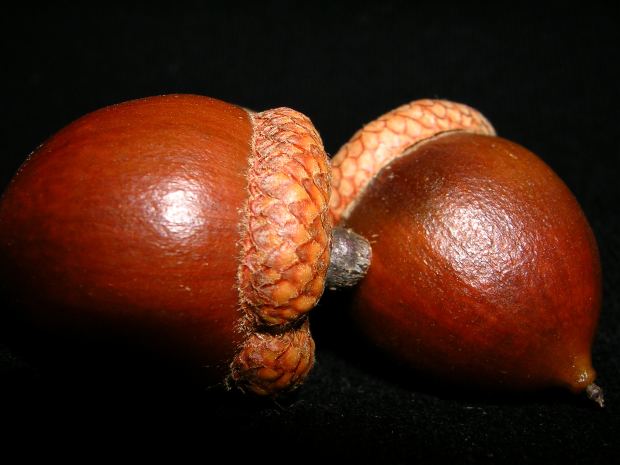
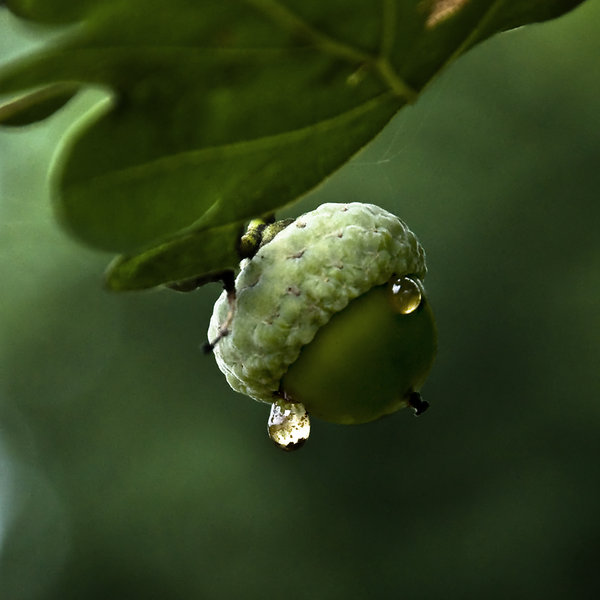
I want us to envision that what children go through has to do with finding a place in the world for their specific calling. They are trying to live two lives at once, the one they were born with and the one of the place and among the people they were born into. The entire image of a destiny is packed into a tiny acorn, the seed of a huge oak on small shoulders. And its call rings loud and persistent and is as demanding as any scolding voice from the surroundings. The call shows in the tantrums and obstinacies, in the shyness and retreats, that seem to set the child against our world but that may be protections of the world it comes with and comes from.

Yehudi Menuhin, one of the preeminent violinists of the 20th century, became fascinated when he heard classical music on the radio as a three year old. He wanted to feel the same rich notes coming out of a violin in his hands. His parents lovingly presented him with a toy fiddle. He drew the bow across the strings and was horrified at the cheap squawk the toy made. Enraged, he threw the instrument across the room and broke it. His imagination had already taken him to the place in himself where beautiful music was made and he was unable to bear that awful sound. We normally call that behavior a “tantrum.”

Then there’s R. Buckminster Fuller, whose young adult years were marked with struggle. As a college student he hired an entire dance troupe to entertain a party, and in that one night of excess he squandered all the tuition money his family saved to send him to school. In his 20’s he was a mechanic, meat-packer, and Navy commander before starting a business that left him bankrupt. After his daughter died of polio he began drinking heavily. By conventional wisdom he’d be considered a total failure at this point. But while contemplating suicide, Fuller decided instead to live his life as an experiment to find out if one penniless individual could benefit humanity. He called himself Guinea Pig B. Without credentials or training Fuller worked as an engineer and architect, inventing such designs as the geodesic dome and advancing the concept of sustainable development. He wrote more than 30 books and registered dozens of patents. Fuller once said, “Everybody is born a genius. Society de-geniuses them.”

Few young people have clear indications of their gifts. Most have multiple abilities. A single true calling is rarely anyone’s lot in life as it is for a legendary artist or inventor. Instead, a mix of ready potential waits, offering a life of balance among many options. When we emphasize a child’s particular strengths we help that child to flourish, no matter if those gifts fall within mainstream academic subjects or broader personal capacities. Traits such as a highly developed sense of justice, a way with animals, a love of organization, a contemplative nature, the knack for getting others to cooperate—-these are of inestimable value, far more important skills than good grades on a spelling test.

Free Range Learning, all kids geniuses,

Although society confuses genius with IQ scores, such scores don’t determine what an individual will do with his or her intelligence. In fact, studies have shown that specific personality traits are better predictors of success than I.Q. scores. Genius has more to do with using one’s gifts. In Roman mythology each man was seen as having a genius within (and each woman its corollary, a juno) which functioned like a guardian of intellectual powers or ancestral talent.

What today’s innovators bring to any discipline, whether history or art or technology, is a sort of persistent childlike wonder. They are able to see with fresh eyes. They can’t be dissuaded from what they want to do and often what they do is highly original. Sometimes these people have a difficult personal journey before using their gifts. Their paths are not easy or risk-free, but the lessons learned from making mistakes can lead to strength of character.

We must leave ample space for these gifts to unfold. This takes time and understanding. The alternative deprives not only the child, it also deprives our world of what that child might become.

Acknowledging that each person is born with innate abilities waiting to manifest doesn’t imply our children are destined for greatness in the popular sense of power or wealth. It means that children are cued to develop their own personal greatness. This unfolding is a lifelong process for each of us as we work toward our capabilities for fulfillment, joy, health, meaning, and that intangible sense of well-being that comes of using one’s gifts.


This article is an excerpt from the book Free Range Learning. It was also published in Life Learning Magazine

Interrogation Tips

lying kids, getting truth from kids, parent humor,

Image: anndoing

My daughter is a feisty, fervent 9-year-old. An astrologist friend calls her a true Scorpio. I mostly call her bluff.

A few months ago Claire cut off her bangs. Bangs she had been trying to grow out. They were in her way, so she dealt with them in her way. She snipped them right up to her scalp. They looked ridiculous but she didn’t mind at all.

Growing them out seemed to take forever, but gradually the strands were long enough to pull back with clips. Soon I knew they’d merge into her ponytail. Finally, an end to the shorn look!

But this morning while Claire read a library book and I started brushing her hair, there they were again. What were once her bangs stuck out on the sides of her beloved face, blunt stubs obvious as badly trimmed shrubs flanking a front door. I called attention to it, rather casually I thought.

She said belligerently, “I didn’t do it!”

Oh no. Once a child’s untruth crosses the lips it tends to be repeated like a mantra.

“Maybe just a little snip?”

“I didn’t do it.”

“You could say, ‘I was just trying to cut one hair and the scissors slipped.'”

“I didn’t do it!”

“Okay, you didn’t do it today. How about yesterday?”

“I didn’t do it!”

“You didn’t do it with scissors. Maybe you did it with nail clippers?”

“I didn’t.”

“A knife? A hatchet?”

“I did not!”

Her tone was increasingly strident but her face couldn’t cover waves of conflicting feelings.

“You shut the door too quickly and your hair got sheared off?”

“Mom!”

“Crocodiles chewed it up?”

“MOM!”

“The lawnmower ran over it?”

“I. Did. Not. Do. It!”

I plucked the library book from her unsuspecting grip and said in a dramatic accent, “No books until we get to the real story.”

I knew it was the cruelest threat to a reader. But once a parental declaration is made, the line of hard-to-go-back is drawn. I reviewed my Tell The Truth Guidelines— “You know that if you tell the truth I won’t get mad and yell.”

“I didn’t do it and you are mean!”

I flapped her book pages enticingly, so close but still so unreadable. “Come on, yonder words beckon…”

I knew the hair had been cut since I had tucked her in bed last night. I was pretty sure Bad Haircut Fairy hadn’t visited. I gave it another try.

“When I was a kid, I’d tell a lie and I’d nearly believe it myself. I’d moan to my mother, ‘You don’t believe me.’ I could even make myself cry. My mother was fierce when she launched one of her inquisitions, yet here I am, annoyingly cheerful, just asking how your hair got cut.”

You’d think she would be a little less obvious but Claire squeezed out a few tears and insisted, “I don’t know how it happened but I didn’t do it!”

She pulled away from my ponytail-making and stomped off to the bathroom. She was gone a long time. Of course I thought she was hiding from my queries. “Are you planning to come out in time to leave?”

“I have diarrhea.”

Ever the persistent prosecutor, I said to the door, “Your body trying to get something out of its system?”

No answer.

I provided a few plausible excuses, “Gee Mom, I just remembered that I did cut it,” or “Oh yeah, I cut it but I was too embarrassed to tell you.” Claire emerged from the bathroom. I tried one last phrase, delivered in crisp Shakespearean tones, “Peace comes to she who confesses, yes I cut my lovely tresses.”

She rolled her eyes. “You are not being fair. You can’t take away all my library books. I’ll hide them. You can’t make me say I cut my hair.”

“Think of it. Years and years of watching the rest of us reading happily while you suffer.” Just then I spied the book I’d removed from her hand now cleverly tucked in her backpack.

“Aha!” I plucked it from her bag. At least she wasn’t practiced enough at deceit to hide it more effectively. I had only minutes before she’d be out the door. “You’ll feel better when you confess, and I’ll try to keep myself from jumping up and down saying, ‘I was right, nah nah nah boo boo!'”

She zipped up her coat and smiled despite herself. With no drum roll, no explanation why it took her so long to tell the truth, she said simply: “I did it.”

I jumped up and down singing, “I was right! Nah nah nah boo boo!”

She kissed me goodbye on one of my down jumps, stuffed the book back in her bag, and went out the door. Her hood couldn’t staunch the glow from her bright face, illuminated by truth and flanked by bristles of stubby hair.


This is a throwback post, published long ago on Errant Parent


Leaving Little Love Letters

mother's love notes,

Image: Ebineyland

My mother regularly wrote little love letters to her children.  They started appearing on our pillows when we could first read, at least one every month or so. Sometimes her notes would reference something we did or said but mostly they simply gushed with affirmation. Her standard ran along the lines of, “You are the nicest, most wonderful seven-year-old in the whole world.”

Her one or two sentence notes were usually written on a scrap of paper. My mother made “scratch” paper out of junk mail and school fliers. She tore paper on the fold lines, getting three pieces out of a standard letter-sized sheet. This made the flip side of her little love letters unintentionally quirky, with references to bank policy or reminders about choir practice. My brother and sister got their own notes but we never mentioned them to each other. They were a private and cherished connection between mother and child.

By the time I was nine or ten years old I wrote little love letters to her too, hiding my notes in her shoe or tucked into her jewelry box. It was easy to tell when she’d found one. She’d dole out a big hug and whisper a line I’d written back to me.  It seems these notes meant as much to her as they did to me. After she died I ran across some of them stuffed into her favorite cookbook, effusive words penciled in my best handwriting.

I know all too well that family life sometimes scrapes us like sandpaper against those closest to us. We don’t talk enough about what amuses or delights us because we’re busy saying that the towels aren’t hung up, shoes are blocking the door, and food is left out on the counter. We may also be dealing with doubts kindled by worry and annoyances that can spark into anger.

Sure, we linger over tender moments that we wish could last forever. We praise the effort (as all those relationship experts tell us to do). But there’s something special when we take the time to write down our very best feelings for one another.  A note is a tangible expression unlike any other.

I won’t kid myself that I’ll ever write as many tiny love letters as my mother wrote in her life. But today I’ll be writing a few sentences to my loved ones and hiding those notes where they’ll find them. I know there’s a sense of completion when we say what’s in our hearts.

No Parrots Here

free range parenting, kids different than parents, children's interests, selfhood,

Image CC by 2.0 Ajari

Parenting would be easier if my children wanted to learn about the same things that I happen to love.

I once had the naive assumption that they would naturally develop my passion for environmentalism, muckraking journalism, anthropology, applied ethics, messy art, alternative medicine, and satire.  I knew these passions weren’t genetic, my parents were into playing bridge and visiting historical sites.  But I figured my children would absorb my fascination by osmosis.

Nope. More like reverse osmosis. They seem to feel that just living
with me is exposure enough to those topics.  More than enough.

I play tapes of peace songs and world music despite their feigned death throes.  I take them, all right, drag them, to tiny art galleries, odd ethnic restaurants, wildlife sanctuaries and community service projects. They point out that they’ve never owned hand held video games and on that basis alone could be considered culturally deprived.

I occasionally read periodicals aloud hoping to discuss important issues with them, which has caused them to say, “She’s ranting again.”  My grandiose art schemes, such as building a catapult to fling paint onto huge canvases, ala Jackson Pollack, are met with rolled eyeballs.  I only need to look serious a brief moment before my daughter alerts her siblings, with warnings like, “Oh no, mom’s launching into another sermon.  I think she’s on number 127, the Deeper Meaning of Things.”  I concoct homemade tinctures of herbal remedies which admittedly aren’t taste treats, but aren’t cause enough for them to call the kitchen Mom’s Evil Laboratory.  You get the idea.

They are certainly their own people.  They seem instinctively drawn to what I’m not. I can almost hear the screech as my brain cells are continually forced to expand to include their interests.

Several of them actually like organized activities like scouts and 4-H.  This requires meetings where I have to sit in a folding chair and behave myself.  I prefer spontaneous, free form events, like “Hey, lets paint a mural on that wall.”

I hide it well, but secretly I’m squeamish.  Naturally they bring me snakes, toads, beetles, spiders, and slugs.  They expect me to fawn over them.  I can only do a passable faux fawn.

I like safety precautions like helmets, seat belts, and peace accords.  My 10-year-old son adores skateboards, stunt biking, and tree climbing.  He plans to be a pilot. He talks to me about airfoils and ailerons.  I’d only fly if I were being awarded the Nobel Prize. Even then I’d probably ask if it could be delivered.

I’m a vegetarian.  Naturally, my daughter is smitten with dissecting.  She wants to be a forensic pathologist.  Supportively, I’ve purchased poor innocent creatures floating in formaldehyde, procured eyeballs and hearts from the butcher shop, even taken pictures of the gore she calls anatomy.  She proudly showed her grandmother the virtual autopsy web site.  My mother was intrigued.  I restrained myself from asking, “What happened to playing bridge?”

I have trouble with technical details.  I even require assistance getting film in and out of our vintage 35 mm camera.  I finally recognized this as an immutable fact after indulging myself in a few temper tantrums over broken film. Of course my oldest is a ham radio operator, builds authentic model railroad layouts, fixes our 1949 tractor, and stuns his boss into silence with his ability to fix highly exacting equipment. When he was six he patiently explained to me how to program the clock in our car.  I forgot what he said AS he was saying it.

I’ve been known to slip into situational ethics from my pillar of universal truths at times, but I’m always caught by my youngest.  “Why do you talk about cherishing all life if you want to get rid of the wasp nest in the attic?” he’ll say sweetly with seven-year-old logic.  “Why do you let the phone go to voice mail?  Isn’t that like lying?” Okay, maybe they are learning what I have to say, but I wish they wouldn’t use it against me.

Occasionally I’ll get their grudging admiration for silly feats, like my useless mental compendium of decades-old song lyrics or my willingness to sass authority figures. But more and more often we find that our interests intersect.  I can’t help but be awed by the uniqueness of what they find fascinating, and they can’t help but understand what I thrive on.  Best of all, we laugh together.

Parenting would be easier if they parroted my interests, but that would be indoctrination instead of exploration.  I’m glad they are their own people.  We all lean toward what helps us grow, like eager plants inclining towards sunlight even if it shines from different windows.

reprint from Home Education Magazine

Getting Science On Everything

raising scientists, toddler science, teen science, unschooling science, supporting kids' curiosity, science at home, science happens naturally,

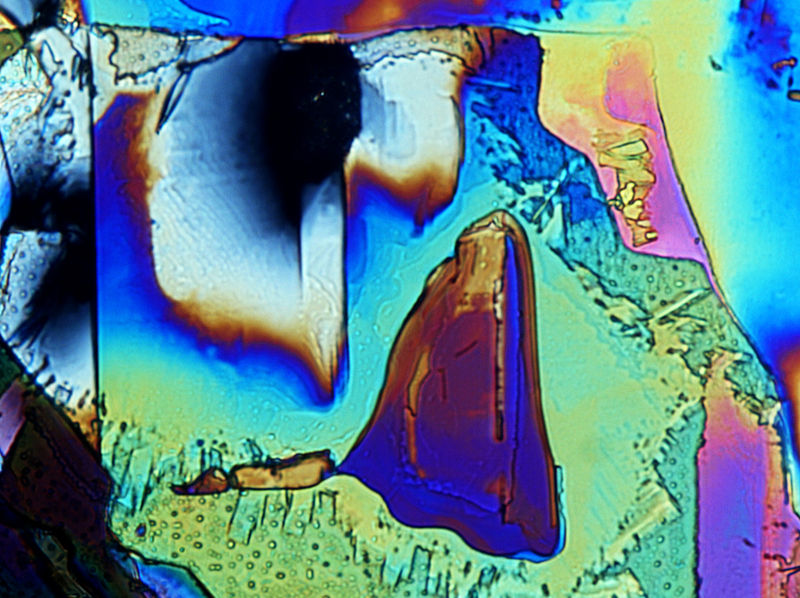
crystals of vitamin B6 ( CC by 3.0 Josef Reischig)

 We spread thick layers of science on everything at our house. Yes, occasionally it smells.

Sometimes our science-y obsessions are entirely nonsense, such as a typical dinner table conversation about how many citrus batteries it might take to start a car. Ideas were proposed for this never-to-occur project, including the use of lemon juice instead of whole fruit.

Sometimes that science is pseudo-educational, such as the time we swabbed between our toes and let the bacteria grow in petri dishes. The “winner’s” dish had such virulent growth that she felt sure it deserved to live. She gave it a name and tried feeding it extra glucose and agar. It quite effectively kept her siblings out of her room. I insisted she throw it away when it began creeping past the lid. I am still blamed for the demise of this biological fright.

encouraging young scientists, love of science starts early,

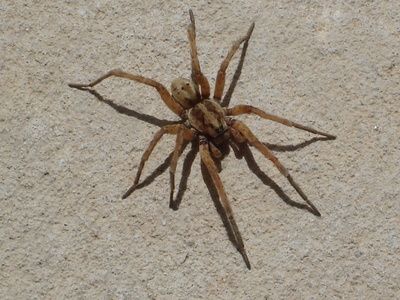
Sometimes it goes on and on. My offspring seem driven to find out. They can’t spot a spider without observing it, wanting to identify it, and then going on about the hydraulic features that are basic arachnid operating equipment. Then there was a certain months-long project that involved observing and sketching the decomposition of a muskrat. They have to discuss all possible angles of a problem, often in such depth that my far more superficial mind drifts off. They tend to walk into a room announcing odd factoids which invariably leads to strange conversations about recently de-classified Russian research, turbo charged engines, or riparian ecology. Or all three. They insist I look at video clips that go on much longer than my attention span. Woe to me if I question a postulate put forth by one of my kids. They will entertain my doubts playfully, as a cat toys with a mouse, then bombard me with facts proving their points. Lots of facts. I’ve tried to uphold my side in science disputes but it’s like using a spork to battle a light saber.

making math relevant, raising young scientists,

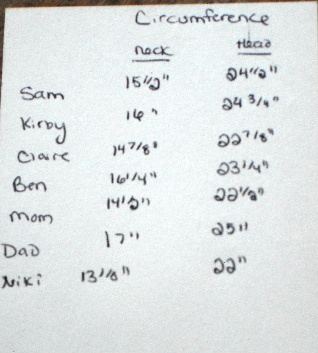
Other family homes probably have video game controllers. Our house has stacks of books and periodicals (who took the neutrino issue of New Scientist, someone yells); tubs overflowing with one son’s beakers, tubing, and flasks; culturing products in the kitchen (like the jar with a note that says “Leave me alone, I am becoming sauerkraut”); and random sounds of saws, welders, and air compressors as something entirely uncommon is being constructed or deconstructed. I know other families have nice normal pictures on their refrigerators. Ours tends to post odd information. The longest-running fridge feature here is a card listing the head circumference of every person in the family. By the time the youngest was 11, my head was the smallest.

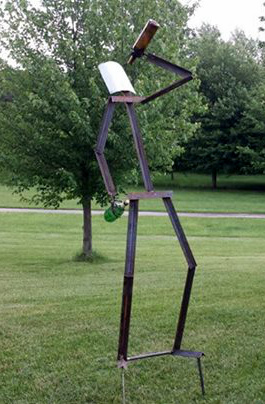
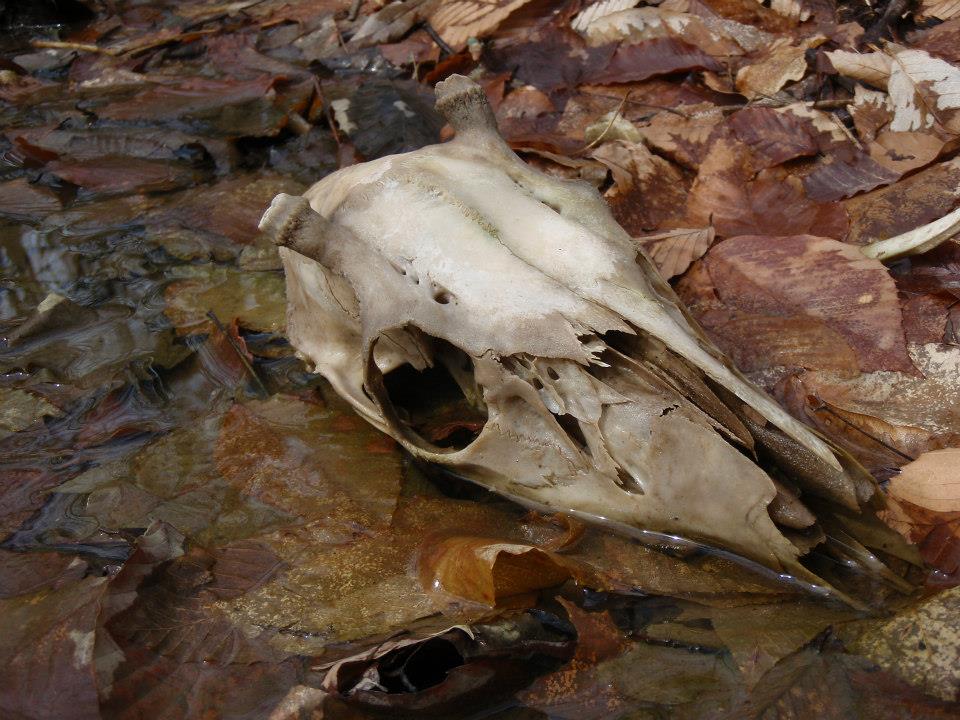
And then there’s the front yard. By the garage door a headstone leans. It has nothing to do with Halloween. Our youngest is teaching himself stone carving using hand tools. This stemmed from his interest in ancient Norse language and myth and lifestyles. That led to a study of runes, leading to old runic carvings, well, you get the idea. He’s already carved runes in a few stones. So of course his brother got him a headstone as a birthday gift. Entirely natural. Also in the yard, a giant sculpture another son welded out of scrap metal. He’s never taken a welding course, or an art course for that matter. No problem. He measured his own limbs to translate into the correct human form. He thought it was funny to make it a two-fisted drinker. I’m plotting to put a trumpet in one of the metal man’s hands so it looks like a rowdy jazz player. And recently my daughter spent the afternoon in front of the house cleaning an entire deer skeleton she found in our woods. She was entirely happy identifying bones, scrubbing, and assembling it into the likeness of a very hungry  deer. Maybe our front yard is why our mail carrier seems a little wary.

raising scientists, natural curiosity makes scientists,

Science shouldn’t be confined to a formal study. My husband and I have never worked in science fields. But we’ve found that keeping scientific curiosity alive isn’t hard.  It’s about an attitude of “yes.” Projects that are messy, time-consuming, and have uncertain outcomes are a form of experimentation. They are real science in action. When a kid wants to know, they want to find out. Not later, not next week, right away. Finding out is engaging. It leads to ever widening curiosity. In our family this process of discovery-to-mastery started early.

When my oldest was just a baby he was horrified by vacuums. Even the sight of one made him scream with This Will Kill Me volume. So we let him learn he could control the “off” and “on” switch. His horror turned to fascination, leading him toward ever greater curiosity, heading in all sorts of directions.

When my daughter was barely able to walk, around 11 months old, she was fascinated by the stones at the end of our driveway. Day after day she wanted to toddle close to the street just to pick up those stones. It occurred to me that it would be a lot easier to satisfy her curiosity than to keep saying no and turning her back toward the house. So she and I went there together and sat in those stones. She was enthralled. I marveled at all the different ways she chose to experience them. Holding, dropping, picking up one at a time then picking up handfuls, handing them to me and taking them back, rubbing the smooth ones and, once I showed her, holding them up to the light. Sometimes she’d raise a stone to her mouth, then shake her head, reminding herself that stones weren’t for eating. Once or twice a stone did touch her lips. The result? I told her we were all done, picked her up, and went back to the safety of the lawn near the house. She remembered. I let her investigate stones day after day until she was done, her desire to know satisfied.

When one of my boys was three he was entranced by the lighters and matches his grandmother used to light her cigarettes. Since she lived with us and on occasion unintentionally left those fire generating devices out, his intense curiosity concerned me. He knew that children shouldn’t touch anything that makes fire, but he was so intensely curious and active (I’ve already described his chimpanzee-like abilities as a toddler) that I knew it was a matter of time before her forgetfulness might collide with his need for some hands-on experience. So, explaining this was only okay to do with an adult, I stood him on a stool at a sink full of water, letting him light match after match to drop in the water. He was a little afraid. His fingers were almost singed a few times. He also conquered the fascination with flame that compelled him to disobey. He asked a few times over a period of months to do this again. Then he was done. Warming about danger doesn’t have the same effect as a child getting close enough to know that matches do burn but can be conquered in the presence of a parent.

Some experiments shouldn’t have happened.  One of my little boys quietly carved a small hole in the drywall of his closet, then attempted to spackle it with the unlikely combination of toothpaste covered by an ostrich feather he’d saved from a field trip. We didn’t discover it until we were emptying that closet as he packed for college. We still laugh about that one.

My kids are much more science-savvy than I’ll ever be, but more importantly, they’re capable of discovering anything they want to know.

Pride Goes Before Tiny Bite Marks

prideful parents, mom's downfall, don't take credit for your kids, my child bites,

I don’t take credit for my children’s many accomplishments. They are their own remarkable people.

As a new mother I didn’t have this quite figured out. Yes, I knew that babies arrive on this planet with all sorts of traits wired in. I knew it’s up to us to gently nurture them, shelter them from harm (including the damage cynicism can do), allow them to take on challenges, help them learn to trust themselves, and let learning unfold in delight.

But I had a few early years when I thought, probably with obnoxious smugness, that my wonderful parenting had something to do with how well my kids were turning out. They were very young and so was I.

My oldest, a boy, was thoughtful and clever. He liked to take my face between his little hands and call me every superlative he could think of like“dear, sweet, wonderful Mama. (Isn’t this positively swoonable?) He rescued insects from the sidewalk, telling them “go in peace little brother,” a line he picked up from one of his favorite picture books. When his father and I tried to talk over our little one’s head about issues we thought he shouldn’t hear, we used Shakespearean language to obscure our meaning. We had to stop, because our toddler began regularly using words like “doth” and “whence.”  What made things work fascinated this little boy, from the bones in our bodies to the engine in our cars, and he insisted on learning about them.

My next child, a daughter, was assertive and talented. She drew, danced, and sang made-up songs of such pure wonder that, I kid you not, birds clustered in trees near her. The force of personality in that tiny girl led us all to laugh at her improbable jokes and enter into her complicated realms of make-believe. Born into a home without pets, her drive to be close to animals was so intense that she kept trying to make worms her friends. Entirely due to her persistence we ended up with several pets by the time she was three.

Although our beautiful little children had medical problems, we had money problems, and other crises kept popping up I felt as if I lived in paradise each day. There’s something remarkable about seeing the world anew through the eyes of the planet’s most recent inhabitants. It’s like using an awe-shaped lens.

But I still had a lot to learn about parenting.

I recall being quietly horrified at a Le Leche League meeting when one toddler bit another. I thought about it for days, wondering what parenting might create such an impulsive child. All the parenting books I read, all the non-violence courses I taught, assured me there was a right way. Of course my comeuppance would arrive.

My third child was born soon after. This endearing, curious, and constantly cheerful little boy possessed relentless energy. Evidence? I’ve got evidence.

  • By the time he was 14 months old we had to twine rope around all the chairs, lashing them to the table between meals, otherwise this diapered chap would drag a chair across the room to climb on top of furniture in the few seconds it took me to fill a teakettle.
  • Before he could say more than a few words he’d learned to slide open our windows, unclip the safety latches on the screens, and toss the screens to the ground. 
  • He liked to grab the hand vacuum for experiments on his sister’s hair, houseplants, and other normally non-suckable items.
  • He watched with fascination as drips from his sippy cup fell into heat vents, the hamster cage, the pile of laundry I was folding.
  • He liked to take off all his clothes and climb on the windowsill facing the street, hooting like a giddy chimpanzee as he danced in naked glee.
  • We had no idea he could climb out of his crib till the evening he opened all the wrapped Christmas presents I had hidden in my room (keeping them safe from him) while we thought he was in bed. The look of complete joy on his face nearly made up for the hours of work it took me to rewrap.

I found myself making up new rules I never thought I’d utter, like:

“I know throwing is faster but we carry things down the stairs.”

We never run with straws up our noses.”

“Don’t poop in Daddy’s hat!”

He became a little more civilized by the time he was three, but not, as you might imagine, before he bit a few children.

Utterly besotted by the bright-eyed charm and endless curiosity of this dear little boy, I never suspected the labels doctors and schools so easily affix on non-conformist kids might be slapped on my child.  I never realized how much he would teach me about what real motivation and learning look like. And I never imagined how much he’d show me about what it means to pursue success on one’s own terms.

Today he is one accomplished young man, in part because he continues to see the world through an awe-shaped lens. And I am still learning from the four remarkable people who came to this world as my children.

Where Fascination Leads

child's interests, toddler's fears show inclinations, fear is fascination,

Born with uniqueness.

“I didn’t say I liked it. I said it fascinated me. There is a great difference.” Oscar Wilde

My oldest was calm and attentive as a baby, except around vacuum cleaners. The machine’s sound made him scream with the sort of primal terror normally associated with death by predator. He had no previous experiences with loud sounds in his short life, good or bad. Except for surgery, performed when he was five weeks old, he’d had no bad experiences at all.

As a first time parent I turned his reaction into a giant philosophical issue. (Okay, maybe I turn everything into a giant philosophical issue.) Should we only vacuum when one of us took him out of the house until he somehow grew out of it? Or should we hold and reassure him when the vacuum had to be turned on? I was convinced whatever we decided would somehow have lifelong ramifications.

For a few months we relied on the first solution. The only vacuum sounds he heard were through open windows. Even outside, he listened on Baby High Alert status until it was turned off, with wide eyes and a stiff body. Fortunately the vacuum didn’t run long since our house was tiny. Then winter hit. It wasn’t easy to go outdoors simply to turn on the vacuum. Much as I appreciated any excuse to be slothful, I was still in the first child clean house stage (that ended resoundingly long before child number 4). So we tried desensitizing him to the Terror Machine sound. Although he initially screamed when I got it out and named it, he began to calm down as I did this day after day, naming it, then saying OFF and ON while performing those functions quickly. I was relieved when he no longer cried in nervous anticipation. Next I’d hold him as I pushed it around, doing one room before letting him turn it off. His tension dissipated and it became a favorite activity. Have you guessed? Mastery of fear led to fascination.

One of his first words was “vacuum.” He wanted to know all about them. He loved sale fliers with pictures of vacuums. I ended up cutting out all sorts of vacuum pictures to put in a photo album so he could flip through it, pointing and making “vroom” noises. Anything associated with vacuums, like hoses and plugs, also made his fascination list. An early talker, he memorized manufacturer names of vacuums and, like a household appliance geek, would quiz other people about vacuums. I recall one such incident when he was not quite two. We were at the park when my child tried to instigate a conversation with a fellow toddler. It didn’t seem the other little boy was a talker yet. Meanwhile my son, telegraphing his strange upbringing, was asking, “Do you have a Eureka vacuum at home? Do you have a Hoover? A Kirby?” When he saw the respondent didn’t understand, my son tried what he thought was an easier question. “Is your vacuum upright or canister?” Both little boys looked up at me with incredulous expressions, as if asking what was wrong with the other.

He often called his play “work” and was never happier than when he could contribute to real work. For his third birthday my son’s dearest wish was for a hand vac. And to go to Sears so he could hang out in the vacuum section. That’s what we did. Even his best buddy Sara, who had come along for the birthday excursion, patiently indulged him. She understood him well and when they played house she often had him fix pretend things or turn on pretend things, which always made him happy. That year he got a gift wrapped hand vac.

The vacuum obsession wasn’t his only early childhood weirdness. Once he figured out that bones have Latin names (I think a physician friend leaked this info) he insisted on memorizing those names. He liked to rescue bugs from situations he deemed dangerous, telling them “go in peace little brother,” a line he got from one of his favorite books. He preferred actual tools to toys, and before he was four he started building things out of scrap wood and nails, carefully hammering them into shapes almost as incomprehensible as his crayon drawings.

Around that time I read a fascinating book by James Hillman, The Soul’s Code. Hillman is a deep, insightful thinker. It has been a long time since I read the book, but I recall that it described each of us as coming into the world with a uniqueness that asks to be lived out, a sort of individual destiny, which he termed an “acorn.” It’s a remarkable lens to view who we are. A child’s destiny may show itself in all sorts of ways: in behaviors we call disobedience, in obsession with certain topics or activities, in a constant pull toward or away from something. Rather than steering a child to a particular outcome, Hillman asks parents to pay closer attention to who the child is and how the child shows his or her calling.

The examples Hillman gives are memorable. If I recall correctly, Yehudi Menuhin, one of the preeminent violinists of the 20th century, became fascinated when he heard classical music on the radio as a three year old. He wanted to feel the same rich notes coming out of a violin in his hands. His parents lovingly presented him with a toy fiddle. He drew the bow across the strings and was horrified at the cheap squawk the toy made. Enraged, he threw the instrument across the room, breaking it. His imagination had already taken him to the place in himself where beautiful music was made and he was unable to bear that awful sound. We normally call that behavior a “tantrum.”

Another example is award-winning director Martin Scorcese. As a child he suffered from terrible asthma and wasn’t allowed to go out to play on the New York streets. So he watched the world framed by a window. He drew what was going on, making frame after frame of cartoons. He was teaching himself to create scenes and action, essentially tutoring himself in the basics of moviemaking. We’d normally consider his circumstances a form of deprivation. Reading Hillman’s book gave me insight into the acorn of my own fears, longings, and daydreams. It also helped me see my child’s interests with new eyes.

My firstborn is an adult now. He can weld and fabricate, repair tractors and cars, build additions on a home and turn a shell of a room into a working kitchen, drive heavy equipment, do complicated calculations in his head, make do on little, and work until everyone around him has long given up. He’s also witty, intelligent, and endlessly generous. I don’t know if those early vacuum terrors had anything to do with how he’s turned out, but I’m sure the child he was would be amazed at the man he has become.

What was your earliest fear, fascination, and other ways you may have shown the “acorn” of yourself?” What about the children in your life? 

Child 1

This article first appeared in Life Learning Magazine.

It Really Does Take A Village

takes a village to raise a child, don't raise children alone, parenting in isolation, isolated mother, community supported parenting,

onurrus.deviantart.com


You’ve heard the African proverb, “It takes a village to raise a child.” You’ve probably also noticed slap backs like, “I’ve seen the village and it’s not raising my kids.”

If we actually consider the proverb we see the wisdom it contains. Throughout nearly all eras of human history, parents weren’t isolated from a supportive network of other people. Grandparents, siblings, cousins, and friends not only nurtured children, they made good parenting much easier. When a baby cried there were other arms to carry it or carry on the mother’s tasks as she nursed. When a toddler played there were other eyes keeping watch. When a child was ready to learn there were people available to show him how to fashion reeds into a basket, to fish in the river, to tan hides, to choose the right plants to make medicines. When a teen sought role models there were many to emulate, people who had been guiding forces her whole life. Children grew up with an invaluable sense of connection to kinfolk and community.

Today we don’t benefit from the educational richness of traditional village life where children can see and take part in the real work necessary to sustain life. Few of us live near extended family members. But we can foster the development of our own “villages” in at least three ways. Here’s how it worked for me.

1. Establish a supportive network.

When my first child arrived I didn’t know another soul mothering a newborn. Although my parenting and life choices were far different than my mother’s, I found myself calling her nearly every day. It was comforting to talk to someone who cared that I’d been up all night, even if I had to filter out suggestions like feeding rice cereal to a newborn. I also started attending a nearby Le Leche League group to be around other mothers with small babies. There I found women who shared ideas, laughter, and lightly used baby clothes.

When we began homeschooling, once again I felt isolated. All my friends’ children were school bound. So I linked up with several homeschooling groups. Online is great but in-person is better in dozens of ways. My new homeschooling buddies and I had approaches to learning that spanned the spectrum from unschooling to school-at-home, but our lively conversations veered away from judgment. We cared about each other, looking forward to field trips and park days as much as our kids. We particularly enjoyed the way our kids’ unique curiosities blended, creating the kind of quirky fun so typical of homeschooled kids.

2. Create a “chosen” extended family.

Sure, I felt closer to my parents once I became a mother, but I also needed to expand my tribe. The first woman I met with a newborn became like a sister to me. We didn’t always agree on politics or religion but it didn’t matter. As more children came into both our families we watched each other’s kids, exchanged household items, went on day trips, and supported each other through crises.

My group of parent-friends expanded. This made it easy to take turns carpooling and babysitting. It also made for wonderfully boisterous get-togethers. My extended family also included a group of women who called themselves “crones,” new farming friends, and an elderly Scottish bagpipe instructor. These people cast all sorts of light in our lives.

3. Develop rich connections in the community.

When I moved it took a year to meet the people across the street. It was not an overtly friendly place. I was determined to make it into a real neighborhood. I invited people over for potlucks, Halloween parties, and all sorts of kid-centric fun. When new families moved in, I greeted them with homemade goods and an invite to my next event. It became a place where my kids felt known and accepted. One son learned small engine repair from a retired man who liked to tinker, another son liked to visit the guy a few doors down who sculpted in stone, my daughter sang impromptu operas in the front yard without a moment’s self-consciousness.

We stretched to make community connections as well. We struck up conversations that turned into remarkable learning experiences, giving us access to experts in all sorts of fields. My kids have spent years volunteering in Red Cross, recreation programs, wildlife rescue, and more. We make our home part of a larger village, for example hosting people from overseas, running a food co-op, and holding social action meetings. Like our home, the community became a place where my children’s interests were nourished. We have a village now. Whatever direction we extend a hand, we find a friendly hand waiting

Village building resources.

*Get in touch with family members, near or far. Reach out for support even if it doesn’t come in the exact flavor you’d prefer.

*Connect with other parents at the park, playgroups, and nature preserve. Build mutually supportive networks by exchanging your time and talents.

*Join groups that sustain your interests in a positive way. Ask for information about homeschooling groups and programs at your public library. If you are nursing a child, try your local Le Leche League chapter.  Consider joining the Holistic Moms Network. Find or start any sort of group on Meetup.com, from a stroller-pushing-dog-walking get-together to a kids’ chess club. 

*Enjoy the sense of belonging found in active membership in a church, charity, outdoor group, or any organization where families are welcome.

*Establish connections by becoming “regulars.” You may choose to go out for breakfast each Saturday at the same locally owned place where the staff knows your kids. You may help out at a CSA farm as a family. You’ll also feel more at home in your community through regular visits to your library, recreation center, and park.

*Be the neighbor you’d like to have. Extend kindness and warmth as you get to know people. Perform acts of service along with your kids, whether shoveling the driveway of an elderly neighbor or volunteering with Meals on Wheels. Even the smallest children can perform acts of kindness.

*Develop a tradition of community service. There are plenty of ways for kids, toddler to teen, can volunteer.  And help them get involved in civic affairs, clubs, and community organizations. They’re creating their own place in the village too.

it takes a village, community building for families,  isolated parents, parent friendships,

cozplayinsmed.deviantart.com