A Moment Never Shared

His name was Vincent. He may have entered Pine Elementary School when we were both in 5th grade or may have been in my classes all along, but that spring he moved directly to the center of my awareness. He had silky black hair that fell low over astonishingly blue eyes. Unlike other grubby, snickering elementary school boys he was quiet and attentive.

It was probably no coincidence that I fell for Vincent soon after hearing Don McLean’s classic American Pie album. It was his song about Vincent Van Gogh that captivated me. The lyrics told of a misunderstood visionary, a man with “eyes of China blue” whose soul was too beautiful for an uncaring world.

Although I’d never really paid attention to boys before, somehow I merged the intensity of those words with a look I was sure I saw in Vincent’s eyes. My girlfriends claimed to have crushes all the time over celebrities. The symptoms of their crushes included shrieking and silliness. I had none of these signs.

Once, as the teacher told us to line up at the door for music class, I found myself standing behind Vincent. I was sure he was aware of my presence. There could be no other explanation for the sudden frisson between us. Surely his skin prickled and his breath deepened as mine did. I wanted to touch his dark hair. I wanted him to turn and smile at me with causal ease even though I knew that was not possible at school. The boys’ loud obliviousness and the girls’ sharp watchfulness kept any such thing from happening. Boys and girls were friends only in books. Together they wandered moors or solved crimes or dreamed up new inventions. They talked openly and sometimes held hands. I wanted that with a longing more intense than I’d ever known.

Vincent kept me awake at night. His reserved nature made it easy to develop idealized concepts about him. I decided that he was smart and kind. I imagined that he was secretly drawn to me, but too shy to look my way. As I lay in bed, sleepless, I felt the injustice of being eleven years old. Too young to have love taken seriously, too young for anything.

Yet I felt old. Sorrows I’d carried for years became more intense because I’d lost the childhood distraction of play. I was on the verge of adolescence without sports or hobbies to keep me busy. All I had was this secret love for a boy named Vincent.

Over summer vacation I painted my toenails, rode my bike, tried to write poetry, and wondered if God existed. What kept me awake now was worry over how I might make myself pretty enough for Vincent. But I was also dreading the prospect that he might reveal himself to be something less that the person I’d imagined.

Vincent didn’t come back to school for sixth grade. No one knew where he’d gone. That made him, in my mind, more mysteriously alluring than ever. Sometimes at night I opened my bedroom window to breathe in the night air and look at stars. I hoped he might be at his own window. I no longer ached to hold his hand, I only wanted him to be happy.

I can still easily picture Vincent’s face even if I’ve forgotten his last name. My secret love for him taught me the first gentle lesson in becoming a woman. Unrequited love isn’t always painful. Sometimes it’s as tender as a moment never shared with a beautiful blue-eyed boy.

This piece appears in the new anthology Heartscapes: True Stories of Remembered Love, which features 150 tales of mystery, intimacy, and tenderness.  

Life Lists

life lists, journaling, paying attention,

What do you want to remember?

The most avid bird watchers keep Life Lists, tracking the first time they sight a bird. They write down information like order, genus, and species. Usually they note much more. Things like date and place the bird was spotted. The more detail, the more a birder’s Life List becomes something greater than a factual log of avian sightings. Years later the pages can return that person to an afternoon standing in the dappled sunlight of a New England forest when a blue, orange, and yellow flash heralded the arrival of a Painted Bunting. It can evoke a remarkable trip to Mexico where along a riverbank three distinctive wavery notes of a Great Tinamou were heard, and all the rest of that day bird after bird was sighted until darkness arrived. It can bring back time spent with dear friends in whispered conversation waiting hours for a glimpse of a single Black-Capped Vireo.

I’m no birder. I appreciate but know next to nothing about our feathery friends. But I am intrigued by the Life List concept. Life Lists keep birders motivated. The lists also alert them to a wavelength most of us ignore. A wavelength sensitive to birdsong, flight, and the faint hush of a wings on a nearby branch. Keeping track of any one thing is entirely unnecessary but such lists cue us to a chosen frequency.

What do you want to notice and cultivate in your life? Here are some possible Life Lists to consider.

Books That Made A Difference   I’ve often thought of books that changed my worldview or opened doors inside me with their insights. Do I remember the titles and authors? Only sometimes. I truly believe there are pivotal books that make us who we are. I started such a list years ago but let it lapse.

If you keep such a list, add more than title and author. Include a quote or two, some quibbles you have with the text, questions you’d like to ask the author, why this book came at the right time for you, where you were when you read it, what it means to you. Many people are keeping their book lists on GoodReads and Library Thing.

Wildlife Seen  Like a hugely expanded birder’s list, this could be open to all species or your own particular fascination, perhaps spiders (that would keep you busy with something like 38,000 species). And like a birder’s list, you could note species, location, description, your impressions, and much more.

Trips Taken  My mother made an effort to write about the long summer trips my family took, filling spiral notebooks with destinations and mileage and her impressions. I cherish them now, even if those trips left me with the wrong kind of lust.

If you keep such a list, fill it with photos and memorabilia. Make notes about your expectations and how they were fulfilled, about sights and sounds and tastes, about conversations and funny moments.

Favorite Movies (or Movies Seen)  This can be remarkably helpful if, like me, you find yourself starting to watch a movie that sounds good only to realize you’ve seen it. A list of movies seen, with details about favorites, is something I marginally keep up on Netflix just to keep myself from re-watching something I didn’t enjoy in the first place. I have friends who attend yearly film festivals, keeping extensive notes that they share with non-festival goers like me when those movies are released. Again, the more details the better. Write down who you were with when you saw the movie, where you saw it, snippets of meme-worthy dialogue, your favorite scene, actors you predict will go places, and your review.

People Who Have Influenced You  So many people flit in and out of our lives. Sometimes we don’t realize their impact until years later when we see they served as role models (like the woman I met during my brief espionage career) or anti-role models (a surprisingly important motivator). This is one of the few lists that can be made retroactively. Think of neighbors, friends, classmates as well as public figures. Note what they did and said along with behaviors that contributed to that influence. Once you start writing these observations down you may be more attuned to daily influences of people in your life, from the spirit-lifting cheer of a clerk to the resolutely calm example of a friend in trouble.

Dream List  Sure, you could write a bucket list and cross off each experience. But I’m talking about keeping a list of dreams you remember. I’ve written down only my most memorable and startling dreams for years, usually the ones that refuse to leave my mind. There are potent messages in dreams, coming to us from deep places where wisdom waits to inform us. If you want to more fully remember your dreams, try this. Before falling asleep, remind yourself to remember and understand your dreams. As you waken, pull the threads of your dreams into your conscious awareness. Whenever possible, write them down. It helps to take the images in the dream (ladder, teacher, highway, blue car) and note what each means to you. Look back at your dream list every now and then, you may find themes unspooling into new awareness.

Paths Hiked  There’s something about coming upon new vistas along the trail that prompt reflection. Those musings might be interesting to record along with hike data like location, distance traveled, terrain, weather, and date. Note who you hiked with and maybe what you talked about or laughed over. Include photos. Some folks contribute their photos and thoughts on Tumblr sites or blogs.

Words That Cut To The Center   This is a list I’ve kept on and off since I was a teenager. I find a quote or poem that distills meaning to the essence and write it in a journal (or now, on a Word doc). I’ve lost several of these lists, only to find them years later and catch a glimpse of what occupied my heart during those times. I’ve also found such lists remarkably useful, perfect when I want to share a poem or quote with a friend.

Gratitude List    This is a popular one, even recommended by mental health experts. I’ve learned it’s possible to look past what we label “good” and “bad” to appreciate mistakes, doubt, and crisis. I’m sure a gratitude list filled with sweetness and light can lift a mood. But I suspect a gratitude list more fully fleshed out might lift our spirits into a realm of blessed understanding.

Belly Laughs, Inside Jokes, Made-Up Words  Laughter is good for us, but we rarely remember what caused us to laugh ourselves into tears. I wish I’d started a list years ago with just a few notes about who, where, and particularly what we found so funny. I suspect I’d laugh all over again.

I’d also love a list of all the inside jokes and words unique to my family and friends. Some trigger us to laugh, some promote a feeling of solidarity because they remind us of shared experiences. How easily we forget.

Here’s one my family still uses, “You no see big thing like train?”  A friend drove a truck for a business started by an immigrant whose English wasn’t easy to understand. The business made money in part because of the owner’s extreme frugality, he barely even maintained the truck. One day the friend was making a delivery when the truck’s brakes failed. Unfortunately they failed as he was approaching railroad tracks where a train was stopped. It was a large truck and much as he tried, he only managed to slow down. He crashed into the train. He was fine, the truck was not. He called his boss to explain. The boss yelled, “What, you no see big thing like train?” This line has proven itself handy in many circumstances, thankfully none involving real trains or failed brakes.

Tastings  Savoring the good things is a tasty reason to start a list.  Consider wines, beer, cheeses, chocolate, or heck, start a list of Chomping Something From Every Street Cart I Can Find. Take notes on subtle flavors, good pairings, and circumstances such as where you were and who you were with. Highlight the very best. Hmmm, I like that street cart idea…

Perfect Moments   We live in a happiness-chasing culture, perhaps because advertisers tell us in every possible way that it’s easily purchased. But if we pay attention we find that perfect moments happen all by themselves. It’s a father rocking a baby to sleep, a calf taking first tottering steps in a pasture, a turn on the dance floor made of movement and beat and sheer exuberance.  These moments aren’t easily remembered. They enlarge our lives only briefly before drifting into fragments of memory. Taking time to sketch a perfect moment is an unexpectedly rich way to capture it (try these drawing hacks for non-artists). You might also draw a mind map or write a poem. Who said lists have to be list-like?

Juncture List  You know those junctures when a decision is made that shifts the course of your life. Sometimes we realize something big is about to happen: picking which college to attend or starting a job or ending a relationship.  Sometimes the choices seem minor at the time, like not answering the phone or telling a white lie or ignoring a symptom. This is another list that is more easily written while looking back. It may not seem valuable to parse out where things changed, but it helps us see larger patterns, feel synchronicity’s strange power, and appreciate the mysterious paths we’ve taken to arrive at this moment.

It's about paying attention.

Batik Party: Color To Last A Lifetime

how to batik, backyard batik, ironing memories,

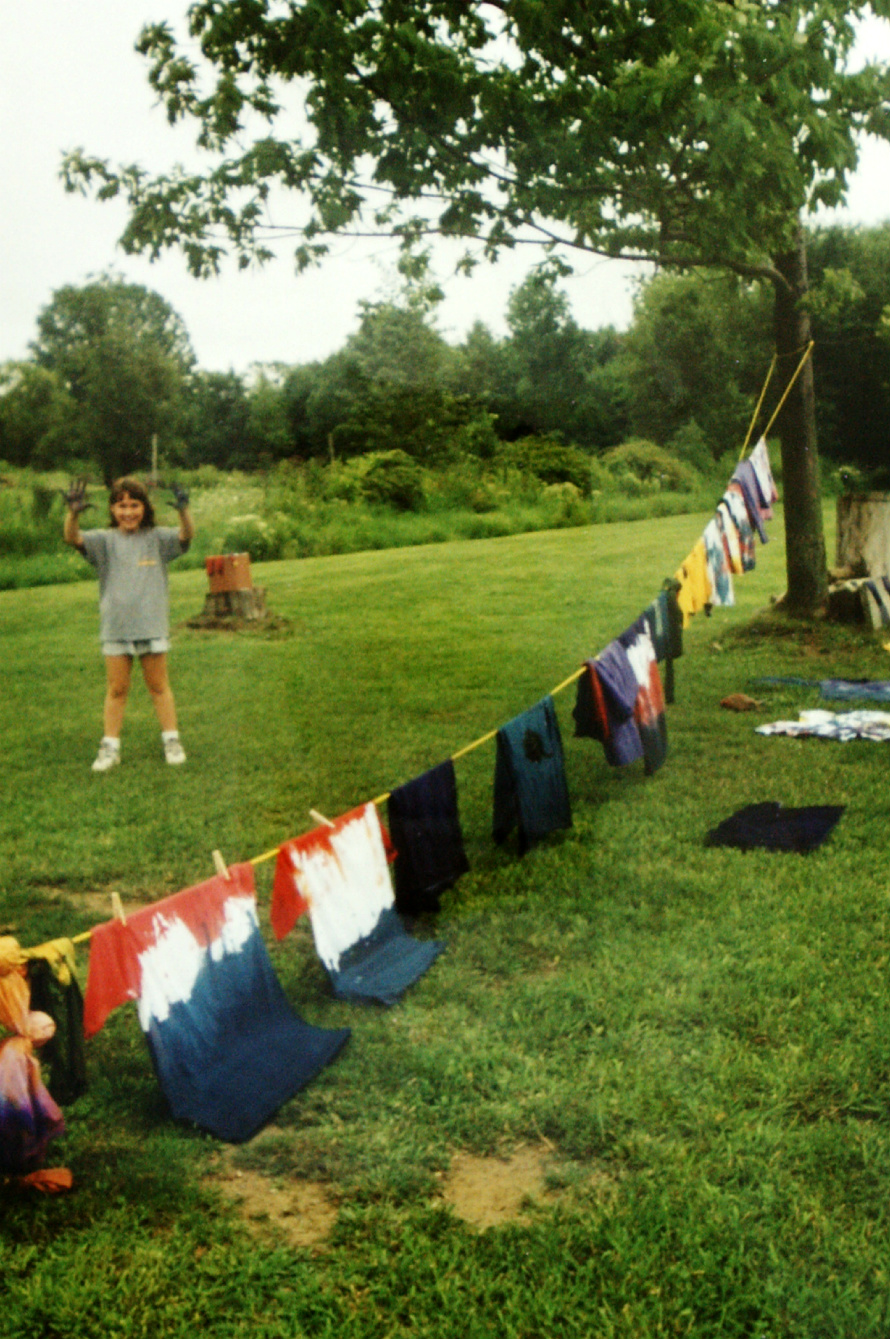
The grass is spread with dyed shirts drying in the sun. It seems fuchsia, cobalt blue, and orange are the favored colors of our backyard batik party.

We approach this ancient art using shortcuts that would make a purist shriek. First we peel faded paper from old crayons, revealing the richer hues underneath. The crayons are melted in tin cans bubbling in a big pot of water on our camp stove. Then grandmothers, mothers, and children together, we crowd around picnic tables and paint the gooey wax onto cotton shirts, pillowcases, and tote bags. Some of us splash abstract designs, others draw intricate pictures. Eager conversations quiet as artists concentrate on their work.

Next we dunk them into pails of dye—gumdrop yellow, indigo, rose, pale green or sky blue. Children set their projects out on the grass to dry in the sun, then run off to play. To complete the process the wax has to be melted out of the fabric, ironed over and over on newspaper until no more will seep out under the press of a hot iron. Nothing of the crayons will remain but color locked into the fibers, wax resisting dye.

I drag my wooden ironing board out of the dark closet and pull it into the bright yard. My sister gave it to me as a humorous wedding shower gift but my mother’s friends in attendance thought it refreshingly practical. I’ve only used for the odd art project. The rickety wooden legs have to be forced into warped slots which hold them in place. The children come from catching frogs in the creek, from roasting marshmallows over the fire, from all over our property just to watch their mamas stand over the ironing board.  “Can I try?” and “Wow” is the standard kid response. Cautioning them to hold their fingers only on the handle and to keep the iron moving we let them work the wax out of the batik designs. Recognizing the possibility of danger they are entranced, as if we’ve let them use power tools.

They wait impatiently for their turns while the seven of us women sit at the picnic table eating hummus, Greek salad, and chocolate cake. We talk of how far we’ve come from our own mothers’ ironing boards here in the slow-to-evolve Midwest. Christie describes her mother as a “laundry fascist” who did her wash on Monday and ironing on Tuesday, regarding stains with the same disgust as sins.  Holding to such an immutable schedule of laundering was what her mother believed “good women” did. The moral character of others could be determined in part by the cleanliness of their clothes, making the world a more easily understood place. Christie’s mother still gives advice on stain removal, valuable irony-tinged information for those of us trying to live simply.

Debra remembers looking for a summer job in back when classifieds in her hometown paper were displayed in separate columns: Men Wanted, Women Wanted.  As a high school sophomore she had difficulty deciphering descriptions like “Gal Friday” and “sturdy middle-aged woman.” She avoided waitress jobs, not only because of the potential pats on the rear but to spare herself the necessity of ironing a uniform each day.

I volunteer memories of downtown shopping trips each summer. My mother put me in a crisply ironed dress and tied matching ribbons at the bottom of my braids. My grandmother never left the house unless impeccably clad. She sewed her own lined suits, wore stockings and girdle every day, and carried dress gloves in her purse no matter the season. I recall waiting as they shopped at iconic Cleveland department stores Halles and Higbees, then they took me and my sister to the tea room. A trip to the ladies lounge followed.  I remember hopping up to the toilet, admiring my shiny shoes as my feet swung off the floor.  But I was afraid to unlatch the door because frightening noises often came from other stalls in that fancy pink restroom. Ladies who moments ago were delicately patting their lipsticked mouths with heavy cloth napkins were now making groaning noises.  I knew full well at the age of four that ladies did not make such noises, particularly in public.  Something bad had to be happening.  I pictured them transformed into monsters.  When I finally left the stall and made my way to the line of sinks I watched in the mirror as other doors opened.  Demure ladies stepped out as if they’d made no such sounds. Only years later did I realize that these women were struggling with heavy girdles which cut into their summer-weary flesh.

We laugh at domestic memories as our children finish the exotic task of ironing. When we look up from our reverie they have started a game of hide and seek. Their voices sound distant in the gathering darkness. Their small shirts are now bobbing from wire hangers along the porch. One by one we iron our own shirts as the sun goes down. The smell of crayons hangs in the evening, imprinting memories to last a lifetime.

I think our next art party will involve candy cigarettes and paint flinging, ala Jackson Pollack.

easy batik, iron in some memories,

How To Host A Batik Party

This process isn’t “real” batik. It’s an approximation that’s fun and basic. It’s also time consuming, messy, requires close attention when wax is near heat, and can stain anything from driveways to flesh. That’s why you should make it into a gathering of friends who will share the effort and joy. And why you should do it over grass as much as possible.

Supplies

  • lots of newspaper
  • old crayons with paper removed, sorted by color
  • chunks of paraffin
  • empty cans (16 oz or larger food cans), paper wrappers and tops removed
  • large disposable roasting pan
  • thick and thin paintbrushes you’re willing to throw out afterwards
  • old camp stove or electric skillet you’ve willing to have wax spilled on
  • fire extinguisher
  • metal sheeting for safety (we found a piece in the garbage)
  • tarp
  • ironing board
  • picnic table and/or sturdy tables to work on
  • clothesline
  • clothes iron (it too may get waxy)
  • clothing dye (can use Rit Dye or order more professional dyes from Dharma Trading)
  • large buckets for dye (you can often get them free from store bakeries and delis, food is delivered in them)

Method

Ask everyone to wear old clothes, hair tied up where applicable, and to bring food and drinks to share. They also must bring items to batik. That might be t-shirts, tote bags, curtains, pillowcases, skirts, ties, etc. The best are all-natural fabrics such as cotton, hemp, silk. If it’s a blend, a high natural content is preferable.

Preparation: Mix dyes in buckets. Most dyes need hot water to dissolve. Some need other ingredients so make sure you’ve checked in advance. You’ll want at three to five separate dye colors. If kids are involved, you may not want too many conflicting colors. Repeated dips will leave them with brown or grays. (Educational but possibly not what they intended.) Leave the buckets out in the yard as dye stations.

Spread the tarp over the picnic table and/or work area. Put the metal sheeting down where the camp stove/electric skillet will sit.

Step One: Put different colors of crayons in the empty cans. Add a few slivers of paraffin to each can. You also want a can with only paraffin for clear resist areas. Put the cans in the roasting pan. Fill the pan with several inches of water, about a third of the way up. Keep a pitcher of water nearby to keep filling as water evaporates. You do not want to spill water in the wax.  Heat gently to melt the crayons and paraffin. Once it’s liquified turn the heat off and it will remain liquid quite a while.

Caution. SUPERVISE CHILDREN, hot wax burns. NEVER leave wax over heat unattended. NEVER put out a wax fire with water, which spreads it. Instead it must be smothered (fire extinguisher or fireproof lid over it, we kept an old grill lid handy).

Step Two: It’s time to paint designs or pictures on fabric. Just dip brushes in melted wax. Make sure you return the right brushes to the right container. Use clear paraffin in areas where you want the fabric color to show within or around your design.

Step Three: Dip all or select portions of your fabric into dye of choice.

Step Four: Hang on clothesline. Do another fabric item or simply wait for your item to dry.

Step Five: Put several sheets of newspaper under and several over a single layer of your dry fabric. Iron to melt the wax out of the fabric. You’ll need to replace the newspaper sheets several times until wax no longer melts from the fabric.

Pride Goeth Before Tiny Bite Marks

raising non-compliant kids, non-conformist kids, when kids bite, biting toddler, kids labeled, parents learn from kids, parents don't know everything,

Image courtesy of biohazard-101.deviantart.com

I don’t take credit for my children’s many accomplishments. They are their own remarkable people.

As a new mother I didn’t have this quite figured out. Yes, I recognized that babies arrive on this planet with all sorts of traits wired in. I knew it’s up to us to gently nurture them, shelter them from harm (including the damage cynicism can do), allow them to take on challenges, help them learn to trust themselves, and let learning unfold in delight.

But I had a few early years when I thought, probably with obnoxious smugness, that my wonderful parenting had something to do with how well my kids were turning out. They were very young and so was I.

My oldest, a boy, was thoughtful and clever. He liked to take my face between his little hands and call me every superlative he could think of (“dear, sweet, wonderful Mama). Isn’t this positively swoonable? He rescued insects from the sidewalk, telling them “go in peace little brother,” a line he picked up from one of his favorite picture books. When his father and I tried to talk over our little one’s head about issues we thought he shouldn’t hear, we used Shakespearean language to obscure our meaning. We had to stop, because our toddler began regularly using words like “doth” and “whence.”  What made things work fascinated this little boy, from the bones in our bodies to the engine in our cars, and he insisted on learning about them.

My next child, a daughter, was assertive and talented. She drew, danced, and sang made-up songs of such pure wonder that, I kid you not, birds clustered in trees near her. The force of personality in that tiny girl led us all to laugh at her improbable jokes and enter into her complicated realms of make-believe. Born into a home without pets, her drive to be close to animals was so intense that she kept trying to make worms her friends. Entirely due to her persistence we ended up with several pets by the time she was three.

Although our beautiful little children had medical problems, we had money problems, and other crises kept popping up I felt as if I lived in paradise each day. There’s something remarkable about seeing the world anew through the eyes of the planet’s most recent inhabitants. It’s like using an awe-shaped lens.

But I still had plenty to learn about parenting.

I recall being quietly horrified at a Le Leche League meeting when one toddler bit another. I thought about it for days, wondering what sort of parenting resulted in such an impulsive child. All the parenting books I read, all the non-violence courses I taught assured me there was a right way. Of course my comeuppance would arrive.

My third child was born soon after. This endearing, curious, and constantly cheerful little boy possessed relentless energy. By the time he was 14 months old we had to twine rope around all the chairs, lashing them to the table between meals, otherwise this diapered chap would drag a chair across the room to climb on top of furniture in the few seconds it took me to fill a teakettle. Before he could say more than a few words he’d learned to slide open our windows, unclip the safety latches on the screens, and toss the screens to the ground. He liked to grab the hand vacuum for experiments on his sister’s hair, houseplants, and other normally non-suckable items. He watched with fascination as drips from his sippy cup fell into heat vents, the hamster cage, the pile of laundry I was folding. We had no idea he could climb out of his crib till the evening he opened all the wrapped Christmas presents I had hidden in my room (keeping them safe from him) while we thought he was in bed. The look of complete joy on his face nearly made up for the hours of work it took me to rewrap. I found myself making up new rules I never thought I’d utter, like:

“Don’t poop in Daddy’s hat.”

“We never run with straws up our noses.”

He became a little more civilized by the time he was three, but not, as you might imagine, before he bit a few children.

Utterly besotted by the bright-eyed charm and endless curiosity of this dear little boy, I never suspected the labels doctors and schools so easily affix on non-conformist kids might be slapped on my child.  I never realized how much he would teach me about what real motivation and learning look like. And I never imagined how much he’d show me about what it means to pursue success on one’s own terms.

Today he is one accomplished young man, in part because he continues to see the world through an awe-shaped lens. And I am still learning from the remarkable people who came to this world as my children.

We Choose Our Own Role Models

role models, mentors, how role models shape, impact of role models,

Image courtesy of s2-s2.deviantart.com

There’s no predicting who we choose as our role models. Teachers, coaches, and religious leaders are held out as exemplary choices and for good reason, since mentors are linked to greater success in adulthood. Despite adults’ well-meaning efforts to foster or even assign mentors, each one of us is drawn to people we find inspiring. It’s only in looking back that we can see more clearly how our childhood role models play a part in shaping who we become.

This is obvious looking at my husband’s growing up years. He wanted to understand how the world around him worked, and like most children, he wanted to find out by getting right in the midst of what fascinated him rather than play with plastic hammers and screwdrivers. So he sought out neighbors who let him fix cars alongside them and who welcomed his help running their small businesses. What he gained from these experiences still benefit him.

It’s not as obvious in my life so I have to strain to make those connections. I had plenty of freedom to ride my bike and play without too much parental supervision, but seeking out other grown-ups never occurred to me. In fact I can only think of a single adult outside my family who made a lasting impression. Her name was Mrs. Dosey.

I met her during a criminal investigation. Well, sort of.

When I was around eight, my older sister developed a brief infatuation with espionage. She deemed herself a private investigator and permitted me to be her sidekick. We practiced sidling around without being seen, took notes on people’s behavior, and looked for a mystery to solve. My sister hit the jackpot when she discovered bones in a field across the street. Bones! This could be dangerous. My sister identified the house in closest proximity to the bones. It seemed like a strange place. The yard had almost no grass. Instead the front was crowded with strangely cropped trees and the back sported a clothesline (unheard of in our suburban neighborhood) and a jumble of fenced-in areas—sinister indeed. We practically trembled with fearful anticipation.  My sister instructed me to remain completely silent, she’d question the suspect.

When she rang the doorbell it was promptly opened by a sturdy middle-aged woman wearing an apron and orthopedic shoes, her hair mashed down by a hairnet. When she invited us in I noticed she had a trace of an accent. Against all parental advice about strangers, we walked meekly inside.

Mrs. Dosey was busy in the kitchen but gladly welcomed two girl detectives. She didn’t raise an eyebrow when questioned about bones. She explained that she raised ducks, which she slaughtered for meals on special occasions. Although it wasn’t the murder we anticipated, it was death nonetheless. My sister and I shivered.

Mrs. Dosey talked to us as she went back to her culinary project. We learned that the cropped trees in her front yard were an apple orchard and the back yard was crowded with vegetable gardens, berry bushes, and poultry pens. She served us milk and homemade cookies. We stayed quite a while, curiously watching her work.

Mrs. Dosey was assembling a wedding cake she’d made from scratch. She showed us how she was separating the layers using tiny soda bottles between them, to be covered by flowers from her yard. Finally she said we could come back another time, she had a few more things to finish before her daughter’s wedding that was taking place the next day. My sister and I weren’t even disappointed that our murder case had collapsed. We’d met someone who seemed like a different creature than the frosted hair moms of our generation.

It didn’t occur to me till years later that Mrs. Dosey was completely matter-of-fact about two little girls sitting at her kitchen table, inches from this towering confection. She was entirely unruffled on a day most mothers of the bride are harried, even though she’d made the dress, the cake, and if memory serves, was making the reception food as well.

I never knocked on Mrs. Dosey’s door again. My sister and I dropped the private eye business to become girl scientists. We waded into the pond in sight of Mrs. Dosey’s house observing duck behavior and slogged home covered with what we optimistically called “duck muck.” My mother, who began buying apples from Mrs. Dosey every fall, seemed to regard the woman as an oppressed version of her gender. She pointed out Mrs. Dosey’s heavy labor around the house and yard, noting that this woman rode a bike with a basket to the store every few days for groceries. The emphasis seemed to rest on evidence that Mr. Dosey didn’t share those burdens. To me, Mrs. Dosey seemed remarkably happy. And savvy as well. She waved when my sister and I were out but was wise enough to spare us that social indignity if we were waiting with friends at the school crossing near her house. I saw her on that bike for years after I left home. She never looked any older or any less cheerful.

I credit my husband’s role models for helping him grow up to be capable, positive, and wonderfully open-hearted. But not for a single moment have I ever linked my own life choices to Mrs. Dosey’s example. After all, I planned to change the world by elevating peace, ecological harmony, and justice. If I had time I hoped to fit in writing novels. And parenting. Okay, I also wanted thick hair and thin thighs.

None of that happened. I’m not a UN peace negotiator, my activism is local and my writing is gentle. I’m not blocking whaling ships with my fellow Greenpeace buddies, instead I tend to vegetable gardens and haul buckets of kitchen scraps to our livestock. My choices look more like Mrs. Dosey’s, although I can’t pretend for a moment that I’ll ever have her patience. I was raised to believe I could be accomplish anything if I worked hard enough but I’m learning that we can save the world right where we are. In part, that means opening the door on our busiest day ever to welcome the questions of little girls.

Who in your growing years made an impression on you and how do you see their impact in your life today?

Eat Your Dandelions

dandelion recipe, dandelions for health, eat dandelions, don't kill dandelions,

Image courtesy of thaowurr.deviantart.com

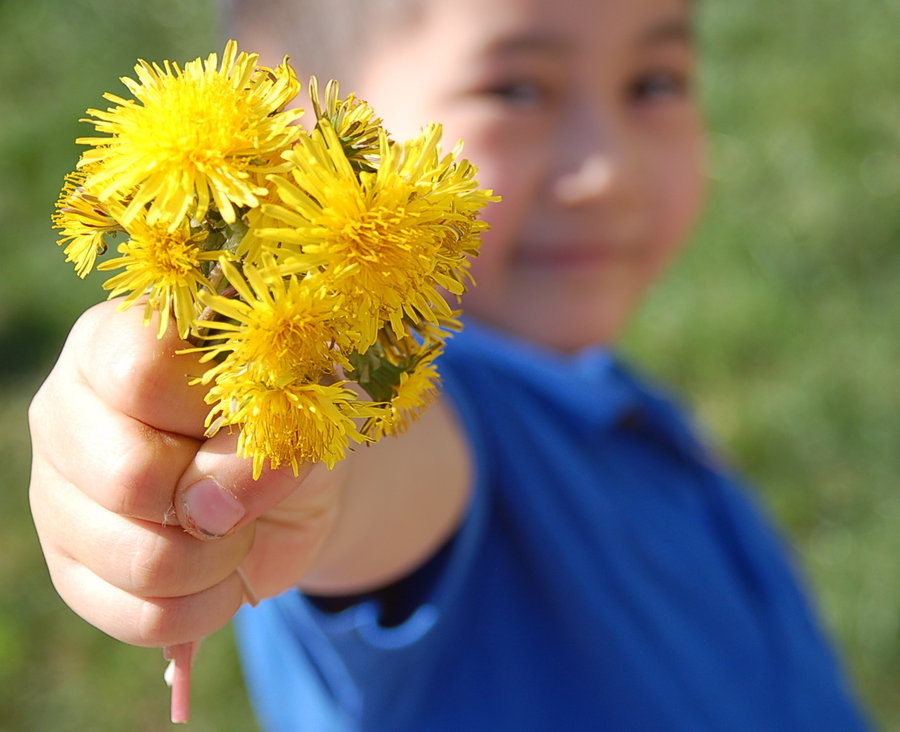
“You EAT them?” a little boy new to the neighborhood asks. He leans forward for the answer, his face ready to constrict in doubt.

Children already well acquainted with our family’s springtime ritual stop picking.

“Yeah!” they eagerly assure him, “They’re really good.”

They aren’t referring to a new vegetable in our garden. They’re talking about dandelions.

Herbalists tell us exactly what we need grows nearby. Those plants we call “weeds” may in fact remedy what ails us. They are so common that their properties are easily overlooked in a culture searching for packaged wellness. Plantain, mullein, comfrey,mint, mugwort,St. John’s wort, chicory and purslane spring up wild in my untreated lawn and garden. Weeds, but also powerful healers.

Today we’re picking dandelions in full flower. It isn’t about finding a remedy. For me the harvest is has to do with celebrating spring and affirming the beauty around us. For my children and our neighbors it’s about fun. I wait until the blooms are at their peak. Then I call friends and neighbors to announce, “Today is the day!”

Children spread out across the yard holding little baskets. A girl squats in front of each plant, pausing a long moment before she reaches out to pluck a flower from its stem. The  oldest boy in the group walks by many dandelion plants to pick only those growing in clusters. And the newest little boy falls silent, as the rest of the children do, taking delight in the seriousness of the harvest.

European settlers brought the dandelion plant to this continent for food and medicinal purposes. The perennial spread easily across most states. It’s a testament to the power of herbicide marketers that such a useful plant became so thoroughly despised. Standing under today’s blue sky, I look at exuberant yellow rosettes growing in bright green grass and feel sheer aesthetic pleasure.

After the children tire of picking we sit together on the porch and snip off the dandelion stems right up to the flower. We mothers look over their busy heads—blonde, brown, black—and smile as we watch them stay at this task with the kind of close attention children give to real work. One girl remarks that the flowers look like the sun. Another child says her grandmother told her that in the Old Country they call the plant by the same name as milk because of its white sap. The newest boy chooses to line the stems neatly along the wide porch planking, arranging and rearranging them by length.

Every aspect of a ritual holds significance so I pay attention to the warm breeze, the comfortable pulse of friendship, and flowers so soft against my fingers they remind me of a newborn’s hair.

When we’re done the flowers are rinsed in a colander, then it’s time to cook them. I’m not a fan of frying. There are better ways to preserve the flavor and nutrients in food. Consequently I’m not very skilled. But this is easy. The children, their mothers and I drop the flowers in a thin batter, scoop them out with slotted spoons and fry them a dozen at a time in shallow pans.

After the blossoms cool slightly on paper towels they’re put on two platters. One is tossed with powdered sugar and cinnamon, the other sprinkled with salt and pepper. Handfuls are eaten in the kitchen while we cook. Then we carry the platters outside. Children run off to play in grass polka dotted with bright yellow flowers. We adults sit on the porch laughing and talking.

It’s suggested that we should be eating healthfully prepared dandelion greens and roots rather than indulging in delectable fried blossoms. That sentence fades into a quiet moment as a breeze stirs new leaves on the trees and lifts our children’s hair. I feel enlivened. Everywhere, around me and inside me, it is spring.

eat dandelions, healthy dandelions, dandelion flower recipe, fried dandelions, dandelion blossom recipe, Flower Power Recipe

Gather dandelion flowers from areas free of chemical treatments or fertilizer. Pick in a sunny part of the day so the flowers are fully open, then prepare right away so flowers don’t close.

Cut away stem, as this is bitter, leaving only the green part holding the flower together.
Douse briefly in salt water (to flush out any lurking bugs). Dry flowers on dish towels while you prepare batter.
Ingredients
3 to 4 cups dandelion flowers, prepared as above

1 cup milk (dairy, soy, almond, coconut, any variety)

1 egg (or equivalent egg replacer product)
1 cup flour (slightly smaller amount of any whole grain alternative)
½ teaspoon salt
oil (frying is best with healthful oils which don’t break down at high temperatures, try safflower oil, coconut oil or olive oil)

Method

1. Combine milk, egg, flour and salt in wide bowl. Mix well. Heat an inch or two of oil in skillet (350-375 degrees).
2.  Drop a dozen or so blossoms into the batter, stir gently to coat. Lift out with slotted spoon or fork. It’s best to hold the bowl over the skillet as you drop each blossom into the hot oil.
3. Turn flowers over to brown on both sides. Remove with slotted spatula to drain briefly on paper towels. Continue to fry remaining flowers using same steps. Toss cooked dandelions with sugar and cinnamon. Or salt and your choice of savory flavoring such as garlic, pepper or chili powder.
4. Making flower fritters is a speedier method than frying individual flowers. Simply drop flowers and batter into the oil by the spoonful, then turn like a pancake. Serve with jam, maple syrup or honey. Or try savory toppings like mustard, ketchup or barbeque sauce. These fritters are endlessly adaptable. Try adding sunflower or sesame seeds to the batter and serve with either the sweet or savory toppings.

a (2)

What You May Not Know About Dandelions

The common dandelion, Taraxacum officinal, has been used in traditional medical systems around the world to boost nutrition as well as treat conditions of the liver, kidney and spleen; slow abnormal growths; improve digestion and more. Recently science has taken a closer look at this often scorned plant. No surprise, traditional wisdom holds up under scrutiny.

~Dandelion root stimulates the growth of 14 strains of bifidobacteria. This is good news, because bifidobacteria aid in digestion. Their presence in the gut is correlated with a lower incidence of allergies.

~Dandelions appear to fight cancer. Researchers testing for biologically active components to combat cancer proliferation and invasion note that dandelion extracts have value as “novel anti-cancer agent[s].” Their studies show dandelion leaf extract decreases growth of certain breast cancer cells and blocks invasion of prostate cancer. The root extract blocks invasion of other specific breast cancer cells  and also shows promise inhibiting skin cancer.

~Dandelions work as an anti-inflammatory and pain relieving agent.

~Dandelion extract lowers cholesterol. This, plus its anti-inflammatory and antioxidant qualities leads some researchers to believe that the plant may reduce the risk of atherosclerosis (hardening of the arteries).

~The plant’s leaves are an effective diuretic.

~Dandelion shows promise in diabetic treatment. It slows the glycemic response to carbohydrates, thereby helping to control blood sugar.

~Dandelion extract increases the action of estrogen and progesterone receptors. It may prove to be a useful treatment for reproductive hormone-related problems including PMS.

~ Leaves, roots and flowers of the humble dandelion are fully edible. USDA National Nutrient Database analysis proves that a festive array of nutrition awaits any lawn harvester. One cup of chopped fresh dandelion greens are extremely rich in vitamins K, A and C as well as good source of vitamin E, thiamin, riboflavin, vitamin B6,  calcium, iron, ,magnesium, manganese, fiber and omega-3 fatty acids.

~The flavonoids found in dandelions are valuable antioxidants and free radical scavengers.


This post is reprinted from an article that first appeared in Natural Life Magazine. 

Staring Down Worry

mystical experience of fear, metaphysical encounter with darkness, overcoming evil, facing worry, staring at Satan, prince of darkness in my room,

Image courtesy of pitrisek.deviantart.com

Something happened the night Worry appeared to me.

Some of us are chronic worriers. There’s probably an adaptive reason for this, since humans who envisioned potential dangers would be more likely to survive and pass on their genes. But saber-toothed tigers aren’t lurking by our front doors these days. I know for a fact that worry generates misery while producing absolutely no benefit. Giving it up, however, isn’t an easy matter. Worry runs in our heads like movies of disaster to come, unbidden yet powerful, making some of us wary of the smallest choices.

I worried from the earliest time I can remember. It may have an adaptive start in my life too. As a tiny child I spent many nights struggling to breathe through asthma attacks. When I was five years old I got a bit of food lodged in my esophagus. When my worried mother called the doctor he said it couldn’t possibly still be stuck hours later, I was just overreacting. I stayed awake all night spitting my saliva into a bowl, since even a moment’s inattention caused it to run down my windpipe and sent me into fits of choking. The next morning my parents took me to the ER where a surgeon removed a very stuck bit of food. The year I turned nine my grandparents all died, catapulting me into years of obsessive worry that everyone else I loved would die too. I was assaulted by an adult when I was 13, telling no one until years later. The focus of my worry widened as I spent years searching for the causes of evil and suffering. Worry continued to be my companion when I hit my 20’s. Each of my babies were born with medical problems. The unknown dangers threatening even the most innocent lives suddenly resided in my house. Chances are my chronic insomnia has roots in all this worry.

One night as I lay awake worrying, I had an experience that profoundly changed me. That night I had plenty of things to worry about: serious concerns about my children’s health, our finances, and other problems. Normally I fought off worry with gratitude—focusing on the comfort of my family sleeping safely nearby and the many blessings in my life. But worry was there haunting my mind and hollowing my body.

Sudden as a car crash, something happened.

I know it sounds bizarre but it was as real as the lamp on my desk is now. I became aware of a huge black column next to my bed. It was comprised of the most immense energy I’d ever experienced. It was dark and powerful with a presence that seemed alive and completely aware of my thoughts.

I had the sense that it was of such infinite size and strength that it went through the floor and out the roof, stretching far in both directions. I should have been more frightened, but the moment this column appeared I realized, as if the message hit all my cells at once, that I had summoned this darkness.

It was born of my own intense worry. It was a profound lesson that went through me the way wisdom does, filling not just our brains but also our bodies and souls. Lying there, I resolved to bring forth every ounce of light I could muster.

The instant I thought to do this, whatever that column was disappeared.

I woke my husband to tell him. He kindly assured me that I was nuts. Until this post I’ve only told one other friend. But in today’s atmosphere of worry, I wanted to share this image—of fear so huge that it manifests next to you. It taught me that worry is a kind of unintentional evil. It presupposes things will go wrong. It’s the opposite of faith.

I’m not entirely cured of worrying nor would I ever change those earlier years of worry. They’ve made me stronger, more open to the beauty found just beyond despair, and left me with a positive quest. But ever since that moment, years ago, I have made a conscious effort to reorient myself.

Ironically, my family has been through times more difficult than I could have imagined back when this happened—crime, financial hardship, loss, and grief. But I know the antidote—to shine forth with all the light I can. Some days I’m practically optimism’s parasite.

But really, if all my moments of hope coalesce into some kind of vision, I can’t wait to see it.

metaphysical experience of evil, starting at evil, facing Satan, summoning fear, transcending worry, transcending fear, overcoming worry, renewing optimism,

Image courtesy of m0thyyku.deviantart.com

Newcomers To God’s Country

move to country bad idea, angry rural neighbors, rural life hilarity, rural living problems, religion as a weapon, angry Christians, We left behind gangs and sexual predators when we moved to the country. After city living, settling our family on a small farm seemed like coming to the Promised Land. Even the weather was welcoming as we made more and more repairs to the house we could barely afford. No matter. We hiked through the woods and crouched by the pond, watching frogs, fish, and goggle-eyed insects with a sense of gratitude that felt as solid as a good decision.

Then we got to know our neighbors.

Though we’d moved less than an hour away it seemed we’d crossed an unmarked border. Lovely pastoral stillness was regularly broken by target shooting, 4-wheelers careening around pastures, and barking from what sounded like a dog breeding operation. Some neighbors chose to burn garbage rather than pay the requisite fee for trash pickup, which explained the toxic stench of burnt plastic that sometimes hung in the air. And we quickly learned that some neighbors didn’t talk to other neighbors due to longstanding feuds. Allegedly these conflicts had escalated to bodily harm, lawsuits, and the biggest threat — eternal damnation.

This was the most overtly foreign to us, religion right out front as a beacon or bludgeon. Religious paraphernalia was evident everywhere; on bumper stickers, yard signs, and lapel pins. “Where do you go to church?” was the question people typically asked upon meeting us, right after “Where are you from?”

Realizing the only correct answer would be the exact denomination of the questioner, I gave vague relies. If pressed I said truthfully that we headed back north each Sunday to go to our old church before spending the afternoon visiting relatives. Then I quickly changed the subject. This conversational maneuver seemed to leave my new neighbors unsure of whether to save my soul or shun me. Left in the dreaded middle ground, many of them parted with helpful advice about sins I should take care to avoid.

“Don’t vote for the library levy, because you know the library is an agent of Satan. It has that Internet thing.”

“Don’t celebrate Halloween. That pleases the devil’s minions.”

But we couldn’t remain anonymous for long. Our children ventured down the street to scout out playmates. They returned quickly. Apparently the neighborhood children posed a single-question quiz before agreeing to make friends with newcomers. When our children didn’t know the answer to “Are you born again?” they weren’t allowed to stay.

Soon after we arrived, I was invited by a neighbor to her home. I brought muffins. She nodded as I handed them to her, saying, “God told me not to bake.” While ranging around her kitchen swatting flies and yelling at her children, this woman crisply explained why those who didn’t ascribe to her exact version of Christianity were destined for hell. With joyous fervor she started listing houses on the street by the sins of the occupants, from her next door neighbor (“She’s a Catholic, you know, one of those so-called Christians.”) to the woman who lived at the end of the street (“Don’t talk to her, she uses a hyphenated name. Probably a feminist.”) 

I demurred, saying something about seeing the light in each person. She swiveled her full attention in my direction, fly swatter in hand, and asked me where I went to church. No middle ground left, I told her that I attended a Unitarian Universalist fellowship.

She was shocked.

“Oh, you people believe anything goes,” she gasped.

“Not intolerance,” I said.

She kicked me out of her house.

It seemed that my admission branded me, and not in the correct tattoo-for-Christ way. Word spread quickly. A man who lived a few doors down called soon after. When I answered the phone he asked to speak to my husband.

“Let your wife know she shouldn’t be hiking in the woods,” he said before adding gruffly, “I target shoot there and I don’t look first.”

I hoped school presented better possibilities.

Our children were assigned to two different rural elementary schools, miles apart. I picked our kindergartner up every day at lunchtime. Other parents also waited in the school hallway. It was immediately apparent that two factions leaned against opposite walls. This presented a difficult choice. If I spoke to the woman with frosted lipstick and tight shirt who stood on the less populated side, the woman with the heavy necklace and shag haircut on the other side would glare at me. And vice versa.

Frosted Lipstick talked to me more often. She told me about her well-muscled prayer partner and how she felt called to meet with him alone even though this made her husband jealous. She told me that Jesus gave her too many challenges. She told me I would be cuter if I wore lipstick.

Shag Haircut was more interesting, or maybe I just enjoyed her sardonic commentary. One day Shag Haircut told me what was behind the hallway glaring. A group of mothers were trying to remove Frosted Lipstick from membership in the school’s parent/teacher organization over a dispute concerning craft supplies. Ribbon and scissors worth something like $36 had not been returned. Shag Haircut and her cohorts considered Frosted Lipstick a thief.

I made what I hoped were reasonable suggestions to solve the problem. No luck.

I’ve taught conflict resolution for years but apparently peace wasn’t nearly as enticing as the entertainment value of scandal. A few weeks later the superintendent acted. Weary of the dispute, he threatened to eliminate the entire parent/teacher organization. Both sides of the hallway were deliciously shocked.

Frantically, Frosted Lipstick asked me to babysit after kindergarten so she could meet with him and solve the problem. I was relieved that she seemed to be taking my advice about talking the issue over, finding common ground, and healing the breach. I agreed to babysit, but explained that I needed to pick up my third-grader at the other school by three-thirty for a dentist appointment.

I assumed that she would drop off her kindergartner to play with my child. I was wrong. She appeared at my door with three additional boys. When she saw my surprise she said, “Everyone knows I operate a home daycare business.”

Everyone but the newcomer.

She went back to her minivan and returned with a woman she called Grandma. This woman was not her relative. Frosted Lipstick was branching out in the daycare business and had taken in an elderly confused person who needed supervision. Frosted Lipstick left quickly after I reminded her I needed to leave at three sharp. I made additional places at the table and invited these guests to lunch.

It became apparent that the boys were not accustomed to eating while sitting or eating without throwing food. They also used God’s name in vain frequently, surely a habit they didn’t indulge in while in the care of a woman who talked so much about her prayer life. I gave up the silly idea of showing them how to make sandwich shapes with cookies cutters and simply tried to impose order. It wasn’t working well.

Grandma wouldn’t sit. She smelled as if she might have damp undergarments but her waistband was fastened with some kind of dementia-proof catch. I couldn’t figure the thing out.

The afternoon deteriorated rapidly. My five-year-old normally enjoyed eating while I read to him, then he played Legos after lunch, but these boys were only amused by diversions such as hitting each other and slamming themselves into furniture. Grandma sidled along the walls with her hands up touching everything as if she read a form of Braille expressed in window frames and light switches. At one point she nearly escaped through the locked front door. Like hostages, my son and I exchanged repeated sympathy glances at each other as the home invasion dragged on.

Despite the chaos around me I was cheered by the knowledge that a greater good was being served — the conflict was being talked out at the superintendent’s office. In fact I was beginning to feel a sense of peace about the whole ordeal. Three o’clock was approaching. Frosted Lipstick would ring the doorbell and then I’d be free to retrieve my third grader. By now my son had retreated completely from the boys, who were bouncing around in a frenzy like ping pong balls. I couldn’t imagine the inner clamor their behavior was expressing. I also felt a generous amount of sorrow for Grandma, left here with strangers when she’d already lost so much.

Three o’clock got closer and closer. Frosted Lipstick still didn’t arrive. My smug sense of peace was evaporating. A few minutes after three, she called. Her tone was casual. She said she couldn’t get to my house but had made other arrangements. I was to drop off the kids and Grandma at the school’s aftercare program, she knew everyone there.

I had no time to express my indignation. I loaded the boys and Grandma in the van, checked seat belts, and turned onto the road. In moments the boys had taken off their seat belts and were beginning to crawl over the seats. That did it. I pulled over, trucks hurtling past, and told the boys to get their seat belts on using the slow dispassionate voice that my own children know indicates true rage. As I merged back into traffic I realized my vindictive thoughts were an indicator of how far I had to go before calling myself a pacifist.

In moments I was hurrying across the school parking lot holding many hands at once. We crammed into the tiny school office. I stood at the counter assuring the secretary that arrangements had been made for the boys to stay in the aftercare program. She seemed entirely unaware of such arrangements. Then I uttered Frosted Lipstick’s name. The school secretary’s face slackened into disgust. I leaned over the counter, trying to hear her response but the boys were arguing and shoving the hard-backed chairs back and forth on the linoleum. Grandma was running her hands along the corporate-sponsored posters on the walls. Clearly none of us wanted to be in this office but my own child was waiting miles away and I needed to assert some control over the situation. A chair tipped over, one boy slapped another.

I turned to the boys, hissing furiously over the din, “Stop it right now or I’ll tie you to those chairs!” Unfortunately just at that moment the principal came through the door with what appeared to be a new family. Upon seeing her, the boys stopped their noise immediately. Sudden silence turned my threat into a broadcast. Grandma strolled right into the principal, her upraised hands roaming across the guests’ bodies, along the door hinge, and onto the next wall. I’d been in the township less than two months and now was heard threatening to use restraints on a confused woman and three disorderly little boys.

The secretary said there was no protocol for leaving the boys without parental consent slips, and of course the elderly woman whose name I didn’t know could not stay. Trying to keep from hyperventilating, I asked the secretary to call the other school about my child, now surely left in the office. She tried. She told me no one was answering, Her tone assured everyone in the room that I was indeed a bad mother.

I did what I had to do. I subdued my hysteria, gathered my charges, and walked down the hall to the aftercare program. Both women working there said they knew the boys and the Grandma, as most people in the township seem to know everyone else. I informed them that Frosted Lipstick had told me to leave them for just a few minutes till she got back.

“Even the old lady?” asked one of the aides.

I nodded, wishing I had never stopped in the school office.

“Okay,” said the other aide. The first woman looked skeptical, but the moment the word “okay” left the mouth of a human being able to watch these four I took my son’s hand and ran from the building—past a janitor, several parents, and a blur of faces in the school office. I wondered if I abandonment charges were possible.

We pulled out of the parking lot and almost immediately found ourselves behind a line of traffic on the way to the other school. Cars, vans, trucks, and at the front, a school bus. It takes a single school bus to clog a rural road for miles. Worse, directly in front of us was a tractor pulling a manure spreader. Dark clumps fell onto the road and the heavy odor drifted in through our closed windows.

That drawn-out stinky scene wasn’t the final act of our little drama. Nor was it the sight of my third grader waiting for me in front of his school building, his face confident but his backpack sagging. No, it was the phone call from Frosted Lipstick later that evening. At the sound of her voice I was confident I would hear that the day’s calamities had been for a good cause.

“So did you resolve your differences?” I asked her.

“I went there to serve them with papers,” she said. “I’m suing the superintendent, the school, and the officers of the parent/teacher organization. God told me to seek vengeance.”

Are Your Past Loves Hidden?

telling all in a relationship, total truth in relationship, sexual honesty,

Flickr photostream of qthomasbower

I was a teenaged bride (really). I began dating a tall, open-hearted 16-year-old guy when I was 14. I had a few middle school boyfriends before him, as well as a crush on a Jesus lookalike named Joe (which ended before it began when I fell headfirst into his locker while trying to coolly walk by) but never a true “past love.” We married when I was 18 and he was 20. Depending on how you look at it, either we missed out on all the fun of falling in love with other people or we were spared the emotional damage of falling in love with other people.

Everyone else I know has been in relationships that ended, often badly. Many of them in marriages that ended, also badly. When they talk about these former partners they tend to emphasize the negative. Surely this is a necessary part of the healing process, helping them to recognize where they were wounded as well as where they may have done some wounding. But sometimes, from my very limited experience in this area, I wonder why pain and anger seem to weigh down the rest of their memories— the funny ones, tender ones, and ordinary ones—memories that are an integral part of their earlier years. In truth, every fully lived moment goes into making a person who she or he is today.

Until I talked to Kate Harper and Leon Marasco, authors of If Only I Could Tell You..: Where Past Loves and Current Intimacy Meet, I hadn’t given much thought to past loves. They told me when they fell in love they learned to share the stories of their hearts’ travels as well as the feelings those stories still evoked. Doing so brought their relationship to profoundly deeper levels of intimacy and acceptance. They didn’t have to close off or reframe any part of their emotional lives. For example, Kate only heard a certain song the time her former partner Ted tenderly sang it to her. One day while she and Leon were sitting in a café, that song came on. Her eyes filled with tears, tears she didn’t have to pretend weren’t there. Leon already knew about Ted and how much that song meant to her. He reached across the table to hold her hand and they sat together sharing those feelings safely within their own cherished relationship.

They acknowledge that there are reasons to avoid talking about memories, but find even more reasons for speaking openly. As they write,

We are forever changed through what we have felt and experienced within an intimate relationship. That in itself is worth knowing. In the light remaining from each previous love, we can better see our inner world, see who we are. No matter how the romance ended, it began in hopes and dreams and that mysterious spark, not all of it physical, that brings lovers together. All of this is true whether we find a new love or remain alone.

And why does it matter if we recognize this? It matters in that we are creatures who thrive on the natural flow of what sustains us, nourishes us, strengthens us. Past loves—the special and profound energy fields they still engender—are one source of our lifeblood.

Their book includes interviews with 28 men and women, each talking frankly about how memories of former loves echo in their current lives. They also write about what is important to consider before sharing, as well as ways to think about when, how, and why that sharing might take place.

I have no memories of past loves to share, beyond those first self-doubting and all too often klutzy moments shared with middle school boyfriends equally new to romance. So I ask you to help me out of this ignorance. Do you hide the tender, funny, ordinary memories shared with your past loves?

Peace Meeting Disrupted By Vegetation Attack

bad behavior at restaurant, eating fail, FML meeting, peace meeting screw-up, gagging in front of people,

Image metaloxide.deviantart.com

I once worked for a peace organization headed by a man I regard as close to sainthood. I have no saintly aspirations of my own, but when I was anywhere near John I wanted to live up to his example or, at least behave myself.

John and I met at an eco-conscious lunch spot to discuss a new project. There I drank coffee stronger than I’d ever tasted in a mug larger than I’d ever seen. Too late I remembered that caffeine gives me the jitters.

A third person joined us for the meeting. John was effusive in his praise for my accomplishments as he introduced me to this older gentleman.  Way too effusive. It’s hard to live up to such superlatives, especially while trying to keep one’s hands from caffeine-related jitters.

The men ordered soup and sandwiches. I quickly ordered the first salad listed and turned my attention back to the meeting. When my meal arrived I was alarmed. Dark, unfamiliar vegetation loomed over the plate. The leaves looked quite a bit like invasive weeds. I dug in bravely, hoping that once I’d gotten some nourishment the coffee shakes would wear off.

My tablemates had charming manners. They took small bites, wiped their mouths carefully, and added wonderful insights to the conversation only after swallowing. In the meantime I discovered the giant plants on my plate couldn’t be cut in pieces with ordinary tableware. Instead I had to bend them in half with my fork and hope that dressing didn’t dribble on the table, my clothes, or chin as I drove each bite resolutely into my mouth. To cope, I listened intently and kept my comments to a minimum.

Just as I was inserting a neatly folded plant leaf in my mouth John addressed a question to me. A serious, lengthy reply sort of question. I was in trouble. Not because I had no response. No, because the process of shoveling in a huge bent leaf took longer than a sip of soup or bite of sandwich ever could.

Worse yet, the leaf was larger than my coffee-addled brain anticipated. As it headed toward my lips it seemed to grow. Because the food was already partway in my mouth it was too late to throw the whole action in reverse. So I shoved the rest of it in, afraid that I looked like one of those mulching machines grinding a tree branch.

A conversational pause developed around the table as my lunch companions politely waited for me to answer. I hurried, hoping after a few quick chewing motions I’d be able to respond.

No such luck. As I pulled the fork out of my mouth the unexpected happened.

That hulking leaf unfolded. Like an angry vegetable on a rampage it sprung fully open and leaped to the back of my throat, instantly triggering a gag reflex.

There was nothing I could do.  Reflexes do not respect politeness nor honor the presence of a saint. My eyes widened in horror as my mouth involuntarily flung open. The entire lettuce leaf emerged at top speed from my gaping maw right onto the plate.  Gag related tears sprung to my eyes and gag related saliva hovered with great drool potential on my lower lip.

It is a testament to the training of those involved in the peace movement that my companions didn’t bolt from the table.  They didn’t even blink.

John looked at me kindly. As if his wording had caused me some discomfort, he said without a hint of irony, “Let me rephrase the question.”