To press 5,000 bricks from the dirt beneath your feet in one day.
To build an affordable tractor in six days.
It’s possible thanks to the members of Open Source Ecology (OSE). They aren’t armchair visionaries. These engineers, farmers, and developers are dedicated to making communities sustainable and self-reliant. They’re taking on scarcity and inequality with open source enthusiasm
OSE got its start when Marcin Jakubowski’s tractor broke. Well, lets back up a little. After Jakubowski earned a PhD in the physics of fusion energy, he bought a farm in Missouri where he grew fruit trees and raised goats. One day his tractor broke. He didn’t have the hands-on experience to fix it himself. But he hauled out some can-do attitude along with his welder and torch. He realized a tractor is simply a box with wheels, each powered by hydraulic motors. So he bolted together square steel tubing to make one from scratch. It worked.
This inspired him to look beyond pricey, commercially made machines. He began to come up with versions that were hardy, low-cost, and constructed out of locally sourced or repurposed materials. His posted designs generated lots of enthusiasm and input. Participants began showing up to help build prototypes on project days, becoming OSE collaborators.
The idea evolved. They considered what it takes to build independent, sustainable communities that support farming, construction, small manufacturing, and power generation. They came up with a list of the 50 machines most important for modern life including a hay baler, bakery oven, laser cutter, drill press, solar concentrator, and truck. Low cost, industrial strength, DIY versions of these machines became known as the Global Village Construction Set. The motors, parts, and other fittings of these machines are designed to be interchangeable. All the 3D designs, schematics, and instructional videos are posted on the OSE Wiki.
On average, constructing these machines costs about eight times less than comparable machines made by industrial manufacturers. As Jakubowski explained in his recent TED talk, “Our goal is a repository of published design so clear, so complete, that a single burned DVD is effectively a civilization starter kit. ..The implications are significant: a greater distribution of the means of production, environmentally sound supply chains, and a newly relevant DIY Maker culture can hope to transcend artificial scarcity.”
So often hope seems abstract. This is tangible hope, made of steel. It puts independence and equality in reach for people in both the developed and developing world. Welding never seemed so inspiring.
Sophie is a single mother raising a five-year-old boy. She’s working to establish her own house cleaning business after losing her job nearly two years ago. Sophie and her son live in a small trailer home.
Marissa and Jack run a thriving dental practice while raising five-year-old twin daughters. They live in a suburban home on several acres.
The five-year-olds from these families are at opposite ends of the economic spectrum. But their parents are raising them in remarkably similar ways. Frugally.
Although Sophie would prefer a more reliable income, she wouldn’t spend a cent more than she already does on herself or her son. She adheres closely to simple living tenets. Sophie grows as much food as possible in a community garden plot and makes meals from scratch. She and her son fully enjoy the free benefits of the local library and park system. On weekends, Sophie’s folk band crowds into her trailer for practice sessions. Her son is already learning how to play the harmonica and fiddle. Sophie believes he should rely on his imagination for fun rather than on toys. When she does buy him gifts, they tend to be modest items such as crayons or socks, or ones that have long- term use such as simple tools or sheet music.
Marissa and Jack choose to live simply in their own way. They buy clothing and their children’s playthings from thrift stores, exchange only homemade gifts, and emphasize having fun outdoors. They carefully consider expenditures based on their ethics. Health is a priority, so they buy only organic foods and belong to a CSA. Supporting the arts is another priority so they invest in original works to hang on their walls and regularly attend plays, concerts, and gallery events. They strongly believe in the importance of international travel. When they go to far-off places, they get around by bike or local mass transit, a method they find brings them closer to the cultures they’re visiting.
Many of us are living more frugally. It certainly eases financial strain. It also makes a difference in wider ways, from reducing our ecological footprint to promoting social justice.
Today’s relentlessly materialistic culture tells young people in every way possible that their identity is built on wearing, playing with, and using the very latest consumer products. That’s a heavy tide to fight against on the home front. But that tide is worth turning.
Living simply puts the emphasis on exactly the conditions that are best for our kids, now and as they grow into adulthood.
Shelter From Commercialism
Humanity has always raised her children with the stories, foods, rituals, and values of particular meaning to the people close to them. While there are undeniable benefits to today’s connections and conveniences, a major drawback is the way advertisers have insinuated themselves into the lives of even the youngest children. Nowadays, a child’s stories, foods, rituals, and values are more likely than ever provided by the marketplace. And we know what’s preached there – that meaning comes from what can be bought.
Every year, a 15 to 17 billion dollar marketing industry is aimed at our kids. That money is spent because it’s effective. It’s estimated that 565 billion dollars in purchases are influenced by four- to twelve-year-olds.
Susan Linn, who teaches psychiatry at Harvard Medical School, notes in Consuming Kids: The Hostile Takeover of Childhood, that psychological and neurological research is used to exploit the vulnerabilities of children. She writes, “The explosion of marketing aimed at kids today is precisely targeted, refined by scientific method, and honed by child psychologists – in short, it is more pervasive and intrusive than ever before.”
These strategies are not only employed in advertising itself but are embedded in Internet sites, video games, television, and movies. They’re designed into packaging, implicit in many playthings, and nearly ubiquitous in schools.
Those of us who live simply shelter our kids in different ways and to differing degrees. No matter what approach we take, it’s neither possible nor desirable to shelter teens the same way we shelter toddlers. That’s why it’s vital to raise our kids to be critical thinkers with a strong sense of self. Then they’re empowered to make their own fully informed choices.
Delayed Gratification
This is a biggie in the “you’ll thank me later” department because kids who are able to delay gratification are much more likely to do well as they grow up.
We model delayed gratification each time we choose to save, make do, or make it ourselves. We demonstrate it when the whole family adds coins to a jar until there’s enough to finance an anticipated event. We teach it when we help children find ways to earn and save for their own aims. And we show that it’s expected whether our kids have to wait to see a movie until it’s available at the library or wait until the next birthday for a new pair of jeans.
This may seem negative, particularly when popular culture constantly screams “have it now” and “get what you want.” But there are enormous positives. Our children become familiar with the pleasures of anticipation, which multiplies the eventual delight when a goal is reached. They also begin to internalize the ability to delay gratification. In multiple studies (cited in Daniel Goleman’s book Emotional Intelligence) children who were able to defer gratification grew into teens and young adults who were more socially competent, better able to deal with frustration, more dependable, reached higher educational attainments, and were effectively able to make and reach long-term goals.
Delayed gratification is related to impulse control. Research shows that a child’s ability to control his or her impulses at an early age is predictive of success even decades later as a healthy, financially stable, and positive member of the community. There are many ways to help kids gain the positive coping skills that help them control their impulses and delay gratification. It may be about waiting, but the outcome is extraordinary.
Happiness
Despite advertisers’ images of happy children playing with new toys and giddy teens dancing in designer hoodies, the facts are glaringly obvious. Things don’t make us happier. Children seem to understand the “time is money” conundrum. When their parents spend more time away from home earning an income, they have less time to spend with the family. In a nationwide poll of American kids ages nine to fourteen, ninety percent said they’d prefer increased time with friends and family over material possessions. And when asked if they could have one wish to change their parents’ jobs, sixty-three percent said they would like their mom or dad to have a job that gave them more time to do things together. Only thirteen percent wished their parents made more money.
The more materialistic young people are, the unhappier they tend to be. According to research cited in The High Price of Materialism by Tim Kasser, people who hold materialistic values are more likely to suffer from a whole dumpster load of problems. This includes aggressive behavior, insecurity, depression, low self-esteem, narcissism, even physical maladies. And when people place high value on material aims, they’re prone to have trouble with interpersonal relationships and intimacy. Materialism is also related to less independent thinking and lower value placed on being “true to oneself.” Of course, we want to spare our kids this festering personal mess.
How? We recognize that a sense of well-being depends on intangible qualities like warm interpersonal relationships and reasonable autonomy in one’s choices, exactly those things that money can’t buy. But what’s interesting is that materialism and unhappiness seem to “cause” each other. We all know people who exemplify this. Unhappy people tend to seek status and satisfaction in more transitory ways such as acquisition and appearance. When they do, they feel a temporary boost in happiness, which reinforces even greater materialism.
Studies show that happiness has much more to do with experiences than with possessions. A family camping trip will provide more lasting pleasure than a large purchase. That may be due to the way we access memories. Long after the experience is over, we have fuller sensory-based recall that’s invariably richer than any a purchase can provide.
It’s important to model a cheerful approach to simple living for our kids, but that’s not enough. To ward off materialistic attitudes, our children need the personal strength found in the self- worth that comes from supportive relationships and a sense of accomplishment. In a marvelous example of synchronicity, these are precisely what simple living reinforces in our daily lives. We consciously choose to do for our- selves, to spend more family time together, and to focus on active rather than passive entertainment.
Creativity and Enthusiasm
Many adults seem determined to keep kids busy by enrolling them in supervised activities. And they provide kids with plenty of distractions like toys, video games, and television. Unintentionally, these efforts teach children that fallow time is undesirable. But brain studies show that daydreaming, contemplation, even that uncomfortable condition we identify as “boredom” is vitally important. These natural periods of down time are necessary to incorporate higher level learning and to generate new ideas.
If we expect children to resolve their own boredom without resorting to electronic or other distractions, we help them access a wellspring of ideas that seem to come from nowhere, a wellspring they discover within. Frugal living is one way to preserve a slow pace and minimal distraction load, letting our children become familiar with generating their own ideas.
When we live frugally, we also tend to avoid popular methods of “enriching” our children’s lives such as academic preschool, specialty classes, coached sports, and other paid programs. That saves on fees. It also fosters the kind of expansive learning that’s natural for our species. Research continues to show that when adults are highly directive and exert influence even in the form of rewards or evaluation, their efforts actually diminish a child’s motivation, enthusiasm, creativity, and ability to innovate. Well-intended efforts to hone a child’s abilities through early instruction tend to be counterproductive.
That’s also true of play. Our kids don’t need expensive toys or games. Children’s creativity and resourcefulness flourish when they play without the structure imposed by most playthings. Imagination flows freely when they use what they find in the backyard to play act, build hideouts, or create their own games. In contrast, a toy linked to a movie release or a game with structured rules has predetermined uses and children are much less likely to innovate.
Stuart Brown and Christopher Vaughn write in Play: How it Shapes the Brain, Opens the Imagination, and Invigorates the Soul that, “play lies at the core of creativity and innovation.” It enhances development in areas such as emotional health, social skills, motivation, confidence, a sense of justice, and much more. Young people who maintain a playful nature into adulthood are, according to Brown and Vaughn, remarkably well suited for success. A playful adult is more flexible, humorous, optimistic, and efficient. They note that throughout life, “the ability to play is critical not only to being happy, but also to sustaining social relationships and being a creative, innovative person.”
When our frugal homes provide plenty of raw materials necessary for play without up-to-the-minute popular toys, we’re putting into place the best conditions for sustaining creativity and playfulness.
Self-Reliance And Responsibility
There’s a resoundingly positive impact on our children when we include them in the real work of maintaining our family home, yard, vehicles, and more. Children growing up in frugal households often have regular chores. While some complaining is natural, chores help children understand how things work. They see the benefits of saving as they do calculations for the family budget. They recognize what happens if they forget to take the dog out or don’t bring the laundry in from the line before it rains. They take extra pleasure in the warm fire from firewood they helped to stack. Chores also enable children to master useful skills that will help them become more self-reliant adults.
Taking on early responsibility brings long-term consequences. A study, starting in the 1930s, followed men from young adulthood to death. These men had very different lives; some were affluent Harvard graduates and others were impoverished inner city residents. The men who helped out with regular tasks starting at a young age were most likely to enjoy stability and good mental health.
And there’s more evidence. A long-term study followed children from early childhood to their mid-twenties. What led to success? Balancing all other variables, it was found that the best predictor of a young adult’s success was participation in household tasks at a young age. And we’re talking resounding success – including educational attainment, high intellectual capabilities, a career, and good relationships with family and friends.
The optimum age to get started is three or four years old. According to researchers, starting in the preteen or teen years doesn’t have a strong association with success, although children who take an active role early continue to help out as teens. It’s important to gear the task to the child. Parents should take care to present tasks that aren’t too difficult and that fit the child’s learning style, and not to “pay” for tasks directly or through an allowance tied to the work. Researchers also suggest that children be involved in choosing tasks, perhaps through family meetings or rotating chore charts.
They key to success may also lie in the sensory riches gained by hands-on tasks. Those of us who live simply tend to do more for ourselves. We may grind our own grain and make our own bread, we may raise chickens and barter the extra eggs for a local beekeeper’s honey, we may fix rather than replace what’s broken. And when our kids take part they also gain learning experiences that apply to many other areas of life.
Neurologist Frank Wilson explains in The Hand: How Its Use Shapes the Brain, Language, and Human Culture that brain development and hand use is inextricably connected. And Wilson found a transfer effect. As he studied people who were masters in all sorts of fields (surgeon, puppeteer, and guitarist to name a few), he found each of them had engaged in regular hands-on efforts during their formative years. Whether they grew up doing farm work, playing a musical instrument, or helping grandpa build birdhouses,Wilson says the hand-brain link activated “hidden physical roots . . . of passionate and creative work.”
Starting our kids on tasks at an early age blesses them with self-reliance and a greater likelihood of success. It also demonstrates to them day after day that their efforts are needed. A child can see the outcome of his or her efforts in a meal the whole family worked to get on the table. It feels good. It feels even better is when a parent says, “Thanks, I couldn’t have done it without you.” There’s not a commercial product out there that can create the same genuine satisfaction.
Sophie’s little boy and Marissa and Jack’s twin daughters know that satisfaction. Their young lives have ample time for play, working alongside adults, and warm family conversation. The children soak up their parents’ values while learning and growing largely free of commercial influences, at least for now. Their parents have never met each other but they have the same focus. They see simple living as an integral way to bring forth a more conscious and life sustaining future for their children.
“We become what we think about all day long.” Ralph Waldo Emerson
Anastasiya Markovich
Long before I became an adult I launched a quest. This was inspired by a something that weighed on my childish mind, an urgent calling to alleviate the suffering of others. Even when I was a misbehaving little girl who ignored her chores and fought with her sister (often), I still felt the weight of this obligation. My parents cancelled their subscriptions to news magazines to avoid my questions as well as my despair over every sorrowful photograph. And my entire family dreaded driving past a chained puppy or crying baby, knowing that I would agonize the rest of the day over this momentary glimpse out the car window.
For some reason my quest took the form of trying to understand why people acted cruelly. So in my spare time I read everything I could find on the history of suffering, evil, and misery. I learned about the Inquisition, U.S.betrayals of Native Americans, the Holocaust, the genocide ordered by the Khmer Rouge in Cambodia—if it was awful I studied it. I worked my way through every book and resource possible.
Fritz Fuhrken
This project of mine stretched well into my teen and early adult years. It was grim. It haunted my dreams and colored what should have been youthful optimism. I began to realize that every single human has the capacity for cruelty. We just pretend we don’t. A bad mood may be contagious but the shadow we hide can wreak havoc on a personal and even a global level.
One day as I sat in the sunshine while my firstborn played nearby in the grass, my dear friend Leslie came over for a visit. She found me reading yet another horrific book, a stack of similarly dire non-fiction at my side. And she’d had it. She told me I was ignoring the beauty all around me to immerse myself in misery. She told me to look at the light shining on my child’s face, the bright green grass, and all the love in my life.
She was right, of course.
Still I defended my quest. I told her it was an obligation to know what was wrong with the world in order to right it. I waved around books that described the evils of pesticides, the horrors of factory farms, and the title I was currently reading, something about political prisoners.
She disagreed. She said it was time to focus on what was good.
I told her I was I finding good. What I read exposed me to heart-expanding accounts of people who demonstrated the best of humanity no matter their circumstances. Those who were dying of hunger, yet gave their last bit of food to others. Those who had no reason for hope but who kept art and music alive. Those who faced the worst despair, but did not give in to it. The best lesson I learned from years of study? Every single person has a choice, even if it seems there are no choices. That choice is the attitude they take.
Fluxx
It was time to work on my own attitude.
Gradually I stopped trying to understand and fight against all the reasons for suffering. I also became a little less frantic about doing everything possible to counterbalance the wrong I saw everywhere. I noticed that people in activist groups I belonged to faced the world with the same despair I felt, battling evil so fiercely that they had no way to expand on all the good that also flourishes.
So I began volunteering less time to lost causes, marched in fewer protest rallies, and gave up stomping around with petitions. I did more that seemed to boost the positive—gardening, singing to my babies, and guerilla acts of encouragement.
I became certified to teach non-violence workshops which I taught to school systems, incarcerated teens, and senior citizens. As I taught, the lessons sunk in ever more deeply. The long and life-affirming history of non-violence can’t help but heal a heart heavy with the world’s troubles. The process of non-violence—reacting with love rather than hate—is more empowering than any other force we humans have ever used. It transforms greed, intolerance, and cruelty. It’s humanity’s way forward.
It may seem difficult to sustain a positive outlook these days. My own family has been through grief, injustice, unemployment, and other sorrows. And our world struggles while formerly stable structures crumble. Just look at what’s happening to prescribe-and-placate medical models, inflexible financial institutions, condemning religious frameworks, and rigid corporations. But I believe these current conditions of breakup, economic chaos, and environmental decline are exactly those which are (slowly) leading to beneficial change. Collectively we’re waking up to the weakness of limited thinking and short-term fixes. Hopefully we’re also waking up to the reality that we’re in this together—rich and poor, developed and developing nations, young and old, left and right.
Jules Henri Lengrand
I’ve come to believe a better world is made by building on what works rather than focusing on what’s broken, as long as the truth is told about that brokenness and healing is sought.
The world has seen a 70 percent decline in the number of high-intensity conflicts since the end of the Cold War era. Genocide is down 80 percent. Weapons sales between countries have diminished by 33 percent and the number of refugees has fallen by 45 percent. Even measuring from as little as 15 years ago, the number of armed conflicts has dropped from 44 to 28.
Why? Project Ploughshares credits peace building efforts.
Chances are, the reasons for peace are complex. Yet a stronger international resolve to focus on peace building and basic human rights is taking place. Imagine the far larger potential for enduring peace if we intentionally educate our children and ourselves in the proven methods of non-violence—-negotiation, mediation, reconciliation, even basic listening skills.
2. Freedom is stretching across the planet.
By evaluating variables including civil liberties, democratic institutions, and independent media it’s possible to assess how free each nation in the world really is. Back in 1973, 29 percent of nations were deemed free, 25 percent partially free, and 46 percent not free.
In a little over 35 years, the number of nations ruled by authoritarian regimes dropped from 90 to 30. Countries around the world considered to be free increased by 50 percent while those not free had dropped by more than half.
Independence has a long way to go. But positive signs—protests, dissent, political upheaval show us that ordinary people are speaking up for freedom.
3. Longevity is improving yet total population faces a downturn
Fulfilling the cherished hopes of their parents, more children around the world are born healthy. Mortality rates for those under five years of age have fallen by 60 percent since 1960.
Meanwhile, life expectancy has risen 21 years since the mid 1950’s. Try to suppress your optimism while looking at this analysis of longer lived well-being around the world.
This doesn’t mean the planet will be too crowded. Overall population will continue to rise for several more decades but we’re facing a major downturn. Already birth rates are near or below replacement rate in countries all over the world. Increased education and affluence tend to inspire women, no matter what country they live in, to invest their time and resources in fewer children. As Fred Pearce clearly explains in The Coming Population Crash: and Our Planet’s Surprising Future, our little Earth will likely reach a (painful) peak of 8 billion people around the year 2040, then the total number of human will begin to decline so rapidly that nations will struggle to keep their populations levels from slipping too low. They may create perks for becoming parents and incentives to attract immigrants.
4. Literacy rates continue to improve.
Global adult literacy rates have shot up from 56 percent in 1950 to nearly 84 percent today, the highest ever.
Women’s rates haven’t risen as quickly due to inequality and poverty, but in some areas, particularlyEast Asia, 90 percent more girls are able to read than 10 years ago. As female literacy goes up, other overall positive indicators tend to follow including decreased domestic violence, improved public health and greater financial stability.
5. Intelligence is on an upswing.
From generation to generation, we’re getting smarter. In fact, to accommodate continuously increasing intelligence the IQ test must be renormalized (standardized to keep the average test results at the 100). This is called the Flynn Effect.
Between 1932 and 1978, mean IQ scores in theU.S.rose 13.8 points. If your grandparent received IQ score results of 98 back in 1932 they’d have been deemed of average intelligence. That same grandparent, if administered today’s tests, would be considered to have a borderline mental disability by current scoring standards. IQ scores have risen even higher in some other countries. Of late, developing countries seem to be experiencing the biggest surge.
Plenty of explanations have been proposed, but the increase can’t be definitively pinned on genetic improvements, improved nutrition, greater familiarity with testing or better schooling.
According to Cornell professor Stephen J. Ceci, the most direct gains are not in subjects that aretaught (math, vocabulary) but are shown in parts of the test that seem unrelated to schooling (matrices, detecting similarities). In fact, test gains have been enormous in areas requiring the child to apply his or her own reasoning, such as arranging pictures to tell a story or putting shapes in a series. Although teaching children does return positive results, what a child learns through the natural stimulation of everyday life has a more profound effect. For example, a study to determine the effect of schooling on rural children inIndia found that the increase in overall intelligence from a year of age is twice the increase from that of attending a year of school.
IQ test scores don’t relate to what truly provides satisfaction in life. But the Flynn Effect is intriguing. Factors we can’t completely explain are giving us the intellectual capacities to deal with an ever more challenging world.
6. Compassion is huge.
Never before in history have so many people worked tirelessly and selflessly to benefit others. Paul Hawken writes in Blessed Unrest: How the Largest Movement in the World Came into Being and Why No One Saw It Coming that the abolitionist movement was the first major movement by human beings to advocate on behalf of others without seeking advantage for themselves or their particular social or political group. Since that time, such efforts have grown with astonishing vigor.
There are now over a million organizations on the planet working for environmental stewardship, social justice, the preservation of indigenous cultures, and much more. These groups don’t seek wider acclaim, they seek to make a difference for the greater good.
Humanity, which is clever and kind enough to bring about so much improvement, is also awakening to the vital importance of living more sustainably on Earth.
I know we can live more peacefully and wisely.
Thank you Leslie.
Salvatore Di Giovanna
“When I despair, I remember that all through history the ways of truth and love have always won. There have been tyrants, and murderers, and for a time they can seem invincible, but in the end they always fall. Think of it … always.” Mahatma Gandhi
If you could scroll through history searching for an era where you’d like to spend a lifetime, what would attract you?
Probably peace and prosperity. Probably a time when the arts flourish and science is open to new wonders. Probably too, a time period when people behave morally, care for one another, and uphold higher ideals than selfishness.
Does it make a difference to your answer if you don’t get to choose where on Earth you’ll be born? Into what class, gender, creed, and ability?
You’ll probably want to stay right here, right now.
Our 24 hour media attention on what’s terrifying and what’s superficial steers us away from the big picture. That picture, looking at the wider view, is actually pretty heartening.
The world has seen a 70 percent decline in the number of high-intensity conflicts since the end of the Cold War era. Genocide is down 80 percent. Weapons sales between countries have diminished by 33 percent and the number of refugees has fallen by 45 percent. Even measuring from as little as 15 years ago, the number of armed conflicts has dropped from 44 to 28.
Why? Project Ploughshares credits peace building efforts.
Chances are, the reasons for peace are complex. Yet a stronger international resolve to focus on peace building and basic human rights is taking place. Imagine the far larger potential for enduring peace if we intentionally educate our children and ourselves in the proven methods of non-violence—-negotiation, mediation, reconciliation, even basic listening skills.
*
2. Freedom is stretching across the planet.
By evaluating variables including civil liberties, democratic institutions, and independent media it’s possible to assess how free each nation in the world really is. Back in 1973, 29 percent of nations were deemed free, 25 percent partially free, and 46 percent not free.
In a little over 35 years, the number of nations ruled by authoritarian regimes dropped from 90 to 30. Countries around the world considered to be free increased by 50 percent while those not free had dropped by more than half.
Independence has a long way to go. And what we may not recognize as positive signs—protests, dissent, political upheaval—may very well be ordinary people speaking up for freedom.
*
3. Affluence is on the increase.
A shifting focus away from war, conflict, and chaos means that countries are better able to meet the needs of their citizens. Those 151 countries deemed free or partly free account for 95 % of the world’s gross domestic production (GDP).
The number of people living in poverty has dropped by 500 million people, although most of those successes are in a few key countries. Since 1975 the world’s poor have seen their incomes grow faster than the world’s wealthy, meaning economic equality is increasing.
Of course, we make a mistake when we confuse affluence with well-being. After certain (surprisingly minimal) levels of health and safety are reached, money doesn’t buy happiness.
Current global conditions of institutional breakup, financial chaos, and environmental decline are exactly those which seem to be (slowly) leading to long-term beneficial change. Collectively we’re waking up to the limitations of short-term fixes and relentless economic expansion. Hopefully we’re also waking up to the reality that we’re in this together—rich and poor, developed and developing nations, young and old, left and right. We see in our own lives that what’s important can’t be measured by dollars alone. Things like good health, supportive relationships and a vital ecosystem.
There are plenty of other ways to define affluence. A fascinating measure of wealth lies in a quick look at how many hours of labor it once took the average worker to pay for light. In ancient Babylonia it took over 50 hours to pay for an hour of poor light from a sesame-oil lamp. At the start of the last century, it would have taken the average worker a thousand hours to earn the money to buy candles equaling the light of a single 100 watt bulb. Today’s high efficiency lighting costs us less than a second of work.
*
4. Fewer people are hungry.
Hunger continues to drop although we have a long way to go. It’s staggering to realize that 925 million people are chronically hungry. But according toThe Improving State of the World: Why We’re Living Longer, Healthier, More Comfortable Lives on a Cleaner Planet by Indur Goklany, global food supplies increased 24 percent per capita in the last 40 years. In developing countries the food supply increased at an even greater rate, 38 percent more food per person. Since 1950, the real global price of food commodities has declined 75 percent.
No one should go hungry. The future of global food justice relies on efforts to restore and protect biodiversity, stop the spread of genetically modified crops, and assure water rights.
*
5. Longevity is improving yet total population faces a downturn
Fulfilling the cherished hopes of their parents, more children around the world are born healthy. Mortality rates for those under five years of age have fallen by 60 percent since 1960.
Meanwhile, life expectancy has risen 21 years since the mid 1950’s.
This doesn’t mean the planet will be too crowded. Overall population will continue to rise for several more decades but we’re facing a major downturn. Already birth rates are near or below replacement rate in countries all over the world. Increased education and affluence tend to inspire women, no matter what country they live in, to invest their time and resources in fewer children. As Fred Pearce clearly explains in The Coming Population Crash: and Our Planet’s Surprising Future, our little Earth will likely reach a (painful) peak of 8 billion people around the year 2040, then the total number of human will begin to decline so rapidly that nations will struggle to keep their populations levels from slipping too low. They may create perks for becoming parents and incentives to attract immigrants.
*
6. Health continues to improve.
Studies conducted by Robert W. Fogel, a Nobel laureate and economic historian at the University of Chicago, show that in a few hundred years human biology has changed in startling ways. We are more resistant to ill health, more likely to recover when faced with disease and less likely to live with chronic disability. We are also smarter and live longer. Fogel calls this radical improvement “technophysio evolution.”
An interview quotes Fogel as saying, “The phenomenon is not only unique to humankind, but unique among the 7,000 or so generations of human beings who have inhabited the earth.”
Fogel doesn’t necessary attribute the changes to genetic shifts. Improvements in medical care, nutrition, sanitation and working conditions may cause epigenetic changes. These are shifts in gene expression that can last through many generations without altering underlying DNA.
Information amassed by Fogel indicates that chronic diseases such as arthritis, heart disease and lung ailments are occurring 10 to 25 years later in life than they did 100 or 200 years ago. Interestingly, well-being may be more strongly affected by conditions each individual faces in utero and during the first few years of life than previously suspected.
These remarkable health gains don’t diminish our current struggles with cancer, diabetes, Alzheimer’s disease, autism and other serious health conditions on the increase. Despite the blessing of bodies more resilient and healthy than those of our ancestors of just 150 years ago we suffer the effects of environmental toxins and nutritionally inferior diets. To fully accept the gift of health and energy from our ancestors, we need to make the right choices to pass those benefits to our descendants.
*
7. Literacy rates continue to improve.
Global adult literacy rates have shot up from 56 percent in 1950 to nearly 84 percent today, the highest ever.
Women’s rates haven’t risen as quickly due to inequality and poverty, but in some areas, particularly East Asia, 90 percent more girls are able to read than 10 years ago. As female literacy goes up, other overall positive indicators tend to follow including decreased domestic violence, improved public health and greater financial stability.
*
8. Intelligence is on an upswing.
From generation to generation, we’re getting smarter. In fact, to accommodate continuously increasing intelligence the IQ test must be renormalized (standardized to keep the average test results at the 100). This is called the Flynn Effect.
Between 1932 and 1978, mean IQ scores in the U.S. rose 13.8 points. If your grandparent received IQ score results of 98 back in 1932 they’d have been deemed of average intelligence. That same grandparent, if administered today’s tests, would be considered to have a borderline mental disability by current scoring standards. IQ scores have risen even higher in some other countries. Of late, developing countries seem to be experiencing the biggest surge.
Plenty of explanations have been proposed, but the increase can’t be definitively pinned on genetic improvements, improved nutrition, greater familiarity with testing or better schooling.
According to Cornell professor Stephen J. Ceci, the most direct gains are not in subjects that aretaught (math, vocabulary) but are shown in parts of the test that seem unrelated to schooling (matrices, detecting similarities). In fact, test gains have been enormous in areas requiring the child to apply his or her own reasoning, such as arranging pictures to tell a story or putting shapes in a series. Although teaching children does return positive results, what a child learns through the natural stimulation of everyday life has a more profound effect. For example, a study to determine the effect of schooling on rural children in India found that the increase in overall intelligence from a year of age is twice the increase from that of attending a year of school.
IQ test scores don’t relate to what truly provides satisfaction in life. But the Flynn Effect is intriguing. Factors we can’t completely explain are giving us the intellectual capacities to deal with an ever more challenging world.
*
9. Compassion is huge.
Never before in history have so many people worked tirelessly and selflessly to benefit others. Paul Hawken writes in Blessed Unrest: How the Largest Movement in the World Came into Being and Why No One Saw It Coming that the abolitionist movement was the first major movement by human beings to advocate on behalf of others without seeking advantage for themselves or their particular social or political group. Since that time, such efforts have grown with astonishing vigor.
There are now over a million organizations on the planet working for environmental stewardship, social justice, the preservation of indigenous cultures, and much more. These groups don’t seek wider acclaim, they seek to make a difference for the greater good.
Humanity, which is clever and kind enough to bring about so much improvement for one another, is awakening to the vital importance of living more sustainably on Earth. Unless we pull another planet out of the galaxy’s pocket in the next decade or two, we have to stop using up our precious blue green Earth. It’s time to turn our ingenuity to living well within our means. Peacefully, wisely, and with optimism.
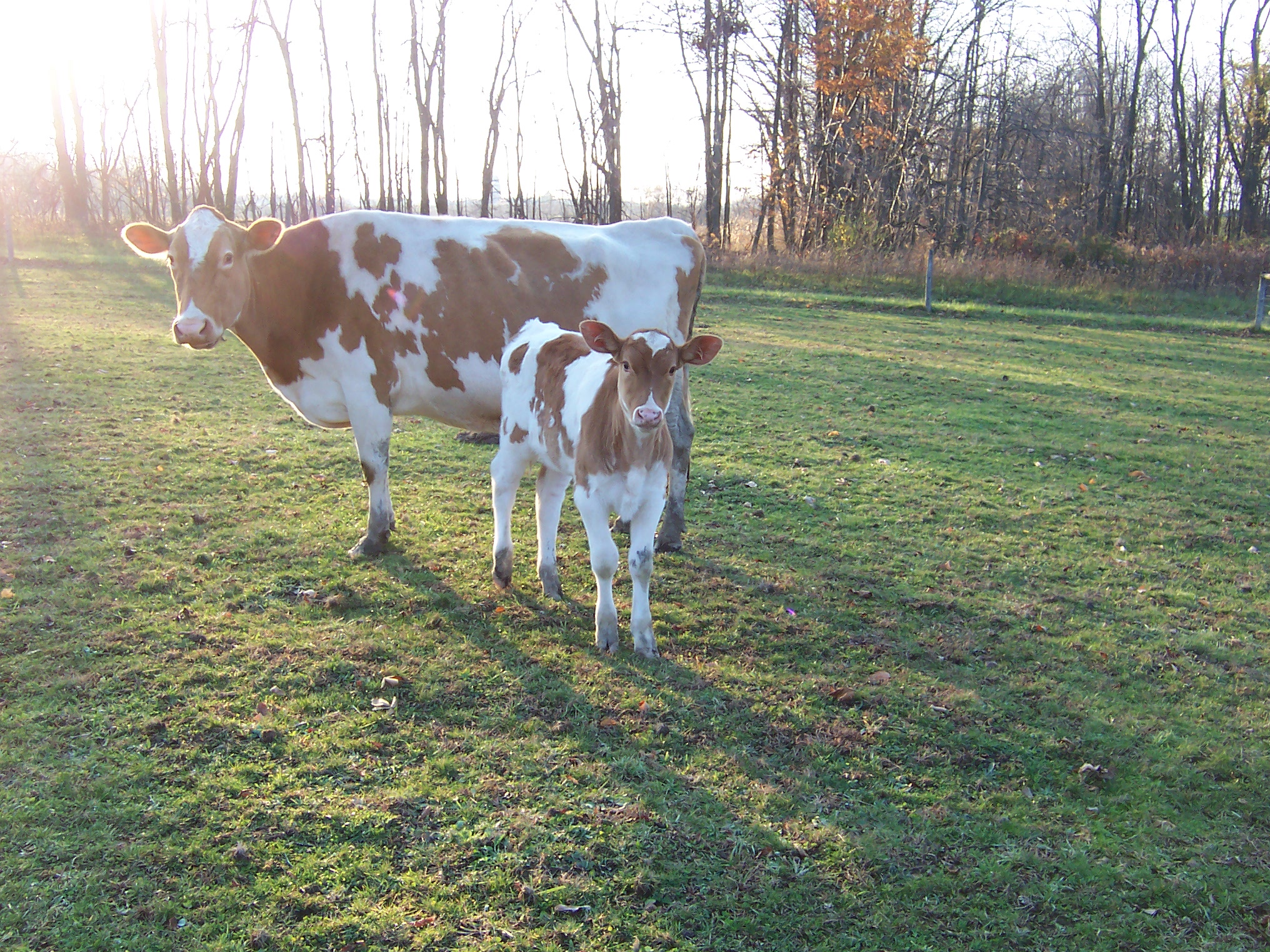
This summer’s first cutting of hay is stacked in the barn. Seventeen acres of grasses transformed into golden squares, storing sun and soil’s energy for the winter ahead.
The unsung miracle of grass is a beautiful illustration of nature’s wisdom. Cows eating only grass flourish, turning these coarse blades, inedible to humans, into rich high-protein milk. This benefits the environment as well as the health of people drinking the milk of grassfed cows. To me, fields devoted to hay and pasture make sense while factory farms make no sense at all.
Hay isn’t a fancy crop.
It doesn’t bring much in the way of money. Some years we scramble because there’s too much rain and not enough time to harvest. But this perennial doesn’t just nourish a few of our favorite ruminants. It helps preserve topsoil.
The loss of soil to water erosion, called sedimentation, is measured in tons of soil loss per acre per year. This runaway soil clogs waterways, smothering aquatic life and affecting navigation. The denuded land left behind is robbed of fertility.
Nearly everything we eat relies on healthy soil, yet it takes 500 years for nature to produce an inch of topsoil. Current farming techniques increase soil erosion 10 to 40 percent greater than the rate nature can replace it. We’re running out of the very dirt our lives depend on.
The living skin of our Earth is thin, wildly complex and more interconnected than we might imagine. That’s why, when I look out over the woodlands on our land, the pastures our cattle graze on, the hayfields—I am reassured. The continuous ground cover of pasture or forest protects the soil. Perennial hay fields, pastures and woodlands allow organic matter to build naturally.
I have just a beginning grasp of the vital interplay betweenamoebae, fungi, bacteria, arthropods and plant roots in soil, enough to sense those bags of “sterilized potting mix” found in every big box store are a mockery of the lessons to be found in nature. I do grasp that we survive, in large part, through the life-giving nutrients of what has died. Organic material of all kinds decays into humus and that makes soil a story of resurrection, writ large.
Okay, radical sounds hip. I can live with that. But homemaker? The last few decades that word has been a synonym for drudgery. Besides, ask my kids who really does the dusting and vacuuming around here. They do.
What’s radical homemaking? Shannon Hayes wrote a wonderful book called Radical Homemakers: Reclaiming Domesticity from a Consumer Culture. Yes, I thought when I heard the term. Naming something gives it momentum. And the lifestyles of people defining for themselves what The Good Life is all about haven’t gone unnoticed so much as undefined. It doesn’t seem radical in the slightest to many of us who try to live simply, it just makes sense.
Thankfully Shannon pulls the pieces together. As she writes,
…each of us has a calling or right livelihood that enables us to serve the common good, and in finding this calling, we will be most happy. Few, if any spiritual teachings call us to seek the accumulation of money, stuff, power, or other purely selfish interests. Further, in a life-serving economy, we individually accept responsibility for creating our own joys and pleasures. We do not rely upon corporate America to sell us these things. We take personal and collective responsibility for supplying many of our needs. In taking these steps, we discover that true economic assets, unlike money, are intangible.
There’s nothing new about this. Most of our foremothers and fathers upheld frugality and scorned excess. Throughout history people have been growing and preserving food, making gifts, providing hands-on care for the young and old, repurposing materials, and finding meaning in pleasures that aren’t necessarily linked to spending money.
This sort of lifestyle simmers along quietly and purposefully while consumer culture runs at a full boil, generating heat over every new trend and news flash.
Somehow, in a world bristling with radical homemakers, I’ve been outed as one of the representatives. “A poster child,” claimed the journalist who trekked out to our little farm with her notebook in hand last week. I’m more comfortable interviewing others rather than being interviewed, but I put my trust in her expertise. I thought it wouldn’t be too difficult to talk about trying to place our interests beyond the shallow values of appearance as I sat there wearing a thrift shop shirt that had to be 20 years old. Well, until the photographer showed up. Judging by the anxiety that generated I’m still the product of an appearance-indicates-worth society. The irony wasn’t lost on me. I gave up all hope of looking 20 pounds lighter or remotely put together and kept talking.
And laughing. Her questions struck me funny. In fact, she came right out and asked, “Don’t people treat you as if you’re odd?”
Maybe they do but I always thought that’s because I’m sarcastic and tend to sing songs with made-up lyrics.
I told her about homeschooling and the intrinsic value of meaningful learning. I told her about our local food co-op, about making homemade tinctures and about using things until they wear out.
I tried to explain why I preferred to make sandwich buns over the weekend for a party here rather than buy them. “Was it part of your philosophy?” she asked. “Was it cheaper?”
I haven’t priced such buns at a store, I told her. I ground the grain, used eggs from our chickens, milk from our cow, and honey from our bees, then kneaded the dough and baked them that morning. It cost almost nothing in ingredients and very little in time. Yet it had more to do with deeper choices. But don’t write about the buns, I said, it makes me sound really annoying.
I’m sure I’m annoying (just ask my kids) but also I’m pretty relaxed. I’m comfortable with weeds in the garden (nature doesn’t like bare dirt anyway) and stacks of reading material everywhere. I make homemade pizza all the time but that doesn’t mean we don’t occasionally succumb to the greasy allure of what my kids call “real pizza” from a little carry out nearby. We don’t have money for things like vacations or video games, we do have time to sit around talking long after dinner is over.
When I was fresh out of college I planned to save the world. I’m beginning to see it’s possible to do so, simply by saving what’s important right in front of us.
*
Postscript: Thankfully I’m a small part of the finished article. After the other radical homemaker piece I’ve been interviewed for in Ladies Home Journal, I’m saying no to future interviews. Why? Because it’s titled “Extreme Housewives.” (The promo reads, “A small but passionate group of women across America have embraced the kind of back-to-basics homemaking our grandmothers did-from scratch, by hand, grown in the backyard. And they’ve never been happier.” Oy vey.
We tend to think of nature as separate. We imagine spending time “out there” hiking in some remote wilderness, drinking from mountain streams and observing creatures that have never faced highway traffic. There, in a place far from our busy lives, we might find peace, tranquility and some kind of deep connection to what is real.
If. We. Just. Found. Time. To. Get. There.
That’s part of the problem. Because we’re already there. We are nature, right down to the life processes of every cell. And what’s around us even in the smallest city apartment? Nature.
Nature is the food we eat, air we breathe, water we drink. It’s seedlings pushing up between cracks in the cement (and the cement itself, depending how you define it), birds lighting on utility poles, pollen making us sneeze, storm clouds swelling with rain. It’s a living planet in a universe of natural laws that continue to be revealed.
When we define nature as separate from us it’s easier to push it aside as something apart from our very life force. This disconnect isn’t healthy for us or the planet.
In part it simply has to do with SEEING. I learned this when I helped conduct a psychology study in college. We went to urban office buildings and asked people two questions. First, we asked each person to describe his or her mood. Second, we asked them to describe the current appearance of the sky. These people were in their offices or hallways when we talked to them and the windows in most buildings were shuttered with horizontal blinds ubiquitous during that decade, so the only way they could have described the sky is if they had paid attention on their way to work or during a break. Here’s the interesting part. The people who identified themselves as pessimistic, angry, depressed or in other negative terms were also the ones unable to describe the sky’s appearance. You guessed it. The happiest and most optimistic people either correctly described the sky or came very close.
That study was never published, but research continues to show that pausing to experience nature in our daily lives has a powerfully positive effect on our minds and bodies. Just a few minutes of regular exposure leads us to be more generous, creative, and enlivened.
So wherever we are, let’s pay attention. Let’s remind ourselves to look at the sky every day, not just for a moment but long enough to savor it (without declaring the weather good or bad). Let’s put our bodies into the experience by taking regular strolls and touching the bark of a tree, a flower’s soft petal, the texture of a rock. Let’s watch the habits of birds, squirrels, spiders and other creatures making their lives amongst ours. Let’s pick one tree near our homes and notice it as the seasons pass, as we would a quiet friend sharing the same neighborhood. It takes only a shift of awareness, but it can make a world of difference.
Nature is right here, moment to moment, in each breath we take. It connects us to what’s real and helps us be the people our planet needs right now.
“Not only is another world possible, she is on her way. On a quiet day, I can hear her breathing.” Arundhati Roy
*
*
*
Fear sells. Blood and guts sell even better. What really grabs our attention? Out and out panic. That largely explains today’s so-called news channels, talk radio, actually much of commercial media. The worse it sounds, the greater audience share they grab and the more money they make. Trouble is, they also make up minds and harden hearts and plant misery where optimism could so easily flourish.
But they’re wrong.
Sure, it seems we’re in big trouble. Structures we count on to be stable are crumbling—finance, health care, education, consumption driven economies, us versus them mentalities, you name it.
Remember the parable of the mighty oak and thin reeds? The oak boasted of his immense girth and height, mocking the reeds all around him for their weaknesses. But the reeds could withstand wind, lightening and the weight of snow. The oak succumbed while the reeds survived, stronger than the oak in their ability to bend and stand again. Big institutions are fighting transparency, reform or annihilation with everything they’ve got, believing that strength means rigidity. Meanwhile a shift is happening on the grassroots level, as flexible and self-correcting as reeds in the wind.
Times of change are destabilizing and difficult, but ultimately valuable. After all, what’s broken, corrupt or simply no longer workable must be fully revealed before it’s healed or transformed into something much better.
Look more closely. Things are getting better all the time. In fact amazing evidence shows that we’ve long been on the path to health and harmony. Here are a few examples.
~
We’re Smarter.
Intelligence continues to increase from generation to generation. In fact, to accommodate continuously increasing intelligence the IQ test must be renormalized (standardized to keep the average test results at the 100). This is called the Flynn Effect.
Between 1932 and 1978, mean IQ scores in the U.S. rose 13.8 points. If your grandparent received IQ score results of 98 back in 1932 they’d have been deemed of average intelligence. That same grandparent, if administered today’s tests, would be considered to have a borderline mental disability by current scoring standards. IQ scores have risen even higher in some other countries: 27 points in the UK between 1942 to 1992. Of late, developing countries seem to be experiencing the biggest surge.
Many explanations have been proposed, but the increase can’t be definitively pinned on genetic improvements, improved nutrition, greater familiarity with testing or better schooling.
According to Cornell professor Stephen J. Ceci, the most direct gains are not in subjects that are taught (math, vocabulary) but are shown in parts of the test that seem unrelated to schooling (matrices, detecting similarities). In fact, test gains have been enormous in areas requiring the child to apply his or her own reasoning, such as arranging pictures to tell a story or putting shapes in a series. Although teaching children does return positive results, what a child learns through the natural stimulation of everyday life has a more profound effect. For example, a study to determine the effect of schooling on rural children in India found that the increase in overall intelligence from a year of age is twice the increase from that of attending a year of school.
IQ test scores don’t relate to what truly provides satisfaction in life. But the Flynn Effect is intriguing. Factors we can’t completely explain are giving us the intellectual capacities to deal with a ever more challenging world.
~
We’re Healthier.
Studies conducted by Robert W. Fogel, a Nobel laureate and economic historian at the University of Chicago, show that in a few hundred years human biology has changed in startling ways. We are more resistant to ill health, more likely to recover when faced with disease and less likely to live with chronic disability. We are also smarter and live longer. Fogel calls this radical improvement “technophysio evolution.”
An interview in the University of Chicago Magazine quotes Fogel as saying, “The phenomenon is not only unique to humankind, but unique among the 7,000 or so generations of human beings who have inhabited the earth.”
Fogel doesn’t necessary attribute the changes to genetic shifts. Improvements in medical care, nutrition, sanitation and working conditions may cause epigenetic changes. These are shifts in gene expression that can last through many generations without altering underlying DNA.
Information amassed by Fogel indicates that chronic diseases such as arthritis, heart disease and lung ailments are occurring 10 to 25 years later in life than they did 100 or 200 years ago. Interestingly, well-being may be more strongly affected by conditions each individual faces in utero and during the first few years of life than previously suspected.
Fogel’s most dramatic proof of technophysio evolution was found by comparing Civil War veterans to subsequent generations. Researchers examined health and longevity data of 45,000 Union Army veterans, including over 6,000 black soldiers. Military records revealed that young American men of that era commonly suffered debilitating health conditions. Approximately 65 percent of men from 18 to 25 years of age volunteered for the Union Army. But arthritis, tuberculosis, cardiovascular disease and blindness disqualified a quarter of them. And the military of that era wasn’t choosy. Incontinence and blindness in one eye didn’t disqualify a recruit. Even the youngest men lived with chronic disabilities. Fully one-sixth of volunteers between 16 to 19 years of age were rejected for serious health conditions.
By the time Civil War vets passed the age of 65, 68 percent of them suffered from arthritis, 76 percent from heart disease and over 50 percent from back problems. World War II veterans at the same age, in contrast, counted among their ranks 48 percent as arthritis sufferers, 39 percent with heart disease and 30 percent with back problems.
These remarkable health gains don’t diminish our current struggles with cancer, diabetes, Alzheimer’s disease, autism and other serious health conditions on the increase. Despite the blessing of bodies more resilient and healthy than those of our ancestors of just 150 years ago we suffer the effects of environmental toxins and nutritionally squalid diets. To fully accept the gift of health and energy from our ancestors, it seems we must expand our awareness to make positive changes here and now. That way our choices continue to benefit our descendants.
~
We’re More Peaceful.
We function best through cooperation and harmony. Even our body systems are in greatest sync when we are peaceful, according to studies at the Heart Math Institute. It may be taking us quite a while, as a species, to get accustomed to living in larger settled groups but it seems we’ve come a long way in the last few centuries.
And peace is how our species has come this far, despite what history tells us. According to anthropologist Douglas Fry, evidence shows that for 98 percent of human existence on earth we lived in small nomadic bands that thrived precisely because warfare was avoided. He presents compelling proof in his book, Beyond War: The Human Potential for Peace along with the message that human beings have highly developed capacities to seek and maintain peace.
Psychologist Steven Pinker points out in an essay titled “A History of Violence” that public cat burnings were a popular form of entertainment in the sixteenth century. Although we pay more attention to atrocities now than ever before, the horrors of slavery, genocide, barbaric punishment and vigilante justice were accepted as commonplace a little more than a century ago.
Empathy for people of another race or class? Not a typical attribute even a few generations ago. Pinker notes, “Conventional history has long shown that, in many ways, we have been getting kinder and gentler.”
As Pinker cites specific data, the good news gets better. For example, the homicide rate has declined from a rampant 24 murders per 100,000 Englishmen in the 14th century to 0.6 per 100,000 in the 1960’s (5.4 per 100,000 in the U.S. in 2008).
No matter what the angle, the view is good when we look at more recent U.S. history through this lens as well. Despite what ranting pundits and blaring news promos may indicate, crime rates have been steadily dropping per capita since the 1970’s. Some analysts say by as much as 50 percent in 15 years. Despite staggering economic losses, crime has continued to decline recently.
The ecumenical organization Project Ploughshares reports, “Peacebuilding efforts do work. Although one conflict is too many for those being killed and wounded, there has been a significant decrease in the number and intensity of armed conflicts over the past 10 years.”
We’ve come a long way without direct efforts to educate each person in the ways of negotiation, mediation, intervention, reconciliation, heck, even listening skills. Imagine turning our attention toward cooperation and mutual respect. Surely acknowledging the human tendency toward peace welcomes greater possibilities for harmony in the years to come.
~
We Care.
Never before in history have so many people worked tirelessly and selflessly to benefit others. Paul Hawken writes in Blessed Unrest: How the Largest Social Movement in History Is Restoring Grace, Justice, and Beauty to the World
that the abolitionist movement was the first major movement by human beings to advocate on behalf of others without seeking advantage for themselves or their particular social or political group. Since that time, such efforts have grown with astonishing vigor.
There are now over a million organizations on the planet working for environmental stewardship, social justice, the preservation of indigenous cultures, and much more. These groups don’t seek wider acclaim, they seek to make a difference for the greater good.
Artist Chris Jordan has made a mandala of the names of those million-plus organizations. His work is inspiring—-make sure you look at the images up close as well as the whole picture.
It’s time to turn our attention away from doom-shrieking media. While it’s valuable to be informed, such knowledge is useful only to the extent that it motivates us to turn more consciously in a positive direction.
A heavy heart, or worse, a hardened heart, makes it nearly impossible to raise a child or plant a garden or grow a benevolent future.
We haven’t gotten this far through brutal force or greed.
Nope. It has taken cooperation, curiosity and cleverness.
Ninety-nine percent of our time on earth as a species has been spent as hunter-gatherers. Our ancestors wouldn’t have survived without collaborating to find food, raise children and stay safe from large predators.
This is still true now no matter what 24 hour news channels tell us. Each moment of the day we’re more likely to react with compassion, calm interest or cleverness than with any form of overt negativity.
Cooperative efforts abound all around us. Perhaps we simply need to look at life-enhancing innovations we take for granted in a new way. Consider these examples.
Want to travel the world finding friendly strangers offering you a place to sleep for free? You can through CouchSurfing. Their motto encourages everyone to “Participate in Creating a Better World, One Couch at a Time.” Started in 2004, this non-profit network has connected travelers with locals in 232 countries. This has resulted in nearly 3 million positive experiences, almost 2 million reported as friendships. People who never would have met are connecting, sharing experiences and developing greater cultural understanding.
How about Freecycle? Nearly 7 million members across the world make up this grassroots, non-profit movement of people who give and get goods for free in their own communities. The Freecycle Network, which started humbly in 2003, says, “Our mission is to build a worldwide gifting movement that reduces waste, saves precious resources & eases the burden on our landfills while enabling our members to benefit from the strength of a larger community.”
Or consider books set free to find new readers. Since 2001, BookCrossing members in more than 130 countries have shared millions of books with strangers. They’ve also enjoyed the treasure-hunt pleasure of finding books they want to read. It’s all part of an innovative network linking books and readers. More local book-sharing concepts are springing up everywhere. Recently a small town in the UK transformed an unused phone booth into a book exchange. They outfitted the booth with shelves and waited to see if anyone would participate. Residents continue to share books and movies anonymously at the booth, which is always open.
Maybe you need a bigger example. There’s always the Internet. Harvard Law professor Jonathan Zittrain notes in a TED talk that the net itself is built by millions of “disinterested acts of kindness” and based on trust, curiosity and reciprocity.
Giving and collaborating seem to be an intrinsic part of human nature. That may be why people freely share their expertise by editing Wikipedia entries, providing support online or otherwise helping people they’ll never meet via the net. That may be why giving inspires people to greater heights of generosity or creative expression, even when the act remains anonymous. The blogosphere abounds with art, craft and music exchanges. Increasingly this is taking place IRL more often too. In October an art collective calling themselves the Future Machine transformed an unused newspaper box into a “Stranger Exchange.” Located in Boston, the box features simple instructions on the side.
1. Leave an item; 2. Take an Item and 3. Don’t be a Stranger.
Their website offers a simple way to link people who give and take items in the box. Items in the box have included a map of Luxembourg, AA batteries and an invitation to a long ago New Year’s Eve party. They’ve also included projects created specifically for Stranger Exchange such as artwork and a mix tape made in response to another mix tape found in the box.
A post about this phenomenon by Rachael Botsman noted, “Interestingly, the early ‘members’ of the Stranger Exchange seem be participating for similar intrinsic motivations that are fueling the open peer-to-peer movements such as Flickr, Wikipedia, BitTorrent, BePress and so on. For these systems to keep flourishing, people need to “give before they get,” a dynamic that is built on a new kind of trust, trust in people you don’t know or are not even friends with.
This in turn reinforces certain behaviors—collaboration, kindness, openness and honor—that are critical for sharing to happen between strangers. What’s interesting is that once people participate in these exchanges, they experience the proverbial “warm inner glow” and they crave that experience again. In other words, the altruistic action and indirect reciprocity becomes self-reinforcing.”
Botsman is co-author of a book coming out next fall titled What’s Mine is Yours: The Rise of Collaborative Consumption. I’m looking forward to what the book will tell us about the rise in sharing, trading, gifting and swapping in communities around the world. I suspect it will have to do with the cooperation, curiosity and cleverness—-the foundations of our early survival and the building blocks of our shared future.
Creative Commons photo courtesy of Erica Reid’s Flickr photostream
Living on a farm we can’t help but be connected to the food on our table. We’re by no means perfect when it comes to eating locally. We’ll never come close unless chocolate and coffee start sprouting up in Ohio.
While more of us are paying attention to adopting better habits for our own health and planetary health, it’s easy to overlook the vital and wondrous learning that is directly related to food. For my family, those lessons often have to do with shared experiences.
~Many years we head out to pick apples together on a bright fall day. After an indulgent week of eating and baking with as many apples as possible, we devote a day to applesauce. We cook the remaining bushels of fruit down, cranking Grandma’s Victorio strainer that pushes with sauce out one side and pulp out the other (pulp eagerly eaten by the chickens), then can jars of applesauce to eat all winter long.
~We have encouraged each child to choose his or her own “crop” to plant and tend in the vegetable garden. Harvesting and sharing the bounty of one’s own fresh green beans teaches the satisfaction of work right along with lessons in botany and soil health.
~We try recipes from around the world, not only while learning about other cultures, but also because we freely trade garden bounty with friends, and have to do something with unfamiliar herbs, roots and fruits.
~We visit nearby farms. Observation and conversations with those who live on the land have been instructive, teaching us practices we want to emulate and those we hope to avoid.
~We eat meals together every day. Cooking frugally by choice as well as necessity has brought us myriad conversations about health, trends, politics and defining worth for ourselves. Of course our meals also precipitate family humor related to home ground grains that result in breads darker than wet cardboard and yes, we’ve had one or two loaded spatula chases around the kitchen. Oh wait, that didn’t involve the kids, just me thinking it might be funny to fling frosting at my husband.
~Unintentionally we learn by making plenty of mistakes. Ordering 25 pounds of organic buckwheat from the food co-op before knowing if anyone would eat it, raising our first flock of turkeys on faith more than fact, repeatedly attempting to make cheddar cheese although we can’t maintain the temperature needed to age it, well, this list could go on.
10 Things We Should Teach Every Kid About Food, recently posted on Every Kitchen Table, offers a handy list of important food-related categories to explore with our children. The ideas are important and too often overlooked, such as the precepts of the industrial food system and the insidious effect of food advertising.
Here are some related resources:
Improve School Lunches With Locally Grown Food This article offers information plus strategies to bring positive change to your school district, whether you have children in school or not.
Don’t Buy It A non-profit site with learning games to help kids evaluate and analyze media messages.
I Buy Different A website sponsored by New Dream and World Wildlife Fund with tools to help tweens and teens be, live, and buy differently to make a difference.


 , that psychological and neurological research is used to exploit the vulnerabilities of children. She writes, “The explosion of marketing aimed at kids today is precisely targeted, refined by scientific method, and honed by child psychologists – in short, it is more pervasive and intrusive than ever before.”
 by Tim Kasser, people who hold materialistic values are more likely to suffer from a whole dumpster load of problems. This includes aggressive behavior, insecurity, depression, low self-esteem, narcissism, even physical maladies. And when people place high value on material aims, they’re prone to have trouble with interpersonal relationships and intimacy. Materialism is also related to less independent thinking and lower value placed on being “true to oneself.” Of course, we want to spare our kids this festering personal mess.
 that, “play lies at the core of creativity and innovation.” It enhances development in areas such as emotional health, social skills, motivation, confidence, a sense of justice, and much more. Young people who maintain a playful nature into adulthood are, according to Brown and Vaughn, remarkably well suited for success. A playful adult is more flexible, humorous, optimistic, and efficient. They note that throughout life, “the ability to play is critical not only to being happy, but also to sustaining social relationships and being a creative, innovative person.”
 that brain development and hand use is inextricably connected. And Wilson found a transfer effect. As he studied people who were masters in all sorts of fields (surgeon, puppeteer, and guitarist to name a few), he found each of them had engaged in regular hands-on efforts during their formative years. Whether they grew up doing farm work, playing a musical instrument, or helping grandpa build birdhouses,Wilson says the hand-brain link activated “hidden physical roots . . . of passionate and creative work.”



 by Indur Goklany, global food supplies increased 24 percent per capita in the last 40 years. In developing countries the food supply increased at an even greater rate, 38 percent more food per person. Since 1950, the real global price of food commodities has declined 75 percent.
 , our little Earth will likely reach a (painful) peak of 8 billion people around the year 2040, then the total number of human will begin to decline so rapidly that nations will struggle to keep their populations levels from slipping too low. They may create perks for becoming parents and incentives to attract immigrants.
 that the abolitionist movement was the first major movement by human beings to advocate on behalf of others without seeking advantage for themselves or their particular social or political group. Since that time, such efforts have grown with astonishing vigor.

 , the decline and fall of civilizations are based on soil fertility.
 by William Bryant Logan
 by James B. Nardi
 by Jeff Lowenfels and Wayne Lewis
 by Christopher Bird and Peter Tompkins
 . Yes, I thought when I heard the term. Naming something gives it momentum. And the lifestyles of people defining for themselves what The Good Life is all about haven’t gone unnoticed so much as undefined. It doesn’t seem radical in the slightest to many of us who try to live simply, it just makes sense.


 Living on a

 Laura Grace Weldon