Homeschool Worries: Erased With Research & Experience

school versus homeschool, homeschooling research,

I never planned to homeschool. I am the daughter, niece, and granddaughter of excellent public school teachers. I cheerfully volunteered in my children’s classrooms and worked on parent committees. I believed in doing my best to change a flawed system from within.

Yet I kept seeing school wasn’t a good fit for my children. Our four-year-old already knew how to read, but had to practice sight words in preschool anyway. Our sweet but inattentive second-grader was deemed a good candidate for Ritalin by his teacher. Our fifth-grader could do college level work, but due to cuts in the gifted program had to follow grade-level curriculum along with the rest of her class. Our freshman was an honors student but detested school, not only the hours of homework but the trial of dealing with a few teens who were harassing him.

We became homeschoolers overnight when those teens pulled a gun on my oldest in the school hallway, telling him he wouldn’t live to see the end of the day. School officials, who had done nothing to ease the harassment, didn’t even call the police. The next morning every reason I had to avoid homeschooling stared me in the face. So did my kids. They were eager to learn on their own terms.

Here are a few of the misconceptions homeschooling erased for me.

growth mindset, homeschool, children's self-regulation,

1. Education that counts happens in school. My kids were growing up in an enriching home. We read aloud every day and enjoyed wide-ranging conversations. We went to parks, museums, and plays. But I was raised to believe that formal education is something separate and measurable.

Still, I saw that my kids learned most eagerly when filled with the aliveness we call curiosity. That’s true of all of us: learning sticks when we’re interested. When we’re not, much of what we learn tends to become inaccessible after the grade is earned. Hard as it is to believe, studies show that that shallow thinking is actually related to higher test scores. (Maybe we acknowledge this reality when we prepare kids for tests by saying, “Don’t overthink it.”)

When we’re curious we not only retain what we learn, we’re also inspired to pursue the interconnected directions it leads us. I saw this the summer before we began homeschooling. My eight-year-old, the one who barely paid attention in school, was playing with balsa airplanes brought to a picnic by a family friend who piloted his own plane. Other kids gave up after the planes broke, but my son worked to fashion the pieces into newly workable aircraft. This gentleman showed him a few modifications and the unlikely looking planes flew. After that my son was on a quest. He loaded up on books at each library visit, telling us about Bernoulli’s principle, aviation history, and experimental aircraft. He begged for balsa to make models of his own design, each somewhat more sophisticated as he overcame earlier mistakes. The next time we met up with this friend my son was offered a ride on his Cessna. It was the highlight of his summer. His interest in planes eventually waned, but not the knowledge he gained. He’d taught himself history, science, math, and more importantly, shown himself just how capable he was.

His pursuit is what researcher Carol Dweck, in her book Mindset, calls a growth mindset. It’s the understanding that achievement comes from purposeful engagement, that talent and smarts are not fixed traits but are developed through persistence. A growth mindset is linked to resilience and accomplishment throughout life. That’s education that counts!
late reading, early reading, homeschooling,

2. Kids have to follow grade-level standards. I once thought homeschoolers had to follow conventional school standards. You know what I mean, if it’s second grade it’s time to learn about ancient Rome, multiplication, and adverbs. For my family, an overly school-ish approach never made sense. I can give dozens of reasons, but here’s one that springs to mind.

Kids develop unevenly. They may be way ahead in reading and struggle in math, able to make up imaginative stories but not coordinated enough to easily to write or type them. If they don’t advance evenly in school, quite a bit of attention is focused on where they’re lacking (extra help, easier and more repetitive work, labels, poor grades). But outside of school it’s easy to emphasize their strengths while other areas are mastered gradually without ever being considered “deficiencies.” This has a basis in current research which shows that children are remarkably good at self-regulating. They’re cued to ignore information that’s too simple or too complex, but instead are drawn to learn from situations that offer the right amount of challenge.

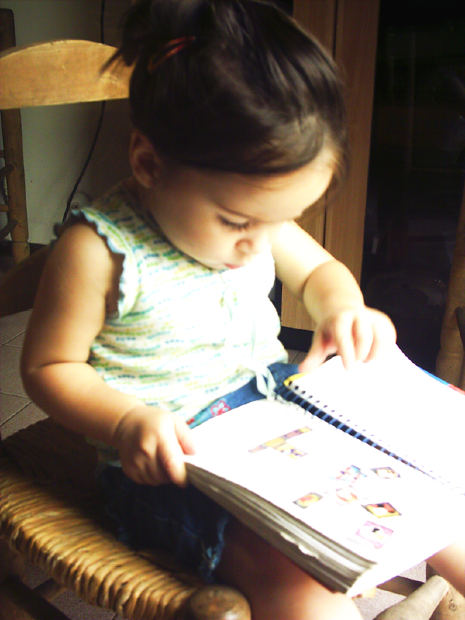
For example, it’s well known in the homeschooling community that many kids aren’t ready to read at five or six. Some aren’t ready until they’re several years older. In school that’s a crisis, because every subject is taught using reading. The child who can’t read not only grows disheartened, he also feels stigmatized. But as a homeschooler he remains immersed in a learning-rich lifestyle whether he reads or not because homeschooling is infinitely adaptable. Stories abound of homeschooled children who move quickly from non-reading to zipping through Harry Potter books once they’re ready. A recent study showed that homeschooled children whose parents don’t push them to learn to read, but instead emphasize the joy of reading, end up with kids who are avid readers no matter if these kids started reading early or late. In our family, we found our kids eagerly accomplished far more in a whole range of subjects over time. “Grade-level” expectations were, to us, limitations.

easy homeschooling,

3. The parent has to be teacher/coach/principal. Being a mother to my children has always been richly rewarding (okay, maybe not in the colicky phase). I didn’t want to take on other roles. Turns out I didn’t have to. We found homeschooling to be an immediate stress reduction. My kids got enough sleep, woke rested, and don’t have to rush through the day. Instead they had ample time for conversation, reading, indulging in art projects and experiments, finding the answers to questions, and going on adventures. Our live were guided by fascination, not bells. Much less control on my part was required.

I found that our cultural emphasis on adult-led activities is somewhat counterproductive. We assume children benefit from the newest educational toys and electronics, coached sports, lots of lessons, and other adult-designed, adult-led endeavors. Well-intentioned parents work hard to provide their children with these advantages although there’s limited evidence that all this effort has value. We do this because we believe that learning stems from instruction. By that logic the more avenues of adult-directed learning, the more children will benefit.

But studies show that a child’s innate drive to creatively solve problems is actually impeded when adults provide direct instruction. This experience is repeated thousands of times a year in a child’s life, teaching her to look to authorities for solutions, and is known to shape more linear, less innovative thinking.

Research also shows that a child’s natural motivation tends to diminish in adult-led activities. Unless they’ve been raised on a steady diet of ready-made entertainment, children are naturally drawn to free play and discovery-based learning. They make up games, daydream, pretend, and launch their own projects–freely seeking out adults for resources and guidance when necessary. They are naturally drawn to achieve mastery. My kids have shown me how motivated self-direction can go into high gear in the teen years. They’ve earned their own money by shoveling stalls, which they spent to buy and restore a vintage car, go on a month-long backpacking trip, and build a bedroom-sized recording studio. And they have stick-to-it-iveness, devoting years to pursuits like a bagpipe band, wildlife rehabilitation, farming, and their own intensive scholarship. Homeschooling has helped us foster a young person’s growing need for independence while providing useful guidance.

hands-on learning, homeschooling,

4. I can’t afford to provide a decent education. Like many new homeschoolers, I thought I’d have to replicate everything from music class to chemistry lab. I knew I’d never have the time, energy, or money. But we quickly discovered we can activate our own knowledge networks and that the community around us is filled with people eager to impart skills and knowledge to the next generation, almost always for free.  They’re found at ethnic centers, museums, libraries, colleges, churches, service organizations, plus clubs like those for rock hounds, ham radio enthusiasts, and astronomy buffs. My children’s lives have been illuminated by spending time with biologists, potters, engineers, geologists, entrepreneurs, archaeologists, organic farmers, model railroaders, meteorologists—the list could take up this page. People seem honored when asked to share a little of what they know. It’s sad that young people are customarily segregated from adults doing fascinating things right in their own communities, especially in the teen years when they so desperately want more role models.

We’ve also gotten together with fellow homeschoolers for countless field trips, enrichment programs, game days, clubs, and learning co-op classes. My kids have re-enacted Shakespearean duels, toured factories, sheared sheep, raced sailboats, learned chemistry from a Ph.D chemist, debated Constitutional challenges, competed in robotics tournaments, built a hovercraft of their own design, learned fencing, calculated the position of the stars, played with world-class musicians, and spent an afternoon with an astronaut after winning a science contest. All free or practically free. When certain subjects got really challenging we easily bartered with an expert or found a community college class to cover it. And we’ve saved thousands by relying on the remarkable resources of our library system.

Sure, I envy those homeschooling families who learn while bike riding in Ecuador or rambling through European castles. But I realize my kids haven’t missed anything despite my penny pinching, especially since surveys indicate two-thirds of school kids say they’re bored in class.   Deep scholarship and hands-on learning are simply another homeschooling perk.

homeschool socialization, peer segregation,

5. Homeschooling will deprive my kids of friends.  I realized the school day isn’t really set up for socializing, although we’d come to rely on school as a source of same-age friendship. Sadly, according to Beyond the Classroom by Laurence Steinberg,
less than five percent of school kids belong to peer groups that value academic achievement, while pressure from prevailing peers steer young people toward underachievement. Even high-achieving students, when asked, say they’d prefer popularity over academic success.  That comes at a price, because members of those lower achievement groups are more likely to demonstrate negative behaviors like conduct problems and drug use. Not the kind of influence parents expect.

And it turns out studies show homeschooled children have better social skills and fewer behavior problems than their demographically matched schooled peers. Homeschooling families also tend to be more active in the community. Initially it took me a while to get used to homeschool gatherings where kids hung out with a wide range of ages and abilities. Sure, they’re kids and not beacons of perfection, but I was pleased to see so much overall good cheer.

As for friends, my kids kept many of their school friends. They also made more as we widened our circle of acquaintances. Many of their new friends were around the same age but some were decades older, bringing perspectives shaped by widely varying experiences. They offered my children a route to maturity they couldn’t have found in school among kids similar to themselves. Their friends include a Scottish gentleman in his 70’s, a group of automotive restoration enthusiasts, a wildlife rehabilitator in her 60’s, fellow backpackers, people with differing physical challenges, Christians, Buddhists, atheists, Wiccans, well, you get the idea. These friendships happened because they had the time to stretch in all sorts of interesting directions.

homeschool success, homeschool misconceptions,

6. Homeschooling is an experiment. Like any other parent, I’m driven to provide my children with the essential ingredients that lead to life-long happiness and success. Late at night, unable to sleep, I’ve entertained my share of doubts. What if homeschooling will limit their chances?  I finally realized I was looking at it from too narrow a perspective. Schooling is the experiment. For 99 percent of all our time on earth, the human race never conceived of this institution. Our species nurtured children close to extended family, within the rich educational milieu of the community, trusting that young people would grow into responsible adulthood. Worked like a charm for eons.

Taking my kids out of school liberated them from the test-heavy approach of today’s schools, one that actually has nothing to do with adult success. Instead of spending over 1,200 hours each year in school, they could devote time to what more directly builds happiness as well as future success. Things like innovation, hands-on learning, and meaningful responsibility. That doesn’t mean I lost all my doubts. Some days, all right, months, I worried. It’s hard to unlearn a mindset

Now all four of my kids are in college or launched into careers. I sat at a recent dinner with my family, appreciating our closeness. My kids take on challenges with grace, react with droll wit even under pressure, and haven’t lost their zest for learning. We laughed as their lively conversation covered Norse mythology, caddisfly pheromones, zeppelin history, and lines from new movies. I’m not sure how much I can credit to homeschooling, but I know it’s given my kids freedom to explore their own possibilities. That’s more than enough.


Portions of this post excerpted from Free Range Learning.

Where Fascination Leads

child's interests, toddler's fears show inclinations, fear is fascination,

Born with uniqueness.

“I didn’t say I liked it. I said it fascinated me. There is a great difference.” Oscar Wilde

My oldest was calm and attentive as a baby, except around vacuum cleaners. The machine’s sound made him scream with the sort of primal terror normally associated with death by predator. He had no previous experiences with loud sounds in his short life, good or bad. Except for surgery, performed when he was five weeks old, he’d had no bad experiences at all.

As a first time parent I turned his reaction into a giant philosophical issue. (Okay, maybe I turn everything into a giant philosophical issue.) Should we only vacuum when one of us took him out of the house until he somehow grew out of it? Or should we hold and reassure him when the vacuum had to be turned on? I was convinced whatever we decided would somehow have lifelong ramifications.

For a few months we relied on the first solution. The only vacuum sounds he heard were through open windows. Even outside, he listened on Baby High Alert status until it was turned off, with wide eyes and a stiff body. Fortunately the vacuum didn’t run long since our house was tiny. Then winter hit. It wasn’t easy to go outdoors simply to turn on the vacuum. Much as I appreciated any excuse to be slothful, I was still in the first child clean house stage (that ended resoundingly long before child number 4). So we tried desensitizing him to the Terror Machine sound. Although he initially screamed when I got it out and named it, he began to calm down as I did this day after day, naming it, then saying OFF and ON while performing those functions quickly. I was relieved when he no longer cried in nervous anticipation. Next I’d hold him as I pushed it around, doing one room before letting him turn it off. His tension dissipated and it became a favorite activity. Have you guessed? Mastery of fear led to fascination.

One of his first words was “vacuum.” He wanted to know all about them. He loved sale fliers with pictures of vacuums. I ended up cutting out all sorts of vacuum pictures to put in a photo album so he could flip through it, pointing and making “vroom” noises. Anything associated with vacuums, like hoses and plugs, also made his fascination list. An early talker, he memorized manufacturer names of vacuums and, like a household appliance geek, would quiz other people about vacuums. I recall one such incident when he was not quite two. We were at the park when my child tried to instigate a conversation with a fellow toddler. It didn’t seem the other little boy was a talker yet. Meanwhile my son, telegraphing his strange upbringing, was asking, “Do you have a Eureka vacuum at home? Do you have a Hoover? A Kirby?” When he saw the respondent didn’t understand, my son tried what he thought was an easier question. “Is your vacuum upright or canister?” Both little boys looked up at me with incredulous expressions, as if asking what was wrong with the other.

He often called his play “work” and was never happier than when he could contribute to real work. For his third birthday my son’s dearest wish was for a hand vac. And to go to Sears so he could hang out in the vacuum section. That’s what we did. Even his best buddy Sara, who had come along for the birthday excursion, patiently indulged him. She understood him well and when they played house she often had him fix pretend things or turn on pretend things, which always made him happy. That year he got a gift wrapped hand vac.

The vacuum obsession wasn’t his only early childhood weirdness. Once he figured out that bones have Latin names (I think a physician friend leaked this info) he insisted on memorizing those names. He liked to rescue bugs from situations he deemed dangerous, telling them “go in peace little brother,” a line he got from one of his favorite books. He preferred actual tools to toys, and before he was four he started building things out of scrap wood and nails, carefully hammering them into shapes almost as incomprehensible as his crayon drawings.

Around that time I read a fascinating book by James Hillman, The Soul’s Code. Hillman is a deep, insightful thinker. It has been a long time since I read the book, but I recall that it described each of us as coming into the world with a uniqueness that asks to be lived out, a sort of individual destiny, which he termed an “acorn.” It’s a remarkable lens to view who we are. A child’s destiny may show itself in all sorts of ways: in behaviors we call disobedience, in obsession with certain topics or activities, in a constant pull toward or away from something. Rather than steering a child to a particular outcome, Hillman asks parents to pay closer attention to who the child is and how the child shows his or her calling.

The examples Hillman gives are memorable. If I recall correctly, Yehudi Menuhin, one of the preeminent violinists of the 20th century, became fascinated when he heard classical music on the radio as a three year old. He wanted to feel the same rich notes coming out of a violin in his hands. His parents lovingly presented him with a toy fiddle. He drew the bow across the strings and was horrified at the cheap squawk the toy made. Enraged, he threw the instrument across the room, breaking it. His imagination had already taken him to the place in himself where beautiful music was made and he was unable to bear that awful sound. We normally call that behavior a “tantrum.”

Another example is award-winning director Martin Scorcese. As a child he suffered from terrible asthma and wasn’t allowed to go out to play on the New York streets. So he watched the world framed by a window. He drew what was going on, making frame after frame of cartoons. He was teaching himself to create scenes and action, essentially tutoring himself in the basics of moviemaking. We’d normally consider his circumstances a form of deprivation. Reading Hillman’s book gave me insight into the acorn of my own fears, longings, and daydreams. It also helped me see my child’s interests with new eyes.

My firstborn is an adult now. He can weld and fabricate, repair tractors and cars, build additions on a home and turn a shell of a room into a working kitchen, drive heavy equipment, do complicated calculations in his head, make do on little, and work until everyone around him has long given up. He’s also witty, intelligent, and endlessly generous. I don’t know if those early vacuum terrors had anything to do with how he’s turned out, but I’m sure the child he was would be amazed at the man he has become.

What was your earliest fear, fascination, and other ways you may have shown the “acorn” of yourself?” What about the children in your life? 

Child 1

This article first appeared in Life Learning Magazine.

Respecting A Child’s Urge To Discover

theory of loose parts, kid innovators, creativity, learning is discovery, self-motivation,

misspenthopesxx.deviantart.com

The kids had a bunch of boards, some old nails, a hand saw, and a few hammers. They also had the two most important ingredients, the desire to make something and the freedom to do so.

They spent an afternoon planning their tree fort, enthusiastically arguing over whose plan was best. Their first few attempts failed spectacularly. They were undaunted, even bragged a little bit about the noise the boards made falling down. Several of them asked family members for advice. A few others paged through books and watched YouTube videos as they tried to figure out basic construction techniques. They started again, measuring more carefully as they built a frame. The process took much longer than they’d expected but they stuck with it. When they ran out of materials they scavenged tree lawns on garbage pickup day, dragging back pieces of wood. They got a few cuts and bruises. They were proud of those too. As they worked they talked about how they’d use their clubhouse. It didn’t occur to them how much they were learning.

Conventional thinking tells us that children benefit from the newest educational toys and electronics, lessons, coached sports, and other adult-designed, adult-led endeavors. Well-intentioned parents work hard to provide their children with these advantages. They do this because they believe that learning flows from instruction. By that logic the more avenues of adult-directed learning, the more their children will benefit.

But learning has much more to do with curiosity, exploration, problem solving, and innovation. For example, if baby encounters a toy she’s never seen before, she will investigate to figure out the best way or a number of different ways to use it. That is, unless an adult demonstrates how to use it. Then all those other potential avenues tend to close. Studies show that “helpful” adults providing direct instruction actually impede a child’s innate drive to creatively solve problems. This experience is repeated thousands of times a year in a child’s life, teaching her to look to authorities for solutions, and is known to shape more linear, less creative thinking That’s true of a baby as well as older children and teens.

Young people are also cued to ignore information that is too simple or too complex. Research indicates that people are drawn to learn from situations that are “just right” for them.  They may make plenty of mistakes along the way, just as babies fall when learning to walk, but facing those challenges and making those mistakes are pivotal steps in maturity.

It’s also well-known that a child’s natural motivation tends to diminish in adult-led activities. Unless they’ve been raised on a steady diet of ready-made entertainment, children are naturally drawn to free play. They pretend, make up games, daydream, wonder, and launch their own projects. They are discovering not only the world around them but a rich inner life as well.

Of course adults are vital to young people’s lives. They provide safety, guidance, love, and much more. Kids know they can ask trusted adults for help or advice. They do so more eagerly when they recognize these adults won’t overwhelm them with information, quiz them on what they are learning, or take over. Adult responses simply need to stay in proportion to a young person’s request.

For an example of how powerful the drive to discover can be, let’s take a brief detour to two Ethiopian villages. These places may be rich in intangibles like family and tradition, but they are poor in every other way. The illiteracy rate is practically 100 percent. There aren’t even written words around for children to see: no books, no labels on packaged foods, no street signs. That’s where the One Laptop Per Child (OLPC) project dropped off 1,000 tablet PCs with solar chargers. They weren’t handed out in a school, but to kids. The devices were pre-loaded with English-language operating systems and software that tracked how the tablets were used. The boxes were taped shut, with no instruction given at all.

In less than five minutes, one child (who’d never seen an on/off switch) powered up a system. The kids collaborated as they learned. Within a few days they were using 47 apps per child, within five months they were taking pictures. That took a while since the kids had to teach themselves to hack Android because the tablet cameras were mistakenly deactivated. The OLPC project is finding, all over the world, that kids are learning to read and speak in multiple languages. They easily search, program, and connect using inexpensive tablets. These kids are also teaching adults in their villages to read and use computers. They’re doing it without adult instruction.

So how did our fort-builders do? They had three sides framed and were working on the fourth when one boy’s father stepped in to help. His help may have been welcomed if they’d asked or if he simply contributed to the team effort, but this very well-meaning man decided the kids weren’t doing a good job. He took over, telling the kids to re-do some of their work and to build the rest of it according to his instructions. They did, but without much gusto. The resulting fort was more sturdily built yet they only used it a few times.

A year or so later they scavenged some boards from it to make a go-cart, and then another go-cart. This time they welcomed the help of another child’s grandfather who worked alongside them, learning together as the project unfolded. Their enthusiasm had returned.

How To Grant Wishes

fostering success, partnering for success, making dreams happen, goal group, fostering goals,

Image:helen-carter.deviantart.com

When I was a child an elderly neighbor shared her life-long dream. Lottie Borges had always wanted to get behind the wheel of a semi, start it up, and drive. I got a glimpse of a yearning that couldn’t be hidden by her apron and heavy orthopedic shoes. Years later when I heard she’d died I was sorry the thrill she longed to experience driving an 18 wheeler had never come to pass.

Each one of us has dreams. Sometimes they’re suppressed so long that it’s not easy to remember them or the spark of vitality they once roused in us. We forget because we’re busy meeting our family’s need, what the boss wants, what amusements can fill the moments we have left over. We set aside the goals we once held dear. They are not gone, just dormant.

Our culture emphasizes personal effort. It’s assumed that failure to achieve our aims lies entirely with the individual. But that’s not how wishes usually come true. They happen in the context of relationships. When we talk about our goals with people dear to us we infuse our ideas with energy. It’s a way of activating a network of people who, along with us, envision our dreams taking place. That network may help bring about the exact circumstances necessary to achieve our goals. Perhaps if my former neighbor had shared her wish with someone other than a child she might have connected with a truck driver who’d have gotten a kick out of letting her take his rig for a run around a back lot.

A few years ago I got together with a group of friends and, on the spur of the moment, we decided to write down our long-held wishes. We laughed, wondering if old fantasies (such as running away with a teen idol) should be included. But the challenge was compelling so we started writing. When my friends shared their goals I saw sides to them they rarely revealed. Here are some of their wishes:

  • I will get a lead role in community theater.
  • I will travel to Ethiopia.
  • I will master class 5 white water rafting.
  • I will record my parent’s reminiscences.
  • I will have a graphic novel published.
  • I will get a master’s degree in library science.
  • I will become a foster parent.
  • I will take a class in conflict resolution.
  • I will paint wall-sized murals.
  • I will build a clay oven in the back yard.
  • I will finish the quilt my grandmother started.
  • I will learn to speak Russian.
  • I will be elected to city council.

We realized that we should meet occasionally to support each other’s dreams. By discussing what we are doing to reach our goals and how we can help each other, we’re more likely to turn intention into reality.

If you’re interested in our wish granting process, here’s the method we’re using.

1. Get together with at least one other person with whom you have a mutually supportive relationship.

2. Brainstorm. Call up the longings you had as a child, the grand plans you envisioned as a young adult, the places your mind wanders when you daydream.

3. Write down those yearnings. Word them concretely. It is easier to check off a goal such as “Complete a pottery class” than a vague listing such as “Try making pottery.” Instead of vowing to “appreciate people more,” expect yourself to “Write letters to six people telling them why you appreciate them.” Include a range of possibilities— creative, professional, interpersonal, physical, and inspirational. Make some challenging, some just for fun.

4. Make the list as long as possible. Shoot for 50 or 100. Pushing yourself to write so many goals forces you to look inward, uncovering deep desires that you may have buried.

Such a list will take some time, but you may find that long-suppressed dreams ease back into your consciousness only after you’ve written down goals that seem silly or impossible.

5. Put stars by at least five of the most important dreams. Remember your list isn’t a set curriculum. It can change as your goals evolve. 

6. Talk about what steps you need to take to accomplish them and how can you support each other in these steps. Often it’s helpful to plan on baby steps, starting small and recognizing there may be tumbles as you work your way up to bigger steps.

7. Write yourself a note to be opened three months from now. Or write an email using futureme.org timed to arrive in three months. This note should be in present tense and action oriented, “I am saving $50 a week towards my trip” or “I am practicing Russian each evening and looking for a native speaker to build my language skills.” This is a great way to promote progress. Then write another message to yourself, to be opened in another few months.

8. Keep the wishes shared by others alive through encouragement but also through your belief that the vision will be reached. Continue to pay attention to circumstances that may be helpful to others as you work toward your dreams together.

Something happens when goals are written down. When we make a conscious decision to guide our lives in the direction of our dreams, possibilities begin to open. And when we share that process with others, we have the delight of helping them make their wishes come true.

By the way, the wish lists written with my friends are already adorned with check marks.

We Don’t Need No Age Segregation

open-source teen learning, active learning, teen unschooling,

My teenaged son just spent the day with middle-aged guys he met online.

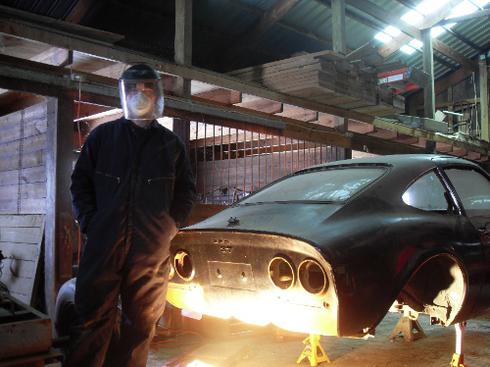
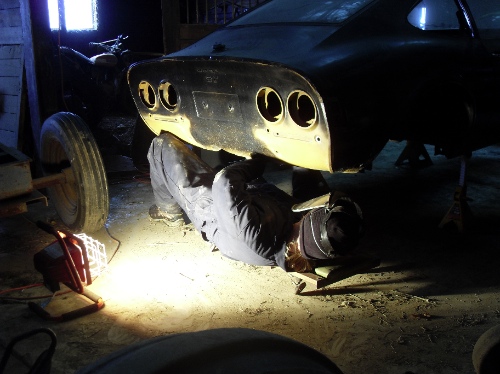
Let me explain. Before he could drive, my son earned enough money shoveling out horse stalls to buy a 1973 Opel GT. Or what was left of one.

The car sits out back in a dark barn, its classic little outline like a rough sketch waiting for functional automotive details to be filled in again. He is restoring it himself, but not alone. He’s in touch with an online community of automotive enthusiasts from around the world. They eagerly share experiences and resources on forums. They also boast, complain, and talk about their interests just as any friends do.

My son and his father have met some of these folks at auto meets and car shows. When my son discovered an Opel club not far from our family farm he was invited to join. Today he and his older brother drove out for a day-long gathering. Although my boys were the youngest by decades they enjoyed an open-hearted welcome.

Yes, I realize there are significant concerns about teens talking online with adults, let alone meeting them. I try to keep those concerns in perspective. Studies of online behavior by youth indicate the biggest risk they face is peer harassment, not sexual predation. Today’s young people are much more overprotected than previous generations even though violence against kids has markedly decreased and the overall crime rate continues to plummet. Overly cautious, restrictive parenting practices actually inhibit a teen’s growth toward maturity and responsibility. So I watch, ask questions, and recognize that my son benefits from online friends and mentors.

It’s a pivotal coming of age experience to be accepted by elders one admires. Until that time it’s hard to feel like an adult. These experiences are frequently depicted in movies, but children and teens in our culture are almost entirely segregated from meaningful and regular involvement with adults.

These days kids spend their formative years with age mates in day care, school, sports, and other activities. So their adult role models are largely those whose main function is to manage children. This subverts the way youth have learned and matured throughout human history. Children are drawn to watch, imitate, and gain useful skills. They want to see how people they admire handle a crisis, build a business, compose music, repair a car, and fall in love. Separate kids from purposeful, interesting interaction with adults and they have little to guide them other than their peers and the entertainment industry. That’s because our species learns by example. Ask any child development expert, neuroscientist, or great grandparent.

There are plenty of educational initiatives to bridge this gap, particularly for teens. These programs connect students with mentors or bring community members into schools to talk about their careers. While these efforts are admirable, such stopgap measures aren’t the way young people learn best. They need to spend appreciable time with people of all ages—observing, conversing, and taking on responsibility. Real responsibilities, real relationships.

Because my kids are homeschooled they’ve have more opportunities (and a lot more time) to hang out with interesting adults. My daughter volunteers for hours each week alongside a woman who rehabilitates birds of prey. Another of my sons has played bagpipes for years with an 80-something gent who once served as a Pipe Major for Scotland’s Black Watch. The age range of my kids’ friends spans decades. Natural mentors such as these are a rich source of authentic experience. And they’re in every community. It’s not hard to find them.

Along with other homeschooling families, my kids have also taken a close look at the workaday adult world. The owner of a steel drum company explained the history and science of drum-making, talked about the rewards and risks of entrepreneurship, then encouraged us to play the drums displayed there. An engineer took us through his testing facility and showed us how materials are developed for the space program. We’ve spent days with potters, woodworkers, architects, chemists, archeologists, stagehands, chefs, paramedics and others.

People rarely turn us down when we request the chance to learn from them. Perhaps the desire to pass along wisdom and experience to the next generation is encoded in our genes. Age segregation goes both ways–adults are also separated from most youth in our society. After an afternoon together we’ve gotten the same feedback again and again. These adults say they had no idea the work they do would be so interesting to kids. They marvel at the questions asked, observations made, and ideas proffered by youth that the media portrays as disaffected or worse. They shake hands with young people who a few hours ago were strangers and say, “Come back in a few years, I’d like to have you intern here,” or “We could use an engineer who thinks the way you do. Think about going into the field,” or “Thanks for coming. I’ve never had this much fun at work.”

So today my teenaged son hung out with fellow Opel aficionados. They trust he will drive his car out of the dark barn and into the sunlight soon. It will be a shared accomplishment, the kind of thing that happens all the time when young people aren’t separated from the wider community.

unschooling teens, homeschooling teens, teens free to learn,

I wrote this piece nearly two years ago for Shareable.com. Since then this son of mine has become a mechanical engineering student at a private college. His fellow classmates brought with them years of advanced placement math and science classes. The advantage he brought? Lots of hands-on experience, an active approach to learning, and insatiable curiosity. He’s at the top of his class.   

Educating Too Early

A1

My daughter started preschool a month before she turned three. She was too young. The facility was wonderful, the teachers kind, the activities entirely age-appropriate but she resisted the structure. It didn’t make sense to her that she was asked to learn color words she already knew. Or that she had to perform with her classmates at the annual holiday show after she’d already practiced the song and movement pieces well beyond her boredom tolerance. She did what she was told but she wasn’t happy.

I know why I was eager for her to start. Pregnant with her brother, I felt nauseated all the time and hoped preschool would feed her active mind. Or perhaps because she had been chronically ill nearly all of her first three years. Now she was finally better and I suspect, unconsciously, I signed her up to assure myself she was as healthy as any other little girl.

When I talked with her teachers about my child’s frustrations they emphasized how important it was to follow rules, even if she didn’t see the logic herself, because it prepared her to conform to many more rules in “real” school. That didn’t make sense to me either and we finally pulled her out of preschool.

Once she was a preschool dropout we went back to our ordinary, richly educational lives of chores and play. We played outside, hiked in the woods, made up songs, went to the library, visited friends and family, took trips to museums, snuggled, and read. She filled her free time with make-believe play as well as hours of drawing while listening to story tapes. If I had to do it over again, I’d have skipped preschool entirely. I’m not against the concept, just troubled by how much emphasis is placed on adult-led educational structure.

Take a look at promotional material for preschools in your area. Chances are they tout early math, pre-reading, and other academics. This approach sells.  Most people I know sign their children up at the age of two or three to attend specialized enrichment programs that claim to boost abilities in science, art, sports, music, or language. In addition, nearly everyone I know is sure their children benefit from a few hours each day using electronics that “teach.”

a1 (6)

Well-intentioned parents operate on a mindset that’s hard to dismiss in today’s society. They are convinced that learning flows from instruction. Logically then, early instruction will help maximize their child’s potential. But learning in young children (and perhaps at all ages) has much more to do with curiosity, exploration, and body-based activities. It has very little to do with structured activities, which may actually impair a child’s ability to set and reach goals independently.

Studies with four-year-olds show that, “Direct instruction really can limit young children’s learning.” Direct instruction also limits a child’s creativity, problem solving, and openness to ideas beyond the situation at hand. This is true when the instruction comes from parents as well as teachers.

As Wendy S. Grolnick explains in The Psychology of Parental Control: How Well-meant Parenting Backfires, research shows that rewards, praise, and evaluative comments actually undermine motivation and stifle learning in preschoolers as well as school-aged children. This is true when those actions come from parents or teachers.

Highly instructional preschool programs have been studied for years. Although they’re more popular than ever, the outcomes don’t hold up under scrutiny. 

a (1) (2)

Researcher Rebecca Marcon evaluated children in preschool and kindergarten programs falling within three categories: play based, academically oriented, and those that combined both approaches. Her study checked up on these students as they progressed through primary school. Students who had been in early academically oriented programs gradually declined, falling behind their peers. Children who’d been in a combined approach program also showed achievement gaps. Who benefited the most? Children who’d been in play-based programs. Their academic success was greater than those in the other two types of programs and continued to gain. Marcon concluded,

Children’s later school success appears to be enhanced by more active, child-initiated learning experiences. Their long-term progress may be slowed by overly academic preschool experiences that introduce formalized learning experiences too early for most children’s developmental status. Pushing children too soon may actually backfire when children move into the later elementary school grades and are required to think more independently and take on greater responsibility for their own learning process.

Another study confirmed that future success has to do with the kinds of abilities gained  through child-initiated, exploratory play. Compared to children in non-play-based preschool programs, the play-based group of children exhibited greater self-control, working memory, flexible thinking, and relational ability. These traits have more to do with academic success than testable abilities in math and reading, even more than IQ.

And when researchers  in the High/Scope study followed high-risk children who attended different preschool environments they found even more resounding results.  Some children were enrolled in an academic setting, others in a child-initiated play setting, and a third group in a preschool that balanced both approaches. By the middle grades, children from the play-oriented preschool were receiving the highest grades. They also showed the most social and emotional maturity.  Those who had attended the academic preschool lagged behind in a significant way— poorer social skills. The differences became more apparent as these children got older. By age fifteen, students from the academic preschool program showed twice as much delinquent activity as the other two groups. And in adulthood, former students of the play preschool and balanced preschool showed higher levels of success across a whole spectrum of variables. The academic group did not attain the same level of education as the play group and required more years of treatment for emotional impairment. They also faced more felony arrests than the other two groups.

And now a resounding new study (2022) is out. It followed children across Tennessee who had attended high quality pre-K programs staffed by teachers with bachelor’s degrees as well as early childhood certification, using the best available curriculum. These children were matched with those who did not attend such a program. The academic group initially performed better than the control group at kindergarten age, but by third grade they fell behind the control group in school. They were also more likely to be disciplined and to have a diagnosed learning disorder. By sixth grade the academic group was even more likely to have a diagnosed learning disorder and were also much more likely to have exhibited violent behavior at school.

a2

Today’s test heavy schools are burdening five-year-olds with a heavy load of academics. In 1998, 31 percent of kindergarten teachers studied believed students should learn to read in kindergarten. By 2010 that number had jumped to 80 percent. Play time, the arts, and recess had decreased in favor of worksheet and computer instruction. The study‘s co-author Daphna Bassok said, “We were surprised to see just how drastic the changes have been over a short period of time/ We expected to see changes on some of these dimensions but not nearly so systematically and not nearly of this magnitude.“

We know that free play, now so limited in the lives of most children, is actually essential for learning and character development. We also know that children learn more effectively when they’re the ones in charge of self-regulating. And we know loose parts play is far more valuable for a child’s development than adult structured activities.

My daughter mostly remembers the toy dinosaurs from preschool. I hope that pushing academics on toddlers itself becomes extinct.

a3

Additional resources

Free To Learn by Peter Gray

Reading Instruction in Kindergarten: Little to Gain, Much to Lose” summary of research by Alliance for Childhood

Balanced and Barefoot: How Unrestricted Outdoor Play Makes For Strong, Confident, and Capable Children  by Angela Hanscom

Play: How it Shapes the Brain, Opens the Imagination, and Invigorates the Soul by  Stuart Brown and Christopher Vaughan

Einstein Never Used Flashcards: How Our Children Really Learn–and Why They Need to Play More and Memorize Less by Roberta Golinkoff, Kathy Hirsh-Pasek, and Diane Eyer

The Power of Play: Learning What Comes Naturally by David Elkind

How Kids Benefit From Real Responsibilities

hands on responsibilities for toddlers, household chores benefit kids,

Years ago my two older kids, about seven and nine at the time, were getting ready to wash the floor. A neighbor girl knocked at the door asking to play. When my son told her he was going to wash the floor first she begged to be included. Although this girl had more monetary advantages than my children could have imagined, she was entranced. She’d never seen kids doing chores, let alone kids in charge of cleaning a floor.

She pitched right in as they scooted furniture out of the way, then swept. I gave them a bucket of slightly soapy water and they went to work with rags, scooting across the wet floor on their knees like crabs, giggling as the floor got wetter and their scooting became sloshy sliding. Their method didn’t matter to me. I was holding the baby and diverting the toddler while peeling potatoes and finishing up a work-related call. I was pretty sure the floor would be somewhat cleaner when they were done. They dried it with towels, moved the furniture back with appropriate grunting and groaning, then slumped on the couch. They looked entirely relaxed, as people do when satisfied with a job well done. When I got off the phone I came in to thank them. They were admiring how the floor caught the light and cautioning our toddler to keep his sippy cup on the table.

After that day the neighbor girl asked if she could do chores every time she came over. It seemed funny at the time, but I think now that she recognized she’d been missing the sense of accomplishment and camaraderie found in working together.

The floors aren’t spotless in my house. The bathrooms are also far from perfect. But I’m totally at peace with this. That’s because my kids handle much of the cleaning around here. I’m happy to do the cooking (or more truthfully I have control issues about what goes into the food my family eats). And I don’t mind being the family laundry wench, although I know kids are capable of handling their own laundering tasks. But in the spirit of “we’re all in this together” I’ve expected my kids to handle a sizeable share of household (and farm) work ever since they were small. I still do.

Timing

Actually, starting young is the key. When toddlers beg to help fold laundry or wash the car with us it’s easier to send them off to play so we can get the job done ourselves. But this is exactly the time to foster a child’s natural helpfulness.

It’s also a powerful way to promote positive development in all sorts of areas. Research shows that children who participate in household tasks are more likely to succeed in adulthood.

Twenty years of data analyzed by professor Marty Rossmann at the University of Minnesota found that the best predictor of success in young adulthood on measures related to education completion, meeting career goals, and maintaining good relationships with family and friends was whether they had begun doing chores in the preschool years. This association did not hold up when young people did not begin helping out around the house until the mid-teen years. Even I.Q. scores had a weaker correlation with success than giving children early responsibilities.

Forty-five years of data from the Glueck Study of inner-city males (part of the longer-running Harvard Grant Study) found that willingness and ability to work in childhood — shown by holding part-time jobs, participating in household chores, or taking part in school clubs or sports — was a stronger predictor of adult mental health than factors such as social class or family problems.

The 2019 study “Associations Between Household Chores and Childhood Self-Competency” of nearly 10,000 U.S. children entering kindergarten in 2010/2011 assessed how regularly they participated in household chores. These same children were assessed again when they reached third grade for prosocial behavior, prosocial behavior, academics, and life satisfaction. Researchers concluded, “The frequency of chores in kindergarten was positively associated with a child’s perception of social, academic, and life satisfaction competencies in the third grade, independent of sex, family income, and parent education… Compared with children who regularly performed chores, children who rarely performed chores had greater odds of scoring in the bottom quintile on self-reported prosocial, academic ability, peer relationship, and life satisfaction scores.”

A small, more recent 2022 study, “Executive functions and household chores: Does engagement in chores predict children’s cognition?” of five to thirteen-year-old children affirms that both self-care chores (such as making one’s own snack) and family-care chores (such as helping make a family meal) significantly predicted improved executive functioning including working memory, flexible thinking, problem solving, follow-through, and self-control.

We tend to spend a lot on activities and products for our children assuming this enriches their lives but if they don’t get the chance to take on real responsibilities, we’re depriving them of key components of adult competency.

Young children clamor to be included. When a preschooler begs to help prepare dinner, he doesn’t want to play with cooking toys, he wants to participate in the real work that’s taking place. It slows us down to let him cut fresh mushrooms with a butter knife (and restraint to avoid criticizing or re-cutting), but a child recognizes his contribution toward dinner. He’s also more likely to eat it.

Movement and Hands-on Experience

how movement builds bodies and brains, chores=success,

Helping out engages young children in activities that promote movement-cued development. This includes large motor activities like digging in the garden, carrying a watering can, putting away groceries, and sweeping with a broom. It also includes fine motor tasks like using a screwdriver and tearing lettuce for a salad.

Childhood is a period of major neuroplasticity, when learning actually changes the brain’s functional anatomy. Hands-on experiences are particularly vital at this time. In fact, the child who regularly engages with manipulatives (arranging veggies on a platter, setting the table, sorting socks) and applies real-world math (measuring and pouring coffee beans in the grinder, taking things apart and putting them together, following recipes) has a strong foundation of representational experience, which enables better understanding of abstract mathematical concepts when they are introduced later. These movement-based tasks are also closely linked to the brain development necessary for reading and writing. (Find out more about this in Sally Goddard Blythe’s wonderful book, The Well Balanced Child: Movement and Early Learning.)

Growing as a Person and a Family

chores build relationships,

Children accustomed to flashy toys and rapidly changing screen images may become so wired to this overstimulation that without it they’re bored. The slower pace of yard and household tasks can be an important antidote, especially when we’re willing to go at a child’s pace. Young children tend to balk when they’re hurried or left out. They show us, stubbornly and often loudly, that there’s nothing more important to them than the here and now. So whenever possible, slow down so you can make working together enjoyable. Letting a small child spread peanut butter, cut sandwiches, and pour milk into cups from a small pitcher affirms the value of the present moment. It also makes an ordinary lunch into a tea party.

The benefits don’t end for older children. Hands-on experience in all sorts of tasks and hobbies promotes learning, builds character, and helps to form the basis of our future selves. When neurologist Frank R. Wilson interviewed high achievers he found many credited their expertise to attributes learned through hands-on activities. In his book, The Hand: How Its Use Shapes the Brain, Language, and Human Culture, Wilson emphasizes that resourcefulness and self-definition arise from the use of our hands more than from the dictates of our educational system.

In a way, doing tasks together puts parent and child on more even ground. So often we parents are rushing to schlep our kids to practice or lessons or other kid-oriented events, making them the pivot around which a family’s activities revolve. Taking part in regular tasks together, even if we’re pulling weeds on opposite sides of the garden, affirms the sort of mutuality that advertisers tell us is only found in pricey vacations. Of course time afterwards for a nice game of hoops and some cold lemonade builds bonds too.

As our children grow, doing tasks together can continue to strengthen our relationships. Moments of meaningful interaction happen easily when washing dishes, folding laundry, fixing the car, or walking the dog together. Working on shared chores helps a child’s contemplative side emerge, prompting discussions that may never have happened otherwise. This is true between parent and child as well as between siblings. I remember my mother bemoaning the arrival of our dishwasher because we no longer took turns washing and drying, ending a relaxed half hour of post-dinner conversation each evening.

It’s easy to make these activities a tradition. Teenagers who have always helped out when a parent puts on snow tires, cleans out the basement for a yearly garage sale, or cans pickles may grumble when asked, but chances are they’d feel excluded if left out too. In part, who we are is defined by what we do. Growing up with hands-on lessons in taking initiative, practicing cooperation, and working towards a goal helps to shape character. And it transforms pickle-making from drudgery to an important family ritual.

Delayed Gratification

early responsibility for success in adulthood,

This is a biggie in the “you’ll thank me later” department because kids who are able to delay gratification are much more likely to do well as they grow up.

We model delayed gratification each time we choose to work for a later or larger goal. This includes saving, making do, and making it ourselves. We demonstrate it when the whole family pitches in to rake a neighbor’s leaves while she’s recovering from a broken hip. We teach it when we let a child see that if he doesn’t do the laundry when it’s his turn, there won’t be a clean team shirt to wear to the game. And we show that it’s expected every time our kids pitch in with the ordinary jobs necessary to run a household.

This may seem negative, particularly when popular culture constantly screams “have it now” and “get what you want.” But there are enormous positives. Our children become familiar with the pleasures of anticipation, which multiplies the eventual delight when a goal is reached. They also begin to internalize the ability to delay gratification.

This is pivotal for success. Multiple studies (cited in Daniel Goleman’s book Emotional Intelligence) found that children who were able to defer gratification grew into teens and young adults who were more socially competent, better able to deal with frustration, more dependable, reached higher educational attainments, and were effectively able to make and reach long-term goals. Delayed gratification is also related to impulse control. Research shows that a child’s ability to control his or her impulses at an early age is predictive of success even decades later as a healthy, financially stable, and positive member of the community.

Expecting children and teens to take an active part in running a household gives them plenty of opportunity to gain the positive coping skills that help them control their impulses and delay gratification. It may seem like returning to the old adage, work first, play later, but the benefits can be extraordinary.

Skill building

give kids real work, make chores meaningful,

Regular tasks allow our children to see for themselves how the world works. They grasp principles of science and math as a seed becomes a tree, as boards are transformed into bookshelves, as flour and yeast turn into bread. They develop traits such as patience. They are motivated to apply what they’re learning to more challenging endeavors of their own. Sure, it doesn’t hurt to know what it takes to grow the tomatoes, make the sauce, and prepare the beans for tonight’s enchiladas. But more importantly, as our children become proficient at the jobs necessary to sustain their families, they also see themselves as capable. That perception transfers across all endeavors.

There’s no denying that children who participate pick up useful skills. They see that maintenance is easier than waiting till the car or laptop breaks. They can set the table, toss a salad, make a sandwich, and boil pasta. Not right away, but eventually. While they are making real contributions to running the household they’re actively learning how to cook, launder, clean, make repairs, maintain a vehicle, budget expenses, and handle other tasks which are essential for an independent life once they’re adults. Wonderful lessons in cause and effect are reinforced when children complete work and benefit from the results. Seeing oneself as an agent of useful change, priceless.

They also learn from the examples we show them, such as how to handle pressure and ways to learn from mistakes. Whether we’re four or 40, gaining competency feels good. It doesn’t hurt to give credit where it’s due. So if your child has been busy chopping mangoes, strawberries, and pineapple into tasty chunks, try renaming the result “Sophie’s Special Fruit Salad” for extra reinforcement.

Purpose

meaningful chores for kids, finding purpose in chores, raising responsible kids, teaching delayed gratification, building impulse control,

When we stack firewood to prepare for the upcoming winter, make a gift to celebrate a friend’s good news, or change a favorite recipe to accommodate Grandpa’s diabetes, our efforts have purpose and value. As our children participate along with us, they feel the intrinsic satisfaction of doing something that has meaning.

So many educational tasks put before our children serve no purpose other than to instruct. But when learning is connected to something truly purposeful, it can’t help but kindle motivation.

From the earliest time our species lived on planet Earth, young children benefitted from the purposeful learning that comes when adults around them are engaged in practical activities — welcoming a child’s questions and eagerness to be included as entirely natural parts of growing up. It acknowledges that these essential skills are necessary for maintaining and belonging in a community.

Children feel honored to be included in real work that includes real challenges. If we pay attention, we see that’s just what they pretend to do when they play.

Beyond Chores

teaching impulse control, delaying gratification, families working together,

I’m not fond of the word “chores.” It implies that kids and adults have tasks that are set apart from the rest of our lives. Making work around the house and yard a regular part of our lives together seems more natural.

I think it’s valuable to get work done together as much as possible. For me, the simplest way to respond to grumbling has always been, “that’s just how we do it in our family,” without engaging in arguments on the topic. And of course balance is essential. Children and teens (well, all of us) need time for daydreaming, play, socializing, relaxation, projects, and all of life’s other joys.

My kids have their own chores, which they sometimes rotate. They haven’t always done them well or on time by any means. Accepting a floor as clean as a child will get it is part of having children participate. And I’m pretty laid back about things like clean bedrooms. (I remind them we try to adhere to the Firefighter Rule: Could emergency workers navigate a bedroom if necessary?) I understand that kids put less energy into tasks that don’t seem to have much importance. They recognize that a clean bedroom doesn’t affect our family’s functioning, while they know for sure that cutting and stacking firewood will keep our house warm. Hence, the firewood is done right while their rooms are often just short of scandalous.

We’ve never given them an allowance, mostly because we haven’t been able to afford it. Families have counted on children throughout history for work that was reliable and essential. Today we are fortunate that we don’t have to rely on our kids to survive, but we can expect them to contribute. The tasks may not be fun or interesting but they are necessary. They demonstrate to every child that he or she is a valuable contributor to the well-being of the family. And hearing, “Thanks, we couldn’t have done it without you,” feels good too.

I’m pretty sure growing up this way has contributed to how super responsible my kids are now in their teen and young adult years. They see a pile of boxes I need to load for our food co-op and carry them, never waiting for me to ask. They gladly stop whatever they’re doing to pitch in for an hour or all day when help is needed in the garage or barn or back yard. They are incredibly capable people who are far more astute and skilled than I’ll ever be. They can milk cows, fix tractors and cars, cut and bale hay, install plumbing, make meals, diagnose a sick chicken, hang drywall, identify spiders, back up their political opinions, weld, put on a roof, well, you get the idea. Sure, they have busy social lives and enjoy keeping their faces aimed at screens just like everyone else. But they recently spent an entire weekend helping a family member pack, move, and make repairs. They worked hard and displayed nothing but their usual good cheer. After exhausting 14 hour days I asked if they’d rather have skipped this particular task. Every one of them affirmed that it was no big deal. And I heard my words come back to me, “It’s just the way we do things in our family.”

Portions of this article were excerpted from Free Range Learning.
Without (or Beyond) College: 24 Tools For Success

resources to skip college, careers with no college, collaborative success,

Free to explore options. Image: iateyourbubbles.deviantart.com

What doesn’t add up

It’s easier to teach an old dog new tricks than it is to change old mindsets. Like the one that insists that all the years up to 18 are preparation for college. After that a bachelor’s degree or higher must be obtained because college is THE ONLY route to success.

This dusty way of thinking relies on old figures showing that college leads to high-earning careers. That’s true for people who become doctors, engineers, and lawyers. Oh wait, that’s not so true for lawyers now either. New law school grads can’t find jobs  and their average student debt hovers close to $100, 000.

Equating college with success doesn’t take today’s realities into account. In thirty years the consumer price index has increased two-and-a-half times while the overall price to attend college has risen sixfold.  Today’s students can’t simply work their way through college. This was possible back in 1970.  A student could easily work 14 hours a week at a minimum wage job to pay for an education at a public institution. Today a student would have to work full time at minimum wage, leaving very little time to fit in those classes.

So students go into debt. The average graduate gets a diploma along with more than $25,000 in debt. Payments are expected to begin right after graduation or the student will begin accumulating additional interest as well as penalties and damaged credit. The pressure is on to find a job.

Except the job market sucks. While a greater share of 18- to 24-year-olds are in school than ever before, the employment rate is worse. Half of today’s young college graduates are either jobless or underemployed in positions that don’t require a degree. Since the 2008 recession, the largest job growth has been in the lowest paying jobs. Some of the biggest projected employment openings are in low paying, lower-skilled positions such as home health, waste hauling, and transportation.  The problem isn’t just in the U.S. Twenty-five percent of young people are unemployed in the Middle East and North Africa, more than 50 percent in Greece and Spain.

What does add up

In the real world, grades and tests actually don’t correlate with adult accomplishments.  We know there are fresher, more interesting ways to learn. Our experiences teach us to pursue success on our own terms. That has to do with crafting a life based on our passions, our integrity, and the unique vision each of us brings to the world. That’s true whether we’re lifting a hoe or a conductor’s baton.

The college highway is actually one of many roads to the future. People everywhere are finding ingenious and collaborative ways to flourish, with or without a degree. Here are some of those ways.

&&&&&&&&&&&&&&&&&&&&&&&&&&&&&&&&&&&&&&&&&&&&&&&&&&&&&&&&&&

Learning Empowerment Tools

1. ZeroTuitionCollege (ZTC)  is an online community of self-directed learners. If that’s not inspiration enough, it offers information for travel, building a portfolio, finding a peer community and much more. ZTC was founded by Blake Boles, author of Better Than College: How to Build a Successful Life Without a Four-Year Degree, a manual with thought-provoking and empowering information on each page.

2. It’s My Life: A Guide To Alternatives After High School is a free e-book put out by the American Friends Service Committee. It includes a rich array of information about apprenticeships, service work, travel learning, and careers both inside and out of the mainstream.

3. UnCollege is packed with information and advice, like “How To Learn Anything” (complete with downloadable sheets to write your own personal learning plan). UnCollege was started by Dale J. Stephens, whose book Hacking Your Education will be published next year.

4. Intern Match helps you locate paid and unpaid internships in your area of interest.

5. BackDoorJobs connects you with short-term job adventures around the world.

6. Volunteer Match helps you get experience doing what you care about.

7. Idealist lists all sorts of internships, volunteer opportunities, and jobs.

&&&&

Learning Exchanges

8. Trade School is a barter-based learning space, meaning you don’t have to pay to learn.

9. Citizen Circles are small groups of people who meet to learn together, with an emphasis on collective learning and action. No fee.

10. (un)classes are casual ways to meet and learn from people in your area.

11. Skillshare is like the eBay of local education. You can learn what you want from someone in your community as well as teach others what you know. Fee. 

12. P2PU is a grassroots global community working together to learn by completing tasks and providing feedback. Free.

13. FreeSkool is whatever participants create. Some are informal gatherings to share knowledge, others are networks brimming with activity happening in parks, living rooms, and community centers in IthacaSanta Cruz, and dozens of other cities in the U.S., Canada, and the U.K. Check out piece in Shareable about how to set up a FreeSkool

&&&&

Collaborative Solutions

14. Share or Die: Voices of the Get Lost Generation in the Age of Crisis is co-written by 20-somethings who are developing collaborative consumption networks and connecting via “lattice” rather than scrambling over each other to climb the corporate ladder. Get this book for free by “paying” with a tweet.

15. Generation Waking Up empowers young people to connect and create a thriving, sustainable world.

16. The Sharing Solution: How to Save Money, Simplify Your Life & Build Community This book helps people find practical and legal solutions for scaling down their work hours, possessions, and expenses by sharing everything from childcare to cars to living space.

&&&&

Free and Nearly Free College Online

17. Coursera pairs with top universities to offer full courses to a global network of students.

18. Khan Academy has a free and ever growing library of 3,200 videos in the sciences to humanities, along with exercises to help learners practice what they are seeing.

19. University of the People is oriented toward awarding degrees to students all over the world, using online courses and charging only an admission fee. It has accepted 1,500 students from 130 countries

20. Academic Earth offers free online classes using video lectures from leading university professors. It’s possible to sign up to earn an online degree, fee unknown.

&&&&

Guides

21.  Better Than College: How to Build a Successful Life Without a Four-Year Degree by Blake Boles

22. Hacking Your Education: Ditch the Lectures, Save Tens of Thousands, and Learn More Than Your Peers Ever Will by
Dale Stephens


23. 40 Alternatives to College by James Altucher

24. DIY U: Edupunks, Edupreneurs, and the Coming Transformation of Higher Education by Anya Kamenetz

The Future Belongs to the Curious from Skillshare on Vimeo.

Successful Teen Homeschooling: Two Vital Factors

homeschooling teens, meaningful work for teens, responsibility for teens, teen interests,

The teenaged years are actually the most rewarding of the homeschooling years. That’s what we’ve found with our four homeschooled children. And that’s what I was told by many of the 110 families I interviewed for my book Free Range Learning:: How Homeschooling Changes Everything. People in Ireland, Australia, India, Germany, and the U.S. described coming to this realization in similar ways. Their concerns about helping a young child master the basics or their struggles to find the right homeschooling style gradually resolved. Parents grew to trust the process of learning much more completely and, perhaps as a result, they saw their children mature into capable and self-directed young people.

Homeschooling isn’t the cure-all, by any means, for a culture that barely recognizes a young person’s need for identity and meaning. But homeschooled teens are not limited to the strictures of a same-aged peer culture or weighed down by a test-heavy form of education. They also have more time. This provides ample opportunity to stretch and explore in ways that can benefit them for life.

There are a number of pivotal elements in the period we call adolescence. Two significant ones are the pursuit of interests and meaningful work. These factors are just as important for teens in school as those who are homeschooling. But homeschoolers are freer to fill their time with what’s significant to them. That can make all the difference.

INTERESTS

Pursuing interests builds character traits that benefit us for life.


In my family, we’ve noticed that interest-based learning builds competence across a whole range of seemingly unrelated fields. For example, as a preteen one of my sons put together a few rubber-band powered airplanes at a picnic. When they broke, he tried fashioning the pieces into other workable flying machines. This got him interested in flight. He eagerly found out more through library books, documentaries, museum visits, and You Tube. Soon he was explaining Bernoulli’s principle to us, expounding on changing features of planes through the last century, and talking about the effect of flight on society. He designed increasingly sophisticated custom models. He read biographies of test pilots, inventors, and industrialists. He won a state award for one of his planes through 4H and got a family friend to take him for a ride in a small plane. What he picked up, largely on his own, advanced his understanding in fields including math, history, engineering, and physics. All inspired by learning that felt like fun.

This particular passion didn’t last, but the pursuit of his interests continued. He built spud guns with friends, played bagpipes in a highland band, bred tarantulas, repaired recording equipment, and tried his hand at woodworking. He wasn’t always at full tilt (never missing a chance to sleep in). Now a college student, he’s surprised that his fellow students are so turned off by learning.

Interests engaged him, as they do each one of us, in the pleasure of exploring and building our capabilities. They teach us to take risks, make mistakes, and persist despite disappointment as we work toward mastery. Making sure that a young person pursues interests for his or her own reasons, not the parent’s, keeps motivation alive and passion genuine. Research backs this up. Pursuing our interests builds character traits that benefit us for life.

Self-directed young people really take off in their teen years

Long-term homeschooling families know that self-directed young people really take off in their teen years. Comfortable with their ability to find out what they need to know, they often challenge themselves in their own ways. Some add ambitious schedules to previously unstructured days, others seek out heavy doses of academic work to meet their own goals, still others don’t appear to be remotely interested in conventional educational attainment but instead create new pathways for themselves.

Children as well as teens tend to have lengthy pauses between interests. A boy may not want to act in any more plays despite the promise he’s shown, a girl may not choose to sign up again for the fencing team just when she was starting to win most of her matches. During these slack times they are incorporating gains made in maturity and understanding before charging ahead, oftentimes toward totally new interests. The hiatus may be lengthy. They need time to process, daydream, create, and grow from within. They need to be bored and resolve their own boredom.

Decades ago educational researcher Benjamin Bloom wondered how innate potential was best nurtured. He was convinced that test-based education wasn’t bringing out the best of each child’s ability. So he studied adults who were highly successful in areas such as mathematics, sports, neurology, and music. These adults, as well as people significant to them (teachers, family, and others), were interviewed to determine what factors led to such high levels of accomplishment. In nearly every case, it was found that as children, these successful people had been encouraged by their families to follow their own interests. Adults in their lives believed time invested in interests was time well spent. Due to their interests, these individuals developed a strong achievement ethic and a drive to learn for mastery.

This makes sense. We recognize that young people gain immeasurably as they pursue their interests. And not only in terms of success. When caring adults support a teen who loves to play baseball, study sea turtles, and draw comics, he’s likely to recognize, “I’m okay for who I am.” The interests well up from within him and are reinforced by those around him, so there’s coherence between his interior life and exterior persona. This reinforces a strong sense of self. All of us need sturdy selfhood to hold us in good stead while so many forces around us emphasize unhealthy and negative behaviors.

Interests have a great deal to do with promoting a young person’s feelings of worthiness. There’s an enhanced quality of life, a sense of being completely present that’s hard to name but recognized by those who “find” themselves within a compelling pursuit. A girl may love speed skating, or writing short stories, or designing websites. When she’s engaged in her interests, she knows herself to be profoundly alive. That feeling doesn’t go away, even when she has to deal with other tasks which are not as entrancing. Everyone needs to belong, contribute, and feel significant. The teen who knows his or her interests provide fulfillment is already aware that self-worth doesn’t come from popularity or possessions.

MEANINGFUL WORK

Teens want challenges and the accompanying responsibilities.


A group of homeschoolers touring a rural historical society noticed that storage areas were stuffed with uncataloged documents, some crumbling from age. They offered to digitally scan and reference these materials with the museum’s coordinator. Several other teens researched the requirements for a dog park in their suburb. Working with a group of interested citizens, they petitioned city council for a permit and eventually won a grant to construct the dog park. Another teen started a business fixing and modifying bicycles. He also earns revenue from videos of his mods. These examples from my book indicate how young people eagerly take on challenges and the accompanying responsibilities.

Throughout human history teens have fully participated in the work necessary to help their families and communities flourish. They were needed for their energy as well as their fresh perspective, and they built valuable skills in the process. Working alongside adults helped motivate them to become fully contributing adults themselves. Most of today’s young people are separated from this kind of meaningful work. They have fewer opportunities to encounter inspiring people of all ages who show them how to run a business or foster a strong community. Now that teens aren’t needed to run a farm or shop, they also don’t get as many real world lessons in taking initiative, practicing cooperation, deferring gratification, and working toward a goal.

Ideally young people have taken part in real work from an early age. Many studies bear out the wisdom of giving children responsibility starting in their earliest years. In fact, having consistent chores starting in early childhood is a predictive factor for adult stability.

Although work is largely valued for monetary reasons in our society, the kind of meaningful work I’m talking about has inherent worth. Chances are it is unpaid. (Here are dozens of service ideas for kids.)Through this work young people learn that it’s the attitude brought to any task, whether shoveling manure or performing a sonata, that elevates its meaning. Often an endeavor that’s inspiring doesn’t always feel like work. It may include establishing an informal apprenticeship, developing a small business, traveling independently, or volunteering with a non-profit.

It’s the attitude brought to any task that elevates its meaning.

What is meaningful work may be different for each person. A homeschooled teen may put up a shed for a neighbor, make a documentary with fellow parkour enthusiasts, perform puppet shows at a nearby daycare, help a zither club record their music, become a volunteer firefighter, assist an equine therapy program, coach a kids’ chess team, tend beehives, walk puppies at a dog shelter, or help a chemist in the lab. Through such work they tend to get more involved in their communities and connect with inspiring role models.

Meaningful work may not always be interesting, let alone fun. It has to do with putting in sustained effort to get results, even when the hours become long and the endeavor doesn’t feel rewarding. Through this work young people gain direct experience in making a valuable contribution. They know their efforts make a difference. That’s a powerfully rewarding experience at any age.

  Learning of the highest value extends well beyond measurable dimension. It can’t be fit into any curriculum or evaluated by any test. It is activated by experiences which develop our humanity such as finding meaning, expressing moral courage, building lasting relationships, channeling anger into purposeful action, recognizing one’s place in nature, acting out of love. This leads to comprehension that includes and transcends knowledge. It teaches us to be our best selves.

Originally published in Lilipoh Magazine, Winter 2012

Better Test Scores Don’t Lead To Success

national test score rankings meaningful ,US students compared internationally meaningless data, global test score comparisons overlook data, standardized tests meaningless, rebel against standardized tests, opt-out of proficiency tests, opt out of school tests,

Wikimedia public domain

We shake our heads at the way standardized testing chews the heart out of real learning.   We know about the zombifying effect on schools, teachers, and kids.

Even in the best districts, the effort to attain those all-important numbers eliminates deeper, richer education. Less stellar districts see their schools under a test-heavy siege, charged with getting results or being taken over. This drive also shapes the kind of material students see, relentlessly preparing them to reach higher for the Almighty Score while giving them little time to build essential traits such as critical thinking, creativity, initiative, and persistence.

Parents and educators alike decry this approach, but it’s seen as a necessary pill to swallow (or actually, to make students swallow) in order to achieve some longer term goal. The goal, policy-makers tell us, is greater success for individual students and greater success in global competitiveness.

Do they have proof that boosting individual as well as overall test scores lead to success on either count?

No.

*

National test scores

We’re told that national test score rankings are vitally important indicators of a country’s future. To improve those rankings, core standards are imposed with more frequent assessments to determine student achievement (meaning more testing, more oversight, more teaching to the test).

But do higher test scores actually make a difference to a nation’s future?

study by Christopher H. Tienken compared results from international mathematics and science tests from a fifty-year period to future economic competitiveness by those countries. Surely it showed that those countries with kids performing best on tests become high performing counties. Actually, no. Across all indicators there was minimal evidence that students’ high test scores produce value for their countries. Tienken concluded that higher student test scores were unrelated to any factors consistently predictive of a developed country’s growth and competitiveness.

In another such analysis, Keith Baker, a former researcher for the U.S. Department of Education, examined achievement studies across the world to see if they reflected the success of participating nations. Using numerous comparisons including national wealth, degree of democracy, economic growth, even happiness, Baker found no association between test scores and the success of advanced countries. Merely average test scores were correlated with successful nations while top test scores were not.

Baker explains, “In short, the higher a nation’s test score 40 years ago, the worse its economic performance…” He goes on to speculate whether testing [or forms of education emphasizing testing] itself may be damaging to a nation’s future.

*

Individual test scores

What about individual success?

Educational reformer Alfie Kohn explains, “Research has repeatedly classified kids on the basis of whether they tend to be deep or shallow thinkers, and, for elementary, middle, and high school students, a positive correlation has been found between shallow thinking and how well kids do on standardized tests. So an individual student’s high test scores are not usually a good sign.”

Why do we push standardized tests it has been demonstrated that the results are counterproductive? We’ve been told this is the price children must pay in order to achieve success. This is profound evidence of societal shallow thinking because the evidence doesn’t stack up.

Studies show that high test scores in school don’t correlate with adult accomplishments  (but do line up with interpersonal immaturity). We’ve known this for a long time. Back in 1985, the research seeking to link academic success with later success was examined. It was appropriated titled, “Do grades and tests predict adult accomplishment?”

The conclusion?

Not really.

The criteria for academic success isn’t a direct line to lifetime success. Studies show that grades and test scores do not necessarily correlate to later accomplishment in such areas as social leadership, the arts, or sciences. Grades and tests only do a good job of forecasting how well youth will perform in future grades and tests. They are not good predictors of success in real life problems, relationships, or career advancement.

What can concerned parents do?

Let’s work toward a future where our children have more time to play, to dream, and to love learning.

school tests don't lead to success, proficiency tests useless, good test scores no related to adult success, ban standardized tests now, ban No Child Left Behind now,

CC Flickr photostream of comedy_nose