Five Ways Frugal Living Benefits Kids

Sophie is a single mother raising a five-year-old boy. She’s working to establish her own house cleaning business after losing her job nearly two years ago. Sophie and her son live in a small trailer home.

Marissa and Jack run a thriving dental practice while raising five-year-old twin daughters. They live in a suburban home on several acres.

The five-year-olds from these families are at opposite ends of the economic spectrum. But their parents are raising them in remarkably similar ways. Frugally.

Although Sophie would prefer a more reliable income, she wouldn’t spend a cent more than she already does on herself or her son. She adheres closely to simple living tenets. Sophie grows as much food as possible in a community garden plot and makes meals from scratch. She and her son fully enjoy the free benefits of the local library and park system. On weekends, Sophie’s folk band crowds into her trailer for practice sessions. Her son is already learning how to play the harmonica and fiddle. Sophie believes he should rely on his imagination for fun rather than on toys. When she does buy him gifts, they tend to be modest items such as crayons or socks, or ones that have long- term use such as simple tools or sheet music.

Marissa and Jack choose to live simply in their own way. They buy clothing and their children’s playthings from thrift stores, exchange only homemade gifts, and emphasize having fun outdoors. They carefully consider expenditures based on their ethics. Health is a priority, so they buy only organic foods and belong to a CSA. Supporting the arts is another priority so they invest in original works to hang on their walls and regularly attend plays, concerts, and gallery events. They strongly believe in the importance of international travel. When they go to far-off places, they get around by bike or local mass transit, a method they find brings them closer to the cultures they’re visiting.

Many of us are living more frugally. It certainly eases financial strain. It also makes a difference in wider ways, from reducing our ecological footprint to promoting social justice.

Today’s relentlessly materialistic culture tells young people in every way possible that their identity is built on wearing, playing with, and using the very latest consumer products. That’s a heavy tide to fight against on the home front. But that tide is worth turning.

Living simply puts the emphasis on exactly the conditions that are best for our kids, now and as they grow into adulthood.

Shelter From Commercialism

Humanity has always raised her children with the stories, foods, rituals, and values of particular meaning to the people close to them. While there are undeniable benefits to today’s connections and conveniences, a major drawback is the way advertisers have insinuated themselves into the lives of even the youngest children. Nowadays, a child’s stories, foods, rituals, and values are more likely than ever provided by the marketplace. And we know what’s preached there – that meaning comes from what can be bought.

Every year, a 15 to 17 billion dollar marketing industry is aimed at our kids. That money is spent because it’s effective. It’s estimated that 565 billion dollars in purchases are influenced by four- to twelve-year-olds.

Susan Linn, who teaches psychiatry at Harvard Medical School, notes in Consuming Kids: The Hostile Takeover of Childhood, that psychological and neurological research is used to exploit the vulnerabilities of children. She writes, “The explosion of marketing aimed at kids today is precisely targeted, refined by scientific method, and honed by child psychologists – in short, it is more pervasive and intrusive than ever before.”

These strategies are not only employed in advertising itself but are embedded in Internet sites, video games, television, and movies. They’re designed into packaging, implicit in many playthings, and nearly ubiquitous in schools.

Young people have minimal defenses against such tactics. Children under the age of eight aren’t even able to understand the persuasive intent of advertising. And studies show that a network in the brain necessary for many introspective abilities – forming a self-image, understanding the ongoing story of one’s own life, and gaining insight into other people’s behavior – is profoundly weaker in young people. Those brain networks aren’t fully established until adulthood. Just at the stage when selfhood is forming, our children are most vulnerable to the messages of a consumer culture.

Those of us who live simply shelter our kids in different ways and to differing degrees. No matter what approach we take, it’s neither possible nor desirable to shelter teens the same way we shelter toddlers. That’s why it’s vital to raise our kids to be critical thinkers with a strong sense of self. Then they’re empowered to make their own fully informed choices.

Delayed Gratification

This is a biggie in the “you’ll thank me later” department because kids who are able to delay gratification are much more likely to do well as they grow up.

We model delayed gratification each time we choose to save, make do, or make it ourselves. We demonstrate it when the whole family adds coins to a jar until there’s enough to finance an anticipated event. We teach it when we help children find ways to earn and save for their own aims. And we show that it’s expected whether our kids have to wait to see a movie until it’s available at the library or wait until the next birthday for a new pair of jeans.

This may seem negative, particularly when popular culture constantly screams “have it now” and “get what you want.” But there are enormous positives. Our children become familiar with the pleasures of anticipation, which multiplies the eventual delight when a goal is reached. They also begin to internalize the ability to delay gratification. In multiple studies (cited in Daniel Goleman’s book Emotional Intelligence) children who were able to defer gratification grew into teens and young adults who were more socially competent, better able to deal with frustration, more dependable, reached higher educational attainments, and were effectively able to make and reach long-term goals.

Delayed gratification is related to impulse control. Research shows that a child’s ability to control his or her impulses at an early age is predictive of success even decades later as a healthy, financially stable, and positive member of the community. There are many ways to help kids gain the positive coping skills that help them control their impulses and delay gratification. It may be about waiting, but the outcome is extraordinary.
Happiness

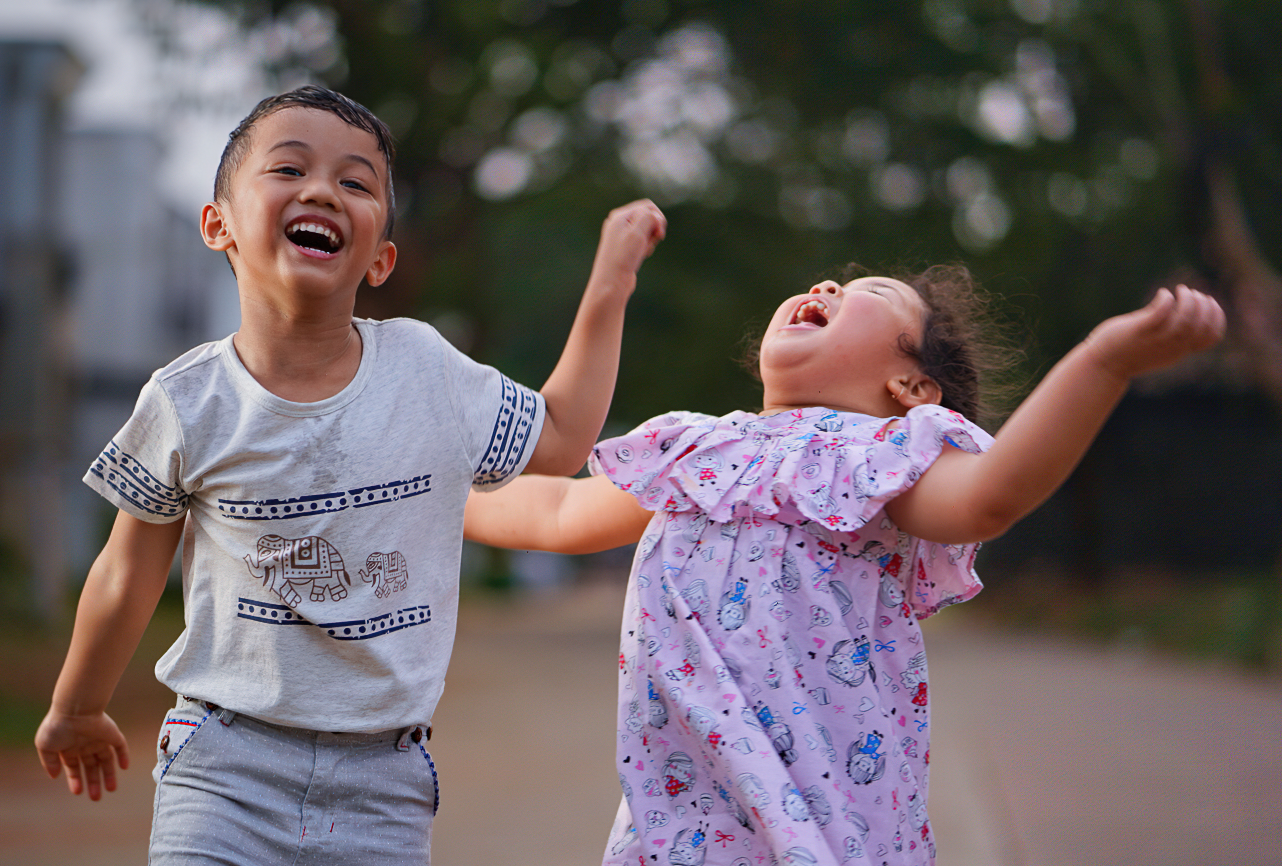
Despite advertisers’ images of happy children playing with new toys and giddy teens dancing in designer hoodies, the facts are glaringly obvious. Things don’t make us happier. Children seem to understand the “time is money” conundrum. When their parents spend more time away from home earning an income, they have less time to spend with the family. In a nationwide poll of American kids ages nine to fourteen, ninety percent said they’d prefer increased time with friends and family over material possessions. And when asked if they could have one wish to change their parents’ jobs, sixty-three percent said they would like their mom or dad to have a job that gave them more time to do things together. Only thirteen percent wished their parents made more money.

The more materialistic young people are, the unhappier they tend to be. According to research cited in The High Price of Materialism by Tim Kasser, people who hold materialistic values are more likely to suffer from a whole dumpster load of problems. This includes aggressive behavior, insecurity, depression, low self-esteem, narcissism, even physical maladies. And when people place high value on material aims, they’re prone to have trouble with interpersonal relationships and intimacy. Materialism is also related to less independent thinking and lower value placed on being “true to oneself.” Of course, we want to spare our kids this festering personal mess.

How? We recognize that a sense of well-being depends on intangible qualities like warm interpersonal relationships and reasonable autonomy in one’s choices, exactly those things that money can’t buy. But what’s interesting is that materialism and unhappiness seem to “cause” each other. We all know people who exemplify this. Unhappy people tend to seek status and satisfaction in more transitory ways such as acquisition and appearance. When they do, they feel a temporary boost in happiness, which reinforces even greater materialism.

Studies show that happiness has much more to do with experiences than with possessions. A family camping trip will provide more lasting pleasure than a large purchase. That may be due to the way we access memories. Long after the experience is over, we have fuller sensory-based recall that’s invariably richer than any a purchase can provide.

It’s important to model a cheerful approach to simple living for our kids, but that’s not enough. To ward off materialistic attitudes, our children need the personal strength found in the self- worth that comes from supportive relationships and a sense of accomplishment. In a marvelous example of synchronicity, these are precisely what simple living reinforces in our daily lives. We consciously choose to do for our- selves, to spend more family time together, and to focus on active rather than passive entertainment.

Creativity and Enthusiasm

Many adults seem determined to keep kids busy by enrolling them in supervised activities. And they provide kids with plenty of distractions like toys, video games, and television. Unintentionally, these efforts teach children that fallow time is undesirable. But brain studies show that daydreaming, contemplation, even that uncomfortable condition we identify as “boredom” is vitally important. These natural periods of down time are necessary to incorporate higher level learning and to generate new ideas.

If we expect children to resolve their own boredom without resorting to electronic or other distractions, we help them access a wellspring of ideas that seem to come from nowhere, a wellspring they discover within. Frugal living is one way to preserve a slow pace and minimal distraction load, letting our children become familiar with generating their own ideas.

When we live frugally, we also tend to avoid popular methods of “enriching” our children’s lives such as academic preschool, specialty classes, coached sports, and other paid programs. That saves on fees. It also fosters the kind of expansive learning that’s natural for our species. Research continues to show that when adults are highly directive and exert influence even in the form of rewards or evaluation, their efforts actually diminish a child’s motivation, enthusiasm, creativity, and ability to innovate. Well-intended efforts to hone a child’s abilities through early instruction tend to be counterproductive.

That’s also true of play. Our kids don’t need expensive toys or games. Children’s creativity and resourcefulness flourish when they play without the structure imposed by most playthings. Imagination flows freely when they use what they find in the backyard to play act, build hideouts, or create their own games. In contrast, a toy linked to a movie release or a game with structured rules has predetermined uses and children are much less likely to innovate.

Stuart Brown and Christopher Vaughn write in Play: How it Shapes the Brain, Opens the Imagination, and Invigorates the Soul that, “play lies at the core of creativity and innovation.” It enhances development in areas such as emotional health, social skills, motivation, confidence, a sense of justice, and much more. Young people who maintain a playful nature into adulthood are, according to Brown and Vaughn, remarkably well suited for success. A playful adult is more flexible, humorous, optimistic, and efficient. They note that throughout life, “the ability to play is critical not only to being happy, but also to sustaining social relationships and being a creative, innovative person.”

When our frugal homes provide plenty of raw materials necessary for play without up-to-the-minute popular toys, we’re putting into place the best conditions for sustaining creativity and playfulness.

Self-Reliance And Responsibility

There’s a resoundingly positive impact on our children when we include them in the real work of maintaining our family home, yard, vehicles, and more. Children growing up in frugal households often have regular chores. While some complaining is natural, chores help children understand how things work. They see the benefits of saving as they do calculations for the family budget. They recognize what happens if they forget to take the dog out or don’t bring the laundry in from the line before it rains. They take extra pleasure in the warm fire from firewood they helped to stack. Chores also enable children to master useful skills that will help them become more self-reliant adults.

Taking on early responsibility brings long-term consequences. A study, starting in the 1930s, followed men from young adulthood to death. These men had very different lives; some were affluent Harvard graduates and others were impoverished inner city residents. The men who helped out with regular tasks starting at a young age were most likely to enjoy stability and good mental health.

And there’s more evidence. A long-term study followed children from early childhood to their mid-twenties. What led to success? Balancing all other variables, it was found that the best predictor of a young adult’s success was participation in household tasks at a young age. And we’re talking resounding success – including educational attainment, high intellectual capabilities, a career, and good relationships with family and friends.

The optimum age to get started is three or four years old. According to researchers, starting in the preteen or teen years doesn’t have a strong association with success, although children who take an active role early continue to help out as teens. It’s important to gear the task to the child. Parents should take care to present tasks that aren’t too difficult and that fit the child’s learning style, and not to “pay” for tasks directly or through an allowance tied to the work. Researchers also suggest that children be involved in choosing tasks, perhaps through family meetings or rotating chore charts.

They key to success may also lie in the sensory riches gained by hands-on tasks. Those of us who live simply tend to do more for ourselves. We may grind our own grain and make our own bread, we may raise chickens and barter the extra eggs for a local beekeeper’s honey, we may fix rather than replace what’s broken. And when our kids take part they also gain learning experiences that apply to many other areas of life.

Neurologist Frank Wilson explains in The Hand: How Its Use Shapes the Brain, Language, and Human Culture that brain development and hand use is inextricably connected. And Wilson found a transfer effect. As he studied people who were masters in all sorts of fields (surgeon, puppeteer, and guitarist to name a few), he found each of them had engaged in regular hands-on efforts during their formative years. Whether they grew up doing farm work, playing a musical instrument, or helping grandpa build birdhouses,Wilson says the hand-brain link activated “hidden physical roots . . . of passionate and creative work.”

Starting our kids on tasks at an early age blesses them with self-reliance and a greater likelihood of success. It also demonstrates to them day after day that their efforts are needed. A child can see the outcome of his or her efforts in a meal the whole family worked to get on the table. It feels good. It feels even better is when a parent says, “Thanks, I couldn’t have done it without you.” There’s not a commercial product out there that can create the same genuine satisfaction.

Sophie’s little boy and Marissa and Jack’s twin daughters know that satisfaction. Their young lives have ample time for play, working alongside adults, and warm family conversation. The children soak up their parents’ values while learning and growing largely free of commercial influences, at least for now. Their parents have never met each other but they have the same focus. They see simple living as an integral way to bring forth a more conscious and life sustaining future for their children.

First published in Natural Life Magazine  

Resources

Fairplay: childhood beyond brands

Alliance For Childhood

Shareable: solutions for the common good

What Movies Tell Girls

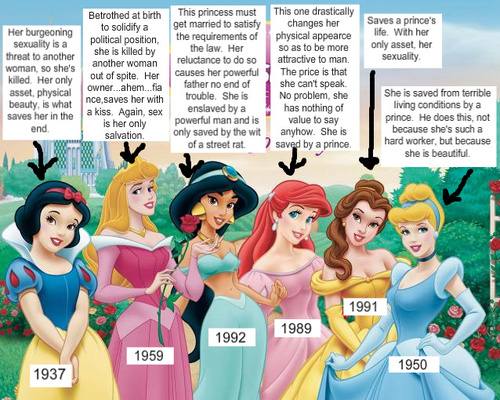
how movies affect girl's self-image, damaging effect of media on girls, For years my daughter’s favorite movie was Just Visiting. This old remake of an older hit French comedy was packed with plenty for my little girl to adore. Magic, time travel, and plenty of humor. Some quotes from the film are still in rotation as favorite family sayings. Although it didn’t lack for laughs, it was missing something more vital. Strong female roles. Sure, women star in the film. Passive, pretty characters who only gain a stronger sense of themselves through men. Well, there’s also a stereotypical witch. Don’t even get me started on that. I’m not about to stomp my foot and decry one B movie because the women’s roles aren’t up to good-for-my-daughter standards. But when I take a look at movies available in theaters and on Netflix, foot stomping seems imperative. In the real world girls and women have full, interesting lives. Their conversations are complex and rarely limited to shoes, hair styles, and attracting the “right” XY chromosomes. But in the entertainment world, females are often little more than gloss. Little more than women’s roles in the past. sexualized roles in movies, One way to gauge a female character’s presence in any movie is the Bechdel test. This method doesn’t imply that a particular movie has merit, it simply demonstrates character treatment based on gender. To pass the Bechdel test, a movie has to meet all of the following three qualifications:

  1. Have at least two female characters (with names known to the audience)
  2. who have a conversation with each other
  3. about something besides a male.

Recall the last five movies you saw. How many really pass the test? I’m not sure Just Visiting passes. But according to the Bechdel test database, recent movies such as Limitless, Pirates of the Caribbean: On Stranger Tides,  The Tree of Life, Water For Elephants, Your Highness, Beastly, I Am Number Four, The Lincoln Lawyer, No Strings Attached, Source Code, and Avatar don’t pass. Kids’ movies aren’t much better. Bechdel test failures include Hop, Rango, Rio, Jack and the Beanstalk, Megamind, The Secret of KellsFantastic Mr. Fox, Cloudy With a Chance of Meatballs, Ice AgeDawn of the Dinosaursand Shrek Forever After. Another way to pay attention to gender disparity in movies is to simply count the number of female speaking characters. Top movies for kids from 1990 to 2005 averaged less than one female out of every three speaking characters. And in both animated and live action movies from 1999 to 2006, researchers noted that females were outnumbered by males in speaking roles as well as crowd scenes. Worse, girls and women were typically portrayed in stereotypical, often hypersexualized roles. It seems girl power, even in today’s family films, has a lot to do with sexy clothes.

Jeff Brunner thesocietypages.org/socimages/2009/10/25/disney-princesses-deconstructed/

This gender disparity is more than annoying. It’s damaging. Sexualized stereotypes are linked to a slew of problems in girls as well as women including eating disorders, poor self-esteem, and depression. Girls and young women who frequently consume mainstream media content are more likely to believe that a woman’s value is based on physical attractiveness. Even very young girls are beginning to self-objectify, to think of themselves as objects to be evaluated by appearance. And there’s a lot of media consumption going on. Half of kids under six watch at least one DVD a day. That’s some heavy reinforcement of Hollywood ideals. In our house Just Visiting has given way to new favorites. I’ll be watching them with popcorn, a snuggly blanket, and some attitude. My foot is just itching to stomp. Here are a few resources to light the way. About Face Adios Barbie All Made Up: A Girl’s Guide to Seeing Through Celebrity Hype to Celebrate Real Beauty Beauty Redefined Body Drama: Real Girls, Real Bodies, Real Issues, Real Answers Body Outlaws: Rewriting the Rules of Beauty and Body Image Body Shots: Hollywood and the Culture of Eating Disorders (Excelsior Editions) Can’t Buy My Love: How Advertising Changes the Way We Think and Feel Cinderella Ate My Daughter: Dispatches from the Front Lines of the New Girlie-Girl Culture Mothers for a Human Future New Moon Girls Packaging Girlhood Pink Stinks Resolving the Confidence Crisis Taking Back Childhood Teen Voices The Body Project: An Intimate History of American Girls 101 Ways to Help Your Daughter Love Her Body

Gentle Nurturance=Gentle World?


A little girl about three years old trails behind her mother in the store. She seems tired and distracted, as if it’s difficult for her to keep up. Her mother is busily shopping while pushing a cart with a baby in a carrier at the front, oblivious as her daughter lags farther behind. Every minute or so the girl says, “Mommy,” but her mother doesn’t look back so the girl hurries to catch up. Not long after the mother turns to another aisle the little girl loses sight of her and wails loudly. Her mother, surely distracted and now embarrassed, hustles back to grab the child, shakes her, and through clenched teeth issues a threat. The child cries quietly and resumes following, more closely at first but again lags behind in the crowded store. A few aisles over she loses sight of her mother again. This time the mother picks the child up by the arm to smack her fiercely.

The problem continues to escalate. The entire time this family is in the store the mother repeatedly threatens and hits a child who may be ill, or needing a nap, or simply isn’t able to keep up. No one intervenes. In the checkout line they stand under an overhead TV screen blaring with news. Crime, war, and looting at the scene of a disaster are shown in vivid video clips. The little girl, tears still drying on her face, reaches up to the baby sleeping in the carrier and squeezes his toes until he too is crying.

Many of us probably see such scenes on a regular basis. Those of us who are parents know full well that gently nurturing a child’s growing body and mind isn’t always easy. Sometime days it feels as if good parenting requires sainthood. But gentle nurturance is the way that we adults constantly demonstrate, in hundreds of seemingly insignificant ways, that a child is a person worthy of love and consideration. We wipe a face softly rather than harshly, we take an extra moment to see what a child sees, we find ways to distract a grumpy toddler or a moody teenager, we share real work with our children so they know the satisfaction of a job well done, we turn away from our own amusements to take part in what delights our children, we teach our children to wait their turn, we cuddle and guide and care.

raise children tenderly for a more peaceful world

This doesn’t mean we empower children to do whatever they want or raise them without limits. It simply means that it’s possible to touch a child with kindness and respect, to consider situations from the child’s point of view, and whenever possible, to listen to what a child has to say.

Gentle nurturance resounds through a child’s entire life, bringing forth a greater potential for happiness and success. Children treated with love and consideration become adults who treat others well too.

no spanking leads to better behavior

There’s plenty of evidence that this is the case. Let’s take one example, that of corporal punishment. Ninety percent of American parents say they have spanked a toddler, 61 percent in the same week they were asked. If it “worked” parents who spank would have more compliant children. But that’s not the case. In fact, children tended to act out again within a few minutes after being spanked or hit by a parent.

Spanking leads to children who are more easily frustrated, have more frequent temper tantrums, demonstrate greater defiance, and who are more likely to physically harm others.

Spanking is also associated with lowered IQ scores. A U.S. study found children who were spanked had lower IQs four years later compared to those who were not spanked. The more frequently the children were spanked, the slower their intellectual development. Researchers speculate one factor may be that regular physical punishment is a chronic stressor for young children.

Negative consequences aren’t limited to childhood. Children who are punished by spanking, slapping, or grabbing even occasionally run a higher risk of growing up to have mental health problems, according to a study of nearly 35,000 people. Those issues include depression, anxiety, and drug or alcohol abuse as well as more complex illnesses such as narcissism and antisocial behavior.  

Even crime is associated with physical punishment. Take time to read this linked article, titled “The Influence of Corporal Punishment on Crime” by Adah Maurer, Ph.D. and James S. Wallerstein (courtesy of The Natural Child Project) which features data including the following chart:


Degree of physical punishment


Never

Rare

Moderate

Severe

Extreme

Violent inmates
at San Quentin

0%

0%

0%

0%

100%

Juvenile
Delinquents

0%

2%

3%

31%

64%

High School
drop-outs

0%

7%

23%

69%

0%

College
freshmen

2%

23%

40%

33%

0%

Professionals

5%

40%

36%

17%

0%

Corporal punishment is just one factor among many. There are plenty of other elements to consider as we raise children to respect themselves and others. Here are just a few. 

raising children peacefully

It has to do with consistent and fair family rules. 

It has to do with understanding a child’s temperament.

It has to do with free play  and plenty of time in nature.

It has to do with our expectations and our ability to listen.

It has to do with responsible media exposure.

It has to do with an understanding that we as a species are innately kind and cooperative.

And so much more.

But corporal punishment is the example I’ve used because there are larger cultural factors to consider when force is used on children, whether physical or other forms of coercion. There’s a connection between harsh treatment of children and harsh societies. Researchers Carol and Melvin Ember, in a journal article titled “Explaining Corporal Punishment of Children: A Cross-Cultural Study” conclude that force is commonly used against children in highly stratified societies, societies with low levels of democracy, and those with a propensity toward violence.

And there’s more evidence. James W. Prescott, former administrator at the National Institute of Child Health and Human Development, analyzed cross cultural data using 20,000 statistically significant correlations from 400 studies. The information included presence of physical punishment, freedom or repression of sexual practices, social status of women, degree of affection toward children. He concluded that societies based on affection were highly unlikely to be violent.

These conclusions are of global significance to you, me, and everyone else in today’s world.

peaceful world starts with parenting

This isn’t easy to see on an individual basis. Plenty of anecdotal accounts contradict these assertions, but individual exceptions don’t prove the point. I was raised by loving parents who, yes, spanked a few times and yes, tended to lose me in stores. I don’t see many after effects . (Well, I detest shopping.) The point remains. A gentler world can emerge from gently raised children.

This starts in our homes, stores, everywhere. I know what it’s like to shop with kids (I have four) so I can understand the time pressure and distraction the mother of that three-year-old girl must have been under. But each moment of parenting provides us with an opportunity to help our kids find positive solutions. This builds inner strength and fosters skills they’ll need to deal with future difficulties. Trouble is, parenting skills take patience, conscious attention, and lots of opportunities to observe other parents we admire. The time required is exactly what’s missing in the lives of busy parents. What are some things that could have helped when the little girl couldn’t keep up with her mother?

Connect. “Mommy needs to see where you are. I miss you when you lag behind.”

Empathize. “Oh Sweetie, you’re having trouble keeping up with Mommy.”

Problem solve. “How can we stay together?”

Engage her help. “Can you help me find the cereal you like? Do you remember if it’s in a yellow package?”

Distract her. “Let’s count all the other _____ in the store today (little girls, women with hats, times the loudspeaker interrupts, etc).”

Celebrate and appreciate. “I’m so glad you’re staying with Mommy and helping me watch the baby. Let’s _____ after we get home.”

And it would have helped if this mother had the resources to avoid taking a child to the store who was tired, or sick, or needing closer attention.

It’s important to recognize that in our society, parents tend to be isolated. A whole tribe of extended friends and family aren’t there to watch, guide, nurture, and enjoy each other’s children. Cultural forces of work and time pressure and distance divide us. Parenting is too often a solitary venture, performed under the gaze of strangers who judge one’s parenting in every store and sidewalk.

As Urie Bronfenbrenner noted, we need to understand what forces affect family so we can to best enable them  “to perform the magic feat of which they alone are capable: making  and keeping  human beings  human.”

Ima

Ask The Most Powerful Question

wisdom of elders, ask the most powerful question, what should I know, is there something you want to tell me,

Image courtesy of dimkatm.deviantart.com

“I ask once or twice a year,” she told me. “But it’s a powerful question. It should only be used wisely.”

I was interviewing a woman I’ll call Ms. C. for an article on faith and spirituality. She was truly an elder. I don’t mean age-wise, although she appeared to be in her mid-seventies or beyond. By elder I mean the sort of person who lives deeply and gladly passes along what she has learned.

Ms. C. dressed up for our meeting. She wore a navy blue suit and dazzlingly patterned silk shirt, a tiny hat perched on her elaborately coiffed hair, and bright red lipstick that made her dark skin glow. The pants and sweater I’d tossed on looked pretty casual by comparison.

Ms. C talked about seeing the divine in all things. She spoke precisely, with poetic imagery, but also slid easily into humorous retorts. I felt a wondrous enlargement of spirit in her presence and was, frankly, reluctant to end our interview.

Then she mentioned that she employed the most powerful question of all.

I waited to find out what that might be.

She told me that it should be asked only when the questioner felt strong and ready for the answers. And it should only be asked of those who loved you and could be trusted to tell the truth.

She told me she asked her husband (of 42 years) every now and then. She also asked her sisters and close friends, usually when she felt prompted by some unknown impulse.

The question seems simple: “Is there something I should know?”

She said the answers it evokes are rarely simple.

When Ms. C. kept receiving important and sometimes surprising answers to that question it inspired her friends to take up the question too. She gave me a few examples.

~A neighbor was told by everyone she asked that she needed to seek medical help for a condition she thought was under control.

~A friend was advised to stop wearing clothes that were too tight and too young for her.

~A fellow churchgoer found out that his son was back on drugs.

~One person was informed that a long-standing habit of his infuriated his best friend.

~A former co-worker learned that she came across as haughty and cold, and needed to learn how to get past her shyness to let people see her warmth.

~A friend was told that a secret he thought had been buried long ago was out but no one had wanted to break the news to him.

Ms. C. says that she mostly listens to what the Quakers call the “small still voice” inside her but she has one ear open to what else she might need to know.

I tend to think there’s peace right beyond the need of answers but I won’t deny that Ms. C’s question has its uses. Nor will I deny that truth-telling feels wonderfully liberating.

Do you have a truth just itching to get free, if only a certain person would ask you?

And what about truth seeking? Will you be asking the most powerful question?

Making Heroism Happen

Notice similar statements when people who have committed heroic acts are interviewed? They tend to say, “I wasn’t trying to be a hero, I was just doing what anyone would have done.”  (This from a man who climbed into a burning car to save a woman.)

we can all be heroes

Hero: Wesley Autrey

Or  “I don’t feel like I did something spectacular” (this from a man who leaped in front of an oncoming subway train to pull an unconscious man from the tracks.)

Hero: Jencie Fagan

Or “I think anybody else would have done it.” (This from a teacher who stopped a school shooter by embracing him in a bear hug.)

The same rationale is heard from people who rise to heroic acts despite living with difficult circumstances of their own.

A homeless man who tried to tackle robbers during an attempted hold-up of a Brinks truck and memorized the license plate of their get-away car said, “You just gotta look out for what’s happening with people around you other than yourself.”

A teen with an extensive criminal record stole a bus to drive victims of Hurricane Katrina to safety. He explained, “The police was leaving people behind. I had to pick up people on the bus. The police didn’t want to do nothing. We stepped up and did what we had to  do.”

And a homeless man lost his few possessions after jumping into an icy river to rescue a drowning woman. He said “I just did what needed to be done because someone needed my help.”

what it takes to be a hero

Hero: Adan Abobaker

In their own words heroes continue to tell us that what they have done is not at all extraordinary. If we hold heroes apart from us as superhuman and describe their actions as unfathomably brave, we deny that all of us have the capacity to be heroes if the need arises.

We can develop that capacity. When I lead non-violence workshops we start by working on issues of empathy (identifying with the emotions, ideas, and attitudes of others) as well as empowerment to act on that empathy. Both are necessary to break through what’s been called the “bystander effect.” This was first identified by Ervin Staub, who survived under Nazi rule due to the kindness of others. Dr. Staub explains in  The Roots of Evil: The Origins of Genocide and Other Group Violence that it takes the willingness of those who are uninvolved (bystanders) to step in, advocating for the victim or victims, in order to halt the escalation of violence and to uphold the common good. Without such bystanders, atrocities such as war and genocide are “permitted” to happen.

The bystander effect is active on a smaller scale as well. Studies show if an emergency unfolds before a group of people they’re less likely to take action, basing their decisions on the behavior of those around them. If that same emergency presents itself in front of one person they are more likely to take action. We’ve all heard of these situations precisely because they’re so heinous.

What’s the difference between those who ignore suffering and those who are moved to alleviate suffering? People who have imperiled their lives for months or years to help others can give us some insight. Svetlana Broz, author of Good People in an Evil Time: Portraits of Complicity and Resistance in the Bosnian War, says it requires at least three attributes.
1. The courage to think for oneself, resisting conformity even at the risk of one’s own safety.

2. A moral core that inspires action.

3. The capacity to empathize with those who are dissimilar.

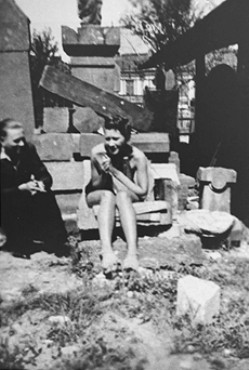
Hero: Zofia Baniecka, rescued 50 Jews during Holocaust

Eva Fogelman, author of Conscience and Courage: Rescuers of Jews During the Holocaust, writes that heroic acts tend to come from a deep sense of common humanity. The roots of this behavior may stem from early upbringing. Fogelman notes that many Holocaust rescuers themselves suffered and were sensitized to the suffering of others. They also tended to have been raised in loving families where self-worth was fostered and reason rather than punishment was used as discipline.

Social scientists still know quite a bit more about aberrant behavior than why people choose to do good. That’s changing according to Philip Zimbardo, author of The Lucifer Effect: Understanding How Good People Turn Evil.  Zimbardo conducted the now infamous 1971 Stanford Prison Experiment (check it out on this slide show) which demonstrated that psychologically normal people will instigate and take part in atrocities. Now Zimbardo is devoting himself to bringing forth the brighter side. He’s started an organization called  Heroic Imagination Project which aims to teach the rudiments of heroism.

Currently a pilot project, it consists of four main educational components taught over four weeks.

  1. Students initially learn about us versus them attitudes, unthinking obedience to authority, and other human tendencies which unwittingly allow cruelties to happen.
  2. Next they work on building empathic responses through listening, paying attention, and “walking a mile in the other guy’s shoes.”
  3. Then they study heroic stories, seeking role models and discovering that compassionate action does inspire.
  4. And finally they practice heroic behavior on a daily basis by translating their good intentions into action, no matter how small.

We don’t have to wait for a course. The steps taught by the Heroic Imagination Project are the building blocks of human decency, things we should teach our children every day and should continue to develop in ourselves.

We’re captivated by real heroes in the news and imaginary heroes in the movies because they call out the best in us. Such stories ask us to live up to our values, not only when we’re in extreme situations.

It’s also time to recognize unsung heroes around us everywhere. They don’t get publicity because their deeds don’t seem extraordinary. Unselfish acts performed a million times a minute weave us together as a caring species. We tend to the helpless, comfort the sorrowful, share knowledge, and create happiness. Such kindness is contagious, each act of compassion and cooperation spreading out in enlarging waves of goodwill. Such efforts may seem small, but they are the basis for making heroism happen.