I Can’t Hear You, I’m Reading

can't hear when I read, lost in reading, unreachable reader,

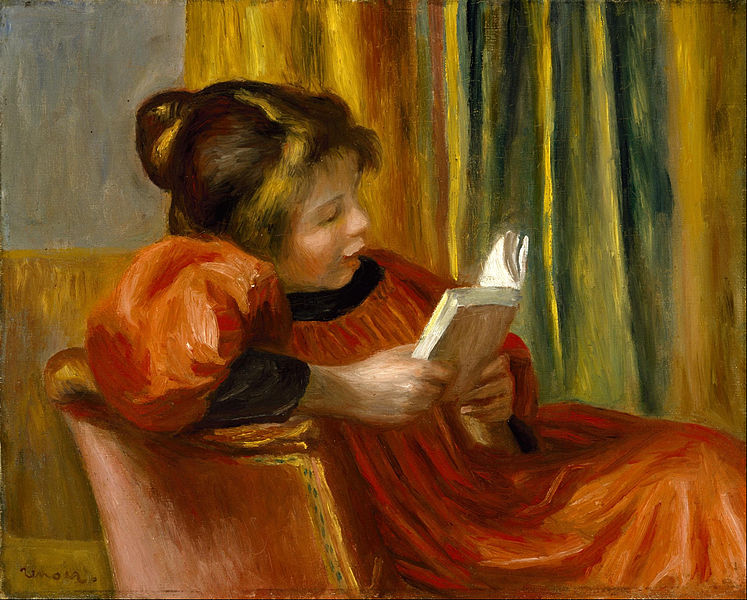
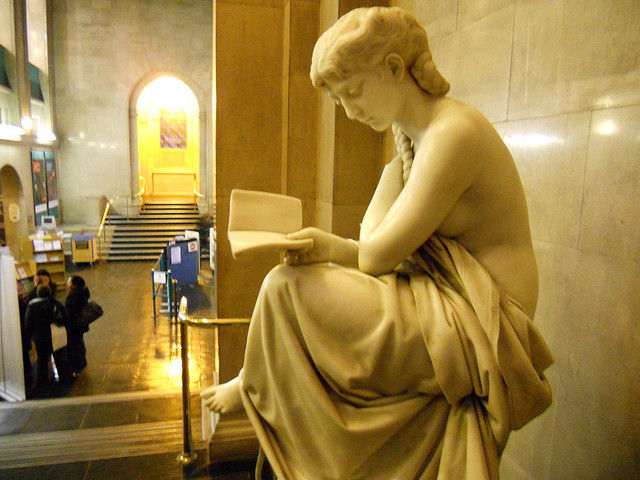
“Girl Reading” Pierre-Auguste Renoir (public domain)

I don’t simply get lost in books. When I read, I am unreachable.

Getting too absorbed in reading was a problem when I was a kid. I didn’t notice if I’d been reading in the tub so long the water turned cold. I didn’t notice the lamp I surreptitiously turned on after bedtime was still illuminating my page close to midnight. I didn’t hear my mother tell me to “get your nose out of that book and go outside” or hear her call me for dinner. I wasn’t trying to disobey. When you’re swooping aloft on the air currents of a story it’s hard to notice what’s happening back on Earth.

The problem was worse in school. I’d get done with some inane social studies assignment and sneak a library book from my desk. Soon I’d lift off, finding myself in the howling winds of a Siberian blizzard or the scorching plains of Africa. Eventually the poke of a classmate’s finger would rouse me. I’d look up to an odd silence only to realize the class had moved on to math and the teacher had called on me.

I got lost in more than books. I started reading daily newspapers when I was ten or eleven years old. (Trying to figure out the nonsensical world of grown-ups, something I’m still trying to do.) My younger brother tells me I was entirely unreachable behind the paper. He had repeated nightmares that he ran into the room yelling, “Dad has been kidnapped!” only to hear my preoccupied “uh huh.”

When I became a mother I didn’t let myself read for fear of ignoring my babies. Okay, that’s a lie. I read when they were asleep or safely occupied. (Surely they needed a break from my constantly loving gaze and all those vocabulary-enhancing conversations.) I took my babies out twice a day in any weather passable enough for a jaunt, often walking with a book propped on the stroller handle. (This was possible only because there was no traffic in my neighborhood.) I also read while nursing, peeled potatoes with a book on the counter, read well into wee hours of the night despite chronic new mom exhaustion. Admitting this to people unafflicted with a library addiction as severe as mine feels uncomfortably revealing.

I thought my lost-in-books-syndrome had eased somewhat by now. That is, until I missed a flight because I was reading.

I rarely fly, so I’m super responsible about the details. I print out copies of my flight information for my family, compact everything I need in a small carry-on, take healthy snacks, and arrive at the airport ridiculously early. Apparently what’s really irresponsible is allowing myself to take reading materials.

Last time I had to fly I was heading home from San Francisco. My fellow homebodies will understand why I chose a non-direct flight, one that stopped in a small Texas airport, simply because it departed earlier in the day and let me get home sooner. I had almost two hours between connecting flights but didn’t waste a moment getting to the the departure area. In this not-so-big airport with its small departure gates I couldn’t find a seat unencumbered by people or their luggage or their Cinnabun bags. So I sat on the carpet, my back against the wall, and started reading The Kitchen House by Kathleen Grissom. I made sure I was no more than 10 feet from the desk to ensure I’d hear them call my flight.

I repeatedly looked up to check the clock until I lifted off into the book, becoming lost to linear concepts like time. When I looked up again (after what seemed like only moments) the area was empty.

A plane was taxing away from the window.

I wasn’t on it.

A bored employee assured me the flight had been called several times. They saw me sitting there but I didn’t look up. There were no flights heading north or west after mine till the next morning.

I got to spend the entire night on a hard plastic airport bench. The lights were dimmed but informational announcements about keeping your luggage secure played every 15 minutes. All. Night. Long.

I finished my book. I read everything on my Kindle. I memorized the posters on the wall. I thought bitterly about living on a backward planet where transporter beams are not yet a reality.

Perhaps I should start a support group. Hello, my name is Laura. I’m an Unreachable Reader.

Math Instruction versus Natural Math: Benezet’s Example

Louis Benezet, natural math,

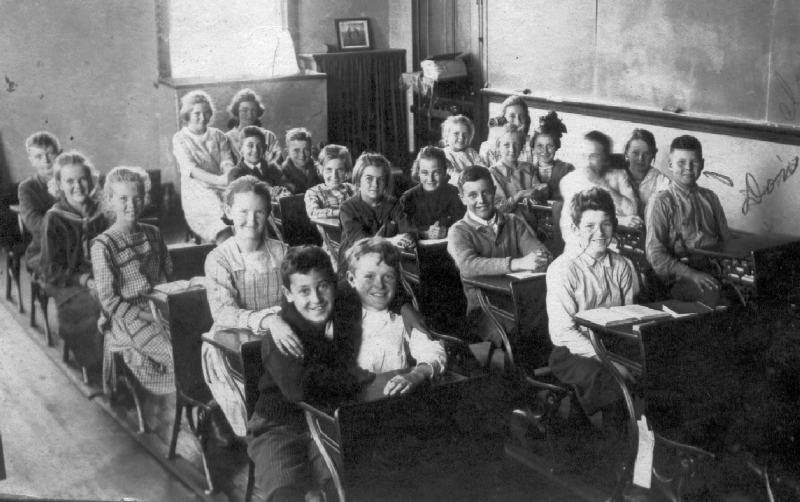
1930’s classroom (forestpark4.wikidot.com)

Children are intrinsically eager and able to learn. If we step back from our limiting preconceptions about education, we discover learning flourishes when we facilitate it rather than try to advance it through force, intimidation, and coercion.

Over 85 years ago a pioneering educator proved that delaying formal instruction, in this case of mathematics, benefits children in wonderfully unexpected ways. Louis P. Benezet, superintendent of the Manchester, New Hampshire schools, advocated the postponement of systematic instruction in math until after sixth grade. Benezet wrote,

I feel that it is all nonsense to take eight years to get children thru the ordinary arithmetic assignment of the elementary schools. What possible needs has a ten-year-old child for knowledge of long division? The whole subject of arithmetic could be postponed until the seventh year of school, and it could be mastered in two years’ study by any normal child.

While developing this rationale, Benezet spoke with eighth-grade students. He noted they had difficulties putting their ideas into English and could not explain simple mathematical reasoning. This was not only in his district; he found the same results with fourteen-year-old students in Indiana and Wisconsin. Benezet didn’t blame the children or teachers, he blamed introducing formal equations too early.  So he began an experiment, abandoning traditional arithmetic instruction below the seventh grade.

In the fall of 1929 I made up my mind to try the experiment of abandoning all formal instruction in arithmetic below the seventh grade and concentrating on teaching the children to read, to reason, and to recite – my new Three R’s. And by reciting I did not mean giving back, verbatim, the words of the teacher or of the textbook. I meant speaking the English language.

To start, he picked out five classrooms, choosing those districts where most students were from immigrant homes and the parents spoke little English. Benezet knew that in other districts the parents with greater English skills and higher education would have vehemently objected, ending the experiment before it started.

In the experimental classrooms, children were exposed to what we’d call naturally occurring math. They learned how to tell time and keep track of the date on the calendar. The students played with toy money, took part in games using numbers, and when dimension terms such as “half” or “double” or “narrower” or “wider” came up incidentally, they were discussed. Instead of math, the emphasis was on language and composition. As Benezet describes these children,

They reported on books that they had read, on incidents which they had seen, on visits that they had made. They told the stories of movies that they had attended and they made up romances on the spur of the moment. It was refreshing to go into one of these rooms. A happy and joyous spirit pervaded them. The children were no longer under the restraint of learning multiplication tables or struggling with long division.

At the end of the first school year, Benezet reported that the contrast between the experimental and traditionally taught students was remarkable. When he visited classrooms to ask children about what they were reading, he described the traditionally taught students as “hesitant, embarrassed and diffident. In one fourth grade I could not find a single child who would admit that he had committed the sin of reading.” Students in the experimental classrooms were eager to talk about what they’d been reading. In those rooms, an hour’s discussion went by with still more children eager to talk.

Benezet hung a reproduction of a well-known painting in the classrooms and asked children to write down anything the art inspired. Another obvious contrast appeared. When he showed the ten best papers from each room to the city’s seventh-grade teachers, they noted that one set of papers showed much greater maturity and command of the language. They observed that the first set of papers had a total of 40 adjectives such as nice, pretty, blue, green, and cold. The second set of papers had 128 adjectives, including magnificent, awe-inspiring, unique, and majestic. When asked to guess which district the papers came from, each teacher assumed that the students who wrote the better papers were from schools where the parents spoke English in the home. In fact, it was the opposite. Those students who wrote the most masterfully were from his experimental classes.

Yet another difference was apparent. It was something that Benezet had anticipated. He explained, “For some years I had noted that the effect of the early introduction of arithmetic had been to dull and almost chloroform the child’s reasoning faculties.” At the end of that first year, he went from classroom to classroom and asked children the same mathematical story problem. The traditionally taught students grabbed at numbers but came up with few correct results, while the experimental students reasoned out correct answers eagerly, despite having minimal exposure to formal math.

Based on these successes, the experiment expanded. By 1932, half of the third- to fifth-grade classes in the city operated under the experimental program. Due to pressure from some school principals, children in the experimental classrooms were back to learning from a math book in the second half of sixth grade. All sixth-grade children were tested. By spring of that year all the classes tested equally. When the final tests were given at the end of the school year, one of the experimental groups led the city. In other words, those children exposed to traditional math curricula for only part of the sixth-grade year had mastered the same skills as those who had spent years on drills, times tables, and exams.

In 1936, the Journal of the National Education Association published the final article by Benezet. His results showed the clear benefits of replacing formal math instruction with naturally occurring math while putting a greater emphasis on reading, writing, and reasoning. The journal called on educators to consider similar changes.

As we know, schools went in the opposite direction.

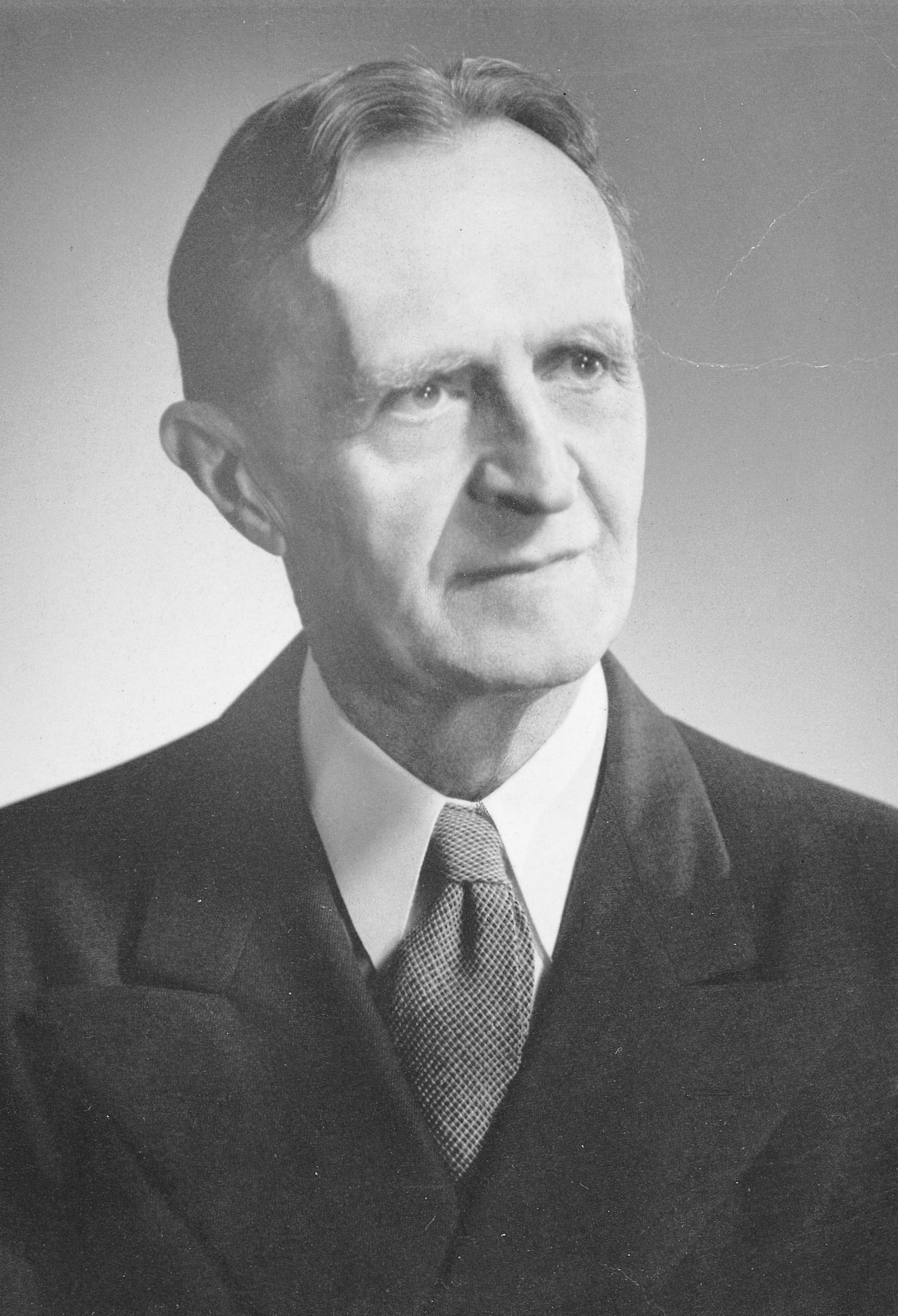
Louis Paul Bénézet

Louis Paul Bénézet

This article is an excerpt from Free Range Learning. (Next post, the extraordinary benefits of emphasizing natural math over math instruction.)

A Dozen Ways To Revel In Poetry

poetry fun, celebrate poetry, exquisite corpse, traveling poetry, set poems free,

It’s all about how the letters are arranged. (mosswaterss)

1. Leave poems where they’ll be discovered. Write a poem on the sidewalk with chalk, crayon it on your child’s lunch napkin, tack it on your market’s public notice board, or tuck it into a friend’s coat pocket.

2. Pull a poem from a hat. Romanian poet Tristan Tzara was denounced by his fellow Surrealists when he proposed making a poem by pulling words from a hat. Try the “Dada Manifesto on Feeble & Bitter Love” method.

Take a newspaper. Take some scissors. Choose from this paper an article the length you want to make your poem. Cut out the article. Next carefully cut out each of the words that make up this article and put them all in a bag. Shake gently. Next take out each cutting one after the other. Copy conscientiously in the order in which they left the bag. The poem will resemble you. And there you are—an infinitely original author of charming sensibility, even though unappreciated by the vulgar herd.

3. Dine with poetry. Linger over some beautiful lines as you savor each mouthful.  The poems don’t have to be about food, but that can add to your pleasure. Find a rich assortment in The Hungry Ear: Poems of Food and Drink edited by Kevin Young and in Appetite: Food as Metaphor: An Anthology of Women Poets edited by Phyllis Stowell and Jeanne Foster. Or let these poems nourish you.
~”From Blossoms” by Li-Young Lee

~”Perhaps the World Ends Here” by Joy Harjo

~”Love Poem with Toast” by Miller Williams

~”The Invention of Cuisine” by Carol Muske-Dukes

~”Onions” by William Matthews

4. Sign up for poem-a-day sites. This month my wonderful library system is offering 30 days of poetry by email, featuring the work of local poets along with prompts for your own work.  You may also want to subscribe to Poetry Daily.

5. Watch poetry-infused movies.

6. Play Exquisite Corpse. This strangely fascinating game was created by the Surrealists in Paris. To play with several people, each person writes a phrase on a sheet of paper, folds the paper to conceal the words, and passes it on to the next player to contribute the next line. Each participant must be unaware of what the others have written, thus producing an absurd but often delightful poem.

7. Let yourself fall in love with spoken word poetry. 

~”Human the Death Dance” by Buddy Wakefield

~”Drunk Text Message to God” by George Watsky

~”OCD” by Neil Hilborn

~”Shrinking Woman” by Lily Myers

~”Accents” by Denise Frohman

~”Place Matters” by Clint Smith

8. Go on a poetry diet.

9. Set poetry books free. Leave them where strangers can find them, perhaps a coffee shop, a hospital waiting room, a dentist’s office, a barber shop, or a muffler repair shop’s waiting room.  If you’d like, register them with BookCrossing.com to see where they travel.

10. Take a poem into nature. It doesn’t have to be wilderness, simply under a tree or near water, and the poems don’t need to reference nature although these do.

~”Catechism for a Witch’s Child” by J.L. Stanley

~”The Silence of the Stars” by David Wagoner

~”The Seven of Pentacles” by Marge Piercy

~”Sometimes” by Sheenagh Pugh

~”Hum” by Mary Oliver

11. Hang on to poetic life lines. Some lines read long ago wait in our memories, rising to awareness at just the right time. The Academy of American Poets offers some time-honored life lines.

This line by art historian Bernard Berenson came to my mind recently as a friend struggled with cancer.  “I would have stood at street corners hat in hand begging passers by to drop their unused minutes into it.”

12. Curate a collection of your favorite poems. If a poem truly resonates with you, save it. Print such poems out out and paste them in a lovely scrapbook, or copy them by hand in a journal, or calligraph them on fine paper, or (as I do much less artfully) keep them in a word doc. After a few years you’ll have a highly personal, completely invaluable collection.

It’s About Reading For Pleasure

One week during the summer I was twelve, I had a crisis.

I ran out of library books.

Sure I rode my bike, went swimming with friends, and listened to music trying to figure out what the lyrics meant but I also indulged in hours of reading every day. Books transported me. My mother would call me to dinner and I’d look up, astonished to find I wasn’t a wolf on the tundra but a girl in shorts lying on the carpet. Or someone would knock on the bathroom door and I’d remember that I was soaking in the tub, not eluding soldiers in a medieval battle.

My parents supported reading, but they had no problem saying “get your nose out of that book and go outside.” They didn’t take us to the library more than two or three times a month, so the stack of books each of us brought home had to last.

When I realized I was bookless, I turned in desperation to a volume my older sister read as a class requirement. It had tiny print and a not-too-inspiring title, The Scarlet Letter. “It’s too hard,” she told me. “It’s a classic.”

I didn’t know “classic” meant it was good for me, like a bitter vitamin tablet. I insisted I was out of other options.

I promptly fell into Nathaniel Hawthorne’s words. They were exquisite in a way I’d never experienced, centered on the inner life and all its convolutions, something I already knew well but didn’t have the sophistication to express. I wasn’t aware such books existed. Instead of racing through it, as I did with every other book, I savored it. It felt as if I could run my fingers over the page and feel the texture of shame and longing. When I finished I was newly in love with the idea of classics, so I got books by Charles Dickens out of the library. I worked my way through two of them that summer although they didn’t live up to my great expectations. I thought Dickens droned and was nothing like Hawthorne.

Several years later I had to read The Scarlet Letter for English class. Everyone grumbled when assigned more pages to read. Those piercing insights, when listed in bullet points on the board, didn’t sink into my heart. Lectures and assignments obscured the book’s beauty. I didn’t read it with a cloak thrown over my head or the prick of a rose thorn in my skin. It lay dead, like a victim on the autopsy table.

Then I realized that my love of books had developed entirely outside of the classroom. I’d never really fallen in love with any of the books assigned in school, although the ones our teachers read aloud after recess, a few pages a day or an entire chapter on special days, still stood out in my mind. Reading, for me, was about pleasure. It was more than a habit, it was an integral part of my being. The books I read helped form my outlook and character. I dare say that many of us, if we look back, will find that favorite books from childhood have a surprising link to who we are today.

If I could, I’d reclaim reading for all of us, from earliest childhood on, as pleasure first and foremost. Turning to the written word for information and edification then becomes a pleasure too.

10 Reasons To Become A Library Addict

library addiction, book zombie, build a library habit,

Image: CC by 2.0 ricardo266)

My name is Laura. I have a chronic library habit.

Sure, I have other, less socially acceptable habits. We can talk about those another day. Right now I’m trying to convince you to become a fellow library fanatic.

I’ve already been successful with my kids. The stacks of books my family brings home may be pushing up the state average. Now that my kids are older they are surprised most of their peers don’t bother with libraries, in person or online. And I’m surprised to see how many of my friends don’t use libraries either. Some haven’t been since high school. For those of you who don’t bliss out over libraries, or worse, dismiss libraries as dim places with a distinctive old book smell, here are the ten best reasons to get hooked on libraries.

*

1. Magic water.

magic water,

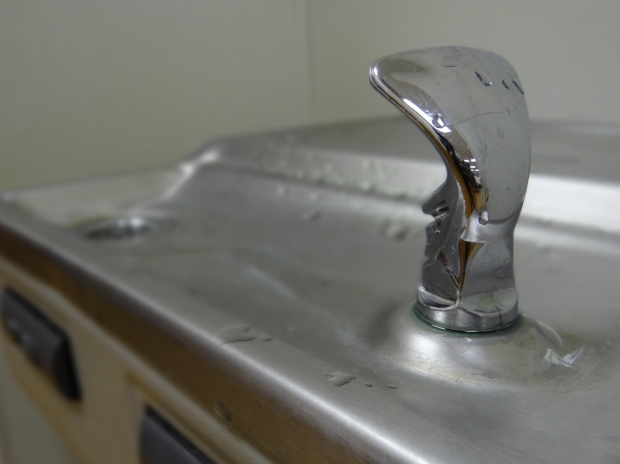
As a small child, I was convinced there was something magical about the water coming out of our local library’s drinking fountain. It tasted better than any water, anywhere else. I assumed this had to do with its enviable proximity to all those books.

When I had my own children, I intentionally carried on the magic water belief. And they’ve always been able to taste the difference. Although I realize there’s no factual basis for this, library water still seems more deeply refreshing than ordinary water. See for yourself!


2. Awe.

library addict, library love, A much more vital magic is evident in libraries around the world.

It has to do with a sense of history, of freely shared knowledge, and awe-inspiring architecture. When traveling I make sure to hang out in libraries. Most recently I found time to soak up the atmosphere of one of NYC’s awesome libraries.

*

3. Librarians.

love librarians, librarian stereotypes,

ala.org

Surely you celebrate the annual Hug Your Librarian Day. These folks are amazing. As  Erica Firment writes on Librarian Avengers,

People become librarians because they know too much. Their knowledge extends beyond mere categories. They cannot be confined to disciplines. Librarians are all-knowing and all-seeing. They bring order to chaos. They bring wisdom and culture to the masses. They preserve every aspect of human knowledge. Librarians rule. And they will kick the crap out of anyone who says otherwise.

Librarian stereotypes aren’t relevant or cute. Don’t believe me? Check out Library Shenanigans, Librarian Problems, and Your Librarian Hates You.

*

4. Library materials are free!

new library services, Our taxes pay for them whether you use them or not. Only suckers don’t get in there to scoop up books, magazines, movies, digital downloads, recorded books, electronic readers, programs, classes, performances, and more. My kids and I have strolled out after a library visit with well over 100 items checked out on a card or two.

Today’s libraries offer much more than well-worn books and a chaotic Story Hour. Click over to your library’s website. You’ll find an amazing array of offerings well beyond the newest bestsellers. There are probably programs to get you started in fencing or felting or fraternizing with fellow foodies, just this week alone.

*

5. Ordering.

order library materials, library request, OMG, I love ordering materials. In my area library systems are linked, so holdings can be sent from libraries in quite a few counties right to my own little branch. I can read a review of a book before it’s released, then go to the library site to pre-order it. I can order special book group offerings for our book group (up to 20 of the same book) that come organized by some saintly librarian with supplemental materials. I order obscure specialty books that were published back in the 1920’s and earlier.

We’ve homeschooled on the cheap thanks to our library system and the wonders of ordering materials. No way could I afford to expose my kids to the depth of information and range of experiences they’ve gained via libraries.

*

6. Online renewal.

library perks, I don’t know about your library system, but mine permits renewals up to five times. Online. That gives me several months to adore most materials. Those months are necessary. I use books in my work, take them with me to ward off dull moments, and leave them around the house for family members to pick up when their eyeballs are unoccupied.

Sometimes I find books so precious that when they are finally and irrevocably due, I end up buying a copy. But let me point out, I only buy books after proving their worth to myself. No regrettable book purchases here. Yay savings.

*

7. Library privileges.

I’ve been in a steady human relationship for a loooong time, but I’m a non-monogamous library user. Judging by the number of library cards in my name, I’m a pushover for the sweet allure of any library’s New Acquisitions section.

It’s hard to unearn library privileges. Late fees are usually minimal and in many systems there are no late fees for seniors, teachers, and homeschoolers. Even when my account is labeled “delinquent” due to a late book or two I’m still able to check out and reserve materials. I don’t mind a few dollars here and there to make up for my late return crimes. Totally worth it. Unlike most human relationships, my library is always buying me something new, forgiving me when I atone, and consistently planning unexpected ways to lure me.

*

8. Research databases.

library search functions,Library systems subscribe to pricey online database services that none of us could afford on our own. I access most of them from my home computer, simply logging in with my library card number. These databases include genealogy, academic research, news archives, digital images, health, and much more. I relied almost entirely on the resources of my award-winning Medina County Library for the research necessary to write my book.

*

9. Book Zombie Fuel

book diet, reading addict,

sundaykofax via Flickr, CC by 2.0

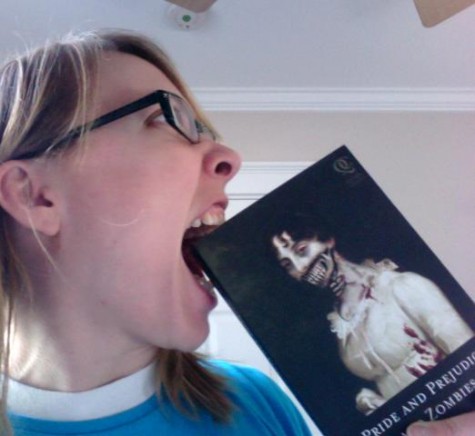
A wealth of materials is essential for those of us who are Book Zombies. We absolutely must gorge on fresh brains books, feeding an insatiable hunger for that oblivious-to-the-world swoon we call reading. We don’t hear or see what’s happening in our “real” lives when lost in a book.

Libraries feed that hunger, gladly buying books for us and storing them until we’re ready for more.

*

10. That smell.

foreign language library, Children of Chernobyl, Libraries don’t smell like someone’s musty basement. The odor is something entirely different. I’ll tell you what it reminds me of, right after I tell you about how much I appreciate Russian language library materials.

For five summers we hosted a little girl from Belarus  through the Children of Chernobyl project. And every summer before she arrived I called the librarian in charge of the foreign language collection at the Cleveland Public Library. We talked over Tatiana’s age and interests, then every few weeks through her three month stay this librarian sent to our rural library branch a wonderful selection of Russian materials including Harry Potter books, children’s magazines, recorded children’s books, popular music, and much more. When my kids curled up with books or went to bed listening to CD’s, Tanya was able to do so as well. I hoped it eased the hunger she must have felt to hear her own language. Beyond that, it built connections between us almost immediately.

The first day she arrived, exhausted from long flights and weak from some medical problems, there was no way we could really communicate. It became obvious that our efforts to learn Russian had been laughable and as a seven-year-old her grasp of English was limited to “yes” and “thank you.” Then I remembered those blessed library materials. In a few minutes all of us were dancing to the Russian version of “Hokey Pokey” and laughing before collapsing in a heap on the couch together to giggle as we paged through a Russian/English picture book, challenging each other to pronounce the words. That stack of Russian library materials smelled, more than anything, like home. To me, every library smells like my place. Bet they smell like your place too.

38 Unexpected Ways To Revel In Snail Mail

literacy skills, mail art, mail exchanges, snail mail fun,

The Force is strong with snail mail. (Image: CC by 2.0 Wikimedia Kev pittsburgh,pa)

Most of us don’t get anything interesting in the mail. Opening a personal letter seems like a pleasure from another era, irrelevant as a starched collar. Lets reclaim that experience. (The letter, not the collar.)

But first a rant. Here in the U.S. our postal service is often described as inefficient and unprofitable. I beg to differ. When I mail a letter in Ohio, it’s often delivered in Boston or Denver the next afternoon. I’ve mailed plenty of letters to distant countries. They show up in a week, tops. A few ounces of paper arrives in the one place in the world I want it to go, all for less than a buck. That’s pretty impressive. And the post office lets me mail unwrapped shovels too (more on that later).

Unprofitable? That’s not the real issue, unless you count the postal system having to pre-fund it’s retirement system 70-some years in advance. Name a company that can do that and stay in business.

I’m all about going postal. Sending and receiving mail helps us slow down, savoring time in a way that’s often missed in our terabyte-speed lives. Here are some ways you can make snail mail a pleasure.

Mail something unwrapped.

1. Try mailing a full-sized paintbrush, a basketball, a flip flop. All you need is a legible address and the correct postage. You might feel a little silly standing in line at the post office with an address-adorned plastic dinosaur, but it’ll be worth the look on your recipient’s face. I’ve mailed all sorts of silly things to a friend, mostly in response to oddities she mails to me. The strangest thing I’ve sent was a two foot metal shovel with a wooden handle. I used a permanent marker to write a note to her on the handle and the address on the metal part. It got there just fine.

2. For more ideas on what you can send through the mail, check out the Pinterest board 13 ounces or less. Check USPS regulations on what cannot be sent by mail.

Investigate the peculiar history of unwrapped mail.

3. In 1914, five-year-old Charlotte May Pierstorff was sent via U.S. mail as a package to visit her grandparents. It was the only way her parents could afford the trip. My kids and I learned about her journey from the picture book, Mailing May, by Michael O. Tunnell. She’s not the only person to be sent as cargo.

4. The most inspiring example is Henry Box Brown, who in 1849 was enslaved in Virginia. Using his savings to pay for the clandestine delivery, he had himself mailed to an abolitionist in Philadelphia. The trip took 27 hours, much of it upside down despite “this side up” instructions on the box.

5. The quirkiest unwrapped mail history I’ve run across involves W. Reginald Bray. In 1898 this British accountant began to send all sorts of unwrapped objects via mail. That included, but wasn’t limited to, a rabbit skull, a bowler hat, a turnip, his Irish terrier, and a bicycle punk. He also mailed himself, twice. He liked to test the logic of postal employees by mailing cards with addresses written as puzzles or clues. You can find out more about Bray in, The Englishman who Posted Himself and Other Curious Objects by John Tingey.

Get back in the habit of writing letters.

6. Send a letter to your great aunt or a former neighbor.

7. Write letters to deployed service members.

8. A mailed letter has a greater impact on your elected officials than calls or emails, so if an issue is troubling you take the time to write out your concerns. Only a tiny fraction of the country’s citizens have ever done this.

9. Write to an author (his or her publishing house will forward your letter).

10. Write to a business. My son once wrote to a pen company to settle a bet he had with me. He said my habit of leaving pens uncapped  would dry them out. He not only got a response confirming that he was correct, but the pen company’s PR person sent eight different pens for him to enjoy as well as an admonition to keep after his pen-wrecking mother. For other ways to inspire kids (or the kid in you) to write letters, check out any of Letters from a Nut books by Ted Nancy.

11. Groups of kids (classes, scouts, homeschool groups) can participate in letter exchanges with Peace Corps volunteers through the Coverdell World Wise Global Connections correspondence program and with long distance truckers via Trucker Buddy.

12. Find a snail mail correspondent through The Letter Exchange.

Make your own envelope out of something unexpected.

13. Use a leftover scrap of wrapping paper, a torn out magazine page, a file folder scribbled with equations, an old map, whatever you’d like.The simplest way is to pull apart an envelope to use as a template, sealing your new envelope with a glue stick once you’ve popped a letter inside. For more detailed instructions, head over to Instructables.

14. If you don’t want to seal your one-of-a-kind envelope with ordinary tape or glue, make your own flavored envelope glue.

15. Or hide your letter from prying eyes using ancient techniques of letterlocking.   These are clever methods of tucking, folding, and sealing used before envelopes were invented. One version is called the “daggar-trap!” More about that here.

Let your stamp make a statement.

16. There are amazing USPS stamps out there reflecting practically every interest, but they don’t stick around (stick, hah) very long. Every time I go to the post office I check to see what they’ve got available. No flag stamps for me. I’m particularly fond of stamps commemorating nature, science, and the arts.

17. You can also make your own customized postage. Our cows’ faces could be stamps, the smiling cactus your kid drew could be stamps. USPS authorized vendors include stamps.compictureitpostage.com, and zazzle.com.

Send postcards, get postcards.

18. Register with Postcrossing. When you send a postcard you’ll receive a postcard back from another participant anywhere in the world. So far, 16 million Postcrossing postcards have been exchanged.

19. To set up a specific postcard exchange (or other snail mail swaps) put up a request on Swap-Bot.

20. When you’re out, even on a day trip, encourage young children to mail postcards to themselves or their siblings. Just a quick sentence helps establish the day as memorable (and reinforces literacy skills). It’s also fun when that postcard arrives at your home in a day or two.

Get involved with or instigate a mail exchange.

21. I love art exchanges. I’ve participated in them on and off over the years, writing and decorating a page in a journal before sending it along to the next person or contributing to themed art challenges. My favorite was a Barbie art challenge. I glued a Barbie’s long hair into stiff twisting strands, gave her some theatening-looking facial features, and mounted her disembodied head into a tiny cardboard replica of a TV set with a “Medusa” remote. Find mail art calls through the International Union of Mail-Artists as well as Mail Art Projects.

22. Propose a mail exchange on a forum, blog, or other group. Make it themed, for example followers of a food blog send each other local foodstuffs. Fans of a particular musician send each other her lyrics re-imagined as comics or movie scenes.

23. All sorts of parenting lists host exchanges for kids who want a postcard from each state, a letter answering the same 10 questions from 100 participants, or favorite jokes. Suggest an exchange your kids would like.

Write to kids.

24. Chances are you know children who would adore getting mail addressed to them, either your own kids or kids in your extended family. Try for at least a once-a-year tradition like a note on the child’s birthday. Or more memorably, on a quirky day. How about a letter every year on Waffle Day (March 25) or Go Barefoot Day (June 1)?

25. Consider writing letters as if from an imaginary creature telling a series of tales, perhaps the adventures of a rollerblading squirrel and her sidekick, a jogging possum. No less than J.R.R. Tolkien wrote and illustrated a holiday letter for his children every year, arriving as if from the North Pole. See his drawings and text in Letters From Father Christmas

26. Write about your experiences when you were the child’s age.

27. Encourage return communication when you write to kids. At the very least, send them pre-addressed envelopes with stamps. You might write with a challenge. (Okay, a better one than the following example!) How about enclosing a length of string and the question: How many ways can you use this string?  Maybe offer a prize if they write back with more than a dozen ideas.  Or send response letters you’ve made with fill-in blanks to answer questions like:  This week I was surprised when ________. If I could go anywhere tomorrow I’d like to go _________. If I ran the country, the first thing I’d do is __________. Most people don’t know that ______.

28. Write to toddlers well before they can read. Print a simple sentence or two, replacing some nouns and verbs with rebus pictures. (If you’re not familiar with this, it means drawing a cat face instead of writing the word “cat.”) Add something to the envelope that the child might find interesting, like stickers.

Mail a simple thank you note.

29. Even a few lines of thanks come across differently when they’re written on paper and sent by mail. They seem more earnest and carry more meaning than the same few lines in a text or email. John Kralik discovered this when he was at the lowest point in his life and vowed to mail one thank you note every day for a year. Somehow, the effort of thanking others  brought unexpected returns to his life including business success, weight loss, and richer friendships. Read his story in A Simple Act of Gratitude: How Learning to Say Thank You Changed My Life.

30. Send a thank you to a favorite teacher, a former mentor, the local bookstore owner whose business you appreciate, someone who did you a kindness that you haven’t forgotten.

31. Consider writing a letter to someone you see everyday. Your child, your spouse, your co-worker. Tell them something you cherish about them or how they enrich your life.

When the situation calls for it, tell your truth with an un-thank you note.

32. Of course it’s best to handle negative situations immediately, but I’ve gotten some dire predictions from professionals that proved false over time. This surgery is absolutely necessary. You’ll have a maladjusted child if you homeschool. Ritalin is the only solution for that behavior.  It’s my contention that sending a respectful letter updating a doctor, teacher, or other expert is a kindness to the people they will advise in the future. There are ways to write a useful unthank you note. Chances are you won’t get a response but you’ll feel lighter.

33. If you want to tell the world the truth anonymously, mail a postcard to PostSecret. Keep up with these powerful, often artfully shared secrets via Facebook and check out the TED talk by founder Frank Warren.

  Use handwritten notes to advance professionally.

34. It seems counterintuitive when there are faster ways to communicate, but that’s the point. A letter to a business contact makes a lasting impression and does so at just the right speed.

35. The go-to guide for this is Business Notes: Writing Personal Notes That Build Professional Relationships by Florence Isaacs.


Inspire yourself to write letters by reading epistolary novels.

36. The Color Purple is told through letters and if you haven’t read it, this book isn’t to be missed. The Historian centers on a medieval book that opens clues to Dracula’s existence. The Guernsey Literary and Potato Peel Pie Society reveals memorable characters living on the island of Guernsey during the Nazi occupation. Any of the Griffin & Sabine books have intriguing tiny envelopes inside, giving the reader the sense of peeking at private correspondence.

37. For teens: Sorcery and Cecelia or The Enchanted Chocolate Pot, about two cousins drawn up in a alternative universe complete with romance, wit, and magical chocolate. Or for more romance plus intrigue at Australian high schools, two very popular books by the same author, Feeling Sorry for Celia and The Year of Secret Assignments

38. For young children: Help Me, Mr. Mutt!: Expert Answers for Dogs with People Problems as well as any of the many books starring the ever-clever letter-writing dog Ike LaRue.

For more motivation, spend time with those who exult in snail mail.

365 Letters

Mail Me Art

Letter Matters

Letters of Note

Always First Class: The Pleasure of Personal Letters

Escaping Into Novels

good novels, book addict, library addict, book zombie, novel recommendations,

fictionchick.deviantart.com

Books have been my escape mechanism ever since I started reading as a child. I’d load up with all the books I could carry from the library with absolute glee, launching into the first one in the backseat on our drive home. I couldn’t wait for the power of a story to overtake me.  While reading I was completely oblivious of my surroundings, caught up in another world entirely. This got me into trouble at school plenty of times. I’d read after getting an assignment done, never noticing as the class moved on to spelling or math or even lunch. That’s the down side to being what I call a book zombie.

I continue to have a pretty advanced case of library addiction and plunder the stacks on a weekly basis. Unlike my earliest years, I mostly read non-fiction. I don’t know why I’ve come to associate facts with the reading equivalent of a meal, necessary and good for me in a way that dessert is not. That doesn’t mean I don’t indulge in novels. In my reading-intensive life I usually stuff in a novel a week, plus several non-fiction books (and lots of online reading).

But this week I haven’t opened a single non-fiction book. I’m in complete escape mode—all dessert. That’s because my beloved husband has been in the hospital for some extensive spinal surgery. That first day I relied on a stack of novels to transport me away from his nearly seven hour surgery plus many more hours of waiting for him to get out of recovery. The next few days I found that, between visits, I didn’t have much gumption to get my work done. Okay, no gumption whatsoever. I kept sneaking back into novels where I lingered quite happily for hours. Thank goodness I stocked up. It’s like having a whole pantry full of goodies.

Here are a few I’ve been reading that you might enjoy.

Mr. Penumbra’s 24 Hour Bookstore by Robin Sloan is a clever and mysterious book. It’s a quick read but not remotely fluffy. On the surface it’s about the way the love of books intersects with the might of today’s computing power. But it’s also about magic, mystery, the awesomeness of Google, and the singular meaning of real relationships.  (Five stars!)

Truth in Advertising by John Kenney is sharp and funny. It’s follows a man whose current challenge is producing a diaper commercial, whose personal life is barely perceptible, and who takes a sardonic view of anything remotely sentimental. The passages skewering corporate absurdities and fast forward trendiness are delicious. That the story ends on a sentimental note provides a perfect balance. (Five stars!)

Tell the Wolves I’m Home by Carol Rifka Brunt. Set in the late 1980′s, this book is told through the eyes of an adolescent girl who had a close relationship with an uncle who recently died of AIDS. A few days after his funeral she receives a strange package, an artful teapot she and her uncle always used when they got together. It was sent by a mysterious man who asks to be her friend. And so begins an unusual relationship that teaches the girl, her family, and this man more than they might have imagined about forgiveness, love, adventure, and being true to oneself. Compellingly written and insightful, this story lingers. I can’t remember loving characters as much as I loved this girl’s uncle and the man who becomes her friend.  (Five stars!)

The 100-Year-Old Man Who Climbed Out the Window and Disappeared by Jonas Jonasson is translated from the Swedish language and has sold three million copies. As the title suggests, the tale has to do with an elderly gent who runs away. His life story happens to interconnect with major political happenings around the world, Forrest Gump-style, although this main character is far less innocent especially where explosions are concerned.   It’s a bit of a history lesson, entirely beyond credulity, but nonetheless entertaining. I’m guessing a movie will be forthcoming. (Four stars)

The House at Tyneford by Natasha Solomons isn’t my usual read. I am allergic to most anything with “romance” as a major plot point. But I read a review noting that this is the book for Downton Abbey fans and couldn’t resist. This is meatier, in some ways, than Downton Abbey. The main character is the daughter of a wealthy, cultured Viennese family who seeks asylum in 1938. She ends up in England as a servant. Her culture shock and class shock are interesting, so is life in the remote coastal area that has a unique historic angle. (Four stars)

The Red House by Mark Haddon (author of the absolutely wonderful The Curious Incident of the Dog in the Night-Time) is about family relationships, all happening within a holiday week. The style is faintly jarring, flitting from one point of view to another, sometimes in the space of two paragraphs, but it’s also full of the moments a reader waits for, those quiet but significant insights that are illuminating. (Four stars)
Maybe I’m working my way toward a more balanced reading diet. I still don’t have the slightest urge to pick up a non-fiction books, even the ones I’m supposed to be reviewing. It feels decadent and delightful, like skipping the salad and going right for the chocolate. In a few minutes I’ll be leaving to pick my husband up from the hospital. On the way I’ll be getting his prescriptions, a shower chair, and maybe, if there’s time, books I ordered that are in at the library.

Tell me what YOU are reading so I have more reasons to indulge.

How To Raise Word Nerds

word games for kids, free word games, dictionary fun, play with dictionary, vocabulary-building games, vocabulary fun, family word games,

Dictionary, unplugged. (crdotx’s flickr photostream)

When I tried to throw our dictionary out my oldest threw a fit.

This is a very old dictionary. It was owned by my Great Aunt Mildred. The book is huge, with indents along the side for each letter of the alphabet. It’s also not in good shape. Threads are hanging out of a nearly wrecked spine and the pages are yellowing. Until recently it sat on our living room trunk, ready to answer all inquiries. As my kids got older and Google got ever closer to our fingertips, I figured we didn’t need it. According to my son, I am wrong. He has more than a sentimental attachment. He knows what this book holds — the power to create word nerds.

Here’s how.

In part, we used the dictionary to settle disputes, which happened more often than you might imagine. I’d be happily snuggled on the couch reading aloud to my kids and run across a word new to them. I’d tell them what it meant but one of those little darlings would invariably question my expertise. Having a writer for a mother may make kids more feisty when it comes to words, I don’t know. They’d rush off to drag the huge volume back to the couch where I’d read the definition aloud. Then we’d wrangle over what the definition really meant. Maybe things are more peaceful at your house.

My kids also used the dictionary for games. Something about having that whale of a book right there in front of them inspired word play. Well, that and a few other factors like parental limits on electronic entertainment.

The games my kids played with the dictionary roughly fall into three categories.

Bet You Don’t Know This Word:   Sibling one-upmanship is rarely pretty, but I can overlook it when it’s a vocabulary builder. Simply open the dictionary, find a tough word, and challenge a sibling to define it. The kid with a finger on the word has to pronounce it correctly, otherwise the challenge doesn’t count. (This meant they’d run to me with pronunciation questions until they got a better grip on phonetic spelling.) Winner on either side may torture family with the word the rest of the day. Other family members should sigh in exasperation, but we know the more a word is used the more likely it is to be understood. Win for vocabulary expansion!

Guess the Right Definition:  There are better ways to play this but our made-up version is easiest. Find an esoteric or outdated word to use as a challenge. On the same page find another word with an entirely different (hopefully strange) definition. Or find two other words to make it harder. Read aloud the challenge word, then mix up the different potential definitions as they’re read aloud. Again, winner may torture the family with the word the rest of the day.

Blackbird: (This is such a favorite that Blackbird is the title of a recent book of mine.) Think of a question (one that can’t be answered with a simple yes or no) and ask it aloud, like “Why is my hair curly?” or “Should we get a pet hamster?” Then open the dictionary at random and, without looking, put a finger on the page. Look at the word under your finger and read aloud its definitions. It may take some stretching (a nice use of reasoning powers) to make it fit as an answer, but it usually works. For example, my curly-haired child placed a finger on the word “law.” One of the definitions is “binding force or effect” and another is “regularity in natural occurrences.” That led to a nice discussion about genetics and hair. The hamster question led to the word “fury” which takes little effort to decode, especially when one definition is “angry or spiteful woman.” That would be me, faced with one more pet in this house.

  • So leave a (newer, sturdier) dictionary out in your house. Let your kids see you use it regularly. Help them use it and display interest as you do.
  • Play some word games when boredom hits. Need another? Pick three words at random and challenge your kids to make up a story or song or nonsense rhyme on the spot using those words. Yes, your turn is next using three words they pick. This works nicely in the car. Maybe you need a pocket dictionary in the glove compartment.
  • Tsk tsk a little when they look up “bad” words (otherwise it’s no fun for them).
  • Act as if it’s completely normal when your nine-year-old describes a problem as a predicamentimpasse, paradox,or quandary.

If you choose to allow a dictionary to assume this power in your family, I have one warning. Dictionary silliness will lead to language savvy. If your kids use a lot of obscure words in their everyday discourse they’ll need a droll sense of humor, the better to handle their flummoxed peers.

Do Childhood Books Shape Us?

story and character formation, selfhood and book, self-image and books, girls and books,

Building a self. (andycarter’s flickr photostream)

Children’s inner lives may not seem all that complicated. But they are, even if kids aren’t fully aware of the complexities they’re dealing with until they’re much older. That’s one reason it’s hard for them to talk with their parents about ways they are gaining strength, inspiration, and a sense of self.

Their favorite books offer a clue.

Children are drawn to stories that resonate with the same challenges they’re facing. Authors know kids seek out tales that present certain compelling themes. Speaking one’s truth, overcoming adversity, enduring tragedy, relying on wit or cleverness, making a sacrifice, establishing one’s own values, finding a kindred spirit, gaining new powers or knowledge—this is the stuff that translates into purposeful meaning for the young reader.

To understand what kids are going through as they grow up, it helps to look back at the pivotal books that made a difference during our own formative years.

As I look back I realize two books I read over and over still echo in my life today. One of my favorites was Johanna Spyri’s Heidi. It’s the story of a little girl who is taken to live in the mountains with her grumpy but kind grandfather. She loves to spend her days outdoors on the hillsides, playing with the goats, talking to Peter the goatherd and his blind grandmother, and eating simple wholesome foods like cheese made from goat’s milk. When Heidi is taken away to live in the city, a companion to her sickly cousin Clara, she’s deeply homesick. Although she happily learns to read, hoping she can go home to read to the blind grandmother, each day away from her beloved mountains haunts her. She convinces her uncle to let Clara come back with her for a summer visit. There they spend days outdoors, playing with the goats, eating her grandfather’s hearty food, and laughing. Her cousin recovers her health and Heidi is free to stay in the place she loves.

My other favorite book was so pivotal I’ve called it the book that saved me.  The Secret Garden by Frances Hodgson Burnett is about a lonely girl named Mary who lives on the moors of England. She befriends a boy, Dickon, who can speak to animals. She also insists on becoming acquainted with an invalid named Colin. Mary doesn’t want dolls or toys. She wants the joy of helping a hidden garden come alive. She wants to remain free of lessons so she can learn Dickon’s wisdom. She wants to understand the mystery that makes flowers grow, helping Colin find that strength in himself.

Both books are about a certain kind of justice, one that permits self-determination and self-definition. Both are about the value of staying rooted and feeling nourished by a sense of place. Both are about the restorative power of nature. I feel those elements in my life strongly. Yet I see even more of these books in my choices. My children have grown up without schooling, as Heidi and Mary did. I make cheese from our cow’s milk, insist on wholesome food, and speak to all the animals on our little farm (though I’m still waiting for birds to alight on my arm as they did on Dickon’s). I have Heidi’s passion for reading and Mary’s passion for watching things grow. And I hope I have what both characters had in abundance, the determination to speak up for what they believed was right.

What books made you who you are today?

Did you share any of that book-related inner growth with the adults in your life?

And does looking back at these influences give you a glimpse of your own child’s complex emerging selfhood?

Reading Readiness Has To Do With The Body

reading readiness, kids sit too much,

Today’s kids sit more than ever. Babies spend hours confined in car seats and carriers rather than crawling, toddling, or being carried. As they get older their days are often heavily scheduled between educational activities and organized events. Children have 35 percent less time for free play than they did a generation ago, and that’s before factoring in distractions like TV or video games.

Left to their own devices, children move. They hold hands and whirl in a circle till they fall down laughing. They beg to take part in interesting tasks with adults. They want to face challenges and try again after making mistakes. They climb, dig, and run. When they’re tired they like to be rocked or snuggled. According to the authors of A Moving Child Is A Learning Child, stifling these full body needs actually impairs their ability to learn.

Sensory experience and fun. (CC by 2.0 Micah Sittig)

We know that our little ones walk and talk on their own timetables. No rewards or punishments are necessary to “teach” them. Yet children are expected to read, write and spell starting at five and six years old as if they develop the same way at the same time. Academics are pushed on young children with the assumption this will make them better students. This approach is not only unnecessary, it may be contributing to problems such as learning disorders, attention deficits, and long term stress.

Studies contrasting reading instruction at age five compared to instruction at age seven find earlier lessons may damage reading development. By the time children reach the age of 11, students who were instructed earlier show poorer text comprehension and less positive attitudes toward reading than children whose instruction started later.

Literacy isn’t easy. It requires children to decode shapes into sounds and words, to remember these words correctly in written and spoken form, and to understand their meaning. Allowing reading to develop naturally or teaching it later tends to create eager, lifelong readers. Why?

why pushing school-like lessons hinders learning,

Children pushed to read early (not those who naturally pick it up) tend to rely on right brain processes because that area matures more quickly. These early readers are likely to guess at unknown words using clues such as appearance, context, beginning and ending letters. Their main tactic is memorizing sight words. These are valuable methods but not a balanced approach to reading. Such children may quickly tire after reading short passages or read smoothly but have difficulty deriving meaning from what they read. The procedure they use to decode words can make the content hard to comprehend. These reading problems can persist.

On the other hand, children benefit when they learn to read naturally or are taught later. That’s because, as the left brain matures and the pathway between both hemispheres develops, it becomes easier for them to sound out words, to visualize meanings, and mentally tinker with abstractions. They memorize short sight words but sound out longer words, an approach that is less taxing. As they incorporate more words into their reading vocabulary they more easily picture and understand what they are reading.

developing eager readers,

In order for children to read, write and spell they must be developmentally ready. Some are ready at the age of four or five, some not for many years later. This readiness includes complex neurological pathways and kinesthetic awareness. It includes the proprioceptive sense developed through sensory receptors in the muscles, joints, and tendons: a form of maturation essential for a physical sense of self (even essential for learning how to modulate one’s voice and to hold objects carefully).

Such readiness isn’t created by workbooks or computer programs. It’s the result of brain maturation as well as rich experiences found in bodily sensation and movement.

These experiences happen as children play and work, particularly in ways that cross the midline. They includes expansive movements such as climbing, jumping, digging, swimming, playing hopscotch and catch, riding bikes, sweeping, running. They also include fine movements such as chopping vegetables, drawing, building, playing rhyming and clapping games, using scissors, and playing in sand. And of course there’s the essential growth that comes from snuggling, listening to stories, singing, trying new tastes,  enjoying make believe. Children are drawn to such experiences. Without these bodily experiences, warns pediatric occupational therapist Angela Hanscom,  they won’t have a strong foundation for learning. (Find out more in her book Balanced and Barefoot: How Unrestricted Outdoor Play Makes for Strong, Confident, and Capable Children.)

how to boost reading readiness,

These activities stimulate the child’s brain to develop new neural pathways. Such activities also build confidence, smooth sensory processing, and create a bank of direct experience that helps the child visualize abstract concepts. Well-intended adults may think a good use of a rainy afternoon is a long car ride to an educational exhibit. A young child is likely to derive more developmental value (and fun) from stomping in puddles and digging in mud followed by play time in the tub.

There are many other factors contributing to reading readiness. Perhaps most important is a supportive family life where play, reading, and conversation are an enjoyable part of each day. But it helps to remember that young children want to participate in the purposeful work of making meals, fixing what’s broken, and planting the garden. They also need free time without the built-in entertainment of specialized toys, television, or video games. Their development is cued to movement. These bodily experiences prepare children for the magic found when shapes become words, words become stories, and they become readers.

raising eager readers,

Portions of the post excerpted from Free Range Learning.