How To Raise Word Nerds

word games for kids, free word games, dictionary fun, play with dictionary, vocabulary-building games, vocabulary fun, family word games,

Dictionary, unplugged. (crdotx’s flickr photostream)

When I tried to throw our dictionary out my oldest threw a fit.

This is a very old dictionary. It was owned by my Great Aunt Mildred. The book is huge, with indents along the side for each letter of the alphabet. It’s also not in good shape. Threads are hanging out of a nearly wrecked spine and the pages are yellowing. Until recently it sat on our living room trunk, ready to answer all inquiries. As my kids got older and Google got ever closer to our fingertips, I figured we didn’t need it. According to my son, I am wrong. He has more than a sentimental attachment. He knows what this book holds — the power to create word nerds.

Here’s how.

In part, we used the dictionary to settle disputes, which happened more often than you might imagine. I’d be happily snuggled on the couch reading aloud to my kids and run across a word new to them. I’d tell them what it meant but one of those little darlings would invariably question my expertise. Having a writer for a mother may make kids more feisty when it comes to words, I don’t know. They’d rush off to drag the huge volume back to the couch where I’d read the definition aloud. Then we’d wrangle over what the definition really meant. Maybe things are more peaceful at your house.

My kids also used the dictionary for games. Something about having that whale of a book right there in front of them inspired word play. Well, that and a few other factors like parental limits on electronic entertainment.

The games my kids played with the dictionary roughly fall into three categories.

Bet You Don’t Know This Word:   Sibling one-upmanship is rarely pretty, but I can overlook it when it’s a vocabulary builder. Simply open the dictionary, find a tough word, and challenge a sibling to define it. The kid with a finger on the word has to pronounce it correctly, otherwise the challenge doesn’t count. (This meant they’d run to me with pronunciation questions until they got a better grip on phonetic spelling.) Winner on either side may torture family with the word the rest of the day. Other family members should sigh in exasperation, but we know the more a word is used the more likely it is to be understood. Win for vocabulary expansion!

Guess the Right Definition:  There are better ways to play this but our made-up version is easiest. Find an esoteric or outdated word to use as a challenge. On the same page find another word with an entirely different (hopefully strange) definition. Or find two other words to make it harder. Read aloud the challenge word, then mix up the different potential definitions as they’re read aloud. Again, winner may torture the family with the word the rest of the day.

Blackbird: (This is such a favorite that Blackbird is the title of a recent book of mine.) Think of a question (one that can’t be answered with a simple yes or no) and ask it aloud, like “Why is my hair curly?” or “Should we get a pet hamster?” Then open the dictionary at random and, without looking, put a finger on the page. Look at the word under your finger and read aloud its definitions. It may take some stretching (a nice use of reasoning powers) to make it fit as an answer, but it usually works. For example, my curly-haired child placed a finger on the word “law.” One of the definitions is “binding force or effect” and another is “regularity in natural occurrences.” That led to a nice discussion about genetics and hair. The hamster question led to the word “fury” which takes little effort to decode, especially when one definition is “angry or spiteful woman.” That would be me, faced with one more pet in this house.

  • So leave a (newer, sturdier) dictionary out in your house. Let your kids see you use it regularly. Help them use it and display interest as you do.
  • Play some word games when boredom hits. Need another? Pick three words at random and challenge your kids to make up a story or song or nonsense rhyme on the spot using those words. Yes, your turn is next using three words they pick. This works nicely in the car. Maybe you need a pocket dictionary in the glove compartment.
  • Tsk tsk a little when they look up “bad” words (otherwise it’s no fun for them).
  • Act as if it’s completely normal when your nine-year-old describes a problem as a predicamentimpasse, paradox,or quandary.

If you choose to allow a dictionary to assume this power in your family, I have one warning. Dictionary silliness will lead to language savvy. If your kids use a lot of obscure words in their everyday discourse they’ll need a droll sense of humor, the better to handle their flummoxed peers.

Conduct Human Experiments of the Word Kind

bring back obscure words, get people to say strange words,

Human experimentation is banned unless the subjects are volunteers who have provided their informed consent. I believe the more casual research my son recently tried is exempt from those rules.

Let me explain.

Over the summer he worked with the grounds crew for a local park system. Being the sort who enjoys occupying his mind with more lively endeavors than weed whacking, he found other ways to keep himself amused. It may be helpful to point out that he and his siblings know many more words than they can pronounce. Their vocabularies are considered odd by others. Their dinner table discussions are, at best, eccentric. These tendencies can be almost entirely blamed one habit: avid reading.

He used this social liability as the basis for the human experimentation trials he conducted on his unwitting co-workers. The research took all summer. His subjects were not aware that they were part of the study until it was too late. The damage had been done. The results are now in. His experiment was a resounding success. I’m going to tell you how to conduct the same experiment.

Purpose. 

You, the experimenter, can bring  nearly extinct words and phrases back into regular usage. (See, you’re providing a service to an endangered vocabulary.)

Hypothesis. 

Employing an outmoded word or phrase on a daily basis will subtly promote its usefulness and stimulate others to add it to their ordinary lexicon. Yes, you get people to say funny words.

Materials.

1. You will need subjects. Rely on people you see everyday. Your children, co-workers, neighbors, and friends are excellent victims candidates for your experiment. The more the merrier. If you want to get all science-y, choose a group of people you interact with separately from all other groups. They will form your experimental group, while everyone else in your life will be your control group.

2. You will need a word or phrase you think shouldn’t have fallen out of popular usage. My son chose “dagnabbit,” one of the many oddly amusing words his grandfather used without a hint of irony. (That was a rich well indeed. Other possibilities from my paternal line included “holy mackerel,” “jehoshaphat,”  and “tarnation.”)

Method.

This is a casual experiment, best done over a long period of time. Begin using your chosen word or phrase regularly but naturally in your conversation. Pay no obvious heed to the word as it is adopted by others.

If people make a fuss over your use of the word, you might choose to insist it is back in style. Or you might use the opportunity to expand the experiment by promoting those subjects to fellow experimenters. Explain what you are doing in the most noble terms possible, then implore the person use his or her own outdated word or phrase in daily conversation. You’re simply enlarging this Human Experiments of the Word Kind study, surely to enhance the world as we know it.

Observation.

See how long it takes to firmly embed your word or phrase in other people’s regular discourse.

Conclusion. 

Have you gotten subjects to saying funny words? Then you’ve proven the hypothesis and done your part to save endangered terms. Another successful Human Experiment of the Word Kind!

Don’t Deprive Kids Of Risk

let kids take risks, don't overprotect,

jessicareeder’s flickr photostream

I publicly admitted to letting my teen take risks that would make most parents shudder. I’m not talking about the month long backpacking trip my 16-year-old took with his older brother and a friend. Nope, I’m talking about letting him meet up with middle-aged guys he talks to online.

The circumstances were perfectly suited to advancing his maturity as well as his skills. But to most parents, that decision marks me as a very bad mother. I’ll take that risk. Parenting has a lot to do with drawing the line between safe and unsafe. And then there’s that pesky line between good and bad.

It found it easier to see absolutes when my kids were babies. Bottle or breast, free play or playpen, guiding or scolding. The choices seemed easy. As they got older I didn’t lose my cherished parenting philosophies and obnoxiously healthy dietary scruples, but I did relax into the gray area. Some would say I’ve gotten too relaxed.

Every day I watch as parents pile their cars with their darling backpack-laden children, then transport them all the way to the end of the driveway where they sit, engines idling, until the school bus arrives. The reverse process takes place in the afternoon. These kids are spared more than the exercise required to get from house to curb. Presumably they’re also kept safe from potential child abduction. I don’t know if this is the case in your neighborhood but it’s a standard practice around here, even though I live in a rural township so small that it doesn’t have a single traffic light. (It’s rumored we may get lines painted on the streets.)

Despite the pastoral beauty of our area, kids rarely play outside. Clearly their parents are quite a bit more cautious than I am. Apparently this is a major trend. With the very best intentions kids are kept indoorswatched closely, even monitored. But why?

According to How to Live Dangerously by Warwick Cairns, “stranger danger” is so vastly overblown that you’d have to leave your child outside (statistically speaking) for about 500,000 years before he or she would be abducted by a stranger.

Violence against kids has markedly decreased and the overall crime rate continues to plummet. A teen is three times safer today than a teen in 1979. Sure, there was no Internet in the 70’s but online, the real danger to kids tends to be peer harassment. A larger danger? Kids who have no experience with real challenges.

Kids require escalating responsibility as well as escalating risk in order to grow toward a healthy adulthood. The common practice of delaying risk (and often responsibility as well) stems from the best motivations: love, concern for their safety, interest in staying closely involved. But today’s highly cautious approach to parenting actually inhibits a young person’s healthy development, according to Too Safe for Their Own Good: How Risk and Responsibility Help Teens Thrive by resilience expert Michael Ungar. It can result in young people who are overly anxious or who take unnecessarily dangerous risks. It can also leave them unprepared for adulthood.

The decisions I make for my family probably aren’t the ones you make for yours. I give my kids the go-ahead to build spud cannons in the name of science but I wouldn’t dream of giving them non-organic celery. I encourage them to join online special interest forums but abhor movies with gratuitous violence. It’s not easy to keep looking at where we draw the line, but just like you, I’ll risk anything for my kids.

We Don’t Need No Age Segregation

open-source teen learning, active learning, teen unschooling,

My teenaged son just spent the day with middle-aged guys he met online.

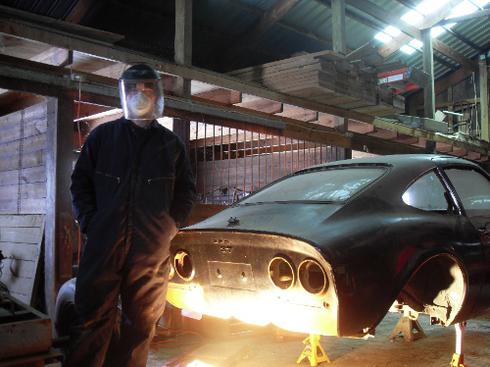
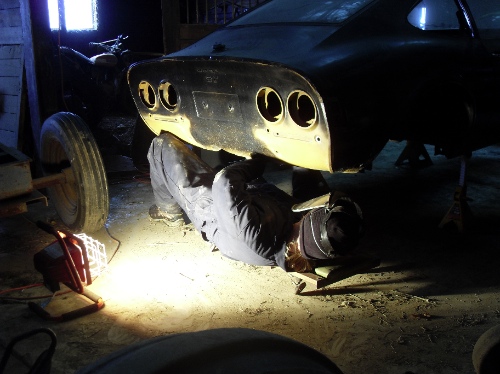
Let me explain. Before he could drive, my son earned enough money shoveling out horse stalls to buy a 1973 Opel GT. Or what was left of one.

The car sits out back in a dark barn, its classic little outline like a rough sketch waiting for functional automotive details to be filled in again. He is restoring it himself, but not alone. He’s in touch with an online community of automotive enthusiasts from around the world. They eagerly share experiences and resources on forums. They also boast, complain, and talk about their interests just as any friends do.

My son and his father have met some of these folks at auto meets and car shows. When my son discovered an Opel club not far from our family farm he was invited to join. Today he and his older brother drove out for a day-long gathering. Although my boys were the youngest by decades they enjoyed an open-hearted welcome.

Yes, I realize there are significant concerns about teens talking online with adults, let alone meeting them. I try to keep those concerns in perspective. Studies of online behavior by youth indicate the biggest risk they face is peer harassment, not sexual predation. Today’s young people are much more overprotected than previous generations even though violence against kids has markedly decreased and the overall crime rate continues to plummet. Overly cautious, restrictive parenting practices actually inhibit a teen’s growth toward maturity and responsibility. So I watch, ask questions, and recognize that my son benefits from online friends and mentors.

It’s a pivotal coming of age experience to be accepted by elders one admires. Until that time it’s hard to feel like an adult. These experiences are frequently depicted in movies, but children and teens in our culture are almost entirely segregated from meaningful and regular involvement with adults.

These days kids spend their formative years with age mates in day care, school, sports, and other activities. So their adult role models are largely those whose main function is to manage children. This subverts the way youth have learned and matured throughout human history. Children are drawn to watch, imitate, and gain useful skills. They want to see how people they admire handle a crisis, build a business, compose music, repair a car, and fall in love. Separate kids from purposeful, interesting interaction with adults and they have little to guide them other than their peers and the entertainment industry. That’s because our species learns by example. Ask any child development expert, neuroscientist, or great grandparent.

There are plenty of educational initiatives to bridge this gap, particularly for teens. These programs connect students with mentors or bring community members into schools to talk about their careers. While these efforts are admirable, such stopgap measures aren’t the way young people learn best. They need to spend appreciable time with people of all ages—observing, conversing, and taking on responsibility. Real responsibilities, real relationships.

Because my kids are homeschooled they’ve have more opportunities (and a lot more time) to hang out with interesting adults. My daughter volunteers for hours each week alongside a woman who rehabilitates birds of prey. Another of my sons has played bagpipes for years with an 80-something gent who once served as a Pipe Major for Scotland’s Black Watch. The age range of my kids’ friends spans decades. Natural mentors such as these are a rich source of authentic experience. And they’re in every community. It’s not hard to find them.

Along with other homeschooling families, my kids have also taken a close look at the workaday adult world. The owner of a steel drum company explained the history and science of drum-making, talked about the rewards and risks of entrepreneurship, then encouraged us to play the drums displayed there. An engineer took us through his testing facility and showed us how materials are developed for the space program. We’ve spent days with potters, woodworkers, architects, chemists, archeologists, stagehands, chefs, paramedics and others.

People rarely turn us down when we request the chance to learn from them. Perhaps the desire to pass along wisdom and experience to the next generation is encoded in our genes. Age segregation goes both ways–adults are also separated from most youth in our society. After an afternoon together we’ve gotten the same feedback again and again. These adults say they had no idea the work they do would be so interesting to kids. They marvel at the questions asked, observations made, and ideas proffered by youth that the media portrays as disaffected or worse. They shake hands with young people who a few hours ago were strangers and say, “Come back in a few years, I’d like to have you intern here,” or “We could use an engineer who thinks the way you do. Think about going into the field,” or “Thanks for coming. I’ve never had this much fun at work.”

So today my teenaged son hung out with fellow Opel aficionados. They trust he will drive his car out of the dark barn and into the sunlight soon. It will be a shared accomplishment, the kind of thing that happens all the time when young people aren’t separated from the wider community.

unschooling teens, homeschooling teens, teens free to learn,

I wrote this piece nearly two years ago for Shareable.com. Since then this son of mine has become a mechanical engineering student at a private college. His fellow classmates brought with them years of advanced placement math and science classes. The advantage he brought? Lots of hands-on experience, an active approach to learning, and insatiable curiosity. He’s at the top of his class.   

Carly’s Voice

reaching autistic child, non-verbal autism, technology for autism, voice assist for autism, aphasia in children,

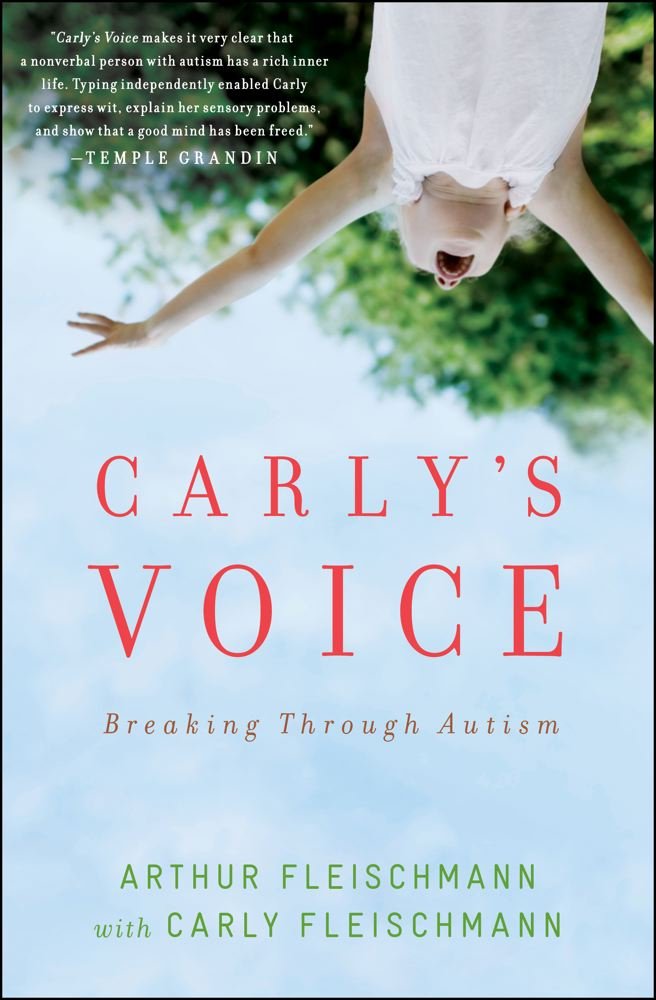
Carly Fleischmann was unable to communicate. Diagnosed with autism and related disorders by the age of two, she screamed, threw herself to the floor, smeared feces, moved constantly, and barely slept at night. An attentive family plus hours of daily therapy helped teach her rudiments like walking and feeding herself. Experts advised her parents to consider residential care.

But one day during a therapy session, Carly reached for the computer. Slowly, using one finger, she typed

help

teeth

hurt.

Her therapists were astonished. It took months and much coaxing to get her to use the computer again (at that time, an augmentative communication device). But she began to recognize that communication was essential. Technology made it possible.

What emerged from her arduous single strokes on the keypad showed a girl who wasn’t mentally retarded, as her doctors suspected, but someone spirited, insightful, and intelligent. She wrote about wanting to have fun with normal kids. She asked to do things she’d always wanted to try. And she tried to convey what it was like to live in an autistic body. She explained that behaviors (like banging her head on the floor and bleating loudly) erupted from her like liquid would burst from a can of Coke when it had been shaken and opened. She said those behaviors helped block the sensory input of sight and sound that constantly overwhelmed her.

A few years ago, a segment about Carly’s new-found communication aired on 20/20.

Now Carly uses technology to communicate with a world that’s ever more open to her. She keeps up with a busy Twitter  feed and Facebook fans. She answers questions, promotes autism awareness, and says that she feels part of a larger community by connecting with people through social media.

Technology allows Carly to share what she calls her “inner voice.” Check out Carly’s Cafe, an interactive web video, to experience a coffee shop as she experiences it. And take a look at the memoir she wrote with her father, Carly’s Voice: Breaking Through Autism
to better understand this bright engaging girl whose world unlocked thanks to a keyboard.

Oh, and don’t think Carly’s drive to move forward has slowed. Now 17 years old, she was recently asked to appear on a panel at The Nantucket Project, a prestigious request for any expert, even more impressive that she would be their youngest ever. Senator John Kerry was also scheduled to give a presentation. She tweeted him in advance, challenging him to take a seat on the panel so she could ask him questions. Her challenge was retweeted thousands of times by her followers and Sen. Kerry did indeed do as she asked. Her first question to him was, “What have you done in the Senate to help autism and do you think it’s enough?” Watch the video here.
We may not know what sparks autism, from inflammatory responses in a pregnant mother’s body to systemic changes in the body to another step in emerging neurodiversity. We do know that Carly and many more like her are with us, speaking in voices we’re meant to hear.

Educating Too Early

A1

My daughter started preschool a month before she turned three. She was too young. The facility was wonderful, the teachers kind, the activities entirely age-appropriate but she resisted the structure. It didn’t make sense to her that she was asked to learn color words she already knew. Or that she had to perform with her classmates at the annual holiday show after she’d already practiced the song and movement pieces well beyond her boredom tolerance. She did what she was told but she wasn’t happy.

I know why I was eager for her to start. Pregnant with her brother, I felt nauseated all the time and hoped preschool would feed her active mind. Or perhaps because she had been chronically ill nearly all of her first three years. Now she was finally better and I suspect, unconsciously, I signed her up to assure myself she was as healthy as any other little girl.

When I talked with her teachers about my child’s frustrations they emphasized how important it was to follow rules, even if she didn’t see the logic herself, because it prepared her to conform to many more rules in “real” school. That didn’t make sense to me either and we finally pulled her out of preschool.

Once she was a preschool dropout we went back to our ordinary, richly educational lives of chores and play. We played outside, hiked in the woods, made up songs, went to the library, visited friends and family, took trips to museums, snuggled, and read. She filled her free time with make-believe play as well as hours of drawing while listening to story tapes. If I had to do it over again, I’d have skipped preschool entirely. I’m not against the concept, just troubled by how much emphasis is placed on adult-led educational structure.

Take a look at promotional material for preschools in your area. Chances are they tout early math, pre-reading, and other academics. This approach sells.  Most people I know sign their children up at the age of two or three to attend specialized enrichment programs that claim to boost abilities in science, art, sports, music, or language. In addition, nearly everyone I know is sure their children benefit from a few hours each day using electronics that “teach.”

a1 (6)

Well-intentioned parents operate on a mindset that’s hard to dismiss in today’s society. They are convinced that learning flows from instruction. Logically then, early instruction will help maximize their child’s potential. But learning in young children (and perhaps at all ages) has much more to do with curiosity, exploration, and body-based activities. It has very little to do with structured activities, which may actually impair a child’s ability to set and reach goals independently.

Studies with four-year-olds show that, “Direct instruction really can limit young children’s learning.” Direct instruction also limits a child’s creativity, problem solving, and openness to ideas beyond the situation at hand. This is true when the instruction comes from parents as well as teachers.

As Wendy S. Grolnick explains in The Psychology of Parental Control: How Well-meant Parenting Backfires, research shows that rewards, praise, and evaluative comments actually undermine motivation and stifle learning in preschoolers as well as school-aged children. This is true when those actions come from parents or teachers.

Highly instructional preschool programs have been studied for years. Although they’re more popular than ever, the outcomes don’t hold up under scrutiny. 

a (1) (2)

Researcher Rebecca Marcon evaluated children in preschool and kindergarten programs falling within three categories: play based, academically oriented, and those that combined both approaches. Her study checked up on these students as they progressed through primary school. Students who had been in early academically oriented programs gradually declined, falling behind their peers. Children who’d been in a combined approach program also showed achievement gaps. Who benefited the most? Children who’d been in play-based programs. Their academic success was greater than those in the other two types of programs and continued to gain. Marcon concluded,

Children’s later school success appears to be enhanced by more active, child-initiated learning experiences. Their long-term progress may be slowed by overly academic preschool experiences that introduce formalized learning experiences too early for most children’s developmental status. Pushing children too soon may actually backfire when children move into the later elementary school grades and are required to think more independently and take on greater responsibility for their own learning process.

Another study confirmed that future success has to do with the kinds of abilities gained  through child-initiated, exploratory play. Compared to children in non-play-based preschool programs, the play-based group of children exhibited greater self-control, working memory, flexible thinking, and relational ability. These traits have more to do with academic success than testable abilities in math and reading, even more than IQ.

And when researchers  in the High/Scope study followed high-risk children who attended different preschool environments they found even more resounding results.  Some children were enrolled in an academic setting, others in a child-initiated play setting, and a third group in a preschool that balanced both approaches. By the middle grades, children from the play-oriented preschool were receiving the highest grades. They also showed the most social and emotional maturity.  Those who had attended the academic preschool lagged behind in a significant way— poorer social skills. The differences became more apparent as these children got older. By age fifteen, students from the academic preschool program showed twice as much delinquent activity as the other two groups. And in adulthood, former students of the play preschool and balanced preschool showed higher levels of success across a whole spectrum of variables. The academic group did not attain the same level of education as the play group and required more years of treatment for emotional impairment. They also faced more felony arrests than the other two groups.

And now a resounding new study (2022) is out. It followed children across Tennessee who had attended high quality pre-K programs staffed by teachers with bachelor’s degrees as well as early childhood certification, using the best available curriculum. These children were matched with those who did not attend such a program. The academic group initially performed better than the control group at kindergarten age, but by third grade they fell behind the control group in school. They were also more likely to be disciplined and to have a diagnosed learning disorder. By sixth grade the academic group was even more likely to have a diagnosed learning disorder and were also much more likely to have exhibited violent behavior at school.

a2

Today’s test heavy schools are burdening five-year-olds with a heavy load of academics. In 1998, 31 percent of kindergarten teachers studied believed students should learn to read in kindergarten. By 2010 that number had jumped to 80 percent. Play time, the arts, and recess had decreased in favor of worksheet and computer instruction. The study‘s co-author Daphna Bassok said, “We were surprised to see just how drastic the changes have been over a short period of time/ We expected to see changes on some of these dimensions but not nearly so systematically and not nearly of this magnitude.“

We know that free play, now so limited in the lives of most children, is actually essential for learning and character development. We also know that children learn more effectively when they’re the ones in charge of self-regulating. And we know loose parts play is far more valuable for a child’s development than adult structured activities.

My daughter mostly remembers the toy dinosaurs from preschool. I hope that pushing academics on toddlers itself becomes extinct.

a3

Additional resources

Free To Learn by Peter Gray

Reading Instruction in Kindergarten: Little to Gain, Much to Lose” summary of research by Alliance for Childhood

Balanced and Barefoot: How Unrestricted Outdoor Play Makes For Strong, Confident, and Capable Children  by Angela Hanscom

Play: How it Shapes the Brain, Opens the Imagination, and Invigorates the Soul by  Stuart Brown and Christopher Vaughan

Einstein Never Used Flashcards: How Our Children Really Learn–and Why They Need to Play More and Memorize Less by Roberta Golinkoff, Kathy Hirsh-Pasek, and Diane Eyer

The Power of Play: Learning What Comes Naturally by David Elkind

ADHD Meds Provide No Long-Term Benefits

no benefit to Ritalin, ADD drugs no long-term benefit, should I medicate my child's behavior,

Want to cause a ruckus? Criticize attention-deficit meds.

Over three million U.S. kids take these drugs. Parents may not be thrilled to dose their children but they are following expert advice.  They typically see results. And they don’t need to be judged.

But it helps to pay attention to what works for parents who don’t put or keep their kids on meds. My son was diagnosed with ADD when he was in first grade.  There was a great deal of pressure from his teacher to put him on medication. As many parents do, I struggled to find ways to alleviate the problem without drugs. We found significant improvement when we changed his diet but that wasn’t enough to make the school setting truly work for him. The way he learned best and the way he flourished simply didn’t fit in the strictures of the school environment. He wasn’t wired to sit still and pay attention for hours. Once we began homeschooling we discovered that without classroom and homework pressure, what appeared to be ADD symptoms largely disappeared.

The newest studies of attention-deficit disorder medications now indicate that the calming effect of these drugs don’t necessarily indicate that those who take them have any sort of “brain deficit.”  As L. Alan Sroufe, professor emeritus of psychology at the Universityof Minnesota’s Instituteof Child Development explains, such medications have a similar effect on all children as well as adults. “They enhance the ability to concentrate, especially on tasks that are not inherently interesting or when one is fatigued or bored, but they don’t improve broader learning abilities.”

Research shows the effect wanes in a few years without conferring any lasting benefit. Dr. Sroufe writes,

To date, no study has found any long-term benefit of attention-deficit medication on academic performance, peer relationships or behavior problems, the very things we would most want to improve.

While Dr. Sroute looks for a mental health answer, psychologist Bruce Levine looks to society. In a recent article he notes that rational responses to larger social conditions (depression due to economic crisis, for example) are being suppressed by medication rather than addressing underlying circumstances. In particular, he asserts that non-compliance with authority is labeled a mental health problem rather than a useful response. He writes,

Do we really want to diagnose and medicate everyone with “deficits in rule-governed behavior”?

Albert Einstein, as a youth, would have likely received an ADHD diagnosis, and maybe an ODD one as well.  Albert didn’t pay attention to his teachers, failed his college entrance examinations twice, and had difficulty holding jobs. However Einstein biographer Ronald Clark (Einstein: The Life and Times) asserts that Albert’s problems did not stem from attention deficits but rather from his hatred of authoritarian, Prussian discipline in his schools. Einstein said, “The teachers in the elementary school appeared to me like sergeants and in the Gymnasium the teachers were like lieutenants.” At age 13, Einstein read Kant’s difficult  Critique of Pure Reason— because he was interested in it Clark also tells us Einstein refused to prepare himself for his college admissions as a rebellion against his father’s “unbearable” path of a “practical profession.” After he did enter college, one professor told Einstein, “You have one fault; one can’t tell you anything.” The very characteristics of Einstein that upset authorities so much were exactly the ones that allowed him to excel.

This is a big issue. I am lucky I eluded being put on meds to treat the problems I had as a child. I wouldn’t give up those years of painful churning for anything. That’s exactly what formed me into a person with my particularly intense focus and purpose.

I think we need to widen our focus. The issue asks us to look at how today’s children are restricted in movement, have less time for free play, and are exposed to unnecessarily early academics.  It asks us to look at the quality of the air, water, food, and products in the lives of today’s children. It asks us to support all families as they are, recognizing that one-size-fits-all guidelines don’t embrace diverse ways of being. To me, particular hope lies in research showing that free time spent playing in natural settings significantly improved the behavior and focus of ADHD children. The more natural and wilderness-like the area, the greater the improvement.

Our wonderfully distractible, messy, impulsive children may be trying to tell us something.

For more answers beyond the prescription bottle, check out:

Ritalin Nation: Rapid-Fire Culture and the Transformation of Human Consciousness

The Gift of ADHD: How to Transform Your Child’s Problems into Strengths

Dreamers, Discoverers & Dynamos: How to Help the Child Who Is Bright, Bored and Having Problems in School (Formerly Titled ‘The Edison Trait’)

ADHD Without Drugs – A Guide to the Natural Care of Children with ADHD ~ By One of America’s Leading Integrative Pediatrician

Is This Your Child?

Healing ADD: The Breakthrough Program That Allows You to See and Heal the 6 Types of ADD

Observe The “Goldilocks Effect” In Action

 learning happens when it's "just right"

“Young children seem to recognize that knowledge is an essential shared resource, like air or water. They demand a fair share. They actively espouse the right to gain skill and comprehension in a way that’s necessary for them at the time. Often children seem to reject what they aren’t ready to learn, only to return to the same skill or concept later with ease. This is not only an expression of autonomy, it’s a clear indicator that each child is equipped with an learning guidance system of his or her own.”

I wrote these words two years ago in my book Free Range Learning. This concept is now being called the “Goldilocks effect.” According to a study published in the journal PLoS ONE, humans are cued to ignore information that is too simple or too complex. Instead we’re drawn to and best able learn from situations that are “just right.” It’s the educational equivalent of Goldilocks on a porridge-testing quest.

The study focused on how babies make sense of our complex world. For years researchers have noticed a contradiction. Sometimes babies prefer to look at familiar items, like a toy from home. Other times they prefer to look at unfamiliar items. Turns out this isn’t a contradiction at all. Babies self-regulate by choosing the amount of novelty and complexity that’s right for them at the time.

They also, according to the study, actively seek out the most reliable information and can predict what will happen next based on what they’ve seen. Babies are a great way to study human behavior. That’s because infants aren’t burdened with cultural and patterned responses. Babies indicate what all of us are like in our most basic form.

The Goldilocks effect has to do with learning at all ages. You are attracted to what holds just the right amount of challenge for you right now. Usually that means something that sparks your interest and holds it close to the edge of your abilities, encouraging you to push yourself to greater mastery. That’s the principle used to hold the player’s attention in video games. That’s what inspires artists, musicians, and athletes to ever greater accomplishments. That’s how kids who follow a fascination of their own tend to learn more than any prepared lesson could teach them.

How do we see this in action? By looking at children through the eyes of trust.

The little boy who’d rather stomp in muddy puddles after a rainstorm than attend story hour at the library may need that full sensory experience outdoors more than he needs, right now, to sit still in a group and listen quietly. He’d probably prefer hearing stories while sitting in a parent’s lap where he benefits from closeness and can ask questions as they occur to him.

The girl who prefers to draw pictures of animals and fairies rather than run outside to play with the neighborhood kids may need more time for quiet self-expression than other children. Her imaginative art fuels growth in all sorts of areas, one of which may be a sturdier sense of self that will help her interact more freely with others when she’s ready.

The teenager who drops out when she’s reached a high level of accomplishment in an area, say soccer or fencing or designing apps. What she’s learned in that field isn’t wasted. It’s taught her a whole range of skills and empowered her to move on. She may pursue other interests in what look like fits and starts of motivation. Or the learning situation that’s just right for her may look like boredom to others. She may need time to process, daydream, create, and grow from within before pushing ahead.

Children naturally focus on what they’re ready to take in and do their best to set aside the rest. Often what they set aside is exactly what adults push them to master. We call this stubbornness but really they show us, over and over, that human nature flourishes best without coercion. Efforts to structure learning too heavily are likely to fail (or more often, the student will fail) if it’s not understood that we’re all cued to learn in the ways best for us.


Reading Readiness Has To Do With The Body

reading readiness, kids sit too much,

Today’s kids sit more than ever. Babies spend hours confined in car seats and carriers rather than crawling, toddling, or being carried. As they get older their days are often heavily scheduled between educational activities and organized events. Children have 35 percent less time for free play than they did a generation ago, and that’s before factoring in distractions like TV or video games.

Left to their own devices, children move. They hold hands and whirl in a circle till they fall down laughing. They beg to take part in interesting tasks with adults. They want to face challenges and try again after making mistakes. They climb, dig, and run. When they’re tired they like to be rocked or snuggled. According to the authors of A Moving Child Is A Learning Child, stifling these full body needs actually impairs their ability to learn.

Large muscle activities like climbing, running, lifting, carrying, rolling, jumping, throwing, and balancing not only build strength and coordination, they are also critical for reading and writing readiness since they develop proximal muscles (including trunk and upper arms). This in turn helps develop distal muscles in hands and fingers. Efficient coordination of large muscles progresses to the elbow, then wrist, then hand — making writing and drawing possible.

We know that our little ones walk and talk on their own timetables. No rewards or punishments are necessary to “teach” them. Yet children are expected to read, write and spell starting at five and six years old as if they develop the same way at the same time. Academics are pushed on young children with the assumption this will make them better students. This approach is not only unnecessary, it may be contributing to problems such as learning disorders, attention deficits, and long term stress.

Studies contrasting reading instruction at age five compared to instruction at age seven find earlier lessons may damage reading development. By the time children reach the age of 11, students who were instructed earlier show poorer text comprehension and less positive attitudes toward reading than children whose instruction started later.

Literacy isn’t easy. It requires children to decode shapes into sounds and words, to remember these words correctly in written and spoken form, and to understand their meaning. Allowing reading to develop naturally or teaching it later tends to create eager, lifelong readers. Why?

why pushing school-like lessons hinders learning,

Children pushed to read early (not those who naturally pick it up) tend to rely on right brain processes because that area matures more quickly. These early readers are likely to guess at unknown words using clues such as appearance, context, beginning and ending letters. Their main tactic is memorizing sight words. These are valuable methods but not a balanced approach to reading. Such children may quickly tire after reading short passages or read smoothly but have difficulty deriving meaning from what they read. The procedure they use to decode words can make the content hard to comprehend. These reading problems can persist.

On the other hand, children benefit when they learn to read naturally or are taught later. That’s because, as the left brain matures and the pathway between both hemispheres develops, it becomes easier for them to sound out words, to visualize meanings, and mentally tinker with abstractions. They memorize short sight words but sound out longer words, an approach that is less taxing. As they incorporate more words into their reading vocabulary they more easily picture and understand what they are reading.

developing eager readers,

In order for children to read, write and spell they must be developmentally ready. Some are ready at the age of four or five, some not for many years later. This readiness includes complex neurological pathways and kinesthetic awareness. It includes the proprioceptive sense developed through sensory receptors in the muscles, joints, and tendons: a form of maturation essential for a physical sense of self (even essential for learning how to modulate one’s voice and to hold objects carefully).

Such readiness isn’t created by workbooks or computer programs. It’s the result of brain maturation as well as rich experiences found in bodily sensation and movement.

These experiences happen as children play and work, particularly in ways that cross the midline. They includes expansive movements such as climbing, jumping, digging, swimming, playing hopscotch and catch, riding bikes, sweeping, running. They also include fine movements such as chopping vegetables, drawing, building, playing rhyming and clapping games, using scissors, and playing in sand. And of course there’s the essential growth that comes from snuggling, listening to stories, singing, trying new tastes,  enjoying make believe. Children are drawn to such experiences. Without these bodily experiences, warns pediatric occupational therapist Angela Hanscom,  they won’t have a strong foundation for learning. (Find out more in her book Balanced and Barefoot: How Unrestricted Outdoor Play Makes for Strong, Confident, and Capable Children.)

how to boost reading readiness,

These activities stimulate the child’s brain to develop new neural pathways. Such activities also build confidence, smooth sensory processing, and create a bank of direct experience that helps the child visualize abstract concepts. Well-intended adults may think a good use of a rainy afternoon is a long car ride to an educational exhibit. A young child is likely to derive more developmental value (and fun) from stomping in puddles and digging in mud followed by play time in the tub.

There are many other factors contributing to reading readiness. Perhaps most important is a supportive family life where play, reading, and conversation are an enjoyable part of each day. But it helps to remember that young children want to participate in the purposeful work of making meals, fixing what’s broken, and planting the garden. They also need free time without the built-in entertainment of specialized toys, television, or video games. Their development is cued to movement. These bodily experiences prepare children for the magic found when shapes become words, words become stories, and they become readers.

raising eager readers,

Portions of the post excerpted from Free Range Learning.

How Kids Benefit From Real Responsibilities

hands on responsibilities for toddlers, household chores benefit kids,

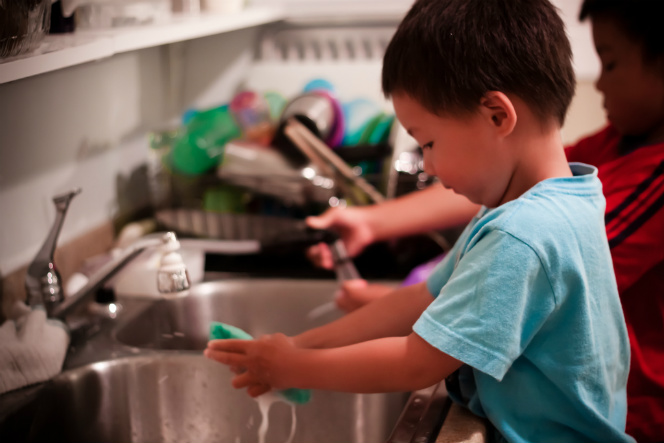
Years ago my two older kids, about seven and nine at the time, were getting ready to wash the floor. A neighbor girl knocked at the door asking to play. When my son told her he was going to wash the floor first she begged to be included. Although this girl had more monetary advantages than my children could have imagined, she was entranced. She’d never seen kids doing chores, let alone kids in charge of cleaning a floor.

She pitched right in as they scooted furniture out of the way, then swept. I gave them a bucket of slightly soapy water and they went to work with rags, scooting across the wet floor on their knees like crabs, giggling as the floor got wetter and their scooting became sloshy sliding. Their method didn’t matter to me. I was holding the baby and diverting the toddler while peeling potatoes and finishing up a work-related call. I was pretty sure the floor would be somewhat cleaner when they were done. They dried it with towels, moved the furniture back with appropriate grunting and groaning, then slumped on the couch. They looked entirely relaxed, as people do when satisfied with a job well done. When I got off the phone I came in to thank them. They were admiring how the floor caught the light and cautioning our toddler to keep his sippy cup on the table.

After that day the neighbor girl asked if she could do chores every time she came over. It seemed funny at the time, but I think now that she recognized she’d been missing the sense of accomplishment and camaraderie found in working together.

The floors aren’t spotless in my house. The bathrooms are also far from perfect. But I’m totally at peace with this. That’s because my kids handle much of the cleaning around here. I’m happy to do the cooking (or more truthfully I have control issues about what goes into the food my family eats). And I don’t mind being the family laundry wench, although I know kids are capable of handling their own laundering tasks. But in the spirit of “we’re all in this together” I’ve expected my kids to handle a sizeable share of household (and farm) work ever since they were small. I still do.

Timing

Actually, starting young is the key. When toddlers beg to help fold laundry or wash the car with us it’s easier to send them off to play so we can get the job done ourselves. But this is exactly the time to foster a child’s natural helpfulness.

It’s also a powerful way to promote positive development in all sorts of areas. Research shows that children who participate in household tasks are more likely to succeed in adulthood.

Twenty years of data analyzed by professor Marty Rossmann at the University of Minnesota found that the best predictor of success in young adulthood on measures related to education completion, meeting career goals, and maintaining good relationships with family and friends was whether they had begun doing chores in the preschool years. This association did not hold up when young people did not begin helping out around the house until the mid-teen years. Even I.Q. scores had a weaker correlation with success than giving children early responsibilities.

Forty-five years of data from the Glueck Study of inner-city males (part of the longer-running Harvard Grant Study) found that willingness and ability to work in childhood — shown by holding part-time jobs, participating in household chores, or taking part in school clubs or sports — was a stronger predictor of adult mental health than factors such as social class or family problems.

The 2019 study “Associations Between Household Chores and Childhood Self-Competency” of nearly 10,000 U.S. children entering kindergarten in 2010/2011 assessed how regularly they participated in household chores. These same children were assessed again when they reached third grade for prosocial behavior, prosocial behavior, academics, and life satisfaction. Researchers concluded, “The frequency of chores in kindergarten was positively associated with a child’s perception of social, academic, and life satisfaction competencies in the third grade, independent of sex, family income, and parent education… Compared with children who regularly performed chores, children who rarely performed chores had greater odds of scoring in the bottom quintile on self-reported prosocial, academic ability, peer relationship, and life satisfaction scores.”

A small, more recent 2022 study, “Executive functions and household chores: Does engagement in chores predict children’s cognition?” of five to thirteen-year-old children affirms that both self-care chores (such as making one’s own snack) and family-care chores (such as helping make a family meal) significantly predicted improved executive functioning including working memory, flexible thinking, problem solving, follow-through, and self-control.

We tend to spend a lot on activities and products for our children assuming this enriches their lives but if they don’t get the chance to take on real responsibilities, we’re depriving them of key components of adult competency.

Young children clamor to be included. When a preschooler begs to help prepare dinner, he doesn’t want to play with cooking toys, he wants to participate in the real work that’s taking place. It slows us down to let him cut fresh mushrooms with a butter knife (and restraint to avoid criticizing or re-cutting), but a child recognizes his contribution toward dinner. He’s also more likely to eat it.

Movement and Hands-on Experience
how movement builds bodies and brains, chores=success,

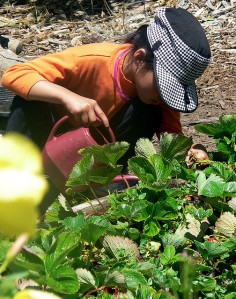
Helping out engages young children in activities that promote movement-cued development. This includes large motor activities like digging in the garden, carrying a watering can, putting away groceries, and sweeping with a broom. It also includes fine motor tasks like using a screwdriver and tearing lettuce for a salad.

Childhood is a period of major neuroplasticity, when learning actually changes the brain’s functional anatomy. Hands-on experiences are particularly vital at this time. In fact, the child who regularly engages with manipulatives (arranging veggies on a platter, setting the table, sorting socks) and applies real-world math (measuring and pouring coffee beans in the grinder, taking things apart and putting them together, following recipes) has a strong foundation of representational experience, which enables better understanding of abstract mathematical concepts when they are introduced later. These movement-based tasks are also closely linked to the brain development necessary for reading and writing. (Find out more about this in Sally Goddard Blythe’s wonderful book, The Well Balanced Child: Movement and Early Learning.)

Growing as a Person and a Family

chores build relationships,

Children accustomed to flashy toys and rapidly changing screen images may become so wired to this overstimulation that without it they’re bored. The slower pace of yard and household tasks can be an important antidote, especially when we’re willing to go at a child’s pace. Young children tend to balk when they’re hurried or left out. They show us, stubbornly and often loudly, that there’s nothing more important to them than the here and now. So whenever possible, slow down so you can make working together enjoyable. Letting a small child spread peanut butter, cut sandwiches, and pour milk into cups from a small pitcher affirms the value of the present moment. It also makes an ordinary lunch into a tea party.

The benefits don’t end for older children. Hands-on experience in all sorts of tasks and hobbies promotes learning, builds character, and helps to form the basis of our future selves. When neurologist Frank R. Wilson interviewed high achievers he found many credited their expertise to attributes learned through hands-on activities. In his book, The Hand: How Its Use Shapes the Brain, Language, and Human Culture, Wilson emphasizes that resourcefulness and self-definition arise from the use of our hands more than from the dictates of our educational system.

In a way, doing tasks together puts parent and child on more even ground. So often we parents are rushing to schlep our kids to practice or lessons or other kid-oriented events, making them the pivot around which a family’s activities revolve. Taking part in regular tasks together, even if we’re pulling weeds on opposite sides of the garden, affirms the sort of mutuality that advertisers tell us is only found in pricey vacations. Of course time afterwards for a nice game of hoops and some cold lemonade builds bonds too.

As our children grow, doing tasks together can continue to strengthen our relationships. Moments of meaningful interaction happen easily when washing dishes, folding laundry, fixing the car, or walking the dog together. Working on shared chores helps a child’s contemplative side emerge, prompting discussions that may never have happened otherwise. This is true between parent and child as well as between siblings. I remember my mother bemoaning the arrival of our dishwasher because we no longer took turns washing and drying, ending a relaxed half hour of post-dinner conversation each evening.

It’s easy to make these activities a tradition. Teenagers who have always helped out when a parent puts on snow tires, cleans out the basement for a yearly garage sale, or cans pickles may grumble when asked, but chances are they’d feel excluded if left out too. In part, who we are is defined by what we do. Growing up with hands-on lessons in taking initiative, practicing cooperation, and working towards a goal helps to shape character. And it transforms pickle-making from drudgery to an important family ritual.

Delayed Gratification
early responsibility for success in adulthood,

This is a biggie in the “you’ll thank me later” department because kids who are able to delay gratification are much more likely to do well as they grow up.

We model delayed gratification each time we choose to work for a later or larger goal. This includes saving, making do, and making it ourselves. We demonstrate it when the whole family pitches in to rake a neighbor’s leaves while she’s recovering from a broken hip. We teach it when we let a child see that if he doesn’t do the laundry when it’s his turn, there won’t be a clean team shirt to wear to the game. And we show that it’s expected every time our kids pitch in with the ordinary jobs necessary to run a household.

This may seem negative, particularly when popular culture constantly screams “have it now” and “get what you want.” But there are enormous positives. Our children become familiar with the pleasures of anticipation, which multiplies the eventual delight when a goal is reached. They also begin to internalize the ability to delay gratification.

This is pivotal for success. Multiple studies (cited in Daniel Goleman’s book Emotional Intelligence) found that children who were able to defer gratification grew into teens and young adults who were more socially competent, better able to deal with frustration, more dependable, reached higher educational attainments, and were effectively able to make and reach long-term goals. Delayed gratification is also related to impulse control. Research shows that a child’s ability to control his or her impulses at an early age is predictive of success even decades later as a healthy, financially stable, and positive member of the community.

Expecting children and teens to take an active part in running a household gives them plenty of opportunity to gain the positive coping skills that help them control their impulses and delay gratification. It may seem like returning to the old adage, work first, play later, but the benefits can be extraordinary.

Skill building

give kids real work, make chores meaningful,

Regular tasks allow our children to see for themselves how the world works. They grasp principles of science and math as a seed becomes a tree, as boards are transformed into bookshelves, as flour and yeast turn into bread. They develop traits such as patience. They are motivated to apply what they’re learning to more challenging endeavors of their own. Sure, it doesn’t hurt to know what it takes to grow the tomatoes, make the sauce, and prepare the beans for tonight’s enchiladas. But more importantly, as our children become proficient at the jobs necessary to sustain their families, they also see themselves as capable. That perception transfers across all endeavors.

There’s no denying that children who participate pick up useful skills. They see that maintenance is easier than waiting till the car or laptop breaks. They can set the table, toss a salad, make a sandwich, and boil pasta. Not right away, but eventually. While they are making real contributions to running the household they’re actively learning how to cook, launder, clean, make repairs, maintain a vehicle, budget expenses, and handle other tasks which are essential for an independent life once they’re adults. Wonderful lessons in cause and effect are reinforced when children complete work and benefit from the results. Seeing oneself as an agent of useful change, priceless.

They also learn from the examples we show them, such as how to handle pressure and ways to learn from mistakes. Whether we’re four or 40, gaining competency feels good. It doesn’t hurt to give credit where it’s due. So if your child has been busy chopping mangoes, strawberries, and pineapple into tasty chunks, try renaming the result “Sophie’s Special Fruit Salad” for extra reinforcement.

Purpose

meaningful chores for kids, finding purpose in chores, raising responsible kids, teaching delayed gratification, building impulse control,

When we stack firewood to prepare for the upcoming winter, make a gift to celebrate a friend’s good news, or change a favorite recipe to accommodate Grandpa’s diabetes, our efforts have purpose and value. As our children participate along with us, they feel the intrinsic satisfaction of doing something that has meaning.

So many educational tasks put before our children serve no purpose other than to instruct. But when learning is connected to something truly purposeful, it can’t help but kindle motivation.

From the earliest time our species lived on planet Earth, young children benefitted from the purposeful learning that comes when adults around them are engaged in practical activities — welcoming a child’s questions and eagerness to be included as entirely natural parts of growing up. It acknowledges that these essential skills are necessary for maintaining and belonging in a community.

Children feel honored to be included in real work that includes real challenges. If we pay attention, we see that’s just what they pretend to do when they play.

Beyond Chores

teaching impulse control, delaying gratification, families working together,

I’m not fond of the word “chores.” It implies that kids and adults have tasks that are set apart from the rest of our lives. Making work around the house and yard a regular part of our lives together seems more natural.

I think it’s valuable to get work done together as much as possible. For me, the simplest way to respond to grumbling has always been, “that’s just how we do it in our family,” without engaging in arguments on the topic. And of course balance is essential. Children and teens (well, all of us) need time for daydreaming, play, socializing, relaxation, projects, and all of life’s other joys.

My kids have their own chores, which they sometimes rotate. They haven’t always done them well or on time by any means. Accepting a floor as clean as a child will get it is part of having children participate. And I’m pretty laid back about things like clean bedrooms. (I remind them we try to adhere to the Firefighter Rule: Could emergency workers navigate a bedroom if necessary?) I understand that kids put less energy into tasks that don’t seem to have much importance. They recognize that a clean bedroom doesn’t affect our family’s functioning, while they know for sure that cutting and stacking firewood will keep our house warm. Hence, the firewood is done right while their rooms are often just short of scandalous.

We’ve never given them an allowance, mostly because we haven’t been able to afford it. Families have counted on children throughout history for work that was reliable and essential. Today we are fortunate that we don’t have to rely on our kids to survive, but we can expect them to contribute. The tasks may not be fun or interesting but they are necessary. They demonstrate to every child that he or she is a valuable contributor to the well-being of the family. And hearing, “Thanks, we couldn’t have done it without you,” feels good too.

I’m pretty sure growing up this way has contributed to how super responsible my kids are now in their teen and young adult years. They see a pile of boxes I need to load for our food co-op and carry them, never waiting for me to ask. They gladly stop whatever they’re doing to pitch in for an hour or all day when help is needed in the garage or barn or back yard. They are incredibly capable people who are far more astute and skilled than I’ll ever be. They can milk cows, fix tractors and cars, cut and bale hay, install plumbing, make meals, diagnose a sick chicken, hang drywall, identify spiders, back up their political opinions, weld, put on a roof, well, you get the idea. Sure, they have busy social lives and enjoy keeping their faces aimed at screens just like everyone else. But they recently spent an entire weekend helping a family member pack, move, and make repairs. They worked hard and displayed nothing but their usual good cheer. After exhausting 14 hour days I asked if they’d rather have skipped this particular task. Every one of them affirmed that it was no big deal. And I heard my words come back to me, “It’s just the way we do things in our family.”

Portions of this article were excerpted from Free Range Learning.