Respecting A Child’s Urge To Discover

theory of loose parts, kid innovators, creativity, learning is discovery, self-motivation,

misspenthopesxx.deviantart.com

The kids had a bunch of boards, some old nails, a hand saw, and a few hammers. They also had the two most important ingredients, the desire to make something and the freedom to do so.

They spent an afternoon planning their tree fort, enthusiastically arguing over whose plan was best. Their first few attempts failed spectacularly. They were undaunted, even bragged a little bit about the noise the boards made falling down. Several of them asked family members for advice. A few others paged through books and watched YouTube videos as they tried to figure out basic construction techniques. They started again, measuring more carefully as they built a frame. The process took much longer than they’d expected but they stuck with it. When they ran out of materials they scavenged tree lawns on garbage pickup day, dragging back pieces of wood. They got a few cuts and bruises. They were proud of those too. As they worked they talked about how they’d use their clubhouse. It didn’t occur to them how much they were learning.

Conventional thinking tells us that children benefit from the newest educational toys and electronics, lessons, coached sports, and other adult-designed, adult-led endeavors. Well-intentioned parents work hard to provide their children with these advantages. They do this because they believe that learning flows from instruction. By that logic the more avenues of adult-directed learning, the more their children will benefit.

But learning has much more to do with curiosity, exploration, problem solving, and innovation. For example, if baby encounters a toy she’s never seen before, she will investigate to figure out the best way or a number of different ways to use it. That is, unless an adult demonstrates how to use it. Then all those other potential avenues tend to close. Studies show that “helpful” adults providing direct instruction actually impede a child’s innate drive to creatively solve problems. This experience is repeated thousands of times a year in a child’s life, teaching her to look to authorities for solutions, and is known to shape more linear, less creative thinking That’s true of a baby as well as older children and teens.

Young people are also cued to ignore information that is too simple or too complex. Research indicates that people are drawn to learn from situations that are “just right” for them.  They may make plenty of mistakes along the way, just as babies fall when learning to walk, but facing those challenges and making those mistakes are pivotal steps in maturity.

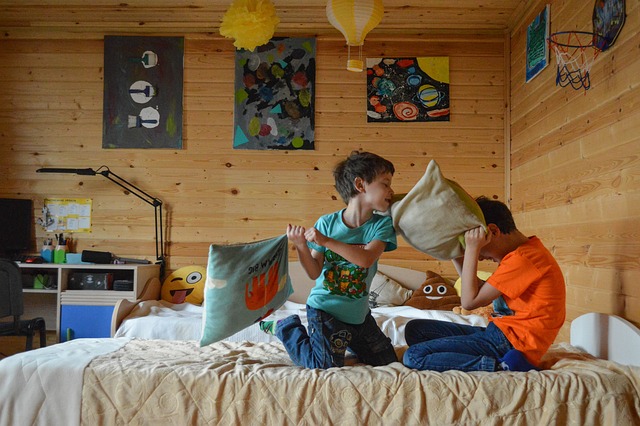
It’s also well-known that a child’s natural motivation tends to diminish in adult-led activities. Unless they’ve been raised on a steady diet of ready-made entertainment, children are naturally drawn to free play. They pretend, make up games, daydream, wonder, and launch their own projects. They are discovering not only the world around them but a rich inner life as well.

Of course adults are vital to young people’s lives. They provide safety, guidance, love, and much more. Kids know they can ask trusted adults for help or advice. They do so more eagerly when they recognize these adults won’t overwhelm them with information, quiz them on what they are learning, or take over. Adult responses simply need to stay in proportion to a young person’s request.

For an example of how powerful the drive to discover can be, let’s take a brief detour to two Ethiopian villages. These places may be rich in intangibles like family and tradition, but they are poor in every other way. The illiteracy rate is practically 100 percent. There aren’t even written words around for children to see: no books, no labels on packaged foods, no street signs. That’s where the One Laptop Per Child (OLPC) project dropped off 1,000 tablet PCs with solar chargers. They weren’t handed out in a school, but to kids. The devices were pre-loaded with English-language operating systems and software that tracked how the tablets were used. The boxes were taped shut, with no instruction given at all.

In less than five minutes, one child (who’d never seen an on/off switch) powered up a system. The kids collaborated as they learned. Within a few days they were using 47 apps per child, within five months they were taking pictures. That took a while since the kids had to teach themselves to hack Android because the tablet cameras were mistakenly deactivated. The OLPC project is finding, all over the world, that kids are learning to read and speak in multiple languages. They easily search, program, and connect using inexpensive tablets. These kids are also teaching adults in their villages to read and use computers. They’re doing it without adult instruction.

So how did our fort-builders do? They had three sides framed and were working on the fourth when one boy’s father stepped in to help. His help may have been welcomed if they’d asked or if he simply contributed to the team effort, but this very well-meaning man decided the kids weren’t doing a good job. He took over, telling the kids to re-do some of their work and to build the rest of it according to his instructions. They did, but without much gusto. The resulting fort was more sturdily built yet they only used it a few times.

A year or so later they scavenged some boards from it to make a go-cart, and then another go-cart. This time they welcomed the help of another child’s grandfather who worked alongside them, learning together as the project unfolded. Their enthusiasm had returned.

Observe The “Goldilocks Effect” In Action

 learning happens when it's "just right"

“Young children seem to recognize that knowledge is an essential shared resource, like air or water. They demand a fair share. They actively espouse the right to gain skill and comprehension in a way that’s necessary for them at the time. Often children seem to reject what they aren’t ready to learn, only to return to the same skill or concept later with ease. This is not only an expression of autonomy, it’s a clear indicator that each child is equipped with an learning guidance system of his or her own.”

I wrote these words two years ago in my book Free Range Learning. This concept is now being called the “Goldilocks effect.” According to a study published in the journal PLoS ONE, humans are cued to ignore information that is too simple or too complex. Instead we’re drawn to and best able learn from situations that are “just right.” It’s the educational equivalent of Goldilocks on a porridge-testing quest.

The study focused on how babies make sense of our complex world. For years researchers have noticed a contradiction. Sometimes babies prefer to look at familiar items, like a toy from home. Other times they prefer to look at unfamiliar items. Turns out this isn’t a contradiction at all. Babies self-regulate by choosing the amount of novelty and complexity that’s right for them at the time.

They also, according to the study, actively seek out the most reliable information and can predict what will happen next based on what they’ve seen. Babies are a great way to study human behavior. That’s because infants aren’t burdened with cultural and patterned responses. Babies indicate what all of us are like in our most basic form.

The Goldilocks effect has to do with learning at all ages. You are attracted to what holds just the right amount of challenge for you right now. Usually that means something that sparks your interest and holds it close to the edge of your abilities, encouraging you to push yourself to greater mastery. That’s the principle used to hold the player’s attention in video games. That’s what inspires artists, musicians, and athletes to ever greater accomplishments. That’s how kids who follow a fascination of their own tend to learn more than any prepared lesson could teach them.

How do we see this in action? By looking at children through the eyes of trust.

The little boy who’d rather stomp in muddy puddles after a rainstorm than attend story hour at the library may need that full sensory experience outdoors more than he needs, right now, to sit still in a group and listen quietly. He’d probably prefer hearing stories while sitting in a parent’s lap where he benefits from closeness and can ask questions as they occur to him.

The girl who prefers to draw pictures of animals and fairies rather than run outside to play with the neighborhood kids may need more time for quiet self-expression than other children. Her imaginative art fuels growth in all sorts of areas, one of which may be a sturdier sense of self that will help her interact more freely with others when she’s ready.

The teenager who drops out when she’s reached a high level of accomplishment in an area, say soccer or fencing or designing apps. What she’s learned in that field isn’t wasted. It’s taught her a whole range of skills and empowered her to move on. She may pursue other interests in what look like fits and starts of motivation. Or the learning situation that’s just right for her may look like boredom to others. She may need time to process, daydream, create, and grow from within before pushing ahead.

Children naturally focus on what they’re ready to take in and do their best to set aside the rest. Often what they set aside is exactly what adults push them to master. We call this stubbornness but really they show us, over and over, that human nature flourishes best without coercion. Efforts to structure learning too heavily are likely to fail (or more often, the student will fail) if it’s not understood that we’re all cued to learn in the ways best for us.


Successful Teen Homeschooling: Two Vital Factors

homeschooling teens, meaningful work for teens, responsibility for teens, teen interests,

The teenaged years are actually the most rewarding of the homeschooling years. That’s what we’ve found with our four homeschooled children. And that’s what I was told by many of the 110 families I interviewed for my book Free Range Learning:: How Homeschooling Changes Everything. People in Ireland, Australia, India, Germany, and the U.S. described coming to this realization in similar ways. Their concerns about helping a young child master the basics or their struggles to find the right homeschooling style gradually resolved. Parents grew to trust the process of learning much more completely and, perhaps as a result, they saw their children mature into capable and self-directed young people.

Homeschooling isn’t the cure-all, by any means, for a culture that barely recognizes a young person’s need for identity and meaning. But homeschooled teens are not limited to the strictures of a same-aged peer culture or weighed down by a test-heavy form of education. They also have more time. This provides ample opportunity to stretch and explore in ways that can benefit them for life.

There are a number of pivotal elements in the period we call adolescence. Two significant ones are the pursuit of interests and meaningful work. These factors are just as important for teens in school as those who are homeschooling. But homeschoolers are freer to fill their time with what’s significant to them. That can make all the difference.

INTERESTS

Pursuing interests builds character traits that benefit us for life.


In my family, we’ve noticed that interest-based learning builds competence across a whole range of seemingly unrelated fields. For example, as a preteen one of my sons put together a few rubber-band powered airplanes at a picnic. When they broke, he tried fashioning the pieces into other workable flying machines. This got him interested in flight. He eagerly found out more through library books, documentaries, museum visits, and You Tube. Soon he was explaining Bernoulli’s principle to us, expounding on changing features of planes through the last century, and talking about the effect of flight on society. He designed increasingly sophisticated custom models. He read biographies of test pilots, inventors, and industrialists. He won a state award for one of his planes through 4H and got a family friend to take him for a ride in a small plane. What he picked up, largely on his own, advanced his understanding in fields including math, history, engineering, and physics. All inspired by learning that felt like fun.

This particular passion didn’t last, but the pursuit of his interests continued. He built spud guns with friends, played bagpipes in a highland band, bred tarantulas, repaired recording equipment, and tried his hand at woodworking. He wasn’t always at full tilt (never missing a chance to sleep in). Now a college student, he’s surprised that his fellow students are so turned off by learning.

Interests engaged him, as they do each one of us, in the pleasure of exploring and building our capabilities. They teach us to take risks, make mistakes, and persist despite disappointment as we work toward mastery. Making sure that a young person pursues interests for his or her own reasons, not the parent’s, keeps motivation alive and passion genuine. Research backs this up. Pursuing our interests builds character traits that benefit us for life.

Self-directed young people really take off in their teen years

Long-term homeschooling families know that self-directed young people really take off in their teen years. Comfortable with their ability to find out what they need to know, they often challenge themselves in their own ways. Some add ambitious schedules to previously unstructured days, others seek out heavy doses of academic work to meet their own goals, still others don’t appear to be remotely interested in conventional educational attainment but instead create new pathways for themselves.

Children as well as teens tend to have lengthy pauses between interests. A boy may not want to act in any more plays despite the promise he’s shown, a girl may not choose to sign up again for the fencing team just when she was starting to win most of her matches. During these slack times they are incorporating gains made in maturity and understanding before charging ahead, oftentimes toward totally new interests. The hiatus may be lengthy. They need time to process, daydream, create, and grow from within. They need to be bored and resolve their own boredom.

Decades ago educational researcher Benjamin Bloom wondered how innate potential was best nurtured. He was convinced that test-based education wasn’t bringing out the best of each child’s ability. So he studied adults who were highly successful in areas such as mathematics, sports, neurology, and music. These adults, as well as people significant to them (teachers, family, and others), were interviewed to determine what factors led to such high levels of accomplishment. In nearly every case, it was found that as children, these successful people had been encouraged by their families to follow their own interests. Adults in their lives believed time invested in interests was time well spent. Due to their interests, these individuals developed a strong achievement ethic and a drive to learn for mastery.

This makes sense. We recognize that young people gain immeasurably as they pursue their interests. And not only in terms of success. When caring adults support a teen who loves to play baseball, study sea turtles, and draw comics, he’s likely to recognize, “I’m okay for who I am.” The interests well up from within him and are reinforced by those around him, so there’s coherence between his interior life and exterior persona. This reinforces a strong sense of self. All of us need sturdy selfhood to hold us in good stead while so many forces around us emphasize unhealthy and negative behaviors.

Interests have a great deal to do with promoting a young person’s feelings of worthiness. There’s an enhanced quality of life, a sense of being completely present that’s hard to name but recognized by those who “find” themselves within a compelling pursuit. A girl may love speed skating, or writing short stories, or designing websites. When she’s engaged in her interests, she knows herself to be profoundly alive. That feeling doesn’t go away, even when she has to deal with other tasks which are not as entrancing. Everyone needs to belong, contribute, and feel significant. The teen who knows his or her interests provide fulfillment is already aware that self-worth doesn’t come from popularity or possessions.

MEANINGFUL WORK

Teens want challenges and the accompanying responsibilities.


A group of homeschoolers touring a rural historical society noticed that storage areas were stuffed with uncataloged documents, some crumbling from age. They offered to digitally scan and reference these materials with the museum’s coordinator. Several other teens researched the requirements for a dog park in their suburb. Working with a group of interested citizens, they petitioned city council for a permit and eventually won a grant to construct the dog park. Another teen started a business fixing and modifying bicycles. He also earns revenue from videos of his mods. These examples from my book indicate how young people eagerly take on challenges and the accompanying responsibilities.

Throughout human history teens have fully participated in the work necessary to help their families and communities flourish. They were needed for their energy as well as their fresh perspective, and they built valuable skills in the process. Working alongside adults helped motivate them to become fully contributing adults themselves. Most of today’s young people are separated from this kind of meaningful work. They have fewer opportunities to encounter inspiring people of all ages who show them how to run a business or foster a strong community. Now that teens aren’t needed to run a farm or shop, they also don’t get as many real world lessons in taking initiative, practicing cooperation, deferring gratification, and working toward a goal.

Ideally young people have taken part in real work from an early age. Many studies bear out the wisdom of giving children responsibility starting in their earliest years. In fact, having consistent chores starting in early childhood is a predictive factor for adult stability.

Although work is largely valued for monetary reasons in our society, the kind of meaningful work I’m talking about has inherent worth. Chances are it is unpaid. (Here are dozens of service ideas for kids.)Through this work young people learn that it’s the attitude brought to any task, whether shoveling manure or performing a sonata, that elevates its meaning. Often an endeavor that’s inspiring doesn’t always feel like work. It may include establishing an informal apprenticeship, developing a small business, traveling independently, or volunteering with a non-profit.

It’s the attitude brought to any task that elevates its meaning.

What is meaningful work may be different for each person. A homeschooled teen may put up a shed for a neighbor, make a documentary with fellow parkour enthusiasts, perform puppet shows at a nearby daycare, help a zither club record their music, become a volunteer firefighter, assist an equine therapy program, coach a kids’ chess team, tend beehives, walk puppies at a dog shelter, or help a chemist in the lab. Through such work they tend to get more involved in their communities and connect with inspiring role models.

Meaningful work may not always be interesting, let alone fun. It has to do with putting in sustained effort to get results, even when the hours become long and the endeavor doesn’t feel rewarding. Through this work young people gain direct experience in making a valuable contribution. They know their efforts make a difference. That’s a powerfully rewarding experience at any age.

  Learning of the highest value extends well beyond measurable dimension. It can’t be fit into any curriculum or evaluated by any test. It is activated by experiences which develop our humanity such as finding meaning, expressing moral courage, building lasting relationships, channeling anger into purposeful action, recognizing one’s place in nature, acting out of love. This leads to comprehension that includes and transcends knowledge. It teaches us to be our best selves.

Originally published in Lilipoh Magazine, Winter 2012

Benefits of Special Interest Groups

teenage bagpipers, esoteric interests, kids' interests, excellence through interests,

We like spending time with people who delight in the same things that fascinate us. That might be playing bagpipes, reenacting history, making homemade cheese, or white water rafting. Who doesn’t love sharing a favorite topic? It’s certainly easy to build friendships that way. Shared interests also foster greater enthusiasm and motivate us to expand our knowledge. That’s why interest-based groups make so much sense for our kids.

In my family, interest-based groups have been an important part of homeschooling life. We formed a number of these groups over the years. Some, like a history club made up of eager parents and not-so-eager young children, barely lasted long enough for a few meetings. Others have lasted ten years.

kids science club,

Our Science Club

The most successful has been our boy’s science club. It was started by five families with nine boys between the ages of seven and eleven. When we began it was highly structured. We met regularly at each other’s homes. Parents took turns planning a project or experiment, got the materials, explained the educational principles underlying the activity, and if things didn’t turn out as planned (actually quite frequently) it was usually a parent who searched for answers.

As time went by, more and more control over the science club was naturally taken over by the boys. They planned what they wanted to do and figured out what they’d need in order to do it. They decided whose house was best for that activity and when the day came, together they carried out the project or experiment, often improvising with different approaches.  If things didn’t turn out they searched for their own answers. Although nearby, parents didn’t hover to assure safety nor insist that they officially learn the principles behind each activity.

Our boys remained safe, happy, and increasingly savvy about many branches of science while running their own science club. Their projects included various propulsion systems designed to shoot tennis balls, a 12 foot high trebuchet, and a hovercraft which managed to get off the ground but not (as they’d planned) with a passenger. Over the years one family moved away and another was welcomed to the club. The older boys have gone on to college, several into the sciences, one to Harvard graduate school on a full scholarship. Since they shared the honorary title of Science Club President over the years, it probably didn’t hurt to put that on the college application.

Making Interest-Based Groups Successful

There are some lessons we’ve learned that can help make any interest-based group successful.

1. Build on what your children love to do. If they adore taking hikes it’s easy to expand on that. Depending on what your children and others who join decide, the group may expand to bird watching, letterboxing, geocaching, nature sketching, Volksmarching, any number of related activities. Or they may choose to stick to the simple pleasure of hiking. Your children may not be hikers, but prefer fashioning swords from household objects to joust with their siblings. There are plenty of ways to expand on those interests as well. Consider forming a special-interest group to enjoy fencing, foam fighting, Society for Creative Anachronism, writing and enacting scenes from the times of knights or high seas pirates, or live action role-playing games. Just about any interest can spark friendship and learning in a group of children.

2. Consider factors such as age range, group size, and location before starting a group.  What factors are likely to contribute to interesting, enriching and fun experiences?  How far are you willing to travel? Flexibility is important. For example if your daughter is eager to start up a journaling group for girls ages 11 to 13, you might consider forming a group for younger siblings who can meet at the same time for their own interest-based group.

3.  Invite potential members. Some interest-based groups develop out of casual get-togethers between friends. Some are formed as sub-groups within larger organizations such as block clubs, churches, or homeschool support groups. And others are the result of invitations spread on forums, lists, library bulletin boards and across homeschool networks.  How do you want to form the group?

4. Get started. For older kids, you may want to hold an informal organizing get-together at the local park, library meeting room, or your backyard. Gather ideas from the kids in attendance by encouraging them to brainstorm what they’d like to do and how often they’d like to do it.  Toss out questions to keep the ideas flowing and write down their suggestions. If they’re teens, let them run this meeting on their own as much as possible. This first get-together is also the easiest time to get some guidelines established. Consider questions such as: Do you want to be open to new members once you’re established? Do you prefer to agree to some basic rules or accommodate as the need arises?  How will responsibility for group activities be shared?

Or simply launch into the first session instead of holding an organizing meeting. After making apple butter and dipping candles with your new heritage club, or enjoying an afternoon making puppets and putting on an impromptu puppet show with other new members, they’ll understand what group sessions entail. Their suggestions for activities, group name, and potential rules will more easily flow from that initial encounter.

5.  Once your get-togethers begin, make sure that unstructured time is included. Build in ample time for kids to spend together after the activities are over. Friendships are a strong factor in motivating kids to stick with special interest groups. Whenever possible, be open to the inevitable plans your children concoct with friends in these groups. It’s a powerful acknowledgement of one’s worth to spend time with friends who are equally crazy about model trains, skateboarding, manga, horses, or cake decorating.

6. Recognize that the group will grow and evolve.  It’s important to be open to changes. Get-togethers between friends often naturally drift toward other activities as interests change. More formal groups tend to continue on long after the originators have moved on. An interest-based group your children start may last only a short time, but it still provides learning as well as enjoyable experiences. Some families launch quite a few such groups as their children grow up. You may be doing the same thing without recognizing that toddler playgroups and older children’s regular enrichment activities function just as interest-based groups do.

Image: Wikimedia Commons

Image: Wikimedia Commons

Examples of successful interest-based groups

~A cooking club for preteen girls meets at members’ homes to make (and eat) themed foods and plan recipes for next club event. They’ve made various ethnic meals, fancy desserts and food to donate.

~A multi-age group of stop motion movie-makers (youngest member five years old). They chat online about individual projects and also make collaborative movies. They have hosting screenings of their short films for an appreciative audience of relatives.

~A nature sketching and journaling group made up of families who schedule hikes in different wilderness areas to write, draw, and share their work.

~A boys’ book group based on sci-fi and adventure books. They vote on which book to read, read it the month before the meeting, then after the book discussion take part in activities such as scavenger hunts, making costumes and re-enacting scenes, testing tactics used in the book, or using repurposed materials to build something mentioned in the book.

~A multi-age rock climbing group which practices at indoor climbing walls as well as outdoor locations.

~A young children’s hands-on science club.

~A youth and adult fiber works group with projects, farm trips and visits to other spinning/weaving guilds.

~A group of families who get together to make costumes, chain mail and armor for re-enactments.

~A beachcombers group. Young children play along the waterside while adults and older children monitor ecological conditions for a non-profit organization.

~A debate and elocution society which prepares for regular memory-based recitations as well as occasional debating society competitions. The members’ aspirations include acting, politics, and law.

~A cartoonists’ meeting. Young members work on graphic novels, cartoon strips, and cards.

~A multi-age sculptor’s group. They meet to hear guest speakers which have included welders and mineralogists. They go on field trips and occasionally meet at one another’s homes to work on projects together.

You may find, as my family has, that interest-based groups are a favorite activity with extraordinary benefits. You may even notice that your child’s eagerness rekindles interests of your own. Maybe it’s time to enjoy the fellowship of other enthusiasts as you master the bagpipes or learn to make cheese.


Originally published in Wired. Portions of this article excerpted from Free Range Learning

Give Em The Finger

working with instead of against resistance, leading children, foster learning, non-compliant children, resistant children, non-coercion,

geograph.org.uk

“Self-trust is the first secret of success.”  Ralph Waldo Emerson

No one wants to be cajoled, forced, or coerced. Some of us resist mightily. Such resisters are called all sorts of names: underachieving, non-compliant, difficult, withdrawn, eccentric, or worse.

Human beings naturally resist when our autonomy is threatened. And autonomy is most threatened in childhood because many adults (particularly in the western world) believe children require moment-to-moment instruction, advice, and entertainment. Unlike most of previous human history, children’s lives today are heavily monitored and controlled. Adults keep kids in pre-planned activities,  insist that education proceed in a linear fashion, intervene to minimize difficulties, and provide distractions to prevent even momentary boredom. They do so assuming these efforts will advance learning and boost success.

Yet this puts character development at risk, because children are attracted to dilemmas that help them learn. Learning from mistakes, taking on challenges,  and developing a growth mindset are pivotal for success. So is preservation of a trait found in people at the top of their fields in science, the arts, and entrepreneurship—curiosity. And curiosity arises in unique and unpredictable ways, often appearing after a child has traveled from boredom to inspiration on his or her own.

Coercion also puts the child in an uncomfortable position, because all this control comes from adults with the best intentions. Usually adults who love them. So children, who don’t like overt control any more than you do, typically react somewhere on the spectrum between compliance and resistance. Extreme compliance and they’re less likely to think for themselves, developing an external rather than internal locus of control.  Extreme resistance and they’re likely to face ever more punitive efforts to get them to comply. Neither reaction is what adults want or expect.

Which leads me to a story about Transcendentalist writer, Ralph Waldo Emerson. He and his son Edward were trying to get a calf through a barn door. Emerson pushed from behind while his son pulled on the calf’s ear. The heifer wouldn’t move an inch despite a great deal of effort exerted by the two men. Emerson thought back over his scientific and literary readings in hopes of figuring out some way of getting the reluctant animal to move but didn’t come up with any solutions. They continued trying, to the amusement of a servant woman who was passing by. She offered a finger to the calf. Easily led by its desire to suckle, the calf followed her at once.

The wisdom of capitalizing on natural tendencies is the key to good animal husbandry. It’s probably a key to decent human relationships as well. I’m not for a moment suggesting that children are calves. (In fact, I’d rather see calves left with their mothers to suckle than led into a barn by capitalizing on that unmet need.) Children need rules, responsibilities, and the expectation that they’ll treat others with compassion. They need to be nurtured by adults who understand that pushing and pulling aren’t useful ways to help children mature. And they need the freedom to learn in ways that are best for them. At any age, those of us who aren’t oppressed by coercive relationships or controlling institutions gladly seek out advice as we need it, find role models who inspire us, and advance in the direction of our greatest gifts.

“No human right, except the right to life itself, is more fundamental than this. A person’s freedom of learning is part of his freedom of thought, even more basic than his freedom of speech. If we take from someone his right to decide what he will be curious about, we destroy his freedom of thought. We say, in effect, you must think not about what interests and concerns you, but about what interests and concerns us.” John Holt

The Boy With No Toys

why toys are bad for kids, overstimulated kids,

Before he was born, his mother decided her son would have no toys. Abandoned by the father, she was already a single parent. She made a living cleaning for other people. Most days she took the bus to affluent streets where children never seemed to play outside. As she vacuumed and scrubbed beautiful homes overfilled with possessions she paid close attention to what children did all day. Often they were gone at lessons, after school programs, or playdates. When they were home they usually sat staring at screens. Toys in their carefully decorated rooms appeared to be tossed around as if the small owners had no idea how to play, only how to root restlessly for entertainment.

She thought about it, talked to the oldest people she knew, and read everything she could. Then she informed anyone who cared to listen that her child would not have toys. Not a single purchased plaything.

Will (name changed) and his mother live in a small mobile home park. By most standards they are poor. Their income is well below the poverty line. They don’t have a TV or computer (although Will uses the computer at the library and watches the occasional TV program at babysitters’ homes). But their lives are rich in what matters. Together Will and his mom grow food on several shares of a community garden, bartering when they have extra produce. They make all their meals from scratch. These routines activate a whole array of learning opportunities for Will, quite naturally.

They are close to most of their neighbors in proximity as well as in friendliness. While his mother is working Will is cared for by several different seniors in their trailer park. He not only likes to help his mother garden, cook, and take care of their small home but he also likes to take part in helping his neighbors with small tasks. He carries groceries for certain ladies, helps an older gentleman with a birdhouse building hobby, and sometimes gets to assist another neighbor in automotive repairs.  He gets a lot out of these meaningful tasks.  Children long to take on real responsibility and make useful contributions. Giving them these opportunities promotes their development in important ways.

Sounds nice. But what about play?

natural play best for kids, free play, no toys,

When Will was a baby his mother made all sorts of toys. Most took no time at all. Food containers became stacking toys, a small water bottle with beans inside became a rattle, a sock stuffed with drier fuzz and tied in knots became a soft animal.

Will is now six years old. He plays as any child naturally does. He makes up games and turns all sorts of objects into toys. His mother saves money by not owning a car, so Will has commandeered a large portion of the shed that would normally be used as a garage. Mostly he uses it to stockpile his own resources. He has scrap wood, a few tools, and cans of nails. He likes to straighten bent nails for future projects, working carefully now that he recently discovered what smacking his fingers with a hammer feels like. Recently he found a discarded lawn mower tire, so he’s looking for three more tires to make a go-cart. In the evenings he likes to draw elaborate pictures of this upcoming project. He particularly enjoys playing in the soft dirt along the side of the shed where “robot men” he makes out of kitchen utensils use their potato peeler and wisk limbs to churn through the soil, leaving tracks as they clink. When he visits friends he happily plays with their toys, although he doesn’t always “get” that certain TV or movie-themed toys are limited to the plot-related storylines. So far he seems to have no urge to possess the same toys.

What about birthdays and holidays? Will’s mother does give him gifts. But she limits her gifts to useful items—crayons, clothes, tools, a compass. Each weekend her folk band practices at their mobile home. Will quickly mastered the harmonica and begged for time on the fiddle, so her big gift to him this year was a used child-sized fiddle. She urges the other adults in his life to gift him with experiences—a trip to the beach, a day of horseback riding, a visit to a museum. Out-of-town relatives now renew a children’s magazine subscription and send him regular snail mail letters, both of which are helping him learn to read with very little prompting.

natural child development,

Will’s childhood has a lot in common with the way children have learned and grown throughout history. As historian Howard Chudacoff notes in Children at Play: An American History, play is vital to development. It’s has everything to do with autonomy, exploration, imagination, and fun. It has very little to do with purchased playthings. In fact, structured programs and commercial toys actually tend to co-opt play.

Studies with rodents show those raised in enriched environments (toys and changing items in cage) have enhanced brain development compared to rats raised in a standard environment (plain cage, unchanging). We’ve misinterpreted these results. Rats don’t naturally live in boring, unchanging cages. They live in nature, which is by definition a challenging often constantly changing environment. In nature rats have far more complex lives than they ever might in a cage. Such an interesting life IS an enriched environment. It’s the same for children.

Sure there are devices that will “read” to a child. These are not more enriching than being read to by a responsive adult. And there are all sorts of adult-designed games. They’re not more fun or enticing than games kids make up on their own or with friends.

In fact, the overstimulation of blinking, beeping, passive entertainment isn’t beneficial for children. Joseph Chilton Pearce wrote in Evolution’s End: Claiming the Potential of Our Intelligence that the overload of television, electronics, and too many toys limits a child’s sensory awareness. Their brains and nervous systems accommodate intense bursts of sound, light, and color during their earliest years. Rather than developing the subtle awareness fostered by time spent in nature, in conversation, and in play they instead are wired to expect overstimulation. Without it, says Peace, they’re bored.

And yet, so many people are amused when tiny children are clearly pushed to the limits by a toy too overwhelming for them. (Every search for a video to illustrate this seems to think “baby scared by toy” is funny.)

The children Will’s mother cleans for, who are kept busy in adult-run programs and have access to electronic distractions, don’t have Will’s advantages. As he plays and innovates he’s actually promoting the kind of learning that translates to a lifetime of passionate interests. Studies show that children who are free to explore their interests without adult pressure and interference  are more autonomous, eagerly pursuing excellence through healthy engagement rather than heavy-handed adult pressure.

Ask the oldest person you know to share some memories about play from his or her childhood. Chances are you’ll hear about pick-up games, handmade toys, and free time that spun long summer days into marvels of imagination. That’s what Will’s mother wants for her child.

play develops intelligence, benefits of free play, deprive your kids of toys, handmade toys,

First published in Natural Life Magazine

How The “10,000 Hour” Rule Can Benefit Any Child

homeschooling for success, interest-led learning, learning for success,

Image: uktara.deviantart.com/gallery

If you haven’t heard about the 10,000 Hour Rule, you’re probably busy doing what people do, living life on your own terms. But what you may not realize is how this rule affects young people, whether they have one all-consuming interest or not.

Malcolm Gladwell identified the 10,000 hour maxim in his book, Outliers: The Story of Success. The rule describes how to attain Big Time Success. Based on an analysis of people who reached the top of their fields, Gladwell claims that any of us can reach greatness by practicing tasks relevant to our chosen field for a total of 10,000 hours. He provides pretty compelling examples including the Beatles, Bill Gates, and Tiger Woods. These guys put in the hours, then rapidly pulled ahead of the competition.

Plenty of other circumstances factor into success but it’s worth taking a closer look at what the 10,000 hour rule means for today’s kids. Good news. Those who are homeschooling or attending Democratic schools benefit enormously from the 10,000 hour rule, although not in ways you might expect.

First and most obviously, they have more time to explore their interests. They don’t spend hours every day on the school bus, standing in line to change classes, listening to instructions/attendance/announcements, doing rote schoolwork, and then completing homework in the evening. Even highly academic homeschooling families find that a full load of “schoolwork” can be completed in substantially fewer hours than the average school day.

That leaves plenty of time to pursue real interests. Long hours every day can be lavished, if a child wishes, on building expertise through direct experience in video game design, creative writing, chemistry, speed skating, cello playing, sculpting, astronomy, cake decorating, computer animation, or any other area.

It’s not difficult for a young person, free from the time constraints of conventional schooling, to spend 10,000 hours in an area of passionate interest. Let’s look at the numbers. The average school year in the U.S. is 180 days (pretty similar in most of the world) with an average school day of 6.7 hours.  Thus children are unable to pursue their own interests and learn in wider ways for a minimum of 1,206 hours a year. Even if we don’t count kindergarten, that’s 14,472 hours by the time they’re 18. And we’re not even adding time necessarily spent on travel to and from school, prepping for the school day in the morning, and doing homework after school (although we know these obligations probably add another hour or two each school day).

Sure, school kids engage in all sorts of worthy pursuits in their spare time. But homeschoolers and students in Democratic schools have a lot morespare time. These young people can accumulate the requisite 10,000 hours quite easily by their mid-teens, putting them on the fast lane to Big Time Success in exactly the field that makes them feel most vibrant and alive. If they choose.

But what about the homeschooled kids and students in Democratic schools who don’t have a single all-consuming interest? A girl might like to read sci-fi, go horseback riding, play soccer, and teach the dog tricks. A boy might drift from one pursuit to another, avidly creating his own graphic novel, then becoming passionate about parkour. Should these kids choose one thing in order to accumulate the all-precious 10,000 hours?

Absolutely not. They’re already putting 10,000 hours into the exact skills that more widely define success.

That’s because their daily lives are filled with self-directed and meaningful learning. Of course, depending on the style of homeschooling, it’s obvious that many kids will spend time doing some rote educational tasks. But nothing approaching15,000 hours. Instead they’re accumulating more useful and accessible wisdom honed by experience. How?

~Thousands of hours spent feeding their own curiosity, becoming well acquainted with the pleasure of finding out more. This develops eager lifetime learners.

~Thousands of hours exploring, creating, building friendships, making mistakes, taking risks and accepting the consequences (what’s ordinarily called play).This develops innovative thinkers.

~Thousands of hours spent shouldering real responsibility and connecting with role models through chores, volunteer work, and spending time with people of all ages. This develops self-worth based on competence and meaning.

~Thousands of hours pursuing interests, in whatever direction they take, building proficiency through direct engagement. This develops mastery.

~Thousands of hours reading, contemplating, conversing, asking questions and searching for answers, looking at the bigger picture from different angles, and discovering how people they admire handle challenges. This develops maturity and strength of character.

Gladwell reminds us that 20 hours a week for 10 years adds up to 10,000 hours. Filling those hours meaningfully? That’s no problem for self-directed, endlessly curious learners. Chances are, they’ll grow up to redefine success. Who knows what today’s young people, raised to think deeply and freely, can bring to the future?

homeschool success, success for today's kids, kids succeed on own terms,

Image: just1bite.deviantart.com

This article was first published in Life Learning Magazine, Sept/Oct 2011.

School ADHD Isn’t Homeschool ADHD

ADHD school issues, learning outside of school, why we homeschool, ADD school problem,

I hesitated at the heavy glass doors of my son’s school. I’d cheerfully walked in these doors many times. I volunteered here, served on the PTA board, joked with the principal and teachers, even helped start an annual all-school tradition called Art Day. But now I fought the urge to grab him from his first grade classroom, never to return.

I’d come in that morning hoping to discuss the angry outbursts my son’s teacher directed at several students, including my little boy. But I entered no ordinary meeting. It was an ambush.  Sides had clearly been chosen. The principal, guidance counselor, and my son’s teacher sat in a clump together along one side of the table. Feeling oddly hollow, I pulled out a chair and sat down. Since I led conflict resolution workshops in my working life, I was confident that we could talk over any issues and come to an understanding.

I was wrong.

The counselor read aloud from a list of ADHD behavioral symptoms my son’s teacher had been tracking over the past few weeks. My little boy’s major transgressions were messy work, lack of organization, and distractibility. The teacher nodded with satisfaction and crossed her arms.

No one who spent time with him had ever mentioned ADHD before. I breathed deeply to calm myself. I knew it was best to repeat what I was hearing in order to clarify, but the counselor barreled ahead, saying they had a significant “ADHD population” in the school system who showed excellent results with medication.

After giving the teacher kudos for dealing with a classroom full of children and acknowledging the difficulty of meeting all their needs, I tried to stand up for my child (although I felt like a mother bear defending her cub from nicely dressed predators). I said the behaviors she noted actually seemed normal for a six-year-old boy, after all, children are in the process of maturing and are not naturally inclined to do paperwork. The teacher shook her head and whispered to the principal. The counselor said first grade children have had ample time to adapt to classroom standards.

I asked if any of my son’s behaviors had ever disrupted the class. The teacher didn’t answer the question. Instead she sighed and said, looking at the principal, “I’ve been teaching for 15 years. This doesn’t get better on its own. I’m telling you this child can be helped by medication.”

When I asked about alternatives such as modifying his diet the teacher actually rolled her eyes, saying, “Plenty of parents believe there are all sorts of things they can do on their own. But students on restricted diets don’t fit in too well in the lunchroom.”

There was no real discussion. No chance to bring up her teaching style. No opportunity  for better collaboration between home and school. A conclusion had been reached without consulting me, my husband, or a mental health professional. My son required one vital ingredient in order to flourish in school: pharmaceuticals.

As I stood at the door, my heart pounding in distress, I vowed to solve this problem rationally. I told myself such an approach would help my child and other misunderstood students. I made it all the way to the car without crying.

Over the next few weeks I took my child to all sorts of appointments. A psychologist diagnosed him with ADHD (inattentive/distractible type) and said, after talking to me, that I probably had it as well. (It manifests somewhat differently in me.) Her report was tucked in a stack of handouts from a national non-profit organization known for its ties to the pharmaceutical industry. An allergist diagnosed our little boy with multiple food allergies including almost every fruit and grain he liked to eat (my research showed that diet can indeed affect behavior even for kids without allergies). A pediatric pulmonologist determined that his asthma was much worse than we’d known. In fact his oxygen intake was so poor the doctor said it was likely our son would change position frequently, lift his arms to expand his lungs, and have trouble concentrating. Right away I started the process of eliminating allergens in his life and following other advice given me by these professionals.

I also read about learning. I began to see childhood learning in a wider way as I studied authors such as Joseph Chilton PearceDavid Elkind , James Hillman, and Bill Plotkin. I read about the gifts inherent in ADHD. I talked to other parents who described managing ADHD using star charts, privilege restriction, close communication with teachers, and immediate consequences for behavior. Many told me their child’s problems got worse during the teen years. Some described sons and daughters they’d “lost” to drug abuse, delinquency, chronic depression and dangerous rage. One woman told me her 14-year-old son was caught dealing. The boy sold amphetamines so strong they were regulated by the Controlled Substance Act—his own prescription for ADHD.

And I spent a lot of time observing my son’s behavior. Yes, he was disorganized with his schoolwork. His room was often a mess too, but only because he had so many interests. I saw no lack of focus as he drew designs for imaginary vehicles, pored over diagrams in adult reference books, or created elaborate make-believe scenarios. I knew that he was easily frustrated by flash cards and timed math tests, methods that did little to advance his understanding. But I also knew that he used math easily for projects such as designing his own models out of scrap wood. And of course he was distractible. He resisted rote tasks as most small children do. Their minds and bodies are naturally inclined toward more engaging ways to advance their natural gifts. Mostly I noticed how cooperative and cheerful he was. He didn’t whine, easily waited for his own turn, and loved to help with chores. As a biased observer I found him to be a marvelous six-year-old.

Resolutely I tried to make school workable. I let the teacher know how my son’s allergies and asthma might impact his classroom abilities. I shared the psychologist’s report. And I tried to explain my son’s stressful home situation. In the past year our family had been victimized by crime, his father had been injured in a car accident and left unable to work, and several other loved ones had been hospitalized. His schoolwork may have reflected a life that suddenly seemed messy and disorganized.

The teacher, however, only told me what my son did wrong. She was particularly incensed that he rushed through his work or left it incomplete, only to spend time cleaning up scraps from the floor. She did not find his efforts helpful. In clipped tones she said, “Each student is supposed to pick up only his or her scraps. Nothing more.”

My son’s backpack sagged each day with 10 or more preprinted and vaguely educational papers, all with fussy instructions.  Cut out the flower on the dotted lines, cut two slits here, color the flower, cut and paste this face on the flower, insert the flower in the two slots, write three sentences about the flower using at least five words from the “st” list.  I’d have been looking for scraps on the floor to clean up too, anything to get away from a day filled with such assignments.

It took almost two years of watching my child try to please his teachers and be himself in two different school systems that were, by necessity, not designed to handle individual differences. His schoolwork habits deteriorated except when the project at hand intrigued him. He appreciated the cheerful demeanor of his third grade teacher even though she told me she didn’t expect much from him until his Iowa Test results came back with overall scores at the 99th percentile.  Then she deemed him an underachiever and pulled his desk next to hers, right in front of the whole class, to make sure he paid attention to his paperwork rather than look out the window or fiddle with odd and ends he’d found. That’s where he stayed, in the “not working up to your potential” morass common to many gifted kids.

When he was eight years old I took my children out of school forever.

Homeschooling didn’t “fix” everything for my son, at least right away. I made many of the same mistakes teachers made with him. I enthusiastically offered projects that meant nothing to him, expecting him to sit still and complete them. And I saw the same behaviors his teachers described. My son sat at the kitchen table, a few pages to finish before we headed off to the park or some other adventure. But every day he dropped his pencil so he could climb under the table after it, erased holes in his paper, found a focal spot out the window for his daydreams, complained as if math problems were mental thumbscrews. I used to lie awake at night afraid that he’d never be able to do long division.

Yet every time I stepped back, allowing him to pursue his own interests he picked up complicated concepts beautifully. I watched him design his own rockets. He figured out materials he needed, built them carefully and cheerfully started over with his own carefully considered improvements when he made mistakes. I realized his “problem” was my insistence he learn as I had done—from a static page. Homeschooling showed me that children don’t fare well as passive recipients of education. They want to take part in meaningful activities relevant to their own lives. They develop greater skills by building on their gifts, not focusing on abilities they lack.

The more I stepped back, the more I saw how much my son accomplished when fueled by his own curiosity. This little boy played chess, took apart broken appliances, carefully observed nature, helped on our farm, checked out piles of books at the library each week, memorized the names of historic aircraft and the scientific principles explaining flight, filled notebooks with cartoons and designs—-learning every moment.

Gradually I recognized that he learned in a complex, deeply focused and yes, apparently disorganized manner. It wasn’t the way I’d learned in school but it was the way he learned best. His whole life taught him in ways magnificently and perfectly structured to suit him and him alone. As I relaxed in our homeschooling life he flourished. Sometimes his intense interests fueled busy days. Sometimes it seemed he did very little— those were times that richer wells of understanding developed.

I sank back into worrying about academic topics during his last year at home before college. Although his homeschool years had been filled with a wealth of learning experiences I suddenly worried that he’d done too little writing, not enough math, minimal formal science. My anxiety about his success in college wasn’t helpful, but by then his confidence in himself wasn’t swayed.

His greatest surprise in college has been how disinterested his fellow students are in learning. Now in his sophomore year, my Renaissance man has knowledge and abilities spanning many fields. Of his own volition, he’s writing a scholarly article for a science publication (staying up late tonight to interview a researcher by phone in Chile). Self taught in acoustic design, he created an electronic component for amplifiers that he sells online. He also raises tarantulas, is restoring a vintage car, and plays the bagpipes. He’s still the wonderfully cooperative and cheerful boy I once knew, now with delightfully dry wit.

My son taught me that distractible, messy, disorganized children are perfectly suited to learn in their own way. It was my mistake keeping him in school as long as we did. I’m glad we finally walked away from those doors to enjoy free range learning.

learn freely, benefit of homeschooling, ADHD homeschooling, eclectic homeschooling, unschooling,

Wikimedia Commons

 Find out more about Free Range Learning here

Fun Theory

I’m not aware of any official Fun Theory in the field of learning. But fun shimmers under the surface of motivation and focus like a very big fish. And the fish named Fun shouldn’t be ignored.

I lifted the term Fun Theory from an old Volkswagen campaign. One of their videos shows busy commuters choosing an escalator instead of a staircase. People are rarely motivated to do otherwise. But when the same stairs were transformed into a giant electronic piano sixty-six percent more people chose to hop, dance and run up those musical steps. Fun works. (It also sends the Volkswagen logo around the world in a great example of viral marketing.)

It’s no surprise that pleasure is motivating, although what one person finds enjoyable may not be remotely engaging for the next person.

That’s the key. Fun is highly individual. It can’t be easily pre-packaged, even though promoters of textbooks, curricula, and enrichment programs assert their products do just that.

You can tell when educational materials and experiences don’t engage the young people in your life. They exhibit, shall we say, obvious symptoms. I won’t list them here. These symptoms tend to cause us all kinds of angst.

A child’s stubborn insistence that learning be meaningful and interesting is actually a sign of positive selfhood. We need to pay close attention to each child to really see what sparks enthusiasm, evokes awe, sharpens focus, builds on interests, and challenges abilities. That’s what advances learning.

The elements that make an activity or interest compelling for any one person can’t be neatly summed up, nor should they. A person is too complex to reduce to a List of Handy Motivators. But you might want to consider such factors if you’d like to understand why your child prefers to do things his or her way, or why some enriching activities “work” and others don’t. Below you’ll find brief notes about some of the factors that make learning intrinsically pleasurable and interesting. Think of your child as you read over the list. Think of yourself too. You’ll recognize many unique ways that lively, engaged learning happens quite naturally.

                Trial and Error 

Learning is fun when errors don’t feel like failures. Watch a group of friends figure out what tools and design elements they’ll use to make bracelets from a cast-off metal objects. Their initial results will likely be both positive and negative. Their mistakes will help to guide and refine their progress. Thomas Edison said of trial and error, “Results! Why man, I have gotten a lot of results. I know several thousand things that won’t work.”

When your child is building a fort out of branches she may experiment with several approaches. This open-ended process allows her to repeat successes and learn from errors, getting ever closer to the desired result. Trial and error often pulls the learner forward to greater mastery. It’s also tremendously enjoyable.

                 Meaning  

Full engagement in any pursuit that is meaningful to the individual may not sound like a prescription for fun. But it is, because it tends to lead to what is called flow:  a sense of focusing so fully that we lose sense of time, discomfort, even self.

Artists and athletes aren’t the only ones who experience flow, children easily merge into this state. A child may experience flow while engaging in make-believe, drawing, swinging on a backyard swing, playing the guitar, fixing a bicycle, even organizing a shelf.

You may not be able to predict what has meaning for your child, but chances are it fuels learning. Your daughter’s fascination with horses may lead her to equine-related mathematics, history and science. Her learning is enlivened with wonder and purpose. That absorption is also fun.

                Discovery/Exploration    

Discovery is highly motivating and feels quite a bit like fun. It lures babies to put everything into their mouths. It propels us to try new music, peer around forbidden corners, travel to distant places.

When a friend brings up an obscure bit of information, your preteen may check it out later only to find an unexpectedly engaging exploration through subjects that never interested her before. Or perhaps your son’s curiosity is piqued by a new venture he wants to try like making homemade cheese. The project opens up to ever wider explorations such as homesteading skills, the claims of raw milk advocates, and recipes using artisan cheeses. For most of us independent discovery has the greatest allure.

                Novelty

What is new and unexpected heightens attention and activates all kinds of interest. That’s why marketers are constantly coming out with newer versions of the same thing. Novelty leads readily to exploration or play. By itself, novelty wears off quickly. (Those commuters will tire of the musical stairs and probably go back to using the escalator.)

You can rely on something new to stimulate interest. Just remember that too much reliance on novelty doesn’t help children build their own deeper resources of attention and interest.

                Play

Play isn’t “just” for fun. It’s an essential component of learning. Stuart Brown, author of Play: How It Shapes the Brain, Opens the Imagination, and Invigorates the Soul said in an interview, “…evidence continues to accumulate that the learning of emotional control, social competency, personal resiliency and continuing curiosity plus other life benefits accrue largely through rich developmentally appropriate play experiences.”  Unstructured free play is particularly important. We already know it’s fun.

                Direct Experience

Hands-on efforts make learning come alive with pleasure and satisfaction. Frank R. Wilson notes in  The Hand: How Its Use Shapes the Brain, Language, and Human Culture that brain and hand use have always been connected. When a young child is put in charge of preparing vegetables for a stir fry dinner his efforts may not be entirely helpful, but the sensory experience of washing, chopping, and tasting offer him much more than growing competence in meal preparation. The sensory experiences enhance comprehension and lock in learning. When a child expresses interest in puppetry she may want the opportunity to make puppets, stage puppet shows, and go to puppet guild meetings. The more fully involved a child can be the more direct (and lasting) his or her learning will be.


                Challenge 

Challenges are fun as well as educational because they keep us right at the edge of our competence, pushing us on to the next level (exactly why video games are so compelling). A ten-year-old may enjoy the logical challenge of debating his older brother, the practical difficulties of planning and filming his own scary movie, the physical and social risks of showing off at the skating rink. These self-selected activities push him to advance a whole range of abilities. Challenges keep us too absorbed to grin but for our own good reasons.

There are plenty of other “fun in learning” factors such as relationship development, collaboration, sensory pleasure—surely you can think of more. All these elements are intertwined so completely that they only make sense when we see them as connected.

I think that’s why we need to pay attention to what’s fun about learning. Yes it’s different for each person. But what’s universal is that each of us is capable of fascination, excitement, and wonder. Why fish around for methods to motivate and sustain a child’s attention when joy is right there, showing us the way?

Portions of this post excerpted from Free Range Learning.