Because I had asthma as a child, I grew up without dogs. I wasn’t allowed to pet a dog. Or visit a friend’s home if that home contained dogs. I wished with my whole being to someday share my life with a dog.
I have now had dogs most of my adult years and, thanks to extensive tutoring by those dogs, I’ve finally learned how to open my life fully to them. Ours has evolved into a crate-free, pet food-from-scratch, dog-forward sort of home.
I have loved many dogs, each for being completely themselves, but never had an animal companion quite like this one. He is the only dog I’ve known who gives long hugs with his cheek against us and his front legs around us.
He is even more so an eye contact creature. He searches for my gaze in that deep pool of openness way that baby’s eyes do. He gladly does his own thing while I work at my desk, but when I’m on the couch or the floor he stays on my lap as I read a book or talk or look at my phone. Even though I rest one hand on him, scratch him lightly, sometimes it is not enough.
Look at me ,he says, his thoughts almost clear as speech. I do. I look into his eyes and wonder what he’s thinking and say a few sweet words to him and rub his little body, then go back to what I was doing.
No, he says. Really look. So I do, I really do.
I look and see a little ways beyond looking. I sink into the quiet awareness he offers any time I can settle myself into it. He’s not demanding attention, he’s giving it. He’s not seeking love, he is tutoring me in love’s mutuality.
As we gaze at each other I can’t help but draw in a deep breath and let out an even deeper exhale. This is what presence feels like. It’s an entry into the space/no space between us that Buber called I and Thou.
We’re all aware terror is being stoked and terror is happening in the US and around the world. I pay attention to news from a variety of sources. I do what I can to push back. But I simply can’t face it constantly. I find refuge in the powerful healing energy of stories written and shared in my writing classes. I find refuge in family gatherings, with the faces and voices of the people I love filling our home. I find it in quiet rituals of morning coffee with the spouse, taking walks, preparing meals. I find it in good books and good conversation. I find it sitting quietly with my guru.
I always enjoyed a friendly chat with the nice people at our library check-out desk. Depending on who was doing the checking out, I knew to ask one person about her garden, to exchange sarcastic asides with another, and to alert a third about a novel I was sure she’d like. But a few years ago our library system installed self-checkout stations. At first they didn’t work all that well, often refusing to deal with books I’d put on order, so I’d have to go to the counter anyway. When I did, the people I’d long considered part of my life seemed impatient at having to check out the one or two books that wouldn’t go through. They’d repeat a sentence that was probably assigned to them—“Can I direct you to our self-checkout stations?”—even though I used those stations week after week. I’m sure they were assigned many more tasks to fill the time they used to spend dealing with patrons’ checkouts too. I don’t know if this change took away some of their workday variety. I do know I still miss our brief but lively conversations.
This sort of change happens so quickly that we can’t help but notice. But many changes – huge ones – are so incremental that we don’t readily see their significance. That’s true for individuals as well as entire societies.
We think we’re attuned to change, but even a silent minute-long scene can confound our noticing skills.
Did anything change? (I thought I was paying attention but didn’t do too well on this.)
Even close observers find it hard to discern changes around them when those changes are gradual. In the real world our attention is far more distracted. We miss subtle differences, even though noticing something “ordinary” as the sky impacts (and reflects) our mood and attitude.
Consider most people in human history. Chances are they were good at noticing. When a person spends time gathering food, hunting for game, weaving baskets, or engaged in myriad other hands-on tasks their minds have plenty of time to wander, wonder, and notice. It’s likely they were tuned to sights and sounds and changing seasons, connected to (and sometimes buffeted by) history’s encroachments. It would have been the same for those living 10 generations before them as it would continue to be for 10 generations after them.
In contrast, we’re tuned to a far more frenetic pace, so much so that with each screen scroll and each multitask we wire our brains to expect more distraction. To need more distraction. How do we use our in-between moments, those times when we might wonder and notice? We distract ourselves. People get out phones when standing in line, put a movie on for kids in the car, go for a walk or run with earbuds in, scroll social media while hanging out with friends or family. These behaviors are ubiquitous yet also significant changes to the norm from just a generation ago.
Talk about a norm change—those of us who are Gen Y or older remember how slow dial-up connections could be.
Now a few seconds’ delay in loading a site is exasperating, as if we’ve forgotten how mind-blowing it is we’re online at all.
There are consequential norm changes everywhere we look.
Farmers from the beginning of pastoral times followed time-honored, mostly regenerative ways. They saved seed from the harvest’s best to replant the next year, rotated and interplanted crops, left wild places like hedgerows and creeks, pastured animals where trees offered shelter, let fields go fallow. When my great-grandfather farmed they shared equipment and helped one another with harvest. They stood up for one another against bankers. They couldn’t have imagined today’s monoculture crops, intensive livestock practices, agricultural monopolies, and prosecutions for seed saving. Each change was considered progress until the baseline norms shifted so far that they were largely forgotten.
Working-class people of the 1960’s could commonly count on healthcare, pension plans, and paid vacations. They could typically buy a home and car while raising a family on one salary whether they were postal carriers, factory workers, airport employees, retail assistant managers, or worked in other fields. Their children could attend state colleges on what they’d saved from a teen’s summer job. This doesn’t account for significant limiting factors like racism or sexism, but it’s notable how much the norm has shifted. Many families rely on overtime or multiple jobs burdened by student loans, healthcare, and housing expenses without an assured path to retirement. One reason for this difference is the ratio of CEO to typical worker compensation. In 1965 that ratio was 20 to 1. In 2021 the ratio exploded with a ratio of 399 to 1. That has become our norm.
Children’s play was, until the last generation or so, largely generated by children themselves with minimal or no supervision. Children’s make-believe, for example, flourishes when kids have the time and freedom for self-directed play. Pretending develops creativity and fosters the sort of what-if thinking that helps kids mature into good decision-makers. Self-directed play includes sports of all kinds, which were mostly kid-run and unsupervised instead of of adult-run until young people reached their teen years. And children were typically free to play outside –in the neighborhood, at local parks, and in nature areas. This started young. A checklist taken from the 1979 book Your Six-Year-Old by child development expert Louise Bates Ames was meant to help parents determine if a child is ready for first grade. It includes a dozen questions including the following: Can he travel alone in the neighborhood (four to eight blocks) to store, school, playground, or to a friend’s home? The norm has shifted significantly. Many parents feel trapped by expectations that they monitor children’s play, enroll them in sports and enrichment programs from their earliest years, and keep them in sight for safety reasons. The range children are allowed to travel, on their own, has shrunk from six blocks to barely out the front door— although crime against children (and US crime in general) is far lower than it was in the 1970s and 80s. Children, on average, spend four to seven minutes outdoors in unstructured play, with one in five playing outside once a week or less. This too has become a norm.
(These are quick, nuance-free examples. They aren’t meant, for a moment, to cast earlier decades as good old days. Many aspects of these eras were oppressive and unjust. Many norms that have changed since are for the better including rights, access, information sharing, transparency, and other progressive improvements.)
In science, norm changes are sometimes called shifting baselines. That’s because we tend to measure a system against our own reference points. The term was popularized by fisheries scientist Daniel Pauly who noticed experts in his own field failed to identify how abundant fish species were (baseline population size) before human exploitation. Instead, they considered what fish population norms were at the beginning of their careers. They unconsciously shifted the baseline.
We do too. It may have been expected for our parents’ generation to settle in neighborhoods made lively by children playing outdoors from dawn to dusk during summers when birdsong was loud. That baseline shifted as adults worked longer hours, children stayed indoors, and the bird population dropped by 30 percent.
The term appears most often in conservation fields. Here’s how writer Jeremy Hance explains it in a Mongabyarticle. “If legendary conservationist John Muir returned to Northern California today there is no doubt that he would believe much of the wilderness he loved to be terribly, hopelessly altered: dams, roads, suburbs, etc. However, a native Californian may see parts of their landscape as perfectly natural: National Parks are often view by Americans as the emblem of nature—even with roads running through them clogged with traffic. This type of altered perception of nature occurs with each succeeding generation.”
Shifting baselines are both individual and generational. They happen to us all, often below our awareness. Small gradual changes around us happen all the time. Added work responsibilities without additional pay, the friend who seems withdrawn, more extreme weather.
I saw the video opening this post thanks to Rob Walker, author of a marvelous book: The Art of Noticing: 131 Ways to Spark Creativity, Find Inspiration, and Discover Joy in the Everyday. He writes, “Small change, and the ability to spot it, matters. These small changes, over time, often turn out to be a lot more important than today’s flashy distraction. What’s the smallest change you can notice this week?”
My last few minutes have been immersive and joyful (synonyms!). It began with this hurdy-gurdy video.
I clicked on it partly out of curiosity and partly to override the moment’s earworm. While it played I looked up how much a used hurdy-gurdy costs and where I might find hurdy-gurdy lessons. I imagined myself playing in a quiet part of a Renaissance faire in a long period dress I made myself, or maybe playing between the readings of tolerant poets. John Holt’s bookNever Too Latecame to mind. He wrote about learning to play the cello at age 40, putting it down, then taking it up again more seriously at 50. This would be good for me, I told myself, then immediately recalled other good-for-me schemes I’ve never hatched due to bare-bones frugality and my roller coaster-shaped motivation
A moment came to mind. It was in Cleveland’s downtown district and I was five years old. There on a sidewalk I saw what my grandmother told me was an organ grinder. The man played music by turning a crank on a clever device. He was wearing an old-fashioned vest and hat. Attached to him with a rope was a small monkey wearing a tiny version of the same vest, holding out a tiny hat for people’s coins. I was pretty sure I’d stepped into magic for real this time. My mother wouldn’t give me anything to put in its hat and quickly pulled us away from “that filthy animal.” I’d already watched long enough to see the man had a dour expression and the monkey’s eyes were sad. I asked a lot of questions about that monkey, until grown-ups got tired of answering. Then I thought many more questions silently.
This reminded me of a picture book I used to read to my kids, Perfect The Pig, where a darling flying pig is captured by a man who makes him perform. That book ends well, probably far better than that long-ago monkey’s fate. My mind inexorably shifted to the plight of the smart, intelligent creatures we confine in crates on massive pig farms so I did what I could for animals in my care by letting the dogs out.
I did so while singing them an impromptu version of Lennon’s Let It Be, which easily lent itself to new lines in a rendition most accurately titled, Let Us Pee. While waiting on the porch I listened to birds and wondered if we’d seen the last oriole, at least until next spring. I imagined the fortitude it takes to fly 1,000 or more miles and sighed for my lack of comparable tenacity. Still waiting for the dogs’ perambulations to end, I deadheaded some flowers wet with dew. Their dampness led me to consider how all the water on Earth has been here since the planet’s birth, meaning these drops of water have been dinosaur blood, ocean waves, rain, tears, and thunderstorms. This led me to wonder, as I occasionally do, about quantum entanglement. I’m fascinated by so much of what I don’t understand, which means just about everything seems fascinating to me. I dearly want to ask an expert if every particle isn’t already entangled with every other particle.
On the way back in with the dogs a spam call jingled my phone. I made myself a second cup of coffee, decaf thanks to cardiac issues. (Caffeinated sympathy welcome.) I told myself “This will be a day of accomplishment,” which is my usual 7 am delusion. I reviewed my wildly optimistic to-do list, fully aware I couldn’t possibly catch up with manuscripts to review, emails to answer, submissions to read, and classes to plan on top of non-work things like tending our vegetable gardens and giant hoop house verdant with plants I started under grow lights back in early April’s optimism. (I love to-do lists even if mine aren’t all that interesting compared to, say, DaVinci‘s.) I do not have time to fritter away, although I do fritter. Within a few minutes, my desktop had 11 tabs open.
This is a typical ten-minute span of my life. I was never in any danger of taking up the hurdy-gurdy.
I was told I had attention deficit hyperactivity disorder (ADHD) by the psychologist interviewing my then seven-year-old son quite some time ago. (It appears a third to a half of children with ADHD have at least one parent with it too). Although teachers and other authorities treated his diagnosis as a problem, I explained to my son his was a different way of being, explaining that humanity has always benefitted from the gifts now labeled a “deficit.”
In deep history, our species thrived, in part, because some people in their tribes were drawn to closely observing/predicting patterns— in weather and environment, plant and animal behavior, signs of conflict in the group –people uniquely attentive to detail yet attuned to the bigger picture. The “wanderlust gene” drd4/7r is associated with ADHD and, in our long human history, may have driven cultural change as this subset of people were drawn to new ideas, different solutions, and new areas to explore. This gene regulates traits such as motivation, thrill-seeking, and risky behavior. It’s also related to a longer lifespan.
As reported in Scientific American, forty-plus years of research have identified:
22 reoccurring personality traits of creative people. This included 16 “positive” traits (e.g., independent, risk-taking, high energy, curiosity, humor, artistic, emotional) and 6 “negative” traits (e.g., impulsive, hyperactive, argumentative). In her own review of the creativity literature, Bonnie Cramond found that many of these same traits overlap to a substantial degree with behavioral descriptions of Attention Deficit Hyperactive Disorder (ADHD)– including higher levels of spontaneous idea generation, mind wandering, daydreaming, sensation seeking, energy, and impulsivity.
Research since then has supported the notion that people with ADHD characteristics are more likely to reach higher levels of creative thought and achievement than people without these characteristics… Recent research by Darya Zabelina and colleagues have found that real-life creative achievement is associated with the ability to broaden attention and have a “leaky” mental filter– something in which people with ADHD excel.
Recent work in cognitive neuroscience also suggests a connection between ADHD and creativity… Both creative thinkers and people with ADHD show difficulty suppressing brain activity coming from the “Imagination Network“
Yet we’ve pathologized this way of being, largely because it doesn’t fit as well in the narrow model of school or workplace. The very things we define as problems are instead vital aspects of human diversity
I thought of my own probable diagnosis as little more than a funny way to explain my messy desk and tendency to take on too many project. The few times I read about adult ADHD or clicked online “do you have ADHD?” self-tests, I didn’t fit into many of their problem behavior lists. I’ve made the bed every morning since I was very young. Other than my desk, my home is pretty neat. I put laundry away and make regular healthy meals and water my plants on a schedule. I assumed I didn’t have it after all. Then, a few years ago, a doctor confirmed I indeed had ADHD– the inattention type. “I can recognize it,” she said, “almost immediately. There’s a different energy in the room, a brightness, not to mention how you bring in so many aspects of a topic.” I liked having this called “a brightness.” (I have never before or since been affirmed for bringing in so many aspects of a topic.)
I recently learned that ADHD is related to my laughable clumsiness. I’ve lived in the same place for 24 years yet still stub my toes on furniture, catch my sleeves on door handles, knock books on the floor. I have so many stories of my clumsiness that my memoir, if I write one, should include the word “awkward” in the title. ADHD is related to my spatial reasoning issues, which explains why I try my darnest yet still can’t reliably transfer leftovers to an appropriately sized container and has to do with why I so easily get lost.
ADHD (and introversion) likely have to do with why I’m too jazzed up to sleep after even the mildest social event. It probably explains how energized I am by conversations, brainstorming, reading, and teaching. These are flow states for me. I focus relentlessly when reading and, when I’m lucky, writing. This isn’t well-regulated attention, but differently-regulated attention. I was the kid who read so intently she often didn’t notice the class had moved from free-reading time to math. I’m the adult who missed a connecting flight because of a good book.
I don’t have the high energy characteristic of the “hyperactive” part of this diagnosis, even though my mother called me a “wigglewump” when I was a child and my kindie report card gave me all smiles except one no-smile for “sits still.” These last few years of Skype calls and Zoom meetings have truly outed me. Now I’m forced to see myself as others see me. I itch, I shift, I look away, I drink water, I make more dramatic facial expressions than those who more calmly inhabit their virtual squares. I work hard to keep myself still. What helps me do that is movement no one can see —a foot rotating in a figure eight under the desk, lifting my legs from the chair, tightening and releasing my muscles — all to keep me present. That said, I have no trouble teaching via Zoom, especially teaching memoir writing. I can focus all day without a problem because I find people and their stories endlessly fascinating.
Emotional dysregulation can be a part of ADHD. I don’t suffer from rages or meltdowns, but whew, I’ve struggled my whole life to manage how fully my body floods with emotion while those around me seem fine. Girls and women with ADHD often mask by teaching themselves to downplay their emotions as well as minimize their movements to more acceptable ones—they chew gum, fuss with their hair, twist a ring, change posture—while boys and men are less inhibited, move more openly, and express (at least negative) emotion more freely.
I’ve been trying to fix these aspects of myself for decades. I’ve had dozens of articles published about mindfulness and adopted (then dropped) all sorts of practices to help me slow down my busy mind. I do inhabit my moments, often get immersed in my moments, but it’s a comfort to know that my skittering mind isn’t something in need of repair. It is the way I’m made. Non-linear attention lets me see all sorts of interrelationships between disparate ideas. This can’t help but show me paradoxes and patterns that help me generate new approaches. The drawback is this doesn’t lead to a clear path forward and it can really antagonize those firmly in the doing-things-the-way-they’ve-always-been-done camp. It probably explains my weird sense of humor. It’s also why I have started dozens of writing projects that, with some sustained focus, could be finished – yet instead my focus drifts to ever-newer projects.
I can only speak for myself, but all the charts, apps, and other attention hacks don’t help me. Instead they handcuff me to the stress-inducing norms of a commodified culture, where productivity and not character are the measure of a life. My son’s ADHD, by the way, didn’t impair his learning in any way once we took him out of school. In fact, it likely enhanced it.
There are other issues associated with ADHD including recklessness and addiction, but I wonder how much of this is the result of schools and workplaces poorly designed for anyone but some mythical standard person. Those who fit in, who are able to mirror back preferences held by those in charge, are “normal” while those of us who are different are expected to deal with our “disorder” or “deficit” by fixing ourselves. Yet, diversity is a bedrock of compassionate, innovative communities. All living beings on this planet demonstrate that biodiversity is essential for life to survive and flourish. Australian sociologist Judy Singer, who describes herself as one of the many women in her family somewhere on the autism spectrum, was first to call this neurodivergence — a term that beautifully acknowledges there are many different, necessary, and valid ways of being.
Salif Mahamane explains it well in this 13 minute TED talk, a talk I adore but had to watch in increments because, well, attention span.
Many evenings I look up from my spot on the couch where I’m reading, comforted by the music of snoring dogs around me, only to notice my husband staring at the opposite wall. I immediately feel guilty for ignoring him. So I put my book down and ask what he’s thinking. “Nothing,” he says, “just relaxing.” I’ve learned he means this and nothing more. Being me, I’ve wondered if he’s actually upset about something I said. Or if he’s sitting there in regret, wondering where he might be now if he’d just made a different choice? Or if he’s imagining something he plans to build or fix or do? Or if he effortlessly enters the Zen state I experience in briefs chunks when I meditate? What is he actually doing? I easily travel all sorts of mental loops rather than believe he’s really not thinking? Maybe he’s…. normal. I can’t imagine.
“Darkness deserves gratitude. It is the alleluia point at which we learn to understand that all growth does not take place in the sunlight.” ~Joan Chittister
“The moon is a loyal companion.
It never leaves. It’s always there, watching, steadfast, knowing us in our light and dark moments, changing forever just as we do. Every day it’s a different version of itself. Sometimes weak and wan, sometimes strong and full of light.
The moon understands what it means to be human. Uncertain. Alone. Cratered by imperfections.”
~ Tahereh Mafi
“When we open to the pain of our world, we discover our interconnectedness in the web of life. This is the gift of dark and dangerous times: to find again our mutual belonging.” –Joanna Macy
“Logic and sermons never convince, The damp of the night drives deeper into my soul.” ~Walt Whitman
“Meditating under the solemnity of the night sky… a mysterious transaction between the infinity of the soul and the infinity of the universe.” ~Victor Hugo
“i want to be in love with you
the same way i am in love with the moon
with the light shining out of its soul.” ~Sanober Khan
“Night is purer than day; it is better for thinking, loving, and dreaming. At night everything is more intense, more true. The echo of words that have been spoken during the day takes on a new and deeper meaning.” ~Elie Wiesel
“There are stars whose radiance is visible on Earth though they have long been extinct. There are people whose brilliance continues to light the world though they are no longer among the living. These lights are particularly bright when the night is dark. They light the way for humankind.” ~Hannah Senesh
“I don’t think existence wants you to be serious. I have not seen a serious tree. I have not seen a serious bird. I have not seen a serious sunrise. I have not seen a serious starry night. It seems they are all laughing in their own ways, dancing in their own ways. We may not understand it, but there is a subtle feeling that the whole existence is a celebration.” ~Osho
“I often think that the night is more alive and more richly colored than the day.” ~Vincent Van Gogh
“The world rests in the night. Trees, mountains, fields, and faces are released from the prison of shape and the burden of exposure. Each thing creeps back into its own nature within the shelter of the dark. Darkness is the ancient womb. Nighttime is womb- time. Our souls come out to play. The darkness absolves everything; the struggle for identity and impression falls away. We rest in the night.” ~John O’Donohue
Originally appeared in Braided Way: Faces & Voices of Spiritual Practice
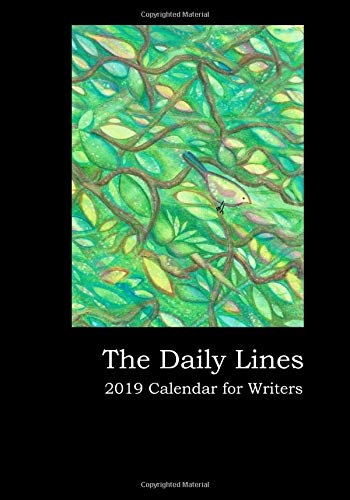
I have a new daily ledger, larger and far more inspiring than previous blank books I’ve used. The last day of 2018, rather than ruminate on what went on during the last year, I spent time writing lovely lists of what I want to focus on in 2019.
I’m not much for focus, but I am great at lists. I now have lists of art projects I want to do. Lists of musicians I want to host for house concerts. Lists of things I’d like to write, and as I prefaced in my tiny printing, to write with “flow first, data later.” Lists of ways I want to evolve, things I want to learn, pleasures I want to linger over.
But mostly I don’t want to make these lists into duty bound to-do lists. I want them to be about possibilities for eagerness and wonder.
And then I see I’ve already resolved to get past such lists. Back at the end of 2014 I posted a list of non-resolutions. I wrote,
Resolutions are traditionally meant to fix what we think is wrong with our lives, as if it’s necessary to hammer ourselves into someone society finds more attractive and more successful.
I say meh.
Seems to me the more significant challenges are to discover greater depths in ourselves and to cultivate more joy in our daily lives. Maybe we need to replace New Year’s resolutions with delight-enhancing non-resolutions.
I see I can’t argue with my non-resolutions from five years ago. I wanted more daydreaming, wanted to pursue whatever obscure things intrigued me, to relish sensory pleasure, to talk about my traumas as a stand-up comedian might, to adore every moment of the amazing mortal life I lead. (I’m enjoying at least eight of my 20 non-resolutions, so the trend is good. )
Still, I’m pretty excited about my new method of organization in a book that has daily writing prompts and pretty excited about the possibilities of this new year. PLEASE, let this be a year to bring in what has been in such short supply. Playfulness, awe, gratitude. The embrace of messy contradictions. A world where compassion and justice actually prevail. Arms open wide, I’m ready for you 2019.
I got my first summer job when I was 13 years old. My official title was “feeder.” This was my first exposure to time clocks and posted schedules. Also my first exposure to quite a bit more.
My grandparents had died a few years earlier after protracted illnesses, and like many others, I associated the sounds and smells of the unhealthy elderly with my own grief.
Before I started all I knew was that was supposed to wear a white uniform to work. On my first day I was informed my only task was to spoon-feed patients unable to feed themselves. The head nurse handed me a list of names with room numbers and told me I had to be done in two hours. “It doesn’t matter if you clock out late,” she said, “We aren’t paying you more than your allotted two hours.” Her swiftly delivered instructions were entirely lacking in useful information.
As I walked down the hall I discovered every resident there thought I was a nurse. Me, a girl who fell over her own feet. Me, a girl who could barely endure the sorrow of driving past a puppy chained to a tree, an unknown puppy whose imagined plight kept me upset for hours. Now I was surrounded by real plight.
Perilously frail people lined the hallway. Nearly every one of them sought my attention. They asked me to get them something urgent like a bedpan or a pill. They asked why they couldn’t go home or lie down or find something missing. They asked to simply to engage in a little conversation. I was overwhelmed.
One woman cried as she begged me to hold her hand. I smiled and nodded. As I listened to her cry I couldn’t help but steal glances at her hand’s bumpy joints and raised purple veins. I realized it had once been as strong and soft as mine. Time’s appetite made me feel as if the walls, floors, and ceiling were already collapsing. But I had a job to perform. Surely hungry people were waiting for me. She wouldn’t let go. Not knowing what else to do, I crouched by her wheelchair there in the hallway and smiled weakly as I carefully uncurled her fingers from mine.
Image courtesy of colinharbut.deviantart.com
The patients I was expected to feed lay hostage on narrow beds in identical rooms. Each person’s eyes stared, some directly at me and some at a place well beyond me. Trays of pureed food waited at each bedside. I had to figure out how to lower the metal bed rails in order to reach patients. I held out wavering spoonfuls of meat, potatoes, and vegetables pureed into of a nauseating mush of pale browns and olive greens. After the first patient gagged, I realized it was possible to raise a person’s head and shoulders using a crank at the foot of the bed. Like every other surface, those crank handles seemed to bristle with germs.
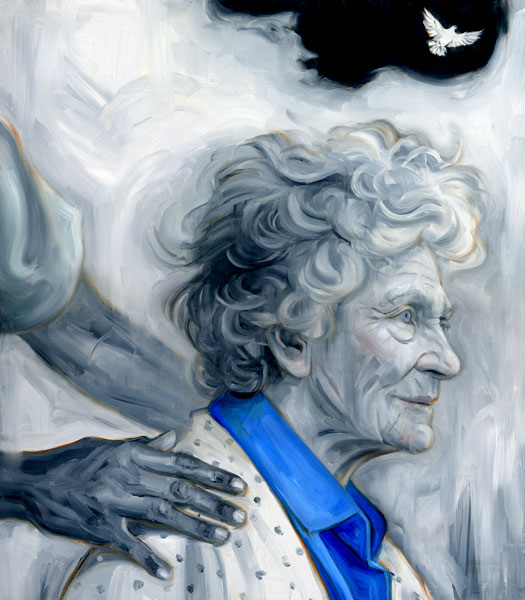
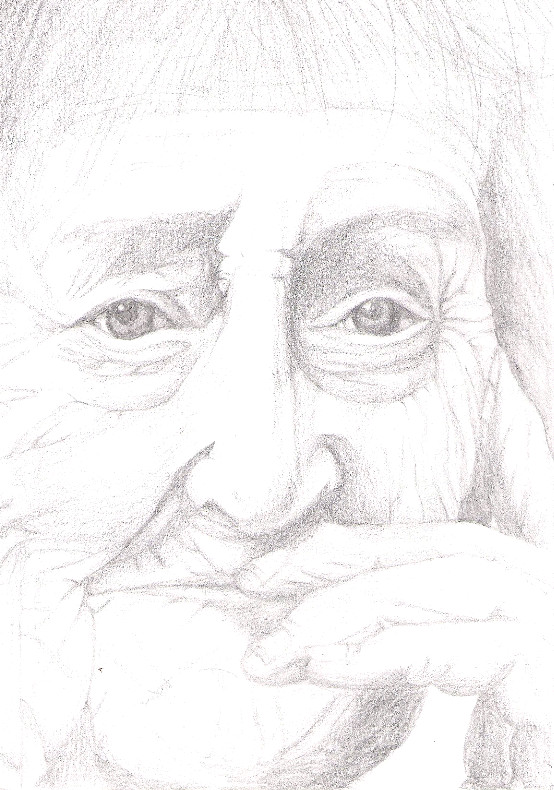
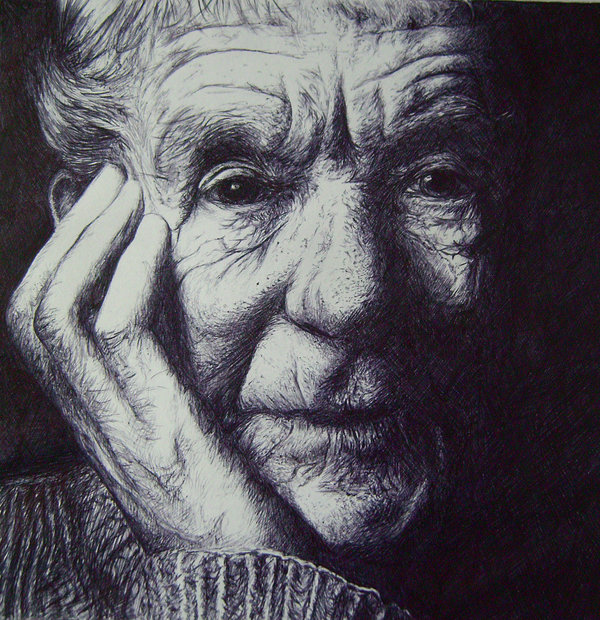
I was repulsed by almost everything there except for the people. I found their faces especially compelling. One of the few men on my list was hunched and fierce like a hawk, giving the impression he was ready to fly at any moment. One woman’s deep-set brown eyes were beseeching although she could say only a few garbled words. She looked at me as if she could see much more than those who walk and talk so casually could do. Another woman, whose powdery thin skin and soft clouds of white hair made her look angelic, rarely opened her eyes. When she did I felt strangely blessed. Her awake moments, although silent, felt like moments of expansive awareness.
Maybe it was a 13-year-old’s sense of drama, but I loved these people in a way I couldn’t explain. I wanted them to feel comfort and peace in the minutes we had together. I didn’t know how to accomplish that. But I started, from my first day, to ask them a question. I told them my name each time, that I was there with dinner, and then I asked them what they’d like me to know or asked what it was like to be them. And then I was quiet while I listened to whatever their silence could tell me. I knew most couldn’t hear me or answer me. But I was sure there was a reason I felt something different in the presence of each person. I felt it strongly.
Sometimes an aide would hustle into the room and sharply tell me to hurry. “No use talking to someone stone deaf” or “Ain’t nobody home in there.” But somehow these people, not fully in the stream of life and yet not departed, seemed imbued with more instead of less. They were my elders, far ahead of me in every way, and I hoped for a hint of what they knew. I wished to make my attention into an antennae to pick up whatever they might be sending.
Image courtesy of carts.deviantart.com
This is a way of communication I have continued to explore. We humans are connected by much more than language and social norms. We understand each other in far less overt ways. We entrain to one another’s heartbeats, synchronize our moods, react to the light each living cell emits, and pick up energy that some call intuition and others call morphic resonance.
It wasn’t anything I talked about then and even now it’s hard to explain. This is hardly a process unique to me, just something I am still trying learn. If I had to put it in steps, here they are.
1. Pay close attention to the other person. You may choose to look at them for as long as is comfortable, or simply to sit quietly nearby.
2. Be aware of your bodily sensations. Recognize them without making a mental effort to interpret them, at least right away. They are significant.
3. Be aware of seemingly irrelevant things that occur to you—song lyrics, flickering memories, a rush of emotion. Recognize these without making an effort to interpret them. These too are significant.
4. Slow down, staying with your awareness of the present moment. You are allowing your heart’s wisdom to enter your consciousness. Opening to understanding with your most vulnerable self, unguarded by the analytical mind, can be a way to receive such wisdom.
6. After following this procedure through several visits you may choose to send a request from the deepest part of yourself to the other person. Then pay attention to the sensations in your own body, to whatever images and emotions arise, and to the quiet sense of knowing that seems to come from nowhere. These are a response. You may have to work hard to refrain from inserting what you think into the situation. Stay centered.
7. Honor the other person. Choose to close with a prayer, a kiss, a few minutes to rub lotion on his or her hands, or some other direct contact.
Image courtesy of kdustyk.deviantart.com
My summer as a Feeder seemed endless. I wasn’t good at my job. I realize now how badly informed I was in my position. Not only was I not instructed to raise the head of the bed, I also wasn’t told how much to feed each person or how important it was to get them to drink. I remember feeding very little to the people who looked away, closing their mouths against nourishment. I didn’t know what else to do for people who were trapped in small sweltering rooms inside barely functioning bodies. I could hardly eat that summer either. The smell of the nursing home—old urine and cooked cabbage—seemed to reappear in my nostrils at odd moments, leaving me with no appetite.
After my work was finished each afternoon I spent time listening to the patients parked in wheelchairs and those walking along the hallway handrails. They told me of tragedies. Not the wars and poverty they’d experienced but more recent sorrows— children who didn’t visit, pets gone, choices taken away. They begged me to help them in dozens of ways, every one beyond my ability. They cried. Several women there were healthy in body and mind, but had lost their homes and possessions when they recovered from supposedly terminal conditions, leaving them in institutionalized for years. One man, Joe, told me every day that he was afraid of burning in hell. He insisted he was doomed for eternity unless he could confess to a priest. With the hubris of a non-Catholic, I thought I could easily fix the problem. I told him I’d get someone to come from the Catholic church a half mile away. When I called I was told no priest would come, as a layperson conducted all required nursing home ministry tasks. The next day I asked Joe if he would confess to a layperson. He shook his head with sorrow so profound I could barely breathe.
My job was over when school started. I promised myself I would go back to visit. The faces of the people I fed rose up in my idle moments and in my dreams, but I didn’t go back. The silences I held for them became my own silence.
In what ways can I pay more attention to my intuition, especially the promptings of my body, and how can I allow my inner wisdom to more fully emerge?
Where do I connect with people dissimilar from myself? How can I reach out to build a wider, more inclusive community? What can I do to better understand and be understood?
What do I want to remember long after the experience is over? (Maybe create a personal version Life List?)
What gets me in the flow, lets me lose track of time and feel energized by what I’m doing? Can I free up more flow time for myself and others?
What’s holding me back? How can I step into the future with greater hope and enthusiasm? How can we help each other step into the future with greater hope and enthusiasm?
You might meditate on these questions. Write with them. Draw or collage or paint with them. Walk with them. Talk them over with someone else. Discuss them at a gathering. Use them to prompt a letter to yourself. Let a single question capture your attention and let it accompany you into the new year. Or contemplate your own questions as you dance into the future we share on this lovely, complicated planet.
Thomas Merton wrote, “The things that we love tell us what we are.” I’ve seen this idea inspire beautiful remembrances twice recently, both times when family members gave eulogies consisting entirely of what the recently departed person loved.
One funeral was for a woman who raised her own children as well as two of her great-grandchildren. Her great-granddaughter stood in front of a crowded church and listed what her granny loved. Here’s part of that list.
Sweet tea without ice cubes in her insulated Browns cup.
Fancy hats for church.
Calling babies “Boo Boo.”
Family photos she organized in shoeboxes. These were stacked in the front hall closet so they could be saved if there was a fire.
Her friend Rita and her friend Marlene and her friend Louanne and everyone at her senior luncheon, her Bible study, and her card club.
Holding her hand up like a traffic cop when she didn’t want to hear another word.
Saying “give Gran a little sugar” when she wanted a hug and “that’s all you got?” when the hug didn’t meet her standards.
Telling people what buildings and businesses used to be on different streets “back in my day” whether the listener wanted to know or not.
Window boxes, because they made a house look happy.
Turning troubles over to God.
Waving to whoever walked down her street and asking the names of kids she didn’t know so she could greet them by name next time they walked by.
Her family, every single person, every single day.
I never had the honor of meeting my friend’s grandmother, but felt I’d gotten a better glimpse of her than any platitudes could have revealed, simply through what she loved.
The same week I read a remarkable book, The Wet Engine by Brian Doyle (thanks to a recommendation by my wise friend Kim Langley). In wonder-stretched words, Doyle writes about the human heart as something functional, yet transcendent. The whole book is marvelous, but having just attended a funeral, his passage about a eulogy he’d given for an 80-year-old friend lingered in my mind.
At the funeral I said a prayer in Gaelic, so that the language of his parents would wash over his body one last time, and then I held up my hands and talked about the way his huge strong bony gaunt gentle hands had cradled a football and hammered his brothers and tickled his sister and cupped his mother’s face and clapped his father on the shoulder and wielded a shovel and pumped saws through firs and cedars and skimmed over the supple sweet skin of his wife and cupped his children and worked concrete and stone and wood and plaster and paint and were plunged in sand and sliced through the ocean and cleaned and washed and folded and dried and cooked and prayed, and weren’t his hands the story of the man? Weren’t his hands always shaping the song of his heart?
Both eulogies remind me of Annie Dillard’s wise words, “How we spend our days is, of course, how we spend our lives.”
Although the world around us is constantly awe-inspiring, many of us learn from our earliest days to look at ourselves with judgment, to measure ourselves by where we’ve fallen short.
Maybe meaning is far more simple. Maybe it lies in what we do and what we love. Maybe we can let those two things be the same thing.
One of my favorite ways to start the day is an hour-long walk with my friend Christie. We meet up a little after sunrise. It is quiet then, just birdsong and our conversation. We may start out discussing work or family but tend to veer off in all sorts of directions, typically on to the Deeper Meaning of things. Okay, we talk about aging too. We’re both in our 50’s and more than a tad annoyed at various body systems that aren’t in great operating order. We usually manage to verbally rummage around until we find a jot of wisdom we can gain from these problems.
A few weeks ago on a misty morning, we were walking and talking full tilt when I suddenly spotted something ahead of us. I gasped. I flung my arm out to stop Christie. I suspect we came to such an abrupt halt that we both wavered like cartoon characters.
“A buck!” I whispered.
There, beyond a rise in the road, was a huge deer. Christie and I looked at it for what may have been a full minute. She saw its white chest. I saw its upright posture, unmoving and alert. We both wondered if it would even be safe to continue in that direction.
That is, until we simultaneously realized we were not looking at a magnificent animal. There was no deer in the road. There never had been a deer in the road. What we were looking at was a mailbox.
Yes, we laughed ourselves silly. One more step and the dark silhouette ahead easily resolved into the outline of a simple roadside mailbox. We laughed some more.
Normally I’d go on to write about some insight I gained from this experience. And I’d probably tuck in some piece of research to demonstrate how easily we humans believe what isn’t verified. But I’m not going to pretend for a moment that I gained even a molecule of wisdom. That’s because my most recent walk with Christie took place on a similarly foggy morning. We approached the same rise in the road. And just for a moment, I gasped aloud again when I spotted the same buck-impersonating-mailbox.
Clearly I have no insight to share. Just a warning if you might ever find yourself taking a walk with me. My delusions are so contagious that Christie gasped that second time too.
I said I didn’t want a microwave. It was against my whole foods ethos. Now it’s in regular use in my house. I said I didn’t want email. It was against my communicate-directly-with-people principles. I now can’t imagine living without it. I said I wasn’t a social media sort of person. Yup, I’m addicted.
A few years ago I was still holding out against smartphones. They were and still are expensive to use. I explained to my kids that back when their dad and I got married our phone bill was $18 a month. That did nothing but provide more evidence of my dinosaur-ness. Eventually I capitulated and got a smart phone. (I was assured my phone cost nothing with our teen/young adult kids pitching in for the cost of their phones.) Of course once I got sucked into the smartphone world I was unable to go back. And I don’t want to go back.
It’s heartening to see how pivotal mobile phones are in the developing world. Globally, almost 95 percent of households have access to a cell phone and it’s projected that 15 percent of families in Africa and the Middle East will soon have smartphones. They’re used for banking, business, texting, taking pictures, social networking, accessing information, and much more —- connecting and improving lives.
Smartphones are also advancing social justice because we’re able to document abuses of power. The Exxon/Mobil pipeline rupture in Mayflower, Arkansas spilling over 200, 000 gallons of tar sands crude oil (while media access was limited) would have been largely unknown if not shared by residents. Circumstances around the tragic deaths of Eric Garner, Walter Scott, Philandro Castile, and too many others at the hands of police would have been largely unknown other than by their official reports. Because we can share what we’re seeing, people the media usually ignores are able to more fully tell their own truths
But I haven’t adjusted to how smartphones affect person-to-person interactions. I belong to several groups which meet regularly. There’s always one person, sometimes more than one, who spends a large part of our meeting time looking at his/her phone.
I understand, really, In the years since I’ve had a smart phone I’ve been entangled in all sorts of this-message-could-be-important moments. A family member in the hospital, a publication going to press, a kid with car trouble. So I check. Of course I check. Sometimes I put the phone on my lap for a quick glimpse at messages as if I’m not staring at my crotch, Sometimes I just fess up that I have to look, at least when I’m with friends. But here’s the thing. My sense of urgency rarely, if ever, matches the number of times I’ve prioritized my phone.
One study shows the mere presence of a smartphone impairs our sense of connection to the people right next to us. There’s something about the phone itself, ready to shudder with a text or update, that diverts our attention.
I’m pretty sure I’ve gotten more and more distracted simply because there are so many more options for distraction. In an essay titled, “Is Google Making Us Stupid,” Nicholas Carr writes that being online has retrained his mind to “…take in information the way the Net distributes it: in a swiftly moving stream of particles. Once I was a scuba diver in the sea of words. Now I zip along the surface like a guy on a Jet Ski.”
For kids raised in the digital age, this may happen early on. A preliminary studysuggests that when parents of one-year-olds get distracted (typically by their phones) while playing with their babies, their babies have shorter attention spans. Babies with the shortest attention span were those whose parents were disengaged or distracted. (There’s a happy medium though, because babies with parents who were overly intrusive and directive in play also had a lower attention span. Sort of like the porridge that’s not too hot or cold, it’s the parents letting the baby take the lead who foster greater attentiveness.)
This is a problem because most of us, parents included, spend a lot of time looking at screens. One study watched parents interacting with young children at fast food restaurants. Researchers observed a total of 55 caregivers who were eating with one or more children. Forty used a mobile device at some point. Most got out their phones right away. Some used it intermittently, some stayed on for most of the meal. The study also found that parents on their smartphones are more likely to react harshly to children. (How preoccupied were the parents? None of them even noticed they were being watched by the study’s observers.)
Too much of this can disrupt connection, shut down conversation, and diminish attunement between parent and child. That’s not to say parents should spend every moment gazing in adoration at their kids, but it’s through engaged face-to-face connection with the primary people in their lives that kids learn to pick up on social cues, develop self-regulation, read other people’s emotions, build vocabulary, share ideas, and much more. And let’s not forget, children with a close sense of connection grow up feeling they are worthy.
Psychologist Catherine Steiner-Adair, author of The Big Disconnect, was so troubled by what she saw in her clinical practice that she decided to interview 1,000 kids between the ages of four and 18 to gauge their reactions to parents’ mobile phone use. Again and again she heard kids talk about their feelings with the same words: “sad, mad, angry, and lonely.” Kids know full well that people looking at their phones are not really with us.
It helps to remember that the choices we make over and over actually rewire our brains to prefer that choice. It’s the neurological equivalent of driving along the exact same tracks in a dirt road, making ruts deeper and deeper until it’s nearly impossible to steer a different course. It’s easy to create these mental ruts thanks to dopamine, our brain’s feel-good chemical. We’re wired to get a rush of dopamine from all sorts of everyday delights. A problem solved, a smile across the room, a kiss, a hug—zing goes the dopamine reward. That’s also true of a tweet—zing. A text—zing. Zing zing zing thanks to Instagram, channel flipping, online games. The previous hit of dopamine increases the need for another one. Pretty soon we’re addicted to the dopamine rush, driving our brains into an ever deeper rut. I try to remind myself of this when tempted to pull out my phone to use up a few minutes while waiting in line, instead rewiring my mind to look around me and live in the moment exactly where I am.
Our phones are here to stay. They put us in touch with people important to us and to ideas that capture us. They’re so new to the human experience that we’re just beginning to learn how to balance them with the lives we want to live. It doesn’t help to label our use as good or bad. It helps to step out into the field beyond, sharing what works for us.






 I have a new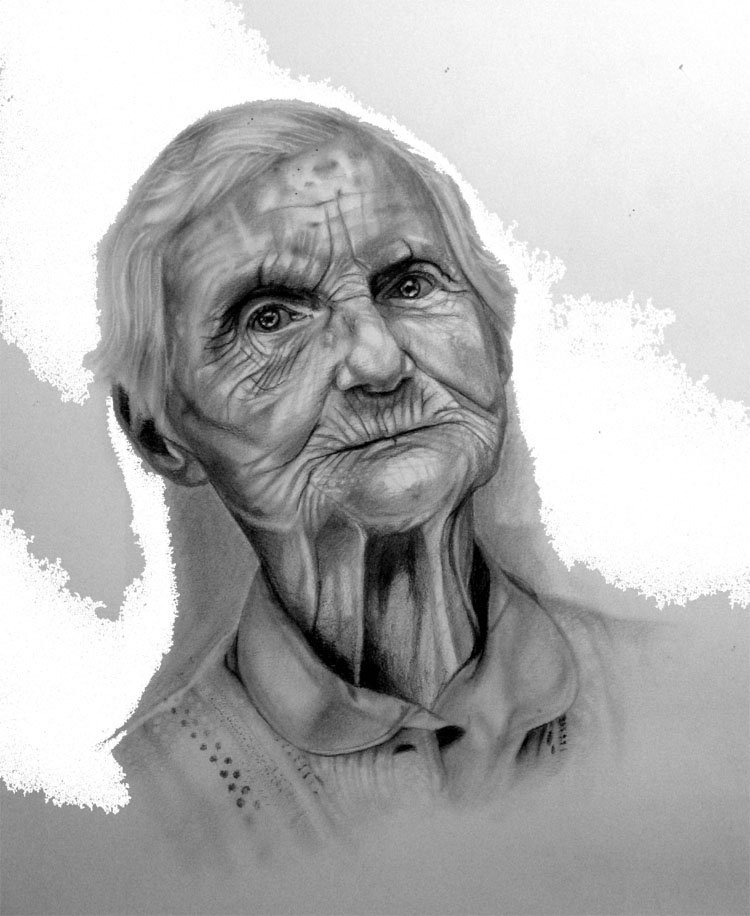

 Thomas Merton wrote, “The things that we love tell us what we are.” I’ve seen this idea inspire beautiful remembrances twice recently, both times when family members gave eulogies consisting entirely of what the recently departed person loved.

 Laura Grace Weldon