Six Ways Introduce Fine Arts Using The Happy Idiot Method

Artwork by Samuka

“You’re a frigging idiot.”

That’s what the guy behind us said. He spoke so loudly that two rows of concert-goers heard it. He didn’t even wait until the intermission to announce he considered us boorish.

I’m still not sure what upset him so much. My seven-year-old daughter had begged to attend what she called a “real performance” after enjoying a number of the Cleveland Orchestra’s Musical Rainbows concerts for young children. Nearly every day since she’d been three years old she put on recordings such as Beethoven Lives Upstairs,
Prokofiev – Peter and the Wolf,  Song of the Unicorn, and Mr. Bach Comes to Call.Sometimes she played,  sometimes she danced but mostly she drew pictures as she listened to compelling music woven around stories.

Going together to the concert was a rare night out for the two of us but I knew her three brothers weren’t as entranced by classical music. So that evening she and I dressed up, taking our eagerness to velvety seats not far from the stage. As the concert hall filled many people greeted us kindly. The musicians began to tune up and my daughter nodded at me. She knew this was her cue to be quiet until intermission.

Then the man behind us arrived. He squeezed past others, sat down and said aloud, “Oh no.” Because he exhaled so repeatedly and in such an exaggerated manner I wondered if he’d sat on something awful. Nope, the something awful was us.

Just as the conductor lifted his baton, the man behind us leaned forward as if to whisper, but his hissed words weren’t quiet at all. He said, “I paid good money for this seat. Your kid better not wreck it.” Then he muttered “idiot” under his breath. I turned around to look at him, more surprised than annoyed, but he wasn’t looking at me. He was glaring hatefully at my beautiful child.

The performance started and my daughter was enraptured. At times she looked over at me, squeezed my hand or leaned her head against me. Sometimes her hands floated just above her lap as if carried by sound. I paid close attention, hoping to hold the whole experience in my memory.

As the applause died down after the first piece the man behind us started sighing in exasperation. And he kept it up. I tried to notice what might have been bothering him. My daughter didn’t speak, didn’t hum along. She simply adored the music. But when the man started bumping my seat I turned my head to look at him. He was still glaring at my child.

For reasons of his own he was fed up. He looked at me and said loudly, “You’re a frigging idiot.”

The moment intermission began he stomped off and didn’t return. I hoped he’d find some peace despite possession by keep-children-out-of-concert-halls demons. But I’m no saint, I was pretty thrilled he left.

The woman next to my daughter assured us we weren’t the problem. An elderly gentleman at the end of our row, an orchestra patron for thirty years, said he hoped to see more children who loved classical music. By the time the musicians filed back some people had chatted with my daughter, happy to learn about her specific knowledge of that evening’s program. Others said, quite tactfully, that it was rare to see youngsters attend an evening concert.

A common perception is revealed by this experience. Fine arts and eager children don’t go together.

It’s not just one guy convinced the presence of a kid will ruin his evening. Most people set the arts aside as something special or worse, something for those who really know what they’re reading/seeing/hearing.

To me that’s the sort of separatist thinking that keeps fine arts in the underfunded, under appreciated realm where nearly extinct things go to die. But that’s how they’re introduced to most young people. Arts are imposed using the old “eat this spinach or you’ll be punished” method. Great way to inspire a hatred of spinach. And art. It isn’t woven into their lives and it doesn’t grab them (or at least many of them) in a way that’s personally meaningful. Instead fine arts are introduced in later grades. Students are lectured, assigned work, and graded. If they’re lucky they get extra doses of the arts doled out in guided museum visits and a class trip to see Shakespeare performed after weeks of preparation. The vitality is bled right out.

In Shakespeare’s time his plays were part of popular culture. People from all social classes crowded into the Globe Theatre where they enjoyed the bard’s social commentary, melodrama and comedy. Chances are they didn’t bother to analyze a thing. Chances are those plays did for them what art does when it means something to any of us, it illuminates.

I love the way young people discover and appreciate art when it isn’t imposed on them. These days my kids are older (teens and young adults). They enjoy fresh visual arts on YouTube, soaring new classical music scored for video games, and performances everywhere. Better yet, they aren’t passive. They connect and engage with it. During a recent discussion I overheard my kids relate the theme of a recent movie to Homer’s Odyssey, tie that to quotes from a Terry Pratchett book, then they were off parodying the theme using quotes from movies and song lyrics. Lightening fast, funny, and sharp. No curricula could possibly keep up.

My kids swam in the current of fine arts from the very beginning, as it flowed naturally with all the other influences in their lives.

Here’s the enjoyment-based, jump-right-in way we’ve always gotten comfy with fine arts in my family. (Caution, some may deem it idiotic.)

  1. Build in some fun. If you’re going to a concert in the park take along silent amusements for small people—a tiny stuffed animal that just might want to dance on its owner’s lap, drawing materials to capture impressions of the performers or the feeling of the music, a small treat that’s specific to concerts (consider bending that no lollipop rule). And if it isn’t much fun don’t stick around. Mosey off and wait until your children are older. And once your kids are older the experience is a greater pleasure for them if you let them invite a friend. We were often surprised to find that our 10th trip to a museum, where my kids clamored to see favorite sculptures and new exhibits, was the first trip for their friends.
  2. Make it an adventure. When you journey any distance to see a music performance, attend a play, or ramble through galleries make that stop one of several anticipated events.  Try to spot murals or other public art on the way. (When they were little my kids knew we’d arrived when they waved at the Guardians of Traffic pylons as we drove over the bridge to Cleveland.) Take a break in an ornate big city library, eat a packed lunch in a park, stroll through an open air market, pick up unusual snacks at an ethnic grocery, and let your child’s curiosity help guide the day’s events.  If part of the day incorporates a lot of sit down time (including the ride to and fro) be sure to balance that with movement, exploration, and sensory adventure.
  3. Tune it to the child’s level. Let preschoolers stroll as interest leads them through museums, especially art museums. You might decide to look for something specific on the way (one of my sons liked to spot animals, another son made it his quest to find anything airborne—birds, planes, angels, flying carpets).Make galleries a place of discovery. chat, ask questions, and when they lose interest it’s time to go.
  4. Make it an ordinary part of life. As with anything, it’s what you pay attention to that you magnify. Conversations about music, philosophy, or logic are just regular mealtime topics, brought up with the same casual interest as sports or the weather. Literary discussion with a four-year-old is easy. Simply talk about the picture book you’ve just read together. How could it have ended differently or gone on longer? Why do you think the main character acted that way or made that decision? Which character would you like to be in the story? Why?
  5. Start early. Listen to music as you nurse babies to sleep, imagining the wonderful association that child is making between sound and comfort (whether Bach or the blues). Hold up tiny ones to get a better look at paintings or sculpture. Indulge in sock puppet conversations with your toddlers. Dance and sing together unselfconsciously. Display your child’s artwork in frames and on shelves. Make CD’s available to kids for bedtime listening or quiet time, especially those by professional storytellers such as Odds Bodkins (who started my kids’ love of Homer’s Odyssey) and Jim Weiss. A great selection is available at Gentle Wind, Chinaberry, and your local library.
  6. Enjoy it the way you choose. Shakespeare’s work may spark fascination in a lavishly illustrated picture book such as Coville’s William Shakespeare’s The Tempest (Picture Yearling Book), an early chapter book such as Mayer’s The Tempest, or maybe a graphic novel like The Tempest The Graphic Novel (American English, Original Text). See The Tempest in any number of movies from productions done in 1928 to the newest, recasting Prospero as a woman. Check out how The Tempest has been interpreted by artists throughout the years. My kids appreciate a stage performance best after they know the story well, on their own terms, after bumping into it in books or movies or music. After seeing the play, one of my kids noted that it was written 400 years ago but names from The Tempest are still popular today— Miranda, Ariel, Antonio,Iris, Sebastian. That reminds me that the roots of what we care about today go much farther back than we imagine.

*

Find more suggestions in Free Range Learning.

*

*


*


Gathering Fifty Wise Homeschoolers in One Place

Award-winning Home Education Magazine has been published since 1984 by Mark and Helen Hegener and their third-generation homeschooling family. Each issue inspires, informs and invigorates readers.  Of all the magazines our family receives, this is one we keep. The copies are timeless. I share them, refer to them and treasure them.

A “best of” volume titled The Homeschool Reader: Series 1995-1999: Collected Articles from Home Education Magazine has just been released. It gathers nearly 50 homeschooling experts in one place.  I was honored to serve as editor for this project.
For a glimpse of what this very full little book offers, take a look at the bounty promised by the table of contents.

Starting Out

“Revelations of a Homeschooling Mom” by Carol Wanagel

“Keep It in the Family” by Catherine Daughton

“The Early Years Child’s Learning Assets” by Linda Dobson

“Leaving Public Education” by Ellen C. Bicheler

“Decompression – Frequently Asked Questions” by Cafi Cohen

“User Friendly Homeschooling Records” by Larry and Susan Kaseman

“Make Learning Fun” by Katie Fawcett

“A Word of Encouragement If Needed” by Rebekah Freedman

Family Life

“When Everything is a Mess…” by Katje Sabin-Newmiller

“And Baby Makes Trouble?” by Cindy Gaddis

“The Fabric of Home Education” by Kathy E. Waldorf

“My Kids Won’t Let Me Teach” by Ann Leadbetter

“On His Own Time” by Robin Ohlgren-Evans

“Anecdotes” by Helen Hegener

“All Play and No Work?” by Linda Kidwell

“Handmade, Homespun and Homeschooled” by Robin Ohlgren-Evans

Fathers’ Viewpoints

“The Forest Floor Theory of Love” by Odds Bodkin

“Notes From a Homeschooling Dad” by Jeff Kelety

“Homeschooling Fathers” by Gary Wyatt

“When Dad Homeschools: from Breadwinning to Baking” by Jim Dunn

Socialization

“Socialization” by Helen Hegener

Different Needs

“You’re Going To What?” by Melissa Wagner

“Personal Notes on ADD” by Janie Bowman

Math

“Learning to Love Math” by Alison Moore Smith

“Ten Counter-Intuitive Math Teaching Tips” by Cafi Cohen

Reading

“Learning to Read” by Sue Smith Heavenrich

“Learning to Read” by Christine Lozano

Reading Recovery Program” by Martine Palmiter

“A Family Book Club for Readers and Non-Readers” by Melinda Roth

Writing

“Getting It Down: Ways to Encourage a Reluctant Writer” by Sue Smith-

Heavenrich

“The Writing Club” by Jill Boone

“Haiku in my Pocket” by Sue Smith-Heavenrich

Art

“Art for the Younger Child” by Jan Brewington

“Art for the Older Child” by Jan Brewington

Physical Education

“Time For Family Baseball” by Earl Gary Stevens

Science

“Learning and Doing Science” by Cafi Cohen

“Learning High School Science Outside a Lab” by Sue Smith-Heavenrich

“Learning Nature’s Way: With Open Arms and Ample Interruptions” by

Gail McClelland Fenton

“Natural Nature Learning” by Deborah Taylor-Hough

History & Social Studies

“History At The Old Huff House” by Diane Huff

“Meet Travis The Traveling Bear” by Julie Hart

Philosophy & Ethics

“Philosophy and Learning at Home” by Jana Mohr Lone

“From Empathy to Altruism: Community Service” by Shalynn Ford

Discussing Unschooling and More Structured Homeschooling

“Unschooling” by Cheri Howard

“Keys to Successful Unschooling” by Susan Jordan

“What Do I Do?by Eileen Yoder

“Unschooling or School-At-Home?” by Chris Sims

“In Defense of Workbooks” by Joanne M. Billmers

First Day” by April Montgomery

Learning, Working and Heading Out on Their Own: Teen and Young Adults

“Ten Reasons to Homeschool Through High School” by Cafi Cohen

How to Help your Child Choose a Career” by Dr. Ferne Cherne

“Preparing for College: An Insider’s View” by Maggie Bryson

Travel Homeschooling

“A World of Learning” by Barbara Theisen

“A Year Abroad: A Family Learning Together” by Lantien Chu

Perspective

“Redefining Basics” by Earl Gary Stevens

“Reflections of a Homeschooled Homeschooler” by Rebecca Bangs Amos

“On Self-Doubt” by Lenita Harsch

“When Being a Mom Isn’t Enough” by Amy Hollingsworth

“I Told You Not to Do That” by Kathleen Creech

“Bad Homeschooling Days” by Selena Montoya

“My Kids Aren’t Geniuses!” by Sally Hunt

“Letting Go of the Reins” by Helen Hegener

“The Door’s Wide Open, Come Out and Play” by Kathleen Creech

If Jane Goodall Were An Alien

view of U.S. childhood, impeding humanity, how to better raise our children,

Imagine someone with Jane Goodall’s observational powers coming from outer space to observe us for a few days.

Let’s narrow this alien’s study down to something relatively simple. Our imaginary alien doesn’t have time to report on Earth’s progress toward peace, justice, and environmental balance. Our imaginary alien doesn’t even have time to cast her gaze across the whole planet.

Instead, the alien watches a few children in a typical American suburb before filing this report. (Alien disclaimer:  this report isn’t representational of all humans or all time spans on Earth.)

*

How to Impede Humanity

Each human is born with vast potential which unfolds in ways unique to that person’s talents and experiences. Human culture starts immediately to prevent that newborn’s potential from being fully realized.

The smallest humans are kept for much of their waking day in devices called car seats, booster seats, high chairs, playpens, cribs and strollers. Without sufficient and varied movement, learning can be impeded.

They are kept indoors most of the time. This limits their vision, their sense of connectedness, and their happiness.

Instead of foods harvested directly from nearby sources, the taste preferences of these small humans are developed on diets of lower nutrient but more expensive packaged substances. The health effects of these foods is beyond the scope of this report. It is, however, noted that transporting and purchasing these foods has an economic impact on the families of these small humans.

Humans are a people of story and image. As small humans get older they more readily absorb the lessons surrounding them from such objects as billboards, magazines, television, video games, and toys. These stories and images teach humans that success and happiness come through power, the right possessions, perfect appearance, rare skill, and of course, wealth. Small humans learn this quickly.

For example, appearance. They are repeatedly exposed to images of impossible bodies.  Note evidence—-a process called retouching applied to human Jennifer Anniston and to humans Twiggy and Keira Knightley.  As a result, five year old females judge their bodies harshly. By what humans call adolescence, 92 percent of females are unhappy with their bodily appearance.

Males also experience self-loathing due to impossible body images and behavior of heroes in movies, video games, and comics.

Movies, television, politics, and pundits teach small humans that the world is more violent than it is and games teach them that aggression is the best response.

The whole market-driven culture pushes materialistic values on young humans, which can leave them depressed, anxious and unhappy when they most need the powerful boost of optimism.

Even though young humans are perfectly suited to learn in ways matched to their abilities and interests without coercion, even though humanity has evolved throughout time by learning directly from wisdom-bearers in their own fields, these youth are put in institutions called schools. There each young human is judged by pre-determined standards. A large percentage don’t measure up.

It has been determined that the primary need of young humans is for self-expression, reasonably consistent guidance, and what on Earth is called love.

It is beyond the scope of this field report to discuss all the factors impeding humans but this observer notes that humanity flourishes due in large part to the overwhelming ability of human families to raise children using tools of kindness, laughter, and true affection. These behaviors are observed every moment, shared freely. This seems to be the essence of this species, so the report overall views humanity’s progress as positive.

(We prefer, however, that humans stick to their own planet. See the following video update.)

Image courtesy of Jean Kern’s flickr photostream 

How to Make Spiders Your Teachers, Trees Your Guides

amateur naturalist, spiders, mindfulness, nature, paying attention, field guide, children,

Pay close attention to anything. In it you’ll find wonders.

Consider the spider.

We appreciate spiders in our family. A large orb weaver lives just outside the front door. Every night when we take the dogs out before going to bed we pause to appreciate the intricate web she’s rewoven. It has a lot to teach us about strength, symmetry, impermanence and beauty.

I probably shouldn’t admit it, but a spider also hangs out on the ceiling of our pantry. Its continued presence means there are enough insects in the vicinity to keep it fed, which logically means there are that many fewer beasties getting into our potatoes, dry beans, oats and other stored foods. It has a lot to teach us about interdependence. I’m actually cheered to see it up there, a quiet brown chap making a life for itself high above my canning jars.

When we find the occasional spider elsewhere in the house we move it gently outdoors, unless it’s winter in which case we move it to a large potted plant. (I prefer spiders be relocated to basement plants but I suspect my family members free them in more conveniently located houseplants.)

No, our home isn’t teeming with creepy crawlies. It’s the same as your house. We’re all part of an ecosystem beyond our awareness. Our fellow Earth inhabitants proceed with lives of purpose everywhere around us whether we know it or not. As an example, beneficial bacteria reside in your gastrointestinal tract, contributing not only to digestion but overall health. These microbes outnumber the cells in your body 10 to 1, their types varying widely from person to person—perhaps accounting for major differences in weight, energy and wellness.

No amount of clean living sets us apart from the wider ecosystem we’re in.

It’s easier to think of nature as “out there” in the pristine wilderness. But we’re a part of nature every moment. It is air we breathe, plants we eat, birdsong we hear, weather slowing this morning’s traffic, our very cells dividing and yes, that high pitched whine signifying a mosquito is hovering nearby.

Tiny creeping and flying things around us are the creatures we’re most likely to encounter, reminders that we share our ecosystem with others. It’s even possible to notice them with pleasure.

My kids particularly appreciate spiders so we pay closer attention to these creatures. I don’t know much about arachnids, but what I learn through my offspring helps me to see more complexity, beauty and worth that I could have imagined.

I think it’s easier to pay attention when we keep the joyous curiosity we’re born with but it’s possible to recapture it, to expand it into awe at the wonders everywhere around us.

Consider making a nature study of a something nearby. A tree’s lifecycle through the seasons, the activity around a wasp nest in the eaves, the behavior of birds at a feeder. We’ve learned some techniques for the amateur naturalist from Lyanda Lynn Haupt’s wonderful book Crow Planet: Essential Wisdom from the Urban Wilderness.

  1. Learn names, proper as well as colloquial. Learn details about habitat, health and interdependence with other life forms.
  2. Have patience. The practice of seeing, really seeing, takes more than time. It also takes cultivated watchfulness.
  3. Respect wildness.
  4. Cultivate an obsession. Let questions unfold into more questions and whenever possible, find a community of fellow enthusiasts.
  5. Keep a notebook. Writing observations and making drawings are wonderfully wider ways to learn.
  6. Maintain a field trip mentality. Keep up your observations wherever you go.
  7. Make time for solitude.
  8. Stand in the lineage. Vital knowledge has been gained by a long history of people no different than you, people who let the world around them teach its wonders to those whose eyes are open.

*

*

*

Epidemic of Nearsightedness Has Startling Cause

myopia, nature-deficit disorder, can't see forest for the trees, children's myopia,

We don’t mourn the loss of what we don’t see.

In fourth grade I had no idea that the equations I copied from the board were incorrect, I only knew that for the first time my math papers were handed back with poor marks. And my grades kept getting worse. Although I wrote neatly and rechecked my work the teacher scrawled “careless mistakes” on my papers. I’d decided I was a mathematical dunce by the time my parents realized I needed glasses.

It was a revelation the first time I put on those glasses. I could see individual leaves on trees! I could see the faces of people passing by! I thought what I’d seen before, blurry images that resolved close up, was what everyone saw.

Myopia has risen to epidemic levels. In the U.S. young adults are much more likely to be nearsighted than people in their grandparent’s generation. In 1996, sixty percent of 23 to 34-year-olds were nearsighted compared to twenty percent of those over 65. Some Asian countries are seeing an even more alarming increase, up to 80 percent of young adults.

Reading too long, watching TV too close, even going without sunglasses have been blamed for causing poor eyesight. But the answer is much more interesting and has resounding significance for the way we raise our children.

The startling cause uncovered by researchers in three separate studies in the U.S., Australia and Singapore?

It has to do with the amount of time a child spends outdoors.

Yes, genetics still plays a part. Children born to nearsighted parents are more likely to need corrective lenses.

But researchers noticed an intriguing outlier. Children who devoted more hours per week to sports or outdoor play were less likely to develop myopia. Perhaps, it was speculated, they spent less time on close activities like reading. But further studies didn’t make that connection.

Perhaps, it was speculated, that sports and other activities made them more physically fit, somehow benefitting their eyes. But indoor sports were found to have no correlation with better eyesight, only those played outdoors. In fact, even completely inactive time outdoors was helpful in reducing the incidence of myopia.

Look at these numbers. A study of six to seven year olds (only of Chinese ethnicity to simplify comparisons) living in Singapore and Australia found marked differences based on outdoor exposure. Children in Singapore spent an average of 3 weekly hours outdoors, thirty percent developed myopia. Australian youngsters spent 14 hours outside each week, only three percent developed myopia.

How much more time do kids need outdoors? A new study of nearly 2,000 children finds that adding an extra 40 minutes a day for three years results in reduced rates of nearsightedness.

No one is sure exactly what factors lead to better eyesight when children spend time outside. It may be related to the greater intensity of light or the natural spectrum of light.  Perhaps it has something to do with nutrient absorption related to light, as in vitamin D metabolism.

Or it may relate to peripheral vision. Without the limitations of walls and windows our vision can range across open spaces. This corresponds to findings that urban children, whose vision is constrained by crowds and buildings, suffer a greater incidence of myopia than rural children.

Whatever the cause, today’s children spend more time indoors than their parent’s generation. Actually, about 90 percent of their young lives are spent shut away from the natural light and wider view of the outdoor world.

They can’t miss what they don’t see.

myopia, nearsightedness, nature deficit disorder, kids indoors, benefits of outdoor play, sports for kids, improve eyesight,

I Know You Are But What Am I?

Quick, describe your neighbor. The friend you just talked to on the phone. And one other person you know.

Tally up the negatives and positives. What do they indicate?

Actually, they say a lot more about you than the people you’re describing.

Sages, poets and mystics have told us all along that what we perceive is who we are. Research indicates they were right. Our perceptions of others actually say much more about us.

According to a study in the July 2010 issue of Journal of Personality and Social Psychology, the tendency to assess people in our social networks positively is linked to our own

enthusiasm,

happiness,

kind-heartedness,

politeness,

emotional stability,

life satisfaction,

even how much others like us.

A lead researcher says, “Seeing others positively reveals our own positive traits.”

The opposite is also true. The study found that how negatively we view others is linked to our own unhappiness as well as a greater likelihood of problems such as depression, narcissism and antisocial behavior.

That explains a lot.

Sure, any three people we know are likely to have annoying traits. Who doesn’t? But as Carl Jung said, “Everything that irritates us about others can lead us to an understanding of ourselves.”

Often people whose behavior is most challenging turn out, in retrospect, to bring out new strengths in us. They illuminate what we don’t want to see, make us more aware and teach us to be better people ourselves.  Perhaps we’re drawn to the sandpaper that smoothes us our own imperfections.

It isn’t reasonable to cast a wholly positive light on every person. But knowing that what we see is what we enhance in ourselves, that can make all the difference.

*

*


A human being is essentially

a spirit-eye.

Whatever you really see,

you are that.

Rumi

*

*

Art courtesy of SkyHorizon

Ancestors Live On in Our Lives

ancestry, emotional resonance, quantum physics, consciousness, celebration,

We all grow up with the weight of history on us. Our ancestors dwell in the attics of our brains as they do in the spiraling chains of knowledge hidden in every cell of our bodies.

~Shirley Abbott


When my east coast cousin visited she asked for updates on our extended family. I told her about surgery an uncle had on a drooping eyelid.  She was intrigued because her doctor recommended she have surgery for the same thing. He told her the problem came from stretching tender skin around her eyes as she put in contacts.  How could she have known the tendency ran in the family?  Later, as we looked through old photographs we saw the same prematurely sagging eyelids in a few of our ancestors.  Orphaned children, stoic immigrants who left loved ones behind, farmers who’d lost their land shared this feature—-they looked as if they’d stopped fully opening their eyes.  She and I considered the emotional resonance.  When she left she was still mulling over what it might mean in her own life.

There are many traits passed down in families.  We’re familiar with inheritance of physical features but it seems that other tendencies run through the generations as well.  In my family we’re prone to heart palpitations, stomach problems, anxiety.  We error on the side of caution.  We tend to make a living as teachers, clergy, academics, scientists.  This is true of the living and those long gone.  Such facts can be easily traced.

Some things are less easily traced but just as pronounced. When I was a new parent, the legacy from my ancestors rarely occurred to me. I saw my newborns as wondrously made beings with talents and personalities that would unfold in time. But as I held, nursed and rocked my babies I found in myself certain ingrained beliefs that surely had passed to me through bloodlines or through ways of thinking that were tight as hidden stitching.

My parents were warm and loving with their children, but they also fought against a palpable sense of worthlessness that pervaded their daily lives. As a child I sensed this in my mother’s suppressed anger and in my father’s hidden sorrow. My father whistled as he worked on chores and hugged us each night before bed, but his posture often showed sorrow. My mother read to us, played games with us and wore bright red lipstick but she was on guard against a hard world. When my children were babies my own feelings of worthlessness came out in me full force. By what means had these feelings become mine?

Then I remembered how fully I identified with my parents. My father’s frugality was learned during a difficult childhood and was passed on to help his own children learn economy. But his despair had an exaggerated effect on me, in fact I felt unworthy when given praise or gifts. I’d absorbed my father’s childhood pain.

My mother emphasized her sacrifices on behalf of others, hoping for enough appreciation to fill hungry gaps in her life. I learned to sacrifice as quietly as possible so that I would gather no perfunctory gratitude, absorbing her childhood misery without the redemption she sought.

These were not healthy adaptations, yet I’ve come to believe children take on the angst of those who are close to them as if by osmosis. My parents overcame the painful realities of their early years through hard work, faith and loving attention to people around them. But they also took on the stories of their own parents and grandparents. Of course we are strengthened by adversity, but when we repress the hidden impact of generational suffering it’s more difficult to heal and grow.  That I was raised in a happy home yet felt this pain makes this obvious.

It is one of the tasks of humanity to steer one’s tribe toward the light of greater understanding. The legacy of sorrow and suffering we take on can be overcome, and in some way the overcoming is not only a victory for ourselves but also a triumph for our ancestors. Each generation can heal not only itself but ancestral pain as well. Changing the energy around who we are affects who our loved ones have been. The more I learn about quantum physics the more I understand this to be possible.

It’s not all about overcoming difficulty. It’s also about living out the gifts passed on by those who have gone before us. Those abilities and interests we call our own, so often are legacies from those long gone. As my children get older I find something ‘clicks’ when I notice attributes in them that were present in their relatives. I see these traits all the time. My research-minded, highly technical grandfather would recognize these traits manifested abundantly in my sons. A grandmother and great-great uncle who taught Latin and the classics would find kinship with my daughter. I see myself in relatives who wrote, searched for spiritual meaning and had highly idealistic views of the future. Even in day-to-day preferences I see commonality. My own mother loved mysteries, scorned shoes in favor of sandals and adored rich desserts much like my daughter. My husband’s grandfather was always tinkering with equipment much like my sons.

When I come across things these relatives left behind I give them to my children. A ring, a book, a pair of binoculars once owned by long-gone relatives carry meaning, especially because I tell my children what they have in common with the people who used them. I also try to keep alive the stories of their relatives’ lives as best I can. In this way we retain the living memory of those who have gone before us. We learn from the pain, celebrate the gifts and hold their light aloft for future generations.

To be aware of this is to consciously carry forward what we choose from our rebellious, curious, compassionate, inventive, wild, spirited, loving, angry and freedom-seeking ancestors. That we exist at all is a testament to their endurance. Who we are is a choice, made in the context of many who lived so very fully before us.

*

*

*

In memory of my gentle father, who left us 7-26-2010. Too soon.

To Be, Or To Multitask

multitasking, busy, mindfulness, I.Q., cell phone, distraction,

I did it again. Deleted unwanted emails while on the phone, just trying to be efficient. No, I wasn’t reading the emails. Honestly I started out just deleting. But I had to scan quickly through a few to make sure I wasn’t missing something important. And next thing you know it was time to end the conversation. Sadly our entire interaction felt flat, as if we never really connected. I know why. I wasn’t really part of it. Chances are the very busy person I was talking to wasn’t either. Yay for multitasking.

This is the opposite of my true intentions. I keep writing about the importance of paying attention, connecting with nature, and centering our lives on what’s positive.

I try, I really do. But even when we live simply it takes real effort to avoid being rushed and over-obligated.

My mother was an early adherent of multitasking. She liked to say there was no sense doing just one thing at a time. I wasn’t too thrilled about it, however, when she spent requisite quality time playing a board game with me while heating her curler-bedecked head under the hairdryer (those 70’s models were as loud as leaf blowers) and talking on the phone. I was never sure how the person on the other end of the phone heard her over that hairdryer; that person may have been loudly washing dishes, making them both disconnected multitaskers.

It’s much easier to multitask now. In fact, we’re rewiring the way we operate minute-to-minute. We’ve tuned ourselves to distraction. That seems to make us uncomfortable with distraction’s opposite—-the powerfully real time spent in contemplation or conversation.

A recent study found that people asked to forgo media contact for 24 hours (no texting,email, Facebook, TV or cell phone use) actually suffered withdrawal symptoms. They experienced anxiety, cravings and preoccupations so overwhelming that their ability to function was impaired.

When we multitask it feels as if we’re accomplishing more. Who can’t stir a pot of noodles, listen to music and still maintain a decent conversation?  That’s easy.  Although we’re not really paying attention to that music or honoring the conversation with eye contact and full awareness (let alone mindfully attending to the noodles).

The major multitasking whammy comes from doing similar functions at the same time, as I was doing by talking on the phone and checking email. That’s because the brain doesn’t really do both task simultaneously, it goes back and forth, relentlessly switching attention.

All that switching causes our performance to plummet.  Studies show multitasking makes us up to 40 percent slower or causes the same lack of concentration as giving up a night’s sleep.

Perhaps even worse, we don’t recognize the stress it imposes.  As our brains focus and refocus, our bodies release cortisol and adrenaline.  We may work faster, but also feel more frustration and pressure, and the ability to concentrate becomes increasingly impaired.

Talking on the phone and reading email doesn’t just make me somewhat inattentive, studies find that multitasking can functionally lower one’s I.Q. by as much as ten points.  In my case, I suspect it’s quite a bit more.

So many parts of our lives seem to require multitasking. Parenthood certainly does, nearly every job does too. But I want to be, really be. Multitasking subtracts from that.

I’m taking a vow to walk away from any screen any time I pick up the phone. I’m vowing to spend less time using technology, more time in nature. Any vows you’ve taken? How’s that going for you?

*

*

*

“To live in the present moment is a miracle. The miracle is not to walk on water. The miracle is to walk on the green Earth in the present moment, to appreciate the peace and beauty that are available now.”

Thich Nhat Hanh Touching Peace: Practicing the Art of Mindful Living

*

*


photo courtesy of Jayo

Hay Now

soil health, grassfed, pastured, sustainability, family farm, ethical land use,

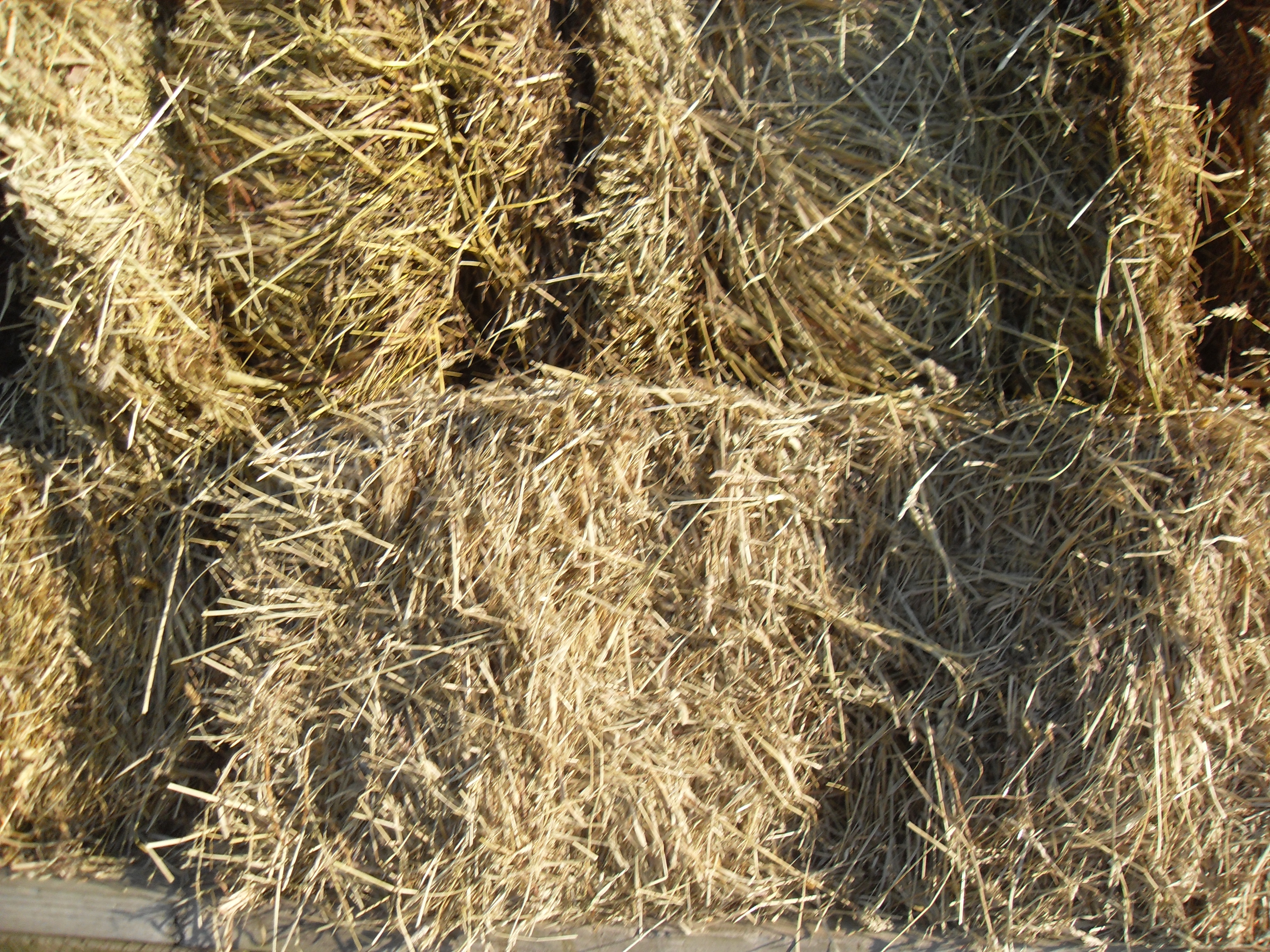
This summer’s first cutting of hay is stacked in the barn. Seventeen acres of grasses transformed into golden squares, storing sun and soil’s energy for the winter ahead.

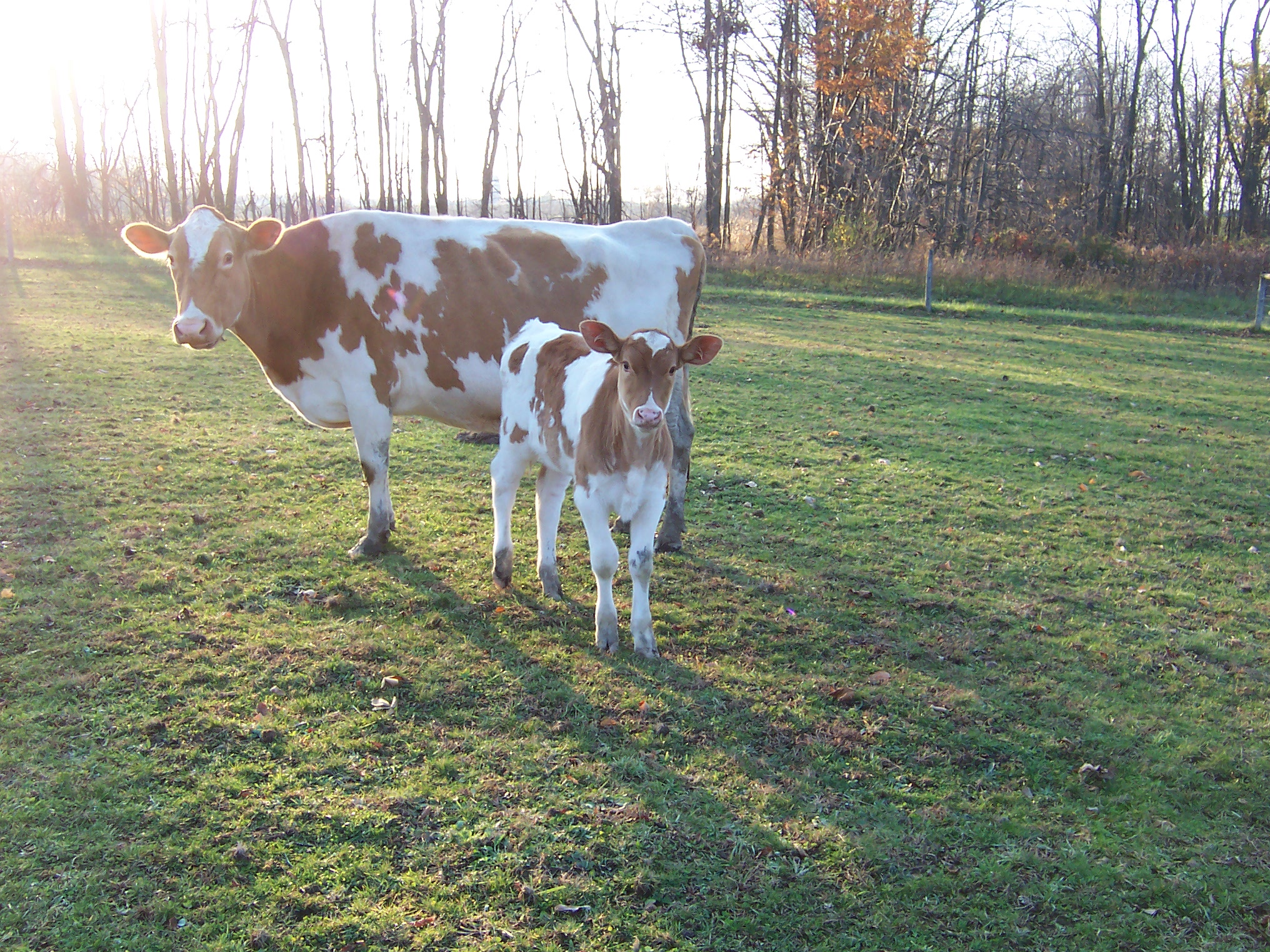
The unsung miracle of grass is a beautiful illustration of nature’s wisdom. Cows eating only grass flourish, turning these coarse blades, inedible to humans, into rich high-protein milk. This benefits the environment as well as the health of people drinking the milk of grassfed cows. To me, fields devoted to hay and pasture make sense while factory farms make no sense at all.

Hay isn’t a fancy crop.

It doesn’t bring much in the way of money. Some years we scramble because there’s too much rain and not enough time to harvest. But this perennial doesn’t just nourish a few of our favorite ruminants. It helps preserve topsoil.

The loss of soil to water erosion, called sedimentation, is measured in tons of soil loss per acre per year. This runaway soil clogs waterways, smothering aquatic life and affecting navigation. The denuded land left behind is robbed of fertility.

The importance of topsoil can’t be underestimated. According to Out of the Earth: Civilization and the Life of the Soil, the decline and fall of civilizations are based on soil fertility.

Nearly everything we eat relies on healthy soil, yet it takes 500 years for nature to produce an inch of topsoil. Current farming techniques increase soil erosion 10 to 40 percent greater than the rate nature can replace it. We’re running out of the very dirt our lives depend on.

The living skin of our Earth is thin, wildly complex and more interconnected than we might imagine. That’s why, when I look out over the woodlands on our land, the pastures our cattle graze on, the hayfields—I am reassured. The continuous ground cover of pasture or forest protects the soil. Perennial hay fields, pastures and woodlands allow organic matter to build naturally.

I have just a beginning grasp of the vital interplay between amoebae, fungi, bacteria, arthropods and plant roots in soil, enough to sense those bags of “sterilized potting mix” found in every big box store are a mockery of the lessons to be found in nature. I do grasp that we survive, in large part, through the life-giving nutrients of what has died. Organic material of all kinds decays into humus and that makes soil a story of resurrection, writ large.

*

*

books worth reading

Dirt: The Ecstatic Skin of the Earth by William Bryant Logan

Life in the Soil: A Guide for Naturalists and Gardeners by James B. Nardi

Teaming with Microbes: The Organic Gardener’s Guide to the Soil Food Web, Revised Edition by Jeff Lowenfels and Wayne Lewis

The Secret Life of Plants by Christopher Bird and Peter Tompkins
Me, a Radical Homemaker?

radical homemaker, frugal, simplicity, homeschool, farm, peace,

Okay, radical sounds hip. I can live with that. But homemaker?  The last few decades that word has been a synonym for drudgery. Besides, ask my kids who really does the dusting and vacuuming around here. They do.

What’s radical homemaking? Shannon Hayes wrote a wonderful book called Radical Homemakers: Reclaiming Domesticity from a Consumer CultureYes, I thought when I heard the term. Naming something gives it momentum. And the lifestyles of people defining for themselves what The Good Life is all about haven’t gone unnoticed so much as undefined. It doesn’t seem radical in the slightest to many of us who try to live simply, it just makes sense.

Thankfully Shannon pulls the pieces together. As she writes,

…each of us has a calling or right livelihood that enables us to serve the common good, and in finding this calling, we will be most happy. Few, if any spiritual teachings call us to seek the accumulation of money, stuff, power, or other purely selfish interests.  Further, in a life-serving economy, we individually accept responsibility for creating our own joys and pleasures.  We do not rely upon corporate America to sell us these things.  We take personal and collective responsibility for supplying many of our needs.  In taking these steps, we discover that true economic assets, unlike money, are intangible.

There’s nothing new about this. Most of our foremothers and fathers upheld frugality and scorned excess. Throughout history people have been growing and preserving food, making gifts, providing hands-on care for the young and old, repurposing materials, and finding meaning in pleasures that aren’t necessarily linked to spending money.

This sort of lifestyle simmers along quietly and purposefully while consumer culture runs at a full boil, generating heat over every new trend and news flash.

Somehow, in a world bristling with radical homemakers, I’ve been outed as one of the representatives. “A poster child,” claimed the journalist who trekked out to our little farm with her notebook in hand last week. I’m more comfortable interviewing others rather than being interviewed, but I put my trust in her expertise. I thought it wouldn’t be too difficult to talk about trying to place our interests beyond the shallow values of appearance as I sat there wearing a thrift shop shirt that had to be 20 years old. Well, until the photographer showed up. Judging by the anxiety that generated I’m still the product of an appearance-indicates-worth society. The irony wasn’t lost on me. I gave up all hope of looking 20 pounds lighter or remotely put together and kept talking.

And laughing. Her questions struck me funny. In fact, she came right out and asked, “Don’t people treat you as if you’re odd?”

Maybe they do but I always thought that’s because I’m sarcastic and tend to sing songs with made-up lyrics.

I told her about homeschooling and the intrinsic value of meaningful learning. I told her about our local food co-op, about making homemade tinctures and about using things until they wear out.

I tried to explain why I preferred to make sandwich buns over the weekend for a party here rather than buy them. “Was it part of your philosophy?” she asked. “Was it cheaper?”

I haven’t priced such buns at a store, I told her. I ground the grain, used eggs from our chickens, milk from our cow, and honey from our bees, then kneaded the dough and baked them that morning. It cost almost nothing in ingredients and very little in time. Yet it had more to do with deeper choices. But don’t write about the buns, I said, it makes me sound really annoying.

I’m sure I’m annoying (just ask my kids) but also I’m pretty relaxed. I’m comfortable with weeds in the garden (nature doesn’t like bare dirt anyway) and stacks of reading material everywhere. I make homemade pizza all the time but that doesn’t mean we don’t occasionally succumb to the greasy allure of what my kids call “real pizza” from a little carry out nearby. We don’t have money for things like vacations or video games, we do have time to sit around talking long after dinner is over.

When I was fresh out of college I planned to save the world. I’m beginning to see it’s possible to do so, simply by saving what’s important right in front of us.

*

Postscript: Thankfully I’m a small part of the finished article.  After the other radical homemaker piece I’ve been interviewed for in Ladies Home Journal, I’m saying no to future interviews. Why? Because it’s titled “Extreme Housewives.” (The promo reads, “A small but passionate group of women across America have embraced the kind of back-to-basics homemaking our grandmothers did-from scratch, by hand, grown in the backyard. And they’ve never been happier.” Oy vey.