What the French Revolution Can Teach Us About Parenting

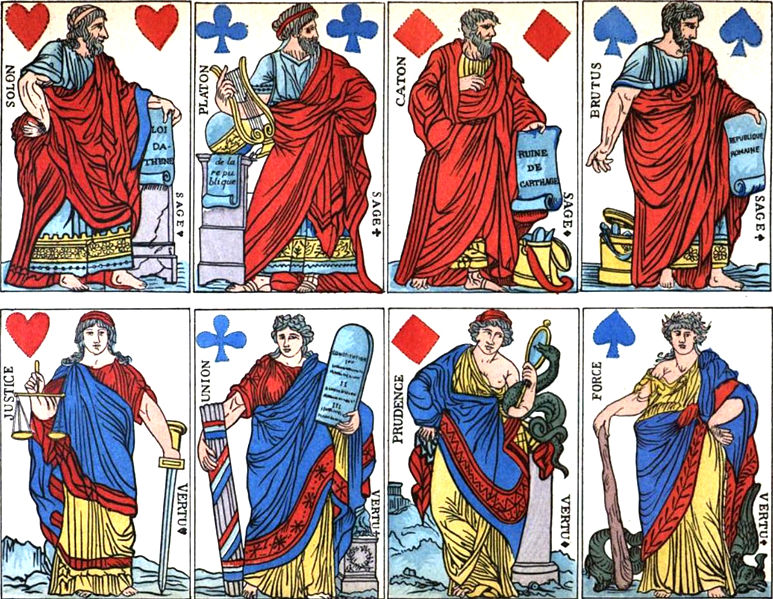
A Deck of Cards Dating Back to the French Revolution Where Kings Have Been Replaced With Wise Men (Solo, Plato, Cato, & Brutus), and Queens With Virtues (Justice, Union, Prudence, & Force) La Bibliofilia

The parent I would become was changed by history. Or at least by revelations history can offer.

At 18, I signed up for a college history course simply to fulfill a requirement.  Although I’ve forgotten the professor’s name, I’ll never forget the man. He was oddly proportioned with a short round body that didn’t match his oversized head. His florid face, full lips, and bulging eyes gave the impression that he was continually strangled by an unseen hand. Stadium seating in our introductory history class of nearly 100 students made him look even more foreshortened as he stood below us at the front of the room. He used no visual aids, no videos, only an occasional map that he drew himself on the board. He spoke without notes about a subject that impassioned him. As he lectured his voice started to quaver, his hands trembled in front of him, and he leaned forward looking at us with red-rimmed eyes. He was overwhelmed with the task. His lessons had to sink in.

That lesson was the same no matter what era we studied. He taught us to look at all of history using one pivotal question.

What happens when people are deprived of (or otherwise separated from) the consequences of their words and actions?

We studied the elite in various societies throughout history who were insulated from the consequences of their actions, even if the working poor around them suffered more and more from decisions made by the elite. We analyzed the larger impact this had on the culture over time. Then we narrowed it down. We looked at rulers who were typically brought up with all the advantages of privilege. Those who rarely experienced the consequences of their actions from childhood on tended to make decisions that resulted in tragedy, sometimes immediately, sometimes in ways that resounded for generations.

Any time we stumble on truth we see how it interconnects with larger truths. That was the case with my history professor’s question. I saw that theme, consequences, everywhere I looked—- in literature, in politics, and in the news being reported each day. I saw it in relationships around me. And on weekends, while volunteering with a project that offered services to teen addicts, I saw it there too.

So I vowed to use what I’d gained from my history professor when I became a parent. When my toddlers made a mess, even spilling a drink, I offered them a rag and some assistance cleaning it up but I didn’t do it for them. That work was their own. As they got older I expected them to give me three reasons when they wanted to do something outside our normal rules. They learned impeccable logic in the service of their own interests. And when they were teens I didn’t keep them from taking reasonable risks, knowing that they had developed a fine awareness of their own abilities.  I certainly suffer at times from parenting this way.  My kids expect ME to deal with the consequences of my own words and actions.  I can’t rant about an idiot driver on the road without one of my kids telling me it’s an opportunity to practice inner peace. That’s what happens when my words come back to bite me.

Too many kids are deprived of the consequences on a small scale. When parents help a child on and off playground equipment for fear of falls, the child is taught she can’t trust her own body. If a parent takes over building a model when the child becomes frustrated, the child is taught he is incompetent. If a parent refuses to let a child take the blame after hurting another child, she is being taught to avoid responsibility (and empathy). These aren’t the messages parents intend to convey. They’re hoping to make things safer, easier, and happier for their children. But frustration, embarrassment, even a few bruises are important parts of the maturing process. Attempts to make childhood frictionless are misguided. Worse, the consequences of words and actions on a larger scale may be much harder for these children to understand. At least that’s what history tells us.

Maria Theresa of Savoy, comtesse d’Artois

10 Reasons to Try This Natural Cure-All

positive thinking, health effects of smiling, good attitude,

I was brought up to be so damn polite that I smiled right through humiliation, pain, even crimes committed against my person. Not healthy. I renounced the whole Good Girl burden long ago. Getting past it isn’t speedy process, although I do aspire to be a badly behaved old lady some day. (My kids insist I’m veering off the mark, heading directly toward strange.)

I may be seeking greater authenticity but I still recognize smile power. I’ve smiled, by choice, despite problems too awful to send to your screen. I’m smiling right now as my family moves on from recent difficulties. The heavy sorrow of losing loved ones is rounding into grateful memory, our falling down house is getting fixed, and my husband has gotten a job after two and a half years of unemployment. Smiling got us through. Plus plenty of snuggling and silliness and resolutely looking at the Big Picture.

Nobody likes to be told to cheer up and put on a happy face. But there’s a lot to be said for the curative powers of a big toothy smile.

1. A genuine smile is easy to identify. Kids as young as six can tell when you’re faking it. A real smile is known as a Duchenne smile, named after 19th century French doctor Guillaume Duchenne. He noted that such smiles engage specific muscles around the mouth as well as those around the eyes. Non-Duchenne smiles (fake smiles) don’t indicate true emotion since people have little control over the outer portion of their eye muscles. It’s not easy to come up with a genuine smile when you don’t feel like it. But the humor found in surprise or the laughter of others can jolt us right into real smiles.

2. When we witness a fleeting smile, even one so rapid we don’t consciously recognize it, our zygomatic major muscles (used in smiling) move in response. We’re biologically primed to mimic the facial expressions we see.

smiling and health, smiling and mental health, smiling and outlook,

3. Mirror neurons deep in our brains activate when we watch someone else, just as if we are doing or experiencing what they are. This mirroring process surely helps us learn as well as empathize. It also indicates that the examples around us are phenomenally powerful. We can’t help but mirror the emotions of people who are angry, cynical, or miserable any more than we can pick up on and experience for ourselves the emotions of those who are enthusiastic, compassionate, or happy.  As Marco Iacoboni writes in Mirroring People: The Science of Empathy and How We Connect with Others,  “Mirror neurons are brain cells that seem specialized in understanding our existential condition and our involvement with others. They show that we are not alone, but are biologically wired and evolutionarily designed to be deeply interconnected with one another.”

4. We’re not only wired to respond and take on the moods of others, it’s nearly impossible to keep a straight face around people who are grinning. Acts of kindness are contagious too.

smiling and positive outlook, good mood, why smile,

5. Another person’s smiling face doesn’t just affect our feelings. Seeing a smiling face, even in a photo, has a powerful cognitive impact. It cues us to higher level, more abstract thinking.

6. According to neurologists, the regular practice of smiling strengthens the brain’s ability to maintain a positive outlook, actually interrupting mood disorders. Smiling also activates brain circuitry that boosts empathy and promotes social interaction.

real smile vs. fake smile, genuine smile, positive outlook, 7. A smile makes a great first impression. Smiling makes us seem more attractive to others. That’s in part because the smile muscles lift our faces but also because people are drawn to positive expressions.

8. People prefer women without make-up who smile over the same women in make-up who don’t smile.

shift into positive mode, smile and change, 9. When we smile, our bodies release endorphins, the natural “all is good” neurotransmitter.

10. A genuine smile is linked to happy marriages and life satisfaction. It’s also linked to a much longer life —seven years in one study. (Even a fake smile gives a boost of five years over non-smilers.)

smile for a long life, smiling and health,

Pro-smiling evidence doesn’t mean any of us should suppress our true feelings. But I’ve discovered a smile and a positive outlook eases those unavoidable miseries life tosses my way. Besides, it’ll confuse people as I advance my plot to become a badly behaved old lady.


The Youngest Have The Oldest Way Of Knowing

children as deep ecologists, seeing people as animals, older ways of wisdom, living the Gaia theory,

itallant.deviantart.com

I had a translation problem when I was very small. Like any other reasonable preschooler, I knew full well that people had names just as I had a name. But I saw people’s faces as having their own animal faces too. I wasn’t sure why everyone else couldn’t see this. Many of the animals I saw flickering right under the surface of outward human appearances were creatures I didn’t recognize. Some kind of deer or antelope on one face, an unusual hound on another. This was fascinating and distracting. It also meant I had to translate in my head from what I saw as a person’s animal identity into their given name. I never slipped, never called my kindergarten teacher a hawk or referred to the boy down the street as a dolphin. I was polite enough to realize this would have been rude, although I couldn’t understand why animals were so much lower on the scale of importance.  I grew out of it by the time I was five or six.

I’m probably making my childhood self sound like a complete ninny. (And I’m still a ninny in other ways.) But I still remember “seeing” animal identities in people.

Young children have a very creative sense of reality. That’s exactly the way they’re supposed to be. Adults may teach children that the night’s dreams have nothing to do with the next day, that the wind doesn’t have a voice, that a beloved toy can’t feel their adoration. Still, children know what they experience. They sense potent meaning in everything.

We forget that human-centered reasoning is a cultural thing. A recent study compared children who live in direct contact with nature to urban children who have somewhat limited contact with the natural world. Researchers found striking differences in outlook. Children who are raised close to nature, and who are sensitive to certain beliefs, are more likely to call animal communication talking and to see water as alive. They seem to grasp what ecophilosopher Arne Naess termed deep ecology. The deep ecology worldview recognizes the intrinsic value of all beings and the complex interdependence of all natural systems.

This affirms what our species long understood and only recently forgot. We are inextricably connected to the natural world for sustenance, meaning, learning, and perhaps most intimately, for our sense of self. Looking at the whole swath of human existence, we are barely out of the hunter-gatherer era. Each of us is tuned to nature’s wavelength. Yet we conduct our lives as if we are separate. The youngest children among us may sense how wrong this is.

In one of the last books by ecologist Paul Shepard, Nature and Madness, he speculates that what ails civilization is a kind of arrested development. From birth each of us is cued toward greater wholeness through deep interconnection with one another and the natural world.  We require elders who understand this and guide us. But these days, Shepard writes, we’re not likely to grow to maturity in this way.
“Adults, weaned to the wrong music, cut short from their own potential, are not the best of mentors. The problem may be more difficult to understand than to solve. Beneath the veneer of civilization, in the trite phrase of humanism, lies not the barbarian and the animal, but the human in us who knows what is right and necessary for becoming fully human: birth in gentle surroundings, a rich nonhuman environment, juvenile tasks with simple tools, the discipline of natural history, play at being animals, the expressive arts of receiving food as a spiritual gift rather than as a product, the cultivation of metaphorical significance of natural phenomena of all kinds, clan membership and small-group life, and the profound claims and liberation of ritual initiation and subsequent stages of adult mentorship. There is a secret person undamaged in each of us, aware of the validity of these conditions, sensitive to their right moments in our lives.”

I think we can still raise children this way, pushing back against our rushed and fragmented world. More and more people seek natural birth, attachment parenting, child rearing balanced between freedom and responsibility, and free range learning. Nature-based living isn’t out of the equation, no matter where we live. It is restorative to spend time in wild places, but it takes only a shift in awareness to to immerse ourselves in nature wherever we are. As adults, we model for children how to treat all life with respect. In turn, children model for us many ways to find awe, metaphor, magic, and oneness in what we long ago learned to disregard. That is, if we pay attention.

Some might dispute that paying attention to such wonderment remains relevant in today’s world. Some may want to know what’s to be gained by dreams, imagination, watchfulness, and nature-centered thinking. Acknowledging the primacy of these wonders doesn’t point away from the path of achieving one’s potential. If we need an individual example, look to Lilian “Na’ia Alessa, a cell biologist who advances science by incorporating Western and traditional ways of knowing in her work.

Or wider examples. When psychologist Abraham Maslow developed his well-known hierarchy of needs he placed self-actualizers at the pinnacle. He defined such people as reaching “the full use and exploitation of talents, capacities, potentialities, etc.” Among those Maslow considered to be self-actualizers:  Spinoza, Goethe, Eleanor Roosevelt, Albert Schweitzer, Ralph Waldo Emerson and Joseph Haydn. These people didn’t “unlearn” older ways of knowing. In fact, the characteristics of self-actualizers sound quite a bit like children who aren’t limited to human-centered reasoning. Self-actualizers are spontaneous, they see things in fresh and often unconventional ways, they are interested in the unknown, they aren’t limited by other’s perceptions, they transcend cultural rigidity, and they feel compassion for all life. Some self-actualizers have what Maslow called “peak experiences.” A defining characteristic of a peak experience is a sense of unity with everything and everyone, a complete oneness. This too sounds like the children we’ve been discussing, those who haven’t yet been taught to stop seeing vibrant meaning around them.

So much is to be gained by a wider way of knowing. Let’s not unlearn all that we knew as children. Let’s see everything for what it can teach us. As poet Joy Harjo tells us, “Remember the plants, trees, animal life who all have their tribes, their families, their histories, too. Talk to them, listen to them. They are alive poems.”


Making Heroism Happen

Notice similar statements when people who have committed heroic acts are interviewed? They tend to say, “I wasn’t trying to be a hero, I was just doing what anyone would have done.”  (This from a man who climbed into a burning car to save a woman.)

we can all be heroes

Hero: Wesley Autrey

Or  “I don’t feel like I did something spectacular” (this from a man who leaped in front of an oncoming subway train to pull an unconscious man from the tracks.)

Hero: Jencie Fagan

Or “I think anybody else would have done it.” (This from a teacher who stopped a school shooter by embracing him in a bear hug.)

The same rationale is heard from people who rise to heroic acts despite living with difficult circumstances of their own.

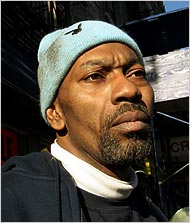
A homeless man who tried to tackle robbers during an attempted hold-up of a Brinks truck and memorized the license plate of their get-away car said, “You just gotta look out for what’s happening with people around you other than yourself.”

A teen with an extensive criminal record stole a bus to drive victims of Hurricane Katrina to safety. He explained, “The police was leaving people behind. I had to pick up people on the bus. The police didn’t want to do nothing. We stepped up and did what we had to  do.”

And a homeless man lost his few possessions after jumping into an icy river to rescue a drowning woman. He said “I just did what needed to be done because someone needed my help.”

what it takes to be a hero

Hero: Adan Abobaker

In their own words heroes continue to tell us that what they have done is not at all extraordinary. If we hold heroes apart from us as superhuman and describe their actions as unfathomably brave, we deny that all of us have the capacity to be heroes if the need arises.

We can develop that capacity. When I lead non-violence workshops we start by working on issues of empathy (identifying with the emotions, ideas, and attitudes of others) as well as empowerment to act on that empathy. Both are necessary to break through what’s been called the “bystander effect.” This was first identified by Ervin Staub, who survived under Nazi rule due to the kindness of others. Dr. Staub explains in  The Roots of Evil: The Origins of Genocide and Other Group Violence that it takes the willingness of those who are uninvolved (bystanders) to step in, advocating for the victim or victims, in order to halt the escalation of violence and to uphold the common good. Without such bystanders, atrocities such as war and genocide are “permitted” to happen.

The bystander effect is active on a smaller scale as well. Studies show if an emergency unfolds before a group of people they’re less likely to take action, basing their decisions on the behavior of those around them. If that same emergency presents itself in front of one person they are more likely to take action. We’ve all heard of these situations precisely because they’re so heinous.

What’s the difference between those who ignore suffering and those who are moved to alleviate suffering? People who have imperiled their lives for months or years to help others can give us some insight. Svetlana Broz, author of Good People in an Evil Time: Portraits of Complicity and Resistance in the Bosnian War, says it requires at least three attributes.
1. The courage to think for oneself, resisting conformity even at the risk of one’s own safety.

2. A moral core that inspires action.

3. The capacity to empathize with those who are dissimilar.

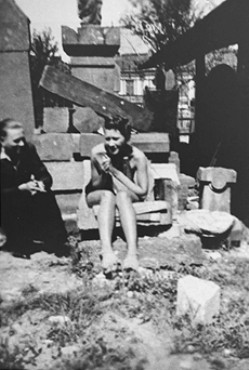
Hero: Zofia Baniecka, rescued 50 Jews during Holocaust

Eva Fogelman, author of Conscience and Courage: Rescuers of Jews During the Holocaust, writes that heroic acts tend to come from a deep sense of common humanity. The roots of this behavior may stem from early upbringing. Fogelman notes that many Holocaust rescuers themselves suffered and were sensitized to the suffering of others. They also tended to have been raised in loving families where self-worth was fostered and reason rather than punishment was used as discipline.

Social scientists still know quite a bit more about aberrant behavior than why people choose to do good. That’s changing according to Philip Zimbardo, author of The Lucifer Effect: Understanding How Good People Turn Evil.  Zimbardo conducted the now infamous 1971 Stanford Prison Experiment (check it out on this slide show) which demonstrated that psychologically normal people will instigate and take part in atrocities. Now Zimbardo is devoting himself to bringing forth the brighter side. He’s started an organization called  Heroic Imagination Project which aims to teach the rudiments of heroism.
Currently a pilot project, it consists of four main educational components taught over four weeks.

  1. Students initially learn about us versus them attitudes, unthinking obedience to authority, and other human tendencies which unwittingly allow cruelties to happen.
  2. Next they work on building empathic responses through listening, paying attention, and “walking a mile in the other guy’s shoes.”
  3. Then they study heroic stories, seeking role models and discovering that compassionate action does inspire.
  4. And finally they practice heroic behavior on a daily basis by translating their good intentions into action, no matter how small.

We don’t have to wait for a course. The steps taught by the Heroic Imagination Project are the building blocks of human decency, things we should teach our children every day and should continue to develop in ourselves.

We’re captivated by real heroes in the news and imaginary heroes in the movies because they call out the best in us. Such stories ask us to live up to our values, not only when we’re in extreme situations.

It’s also time to recognize unsung heroes around us everywhere. They don’t get publicity because their deeds don’t seem extraordinary. Unselfish acts performed a million times a minute weave us together as a caring species. We tend to the helpless, comfort the sorrowful, share knowledge, and create happiness. Such kindness is contagious, each act of compassion and cooperation spreading out in enlarging waves of goodwill. Such efforts may seem small, but they are the basis for making heroism happen.

Naked With My Editor

I’m not well-behaved or well-dressed enough for most careers. That may be what led me to cobble together enough freelance gigs to call myself a writer. It doesn’t pay quickly or pay well. In fact, I earn less than in my former occupation, social work, and that’s saying something.  But freelancing suits me.

Well, except for that episode of nudity with my editor.

Perhaps I should explain.

Years ago I secured a job writing a column for a newspaper. I worked after the kids were in bed and I e-mailed the first piece just before the midnight deadline in a sleepy haze.

The next morning was typical. I unloaded the dishwasher, explained long division, feigned patience while listening to a child’s original knock knock jokes, discussed the ethics of phone screening with my eight-year-old (who considered it a politeness violation to let it ring), and took photographs of my daughter dissecting a sheep eyeball for a biology project.

It was mid-morning before I had time to shower.  Because I’m efficient (lazy) I wear whatever comes out of the dryer.  It spares me the effort of putting away my own laundry.  I don’t mind monotonous outfits in the service of convenience.

When I got out of the shower I grabbed a towel for my usual mad dash to the dryer and on the way was handed the phone by my eight-year-old.  It was the newspaper editor. He wanted me to add a few sentences to my column.  He expected me to do this off the top of my head, over the phone, immediately.

While he was telling me this I realized my 11-year-old son had opened the front door, inviting in his pubescent pals.  They were chatting eagerly as they headed toward me on their way to the kitchen.  There was no way I could get to our dryer, handily located on the first floor, unless I ran directly into these youths and knocked them over like baggy-pants’d bowling pins.  I didn’t want to expose these poor youngsters to my not-supermodel flesh at their impressionable ages so I took the kindest course of action possible. I retreated down the basement steps, towel clutched in one hand and phone in the other.

Although I had no chance of sounding professional on the phone, I went on talking to my editor, giving him the lines he needed. He asked if he could edit them to fit.  “Sure,” I told him. He’s a writer too, I thought, it’ll be fine. He chatted away as if we were old friends—-he surely sitting in a comfortable chair at his desk, me a semi-naked freelancer huddled in the basement.

I stayed trapped in that basement long enough to meditate on the beauty of cobwebs and the interconnection of all life.  Long enough to get really cold in my small wet towel.

When my column was published, I saw that my editor had rearranged my few sentences into a nonsensical word soup.  It took a lot of self control to keep myself from going into a  sheep eyeball tossing snit. But just then my check arrived in the mail. It was larger than I’d expected. I felt like dancing right out the door to celebrate, but I couldn’t. That’s because I’m a freelance writer and of course, I wasn’t dressed yet.

What Makes A Street Into A Neighborhood?

neighborhood-building, block parties, pig pen parties, getting along with neighbors,

What makes a neighborhood? Sometimes that’s hard to figure out.

I’ve lived in a number of places. Not all of them seemed like neighborhoods. When I was first on my own I used to bemoan that my fellow renters could hardly be bothered to return a wave but someone kept stealing my newspaper. One day, walking home from the grocery store, I realized to my chagrin that I recognized names on mailboxes but couldn’t put faces to those names. I never did much to make that a neighborhood.

Then we moved to a little house. It was silly how hard it was to meet the neighbors. They’d wave but that’s about it. It took nearly a year to meet the older couple across the street. (They seemed old to me then because their kids were teenagers. Not so funny in retrospect.) Our mailbox was on their side of the street. I tried get my mail when one of them went out to collect theirs so I could introduce myself but they tended to scurry back in the house as if my nearly 5’3 stature blocked their share of sunlight. Finally I baked a loaf of bread, knocked on their door and said I was sorry we hadn’t gotten a chance to meet. They turned out to be lovely people. They still write long chatty updates to me years after we moved away.

I began to understand that it takes effort to make a real neighborhood. Change is carved out by a few people doing things differently (well, actually reawakening old ways).

I dug and planted a garden right by the sidewalk. Every time I tended it I was in close proximity to my neighbors, letting me say “hi” to people who walked by and wave at neighbors who drove by. I shared produce from my garden (sometimes leaving surprise zucchini and tomatoes on doorsteps with silly notes).

My kids were outside nearly every day. In their baby years they’d crawl in the grass or, if the ground was wet, play under a tree in a portable playpen. (I’m a believer in outdoor time even for babies.). As they got older they played outside for hours, sometime cavorting happily in the rain and sometimes shrieking with joy in the snow. I think the sheer presence of kids playing outside makes it enticing to other kids and makes it seem normal again to other parents.

When I could, I greeted people who moved onto our street with homemade goodies.

I also started inviting people over. In the fall we had bike parades where the kids spent a happy hour or so decorating their tricycles, scooters, and bikes to ride around the neighborhood in a grand procession before coming back to our house for a picnic. We had cookouts, Halloween parties, and Christmas caroling parties. We met up for working get-togethers such as picking apples with our kids, then devoting a moms-only evening to making applesauce. (Okay, that one time we drank wine and talked so long we had to get together another time to actually make the applesauce.)

The major neighborhood bonding events were our summer pig pen parties. These were grand messy BYOB affairs, as in bring your own bucket—of dirt. The dirt was dumped in a backyard kiddie pool and mixed by all the kids in attendance into perfectly creamy mud, which they used to coat themselves until they were recognizable only by bathing suit outlines. We put a garden hose at the top of our slide and the kids careened down in glorious streaks of mud. We handed out cans of shaving cream for use as body décor (with firm instructions to avoid faces because it’s not fun in the eyes). And we insisted the kids eat without utensils or hands, just direct face to plate. Like pigs. Of course these parties got out of hand once the grown-ups refused to sit in lawn chairs watching the kids have all the fun. Some neighbors showed up in pig masks, others showed up with water balloons sneakily hidden in baby strollers and little red wagons, others smuggled in massive auxiliary supplies of shaving cream. Normally well-behaved men used hoses to fill garbage cans with water, which they dumped over the heads of the few civilized mommies who thought they’d keep their hair looking nice. One year the entire assemblage of pig pen partiers were incensed that a regular pig pen attendee decided to stay home to repair a fence. All of us walked down to the street in wet, muddy, shaving cream-streaked glory to drag him to the party. His police chief father who was there helping him make the repairs looked seriously alarmed. We dragged him anyway.

One year a house caught fire down at the far end of the street that resulted in serious smoke damage. I had no problem getting donations from nearly every neighbor to help cover the family’s losses. It didn’t matter that few of us had met them. I dropped off the largess when their kids were in school so they wouldn’t feel beholden to anyone. It was anonymous except for the signature, “from your neighbors.”

That was years ago. Now we live on a small farm. Maybe because the houses are farther apart, maybe because it’s a small township, maybe it’s due to other complications but it has taken years to feel connected in a neighborly way. Yet it’s still a neighborhood. When a child is lost everyone turns out of their homes to tramp through the woods, fields, and streams until she’s found. When a car is stuck in a ditch, someone will get out a tractor to pull it free day or night, simply saying “no problem.” People offer the bounty from their fruit trees and willingly share equipment. I still harbor the ideal of a vibrant neighborhood but I’m grateful for the  goodwill we’ve slowly managed to find here. I’m learning that neighborhoods are different, and who we are is only part of that difference.

*


For neighborhood-building resources check out:

How to use Front Porch Forum to create caring neighborhoods by Bill McKibben (author of wonderful books such Deep Economy and Hope, Human and Wild.

How to organize a neighborhood work-sharing group.

How to create a more vibrant neigborhood.

How i-Neighbors can help you develop local networks.

How to share with your neighbors.

*

*


“Neighbors” image courtesy of Nirel

Do You Tell The Truth About Santa?

A few decades ago I indulged in some concerns about the likelihood of Santa’s existence while playing with a neighbor kid. A reasonably science-minded kindergartener, I wondered aloud how reindeer could fly without wings. I speculated about the chimney girth problem and the issue of children who lived in fireplace-free homes. And then, as if no one else had encountered these breaches in holiday logic, I asked how Santa could fly across the whole world in one night.

I was torn, wanting my friend to take me seriously but also hoping he’d prop up my fading sense of magic. I was disappointed when he dismissed every one of my speculations.

Later that day his mother called my mother. Her son was upset. According to her I’d ruined his belief in Santa. She said I wasn’t a nice little girl at all. That we were the same age didn’t seem to matter. My mother, who held politeness up there with God and cleanliness, insisted I apologize to Mrs. Barton right there on the phone.

After that particular trauma I badgered my mother for days until she fessed up. The truth stung. My older sister was in on the falsehood. Other kids at school probably were too, but by some twist of propriety they knew better than to tell believers, even if they felt superior to Santa holdouts. Clearly a victim of my mother’s politeness gene, I felt awful when it hit me that I’d been opening packages every year thinking that Santa owed me for my good behavior when all along those gifts were lovingly bought and wrapped by my parents. And I’d never even thanked them.

Fast forward a few decades. I vowed I would not follow the collective Santa lie with my own children. Sure, the truth might lead them right into the same minefield of logic versus belief with some other kid. That isn’t a bad thing, it’s how kids learn to think for themselves (as long as their parents don’t run interference). But I had no intention of killing Santa entirely. That’s because small children inhabit a different world than the rest of us. They don’t make clear distinctions between fantasy and reality. There’s probably something to that. Ever notice how happy little kids are? So I wanted an approach that kept wonder and excitement alive.

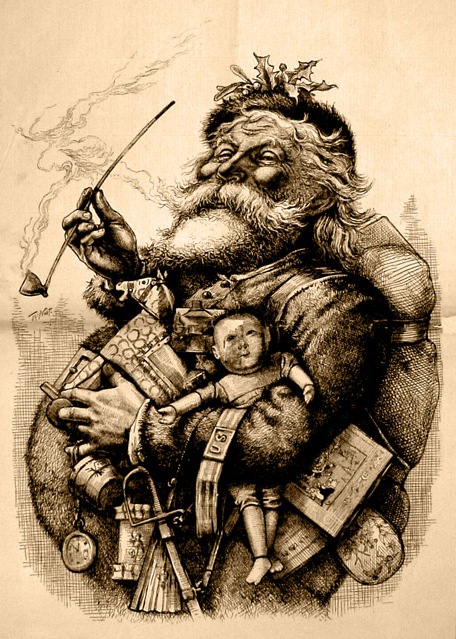
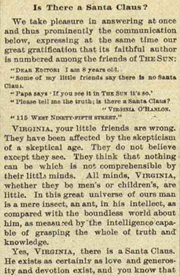
The philosophy I decided to use with my own four kids was based on the classic 1897 newspaper column titled “Yes Virginia, There Is A Santa Claus” written by Francis Pharcellus Church. It reads, in part,

“Yes, Virginia, there is a Santa Claus. He exists as certainly as love and generosity and devotion exist, and you know that they abound and give to your life its highest beauty and joy. Alas! how dreary would be the world if there were no Santa Claus. It would be as dreary as if there were no VIRGINIAS. There would be no childlike faith then, no poetry, no romance to make tolerable this existence. We should have no enjoyment, except in sense and sight. The eternal light with which childhood fills the world would be extinguished.”

I took the casual approach. I never hyped Santa, any more than I promoted the whole commercial side of Christmas. No “better be good for Santa.” No Santa at the mall (pretty easy with our mall avoidance lifestyle).

Sure, we still like Christmas carols that mention Santa. And my family cheerfully accommodates the thing I have for that early 60’s special, Rudolph The Red Nosed Reindeer, even welcoming my teary-eyed joy at the scene when hope returns to the Island of Misfit Toys. But we keep the holidays simple.

My reply to “Is Santa real?” has always been, “Everyone who loves children can be Santa’s helper.” The few times I’ve gotten more questions, which happened rarely because kids like to keep that possibility alive, I explained that even grown-ups like to believe too. By the time kids reach a certain age, they know what my answer means. Either it means there’s no Santa or their Mom is a believer. Maybe I am. I’ve lived long enough to know that there’s magic everywhere. I just call it by different names: love, hope, faith, and compassion.

Oh yeah, and forgiveness. By the next day Mrs. Barton’s kid was already over it.

Unfit for Polite Society

behaving rudely, what not to say at a potluck, how we're like chimps, avoid the rich,

Volunteer with a non-profit long enough and you’ll eventually find yourself agreeing to attend a member potluck. That’s why Spouse Man and I found ourselves pulling up the drive of what was clearly no ordinary house. To us the place looked like a mansion. It was populated with casually well-dressed people who talked about jazz clubs, eco tourism and where to get the best cheese. Things I would probably talk about if my annual income weren’t equivalent to what these folks spent on really good moisturizers.

Our smiles and greetings were completely ignored, as if we were low ranking primates walking slack-shouldered around the perimeter of alpha animals. Fine with me. That way I could do as I wished without the pressure of making conversation with strangers.

I boldly filled my plate with the most unfamiliar foods and poured a glass of organic wine. Anticipating an exiting gustatory event for my first mouthful I forked up the ugliest stuff, sure that taste would make up for appearance.

Wrong. Very wrong.

I deeply wanted to spit it out, but showed remarkable restraint. Only a grimace gave me away.

Now I know the first rule of potlucks is to utter nothing but praise for the food, but I had already determined that we were invisible in the press of people all glibly chatting about topics beyond our scope of wealth. And truly, I spoke so quietly that lip reading would have been helpful. All I did was lean toward Spouse Man, point to the smeary pile of brown on my plate and advise him lovingly, “Don’t get any of this tasteless goo.”

Immediately a woman materialized behind me. A tall woman with large aggressive earrings. She said (I think into a megaphone), “I made that. It’s polenta.”

Now I’ve met polenta before and this was no polenta. It was more like Cream of Spam, extra grainy.

I apologized, stammering something unintelligible about a cook’s poetic license. I even shoveled more of the glop into my mouth without shuddering. She watched until the heat radiating from my fuchsia-toned face drove her away, surely toward people more polite and gracious than a potluck food slandering boor.

I slunk off to drink more organic wine near a large potted plant. From this unobtrusive vantage point I pretended to be a party version of Jane Goodall, carefully watching the behavior of my own species. Still stinging with shame after hurting the feelings of Aggressive Earring Polenta Woman, I’m sure I wasn’t objective. But I did find that my fellow potluckers shared common traits. I observed that we humans indulge in the same expressive pouting, posturing and nit-picking found in any group of chimpanzees.

Except chimps would have thrown the food.

*

*


This piece first appeared on Poor Mojo’s Rant

Chimp image courtesy of Sihonorio

What Do Your Gifts Say?

gifts of love, meaning in gift giving, making gifts magical,

It’s upon us in full force, the biggest buying season of the year. A giant transfer is taking place. The life energy we call money (representing hours of work) or credit (hours of future work) is exchanged for stuff. Lots of stuff—toys, clothes, perfume, electronics, fancy foods, plus those novelty items that no one ever uses. (Okay, I actually wear the silly socks given to me and wear them with glee. I may be the only one.)

We transfer more than time and money. That’s because there’s meaning embedded in our gifts. We have certain intentions as we shop, wrap, anticipate giving, and finally offer the gift. Our efforts try to say something.

What? It’s complicated. Our gifts say different things to different people. A well-made carving knife for a friend who has recently taken up woodcarving shows you pay attention to what brings him delight and what you hope will enhance that delight. A box filled with birthday, get-well, sympathy, and thank you cards plus a roll of stamps for a great grandparent shows that you appreciate the way she keeps in touch with the extended family. It also helps her keep up that tradition now that she’s no longer driving.

Of course what we try to say with our gifts differs depending on whether we’re giving them to our children, our lovers, or our bosses. Still, most of us hope for that rare happenstance, when our gift brings our recipient more joy than we could have imagined. It’s almost like magic.

Maybe I take this too seriously. The first time I bought gifts on my own I was five years old. That year our church set up a Santa Shop in the basement where kids with a handful of change could buy gifts. Volunteers dressed as elves led each child to  tables where merchandise was arrayed. After making selections and paying, these elves helped the child wrap and tag each gift. The elf outfits didn’t fool me. These were the same nice older ladies whose wrinkled hands pretty much ran the whole church.

The elf who walked me from table to table was patient as I tried to choose. I knew that money wasn’t to be spent carelessly. My frugal parents always impressed upon me the importance of saving money. They made do with what they had, using it up until it was worn out and then fixing it to last a little longer. That was true of our car, the floorboards recently patched so I could no longer see the road rippling past in a dizzying gray stripe as we drove. That was true of my hand-me-down clothes, sagging at the knees and stitched at the elbows. So I shopped carefully.

I spent fifty cents on a super-sized paperclip for my schoolteacher father. I spent a quarter on a plastic optical illusion toy for my older sister. I couldn’t find anything for my mother. The elf told me a large strangely shaped bottle of perfume would be perfect. She nodded so much as she talked that the bell on her hat tinkled and the flesh under her chin wobbled. The liquid inside the bottle was dark. She unscrewed the cap and let me smell it. It smelled awful. She told me it was the best deal there. I knew “deal” meant a good thing. I’d heard my parents use that word. So I bought it, even though it cost a dollar and twenty-five cents.

The days before Christmas weren’t filled with delicious anticipation. I woke each morning with a heavy feeling. My Santa Shop gifts under our Christmas tree were terrible. I’d wanted to get my father a gift that would make him feel like whistling little tunes all day, the way he did when he was lighthearted. I’d wanted to get my sister something she liked so much that she’d never let me play with it. And I’d wanted to get my mother something special. When I thought of that bottle of perfume I knew it was what she called “vulgar.” It hit me then, the days leading up to my kindergarten year Christmas, that no gift could show people how much I loved them. It was a sad realization, particularly when every holiday commercial on TV told me the opposite.

I’m a lot more cheerful than my five-year-old self but I keep trying to give gifts that say the impossible. Every birthday and holiday I try. I realize holiday gift-giving is overhyped. Are we really supposed to show someone we care by presenting them with a mass-produced item? “I got you one of the 3 million identical objects made by underpaid workers in an overseas factory. Merry Christmas!”

I love to give all sorts of gifts. Books, music, tools. Handmade gifts (or gifts others make by hand).  Gifts of service, do-gooder gifts , gifts that support non-profit organizations, Fair Trade gifts, gifts to local restaurants/theaters/galleries, and of course, specific gifts the recipient requested. What I want to give is so much more. I want each person to know how much they are cherished. That can’t be wrapped.

If the cliché “it’s the thought that counts” really counted, my gifts would shimmer with magic. Instead my loved ones may be getting this year’s equivalent of a paper clip, plastic toy, and vulgar bottle of perfume despite my best attempts.

Do you suffer from gift-related dilemmas? What are you really trying to say with your gifts? What gifts have you given that were downright wondrous? Rest assured, one of my favorite gift-giving memories is finding a bagpipe action figure (that made farting sounds rather than pipe music) for a certain teenager. Sometimes silliness is magic too.

*

*


“Presents” illustration courtesy of BulletsInGunn

Fostering the Flip Side of Gratitude

dark side of gratitude, responding to nay-sayers, when those in authority predict doom, when doctors are wrong, when teachers are wrong, when therapists are wrong,

Cajoled into seeing a friend’s obstetrician, the one she praised so highly, I came prepared with a list of questions folded in my jeans pocket. But I didn’t get a chance to ask about a doula, the Leboyer method, or anything else. The doctor walked in, greeted me and looked me over without performing an exam. Then he announced with certainty that I had “insufficient pelvic capacity.” He assured me that my petite size meant I would never be able to deliver a full-term baby.

“What do you mean?” I gasped.

“It’s nothing to worry about,” he said. “It just means you’ll require a Cesarean.”

I was six weeks pregnant.

I may have been young and expecting my first child, but I dared to question his judgment. He became indignant. A lecture followed about the number of babies he’d delivered. He went on about anoxia and brain damage, then intoned the words that surely convinced legions of women before me, “Do you want to endanger the life of your baby?”

That was all it took.

I never returned.

But how was this self-satisfied man to know if his assertion turned out to be valid?  I didn’t get back to him. Nor did I refute the next obstetrician whose office I also left after he told me my vegetarian diet would result in a sickly, underweight baby.

Although these physicians never knew if their dire predictions came true, I went on to deliver a 9 lb, 10 oz baby quite naturally. In subsequent years I had three more sizeable vegetarian-grown babies.

On behalf of each of my children I learned to speak up–forcefully and often. This pushed me right past the shyness I thought was an indelible part of my personality. Once I became comfortable speaking up I felt empowered to assert my feelings of gratitude as well.

According to Thanks!: How Practicing Gratitude Can Make You Happier and Living Life as a Thank You: The Transformative Power of Daily Gratitude, regularly practicing gratitude boosts our health and well-being. Small acts of kindness also create a ripple effect, generating more compassion in others. Sometimes it’s easier to thank those who are close to us but it’s powerful to acknowledge people who are consequential strangers or people we’ve never met but whose efforts make a difference.
My gratitude practice often takes the form of appreciative letter to strangers. I leave a note for a waitress whose cheery demeanor has healed me of some common sadness. I send a letter to a nursing home administrator describing the tender affection I witnessed an aide show a patient. I send written kudos to the cast of a locally produced play. They don’t take long to write although occasionally I have to make an effort to find out where to send one.

Not long ago I was delighted to finally locate the address of a local school bus driver. I regularly wait in my car as he stops on a 55 mph road and in only a few moments backs into a narrow entry way with the grace and dexterity of a ballroom dancer. So I wrote a letter to explain that seeing him drive with such skill gave me the sense one day I too might develop true mastery in my line of work.

I never sign my name. I think it’s better to write “your customer” or “fellow traveler” or whatever fits the situation. That way it isn’t about me, it’s about a wider sense of appreciation. Although I have to admit, I benefit too. Looking for the good in a situation changes my energy in a positive way.

But really, paying attention only to sweetness and light ignores the shadow. People in positions of authority need to know when their judgments or actions are harmful. All of us can learn from mistakes, unless somehow we’re deprived of the consequences of our words or actions. Today, many professionals are well insulated from those consequences unless they reach litigation.

I don’t advocate griping or threatening. I’m talking about communication that fosters understanding. A simple letter can spare future clients, students or patients the same struggles your family may have endured. Of course this isn’t necessary when the situation can be handled right away. But how many of us have faced long term predictions of doom? A family bed is nothing but bad parenting.  Without this surgery you’ll end up crippled. Homeschool and you’ll have a maladjusted child on your hands. Ritalin is the only solution for that behavior. After years of hearing such pronouncements I have come to realize that updating a professional on his or her assessment is another form of kindness. It’s the flip side of gratitude.

If you choose to get in touch with someone for these same reasons, here are guidelines that have worked for me.

1. Be clear about your own goals before writing that letter or email. Wait until you can proceed without anger. The person you are contacting will be unlikely to learn anything unless you maintain a positive and respectful tone throughout.

2. Refresh the recipient about your situation as it was when you were last in contact.

3. State clearly and kindly that (as a physician, teacher, therapist) he or she is in a position to help many people. You assume that as a matter of professional interest it would be helpful to know about the outcome of a situation he/she assessed.

4. Sticking only to the facts, explain how in your situation their judgment or actions were misguided. Then update with pertinent details.

5. If relevant, include research or other data which the professional can use to gain insight.

6. Wish this person well. Don’t expect or ask for follow up contact.

The highest response to nay-sayers is to flourish joyfully in our choices. So I respond  to those who predicted doom for my children who were held long and nursed often, to those who judged our learning and lifestyle choices harshly—we are well. For that I’m endlessly appreciative.

Lets try, whenever possible, to find the freedom right beyond the boundaries of old ideas. To do that we need to share the insight that comes from experience. There, even the flip side of gratitude turns toward wisdom.

when professional advice is wrong, shadow side of gratitude, finding peace rather than revenge, gratitude's underbelly,

A version of this piece first appeared in the Sept/Oct 2010 issue of Natural Life magazine

Writing Hands image courtesy of Jggy

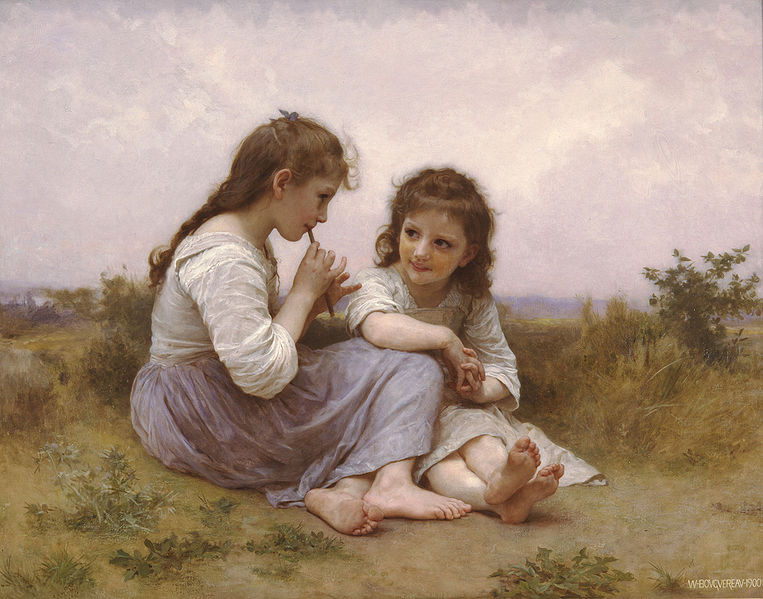
A Childhood Idyll by William-Adolphe Bouguereau