Free Fix For What Troubles Us

walking cures trauma, right way to walk, walk for inspiration, body-based trauma recovery, trauma recovery, depression recovery,

jodicox.deviantart.com

Most of my adult life I’ve taken a daily walk. A lot of those walks took place while pushing a stroller or hurrying behind tricycles. Now I walk while holding the leashes of three dogs on a rural road where vehicles are rare (when they pass they do so at high dog-frightening speeds). I try to use walks as a way of decompressing while paying attention to the moment I’m in rather than mulling over my current worries.

Apparently I could be getting much more from my walks. So could you.

I learned this in a roundabout way. I’ve been reading a lot the last few years about how we humans process trauma. What we perceive as traumatic can be any experience of fear or pain in which we feel helpless. This happens more often than we might imagine, particular in our earliest years. Consider being held down for a medical procedure as a small child. People loom over us, their words barely understood because we’re afraid or hurting, and we’re completely vulnerable. Trauma can be entirely emotional in nature too— sudden job loss or betrayal by a loved one or any of life’s common cruelties.

Normally, the support of people who care about us helps to ease trauma we’ve experienced, particularly if we’re free to exhibit shakiness and sighing along with other necessary bodily reactions. Plus, truly restful sleep helps to cool the heat of most traumas. As we enter the REM state of sleep, when our eyes zip back and forth under our eyelids, we’re processing stressors while refreshing ourselves for the upcoming day. (Even the happiest people have more negative than positive dreams, indicating that the dream state is a natural time to work through stressors.) Those who suffer from depression or PTSD often have disrupted sleep, leaving them with a build-up a unrelieved stress and trauma.

Talk therapy for trauma is important, yet research shows us that it’s not all in our heads. Trauma lodges in our subconscious and our bodies as well. That’s why innovative therapies such as Somatic ExperiencingEFT, and EMDR are so helpful.

As biologist Robert Sapolsky pointed out in Why Zebras Don’t Get Ulcers , despite constant vigilance, zebras still witness members of their herd, at times their own young, being torn apart and eaten by predators. Although animals are regularly exposed to such traumatic events, they don’t suffer from the health effects of chronic stress as humans do.   Are humans weaker? Hardly. We’re as self-healing as any other creature. Nature’s wisdom allows us to recover quite nicely from illness and injury. Nearly every generation of our ancestors have overcome hunger, disease, accidents, and yes, psychological trauma too. Chances are in the hunter-gatherer era, which made up 99 percent of human history, people could count on rituals to ease psychological trauma after getting through a famine, an attack, or an accident. Those rituals often involved dancing and drumming. And that’s where I get back to walking, because I discovered the mention of drumming and dancing as trauma-recovery methods in a book with an unfortunately self-help-y title, Walking Your Blues Away by Thom Hartmann.

Hartmann points out that such rituals are bilateral activities. So are many of the body-based trauma healing methods I mentioned. These methods all use bilateral movement while evoking what distresses us, dissipating the strong “charge” associated with trauma throughout the mind/body. Hartmann explains that bilateral movement (even of the eyes) is a fundamental and elegant mechanism for healing trauma.

In its simplest form, this mechanism involves rhythmic side-to-side stimulation of the body. This side-to-side motion, or bilateral movement, causes nerve impulses to cross the brain from the left hemisphere to the right hemisphere and back at a specific rate or frequency. This cross-patterning produces an organic integration of left-hemisphere “thinking” function with right-hemisphere  and brain-stem “feeling” functions. This integration is a necessary precursor to emotional and intellectual healing from trauma.

Hartman says that the rhythmic left-right-left-right of walking, paired with a visual/mental process, also stimulates this internal integration. Which makes sense. Because until relatively recently in the long span of history people spent a lot of time walking. Walking away from the hunt, the battle, or any misery helped our ancestors process trauma. Even long after mankind began using the wheel, people walked a good distance every day. Walking is just one of the many ways that a more active, collaborative way of life once entirely natural to our kind helped us to operate with both hemispheres of the brain fully engaged without significant hemispheric dominance. (Check out The Whole-Brain Path to Peace for more on this.)

Hartmann writes about a way of walking that helps to release emotional charge, even reawakens motivation and inspiration. It relies on simply walking with your arms freely moving as your legs stride forward. Not talking, window shopping, listening to music through earbuds, or walking with arms restricted (by strollers, leashes, carried items). Here’s the general method.

1. Define an issue that troubles you, even something small. If there’s no issue, then select an optimal future state for yourself and visualize it.

2. While walking, bring up the story around your issue and frame it in a few words or sentences. Notice the strength of your emotions around that story. Give it a number on a scale of 0 (don’t care) to 100 (extremely intense).  If instead you are taking an optimal future sort of walk, while holding your visualization also remember times in the past when you accomplished or felt something similar. Allow the emotional state of those positive memories to suffuse the hoped-for future state.

3. While walking, gently keep your attention on the issue or visualization/memories you’ve chosen. Walk at a relaxed speed, for about a half hour.

4. Notice how the issue changes. The charge around it may begin to fade, the memory remaining but in perspective. Let the process continue until you notice a shift in feeling. Retell the story to yourself, and again rate your emotions on a scale of 0 to 100. (For the story to become more useful and less painful, several walks may be required.) Whether taking an issue walk or optimal future state walk, allow yourself to feel the positive changes you’re incorporating. Stand up straighter, breathe deeply, experience the pleasure of your stride.

5. Anchor this new state by observing the new internal story and new feelings. Think of ways your new perspective is helpful to you, perhaps even framing how you might tell the story or see the future differently. You may want to create a gesture, word, or sound to anchor it further as you finish your walk. You may also want to talk to someone about it, or sketch, write a journal entry, or in other ways help yourself more firmly hold this expanded awareness.

Walking for our own peace of mind and to create new inspiration sounds wonderful. I may not be ready to give up walking with my dogs, but I’ll be out there swinging my leash-holding arms while envisioning a world of greater hemispheric balance.  What does walking or other body-based practice do for you?

resources

Walking Your Blues Away: How to Heal the Mind and Create Emotional Well-Being by Thom Hartmann

Any books by Peter Levine. The first one I read, In an Unspoken Voice: How the Body Releases Trauma and Restores Goodnesswasn’t aimed at the layperson but I was still captivated by its brilliance.

Somatics: Reawakening The Mind’s Control Of Movement, Flexibility, And Health by Thomas Hanna (his discussion of red light, green light response is illuminating) and the organization Somatic Experiencing

Focusing by Eugene Gendlin and The Focusing Institute

The EFT Manual by Gary Craig as well as the EFT organization 

Getting Past Your Past: Take Control of Your Life with Self-Help Techniques from EMDR Therapy by Francine Shapiro as well as EMDR Institute

Scared Sick: The Role of Childhood Trauma in Adult Disease by Robin Karr-Morse

Hope For Humanity: How understanding and healing trauma could solve the planetary crisis by Malcolm Hollick

Right Now You Are Activating Change

attitude change saves world, global consciousness, gay rights, human rights, change makers,

(ssuunnddeeww.deviantart.com)

My mother tried throughout her pregnancies to get hospitals and doctors to change their rules. She wanted a natural birth, she wanted her husband with her, she wanted to hold her babies after they were born. Instead regulations were followed— every decision excluding her. That meant her labors were induced, she was given painkillers, my father had to stay in the waiting room, and except for standard in-room hours her babies were kept apart from her in the hospital nursery. Such procedures made it easier for the institution and less trouble for doctors.

By the time I had babies her futile requests were standard policy. Every woman was encouraged to have one or more support people with her, to room in with her baby, and to give birth naturally. It took change-makers to turn those policies around. Those change-makers were ordinary people who had a vision of something better. Some of them actively worked to see those changes happen but I suspect most of them simply talked, read, wrote, and otherwise carried on with what looked like everyday lives while activating awareness in people around them.

This is how real progress happens. Yes, there’s the much cited quote by Margaret Mead, “Never doubt that a small group of thoughtful, committed citizens can change the world. Indeed, it is the only thing that ever has.” And yes, there are torchbearers for our big changes who are often misunderstood, even persecuted, while they lead the way. But lets not assume that we don’t qualify as “thoughtful, committed citizens” if we aren’t at the front of any movement. It’s about action but it’s also about attitude. Those attitudes make justice, ecological harmony, and peace possible.

Those “in charge” are often well behind the consciousness of the people they supposedly lead. Many in authority impose the same order, same rules, same limited thinking on people who have opened themselves to bigger possibilities. That’s true when we look at mainstream medicine, education, organized religion, finance and banking, government, science for hire, and multinational corporations. Such established institutions tend to become more rigid in response to vital change shaking their structures loose. The lower levels of moral reasoning that often hold those structures so restrictively in place (might makes right, or an eye for an eye, or conformity to norms) have less relevance when more and more people are in touch with deeper wisdom.

You may be activating change right now by the content of your conversations, the ideas you see taking hold around you, the way you stay informed, the way you raise your children and treat your friends, how you choose to spend your money and not spend your money, the way you make a living, the causes you advocate and believe in, and how you interact with our living planet. You, like so many change-makers, may already be living through deeply felt, personally lived ethics. That itself causes rippling change. Torchbearers of the last century who brought about so much good could do so because awareness shifted and deepened.

It may seem that small personal efforts make little difference when the problems facing the world are so huge. But bemoaning what’s wrong usually doesn’t effect much positive change. It may very well just entrench the feeling that we’re victims of all that’s Big and Bad. Instead we can see how truly interconnected everything is. Mind and matter, internal and external, thought and deed–all are aspects of the same essential aliveness in a universe where nothing is really separate.

My mother didn’t go looking for causes but when they were in front of her, she stood up for what was right. This happened often when she was a young registered nurse working in a large Chicago hospital. She defied rules requiring nurses to stop laboring women from delivering until a physician was present (perhaps to collect higher fees for attending the birth). Nurses were expected to keep women from pushing, and in extreme cases, to hold back the head of the emerging baby. As you might imagine, some infants were deprived of oxygen or worse. My mother refused to follow the policy, more than once delivering a baby herself if the doctor didn’t arrive in time. She also refused to follow the policy that restricted incubators to private pay patients. When necessary she simply went to another ward, took an incubator, and faced the consequences. She got in trouble over and over. She did it anyway.

Once she had children of her own, my mother spent much of her life as what she’d call a homemaker. She did all sorts of good on a small level. She herself been a lonely child, perhaps as a result she was remarkably skilled at staying closely connected with and supportive of people. My mother functioned as a sort of informal Wikipedia for her wide network of friends, always putting her hands on information to help others. I often didn’t agree with her political opinions but I saw from her example that activating change often has more to do with living as if compassion is not just necessary, it is essential.

Who or what in your life reminds you that progress is happening, even on a small personal level? 

Talking During Recess

childhood lies, teacher punishment, child's honestly, truth and lies in childhood, second grade punishment,

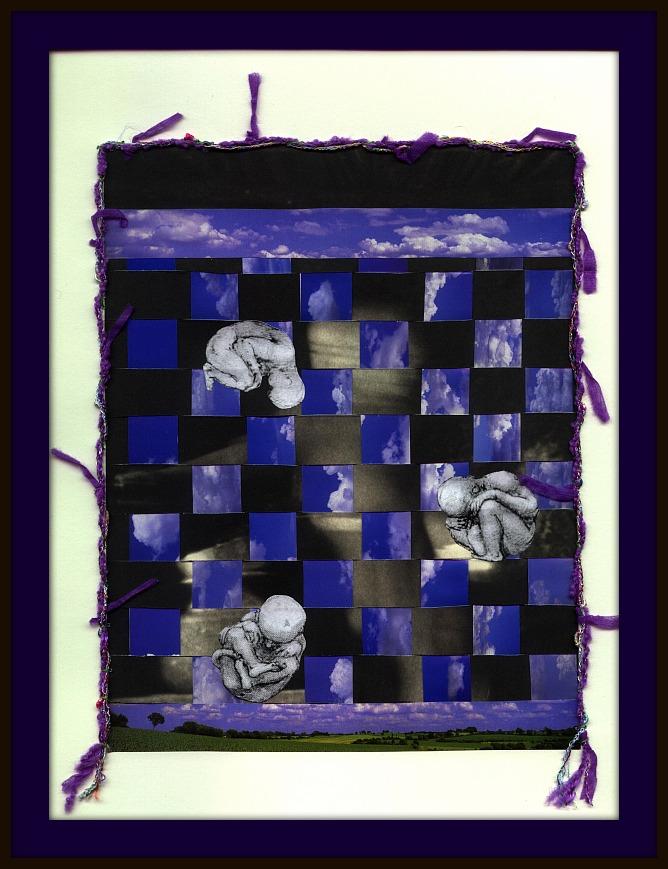
collage by L.G. Weldon

“That’s not true,” the girl behind me said in a singsong voice. “You’re lying.”

I turned around and shook my head, hoping she wouldn’t attract the teacher’s attention. Judy’s hair was unkempt and dirty. Maybe her mother didn’t love her enough to take good care of her. I knew I should feel sorry for her, but Judy was as nasty as she smelled.

Rain rolled down the windows during indoor recess. Our second grade classroom was a neat rectangle except for the jutting wall where the door fit in. I preferred symmetry. At seven years of age, my mother’s mindset formed neat geometric spaces in my head. I adhered to her categories: clean and dirty, right and wrong, bad people and good people, truth and lies. Well, I had some trouble with the truth.

My mother often said that she loved us more than any words could say. She told us no one tried harder to have children than she did. Then she would tell us how many babies she had lost in order to have us.

Lost. The word resounded throughout my body.

When I was very small I worried that I too would be lost, as I often was in the grocery store. When I understood that her babies had died before they were born it didn’t help. My mother talked about the lost babies to express her love for us. She went through eleven pregnancies to have a family with three living children. I did the math. My brother, sister and I were conceived because those babies died. I tried talking to my sister about it once but she didn’t understand.

“They weren’t even people yet,” she told me. “They were probably smaller than a minnow. Don’t get all weird about it.”

But they were people to my mother. And to me.

Sitting at our desks during indoor recess, vying for attention, I casually mentioned to my friends, Jennifer and Stephanie and Julie, that I would have had a big family but lots of the babies died. I knew this wasn’t really true. My parents planned to have three kids, they just wouldn’t have had me. I also knew it was wrong to make family grief into a public tale even if it gave me momentary thrill of popularity.

“Oh, the poor babies,” Jennifer said.

“How many babies?” Stephanie wanted to know.

“Lots,” I said. “Eight babies.” I knew I’d gone too far.

Judy overheard, and she piped up, “I’m telling Mrs. Lauver.”

I felt my fate as tightly sealed as the braids my mother lovingly bound in colors to match my dress. I was in trouble.

After the tattletale got to her, Mrs. Lauver called me up to her desk. My knees trembled when she paid attention to me. I was a good student, but sometimes my teacher called me names and then pointed out that I was blushing. We had moved the year before and rules from my last school, such as rising when called upon, had been hard for me to break for the first week. Mrs. Lauver called me a “jumping jack” and punished me when I didn’t stop standing up right away. That started it. It seemed she was always after me.

But this time I’d brought it on myself.

Everyone watched as I walked up to the front of the room. No one got called up to the teacher’s desk during indoor recess. The teacher normally had that time off, sitting with her friends in the smoke-filled lounge, so she tended to ignore us and read a thick paperback at her desk, her chair turned slightly away from the class as if we weren’t her responsibility. We honored that inattention by keeping the hubbub down. After recess she would read a chapter of Charlotte’s Web to us.  She always threatened that if we got too loud she might deny us that privilege and go right to social studies.

I went up to Mrs. Lauver’s desk as slowly as possible. Anxiety made my senses acute. I could smell the awful geraniums she kept on the windowsill, their brown sickly leaves rotting away. I could feel my classmates’ eager curiosity—-cartoon watchers waiting for the silly wabbit to be shot. As I got closer I could see where the teacher’s too tight sleeveless dress cut into her flesh, the frighteningly hard texture of her hair and the orange-hued makeup on her face. I wanted my mother badly. Her dresses were loose, her hair soft, her face never anything like my teacher’s.

I should have been planning what to say, but a liar sticks to the story, sometimes makes it worse. I made it worse. I stood at the desk, unsure of what to do with my hands that twisted the ends of my braids. I insisted that our family did have lots of children once but they died.

“Oh, and how did that happen?” She had a tight smile on her face.

I thought about it.

I saw them inside my head, my unknown brothers and sisters. They would have been older than me. If they had lived, I would not have been born. To me, their deaths felt like a gift and a burden. Standing there at Mrs. Lauver’s desk I saw their lives pass without breath in the darkness of water, waves breaking over their heads in the distance. I could almost see their faces. So I said simply, “They drowned.”

Despite further questions I couldn’t get another word out.

“I’m calling your mother,” the teacher said. “We’ll see what she has to say .”

That awful outcast’s land. Wanting one’s mama, but being in trouble. Now how could I rush home to a welcoming hug when I would encounter anger? My stomach folded up and I had to remember what my face was supposed to look like the rest of the afternoon.

After school there was a scene. My mother said that only bad people were liars. Liars grow up to commit crimes and go to jail. Over and over she asked, “Just tell me, why would you make up such an awful story?

All I could answer was, “I don’t know.”

I didn’t. What I said about the lost babies couldn’t be explained. I took my spanking and went to my room. My parents had a conversation later and came up with a punishment—write an apology to my teacher for lying. My notebook paper was filled with carefully printed words, but they were just shapes. I didn’t feel anything I’d written.

When I stood there in front of Mrs. Lauver that afternoon I was being honest. I told her what I saw. A child may not have words for what she knows even on the day she begins to understand that there are no neat categories for truth and lies.

I haven’t forgotten those lost babies. I hope I live as a testament to the joys they never knew, like telling stories true as our shared DNA.

It Really Does Take A Village

takes a village to raise a child, don't raise children alone, parenting in isolation, isolated mother, community supported parenting,

onurrus.deviantart.com


You’ve heard the African proverb, “It takes a village to raise a child.” You’ve probably also noticed slap backs like, “I’ve seen the village and it’s not raising my kids.”

If we actually consider the proverb we see the wisdom it contains. Throughout nearly all eras of human history, parents weren’t isolated from a supportive network of other people. Grandparents, siblings, cousins, and friends not only nurtured children, they made good parenting much easier. When a baby cried there were other arms to carry it or carry on the mother’s tasks as she nursed. When a toddler played there were other eyes keeping watch. When a child was ready to learn there were people available to show him how to fashion reeds into a basket, to fish in the river, to tan hides, to choose the right plants to make medicines. When a teen sought role models there were many to emulate, people who had been guiding forces her whole life. Children grew up with an invaluable sense of connection to kinfolk and community.

Today we don’t benefit from the educational richness of traditional village life where children can see and take part in the real work necessary to sustain life. Few of us live near extended family members. But we can foster the development of our own “villages” in at least three ways. Here’s how it worked for me.

1. Establish a supportive network.

When my first child arrived I didn’t know another soul mothering a newborn. Although my parenting and life choices were far different than my mother’s, I found myself calling her nearly every day. It was comforting to talk to someone who cared that I’d been up all night, even if I had to filter out suggestions like feeding rice cereal to a newborn. I also started attending a nearby Le Leche League group to be around other mothers with small babies. There I found women who shared ideas, laughter, and lightly used baby clothes.

When we began homeschooling, once again I felt isolated. All my friends’ children were school bound. So I linked up with several homeschooling groups. Online is great but in-person is better in dozens of ways. My new homeschooling buddies and I had approaches to learning that spanned the spectrum from unschooling to school-at-home, but our lively conversations veered away from judgment. We cared about each other, looking forward to field trips and park days as much as our kids. We particularly enjoyed the way our kids’ unique curiosities blended, creating the kind of quirky fun so typical of homeschooled kids.

2. Create a “chosen” extended family.

Sure, I felt closer to my parents once I became a mother, but I also needed to expand my tribe. The first woman I met with a newborn became like a sister to me. We didn’t always agree on politics or religion but it didn’t matter. As more children came into both our families we watched each other’s kids, exchanged household items, went on day trips, and supported each other through crises.

My group of parent-friends expanded. This made it easy to take turns carpooling and babysitting. It also made for wonderfully boisterous get-togethers. My extended family also included a group of women who called themselves “crones,” new farming friends, and an elderly Scottish bagpipe instructor. These people cast all sorts of light in our lives.

3. Develop rich connections in the community.

When I moved it took a year to meet the people across the street. It was not an overtly friendly place. I was determined to make it into a real neighborhood. I invited people over for potlucks, Halloween parties, and all sorts of kid-centric fun. When new families moved in, I greeted them with homemade goods and an invite to my next event. It became a place where my kids felt known and accepted. One son learned small engine repair from a retired man who liked to tinker, another son liked to visit the guy a few doors down who sculpted in stone, my daughter sang impromptu operas in the front yard without a moment’s self-consciousness.

We stretched to make community connections as well. We struck up conversations that turned into remarkable learning experiences, giving us access to experts in all sorts of fields. My kids have spent years volunteering in Red Cross, recreation programs, wildlife rescue, and more. We make our home part of a larger village, for example hosting people from overseas, running a food co-op, and holding social action meetings. Like our home, the community became a place where my children’s interests were nourished. We have a village now. Whatever direction we extend a hand, we find a friendly hand waiting

Village building resources.

*Get in touch with family members, near or far. Reach out for support even if it doesn’t come in the exact flavor you’d prefer.

*Connect with other parents at the park, playgroups, and nature preserve. Build mutually supportive networks by exchanging your time and talents.

*Join groups that sustain your interests in a positive way. Ask for information about homeschooling groups and programs at your public library. If you are nursing a child, try your local Le Leche League chapter.  Consider joining the Holistic Moms Network. Find or start any sort of group on Meetup.com, from a stroller-pushing-dog-walking get-together to a kids’ chess club. 

*Enjoy the sense of belonging found in active membership in a church, charity, outdoor group, or any organization where families are welcome.

*Establish connections by becoming “regulars.” You may choose to go out for breakfast each Saturday at the same locally owned place where the staff knows your kids. You may help out at a CSA farm as a family. You’ll also feel more at home in your community through regular visits to your library, recreation center, and park.

*Be the neighbor you’d like to have. Extend kindness and warmth as you get to know people. Perform acts of service along with your kids, whether shoveling the driveway of an elderly neighbor or volunteering with Meals on Wheels. Even the smallest children can perform acts of kindness.

*Develop a tradition of community service. There are plenty of ways for kids, toddler to teen, can volunteer.  And help them get involved in civic affairs, clubs, and community organizations. They’re creating their own place in the village too.

it takes a village, community building for families,  isolated parents, parent friendships,

cozplayinsmed.deviantart.com

Get Kids To Predict The Future

Back in 1964, sci-fi writer Arthur C. Clarke introduced a program on future predictions by stating:

The only thing we can be sure of about the future is that it will be absolutely fantastic. So, if what I say to you now seems to be very reasonable then I’ll have failed completely. Only if what I tell you appears absolutely unbelievable have we any chance of visualizing the future as it really will happen.

Among other developments, Clarke predicted the emergence of the Internet, telecommuting, and remote surgery.

Fantastic. More science fictions are becoming science facts all the time.

Just like the predictions kids gave when I asked them about the future at a multi-age enrichment program. The youngest ones jumped in eagerly.

“Robots will do all our chores.”

“Dogs will come in a bunch of different colors.”

“Kids can fly little space cars around wherever they want.”

“You’ll think of anything you like to eat and it’ll appear.”

What the teens predicted was more complex and somewhat darker. They talked about the necessity of space exploration to seek out scarce resources on other planets. They discussed enhanced ESP abilities for communication and intuitive powers to diagnose illness, although those topics raised a lot of debate. Most of them hoped teleporting would eventually replace the difficulties of travel. And quite a few envisioned grim scenarios of global scarcity complicated by the use of advanced weaponry.

The future may hinge on optimists with a can-do attitude. So after the group discussed their predictions I headed the conversation in a more positive direction. We discussed what kind of future the kids wanted to live in, what steps were already underway to make that happen, and how the kids themselves could take part. By the close of our session the kids were energized about envisioning and creating a hopeful future, one that included space cars as well as peace. Envisioning that future is the first step.

I wish I’d had the participants in my enrichment program write down their predictions so their parents could save those speculations for a decade or two. Better yet, I wish I’d copied all the predictions so that someday the kids could find out which of their many ideas had come to fruition.

Consider asking your kids to make their own predictions.  It’s an interesting way to stimulate conversation about their hopes and fears. Written or recorded predictions are also a wonderful contribution to a scrapbook, family blog, or time capsule.

Let us know in the comment section what your kids had to say. Consider making your own. And go one step farther than I did. Remember to save them!

kids see future, kids predict future, arthur c. clarke future,

deadly-wanderer.deviantart.com

Fighting Crazed Holiday Syndrome

un-busy your holiday, un-crazy Christmas, slow Christmas, slow holiday,

Who isn’t busy all the time? But around the holidays we’re crazy busy. I venture to say women are especially busy and those lights in our lives we call children make the pace even more frantic.

Sure we make all sorts of efforts to simplify and de-stress but for most of us the joys of holiday shopping, gifting, cooking, decorating, visiting, hosting and merrymaking have to fit right into our regular (overburdened) schedules.

It’s not like we can make more time where there is none. Well, maybe we can. Or at least use our time differently. I confess to the Crazed Holiday Syndrome but I fight back with these tactics.

~

Screw Tradition. No, I don’t mean avoiding your house of worship or shunning Grandma’s house. I do mean it’s possible to celebrate the season without so much of the heavy Gotta Do It weight hanging over you.

Some of our most memorable holidays have actually been those that veered wildly from tradition. My family will not forget a holiday dinner at Becky’s house featuring walls of wet paint, an oven on fire, and a dog getting sick everywhere. The zinger? She was eager to show foreign guests how we celebrate here in the U.S.

Try doing things a little differently, a little more slowly. If you’ve always gone to the movie theater to see the newest holiday releases after a day of shopping, skip both and go to a play at your community theater. If you’ve accepted every holiday invitation despite the costs of babysitters, travel, and lost sleep instead limit your selections to a few events that are reliably warm and wonderful. If you’ve always made a big meal, consider ordering take-out from a locally owned restaurant and serve it on your best plates. If you’ve always accommodated your kids’ requests for gifts because it’s Christmas or Hanukah or Kwanzaa put new limits on materialism, letting them know you’ll consider one or two items they mark as their highest priorities. If you’ve always driven around to see the holiday lights, go outside on a frosty night to sing together (even if only to a lone tree lit by moonlight). You’ll not only save time and money, you’ll also create new traditions.

~

Renounce the How-Does-She-Do-It-All Disease. You know the symptoms. You show excessive responsible because you’re sure no one else will do it (or do it right). You uphold traditions your family counts on. You pay close attention to get just the right gifts. You worry about money more than usual. You try to keep the focus on intangibles like faith and togetherness. When the frenzy is over you end up with an empty feeling. I’m the first to stand and admit that I’m still in recovery from this disease.

The cure? Talk to your loved ones about what means the most to them, slice away the rest. If that doesn’t work, slice anyway.

~

Shun Those Voices. They’re everywhere around the holidays. They seem so genuine and alluring but their sole aim is to make you feel insufficient. They speak to you from Pinterest, Insta, store displays, TV commercials— let’s admit they’re ubiquitous. These voices tell you that you’re not enough. To compensate you must do more. Dress beautifully, make elaborate meals, buy lavish gifts (and wrap them a whole lot better too).

This is the only diet you need to go on. Don’t watch a single cooking show, don’t open one slick women’s magazine, avoid influencers on social media, and it’s best if you avoid stores as much as possible. You’ll have a lot more time plus you won’t have to reassemble what’s left of your self esteem.

~

Rethink Gift-Giving. Things have gotten out of hand. Children in this country once looked forward to a fresh orange, maybe a piece of candy and if they were lucky a toy or useful gift like a pocketknife or sewing kit. Historian Howard Chudacoff writes in Children at Play: An American History that most toys co-opt and control a child’s play. They’re better off with free time and objects they can use to fuel their imaginations (yes, a cardboard box). I even know a child being raised, quite happily, without a single purchased toy.

I admit things got out of hand in my own house. In a quest for meaning (let’s rephrase that to my quest for meaning) we’ve always had handmade holidays. Yes, I’m one of those annoying people….. Meals from scratch, homemade organic cookies, handmade gifts. Each of my four children made gifts for everyone every year, gifts that took substantial effort such as woodworking, felting, and ceramics. My teens still make some of the gifts they give although thankfully I’m not the one coming up with the ideas and supervising the process. The last few years economic realities have made hand made gifts ever more necessary, for other gifts I turn to non-profit and artisan sources. Try products offered by non-profits you support, works of art sold at local galleries, and consider these suggestions– memorable non-toy gifts for kids.

~

Last Resort. This tactic is heavy duty, the one I bring out when I start to feel sorry for myself. Because we’re not crazy busy in comparison to women throughout history. We think we’re stressed? Our foremothers hauled water; carded, spun and sewed clothes; chopped firewood and maintained the fire they cooked on; ground grain and made bread each day; planted and weeded gardens, then canned or dried the harvest; stretched limited food reserves with careful planning to last until the next harvest; cared for babies, children and the elderly with no professional help; treated the sick, stitched wounds and prepared the dead for burial; well, you get the idea.

Worse, many many women in the world still do this sort of grinding labor each day. Typically, women in developing countries work 17 hours a day.  Our sisters receive a tenth of the world’s income while performing two-thirds of the world’s work. These harsh realities put any concept of busy or stressed right out of my head. (For more information and ways to help, check out the wonderful book Half the Sky: Turning Oppression into Opportunity for Women Worldwide.)

So fight the Crazy Busy Syndrome with all you’ve got. Remember to count your blessings, including the joy of not eating my homemade buckwheat cookies.

What’s The Perfect Age?

what is the perfect age,growing older is perfect, child is not an ungrown adult, baby is not an unformed child,

(Image:littlefantasy.deviantart.com)

There must be an ideal age floating around in our collective unconscious. This is such a fixed part of our media-driven culture that it’s hard to focus on it. But let’s give it a try. Allow a number come to you as you consider the following questions.

 What age do parents have in mind as they groom their kids for success?

 What age do kids have in mind as they imagine growing up?

 What age do older adults have in mind as they try to look and act younger?

I’m guessing it’s somewhere between 21 and 35, a time when we’re supposed to be brimming with youthful good looks and potential. Or maybe it’s not a number but just a fundamental belief that young adulthood is some sort of peak. Everything before that is preparation, everything after a slide toward old age.

Consciously or unconsciously, believing in this ideal age uses up a large part of all our other ages.

Consider how relentlessly the adult world prods children to get (or at least act) older. I know I’m somewhat guilty. I did my very best to savor the baby and toddler years but honestly, it’s hard. I found myself thinking that it would just get better after they finished teething, or could talk, or finally mastered toilet training. Even the most sainted in-the-moment parent will find him or herself bombarded with well-intended, future-oriented inquiries from others like, “Is she sleeping through the night?” and “Does he talk in sentences yet?” Such questions don’t stop as the child gets older, instead they have to do with bigger topics like academic abilities, athletic achievement, even popularity. Admiration is heaped on little ones who act much older than their developmental age, especially those children who exhibit social poise beyond their years, as if six-year-olds who act like six-year-olds are already somehow behind.

The pressure becomes more intense with each passing year. Parents often find themselves buying all sorts of educational toys and electronics, filling what could be free time with an ambitious schedule of practices and enrichment programs, and of course, pushing educational achievement. We’re told that these efforts “count” as if there’s a permanent record for eight-year-olds or 13-year-olds. There isn’t.

We’re assured that getting kids ahead in sports or hobbies will create passionate engagement, but research affirms that children build rewardingly intense interests when they are free to explore activities without adult pressure and interference

We’re led to believe that early academic accomplishment is the path to later success. Too often, that’s not true either. Success is closely linked to much more nuanced personal factors which develop quite nicely, research tells us, during free play, early participation in household tasks, conversation, and other experiences that foster self- control as well as an internal locus of control

Pushing our children toward adulthood takes us (and them) away from seeing that each of us are whole people exactly as we are. A baby is not an unformed child, a child is not an ungrown adult, an elder is not an age-ruined version of a once younger self.

Each of us is wonderfully unique. Of course we’re flawed and often foundering. But at the same time we are also brimming with emerging possibilities. We don’t have to paddle away from the moment we live in toward some ideal age. Doing so doesn’t just wish away right now, it also condemns every other age we live in to be something less.

Truly seeing our children and our elders as complete and whole, right now, means seeing ourselves that way too.

Monday Hearts For Madalene

art from found objects, love made visible,

Page Hodel

A heart-shaped anything used to seem overly sentimental, even mawkish, to me until I encountered those created by Page Hodel. Her hearts are ephemeral and made from the unexpected. Things like chile peppers, paper clips, postage stamps, kumquats, metal bolts, cast-off sneakers, green onions, all sorts of colorful objects.

The story behind her art is equally unexpected and poignant. Page is a disc jockey whose presence unifies and enlivens a crowd. Billboard magazine named her one of the country’s best. She also works for the non-profit Rhythmic Concepts to foster jazz education. Before she started making hearts her hands-on creative efforts took place on a larger scale, including the renovation of large vehicles and homes. Her life seemed full. Then she met her neighbor, Madalene Louise Rodriguez, a librarian and glass artist. The moment they met, they both fell in love. As Page writes on her site,

There is something extraordinary about falling so deeply in love later in your life. The profound awareness of the miracle of finding the love you have looked for all your life, and the realization of how much you each have to share having lived so long and experienced so much.

Page began making hearts out of buttons, leaves, anything she could find to leave on Madalene’s doorstep late each Sunday night. That way when Madalene stepped out to go to work the next morning, she’d be greeting by a beautiful reminder of their love.

Page Hodel

Page Hodel

Only seven months after they met, Madalene was diagnosed with late stage ovarian cancer. Page promised to continue making hearts for her each week, no matter what. After a courageous battle, four months later Madalene died.

Page never intended the hearts she created to be anything more than a private way of expressing her feelings. Thanks to a request by Madalene’s brother, she gradually began sending online photos of each week’s heart to loved ones, inviting them to forward the images as a way of putting more love out in the world.

Page initially refused offers to collect the photos into a book. The feeling associated with them was too painful. But she kept hearing from strangers whose lives were affected by the hearts. She realized that her love for Madalene could touch others.

Now you can find 100 hearts collected in a beautiful volume titled Monday Hearts for Madalene as well as Hearts for Madalene Notecards. Page donates a portion of the proceeds from each sale to the Women’s Cancer Resource Center.  Anyone who would like to receive a weekly email with the newest Monday Hearts For Madalene, simply email  page.hodel@gmail.com with “subscribe” in the subject line.

Seeing these images, hearts can’t help but take on a larger meaning.

Page Hodel

Page Hodel

Conduct Human Experiments of the Word Kind

bring back obscure words, get people to say strange words,

Human experimentation is banned unless the subjects are volunteers who have provided their informed consent. I believe the more casual research my son recently tried is exempt from those rules.

Let me explain.

Over the summer he worked with the grounds crew for a local park system. Being the sort who enjoys occupying his mind with more lively endeavors than weed whacking, he found other ways to keep himself amused. It may be helpful to point out that he and his siblings know many more words than they can pronounce. Their vocabularies are considered odd by others. Their dinner table discussions are, at best, eccentric. These tendencies can be almost entirely blamed one habit: avid reading.

He used this social liability as the basis for the human experimentation trials he conducted on his unwitting co-workers. The research took all summer. His subjects were not aware that they were part of the study until it was too late. The damage had been done. The results are now in. His experiment was a resounding success. I’m going to tell you how to conduct the same experiment.

Purpose. 

You, the experimenter, can bring  nearly extinct words and phrases back into regular usage. (See, you’re providing a service to an endangered vocabulary.)

Hypothesis. 

Employing an outmoded word or phrase on a daily basis will subtly promote its usefulness and stimulate others to add it to their ordinary lexicon. Yes, you get people to say funny words.

Materials.

1. You will need subjects. Rely on people you see everyday. Your children, co-workers, neighbors, and friends are excellent victims candidates for your experiment. The more the merrier. If you want to get all science-y, choose a group of people you interact with separately from all other groups. They will form your experimental group, while everyone else in your life will be your control group.

2. You will need a word or phrase you think shouldn’t have fallen out of popular usage. My son chose “dagnabbit,” one of the many oddly amusing words his grandfather used without a hint of irony. (That was a rich well indeed. Other possibilities from my paternal line included “holy mackerel,” “jehoshaphat,”  and “tarnation.”)

Method.

This is a casual experiment, best done over a long period of time. Begin using your chosen word or phrase regularly but naturally in your conversation. Pay no obvious heed to the word as it is adopted by others.

If people make a fuss over your use of the word, you might choose to insist it is back in style. Or you might use the opportunity to expand the experiment by promoting those subjects to fellow experimenters. Explain what you are doing in the most noble terms possible, then implore the person use his or her own outdated word or phrase in daily conversation. You’re simply enlarging this Human Experiments of the Word Kind study, surely to enhance the world as we know it.

Observation.

See how long it takes to firmly embed your word or phrase in other people’s regular discourse.

Conclusion. 

Have you gotten subjects to saying funny words? Then you’ve proven the hypothesis and done your part to save endangered terms. Another successful Human Experiment of the Word Kind!

Thanksgiving: A Holiday To Prevent War

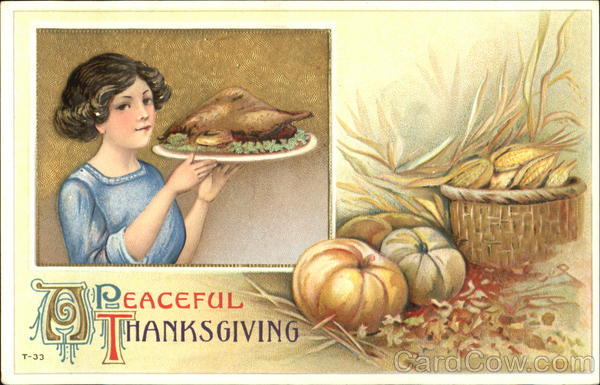
A Peaceful Thanksgiving cardcow.com

Kids draw bright crayoned versions pictures of the “first” Thanksgiving, although chances are they don’t depict the original celebrants eating venison and eel, or engaging in shooting demonstrations. It’s certainly not an event the Wampanoag would have recognized. The Thanksgiving holidays we celebrate today center around family and togetherness. That’s due to one woman, Sarah Josepha Hale (who incidentally was the author of the poem “Mary Had A Little Lamb,” later put to music).

Before Hale’s campaign to create a national holiday, Thanksgiving was held at different times in different jurisdictions on any date between October and January. Or not at all. And in the South the holiday was largely unknown.

Thanksgiving origins, Thanksgiving peace,

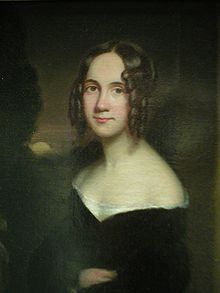
Sarah Josepha Hale, 1831, by James Reid Lambdin

But Hale was editor of the most widely circulated magazine of the time, Godey’s Lady’s Book. This publication, largely aimed at women, published influential poetry, art, and fiction, and under Hale, advocated for women’s educational attainment. Beginning in 1846, Hale used this platform to push for a national day of gratitude. She hoped such a holiday would help to unify the North and South, even prevent a Civil War. Violating the magazine’s policy against politics, she wrote editorials year after year asking the nation’s leaders to declare the last Thursday in November a national holiday–Thanksgiving Day.

In an editorial published November 1857 she wrote:

Consecrate the day to benevolence of action, by sending good gifts to the poor, and doing those deeds of charity that will, for one day, make every American home the place of plenty and rejoicing. These seasons of refreshing are of inestimable advantage to the popular heart; and, if rightly managed, will greatly aid and strengthen public harmony of feeling. Let the people of all the States and Territories set down together to the “feast of fat things” and drink, in the sweet draught of joy and gratitude to the Divine giver of all our blessings, the pledge of renewed love to the Union, and to each other; and of peace and good-will to all the world. Then the last Thursday in November will soon become the day of AMERICAN THANKSGIVING throughout the world.

She also steered public sentiment by promoting Thanksgiving recipes (including roast turkey and pumpkin pie), poems, stories, and drawings of families gathered at the Thanksgiving table. She wrote hundreds of letters to governors, presidents, and secretaries of state as part of her campaign.

Seventeen years later, in the midst of the Civil War, Abraham Lincoln issued a presidential proclamation that Thanksgiving Day be celebrated as a national holiday. This day, which many of this country’s original inhabitants consider a national day of mourning, is also a day established to promote peace and goodwill. Never underestimate the power of an idea, pushed by a pen and persuasive pumpkin pie recipes.