7 Ways To Make Your Day More Magical

try on new identity, pretend to be someone else,

Creative Commons image Flickr photostream of Estadão.com.br

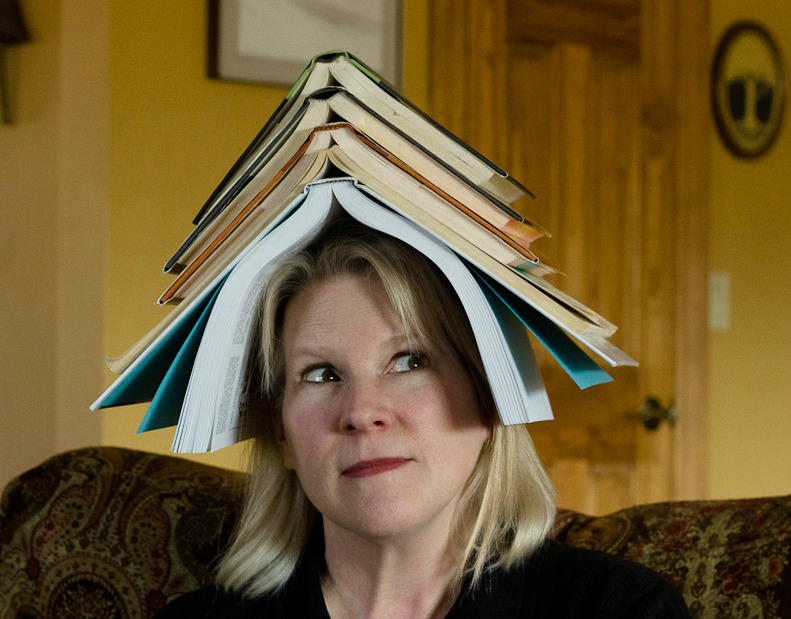
1. Head off to an interesting destination with your family or friends for an Alternative Identity Day. On the way, everyone makes up his or her own identity. Throughout the day make an effort to play along with that identity: call each other by the chosen faux names, enjoy elaborating on your character’s backstory, and interact with strangers through that identity. At the end of the experiment talk about how it felt to try on an alternative self. And if you’ve taken photos, check to see if anyone held their faces or bodies differently. The sense of observing yourself from the lens of another persona can be illuminating.

toast, ritual of the toast, make today significant, make today magical,

Wikimedia Commons

2. Start your meal with a toast. It may be as simple as raising your glass of orange juice in the morning, saying “Here’s to a wonderful day ahead.” Or as heartfelt as an unexpected toast to a friend in thanks for all you’ve shared. A toast is a ritual for adding significance to the moment. Why not make more moments significant?

Creative Commons image from Flickr photostream of Gj IMAGEWORKS

3. Don’t let a day go by without generating some music. You might sing along with the radio or whistle to make a chore go faster. If you play an instrument, even if you haven’t practiced in a long time, get it out (suspending all judgment) and get reacquainted. If you’ve always hankered to play an instrument but never tried, sign up for some introductory lessons.

An easy way to incorporate music into your life is to make up lyrics to familiar tunes. This is particularly satisfying when you’re annoyed. (Whoever passed down the traditional “Rock A Bye Baby” lullaby knew that grumpy lyrics go quite nicely with a sweet tune.) To the tune of “Row, Row, Row, Your Boat” try singing,

Wait, wait, wait on hold
Till I want to scream
Knowing from experience
Service is a dream.
 

See what other experiences you can transform using music.


encouraging banner,

Image: L. Weldon

4. Make an encouraging banner. This project was inspired by the collaborative art project Learning To Love You More. Assignment number 63 was to make an encouraging banner and hang it.  Participants hung banners in their bedrooms, across overpasses, in junkyards, alongside roadways, in parking lots—all over the place. In all sorts of colors and shapes their banners announced:

Don’t forget you are beautiful
It’s okay to ask for help
Life is art
Let’s hear it for love
Lose track of “I”
This is the land of milk & honey
You are incomparable
Less do, more be
You can trust what you can’t explain
Farm magic
 

What phrase gives you hope? Make a banner, either one you plan to hang in your home or to share with the public. You might want to photograph it in various places. The phrase you love comes alive in different settings.

treehouse, what you wanted as a child,

Creative Commons image from Flickr photostream of Karen Roe

5. Sketch something you wanted as a child. The perfect treehouse, a fairy godmother, that toy Santa never brought, a first place trophy, a real best friend. Maybe make a few sketches to get the details just the way you want them. Add some labels if that helps. Now close your eyes, imagine yourself as a child, and give this earlier version of yourself that gift. You may scoff but the disappointed child in you just might appreciate the attention.

Creative Commons image from Flickr photostream of Tomorrow Never Knows

6. Look for metaphors in the ordinary. Challenge yourself to discern a “message” in the first news item you hear in the day or the first visual that appears when you flick on the TV. Ask yourself why a certain song is playing in your head—does it remind you of something, perhaps a feeling or memory the music evokes? Ask yourself why you might have a certain ache, is your body is speaking to you the only way it can? Look for coincidences, synchronicity, and little delights—these can be signposts indicating you are exactly where you need to be.

In particular, pay attention to the messages found in your dreams. Before going to sleep tell yourself that you will remember your dreams. You may want to ask a question before drifting off. When you wake, don’t jump right out of bed. Instead lie quietly and let dreams rise to your awareness. Although their images and stories often make no logical sense dreams speak in symbols with meaning specific to you. Let those symbols linger with you through the day. Even last night’s giant parking meters demanding soup may start to make sense, metaphorically speaking.

eyebombing, fun with googly eyes,

Creative Commons image from Flickr photostream of katerha

7. Heard of eyebombing? Very simply, it’s the act of putting sticky googly eyes on inanimate objects. As described on eyebombing.com, “Ultimately the goal is to humanize the streets, and bring sunshine to people passing by.”

This is an inexpensive and intentionally silly exercise.  Buy a package or two of googly eyes and start looking for where they belong. For inspiration, check out the eyebombing flickr group.  Then enjoy your quest.  Anthropomorphizing a mustard bottle never seemed so right.


Peace Meeting Disrupted By Vegetation Attack

bad behavior at restaurant, eating fail, FML meeting, peace meeting screw-up, gagging in front of people,

Image metaloxide.deviantart.com

I once worked for a peace organization headed by a man I regard as close to sainthood. I have no saintly aspirations of my own, but when I was anywhere near John I wanted to live up to his example or, at least behave myself.

John and I met at an eco-conscious lunch spot to discuss a new project. There I drank coffee stronger than I’d ever tasted in a mug larger than I’d ever seen. Too late I remembered that caffeine gives me the jitters.

A third person joined us for the meeting. John was effusive in his praise for my accomplishments as he introduced me to this older gentleman.  Way too effusive. It’s hard to live up to such superlatives, especially while trying to keep one’s hands from caffeine-related jitters.

The men ordered soup and sandwiches. I quickly ordered the first salad listed and turned my attention back to the meeting. When my meal arrived I was alarmed. Dark, unfamiliar vegetation loomed over the plate. The leaves looked quite a bit like invasive weeds. I dug in bravely, hoping that once I’d gotten some nourishment the coffee shakes would wear off.

My tablemates had charming manners. They took small bites, wiped their mouths carefully, and added wonderful insights to the conversation only after swallowing. In the meantime I discovered the giant plants on my plate couldn’t be cut in pieces with ordinary tableware. Instead I had to bend them in half with my fork and hope that dressing didn’t dribble on the table, my clothes, or chin as I drove each bite resolutely into my mouth. To cope, I listened intently and kept my comments to a minimum.

Just as I was inserting a neatly folded plant leaf in my mouth John addressed a question to me. A serious, lengthy reply sort of question. I was in trouble. Not because I had no response. No, because the process of shoveling in a huge bent leaf took longer than a sip of soup or bite of sandwich ever could.

Worse yet, the leaf was larger than my coffee-addled brain anticipated. As it headed toward my lips it seemed to grow. Because the food was already partway in my mouth it was too late to throw the whole action in reverse. So I shoved the rest of it in, afraid that I looked like one of those mulching machines grinding a tree branch.

A conversational pause developed around the table as my lunch companions politely waited for me to answer. I hurried, hoping after a few quick chewing motions I’d be able to respond.

No such luck. As I pulled the fork out of my mouth the unexpected happened.

That hulking leaf unfolded. Like an angry vegetable on a rampage it sprung fully open and leaped to the back of my throat, instantly triggering a gag reflex.

There was nothing I could do.  Reflexes do not respect politeness nor honor the presence of a saint. My eyes widened in horror as my mouth involuntarily flung open. The entire lettuce leaf emerged at top speed from my gaping maw right onto the plate.  Gag related tears sprung to my eyes and gag related saliva hovered with great drool potential on my lower lip.

It is a testament to the training of those involved in the peace movement that my companions didn’t bolt from the table.  They didn’t even blink.

John looked at me kindly. As if his wording had caused me some discomfort, he said without a hint of irony, “Let me rephrase the question.”

How The “10,000 Hour” Rule Can Benefit Any Child

homeschooling for success, interest-led learning, learning for success,

Image: uktara.deviantart.com/gallery

If you haven’t heard about the 10,000 Hour Rule, you’re probably busy doing what people do, living life on your own terms. But what you may not realize is how this rule affects young people, whether they have one all-consuming interest or not.

Malcolm Gladwell identified the 10,000 hour maxim in his book, Outliers: The Story of Success. The rule describes how to attain Big Time Success. Based on an analysis of people who reached the top of their fields, Gladwell claims that any of us can reach greatness by practicing tasks relevant to our chosen field for a total of 10,000 hours. He provides pretty compelling examples including the Beatles, Bill Gates, and Tiger Woods. These guys put in the hours, then rapidly pulled ahead of the competition.

Plenty of other circumstances factor into success but it’s worth taking a closer look at what the 10,000 hour rule means for today’s kids. Good news. Those who are homeschooling or attending Democratic schools benefit enormously from the 10,000 hour rule, although not in ways you might expect.

First and most obviously, they have more time to explore their interests. They don’t spend hours every day on the school bus, standing in line to change classes, listening to instructions/attendance/announcements, doing rote schoolwork, and then completing homework in the evening. Even highly academic homeschooling families find that a full load of “schoolwork” can be completed in substantially fewer hours than the average school day.

That leaves plenty of time to pursue real interests. Long hours every day can be lavished, if a child wishes, on building expertise through direct experience in video game design, creative writing, chemistry, speed skating, cello playing, sculpting, astronomy, cake decorating, computer animation, or any other area.

It’s not difficult for a young person, free from the time constraints of conventional schooling, to spend 10,000 hours in an area of passionate interest. Let’s look at the numbers. The average school year in the U.S. is 180 days (pretty similar in most of the world) with an average school day of 6.7 hours.  Thus children are unable to pursue their own interests and learn in wider ways for a minimum of 1,206 hours a year. Even if we don’t count kindergarten, that’s 14,472 hours by the time they’re 18. And we’re not even adding time necessarily spent on travel to and from school, prepping for the school day in the morning, and doing homework after school (although we know these obligations probably add another hour or two each school day).

Sure, school kids engage in all sorts of worthy pursuits in their spare time. But homeschoolers and students in Democratic schools have a lot morespare time. These young people can accumulate the requisite 10,000 hours quite easily by their mid-teens, putting them on the fast lane to Big Time Success in exactly the field that makes them feel most vibrant and alive. If they choose.

But what about the homeschooled kids and students in Democratic schools who don’t have a single all-consuming interest? A girl might like to read sci-fi, go horseback riding, play soccer, and teach the dog tricks. A boy might drift from one pursuit to another, avidly creating his own graphic novel, then becoming passionate about parkour. Should these kids choose one thing in order to accumulate the all-precious 10,000 hours?

Absolutely not. They’re already putting 10,000 hours into the exact skills that more widely define success.

That’s because their daily lives are filled with self-directed and meaningful learning. Of course, depending on the style of homeschooling, it’s obvious that many kids will spend time doing some rote educational tasks. But nothing approaching15,000 hours. Instead they’re accumulating more useful and accessible wisdom honed by experience. How?

~Thousands of hours spent feeding their own curiosity, becoming well acquainted with the pleasure of finding out more. This develops eager lifetime learners.

~Thousands of hours exploring, creating, building friendships, making mistakes, taking risks and accepting the consequences (what’s ordinarily called play).This develops innovative thinkers.

~Thousands of hours spent shouldering real responsibility and connecting with role models through chores, volunteer work, and spending time with people of all ages. This develops self-worth based on competence and meaning.

~Thousands of hours pursuing interests, in whatever direction they take, building proficiency through direct engagement. This develops mastery.

~Thousands of hours reading, contemplating, conversing, asking questions and searching for answers, looking at the bigger picture from different angles, and discovering how people they admire handle challenges. This develops maturity and strength of character.

Gladwell reminds us that 20 hours a week for 10 years adds up to 10,000 hours. Filling those hours meaningfully? That’s no problem for self-directed, endlessly curious learners. Chances are, they’ll grow up to redefine success. Who knows what today’s young people, raised to think deeply and freely, can bring to the future?

homeschool success, success for today's kids, kids succeed on own terms,

Image: just1bite.deviantart.com

This article was first published in Life Learning Magazine, Sept/Oct 2011.

School ADHD Isn’t Homeschool ADHD

ADHD school issues, learning outside of school, why we homeschool, ADD school problem,

I hesitated at the heavy glass doors of my son’s school. I’d cheerfully walked in these doors many times. I volunteered here, served on the PTA board, joked with the principal and teachers, even helped start an annual all-school tradition called Art Day. But now I fought the urge to grab him from his first grade classroom, never to return.

I’d come in that morning hoping to discuss the angry outbursts my son’s teacher directed at several students, including my little boy. But I entered no ordinary meeting. It was an ambush.  Sides had clearly been chosen. The principal, guidance counselor, and my son’s teacher sat in a clump together along one side of the table. Feeling oddly hollow, I pulled out a chair and sat down. Since I led conflict resolution workshops in my working life, I was confident that we could talk over any issues and come to an understanding.

I was wrong.

The counselor read aloud from a list of ADHD behavioral symptoms my son’s teacher had been tracking over the past few weeks. My little boy’s major transgressions were messy work, lack of organization, and distractibility. The teacher nodded with satisfaction and crossed her arms.

No one who spent time with him had ever mentioned ADHD before. I breathed deeply to calm myself. I knew it was best to repeat what I was hearing in order to clarify, but the counselor barreled ahead, saying they had a significant “ADHD population” in the school system who showed excellent results with medication.

After giving the teacher kudos for dealing with a classroom full of children and acknowledging the difficulty of meeting all their needs, I tried to stand up for my child (although I felt like a mother bear defending her cub from nicely dressed predators). I said the behaviors she noted actually seemed normal for a six-year-old boy, after all, children are in the process of maturing and are not naturally inclined to do paperwork. The teacher shook her head and whispered to the principal. The counselor said first grade children have had ample time to adapt to classroom standards.

I asked if any of my son’s behaviors had ever disrupted the class. The teacher didn’t answer the question. Instead she sighed and said, looking at the principal, “I’ve been teaching for 15 years. This doesn’t get better on its own. I’m telling you this child can be helped by medication.”

When I asked about alternatives such as modifying his diet the teacher actually rolled her eyes, saying, “Plenty of parents believe there are all sorts of things they can do on their own. But students on restricted diets don’t fit in too well in the lunchroom.”

There was no real discussion. No chance to bring up her teaching style. No opportunity  for better collaboration between home and school. A conclusion had been reached without consulting me, my husband, or a mental health professional. My son required one vital ingredient in order to flourish in school: pharmaceuticals.

As I stood at the door, my heart pounding in distress, I vowed to solve this problem rationally. I told myself such an approach would help my child and other misunderstood students. I made it all the way to the car without crying.

Over the next few weeks I took my child to all sorts of appointments. A psychologist diagnosed him with ADHD (inattentive/distractible type) and said, after talking to me, that I probably had it as well. (It manifests somewhat differently in me.) Her report was tucked in a stack of handouts from a national non-profit organization known for its ties to the pharmaceutical industry. An allergist diagnosed our little boy with multiple food allergies including almost every fruit and grain he liked to eat (my research showed that diet can indeed affect behavior even for kids without allergies). A pediatric pulmonologist determined that his asthma was much worse than we’d known. In fact his oxygen intake was so poor the doctor said it was likely our son would change position frequently, lift his arms to expand his lungs, and have trouble concentrating. Right away I started the process of eliminating allergens in his life and following other advice given me by these professionals.

I also read about learning. I began to see childhood learning in a wider way as I studied authors such as Joseph Chilton PearceDavid Elkind , James Hillman, and Bill Plotkin. I read about the gifts inherent in ADHD. I talked to other parents who described managing ADHD using star charts, privilege restriction, close communication with teachers, and immediate consequences for behavior. Many told me their child’s problems got worse during the teen years. Some described sons and daughters they’d “lost” to drug abuse, delinquency, chronic depression and dangerous rage. One woman told me her 14-year-old son was caught dealing. The boy sold amphetamines so strong they were regulated by the Controlled Substance Act—his own prescription for ADHD.

And I spent a lot of time observing my son’s behavior. Yes, he was disorganized with his schoolwork. His room was often a mess too, but only because he had so many interests. I saw no lack of focus as he drew designs for imaginary vehicles, pored over diagrams in adult reference books, or created elaborate make-believe scenarios. I knew that he was easily frustrated by flash cards and timed math tests, methods that did little to advance his understanding. But I also knew that he used math easily for projects such as designing his own models out of scrap wood. And of course he was distractible. He resisted rote tasks as most small children do. Their minds and bodies are naturally inclined toward more engaging ways to advance their natural gifts. Mostly I noticed how cooperative and cheerful he was. He didn’t whine, easily waited for his own turn, and loved to help with chores. As a biased observer I found him to be a marvelous six-year-old.

Resolutely I tried to make school workable. I let the teacher know how my son’s allergies and asthma might impact his classroom abilities. I shared the psychologist’s report. And I tried to explain my son’s stressful home situation. In the past year our family had been victimized by crime, his father had been injured in a car accident and left unable to work, and several other loved ones had been hospitalized. His schoolwork may have reflected a life that suddenly seemed messy and disorganized.

The teacher, however, only told me what my son did wrong. She was particularly incensed that he rushed through his work or left it incomplete, only to spend time cleaning up scraps from the floor. She did not find his efforts helpful. In clipped tones she said, “Each student is supposed to pick up only his or her scraps. Nothing more.”

My son’s backpack sagged each day with 10 or more preprinted and vaguely educational papers, all with fussy instructions.  Cut out the flower on the dotted lines, cut two slits here, color the flower, cut and paste this face on the flower, insert the flower in the two slots, write three sentences about the flower using at least five words from the “st” list.  I’d have been looking for scraps on the floor to clean up too, anything to get away from a day filled with such assignments.

It took almost two years of watching my child try to please his teachers and be himself in two different school systems that were, by necessity, not designed to handle individual differences. His schoolwork habits deteriorated except when the project at hand intrigued him. He appreciated the cheerful demeanor of his third grade teacher even though she told me she didn’t expect much from him until his Iowa Test results came back with overall scores at the 99th percentile.  Then she deemed him an underachiever and pulled his desk next to hers, right in front of the whole class, to make sure he paid attention to his paperwork rather than look out the window or fiddle with odd and ends he’d found. That’s where he stayed, in the “not working up to your potential” morass common to many gifted kids.

When he was eight years old I took my children out of school forever.

Homeschooling didn’t “fix” everything for my son, at least right away. I made many of the same mistakes teachers made with him. I enthusiastically offered projects that meant nothing to him, expecting him to sit still and complete them. And I saw the same behaviors his teachers described. My son sat at the kitchen table, a few pages to finish before we headed off to the park or some other adventure. But every day he dropped his pencil so he could climb under the table after it, erased holes in his paper, found a focal spot out the window for his daydreams, complained as if math problems were mental thumbscrews. I used to lie awake at night afraid that he’d never be able to do long division.

Yet every time I stepped back, allowing him to pursue his own interests he picked up complicated concepts beautifully. I watched him design his own rockets. He figured out materials he needed, built them carefully and cheerfully started over with his own carefully considered improvements when he made mistakes. I realized his “problem” was my insistence he learn as I had done—from a static page. Homeschooling showed me that children don’t fare well as passive recipients of education. They want to take part in meaningful activities relevant to their own lives. They develop greater skills by building on their gifts, not focusing on abilities they lack.

The more I stepped back, the more I saw how much my son accomplished when fueled by his own curiosity. This little boy played chess, took apart broken appliances, carefully observed nature, helped on our farm, checked out piles of books at the library each week, memorized the names of historic aircraft and the scientific principles explaining flight, filled notebooks with cartoons and designs—-learning every moment.

Gradually I recognized that he learned in a complex, deeply focused and yes, apparently disorganized manner. It wasn’t the way I’d learned in school but it was the way he learned best. His whole life taught him in ways magnificently and perfectly structured to suit him and him alone. As I relaxed in our homeschooling life he flourished. Sometimes his intense interests fueled busy days. Sometimes it seemed he did very little— those were times that richer wells of understanding developed.

I sank back into worrying about academic topics during his last year at home before college. Although his homeschool years had been filled with a wealth of learning experiences I suddenly worried that he’d done too little writing, not enough math, minimal formal science. My anxiety about his success in college wasn’t helpful, but by then his confidence in himself wasn’t swayed.

His greatest surprise in college has been how disinterested his fellow students are in learning. Now in his sophomore year, my Renaissance man has knowledge and abilities spanning many fields. Of his own volition, he’s writing a scholarly article for a science publication (staying up late tonight to interview a researcher by phone in Chile). Self taught in acoustic design, he created an electronic component for amplifiers that he sells online. He also raises tarantulas, is restoring a vintage car, and plays the bagpipes. He’s still the wonderfully cooperative and cheerful boy I once knew, now with delightfully dry wit.

My son taught me that distractible, messy, disorganized children are perfectly suited to learn in their own way. It was my mistake keeping him in school as long as we did. I’m glad we finally walked away from those doors to enjoy free range learning.

learn freely, benefit of homeschooling, ADHD homeschooling, eclectic homeschooling, unschooling,

Wikimedia Commons

 Find out more about Free Range Learning here

Slacker New Year’s Eve

stay home on New Year's Eve, family time on New Year's, slow down on New years,

Years ago we started a new tradition. Slacker New Year’s Eve. No more loud, crowded events. No more babysitting nightmares. And no more driving back home in the early morning hours on icy roads. What a relief.

Instead we stay home with the kids. We put lots of goodies on the table, including snacks that are rarely seen in our fussy-about-nutrition household. We get out amusements like board games and videos, build a fire in the fireplace, and basically slouch around together. It’s fantastic. After all the holiday rush it feels downright indulgent.

A key element of Slacker New Year’s Eve is the no-bedtime promise. On this one night we’ve always told our kids they can stay up all night if they want. For years our kids have tucked us in bed not long after midnight, then done their best to stay up until dawn. A few times they’ve made it. Then they sleep in at least till noon. That tends to result in a nice quiet New Year’s Day morning for mom and dad.

Now our kids are old enough to make their own choices about Slacker New Year’s Eve. I think they’re all staying in and slacking. Me? I’m looking forward to warm jammies, chilled champagne, and hanging out with the people I love. This isn’t about renouncing anything. Slacker New Year’s Eve lets the old year slide out without a fuss and celebrates the upcoming year without effort. Ahhh.

Making Beauty From Bombs

melt bombs into jewelry, fund peace through gifts, cluster bombs into gifts,

peace-bomb.com

Every time I hear of armed conflict taking place somewhere on this blue green planet I want it to reverse. If these intractable conflicts could somehow go back to the starting point, back to the earliest signs of difficulty, they could more easily be resolved instead of leading to destruction, refugees fleeing a ruined homeland, and death. That’s what the non-violence principle of de-escalation clearly shows.

Although our world is indeed more peaceful we humans are still learning hard lessons from the tragedy of war and military aggression.

These lessons are particularly poignant when we look at people who manage to transmute horror into beauty.  That’s the case with Project Peacebomb.

Between 1964 and 1973 the U.S. secretly bombed Laos. The equivalent of one B 52 bomb load showered on this thickly forested country every 8 minutes, 24 hours a day, for nine years. Thirty percent of the bombs dropped did not detonate, continuing to injure and kill people today.

In 1975 a Laotian man traveled back over the mountains toward home. He collected shrapnel and melted it in an earthen kiln, then cast it in hand-sculpted molds to make spoons to earn a little money. Eventually he taught the craft to his son. Today, ten families supplement their farming income by repurposing the shrapnel that still scars their homeland.

Now the spoon makers are collaborating with sustainable development groups to make ornaments and jewelry from bombs.  Each bracelet purchased helps support artisan families while also helping to fund the clearance of unexploded ordnance fromLaos.

The simple beauty of this jewelry, creation wrought from destruction, reminds me of a passage from Kurt Vonnegut’s Slaughterhouse-Five, where the novel’s character sees American bombers in WW II flying in reverse.

American planes, full of holes and wounded men and corpses took off backwards from an airfield in England. Over Francea few German fighter planes flew at them backwards, sucked bullets and shell fragments from some of the planes and crewmen. They did the same for wrecked American bombers on the ground, and those planes flew up backwards to join the formation.

The formation flew backwards over a German city that was in flames. The bombers opened their bomb bay doors, exerted a miraculous magnetism which shrunk the fires, gathered them into cylindrical steel containers, and lifted the containers into the bellies of the planes. The containers were stored neatly in racks. The Germans below had miraculous devices of their own, which were long steel tubes. They used them to suck more fragments from the crewmen and planes. But there were still a few wounded Americans, though, and some of the bombers were in bad repair. Over France, though, German fighters came up again, made everything and everybody as good as new.

When the bombers got back to their base, the steel cylinders were taken from the racks and shipped back to the United States of America, where factories were operating night and day, dismantling the cylinders, separating the dangerous contents into minerals. Touchingly, it was mainly women who did this work. The minerals were then shipped to specialists in remote areas. It was their business to put them into the ground., to hide them cleverly, so they would never hurt anybody ever again.

peace ornament

peace-bomb.com

Take action against today’s use of cluster munitions.

Purchase PeaceBomb items.

Let The Youngest Teach You Mindfulness

child-paced, slow down, slow to appreciate,

Image from jesse.millan’s Flickr photostream

Ask any child. When adults meet them for the first time, standard questions include, “What do you want to be when you grow up?” right after classics like, “What grade are you in?” and “What’s your favorite subject?”

Such questions, unintentionally, gauge a child’s progress toward adulthood. That’s because adults tend to be future oriented. We’re distracted from the present moment by the need to plan and work toward any number of goals—what to do about dinner, how to juggle next week’s schedule, when bills can be paid. These distractions take our attention away from what is in the here and now. When we think ahead so often we have less time to notice, let alone appreciate, what makes up our lives minute by minute.

What is impatience except denying the value of the present moment? The watercolor effect of rain on the window, the meandering quality of a child’s conversation, the long wait for a pot to boil—these can be occasions to experience impatience or opportunities to breathe deeply and be present, gratefully.

Leaning so often toward the future unconsciously demonstrates to our children that later is more important than now. Yet as we know, later never comes. As long as we’re alive there’s always “later” to strive toward. Worse, we are surrounded by advertiser-driven messages telling us that we aren’t there yet, that we need to do more or become something more in order to have friends, be successful, find love.

The nature of early childhood is the perfect antidote to this hurry-up attitude. That is, if adults truly pay attention to the lessons the youngest model for us. Young children who are not yet pulled by the adult world’s messages are oriented to the present moment. When forced to disregard what is vital to their bodies and spirits—pretending, daydreaming, playing, snuggling—they rebel. They are who they are, where they are. They’re not caught up in the future tense which dimishes the here and now. They demonstrate the oldest way of knowing.

Pay close attention to the youngest children in your life. Let them help you learn solutions to our cultural overdrive.

As we slow down we have time to truly know each other and to truly know ourselves. We’re more aware of the messages our bodies send us and can act on those signals before they become symptoms. We have time to reflect. Time to remember our dreams when we awaken. After all, time is the only true wealth we have to spend.

slowing down, slow movement, child-pace, mindfulness, mindful living, mindful parenting,

Image from kla!’s Flicrk photostream

Use Your Body Up

While waiting with other members of our food co-op, someone who should think of other ways to start a conversation asked me a cuttingly critical question. I couldn’t even come up with an answer. That’s not like me. The best response I could muster was a fake laugh, as if to acknowledge that she must have been joking. (She wasn’t.) Her question seemed to be more curious than mean spirited but it forced me to think about how other people see me.

I thought I’d let Beauty go, along with her twin sister, Shame, long ago. Apparently not.

Some people look amazing all the time and at any age.  They know what clothes are in, what accessories to use, how to walk in fussy shoes gracefully. I’m impressed by them even if they seem like a species only faintly related to my comfortably slouchy self.

My presence makes people who are fashion backward and technologically inept feel much better about themselves. Clearly there are perks for hanging out with me. But apparently I give so little thought to my appearance that others might come away with the wrong impression. As my questioner put it, “You really leave the house looking like that? It must be easy when you don’t care.”

I do care.

I care about practically everything.

It’s exhausting.

I churn through my days trying, and sometimes succeeding, in doing what good I can do even if on the smallest scale. I talk to people and animals kindly, try to listen more than react,  and when I’m upset ask myself what darkness in myself lets me see shadows elsewhere. I write about natural learning and sustainability and peace. I support good causes and when times are hard, as they tend to be, I attach myself to hope like a barnacle.  This leaves very little energy for personal beautification. Heck, I rarely muster up the ooompf to keep weeds from towering over my vegetable plants so there’s no way I’ll get around to using a blow dryer or nail polish. I’ve never had the money let alone the inclination to have a manicure or pedicure, go to a spa, or have my hair styled. Well, I’ve never actually had a hair style….

When I came home I emailed a few close friends. I explained I’d been at the co-op, where we unload a truck and do other labors befitting less-than-great clothes, so I wore jeans and an old embroidered cotton shirt, my hair tied up and scuffed clogs on my feet. Because I’m no saint, I described the unflattering horizontal stripes of the shirt my questioner wore and how it was a so tight that her form-fitting pants pushed bulges of flesh through at least three of those stripes. (I try to be non-judgmental. That day I failed.) Then I asked the most important question. I’ve never steered that question to appearances before. My friends were all ridiculously nice when really, I was hoping to know if it’s time to start dying my hair or stop wearing my daughter’s hand-me-ups.

I know we broadcast something about our self-esteem via our appearance. Still, I’m not any more motivated than I was before that day at the co-op. I tweezed an eyebrow once, back when I was a teen. It hurt at the tears-in-my-eyes level. Won’t do that again. There’s no way I’ll bother wearing earrings or remembering hand lotion.

But I’ve realized an appearance-based truth from all of this. My body, like everyone else’s body, gets used up by life. And that’s exactly how it’s supposed to be. Years of changing diapers, gardening, canning, washing dishes, kneading dough, and taking walks no matter the weather have left me with creaking knees and hands that belong on someone much older. These are all ways of using my body for a purpose. When I stroll off the planet I want to know that I’ve enjoyed all the health, vigor, pleasure, and meaningful work my body can generate.

During yesterday’s walk the wind was intense and it started to rain. My face and hands were pelted with icy drops from a beautiful still-bright sky. I should have left the house with a scarf and gloves but I didn’t turn around. I walked right into the wind, letting it toss my hair as freely as it blew the last leaves off the trees. I felt completely alive.

enjoy your body not your looks, beyond beauty, beyond body perfection, die used up,

Aja-ann Trier /www.etsy.com/shop/SagittariusGallery

The Bomb & Me

alive because of the bomb, believe in fate, anti-war, nonviolence, anti-nuclear activist,

Why do we take any one path in our lives? Perhaps a mix of choices and abilities are simply stirred in the cauldron we call childhood. Or maybe there are elements we can’t fathom.

Here’s one reason for my wonderment.

I was one of those kids who worried about every chained dog and crying baby. I wanted to understand why the world contained cruelty and more, how I could fix it.  When I was ten years old I learned about the splitting of the atom. It struck me with cold horror, although I couldn’t articulate why. Before that I assumed most adults were looking out for the welfare of kids and trees and animals under their care. But once that information sank in I was afraid that grown ups were terribly misguided. When I asked questions I found out my country had dropped two atom bombs on Japan and that it now used nuclear power. Adult logic suddenly seemed like a fairy tale. It wasn’t until years later that I heard what J. Robert Oppenheimer, called the “father of the atomic bomb,” thought when the first one was detonated. A verse from the Bhagavad Gita came to his mind: “Now, I am become Death, the destroyer of worlds.” Cold horror indeed. Even on sunny days I thought about death.

As the child of conservative parents, I don’t recall any family discussions about nuclear weapons or nuclear energy, pro or con. The few times I asked I was told the bombs had to be dropped to end the war and nuclear power was a safe, clean form of energy. I kept to myself the chilling fear I felt whenever I thought about the splitting of atoms. That is, until my father’s old college roommate was in town. Before his visit I was told he was a smart man who had done well for himself. (In other words, little girls must be extra polite.) And I knew my father hadn’t seen this friend since before I was born. All good reasons to mind my manners and listen quietly to the adults talk. Which I did, until I heard him mention he was an engineer for a nuclear power plant. I gasped (not a polite response) and asked him about the dangers of radioactive waste.

He gestured to the light switch on the wall dismissively, asking, “Do you expect the lights to go on or do you know how to generate your own electricity?” As a child still afraid of the dark, I didn’t have much to say. But his response didn’t ease my concerns. That experience taught me to get the facts before I introduced a subject and also to do something about my concerns. Thank you sir.

I’m sure my ten-year-old self would be disappointed with me. I haven’t devoted myself to freeing the world of nuclear waste and nuclear weapons, nor to advancing peace. But it’s an issue that has resounded in my life. I worked with anti-nuclear weapons activist groups for years and taught nonviolence workshops even longer. I campaigned and testified against the opening of two nuclear plants in Ohio (unsuccessfully) and against a five state radioactive waste dump (successfully). When my children were small we attended Hiroshima Day observances each year, floating traditional lantern boats with messages of peace to commemorate the lives lost.  We also hosted a child from the Chernobyl region for five summers, a child we grew to love and whose health is still threatened by elevated background radiation in her homeland.

Then I learned what splitting the atom meant to me, personally.

My father never had much to say about serving in the U.S. Navy in the closing months of World War II except that he had been a radar man. But in the last years of his life we heard more. He told us about one day in particular. He and the entire crew of their ship were called on deck. They thought it was to formally welcome a new commander. Instead they were given a classified briefing.

They were told all leaves were cancelled and all communication with home would be heavily censored. Their ship was being retrofitted to leave for an upcoming top-secret coordinated air and sea attack on Japan. Their ship would be third in line of the first fleet. It was considered a “sacrifice” ship. My father, a quiet religious teen who got drafted right out of high school, faced certain death along with the rest of his shipmates.

The US had commissioned a study on the human toll of invading Japan. It was estimated that somewhere between 1.7 to four million Allied casualties with between 400,000 to 800,000 lives lost, while a far more horrific five to ten million Japanese lives lost. The United States manufactured a half million Purple Hearts they expected to award after this invasion, so many that today they’re still using of the stockpile of those medals 80 years later.

A very short time later, the U.S. dropped two atomic bombs on Japan. My father lived to attend college, become a teacher, get married, and have a family because of the unspeakable violence wrought by those bombs. I am alive because of those bombs.

That I’ve felt driven since earliest childhood to advance a peaceful, nuclear free world now seems to have roots more mysterious than I can comprehend. I don’t know if that’s destiny at work,  but it calls me to believe that our paths are far more complex than we imagine.

fate, destiny, predestination, peacemaker, Now, I am become Death, the destroyer of worlds