Want to cause a ruckus? Criticize attention-deficit meds.
Over three million U.S. kids take these drugs. Parents may not be thrilled to dose their children but they are following expert advice. They typically see results. And they don’t need to be judged.
But it helps to pay attention to what works for parents who don’t put or keep their kids on meds. My son was diagnosed with ADD when he was in first grade. There was a great deal of pressure from his teacher to put him on medication. As many parents do, I struggled to find ways to alleviate the problem without drugs. We found significant improvement when we changed his diet but that wasn’t enough to make the school setting truly work for him. The way he learned best and the way he flourished simply didn’t fit in the strictures of the school environment. He wasn’t wired to sit still and pay attention for hours. Once we began homeschooling we discovered that without classroom and homework pressure, what appeared to be ADD symptoms largely disappeared.
The newest studies of attention-deficit disorder medications now indicate that the calming effect of these drugs don’t necessarily indicate that those who take them have any sort of “brain deficit.” As L. Alan Sroufe, professor emeritus of psychology at the Universityof Minnesota’s Instituteof Child Development explains, such medications have a similar effect on all children as well as adults. “They enhance the ability to concentrate, especially on tasks that are not inherently interesting or when one is fatigued or bored, but they don’t improve broader learning abilities.”
Research shows the effect wanes in a few years without conferring any lasting benefit. Dr. Sroufe writes,
To date, no study has found any long-term benefit of attention-deficit medication on academic performance, peer relationships or behavior problems, the very things we would most want to improve.
While Dr. Sroute looks for a mental health answer, psychologist Bruce Levine looks to society. In a recent article he notes that rational responses to larger social conditions (depression due to economic crisis, for example) are being suppressed by medication rather than addressing underlying circumstances. In particular, he asserts that non-compliance with authority is labeled a mental health problem rather than a useful response. He writes,
Do we really want to diagnose and medicate everyone with “deficits in rule-governed behavior”?
Albert Einstein, as a youth, would have likely received an ADHD diagnosis, and maybe an ODD one as well. Albert didn’t pay attention to his teachers, failed his college entrance examinations twice, and had difficulty holding jobs. However Einstein biographer Ronald Clark (Einstein: The Life and Times) asserts that Albert’s problems did not stem from attention deficits but rather from his hatred of authoritarian, Prussian discipline in his schools. Einstein said, “The teachers in the elementary school appeared to me like sergeants and in the Gymnasium the teachers were like lieutenants.” At age 13, Einstein read Kant’s difficult Critique of Pure Reason— because he was interested in it . Clark also tells us Einstein refused to prepare himself for his college admissions as a rebellion against his father’s “unbearable” path of a “practical profession.” After he did enter college, one professor told Einstein, “You have one fault; one can’t tell you anything.” The very characteristics of Einstein that upset authorities so much were exactly the ones that allowed him to excel.
This is a big issue. I am lucky I eluded being put on meds to treat the problems I had as a child. I wouldn’t give up those years of painful churning for anything. That’s exactly what formed me into a person with my particularly intense focus and purpose.
I think we need to widen our focus. The issue asks us to look at how today’s children are restricted in movement, have less time for free play, and are exposed to unnecessarily early academics. It asks us to look at the quality of the air, water, food, and products in the lives of today’s children. It asks us to support all families as they are, recognizing that one-size-fits-all guidelines don’t embrace diverse ways of being. To me, particular hope lies in research showing that free time spent playing in natural settings significantly improved the behavior and focus of ADHD children. The more natural and wilderness-like the area, the greater the improvement.
Our wonderfully distractible, messy, impulsive children may be trying to tell us something.
For more answers beyond the prescription bottle, check out:
“Young children seem to recognize that knowledge is an essential shared resource, like air or water. They demand a fair share. They actively espouse the right to gain skill and comprehension in a way that’s necessary for them at the time. Often children seem to reject what they aren’t ready to learn, only to return to the same skill or concept later with ease. This is not only an expression of autonomy, it’s a clear indicator that each child is equipped with an learning guidance system of his or her own.”
I wrote these words two years ago in my book Free Range Learning. This concept is now being called the “Goldilocks effect.” According to a study published in the journal PLoS ONE, humans are cued to ignore information that is too simple or too complex. Instead we’re drawn to and best able learn from situations that are “just right.” It’s the educational equivalent of Goldilocks on a porridge-testing quest.
The study focused on how babies make sense of our complex world. For years researchers have noticed a contradiction. Sometimes babies prefer to look at familiar items, like a toy from home. Other times they prefer to look at unfamiliar items. Turns out this isn’t a contradiction at all. Babies self-regulate by choosing the amount of novelty and complexity that’s right for them at the time.
They also, according to the study, actively seek out the most reliable information and can predict what will happen next based on what they’ve seen. Babies are a great way to study human behavior. That’s because infants aren’t burdened with cultural and patterned responses. Babies indicate what all of us are like in our most basic form.
The Goldilocks effect has to do with learning at all ages. You are attracted to what holds just the right amount of challenge for you right now. Usually that means something that sparks your interest and holds it close to the edge of your abilities, encouraging you to push yourself to greater mastery. That’s the principle used to hold the player’s attention in video games. That’s what inspires artists, musicians, and athletes to ever greater accomplishments. That’s how kids who follow a fascination of their own tend to learn more than any prepared lesson could teach them.
How do we see this in action? By looking at children through the eyes of trust.
The little boy who’d rather stomp in muddy puddles after a rainstorm than attend story hour at the library may need that full sensory experience outdoors more than he needs, right now, to sit still in a group and listen quietly. He’d probably prefer hearing stories while sitting in a parent’s lap where he benefits from closeness and can ask questions as they occur to him.
The girl who prefers to draw pictures of animals and fairies rather than run outside to play with the neighborhood kids may need more time for quiet self-expression than other children. Her imaginative art fuels growth in all sorts of areas, one of which may be a sturdier sense of self that will help her interact more freely with others when she’s ready.
The teenager who drops out when she’s reached a high level of accomplishment in an area, say soccer or fencing or designing apps. What she’s learned in that field isn’t wasted. It’s taught her a whole range of skills and empowered her to move on. She may pursue other interests in what look like fits and starts of motivation. Or the learning situation that’s just right for her may look like boredom to others. She may need time to process, daydream, create, and grow from within before pushing ahead.
Children naturally focus on what they’re ready to take in and do their best to set aside the rest. Often what they set aside is exactly what adults push them to master. We call this stubbornness but really they show us, over and over, that human nature flourishes best without coercion. Efforts to structure learning too heavily are likely to fail (or more often, the student will fail) if it’s not understood that we’re all cued to learn in the ways best for us.
Equipment arrives at this dairy farm. (Image: fafaohio.org)
Have you heard about fracking? It may seem like it will have no impact on your or your family. But take a look at the facts.
A dairy farm not far from us is the first in our area to begin hydraulic fracturing. This process was developed to extract formerly unattainable gas and oil from rock a mile or more below the surface. Unlike old style wells bored straight down or at a slant, these go down and then proceed horizontally. Using a mixture of water, sand, and chemicals the rock is fractured (hence the name) to release fossil fuels. This is commonly called fracking.
I went to look for myself. The bucolic farm is snuggled along gentle hillsides. An Amish buggy went by as I took in the dissonant sight of Holsteins grazing and huge rigs marked Halliburton parked just off the narrow rural road. Drilling hadn’t started. I wondered if fracking chemicals could possibly affect those cows and wind up in their milk. How many of us know where our yogurt once grazed?
I’m as energy dependent as the next person. But I wanted to know more about fracking, especially how it might affect my family and community, so I started hunting down information.
Sorting through the confusion
My husband and I attended a public meeting held to promote leasing by landowners. There were lots of glossy handouts and a power point presentation. The speakers said that 60 years of gas well drilling had never caused a health or safety problem. I found the same reassuring claims by the oil and gas industry in advertising campaigns and online reports. Friends who’ve already signed fracking leases repeat this too.
It seems to me they’re blurring the distinction between decades of experience in vertical drilling methods and the much newer process of fracking. It’s not hard to find incidents around my hometown of older-style wells causing trouble. That includes homes with explosive levels of methane as well as a house explosion linked to inadequate cementing of well casings. Apparently such problems have occurred in both vertically drilled wells and fracked wells.
But technically, assertions that fracking is safe are largely true. That’s because industry and government regulatory agencies use the term “fracking” only as it relates to the actual process of pumping fluids into the ground to break apart rock. So when they make claims about fracking safety, they don’t include what happens while drilling, constructing the well, setting off explosions, dealing with blowouts or well fires, storing waste water in open containment basins, vapors emitted from condensate tanks, open flaring to burn off gasses, transporting waste, injecting waste water into deep disposal wells, or at any point in the future when the wells may leak.
That’s convenient, because a University of Texas study found that these are the activities actually contaminating air, water, and soil. So both sides are “right” in the fracking debate. The industry is correct when they say that fracking is largely safe because of their limited definition of the word. People concerned about the environmental and health consequences lump all activities associated with the process under the term “fracking,” making their claims of risk correct too.
I think it’s time we developed a new word or phrase to discuss the issue more clearly. For now I’ll use “fracking-related activity.”
Disclosure and rights
Those of us who live in areas said to be rich in shale oil are being romanced. Industry representatives hold open houses. Lawyers eager to get a share of leasing money by selling pooled rights do too. I’ve paid close attention at these meetings. The emphasis is mostly on how much money can be made. We’re told that those who get their land drilled first will have the highest yields and the most money. One speaker demonstrated with a straw and a cup of soda, showing that wherever drillers (his straw) first pierced would have access to the most gas (soda) below. He slurped loudly, then asked if anyone thought he’d leave much behind for those who leased their land later.
Many participants eagerly signed up. Any concerns raised were quickly soothed. At a meeting held in a rural church we were told that landowners would be left with trees, grass, and a single wellhead providing substantial income for 30 or more years. Big money, restored land–sounds good, right?
The promise of a hefty income rising from the ground well below our feet comes at a time when many Americans are reeling from unemployment, poor housing prices, and debt. And all over the country, property owners like small to medium dairy farms are losing their livestock and often their land because they can’t turn a profit. Fracking seems like a life line.
But when I talk to people who have already signed a lease many are upset, believing they haven’t gotten as much money as they deserved. Others believe they’ve been lied to about the environmental impact. Surely there are happy lease-holders out there, I just keep running into those who feel they’ve been deceived.
At an open house meeting last fall, a conversation between an Ohio property owner and industry representatives was tape recorded. The property owner asked about chemicals used in fracking. He was told, “We don’t put any chemicals down in the ground. We just use regular, fresh water.” Another industry representative coming into the room later said the process uses household chemicals like dish washing detergent.
These are common claims. At one meeting we were told that fracking chemicals are no more dangerous than cleaning products in the average home. Cheerful articles online tell us that the same chemicals using in fracking can be found in hand sanitizer, fabric softener, even hot dogs. (I’ll take a brief look at why that’s not the whole story in a bit.)
A majority of leases do not require companies to compensate landowners for water contamination or damages to the land.
Even if state regulations force industry to replace contaminated drinking water, not all costs are covered nor are needs of crops or livestock included.
Many consumer protection laws do not apply.
Some leases deduct costs such as hauling to or from the site.
Energy companies can use the property to build roads, store chemicals, cut down trees, run equipment 24 hours a day, and build containment ponds (in some instances covering them with dirt rather than hauling away the waste).
Few landowners are fully aware that their property becomes, in essence, an industrial site.
But local citizens have very little control over fracking. Depending where they live, fracking may occur under cemeteries and in state parks. Some cities as well as colleges are considering lease offers. Despite regulations that normally zone residential areas apart from industrial areas, drilling can take place near homes and schools. Residents in Colorado, Texas, West Virginia, and elsewhere are advocating for stronger regulations to protect schoolchildren from the noise and dust generated by these sites. In some areas drilling sites are only required to be 350 feet from schools and 200 feet from homes. (In New Mexico, one school playground is 150 feet from a well.) No matter how vehemently citizens object, the ability to pass local ordinances regulating gas and oil producers can be superseded by state or federal regulations. This provides the industry rights normally not allowed under the law.
For example, in 38 states you can’t say no to fracking on your land if others in your area have already signed leases. It’s called by all sorts of names such as “mandatory pooling” or “compulsory integration.” This means a horizontal drilling line can run under your property whether you want it there or not. It’s really eminent domain by private enterprise. Such laws make it easy for gas and oil representatives to tell people they might as well sign up, because underground reserves will be extracted anyway. That’s the reason people we know are signing leases. That there’s no legal recourse shocks some homeowners when drilling begins.
For many of us, fracking operations (called “plays”) seem like a distant threat. But they’re taking place not only in rural areas but cities, suburbs, and park lands with several hundred thousand new wells scheduled for drilling in the next few years.
Economics
We also heard lots of talk about how much good this gas and oil will do to boost the local economy and help our nation to get back national energy independence. These are laudable goals. I’m not sure they’re more than optimistic projections.
Any talk of jobs is likely to generate enthusiasm in our still flagging economy. Those of us living in shale oil areas have been told that an employment boom is around the corner. In Ohio we’re assured that our state will see 65,000 jobs and $3.3 billion in wages within two years. But analysis of data from states already experiencing a fracking boom finds only a modest rise in employment, even when factoring in supply chain jobs and increased spending by workers and landowners. Looking more closely at the numbers, it’s clear that the majority of the energy paychecks are going to out-of-state contract workers who handle drilling and hauling.
They don’t have the most enviable jobs. Oil field workers are exempt from certain safety rules, leading to a higher rate of accidents than other industries. In one state alone, police found that 40 percent of the 2,200 oil and gas industry trucks inspected were in such serious disrepair they were taken off the road. The Centers for Disease Control and Prevention reports that fatality rates for oil workers are seven times the national average.
Fracking-related activity actually places a heavy burden on municipalities. The industry estimates over 200,000 new wells will be fracked across the U.S. in the next decade. Each one requires 500 to 1,500 truck trips to haul equipment, water, and waste. Massively increased traffic brought by these heavy rigs is likely to hasten the deterioration of roads and bridges. The American Society of Civil Engineers (ASCE) puts out regular report cards on the country’s infrastructure. They note that bridges are normally built to last 50 years. The average U.S. bridge is now 43 years old. Overall, the ASCE gives U.S. infrastructure (including roads, bridges, and water supply) a grade of ”D.”
It costs in city services as well. Police have reported increased calls in some areas due to the surge in temporary workers associated with drilling. And first responders such as fire fighters and paramedics may not have the equipment, training, or funds to handle new perils that come with drilling and disposal operations.
Maybe this is the price we have to pay. After all, we’re told that fracking is a reliable means to achieve energy independence. I hear lots of these talking points repeated in meetings and in print, often along with some patriotic fervor tossed in for emphasis, but it isn’t easy to figure out energy facts in all the hubbub. As a concerned parent and citizen, I’m still trying to sort it out.
Here are some things I’m mulling over. The U.S. exports more gasoline than it imports, so energy independence isn’t as simple as the “drill, baby, drill” signs I see in my community. And shale oil, which can be extracted along with natural gas from the fracking process in some areas, is more expensive to extract and refine than crude oil. But most of the energy generated by fracking comes in the form of natural gases and liquid gases such as ethane, propane, and butane. Over the last ten years this industry has spent 20.5 million dollars on donations to Congress and 726 million dollars on lobbying to continue steering subsidies toward fossil fuel, keep regulation minimal, and boost incentives. Government policy decisions are locking in tax dollars for years to come on natural gas incentives based on industry and Wall Street speculation about the amount of gas that can be extracted. It will cost 700 billion to convert just some of our coal-fired plants to natural gas, a pricey venture when estimates of these reserves keep dropping.
At the same time, reports from financial and energy sectors indicate such speculation is shaky. Huge investments made in leasing and supplies are not returning profits as projected. The U.K.’s Financial Times called it the next economic bubble, comparing it to the financial disaster caused by real estate financing. For some companies, such as Chesapeake Energy, the bubble may already be bursting.
It’s not just a financial bubble, there’s also a gap between the industry’s wildly optimistic estimates and the realities of extraction. Petroleum engineers note that initial production rates are high but dropping. Although President Obama’s State of the Union address repeated industry claims that we’re sitting on a 100 year supply of natural gas, a week later the Energy Information Administration revised its estimatesof Marcellus Shale gas downward by 66 percent and overall potential U.S. reserves by 40 percent. ASlate report takes a close look at the numbers. The estimated supply actually lumps ”proved reserves” (meaning it’s known to exist and is recoverable) with those that are “probable,” “possible,” and “speculative.” In other words, most of the so-called surplus of gas may not exist or be recoverable. Only an 11 year supply falls into the “proven” category, and that’s if our usage doesn’t go up. As Slate dryly notes, “By the same logic, you can claim to be a multibillionaire, including all your ‘probable, possible, and speculative resources.’”
Government and industry continue to insist that a boom is on although a well-by-well analysis notes that gas production is much flatter than hyped and “the gold rush is over.” The number of drill rigs operating in North America continues to fall and production per well, on average, declines by 44 percent per year compared to 23 percent for wells in traditional gas fields.
Some people we know who have leased their property worry that the companies owning their leases are simply speculating in land and will sell those leases to foreign companies. I held up my hand at one meeting and asked an industry representative if any leases might ever be sold to non-U.S. companies. “Absolutely not,” I was told. “This is about American energy independence.”
I came home and looked it up. All sorts of huge foreign companies are buying up rights. For example, the Australian company BHP Billiton bought 4.75 billion worth of shale assets in Arkansas, the French company Total will pay 2.25 billion for shale assets in Texas and 2.32 billion for assets in Ohio, and the Chinese firm, Sinopec, is spending billions to scoop up assets across the U.S. from firms like Devon and Chesapeake. Selling these assets is, of course, the prerogative of any company owning them. Obscuring the truth about it to landowners before they sign the leases doesn’t seem to be a priority.
We also attended public meetings run by several area groups hastily formed to oppose fracking. They brought speakers in from across the state and beyond. I listened to Joe Logan, a representative of the Ohio Environmental Council, explain how fracking-related activity can affect the food we eat. His charts showed that heavy metals and chemicals migrate into air, soil, and water. These contaminants can diminish crop yield, affect the health of livestock, and imperil organic certification. He noted that current laws are not sufficient to protect the food supply or food producing areas from the effects of fracking.
I listened to Doug Shields, former member of the Pittsburgh City Council, explain how fracking-related activity is exempt from major environmental laws that currently protect the public. The oil and gas industry does not have to comply with key provisions of the Safe Drinking Water Act, Clean Air Act, Clean Water Act, Superfund Act, Resource Conservation and Recovery Act, the Environmental Policy Act, or the Emergency Planning and Community Right to Know Act.
A local man stood up with a jug of brown water from his once clear well. Since his land was fracked the water has been foul smelling and murky, although state officials told him it was okay to drink. Another woman said brine was dumped on a road by her house and when she paid to have it tested it was found to contain chemicals associated with fracking, although state officials declined to investigate. I talked to many other people at these meetings: college students, farmers, retirees, mothers with small children living near active fracking sites. The information they shared was alarming. Here’s a little of what I’ve been able to confirm.
Each fracking operation takes 1.2 million gallons to 5 million gallons of water, sometimes more. Each additional time a site is fracked more water is required. Water stress (an imbalance between water use and water resources) is fast becoming an alarming global issue. When water is withdrawn from natural sources for drinking, irrigation, and other typical uses it normally finds its way back into the global water supply. But a substantial portion (15 to 40 percent) of the water used in fracking operations is left deep in the ground. What does come back up (called “flowback” as well as “produced water” which naturally occurs in shale) is often put in deep injection wells for long-term storage. This method not only edges up the potential for earthquakes, it also takes much-needed water out of planetary circulation.
Chemical components make up only about 0.5 percent of fluids used in fracking-related activity, the rest being water and sand. This sounds like a reassuringly small amount, until you multiply the millions of gallons of water used per fracking site with the number of sites being fracked. Some estimate that 20 tons of chemicals are used per million gallons of fracking fluid. (This number does not include drilling fluids and other chemicals that augment fracking-related activity.)
A 2011 Congressional report lists 750 known fracking chemicals in order of most common usage. Here’s a partial account of those used in highest amounts.
Some of these chemicals are indeed similar to chemicals used around the home. But a 2011 analysis found that 25 percent are carcinogens; 37 percent are endocrine disruptors; more than 40 percent can impair the immune system and nervous system; and three-quarters can irritate the eyes and lungs. It’s important to remember that some chemicals are toxic in concentrations much less than one part-per-million and the synergistic effect of most chemicals is largely unknown.
The fluid that comes back up also contains ingredients that didn’t go in. This means naturally occurring matter such as heavy metals, volatile organic compounds (including benzene, toluene, xylene), radioactive materials (including lead, arsenic, strontium), even acidic microbes. It also means chemical compounds created by the reactions of chemicals during any stage of the process. Claims of air, ground, and water pollution due to fracking-related activity are often dismissed by industry and government officials because some contaminants are considered “naturally occurring.” And let’s not forget the water’s salinity. Fracking wastewater has two to three times more salt than sea water and more than 180 times the level considered acceptable to drink by the EPA.
Although the industry insists that all chemicals used in fracking are on the record there are still rules in place allowing them to claim chemicals are proprietary or to disclose what’s used only after the drilling has been completed. In several states including Pennsylvania and Ohio, physicians are bound by a “gag rule” which prevents doctors from sharing information about symptoms, diagnoses, and disease clusters related to fracking chemicals even with other doctors and public health officials. Some doctors say they’re not sure if the laws permit them to inform patients either. Frightening stories abound, like the one about a nurse treating a gas field worker whose clothes were drenched in chemicals. She fell ill herself. While she was in ICU with multiple organ failure the worker’s company refused to identify those chemicals. Turned out that story was true. (Her state of Colorado now has forms to get that information although doctors are still bound by non-disclosure rules.) Limited information hampers the ability ofmedical practitioners to link health problems to environmental contaminants.
How do these and other toxins linked to fracking-related activity get into the environment? Here are a few routes.
Leaks and spills during transportation, mixing, or other fracking-related activity. The industry reportsmillions of gallons spilled in one state alone.
Liners that leak or burst, spilling fluids into the soil. Birds and other wildlife are known to be affected.
Exhaust from diesel trucks and diesel generators running day and night.
Flaring of gas (burning into the air), venting of gas (directly releasing into the air), as well as air release via dehydration units and condensate tanks.
Evaporating unknown quantities of chemicals into the air from open containment “ponds” of fracking waste. Misters often spray the liquid in the air to speed up the process. This is standard across much of the industry.
Contamination of ground water at depths used for drinking water, typically caused by failures of well casings but also possibly due to increased permeability of rock layers.
Burning natural gas itself is cleaner than other forms of fossil fuel, as long as larger environmental costs of the energy-intensive and toxic process of fracking aren’t added to the equation. In fact a Cornell study concluded that as much as eight percent of the methane in shale oil leaks into the air due to fracking, twice the amount released by conventional gas production. Since methane is a far more damaging greenhouse gas than CO2, researcher Robert Howarth concluded that shale gas is less “clean” than conventional gas, coal, or oil. Studies released by the American Petroleum Institute and American Natural Gas Alliance show much lower methane emissions. Reports and research funded by the gas and oil industry tend to find results more favorable to that industry, putting the science itself into question.
There are always risks in fracking, ExxonMobil CEO Rex Tillerson said in a recent speech, but he believes the public has been alarmed by “manufactured fear.” As he sees it, the biggest problem is “taking an illiterate public and try to help them understand why we can manage these risks.”
For a variety of fracking perspectives, check out YouTube. You’ll find plenty of videos presenting the industry’s viewpoint, as well as stories of people living near fracking sites, and this quasi-humorous skewering of what’s being called an industry-wide cover-up of fracking dangers. It’s hard to find footage simply showing what a fracking operation looks like, but here’s one filmed by a Penn State extension service.
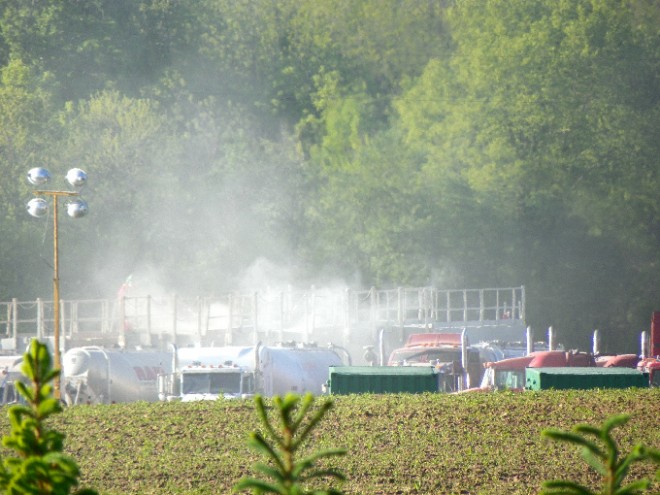
I went back to take another look at the dairy farm near us, now being fracked. The area was covered with heavy equipment. A few employees outfitted in fire retardant suits, masks, and hard hats worked in the distance. The quiet morning was filled with noise. Gray dust rose in the air and my throat burned.
When I set out to find out all I could about fracking I didn’t anticipate such disturbing information. I couldn’t have known fracking would soon intrude on our lives. I recently learned that fracking leases have been signed within sight of us to the west, north, and south. I’m concerned about our land where our cows graze and our chickens scratch. I’m concerned about my family’s health. And I’m wondering if you’re concerned too.
This is what fracking looks like. (Image:fafaohio.org)
Does the net affect our memories? Yes, but maybe not the way we think it does.
My sister and I were talking on the phone about one of the family trips we took as children. Our schoolteacher father and our stay-at-home mother hitched a tiny travel trailer up to the car to take their children to as many educational sites as possible each summer. That they managed months-long trips with two often squabbly girls and our toddler brother was remarkable. That they kept to a necessarily minuscule budget, even more so. They did this by never once buying prepared food of any kind. Every day at lunchtime we ate sandwiches on store brand white bread washed down with not-too-cold fruit drink, then got back in the car to keep driving. My mother cobbled together every evening meal using two aluminum pans, washing those pans and our plastic plates in a shoebox-sized sink. To me, an ungrateful and hermit-y little girl prone to motion sickness, these trips were a sort of educational hell.
Thankfully, one of our stops was in St. Louis to visit with my father’s only brother and his family. After weeks in a cramped trailer and even more cramped car, it was wonderful to spend the night sleeping in a roomy basement with cousins we hadn’t seen in years. We were even allowed to babysit ourselves while our parents went out to a restaurant. The adults brought us a rare treat, McDonalds, and we stayed up late talking and laughing. We showed our cousins how to draw grids on notebook paper to play Battleship. They showed us new card games. The next morning our aunt purchased some kind of St. Louis specialty for breakfast. Growing up in a household where doughnuts and store-bought cakes never crossed the threshold, this was unimaginable luxury. My sister and I remembered the sweet sticky coffee cake but not its unusual name.
After I got off the phone with her I got online to look it up. I got waylaid by flood warnings for St. Louis, so I checked maps to see if the water was rising by my uncle’s house. Then I was distracted by an article about pharmaceutical residue found in waterways. And of course I got sidelined by emails with editing questions, new article deadlines, some G chats that pleasantly used up too much time. Totally forgot my initial quest.
The next morning I saw the note I’d scribbled while talking to my sister. This time I vowed to focus for the few seconds necessary to Google it. I found the name of the confection almost immediately. It’s called Gooey Butter. I fussed around reading about how the cake is based on a baker’s mistake made back in the 1930’s and how customers swear allegiance to specific variations sold by different stores in St. Louis. I even looked at a few images, although none of them looked nearly as enticing as the cake I remember. Then I scrolled over to recipes. I was disappointed to note that nearly every one started with a yellow cake mix. I closed those screens sadly. I meant to email my sister the name of the cake but I’m pretty sure I instantly got caught up in the time flush that happens online. Probably never got around to it.
I realize with uncomfortable clarity that slurping up information online does little to deepen our experiences. It would have been better to leave the cake unnamed in our memories, held on unfamiliar plates as we clustered around a vinyl tablecloth listening to our aunt say, “You’ve never had anything like it” while we tried the first sweet bite.
I succeeded in finding links to scratch recipes. Here’s the cream cheese version and the non-cream cheese version. I made the cream cheese version for my family, marginally healthier with organic ingredients. And if you ask someone who hails from St. Louis, be careful to avoid expressing your Gooey Butter preferences. Chances are, theirs are much more fervent.
Today’s kids sit more than ever. Babies spend hours confined in car seats and carriers rather than crawling, toddling, or being carried. As they get older their days are often heavily scheduled between educational activities and organized events. Children have 35 percent less time for free play than they did a generation ago, and that’s before factoring in distractions like TV or video games.
Left to their own devices, children move. They hold hands and whirl in a circle till they fall down laughing. They beg to take part in interesting tasks with adults. They want to face challenges and try again after making mistakes. They climb, dig, and run. When they’re tired they like to be rocked or snuggled. According to the authors of A Moving Child Is A Learning Child, stifling these full body needs actually impairs their ability to learn.
Large muscle activities like climbing, running, lifting, carrying, rolling, jumping, throwing, and balancing not only build strength and coordination, they are also critical for reading and writing readiness since they develop proximal muscles (including trunk and upper arms). This in turn helps develop distal muscles in hands and fingers. Efficient coordination of large muscles progresses to the elbow, then wrist, then hand — making writing and drawing possible.
We know that our little ones walk and talk on their own timetables. No rewards or punishments are necessary to “teach” them. Yet children are expected to read, write and spell starting at five and six years old as if they develop the same way at the same time. Academics are pushed on young children with the assumption this will make them better students. This approach is not only unnecessary, it may be contributing to problems such as learning disorders, attention deficits, and long term stress.
Studies contrasting reading instruction at age five compared to instruction at age seven find earlier lessons may damage reading development. By the time children reach the age of 11, students who were instructed earlier show poorer text comprehension and less positive attitudes toward reading than children whose instruction started later.
Children pushed to read early (not those who naturally pick it up) tend to rely on right brain processes because that area matures more quickly. These early readers are likely to guess at unknown words using clues such as appearance, context, beginning and ending letters. Their main tactic is memorizing sight words. These are valuable methods but not a balanced approach to reading. Such children may quickly tire after reading short passages or read smoothly but have difficulty deriving meaning from what they read. The procedure they use to decode words can make the content hard to comprehend. These reading problems can persist.
On the other hand, children benefit when they learn to read naturally or are taught later. That’s because, as the left brain matures and the pathway between both hemispheres develops, it becomes easier for them to sound out words, to visualize meanings, and mentally tinker with abstractions. They memorize short sight words but sound out longer words, an approach that is less taxing. As they incorporate more words into their reading vocabulary they more easily picture and understand what they are reading.
In order for children to read, write and spell they must be developmentally ready. Some are ready at the age of four or five, some not for many years later. This readiness includes complex neurological pathways and kinesthetic awareness. It includes the proprioceptive sense developed through sensory receptors in the muscles, joints, and tendons: a form of maturation essential for a physical sense of self (even essential for learning how to modulate one’s voice and to hold objects carefully).
Such readiness isn’t created by workbooks or computer programs. It’s the result of brain maturation as well as rich experiences found in bodily sensation and movement.
These experiences happen as children play and work, particularly in ways that cross the midline. They includes expansive movements such as climbing, jumping, digging, swimming, playing hopscotch and catch, riding bikes, sweeping, running. They also include fine movements such as chopping vegetables, drawing, building, playing rhyming and clapping games, using scissors, and playing in sand. And of course there’s the essential growth that comes from snuggling, listening to stories, singing, trying new tastes, enjoying make believe. Children are drawn to such experiences. Without these bodily experiences, warns pediatric occupational therapist Angela Hanscom, they won’t have a strong foundation for learning. (Find out more in her book Balanced and Barefoot: How Unrestricted Outdoor Play Makes for Strong, Confident, and Capable Children.)
These activities stimulate the child’s brain to develop new neural pathways. Such activities also build confidence, smooth sensory processing, and create a bank of direct experience that helps the child visualize abstract concepts. Well-intended adults may think a good use of a rainy afternoon is a long car ride to an educational exhibit. A young child is likely to derive more developmental value (and fun) from stomping in puddles and digging in mud followed by play time in the tub.
There are many other factors contributing to reading readiness. Perhaps most important is a supportive family life where play, reading, and conversation are an enjoyable part of each day. But it helps to remember that young children want to participate in the purposeful work of making meals, fixing what’s broken, and planting the garden. They also need free time without the built-in entertainment of specialized toys, television, or video games. Their development is cued to movement. These bodily experiences prepare children for the magic found when shapes become words, words become stories, and they become readers.
His name was Vincent. He may have entered Pine Elementary School when we were both in 5th grade or may have been in my classes all along, but that spring he moved directly to the center of my awareness. He had silky black hair that fell low over astonishingly blue eyes. Unlike other grubby, snickering elementary school boys he was quiet and attentive.
It was probably no coincidence that I fell for Vincent soon after hearing Don McLean’s classic American Piealbum. It was his song about Vincent Van Gogh that captivated me. The lyrics told of a misunderstood visionary, a man with “eyes of China blue” whose soul was too beautiful for an uncaring world.
Although I’d never really paid attention to boys before, somehow I merged the intensity of those words with a look I was sure I saw in Vincent’s eyes. My girlfriends claimed to have crushes all the time over celebrities. The symptoms of their crushes included shrieking and silliness. I had none of these signs.
Once, as the teacher told us to line up at the door for music class, I found myself standing behind Vincent. I was sure he was aware of my presence. There could be no other explanation for the sudden frisson between us. Surely his skin prickled and his breath deepened as mine did. I wanted to touch his dark hair. I wanted him to turn and smile at me with causal ease even though I knew that was not possible at school. The boys’ loud obliviousness and the girls’ sharp watchfulness kept any such thing from happening. Boys and girls were friends only in books. Together they wandered moors or solved crimes or dreamed up new inventions. They talked openly and sometimes held hands. I wanted that with a longing more intense than I’d ever known.
Vincent kept me awake at night. His reserved nature made it easy to develop idealized concepts about him. I decided that he was smart and kind. I imagined that he was secretly drawn to me, but too shy to look my way. As I lay in bed, sleepless, I felt the injustice of being eleven years old. Too young to have love taken seriously, too young for anything.
Yet I felt old. Sorrows I’d carried for years became more intense because I’d lost the childhood distraction of play. I was on the verge of adolescence without sports or hobbies to keep me busy. All I had was this secret love for a boy named Vincent.
Over summer vacation I painted my toenails, rode my bike, tried to write poetry, and wondered if God existed. What kept me awake now was worry over how I might make myself pretty enough for Vincent. But I was also dreading the prospect that he might reveal himself to be something less that the person I’d imagined.
Vincent didn’t come back to school for sixth grade. No one knew where he’d gone. That made him, in my mind, more mysteriously alluring than ever. Sometimes at night I opened my bedroom window to breathe in the night air and look at stars. I hoped he might be at his own window. I no longer ached to hold his hand, I only wanted him to be happy.
I can still easily picture Vincent’s face even if I’ve forgotten his last name. My secret love for him taught me the first gentle lesson in becoming a woman. Unrequited love isn’t always painful. Sometimes it’s as tender as a moment never shared with a beautiful blue-eyed boy.
Years ago my two older kids, about seven and nine at the time, were getting ready to wash the floor. A neighbor girl knocked at the door asking to play. When my son told her he was going to wash the floor first she begged to be included. Although this girl had more monetary advantages than my children could have imagined, she was entranced. She’d never seen kids doing chores, let alone kids in charge of cleaning a floor.
She pitched right in as they scooted furniture out of the way, then swept. I gave them a bucket of slightly soapy water and they went to work with rags, scooting across the wet floor on their knees like crabs, giggling as the floor got wetter and their scooting became sloshy sliding. Their method didn’t matter to me. I was holding the baby and diverting the toddler while peeling potatoes and finishing up a work-related call. I was pretty sure the floor would be somewhat cleaner when they were done. They dried it with towels, moved the furniture back with appropriate grunting and groaning, then slumped on the couch. They looked entirely relaxed, as people do when satisfied with a job well done. When I got off the phone I came in to thank them. They were admiring how the floor caught the light and cautioning our toddler to keep his sippy cup on the table.
After that day the neighbor girl asked if she could do chores every time she came over. It seemed funny at the time, but I think now that she recognized she’d been missing the sense of accomplishment and camaraderie found in working together.
The floors aren’t spotless in my house. The bathrooms are also far from perfect. But I’m totally at peace with this. That’s because my kids handle much of the cleaning around here. I’m happy to do the cooking (or more truthfully I have control issues about what goes into the food my family eats). And I don’t mind being the family laundry wench, although I know kids are capable of handling their own laundering tasks. But in the spirit of “we’re all in this together” I’ve expected my kids to handle a sizeable share of household (and farm) work ever since they were small. I still do.
Timing
Actually, starting young is the key. When toddlers beg to help fold laundry or wash the car with us it’s easier to send them off to play so we can get the job done ourselves. But this is exactly the time to foster a child’s natural helpfulness.
It’s also a powerful way to promote positive development in all sorts of areas. Research shows that children who participate in household tasks are more likely to succeed in adulthood.
Twenty years of data analyzed by professor Marty Rossmann at the University of Minnesota found that the best predictor of success in young adulthood on measures related to education completion, meeting career goals, and maintaining good relationships with family and friends was whether they had begun doing chores in the preschool years. This association did not hold up when young people did not begin helping out around the house until the mid-teen years. Even I.Q. scores had a weaker correlation with success than giving children early responsibilities.
Forty-five years of data from the Glueck Study of inner-city males (part of the longer-running Harvard Grant Study) found that willingness and ability to work in childhood — shown by holding part-time jobs, participating in household chores, or taking part in school clubs or sports — was a stronger predictor of adult mental health than factors such as social class or family problems.
The 2019 study “Associations Between Household Chores and Childhood Self-Competency” of nearly 10,000 U.S. children entering kindergarten in 2010/2011 assessed how regularly they participated in household chores. These same children were assessed again when they reached third grade for prosocial behavior, prosocial behavior, academics, and life satisfaction. Researchers concluded, “The frequency of chores in kindergarten was positively associated with a child’s perception of social, academic, and life satisfaction competencies in the third grade, independent of sex, family income, and parent education… Compared with children who regularly performed chores, children who rarely performed chores had greater odds of scoring in the bottom quintile on self-reported prosocial, academic ability, peer relationship, and life satisfaction scores.”
A small, more recent 2022 study, “Executive functions and household chores: Does engagement in chores predict children’s cognition?” of five to thirteen-year-old children affirms that both self-care chores (such as making one’s own snack) and family-care chores (such as helping make a family meal) significantly predicted improved executive functioning including working memory, flexible thinking, problem solving, follow-through, and self-control.
Young children clamor to be included. When a preschooler begs to help prepare dinner, he doesn’t want to play with cooking toys, he wants to participate in the real work that’s taking place. It slows us down to let him cut fresh mushrooms with a butter knife (and restraint to avoid criticizing or re-cutting), but a child recognizes his contribution toward dinner. He’s also more likely to eat it.
Movement and Hands-on Experience
Helping out engages young children in activities that promote movement-cued development. This includes large motor activities like digging in the garden, carrying a watering can, putting away groceries, and sweeping with a broom. It also includes fine motor tasks like using a screwdriver and tearing lettuce for a salad.
Childhood is a period of major neuroplasticity, when learning actually changes the brain’s functional anatomy. Hands-on experiences are particularly vital at this time. In fact, the child who regularly engages with manipulatives (arranging veggies on a platter, setting the table, sorting socks) and applies real-world math (measuring and pouring coffee beans in the grinder, taking things apart and putting them together, following recipes) has a strong foundation of representational experience, which enables better understanding of abstract mathematical concepts when they are introduced later. These movement-based tasks are also closely linked to the brain development necessary for reading and writing. (Find out more about this in Sally Goddard Blythe’s wonderful book, The Well Balanced Child: Movement and Early Learning.)
Growing as a Person and a Family
Children accustomed to flashy toys and rapidly changing screen images may become so wired to this overstimulation that without it they’re bored. The slower pace of yard and household tasks can be an important antidote, especially when we’re willing to go at a child’s pace. Young children tend to balk when they’re hurried or left out. They show us, stubbornly and often loudly, that there’s nothing more important to them than the here and now. So whenever possible, slow down so you can make working together enjoyable. Letting a small child spread peanut butter, cut sandwiches, and pour milk into cups from a small pitcher affirms the value of the present moment. It also makes an ordinary lunch into a tea party.
The benefits don’t end for older children. Hands-on experience in all sorts of tasks and hobbies promotes learning, builds character, and helps to form the basis of our future selves. When neurologist Frank R. Wilson interviewed high achievers he found many credited their expertise to attributes learned through hands-on activities. In his book, The Hand: How Its Use Shapes the Brain, Language, and Human Culture, Wilson emphasizes that resourcefulness and self-definition arise from the use of our hands more than from the dictates of our educational system.
In a way, doing tasks together puts parent and child on more even ground. So often we parents are rushing to schlep our kids to practice or lessons or other kid-oriented events, making them the pivot around which a family’s activities revolve. Taking part in regular tasks together, even if we’re pulling weeds on opposite sides of the garden, affirms the sort of mutuality that advertisers tell us is only found in pricey vacations. Of course time afterwards for a nice game of hoops and some cold lemonade builds bonds too.
As our children grow, doing tasks together can continue to strengthen our relationships. Moments of meaningful interaction happen easily when washing dishes, folding laundry, fixing the car, or walking the dog together. Working on shared chores helps a child’s contemplative side emerge, prompting discussions that may never have happened otherwise. This is true between parent and child as well as between siblings. I remember my mother bemoaning the arrival of our dishwasher because we no longer took turns washing and drying, ending a relaxed half hour of post-dinner conversation each evening.
It’s easy to make these activities a tradition. Teenagers who have always helped out when a parent puts on snow tires, cleans out the basement for a yearly garage sale, or cans pickles may grumble when asked, but chances are they’d feel excluded if left out too. In part, who we are is defined by what we do. Growing up with hands-on lessons in taking initiative, practicing cooperation, and working towards a goal helps to shape character. And it transforms pickle-making from drudgery to an important family ritual.
Delayed Gratification
This is a biggie in the “you’ll thank me later” department because kids who are able to delay gratification are much more likely to do well as they grow up.
We model delayed gratification each time we choose to work for a later or larger goal. This includes saving, making do, and making it ourselves. We demonstrate it when the whole family pitches in to rake a neighbor’s leaves while she’s recovering from a broken hip. We teach it when we let a child see that if he doesn’t do the laundry when it’s his turn, there won’t be a clean team shirt to wear to the game. And we show that it’s expected every time our kids pitch in with the ordinary jobs necessary to run a household.
This may seem negative, particularly when popular culture constantly screams “have it now” and “get what you want.” But there are enormous positives. Our children become familiar with the pleasures of anticipation, which multiplies the eventual delight when a goal is reached. They also begin to internalize the ability to delay gratification.
This is pivotal for success. Multiple studies (cited in Daniel Goleman’s book Emotional Intelligence) found that children who were able to defer gratification grew into teens and young adults who were more socially competent, better able to deal with frustration, more dependable, reached higher educational attainments, and were effectively able to make and reach long-term goals. Delayed gratification is also related to impulse control. Research shows that a child’s ability to control his or her impulses at an early age is predictive of success even decades later as a healthy, financially stable, and positive member of the community.
Expecting children and teens to take an active part in running a household gives them plenty of opportunity to gain the positive coping skills that help them control their impulses and delay gratification. It may seem like returning to the old adage, work first, play later, but the benefits can be extraordinary.
Skill building
Regular tasks allow our children to see for themselves how the world works. They grasp principles of science and math as a seed becomes a tree, as boards are transformed into bookshelves, as flour and yeast turn into bread. They develop traits such as patience. They are motivated to apply what they’re learning to more challenging endeavors of their own. Sure, it doesn’t hurt to know what it takes to grow the tomatoes, make the sauce, and prepare the beans for tonight’s enchiladas. But more importantly, as our children become proficient at the jobs necessary to sustain their families, they also see themselves as capable. That perception transfers across all endeavors.
There’s no denying that children who participate pick up useful skills. They see that maintenance is easier than waiting till the car or laptop breaks. They can set the table, toss a salad, make a sandwich, and boil pasta. Not right away, but eventually. While they are making real contributions to running the household they’re actively learning how to cook, launder, clean, make repairs, maintain a vehicle, budget expenses, and handle other tasks which are essential for an independent life once they’re adults. Wonderful lessons in cause and effect are reinforced when children complete work and benefit from the results. Seeing oneself as an agent of useful change, priceless.
They also learn from the examples we show them, such as how to handle pressure and ways to learn from mistakes. Whether we’re four or 40, gaining competency feels good. It doesn’t hurt to give credit where it’s due. So if your child has been busy chopping mangoes, strawberries, and pineapple into tasty chunks, try renaming the result “Sophie’s Special Fruit Salad” for extra reinforcement.
Purpose
When we stack firewood to prepare for the upcoming winter, make a gift to celebrate a friend’s good news, or change a favorite recipe to accommodate Grandpa’s diabetes, our efforts have purpose and value. As our children participate along with us, they feel the intrinsic satisfaction of doing something that has meaning.
So many educational tasks put before our children serve no purpose other than to instruct. But when learning is connected to something truly purposeful, it can’t help but kindle motivation.
From the earliest time our species lived on planet Earth, young children benefitted from the purposeful learning that comes when adults around them are engaged in practical activities — welcoming a child’s questions and eagerness to be included as entirely natural parts of growing up. It acknowledges that these essential skills are necessary for maintaining and belonging in a community.
Children feel honored to be included in real work that includes real challenges. If we pay attention, we see that’s just what they pretend to do when they play.
Beyond Chores
I’m not fond of the word “chores.” It implies that kids and adults have tasks that are set apart from the rest of our lives. Making work around the house and yard a regular part of our lives together seems more natural.
I think it’s valuable to get work done together as much as possible. For me, the simplest way to respond to grumbling has always been, “that’s just how we do it in our family,” without engaging in arguments on the topic. And of course balance is essential. Children and teens (well, all of us) need time for daydreaming, play, socializing, relaxation, projects, and all of life’s other joys.
My kids have their own chores, which they sometimes rotate. They haven’t always done them well or on time by any means. Accepting a floor as clean as a child will get it is part of having children participate. And I’m pretty laid back about things like clean bedrooms. (I remind them we try to adhere to the Firefighter Rule: Could emergency workers navigate a bedroom if necessary?) I understand that kids put less energy into tasks that don’t seem to have much importance. They recognize that a clean bedroom doesn’t affect our family’s functioning, while they know for sure that cutting and stacking firewood will keep our house warm. Hence, the firewood is done right while their rooms are often just short of scandalous.
We’ve never given them an allowance, mostly because we haven’t been able to afford it. Families have counted on children throughout history for work that was reliable and essential. Today we are fortunate that we don’t have to rely on our kids to survive, but we can expect them to contribute. The tasks may not be fun or interesting but they are necessary. They demonstrate to every child that he or she is a valuable contributor to the well-being of the family. And hearing, “Thanks, we couldn’t have done it without you,” feels good too.
I’m pretty sure growing up this way has contributed to how super responsible my kids are now in their teen and young adult years. They see a pile of boxes I need to load for our food co-op and carry them, never waiting for me to ask. They gladly stop whatever they’re doing to pitch in for an hour or all day when help is needed in the garage or barn or back yard. They are incredibly capable people who are far more astute and skilled than I’ll ever be. They can milk cows, fix tractors and cars, cut and bale hay, install plumbing, make meals, diagnose a sick chicken, hang drywall, identify spiders, back up their political opinions, weld, put on a roof, well, you get the idea. Sure, they have busy social lives and enjoy keeping their faces aimed at screens just like everyone else. But they recently spent an entire weekend helping a family member pack, move, and make repairs. They worked hard and displayed nothing but their usual good cheer. After exhausting 14 hour days I asked if they’d rather have skipped this particular task. Every one of them affirmed that it was no big deal. And I heard my words come back to me, “It’s just the way we do things in our family.”
7. Leave money in vending machines, especially in hospitals and detention centers.
8. Leave a positive review for a local business on Merchant Circle, ThinkLocal, or Yelp. And don’t forget writers. Leave stars on sites such as Goodreads and Amazon, recommend books you’ve enjoyed to friends, maybe give a shout-out on social media to authors whose work impacted you.
11. Give genuine compliments. You might want to challenge yourself to give compliments to five people a day. It keeps you on the lookout for truth and beauty. Tell a clerk she has a lovely voice, a child that his smile made your day, a loved one that their eyes are beautiful.
12. That kid who keeps hanging around, looking as you grill dinner or wanting to talk while you wash the car? He may be longing for encouragement. Even a few kind words may be the kind of mentoring he needs.
13. Help budding entrepreners through Kickstarter or Indiegogo. Make your money go farther by lending to a Kiva project.
14. Greet new people on your street with a small gift such as a houseplant or plate of cookies. The neighbors you’ve never met? Try online resources to connect such as NextDoor or front porch forum.
17. Set books free. Donate them to a good cause (a nearby school, your library’s book sale?) or leave them ala Book Crossing to find new readers.
18. Donate pet food to the nearest animal shelter. While you’re there, offer to walk a few dogs.
19. Patronize kids’ car washes and lemonade stands.
20. Be aware of newcomers to your workplace, school, house of worship, or other organization. Make a point of greeting them and introducing them to others.
21. Keep duplicates of your child’s toys and books in the diaper bag. When you encounter fussy children, offer an extra to their parents.
23. Donate blood. One pint of blood can save up to three lives.
24. Designate a tiny container as your family’s Pass It Forward box. Tuck it somewhere one member of the family will find it (under the bed pillow works) with a little surprise inside (a loving note, a handmade coupon for an unexpected perk, some chocolates, a drawing, a map of a place you’re going that day, a compliment). That person is expected to put something else in the box and leave it for another family member, so kindness can circle around and around.
The most avid bird watchers keep Life Lists, tracking the first time they sight a bird. They write down information like order, genus, and species. Usually they note much more. Things like date and place the bird was spotted. The more detail, the more a birder’s Life List becomes something greater than a factual log of avian sightings. Years later the pages can return that person to an afternoon standing in the dappled sunlight of a New England forest when a blue, orange, and yellow flash heralded the arrival of a Painted Bunting. It can evoke a remarkable trip to Mexico where along a riverbank three distinctive wavery notes of a Great Tinamou were heard, and all the rest of that day bird after bird was sighted until darkness arrived. It can bring back time spent with dear friends in whispered conversation waiting hours for a glimpse of a single Black-Capped Vireo.
I’m no birder. I appreciate but know next to nothing about our feathery friends. But I am intrigued by the Life List concept. Life Lists keep birders motivated. The lists also alert them to a wavelength most of us ignore. A wavelength sensitive to birdsong, flight, and the faint hush of a wings on a nearby branch. Keeping track of any one thing is entirely unnecessary but such lists cue us to a chosen frequency.
What do you want to notice and cultivate in your life? Here are some possible Life Lists to consider.
Books That Made A Difference I’ve often thought of books that changed my worldview or opened doors inside me with their insights. Do I remember the titles and authors? Only sometimes. I truly believe there are pivotal books that make us who we are. I started such a list years ago but let it lapse.
If you keep such a list, add more than title and author. Include a quote or two, some quibbles you have with the text, questions you’d like to ask the author, why this book came at the right time for you, where you were when you read it, what it means to you. Many people are keeping their book lists on GoodReads and Library Thing.
Wildlife Seen Like a hugely expanded birder’s list, this could be open to all species or your own particular fascination, perhaps spiders (that would keep you busy with something like 38,000 species). And like a birder’s list, you could note species, location, description, your impressions, and much more.
Trips Taken My mother made an effort to write about the long summer trips my family took, filling spiral notebooks with destinations and mileage and her impressions. I cherish them now, even if those trips left me with the wrong kind of lust.
If you keep such a list, fill it with photos and memorabilia. Make notes about your expectations and how they were fulfilled, about sights and sounds and tastes, about conversations and funny moments.
Favorite Movies (or Movies Seen) This can be remarkably helpful if, like me, you find yourself starting to watch a movie that sounds good only to realize you’ve seen it. A list of movies seen, with details about favorites, is something I marginally keep up on Netflix just to keep myself from re-watching something I didn’t enjoy in the first place. I have friends who attend yearly film festivals, keeping extensive notes that they share with non-festival goers like me when those movies are released. Again, the more details the better. Write down who you were with when you saw the movie, where you saw it, snippets of meme-worthy dialogue, your favorite scene, actors you predict will go places, and your review.
People Who Have Influenced You So many people flit in and out of our lives. Sometimes we don’t realize their impact until years later when we see they served as role models (like the woman I met during my brief espionage career) or anti-role models (a surprisingly important motivator). This is one of the few lists that can be made retroactively. Think of neighbors, friends, classmates as well as public figures. Note what they did and said along with behaviors that contributed to that influence. Once you start writing these observations down you may be more attuned to daily influences of people in your life, from the spirit-lifting cheer of a clerk to the resolutely calm example of a friend in trouble.
Dream List Sure, you could write a bucket list and cross off each experience. But I’m talking about keeping a list of dreams you remember. I’ve written down only my most memorable and startling dreams for years, usually the ones that refuse to leave my mind. There are potent messages in dreams, coming to us from deep places where wisdom waits to inform us. If you want to more fully remember your dreams, try this. Before falling asleep, remind yourself to remember and understand your dreams. As you waken, pull the threads of your dreams into your conscious awareness. Whenever possible, write them down. It helps to take the images in the dream (ladder, teacher, highway, blue car) and note what each means to you. Look back at your dream list every now and then, you may find themes unspooling into new awareness.
Paths Hiked There’s something about coming upon new vistas along the trail that prompt reflection. Those musings might be interesting to record along with hike data like location, distance traveled, terrain, weather, and date. Note who you hiked with and maybe what you talked about or laughed over. Include photos. Some folks contribute their photos and thoughts on Tumblr sites or blogs.
Words That Cut To The Center This is a list I’ve kept on and off since I was a teenager. I find a quote or poem that distills meaning to the essence and write it in a journal (or now, on a Word doc). I’ve lost several of these lists, only to find them years later and catch a glimpse of what occupied my heart during those times. I’ve also found such lists remarkably useful, perfect when I want to share a poem or quote with a friend.
Belly Laughs, Inside Jokes, Made-Up Words Laughter is good for us, but we rarely remember what caused us to laugh ourselves into tears. I wish I’d started a list years ago with just a few notes about who, where, and particularly what we found so funny. I suspect I’d laugh all over again.
I’d also love a list of all the inside jokes and words unique to my family and friends. Some trigger us to laugh, some promote a feeling of solidarity because they remind us of shared experiences. How easily we forget.
Here’s one my family still uses, “You no see big thing like train?” A friend drove a truck for a business started by an immigrant whose English wasn’t easy to understand. The business made money in part because of the owner’s extreme frugality, he barely even maintained the truck. One day the friend was making a delivery when the truck’s brakes failed. Unfortunately they failed as he was approaching railroad tracks where a train was stopped. It was a large truck and much as he tried, he only managed to slow down. He crashed into the train. He was fine, the truck was not. He called his boss to explain. The boss yelled, “What, you no see big thing like train?” This line has proven itself handy in many circumstances, thankfully none involving real trains or failed brakes.
Tastings Savoring the good things is a tasty reason to start a list. Consider wines, beer, cheeses, chocolate, or heck, start a list of Chomping Something From Every Street Cart I Can Find. Take notes on subtle flavors, good pairings, and circumstances such as where you were and who you were with. Highlight the very best. Hmmm, I like that street cart idea…
Perfect Moments We live in a happiness-chasing culture, perhaps because advertisers tell us in every possible way that it’s easily purchased. But if we pay attention we find that perfect moments happen all by themselves. It’s a father rocking a baby to sleep, a calf taking first tottering steps in a pasture, a turn on the dance floor made of movement and beat and sheer exuberance. These moments aren’t easily remembered. They enlarge our lives only briefly before drifting into fragments of memory. Taking time to sketch a perfect moment is an unexpectedly rich way to capture it (try these drawing hacks for non-artists). You might also draw a mind map or write a poem. Who said lists have to be list-like?
Juncture List You know those junctures when a decision is made that shifts the course of your life. Sometimes we realize something big is about to happen: picking which college to attend or starting a job or ending a relationship. Sometimes the choices seem minor at the time, like not answering the phone or telling a white lie or ignoring a symptom. This is another list that is more easily written while looking back. It may not seem valuable to parse out where things changed, but it helps us see larger patterns, feel synchronicity’s strange power, and appreciate the mysterious paths we’ve taken to arrive at this moment.
Kids are their own people. Any of us can see this is an underlying theme in drama (in books, on the screen, and in real life dramas). It’s obvious from a quick look at how much our friends differ from their own parents. Years ago I joked that my anti-establishment neighbor’s son might just grow up to be a conservative stockbroker and that my frantically risk-averse friend could end up with a thrill-seeking daughter. I learned pretty quickly such jokes are not appreciated.
But I thought I understood that kids go their own way reasonably well. I’ve managed to celebrate the unique passions my own kids pursue, even though their interests are nothing like mine. I’m glad to see that we’re largely in sync on bigger issues. My kids and I tend to agree on politics and religion, we share a disinterest in most sports, and we’re all somewhat introverted. What we don’t share? A desire to stay close to our roots, geographically speaking. I’ve tried to raise them to be global citizens. Is it possible to take that too far? I’ve always lived close to my hometown and extended family. One or two of my four kids may not have that gene.
One of my sons is entranced by Finland. I think it started while chatting with online Finnish friends. Hankering to drive, he told me that kids in Finland are encouraged to get driving experience starting at a very young age and given training to handle slippery and hazardous road conditions (ice + moose, for example). The licensing requirements are some of the strictest in the world, he explained, a pointed contrast to the jerk on the road in front of us at the time who was cutting off cars and weaving across lanes.
My son also has a thing for Finnish music, starting with the now iconic band Apocalyptica formed by classically trained cellists.
Finnish musicians offer plenty of diversity, including partially submerged folk singers
and dancing puffballs.
And he is inspired by the Finnish spirit. He sees it in their traditions and history (I never thought I’d hear so much about the Winter War). Finnish character is said to have a lot to do with the term sisu. This doesn’t translate easily. It’s related to inner will and the determination to persist despite the odds. This spirit, as my son sees it, also has to do with the Finnish way of doing things. That includes summer competitions that Finns call “world championships” in swamp soccer, mobile phone throwing, and wife carrying. Or a recent proposal in Parliament to extend the annual four-week paid holiday by another week, for a “love holiday.”
But another of my kids is talking up New Zealand. Land of fascinating spider species, amazing diversity, and gorgeous vistas.
Also home to the compelling Haka, traditional ancestral war cry of the Maori people, now performed by the All Blacks, NZ’s rugby team, before their matches.
Serves me right for joking about other people’s children. Come to think of it, my attempts at humor weren’t all that far off. My anti-establishment neighbor’s son is now in college getting a degree in business, hoping to work in investment banking. The daughter of my risk-averse friend is into barefoot climbing.
Guess I’d better make sure my passport is in order.



 . This concept is now being called the “Goldilocks effect.” According to a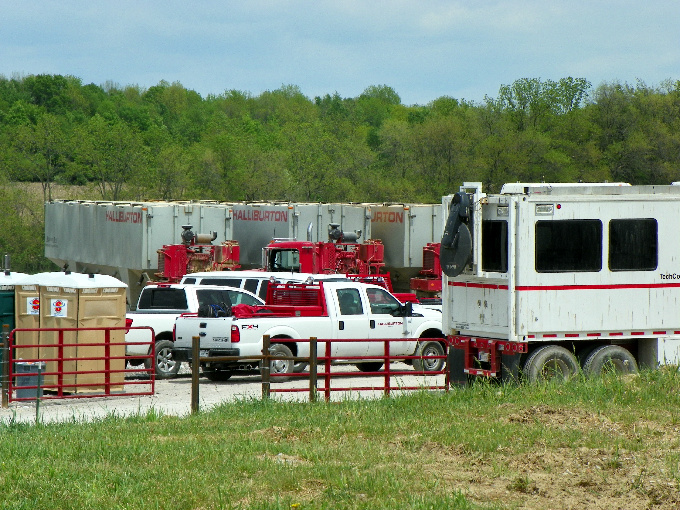





 album. It was his song about Vincent Van Gogh that captivated me. The lyrics told of a misunderstood visionary, a man with “eyes of China blue” whose soul was too beautiful for an uncaring world.


 .)
.)
 , Wilson emphasizes that resourcefulness and self-definition arise from the use of our hands more than from the dictates of our educational system.
 ) found that children who were able to defer gratification grew into teens and young adults who were more socially competent, better able to deal with frustration, more dependable, reached higher educational attainments, and were effectively able to make and reach long-term goals. Delayed gratification is also related to impulse control. Research shows that a child’s ability to control his or her impulses at an early age is predictive of success even decades later as a healthy, financially stable, and positive member of the community.


 .
.


 it was noted that people in Finland are remarkably content. Of course we’ve all heard about
 Laura Grace Weldon