Do Childhood Books Shape Us?

story and character formation, selfhood and book, self-image and books, girls and books,

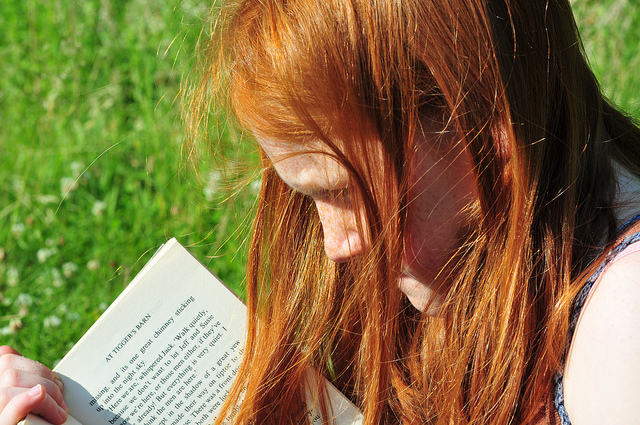
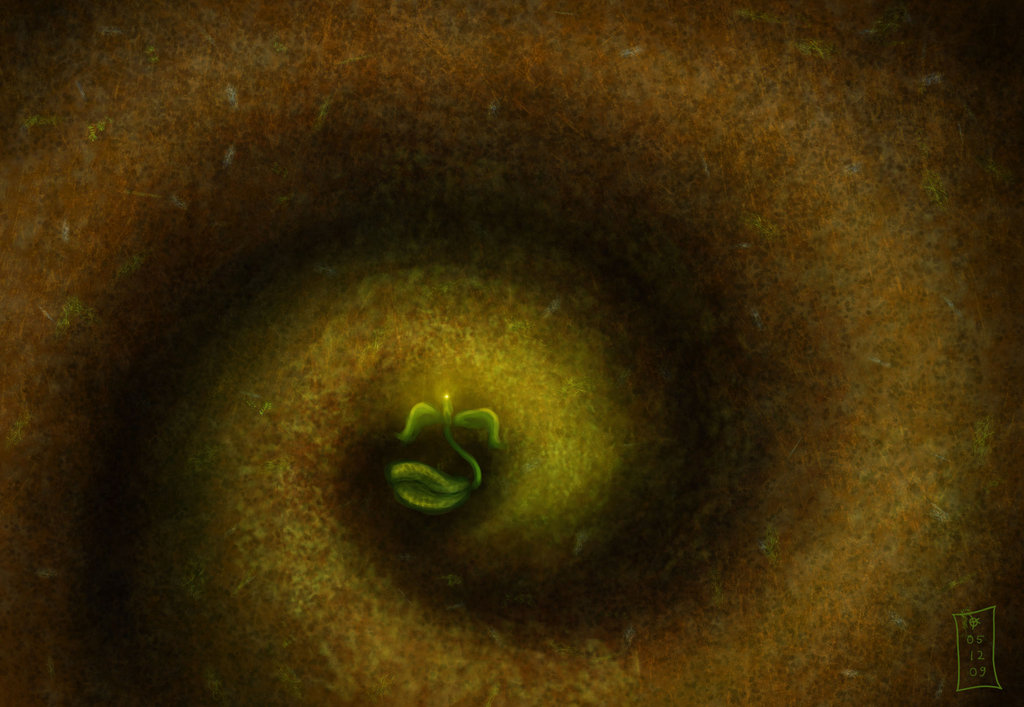
Building a self. (andycarter’s flickr photostream)

Children’s inner lives may not seem all that complicated. But they are, even if kids aren’t fully aware of the complexities they’re dealing with until they’re much older. That’s one reason it’s hard for them to talk with their parents about ways they are gaining strength, inspiration, and a sense of self.

Their favorite books offer a clue.

Children are drawn to stories that resonate with the same challenges they’re facing. Authors know kids seek out tales that present certain compelling themes. Speaking one’s truth, overcoming adversity, enduring tragedy, relying on wit or cleverness, making a sacrifice, establishing one’s own values, finding a kindred spirit, gaining new powers or knowledge—this is the stuff that translates into purposeful meaning for the young reader.

To understand what kids are going through as they grow up, it helps to look back at the pivotal books that made a difference during our own formative years.

As I look back I realize two books I read over and over still echo in my life today. One of my favorites was Johanna Spyri’s Heidi. It’s the story of a little girl who is taken to live in the mountains with her grumpy but kind grandfather. She loves to spend her days outdoors on the hillsides, playing with the goats, talking to Peter the goatherd and his blind grandmother, and eating simple wholesome foods like cheese made from goat’s milk. When Heidi is taken away to live in the city, a companion to her sickly cousin Clara, she’s deeply homesick. Although she happily learns to read, hoping she can go home to read to the blind grandmother, each day away from her beloved mountains haunts her. She convinces her uncle to let Clara come back with her for a summer visit. There they spend days outdoors, playing with the goats, eating her grandfather’s hearty food, and laughing. Her cousin recovers her health and Heidi is free to stay in the place she loves.

My other favorite book was so pivotal I’ve called it the book that saved me.  The Secret Garden by Frances Hodgson Burnett is about a lonely girl named Mary who lives on the moors of England. She befriends a boy, Dickon, who can speak to animals. She also insists on becoming acquainted with an invalid named Colin. Mary doesn’t want dolls or toys. She wants the joy of helping a hidden garden come alive. She wants to remain free of lessons so she can learn Dickon’s wisdom. She wants to understand the mystery that makes flowers grow, helping Colin find that strength in himself.

Both books are about a certain kind of justice, one that permits self-determination and self-definition. Both are about the value of staying rooted and feeling nourished by a sense of place. Both are about the restorative power of nature. I feel those elements in my life strongly. Yet I see even more of these books in my choices. My children have grown up without schooling, as Heidi and Mary did. I make cheese from our cow’s milk, insist on wholesome food, and speak to all the animals on our little farm (though I’m still waiting for birds to alight on my arm as they did on Dickon’s). I have Heidi’s passion for reading and Mary’s passion for watching things grow. And I hope I have what both characters had in abundance, the determination to speak up for what they believed was right.

What books made you who you are today?

Did you share any of that book-related inner growth with the adults in your life?

And does looking back at these influences give you a glimpse of your own child’s complex emerging selfhood?

Carly’s Voice

reaching autistic child, non-verbal autism, technology for autism, voice assist for autism, aphasia in children,

Carly Fleischmann was unable to communicate. Diagnosed with autism and related disorders by the age of two, she screamed, threw herself to the floor, smeared feces, moved constantly, and barely slept at night. An attentive family plus hours of daily therapy helped teach her rudiments like walking and feeding herself. Experts advised her parents to consider residential care.

But one day during a therapy session, Carly reached for the computer. Slowly, using one finger, she typed

help

teeth

hurt.

Her therapists were astonished. It took months and much coaxing to get her to use the computer again (at that time, an augmentative communication device). But she began to recognize that communication was essential. Technology made it possible.

What emerged from her arduous single strokes on the keypad showed a girl who wasn’t mentally retarded, as her doctors suspected, but someone spirited, insightful, and intelligent. She wrote about wanting to have fun with normal kids. She asked to do things she’d always wanted to try. And she tried to convey what it was like to live in an autistic body. She explained that behaviors (like banging her head on the floor and bleating loudly) erupted from her like liquid would burst from a can of Coke when it had been shaken and opened. She said those behaviors helped block the sensory input of sight and sound that constantly overwhelmed her.

A few years ago, a segment about Carly’s new-found communication aired on 20/20.

Now Carly uses technology to communicate with a world that’s ever more open to her. She keeps up with a busy Twitter  feed and Facebook fans. She answers questions, promotes autism awareness, and says that she feels part of a larger community by connecting with people through social media.

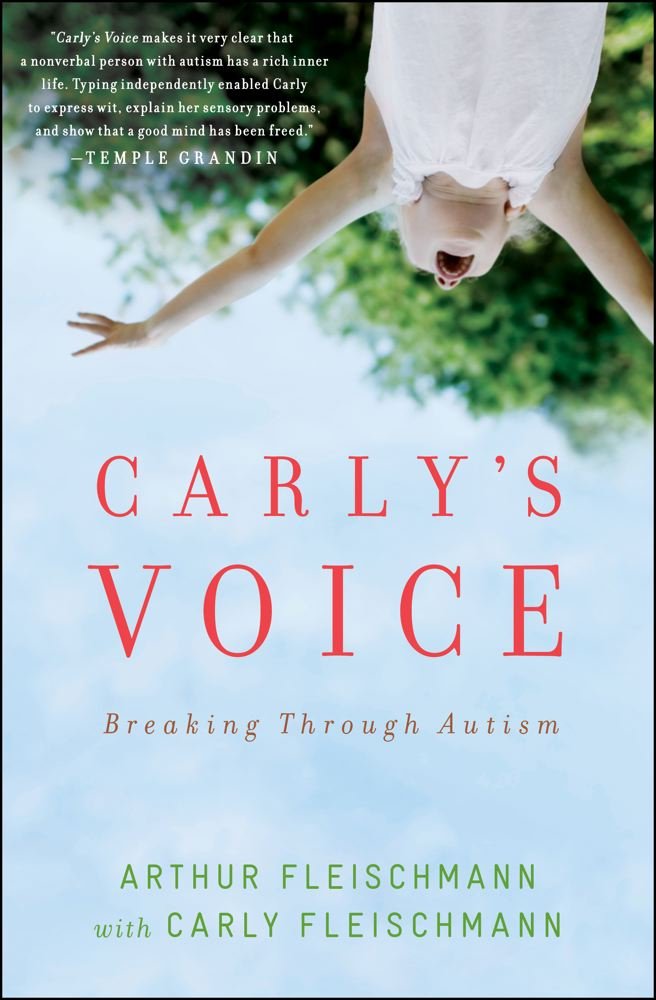
Technology allows Carly to share what she calls her “inner voice.” Check out Carly’s Cafe, an interactive web video, to experience a coffee shop as she experiences it. And take a look at the memoir she wrote with her father, Carly’s Voice: Breaking Through Autism
to better understand this bright engaging girl whose world unlocked thanks to a keyboard.

Oh, and don’t think Carly’s drive to move forward has slowed. Now 17 years old, she was recently asked to appear on a panel at The Nantucket Project, a prestigious request for any expert, even more impressive that she would be their youngest ever. Senator John Kerry was also scheduled to give a presentation. She tweeted him in advance, challenging him to take a seat on the panel so she could ask him questions. Her challenge was retweeted thousands of times by her followers and Sen. Kerry did indeed do as she asked. Her first question to him was, “What have you done in the Senate to help autism and do you think it’s enough?” Watch the video here.
We may not know what sparks autism, from inflammatory responses in a pregnant mother’s body to systemic changes in the body to another step in emerging neurodiversity. We do know that Carly and many more like her are with us, speaking in voices we’re meant to hear.

Throw Strangely Amusing Parties

throw an art party,

We used to throw strangely amusing parties on a more regular basis. Box parties where kids made forts and mazes and castles out of huge boxes. Tie dye and batik parties that were a messy extravaganza of color. Science-y gatherings where everyone worked on the same ridiculous experiment with vastly different results. Even an election commiseration event where everyone had to bring a few jokes about a certain president whose name rhymed with “tush.”

The longest lasting tradition? Our summer pig pen parties. These were grand messy BYOB affairs, as in bring your own bucket—of dirt. It was dumped in a backyard kiddie pool and mixed by all children in attendance into perfectly creamy mud, which they used to coat themselves until they were recognizable only by bathing suit outlines. We put a garden hose at the top of our slide and the kids careened down in glorious streaks of mud. We handed out cans of shaving cream for use as body décor (with firm instructions to avoid faces because it’s not fun in the eyes). We brought out ample water balloon supplies. And we insisted the kids eat without utensils or hands, just direct face to plate. Like pigs. Of course these parties got out of hand once the grown-ups refused to sit in lawn chairs watching their kids have all the fun. Some neighbors showed up in pig masks, others showed up with water balloons sneakily hidden in baby strollers and red wagons, others brought massive auxiliary supplies of shaving cream. Normally well-behaved men used hoses to fill garbage cans with water, which they dumped over the heads of the few civilized mommies who thought they’d keep their hair looking nice. One year the entire assemblage of pig pen partiers were incensed that a regular pig pen attendee decided to stay home to repair a fence. All of us walked down to the street in wet, muddy, shaving cream streaked glory to drag him to the party. His police chief father who was there helping him make the repairs looked seriously alarmed. We dragged him anyway.

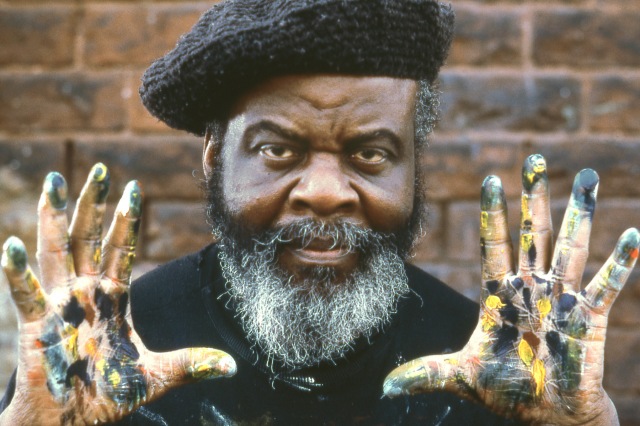
I’ve been fantasizing about a backyard Jackson Pollack party where everyone brings leftover paint to fling at canvases, maybe even using the giant trebuchet our kids built for some super-charged paint tossing. I can just see us all in splattered clothes, posing for a group picture with candy cigarettes hanging out of our mouths. What’s stopping me? I live with practical people who wonder if paint will get tracked in the house because partygoers are human and will eventually need to use the bathroom.

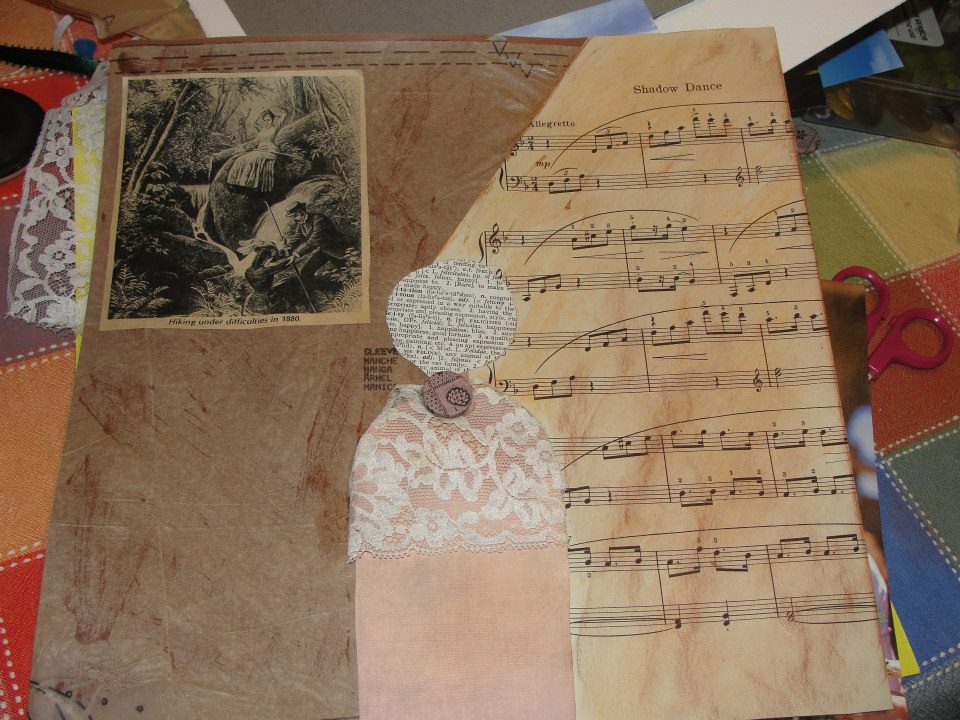
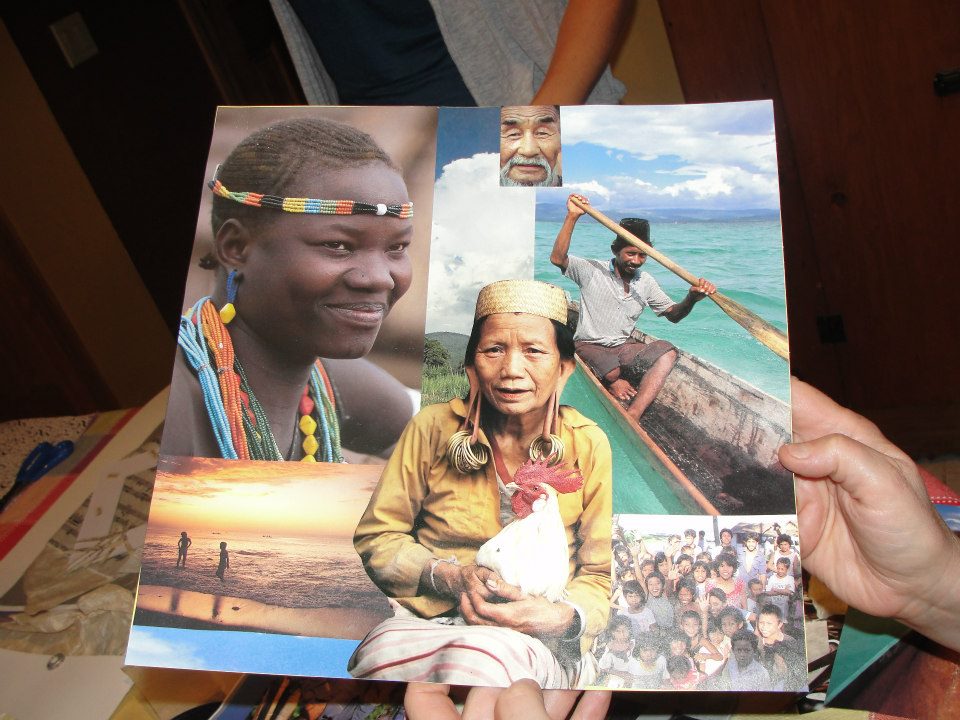
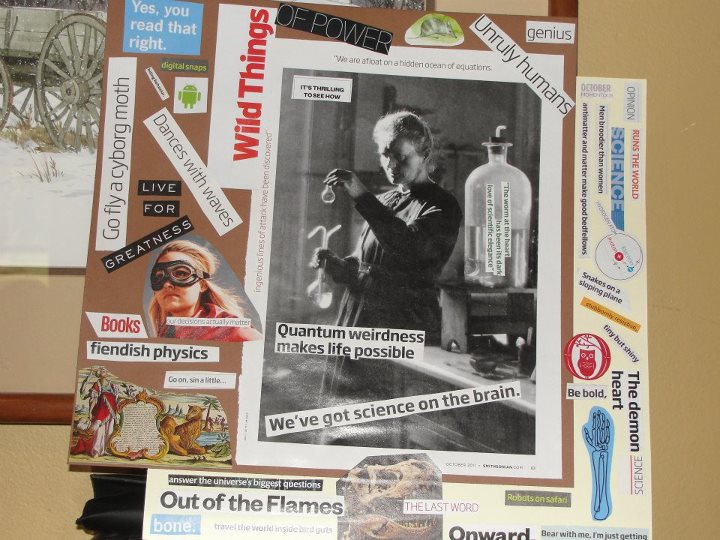
My recent event was a quietly civilized affair: a collage party for some artful cutting and pasting. I have all sorts of glue-able stuff here. Old sheet music, sewing patterns, stockbooks, wallpaper, tiny do-dads, lace, game pieces. All I asked people to bring were their own scissors, marked with their names (because scissors are migratory beasts) and a potluck offering. They brought a lot more glue-able stuff to share. I thought we’d stick down some background, let it dry while we ate and drank, then finish and move on to a second or third one each. But my friends ate and drank and talked while collaging. They didn’t want to stop cutting and arranging. It’s as if we all have too little time for something as simply satisfying as placing a scrap of paper on a page exactly as it pleases us. The event was less lively than the average pig pen party, that’s for sure. But it was restorative. No phones. No screens. Nothing else to do but indulge in the kind of play we call creating. I guess that doesn’t happen unless we make time for it.

Here’s a sample of collage party creations. (Some are backgrounds awaiting finishing touches.)

And let me know your ideas for strangely amusing events. I plan to steal them.

turn junk into collage,

art party,

make a collage, throw a collage party,

science collage,

You’re Having A Perfect Day

today is perfect, unique day, gratitude reasons,

ilovemcl.deviantart.com

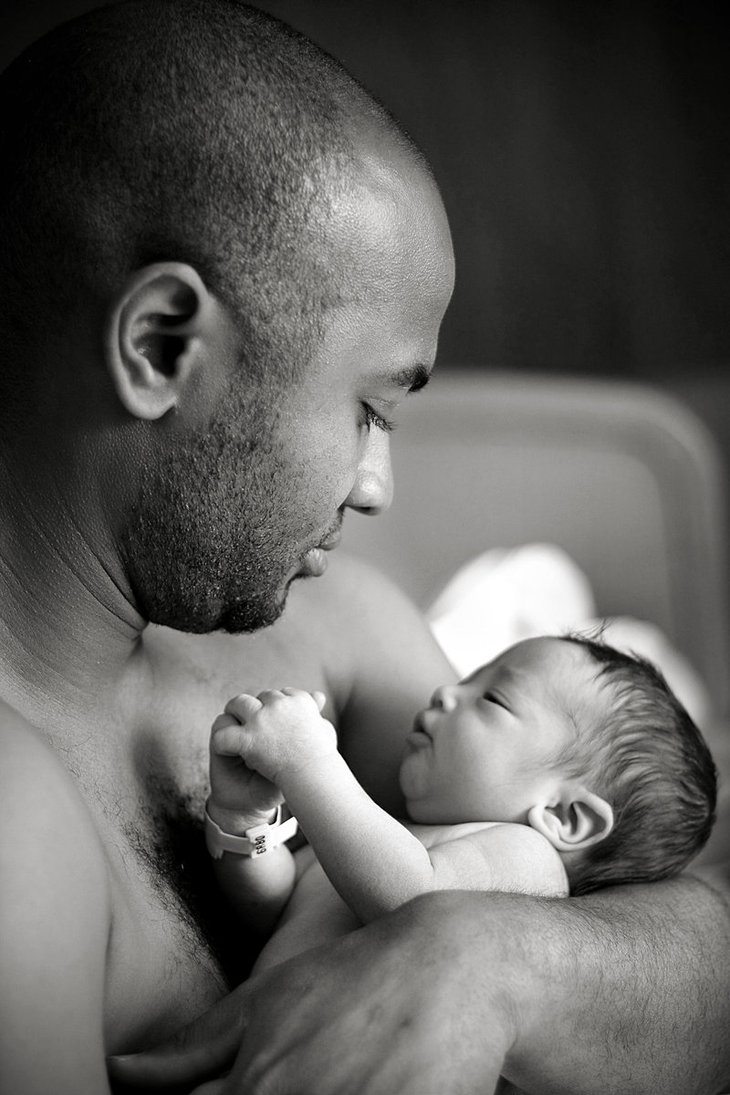
A hundred million babies are being soothed in loving arms, lulled to sleep by songs in every language. Those gently nurtured babies will grow up to change our lives in ways too marvelous to imagine.

children change the world, imagine future,

siobhan68.deviantart.com

Today Muslims pray, “Praise be to the Lord of the Universe who has created us and made us into tribes and nations. That we may know each other, not that we may despise each other.” Cloistered nuns petition God that our world be blessed with the wine of Christ’s love and peace. Tibetan Buddhists practice tonglen, breathing in the suffering of others and breathing out happiness for all beings.  Individuals meditate, chant, pray, or contemplate nature while sending light to each soul on earth. People of all faiths dance and sing in Dances of Universal Peace.

Right now, artists are creating something that never before existed. Their medium may be cake batter, dance steps, paint, tiny gems, huge beams, words, reclaimed trash, wool, glass, musical notes, or curved light. They bring vision into reality. The way they see transforms the way we see.

art, vision into reality, art shapes world,

onebadcat.net

Right now people in crisis are rising up, acting out of deep regard for one another in an ongoing testament to the compassion that defines us. Every second millions of people are selflessly working around the world to advance ecological sustainability, economic justice, human rights, political accountability, and peace. Unnoticed ordinary acts of kindness allow life to flourish as we nurture the youngest and tend to the oldest, share with those in need, and weave the web of mutuality that holds us together.

reasons for gratitude, inspiration, appreciate today,

samlim.deviantart.com

Right now people assumed to be dead are reviving, changed forever after by a near-death experience.  They reawaken to a life less focused on material success or narrow beliefs, and instead emphasize love, curiosity, and awe.

living in awe, it's all love,

flickr.com/photos/qthomasbower

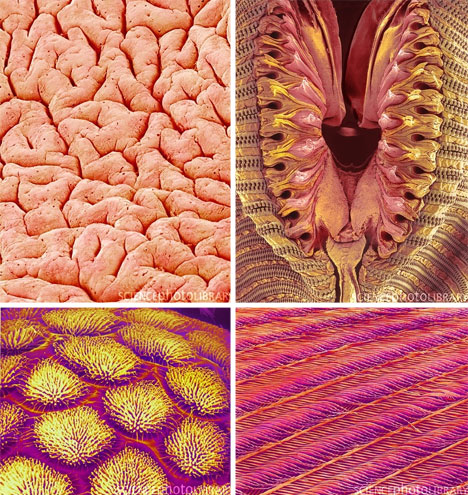
Right now you are fueled by a perfect circle: sunlight, soil, and the seed’s mysterious will. At this moment your extraordinary body is replacing millions of cells, pumping quarts of blood, actively defending your immunity, releasing precisely timed hormones and enzymes, operating on rhythms well beyond your perceptions.

perfect body, how body works,

gajitz.com

Today in an unimaginably vast universe, clouds of interstellar dust reflect the light of nearby stars. We are made of elements forged inside of stars that died out long before our own solar system emerged.

we are made of stars, perfect day,

nasa.gov

Each of us is unique, yet we are one being.

What an amazing day.

Educating Too Early

A1

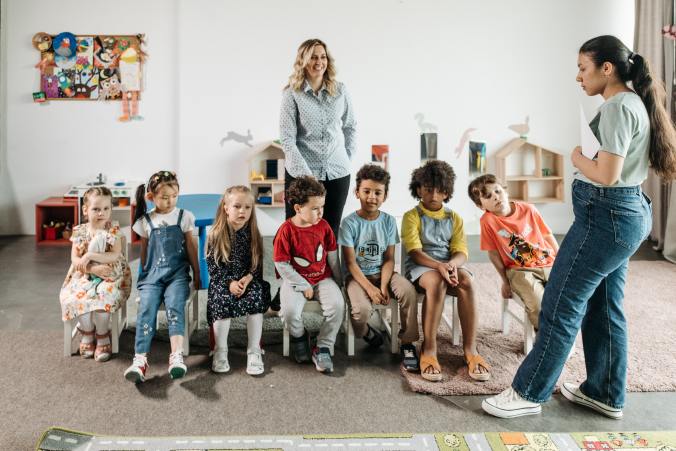
My daughter started preschool a month before she turned three. She was too young. The facility was wonderful, the teachers kind, the activities entirely age-appropriate but she resisted the structure. It didn’t make sense to her that she was asked to learn color words she already knew. Or that she had to perform with her classmates at the annual holiday show after she’d already practiced the song and movement pieces well beyond her boredom tolerance. She did what she was told but she wasn’t happy.

I know why I was eager for her to start. Pregnant with her brother, I felt nauseated all the time and hoped preschool would feed her active mind. Or perhaps because she had been chronically ill nearly all of her first three years. Now she was finally better and I suspect, unconsciously, I signed her up to assure myself she was as healthy as any other little girl.

When I talked with her teachers about my child’s frustrations they emphasized how important it was to follow rules, even if she didn’t see the logic herself, because it prepared her to conform to many more rules in “real” school. That didn’t make sense to me either and we finally pulled her out of preschool.

Once she was a preschool dropout we went back to our ordinary, richly educational lives of chores and play. We played outside, hiked in the woods, made up songs, went to the library, visited friends and family, took trips to museums, snuggled, and read. She filled her free time with make-believe play as well as hours of drawing while listening to story tapes. If I had to do it over again, I’d have skipped preschool entirely. I’m not against the concept, just troubled by how much emphasis is placed on adult-led educational structure.

Take a look at promotional material for preschools in your area. Chances are they tout early math, pre-reading, and other academics. This approach sells.  Most people I know sign their children up at the age of two or three to attend specialized enrichment programs that claim to boost abilities in science, art, sports, music, or language. In addition, nearly everyone I know is sure their children benefit from a few hours each day using electronics that “teach.”

a1 (6)

Well-intentioned parents operate on a mindset that’s hard to dismiss in today’s society. They are convinced that learning flows from instruction. Logically then, early instruction will help maximize their child’s potential. But learning in young children (and perhaps at all ages) has much more to do with curiosity, exploration, and body-based activities. It has very little to do with structured activities, which may actually impair a child’s ability to set and reach goals independently.

Studies with four-year-olds show that, “Direct instruction really can limit young children’s learning.” Direct instruction also limits a child’s creativity, problem solving, and openness to ideas beyond the situation at hand. This is true when the instruction comes from parents as well as teachers.

As Wendy S. Grolnick explains in The Psychology of Parental Control: How Well-meant Parenting Backfires, research shows that rewards, praise, and evaluative comments actually undermine motivation and stifle learning in preschoolers as well as school-aged children. This is true when those actions come from parents or teachers.

Highly instructional preschool programs have been studied for years. Although they’re more popular than ever, the outcomes don’t hold up under scrutiny. 

a (1) (2)

Researcher Rebecca Marcon evaluated children in preschool and kindergarten programs falling within three categories: play based, academically oriented, and those that combined both approaches. Her study checked up on these students as they progressed through primary school. Students who had been in early academically oriented programs gradually declined, falling behind their peers. Children who’d been in a combined approach program also showed achievement gaps. Who benefited the most? Children who’d been in play-based programs. Their academic success was greater than those in the other two types of programs and continued to gain. Marcon concluded,

Children’s later school success appears to be enhanced by more active, child-initiated learning experiences. Their long-term progress may be slowed by overly academic preschool experiences that introduce formalized learning experiences too early for most children’s developmental status. Pushing children too soon may actually backfire when children move into the later elementary school grades and are required to think more independently and take on greater responsibility for their own learning process.

Another study confirmed that future success has to do with the kinds of abilities gained  through child-initiated, exploratory play. Compared to children in non-play-based preschool programs, the play-based group of children exhibited greater self-control, working memory, flexible thinking, and relational ability. These traits have more to do with academic success than testable abilities in math and reading, even more than IQ.

And when researchers  in the High/Scope study followed high-risk children who attended different preschool environments they found even more resounding results.  Some children were enrolled in an academic setting, others in a child-initiated play setting, and a third group in a preschool that balanced both approaches. By the middle grades, children from the play-oriented preschool were receiving the highest grades. They also showed the most social and emotional maturity.  Those who had attended the academic preschool lagged behind in a significant way— poorer social skills. The differences became more apparent as these children got older. By age fifteen, students from the academic preschool program showed twice as much delinquent activity as the other two groups. And in adulthood, former students of the play preschool and balanced preschool showed higher levels of success across a whole spectrum of variables. The academic group did not attain the same level of education as the play group and required more years of treatment for emotional impairment. They also faced more felony arrests than the other two groups.

And now a resounding new study (2022) is out. It followed children across Tennessee who had attended high quality pre-K programs staffed by teachers with bachelor’s degrees as well as early childhood certification, using the best available curriculum. These children were matched with those who did not attend such a program. The academic group initially performed better than the control group at kindergarten age, but by third grade they fell behind the control group in school. They were also more likely to be disciplined and to have a diagnosed learning disorder. By sixth grade the academic group was even more likely to have a diagnosed learning disorder and were also much more likely to have exhibited violent behavior at school.

a2

Today’s test heavy schools are burdening five-year-olds with a heavy load of academics. In 1998, 31 percent of kindergarten teachers studied believed students should learn to read in kindergarten. By 2010 that number had jumped to 80 percent. Play time, the arts, and recess had decreased in favor of worksheet and computer instruction. The study‘s co-author Daphna Bassok said, “We were surprised to see just how drastic the changes have been over a short period of time/ We expected to see changes on some of these dimensions but not nearly so systematically and not nearly of this magnitude.“

We know that free play, now so limited in the lives of most children, is actually essential for learning and character development. We also know that children learn more effectively when they’re the ones in charge of self-regulating. And we know loose parts play is far more valuable for a child’s development than adult structured activities.

My daughter mostly remembers the toy dinosaurs from preschool. I hope that pushing academics on toddlers itself becomes extinct.

a3

Additional resources

Free To Learn by Peter Gray

Reading Instruction in Kindergarten: Little to Gain, Much to Lose” summary of research by Alliance for Childhood

Balanced and Barefoot: How Unrestricted Outdoor Play Makes For Strong, Confident, and Capable Children  by Angela Hanscom

Play: How it Shapes the Brain, Opens the Imagination, and Invigorates the Soul by  Stuart Brown and Christopher Vaughan

Einstein Never Used Flashcards: How Our Children Really Learn–and Why They Need to Play More and Memorize Less by Roberta Golinkoff, Kathy Hirsh-Pasek, and Diane Eyer

The Power of Play: Learning What Comes Naturally by David Elkind

Dying My Hair Pink

Time to dye it?

Well, maybe. I haven’t seen anyone with pink hair in our small town, passing through or otherwise. But I’m contemplating it. Action may be necessary after what happened the other day.

I was out on the town engaging in a not-so-fascinating adventure: shopping for canning jar lids. I heard someone call out behind me from a distance. It was a stranger’s voice.

Using the logic bestowed on most members of our species, I assumed she was hailing some other person in the store so I ignored her. A moment later that stranger zoomed up behind me and said,

“Oh, I thought you were my mom.”

I’m a warm and motherly person, true. But I was not that stranger’s mother. Worse, she was in my approximate age group. Which means her own mother either looks like someone who gave birth as a kindergartener OR I look really old. (Particularly from behind.)

The stranger muttered something like, “Sorry, she has blonde hair too.”

Raised to be polite at all costs, I simply smiled at her (fist shake at Nice Girl upbringing). I’m not sure what an appropriate response might have been. Snort-enhanced laughter perhaps.

Wait, it gets worse.

I saw her join a woman one aisle over. I witnessed her call this woman “Mom.” Her mother was clearly 15 to 20 years old than I. And wearing tan stretch pants. With tennis shoes. And a quilted handbag.

Alas, I see I’ve fallen right into the basement of People Who Make Superficial Comments despite my regular attempts to be my Better Self.

I’m not mocking my elders, heck, I’m looking forward to being a rowdy old lady myself (which is how I’ll finally outgrow that Nice Girl upbringing). And I’m in no position to judge this woman’s appearance, especially after outing myself as a beauty flunky. As I tell my kids, everyone has a lovely gleaming soul. (Boy do they ever like to hit me back with that one when I get snarky.) But I’m finding the chronological escalator a bit too relentless.

When I was younger I took a constantly functional body and seemingly unlimited time ahead for granted. Now various parts creak and I realize I may not be able to fit all my enthusiasm into an ordinary lifespan. Sometimes I walk by the library windows, noticing a stumpy little woman in the reflection. Who is that woman, I wonder? Why is she carrying my purse? It takes a moment to sink in. That’s me. I may feel like a fourteen-year-old sneaking out of the house in a halter top, but instead I’m some lady wearing a scarf.

I was raised to use everything up. To smack the bottle till it was empty, then add a little water and shake it to get out the last lingering drops. I fully intend to do that with my life too. I’ll be using up every single bit. But if I get any more reminders about being old before my time, you may see me with pink hair. Or at least pink streaks. My quietly rebellious fourteen-year-old self would be proud. And the rowdy old lady I hope to become will understand.

Alzheimer’s: Can We Lower The Incidence?

When we come across a new truth we can see how it connects to larger truths. Sometimes that’s uncomfortable, strange, or paradigm-shifting. Sometimes it’s so logical we wonder how it’s not part of our everyday conversation. 

Lately I’ve been reading new research findings. What I’m seeing amplifies what we can see on a larger scale—that we need to work with nature rather than try to control it. In terms of our health that means we must look very carefully at how tactics we’ve used to subvert nature’s designs (relying on chemical fertilizers and pesticides, feeding antibiotics and grains to ruminants, overprocessing foods, super obsessive hygiene, and so on) come back to affect us (and our planet) in ways we hadn’t anticipated. Let’s talk a little about Alzheimer’s research. It’s good news!

I got my first real job when I was 13. It was at a nursing home, where I fed residents who were unable to feed themselves. It was a heart-wrenching experience. There were a few people who suffered from cognitive decline, mostly due to stroke or hardening of the arteries. But most people were there because they couldn’t manage living alone after developing heart disease or emphysema, breaking a hip, going blind, or other overwhelming physical problem. Their frailty frightened me but I also learned a great deal from people 70 and 80 years older than me. In that 100 bed unit, back in the 1970’s, there wasn’t a single patient with Alzheimer’s disease.

Sure, the life-disintegrating disease was first identified in 1901. And yes, detection and diagnosis may very well change the way we track those numbers. Still it’s clear there’s an massive increase in the incidence of Alzheimer’s. It’s seen most often in the developed world, while in rural areas of India and China the risk is very slight. This devastating disease robs of us of our loved ones. It deprives our culture of the elder wisdom we so desperately need. I know of several people who developed it in their late 50’s and early 60’s. I know people suffering with it now. It’s not the new normal.

Recently, some amazing studies have emerged. They aren’t particularly useful to the pharmaceutical industry, where research is geared to big profits in prescription drugs. They aren’t easily applied by the medical establishment which leans toward medications, treatment, and surgeries. Instead they have much more to do with what we eat and the way we live. The clues lead to breakthroughs in understanding Alzheimer’s disease. Please read the linked information, as I’m only giving a brief overview.

We’ve been advised by experts for decades that dietary cholesterol causes heart disease (it doesn’t, no matter how exhaustively you look at the research). We’ve been prescribed a lifetime of statins when our cholesterol levels are deemed “too high” even though cholesterol is essential for brain function. We’ve been told to eat low fat diets, particularly to avoid foods that we humans have been eating for eons. We’re even told our friend the sun, which fuels all life on this planet, is an enemy best defeated with sunscreen.

Yet we are substantially fatter, developing autoimmune disorders at epidemic rates, with a terrifying surge in Alzheimer’s disease. A report in the New England Journal of  Medicine forecasts a decline in life expectancy in the US.  Clearly we’re on the wrong path.

Blood sugar surges, infection, and inflammation are a few of the many interrelated ways that our brains suffer from an unnatural diet. I urge you to read the technical but entirely worthwhile article by MIT researcher Stephanie Seneff, titled “APOE-4.” To me it reads like a detective work starting with how our brains function, then following clues the brain gives us. She explains how cholesterol contributes to healthy brain function, which is why she urges daily intake of natural fats along with high levels of protein. She also points to the importance of maintaining normal vitamin D and calcium levels while avoiding the rush of elevated blood sugar that comes from eating much of today’s processed foods.  Following her recommendations helps to steer the body away from inflammation and infection which can seriously impair brain health. She also has nothing nice to say about statin drugs.

Her report is in keeping with more recent research (building on studies done over the last few years) that Alzheimer’s disease is related to damage caused by years of blood sugar spikes, which are the side effect of the average western diet. It’s being called diabetes of the brain or type 3 diabetes. This has been all over the news that last few weeks with headlines like “Junk food destroys the brain.” It’s quite a bit more complicated than that (for example, mindfulness practices like meditation reduces inflammation too) but those headlines aren’t lying.

This research also ties in to the increased incidence of autism. A low fat diet plus low vitamin D levels can cause changes to a fetus’ developing brain (please read all the way through this linked article for details). This sets off a cascade of issues, including poor calcium uptake and inflammation. Other promising research links a pregnant woman’s inflammatory response to higher rates of autism in her child. There are other underlying factors, including immune systems that are insufficiently challenged due to overly hygenic lifestyles and even the absence of parasites. And again, it’s much more complicated. It can be related to the father’s age, to gut bacteria, even to one’s ethnic group. Let’s recognize, autism may well be the next step in human development, opening us to wider neurodiversity. Neuratypical individuals have unique skills and perspectives that offer society new avenues for progress.

There’s no fault implied in any of these studies. We do the best we can with what we know. But maybe today’s brains are struggling to tell us that well-meaning attempts to make our lives better with sterile environments, processed food, and indoor lives simply takes us too far from our roots in nature. Maybe they’re telling us pollution, particularly ultrafine particle pollution, can cause degenerative brain diseases. More research needs to be done, but there’s plenty we can do right now.

eat anti-inflammatory foods 

eat healthy fats 

get enough vitamin D

exercise

For more information check out:

Know Your Fats : The Complete Primer for Understanding the Nutrition of Fats, Oils and Cholesterol

Nourishing Traditions: The Cookbook that Challenges Politically Correct Nutrition and the Diet Dictocrats

The Happiness Diet: A Nutritional Prescription for a Sharp Brain, Balanced Mood, and Lean, Energized Body

Gut and Psychology Syndrome: Natural Treatment for Autism, Dyspraxia, A.D.D., Dyslexia, A.D.H.D., Depression, Schizophrenia

The Wild Life of Our Bodies: Predators, Parasites, and Partners That Shape Who We Are Today

Engage The Window Box Effect

beauty heals, finding the positive, reversing urban decay, building a neighborhood,

CC 2.0 by ahisgett

When I was in college my professors enjoyed crushing what was left of our youthful optimism with miserable statistics about how bad everything was and how rapidly it was getting worse. (Even their cynicism was too small to envision our current issues.) I remember a semester-long course that had to do with reversing urban blight. After being taught about this dire and growing problem we were introduced to the standard remedies. Our professor scornfully dismissed every effort to reverse urban blight. The worst thing that could be done? Coming in from outside the community to impose a do-gooder solution. The only right thing to do was a vast overhaul of our economic structures. (Those structures are even shakier today.) I wrote sufficiently miserable papers to get an A but was left with quiet despair in my ever-hopeful heart.

Soon after that class I read about one woman’s experience of urban blight. She’d lived in the same house for decades, watching her neighborhood decline. There were few jobs and the ones available paid poorly, with no benefits or job security. She sadly listed the local businesses that had left, leaving her area with no grocery, beauty shop, or movie theater. The only places that remained were bars and corner stores selling little in the way of real food. People lost their homes and landlords took over, rarely keeping up the property. The city lost revenue, doing little to keep up with residents’ complaints. It seemed to her that young people were lost too. They swore in front of tiny children and their elders, hung out all hours on street corners, got into public fights, abused drugs. She was quoted as saying that people complained they got no respect from young people, when really the young people had no respect for themselves.

The reason she was being interviewed? She was credited with beginning a tiny urban renaissance that was evident on her street and slowly spreading through the neighborhood.

Here’s how it happened. She’d been in poor health and adjusting to widowhood. Her home had been well maintained over the years but like many wood-sided homes, it began to look shabby when too much time went by without new paint. After her husband died she didn’t do well keeping up with yard work and because the street had changed she rarely sat on the porch as she used to do in years past, chatting with neighbors and greeting young people by name as they went by. It wasn’t just friendliness. When everyone knows everyone, word of misdeeds travels home quicker than an unruly child can get in the door. And when a child really knows the elders on his or her street, they have many more potential role models to benefit them as they grow up. That’s the proverbial “village” it takes to raise a child.

This woman wanted to do something. All she could afford was a few packets of flower seeds. She got out on a spring day to plant the seeds in her long-unused window boxes. She started sitting on her porch every afternoon after watering them, greeting those who went by even though she didn’t know them. Renters in houses where her friends once lived began talking to her. By the time the flowers were in bloom she noticed a difference on the street. She said that people were sweeping their porches and planting flowers of their own. Because they were trying, she got out there to do her part, attempting to take better care of her lawn, telling people who passed by that it was a good way to get exercise she needed. Every time she couldn’t get her mower to start she’d ask a teenager walking down the street to help her. Then before starting to mow, she’d ask for his or her name, shake hands, and thank that youth for doing a good deed by helping her. She made sure to greet those young people by name every time she saw them afterwards.

That summer one family painted their front door. Someone else cleaned up an empty lot that had been a dumping place for trash. People started sitting on their porches, waving to each other, stopping for conversation. It began to feel like a neighborhood again. Building on what’s positive is powerful indeed.

There are plenty of ways people are revitalizing their communities these days. They’re reclaiming empty lots as gardens or play places for their kids, running micro-businesses out of their homes, starting up tool-shares and neighborhood work groups. They’re using social media to connect and collaborate with each other. They’re mentoring kids in the neighborhood and finding ways to get kids more involved in the larger community.  Studies show that urban gardens and other revitalizing efforts make a difference, reducing the crime rate and fostering all sorts of positive relationships. An old theory, kind of the flip side of what I’m calling the Window Box Effect, was called Broken Windows Theory. It posited that minor examples of breakdown (like a few broken windows) leads to greater disorder, dragging down not only the appearance of an area but also leading to crime and property damage. This has largely been disproven because crime is actually deterred when people know they have the power to affect their communities and benefit from strong networks within those communities.

Sure, we have a lot to work to do rebuilding our sorry infrastructure and easing the ever-widening income gap. But it doesn’t hurt to remember that noticing a little beauty can amplify the greater beauty that’s everywhere, waiting to bloom.

There are plenty of ways to apply the Window Box Effect.

Tell me how the Window Box Effect works in your life.

ADHD Meds Provide No Long-Term Benefits

no benefit to Ritalin, ADD drugs no long-term benefit, should I medicate my child's behavior,

Want to cause a ruckus? Criticize attention-deficit meds.

Over three million U.S. kids take these drugs. Parents may not be thrilled to dose their children but they are following expert advice.  They typically see results. And they don’t need to be judged.

But it helps to pay attention to what works for parents who don’t put or keep their kids on meds. My son was diagnosed with ADD when he was in first grade.  There was a great deal of pressure from his teacher to put him on medication. As many parents do, I struggled to find ways to alleviate the problem without drugs. We found significant improvement when we changed his diet but that wasn’t enough to make the school setting truly work for him. The way he learned best and the way he flourished simply didn’t fit in the strictures of the school environment. He wasn’t wired to sit still and pay attention for hours. Once we began homeschooling we discovered that without classroom and homework pressure, what appeared to be ADD symptoms largely disappeared.

The newest studies of attention-deficit disorder medications now indicate that the calming effect of these drugs don’t necessarily indicate that those who take them have any sort of “brain deficit.”  As L. Alan Sroufe, professor emeritus of psychology at the Universityof Minnesota’s Instituteof Child Development explains, such medications have a similar effect on all children as well as adults. “They enhance the ability to concentrate, especially on tasks that are not inherently interesting or when one is fatigued or bored, but they don’t improve broader learning abilities.”

Research shows the effect wanes in a few years without conferring any lasting benefit. Dr. Sroufe writes,

To date, no study has found any long-term benefit of attention-deficit medication on academic performance, peer relationships or behavior problems, the very things we would most want to improve.

While Dr. Sroute looks for a mental health answer, psychologist Bruce Levine looks to society. In a recent article he notes that rational responses to larger social conditions (depression due to economic crisis, for example) are being suppressed by medication rather than addressing underlying circumstances. In particular, he asserts that non-compliance with authority is labeled a mental health problem rather than a useful response. He writes,

Do we really want to diagnose and medicate everyone with “deficits in rule-governed behavior”?

Albert Einstein, as a youth, would have likely received an ADHD diagnosis, and maybe an ODD one as well.  Albert didn’t pay attention to his teachers, failed his college entrance examinations twice, and had difficulty holding jobs. However Einstein biographer Ronald Clark (Einstein: The Life and Times) asserts that Albert’s problems did not stem from attention deficits but rather from his hatred of authoritarian, Prussian discipline in his schools. Einstein said, “The teachers in the elementary school appeared to me like sergeants and in the Gymnasium the teachers were like lieutenants.” At age 13, Einstein read Kant’s difficult  Critique of Pure Reason— because he was interested in it Clark also tells us Einstein refused to prepare himself for his college admissions as a rebellion against his father’s “unbearable” path of a “practical profession.” After he did enter college, one professor told Einstein, “You have one fault; one can’t tell you anything.” The very characteristics of Einstein that upset authorities so much were exactly the ones that allowed him to excel.

This is a big issue. I am lucky I eluded being put on meds to treat the problems I had as a child. I wouldn’t give up those years of painful churning for anything. That’s exactly what formed me into a person with my particularly intense focus and purpose.

I think we need to widen our focus. The issue asks us to look at how today’s children are restricted in movement, have less time for free play, and are exposed to unnecessarily early academics.  It asks us to look at the quality of the air, water, food, and products in the lives of today’s children. It asks us to support all families as they are, recognizing that one-size-fits-all guidelines don’t embrace diverse ways of being. To me, particular hope lies in research showing that free time spent playing in natural settings significantly improved the behavior and focus of ADHD children. The more natural and wilderness-like the area, the greater the improvement.

Our wonderfully distractible, messy, impulsive children may be trying to tell us something.

For more answers beyond the prescription bottle, check out:

Ritalin Nation: Rapid-Fire Culture and the Transformation of Human Consciousness

The Gift of ADHD: How to Transform Your Child’s Problems into Strengths

Dreamers, Discoverers & Dynamos: How to Help the Child Who Is Bright, Bored and Having Problems in School (Formerly Titled ‘The Edison Trait’)

ADHD Without Drugs – A Guide to the Natural Care of Children with ADHD ~ By One of America’s Leading Integrative Pediatrician

Is This Your Child?

Healing ADD: The Breakthrough Program That Allows You to See and Heal the 6 Types of ADD

Observe The “Goldilocks Effect” In Action

 learning happens when it's "just right"

“Young children seem to recognize that knowledge is an essential shared resource, like air or water. They demand a fair share. They actively espouse the right to gain skill and comprehension in a way that’s necessary for them at the time. Often children seem to reject what they aren’t ready to learn, only to return to the same skill or concept later with ease. This is not only an expression of autonomy, it’s a clear indicator that each child is equipped with an learning guidance system of his or her own.”

I wrote these words two years ago in my book Free Range Learning. This concept is now being called the “Goldilocks effect.” According to a study published in the journal PLoS ONE, humans are cued to ignore information that is too simple or too complex. Instead we’re drawn to and best able learn from situations that are “just right.” It’s the educational equivalent of Goldilocks on a porridge-testing quest.

The study focused on how babies make sense of our complex world. For years researchers have noticed a contradiction. Sometimes babies prefer to look at familiar items, like a toy from home. Other times they prefer to look at unfamiliar items. Turns out this isn’t a contradiction at all. Babies self-regulate by choosing the amount of novelty and complexity that’s right for them at the time.

They also, according to the study, actively seek out the most reliable information and can predict what will happen next based on what they’ve seen. Babies are a great way to study human behavior. That’s because infants aren’t burdened with cultural and patterned responses. Babies indicate what all of us are like in our most basic form.

The Goldilocks effect has to do with learning at all ages. You are attracted to what holds just the right amount of challenge for you right now. Usually that means something that sparks your interest and holds it close to the edge of your abilities, encouraging you to push yourself to greater mastery. That’s the principle used to hold the player’s attention in video games. That’s what inspires artists, musicians, and athletes to ever greater accomplishments. That’s how kids who follow a fascination of their own tend to learn more than any prepared lesson could teach them.

How do we see this in action? By looking at children through the eyes of trust.

The little boy who’d rather stomp in muddy puddles after a rainstorm than attend story hour at the library may need that full sensory experience outdoors more than he needs, right now, to sit still in a group and listen quietly. He’d probably prefer hearing stories while sitting in a parent’s lap where he benefits from closeness and can ask questions as they occur to him.

The girl who prefers to draw pictures of animals and fairies rather than run outside to play with the neighborhood kids may need more time for quiet self-expression than other children. Her imaginative art fuels growth in all sorts of areas, one of which may be a sturdier sense of self that will help her interact more freely with others when she’s ready.

The teenager who drops out when she’s reached a high level of accomplishment in an area, say soccer or fencing or designing apps. What she’s learned in that field isn’t wasted. It’s taught her a whole range of skills and empowered her to move on. She may pursue other interests in what look like fits and starts of motivation. Or the learning situation that’s just right for her may look like boredom to others. She may need time to process, daydream, create, and grow from within before pushing ahead.

Children naturally focus on what they’re ready to take in and do their best to set aside the rest. Often what they set aside is exactly what adults push them to master. We call this stubbornness but really they show us, over and over, that human nature flourishes best without coercion. Efforts to structure learning too heavily are likely to fail (or more often, the student will fail) if it’s not understood that we’re all cued to learn in the ways best for us.