Links & Updates 12-2-13

The days are large with joys and sorrows. Joy imparted by my strangely fascinating family, whose dinner table conversations veer from scientific speculation (“The likelihood that any of us would be fossilized is nil.”) to scatological silliness. They’re also, perhaps more importantly, great huggers.

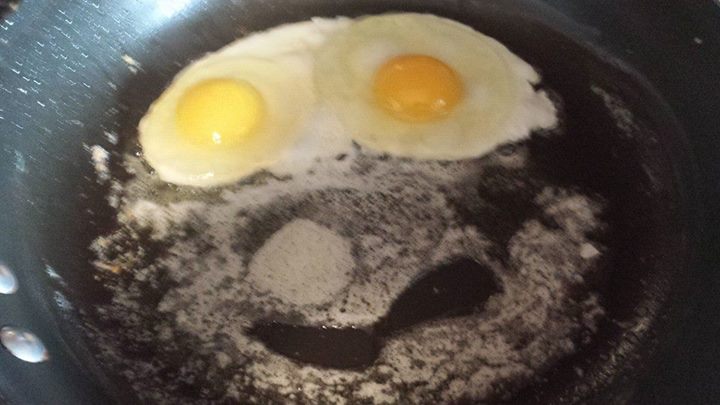
Joy thanks to my tendency to find faces in objects, like my husband’s breakfast smiling on the stove

child

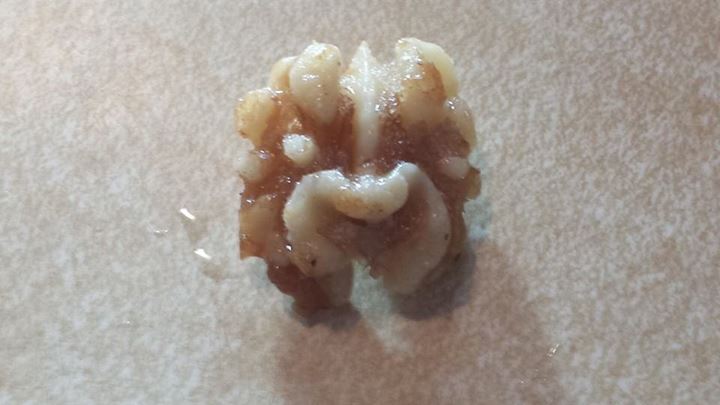
the Mayan god image in a walnut I roasted with maple syrup to top Saturday morning’s giant batch of oatmeal

child

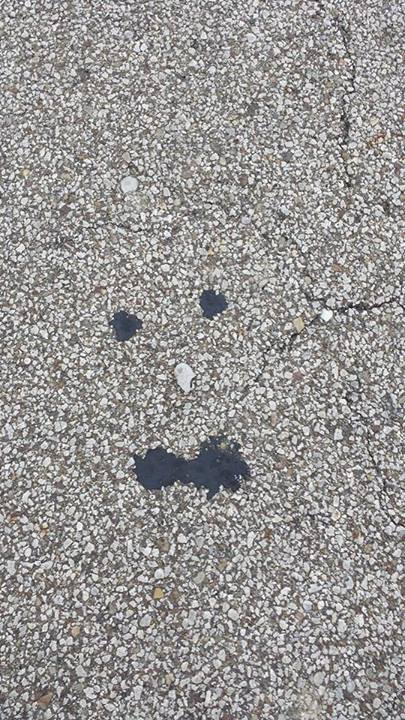
and the pavement smirking up at me while on a walk.

child

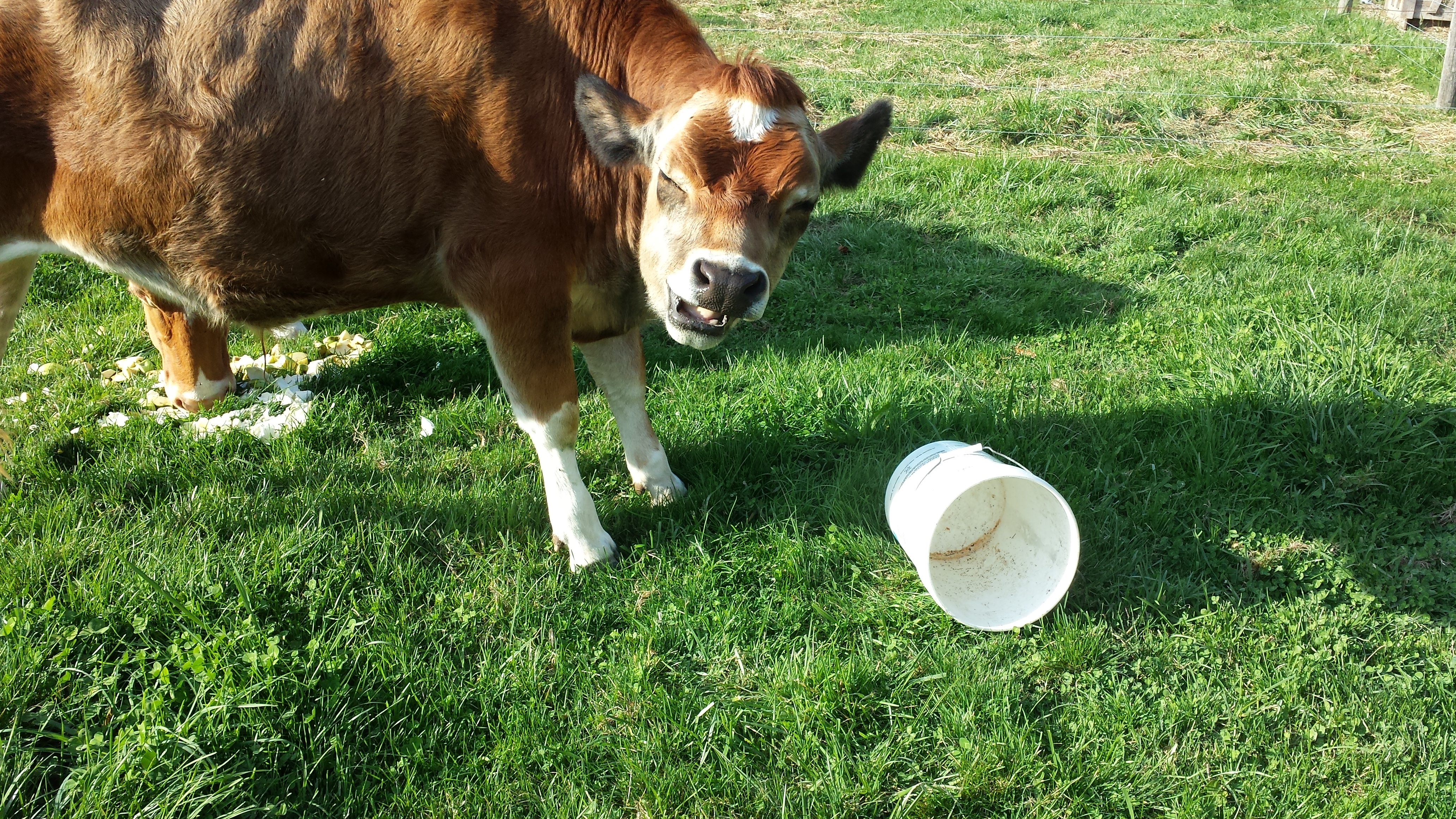
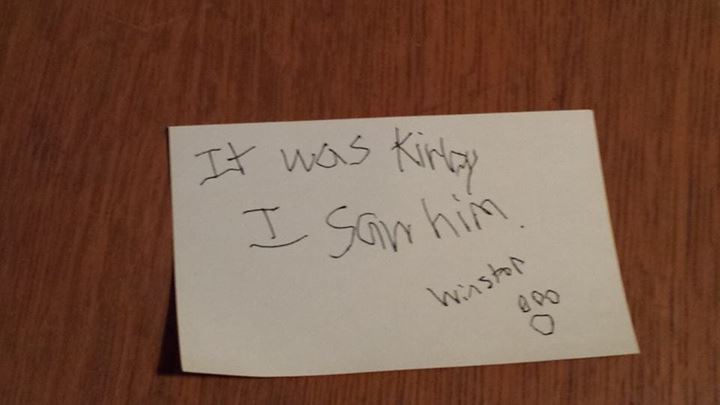
Our animals are joy-makers too. Evidence? A bovine reacting to a bucket that dared intrude on his pasture. (See his reaction to leftover Halloween pumpkins!) More evidence. A note from the dog found next to a poo-on-the-carpet accident.

child

But sorrow too.

Ruth Radney Barnes, in our hearts forever

Ruth Radney Barnes, in our hearts forever

Friend and mentor to many, Ruth Radney Barnes, passed away a few days ago. Her life was packed with deeply felt gratitude and the kind of wisdom that can’t help but cast light. Here’s her blog, Inspire the Desire to Learn. Over the last year or so I’ve linked to a number of her posts on my Free Range Learning facebook page as one small way to share her many enthusiasms.  Ruth’s too-short life overflowed with love. All of us who knew her will be forever changed.

Hoping your joys and sorrows let your life expand in meaning, as they do mine. Here are some links to enjoy.

*

Jolt of Wonder

https://soundcloud.com/acornavi/robert-wilson-crickets-audio

Composer Jim Wilson slowed down a recording of chirping crickets, revealing something
extraordinarily beautiful. Crickets sound like a heavenly chorus of human voices. The recording runs for over an hour. Let it play to hear more and more nuances in this cricket choir.

*

Growing Thinkers

civil discourse for kids, logic for kids, current events kids,

Here are 21 ideas for raising kids who are current events-savvy, from toddlers to teens. You’ll want to bookmark this information packed link.

igged

Rigged Game

Powerful spoken word poetry.

*

Dating Problems

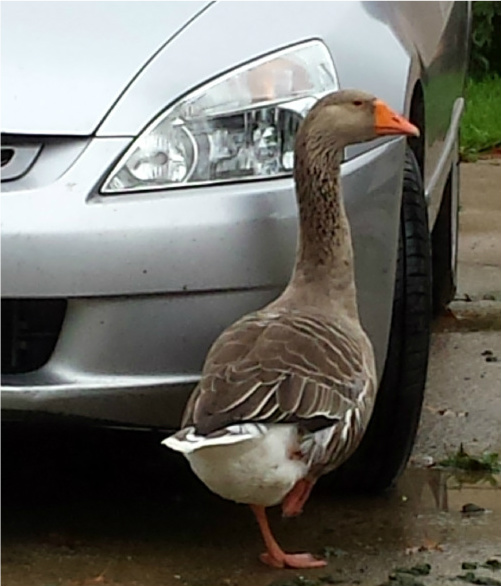
Louise the Goose and Honda,

You may have heard that our goose fell in love with my Honda. It’s such a quirky story that it was picked up by Neatorama and Huff Po. We even came up with some goose-inspired advice for Honda, but they haven’t gotten back to us about our fresh design ideas for a new car model. Louise the goose now lives on a nearby farm where she’s newly enamored with a portly white goose. The Honda remains in my driveway, no longer adored by an ardent Toulouse goose.

*

Worldschooling

Discover 10 Ways Worldschooling Has Ruined My Childhood. Short, pictorial, inspiring.

*

Life Lists

Birders keep life lists of birds they spot. Why not expand the concept by making our own life lists. They might be Belly Laugh Lists or Juncture Lists. Here’s more about this from my piece, currently reprinted on Be You.

*

Hidden Folk

image: Paxarcana

image: Paxarcana

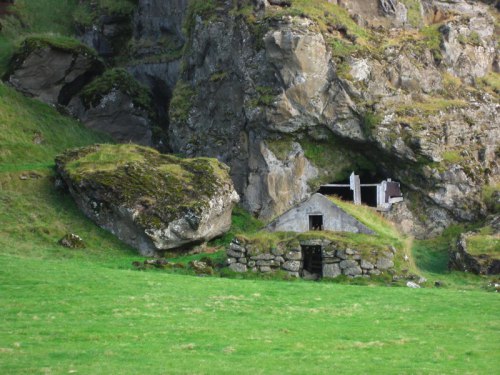
Some people in Iceland take the huldufólk pretty seriously. New roads and buildings have been relocated to avoid angering the hidden people, elves, who inhabit the natural world. There’s even the Reykjavik Elf School where believers can learn more. Best of all, you can find tiny homes set up in back yards in case the little people need a place to stay.

*

Perspective on Learning

Read a wonderful (and yes, long) essay about natural learning by Vipul Shaha on his blog, A Journey Called Life.  Here’s a quote

There is so much healing (or un-learning) that has to happen within our own ‘educated’ minds before we can start to re-imagine and create a different paradigm. Multiple layers of conditionings, starting with over-parenting and schooling, have smothered the authentic voice of our childhood inclinations.  It is endowed with immense creativity and unique potential.  It is time to reclaim that child within!

 *

 Auditory Yes

I could listen to this duet every day.

Resources for Simple Holiday Gifts & Fun

non-materialistic christmas, handmade holidays, simple holidays, no Black Friday, no cyber monday, no shopping on Thanksgiving,

Enjoy tradition or create new ones.

Some families choose to generate their own fun and meaningful traditions that have little emphasis on gifts. Here are just a few examples.

The children in one Florida family wake on Christmas morning to lollipop trees: dozens of lollipops and other tiny items tied by ribbon to tree branches in their yard. After scrambling to harvest from trees tagged with their names, the family heads the beach for a picnic with extended family before going home to play games.

Inspired by the book Night Tree, a family from British Columbia spends a day with friends and family making treats for birds and animals. They roll pinecones in peanut butter and birdseed, string popcorn, make cranberry garlands. At dusk they bundle up, carrying these treats along with cracked corn and suet cakes, to decorate on and around trees while singing Christmas carols. Afterwards they go back to sit by the fireplace and eat dinner together. Their children now insist that they decorate trees with food all winter long, spreading holiday good cheer throughout the season. 

A Michigan family gives one main gift that benefits everyone, other gifts must either be handmade or repurposed.

An Austrian family has stopped loading up children with Hanukkah presents. Instead each family member creates clues for a scavenger hunt to find wrapped and hidden gifts. As the children have gotten older the clues and hiding places have become more elaborate. Instead of hiding gifts in the house, now gifts are stashed at distances requiring hikes to reach them.

A New Jersey family chooses to remember a much-loved grandmother by making huge batches of her best recipe for the holidays. It keeps them in a flurry of preparations for several days. Then on the afternoon of Christmas they top her pecan rolls with icing and deliver them, as a surprise, to those who have to work on Christmas. They stop by the local fire station, police station, hospital, and nursing home leaving trays of rolls along with crayoned good wishes. They feel they’re sharing a little of grandma’s love with the community where she lived all her life. It’s their favorite part of the holiday.

For more inspiration, consider the following resources.

Ten Ways To Take Back The Holidays” (New Urban Habitat)

Avoiding Consumerism at Christmas” (Natural Life Magazine)

A Non-Consumer Christmas” (Get Rich Slowly)

Hundred Dollar Holiday: The Case For A More Joyful Christmas

Simple Pleasures for the Holidays

Unplug the Christmas Machine: A Complete Guide to Putting Love and Joy Back into the Season

*

Make it yourself.

Overspending to show we care has gotten out of hand. American Consumer Credit Council reports the average American family has approximately $5,000 in credit card debt, but will spend $704 for holiday gifts. Longstanding movements against rampant materialism such as Buy Nothing Day and Buy Nothing Christmas ask us to consider a different approach. They advocate handmade gifts, gifts of service, and simple holiday togetherness as alternatives to spending. In my family, kids make a gift for everyone, putting the focus on giving as well as receiving.

For ideas, check out the following resources.

34 Homemade Gifts to Make Yourself” (Get Rich Slowly)

Gift Ideas” (Make It and Love It)

Holiday Gifts Kids Can Make

FamilyFun Homemade Holidays

Christmas Crafting with Kids

*

Spend consciously.

Your spending choices have a powerful impact. One in four Americans is now identified as a consumer attracted to “goods and services focused on health, the environment, social justice, personal development, and sustainable living.” These consumers are a 290 billion dollar market. Simply by purchase decisions, shoppers have forced industries to limit the use of BPA, avoid bovine growth hormone in dairy products, reduce packaging on all sorts of products, and make organics more widely available. We do vote with our dollars.

Each time you spend, you’re saying “yes” to the businesses and products your money supports. Choose who gets your “yes.” You can easily find out how big companies are rated in such areas as environmental responsibility, gender equality, and worker’s rights using the following resources.

Knowmore is a web community sharing information about corporate responsibility with a searchable database for conscious consumers and activists.

Crocodyl provides searchable profiles of corporations. This service, offered by CorpWatch.org, is based on extensive information provided by researchers, journalists and non-profit organizations.

Environmental Working Group provides up-to-date reports for conscientious shoppers. Recent ratings include least polluting cars and safest personal care products.

Center for a New American Dream offers detailed resources for making one’s own ethical choices, aimed at both adults and children.

The Better World Shopping Guide: Every Dollar Makes a Difference is a pocket reference grading companies in a range of sectors, from department stores to prepared foods.

*

Cut Down on Toys

Not in a Grinch-y way, just a don’t-go-crazy way. Here are some useful ways to make your gifts fun and meaningful without burdening your house (and the planet).

100 Non-Toy Gifts for Toddlers to Teens 

Give four gifts in the categories of Want, Need, Wear, Read.

Give gifts that support a good cause.

The holidays may inspire you to donate, particularly in the names of people important to you. It’s particularly meaningful when that gesture connects to what the recipient means to you. You can protect endangered land for someone who grounds you, donate baby chicks for your favorite chick pals, give the gift of vision for someone who helped you see in a new way. Let them know what they mean to you and why you chose that donation. Sometimes donation gifts don’t seem particularly festive when others are unwrapping presents. It’s easy to pair a donation with a small related gift. For someone who has sweetened your life, you might tie a gift tag on a jar of local honey, add a donation of bees and a beehive for new beekeepers in the developing world.

Gifts: Personal As Well As Global” (Wired) for more gift pairing ideas.

Glorious Do-Gooder Gifts” (Wired) to support charities. Or make a donation to a local charity, arts organization, or other cause dear to the heart of your recipient.

When you buy a gift from a museum, house of worship, or any non-profit you know part of the purchase price helps to benefit that institution. It’s easy to find beautiful, useful, or just plain fun gifts that also do some good.

Consider a giving a certificate to a charity clearinghouse, allowing your gift recipient to choose his or her own causes.

Give wisely. Before donating to any cause, check them out using Charity Navigator or Charity Watch.

*Buy right in your community

When you do buy gifts, consider shifting your money to independently owned businesses. Research shows that only $13 of every $100 spent at a big box store stays in the community. But when you shop at a locally owned store, $45 of $100 remains to boost your area’s economy. Other studies have found somewhat different figures, but all indicate that supporting locally owned stores is a viable way to promote jobs and increase economic activity.

Don’t limit your local present-buying to something that will fit in a gift bag. Consider the following ideas.

Give gift certificates from locally owned landscaping companies and greenhouses, restaurants and coffee shops, golf courses, skating rinks, city tours, and galleries.

Give memberships to museums, theater companies, recreation centers, gyms, clubs, and art centers.

Pay for a lesson or two in horseback riding, yoga, sculpture, glass blowing, tai chi, skiing, or whittling.

Find a local worker who specializes in house cleaning, home repair, car repair, lawn mowing, driveway plowing, or plumbing, then pay for a few hours of his or her time in advance.

Buy from area artists including potters, knitters, jewelry makers, calligraphers, woodworkers, and painters.

*

We try to say something with our gifts: I care about you, I’m thinking of you, I get you.  We also say something about ourselves and our values with each choice we make too. It’s possible to welcome the brightest possible future even through our holiday gift-giving choices. Are you making a shift?

simple holidays, frugal holiday resources, saving money over the holidays, handmade Christmas, alternative Christmas traditions,

My New Book is Out!

Tending rises from my life on the farm and my fascination with the world at large. Informed by quietly ordinary days, these poems look into the nature of things with questions that circle the stars. I’m thrilled that the cover photo is by talented artist (and my sister) Cynthia Piper.


“Laura Grace Weldon employs radical empathy to enter into the hidden lives of rutabaga, cows, the neighborhood bully, and the beating heart of life itself.  Playful, curious, sensual, she aims to open the reader’s eyes and heart.”

Alison Luterman, author of See How We Almost Fly  and The Largest Possible Life.


“Laura Grace Weldon’s poems remind us that our world’s necessary brushes between nature and technology, human and animal, are not necessarily ones of friction. Instead, Weldon sees these moments as truly wondrous ones, available to us not only on the farm, but also in the back pocket of a window washer, swinging among the skyscrapers.”

Brad Ricca, author of American Mastodon and Super Boys.


“Memory, faith, and the natural world as both witness to the cycle of human life and healer to a questioning heart are at the core of this lovely and lyrical collection of poems. The weather changes, people come and go from cities and towns, babies are born, grow up and depart from their parents’ arms, but still, the countryside and its rituals sustain the people and creatures who know how to read the signs of the seasons. In these pages, Laura Grace Weldon shares those signs with us; her poems are the fruit of a wonderful harvest.”

Eleanor Lerman, author of The Sensual World Re-emerges: Poems and Mystery of Meteors.


“Laura Grace Weldon’s poems are concrete, allusive, and rich.”

 Diane Kendig, author of The Places We Find Ourselves.


“These are calming poems, set deep in the specifics of this life.”

David Budbill, author of Moment to Moment: Poems of a Mountain Recluse
and Happy Life.


Published by Aldrich Press. Order HERE.

(My friend Penny, from Dubai, suggests I share a sample. Here’s a poem from the first section, one no journal accepted although there are so few odes to root vegetables…)

Rutabaga

You darken as my knife slices

blushing at what you become.

I save your thick leaves

and purple skin

to feed the cows. 


A peasant guest at any meal

you agree to hide in fragrant stew

or gleam nakedly

in butter and chives.


Though your seeds are tiny

you grow with fierce will

grateful for poor soil and dry days,

heave up from the ground

under sheltering stalks

to sweeten with the frost.


Tonight we take you into our bodies

as if we do you a favor—

letting your molecules

become a higher being,

one that knows music and art.


But you share with us

what makes you a rutabaga.

Through you we eat sunlight,

taste the soil’s clamoring mysteries,

gain your seed’s perfect might. 

Laura Grace Weldon 

peace in tragedy, energy fingerprint, what we leave behind, act in crisis,

Image:andrewpoison.deviantart.com

Lollipop Epiphany

child's near death experience, choking on candy, end of life vision,

Image: prelkia.deviantart.com

Jennifer took the second-to-last Dum Dum lollipop in the bag, root beer, leaving me the lime green one. Lime was my least favorite but I didn’t say anything. I pretended to flick open a lighter and held that invisible flame to the end of my lollipop. Jennifer did the same, exhaling around the side just like teenagers did with real cigarettes. We wanted to be older that badly.

Like all the other fourth grade girls we knew, she and I exaggerated. When we walked we went on for miles. When we were thirsty we drank gallons. So of course she said that her older sister Mary Beth would die if she found out that we were not only listening to her records but had also finished the candy. Happy to be playing in Jennifer’s basement, dying was the last thing on my mind.

Jennifer and I danced, whirling around as we sang, “Jeremiah was a bullfrog, was a good friend of mine.” Suddenly the round green lollipop I was sucking on separated from its cardboard stick. It hurtled to the back of my throat and lodged in my windpipe.

I couldn’t breathe.

My arms flailed as I tried to inhale, make a sound, get Jennifer’s attention. Still, no breath.

Quickly my body slid into a state I’d never experienced. The music played on and Jennifer danced on, completely oblivious. That abstract concept, time, lost meaning as I looked around me. Everywhere there were details I’d never noticed. The texture of the cement block walls, the colors in a blanket tossed over a worn couch, the beauty of my friend. It was all tender perfection.

A kind of knowing completely filled me. Even as my awareness expanded my vision dimmed. The room began to darken. Without making any choice at all I loosened my hold on living. It felt easy, right, and wonderfully peaceful. Just past letting go, I knew a sort of bliss. The body slackening toward the floor no longer seemed like my own.

The last image flickering in my consciousness was my mother’s face. That glimpse activated something I couldn’t explain. Although my mind no longer seemed connected to my limbs, a sensation of strength came into my legs. Instead of dropping to the floor, those legs churned up the stairs as if powered by an engine I didn’t drive. I was outside myself, watching as I wavered at the top step, nearly falling backwards.

Jennifer’s mother appeared just past the door. She took a look at my blue face and bulging eyes. In one swoop she turned me upside down, smacking my upper back hard and repeatedly.

The lime green Dum Dum rolled across the floor.

I gasped.

There were no words for that moment, although I was bursting with emotion. So, like any other fourth grade girl, I said dramatically, “Wait till Mary Beth finds out.”

Jennifer’s mother told me to be more careful about dancing with candy in my mouth. Jennifer put another record on. What had been an ordinary day continued, though I’d seen the veil between worlds.

I never told anyone the last thing I glimpsed back in that basement. Unable to breathe, I saw my mother already grieving my death. No exaggeration, that moment woke me to the rest of my life.

near death experience, child's near death experience, child choking,

Image: Steve Snodgrass

Common Sense Laziness

lazy benefits, meaningful exercise, laziness genes,

Image: d0uze.deviantart.com

When we first moved to the country a farmer gave us some good advice. “Make it easy on yourself.” His organic, widely diversified farm was (and still is) an example of ingenuity. He and the generations before him who ran the family farm figured out ways to make necessary tasks go smoothly with less effort. This didn’t mean going into debt to buy expensive equipment. It meant thinking for themselves as they designed alternative methods of manure removal, tinkered with ways to reduce the strain of loading hay into lofts, and built beehives into an eight-sided shed. Their methods made the job more efficient, sometimes more elegant, and always easier.

This is an example of human ingenuity, a trait that has been characteristic of our species since we first grunted in self-awareness. Let’s face it, we prefer to avoid wasting unnecessary effort on unpleasant tasks. Let’s call it common sense laziness.

This approach worked pretty well for us back in the earliest days when saber-toothed tigers lurked. Evolution favored individuals who didn’t wear themselves out. They had more energy to flee from danger. More energy to anticipate and guard against potential threats. Some of this saved energy could be devoted to developing story, song, dance, you know, culture. We humans like expending energy that way.

Our forebears passed along the genes for innovation as well as the genes for common sense laziness. We like the innovative genes. But we judge ourselves pretty harshly for the lazy ones. Until very recently people got plenty of exercise from the work necessary to house, clothe, and feed ourselves. Researchers in an Australian study checked the activity levels of men who worked in a historical re-enactment village. Each subject wore a device that measured body movements. The results were compared to activity levels of men in current day occupations. Over the course of a week the 18th century pretenders showed 60 percent higher activity levels than the modern group. And it’s worth noting that re-enactment is surely less strenuous than actually living as people did back then.  Other studies have found significant differences in calories burned when we wash dishes by hand rather than use a dishwasher, climb stairs rather than use an elevator, and walk to work rather than drive.

We try to compensate through something we call exercise. It’s a strange concept, really. We run nowhere, lift weights only to put them down, stretch without trying to reach anything.

At the very core of our being we’re motivated to exert energy when there’s a purpose. Accomplishing real tasks in the real world builds muscles, burns calories, and as a side perk, gets things done. By real, of course, I mean tasks that people several hundred years ago would recognize. (Not the sort of work I do for a living, using the tools of a swivel chair and computer.)

In our society we eagerly embrace labor-saving devices and often pay people to do the physically demanding work of maintaining our homes, yards, and vehicles. To afford this ease, we work longer hours. Then we “discipline” ourselves to engage in strenuous exercise despite the evolutionary pull toward common sense laziness.

We need a middle ground. I totally agree with our farmer friend. Making it easier on ourselves is smart if we’re doing the hard work of traditional farming or any other physically taxing pursuit. For most of us, that’s not an issue. What is the issue? Recognizing that our bodies need and our minds want full engagement. I know purposeful work is waiting for me: helping a friend move, digging in the garden, painting a room, organizing a closet, and plenty of other movement-based activities. It feels good to get something done, with a plus—exercise is built in.

To fully benefit, a change in attitude is important too. Scolding ourselves for laziness has a powerfully negative effect. Consider a study done with hotel maids as subjects. All day long these women performed physically taxing labors as they hauled heavy carts, bent, scrubbed, and pushed vacuums. Yet when asked, the majority said they didn’t get any exercise. Even more strangely, although these women got more than the daily recommended quota of physical activity, their bodies didn’t seem to benefit. Indicators including body fat, blood pressure, and waist-to-hip ration matched their perceived level of exercise, not their actual level of exercise.  It gets even more interesting. Half of the maids were educated about how many calories their daily tasks burned and told their work qualified them as physically active. The other half were not. Within a month, the attitude change group showed a reduction in blood pressure, waist-to-hip ration, and weight. So how you perceive the chores you do each day or the basement you cleaned over the weekend is important.

One caveat. Common sense laziness is irrelevant when it comes to fun. Playing and dancing and otherwise moving for sheer pleasure may provide exercise but more importantly, exuberant activities fully engage our whole being. They remind us how good it feels to be alive.

good laziness, relaxation benefits, anti-exercise,

Image: liveasyouwill.deviantart.com

No Parrots Here

free range parenting, kids different than parents, children's interests, selfhood,

Image CC by 2.0 Ajari

Parenting would be easier if my children wanted to learn about the same things that I happen to love.

I once had the naive assumption that they would naturally develop my passion for environmentalism, muckraking journalism, anthropology, applied ethics, messy art, alternative medicine, and satire.  I knew these passions weren’t genetic, my parents were into playing bridge and visiting historical sites.  But I figured my children would absorb my fascination by osmosis.

Nope. More like reverse osmosis. They seem to feel that just living
with me is exposure enough to those topics.  More than enough.

I play tapes of peace songs and world music despite their feigned death throes.  I take them, all right, drag them, to tiny art galleries, odd ethnic restaurants, wildlife sanctuaries and community service projects. They point out that they’ve never owned hand held video games and on that basis alone could be considered culturally deprived.

I occasionally read periodicals aloud hoping to discuss important issues with them, which has caused them to say, “She’s ranting again.”  My grandiose art schemes, such as building a catapult to fling paint onto huge canvases, ala Jackson Pollack, are met with rolled eyeballs.  I only need to look serious a brief moment before my daughter alerts her siblings, with warnings like, “Oh no, mom’s launching into another sermon.  I think she’s on number 127, the Deeper Meaning of Things.”  I concoct homemade tinctures of herbal remedies which admittedly aren’t taste treats, but aren’t cause enough for them to call the kitchen Mom’s Evil Laboratory.  You get the idea.

They are certainly their own people.  They seem instinctively drawn to what I’m not. I can almost hear the screech as my brain cells are continually forced to expand to include their interests.

Several of them actually like organized activities like scouts and 4-H.  This requires meetings where I have to sit in a folding chair and behave myself.  I prefer spontaneous, free form events, like “Hey, lets paint a mural on that wall.”

I hide it well, but secretly I’m squeamish.  Naturally they bring me snakes, toads, beetles, spiders, and slugs.  They expect me to fawn over them.  I can only do a passable faux fawn.

I like safety precautions like helmets, seat belts, and peace accords.  My 10-year-old son adores skateboards, stunt biking, and tree climbing.  He plans to be a pilot. He talks to me about airfoils and ailerons.  I’d only fly if I were being awarded the Nobel Prize. Even then I’d probably ask if it could be delivered.

I’m a vegetarian.  Naturally, my daughter is smitten with dissecting.  She wants to be a forensic pathologist.  Supportively, I’ve purchased poor innocent creatures floating in formaldehyde, procured eyeballs and hearts from the butcher shop, even taken pictures of the gore she calls anatomy.  She proudly showed her grandmother the virtual autopsy web site.  My mother was intrigued.  I restrained myself from asking, “What happened to playing bridge?”

I have trouble with technical details.  I even require assistance getting film in and out of our vintage 35 mm camera.  I finally recognized this as an immutable fact after indulging myself in a few temper tantrums over broken film. Of course my oldest is a ham radio operator, builds authentic model railroad layouts, fixes our 1949 tractor, and stuns his boss into silence with his ability to fix highly exacting equipment. When he was six he patiently explained to me how to program the clock in our car.  I forgot what he said AS he was saying it.

I’ve been known to slip into situational ethics from my pillar of universal truths at times, but I’m always caught by my youngest.  “Why do you talk about cherishing all life if you want to get rid of the wasp nest in the attic?” he’ll say sweetly with seven-year-old logic.  “Why do you let the phone go to voice mail?  Isn’t that like lying?” Okay, maybe they are learning what I have to say, but I wish they wouldn’t use it against me.

Occasionally I’ll get their grudging admiration for silly feats, like my useless mental compendium of decades-old song lyrics or my willingness to sass authority figures. But more and more often we find that our interests intersect.  I can’t help but be awed by the uniqueness of what they find fascinating, and they can’t help but understand what I thrive on.  Best of all, we laugh together.

Parenting would be easier if they parroted my interests, but that would be indoctrination instead of exploration.  I’m glad they are their own people.  We all lean toward what helps us grow, like eager plants inclining towards sunlight even if it shines from different windows.

reprint from Home Education Magazine

Does Your Name Make Life Better?

name prejudice, baby names for success, racial profiling names, anagrams,

Image CC by 2.0 kaatjevervoort

When I was in the fourth grade, my teacher often assigned a game. We were challenged to make as many different words as we could using the letters found in a word or phrase. Around President’s Day we’d have to use “George Washington.” When studying botany, we were given “photosynthesis,” and so on. Each time, my classmates groaned. I loved it. As the teacher wrote our contributions on the board I’d stay quiet until everyone else ran out of ideas. Then, even though it defined me as a word nerd, I raised my hand to add a few more (or ten more).

A few months into the school year the teacher came up with the idea of using a student’s name on his or her birthday. It was an awful idea. Anatomy and body function words popped up easily using names like Samantha, Christopher, and Stephanie. Some of those names, silly or gross, stuck on the playground too.

Names are so personal that we actually prefer the individual letters in our names. It’s called the name-letter effect. Research shows when asked to pick several favorite letters from the alphabet, people invariably pick letters found in their names. They also prefer brands that start with the same letters as their initials. This has a far-reaching effect. Studies show that people are disproportionately likely to work in careers matching their name initials or that sound like their names. They’re also more likely to live in a city with a name similar to their own first or last name.

Names have an impact on how others perceive us. For example, names expose us to racial profiling. In a study titled, “Are Emily and Brendan More Employable than Lakisha and Jamal?” it was shown that job applicants with white-sounding names were 50 percent more likely to get an interview than those with names perceived as African-American. The best resumes offered little help. Applicants with high quality resumes and white-sounding names got 30 percent more interview callbacks than those with lower-quality resumes. But for applicants with African-American names, the same credentials bump only gave them a nine percent boost over lower quality resumes.

Racial profiling may have spread to Google, perhaps reflecting bias in society. A 2013 study of advertisements appearing on Google in relation to name searches showed certain names were 25 percent more likely to return results advertising criminal record sites. For example, searching for a news story about a school athlete with a name commonly perceived as African-American was much more likely to appear with results displaying ads with the child’s first name and the word “Arrested?”—Yes, really.

Unusual names are certainly popular with celebrities. Witness Jamie Oliver’s kids: Petal Blossom Rainbow, Daisy Boo Pamela, Poppy Honey Rose, and Buddy Bear Maurice. Or, David Duchovny and Tea Leoni’s son, Kyd. Or, Ashlee Simpson’s son, Bronx Mowgli. Or, Nicolas Cage’s son, Kal-El. You know I could go on. High status may easily make up for an unusual name, although in general, oddly spelled or atypical names tend to cause problems. That means you, parents who call your babies Siri, Mac, and other technology names. 

According to Freakonomics, first names gradually move down in social class. Upper classes adopt newer names initially (according to the book, the wealthy launched names like Amber, Brittany, and Crystal). Once those names enter common usage, the upper classes shift their preferences to other first names. But overall, the wealthy are very conservative about name choices, particularly avoiding odd or creatively spelled names. (Check out name popularity over time in the U.S. using BabyNameWizard or the Social Security site.)

And a new study determined that people with easy-to-pronounce names are judged more positively. They’re more likely to get special treatment from teachers and employers. This means better grades, easier hires, and faster job promotions.

It’s not just the name itself, it’s where the name falls in the alphabet. Economists looked to find a relationship between last names and academic prominence. They discovered people with surnames close to the beginning of the alphabet were much more likely to have upper level positions, even more likely to win a Nobel Prize. This may have something to do with the way names are listed on many academic papers: alphabetically. Attention may fall disproportionately on the first name or two rather than equally on all co-authors. People with names earliest in the alphabet may also be accustomed to being first in line at school and first to be called for job interviews. It was noted that, of the 15,000 people in the study, the farther down in the alphabet their surname appeared the less likely they were to be successful.

It might be easy to blame a few of my career disappointments on the alphabetical position of my surname, down at the bottom with the W’s. But as the studies predict, I’m actually quite fond of  ”W” and “L.” Also, perhaps because my name is rich in vowels, I happen to adore them. I see vowels as letters brimming with potential. (That doesn’t stop me from an ongoing practice of making up a name when asked to leave a name for a restaurant reservation.)

Maybe that’s why I also get a kick out of anagrams. They remind me of those long-ago classroom exercises. Do you want to see how many words can be made out of your full name? Maybe read some deeper meaning into them? Try the Internet Anagram Server. And tell us the strangest results in the comments. It’s like yelling strange names on the playground, only this time we’re laughing together.

name prejudice, racial profiling names, name stereotypes, baby names for success,

Image: CC by 2.0 Alan O’Rourke

We Need Hidden Worlds

room of one's own, hidden worlds, secret places,

When I was very small I liked to climb what I called a tree. It was actually a sturdy shrub. I sat between branches less than a foot off the ground, sure I was hidden, feeling mysterious as creatures that speak without words. I also used to retreat to the coat closet with my younger brother. We sat companionably in the dark under heavy coat hems, talking or just enjoying the quiet together. And we made pillow forts, draped sheets over furniture, and played under the folded leaves of the dining room table.

My favorite hidden place was in the woods behind our house. There was a small rise no bigger around than two desk tops. Tall trees grew at either side and a creek bed, dry most of the year, ran along one side. The whole area was covered with leaves. I tried to walk there soundlessly, as I fancied Native Americans walked, not cracking a twig or rustling the underbrush. I tried to identify plants I could eat or use if I lived in the woods, as the boy did in My Side of the Mountain . I’d sit alone in completely silence, hoping if I did so long enough the woodland creatures might forgot about me, might even come near. I snuck food out of the house to make that place a haven, as I’d read about in Rabbit Hill but I always came back to find the iceberg lettuce and generic white bread I left were still untouched.

Once I became a preteen I found a hidden world right outside my bedroom window. I climbed on a chair and hoisted myself up on the gently sloping roof that faced the back yard. When I started college at a large urban university I’d just turned 17. My hermit soul craved time to be alone and still. The only place I found was in a bathroom on the upper floor of the oldest building on campus. I’d retreat behind a heavy wooden stall door, close the antique latch, and meditate on the wood grain of that door until I felt restored. A necessary refuge, although hardly ideal.

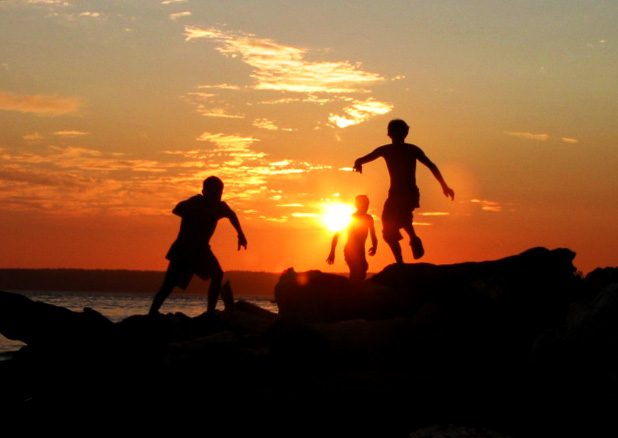
Most children seek out small places to make their own. They find secret realms in couch blanket forts, behind furniture, and in outdoor hideaways. There they do more than play. They command their own worlds of imagination away from adult view, often listening to silence by choice.

a

Perhaps retreating somewhere cozy harkens back to our earliest sense memories, first in the sheltering confines of the womb and then in the security of loving arms. Yet at the same time, hidden worlds are also a way of establishing our independence. Children have surely always slipped out of sight in the cool shadows of tall cornstalks, the flapping shapes of sheets hung on clotheslines, the small spaces under back steps, behind furniture, and inside closets.

There are all sorts of tiny retreats that can be purchased for kids. Plastic structures made to look like ships or cabins, tiny tents, pre-made playhouses. These things lose their allure. Children want to discover hidden places on their own or to create them out of materials they scavenge like fabric, cardboard, scrap wood, whatever is handy. (The benefits of this play is described in the “theory of loose parts.”) These places tend to be transitory, lasting for a short time or changing into something else. They’re special because they’re unique to the child. These places contain the real magic of secret places.

Hidden worlds are made with blankets, indoors

a

or outdoors.

a

They’re found in cardboard boxes

a

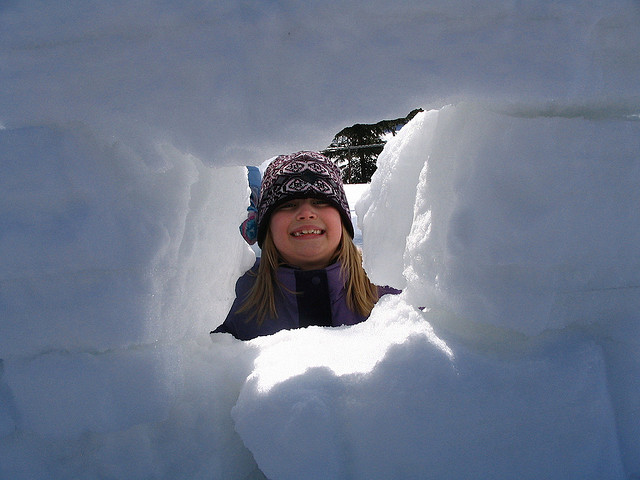
snow

a

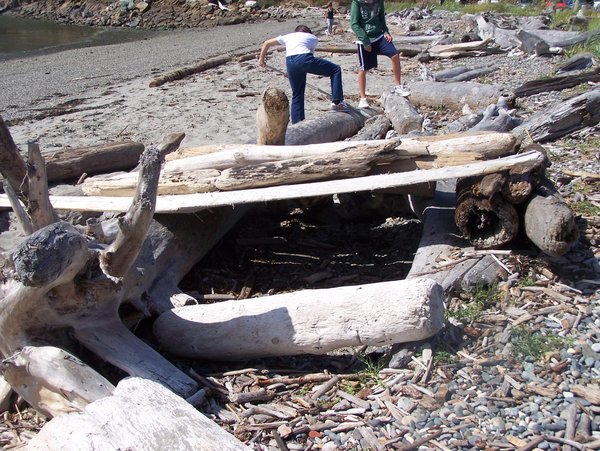
driftwood

natural play place, loose parts play,

and under trees.

a

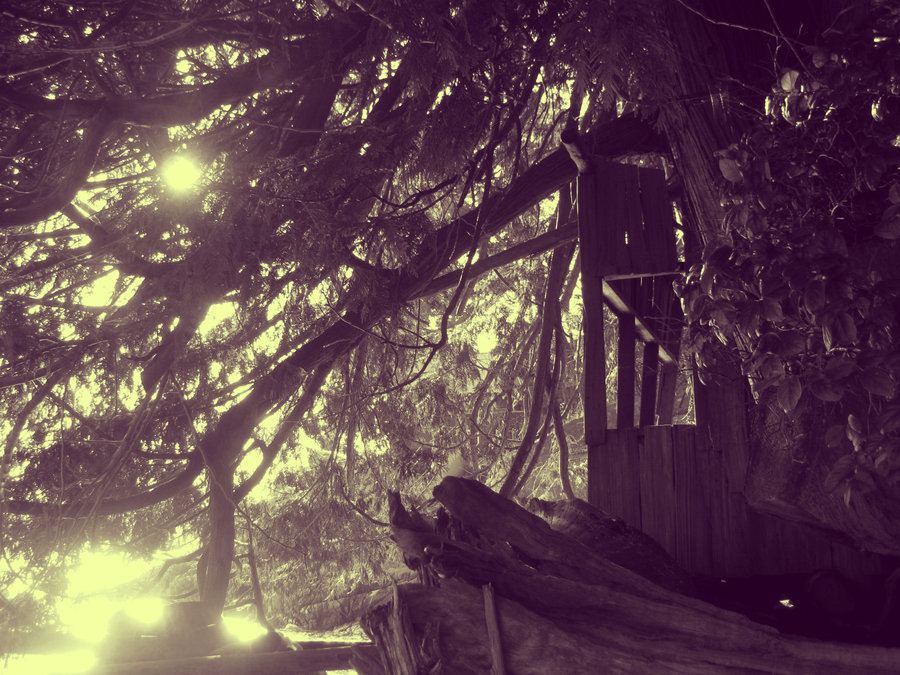
They’re made out of old logs

a

old plywood

a

or branches.

a 

The hidden worlds I cherish these days have more to do with a quiet sense of peace found in moments of solitude. What’s paradoxical, these are also times when I most often feel the oneness that connects everything.

Maybe growing up with the freedom to retreat within hidden worlds, no matter what was going on, helped me to access this in myself. Hurray for blanket tents, for treehouses and spaces under tables, for all hidden worlds that let us gather up what is fragmented in ourselves and feel whole again.

How do you make time, and space, for hidden worlds in your child’s life and in your life?

a

10 Reasons To Become A Library Addict

library addiction, book zombie, build a library habit,

Image: CC by 2.0 ricardo266)

My name is Laura. I have a chronic library habit.

Sure, I have other, less socially acceptable habits. We can talk about those another day. Right now I’m trying to convince you to become a fellow library fanatic.

I’ve already been successful with my kids. The stacks of books my family brings home may be pushing up the state average. Now that my kids are older they are surprised most of their peers don’t bother with libraries, in person or online. And I’m surprised to see how many of my friends don’t use libraries either. Some haven’t been since high school. For those of you who don’t bliss out over libraries, or worse, dismiss libraries as dim places with a distinctive old book smell, here are the ten best reasons to get hooked on libraries.

*

1. Magic water.

magic water,

As a small child, I was convinced there was something magical about the water coming out of our local library’s drinking fountain. It tasted better than any water, anywhere else. I assumed this had to do with its enviable proximity to all those books.

When I had my own children, I intentionally carried on the magic water belief. And they’ve always been able to taste the difference. Although I realize there’s no factual basis for this, library water still seems more deeply refreshing than ordinary water. See for yourself!


2. Awe.

library addict, library love, A much more vital magic is evident in libraries around the world.

It has to do with a sense of history, of freely shared knowledge, and awe-inspiring architecture. When traveling I make sure to hang out in libraries. Most recently I found time to soak up the atmosphere of one of NYC’s awesome libraries.

*

3. Librarians.

love librarians, librarian stereotypes,

ala.org

Surely you celebrate the annual Hug Your Librarian Day. These folks are amazing. As  Erica Firment writes on Librarian Avengers,

People become librarians because they know too much. Their knowledge extends beyond mere categories. They cannot be confined to disciplines. Librarians are all-knowing and all-seeing. They bring order to chaos. They bring wisdom and culture to the masses. They preserve every aspect of human knowledge. Librarians rule. And they will kick the crap out of anyone who says otherwise.

Librarian stereotypes aren’t relevant or cute. Don’t believe me? Check out Library Shenanigans, Librarian Problems, and Your Librarian Hates You.

*

4. Library materials are free!

new library services, Our taxes pay for them whether you use them or not. Only suckers don’t get in there to scoop up books, magazines, movies, digital downloads, recorded books, electronic readers, programs, classes, performances, and more. My kids and I have strolled out after a library visit with well over 100 items checked out on a card or two.

Today’s libraries offer much more than well-worn books and a chaotic Story Hour. Click over to your library’s website. You’ll find an amazing array of offerings well beyond the newest bestsellers. There are probably programs to get you started in fencing or felting or fraternizing with fellow foodies, just this week alone.

*

5. Ordering.

order library materials, library request, OMG, I love ordering materials. In my area library systems are linked, so holdings can be sent from libraries in quite a few counties right to my own little branch. I can read a review of a book before it’s released, then go to the library site to pre-order it. I can order special book group offerings for our book group (up to 20 of the same book) that come organized by some saintly librarian with supplemental materials. I order obscure specialty books that were published back in the 1920’s and earlier.

We’ve homeschooled on the cheap thanks to our library system and the wonders of ordering materials. No way could I afford to expose my kids to the depth of information and range of experiences they’ve gained via libraries.

*

6. Online renewal.

library perks, I don’t know about your library system, but mine permits renewals up to five times. Online. That gives me several months to adore most materials. Those months are necessary. I use books in my work, take them with me to ward off dull moments, and leave them around the house for family members to pick up when their eyeballs are unoccupied.

Sometimes I find books so precious that when they are finally and irrevocably due, I end up buying a copy. But let me point out, I only buy books after proving their worth to myself. No regrettable book purchases here. Yay savings.

*

7. Library privileges.

I’ve been in a steady human relationship for a loooong time, but I’m a non-monogamous library user. Judging by the number of library cards in my name, I’m a pushover for the sweet allure of any library’s New Acquisitions section.

It’s hard to unearn library privileges. Late fees are usually minimal and in many systems there are no late fees for seniors, teachers, and homeschoolers. Even when my account is labeled “delinquent” due to a late book or two I’m still able to check out and reserve materials. I don’t mind a few dollars here and there to make up for my late return crimes. Totally worth it. Unlike most human relationships, my library is always buying me something new, forgiving me when I atone, and consistently planning unexpected ways to lure me.

*

8. Research databases.

library search functions,Library systems subscribe to pricey online database services that none of us could afford on our own. I access most of them from my home computer, simply logging in with my library card number. These databases include genealogy, academic research, news archives, digital images, health, and much more. I relied almost entirely on the resources of my award-winning Medina County Library for the research necessary to write my book.

*

9. Book Zombie Fuel

book diet, reading addict,

sundaykofax via Flickr, CC by 2.0

A wealth of materials is essential for those of us who are Book Zombies. We absolutely must gorge on fresh brains books, feeding an insatiable hunger for that oblivious-to-the-world swoon we call reading. We don’t hear or see what’s happening in our “real” lives when lost in a book.

Libraries feed that hunger, gladly buying books for us and storing them until we’re ready for more.

*

10. That smell.

foreign language library, Children of Chernobyl, Libraries don’t smell like someone’s musty basement. The odor is something entirely different. I’ll tell you what it reminds me of, right after I tell you about how much I appreciate Russian language library materials.

For five summers we hosted a little girl from Belarus  through the Children of Chernobyl project. And every summer before she arrived I called the librarian in charge of the foreign language collection at the Cleveland Public Library. We talked over Tatiana’s age and interests, then every few weeks through her three month stay this librarian sent to our rural library branch a wonderful selection of Russian materials including Harry Potter books, children’s magazines, recorded children’s books, popular music, and much more. When my kids curled up with books or went to bed listening to CD’s, Tanya was able to do so as well. I hoped it eased the hunger she must have felt to hear her own language. Beyond that, it built connections between us almost immediately.

The first day she arrived, exhausted from long flights and weak from some medical problems, there was no way we could really communicate. It became obvious that our efforts to learn Russian had been laughable and as a seven-year-old her grasp of English was limited to “yes” and “thank you.” Then I remembered those blessed library materials. In a few minutes all of us were dancing to the Russian version of “Hokey Pokey” and laughing before collapsing in a heap on the couch together to giggle as we paged through a Russian/English picture book, challenging each other to pronounce the words. That stack of Russian library materials smelled, more than anything, like home. To me, every library smells like my place. Bet they smell like your place too.

Links & Updates 10-4-13

links of interest,

Thank goodness I have things to do in the actual 3-D world because raking through the net’s fascinations is a seriously tempting pastime. Instead I’ve been canning (I think we’re up to 58 quarts of garden goodness) and enjoying this glorious autumn weather. Yesterday I meant to throw together a green tomato cake (better than it sounds) but ran out of time. My daughter was disappointed. She said, “It’s a sad day when I have to beg for vegetable-based confections.” Maybe it’ll happen today.

Right now I’m hovering somewhere above euphoria. The publication date of my poetry collection has been bumped up to November 2013. (That’s not why I’m floating, I’m actually nervous about this book.) My publisher sent me on a quest to collect blurbs. You know blurbs, recommendations from other authors that appear on the back cover? I managed to do this for my first book with medium levels of trepidation but this seems much harder. I’m entirely an outsider to the poetry world. No MFA, no chapbooks, no experience at poetry readings. Typical advice is to reach out to writing professors, poetry mentors, fellow published poets. My degree from Cleveland State garble years ago required one English class and don’t personally know poets with book credits. It’s hard to muster up the courage to wheedle a favor from strangers. Friends have been referring me to local poets they know but they’re all too busy, which I assumed they would be because sheesh, who likes being approached for handouts? With only a few weeks left I took my blurb-less book fears to Facebook. Folks there encouraged me to do the unthinkable: to contact well-known poets I read and admire. With plenty of trepidation, I did. First I asked one of my all-time favorite poets, Alison Luterman who writes astonishing poems like “Looking For Work” and “I Confess.” I practically swooned in fangirl fever when she emailed me back within minutes. Minutes! She asked for my poems. I sent them. She read them. And then she sent back my first poetry blurb.

“Laura Grace Weldon employs radical empathy to enter into the hidden lives of rutabaga, cows, the neighborhood bully, or the beating heart of life itself.  Playful, curious, sensual, she aims to open the reader’s eyes and heart.”    Alison Luterman

I’m still ablaze with wonder over this. There’s more. The other two poets I contacted emailed me back too, asking to read my poems! A word has not yet been coined to describe my wonder and gratitude.

Back to the ground long enough to offer some links for your perusal.

Essential Absurdity

Illuminations

Sawabona

Sawabona” is a common greeting among the tribes of northern Natal in South Africa and it literally means “I see you.” As to say, “I respect and acknowledge you for who you are.” In return people say “Sikbona” which means “I am here,” or “When you see me you bring me into existence.”

sharing circles,

Sharing circles is an article about the gift economy from brilliant philosopher of our times, Charles Eisenstein.

Hope

child

Today’s abolitionists at work.

Nimo Patel’s video features footage from all over the world plus heart-melting appearances by the children Nimo works with in the slums.

Oy Vey

child

I get furious when the most vulnerable among us, and the desperate people who love them, are exploited. Here’s a piece I wrote about a “how to reverse dementia” service coming to a nursing home near you.

General Silliness

child

35 Awesome Dates: The End to Dull Nights Out. Yes, this is what I’m trying to talk my husband into.

Why your face looks wrong in photos. Or maybe it’s just my face…

Auditory Yes

More evocative music from The Civil Wars.

Thanks to my son Sam for this piece. Bet it’ll be stuck in your head too.