Staring Down Worry

mystical experience of fear, metaphysical encounter with darkness, overcoming evil, facing worry, staring at Satan, prince of darkness in my room,

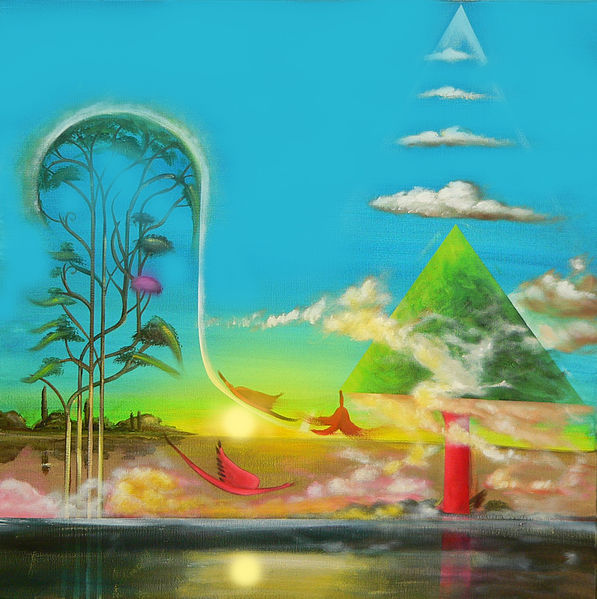
Image courtesy of pitrisek.deviantart.com

Something happened the night Worry appeared to me.

Some of us are chronic worriers. There’s probably an adaptive reason for this, since humans who envisioned potential dangers would be more likely to survive and pass on their genes. But saber-toothed tigers aren’t lurking by our front doors these days. I know for a fact that worry generates misery while producing absolutely no benefit. Giving it up, however, isn’t an easy matter. Worry runs in our heads like movies of disaster to come, unbidden yet powerful, making some of us wary of the smallest choices.

I worried from the earliest time I can remember. It may have an adaptive start in my life too. As a tiny child I spent many nights struggling to breathe through asthma attacks. When I was five years old I got a bit of food lodged in my esophagus. When my worried mother called the doctor he said it couldn’t possibly still be stuck hours later, I was just overreacting. I stayed awake all night spitting my saliva into a bowl, since even a moment’s inattention caused it to run down my windpipe and sent me into fits of choking. The next morning my parents took me to the ER where a surgeon removed a very stuck bit of food. The year I turned nine my grandparents all died, catapulting me into years of obsessive worry that everyone else I loved would die too. I was assaulted by an adult when I was 13, telling no one until years later. The focus of my worry widened as I spent years searching for the causes of evil and suffering. Worry continued to be my companion when I hit my 20’s. Each of my babies were born with medical problems. The unknown dangers threatening even the most innocent lives suddenly resided in my house. Chances are my chronic insomnia has roots in all this worry.

One night as I lay awake worrying, I had an experience that profoundly changed me. That night I had plenty of things to worry about: serious concerns about my children’s health, our finances, and other problems. Normally I fought off worry with gratitude—focusing on the comfort of my family sleeping safely nearby and the many blessings in my life. But worry was there haunting my mind and hollowing my body.

Sudden as a car crash, something happened.

I know it sounds bizarre but it was as real as the lamp on my desk is now. I became aware of a huge black column next to my bed. It was comprised of the most immense energy I’d ever experienced. It was dark and powerful with a presence that seemed alive and completely aware of my thoughts.

I had the sense that it was of such infinite size and strength that it went through the floor and out the roof, stretching far in both directions. I should have been more frightened, but the moment this column appeared I realized, as if the message hit all my cells at once, that I had summoned this darkness.

It was born of my own intense worry. It was a profound lesson that went through me the way wisdom does, filling not just our brains but also our bodies and souls. Lying there, I resolved to bring forth every ounce of light I could muster.

The instant I thought to do this, whatever that column was disappeared.

I woke my husband to tell him. He kindly assured me that I was nuts. Until this post I’ve only told one other friend. But in today’s atmosphere of worry, I wanted to share this image—of fear so huge that it manifests next to you. It taught me that worry is a kind of unintentional evil. It presupposes things will go wrong. It’s the opposite of faith.

I’m not entirely cured of worrying nor would I ever change those earlier years of worry. They’ve made me stronger, more open to the beauty found just beyond despair, and left me with a positive quest. But ever since that moment, years ago, I have made a conscious effort to reorient myself.

Ironically, my family has been through times more difficult than I could have imagined back when this happened—crime, financial hardship, loss, and grief. But I know the antidote—to shine forth with all the light I can. Some days I’m practically optimism’s parasite.

But really, if all my moments of hope coalesce into some kind of vision, I can’t wait to see it.

metaphysical experience of evil, starting at evil, facing Satan, summoning fear, transcending worry, transcending fear, overcoming worry, renewing optimism,

Image courtesy of m0thyyku.deviantart.com

Newcomers To God’s Country

move to country bad idea, angry rural neighbors, rural life hilarity, rural living problems, religion as a weapon, angry Christians, We left behind gangs and sexual predators when we moved to the country. After city living, settling our family on a small farm seemed like coming to the Promised Land. Even the weather was welcoming as we made more and more repairs to the house we could barely afford. No matter. We hiked through the woods and crouched by the pond, watching frogs, fish, and goggle-eyed insects with a sense of gratitude that felt as solid as a good decision.

Then we got to know our neighbors.

Though we’d moved less than an hour away it seemed we’d crossed an unmarked border. Lovely pastoral stillness was regularly broken by target shooting, 4-wheelers careening around pastures, and barking from what sounded like a dog breeding operation. Some neighbors chose to burn garbage rather than pay the requisite fee for trash pickup, which explained the toxic stench of burnt plastic that sometimes hung in the air. And we quickly learned that some neighbors didn’t talk to other neighbors due to longstanding feuds. Allegedly these conflicts had escalated to bodily harm, lawsuits, and the biggest threat — eternal damnation.

This was the most overtly foreign to us, religion right out front as a beacon or bludgeon. Religious paraphernalia was evident everywhere; on bumper stickers, yard signs, and lapel pins. “Where do you go to church?” was the question people typically asked upon meeting us, right after “Where are you from?”

Realizing the only correct answer would be the exact denomination of the questioner, I gave vague relies. If pressed I said truthfully that we headed back north each Sunday to go to our old church before spending the afternoon visiting relatives. Then I quickly changed the subject. This conversational maneuver seemed to leave my new neighbors unsure of whether to save my soul or shun me. Left in the dreaded middle ground, many of them parted with helpful advice about sins I should take care to avoid.

“Don’t vote for the library levy, because you know the library is an agent of Satan. It has that Internet thing.”

“Don’t celebrate Halloween. That pleases the devil’s minions.”

But we couldn’t remain anonymous for long. Our children ventured down the street to scout out playmates. They returned quickly. Apparently the neighborhood children posed a single-question quiz before agreeing to make friends with newcomers. When our children didn’t know the answer to “Are you born again?” they weren’t allowed to stay.

Soon after we arrived, I was invited by a neighbor to her home. I brought muffins. She nodded as I handed them to her, saying, “God told me not to bake.” While ranging around her kitchen swatting flies and yelling at her children, this woman crisply explained why those who didn’t ascribe to her exact version of Christianity were destined for hell. With joyous fervor she started listing houses on the street by the sins of the occupants, from her next door neighbor (“She’s a Catholic, you know, one of those so-called Christians.”) to the woman who lived at the end of the street (“Don’t talk to her, she uses a hyphenated name. Probably a feminist.”) 

I demurred, saying something about seeing the light in each person. She swiveled her full attention in my direction, fly swatter in hand, and asked me where I went to church. No middle ground left, I told her that I attended a Unitarian Universalist fellowship.

She was shocked.

“Oh, you people believe anything goes,” she gasped.

“Not intolerance,” I said.

She kicked me out of her house.

It seemed that my admission branded me, and not in the correct tattoo-for-Christ way. Word spread quickly. A man who lived a few doors down called soon after. When I answered the phone he asked to speak to my husband.

“Let your wife know she shouldn’t be hiking in the woods,” he said before adding gruffly, “I target shoot there and I don’t look first.”

I hoped school presented better possibilities.

Our children were assigned to two different rural elementary schools, miles apart. I picked our kindergartner up every day at lunchtime. Other parents also waited in the school hallway. It was immediately apparent that two factions leaned against opposite walls. This presented a difficult choice. If I spoke to the woman with frosted lipstick and tight shirt who stood on the less populated side, the woman with the heavy necklace and shag haircut on the other side would glare at me. And vice versa.

Frosted Lipstick talked to me more often. She told me about her well-muscled prayer partner and how she felt called to meet with him alone even though this made her husband jealous. She told me that Jesus gave her too many challenges. She told me I would be cuter if I wore lipstick.

Shag Haircut was more interesting, or maybe I just enjoyed her sardonic commentary. One day Shag Haircut told me what was behind the hallway glaring. A group of mothers were trying to remove Frosted Lipstick from membership in the school’s parent/teacher organization over a dispute concerning craft supplies. Ribbon and scissors worth something like $36 had not been returned. Shag Haircut and her cohorts considered Frosted Lipstick a thief.

I made what I hoped were reasonable suggestions to solve the problem. No luck.

I’ve taught conflict resolution for years but apparently peace wasn’t nearly as enticing as the entertainment value of scandal. A few weeks later the superintendent acted. Weary of the dispute, he threatened to eliminate the entire parent/teacher organization. Both sides of the hallway were deliciously shocked.

Frantically, Frosted Lipstick asked me to babysit after kindergarten so she could meet with him and solve the problem. I was relieved that she seemed to be taking my advice about talking the issue over, finding common ground, and healing the breach. I agreed to babysit, but explained that I needed to pick up my third-grader at the other school by three-thirty for a dentist appointment.

I assumed that she would drop off her kindergartner to play with my child. I was wrong. She appeared at my door with three additional boys. When she saw my surprise she said, “Everyone knows I operate a home daycare business.”

Everyone but the newcomer.

She went back to her minivan and returned with a woman she called Grandma. This woman was not her relative. Frosted Lipstick was branching out in the daycare business and had taken in an elderly confused person who needed supervision. Frosted Lipstick left quickly after I reminded her I needed to leave at three sharp. I made additional places at the table and invited these guests to lunch.

It became apparent that the boys were not accustomed to eating while sitting or eating without throwing food. They also used God’s name in vain frequently, surely a habit they didn’t indulge in while in the care of a woman who talked so much about her prayer life. I gave up the silly idea of showing them how to make sandwich shapes with cookies cutters and simply tried to impose order. It wasn’t working well.

Grandma wouldn’t sit. She smelled as if she might have damp undergarments but her waistband was fastened with some kind of dementia-proof catch. I couldn’t figure the thing out.

The afternoon deteriorated rapidly. My five-year-old normally enjoyed eating while I read to him, then he played Legos after lunch, but these boys were only amused by diversions such as hitting each other and slamming themselves into furniture. Grandma sidled along the walls with her hands up touching everything as if she read a form of Braille expressed in window frames and light switches. At one point she nearly escaped through the locked front door. Like hostages, my son and I exchanged repeated sympathy glances at each other as the home invasion dragged on.

Despite the chaos around me I was cheered by the knowledge that a greater good was being served — the conflict was being talked out at the superintendent’s office. In fact I was beginning to feel a sense of peace about the whole ordeal. Three o’clock was approaching. Frosted Lipstick would ring the doorbell and then I’d be free to retrieve my third grader. By now my son had retreated completely from the boys, who were bouncing around in a frenzy like ping pong balls. I couldn’t imagine the inner clamor their behavior was expressing. I also felt a generous amount of sorrow for Grandma, left here with strangers when she’d already lost so much.

Three o’clock got closer and closer. Frosted Lipstick still didn’t arrive. My smug sense of peace was evaporating. A few minutes after three, she called. Her tone was casual. She said she couldn’t get to my house but had made other arrangements. I was to drop off the kids and Grandma at the school’s aftercare program, she knew everyone there.

I had no time to express my indignation. I loaded the boys and Grandma in the van, checked seat belts, and turned onto the road. In moments the boys had taken off their seat belts and were beginning to crawl over the seats. That did it. I pulled over, trucks hurtling past, and told the boys to get their seat belts on using the slow dispassionate voice that my own children know indicates true rage. As I merged back into traffic I realized my vindictive thoughts were an indicator of how far I had to go before calling myself a pacifist.

In moments I was hurrying across the school parking lot holding many hands at once. We crammed into the tiny school office. I stood at the counter assuring the secretary that arrangements had been made for the boys to stay in the aftercare program. She seemed entirely unaware of such arrangements. Then I uttered Frosted Lipstick’s name. The school secretary’s face slackened into disgust. I leaned over the counter, trying to hear her response but the boys were arguing and shoving the hard-backed chairs back and forth on the linoleum. Grandma was running her hands along the corporate-sponsored posters on the walls. Clearly none of us wanted to be in this office but my own child was waiting miles away and I needed to assert some control over the situation. A chair tipped over, one boy slapped another.

I turned to the boys, hissing furiously over the din, “Stop it right now or I’ll tie you to those chairs!” Unfortunately just at that moment the principal came through the door with what appeared to be a new family. Upon seeing her, the boys stopped their noise immediately. Sudden silence turned my threat into a broadcast. Grandma strolled right into the principal, her upraised hands roaming across the guests’ bodies, along the door hinge, and onto the next wall. I’d been in the township less than two months and now was heard threatening to use restraints on a confused woman and three disorderly little boys.

The secretary said there was no protocol for leaving the boys without parental consent slips, and of course the elderly woman whose name I didn’t know could not stay. Trying to keep from hyperventilating, I asked the secretary to call the other school about my child, now surely left in the office. She tried. She told me no one was answering, Her tone assured everyone in the room that I was indeed a bad mother.

I did what I had to do. I subdued my hysteria, gathered my charges, and walked down the hall to the aftercare program. Both women working there said they knew the boys and the Grandma, as most people in the township seem to know everyone else. I informed them that Frosted Lipstick had told me to leave them for just a few minutes till she got back.

“Even the old lady?” asked one of the aides.

I nodded, wishing I had never stopped in the school office.

“Okay,” said the other aide. The first woman looked skeptical, but the moment the word “okay” left the mouth of a human being able to watch these four I took my son’s hand and ran from the building—past a janitor, several parents, and a blur of faces in the school office. I wondered if I abandonment charges were possible.

We pulled out of the parking lot and almost immediately found ourselves behind a line of traffic on the way to the other school. Cars, vans, trucks, and at the front, a school bus. It takes a single school bus to clog a rural road for miles. Worse, directly in front of us was a tractor pulling a manure spreader. Dark clumps fell onto the road and the heavy odor drifted in through our closed windows.

That drawn-out stinky scene wasn’t the final act of our little drama. Nor was it the sight of my third grader waiting for me in front of his school building, his face confident but his backpack sagging. No, it was the phone call from Frosted Lipstick later that evening. At the sound of her voice I was confident I would hear that the day’s calamities had been for a good cause.

“So did you resolve your differences?” I asked her.

“I went there to serve them with papers,” she said. “I’m suing the superintendent, the school, and the officers of the parent/teacher organization. God told me to seek vengeance.”

The Bomb & Me

alive because of the bomb, believe in fate, anti-war, nonviolence, anti-nuclear activist,

Why do we take any one path in our lives? Perhaps a mix of choices and abilities are simply stirred in the cauldron we call childhood. Or maybe there are elements we can’t fathom.

Here’s one reason for my wonderment.

I was one of those kids who worried about every chained dog and crying baby. I wanted to understand why the world contained cruelty and more, how I could fix it.  When I was ten years old I learned about the splitting of the atom. It struck me with cold horror, although I couldn’t articulate why. Before that I assumed most adults were looking out for the welfare of kids and trees and animals under their care. But once that information sank in I was afraid that grown ups were terribly misguided. When I asked questions I found out my country had dropped two atom bombs on Japan and that it now used nuclear power. Adult logic suddenly seemed like a fairy tale. It wasn’t until years later that I heard what J. Robert Oppenheimer, called the “father of the atomic bomb,” thought when the first one was detonated. A verse from the Bhagavad Gita came to his mind: “Now, I am become Death, the destroyer of worlds.” Cold horror indeed. Even on sunny days I thought about death.

As the child of conservative parents, I don’t recall any family discussions about nuclear weapons or nuclear energy, pro or con. The few times I asked I was told the bombs had to be dropped to end the war and nuclear power was a safe, clean form of energy. I kept to myself the chilling fear I felt whenever I thought about the splitting of atoms. That is, until my father’s old college roommate was in town. Before his visit I was told he was a smart man who had done well for himself. (In other words, little girls must be extra polite.) And I knew my father hadn’t seen this friend since before I was born. All good reasons to mind my manners and listen quietly to the adults talk. Which I did, until I heard him mention he was an engineer for a nuclear power plant. I gasped (not a polite response) and asked him about the dangers of radioactive waste.

He gestured to the light switch on the wall dismissively, asking, “Do you expect the lights to go on or do you know how to generate your own electricity?” As a child still afraid of the dark, I didn’t have much to say. But his response didn’t ease my concerns. That experience taught me to get the facts before I introduced a subject and also to do something about my concerns. Thank you sir.

I’m sure my ten-year-old self would be disappointed with me. I haven’t devoted myself to freeing the world of nuclear waste and nuclear weapons, nor to advancing peace. But it’s an issue that has resounded in my life. I worked with anti-nuclear weapons activist groups for years and taught nonviolence workshops even longer. I campaigned and testified against the opening of two nuclear plants in Ohio (unsuccessfully) and against a five state radioactive waste dump (successfully). When my children were small we attended Hiroshima Day observances each year, floating traditional lantern boats with messages of peace to commemorate the lives lost.  We also hosted a child from the Chernobyl region for five summers, a child we grew to love and whose health is still threatened by elevated background radiation in her homeland.

Then I learned what splitting the atom meant to me, personally.

My father never had much to say about serving in the U.S. Navy in the closing months of World War II except that he had been a radar man. But in the last years of his life we heard more. He told us about one day in particular. He and the entire crew of their ship were called on deck. They thought it was to formally welcome a new commander. Instead they were given a classified briefing.

They were told all leaves were cancelled and all communication with home would be heavily censored. Their ship was being retrofitted to leave for an upcoming top-secret coordinated air and sea attack on Japan. Their ship would be third in line of the first fleet. It was considered a “sacrifice” ship. My father, a quiet religious teen who got drafted right out of high school, faced certain death along with the rest of his shipmates.

The US had commissioned a study on the human toll of invading Japan. It was estimated that somewhere between 1.7 to four million Allied casualties with between 400,000 to 800,000 lives lost, while a far more horrific five to ten million Japanese lives lost. The United States manufactured a half million Purple Hearts they expected to award after this invasion, so many that today they’re still using of the stockpile of those medals 80 years later.

A very short time later, the U.S. dropped two atomic bombs on Japan. My father lived to attend college, become a teacher, get married, and have a family because of the unspeakable violence wrought by those bombs. I am alive because of those bombs.

That I’ve felt driven since earliest childhood to advance a peaceful, nuclear free world now seems to have roots more mysterious than I can comprehend. I don’t know if that’s destiny at work,  but it calls me to believe that our paths are far more complex than we imagine.

fate, destiny, predestination, peacemaker, Now, I am become Death, the destroyer of worlds

Love Religion

A dear friend travels every chance she gets and her home is adorned with wonderfully evocative paintings, carvings, and sculptures inspired by different faiths. But she thinks she shouldn’t be drawn to such artwork. She appreciated its beauty when she practiced the religion of her childhood, now that she is an agnostic she is drawn to it even more. She wonders if her intense interest is strange.

sacred art, beauty in religion,

Theotokos of Korsun skete.com

I don’t think it’s strange at all.

love common to all faiths,

6th century synagogue mosaic

We humans are wired to feel reverence. Many of us feel an extra current running through sacred art, music, dance, and ritual. We sense an inexpressible oneness through meditation, prayer, and communion with nature. Some understand it within a particular religion, some feel it across a spectrum. And some simply chalk it up to an overactive pineal gland. To me, reverence is part of who we are as a species. I am continually fascinated as I explore the way we express it across faiths, cultures, and time periods.

seeing sacred in all faiths, love common to all religion,

Goddess Saraswati exoticindiaart.com

Sometimes I’m even paid to do so. A few years ago I wrote a weekly religion column for The Plain Dealer. Each piece included a description of a worship service and an interview with a member of that particular church, synagogue, mosque, temple, fellowship, or other gathering.

Illuminated parchment

I used a decidedly unjournalistic tactic. As I participated in the service, I waited to fall in love with it. Maybe love isn’t the right word. Maybe fall in awe. Then I wrote about whatever twanged my heart.

beauty in sacred art,

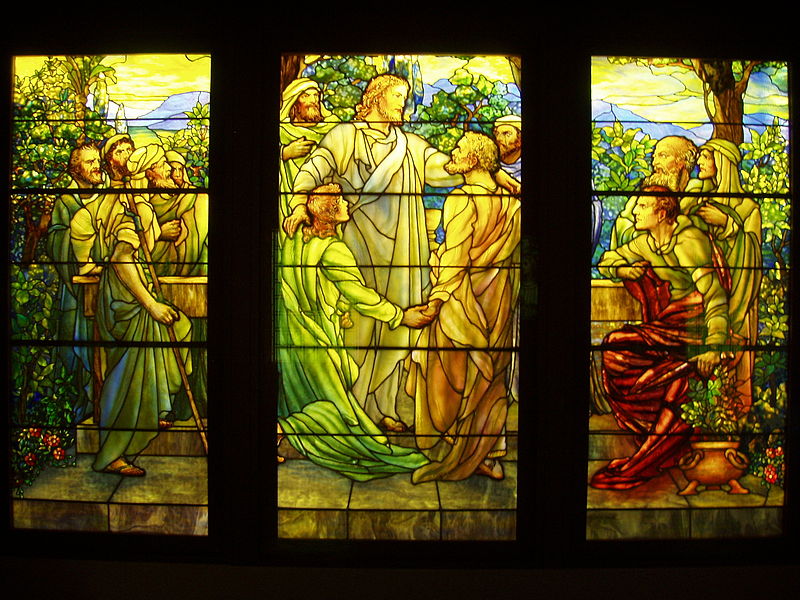
Christ and the Apostles - Tiffany Glass & Decorating Company, c. 1890

I consider myself pretty grounded in my own beliefs. And I come equipped with a skepticism meter, the kind that lifts my eyebrows at televangelists promising salvation by donation and lifts them just as high at products like energy vortex water guaranteed to activate your chakras.

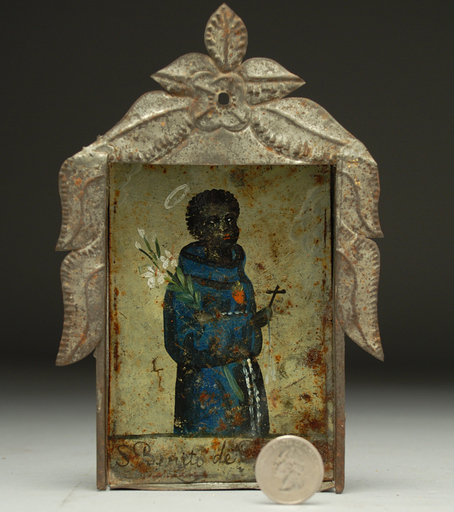
San Benito Retablo http://www.colonialarts.com

But the love approach worked for me. One week I’d be standing with a crowd of worshippers in a century-old church, so moved by a gospel choir that I could no longer think about the music but only feel it. The next week I’d be sitting crossed-legged in an ornate Hindu temple as ancient prayers were chanted, sensing the deep pull of wisdom carried across thousands of years.

beauty in divine art,

Kalachakra thangka

A reverent approach made it easier to write the articles but rarely spared me from making bumbling mistakes. I thought I could take part in each service unobtrusively. Instead I managed to be glaringly obvious, sometimes offensive. I dressed conservatively for a Mormon temple only to attract quite a few quizzical looks. Only then did I notice that I was the only woman wearing a sweater and pants. Every other female over the age of two was wearing a skirt. I wore a skirt to the next assignment, a Coptic Orthodox church. As I sat absorbing the old world beauty of that sanctuary, a woman with hauntingly dark eyes looked at me pointedly and often. I tried to figure out what about my person was in violation. Headcovering, check. No visible cleavage, check. Then I realized that others had slipped off their shoes once they stepped into the pews, honoring the holy ground of their church. Only my blasphemous clogs remained on. My feet failed me again at a Hindu temple. I’d gotten there early and spent nearly three hours cross-legged on the floor. I noticed that other people sat very carefully but I couldn’t quite discern what rules they were using so I tucked my feet under my knees. After the first two hours my knees couldn’t take it and I stretched my legs out for a respite. I was later told that the soles of my feet were aimed at Lord Ganesha, a major slur.

Bhairava Mask exoticindiaart.com

I approach with reverence even if I often end up as the fool (falling well short of a holy fool). It doesn’t matter because I also found something I didn’t expect: a remarkable oneness across faiths. Every person I interviewed about religion expressed the sort of tolerance and open-hearted interest in other religions that, not long ago, would have been considered heretical. I also witnessed sharing of traditions and methods that may not have been overtly ecumenical but seemed to be a steady movement toward acknowledging the core of all faith. Love. In fact that’s what many people said to me. “It’s all about love.”

The Wonders of Creation and the Oddities of Existence

Someday I may do some traveling with my friend to see the world of faith through art, as she does. I expect to see beautiful expressions of reverence. I also expect to find love as the defining characteristic of all faiths.

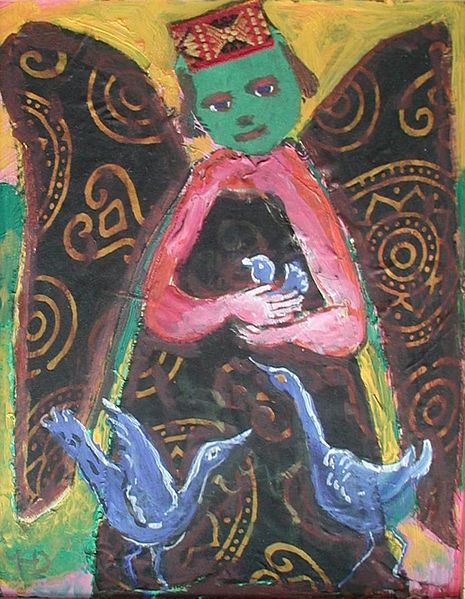
Engel Margret Hofheinz-Döring

The Love Religion

The inner space inside

that we call the heart

has become many different

living scenes and stories.

A pasture for sleek gazelles,

a monastery for Christian monks,

a temple with Shiva dancing,

a kaaba for pilgrimage.

The tablets of Moses are there,

the Qur’an, the Vedas,

the sutras, and the gospels.

Love is the religion in me.

Whichever way love’s camel goes,

that way becomes my faith,

the source of beauty, and a light

of sacredness over everything.

Ibn Arabi
Sufi philosopher   (1165 –1240)

Creating A Better World

“We become what we think about all day long.”
Ralph Waldo Emerson

positive thinking, the shift, better world attitude,

Anastasiya Markovich

Long before I became an adult I launched a quest. This was inspired by a something that weighed on my childish mind, an urgent calling to alleviate the suffering of others. Even when I was a misbehaving little girl who ignored her chores and fought with her sister (often), I still felt the weight of this obligation. My parents cancelled their subscriptions to news magazines to avoid my questions as well as my despair over every sorrowful photograph. And my entire family dreaded driving past a chained puppy or crying baby, knowing that I would agonize the rest of the day over this momentary glimpse out the car window.

For some reason my quest took the form of trying to understand why people acted cruelly. So in my spare time I read everything I could find on the history of suffering, evil, and misery. I learned about the Inquisition, U.S.betrayals of Native Americans, the Holocaust, the genocide ordered by the Khmer Rouge in Cambodia—if it was awful I studied it. I worked my way through every book and resource possible.

right thought, optimism changes world, hope,

Fritz Fuhrken

This project of mine stretched well into my teen and early adult years. It was grim. It haunted my dreams and colored what should have been youthful optimism. I began to realize that every single human has the capacity for cruelty. We just pretend we don’t. A bad mood may be contagious but the shadow we hide can wreak havoc on a personal and even a global level.

One day as I sat in the sunshine while my firstborn played nearby in the grass, my dear friend Leslie came over for a visit. She found me reading yet another horrific book, a stack of similarly dire non-fiction at my side. And she’d had it. She told me I was ignoring the beauty all around me to immerse myself in misery. She told me to look at the light shining on my child’s face, the bright green grass, and all the love in my life.

She was right, of course.

Still I defended my quest. I told her it was an obligation to know what was wrong with the world in order to right it. I waved around books that described the evils of pesticides, the horrors of factory farms, and the title I was currently reading, something about political prisoners.

She disagreed. She said it was time to focus on what was good.

I told her I was I finding good. What I read exposed me to heart-expanding accounts of people who demonstrated the best of humanity no matter their circumstances.  Those who were dying of hunger, yet gave their last bit of food to others.  Those who had no reason for hope but who kept art and music alive.  Those who faced the worst despair, but did not give in to it.  The best lesson I learned from years of study? Every single person has a choice, even if it seems there are no choices. That choice is the attitude they take.

the shift, making the shift, the secret in action, the secret applies to peace,

Fluxx

It was time to work on my own attitude.

Gradually I stopped trying to understand and fight against all the reasons for suffering. I also became a little less frantic about doing everything possible to counterbalance the wrong I saw everywhere. I noticed that people in activist groups I belonged to faced the world with the same despair I felt, battling evil so fiercely that they had no way to expand on all the good that also flourishes.

So I began volunteering less time to lost causes, marched in fewer protest rallies, and gave up stomping around with petitions. I did more that seemed to boost the positive—gardening, singing to my babies, and guerilla acts of encouragement.

I became certified to teach non-violence workshops which I taught to school systems, incarcerated teens, and senior citizens. As I taught, the lessons sunk in ever more deeply. The long and life-affirming history of non-violence can’t help but heal a heart heavy with the world’s troubles. The process of non-violence—reacting with love rather than hate—is more empowering than any other force we humans have ever used. It transforms greed, intolerance, and cruelty. It’s humanity’s way forward.

peace through non-violence, achieving world peace, optimism,

Solveigamundsen

Growing more positive, I began to find value in mistakes, doubt, crisis. A lifelong insomniac, I started sleeping a little better. Always one who tried to laugh rather than cry, I found myself laughing more— about falling downawkward encounters, and my near constant ability to embarrass myself.

It may seem difficult to sustain a positive outlook these days. My own family has been through grief, injustice, unemployment, and other sorrows. And our world struggles while formerly stable structures crumble. Just look at what’s happening to prescribe-and-placate medical models, inflexible financial institutions, condemning religious frameworks, and rigid corporations. But I believe these current conditions of breakup, economic chaos, and environmental decline are exactly those which are (slowly) leading to beneficial change. Collectively we’re waking up to the weakness of limited thinking and short-term fixes. Hopefully we’re also waking up to the reality that we’re in this together—rich and poor, developed and developing nations, young and old, left and right.

signs of hope in the world, peace emerging,

Jules Henri Lengrand

I’ve come to believe a better world is made by building on what works rather than focusing on what’s broken, as long as the truth is told about that brokenness and healing is sought.

I see beings on this planet linked in ways that defy description and see my fellow humans as heroes in the making.

And I see SO much good happening, good that’s too often overlooked. Consider:

1. War and global violence continue to decline.

Armed conflicts aren’t going up, they’re going down.

The world has seen a 70 percent decline in the number of high-intensity conflicts since the end of the Cold War era. Genocide is down 80 percent. Weapons sales between countries have diminished by 33 percent and the number of refugees has fallen by 45 percent. Even measuring from as little as 15 years ago, the number of armed conflicts has dropped from 44 to 28.

Why? Project Ploughshares credits peace building efforts.

Chances are, the reasons for peace are complex. Yet a stronger international resolve to focus on peace building and basic human rights is taking place. Imagine the far larger potential for enduring peace if we intentionally educate our children and ourselves in the proven methods of non-violence—-negotiation, mediation, reconciliation, even basic listening skills.

2. Freedom is stretching across the planet.

By evaluating variables including civil liberties, democratic institutions, and independent media it’s possible to assess how free each nation in the world really is. Back in 1973, 29 percent of nations were deemed free, 25 percent partially free, and 46 percent not free.

In a little over 35 years, the number of nations ruled by authoritarian regimes dropped from 90 to 30. Countries around the world considered to be free increased by 50 percent while those not free had dropped by more than half.

Independence has a long way to go. But positive signs—protests, dissent, political upheaval show us that ordinary people are speaking up for freedom.

3. Longevity is improving yet total population faces a downturn

Fulfilling the cherished hopes of their parents, more children around the world are born healthy. Mortality rates for those under five years of age have fallen by 60 percent since 1960.

Meanwhile, life expectancy has risen 21 years since the mid 1950’s. Try to suppress your optimism while looking at this analysis of longer lived well-being around the world.

This doesn’t mean the planet will be too crowded. Overall population will continue to rise for several more decades but we’re facing a major downturn. Already birth rates are near or below replacement rate in countries all over the world. Increased education and affluence tend to inspire women, no matter what country they live in, to invest their time and resources in fewer children. As Fred Pearce clearly explains in The Coming Population Crash: and Our Planet’s Surprising Future, our little Earth will likely reach a (painful) peak of 8 billion people around the year 2040, then the total number of human will begin to decline so rapidly that nations will struggle to keep their populations levels from slipping too low. They may create perks for becoming parents and incentives to attract immigrants.

4. Literacy rates continue to improve.

Global adult literacy rates have shot up from 56 percent in 1950 to nearly 84 percent today, the highest ever.

Women’s rates haven’t risen as quickly due to inequality and poverty, but in some areas, particularlyEast Asia, 90 percent more girls are able to read than 10 years ago. As female literacy goes up, other overall positive indicators tend to follow including decreased domestic violence, improved public health and greater financial stability.

5. Intelligence is on an upswing.

From generation to generation, we’re getting smarter. In fact, to accommodate continuously increasing intelligence the IQ test must be renormalized (standardized to keep the average test results at the 100). This is called the Flynn Effect.

Between 1932 and 1978, mean IQ scores in theU.S.rose 13.8 points. If your grandparent received IQ score results of 98 back in 1932 they’d have been deemed of average intelligence. That same grandparent, if administered today’s tests, would be considered to have a borderline mental disability by current scoring standards. IQ scores have risen even higher in some other countries. Of late, developing countries seem to be experiencing the biggest surge.

Plenty of explanations have been proposed, but the increase can’t be definitively pinned on genetic improvements, improved nutrition, greater familiarity with testing or better schooling.

According to Cornell professor Stephen J. Ceci, the most direct gains are not in subjects that are taught (math, vocabulary) but are shown in parts of the test that seem unrelated to schooling (matrices, detecting similarities). In fact, test gains have been enormous in areas requiring the child to apply his or her own reasoning, such as arranging pictures to tell a story or putting shapes in a series. Although teaching children does return positive results, what a child learns through the natural stimulation of everyday life has a more profound effect. For example, a study to determine the effect of schooling on rural children inIndia found that the increase in overall intelligence from a year of age is twice the increase from that of attending a year of school.

IQ test scores don’t relate to what truly provides satisfaction in life. But the Flynn Effect is intriguing. Factors we can’t completely explain are giving us the intellectual capacities to deal with an ever more challenging world.

6. Compassion is huge.

Never before in history have so many people worked tirelessly and selflessly to benefit others. Paul Hawken writes in Blessed Unrest: How the Largest Movement in the World Came into Being and Why No One Saw It Coming that the abolitionist movement was the first major movement by human beings to advocate on behalf of others without seeking advantage for themselves or their particular social or political group.  Since that time, such efforts have grown with astonishing vigor.

There are now over a million organizations on the planet working for environmental stewardship, social justice, the preservation of indigenous cultures, and much more.  These groups don’t seek wider acclaim, they seek to make a difference for the greater good.

Humanity, which is clever and kind enough to bring about so much improvement, is also awakening to the vital importance of living more sustainably on Earth.

I know we can live more peacefully and wisely.

Thank you Leslie.

global indicators of hope, better world emerging, the shift happening, the secret on a global scale,

Salvatore Di Giovanna

“When I despair, I remember that all through history the ways of truth
and love have always won. There have been tyrants, and murderers, and
for a time they can seem invincible, but in the end they always fall.
Think of it … always.”   Mahatma Gandhi

How The Secret Garden Saved Me

inner life of children, kids' religious worries, what kids hide from their parents,

My mother gave me an old clothbound book when I was nine years old.  It was her childhood copy of The Secret Garden by Frances Hodgson Burnett.  I felt a sudden tug of connection to the little girl my mother once was, especially when I found her name carefully penciled on the inside cover.  Right away, I signed my name under hers.
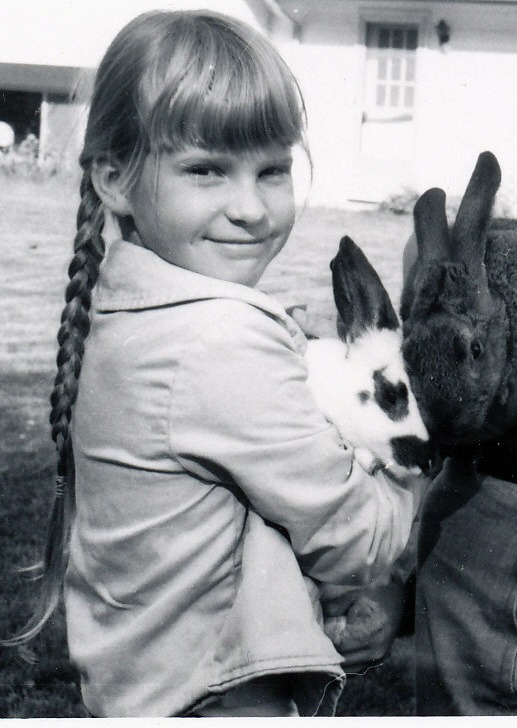
Although written in 1911 and clotted with Yorkshire dialect, that book became an essential nutrient to me.  It told the story of orphaned Mary Lennox who was sent to live with her silent brooding uncle on the English moor. Little Mary had no lessons imposed on her and was given the opportunity to explore.  I envied her freedom.  A character named Dickon befriended animals so easily that they gathered at his feet and ate from his hand. I, too, liked to go in the forest behind our house in hopes that woodland creatures there would come to accept me.  And I understood Mary’s response when her uncle inquired if she wanted anything. He suggested toys or dolls.  Instead she asked, “Might I have a bit of earth?”

More than my favorite book, The Secret Garden provided comfort at a time when I could find no other solace.  The year I received my mother’s copy was also the year that one after another of my grandparents succumbed to long, painful illnesses. By the time I turned ten, all my grandparents had died.

I’d watched them struggle for each breath but it hadn’t occurred to me that they wouldn’t get better. That’s what doctors and medicine were for. That’s what prayer was for. Now we would never have Sunday dinner together again. The seasons would come and go without canning applesauce or planting bulbs or going to the lake with my grandparents as we always did. I couldn’t stop thinking about death.

children's literature and positive mental health, saved by a book, children find meaning in fiction,

Other children probably weather grief with more resilience but that year was a dividing line for me. The blithe happiness of my childhood came to a halt. I couldn’t bear the idea that everyone I loved would die some day—my pet rabbits, my friends, and worst of all, my parents. My mother assured me that God simply called people home to heaven when it was their time. I kept asking why, if God were all-powerful, would He allow people like my grandparents to suffer so horribly before they died. She said His wisdom was beyond our understanding. Her answers left me with more and more questions. I could see asking them only intensified the sorrow she felt. So I tried to keep my worries to myself.

Now added to my fear of this unknown thing called death a new bleakness was added. Where I once prayed and worshipped without doubts, I was set adrift somewhere beyond my parents’ beliefs. Religion seemed piteously small when confronted with bigger dilemmas. And more of them occurred to me each day. What was the purpose of existence in a universe of unimaginably vast time and space? How did everything start when it had to come from somewhere? How did our tiny lives matter? I didn’t like the thought that adults believed in something that made no sense. I felt I was standing in a blizzard outside the warmth of answers that faith provided. It was lonely.

I tried to reconstruct my comfortably safe worldview with the tools I’d been taught were the most powerful: good behavior and prayer. I knew I wasn’t really the good girl I seemed to be. I was a picky eater, I argued with my sister, and I was lazy about chores. So I tried hard to be better, to be so worthy that no one else I loved would be taken away. The effort was a useful distraction from my preoccupation with big questions about death, meaninglessness, and infinity.

And I prayed, fiercely and in my own way, using pictures in my head and silent words. It was a gamble because I was no longer sure that God existed or if He did how on the job He was, but I had to do my best to keep my family alive. Here’s how my keep-them-alive game worked. If I thought of people I loved I had to pray for them. This was somewhat less burdensome at school because I was busy. It was overwhelming when my parents went out for the evening. I thought of my mother and father constantly, each time silently praying that they would come home safely. I summoned up images of my parents driving, chatting with their friends, driving home, then walking in the door. My whole body could feel the relief of their imaginary return. But as the evening wore on my prayers got more fervent and I took up a position watching cars go down the street. Their return was always later than I expected, probably because I was constantly willing them home. As soon as their car pulled in the driveway I ran to bed, feeling a sense of blessed completeness I couldn’t explain. They were back. Everything was okay.

It was exhausting.

importance of stories to girls, what books mean to kids,

I couldn’t imagine how but my parents weren’t fooled by the cheery act I put on. My mother told me that sometimes people need more help getting over their grief. She made an appointment for me to see a psychotherapist. I knew full well what this meant. I’d read my share of children’s books where unfortunate characters are locked up in institutions or sent away for their own good. It rarely went well for them. I was determined to act as un-crazy as possible. The day of my first appointment my mother made me wear a summer dress, sweater, and saddle shoes—the clunkiest fashion statement imaginable even to my ten-year-old sensibilities.

My mother usually stayed with me in the pediatrician’s office so I expected the same. Instead I was ushered in to see the doctor by myself. An older lady sat behind a large desk. She asked me to sit facing her in a chair much too large for me. I sat, my throat clenched with so much tension that it was hard to swallow. She asked me how I felt about coming in. I knew it wasn’t polite to admit my true feelings. Kids constantly have to filter what they do and say to please adults. So even though I feared and despised everything about the appointment I told her I was fine and didn’t need to be there and I was perfectly happy except for the embarrassing outfit I was wearing. I said it nicely. In fact I thought my comment about the outfit was a light-hearted joke. The doctor turned it into the topic of a lengthy question and answer session. She seemed to think I hated my mother for making me wear clothes I didn’t like. I couldn’t imagine that she’d had a mother recently or she would know that mothers make you do all sorts of things you don’t want to do. Eat all your dinner, clean your room, write thank you notes, well the list was endless. Frankly a dorky outfit was the least of it. Clearly I would have to filter what I said even more carefully.

Next she got out a series of large black and white photographs. She said it was a fun kind of test. I always got good grades on tests at school but the rules were pretty flimsy for this one. All I had to do was look at the pictures and tell her a story about what was happening. That included what happened right before the picture was taken and what would happen immediately afterwards. The first picture showed a dark-haired woman walking by herself on a beach. She didn’t look all that happy.Right behind her was a man with his arms reaching up in such a way that he seemed ready to choke her. The look on his face was creepy as well as dangerous. But I put the lightest tone possible in my voice and told the doctor that it was the woman’s birthday and she didn’t know her friend had come to surprise her. He was going to put his hands over her eyes and ask her to guess who and she’d be delighted. Nearly every picture was equally disturbing. I churned through them with Pollyanna-ish stories in my attempt to demonstrate just how mentally healthy I could be.

Next she brought up my grandparents’ deaths. The questions she asked were so upsetting and intrusive that I couldn’t answer. I shouldn’t have been shocked but I was. Having a stranger try to get me to tell her things about those who were dead alarmed my whole body. I could feel every inch of the chair touching me. The smell of the office, dusty and airless, made me want to choke. Although I willed them away, tears kept springing up in my eyes, and I set my mouth as tightly closed as I could.

The doctor changed her tactics back to the earlier conversation about my mother. I tried to unlock my mouth into a polite smile but I desperately wanted to run out the door. I knew my mother would be waiting and ready with a comforting hug. All I needed to do was just hold on until the appointment was over. Then the doctor made a statement so insane that it seemed whole adult world might be slipping away on a raft built without logic. She said I was upset because I wanted my mother dead.

That was it. I was willing to sacrifice the time I’d invested in good girl behavior but I would never go back there. I would do whatever it took. I would throw fits if necessary but I would not speak to that doctor again. On the drive home and all through supper I tried to figure out how to best make my stand. I decided to be logical and calm, although I wanted more than anything else to climb into my mother’s lap. That evening I sat with my mother, the person I prayed for most often, and lost my struggle to keeping from crying. I told her the unspeakable thing the doctor had said. My mother was gratifyingly appalled. She hugged me for a long time and then we talked as if we were on one side and the doctor on the other. It was delicious.

My mother called the doctor the next day and afterwards confirmed that I was a good judge of character. I would not have to go back. I overheard her telling my father that the doctor “didn’t have her head screwed on tight.” But my mother did think the doctor was right about one thing. I wasn’t getting over my grandparents’ deaths.

That wasn’t it. The loss of my grandparents had tossed me into a realm of questions I couldn’t ask and worries that faith couldn’t explain. I knew my parents were concerned about me so I ramped up the cheerful act. Masking my fears actually helped, at least during the day. But at night I couldn’t sleep. If I didn’t work hard to steer my mind relentlessly toward peaceful thoughts I’d feel as if I were falling into dark nothingness. The galaxies we learned about in fourth grade, black and endless, seemed like a void that would swallow up everything I knew. On the worst nights I could feel the fabric of the ordinary world stretched thin over a much larger unknown. Then I couldn’t even cry myself to sleep.

So I resorted to the distraction of reading. As soon as the rest of my family went to bed I turned my light back on. Most often I chose The Secret Garden. I turned to the same passages over and over. I read about the garden that seemed dead in the early spring chill until Mary cleared away branches and leaves to find tender green sprouts in the soil. I read about the crippled boy whose limitations Mary refused to accept and of his triumphant recovery in that garden. I read about her sorrowful uncle who awakened to joy after years of despair. Then I could sleep.

~

I don’t regret the fears and doubts of my childhood. They set me on a richly rewarding lifelong path of seeking answers to big questions. But I didn’t realize why I turned to The Secret Garden until I found the book years later. I opened it to see two childish signatures, my mother’s and my own. Rereading it, I recognized the passages that sustained me when I felt most lost. Each one was about about redemption, nature’s wisdom, and offered what I needed most of all, simple hope.

If I could meet a person from history I’d choose Frances Hodgson Burnett. I now know about the losses she suffered, the despair she fought, and the writing that was her life’s work. I’d tell her, a bit shyly, that I make a living as a writer too. I don’t think I could express how profoundly her book calmed a little girl too upset to sleep but I’d want her to know that her words were a soothing balm during those dark nights.

And I’d tell her that The Secret Garden didn’t just save me, it also shaped my future. Today I live on a small farm where my children have no lessons imposed, just like Mary. The animals here eat from my hand, as those in the book did from Dickon’s hand. Maybe I’d simply say, “Frances, our land is named after lines you wrote. We call it Bit of Earth Farm.”

Laura Grace Weldon

We Are One Being

We are one being, linked in profound and essential ways even though we rarely pause to consider them.

The surface of Earth is seventy percent water just as we are made up of seventy percent water. This is the same water that has been on Earth for four and a half billion years. It flows in and out of each one of us. In cycles too infinite to imagine this water has been drawn up in plant cells, swirled in oceans, circulated in bloodstreams, sweated, excreted, wept out tearfully, drunk up thirstily, formed into new life, risen into vapor, and locked into ice. The saliva in your mouth is made of water molecules intimately shared with beings that lived long ago and will be shared with all who come after us.

We breathe about 600 million breaths in a lifetime. The air we rely on is a balance of nitrogen, oxygen, argon, carbon dioxide, and a dozen or so other gases perfect suited to our existence. It circulates through endless forms and uses, moved by the wind of our planet and by each exhale of living beings—-trees, crows, humpback whales, and newborn babies. It recycles just as the calcium in your jawbone may well have been quicklime poured on a criminal’s grave, a garnet on a nobleman’s finger, cheese carried by a nomadic herder, and a coral reef in a tropical ocean.

Nothing about our bodies is separate from what’s around us. We are nourished by what has grown from the sun’s energy and we remake ourselves constantly, replacing millions of cells every second using only the materials that have been on this planet for millennia.

Quantum physics tells us the principle of entanglement explains how particles, once linked, can remain connected even when physically separated by vast distances, possibly even by time. Entanglement occurs between living beings as well, both human and animal, indicating a greater connection same call a morphic field and others call a holographic universe.

On this planet we are linked to every particle and every life form so intimately that science is beginning to echo what poets and sages have been saying for thousands of years. We. Are. One.

Each person is truly your kin. Our human connection begins with common ancestors. Genealogist Gary Boyd Roberts estimates that everyone on the planet is at least a 40th cousin. That’s because the family tree expands as each generation traces back. You have eight great-grandparents. Their parents had 16 parents. Go back 40 generations and you’d find a trillion grandparents at a time when there were fewer than 15 million people on the planet. That means we share 40th great-grandparents. In that way you are connected to eighty percent of the people on this planet. That includes the guy driving the delivery truck right outside your window and the woman thousands of miles away struggling to find water in a drought.

The smallest children seem to recognize that existence is an “alive poem.” They find kinship with rocks, animals, as well as people. Our human family, built on kindness and cooperation, helps one another heroically. We are waking to the ways our Earth sustains us, working harder than ever to restore justice and ecological balance. We are reaching out to share, laugh, explain, and find kinship with one another.

We are entangled in a universe so holographic that we can’t help but sense the oneness that has been there all along.

Ancestors Live On in Our Lives

ancestry, emotional resonance, quantum physics, consciousness, celebration,

We all grow up with the weight of history on us. Our ancestors dwell in the attics of our brains as they do in the spiraling chains of knowledge hidden in every cell of our bodies.

~Shirley Abbott


When my east coast cousin visited she asked for updates on our extended family. I told her about surgery an uncle had on a drooping eyelid.  She was intrigued because her doctor recommended she have surgery for the same thing. He told her the problem came from stretching tender skin around her eyes as she put in contacts.  How could she have known the tendency ran in the family?  Later, as we looked through old photographs we saw the same prematurely sagging eyelids in a few of our ancestors.  Orphaned children, stoic immigrants who left loved ones behind, farmers who’d lost their land shared this feature—-they looked as if they’d stopped fully opening their eyes.  She and I considered the emotional resonance.  When she left she was still mulling over what it might mean in her own life.

There are many traits passed down in families.  We’re familiar with inheritance of physical features but it seems that other tendencies run through the generations as well.  In my family we’re prone to heart palpitations, stomach problems, anxiety.  We error on the side of caution.  We tend to make a living as teachers, clergy, academics, scientists.  This is true of the living and those long gone.  Such facts can be easily traced.

Some things are less easily traced but just as pronounced. When I was a new parent, the legacy from my ancestors rarely occurred to me. I saw my newborns as wondrously made beings with talents and personalities that would unfold in time. But as I held, nursed and rocked my babies I found in myself certain ingrained beliefs that surely had passed to me through bloodlines or through ways of thinking that were tight as hidden stitching.

My parents were warm and loving with their children, but they also fought against a palpable sense of worthlessness that pervaded their daily lives. As a child I sensed this in my mother’s suppressed anger and in my father’s hidden sorrow. My father whistled as he worked on chores and hugged us each night before bed, but his posture often showed sorrow. My mother read to us, played games with us and wore bright red lipstick but she was on guard against a hard world. When my children were babies my own feelings of worthlessness came out in me full force. By what means had these feelings become mine?

Then I remembered how fully I identified with my parents. My father’s frugality was learned during a difficult childhood and was passed on to help his own children learn economy. But his despair had an exaggerated effect on me, in fact I felt unworthy when given praise or gifts. I’d absorbed my father’s childhood pain.

My mother emphasized her sacrifices on behalf of others, hoping for enough appreciation to fill hungry gaps in her life. I learned to sacrifice as quietly as possible so that I would gather no perfunctory gratitude, absorbing her childhood misery without the redemption she sought.

These were not healthy adaptations, yet I’ve come to believe children take on the angst of those who are close to them as if by osmosis. My parents overcame the painful realities of their early years through hard work, faith and loving attention to people around them. But they also took on the stories of their own parents and grandparents. Of course we are strengthened by adversity, but when we repress the hidden impact of generational suffering it’s more difficult to heal and grow.  That I was raised in a happy home yet felt this pain makes this obvious.

It is one of the tasks of humanity to steer one’s tribe toward the light of greater understanding. The legacy of sorrow and suffering we take on can be overcome, and in some way the overcoming is not only a victory for ourselves but also a triumph for our ancestors. Each generation can heal not only itself but ancestral pain as well. Changing the energy around who we are affects who our loved ones have been. The more I learn about quantum physics the more I understand this to be possible.

It’s not all about overcoming difficulty. It’s also about living out the gifts passed on by those who have gone before us. Those abilities and interests we call our own, so often are legacies from those long gone. As my children get older I find something ‘clicks’ when I notice attributes in them that were present in their relatives. I see these traits all the time. My research-minded, highly technical grandfather would recognize these traits manifested abundantly in my sons. A grandmother and great-great uncle who taught Latin and the classics would find kinship with my daughter. I see myself in relatives who wrote, searched for spiritual meaning and had highly idealistic views of the future. Even in day-to-day preferences I see commonality. My own mother loved mysteries, scorned shoes in favor of sandals and adored rich desserts much like my daughter. My husband’s grandfather was always tinkering with equipment much like my sons.

When I come across things these relatives left behind I give them to my children. A ring, a book, a pair of binoculars once owned by long-gone relatives carry meaning, especially because I tell my children what they have in common with the people who used them. I also try to keep alive the stories of their relatives’ lives as best I can. In this way we retain the living memory of those who have gone before us. We learn from the pain, celebrate the gifts and hold their light aloft for future generations.

To be aware of this is to consciously carry forward what we choose from our rebellious, curious, compassionate, inventive, wild, spirited, loving, angry and freedom-seeking ancestors. That we exist at all is a testament to their endurance. Who we are is a choice, made in the context of many who lived so very fully before us.

*

*

*

In memory of my gentle father, who left us 7-26-2010. Too soon.