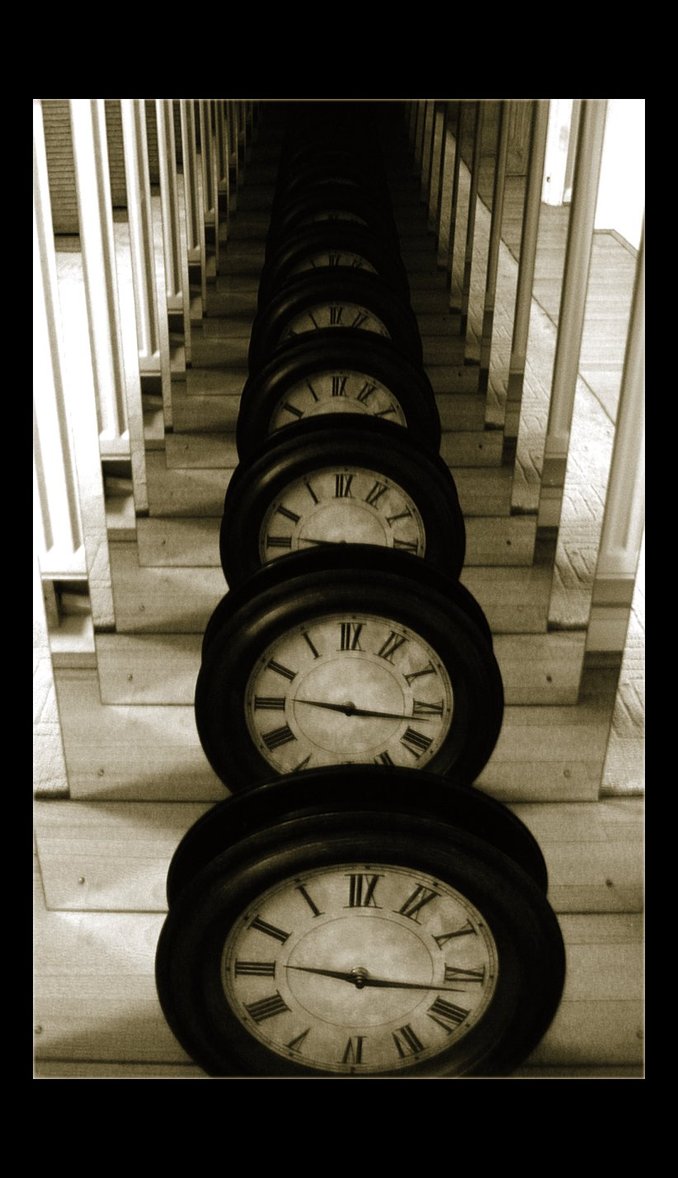
What’s The Perfect Age?

what is the perfect age,growing older is perfect, child is not an ungrown adult, baby is not an unformed child,

(Image:littlefantasy.deviantart.com)

There must be an ideal age floating around in our collective unconscious. This is such a fixed part of our media-driven culture that it’s hard to focus on it. But let’s give it a try. Allow a number come to you as you consider the following questions.

 What age do parents have in mind as they groom their kids for success?

 What age do kids have in mind as they imagine growing up?

 What age do older adults have in mind as they try to look and act younger?

I’m guessing it’s somewhere between 21 and 35, a time when we’re supposed to be brimming with youthful good looks and potential. Or maybe it’s not a number but just a fundamental belief that young adulthood is some sort of peak. Everything before that is preparation, everything after a slide toward old age.

Consciously or unconsciously, believing in this ideal age uses up a large part of all our other ages.

Consider how relentlessly the adult world prods children to get (or at least act) older. I know I’m somewhat guilty. I did my very best to savor the baby and toddler years but honestly, it’s hard. I found myself thinking that it would just get better after they finished teething, or could talk, or finally mastered toilet training. Even the most sainted in-the-moment parent will find him or herself bombarded with well-intended, future-oriented inquiries from others like, “Is she sleeping through the night?” and “Does he talk in sentences yet?” Such questions don’t stop as the child gets older, instead they have to do with bigger topics like academic abilities, athletic achievement, even popularity. Admiration is heaped on little ones who act much older than their developmental age, especially those children who exhibit social poise beyond their years, as if six-year-olds who act like six-year-olds are already somehow behind.

The pressure becomes more intense with each passing year. Parents often find themselves buying all sorts of educational toys and electronics, filling what could be free time with an ambitious schedule of practices and enrichment programs, and of course, pushing educational achievement. We’re told that these efforts “count” as if there’s a permanent record for eight-year-olds or 13-year-olds. There isn’t.

We’re assured that getting kids ahead in sports or hobbies will create passionate engagement, but research affirms that children build rewardingly intense interests when they are free to explore activities without adult pressure and interference

We’re led to believe that early academic accomplishment is the path to later success. Too often, that’s not true either. Success is closely linked to much more nuanced personal factors which develop quite nicely, research tells us, during free play, early participation in household tasks, conversation, and other experiences that foster self- control as well as an internal locus of control

Pushing our children toward adulthood takes us (and them) away from seeing that each of us are whole people exactly as we are. A baby is not an unformed child, a child is not an ungrown adult, an elder is not an age-ruined version of a once younger self.

Each of us is wonderfully unique. Of course we’re flawed and often foundering. But at the same time we are also brimming with emerging possibilities. We don’t have to paddle away from the moment we live in toward some ideal age. Doing so doesn’t just wish away right now, it also condemns every other age we live in to be something less.
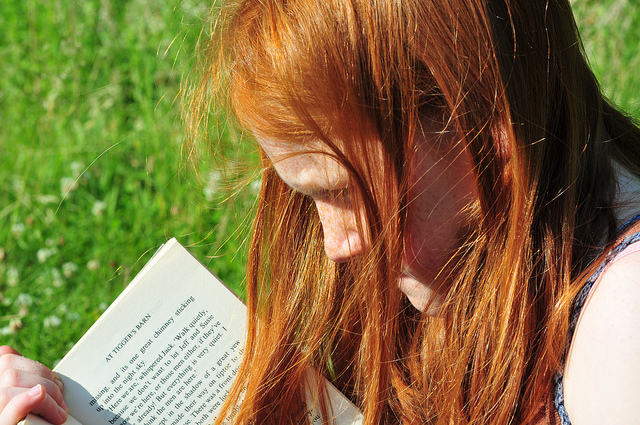
Truly seeing our children and our elders as complete and whole, right now, means seeing ourselves that way too.

Do Childhood Books Shape Us?

story and character formation, selfhood and book, self-image and books, girls and books,

Building a self. (andycarter’s flickr photostream)

Children’s inner lives may not seem all that complicated. But they are, even if kids aren’t fully aware of the complexities they’re dealing with until they’re much older. That’s one reason it’s hard for them to talk with their parents about ways they are gaining strength, inspiration, and a sense of self.

Their favorite books offer a clue.

Children are drawn to stories that resonate with the same challenges they’re facing. Authors know kids seek out tales that present certain compelling themes. Speaking one’s truth, overcoming adversity, enduring tragedy, relying on wit or cleverness, making a sacrifice, establishing one’s own values, finding a kindred spirit, gaining new powers or knowledge—this is the stuff that translates into purposeful meaning for the young reader.

To understand what kids are going through as they grow up, it helps to look back at the pivotal books that made a difference during our own formative years.

As I look back I realize two books I read over and over still echo in my life today. One of my favorites was Johanna Spyri’s Heidi. It’s the story of a little girl who is taken to live in the mountains with her grumpy but kind grandfather. She loves to spend her days outdoors on the hillsides, playing with the goats, talking to Peter the goatherd and his blind grandmother, and eating simple wholesome foods like cheese made from goat’s milk. When Heidi is taken away to live in the city, a companion to her sickly cousin Clara, she’s deeply homesick. Although she happily learns to read, hoping she can go home to read to the blind grandmother, each day away from her beloved mountains haunts her. She convinces her uncle to let Clara come back with her for a summer visit. There they spend days outdoors, playing with the goats, eating her grandfather’s hearty food, and laughing. Her cousin recovers her health and Heidi is free to stay in the place she loves.

My other favorite book was so pivotal I’ve called it the book that saved me.  The Secret Garden by Frances Hodgson Burnett is about a lonely girl named Mary who lives on the moors of England. She befriends a boy, Dickon, who can speak to animals. She also insists on becoming acquainted with an invalid named Colin. Mary doesn’t want dolls or toys. She wants the joy of helping a hidden garden come alive. She wants to remain free of lessons so she can learn Dickon’s wisdom. She wants to understand the mystery that makes flowers grow, helping Colin find that strength in himself.

Both books are about a certain kind of justice, one that permits self-determination and self-definition. Both are about the value of staying rooted and feeling nourished by a sense of place. Both are about the restorative power of nature. I feel those elements in my life strongly. Yet I see even more of these books in my choices. My children have grown up without schooling, as Heidi and Mary did. I make cheese from our cow’s milk, insist on wholesome food, and speak to all the animals on our little farm (though I’m still waiting for birds to alight on my arm as they did on Dickon’s). I have Heidi’s passion for reading and Mary’s passion for watching things grow. And I hope I have what both characters had in abundance, the determination to speak up for what they believed was right.

What books made you who you are today?

Did you share any of that book-related inner growth with the adults in your life?

And does looking back at these influences give you a glimpse of your own child’s complex emerging selfhood?

Engage The Window Box Effect

beauty heals, finding the positive, reversing urban decay, building a neighborhood,

CC 2.0 by ahisgett

When I was in college my professors enjoyed crushing what was left of our youthful optimism with miserable statistics about how bad everything was and how rapidly it was getting worse. (Even their cynicism was too small to envision our current issues.) I remember a semester-long course that had to do with reversing urban blight. After being taught about this dire and growing problem we were introduced to the standard remedies. Our professor scornfully dismissed every effort to reverse urban blight. The worst thing that could be done? Coming in from outside the community to impose a do-gooder solution. The only right thing to do was a vast overhaul of our economic structures. (Those structures are even shakier today.) I wrote sufficiently miserable papers to get an A but was left with quiet despair in my ever-hopeful heart.

Soon after that class I read about one woman’s experience of urban blight. She’d lived in the same house for decades, watching her neighborhood decline. There were few jobs and the ones available paid poorly, with no benefits or job security. She sadly listed the local businesses that had left, leaving her area with no grocery, beauty shop, or movie theater. The only places that remained were bars and corner stores selling little in the way of real food. People lost their homes and landlords took over, rarely keeping up the property. The city lost revenue, doing little to keep up with residents’ complaints. It seemed to her that young people were lost too. They swore in front of tiny children and their elders, hung out all hours on street corners, got into public fights, abused drugs. She was quoted as saying that people complained they got no respect from young people, when really the young people had no respect for themselves.

The reason she was being interviewed? She was credited with beginning a tiny urban renaissance that was evident on her street and slowly spreading through the neighborhood.

Here’s how it happened. She’d been in poor health and adjusting to widowhood. Her home had been well maintained over the years but like many wood-sided homes, it began to look shabby when too much time went by without new paint. After her husband died she didn’t do well keeping up with yard work and because the street had changed she rarely sat on the porch as she used to do in years past, chatting with neighbors and greeting young people by name as they went by. It wasn’t just friendliness. When everyone knows everyone, word of misdeeds travels home quicker than an unruly child can get in the door. And when a child really knows the elders on his or her street, they have many more potential role models to benefit them as they grow up. That’s the proverbial “village” it takes to raise a child.

This woman wanted to do something. All she could afford was a few packets of flower seeds. She got out on a spring day to plant the seeds in her long-unused window boxes. She started sitting on her porch every afternoon after watering them, greeting those who went by even though she didn’t know them. Renters in houses where her friends once lived began talking to her. By the time the flowers were in bloom she noticed a difference on the street. She said that people were sweeping their porches and planting flowers of their own. Because they were trying, she got out there to do her part, attempting to take better care of her lawn, telling people who passed by that it was a good way to get exercise she needed. Every time she couldn’t get her mower to start she’d ask a teenager walking down the street to help her. Then before starting to mow, she’d ask for his or her name, shake hands, and thank that youth for doing a good deed by helping her. She made sure to greet those young people by name every time she saw them afterwards.

That summer one family painted their front door. Someone else cleaned up an empty lot that had been a dumping place for trash. People started sitting on their porches, waving to each other, stopping for conversation. It began to feel like a neighborhood again. Building on what’s positive is powerful indeed.

There are plenty of ways people are revitalizing their communities these days. They’re reclaiming empty lots as gardens or play places for their kids, running micro-businesses out of their homes, starting up tool-shares and neighborhood work groups. They’re using social media to connect and collaborate with each other. They’re mentoring kids in the neighborhood and finding ways to get kids more involved in the larger community.  Studies show that urban gardens and other revitalizing efforts make a difference, reducing the crime rate and fostering all sorts of positive relationships. An old theory, kind of the flip side of what I’m calling the Window Box Effect, was called Broken Windows Theory. It posited that minor examples of breakdown (like a few broken windows) leads to greater disorder, dragging down not only the appearance of an area but also leading to crime and property damage. This has largely been disproven because crime is actually deterred when people know they have the power to affect their communities and benefit from strong networks within those communities.

Sure, we have a lot to work to do rebuilding our sorry infrastructure and easing the ever-widening income gap. But it doesn’t hurt to remember that noticing a little beauty can amplify the greater beauty that’s everywhere, waiting to bloom.

There are plenty of ways to apply the Window Box Effect.

Tell me how the Window Box Effect works in your life.

A Moment Never Shared

His name was Vincent. He may have entered Pine Elementary School when we were both in 5th grade or may have been in my classes all along, but that spring he moved directly to the center of my awareness. He had silky black hair that fell low over astonishingly blue eyes. Unlike other grubby, snickering elementary school boys he was quiet and attentive.

It was probably no coincidence that I fell for Vincent soon after hearing Don McLean’s classic American Pie album. It was his song about Vincent Van Gogh that captivated me. The lyrics told of a misunderstood visionary, a man with “eyes of China blue” whose soul was too beautiful for an uncaring world.

Although I’d never really paid attention to boys before, somehow I merged the intensity of those words with a look I was sure I saw in Vincent’s eyes. My girlfriends claimed to have crushes all the time over celebrities. The symptoms of their crushes included shrieking and silliness. I had none of these signs.

Once, as the teacher told us to line up at the door for music class, I found myself standing behind Vincent. I was sure he was aware of my presence. There could be no other explanation for the sudden frisson between us. Surely his skin prickled and his breath deepened as mine did. I wanted to touch his dark hair. I wanted him to turn and smile at me with causal ease even though I knew that was not possible at school. The boys’ loud obliviousness and the girls’ sharp watchfulness kept any such thing from happening. Boys and girls were friends only in books. Together they wandered moors or solved crimes or dreamed up new inventions. They talked openly and sometimes held hands. I wanted that with a longing more intense than I’d ever known.

Vincent kept me awake at night. His reserved nature made it easy to develop idealized concepts about him. I decided that he was smart and kind. I imagined that he was secretly drawn to me, but too shy to look my way. As I lay in bed, sleepless, I felt the injustice of being eleven years old. Too young to have love taken seriously, too young for anything.

Yet I felt old. Sorrows I’d carried for years became more intense because I’d lost the childhood distraction of play. I was on the verge of adolescence without sports or hobbies to keep me busy. All I had was this secret love for a boy named Vincent.

Over summer vacation I painted my toenails, rode my bike, tried to write poetry, and wondered if God existed. What kept me awake now was worry over how I might make myself pretty enough for Vincent. But I was also dreading the prospect that he might reveal himself to be something less that the person I’d imagined.

Vincent didn’t come back to school for sixth grade. No one knew where he’d gone. That made him, in my mind, more mysteriously alluring than ever. Sometimes at night I opened my bedroom window to breathe in the night air and look at stars. I hoped he might be at his own window. I no longer ached to hold his hand, I only wanted him to be happy.

I can still easily picture Vincent’s face even if I’ve forgotten his last name. My secret love for him taught me the first gentle lesson in becoming a woman. Unrequited love isn’t always painful. Sometimes it’s as tender as a moment never shared with a beautiful blue-eyed boy.

This piece appears in the new anthology Heartscapes: True Stories of Remembered Love, which features 150 tales of mystery, intimacy, and tenderness.  

We Choose Our Own Role Models

role models, mentors, how role models shape, impact of role models,

Image courtesy of s2-s2.deviantart.com

There’s no predicting who we choose as our role models. Teachers, coaches, and religious leaders are held out as exemplary choices and for good reason, since mentors are linked to greater success in adulthood. Despite adults’ well-meaning efforts to foster or even assign mentors, each one of us is drawn to people we find inspiring. It’s only in looking back that we can see more clearly how our childhood role models play a part in shaping who we become.

This is obvious looking at my husband’s growing up years. He wanted to understand how the world around him worked, and like most children, he wanted to find out by getting right in the midst of what fascinated him rather than play with plastic hammers and screwdrivers. So he sought out neighbors who let him fix cars alongside them and who welcomed his help running their small businesses. What he gained from these experiences still benefit him.

It’s not as obvious in my life so I have to strain to make those connections. I had plenty of freedom to ride my bike and play without too much parental supervision, but seeking out other grown-ups never occurred to me. In fact I can only think of a single adult outside my family who made a lasting impression. Her name was Mrs. Dosey.

I met her during a criminal investigation. Well, sort of.

When I was around eight, my older sister developed a brief infatuation with espionage. She deemed herself a private investigator and permitted me to be her sidekick. We practiced sidling around without being seen, took notes on people’s behavior, and looked for a mystery to solve. My sister hit the jackpot when she discovered bones in a field across the street. Bones! This could be dangerous. My sister identified the house in closest proximity to the bones. It seemed like a strange place. The yard had almost no grass. Instead the front was crowded with strangely cropped trees and the back sported a clothesline (unheard of in our suburban neighborhood) and a jumble of fenced-in areas—sinister indeed. We practically trembled with fearful anticipation.  My sister instructed me to remain completely silent, she’d question the suspect.

When she rang the doorbell it was promptly opened by a sturdy middle-aged woman wearing an apron and orthopedic shoes, her hair mashed down by a hairnet. When she invited us in I noticed she had a trace of an accent. Against all parental advice about strangers, we walked meekly inside.

Mrs. Dosey was busy in the kitchen but gladly welcomed two girl detectives. She didn’t raise an eyebrow when questioned about bones. She explained that she raised ducks, which she slaughtered for meals on special occasions. Although it wasn’t the murder we anticipated, it was death nonetheless. My sister and I shivered.

Mrs. Dosey talked to us as she went back to her culinary project. We learned that the cropped trees in her front yard were an apple orchard and the back yard was crowded with vegetable gardens, berry bushes, and poultry pens. She served us milk and homemade cookies. We stayed quite a while, curiously watching her work.

Mrs. Dosey was assembling a wedding cake she’d made from scratch. She showed us how she was separating the layers using tiny soda bottles between them, to be covered by flowers from her yard. Finally she said we could come back another time, she had a few more things to finish before her daughter’s wedding that was taking place the next day. My sister and I weren’t even disappointed that our murder case had collapsed. We’d met someone who seemed like a different creature than the frosted hair moms of our generation.

It didn’t occur to me till years later that Mrs. Dosey was completely matter-of-fact about two little girls sitting at her kitchen table, inches from this towering confection. She was entirely unruffled on a day most mothers of the bride are harried, even though she’d made the dress, the cake, and if memory serves, was making the reception food as well.

I never knocked on Mrs. Dosey’s door again. My sister and I dropped the private eye business to become girl scientists. We waded into the pond in sight of Mrs. Dosey’s house observing duck behavior and slogged home covered with what we optimistically called “duck muck.” My mother, who began buying apples from Mrs. Dosey every fall, seemed to regard the woman as an oppressed version of her gender. She pointed out Mrs. Dosey’s heavy labor around the house and yard, noting that this woman rode a bike with a basket to the store every few days for groceries. The emphasis seemed to rest on evidence that Mr. Dosey didn’t share those burdens. To me, Mrs. Dosey seemed remarkably happy. And savvy as well. She waved when my sister and I were out but was wise enough to spare us that social indignity if we were waiting with friends at the school crossing near her house. I saw her on that bike for years after I left home. She never looked any older or any less cheerful.

I credit my husband’s role models for helping him grow up to be capable, positive, and wonderfully open-hearted. But not for a single moment have I ever linked my own life choices to Mrs. Dosey’s example. After all, I planned to change the world by elevating peace, ecological harmony, and justice. If I had time I hoped to fit in writing novels. And parenting. Okay, I also wanted thick hair and thin thighs.

None of that happened. I’m not a UN peace negotiator, my activism is local and my writing is gentle. I’m not blocking whaling ships with my fellow Greenpeace buddies, instead I tend to vegetable gardens and haul buckets of kitchen scraps to our livestock. My choices look more like Mrs. Dosey’s, although I can’t pretend for a moment that I’ll ever have her patience. I was raised to believe I could be accomplish anything if I worked hard enough but I’m learning that we can save the world right where we are. In part, that means opening the door on our busiest day ever to welcome the questions of little girls.

Who in your growing years made an impression on you and how do you see their impact in your life today?

Give Em The Finger

working with instead of against resistance, leading children, foster learning, non-compliant children, resistant children, non-coercion,

geograph.org.uk

“Self-trust is the first secret of success.”  Ralph Waldo Emerson

No one wants to be cajoled, forced, or coerced. Some of us resist mightily. Such resisters are called all sorts of names: underachieving, non-compliant, difficult, withdrawn, eccentric, or worse.

Human beings naturally resist when our autonomy is threatened. And autonomy is most threatened in childhood because many adults (particularly in the western world) believe children require moment-to-moment instruction, advice, and entertainment. Unlike most of previous human history, children’s lives today are heavily monitored and controlled. Adults keep kids in pre-planned activities,  insist that education proceed in a linear fashion, intervene to minimize difficulties, and provide distractions to prevent even momentary boredom. They do so assuming these efforts will advance learning and boost success.

Yet this puts character development at risk, because children are attracted to dilemmas that help them learn. Learning from mistakes, taking on challenges,  and developing a growth mindset are pivotal for success. So is preservation of a trait found in people at the top of their fields in science, the arts, and entrepreneurship—curiosity. And curiosity arises in unique and unpredictable ways, often appearing after a child has traveled from boredom to inspiration on his or her own.

Coercion also puts the child in an uncomfortable position, because all this control comes from adults with the best intentions. Usually adults who love them. So children, who don’t like overt control any more than you do, typically react somewhere on the spectrum between compliance and resistance. Extreme compliance and they’re less likely to think for themselves, developing an external rather than internal locus of control.  Extreme resistance and they’re likely to face ever more punitive efforts to get them to comply. Neither reaction is what adults want or expect.

Which leads me to a story about Transcendentalist writer, Ralph Waldo Emerson. He and his son Edward were trying to get a calf through a barn door. Emerson pushed from behind while his son pulled on the calf’s ear. The heifer wouldn’t move an inch despite a great deal of effort exerted by the two men. Emerson thought back over his scientific and literary readings in hopes of figuring out some way of getting the reluctant animal to move but didn’t come up with any solutions. They continued trying, to the amusement of a servant woman who was passing by. She offered a finger to the calf. Easily led by its desire to suckle, the calf followed her at once.

The wisdom of capitalizing on natural tendencies is the key to good animal husbandry. It’s probably a key to decent human relationships as well. I’m not for a moment suggesting that children are calves. (In fact, I’d rather see calves left with their mothers to suckle than led into a barn by capitalizing on that unmet need.) Children need rules, responsibilities, and the expectation that they’ll treat others with compassion. They need to be nurtured by adults who understand that pushing and pulling aren’t useful ways to help children mature. And they need the freedom to learn in ways that are best for them. At any age, those of us who aren’t oppressed by coercive relationships or controlling institutions gladly seek out advice as we need it, find role models who inspire us, and advance in the direction of our greatest gifts.

“No human right, except the right to life itself, is more fundamental than this. A person’s freedom of learning is part of his freedom of thought, even more basic than his freedom of speech. If we take from someone his right to decide what he will be curious about, we destroy his freedom of thought. We say, in effect, you must think not about what interests and concerns you, but about what interests and concerns us.” John Holt

Staring Down Worry

mystical experience of fear, metaphysical encounter with darkness, overcoming evil, facing worry, staring at Satan, prince of darkness in my room,

Image courtesy of pitrisek.deviantart.com

Something happened the night Worry appeared to me.

Some of us are chronic worriers. There’s probably an adaptive reason for this, since humans who envisioned potential dangers would be more likely to survive and pass on their genes. But saber-toothed tigers aren’t lurking by our front doors these days. I know for a fact that worry generates misery while producing absolutely no benefit. Giving it up, however, isn’t an easy matter. Worry runs in our heads like movies of disaster to come, unbidden yet powerful, making some of us wary of the smallest choices.

I worried from the earliest time I can remember. It may have an adaptive start in my life too. As a tiny child I spent many nights struggling to breathe through asthma attacks. When I was five years old I got a bit of food lodged in my esophagus. When my worried mother called the doctor he said it couldn’t possibly still be stuck hours later, I was just overreacting. I stayed awake all night spitting my saliva into a bowl, since even a moment’s inattention caused it to run down my windpipe and sent me into fits of choking. The next morning my parents took me to the ER where a surgeon removed a very stuck bit of food. The year I turned nine my grandparents all died, catapulting me into years of obsessive worry that everyone else I loved would die too. I was assaulted by an adult when I was 13, telling no one until years later. The focus of my worry widened as I spent years searching for the causes of evil and suffering. Worry continued to be my companion when I hit my 20’s. Each of my babies were born with medical problems. The unknown dangers threatening even the most innocent lives suddenly resided in my house. Chances are my chronic insomnia has roots in all this worry.

One night as I lay awake worrying, I had an experience that profoundly changed me. That night I had plenty of things to worry about: serious concerns about my children’s health, our finances, and other problems. Normally I fought off worry with gratitude—focusing on the comfort of my family sleeping safely nearby and the many blessings in my life. But worry was there haunting my mind and hollowing my body.

Sudden as a car crash, something happened.

I know it sounds bizarre but it was as real as the lamp on my desk is now. I became aware of a huge black column next to my bed. It was comprised of the most immense energy I’d ever experienced. It was dark and powerful with a presence that seemed alive and completely aware of my thoughts.

I had the sense that it was of such infinite size and strength that it went through the floor and out the roof, stretching far in both directions. I should have been more frightened, but the moment this column appeared I realized, as if the message hit all my cells at once, that I had summoned this darkness.

It was born of my own intense worry. It was a profound lesson that went through me the way wisdom does, filling not just our brains but also our bodies and souls. Lying there, I resolved to bring forth every ounce of light I could muster.

The instant I thought to do this, whatever that column was disappeared.

I woke my husband to tell him. He kindly assured me that I was nuts. Until this post I’ve only told one other friend. But in today’s atmosphere of worry, I wanted to share this image—of fear so huge that it manifests next to you. It taught me that worry is a kind of unintentional evil. It presupposes things will go wrong. It’s the opposite of faith.

I’m not entirely cured of worrying nor would I ever change those earlier years of worry. They’ve made me stronger, more open to the beauty found just beyond despair, and left me with a positive quest. But ever since that moment, years ago, I have made a conscious effort to reorient myself.

Ironically, my family has been through times more difficult than I could have imagined back when this happened—crime, financial hardship, loss, and grief. But I know the antidote—to shine forth with all the light I can. Some days I’m practically optimism’s parasite.

But really, if all my moments of hope coalesce into some kind of vision, I can’t wait to see it.

metaphysical experience of evil, starting at evil, facing Satan, summoning fear, transcending worry, transcending fear, overcoming worry, renewing optimism,

Image courtesy of m0thyyku.deviantart.com

How The “10,000 Hour” Rule Can Benefit Any Child

homeschooling for success, interest-led learning, learning for success,

Image: uktara.deviantart.com/gallery

If you haven’t heard about the 10,000 Hour Rule, you’re probably busy doing what people do, living life on your own terms. But what you may not realize is how this rule affects young people, whether they have one all-consuming interest or not.

Malcolm Gladwell identified the 10,000 hour maxim in his book, Outliers: The Story of Success. The rule describes how to attain Big Time Success. Based on an analysis of people who reached the top of their fields, Gladwell claims that any of us can reach greatness by practicing tasks relevant to our chosen field for a total of 10,000 hours. He provides pretty compelling examples including the Beatles, Bill Gates, and Tiger Woods. These guys put in the hours, then rapidly pulled ahead of the competition.

Plenty of other circumstances factor into success but it’s worth taking a closer look at what the 10,000 hour rule means for today’s kids. Good news. Those who are homeschooling or attending Democratic schools benefit enormously from the 10,000 hour rule, although not in ways you might expect.

First and most obviously, they have more time to explore their interests. They don’t spend hours every day on the school bus, standing in line to change classes, listening to instructions/attendance/announcements, doing rote schoolwork, and then completing homework in the evening. Even highly academic homeschooling families find that a full load of “schoolwork” can be completed in substantially fewer hours than the average school day.

That leaves plenty of time to pursue real interests. Long hours every day can be lavished, if a child wishes, on building expertise through direct experience in video game design, creative writing, chemistry, speed skating, cello playing, sculpting, astronomy, cake decorating, computer animation, or any other area.

It’s not difficult for a young person, free from the time constraints of conventional schooling, to spend 10,000 hours in an area of passionate interest. Let’s look at the numbers. The average school year in the U.S. is 180 days (pretty similar in most of the world) with an average school day of 6.7 hours.  Thus children are unable to pursue their own interests and learn in wider ways for a minimum of 1,206 hours a year. Even if we don’t count kindergarten, that’s 14,472 hours by the time they’re 18. And we’re not even adding time necessarily spent on travel to and from school, prepping for the school day in the morning, and doing homework after school (although we know these obligations probably add another hour or two each school day).

Sure, school kids engage in all sorts of worthy pursuits in their spare time. But homeschoolers and students in Democratic schools have a lot morespare time. These young people can accumulate the requisite 10,000 hours quite easily by their mid-teens, putting them on the fast lane to Big Time Success in exactly the field that makes them feel most vibrant and alive. If they choose.

But what about the homeschooled kids and students in Democratic schools who don’t have a single all-consuming interest? A girl might like to read sci-fi, go horseback riding, play soccer, and teach the dog tricks. A boy might drift from one pursuit to another, avidly creating his own graphic novel, then becoming passionate about parkour. Should these kids choose one thing in order to accumulate the all-precious 10,000 hours?

Absolutely not. They’re already putting 10,000 hours into the exact skills that more widely define success.

That’s because their daily lives are filled with self-directed and meaningful learning. Of course, depending on the style of homeschooling, it’s obvious that many kids will spend time doing some rote educational tasks. But nothing approaching15,000 hours. Instead they’re accumulating more useful and accessible wisdom honed by experience. How?

~Thousands of hours spent feeding their own curiosity, becoming well acquainted with the pleasure of finding out more. This develops eager lifetime learners.

~Thousands of hours exploring, creating, building friendships, making mistakes, taking risks and accepting the consequences (what’s ordinarily called play).This develops innovative thinkers.

~Thousands of hours spent shouldering real responsibility and connecting with role models through chores, volunteer work, and spending time with people of all ages. This develops self-worth based on competence and meaning.

~Thousands of hours pursuing interests, in whatever direction they take, building proficiency through direct engagement. This develops mastery.

~Thousands of hours reading, contemplating, conversing, asking questions and searching for answers, looking at the bigger picture from different angles, and discovering how people they admire handle challenges. This develops maturity and strength of character.

Gladwell reminds us that 20 hours a week for 10 years adds up to 10,000 hours. Filling those hours meaningfully? That’s no problem for self-directed, endlessly curious learners. Chances are, they’ll grow up to redefine success. Who knows what today’s young people, raised to think deeply and freely, can bring to the future?

homeschool success, success for today's kids, kids succeed on own terms,

Image: just1bite.deviantart.com

This article was first published in Life Learning Magazine, Sept/Oct 2011.

Let The Youngest Teach You Mindfulness

child-paced, slow down, slow to appreciate,

Image from jesse.millan’s Flickr photostream

Ask any child. When adults meet them for the first time, standard questions include, “What do you want to be when you grow up?” right after classics like, “What grade are you in?” and “What’s your favorite subject?”

Such questions, unintentionally, gauge a child’s progress toward adulthood. That’s because adults tend to be future oriented. We’re distracted from the present moment by the need to plan and work toward any number of goals—what to do about dinner, how to juggle next week’s schedule, when bills can be paid. These distractions take our attention away from what is in the here and now. When we think ahead so often we have less time to notice, let alone appreciate, what makes up our lives minute by minute.

What is impatience except denying the value of the present moment? The watercolor effect of rain on the window, the meandering quality of a child’s conversation, the long wait for a pot to boil—these can be occasions to experience impatience or opportunities to breathe deeply and be present, gratefully.

Leaning so often toward the future unconsciously demonstrates to our children that later is more important than now. Yet as we know, later never comes. As long as we’re alive there’s always “later” to strive toward. Worse, we are surrounded by advertiser-driven messages telling us that we aren’t there yet, that we need to do more or become something more in order to have friends, be successful, find love.

The nature of early childhood is the perfect antidote to this hurry-up attitude. That is, if adults truly pay attention to the lessons the youngest model for us. Young children who are not yet pulled by the adult world’s messages are oriented to the present moment. When forced to disregard what is vital to their bodies and spirits—pretending, daydreaming, playing, snuggling—they rebel. They are who they are, where they are. They’re not caught up in the future tense which dimishes the here and now. They demonstrate the oldest way of knowing.

Pay close attention to the youngest children in your life. Let them help you learn solutions to our cultural overdrive.

As we slow down we have time to truly know each other and to truly know ourselves. We’re more aware of the messages our bodies send us and can act on those signals before they become symptoms. We have time to reflect. Time to remember our dreams when we awaken. After all, time is the only true wealth we have to spend.

slowing down, slow movement, child-pace, mindfulness, mindful living, mindful parenting,

Image from kla!’s Flicrk photostream

Mentor: Fancy Name For Grown-Ups Kids Need

mentor, role model, adult pals for kids, children in the neighborhood, real work for kids,

image courtesy of LisaW123’s Flickr photostream

The little boy just wanted to “do stuff.”

His parents let him traipse around with his wagon on garbage collection day. He’d take home pieces of wood, carefully pulling out nails to store in a can, so he and his friends would have the necessary materials to build forts or go-carts. Occasionally he found small engines that he’d do his best to fix. No one intervened to tell him his pursuits weren’t safe, although he was expected to clean up any mess as well help around the house.

His neighbors didn’t mind having this kid appear whenever they did something interesting—fix a car, build a shed, tend a greenhouse full of plants, run a garage sale. He was eager to learn and even more eager to help, so they did what adults have done throughout time. They shooed him away occasionally but mostly they shared what they knew.

He made use of what he learned. By the time he was 12 or 13 years old, these neighbors let him take on their home and car repairs, recognizing he was able to do a more exacting job than they might have done themselves. He gained more than skills from the adults in his life. He may have been leaning over a car hood with Clyde, but he was also learning how to understand the function of each system by paying attention. It seemed he was only helping Mr. Christman with the heavy tasks of operated a greenhouse but he was also taking in something important about growing old with dignity. It appeared he was working alongside his grandfather but he was also seeing how reputation, honesty, and treating each person with respect builds a small business.

Because he developed richly rewarding relationships with people of all ages, relatives as well as neighbors, he had plenty of examples to draw on as he matured. He saw how different people handled decisions, disciplined their children, laughed off trouble, solved problems, stayed in love.

His experience was rare. It’s becoming rarer all the time.

Throughout nearly all of their childhood and teen years our kids are segregated in day care, school, sports, and other activities. Even when they benefit from the very best programs, if they’re restricted to the company of same-aged peers doing what adults consider educational and enriching they are deprived of the riches found through fully engaging in the wider world. This subverts the way youth have matured throughout human history, when children learned right in the context of family and community—freely able to watch, imitate, and foster relationships with people of all ages.

We put kids in an oddly uncomfortable position when most adults in their lives are focused on them. Children want to center themselves, not have adult attention centered on them. Kids long to model themselves after adults who are engaged in meaningful, interesting, and useful activities of their own. When their experience of adults is limited to those who are there to care for, educate, or entertain children (important callings but not all that adults can do) the dynamic is shifted. The age-old desire to gain mastery and take on responsibility, eagerly becoming a capable adult, doesn’t have the same pull.

There are plenty of educational initiatives to bridge this gap, particularly for teens. These programs connect students with mentors or bring community members into schools to talk about their careers. While these efforts are admirable, such stopgap measures aren’t the way young people learn best. They need to spend appreciable time with people of all ages—observing, conversing and taking on responsibility. Real responsibilities, real relationships.

How can we remedy this?

That little boy? He grew up to be a remarkably capable, beautifully open-hearted, and endlessly positive person. I married him.

mentor, building competence through imitation, children at work,