Survivors of Child Abuse Support Group


a

Survivors of Child Abuse Support Group


Tuesday evenings I can’t think of my baby

or the current between us

more elemental than love,

switches my milk on,

wetting the shirt

under my buttoned blazer.

My job is to listen

as people unknot the past.


The guy who constantly flirts,

his smile sugar white,

admits to road rage. Others

laugh in recognition,

their cars monsters too.


A young mother,

chandelier of dreads shaking,

mocks overheard endearments

like “Precious” and “Sweetie Pie,”

the same names I call my baby.


An older woman, beautiful

and resolutely friendless, agrees.

Affection shown children in public

sickens her. At home

kids are tied in the attic

or locked in a dog cage.

She knows this for sure.


Then Wilson speaks up,

says he feels good.

He’s taken his stove apart,

cleaned filth under and behind.

Wilson’s father dragged him from bed

to scrub for hours, sometimes his tongue

the rag. Or dragged him to the basement

to menace more than his tongue.


Empathy rises from Wilson

freely as other people sweat.

He and his wife cared for foster children

from the time their own sons were small.

Wilson kept the house clean,

took them to church, taught them the secret

of balancing a two-wheeler

(keep pedaling, that’s right),

but his sons became angry strangers.

Since the divorce they don’t speak to him at all.


He now knows

through all those years of dinner together

and homework done neatly,

older boys carrying hurt too large to contain

tormented his children in their own beds.

Wilson, his hands raw from scrubbing,

smiles as he says softly,

The stove is spotless.

Everyone in the circle of folding chairs

nods, understanding.


Laura Grace Weldon

Recently published by Literary Mama.  Find more poems in my collection, Tending.

Use It Till It’s Tattered

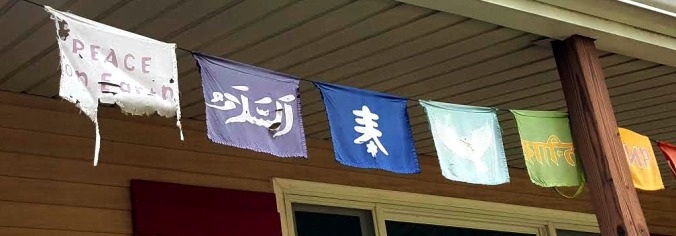
Porch peace flags still hanging in there.

Porch peace flags still hanging in there.

Erma Bombeck, comedian of all things domestic, once wrote,

My mother won’t admit it, but I’ve always been a disappointment to her. Deep down inside, she’ll never forgive herself for giving birth to a daughter who refuses to launder aluminum foil and use it over again.

My parents used what they had until it couldn’t be used again. Clothes that couldn’t be repaired became rags (although I refused to use my father’s old underwear for a dust cloth). Bread bags were washed and turned inside out to dry. And yes Erma, sometimes foil was reused too.

My kids would surely say I uphold that tradition. It might be frugality, but I think there’s more to it. I have sort of a Velveteen Rabbit feeling about objects worn from use. I like using the same cloth bag to carry library books home. Sure it’s frayed, with straps ever shorter from being sewn back on, but the bag has life left in it. I wear shoes until sunlight shows through, then relegate them to gardening shoes. I save old jeans too, using them for everything from a jeans quilt to trying out my weird idea for jeans-based weed control.

I once wrote a post about the psychological effects of materialism, illustrating it with an image of my toe peeking through a hole in one of our very old blankets. My toe really didn’t appreciate the publicity. Yet here’s that photo again because it really illustrates my point.
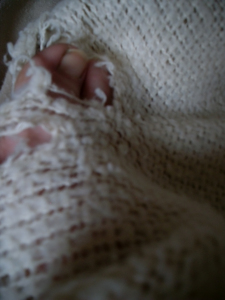
Use it till it's tattered.

Who takes pictures of their own toes in a past-its-prime blanket?

We have dear ones over for dinner on a regular basis. Each time, I use trivets that were probably given to my parents as wedding gifts over 50 years ago. The cork covering has degraded pretty badly, but they deflect heat as well as they ever did.
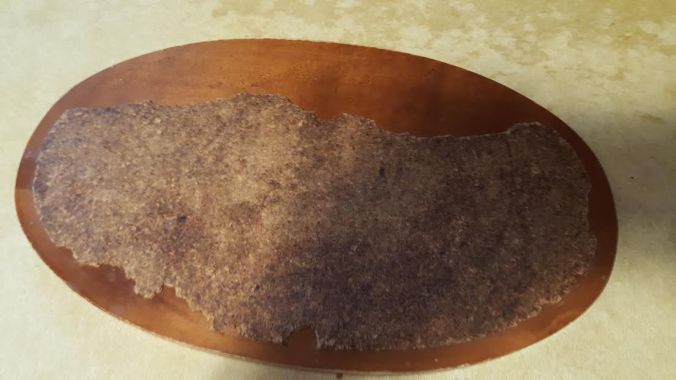
Useful, just unattractive.

Useful, just unattractive.

I also use the best hot pads ever. These were crocheted in tight little stitches by my grandmother sometime in the 1960’s. They still work perfectly even if marred by scorch marks. I’ve tried all sorts of replacements, from thermal fabric to silicone. Nothing is as flexible and washable as these handmade spirals.
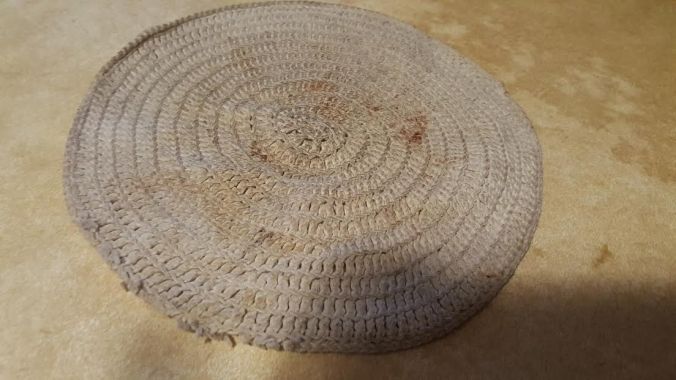
In use for decades. Stained but still perfectly functional.

In use for decades. Stained but still perfectly functional.

Our towels are, as you might imagine, pretty tattered. Of course they absorb moisture as well as they did when their side seams were perfect.
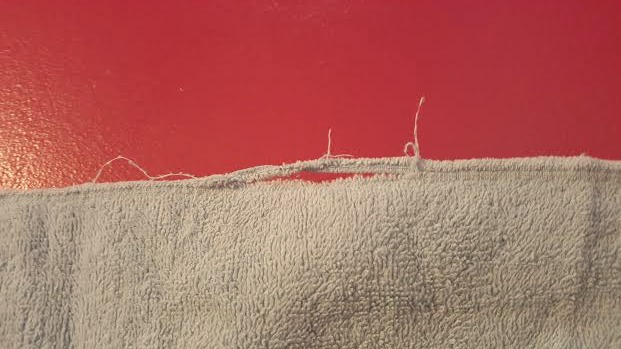
Old towels need love too.

Old towels need love too.

Even the kitchen floor is giving up.
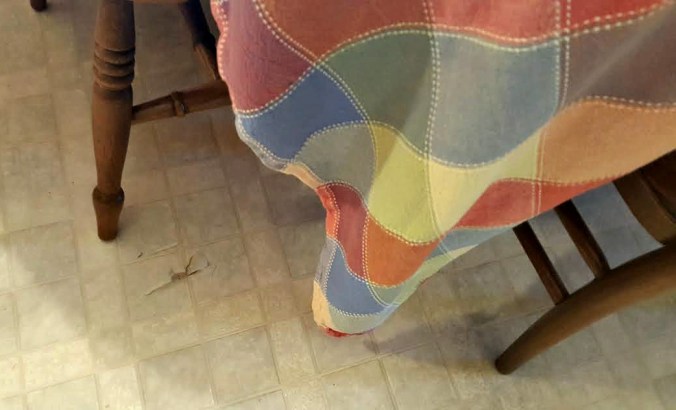
No, that's not a giant spider. Not dirt. Just a floor after years of service.

No, that’s not a giant spider. Not dirt. Just a floor after years of service.

We actually do buy new things. I can prove it.

The comforter on our bed had been worn through for years. I repaired it over and over until the fabric got so thin that it simply split. It had also been indelibly stained. I remember the origins of some of those stains. Like the time one of my son’s friends came in our bedroom late at night to seek our counsel on some apparently vital adolescent matter, sitting on the edge of our bed (with bib overalls greasy from working on his car in our garage) while chatting with my husband and me. Those stains wouldn’t launder out.
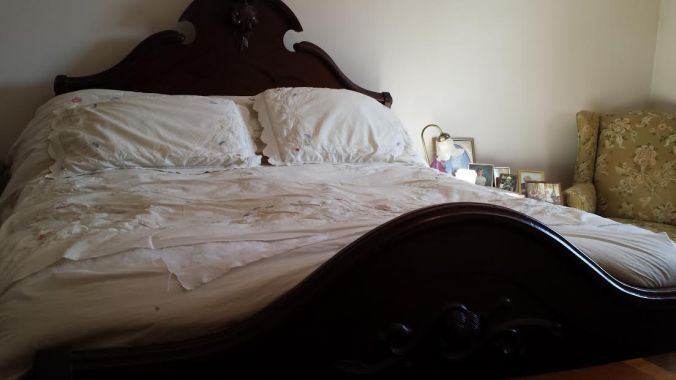
Bedspread of 20 years.

Bedspread of 20 years.

We used it with peek-a-boo batting for years until we broke down and bought a (severely marked down) bedspread. “A new bedspread? Who are you?” my daughter asked, “It’s like I don’t know you any more.”
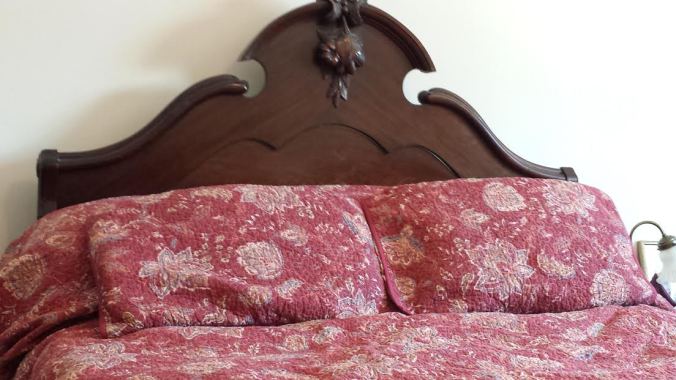
Something new. It happens, even here.

Something new. It happens, even here.

There’s a heightened beauty in things we use everyday. I see it in our daily tablecloth, our heirloom dishes, our antique furniture. I like the sense of completion that comes when using something fully.  We’re supposed to use ourselves up too.

While we’re not defined by our things, they do say quite a bit about us. I guess I’ve said this already in a poem.  Nuff said.


Object Lesson  


18 and in love

I heard

Too young.

Won’t last.


Yet each solid thing unwrapped

from fussy wedding paper

made it real.


The cutting board

too thin to last

split into kindling.

Paint chipped off leaky flowerpots,

used until they cracked.


Bath towels, coarse and cheap,

wore down to barn rags.

Bed sheets, gone to tatters, torn

to tie tomato plants and peonies.


One last gift, a satin-edged coverlet

saved for good till every other blanket

fell to pieces. Pretty but polyester,

it too frayed to shreds.

Nothing temporal

remains inviolate.


All that’s left are

clear glass canisters

holding exactly what we put in them

right here on the counter

for us to see

each day of our long marriage.


Laura Grace Weldon, from Tending


This post is shared from our farm site.

Earthbound

Earthbound


Are we supposed to settle for a planet

lagging behind our expectations?

We want reversible time,

admission into past or future

easy as changing our minds.

We want teleportation, so we can

zip anywhere for the afternoon,

maybe Iceland or Argentina,

where we’ll make new friends,

agree to meet up for lunch

next week in Greece

on only an hour’s break.


We want to get past

greed and suffering and war,

enough already.

And death? That’s awfully primitive

for souls with so much left to learn.


That said, this planet does a lot right.

Birds, for one.

Water in all its perfect manifestations.

Those alive poems called trees.

The way a moment’s glance

can reveal a kindred spirit.


Which we all are, really.

The oneness between self and everything

is this planet’s secret, kept imperfectly.

That’s more than we might expect.

Although time travel would be nice.


Laura Grace Weldon

First published in Dove Tails, An International Journal of the Arts. Find more poems in my collection, Tending.

How Do You Introduce A Friend?

Years ago, a family new to our area came to an enrichment program my kids and I were attending. Someone said, “Oh you’ve got to meet Beth, she dragged roadkill to the back of her yard so her kids could observe the process of decomposition.”

I knew immediately that Beth and her kids were our kind of strange. Every member of her family is clever in charmingly different ways and they quickly became integral to our lives. I don’t need to introduce her with that roadkill story because I have so many other Beth stories by now.

I don’t know about you, but I’m uncomfortable with the usual what-this-person-does-for-a-living introduction. Your friend may be amazing at her job, but she’s more than that. I’d rather introduce people by what they mean to me.  “I’d like you to meet Margaret, who is truly the most unique person I know,” or “This is Leslie, who has helped me out of more more scrapes than you can imagine,” or “I’d like you to meet Mark, an amazingly open-hearted man who also tends to make scatological jokes.”

Or introduce them by something they do that brings them joy. “I’d like you to meet David, who is a reading buddy with kids in an inner city school,” or “This is Amy, who has challenged herself to write an acrostic poem every single day,” or “This is Cynthia, who has such attuned vision in nature that she can see what most people never notice.”

Or, as in the case of Beth, to introduce someone with a story.

I suspect most of us feel awkward in a group of strangers at a party, reception, or stalled elevator. Oftentimes a conversation starts more naturally by simply sharing an observation (“I hope elevator cables only snap in the movies,” might not be the right one. Which means I’d probably say it…)

Or asking a more essential question that might lead to real connection. Maybe, “What’s capturing your attention lately?” or “What do you like to do that you don’t have to do?” (Yeah, lame. I told you I’m awkward.)

And whatever we do, by really listening to the answers.

I ran across this wonderful poem by a fellow Ohioan, Susan Glassmeyer. She says it all, perfectly.

INTRODUCTIONS

Let’s not say our names
or what we do for a living.
If we are married
and how many times.
Single, gay, or vegan.

Let’s not mention
how far we got in school.
Who we know,
what we’re good at
or no good at, at all.

Let’s not hint at
how much money we have
or how little.
Where we go to church
or that we don’t.
What our Sun Sign is
our Enneagram number
our personality type according to Jung
or whether we’ve ever been
Rolfed, arrested, psychoanalyzed,
or artificially suntanned.

Let’s refrain, too, from stating any ills.
What meds we’re on
including probiotics.
How many surgeries we’ve survived
or our children’s children’s problems.
And, please—
let’s not mention
who we voted for
in the last election.

Let’s do this instead:
Let’s start by telling
just one small thing
that costs us nothing
but our attention.

Something simple
that nourishes
the soul of our bones.
How it was this morning
stooping to pet the sleeping dog’s muzzle
before going off to work.

Or
yesterday,
walking in the woods
spotting that fungus on the stump
of a maple
so astonishingly orange
it glowed like a lamp.

Or just now,
the sound
of your
own breath
rising
or sinking
at the end
of this
sentence.

— Susan Glassmeyer

Poet Seeks Words

Unraveling Y, acrostic poet, Amy Heath,

Amy Heath. Sojourner, tinker, acrostic poet.

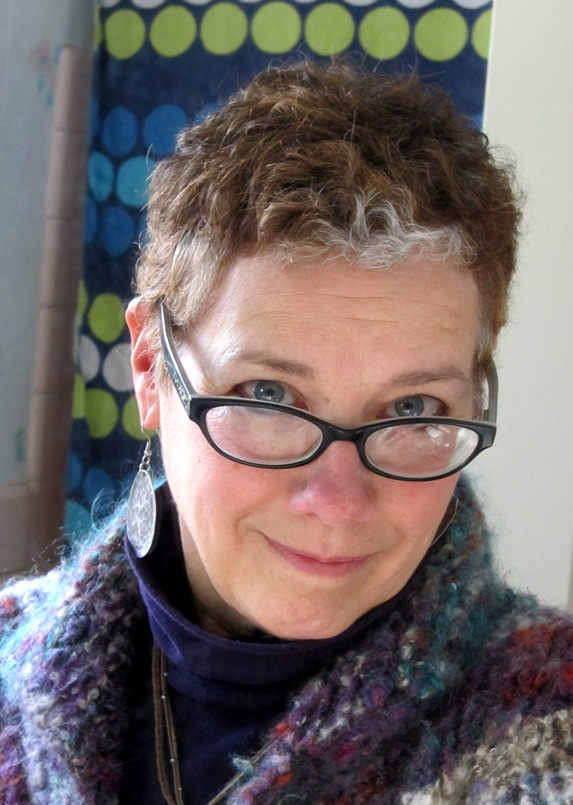
Amy Heath is a writer, poet, and artist. The past few years she’s lived a somewhat nomadic life, exploring ways to sustain herself while being true to her spirit.

I met Amy when she was a children’s librarian and children’s book author, back when I spent a lot of time in the picture book section with my four kids.  I was drawn to her friendly blue eyes and gentle manner. I cherished our brief, always lively conversations. I’d walk away thinking how much I’d like us to be friends but I was too shy to ask if we could get together because she was vastly cooler and far more fascinating than I’d ever be. Fast forward to the last few years, when Amy befriended me. I’m giddy about it in a can’t-believe-my-luck sort of way.

One of the many things Amy is up to lately is a poetic challenge. About a year ago she decided she’d write an acrostic poem a day. Being Amy, she amped up the challenge by making a rule for herself that the acrostics must be composed around words chosen at random from a book or words others chose for her.

a·cros·tic   (ə-krô′stĭk, ə-krŏs′tĭk) n.
1. A poem or series of lines in which certain letters, usually the first in each line, form a name, motto, or message when read in sequence.

“The main point of this project was to play with words every day until I reach 60,” she says. “Until that idea struck me, I had been writing acrostics in a more serious vein, on words like mindfulness, anxiety, patience, empathy. I have seen many people approach the Big 6-0 with trepidation. Well, I would play my way there!”

And no matter what, she vowed to post each piece on her blog, Unraveling Y. She says, “After reading the book Show Your Work by Austin Kleon, I decided that if I blogged these short daily creations I would feel somehow more accountable to my intention. My wordplays would be out there. And being fairly sure that very few people would read them, I felt liberated to do my best without worrying about what anyone thought of them. That’s good practice anyway. Worrying about what other people think is trespassing in their heads. Not cool.”

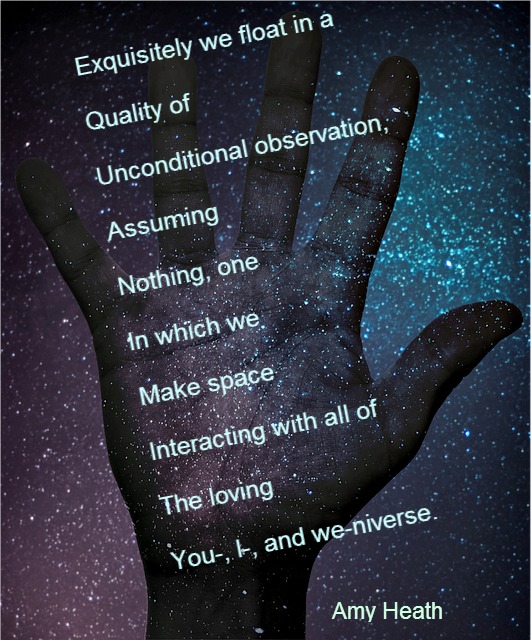
Amy’s poems find an inner presence in words, making each one into something so alive we can feel it breathe, as she does with equanimity.

Amy Heath, acrostic poem, pixabay.com/en/space-sky-hand-fingers-paint-636894/

Even in the space of a few syllables.

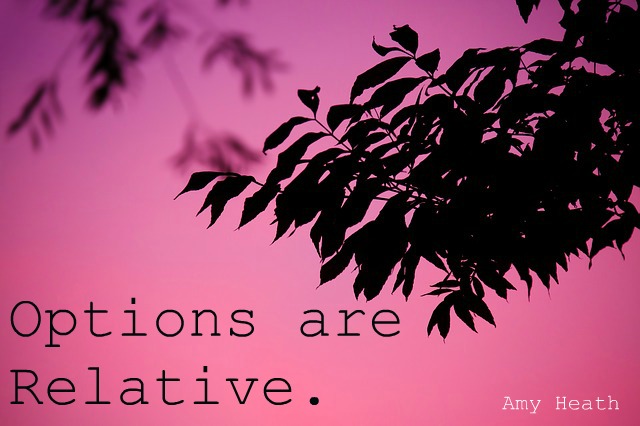
acrostic poem, Amy Heath, pixabay.com/en/background-branch-dusk-evening-20862/

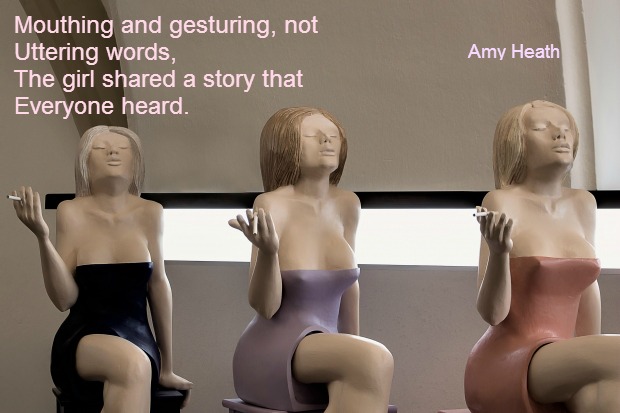
She turns a word into a tale that leaves us wondering.

acrostic poem, Amy Heath, morguefile.com/archive/display/890638

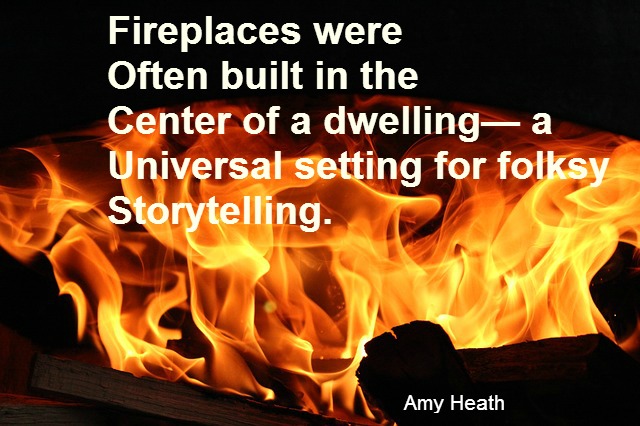
She helps us understand why the Latin word for hearth has come to mean “center of activity.”

Amy Heath, Unraveling Y, acrostic poem, pixabay.com/en/fire-heiss-fireplace-cozy-heat-266093/

Amy Heath, Unraveling Y, acrostic poem, pixabay.com/en/fire-heiss-fireplace-cozy-heat-266093/

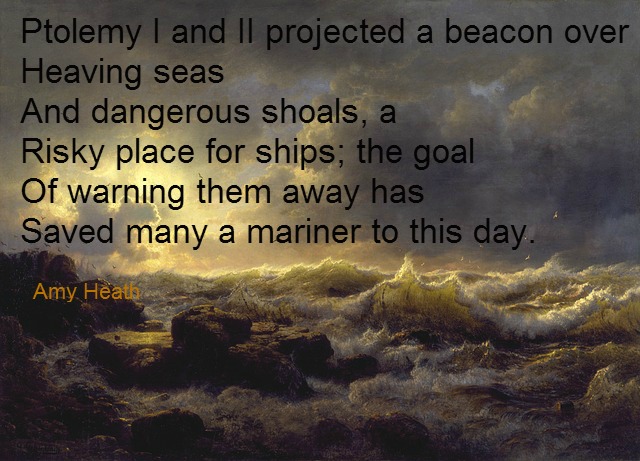
She shares little known history, explaining in her blog entry: “The lighthouse built by Ptolemy I Soter and completed by his son Ptolemy II Philadelphus was a prototype for subsequent structures. Pharos, a small island, ultimately the tip of a peninsula near Alexandria, became the root word in many languages for lighthouse.”

Andreas Achenbach, Pharos, Amy Heath, pixabay.com/en/andreas-achenbach-sea-ocean-water-85762

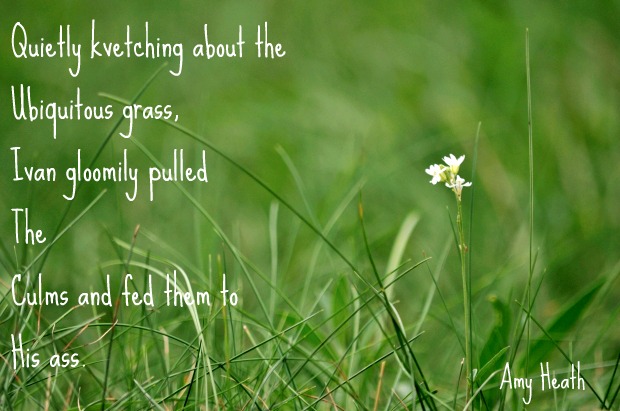
She’s undaunted when faced with a word like quitch.

acrostic poem, Amy Heath, morguefile.com/archive/display/951061

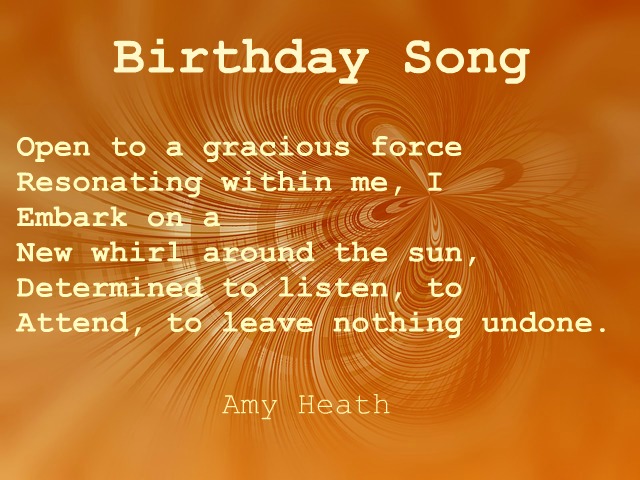
Among my favorites is a poem she composed around the word orenda, which is defined as “a supernatural force believed by the Iroquois to be present, in varying degrees, in all things and all beings, and to be the spiritual force underlying human accomplishment.”

Amy Heath, acrostic poem, birthday poem, orenda, pixabay.com/en/background-gold-golden-texture-630417/

Amy is brimming with acrostic-related ideas. She may write a book on a single theme or compose a children’s story using words for various literary devices. She may illustrate her poems using paint or yarn or glass. The future is open for my playfully creative friend.

What is she seeking right now?

Words.

She’s continuing her daily acrostic challenge and invites you to send her a word which she’ll gladly transform into a poem. Her email is unravelingy@gmail.com

While you’re at it, I suggest you:

visit her blog Unraveling Y 

read her memoir I Pity The Man Who Marries You

share her poems on social media

contact her to let her know how much you enjoy her work

consider embarking on a challenge of your own!

Design Revealed


Design Revealed


Heart leaping faster

than my limbs

I answered each cry,

rocking tiny ones

till lashes closed

into worlds past me.


I nodded at mantras chanted

by women my mother’s age

enjoy them while they’re young

this time goes too fast

though so weary

my skeleton ached for rest.


Motherhood’s origami

folded and creased me

in unfathomable patterns,

as together we composed songs

for the Milky Way

on late night walks,

blessed insects we set free

from window-bound prisons,

danced through days

far from time’s imagination.


Mantras come true.

Those little ones now

lean over me,

pausing gently

before hurrying

toward worlds beyond.


Last night

I dreamed of fallen fruit

ripe unto bursting.

I offered this bounty to children

but in house after house

they had been fed.


Waking,

I see design revealed.

I feel the beauty

of greater unfolding.


Laura Grace Weldon, from Tending
So much good is happening in the lives of my beloved children, each one out of my lap and into the world. This poem is for them.

Poetry’s Origin Story or Why Drink Skáldskapar Mjaðar

I have never heard the Norse version of how poetry was created. But thanks to Sam, who is reading The Prose Edda for the sheer pleasure of it, I now know about Skáldskapar Mjaðar: the Mead of Poetic Inspiration.
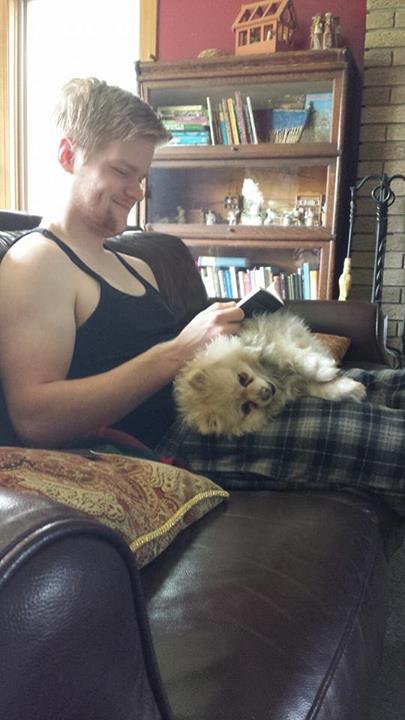
origins of poetry, Norse study, homeschooling,

Sam reading The Prose Edda using a Pomeranian bookrest.

Here’s the story as I understand it.

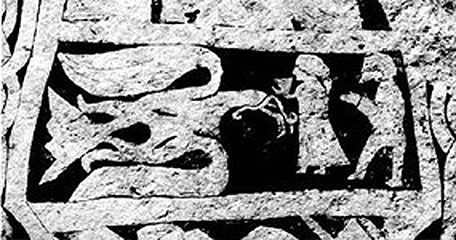
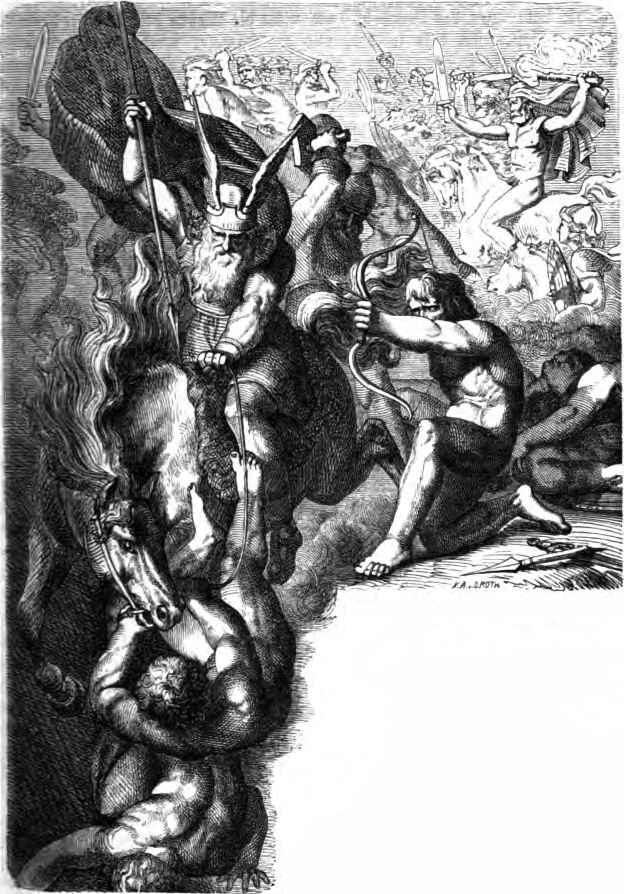
The Æsir Against the Vanir (wikimedia.org)

The Æsir Against the Vanir (wikimedia.org)

Groups of warmongering Norse gods, Vanir and Æsir, agreed to a truce after a long and bitter battle. Each side spat in a vat to preserve the peace.  The gods decided to keep the agreement safe by shaping their spittle into the form of a man they named Kvasir.

Kvasir was the wisest man on earth. He traveled the world— teaching, spreading knowledge, and correctly answering every question posed to him. (A lesson on the benefits of peace…)

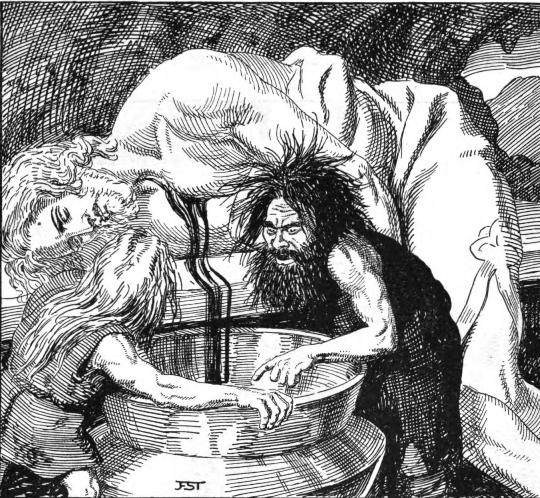
But alas, evil dwarves Fjalar and Galar murdered Kvasir. They drained his blood and distilled it in Odhrǫrir, the magic caldron. (Apparently smarts are a downfall. The dwarves told the gods that Kvasir’s intelligence had suffocated him.)

Draining Kvasir's blood. ( germanicmythology.com)

Draining Kvasir’s blood. ( germanicmythology.com)

Kvasir’s blood was mixed with honey to create the Mead of Poetic Inspiration. Poetry had once been the province of gods. But this drink held the power to turn all who imbibed it into skalds (poets) and blessed them with wisdom. Thus, skaldship spread.
child 2

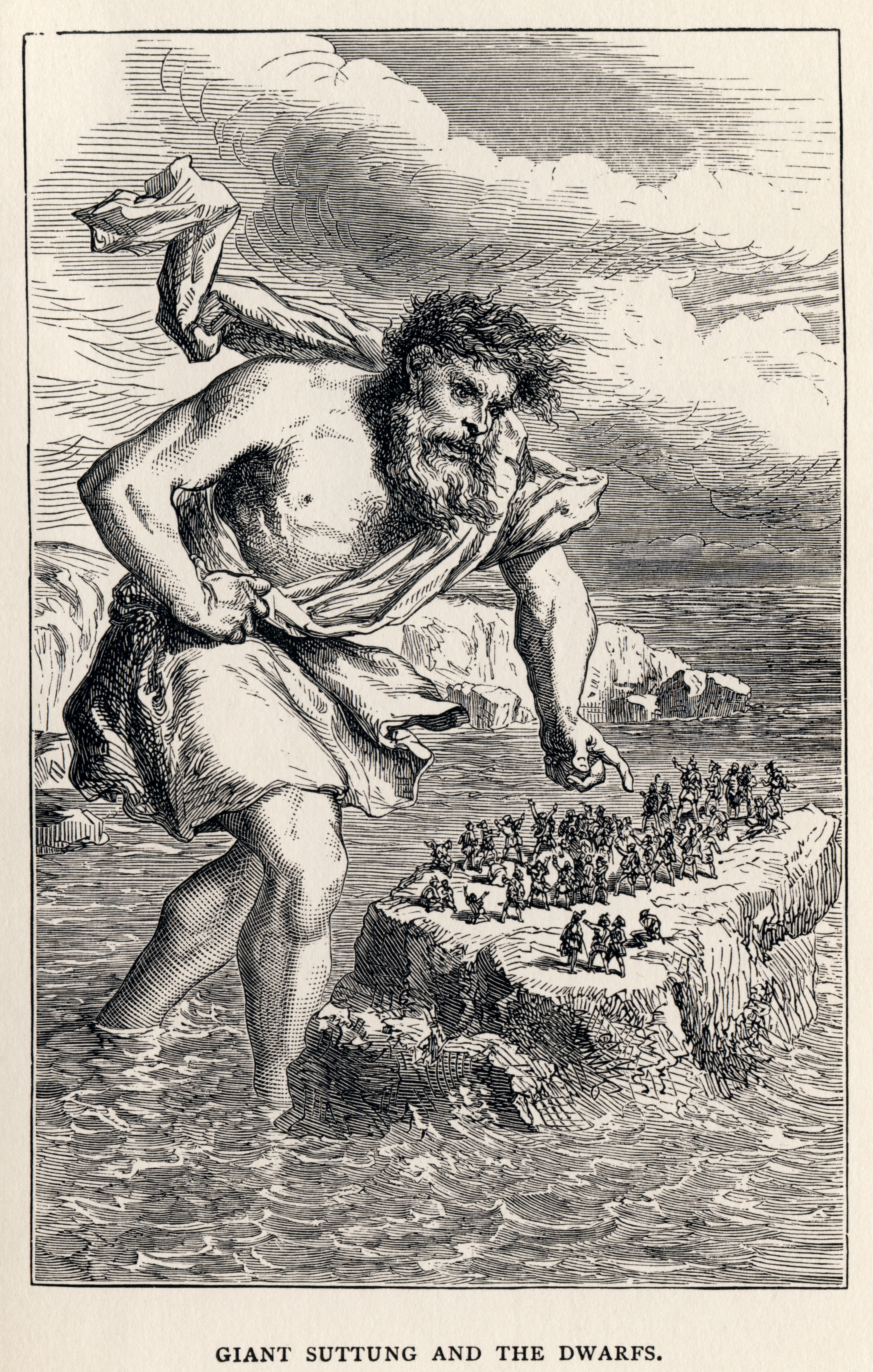
Along came the giant Suttung. He sought revenge on the dwarves because they had killed his father, the giant Gilling, for sport. Suttung seized their precious mead and hid it in the center of a mountain with his daughter Gunnlöð standing guard.

Gunnlöð (wikimedia.org)

Gunnlöð (wikimedia.org)

But Óðin (a.k.a. Odin) was displeased that so vital a nectar was hidden in a remote cavern. Óðin was a biggie in the Norse pantheon. He was known as King of Asgard, ruler of the Aesir, father of the thunder god Thor and associated with battle, victory, death, wisdom, prophecy, and the hunt.

Òðinn (no.wikipedia.org)

Òðinn (no.wikipedia.org)

So Óðin disguised himself as a man and wooed Gunnlöð. After three nights of sex he got her to agree to offer him three sips of the mead. But he tricked her (or by some accounts she succumbed entirely to his charms). He emptied the first vessel with his first sip. His second swallow emptied the second vessel. His last swallow emptied the last vessel. Holding all the divine mead in his mouth, Óðin changed into an eagle and headed back to Asgard.

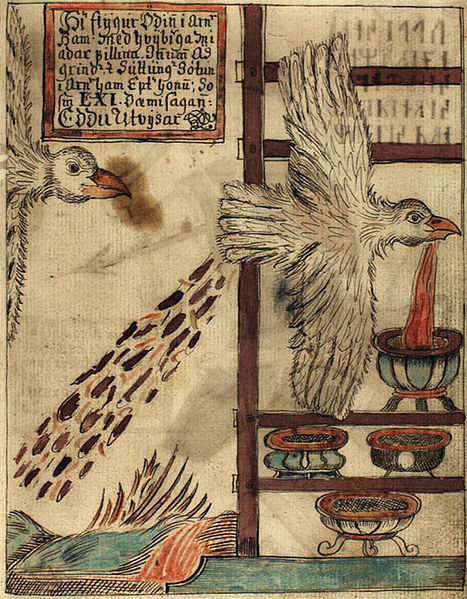
Óðin as an eagle. (norse-mythology.org)

Óðin as an eagle. (norse-mythology.org)

Suttung transformed into an eagle as well and gave chase. Óðin hurtled over the mountains. His people saw him coming and put out vessels in the courtyard. Óðin swooped low and spat the blessed mead into those containers. In the frenzy of the pursuit some of the mead came out “backwards.”

Yes, Óðin shat it.

Anyone that wants it can take that portion. It’s called skáldfífla hlutr, the rhymester’s share. It’s the portion for inferior poets.

Óðin pursued by Suttung, both in eagle form. Note the Mead of Poetic Inspiration being spat into vessels, with the mead for inferior poets coming out the other end. (en.wikipedia.org)

Óðin pursued by Suttung, both in eagle form. Note the Mead of Poetic Inspiration being spat into vessels, with the mead for inferior poets coming out the other end. (en.wikipedia.org)

Hey, I’ll take whatever portion I can get.


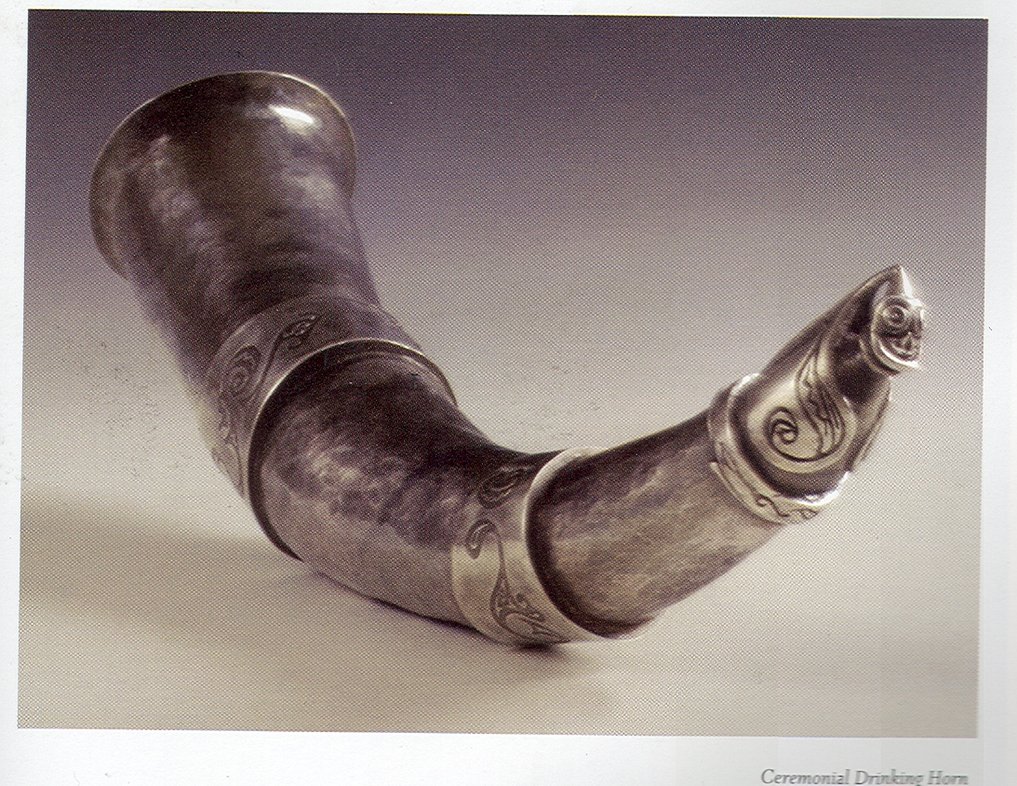
Ceremonial drinking horn. (smithing-chick.deviantart.com)

Ceremonial drinking horn. (smithing-chick)

A Dozen Ways To Revel In Poetry

poetry fun, celebrate poetry, exquisite corpse, traveling poetry, set poems free,

It’s all about how the letters are arranged. (mosswaterss)

1. Leave poems where they’ll be discovered. Write a poem on the sidewalk with chalk, crayon it on your child’s lunch napkin, tack it on your market’s public notice board, or tuck it into a friend’s coat pocket.

2. Pull a poem from a hat. Romanian poet Tristan Tzara was denounced by his fellow Surrealists when he proposed making a poem by pulling words from a hat. Try the “Dada Manifesto on Feeble & Bitter Love” method.

Take a newspaper. Take some scissors. Choose from this paper an article the length you want to make your poem. Cut out the article. Next carefully cut out each of the words that make up this article and put them all in a bag. Shake gently. Next take out each cutting one after the other. Copy conscientiously in the order in which they left the bag. The poem will resemble you. And there you are—an infinitely original author of charming sensibility, even though unappreciated by the vulgar herd.

3. Dine with poetry. Linger over some beautiful lines as you savor each mouthful.  The poems don’t have to be about food, but that can add to your pleasure. Find a rich assortment in The Hungry Ear: Poems of Food and Drink edited by Kevin Young and in Appetite: Food as Metaphor: An Anthology of Women Poets edited by Phyllis Stowell and Jeanne Foster. Or let these poems nourish you.
~”From Blossoms” by Li-Young Lee

~”Perhaps the World Ends Here” by Joy Harjo

~”Love Poem with Toast” by Miller Williams

~”The Invention of Cuisine” by Carol Muske-Dukes

~”Onions” by William Matthews

4. Sign up for poem-a-day sites. This month my wonderful library system is offering 30 days of poetry by email, featuring the work of local poets along with prompts for your own work.  You may also want to subscribe to Poetry Daily.

5. Watch poetry-infused movies.

6. Play Exquisite Corpse. This strangely fascinating game was created by the Surrealists in Paris. To play with several people, each person writes a phrase on a sheet of paper, folds the paper to conceal the words, and passes it on to the next player to contribute the next line. Each participant must be unaware of what the others have written, thus producing an absurd but often delightful poem.

7. Let yourself fall in love with spoken word poetry. 

~”Human the Death Dance” by Buddy Wakefield

~”Drunk Text Message to God” by George Watsky

~”OCD” by Neil Hilborn

~”Shrinking Woman” by Lily Myers

~”Accents” by Denise Frohman

~”Place Matters” by Clint Smith

8. Go on a poetry diet.

9. Set poetry books free. Leave them where strangers can find them, perhaps a coffee shop, a hospital waiting room, a dentist’s office, a barber shop, or a muffler repair shop’s waiting room.  If you’d like, register them with BookCrossing.com to see where they travel.

10. Take a poem into nature. It doesn’t have to be wilderness, simply under a tree or near water, and the poems don’t need to reference nature although these do.

~”Catechism for a Witch’s Child” by J.L. Stanley

~”The Silence of the Stars” by David Wagoner

~”The Seven of Pentacles” by Marge Piercy

~”Sometimes” by Sheenagh Pugh

~”Hum” by Mary Oliver

11. Hang on to poetic life lines. Some lines read long ago wait in our memories, rising to awareness at just the right time. The Academy of American Poets offers some time-honored life lines.

This line by art historian Bernard Berenson came to my mind recently as a friend struggled with cancer.  “I would have stood at street corners hat in hand begging passers by to drop their unused minutes into it.”

12. Curate a collection of your favorite poems. If a poem truly resonates with you, save it. Print such poems out out and paste them in a lovely scrapbook, or copy them by hand in a journal, or calligraph them on fine paper, or (as I do much less artfully) keep them in a word doc. After a few years you’ll have a highly personal, completely invaluable collection.

I Heckle, You Heckle, Let’s All Heckle

heckle, roots of word heckle, change the world,

I just got back from a workshop teaching us how to research injection wells for a citizen’s audit project. It’s boring and difficult. I’m appalled when I look closely at the data. I don’t want to do it, although I will because we’re currently mired in a struggle over fracking.

That may not be your issue but of course there are plenty of others that jab at our consciences. Drone strikes, refugees, melting polar regions and burning rainforests, poisons in our food, toxic tactics wielded by the powerful. The list goes on and on. We feel like screaming in the streets, but there are bills to pay and meals to make.

I haven’t thrown open my window to yell, “I’m mad as hell and I’m not going to take it any more.” But I want to affirm the heckling all of us do. These days the word “heckle” has entirely negative connotations. It conjures up images of rude people who interrupt performers and ruin the experience for everyone. Instead, lets hop on a wagon to the past where this word meant much more (as explained by Mark Forsyth in The Etymologicon).

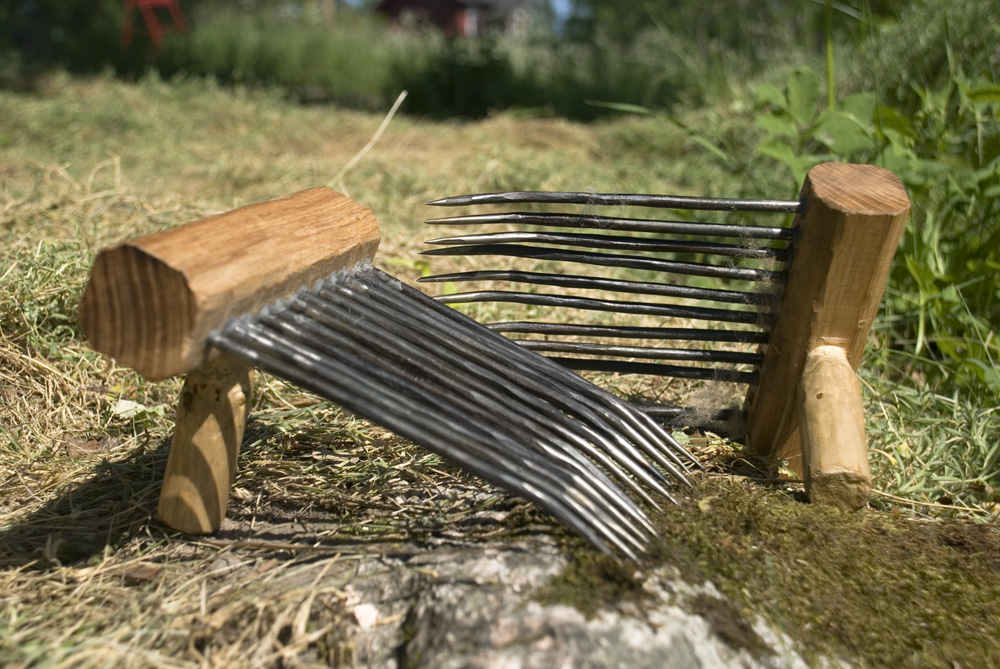
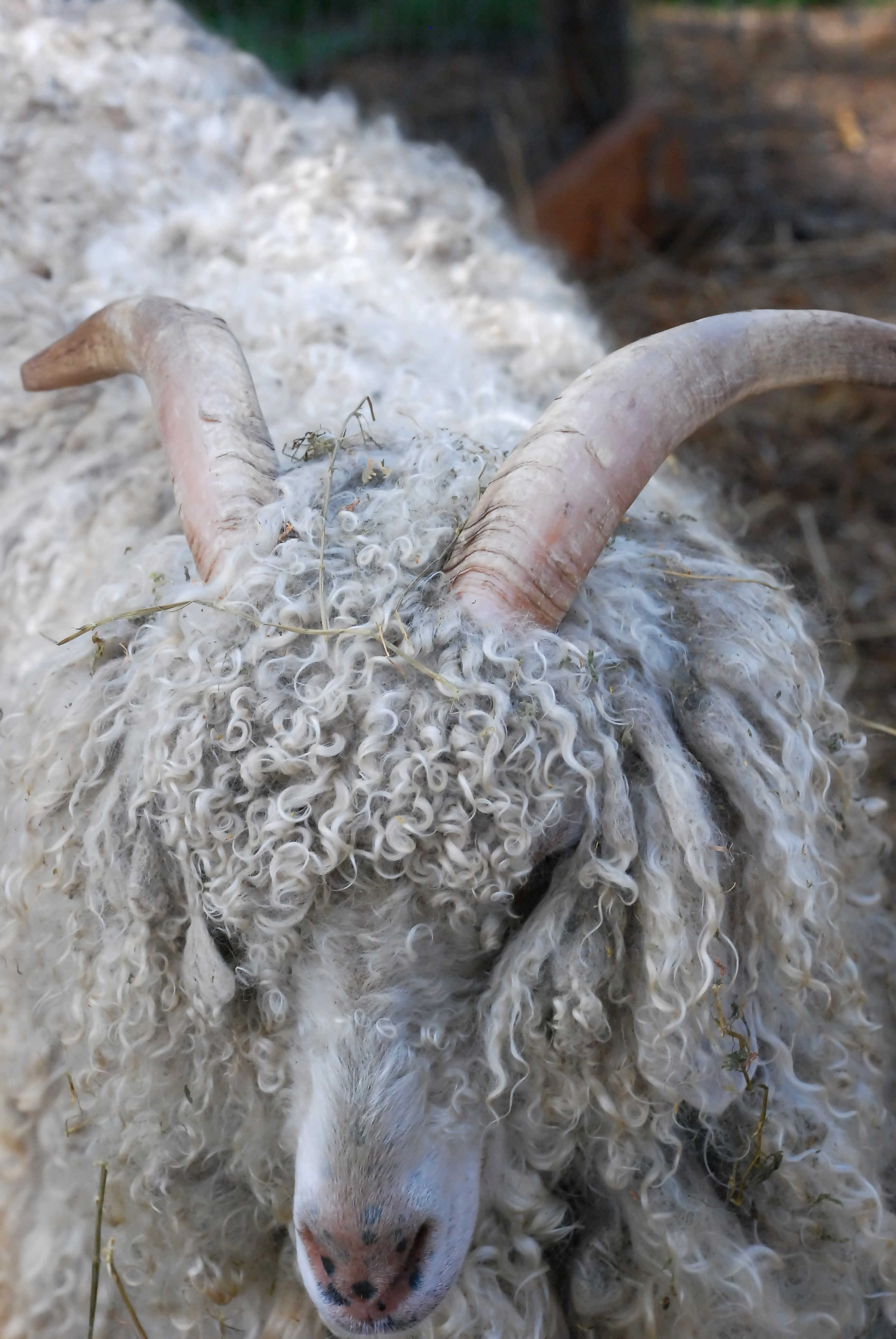
Heckling originally referred to the process of combing sticks, burrs, and knots from sheep’s wool so it could be spun into usable fibers. Sheep tend to ramble around without any concern for fleece-related loveliness, so this is quite a task.  People who did the combing were naturally called hecklers.

Back in the eighteenth century, the wool trade flourished in the town of Dundee, Scotland. Hecklers worked long hours together. In the morning as they set to work heckling, one of their fellow hecklers read aloud from the day’s news.  There was plenty to read, since this was an era when all sorts of publishers put out lots of newspapers, broadsheets, and handbills. The hecklers were thus well-informed in many subjects.

When politicians and power brokers of the day addressed the public, the hecklers combed over their speeches as thoroughly as they combed wool. They raised objections, pointed out contradictory facts, called people to account for their behavior. In other words, they heckled. These hecklers formed what would now be called trade unions, using their collective efforts to bargain for better pay and perks. They also stirred up awareness of worker’s rights while empowering ordinary people to speak up against injustice.

Hecklers were people who were knowledgeable and alert to hypocrisy. They were aware how easily something nasty can snag what’s useful into uselessness until it’s pulled free, no matter how arduous and smelly the process.

Heckling is a potent way to question the powerful. Over the centuries the term implied thoughtful questions from the audience which a speaker would answer before going on. In parliamentary proceedings it remains a method of engaging in open discourse with a speaker by someone who isn’t entitled to the floor.

Nearly everyone I know is actually a heckler. We’re well-informed. We care. We lean toward positive change, willing it into being by our words and thoughts as well as our actions.

The poet Lawrence Ferlinghetti joins other writers and thinkers who claim the masses are sheep, as he does in this evocative poem.

PITY THE NATION
(After Khalil Gibran)

Pity the nation whose people are sheep
and whose shepherds mislead them.
Pity the nation whose leaders are liars,
whose sages are silenced
and whose bigots haunt the airwaves.
Pity the nation that raises not its voice
except  to praise conquerors
and acclaim the bully as hero
and aims to rule the world
by force and by torture.
Pity the nation that knows
no other language but its own
and no other culture but its own.
Pity the nation whose breath is money
and sleeps the sleep of the too well fed.
Pity the nation—oh pity the people
who allow their rights to  erode
and their freedoms to be washed away.
My country, tears of thee
Sweet land of liberty!

With respect to Mr. Ferlinghetti, I disagree. His poem is packed with truth but it doesn’t acknowledge how these exact circumstances also propel people to deeper understanding and stronger commitment to change.

I see eyes opening. I see loving hearts broken by Earth’s sorrows, knitted back together with hope. I see the sort of consciousness rising that wakens more and more people.

We aren’t the sheep. We’re the hecklers.

social change, heckler,

Heckling combs. Image: nimpsu.deviantart.com

Why Write Poetry

write poetry, why poetry, becoming a poet,

Image: karrr.deviantart.com

I started to write poetry when I was eight or nine years old and continued until I was 13. The highlight? Winning a poetry contest in Mrs. Barker’s third grade class. The prize was a large chocolate bar.

The few scraps of writing I’ve found from those years consist of a child’s earnest questions and the comfort sought in a forest that once stood behind my parent’s home. Most lines are drenched with early existential dread. I’m not sure why I stopped writing. It could have been the surprisingly arduous trials of growing up or simple self-consciousness.

A moment from my 12th year comes to mind. I was in sixth grade, trying very hard to be like the other girls, never discussing the concerns that kept me awake most of the night. During the day, sleep-deprived into silliness, it often seemed to me that the conventions people took for granted were absurd. I did lots of laughing. One afternoon, walking out of class toward the playground for recess, I was telling a funny anecdote. A cluster of friends not only walked with me but jockeyed to be closest to me. The sun was shining on gumdrop green grass and I felt completely alive as I reached the best part of my story. I thought for a blindingly self-absorbed instant that this was what it was like to be popular. The next second I walked straight into a tall pole.

I hit it so hard I was thrown back. Dizzy, I made a joke about not seeing what had been there all along. My friends acted concerned but that was it, my brief encounter with popularity. Maybe I lost the secret habit of writing poetry because it seemed too much like an unseen pole, the sort of fullness that can erupt into a poem but might also raise a welt.

I never walked entirely away from poetry. As an adult I created poems from the phrases given to me by nursing home residents, crediting them separately for each line that eventually appeared in a book titled Gathering Our Thoughts. I led support groups for victims of abuse, hearing poetry as they shared their anguish in grace-laden detail. I taught non-violence workshops using poetry to emphasize the message of each session. I sent the work of my favorite poets to dear ones as a way of celebrating their joys and sharing their sorrows.

Yet I rarely encountered people living nearby who talked about, read, or wrote poetry. Far from our little farm I’m aware that poetry speaks for itself in slam festivals and readings, that it takes up residence in MFA programs and literary journals. Those worlds seem distant.

Poetry still feels like an indulgence. It hear it rustle in my head, trying to shuffle impressions into form, but I focus on my usual work of writing articles, editing, gardening, bringing in firewood, feeding cows, and other ordinary tasks. Besides, those impressions never entirely fit into words. I usually hush them till they are quiet. The ones that continue to pester I allow to fall onto paper although they don’t fully capture what’s just beyond language. When I took my manuscript to the post office to be weighed, addressed to “Poetry Editor,” I felt faintly ashamed, as if publicly admitting I squander time that could be devoted to more useful pursuits. The Puritan ethic dies slowly.

But the articles I write and the books I’m working on center around letting each person’s unique radiance shine. I believe this has to do, in part, with claiming both the light and dark in our lives so we can move toward a world of deeper mutuality. I know I’m not true to my ideals unless I live them. So I’m learning to treat the poetry writing impulse more gently. It feels starkly revealing, as liberation does.

The pieces in this collection have to do with beginning, uprooting, gathering, and abundance. They rise from the simple daily rituals that nourish me and from the loved ones who shape my life. They’re a way of walking into something hard without falling backwards.

publish poetry, why write poems,

Image: xxju.deviantart.com

Endless thanks to the intrepid souls who helped shape this book. The first ms readers: my beloved siblings Dale Piper and Cynthia Piper. My merry writing group: Connie Gunn, Margaret Swift, and Sarah Vradenburg. Those discerning individuals who commented on later drafts: Laurie Kincer, Leslie Nielson, Katherine Clark, and Mark Hersmann. I’m endlessly grateful.