Epidemic of Nearsightedness Has Startling Cause

myopia, nature-deficit disorder, can't see forest for the trees, children's myopia,

We don’t mourn the loss of what we don’t see.

In fourth grade I had no idea that the equations I copied from the board were incorrect, I only knew that for the first time my math papers were handed back with poor marks. And my grades kept getting worse. Although I wrote neatly and rechecked my work the teacher scrawled “careless mistakes” on my papers. I’d decided I was a mathematical dunce by the time my parents realized I needed glasses.

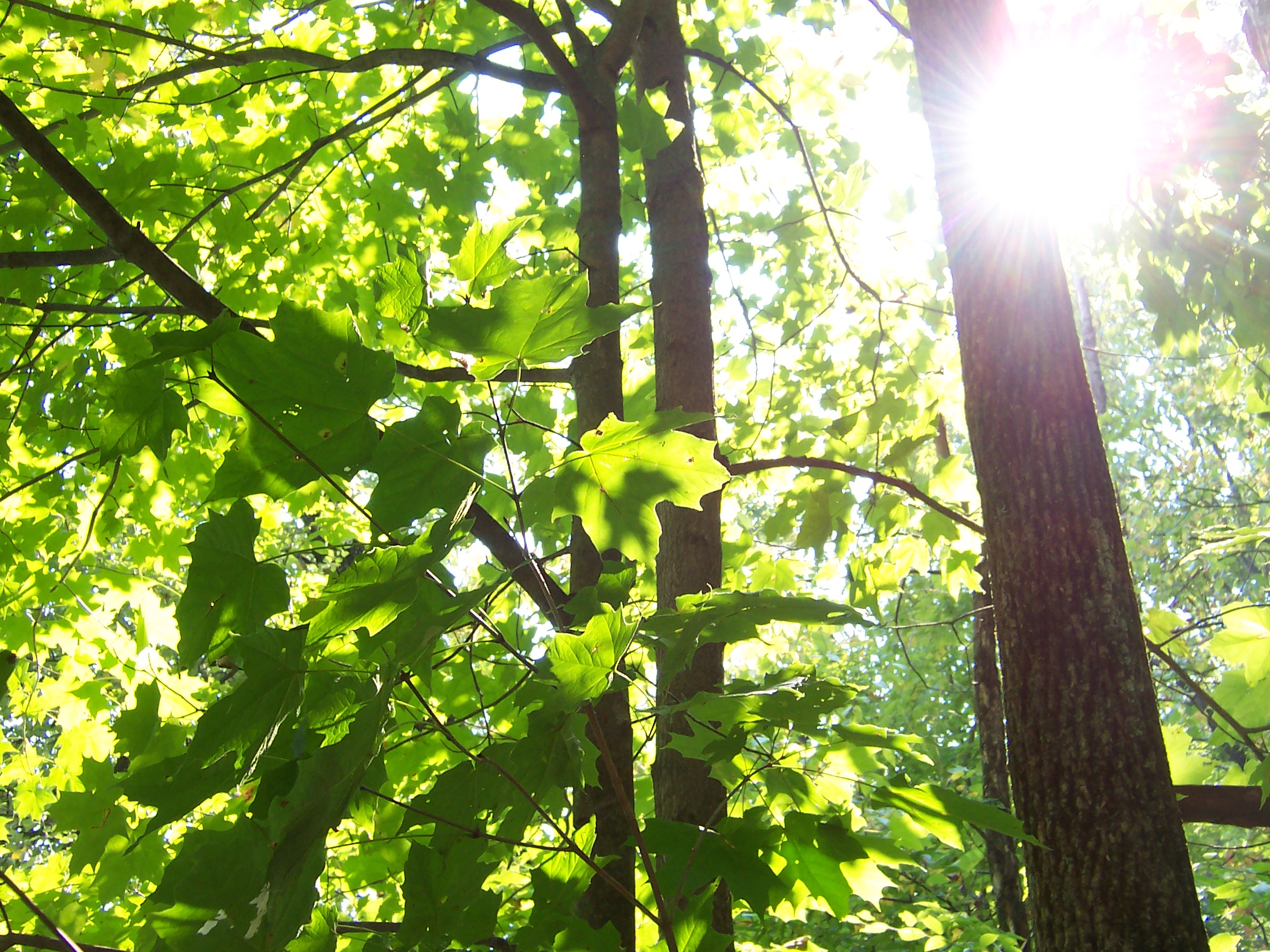
It was a revelation the first time I put on those glasses. I could see individual leaves on trees! I could see the faces of people passing by! I thought what I’d seen before, blurry images that resolved close up, was what everyone saw.

Myopia has risen to epidemic levels. In the U.S. young adults are much more likely to be nearsighted than people in their grandparent’s generation. In 1996, sixty percent of 23 to 34-year-olds were nearsighted compared to twenty percent of those over 65. Some Asian countries are seeing an even more alarming increase, up to 80 percent of young adults.

Reading too long, watching TV too close, even going without sunglasses have been blamed for causing poor eyesight. But the answer is much more interesting and has resounding significance for the way we raise our children.

The startling cause uncovered by researchers in three separate studies in the U.S., Australia and Singapore?

It has to do with the amount of time a child spends outdoors.

Yes, genetics still plays a part. Children born to nearsighted parents are more likely to need corrective lenses.

But researchers noticed an intriguing outlier. Children who devoted more hours per week to sports or outdoor play were less likely to develop myopia. Perhaps, it was speculated, they spent less time on close activities like reading. But further studies didn’t make that connection.

Perhaps, it was speculated, that sports and other activities made them more physically fit, somehow benefitting their eyes. But indoor sports were found to have no correlation with better eyesight, only those played outdoors. In fact, even completely inactive time outdoors was helpful in reducing the incidence of myopia.

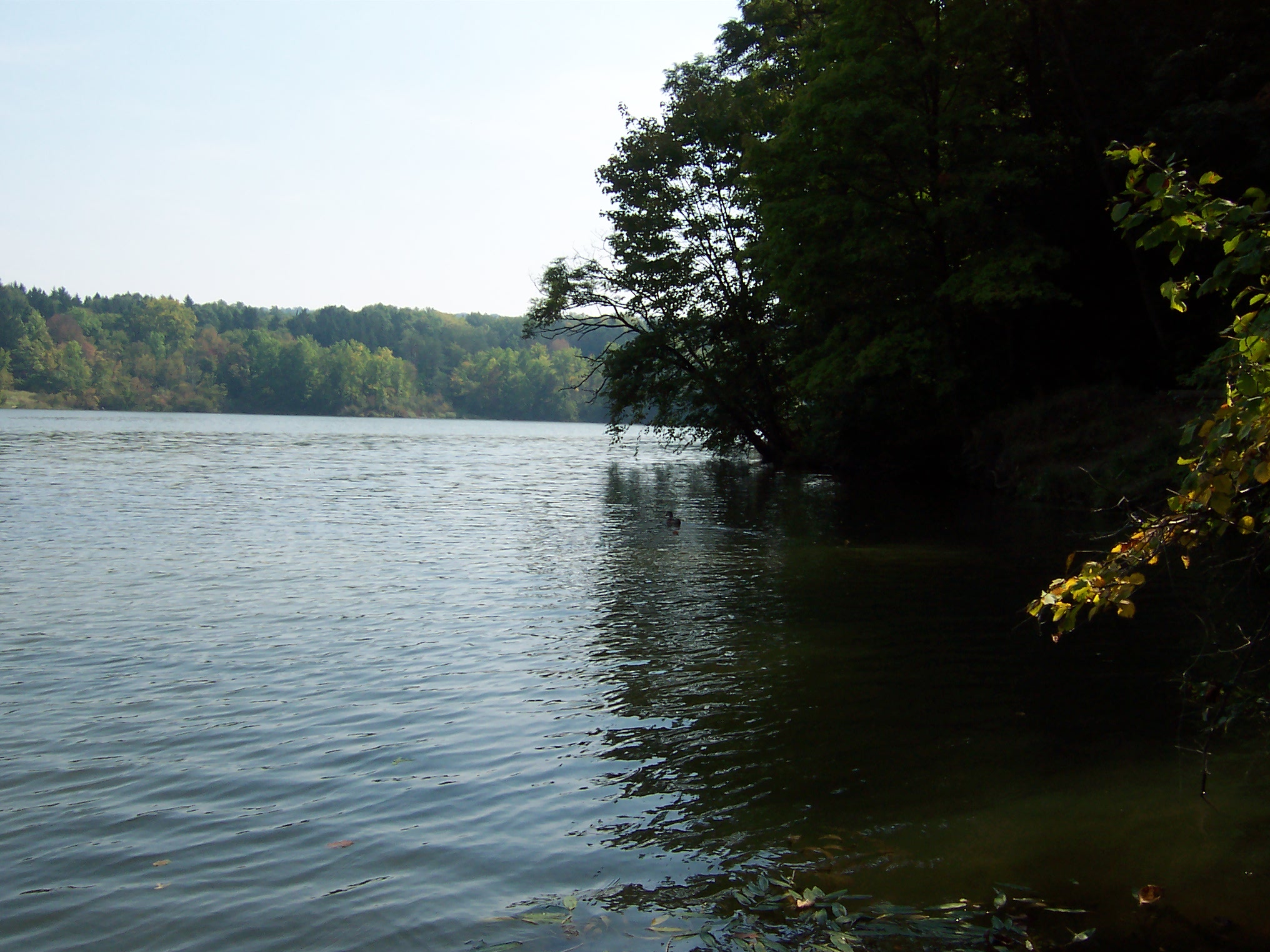
Look at these numbers. A study of six to seven year olds (only of Chinese ethnicity to simplify comparisons) living in Singapore and Australia found marked differences based on outdoor exposure. Children in Singapore spent an average of 3 weekly hours outdoors, thirty percent developed myopia. Australian youngsters spent 14 hours outside each week, only three percent developed myopia.

How much more time do kids need outdoors? A new study of nearly 2,000 children finds that adding an extra 40 minutes a day for three years results in reduced rates of nearsightedness.

No one is sure exactly what factors lead to better eyesight when children spend time outside. It may be related to the greater intensity of light or the natural spectrum of light.  Perhaps it has something to do with nutrient absorption related to light, as in vitamin D metabolism.

Or it may relate to peripheral vision. Without the limitations of walls and windows our vision can range across open spaces. This corresponds to findings that urban children, whose vision is constrained by crowds and buildings, suffer a greater incidence of myopia than rural children.

Whatever the cause, today’s children spend more time indoors than their parent’s generation. Actually, about 90 percent of their young lives are spent shut away from the natural light and wider view of the outdoor world.

They can’t miss what they don’t see.
myopia, nearsightedness, nature deficit disorder, kids indoors, benefits of outdoor play, sports for kids, improve eyesight,

Is Nature Somewhere Else?

connect with nature, look at the sky, peace, tranquility, research nature and health,

We tend to think of nature as separate. We imagine spending time “out there” hiking in some remote wilderness, drinking from mountain streams and observing creatures that have never faced highway traffic. There, in a place far from our busy lives, we might find peace, tranquility and some kind of deep connection to what is real.

If. We. Just. Found. Time. To. Get. There.

That’s part of the problem. Because we’re already there. We are nature, right down to the life processes of every cell. And what’s around us even in the smallest city apartment? Nature.

Nature is the food we eat, air we breathe, water we drink. It’s seedlings pushing up between cracks in the cement (and the cement itself, depending how you define it), birds lighting on utility poles, pollen making us sneeze, storm clouds swelling with rain. It’s a living planet in a universe of natural laws that continue to be revealed.

When we define nature as separate from us it’s easier to push it aside as something apart from our very life force.  This disconnect isn’t healthy for us or the planet.

In part it simply has to do with SEEING. I learned this when I helped conduct a psychology study in college.  We went to urban office buildings and asked people two questions. First, we asked each person to describe his or her mood. Second, we asked them to describe the current appearance of the sky. These people were in their offices or hallways when we talked to them and the windows in most buildings were shuttered with horizontal blinds ubiquitous during that decade, so the only way they could have described the sky is if they had paid attention on their way to work or during a break. Here’s the interesting part. The people who identified themselves as pessimistic, angry, depressed or in other negative terms were also the ones unable to describe the sky’s appearance. You guessed it. The happiest and most optimistic people either correctly described the sky or came very close.

That study was never published, but research continues to show that pausing to experience nature in our daily lives has a powerfully positive effect on our minds and bodies. Just a few minutes of regular exposure leads us to be more generous, creative, and enlivened.

So wherever we are, let’s pay attention. Let’s remind ourselves to look at the sky every day, not just for a moment but long enough to savor it (without declaring the weather good or bad). Let’s put our bodies into the experience by taking regular strolls and touching the bark of a tree, a flower’s soft petal, the texture of a rock. Let’s watch the habits of birds, squirrels, spiders and other creatures making their lives amongst ours. Let’s pick one tree near our homes and notice it as the seasons pass, as we would a quiet friend sharing the same neighborhood. It takes only a shift of awareness, but it can make a world of difference.

Nature is right here, moment to moment, in each breath we take. It connects us to what’s real and helps us be the people our planet needs right now.

On the Beating Death of a Snapping Turtle

snapping turtle migration, snapping turtle endangered,

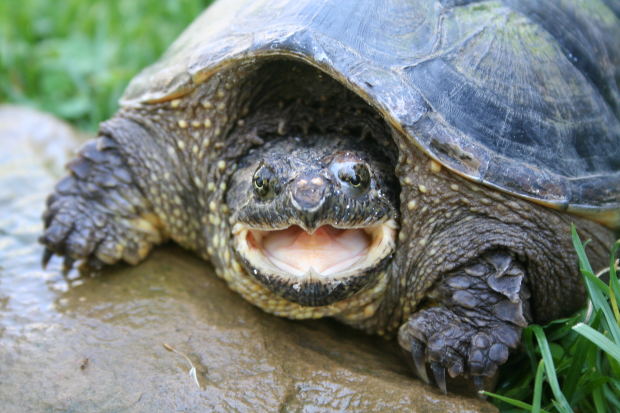
Our neighbor beat a snapping turtle to death. The life so cruelly taken stays with me.

Every spring we see snapping turtles near our pond. We’re glad to see them return. Perhaps their presence reassures us that our farm is bountiful and feeds them well. Or perhaps their yearly return is a ritual of sorts, acknowledging as rituals do that some things stay the same in a world where so much changes.

The turtles are quite noticeable as they move with prehistoric dignity through the grass. If we pass by they slide into the water. Sometimes we’ve had to move them (very carefully) out of the way of a tractor. Other times we’ve had to caution children or guests away from them.

They linger for at least a few weeks in early spring. Then the turtles, following timing triggered by their own reptilian wisdom, trek across neighboring property toward a large lake several thousand feet away.

But this time that turtle journey happened at the same time my neighbor went outside with his two children. He saw the turtle as a danger and decided it had to be eliminated for the safety of his children.

First he shot it. Yes, shot it. (We live in a rural area where guns are common.) Somehow gunshots didn’t have the desired effort. Thankfully they also didn’t ricochet off the turtle’s shell, creating a far more serious hazard.

Then he got out a heavy implement and, slamming down over and over again, he beat the turtle to a horrifying death.

Appallingly, my neighbor did what he assumed a good father does.

But this is what I can’t stop thinking about. There are pivotal moments in a child’s life when what we show them about the world stays with them. I mean more than the bloody sight of that turtle’s death, left to rot rather than killed for food. We can show them that nature is a part of us—-to experience with wonder, to treat with respect and to embrace as a unified whole. Or we can show them that nature is separate from us—-to use for our amusement, to treat with disdain, to attempt to control.

I realized this when my first child was a toddler, barely walking. He encountered an insect and paused before lifting his little white shoe to stomp on it. I showed him instead that we could squat down near the insect to watch it but not touch it. In those few minutes he looked carefully for the creature’s eyes, remarked on its feet and clapped in joyous astonishment when it unfolded wings and suddenly lifted away. After that he kept a careful watch for insects. His questions (What does it like for snacks? Does it go home to bed when it’s dark? How does it talk to other bugs?) showed he was thinking about what it might feel like to be an insect. He learned that some sting and bite, some hustle away on many legs, some wriggle into the ground. He learned awe tinged with caution.

That’s the moment my neighbor missed. He could have called his children to come look at the snapping turtle from a safe distance, his arm around the youngest, pointing out the its heavy shell and powerful jaws. He could have cautioned them to always tell an adult if they ever saw such a creature, and to never go anywhere near it. Snapping turtles can be dangerous. That’s why we teach our children to identify, avoid and respect those dangers. But we also need to weigh risk factors to put danger in perspective. A large snapping turtle crossing the yard offers good reason for caution. But there are far greater dangers facing children in my neighborhood. Cars going by on our 55 mph rural road. Guns in the home. Toxins released when garbage is burned in the backyard.

I’m sure we all have different opinions about what constitutes danger. Maybe the way we frame this says a lot about our worldview. *

a

Snapping Turtle Sidenotes My husband and I have both stopped at the side of the road to move snapping turtles out of the street. This is best done without hands or feet, just the encouragement of a window scraper’s blunt edge. The turtles snap grumpily, then lumber off to a shady drainage ditch. {Always move turtles in the direction they’re going. Migration urges them in that particular direction.) We do this because we’ve repeatedly seen drivers intentionally speed up to hit these slow-moving creatures. We’ve also seen drivers do the same to vultures, hawks and crows—-nature’s blessed carrion eaters who clean up our roadsides when a carcass lies in sad repose after meeting with a car.

I tried to find out why turtles might be traveling on roadways far from ponds and streams. Looking up the Common Snapping Turtle  (Chelydra serpentina) led to me find out more than I expected.

These long-lived turtles are important to the eco-system. They eat plant and animal matter, often scavenging. Docile in the water, they’re more aggressive on land. Food scarcity, pollution and habitat destruction may be forcing them to travel overland more than before.

Center for Biological Diversity is concerned about a massive increase in hunting and exporting turtles. These creatures, so integral to healthy aquatic ecosystems, are being sold to Asian countries, primarily China. Consumption of turtle meat there has driven many native species of turtles to extinction.

Eight states—Arkansas, Iowa, Kentucky, Louisiana, Missouri, Ohio, South Carolina, and Tennessee— permit unlimited harvesting of all turtle sizes, using lethal hoopnets and box traps in public and private waters. These devices box traps also capture, maim, kill, and drown protected turtle species, non-target fish, mammals and birds.

In our state, the Department of Natural Resources doesn’t monitor health or population trends of wild turtle populations. *