Welcome Kids Into The Workplace More Than One Day A Year

role models, peer segregation, children in workplace, take your child to work day,

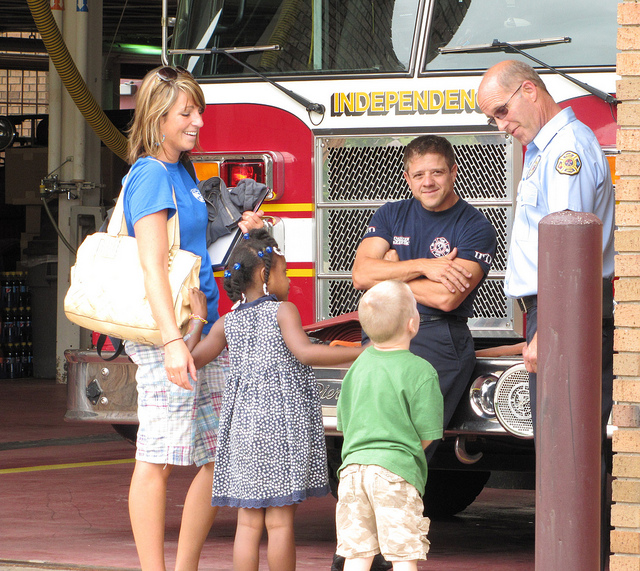
Finding out about real world work. (Clarkston SCAMP)

Twenty-some years ago, a radical idea was launched. One day out of the year take girls out of school and bring them to work for Take Our Daughters To Work Day. The practice was intended to give girls a glimpse into possible careers and break down barriers to success. From the start many parents brought both boys and girls. Then the project was officially expanded to include boys. Today it’s wildly popular. Last year 37 million people participated in the U.S. alone.

It’s hard to know how much impact one day a year has on a child’s career aspirations, let alone determine if it breaks down any barriers. According to the National Committee on Pay Equity,

The wage gap persists at all levels of education. In 2011, the typical woman in the United States with a high school diploma working full time, year round was paid only 74 cents for every dollar paid to her male counterpart. Among people with a bachelor’s degrees, the figure was also 74 cents…A typical woman who worked full time, year round would lose $443,360 in a 40-year period due to the wage gap. A woman would have to work almost 12 years longer to make up this gap.

Inequality remains firmly in place for women in business and the sciences. There are larger issues going on here, but spending more than one day a year observing the real world of work might help.

Throughout nearly all of their childhood and teen years our kids are segregated in day care, school, sports, and other activities. Even when they benefit from the very best programs, if they’re restricted to the company of same-aged peers they are deprived of the riches found through fully engaging in the larger community.

This subverts the way youth have matured throughout most of human history, when children learned right alongside people of all ages as they gathered food, built shelters, and performed every other skill necessary to sustain a community. Young people learned more than carving spears and tanning hides, they picked up character traits that would hold them in good stead through life.

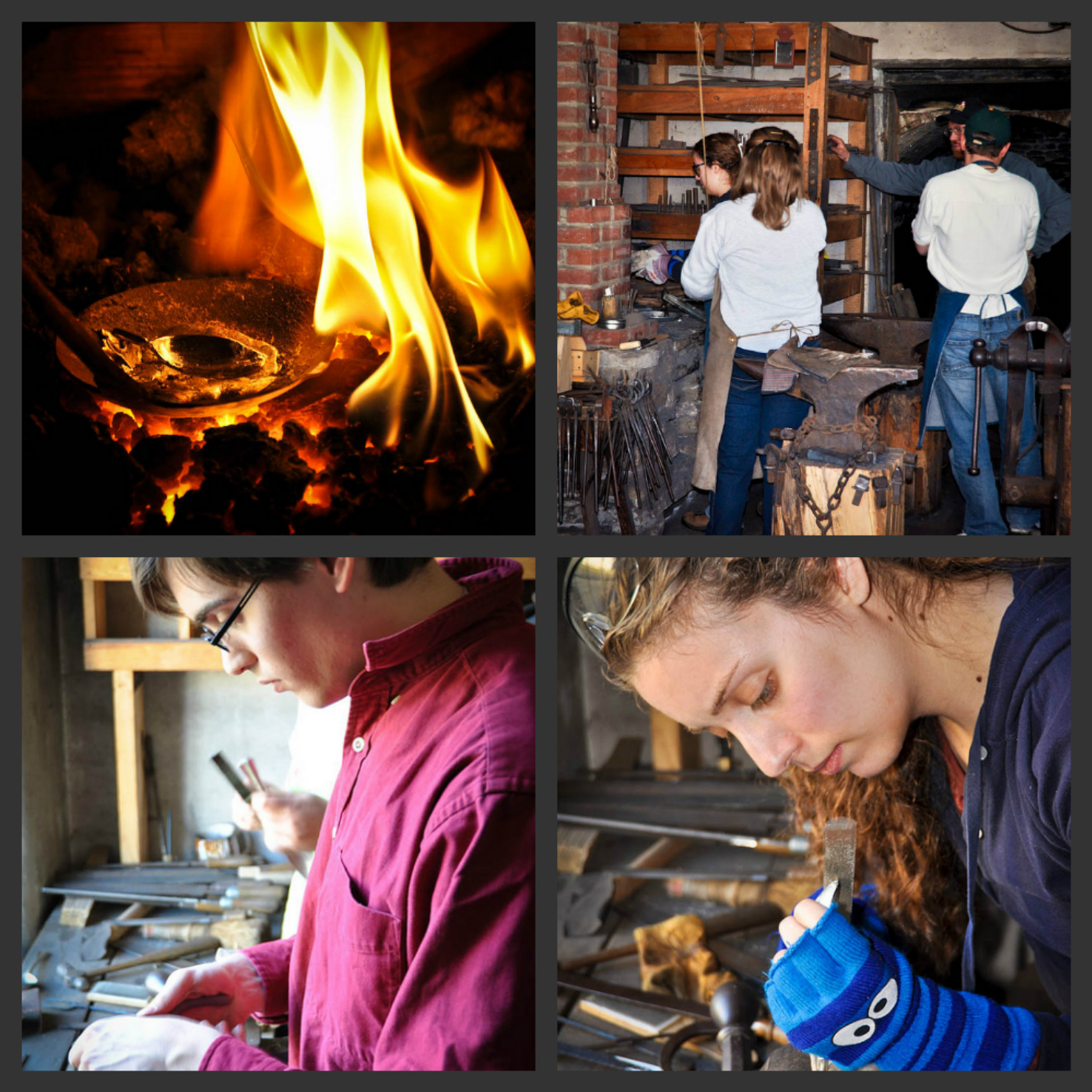
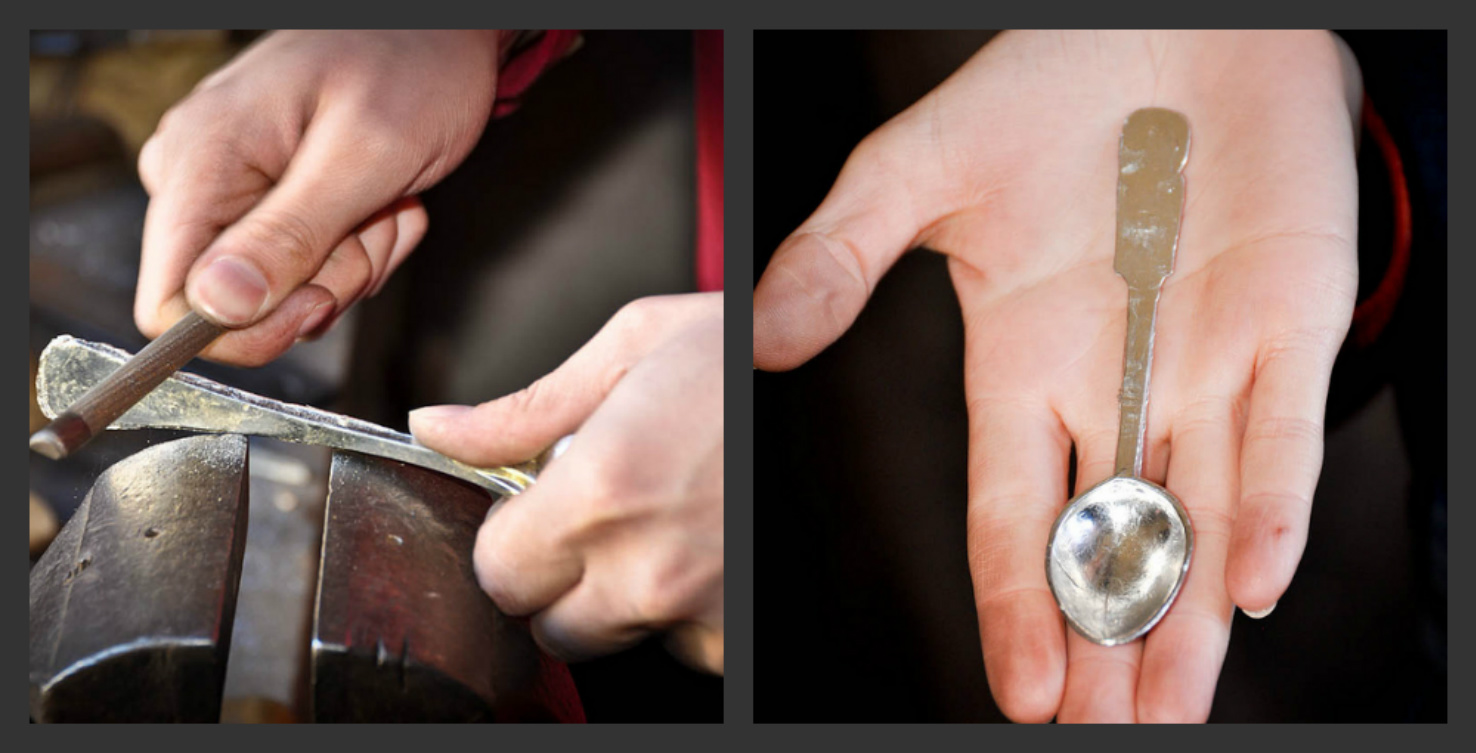
Today’s kids still have the age-old desire to gain mastery in areas of interest and to model themselves after those they admire. There’s nothing like being exposed to people engaged in meaningful and useful activities to spark those desires. That’s why I’ve made a point of making sure my kids get the chance to see as much of the working world as possible. Along with members of our homeschool groups and 4-H club, my kids and their friends have gotten the chance to see, up close, the work of chemists, wood carvers, bankers, blacksmiths, forensic investigators, geologists, boomerang athletes, farmers, engineers, chefs, potters, horse trainers, entrepreneurs, and many other adults who are passionate about what they do.

Interestingly, when I’ve asked for our kids’ groups to observe or even take part in the work-a-day world people rarely turn us down. Perhaps the desire to pass along wisdom and experience to the next generation is encoded in our genes.

Age segregation goes both ways—adults are separated from most youth in our society too. After an afternoon together we’ve gotten the same feedback again and again. These adults say they had no idea the work they do would be so interesting to kids. They marvel at the questions asked, observations made, and ideas proffered by youth that the media often portrays as disaffected or worse. They shake hands with young people who a few hours ago were strangers and say, “Come back in a few years, I’d like to have you intern here,” or “We could use an engineer who thinks the way you do. Think about going into the field,” or “Thanks for coming. I’ve never had this much fun at work.”

If you want to help your kids benefit this way, here’s how to activate your knowledge networks and reconnect kids with the larger community.

A Slanty Line Approach To Learning

slanty line principle, Bernie DeKoven,

Image: feigenfrucht.deviantart.com)

 Playfulness guru Bernie DeKoven is an amazing guy. His new book A Playful Path brims with wisdom and an irrepressible spirit of delight. It’s so good I think everyone needs a copy as a reference book on How To Be Human. 

He cheerfully agreed to let me publish this guest post. Thanks Bernie! 

Bernie DeKoven wonders if you’re having fun (deepfun.com)

Bernie suggests having fun (deepfun.com)

There’s an elegant model, called the “Slanty Line” principle, developed by physical educator Muska Mosstonxiv that puts the concept of individually negotiable challenge very clearly into practice.

If you’re a Phys Ed teacher, one of the things you do with kids is help them develop their high-jumping skills. In “non-adaptive” Phys Ed, the way you did this was to hold jumping contests. You’d hang a high bar horizontal to a certain height and everybody would have to take a turn jumping over the high bar. If they succeeded, they’d get to the next round, and the high bar would be raised. The contest would continue until only one person was left. That person would be lavishly praised as the one who established the high jump record for the class.

The problem with this kind of competitive incentive structure is that the kids who need the most practice are the kids who get to jump the least often. The worse they are at jumping, the sooner they’re out of the game.

Try this. Make the high bar diagonal rather than parallel to the ground. This lets everybody jump over any part of the high bar and take as many turns as they want. And what do you get?

Instead of the teacher, each kid sets his/her own challenge. The jumpers who are not so good at jumping can still jump across the high bar as many times as anyone else, they just cross at a lower point. And, when they feel the need to increase the challenge they can just station themselves at a higher part of the high bar.

No one is eliminated. No one is given prizes. Everyone wins. Repeatedly.

Slant the high bar and the authority rolls right out of the hands of the teacher, out of, actually, any one body’s hands, into everybody’s. The challenge (jump as high as you can, and then jump higher) remains the same, but the challenger has changed. It’s not the Phys Ed instructor who increases the challenge, it’s the kids, themselves: the kids as a group, and the kids, individually.

A challenge that is determined by the individual player is more complex, because it requires “reflective action.” The player must evaluate not only his or her own success, but also the success of the challenge. And even though kids can get very competitive, the challenge is ultimately self-selected, ultimately guided by sheer fun.

Without an external evaluator, each kid can devise and revise the challenge. Of course, evaluation is going on, and whether the competition is inner-directed or outer-directed, the fact is that the teacher, your fellow jumpers (both higher and lower), your inner referee; somebody is evaluating your performance, challenging you to challenge your self.

Ideally, each kid should be seeking out his/her personal level of flow, driven by the natural desire for complexity into a deeper and healthier engagement with the relationships between the human body and gravity. But, in fact, there’s still something about the way the task is framed that draws the kids apart.

Even though nobody’s eliminated, even though everyone’s free to increase or decrease the challenge, even though you don’t even have to take turns, the fact is that the challenge is directed towards the individual. With the focus on individual performance, on how high who jumps; the relationship is fundamentally the same.

And what’s worse (or more complex), someone might be attaching meaning to your performance, as if how high you can jump says something about your character!

So, what if we completely redirected the challenge, away from the individual and towards the group? What if the entire class tried to jump holding hands? Or with their arms around each other’s shoulders? Or each other’s waist?

Shifting the focus of the game away from what they can do individually (ME), we focus, also, on what the kids can do together (WE) – on collective as well as individual performance.

To jump the Slanted Bar together, we need to make sure that each individual kid is going to make it. Even though the challenge is to the group, there are still plenty of challenges to the individual player. Each has to be stationed at the appropriate part of the high bar: too high and you might not get over, too low, you might make it harder for someone else. Each has to be able to ask for help, and provide help. Preparing for the big jump, synchronizing the preparatory, simultaneous squat, each individual is doubly challenged. And yet, not competing. Same slant, same task, but fundamentally shifted experience.

Raising the high bar, you intensify the competitive relationship between the diminishing few. The game, internally and externally, becomes one of increasingly isolated MEs (the “winners”) against an increasingly disempowered WE.

Slant the High Bar, and the relationship relaxes, becomes supportive, empowering, healthy, ME\WE.

self-regulating learning,

Image: excess1ve.deviantart.com

Help Kids Learn About Business & Finance: 60+ Resources

money smart kids, teaching kids about money, finance education, financial literacy, young entrepreneurs,

“Money often costs too much.”—Ralph Waldo Emerson

 Our society is preoccupied with money, but on the most superficial level. The meaning underlying monetary choices is rarely discussed. Still, right now, we have a profound impact on our children’s attitudes about finances and spending. It’s useful to take a close look at the wisdom behind the choices we demonstrate to them.

Do our spending decisions reflect our values?

Do our careers foster our own abilities?

Who are our financial role models?

What does it mean to have enough?

Do we have ample time for our families, for activities we enjoy, for quiet reflection?

In Your Money or Your Life, authors Joe Dominguez and Vicki Robin redefine a transaction we take for granted, working. They describe it as trading life energy for money. That life energy is subtracted from the hours we have to live. The same goes for spending. If money represents hours of life energy expended, our use of money also expresses how we choose to literally “spend” our time. Not everyone would agree with the authors’ valuation. But most of us recognize the peace that comes of living in harmony with our own priorities.

Here are dozens of ideas and resources to help you raise money-wise young people.

Start budgeting and personal finance early. Some parents prefer to have all family members involved in running the household economy. They draw up a budget, talk over expenses, and pay bills together. This way children come to know what terms like “interest,” “finance charge,” and “invest” mean as they take part in this family chore, even if at a young age they are only putting stamps on envelopes and discussing what charities to support. Involved children are also less likely to wheedle for purchases because they understand exactly what it takes to save for longer-term goals such as a family vacation. And they see how personal decisions impact financial security.

Use real money. Adding up purchase prices, figuring percentages off, comparing costs, and calculating change make more sense using actual money. Practice at home, then empower children to use these new skills at the bank, farmer’s market, and movie theater.

Learn about economics through picture books. Check out  If the World Were a Village by David J. Smith, , Bananas: From Manolo to Margie by George Ancona,  A New Coat for Anna by Harriet Ziefert, Sam and the Lucky Money by Karen Chinn, How to Make an Apple Pie and See the World by Marjorie Priceman,  Abuela’s Weave by Omar Castaneda, Alexander, Who Used to Be Rich Last Sunday by Judith Viorst, One Hen: How One Small Loan Made a Big Difference by Kate Smith Milway, and Pigs Will Be Pigs: Fun with Math and Money by Amy Axelrod.

Tour local businesses. Field trips open a child’s sense of possibility in their own career aspirations.

Host an entrepreneurial fair. Invite children to create a product to sell. This may be a craft, service, invention, edible item, or work of art. Provide an area to promote and display their wares at a group meeting or public venue. They should have sufficient supplies of their product to meet demand, but as with any business the exact number is an educated guess. You may choose to have start-up meetings beforehand to discuss product development, displays, and other details. Encourage each child to keep track of expenses so they can evaluate the business potential of their product afterwards. Promote the fair to the public, invite extended family, and encourage your group to support the efforts of their youngest business people. Have a follow-up meeting with participants to talk about their earnings in relation to the time and expense of making their product.

Involve young people in a family business. Whether a small-scale Etsy business or a full time company, children can provide valuable assistance while learning what it takes to find customers, keep track of expenses, pay taxes, and build a strong business.

Seek learning relationships with adults who have careers or skills of interest through your own knowledge networks as well as person-to-person learning networks.

Have fun. Invent a new form of currency. Learn about bartering, then try it. Save up for a family adventure by selling things on Craigslist or eBay Turn lunch at home into a restaurant meal complete with menu listings, service, and bill. Write up movie descriptions with viewing times and prices for family video night.

Play board games such as The Farming GameThe Construction GameMonopolyPay DayThe Game of LifeLawsuit, and CASHFLOW for Kids

Teach kids to budget. Ensure that children make regular monetary decisions. Talk about needs versus wants, perhaps consulting Jennifer Larson’s book, Do I Need It? or Do I Want It?: Making Budget ChoicesAs with other learning experiences, young people need the opportunity to think through their choices, make mistakes, and try again.

You might choose to create three budget categories (long-term savings, short-term savings, donations) with your child. Between you, decide on a percentage of money for each category. If your child decides to change the percentage or the amount when his or her income fluctuates, recalculate.

Encourage budding enterprises before your children reach a typical hiring age. They might mow lawns, walk dogs, help parents entertain young children, sell homemade goodies, help with yard sales, assist with computer service, remove pet waste in yards, move garbage cans from house to street and back, rake leaves, be a child-minder during meetings, weed garden beds, set up/explain electronics, help with holiday decorations, watch pets, sell crafts, etc.

Hold a garage sale or charity fund-raiser. Involve children in all phases from planning to follow-up.

Learn how you vote with your dollars. Research products according to health value, corporate responsibility and other standards using Good Guide. Check out how those statistics are gathered and how ethical shopping choices can make an impact.

Invest. With your child, sign up for a joint account on e-Trade or other low minimum investment company. Choose stocks together and watch what happens.

Track mock Investments. Build a mock investment portfolio with your children. Have them list several companies they choose (perhaps related to their interests or favorite products). Help them locate ticker symbols and current stock prices. Every week, help them record the latest prices along with the date. Calculate the gains or losses. These are short-term fluctuations, so talk about longer term trends as well.

You might start a investment club. Using hypothetical funds, members research stocks and returns, competing for the best results. They may wish to use online stock market simulation sites or register for The Stock Market Game (which charges fees). 

Build skills and experience through community service. Here are 40 ways kids can volunteer.

Seek out finance lessons. Companies dealing in finance such as banking institutions, insurance companies, and brokerage firms may happily offer a speaker for a group meeting or materials for a class. As with any curricula offered by a business, be aware that there may be implied advertising for the company’s services or tendency to advance the company viewpoint. It’s often eye-opening to discuss this aspect with your children.

Make connections with area businesses. Find responsive businesses and career-related clubs willing to offer programs, workshops, classes, and volunteer opportunities for area youth. Your librarian as well as your local Chamber of Commerce can guide you to organizations, clubs and programs. Again, be wary of educational offerings for kids that are thinly disguised promotions.

Look at the larger economic picture (and remember that economic theory is just that, theoretical). Check out the financial platforms of different political parties. Explore how different countries handled the finance sector failures of 2008 (comparing US to Iceland is particularly interesting). Look at measures of income inequality in different countries. Learn about GNP, GDP, and Gross National Happiness.

Pay attention to the news with an eye to the impact on business and the economy. Talk about differing theories on what factors create high prices, inflation, unemployment, and more. Teens may enjoy Economics for the Impatient by C.A. Turner as well as The Cartoon Introduction to Economics: Volume One: Microeconomics
and The Cartoon Introduction to Economics: Volume Two: Macroeconomics both by Yoram Bauman.

Guess where income tax dollars are spent. Draw a pie chart and allocate resources where you think they are spent or where you think they should be spent. Then compare your chart to data based on actual government spending by searching online for “U.S. federal discretionary spending pie chart.”

Draw up a “flying the nest” budget. Ask teens where they’d like to live and what work they’d like to do in a few years. Your son wants to live on a boat and lead adventure tours? Check out houseboat rental costs and what income he might expect as a guide, as well as regular expenses like food, insurance, and phone coverage.

Take a clear look at college and college alternatives.

Participate in the collaborative consumption movement. It’s about sharing knowledge, skills, and resources. This trend not only helps save money and preserve resources, it connects us to people in meaningful ways. It’s part of what’s often called a gift economy. Teens and up can learn more about this by reading Charles Eisenstein’s wonderful book. Sacred Economics: Money, Gift, and Society in the Age of Transition.

De-emphasize the importance of “stuff.” There’s strong evidence that the more materialistic young people are, the unhappier they tend to be. Research shows that people who hold materialistic values are more likely to suffer from a whole dumpster load of problems. This includes aggressive behavior, insecurity, depression, low self -esteem, narcissism, even physical maladies. And when people place high value on material aims, they’re prone to have trouble with interpersonal relationships and intimacy. Materialism is also related to less independent thinking and lower value placed on being “true to oneself.” That’s a festering mess we’d like to avoid. (For more information and useful ideas, check out Five Ways Frugal Living Benefits Kids.)


Educational Game Resources

The Bakery Shop is a business game for young children, letting them decide what ingredients, baking mitts, and bakers will keep customers happy.

Coffee Shop is a business game for kids 8 and up. Players need to factor in variables including supplies, recipes, past sales, even weather predictions. Find many more math games at Cool Math.

Sense & Dollars is a set of games challenging kids on what they know about earning, spending, and saving money. Charge, for example, lets students choose luxury objects and pick a payment plan.  It then calculates the object’s real, eye-opening cost once credit card interest is calculated.

International Racing Squirrels provides amusing financial literacy through the trials of managing a team of racing squirrels.

The Great Piggy Bank Adventure lets players pursue goals through smart saving tactics.

Heifer International enables players to create sustainable solutions to poverty.

Sweatshop provides a wealth of real world moral dilemmas as players work to please bosses in the fashion industry.

ARGUS DIGITAL CAMERA

Online Resources

PBS Kids Don’t Buy It has a wealth of resources about advertising tricks, the effect of commercials on buying habits, and how to determine what a product is really worth.

The Story of Stuff Project offers programs and resources as well as highly informative videos including The Story of Stuff, The Story of Bottled Water, and The Story of Cosmetics.

Institute of Consumer Financial Education offers quizzes, tips and facts in the “Children and Money” section of the website. 

Interactive Mathematics Money Math lets young people find out what a $1,000 credit card debt looks like over time, how long it takes to double money based on the interest rate, and other personal finance calculations.

Junior Achievement (JA) provides volunteers from the business community to present JA curriculum to groups of students. Junior Achievement Student Center is a teen-friendly site geared to help explore careers, learn how to start up a business, and prepare for higher education.

Young America’s Business Trust is a non-profit established as an outreach effort of the Organization of American States.

Econedlink provides classroom style economic and personal finance resources for learning.

Foundation for Teaching Economics offers resources like videos made by kids, easily accessed benchmarks for the US economy, and teaching resources.

HiP provides tips to help entrepreneurs attract new consumers and organizations interested in supporting, investing, and buying from a new business. (Thanks Nick!)

Print Resources

Beyond the Traditional Lemonade Stand: Creative Business Stand Plans for Children of All Ages by Randi Lynn Millward

Money Sense for Kids by Hollis Page Harman

The Complete Guide to Personal Finance: For Teenagers by Tamsen Butler

~~~~~

Portions of this post excerpted from Free Range Learning.

finance, teaching about finances, money smart kids,

Image: kkart.deviantart.com

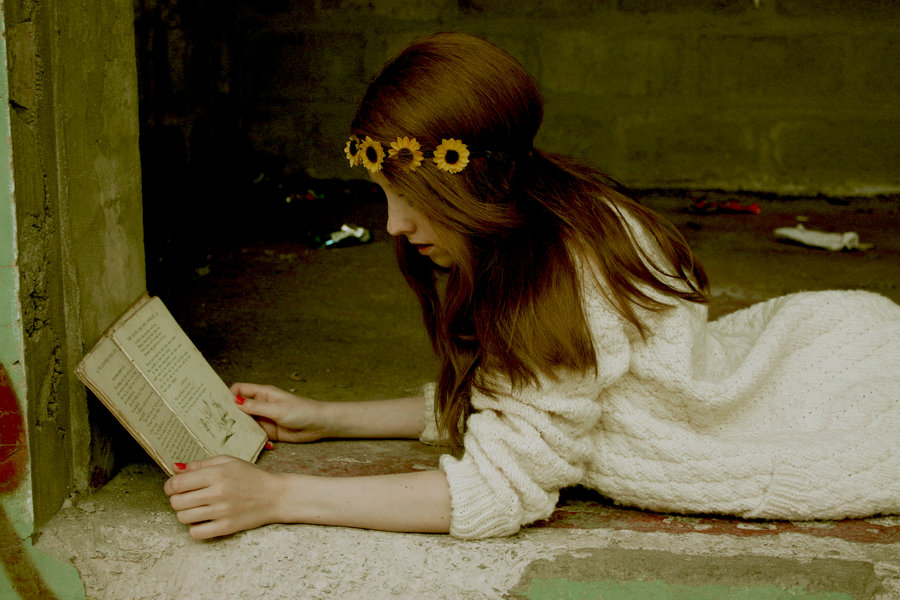
It’s About Reading For Pleasure

One week during the summer I was twelve, I had a crisis.

I ran out of library books.

Sure I rode my bike, went swimming with friends, and listened to music trying to figure out what the lyrics meant but I also indulged in hours of reading every day. Books transported me. My mother would call me to dinner and I’d look up, astonished to find I wasn’t a wolf on the tundra but a girl in shorts lying on the carpet. Or someone would knock on the bathroom door and I’d remember that I was soaking in the tub, not eluding soldiers in a medieval battle.

My parents supported reading, but they had no problem saying “get your nose out of that book and go outside.” They didn’t take us to the library more than two or three times a month, so the stack of books each of us brought home had to last.

When I realized I was bookless, I turned in desperation to a volume my older sister read as a class requirement. It had tiny print and a not-too-inspiring title, The Scarlet Letter. “It’s too hard,” she told me. “It’s a classic.”

I didn’t know “classic” meant it was good for me, like a bitter vitamin tablet. I insisted I was out of other options.

I promptly fell into Nathaniel Hawthorne’s words. They were exquisite in a way I’d never experienced, centered on the inner life and all its convolutions, something I already knew well but didn’t have the sophistication to express. I wasn’t aware such books existed. Instead of racing through it, as I did with every other book, I savored it. It felt as if I could run my fingers over the page and feel the texture of shame and longing. When I finished I was newly in love with the idea of classics, so I got books by Charles Dickens out of the library. I worked my way through two of them that summer although they didn’t live up to my great expectations. I thought Dickens droned and was nothing like Hawthorne.

Several years later I had to read The Scarlet Letter for English class. Everyone grumbled when assigned more pages to read. Those piercing insights, when listed in bullet points on the board, didn’t sink into my heart. Lectures and assignments obscured the book’s beauty. I didn’t read it with a cloak thrown over my head or the prick of a rose thorn in my skin. It lay dead, like a victim on the autopsy table.

Then I realized that my love of books had developed entirely outside of the classroom. I’d never really fallen in love with any of the books assigned in school, although the ones our teachers read aloud after recess, a few pages a day or an entire chapter on special days, still stood out in my mind. Reading, for me, was about pleasure. It was more than a habit, it was an integral part of my being. The books I read helped form my outlook and character. I dare say that many of us, if we look back, will find that favorite books from childhood have a surprising link to who we are today.

If I could, I’d reclaim reading for all of us, from earliest childhood on, as pleasure first and foremost. Turning to the written word for information and edification then becomes a pleasure too.

Five Ways to Transcend the School Mindset

child

School-like instruction has been around less than a fraction of one percent of the time we humans have been on earth. Yet humanity has thrived. That’s because we’re all born to be free range learners. We are born motivated to explore, play, emulate role models, challenge ourselves, make mistakes and try again—continually gaining mastery. That’s how everyone learns to walk and talk. That’s how young people have become capable adults throughout history. And that’s how we have advanced the arts, sciences, and technology. In the long view, school is the experiment.

But it’s hard to see beyond the school mindset because most of us went to school in our formative years. So when we think of education, we tend to view school as the standard even if we simultaneously realize that many parts of that model (found also in daycare, preschool, kids’ clubs, and enrichment programs) aren’t necessarily beneficial. Narrowing the innate way we learn can interfere with the full development of our gifts.

Here are five ways to get past the school mindset.

build divergent thinking, creative children, more imagination, creativity builds leaders, nurture divergent thinking,

Welcome divergent thinking

In today’s test-heavy schools the emphasis is on coming up with the correct answer, but we know that the effort to avoid making mistakes steers children away from naturally innovative perspectives. Divergent thinking generates ideas. It’s associated with people who are persistent, curious, and nonconforming. Research going back to the 1970’s shows that this generation of children are less imaginative and less able to produce original ideas. An extra whammy may very well be coming from increased participation in organized sports: more than a few hours a week appears to lower a child’s creativity.

This is dire news, because creativity is actually much more closely linked to adult accomplishment than IQ. In fact, 1,500 CEO’s listed creativity as the leading indicator of “leadership competency.

We don’t have to instruct kids in divergent thinking, just nurture it. Children are naturally inclined to question and explore. Remain open to their enthusiasms, encourage them to identify and solve problems no matter how unusual, and welcome the learning power of mistakes.

exercise and learning, overtaxed impulse control, full body learning, sensory education,

Value full body learning

School-like learning emphasizes the brain over the body. It narrows from there, emphasizing one hemisphere of the brain over the other with its focuses on left-brain analytical thinking. But children don’t learn easily when they spend so much time sitting still, eyes focused on a teacher or lesson or screen, their curiosity silenced and their movements limited. Children ache for more active involvement.

Research shows us that the rules necessary to keep a classroom full of kids in order all day, like being quiet and sitting still, can overtax a child’s ability to resist other impulses. The mismatch between school-like expectations and normal childhood development has resulted in millions of children being diagnosed with ADHD. (One of those kids was my third child, whose “symptoms” disappeared once we took him out of school and figured out how to homeschool such an active child.) 

What we need to remember is that the mind and body are exquisitely tuned to work together. Movement allows sensory input to stimulate the brain as it absorbs a flood of information. This is the way the brain builds new neural pathways, locking learning into memory. (Check out A Moving Child Is a Learning Child by Gill Connell and Cheryl McCarthy, Balanced and Barefoot by Angela Hanscom, as well as Spark by John J. Ratey for more on this.) Active, talkative, curious children aren’t “bad.” They’re normal.
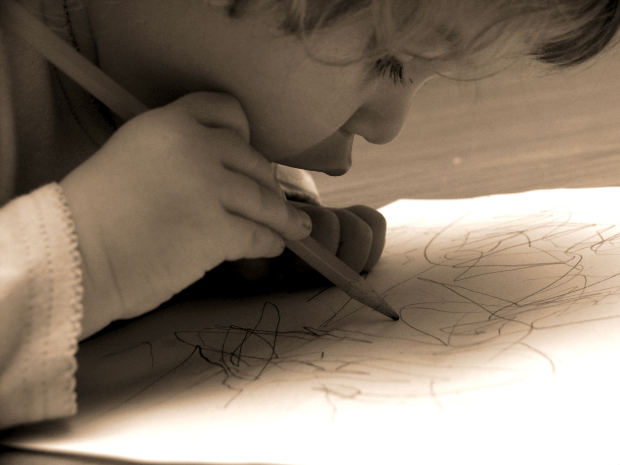
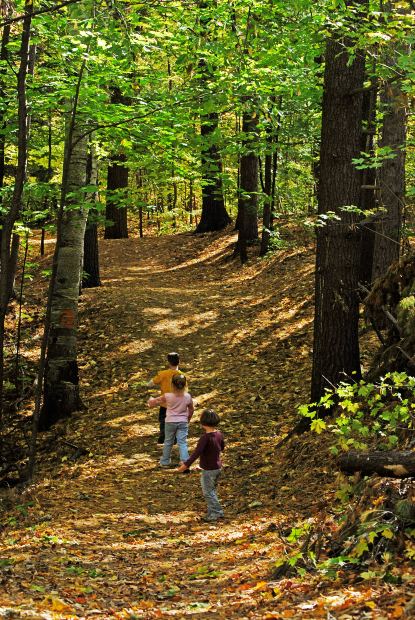
If we look at movement we realize that even a very brain-y activity, reading, has to do with the body. Young children develop reading readiness in a variety of ways, including conversation and being read to, but also through physical activities that help their neurological pathways mature. These are activities children will do whenever given the opportunity, like swinging, skipping, climbing, walking, and swimming.

All the relentless activity of early childhood may very well be a sort of intrinsic wisdom built into them, because movement is key to keeping an active brain. Children who are more physically active actually increase the areas of their brains necessary for learning and memory. That doesn’t mean the antidote to the school mindset is a constant frenzy of activity. It does mean that children tend to self-regulate within loving safeguards. Every child needs to balance physical activity with other essentials like snuggling, daydreaming, and sufficient sleep. We simply need to remember that movement isn’t an enemy of education.

goldilocks effect, individualized education,

Build on the “Goldilocks effect”

This term came from researchers who demonstrate that we are cued to ignore information that’s too simple or too complex. Instead we’re drawn to and best able learn from situations that are “just right.” Sort of like the educational equivalent of Goldilocks on a porridge-testing quest.

The Goldilocks effect means you are attracted to what holds just the right amount of challenge for you right now.  Usually that means something that sparks your interest and holds it close to the edge of your abilities, encouraging you to push yourself to greater mastery. That’s the principle used to hold a player’s attention in video games. That’s what inspires artists, musicians, and athletes to ever greater accomplishments. That’s how kids who follow a passion of their own tend to learn and retain more than any prepared lesson could teach them.

Our kids tell what they’re ready to learn. They tell us through what bores them and fascinates them, what they’re drawn to and what they resist. They’re telling us that, until they’re ready, learning doesn’t stick.

 too much adult-run learning, stubborn kids, child-led learning, natural learning,

Diminish the focus on instruction

The school mindset leads us to believe that children benefit from lessons, the newest educational toys and electronics, coached sports at an early age, and other adult-designed, adult-led endeavors. Well-intentioned parents work hard to provide their children with these pricey advantages. We do this because we believe that learning flows from instruction. By that logic the more avenues of adult-directed learning, the more kids will benefit. But there’s very limited evidence that all this effort, time, and money results in learning of any real value. In fact, it appears too many structured activities diminish a child’s ability to set and reach goals independently. 

When we interfere too much with natural learning, children show us with stubbornness or disinterest that real education has very little to do with instruction. Learning has much more to do with curiosity, exploration, problem solving, and innovation. For example, if baby encounters a toy she’s never seen before, she will investigate to figure out the best way or a number of different ways to use it. That is, unless an adult demonstrates how to use it. Then all those other potential avenues tend to close and the baby is less likely to find multiple creative ways to use that toy.

Studies show that “helpful” adults providing direct instruction actually impede a child’s innate drive to creatively solve problems. This experience is repeated thousands of times a year in a child’s life, teaching her to look to authorities for solutions, and is known to shape more linear, less creative thinking.

This isn’t to say that all instruction is bad, by any means. It does mean that six long hours of school-based instruction plus afterschool adult-organized activities in sports or recreation or screen time supplants the kind of direct, open-ended, hands-on activity that’s more closely associated with learning. Most of the time this kind of learning is called play.

free play benefits, play versus learning, chores, self-regulation,

Recognize free play is learning 

Before a young child enters any form of schooling, his approach to as much of life as possible is playful. A walk is play, looking at a bug is play, listening to books being read is play, helping with chores is play. The school mindset separates what is deemed “educational” from the rest of a child’s experience. It leads us to believe that learning is specific, measurable, and best managed by experts.

A divide appears where before there was a seamless whole. Playful absorption in any activity is on one side in opposition to work and learning on another. This sets the inherent joy and meaning in all these things adrift. The energy that formerly prompted a child to explore, ask questions, and eagerly leap ahead becomes a social liability in school. But play is essential for kids, for teens, for all of us. (For more check out these two marvelous and very different books: Free to Learn by Peter Gray and A Playful Path by Bernie DeKoven.)

Free play promotes self-regulation and this is a biggie. It means the ability to control behavior, resist impulse, and exert self-control  —all critical factors in maturity. Play fosters learning in realms such as language, social skills, and spatial relations. It teaches a child to adapt, innovate, handle stress, and think independently. Even attention span increases in direct correlation to play.

That doesn’t mean a child’s entire day must be devoted to free play. There’s also a great deal to be learned from meaningful involvement in household responsibilities as well as community service.

why homeschool, democratic schools, raise successful children,

I want to nurture my children in such a way that they define success on their own terms. I hope that means they craft a life based on integrity, one that brings their unique gifts to the world. Homeschooling, for my family, gives us the freedom to go beyond narrow roads to success. (Democratic schools can also provide that freedom.) This is the way young people have learned throughout time. I’ve come to trust the way it works for my family.

Portions of this post excerpted from Free Range Learning.

For A Fresher & Juicier Experience, Mix It Up!

This doesn’t bode well. I’ve been talked into a day-long workshop and I don’t know where to go.

There are two large conference rooms at the Cleveland Marriott. Their doors open across the hall from each other. There are also two different groups convening today, but someone has neglected to post signs at either one.

Now, to figure out which group is mine.

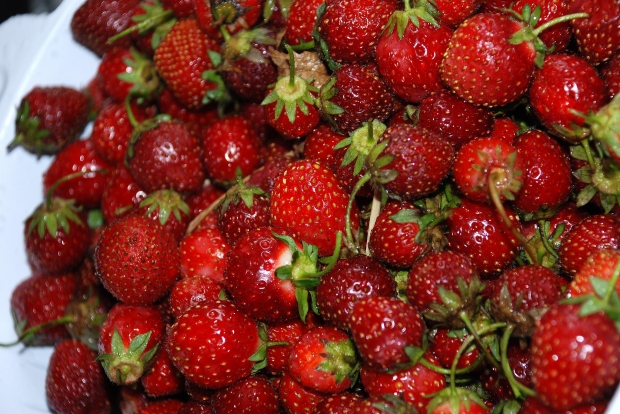
On one side waiters roll in carts of muffins, fresh fruit, and coffee. A tray of bright red strawberries passes tantalizingly close to me. I long to taste just one from the tray, but show uncharacteristic restraint due to the press of people entering that conference. Through those doors walk people who are impeccably dressed. Not only suits on the men but shined shoes, not only dresses on the women but elaborate hats. The attendees are all African-American.  I spy a few Bibles.  Seems to be an evangelical gathering of some sort.

On the other side there’s a lone table with water pitchers and glasses.  Folks are moseying in slowly. Their clothing is more diverse than their skin tone.  I spot Indonesian, African, and Japanese prints.  In front of me a man with long gray hair in a pony tail is saying something to a companion about “passing through a portal of enhanced energy.” I assume he is making an ironic comment about walking through such a blandly generic doorway, but he goes on to remark that this was the name of a workshop he’d attended in Phoenix recently.  Yup, this is my side of the hallway.

I find the friends who invited me and silently promise myself to sit still. (I’m not much for staying put.) Music starts, we sing, and I’m ready to have my consciousness raised.

I’ll give her this, the speaker is interesting.  She sets off my “Oh sheesh” meter a few times thanks to her quasi-scientific quantum physics references, but I already agree with what she’s saying. Each of us can be light workers who spread hope, and ultimately greater peace, through our daily words and actions.  We participate in group meditations, activating ourselves to take on greater responsibilities for uplifting others.  While not new, her message is certainly valuable.

But all that time we’re stuck in a meeting room. I don’t know how anyone can sit that long. I tend to wiggle and my mind wanders when my body is uncomfortable. I wonder how our brethren across the way are faring. When the fidgets get the best of me I excuse myself for a hallway ramble. I notice through open doors on the other side of the hall that those participants are also chair-bound, staring straight ahead with the glazed look that comes from hours of immobility.  Likely we are gathered in both conferences for similar purposes—-to enliven our spiritual lives and bring greater harmony to our bit of the planet.  And surely the experience is enriching.  But both meetings could be so much more if only we weren’t locked into a school-like format.

We humans learn as we make discoveries and face challenges. We learn by translating our experiences into story, song, art, into something created.  We learn through the wisdom of our bodies. We don’t learn as fully when passively sitting still and shutting up for long periods of time indoors. Opening conferences (and any educational venture) to more direct involvement lets the lessons sink in deeper, making whatever we’ve learned more easily applied in our real lives.

I’ve worked for years teaching non-violence techniques to teachers and community groups (and I hope making the workshop experience a lively one).  A key ingredient is finding common ground with those you perceive as dissimilar to yourself.  Connecting with others leads to rich possibilities.  The new combinations can be awesome.

Returning to my chair I can’t help but remember an old 80’s advertisement for candy.  Chocolate and peanut butter collide and find that together they are more delicious, creating a whole new confection that the world loves.

I imagine the doors to both conference rooms bursting wide open and the participants merging. Meditations combining with prayers.  Affirmations mixing with hymns. Our mutual dislike of sitting too long in these chairs turning into a joyous celebration that dances beyond the doors.  How much we all have to share with each other.

And yes, maybe I do imagine tasting those strawberries at last.

child

The Dart Collection

summer enrichment?, kids and collections, free range summer,

I’m thrilled to offer a guest post by Margaret Swift. She writes about a neighborhood of free ranging kids and the girl whose mysterious summer project surprised them all.  

When I was five years old, we moved to a neighborhood that contained a wealth of little girls around my age. After living on a farm with no one to play with but three rotten older brothers, this was heaven. During summer vacation, we girls scrambled around together playing jacks on cement porches, dressing Barbie dolls under picnic tables, holding roller derbies on cracked and heaved-up sidewalks, and catching tadpoles in local ponds. We’d generally eat lunch at the home of the mother unlucky enough to be closest when our stomachs started growling. We wandered from one activity to the next in gentle summer chaos.

But just as every rule has to have its exception, our neighborhood of scrape-kneed, ragamuffin girls also contained Mr. and Mrs. Dart and the five little Darts: Mary, Mindy, Mandy, Molly, and Mavis.

Most of us dressed each morning in the first clothes that came to hand, in a wild rush to get outside and fall off our bikes or crawl through the grass in search of lost Barbie shoes. The Dart girls were always immaculately turned out in pressed white cotton shirts, navy or red shorts, terribly white socks, and tennis shoes that were never anything but blazingly white. The rest of us had wild kinky hair (long before it was fashionable) or lumpy uneven braids or ponytails escaping from rubber bands. The Dart girls had short bobs with picture-perfect bangs always half an inch above their eyebrows. And while the rest of us roamed wild and free, Mrs. Dart felt her girls’ growing minds would best be developed by Summer Projects.

So every summer, on the first day of vacation, Mrs. Dart would meet with her girls to outline The Project. One summer it involved physical fitness, and a flurry of swimming, tennis, and horseback riding lessons ensued, all skillfully and cheerfully taught by the indomitable Mrs. Dart. Another summer occasioned the Household Arts Project, during which the girls learned baking, knitting, dressmaking, and how best to wield a dust rag.

Mrs. Dart always graciouisly invited us to join in, and often we eagerly began, but we never lasted long. One by one, we’d fall off the Projects wagon. Later we’d be found lying in the dust poking sticks at anthills or arguing over whose turn is was at the Monopoly game we’d started three weeks earlier. We lacked the diligence to stick to a Dart Project, but occasional bouts of boredom led us up on the Darts’ steps for progress reports, and during the Dart girls’ two free hours every afternoon, when they joined us in tag or jump rope or bike riding, they filled us in.

In my tenth year, Mrs. Dart announced the Summer of the Collections. She expounded on the delight, education, and camaraderie to be gained from joining the legions who gathered this and that. She then sent the girls to the library to decide what they would collect.

Mary, two years old than I, decided on foreign recipes. She spent her summer carefully copying curries, crepes, pilafs, and stews into a loose-leaf folder. Once a week she cooked a recipe whose ingredients weren’t impossible to come by or too objectionable to a good Lutheran family. (This particular collection must have been hard on Mr. Dart, a staunch meat-and-potatoes man. He tried. He persevered. But he drew the line at chocolate-covered bees and bull testicles in aspic.)

Mindy and Mandy, the twins one year my senior, decided on tried-and-true collections: butterflies and matchbooks. Mindy was much too kindhearted to actually kill a butterfly, so instead she made a scrapbook of pictures cut from magazines and nature pamphlets. Under each picture she entered, in a neat hand, each specimen’s common and Latin names, locale, habits, and any other tidbits she could cull. We all found her book quite impressive.

Mandy was allowed to collect matchbooks on the condition she bring them to her mother or father to have the matches removed. In those days, every bank, restaurant, gas station, and hair salon had bowls of matching sitting out. Relatives traveling to New York or Hawaii sent back exotic samples. Mandy even made friends with a local printer who saved her a matchbook from every wedding he handled.

Seven-year-old Mavis, the baby, took a short cut. The girls’ grandparents had brought back a basket of seashells from a trip to Florida. She simply looked the shells up and then glued the shells to sheets of posterboard, printing their names in bold block letters underneath. Nini Fizzarelli commented that they didn’t look real because they didn’t look wet, and Patsy McMullen suggested clear nail polish. Mavis nearly asphyxiated herself, but at the end of two days every shell was covered and did indeed look perpetually wet.

That left nine-year-old Molly. She came up with an idea which she happily hugged to herself and would not share. She had always been the perfect little Dart, following through Projects without a qualm. But this summer she begged Mrs. Dart to let her work on her project privately and surprise them all at the end of the season. When the Dart girls joined us in the afternoons, Molly refused to talk. The more we questioned, the more tight-lipped she became. It was maddening. We pretended not to care.

August came and the day approached when the girls would exhibit their completed collections. The grandparents were invited, a backyard picnic was planned, and excitement mounted in the neighborhood. We knew we’d be invited over to see the collections and to share homemade peach-vanilla ice cream. Two more weeks…nine more days…

On day minus-five it happened. I overheard my dad whispering to my mom. The Dart girls had been out with their grandparents, and Mr. Dart came home to find Mrs. Dart in a swoon on Molly and Mavis’ bedroom floor. Evidently she had finished the laundry and was putting away Molly’s white socks when she saw in the back of the drawer the nine-by-twelve inch clear plastic box Molly had requested to house her collection.

Inside the box, Mrs. Dart saw rows of cotton balls, each with a label declaring a date and body part, such as “July 3, elbow.” There was something else on each cotton ball. Molly had acquired a collection of scabs.

We found out later that she had carefully lifted off the souvenir of every bump and scrape she’d gotten over the summer and had paid Billy Barnstrom on the block behind us for several of his scabs as well. (The well-mannered Molly just didn’t bang herself up enough.)

At the picnic, Molly made an official announcement, under her mother’s stern eye, that her collection had gotten misplaced somewhere, though it seemed clear from the buzz and a couple of odd jokes made by Grandfather Dart that everyone knew all about it.

Summer came to a close and school began again. The following summer, Mrs. Dart enforced a Full Disclosure Act on all Summer Projects.

By the way, I hear Molly now lives in Washington State and is a well-respected hematologist.

~

Margaret Swift is a free spirit with metanoic* tendencies. She’s a writer, fiber artist, calligrapher, energy healer, meditation teacher, spiritual counselor, and ardent gardener. She likes to sip enticing drinks (tea or wine depending on the time of day) and is an insatiable knitter. To find out more about her about her work, contact her at margaret.a.swift@gmail.com 

*met·a·noi·a  [met-uh-noi-uh]  noun:   a profound, usually spiritual, transformation

How To Learn From Experts

learn from experts, senior knowledge bank, skills clinic, DIY education, DIY homeschooling, cheap homeschooling, community learning, learn together, community apprenticeships, collaborative learning,

Image: drumminhands’ flickr photostream

Successful societies have always respected what the the wise can teach us. But it’s not easy to learn directly from people whose grasp of any subject well exceeds our own, in part because person-to-person learning is easily supplanted by online engagement.

I spend plenty of time staring at screens, yet I know from years of facilitating non-violence workshops that something important happens as we discuss, practice, and hone our skills together. Real learning is like a spark transferred. Going online is practically a reflex for us, but if our learning is confined there what’s lost is rich perspective and valuable hands-on experience.

If you know where to look you can find sculptors, farmers, astronomers, welders, storytellers, clock repair experts, and cartoonists right in your community. Let’s take my hometown of Cleveland as an example. I can learn glass blowing at the Glass Bubble Project, eviscerate and stuff a rat to look like a tiny tie-wearing butler during a taxidermy workshop at Sweet Not Salty, apply Brian Swimme’s cosmology to my life direction at River’s Edge, march with the Red Hackle Pipes & Drums band as I learn to play bagpipes from a former Pipe Major of Scotland’s Black Watch, let kids partner with working scientists at the Cleveland Museum of Natural History’s future scientist program, volunteer to rehabilitate injured birds at the Medina Raptor Center, and learn to make handmade books at the Cleveland Institute of Art. Museums, libraries, colleges and universities, cultural and ethnic organizations, recreational centers, and plenty of other places in your neighborhood are brimming with great workshops and classes for adults as well as kids.

This can happen more informally as well. As homeschoolers, we’ve found it doesn’t hurt to ask people to share a little of what they know. A steel drum company owner welcomed our group for a visit. He explained the history and science of drum-making, talked about the rewards and risks of entrepreneurship, then encouraged us to play the drums displayed there. A NASA engineer took us through a testing facility and showed us how materials are developed for the space program. A potter talked to us about the nature of clay, taught us how to form vessels on a wheel, then invited us back for the opening of his kiln to see our creations emerge.

We’ve spent days with woodworkers, architects, chemists, archaeologists, stagehands, chefs, paramedics, and many others. Despite offers of barter or pay, we’ve gotten all this expert instruction for free. People rarely turn us down when we request the chance to learn from them. Perhaps the desire to pass along wisdom and experience to the next generation is encoded in our genes. If someone possesses knowledge or abilities you’d like to gain, try asking. (Ask them to share their interests, not “teach” to get a positive response!) And don’t forget to look close to home. You might master pinochle while spending time with your brother-in-law, learn coding from your niece, gain new appreciation for fly fishing from your dad’s business partner, go bird-watching with your neighbor, and as we all know, learn more from your own kids than you’d ever imagined. I call these knowledge networks. Here’s how to activate yours.

Of course, there are plenty of platforms promoting person-to-person wisdom. Here are a few.

DIY and Maker movements have opened all sorts of avenues, with Maker Faires happening in more and more places. (Not in your area? Check out the Mini Maker Faire Starter Kit.) Find hackerspaces like NoisebridgePumping Station OneNYC ResistorTechShops, and Artisan’s Asylum. Or start your own hackerspace.

Trade School is a barter-based learning space, meaning you don’t have to pay to learn. You might barter for a class with a homemade pie or art supplies or research help. The founders describe it as “a global movement for community, connection, and educational justice.” The first Trade School was started by three friends in a NYC storefront in 2010. Now self-organized Trade Schools are opening up or running in places like Milan, Cologne, Virginia, Oakland, Singapore, New Delhi, and Paris. Want to start one in your area? Here’s how.

The Amazings offer non-traditional workshops and classes set up by ”amazings,” people over 50 with a passion to share what they know. Their site explains, “We want to make learning more fun, more friendly, more social, and more personal.” So far they have 45 people offering expertise in areas such as bookbinding, perfume making, foraging, carpentry, jazz guitar, philosophy, and corset making. The first branch is based in London, but they’re open to starting more around the world.

FreeSkools are created by participants. There’s no central organizing manifesto on one site or in one book. Some are informal gatherings to share knowledge, others are active networks meeting in parks, living rooms, and community centers. All are devoted to learning freely. You’ll find them in IthicaSanta Cruz, and dozens of other cities in the U.S., Canada, and U.K. Check out piece in Yes! about what to consider when setting up a FreeSkool.

Skillshare is like the eBay of localized education. You can learn what you want from someone in your community as well as teach others what you know. Some of the classes offered right now are Building Mobile Apps for Android Devices, Rock Poster Design from Concept to Execution, and Launch Your Startup for Less than $1,000. There’s a fee and many of these classes aren’t taught in person, but online.

The School of Life is teeming with great stuff. They feature secular sermons with big thinkers talking about big ideas. Classes by experts with titles like How to Be Creative and Finding a Job You Love. Bibliotherapy: basically book prescriptions custom-designed with your reading history, dilemmas, and desires in mind. The place is also teeming with activity beyond the sit still and think variety. There are engaging programs with transformative potential and weekend adventures developed by scientists, artists, and others. Oh, and what they call Utopian Feasts. So far there’s one in London with a branch opening in Australia. Not in London or Sydney? Start up something similar in your community.

Citizen Circles are small groups of people who meet to learn together for a limited period of time with an emphasis on collective learning and action. There’s no fee. Some Citizen Circle topics have included women as social innovators, systems dynamics, exploring indigenous knowledge, and design thinking. There’s plenty of information to help you start your own.

(un)classes are casual ways to meet and learn from local people. So far the idea has taken root in the San Francisco area. Any fees go to a designated charity and participants walk away with new knowledge as well as new connections. A recent class taught how to make gnocchi while benefiting the area food bank while another taught documentary photography while benefiting a scholarship program.

School of Everything, based in the U.K., connects those who want to learn with those who can share what they know. In Glasgow, for example, you can find instructors to teach you Mandarin, classical piano, acting audition techniques, hypnosis, and the tango. Some instructors charge for classes, others do not.

Go ahead. Get your hands right in that dirt, clay, dough, or paint as you build your expertise. Feel the spark. There’s else nothing like it.

Image: drumminhands' flickr photostream

Image: drumminhands’ flickr photostream

How To Walk Your Talk

walk your talk, unconscious to conscious competence, cultivating good habits, being your best self,

Emilian Robert Vicol’s flickr photostream

Chances are you’ve never heard of Richard Enty. He’s the executive director of Metro Regional Transit in Akron, Ohio where there are firm safety policies in effect. Consider texting. For the first texting/phoning offense, a bus driver will be suspended for three days (executives will be suspended for five days). Second offense requires a 15-day suspension and a third offense can result in dismissal. The policy applies specifically to those who are driving revenue-producing vehicles, such as buses or trains.

Enty is tuned in to accident prevention. He was once a passenger when two trains collided, an accident that cost another passenger both legs. His current job involves ensuring a climate of safety. So one day when was driving his own car, just as a bus pulled up next to him, he was startled to realize what he was doing. He had a texting problem. Even though he wasn’t driving a revenue-producing vehicle, he decided to turn himself in. The board wanted to respond with a letter of reprimand but Enty asked to be treated like anyone else. So he was suspended without pay for five days. He tells the local newspaper,

As the leader of an organization that stresses safety and always striving to do the right things, even when no one is looking, I had to make this [decision]. Because, again, we are all human, we all have certain habits and what I have learned in accident investigations…is that accidents usually result from series of bad habits that go unchecked over a period of days, weeks, months, or possibly even years.”

This man walks his talk.

Truly living out what we believe is never easy. It’s essential to be attuned to the positive, to see how we’re making progress rather than focusing on where we’re going wrong. That said, we’re never going to live up to our ideals all of the time. Not even close.

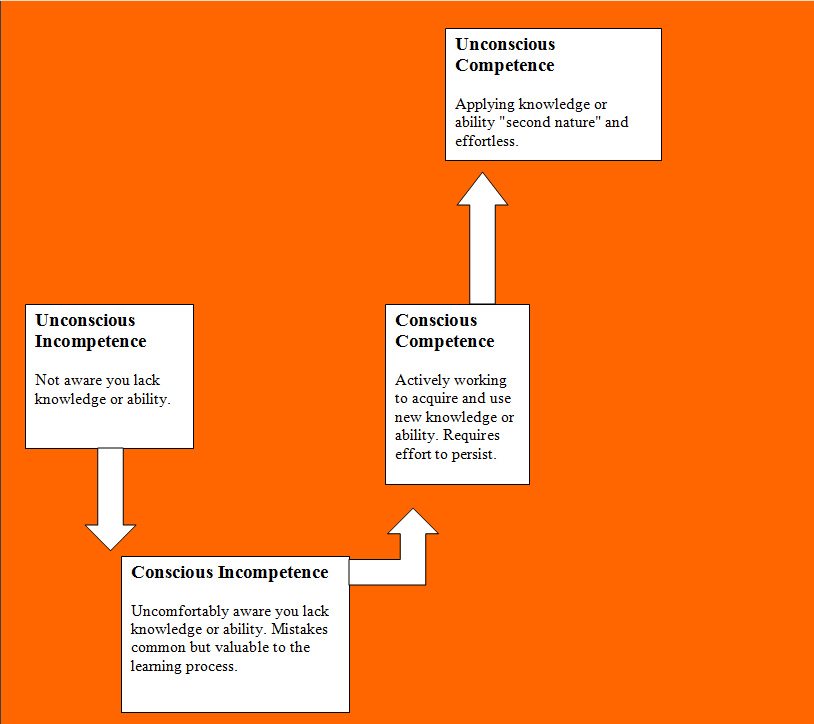
It helps to understand what’s called the four stages of competence as we learn a skill or act on new knowledge. For example, say you became aware of an issue a few years back such as sweatshop labor. You were troubled to realize how much your purchases contributed to the problem as you grabbed great deals without thinking. You were in the first stage. Finding out, becoming conscious of your incompetence, is the next stage. It can be a blisteringly self-conscious process as you struggle to figure out what you didn’t know and how to react. You’re aware of what you’ve done wrong without having sufficient tactics or information to do a whole lot better, although you try. Working to adopt new behaviors is the third stage and it requires sustained effort. For this particular issue, it might be shopping less, seeking out sustainable and local sources, thrifting, advocating for change, and more. You’ll still make mistakes, falling into old patterns when you’re stressed or rushed. The fourth stage is effortless. The knowledge and skills you once sought simply become habit.

unconscious to conscious competence, walk your talk, creating good habits,

I’m somewhere between the Conscious Incompetence and Conscious Competence in many parts of my life. Blurting out what’s on my mind before thinking. Starting projects I don’t have time to finish. Not making enough time for those projects in the first place. Worrying. Pouring another glass of wine. Not remembering conflict resolution tactics until after the moment has passed. Skipping pleasure for work when I know damn well life is to be savored. But castigating myself isn’t useful. Paying attention is.

Kids certainly do their best to assist. They have a way of spotting hypocrisy and tossing our words back in our faces. I can’t rant about a crazy driver or duplicitous politician without getting one of my adages right back at me, like, “Everyone has a beautiful gleaming soul.” Ouch. Yeah, I believe it but don’t always feel like applying it. I have all sorts of standards I don’t entirely live up to. That’s okay, it’s a process.

Those four stages aren’t comfortable. That’s just who we are, people continually unfolding. We make mistakes, struggle, and slowly grow to new ways of being. Even our small personal changes make a difference to the larger reality. I’ve spent a lot of time teaching courses on non-violence. When I work with teens, many weeks into our time together, we start talking about what is important to us. Everyone has strong opinions, everything from “being respected” to “making the planet a better place.” Then they come up with how to live that in their daily lives, from acting in ways that draw respect to making decisions that benefit the ecosystem. When they’re ready, I get out permanent markers and we write on the soles of our feet, reminding us to walk our talk.

That’s why I want to remember Richard Enty. He knows it’s easier to mandate how others should behave rather than follow it ourselves. He’s walking his talk even if it costs him five day’s pay and more public attention than he expected. He seems fine with that. I bet it’ll help him move on to the next stage.

Do you see yourself in Enty’s story? How are you trying to walk your own talk?

Getting Science On Everything

raising scientists, toddler science, teen science, unschooling science, supporting kids' curiosity, science at home, science happens naturally,

crystals of vitamin B6 ( CC by 3.0 Josef Reischig)

 We spread thick layers of science on everything at our house. Yes, occasionally it smells.

Sometimes our science-y obsessions are entirely nonsense, such as a typical dinner table conversation about how many citrus batteries it might take to start a car. Ideas were proposed for this never-to-occur project, including the use of lemon juice instead of whole fruit.

Sometimes that science is pseudo-educational, such as the time we swabbed between our toes and let the bacteria grow in petri dishes. The “winner’s” dish had such virulent growth that she felt sure it deserved to live. She gave it a name and tried feeding it extra glucose and agar. It quite effectively kept her siblings out of her room. I insisted she throw it away when it began creeping past the lid. I am still blamed for the demise of this biological fright.

encouraging young scientists, love of science starts early,

Sometimes it goes on and on. My offspring seem driven to find out. They can’t spot a spider without observing it, wanting to identify it, and then going on about the hydraulic features that are basic arachnid operating equipment. Then there was a certain months-long project that involved observing and sketching the decomposition of a muskrat. They have to discuss all possible angles of a problem, often in such depth that my far more superficial mind drifts off. They tend to walk into a room announcing odd factoids which invariably leads to strange conversations about recently de-classified Russian research, turbo charged engines, or riparian ecology. Or all three. They insist I look at video clips that go on much longer than my attention span. Woe to me if I question a postulate put forth by one of my kids. They will entertain my doubts playfully, as a cat toys with a mouse, then bombard me with facts proving their points. Lots of facts. I’ve tried to uphold my side in science disputes but it’s like using a spork to battle a light saber.

making math relevant, raising young scientists,

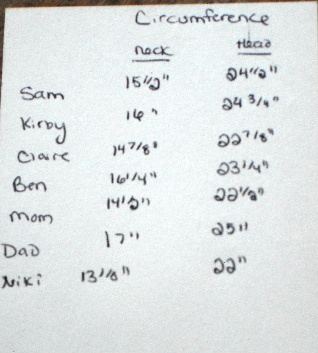
Other family homes probably have video game controllers. Our house has stacks of books and periodicals (who took the neutrino issue of New Scientist, someone yells); tubs overflowing with one son’s beakers, tubing, and flasks; culturing products in the kitchen (like the jar with a note that says “Leave me alone, I am becoming sauerkraut”); and random sounds of saws, welders, and air compressors as something entirely uncommon is being constructed or deconstructed. I know other families have nice normal pictures on their refrigerators. Ours tends to post odd information. The longest-running fridge feature here is a card listing the head circumference of every person in the family. By the time the youngest was 11, my head was the smallest.

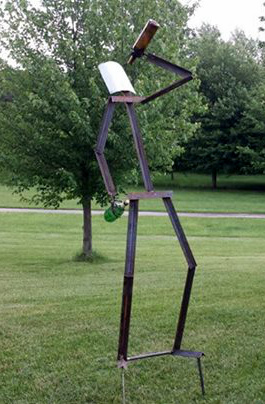
And then there’s the front yard. By the garage door a headstone leans. It has nothing to do with Halloween. Our youngest is teaching himself stone carving using hand tools. This stemmed from his interest in ancient Norse language and myth and lifestyles. That led to a study of runes, leading to old runic carvings, well, you get the idea. He’s already carved runes in a few stones. So of course his brother got him a headstone as a birthday gift. Entirely natural. Also in the yard, a giant sculpture another son welded out of scrap metal. He’s never taken a welding course, or an art course for that matter. No problem. He measured his own limbs to translate into the correct human form. He thought it was funny to make it a two-fisted drinker. I’m plotting to put a trumpet in one of the metal man’s hands so it looks like a rowdy jazz player. And recently my daughter spent the afternoon in front of the house cleaning an entire deer skeleton she found in our woods. She was entirely happy identifying bones, scrubbing, and assembling it into the likeness of a very hungry  deer. Maybe our front yard is why our mail carrier seems a little wary.

raising scientists, natural curiosity makes scientists,

Science shouldn’t be confined to a formal study. My husband and I have never worked in science fields. But we’ve found that keeping scientific curiosity alive isn’t hard.  It’s about an attitude of “yes.” Projects that are messy, time-consuming, and have uncertain outcomes are a form of experimentation. They are real science in action. When a kid wants to know, they want to find out. Not later, not next week, right away. Finding out is engaging. It leads to ever widening curiosity. In our family this process of discovery-to-mastery started early.

When my oldest was just a baby he was horrified by vacuums. Even the sight of one made him scream with This Will Kill Me volume. So we let him learn he could control the “off” and “on” switch. His horror turned to fascination, leading him toward ever greater curiosity, heading in all sorts of directions.

When my daughter was barely able to walk, around 11 months old, she was fascinated by the stones at the end of our driveway. Day after day she wanted to toddle close to the street just to pick up those stones. It occurred to me that it would be a lot easier to satisfy her curiosity than to keep saying no and turning her back toward the house. So she and I went there together and sat in those stones. She was enthralled. I marveled at all the different ways she chose to experience them. Holding, dropping, picking up one at a time then picking up handfuls, handing them to me and taking them back, rubbing the smooth ones and, once I showed her, holding them up to the light. Sometimes she’d raise a stone to her mouth, then shake her head, reminding herself that stones weren’t for eating. Once or twice a stone did touch her lips. The result? I told her we were all done, picked her up, and went back to the safety of the lawn near the house. She remembered. I let her investigate stones day after day until she was done, her desire to know satisfied.

When one of my boys was three he was entranced by the lighters and matches his grandmother used to light her cigarettes. Since she lived with us and on occasion unintentionally left those fire generating devices out, his intense curiosity concerned me. He knew that children shouldn’t touch anything that makes fire, but he was so intensely curious and active (I’ve already described his chimpanzee-like abilities as a toddler) that I knew it was a matter of time before her forgetfulness might collide with his need for some hands-on experience. So, explaining this was only okay to do with an adult, I stood him on a stool at a sink full of water, letting him light match after match to drop in the water. He was a little afraid. His fingers were almost singed a few times. He also conquered the fascination with flame that compelled him to disobey. He asked a few times over a period of months to do this again. Then he was done. Warming about danger doesn’t have the same effect as a child getting close enough to know that matches do burn but can be conquered in the presence of a parent.

Some experiments shouldn’t have happened.  One of my little boys quietly carved a small hole in the drywall of his closet, then attempted to spackle it with the unlikely combination of toothpaste covered by an ostrich feather he’d saved from a field trip. We didn’t discover it until we were emptying that closet as he packed for college. We still laugh about that one.

My kids are much more science-savvy than I’ll ever be, but more importantly, they’re capable of discovering anything they want to know.