Don’t Deprive Kids Of Risk

let kids take risks, don't overprotect,

jessicareeder’s flickr photostream

I publicly admitted to letting my teen take risks that would make most parents shudder. I’m not talking about the month long backpacking trip my 16-year-old took with his older brother and a friend. Nope, I’m talking about letting him meet up with middle-aged guys he talks to online.

The circumstances were perfectly suited to advancing his maturity as well as his skills. But to most parents, that decision marks me as a very bad mother. I’ll take that risk. Parenting has a lot to do with drawing the line between safe and unsafe. And then there’s that pesky line between good and bad.

It found it easier to see absolutes when my kids were babies. Bottle or breast, free play or playpen, guiding or scolding. The choices seemed easy. As they got older I didn’t lose my cherished parenting philosophies and obnoxiously healthy dietary scruples, but I did relax into the gray area. Some would say I’ve gotten too relaxed.

Every day I watch as parents pile their cars with their darling backpack-laden children, then transport them all the way to the end of the driveway where they sit, engines idling, until the school bus arrives. The reverse process takes place in the afternoon. These kids are spared more than the exercise required to get from house to curb. Presumably they’re also kept safe from potential child abduction. I don’t know if this is the case in your neighborhood but it’s a standard practice around here, even though I live in a rural township so small that it doesn’t have a single traffic light. (It’s rumored we may get lines painted on the streets.)

Despite the pastoral beauty of our area, kids rarely play outside. Clearly their parents are quite a bit more cautious than I am. Apparently this is a major trend. With the very best intentions kids are kept indoorswatched closely, even monitored. But why?

According to How to Live Dangerously by Warwick Cairns, “stranger danger” is so vastly overblown that you’d have to leave your child outside (statistically speaking) for about 500,000 years before he or she would be abducted by a stranger.

Violence against kids has markedly decreased and the overall crime rate continues to plummet. A teen is three times safer today than a teen in 1979. Sure, there was no Internet in the 70’s but online, the real danger to kids tends to be peer harassment. A larger danger? Kids who have no experience with real challenges.

Kids require escalating responsibility as well as escalating risk in order to grow toward a healthy adulthood. The common practice of delaying risk (and often responsibility as well) stems from the best motivations: love, concern for their safety, interest in staying closely involved. But today’s highly cautious approach to parenting actually inhibits a young person’s healthy development, according to Too Safe for Their Own Good: How Risk and Responsibility Help Teens Thrive by resilience expert Michael Ungar. It can result in young people who are overly anxious or who take unnecessarily dangerous risks. It can also leave them unprepared for adulthood.

The decisions I make for my family probably aren’t the ones you make for yours. I give my kids the go-ahead to build spud cannons in the name of science but I wouldn’t dream of giving them non-organic celery. I encourage them to join online special interest forums but abhor movies with gratuitous violence. It’s not easy to keep looking at where we draw the line, but just like you, I’ll risk anything for my kids.

We Don’t Need No Age Segregation

open-source teen learning, active learning, teen unschooling,

My teenaged son just spent the day with middle-aged guys he met online.

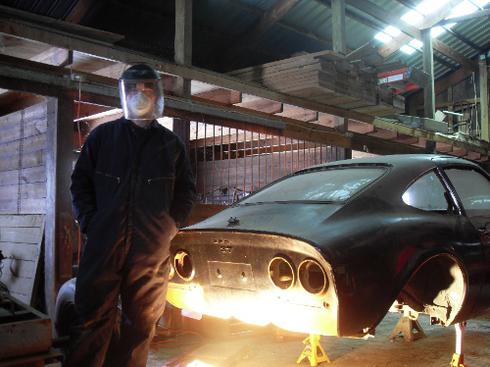
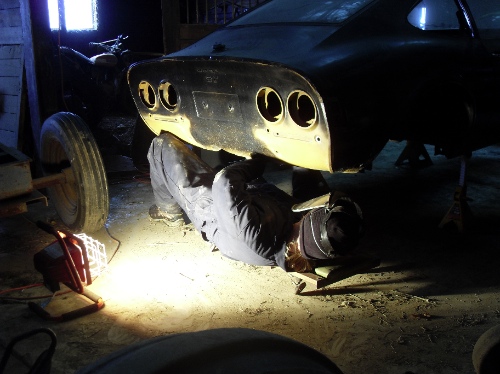
Let me explain. Before he could drive, my son earned enough money shoveling out horse stalls to buy a 1973 Opel GT. Or what was left of one.

The car sits out back in a dark barn, its classic little outline like a rough sketch waiting for functional automotive details to be filled in again. He is restoring it himself, but not alone. He’s in touch with an online community of automotive enthusiasts from around the world. They eagerly share experiences and resources on forums. They also boast, complain, and talk about their interests just as any friends do.

My son and his father have met some of these folks at auto meets and car shows. When my son discovered an Opel club not far from our family farm he was invited to join. Today he and his older brother drove out for a day-long gathering. Although my boys were the youngest by decades they enjoyed an open-hearted welcome.

Yes, I realize there are significant concerns about teens talking online with adults, let alone meeting them. I try to keep those concerns in perspective. Studies of online behavior by youth indicate the biggest risk they face is peer harassment, not sexual predation. Today’s young people are much more overprotected than previous generations even though violence against kids has markedly decreased and the overall crime rate continues to plummet. Overly cautious, restrictive parenting practices actually inhibit a teen’s growth toward maturity and responsibility. So I watch, ask questions, and recognize that my son benefits from online friends and mentors.

It’s a pivotal coming of age experience to be accepted by elders one admires. Until that time it’s hard to feel like an adult. These experiences are frequently depicted in movies, but children and teens in our culture are almost entirely segregated from meaningful and regular involvement with adults.

These days kids spend their formative years with age mates in day care, school, sports, and other activities. So their adult role models are largely those whose main function is to manage children. This subverts the way youth have learned and matured throughout human history. Children are drawn to watch, imitate, and gain useful skills. They want to see how people they admire handle a crisis, build a business, compose music, repair a car, and fall in love. Separate kids from purposeful, interesting interaction with adults and they have little to guide them other than their peers and the entertainment industry. That’s because our species learns by example. Ask any child development expert, neuroscientist, or great grandparent.

There are plenty of educational initiatives to bridge this gap, particularly for teens. These programs connect students with mentors or bring community members into schools to talk about their careers. While these efforts are admirable, such stopgap measures aren’t the way young people learn best. They need to spend appreciable time with people of all ages—observing, conversing, and taking on responsibility. Real responsibilities, real relationships.

Because my kids are homeschooled they’ve have more opportunities (and a lot more time) to hang out with interesting adults. My daughter volunteers for hours each week alongside a woman who rehabilitates birds of prey. Another of my sons has played bagpipes for years with an 80-something gent who once served as a Pipe Major for Scotland’s Black Watch. The age range of my kids’ friends spans decades. Natural mentors such as these are a rich source of authentic experience. And they’re in every community. It’s not hard to find them.

Along with other homeschooling families, my kids have also taken a close look at the workaday adult world. The owner of a steel drum company explained the history and science of drum-making, talked about the rewards and risks of entrepreneurship, then encouraged us to play the drums displayed there. An engineer took us through his testing facility and showed us how materials are developed for the space program. We’ve spent days with potters, woodworkers, architects, chemists, archeologists, stagehands, chefs, paramedics and others.

People rarely turn us down when we request the chance to learn from them. Perhaps the desire to pass along wisdom and experience to the next generation is encoded in our genes. Age segregation goes both ways–adults are also separated from most youth in our society. After an afternoon together we’ve gotten the same feedback again and again. These adults say they had no idea the work they do would be so interesting to kids. They marvel at the questions asked, observations made, and ideas proffered by youth that the media portrays as disaffected or worse. They shake hands with young people who a few hours ago were strangers and say, “Come back in a few years, I’d like to have you intern here,” or “We could use an engineer who thinks the way you do. Think about going into the field,” or “Thanks for coming. I’ve never had this much fun at work.”

So today my teenaged son hung out with fellow Opel aficionados. They trust he will drive his car out of the dark barn and into the sunlight soon. It will be a shared accomplishment, the kind of thing that happens all the time when young people aren’t separated from the wider community.

unschooling teens, homeschooling teens, teens free to learn,

I wrote this piece nearly two years ago for Shareable.com. Since then this son of mine has become a mechanical engineering student at a private college. His fellow classmates brought with them years of advanced placement math and science classes. The advantage he brought? Lots of hands-on experience, an active approach to learning, and insatiable curiosity. He’s at the top of his class.   

Raising Aspiring Emigrants

Kids are their own people. Any of us can see this is an underlying theme in drama (in books, on the screen, and in real life dramas).  It’s obvious from a quick look at how much our friends differ from their own parents. Years ago I joked that my anti-establishment neighbor’s son might just grow up to be a conservative stockbroker and that my frantically risk-averse friend could end up with a thrill-seeking daughter. I learned pretty quickly such jokes are not appreciated.

But I thought I understood that kids go their own way reasonably well. I’ve managed to celebrate the unique passions my own kids pursue, even though their interests are nothing like mine. I’m glad to see that we’re largely in sync on bigger issues. My kids and I tend to agree on politics and religion, we share a disinterest in most sports, and we’re all somewhat introverted. What we don’t share? A desire to stay close to our roots, geographically speaking. I’ve tried to raise them to be global citizens. Is it possible to take that too far? I’ve always lived close to my hometown and extended family. One or two of my four kids may not have that gene.

One of my sons is entranced by Finland. I think it started while chatting with online Finnish friends. Hankering to drive, he told me that kids in Finland are encouraged to get driving experience starting at a very young age and given training to handle slippery and hazardous road conditions (ice + moose, for example). The licensing requirements are some of the strictest in the world, he explained, a pointed contrast to the jerk on the road in front of us at the time who was cutting off cars and weaving across lanes.

My son also has a thing for Finnish music, starting with the now iconic band Apocalyptica formed by classically trained cellists.

Finnish musicians offer plenty of diversity, including partially submerged folk singers

and dancing puffballs.

And he is inspired by the Finnish spirit. He sees it in their traditions and history (I never thought I’d hear so much about the Winter War). Finnish character is said to have a lot to do with the term sisu. This doesn’t translate easily. It’s related to inner will and the determination to persist despite the odds. This spirit, as my son sees it, also has to do with the Finnish way of doing things. That includes summer competitions that Finns call “world championships” in swamp soccer, mobile phone throwing, and wife carrying. Or a recent proposal in Parliament to extend the annual four-week paid holiday by another week, for a “love holiday.”

Browsing around the web, I can see the allure. The country has stunning beauty and cultural richness. Newsweek ranked Finland the world’s best country in 2010 based on high life expectancy, high literacy rates, minimal income gap, excellent access to health care, and a good work-leisure balance. In The Geography of Bliss: One Grump’s Search for the Happiest Places in the World it was noted that people in Finland are remarkably content. Of course we’ve all heard about Finland’s world-class school system. Their educational approach says quite a bit about the country. Schools there don’t rely on standardized tests or a heavy homework load but instead emphasize balance, giving kids plenty of time for outdoor play, art, and music. That seems to reflect a general emphasis on living at a slower pace and enjoying life’s simpler pleasures. I may have to adjust to having one of my beloved offspring emigrate some day. (sob)

But another of my kids is talking up New Zealand. Land of fascinating spider species, amazing diversity, and gorgeous vistas.

Also home to the compelling Haka, traditional ancestral war cry of the Maori people, now performed by the All Blacks, NZ’s rugby team, before their matches.

Serves me right for joking about other people’s children. Come to think of it, my attempts at humor weren’t all that far off. My anti-establishment neighbor’s son is now in college getting a degree in business, hoping to work in investment banking. The daughter of my risk-averse friend is into barefoot climbing.

Guess I’d better make sure my passport is in order.

Without (or Beyond) College: 24 Tools For Success

resources to skip college, careers with no college, collaborative success,

Free to explore options. Image: iateyourbubbles.deviantart.com

What doesn’t add up

It’s easier to teach an old dog new tricks than it is to change old mindsets. Like the one that insists that all the years up to 18 are preparation for college. After that a bachelor’s degree or higher must be obtained because college is THE ONLY route to success.

This dusty way of thinking relies on old figures showing that college leads to high-earning careers. That’s true for people who become doctors, engineers, and lawyers. Oh wait, that’s not so true for lawyers now either. New law school grads can’t find jobs  and their average student debt hovers close to $100, 000.

Equating college with success doesn’t take today’s realities into account. In thirty years the consumer price index has increased two-and-a-half times while the overall price to attend college has risen sixfold.  Today’s students can’t simply work their way through college. This was possible back in 1970.  A student could easily work 14 hours a week at a minimum wage job to pay for an education at a public institution. Today a student would have to work full time at minimum wage, leaving very little time to fit in those classes.

So students go into debt. The average graduate gets a diploma along with more than $25,000 in debt. Payments are expected to begin right after graduation or the student will begin accumulating additional interest as well as penalties and damaged credit. The pressure is on to find a job.

Except the job market sucks. While a greater share of 18- to 24-year-olds are in school than ever before, the employment rate is worse. Half of today’s young college graduates are either jobless or underemployed in positions that don’t require a degree. Since the 2008 recession, the largest job growth has been in the lowest paying jobs. Some of the biggest projected employment openings are in low paying, lower-skilled positions such as home health, waste hauling, and transportation.  The problem isn’t just in the U.S. Twenty-five percent of young people are unemployed in the Middle East and North Africa, more than 50 percent in Greece and Spain.

What does add up

In the real world, grades and tests actually don’t correlate with adult accomplishments.  We know there are fresher, more interesting ways to learn. Our experiences teach us to pursue success on our own terms. That has to do with crafting a life based on our passions, our integrity, and the unique vision each of us brings to the world. That’s true whether we’re lifting a hoe or a conductor’s baton.

The college highway is actually one of many roads to the future. People everywhere are finding ingenious and collaborative ways to flourish, with or without a degree. Here are some of those ways.

&&&&&&&&&&&&&&&&&&&&&&&&&&&&&&&&&&&&&&&&&&&&&&&&&&&&&&&&&&

Learning Empowerment Tools

1. ZeroTuitionCollege (ZTC)  is an online community of self-directed learners. If that’s not inspiration enough, it offers information for travel, building a portfolio, finding a peer community and much more. ZTC was founded by Blake Boles, author of Better Than College: How to Build a Successful Life Without a Four-Year Degree, a manual with thought-provoking and empowering information on each page.

2. It’s My Life: A Guide To Alternatives After High School is a free e-book put out by the American Friends Service Committee. It includes a rich array of information about apprenticeships, service work, travel learning, and careers both inside and out of the mainstream.

3. UnCollege is packed with information and advice, like “How To Learn Anything” (complete with downloadable sheets to write your own personal learning plan). UnCollege was started by Dale J. Stephens, whose book Hacking Your Education will be published next year.

4. Intern Match helps you locate paid and unpaid internships in your area of interest.

5. BackDoorJobs connects you with short-term job adventures around the world.

6. Volunteer Match helps you get experience doing what you care about.

7. Idealist lists all sorts of internships, volunteer opportunities, and jobs.

&&&&

Learning Exchanges

8. Trade School is a barter-based learning space, meaning you don’t have to pay to learn.

9. Citizen Circles are small groups of people who meet to learn together, with an emphasis on collective learning and action. No fee.

10. (un)classes are casual ways to meet and learn from people in your area.

11. Skillshare is like the eBay of local education. You can learn what you want from someone in your community as well as teach others what you know. Fee. 

12. P2PU is a grassroots global community working together to learn by completing tasks and providing feedback. Free.

13. FreeSkool is whatever participants create. Some are informal gatherings to share knowledge, others are networks brimming with activity happening in parks, living rooms, and community centers in IthacaSanta Cruz, and dozens of other cities in the U.S., Canada, and the U.K. Check out piece in Shareable about how to set up a FreeSkool

&&&&

Collaborative Solutions

14. Share or Die: Voices of the Get Lost Generation in the Age of Crisis is co-written by 20-somethings who are developing collaborative consumption networks and connecting via “lattice” rather than scrambling over each other to climb the corporate ladder. Get this book for free by “paying” with a tweet.

15. Generation Waking Up empowers young people to connect and create a thriving, sustainable world.

16. The Sharing Solution: How to Save Money, Simplify Your Life & Build Community This book helps people find practical and legal solutions for scaling down their work hours, possessions, and expenses by sharing everything from childcare to cars to living space.

&&&&

Free and Nearly Free College Online

17. Coursera pairs with top universities to offer full courses to a global network of students.

18. Khan Academy has a free and ever growing library of 3,200 videos in the sciences to humanities, along with exercises to help learners practice what they are seeing.

19. University of the People is oriented toward awarding degrees to students all over the world, using online courses and charging only an admission fee. It has accepted 1,500 students from 130 countries

20. Academic Earth offers free online classes using video lectures from leading university professors. It’s possible to sign up to earn an online degree, fee unknown.

&&&&

Guides

21.  Better Than College: How to Build a Successful Life Without a Four-Year Degree by Blake Boles

22. Hacking Your Education: Ditch the Lectures, Save Tens of Thousands, and Learn More Than Your Peers Ever Will by
Dale Stephens


23. 40 Alternatives to College by James Altucher

24. DIY U: Edupunks, Edupreneurs, and the Coming Transformation of Higher Education by Anya Kamenetz

The Future Belongs to the Curious from Skillshare on Vimeo.

Successful Teen Homeschooling: Two Vital Factors

homeschooling teens, meaningful work for teens, responsibility for teens, teen interests,

The teenaged years are actually the most rewarding of the homeschooling years. That’s what we’ve found with our four homeschooled children. And that’s what I was told by many of the 110 families I interviewed for my book Free Range Learning:: How Homeschooling Changes Everything. People in Ireland, Australia, India, Germany, and the U.S. described coming to this realization in similar ways. Their concerns about helping a young child master the basics or their struggles to find the right homeschooling style gradually resolved. Parents grew to trust the process of learning much more completely and, perhaps as a result, they saw their children mature into capable and self-directed young people.

Homeschooling isn’t the cure-all, by any means, for a culture that barely recognizes a young person’s need for identity and meaning. But homeschooled teens are not limited to the strictures of a same-aged peer culture or weighed down by a test-heavy form of education. They also have more time. This provides ample opportunity to stretch and explore in ways that can benefit them for life.

There are a number of pivotal elements in the period we call adolescence. Two significant ones are the pursuit of interests and meaningful work. These factors are just as important for teens in school as those who are homeschooling. But homeschoolers are freer to fill their time with what’s significant to them. That can make all the difference.

INTERESTS

Pursuing interests builds character traits that benefit us for life.


In my family, we’ve noticed that interest-based learning builds competence across a whole range of seemingly unrelated fields. For example, as a preteen one of my sons put together a few rubber-band powered airplanes at a picnic. When they broke, he tried fashioning the pieces into other workable flying machines. This got him interested in flight. He eagerly found out more through library books, documentaries, museum visits, and You Tube. Soon he was explaining Bernoulli’s principle to us, expounding on changing features of planes through the last century, and talking about the effect of flight on society. He designed increasingly sophisticated custom models. He read biographies of test pilots, inventors, and industrialists. He won a state award for one of his planes through 4H and got a family friend to take him for a ride in a small plane. What he picked up, largely on his own, advanced his understanding in fields including math, history, engineering, and physics. All inspired by learning that felt like fun.

This particular passion didn’t last, but the pursuit of his interests continued. He built spud guns with friends, played bagpipes in a highland band, bred tarantulas, repaired recording equipment, and tried his hand at woodworking. He wasn’t always at full tilt (never missing a chance to sleep in). Now a college student, he’s surprised that his fellow students are so turned off by learning.

Interests engaged him, as they do each one of us, in the pleasure of exploring and building our capabilities. They teach us to take risks, make mistakes, and persist despite disappointment as we work toward mastery. Making sure that a young person pursues interests for his or her own reasons, not the parent’s, keeps motivation alive and passion genuine. Research backs this up. Pursuing our interests builds character traits that benefit us for life.

Self-directed young people really take off in their teen years

Long-term homeschooling families know that self-directed young people really take off in their teen years. Comfortable with their ability to find out what they need to know, they often challenge themselves in their own ways. Some add ambitious schedules to previously unstructured days, others seek out heavy doses of academic work to meet their own goals, still others don’t appear to be remotely interested in conventional educational attainment but instead create new pathways for themselves.

Children as well as teens tend to have lengthy pauses between interests. A boy may not want to act in any more plays despite the promise he’s shown, a girl may not choose to sign up again for the fencing team just when she was starting to win most of her matches. During these slack times they are incorporating gains made in maturity and understanding before charging ahead, oftentimes toward totally new interests. The hiatus may be lengthy. They need time to process, daydream, create, and grow from within. They need to be bored and resolve their own boredom.

Decades ago educational researcher Benjamin Bloom wondered how innate potential was best nurtured. He was convinced that test-based education wasn’t bringing out the best of each child’s ability. So he studied adults who were highly successful in areas such as mathematics, sports, neurology, and music. These adults, as well as people significant to them (teachers, family, and others), were interviewed to determine what factors led to such high levels of accomplishment. In nearly every case, it was found that as children, these successful people had been encouraged by their families to follow their own interests. Adults in their lives believed time invested in interests was time well spent. Due to their interests, these individuals developed a strong achievement ethic and a drive to learn for mastery.

This makes sense. We recognize that young people gain immeasurably as they pursue their interests. And not only in terms of success. When caring adults support a teen who loves to play baseball, study sea turtles, and draw comics, he’s likely to recognize, “I’m okay for who I am.” The interests well up from within him and are reinforced by those around him, so there’s coherence between his interior life and exterior persona. This reinforces a strong sense of self. All of us need sturdy selfhood to hold us in good stead while so many forces around us emphasize unhealthy and negative behaviors.

Interests have a great deal to do with promoting a young person’s feelings of worthiness. There’s an enhanced quality of life, a sense of being completely present that’s hard to name but recognized by those who “find” themselves within a compelling pursuit. A girl may love speed skating, or writing short stories, or designing websites. When she’s engaged in her interests, she knows herself to be profoundly alive. That feeling doesn’t go away, even when she has to deal with other tasks which are not as entrancing. Everyone needs to belong, contribute, and feel significant. The teen who knows his or her interests provide fulfillment is already aware that self-worth doesn’t come from popularity or possessions.

MEANINGFUL WORK

Teens want challenges and the accompanying responsibilities.


A group of homeschoolers touring a rural historical society noticed that storage areas were stuffed with uncataloged documents, some crumbling from age. They offered to digitally scan and reference these materials with the museum’s coordinator. Several other teens researched the requirements for a dog park in their suburb. Working with a group of interested citizens, they petitioned city council for a permit and eventually won a grant to construct the dog park. Another teen started a business fixing and modifying bicycles. He also earns revenue from videos of his mods. These examples from my book indicate how young people eagerly take on challenges and the accompanying responsibilities.

Throughout human history teens have fully participated in the work necessary to help their families and communities flourish. They were needed for their energy as well as their fresh perspective, and they built valuable skills in the process. Working alongside adults helped motivate them to become fully contributing adults themselves. Most of today’s young people are separated from this kind of meaningful work. They have fewer opportunities to encounter inspiring people of all ages who show them how to run a business or foster a strong community. Now that teens aren’t needed to run a farm or shop, they also don’t get as many real world lessons in taking initiative, practicing cooperation, deferring gratification, and working toward a goal.

Ideally young people have taken part in real work from an early age. Many studies bear out the wisdom of giving children responsibility starting in their earliest years. In fact, having consistent chores starting in early childhood is a predictive factor for adult stability.

Although work is largely valued for monetary reasons in our society, the kind of meaningful work I’m talking about has inherent worth. Chances are it is unpaid. (Here are dozens of service ideas for kids.)Through this work young people learn that it’s the attitude brought to any task, whether shoveling manure or performing a sonata, that elevates its meaning. Often an endeavor that’s inspiring doesn’t always feel like work. It may include establishing an informal apprenticeship, developing a small business, traveling independently, or volunteering with a non-profit.

It’s the attitude brought to any task that elevates its meaning.

What is meaningful work may be different for each person. A homeschooled teen may put up a shed for a neighbor, make a documentary with fellow parkour enthusiasts, perform puppet shows at a nearby daycare, help a zither club record their music, become a volunteer firefighter, assist an equine therapy program, coach a kids’ chess team, tend beehives, walk puppies at a dog shelter, or help a chemist in the lab. Through such work they tend to get more involved in their communities and connect with inspiring role models.

Meaningful work may not always be interesting, let alone fun. It has to do with putting in sustained effort to get results, even when the hours become long and the endeavor doesn’t feel rewarding. Through this work young people gain direct experience in making a valuable contribution. They know their efforts make a difference. That’s a powerfully rewarding experience at any age.

  Learning of the highest value extends well beyond measurable dimension. It can’t be fit into any curriculum or evaluated by any test. It is activated by experiences which develop our humanity such as finding meaning, expressing moral courage, building lasting relationships, channeling anger into purposeful action, recognizing one’s place in nature, acting out of love. This leads to comprehension that includes and transcends knowledge. It teaches us to be our best selves.

Originally published in Lilipoh Magazine, Winter 2012

Benefits of Special Interest Groups

teenage bagpipers, esoteric interests, kids' interests, excellence through interests,

We like spending time with people who delight in the same things that fascinate us. That might be playing bagpipes, reenacting history, making homemade cheese, or white water rafting. Who doesn’t love sharing a favorite topic? It’s certainly easy to build friendships that way. Shared interests also foster greater enthusiasm and motivate us to expand our knowledge. That’s why interest-based groups make so much sense for our kids.

In my family, interest-based groups have been an important part of homeschooling life. We formed a number of these groups over the years. Some, like a history club made up of eager parents and not-so-eager young children, barely lasted long enough for a few meetings. Others have lasted ten years.

kids science club,

Our Science Club

The most successful has been our boy’s science club. It was started by five families with nine boys between the ages of seven and eleven. When we began it was highly structured. We met regularly at each other’s homes. Parents took turns planning a project or experiment, got the materials, explained the educational principles underlying the activity, and if things didn’t turn out as planned (actually quite frequently) it was usually a parent who searched for answers.

As time went by, more and more control over the science club was naturally taken over by the boys. They planned what they wanted to do and figured out what they’d need in order to do it. They decided whose house was best for that activity and when the day came, together they carried out the project or experiment, often improvising with different approaches.  If things didn’t turn out they searched for their own answers. Although nearby, parents didn’t hover to assure safety nor insist that they officially learn the principles behind each activity.

Our boys remained safe, happy, and increasingly savvy about many branches of science while running their own science club. Their projects included various propulsion systems designed to shoot tennis balls, a 12 foot high trebuchet, and a hovercraft which managed to get off the ground but not (as they’d planned) with a passenger. Over the years one family moved away and another was welcomed to the club. The older boys have gone on to college, several into the sciences, one to Harvard graduate school on a full scholarship. Since they shared the honorary title of Science Club President over the years, it probably didn’t hurt to put that on the college application.

Making Interest-Based Groups Successful

There are some lessons we’ve learned that can help make any interest-based group successful.

1. Build on what your children love to do. If they adore taking hikes it’s easy to expand on that. Depending on what your children and others who join decide, the group may expand to bird watching, letterboxing, geocaching, nature sketching, Volksmarching, any number of related activities. Or they may choose to stick to the simple pleasure of hiking. Your children may not be hikers, but prefer fashioning swords from household objects to joust with their siblings. There are plenty of ways to expand on those interests as well. Consider forming a special-interest group to enjoy fencing, foam fighting, Society for Creative Anachronism, writing and enacting scenes from the times of knights or high seas pirates, or live action role-playing games. Just about any interest can spark friendship and learning in a group of children.

2. Consider factors such as age range, group size, and location before starting a group.  What factors are likely to contribute to interesting, enriching and fun experiences?  How far are you willing to travel? Flexibility is important. For example if your daughter is eager to start up a journaling group for girls ages 11 to 13, you might consider forming a group for younger siblings who can meet at the same time for their own interest-based group.

3.  Invite potential members. Some interest-based groups develop out of casual get-togethers between friends. Some are formed as sub-groups within larger organizations such as block clubs, churches, or homeschool support groups. And others are the result of invitations spread on forums, lists, library bulletin boards and across homeschool networks.  How do you want to form the group?

4. Get started. For older kids, you may want to hold an informal organizing get-together at the local park, library meeting room, or your backyard. Gather ideas from the kids in attendance by encouraging them to brainstorm what they’d like to do and how often they’d like to do it.  Toss out questions to keep the ideas flowing and write down their suggestions. If they’re teens, let them run this meeting on their own as much as possible. This first get-together is also the easiest time to get some guidelines established. Consider questions such as: Do you want to be open to new members once you’re established? Do you prefer to agree to some basic rules or accommodate as the need arises?  How will responsibility for group activities be shared?

Or simply launch into the first session instead of holding an organizing meeting. After making apple butter and dipping candles with your new heritage club, or enjoying an afternoon making puppets and putting on an impromptu puppet show with other new members, they’ll understand what group sessions entail. Their suggestions for activities, group name, and potential rules will more easily flow from that initial encounter.

5.  Once your get-togethers begin, make sure that unstructured time is included. Build in ample time for kids to spend together after the activities are over. Friendships are a strong factor in motivating kids to stick with special interest groups. Whenever possible, be open to the inevitable plans your children concoct with friends in these groups. It’s a powerful acknowledgement of one’s worth to spend time with friends who are equally crazy about model trains, skateboarding, manga, horses, or cake decorating.

6. Recognize that the group will grow and evolve.  It’s important to be open to changes. Get-togethers between friends often naturally drift toward other activities as interests change. More formal groups tend to continue on long after the originators have moved on. An interest-based group your children start may last only a short time, but it still provides learning as well as enjoyable experiences. Some families launch quite a few such groups as their children grow up. You may be doing the same thing without recognizing that toddler playgroups and older children’s regular enrichment activities function just as interest-based groups do.

Image: Wikimedia Commons

Image: Wikimedia Commons

Examples of successful interest-based groups

~A cooking club for preteen girls meets at members’ homes to make (and eat) themed foods and plan recipes for next club event. They’ve made various ethnic meals, fancy desserts and food to donate.

~A multi-age group of stop motion movie-makers (youngest member five years old). They chat online about individual projects and also make collaborative movies. They have hosting screenings of their short films for an appreciative audience of relatives.

~A nature sketching and journaling group made up of families who schedule hikes in different wilderness areas to write, draw, and share their work.

~A boys’ book group based on sci-fi and adventure books. They vote on which book to read, read it the month before the meeting, then after the book discussion take part in activities such as scavenger hunts, making costumes and re-enacting scenes, testing tactics used in the book, or using repurposed materials to build something mentioned in the book.

~A multi-age rock climbing group which practices at indoor climbing walls as well as outdoor locations.

~A young children’s hands-on science club.

~A youth and adult fiber works group with projects, farm trips and visits to other spinning/weaving guilds.

~A group of families who get together to make costumes, chain mail and armor for re-enactments.

~A beachcombers group. Young children play along the waterside while adults and older children monitor ecological conditions for a non-profit organization.

~A debate and elocution society which prepares for regular memory-based recitations as well as occasional debating society competitions. The members’ aspirations include acting, politics, and law.

~A cartoonists’ meeting. Young members work on graphic novels, cartoon strips, and cards.

~A multi-age sculptor’s group. They meet to hear guest speakers which have included welders and mineralogists. They go on field trips and occasionally meet at one another’s homes to work on projects together.

You may find, as my family has, that interest-based groups are a favorite activity with extraordinary benefits. You may even notice that your child’s eagerness rekindles interests of your own. Maybe it’s time to enjoy the fellowship of other enthusiasts as you master the bagpipes or learn to make cheese.


Originally published in Wired. Portions of this article excerpted from Free Range Learning

How The “10,000 Hour” Rule Can Benefit Any Child

homeschooling for success, interest-led learning, learning for success,

Image: uktara.deviantart.com/gallery

If you haven’t heard about the 10,000 Hour Rule, you’re probably busy doing what people do, living life on your own terms. But what you may not realize is how this rule affects young people, whether they have one all-consuming interest or not.

Malcolm Gladwell identified the 10,000 hour maxim in his book, Outliers: The Story of Success. The rule describes how to attain Big Time Success. Based on an analysis of people who reached the top of their fields, Gladwell claims that any of us can reach greatness by practicing tasks relevant to our chosen field for a total of 10,000 hours. He provides pretty compelling examples including the Beatles, Bill Gates, and Tiger Woods. These guys put in the hours, then rapidly pulled ahead of the competition.

Plenty of other circumstances factor into success but it’s worth taking a closer look at what the 10,000 hour rule means for today’s kids. Good news. Those who are homeschooling or attending Democratic schools benefit enormously from the 10,000 hour rule, although not in ways you might expect.

First and most obviously, they have more time to explore their interests. They don’t spend hours every day on the school bus, standing in line to change classes, listening to instructions/attendance/announcements, doing rote schoolwork, and then completing homework in the evening. Even highly academic homeschooling families find that a full load of “schoolwork” can be completed in substantially fewer hours than the average school day.

That leaves plenty of time to pursue real interests. Long hours every day can be lavished, if a child wishes, on building expertise through direct experience in video game design, creative writing, chemistry, speed skating, cello playing, sculpting, astronomy, cake decorating, computer animation, or any other area.

It’s not difficult for a young person, free from the time constraints of conventional schooling, to spend 10,000 hours in an area of passionate interest. Let’s look at the numbers. The average school year in the U.S. is 180 days (pretty similar in most of the world) with an average school day of 6.7 hours.  Thus children are unable to pursue their own interests and learn in wider ways for a minimum of 1,206 hours a year. Even if we don’t count kindergarten, that’s 14,472 hours by the time they’re 18. And we’re not even adding time necessarily spent on travel to and from school, prepping for the school day in the morning, and doing homework after school (although we know these obligations probably add another hour or two each school day).

Sure, school kids engage in all sorts of worthy pursuits in their spare time. But homeschoolers and students in Democratic schools have a lot morespare time. These young people can accumulate the requisite 10,000 hours quite easily by their mid-teens, putting them on the fast lane to Big Time Success in exactly the field that makes them feel most vibrant and alive. If they choose.

But what about the homeschooled kids and students in Democratic schools who don’t have a single all-consuming interest? A girl might like to read sci-fi, go horseback riding, play soccer, and teach the dog tricks. A boy might drift from one pursuit to another, avidly creating his own graphic novel, then becoming passionate about parkour. Should these kids choose one thing in order to accumulate the all-precious 10,000 hours?

Absolutely not. They’re already putting 10,000 hours into the exact skills that more widely define success.

That’s because their daily lives are filled with self-directed and meaningful learning. Of course, depending on the style of homeschooling, it’s obvious that many kids will spend time doing some rote educational tasks. But nothing approaching15,000 hours. Instead they’re accumulating more useful and accessible wisdom honed by experience. How?

~Thousands of hours spent feeding their own curiosity, becoming well acquainted with the pleasure of finding out more. This develops eager lifetime learners.

~Thousands of hours exploring, creating, building friendships, making mistakes, taking risks and accepting the consequences (what’s ordinarily called play).This develops innovative thinkers.

~Thousands of hours spent shouldering real responsibility and connecting with role models through chores, volunteer work, and spending time with people of all ages. This develops self-worth based on competence and meaning.

~Thousands of hours pursuing interests, in whatever direction they take, building proficiency through direct engagement. This develops mastery.

~Thousands of hours reading, contemplating, conversing, asking questions and searching for answers, looking at the bigger picture from different angles, and discovering how people they admire handle challenges. This develops maturity and strength of character.

Gladwell reminds us that 20 hours a week for 10 years adds up to 10,000 hours. Filling those hours meaningfully? That’s no problem for self-directed, endlessly curious learners. Chances are, they’ll grow up to redefine success. Who knows what today’s young people, raised to think deeply and freely, can bring to the future?

homeschool success, success for today's kids, kids succeed on own terms,

Image: just1bite.deviantart.com

This article was first published in Life Learning Magazine, Sept/Oct 2011.

School ADHD Isn’t Homeschool ADHD

ADHD school issues, learning outside of school, why we homeschool, ADD school problem,

I hesitated at the heavy glass doors of my son’s school. I’d cheerfully walked in these doors many times. I volunteered here, served on the PTA board, joked with the principal and teachers, even helped start an annual all-school tradition called Art Day. But now I fought the urge to grab him from his first grade classroom, never to return.

I’d come in that morning hoping to discuss the angry outbursts my son’s teacher directed at several students, including my little boy. But I entered no ordinary meeting. It was an ambush.  Sides had clearly been chosen. The principal, guidance counselor, and my son’s teacher sat in a clump together along one side of the table. Feeling oddly hollow, I pulled out a chair and sat down. Since I led conflict resolution workshops in my working life, I was confident that we could talk over any issues and come to an understanding.

I was wrong.

The counselor read aloud from a list of ADHD behavioral symptoms my son’s teacher had been tracking over the past few weeks. My little boy’s major transgressions were messy work, lack of organization, and distractibility. The teacher nodded with satisfaction and crossed her arms.

No one who spent time with him had ever mentioned ADHD before. I breathed deeply to calm myself. I knew it was best to repeat what I was hearing in order to clarify, but the counselor barreled ahead, saying they had a significant “ADHD population” in the school system who showed excellent results with medication.

After giving the teacher kudos for dealing with a classroom full of children and acknowledging the difficulty of meeting all their needs, I tried to stand up for my child (although I felt like a mother bear defending her cub from nicely dressed predators). I said the behaviors she noted actually seemed normal for a six-year-old boy, after all, children are in the process of maturing and are not naturally inclined to do paperwork. The teacher shook her head and whispered to the principal. The counselor said first grade children have had ample time to adapt to classroom standards.

I asked if any of my son’s behaviors had ever disrupted the class. The teacher didn’t answer the question. Instead she sighed and said, looking at the principal, “I’ve been teaching for 15 years. This doesn’t get better on its own. I’m telling you this child can be helped by medication.”

When I asked about alternatives such as modifying his diet the teacher actually rolled her eyes, saying, “Plenty of parents believe there are all sorts of things they can do on their own. But students on restricted diets don’t fit in too well in the lunchroom.”

There was no real discussion. No chance to bring up her teaching style. No opportunity  for better collaboration between home and school. A conclusion had been reached without consulting me, my husband, or a mental health professional. My son required one vital ingredient in order to flourish in school: pharmaceuticals.

As I stood at the door, my heart pounding in distress, I vowed to solve this problem rationally. I told myself such an approach would help my child and other misunderstood students. I made it all the way to the car without crying.

Over the next few weeks I took my child to all sorts of appointments. A psychologist diagnosed him with ADHD (inattentive/distractible type) and said, after talking to me, that I probably had it as well. (It manifests somewhat differently in me.) Her report was tucked in a stack of handouts from a national non-profit organization known for its ties to the pharmaceutical industry. An allergist diagnosed our little boy with multiple food allergies including almost every fruit and grain he liked to eat (my research showed that diet can indeed affect behavior even for kids without allergies). A pediatric pulmonologist determined that his asthma was much worse than we’d known. In fact his oxygen intake was so poor the doctor said it was likely our son would change position frequently, lift his arms to expand his lungs, and have trouble concentrating. Right away I started the process of eliminating allergens in his life and following other advice given me by these professionals.

I also read about learning. I began to see childhood learning in a wider way as I studied authors such as Joseph Chilton PearceDavid Elkind , James Hillman, and Bill Plotkin. I read about the gifts inherent in ADHD. I talked to other parents who described managing ADHD using star charts, privilege restriction, close communication with teachers, and immediate consequences for behavior. Many told me their child’s problems got worse during the teen years. Some described sons and daughters they’d “lost” to drug abuse, delinquency, chronic depression and dangerous rage. One woman told me her 14-year-old son was caught dealing. The boy sold amphetamines so strong they were regulated by the Controlled Substance Act—his own prescription for ADHD.

And I spent a lot of time observing my son’s behavior. Yes, he was disorganized with his schoolwork. His room was often a mess too, but only because he had so many interests. I saw no lack of focus as he drew designs for imaginary vehicles, pored over diagrams in adult reference books, or created elaborate make-believe scenarios. I knew that he was easily frustrated by flash cards and timed math tests, methods that did little to advance his understanding. But I also knew that he used math easily for projects such as designing his own models out of scrap wood. And of course he was distractible. He resisted rote tasks as most small children do. Their minds and bodies are naturally inclined toward more engaging ways to advance their natural gifts. Mostly I noticed how cooperative and cheerful he was. He didn’t whine, easily waited for his own turn, and loved to help with chores. As a biased observer I found him to be a marvelous six-year-old.

Resolutely I tried to make school workable. I let the teacher know how my son’s allergies and asthma might impact his classroom abilities. I shared the psychologist’s report. And I tried to explain my son’s stressful home situation. In the past year our family had been victimized by crime, his father had been injured in a car accident and left unable to work, and several other loved ones had been hospitalized. His schoolwork may have reflected a life that suddenly seemed messy and disorganized.

The teacher, however, only told me what my son did wrong. She was particularly incensed that he rushed through his work or left it incomplete, only to spend time cleaning up scraps from the floor. She did not find his efforts helpful. In clipped tones she said, “Each student is supposed to pick up only his or her scraps. Nothing more.”

My son’s backpack sagged each day with 10 or more preprinted and vaguely educational papers, all with fussy instructions.  Cut out the flower on the dotted lines, cut two slits here, color the flower, cut and paste this face on the flower, insert the flower in the two slots, write three sentences about the flower using at least five words from the “st” list.  I’d have been looking for scraps on the floor to clean up too, anything to get away from a day filled with such assignments.

It took almost two years of watching my child try to please his teachers and be himself in two different school systems that were, by necessity, not designed to handle individual differences. His schoolwork habits deteriorated except when the project at hand intrigued him. He appreciated the cheerful demeanor of his third grade teacher even though she told me she didn’t expect much from him until his Iowa Test results came back with overall scores at the 99th percentile.  Then she deemed him an underachiever and pulled his desk next to hers, right in front of the whole class, to make sure he paid attention to his paperwork rather than look out the window or fiddle with odd and ends he’d found. That’s where he stayed, in the “not working up to your potential” morass common to many gifted kids.

When he was eight years old I took my children out of school forever.

Homeschooling didn’t “fix” everything for my son, at least right away. I made many of the same mistakes teachers made with him. I enthusiastically offered projects that meant nothing to him, expecting him to sit still and complete them. And I saw the same behaviors his teachers described. My son sat at the kitchen table, a few pages to finish before we headed off to the park or some other adventure. But every day he dropped his pencil so he could climb under the table after it, erased holes in his paper, found a focal spot out the window for his daydreams, complained as if math problems were mental thumbscrews. I used to lie awake at night afraid that he’d never be able to do long division.

Yet every time I stepped back, allowing him to pursue his own interests he picked up complicated concepts beautifully. I watched him design his own rockets. He figured out materials he needed, built them carefully and cheerfully started over with his own carefully considered improvements when he made mistakes. I realized his “problem” was my insistence he learn as I had done—from a static page. Homeschooling showed me that children don’t fare well as passive recipients of education. They want to take part in meaningful activities relevant to their own lives. They develop greater skills by building on their gifts, not focusing on abilities they lack.

The more I stepped back, the more I saw how much my son accomplished when fueled by his own curiosity. This little boy played chess, took apart broken appliances, carefully observed nature, helped on our farm, checked out piles of books at the library each week, memorized the names of historic aircraft and the scientific principles explaining flight, filled notebooks with cartoons and designs—-learning every moment.

Gradually I recognized that he learned in a complex, deeply focused and yes, apparently disorganized manner. It wasn’t the way I’d learned in school but it was the way he learned best. His whole life taught him in ways magnificently and perfectly structured to suit him and him alone. As I relaxed in our homeschooling life he flourished. Sometimes his intense interests fueled busy days. Sometimes it seemed he did very little— those were times that richer wells of understanding developed.

I sank back into worrying about academic topics during his last year at home before college. Although his homeschool years had been filled with a wealth of learning experiences I suddenly worried that he’d done too little writing, not enough math, minimal formal science. My anxiety about his success in college wasn’t helpful, but by then his confidence in himself wasn’t swayed.

His greatest surprise in college has been how disinterested his fellow students are in learning. Now in his sophomore year, my Renaissance man has knowledge and abilities spanning many fields. Of his own volition, he’s writing a scholarly article for a science publication (staying up late tonight to interview a researcher by phone in Chile). Self taught in acoustic design, he created an electronic component for amplifiers that he sells online. He also raises tarantulas, is restoring a vintage car, and plays the bagpipes. He’s still the wonderfully cooperative and cheerful boy I once knew, now with delightfully dry wit.

My son taught me that distractible, messy, disorganized children are perfectly suited to learn in their own way. It was my mistake keeping him in school as long as we did. I’m glad we finally walked away from those doors to enjoy free range learning.

learn freely, benefit of homeschooling, ADHD homeschooling, eclectic homeschooling, unschooling,

Wikimedia Commons

 Find out more about Free Range Learning here

Mentor: Fancy Name For Grown-Ups Kids Need

mentor, role model, adult pals for kids, children in the neighborhood, real work for kids,

image courtesy of LisaW123’s Flickr photostream

The little boy just wanted to “do stuff.”

His parents let him traipse around with his wagon on garbage collection day. He’d take home pieces of wood, carefully pulling out nails to store in a can, so he and his friends would have the necessary materials to build forts or go-carts. Occasionally he found small engines that he’d do his best to fix. No one intervened to tell him his pursuits weren’t safe, although he was expected to clean up any mess as well help around the house.

His neighbors didn’t mind having this kid appear whenever they did something interesting—fix a car, build a shed, tend a greenhouse full of plants, run a garage sale. He was eager to learn and even more eager to help, so they did what adults have done throughout time. They shooed him away occasionally but mostly they shared what they knew.

He made use of what he learned. By the time he was 12 or 13 years old, these neighbors let him take on their home and car repairs, recognizing he was able to do a more exacting job than they might have done themselves. He gained more than skills from the adults in his life. He may have been leaning over a car hood with Clyde, but he was also learning how to understand the function of each system by paying attention. It seemed he was only helping Mr. Christman with the heavy tasks of operated a greenhouse but he was also taking in something important about growing old with dignity. It appeared he was working alongside his grandfather but he was also seeing how reputation, honesty, and treating each person with respect builds a small business.

Because he developed richly rewarding relationships with people of all ages, relatives as well as neighbors, he had plenty of examples to draw on as he matured. He saw how different people handled decisions, disciplined their children, laughed off trouble, solved problems, stayed in love.

His experience was rare. It’s becoming rarer all the time.

Throughout nearly all of their childhood and teen years our kids are segregated in day care, school, sports, and other activities. Even when they benefit from the very best programs, if they’re restricted to the company of same-aged peers doing what adults consider educational and enriching they are deprived of the riches found through fully engaging in the wider world. This subverts the way youth have matured throughout human history, when children learned right in the context of family and community—freely able to watch, imitate, and foster relationships with people of all ages.

We put kids in an oddly uncomfortable position when most adults in their lives are focused on them. Children want to center themselves, not have adult attention centered on them. Kids long to model themselves after adults who are engaged in meaningful, interesting, and useful activities of their own. When their experience of adults is limited to those who are there to care for, educate, or entertain children (important callings but not all that adults can do) the dynamic is shifted. The age-old desire to gain mastery and take on responsibility, eagerly becoming a capable adult, doesn’t have the same pull.

There are plenty of educational initiatives to bridge this gap, particularly for teens. These programs connect students with mentors or bring community members into schools to talk about their careers. While these efforts are admirable, such stopgap measures aren’t the way young people learn best. They need to spend appreciable time with people of all ages—observing, conversing and taking on responsibility. Real responsibilities, real relationships.

How can we remedy this?

That little boy? He grew up to be a remarkably capable, beautifully open-hearted, and endlessly positive person. I married him.

mentor, building competence through imitation, children at work,

Emphasis On Testing Cheats Everyone

testing bad for kids, testing hurts world competivness, opt out of testing, why to opt out of testing, SAT cheating, why kids cheat,

SAT language scores aren’t near the levels seen in the early 1970’s.  Some test-takers resort to cheating, most recently seven teens from Great Neck, NY who hired an impersonator to stand in (well, sit in) for them. The company that administers the SAT estimates cheating, mostly by collaboration, occurs in only one-tenth of 1 percent of the 2.25 million students who take the test annually. That seems insignificant, but it underscores a larger problem—our test-obsessed educational system.

E. D. Hirsch Jr., author of The Making of Americans: Democracy and Our Schools wrote in a recent New York Times op-ed that declining verbal scores have to do with enduring school days stripped of “substantial and coherent lessons concerning the human and natural worlds…” He goes on to note,

The most credible analyses have shown that the chief causes were not demographics or TV watching, but vast curricular changes, especially in the critical early grades. In the decades before the Great Verbal Decline, a content-rich elementary school experience evolved into a content-light, skills-based, test-centered approach.

I don’t agree with Hirsch’s basic stance that a core curriculum be taught in every U.S. school but he’s got a point. It’s not a new point. Learning has taken a hit heavy hit from the emphasis on standardized tests. The zombifying effect on schools, teachers and kids brought by high stakes testing isn’t pretty.

Even in the best districts, attaining those all-important numbers eliminates opportunities for innovation and time to work with students’ interests. Less stellar districts see their schools under test-heavy siege charged with getting results or getting eliminated.  This drive also shapes the kind of material students see, relentlessly preparing them to reach higher for the Almighty Score while giving scant attention to more complex yet essential skills for higher learning like critical thinking, creativity, initiative, and persistence.

Why this emphasis on testing? We assume policy-makers know what they’re doing. Surely they haven’t been restructuring education based on bare numbers unless they have substantial proven results. Greater competiveness on the world market or at least greater individual success?

Nope.

Here are some eye-opening facts from my book:

National test scores

It’s widely assumed that national test score rankings are vitally important indicators of a country’s future. To improve those rankings, national core standards are imposed with more frequent assessments to determine student achievement (meaning more testing).

Do test scores actually make a difference to a nation’s future?

Results from international mathematics and science tests from a fifty-year period were compared to future economic competitiveness by those countries in a study by Christopher H. Tienken. Across all indicators he could find minimal evidence that students’ high test scores produce value for their countries. He concluded that higher student test scores were unrelated to any factors consistently predictive of a developed country’s growth and competitiveness.

In another such analysis, Keith Baker, a former researcher for the U.S. Department of Education, examined achievement studies across the world to see if they reflected the success of participating nations. Using numerous comparisons, including national wealth, degree of democracy, economic growth and even happiness, Baker found no association between test scores and the success of advanced countries. Merely average test scores were correlated with successful nations while top test scores were not. Baker explains, “In short, the higher a nation’s test score 40 years ago, the worse its economic performance . . .”   He goes on to speculate whether testing [or forms of education emphasizing testing] itself may be damaging to a nation’s future.

Individual test scores

What about individual success?

Educational reformer Alfie Kohn explains, “Research has repeatedly classified kids on the basis of whether they tend to be deep or shallow thinkers, and, for elementary, middle, and high school students, a positive correlation has been found between shallow thinking and how well kids do on standardized tests. So an individual student’s high test scores are not usually a good sign.”

Why do we push standardized tests if it has been demonstrated that the results are counterproductive? Well, we’ve been told that this is the price children must pay in order to achieve success. This is profound evidence of societal shallow thinking, because the evidence doesn’t stack up.

Research shows that high test scores in school don’t correlate with later accomplishments in adulthood such as career advancement or social leadership.

We’ve known this for a long time. Back in 1985, the research seeking to link academic success with later success was examined. It was appropriated titled “Do grades and tests predict adult accomplishment?

The conclusion?

No.

The criteria for academic success isn’t a direct line to lifetime success. Studies show that grades and test scores do not necessarily correlate to later accomplishments in such areas as social leadership, the arts, or the sciences. Grades and tests only do a good job at predicting how well youth will do in subsequent academic grades and tests. They are not good predictors of success in real-life problem solving or career advancement.

Kids certainly cheat because they haven’t prepared for the test, but they also may cheat because they simply see the whole testing game as a farce.  A survey of 43,000 high school students showed that 59 percent admitted cheating on a test during the past year.

What can we do?

Some of us homeschool.

Some parents submit compelling letters telling schools they will not permit their children to be tested, part of a larger opt out movement.

Some are heartened by the ever-growing list of four year colleges that don’t require the ACT or SAT for admission.

Do you think high-stakes testing cheats our kids?