Bringing Kids Back To The Commons

involve kids in community, end age segregation, youth volunteers, business engagement with community, non-profit engagement with community, babies in nursing homes, daycare in nursing home,

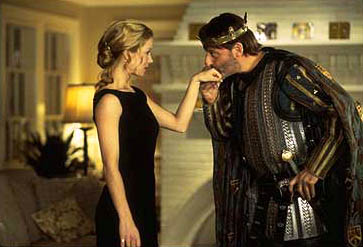
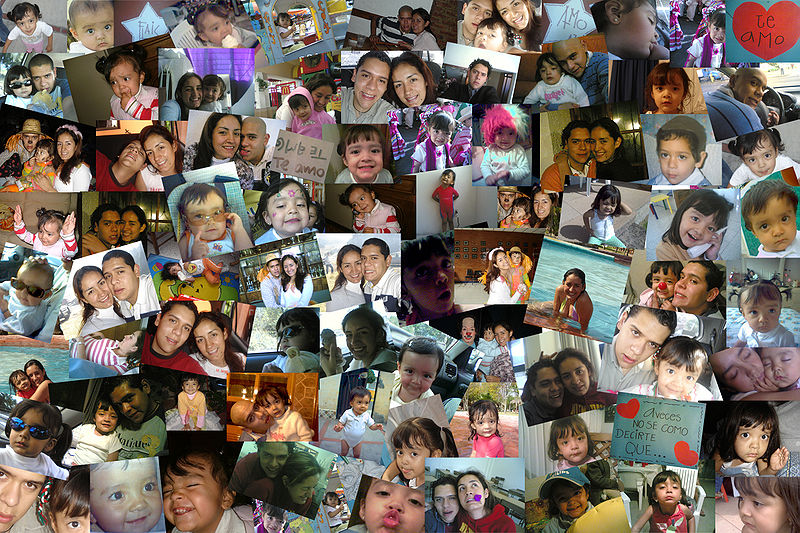
Image by mollicles420.deviantart.com

Surely my baby was as good as a dog.

I’d read that nursing home residents benefited enormously from contact with therapy dogs. During and after dog visits these elders were more alert and in better moods. So I figured, why not bring my baby to a nursing home?

I contacted a nursing home around the corner. The administrator was enthusiastic. Then I talked friends into forming a nursing home-based playgroup for our infants and toddlers. They were somewhat wary, but agreed to give it a try. Finally I got a local store to donate a carpet remnant for our little ones to crawl and play on. Between visits, the nursing home could roll it up for storage. We were ready.

We met regularly at that nursing home for several years. Our babies grew into toddlers, the elders became our friends. Residents’ families and staff members often told us that our visits stimulated memories, generated activity, even inspired people who were mostly mute to say a few words. We were awed. Something as simple as our presence, sitting on the carpet playing with our children, made a difference to people whose once full lives were now constricted. We benefited too. We learned the value of advice given by people older than our grandparents. And we noticed how completely our toddlers accepted the physical and mental differences around them with natural grace. (Here’s how to set up your own playgroup in a nursing home.)

I’m still not sure why the very old and young are kept apart from life on the commons. Vital and engaged communities are made up of all ages. And children have fewer opportunities to take an active part than almost any adult. This shortchanges everyone.

Throughout history, the young of our species have learned by getting involved. Children long to take on real responsibilities and make useful contributions. This is how they advance in skill and maturity. That is, unless we restrict them to child-centered activities.

Young people are also drawn to seek mentors. They want to see how all sorts of people handle crises, start new enterprises, settle disputes, and stay in love. But today’s young people are largely kept from meaningful engagement with the wider community. They’re segregated by age not only in day care and school but also in most spheres of recreation, religion, and enrichment. When we keep kids from purposeful and interesting involvement with people of all ages they are pushed to find satisfaction in other (often less beneficial) ways. Meanwhile, our communities are deprived of their youthful energy and innovative outlook.

It doesn’t have to be that way. There are ways to reconnect children with our communities.

  1. Involve children by giving them real input and responsibility in civic groups, churches, co-ops, CSA’s, arts organizations, clubs, and neighborhood organizations. What about a child who is a dedicated rock enthusiast but the local lapidary club only accepts adult members? Propose a joint adult/child membership, giving that child the same (age factored) opportunities to build social capital in the club. A similar approach can be taken with organizations that refuse to take youthful volunteers. Offer to give your time in partnership with the child, a two-for-one volunteer bargain. Adult advocates are often necessary to pave the way for genuine youth involvement in many groups.
  2. Give children contact with the workaday world. They need to know people with a range of hobbies and careers. Seek out those who are passionate about chemistry, bird watching, farming, the Civil War, engineering, astronomy,  geology, blacksmithing, wood carving, well, you get the idea. Something vital is transmitted when one person’s enthusiasm sets off a spark of interest in a child. We’re rarely turned down when we ask to learn from others. People who love what they do can’t help but inspire kids and, they often tell me, the kids reignite their hope for the future of their work.
  3. Help local businesses tune in to children’s interests. For example, a bakery might hang children’s art on the walls, make meeting space available for a kids’ chess club, host Invent A Cookie contests, open the kitchen for tours, offer apprenticeships to aspiring young pastry chefs, teach parent-child baking classes, invite speakers to explain the science of yeast and flour, give cupcakes as prizes for youth community volunteer hours, etc. Businesses that are truly engaged in this way inspire loyal customers, they also enliven the community.
  4. Create age-bridging partnerships, as we did with babies and nursing home residents. Non-profit organizations are great places to start. One successful program called Girlfriend Circle started due to complaints. A group of women at a senior center often told a volunteer that they had no hope for the future because children “nowadays” are rude. The volunteer offered to set up a tea party for the ladies that included her daughters and their friends. At that first event the girls were seated between their older hostesses. Everyone enjoyed a lesson in napkin origami. Then they took part in a Q&A to learn about one another. After sharing refreshments both age groups were eager to meet again. The Girlfriend Circle met bi-monthly for several years, finding their friendships instructive and rewarding.
  5. Include young people in civic affairs, giving them genuine input into programs and policies. This works in Hampton, Virginia. Young people take leadership roles by holding conferences and open forums, advising municipal divisions, and helping to run the Hampton Youth Teen Center. City administration also includes a Youth Commission, with 24 youth commissioners, 3 youth planners, and one youth secretary–all high school age.
  6. Develop a tradition of service, starting at an early age. Need ideas? Here are 40 ways kids can volunteer, toddler to teen.

This comes full circle for me, right back to dogs and volunteering. A boy who’d once been a pint-sized member of the play group we held at the nursing home talked his family into raising puppies to be trained as service dogs. By the time he was 12 years old, this boy gave promotional talks about this program to clubs and schools. I attended one of his speeches. He started off with some anecdotes about exasperating puppies. Then he went on to describe the generosity and hope his family felt each time they attended graduation ceremonies for fully trained dogs, ready to serve. I know community involvement is a path to wholeness. I’m convinced it has a lot to do with this boy’s smile too.

Portions of this piece excerpted from Free Range Learning.

What Movies Tell Girls

how movies affect girl's self-image, damaging effect of media on girls, For years my daughter’s favorite movie was Just Visiting. This old remake of an older hit French comedy was packed with plenty for my little girl to adore. Magic, time travel, and plenty of humor. Some quotes from the film are still in rotation as favorite family sayings. Although it didn’t lack for laughs, it was missing something more vital. Strong female roles. Sure, women star in the film. Passive, pretty characters who only gain a stronger sense of themselves through men. Well, there’s also a stereotypical witch. Don’t even get me started on that. I’m not about to stomp my foot and decry one B movie because the women’s roles aren’t up to good-for-my-daughter standards. But when I take a look at movies available in theaters and on Netflix, foot stomping seems imperative. In the real world girls and women have full, interesting lives. Their conversations are complex and rarely limited to shoes, hair styles, and attracting the “right” XY chromosomes. But in the entertainment world, females are often little more than gloss. Little more than women’s roles in the past. sexualized roles in movies, One way to gauge a female character’s presence in any movie is the Bechdel test. This method doesn’t imply that a particular movie has merit, it simply demonstrates character treatment based on gender. To pass the Bechdel test, a movie has to meet all of the following three qualifications:
  1. Have at least two female characters (with names known to the audience)
  2. who have a conversation with each other
  3. about something besides a male.

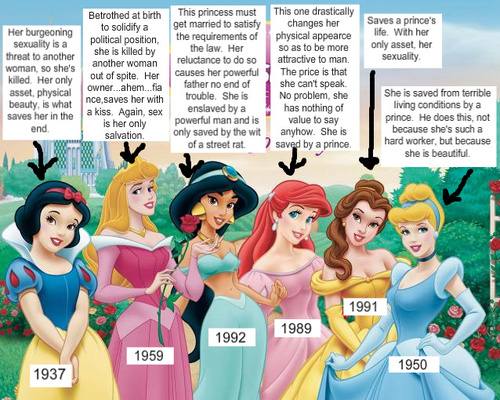
Recall the last five movies you saw. How many really pass the test? I’m not sure Just Visiting passes. But according to the Bechdel test database, recent movies such as Limitless, Pirates of the Caribbean: On Stranger Tides,  The Tree of Life, Water For Elephants, Your Highness, Beastly, I Am Number Four, The Lincoln Lawyer, No Strings Attached, Source Code, and Avatar don’t pass. Kids’ movies aren’t much better. Bechdel test failures include Hop, Rango, Rio, Jack and the Beanstalk, Megamind, The Secret of KellsFantastic Mr. Fox, Cloudy With a Chance of Meatballs, Ice AgeDawn of the Dinosaursand Shrek Forever After. Another way to pay attention to gender disparity in movies is to simply count the number of female speaking characters. Top movies for kids from 1990 to 2005 averaged less than one female out of every three speaking characters. And in both animated and live action movies from 1999 to 2006, researchers noted that females were outnumbered by males in speaking roles as well as crowd scenes. Worse, girls and women were typically portrayed in stereotypical, often hypersexualized roles. It seems girl power, even in today’s family films, has a lot to do with sexy clothes.

Jeff Brunner thesocietypages.org/socimages/2009/10/25/disney-princesses-deconstructed/

This gender disparity is more than annoying. It’s damaging. Sexualized stereotypes are linked to a slew of problems in girls as well as women including eating disorders, poor self-esteem, and depression. Girls and young women who frequently consume mainstream media content are more likely to believe that a woman’s value is based on physical attractiveness. Even very young girls are beginning to self-objectify, to think of themselves as objects to be evaluated by appearance. And there’s a lot of media consumption going on. Half of kids under six watch at least one DVD a day. That’s some heavy reinforcement of Hollywood ideals. In our house Just Visiting has given way to new favorites. I’ll be watching them with popcorn, a snuggly blanket, and some attitude. My foot is just itching to stomp. Here are a few resources to light the way. About Face Adios Barbie All Made Up: A Girl’s Guide to Seeing Through Celebrity Hype to Celebrate Real Beauty Beauty Redefined Body Drama: Real Girls, Real Bodies, Real Issues, Real Answers Body Outlaws: Rewriting the Rules of Beauty and Body Image Body Shots: Hollywood and the Culture of Eating Disorders (Excelsior Editions) Can’t Buy My Love: How Advertising Changes the Way We Think and Feel Cinderella Ate My Daughter: Dispatches from the Front Lines of the New Girlie-Girl Culture Mothers for a Human Future New Moon Girls Packaging Girlhood Pink Stinks Resolving the Confidence Crisis Taking Back Childhood Teen Voices The Body Project: An Intimate History of American Girls 101 Ways to Help Your Daughter Love Her Body

Making Heroism Happen

Notice similar statements when people who have committed heroic acts are interviewed? They tend to say, “I wasn’t trying to be a hero, I was just doing what anyone would have done.”  (This from a man who climbed into a burning car to save a woman.)

we can all be heroes

Hero: Wesley Autrey

Or  “I don’t feel like I did something spectacular” (this from a man who leaped in front of an oncoming subway train to pull an unconscious man from the tracks.)

Hero: Jencie Fagan

Or “I think anybody else would have done it.” (This from a teacher who stopped a school shooter by embracing him in a bear hug.)

The same rationale is heard from people who rise to heroic acts despite living with difficult circumstances of their own.

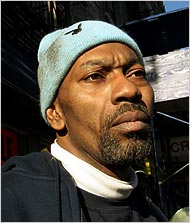
A homeless man who tried to tackle robbers during an attempted hold-up of a Brinks truck and memorized the license plate of their get-away car said, “You just gotta look out for what’s happening with people around you other than yourself.”

A teen with an extensive criminal record stole a bus to drive victims of Hurricane Katrina to safety. He explained, “The police was leaving people behind. I had to pick up people on the bus. The police didn’t want to do nothing. We stepped up and did what we had to  do.”

And a homeless man lost his few possessions after jumping into an icy river to rescue a drowning woman. He said “I just did what needed to be done because someone needed my help.”

what it takes to be a hero

Hero: Adan Abobaker

In their own words heroes continue to tell us that what they have done is not at all extraordinary. If we hold heroes apart from us as superhuman and describe their actions as unfathomably brave, we deny that all of us have the capacity to be heroes if the need arises.

We can develop that capacity. When I lead non-violence workshops we start by working on issues of empathy (identifying with the emotions, ideas, and attitudes of others) as well as empowerment to act on that empathy. Both are necessary to break through what’s been called the “bystander effect.” This was first identified by Ervin Staub, who survived under Nazi rule due to the kindness of others. Dr. Staub explains in  The Roots of Evil: The Origins of Genocide and Other Group Violence that it takes the willingness of those who are uninvolved (bystanders) to step in, advocating for the victim or victims, in order to halt the escalation of violence and to uphold the common good. Without such bystanders, atrocities such as war and genocide are “permitted” to happen.

The bystander effect is active on a smaller scale as well. Studies show if an emergency unfolds before a group of people they’re less likely to take action, basing their decisions on the behavior of those around them. If that same emergency presents itself in front of one person they are more likely to take action. We’ve all heard of these situations precisely because they’re so heinous.

What’s the difference between those who ignore suffering and those who are moved to alleviate suffering? People who have imperiled their lives for months or years to help others can give us some insight. Svetlana Broz, author of Good People in an Evil Time: Portraits of Complicity and Resistance in the Bosnian War, says it requires at least three attributes.
1. The courage to think for oneself, resisting conformity even at the risk of one’s own safety.

2. A moral core that inspires action.

3. The capacity to empathize with those who are dissimilar.

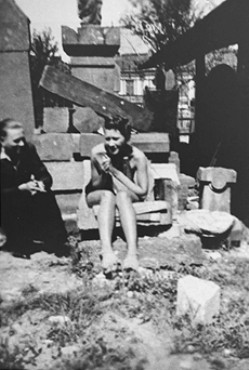
Hero: Zofia Baniecka, rescued 50 Jews during Holocaust

Eva Fogelman, author of Conscience and Courage: Rescuers of Jews During the Holocaust, writes that heroic acts tend to come from a deep sense of common humanity. The roots of this behavior may stem from early upbringing. Fogelman notes that many Holocaust rescuers themselves suffered and were sensitized to the suffering of others. They also tended to have been raised in loving families where self-worth was fostered and reason rather than punishment was used as discipline.

Social scientists still know quite a bit more about aberrant behavior than why people choose to do good. That’s changing according to Philip Zimbardo, author of The Lucifer Effect: Understanding How Good People Turn Evil.  Zimbardo conducted the now infamous 1971 Stanford Prison Experiment (check it out on this slide show) which demonstrated that psychologically normal people will instigate and take part in atrocities. Now Zimbardo is devoting himself to bringing forth the brighter side. He’s started an organization called  Heroic Imagination Project which aims to teach the rudiments of heroism.

Currently a pilot project, it consists of four main educational components taught over four weeks.

  1. Students initially learn about us versus them attitudes, unthinking obedience to authority, and other human tendencies which unwittingly allow cruelties to happen.
  2. Next they work on building empathic responses through listening, paying attention, and “walking a mile in the other guy’s shoes.”
  3. Then they study heroic stories, seeking role models and discovering that compassionate action does inspire.
  4. And finally they practice heroic behavior on a daily basis by translating their good intentions into action, no matter how small.

We don’t have to wait for a course. The steps taught by the Heroic Imagination Project are the building blocks of human decency, things we should teach our children every day and should continue to develop in ourselves.

We’re captivated by real heroes in the news and imaginary heroes in the movies because they call out the best in us. Such stories ask us to live up to our values, not only when we’re in extreme situations.

It’s also time to recognize unsung heroes around us everywhere. They don’t get publicity because their deeds don’t seem extraordinary. Unselfish acts performed a million times a minute weave us together as a caring species. We tend to the helpless, comfort the sorrowful, share knowledge, and create happiness. Such kindness is contagious, each act of compassion and cooperation spreading out in enlarging waves of goodwill. Such efforts may seem small, but they are the basis for making heroism happen.

Do You Suffer From Mean World Syndrome?

tv overload, mean world syndrome, george gerbner, pessimism, fearful of strangers,

Do you turn on TV news most days? You’re probably not doing yourself or your family any favors.

What you bring into your home is tragedy, violence and the worst of human behavior. Study after study has shown that news programming tends to breed cynicism and helplessness.

Yes it’s important to be informed, but the kind of coverage found in network and cable news is usually superficial. And worse, it’s skewed to visuals and headlines chosen for shock value. That’s what boosts rating. In-depth information that advances real comprehension isn’t what TV news delivers. As a result, viewers are more likely to become pessimistic, fearful and unable to gauge reality.

Yes, really.

The phenomenon is called Mean World Syndrome.

It’s based on the research of George Gerbner. His analysis showed that the violent content of news and entertainment convinces viewers that the world is more dangerous than it actually is. Back when Gerbner did the bulk of his work, media was a smaller and quieter place. Now we have 24 hour access to news channels, movies, and shows as well as all kinds of net content.

Gerbner wrote,

Our studies have shown that growing up from infancy with this unprecedented diet of violence has three consequences, which, in combination, I call the “mean world syndrome.” What this means is that if you are growing up in a home where there is more than say three hours of television per day, for all practical purposes you live in a meaner world – and act accordingly – than your next-door neighbor who lives in the same world but watches less television. The programming reinforces the worst fears and apprehensions and paranoia of people.

And those who are convinced the world around them is a highly dangerous, unpredictable and unforgiving place have more than a heightened sense of insecurity. They are more likely to see violence as a solution to problems rather than to reason in more nuanced ways. Fear also drives them to take hard-line political and social attitudes.

When Gerbner testified before a congressional subcommittee in 1981, he said

Fearful people are more dependent, more easily manipulated and controlled, more susceptible to deceptively simple, strong, tough measures and hard-line measures…

mean world syndrome, news overload, cynicism and mass media, happy family without tv news,Hmmm.

Fact is, the world is NOT more violent.

Center for Media and Public Affairs did a study on network coverage of murder. Between 1990 and 1995, the murder rate in the U.S. went down thirteen percent. (It continues to go down.) But during that same period, network coverage of murders increased three hundred percent.

Try this antidote, an excerpt of a Steven Pinker article titled “We’re Getting Nicer Every Day: A History of Violence,”

The criminologist Manuel Eisner has assembled hundreds of homicide estimates from Western European localities that kept records at some point between 1200 and the mid-1990s. In every country he analyzed, murder rates declined steeply–for example, from 24 homicides per 100,000 Englishmen in the fourteenth century to 0.6 per 100,000 by the early 1960s.

On the scale of decades, comprehensive data again paint a shockingly happy picture:

Global violence has fallen steadily since the middle of the twentieth century.

According to the Human Security Brief 2006, the number of battle deaths in interstate wars has declined from more than 65,000 per year in the 1950s to less than 2,000 per year in this decade. In Western Europe and the Americas, the second half of the century saw a steep decline in the number of wars, military coups, and deadly ethnic riots.

Zooming in by a further power of ten exposes yet another reduction. After the cold war, every part of the world saw a steep drop-off in state-based conflicts, and those that do occur are more likely to end in negotiated settlements rather than being fought to the bitter end. Meanwhile, according to political scientist Barbara Harff, between 1989 and 2005 the number of campaigns of mass killing of civilians decreased by 90 percent.

The decline of killing and cruelty poses several challenges to our ability to make sense of the world. To begin with, how could so many people be so wrong about something so important? Partly, it’s because of a cognitive illusion: We estimate the probability of an event from how easy it is to recall examples. Scenes of carnage are more likely to be relayed to our living rooms and burned into our memories than footage of people dying of old age.”

Yes, we face harsh realities. I hardly need to recount them to you. But when crime, disaster, ecological devastation, famine, and other tragedies are presented as random occurrences nothing constructive is gained. Emotions like anger, fear, and sorrow can rouse us to positive action but only if action is an option. Sometimes that’s direct action, sometimes it’s seeking deeper understanding of how to prevent these occurrences from happening again.

Problems portrayed on movies and shows, problems relentlessly hyped in the news and by pundits—-well, they just seem so pervasive, so disconnected from causes, so impossible to change that we feel helpless to do anything about it. That’s another effect of Mean World Syndrome.

We end up pessimistic, which is bad for our own health and bad for the planet.

True, we humans may be more likely to pay attention to negatives than positives, a trait that probably helped us to survive in saber-tooth tiger days. But long progress of humanity has much more to do with our tendency to cooperate, form close relationships, and to care. We are hard-wired for compassion, not for the imaginary mean world.

*

*


Fight Mean World Syndrome

Get your news from sources that adhere closely to the highest journalistic standards.

Consider widening your perspective with international news.

Check out Center for Media Literacy. They offer resources to help young people develop critical thinking skills related to our world of mass media.

Read magazines about people and groups working for positive changes such as Ode and YES.

Enjoy some heartening news with Good News Network and Great News Network.

*

*

*


Fear image courtesy of Jimee, Jackie, Tom & Asha’s Flickr photostream.

Real Action Footage Hard to Find: World’s Most Powerful Force Rarely Filmed

*

*

*

*

*

*

*

*

Few talk about it. Fewer know much about its principles or how to apply them. Yet it has a profound impact, a long history and a reach nearly as wide as heaven. I’m talking about non-violence.

Sure, we know a bit about the civil rights movement and a bit about Mahatma Gandhi, but not much. Mainstream media focuses on the changes wrought by violence.

Pacifism is confused with those who are passive. Nothing could be further from the truth.

Consider Liberia. This nation was birthed by colonization and racism. It existed in oppression for over 150 years. A few years ago Liberia was a land torn apart. Dictator Charles Taylor’s reign imposed hunger and brutal killings on Liberia’s people. The rise of rebel groups made the situation worse. Children were forced to become soldiers. They roamed the countryside stealing, raping and killing. Villages were burned. Brutalized refugees crowded the cities. No one was safe. No one knew where to turn. The only answer lay in the powerful force of love in action, non-violence.

By 2003 women began gathering at their own risk to demand peace. They wore white and sang in the marketplace. They called themselves Women of Liberia Mass Action for Peace. Their numbers grew. Against tradition, Christian and Muslim women worked together—singing, praying, planning and insisting on love. They held signs as truckloads of soldiers drove past, the same men and boys who terrorized them. Their signs said, “We love you. Put down your guns.”

Ignored at first, their numbers grew. As peace marchers walked past, other women joined in from the streets. Children sang along. Women of Liberia Mass Action for Peace tactics included passive resistance, withholding sex (in part to avoid birthing children who would later be raped, killed or forced to become soldiers) and insisting on reconciliation. Finally they forced a meeting with President Taylor, where they made him promise to attend peace talks in Ghana. Then they bravely met with representatives of the rebel faction, who also agreed to attend the peace talks.

A delegation of Liberian women went to the talks in Ghana at their own expense. They waited outside the hotel where negotiations were held, wearing white as reminding presence. The men stayed in luxury, stalling as they attempted to get more and more power for themselves without agreeing to more rights for the citizenry. After weeks of these fruitless talks the women learned that an embassy in Liberia had been bombed and war there had intensified. Afraid for the families they’d left behind, they took another risk. Entering the hotel, one hundred women linked arms outside the doors of the negotiating hall. They intended to force the men to stay without food and water, privations Liberian refugees knew well, until they had reached an agreement. Guards threatened them. One of the rebels kicked at them.

Leymah Gbowee, a leader of Women of Liberia Mass Action stood. She began to take off her clothing. This was a last resort. It is taboo to see one’s sister, mother or grandmother unclothed. The guards backed down. Two weeks later an agreement was signed.

When Liberia held landmark elections, Ellen Johnson-Sirleaf became the African continent’s first elected female head of state. Yet look around. The extraordinarily brave, powerfully liberating work by Liberian women went largely unnoticed by major news organizations.  Heck, even the Liberia page on Wikipedia doesn’t cite their involvement. Stephen Colbert’s interview with Leymah Gbowee promos the sex strike angle.

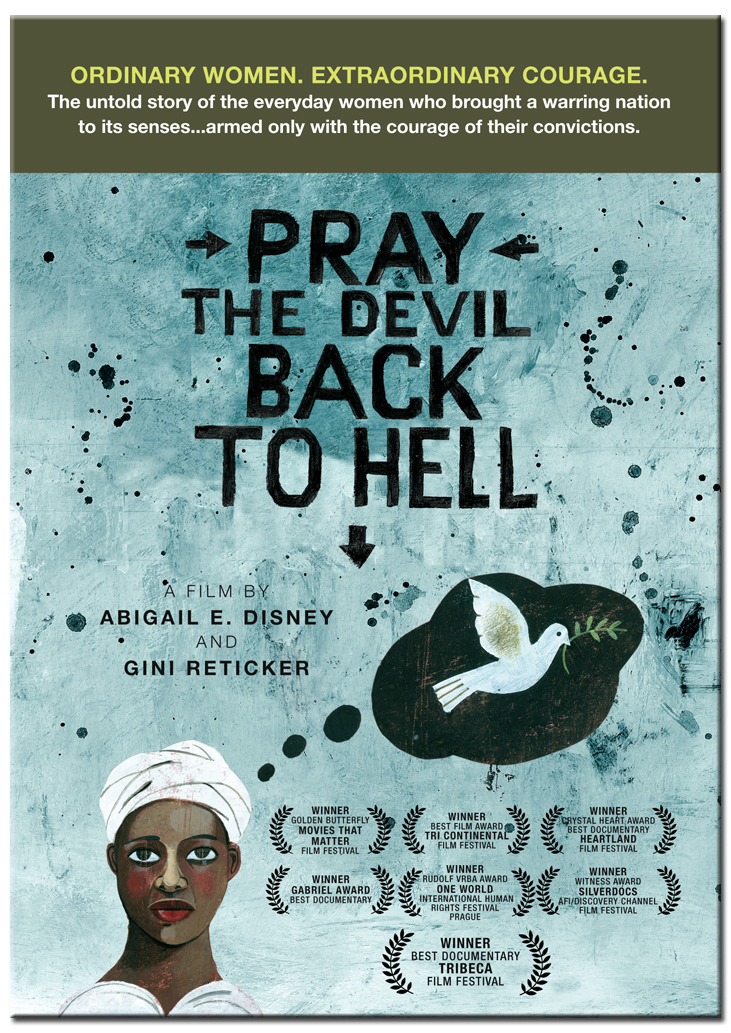
An extraordinary documentary about Women of Liberia Mass Action, called Pray the Devil Back to Hell came out in 2008.  Producer Abigail E. Disney couldn’t rely on footage shot by news organizations. They barely cover non-violence. Instead she managed to find three years of material on the peace movement that shifted the course of history from “private individuals who just happened to be there with cameras.”

We can do more than thank goodness.

We can use non-violence so that goodness is a force for change.

The Beauty of Ordinary People

“Not everything that can be counted counts, and not everything that counts can be counted.”

Einstein

*

*

*

*

The world is full of ordinary, wonderful people.

Ever since I learned about Randy Stang in Regina Brett’s Plain Dealer column his example of casual grace has helped me see greatness in a new way. Those who bring out the best in themselves have a way of doing that.

Most people who get media attention are nothing like us. They’re obnoxiously wealthy, phenomenally talented or otherwise good at accumulating fame.

A great deal of publicity is also devoted to those who bring out the worst in themselves. They commit crimes or wreak havoc more acceptably, perhaps as scornful political pundits.

Occasionally attention shines on people who devote themselves to a cause in ways we can’t imagine doing or who risk their lives to save a stranger. True heroes. We may marvel at their efforts but end up feeling worse about our own choices. Who can imagine sacrificing as these selfless people do?

But Randy Stang was not the sort of man who attracted attention. He lived with his family right by Bradley Park in Bay Village, Ohio. Tall lights lit up his yard till late at night. Enthusiastic yelling from nearby soccer, basketball and baseball games made for a noisy home. When Randy Stang heard about a proposed biking and skateboard park he decided to attend the public hearing. So did many of his neighbors.

He waited for his chance to talk holding three pages of notes. A middle school teacher spoke about the six years of resistance the skate park had already faced, saying Bradley Park was likely the last hope for local bikers and skateboarders. Residents also spoke, saying the noise and inconvenience of a skate park was unacceptable. They liked the idea of teens gathering somewhere but preferred that place be far from their backyards.

Finally it was Randy Stang’s turn to talk. He explained what it was like to live near the park. He mentioned the noise and lights. He noted that his garage had been broken into just two days before the public hearing.  Then he gave his opinion.

“I’m in favor of a skate and bike park in Bay Village in Bradley Park. I am wondering if the citizens against the park have no grandchildren, no children, or are not a child themselves.”

He finished, saying, “You want to put it just to the north of that baseball diamond there, probably about 50 feet from my yard.”

Then Randy Stang collapsed. A nurse and doctor performed CPR to no avail. But his efforts were not in vain. It looks like Bay Village will be building The Stang Memorial Skate and Bike Park.

People who are acclaimed every day in the media don’t exemplify us. It’s the uncelebrated lives of ordinary, wonderful people who form the bedrock of human existence. These people are next to you and across the world. Chances are they won’t gain notice unless they perish dramatically while simply being themselves.

Unselfish acts performed a million times a minute weave us together as a caring species. We tend to the helpless, comfort the sorrowful, share knowledge and create happiness. It happens most often in small, unnoticed ways. This is why I know humanity has every hope of skating ahead toward the very best possibilities.

*

*

Creative Commons photo collage