This year has been filled with its tender moments and quiet delights. 2025 has also been grindingly awful. Every day’s news packed with official lies, cruel slurs, new atrocities, more bridges to a bright future burned. Still, I am grateful for fervent and often playful resistance, brilliant science, awe-inspiring art, nature’s constant teachings, compassionate people everywhere. And of course for the way books help hold me together even when so much is falling apart. Thank goodness for the restorative, mind-stretching, soul-rejuvenating power of books. Here’s a nod to a few of the most memorable books I read this year.
~
IMMERSIVE AND AMAZING NONFICTION
~
Your Brain on Art: How the Arts Transform Usby Susan Magsamen and Ivy Ross. I deliberately read this book slowly, a chapter or two a month, letting it reawaken me to the deep place of joy and meaning accessed via the arts. It is not remotely a self-help book, but it got me back to dancing in the kitchen when I cook, doing a little sketch each morning, and taking more time to savor small beauties I encounter in daily life. If you love science-rich inspiration, this is a book for you.
“Art and play are like two sides of the same coin, with play being a part of artistic expression, imagination, creativity, and curiosity.”
“When you make art and you don’t know what’s going to happen, you’re involved in the mystery that life really is.”
“When you tap into the arts to foster a meditative state, the places in your brain responsible for judgment and personal criticism are quieted in your prefrontal cortex, and you can assess a more generous, perspective-taking point of view.”
The Serviceberry: Abundance and Reciprocity in the Natural Worldby Robin Wall Kimmerer. I love everything Kimmerer writes but this small and beautifully illustrated book is a perfect reminder for fans and a perfect introduction for those who may not be familiar with her work or the concepts she enumerates so beautifully. Here’s a favorite quote:
“In the Anishinaabe worldview, it’s not just fruits that are understood as gifts, rather all of the sustenance that the land provides, from fish to firewood. Everything that makes our lives possible—the splints for baskets, roots for medicines, the trees whose bodies make our homes, and the pages of our books—is provided by the lives of more-than-human beings. This is always true whether it’s harvested directly from the forest or whether it’s mediated by commerce and harvested from the shelves of a store—it all comes from the Earth. When we speak of these not as things or natural resources or commodities, but as gifts, our whole relationship to the natural world changes.”
Hope for Cynics: The Surprising Science of Human Goodnessby Jamil Zaki. This may well be my favorite read of the year. I’m convinced it’s not just my current lifeboat but essential reading for anyone in these hope-challenging times. Jamil Zaki, a recovering cynic himself, shows how our competitive culture overvalues cynicism. Most of us think cynics are more responsible, better able to assess people, make more considered decisions, become better managers and leaders. Instead, they are much worse than hopeful people at all these things. They are also more prone to prop up their own self-worth through putting others down. They are typically zero-sum thinkers, believing they can only gain if others lose. This makes neighbors, coworkers, strangers, even loved ones into rivals. Instead, the author gives us a pathway to embracing what hope can do for our mental health, relationships, community, and world. I’m buying a few copies to spread some hope.
“Optimism is idealistic; hope is practical. It gives people a glimpse of a better world and pushes them to fight for it.”
“Beliefs reflect what you think of the world; values reveal more about yourself. Confusing these two can be dangerous business. When someone attaches their self-worth to a belief—political, personal, or otherwise—they desperately need to be right. Challenges to what they think feel like threats to how they think—evidence they aren’t smart or good enough. The person screaming loudest is often most fearful of being wrong.”
“I have discovered that most people value compassion over selfishness, that donating money activates similar parts of your brain as eating chocolate, and that helping others through their stress soothes our own. The message of our work is simple: There is good in us, and it does good for us.”
Once and Future Myths: The Power of Ancient Stories in Modern Times by Phil Cousineau. An engagingly insightful look at the impact of myth in our times. Cousineau writes about his own stringent upbringing as well as joys and sorrows in each stage of his life. He moves effortlessly from cultural critique to discussing how Bushmen recognize two hungers—for food and for meaning. “Myths are the original soul stories, showing us, as my mentor Joseph Campbell used to say, how to live ‘with joyous participation in the sorrows of the world.'”
The Stranger in the Woods: The Extraordinary Story of the Last True Hermitby Michael Finkel. This is quite a story—impeccably researched and told well. The author brings in just the right amount of information on hermit traditions in history, about what might be a genetic basis for extreme introversion, and from his own conversations with Christopher Knight. I found it particularly interesting how people in the surrounding community reacted to several decades of “their” mysterious thieving hermit.
“Carl Jung said that only an introvert could see “the unfathomable stupidity of man.”
“He was confounded by the idea that passing the prime of your life in a cubicle, spending hours a day at a computer, in exchange for money, was considered acceptable, but relaxing in a tent in the woods was disturbed. Observing the trees was indolent; cutting them down was enterprising. What did Knight do for a living? He lived for a living.”
“Silence, it appears, is not the opposite of sound. It is another world altogether, literally offering a deeper level of thought, a journey to the bedrock of the self.”
Custodians of Wonder: Ancient Customs, Profound Traditions, and the Last People Keeping Them Alive by Eliot Stein. A respectful, heart-filling chronicle of people from ten countries who are the last few practitioners of disappearing arts. These include Indian mirror makers, Inca grass weaving bridge-builders, Sardinian pasta makers, cigar factory readers, a 27th generation West African griot, and the last night watchman in Ystad, Sweden. “In an age when everything has seemingly been explored and explained, and where cynicism so often overshadows curiosity and wonder, these cultural custodians remind us how much there still is to discover, and invite us to fall back in love with the world.”
The Woman in the Shaman’s Body: Reclaiming the Feminine in Religion and Medicine by Barbara Tedlock. The author discusses the shamanic powers women have long expressed in healing, body wisdom, trance and vision questing, as well as the spiritual energy in body cycles and childbirth, and much more– using evidence from prehistoric to modern times. Here’s a quick walk through her words.
“Despite the proof of language and artifacts, despite pictorial representations, ethnographic narratives, and eyewitness accounts, the important—no, the primacy—of women in shamanic traditions has been obscured and denied. That women’s bodies and minds are particularly suited to tap into the power of the transcendental has been ignored. The roles that women have played in healing and prophecy throughout human history have been denigrated… All too often women who enter medicine or the ministry still believe they’re stepping into a strictly men’s field; in fact, these are historically women’s fields that men have since entered…. It’s time to take another look at the evidence of millennia and of cultures around the globe. It’s time to reclaim the woman in the shaman’s body.”
Walk Till the Dogs Get Mean: Meditations on the Forbidden from Contemporary Appalachia edited by Adrian Blevins and Karen Salyer McElmurray. This is a powerful anthology. I was particularly drawn to works by Silas House, Ann Pancake, Mary Crockett Hill, and Tennessee Jones. In particular, I kept rereading passages by Jones. What a voice. He writes about handling what we’d now call trauma: “The people I loved and who loved me had stabbed me in the heart for as long as I could remember to try to prepare me for the hardness of the world. From this I learned to stab myself, again and again, just to see if I could stand it… I did not realize, then, that self-hate is perhaps the highest form of selfishness we can re-create. It is the oil that allows the wheels of the big evils to turn.” He writes about class divides: “I slowly began to realize I was not the same color white as my middle-class friends.” I could easily quote from every one of his paragraphs.
How to Kill a Witch: The Patriarchy’s Guide to Silencing Women by Claire Mitchell and Zoe Venditozzi. It’s hard to imagine a lively approach to this dire subject but, despite some repetition, this is that. I listened to the audio version, delightfully narrated by the authors. Since I only listened for about 30 minutes a day the hideous and deadly subjugation of women wasn’t as overwhelming as it could have been. A few apt quotes:
“When the going gets tough in any society, it is the most vulnerable who are accused of causing the damage.”
“Discovering that we both had a ridiculously detailed knowledge of real-life murders, we came up with a theory about why women in particular love true crime. In our view, it was down to a combination of the pragmatism of learning how not to get abducted and murdered (always useful), coupled with an element of bearing witness to all the women who were not so lucky.”
“No matter how terrible, history must be learned from and remembered.”
Patterns in Nature: Why the Natural World Looks the Way It Doesby Philip Ball. This may look like one of those coffee table books, likely because at features 250 color photographs showing the patterns shared in what seem to be distinctly different parts of the natural world including honeycomb, seashell spirals, soundwaves, forests, coastlines, galaxies. They are not only beautiful, they point to underlying unity around us. The accompanying text is minimal, making this very accessible, but no less profound.
~
IMMERSIVE AND AMAZING MEMOIRS
~
Written in the Waters: A Memoir of History, Home, and Belonging by Tara Roberts. The author brings us into her widening life after encountering Diving With A Purpose, a group of scuba divers dedicated to documenting the undersea wrecks of ships carrying enslaved people. She pulls together little-known histories, long-silent stories, ocean-based beliefs, and more. I had no idea one out of ten ships carrying enslaved people experienced coordinated resistance. I’d never heard of public archaeology: involving the community’s people as the center of scientific work. I’d learned the trauma of enslavement is carried through generations of descendants but never knew the Transatlantic Slave Trade left a legacy of ecological trauma as well. I knew about the Underground Railroad, but learned here there was also a very successful Maritime Underground Railroad. Throughout the book Roberts searches for her own sense of home, identity, and purpose.
She writes about a photo of her great-great grandparents. “I always thought both of them were really handsome people. I mean Grandpa Jack has on a suit—it looks like brown corduroy. And Grandma Mary, she wears a stiff white button-down shirt with a bow tie. A bow tie! She looks formidable but also soft. And they look like equals… I saw this kindness in both their eyes that just made me want to know them, you know? Like I would have liked to lean against Jack’s knee and hold his hand and hear his stories. And I feel like Mary would have swatted me on the butt affectionately and shared her lessons on how to live powerfully as a woman in the world.”
And she writes, “What if our displacement and enslavement—our unique ancestry and our very rootlessness—as African-descended people throughout the diaspora puts us on the leading edge of thought and creation? What if, through us, a new way of understanding identity can be articulated and lived—one that can help point a way forward for humanity.”
Holler Rat: A Memoir by Anya Liftig. Thoroughly engaging, thoughtfully written memoir by a woman whose early memories inform her performance art and whose experiences with classism reflect this country. Here’s a snippet: “On my mother’s side, identity was not only tied to the land, it was the land. Year after year, the place where your family had settled become more and more associated with your name and your people… To leave the land was to betray it. And by betraying it, you were also betraying yourself.”
Desert Flower by Waris Dirie. The book begins on a broiling hot day when Dirie faces down a lion with the same equanimity she displays by fleeing toward ever-greater freedom. She writes vividly of growing up in a nomadic Somalian family. There was hunger and danger, but also beauty. She describes a rare gathering with other herding families. “The people celebrate with our traditional dancing: the women clapping their hands and chanting, their low sweet voices humming across the desert night, and the men leaping high into the air. Everyone contributes food, and we eat.” She moves ever farther from her early life after fleeing an arranged marriage at age 13, eventually on to a modeling career and activism against the horrific practice of FGM. This memoir nearly vibrates with the author’s unshakeable belief in herself.
Toil & Troubleby Augusten Burroughs. A delight of a memoir about a witty but anxious gay man who has inherited the family gift of witchery. He uses second sight and the occasional spell to steer ahead as he moves from NYC to the country with his partner—what’s not to love? Burroughs is a masterful writer, making all his books flow with a storyteller’s ease, but in Toil & Trouble he also educates us as he was educated on the uses of magic. I’m happy to see witchcraft explained not as the glitter eyeshadow and fussy wand crap some reduce it to, but a real art known throughout human history. A few snippets:
“What I am certain of is that there’s something wonky going on beneath the surface of what we call reality. Things are not as they appear. They are much, much more.”
“We live in a physical world where the mere act of observation alone is enough to alter that which is observed, to change it from one form of matter into another. What is that if not magick?”
“I know that under the best, lowest-stress circumstances I am an absolute horror to live with, a halogen-illuminated fountain of anxiety, control, and catastrophe. Mental health would be nice, but there’s not time for that, so I do the next best thing: on a walk along the Hudson to loosen the phlegm in my chest, I stop at a deli and pick up a sack of twelve oversized butter cookies with multicolored sprinkles.”
The Perils of Girlhood: A Memoir in Essays by Melissa Fraterrigo. These are fine essays, some of them excellent hybrid pieces. Each is infused with quotidian details that bring small and large traumas into sharp focus. Fraterrigo writes about coming of age with struggles relevant to every woman I know while at the same time writing about marriage, motherhood, and what she wants for her girls. It’s hard to pick an excerpt because this book goes so many places, but here’s a sample:
“’Can you tell me what’s wrong? I can’t help you unless I know.’
After what seemed like days, she spoke. ‘I just don’t like myself.’
How to let her know I had sometimes felt this way at twelves and twenty-two and now, in my late forties?’
‘Just because you think something, doesn’t mean it’s true.’ Eva blinked and something rippled through me. It was what I wish I had been told. Eva hugged me hard and fast. It felt powerful all the same. Maybe in order for her to understand her own feelings, she needs to see me grappling with things that even now confuse and embarrass me.”
Life Is So Good: One Man’s Extraordinary Journey through the 20th Century and How he Learned to Read at Age 98 by George Dawson and Richard Glaubman. A journey through the life of an observant, intelligent, hardworking, deeply principled man. George Dawson brings history, social studies, and a philosophy of living alive. Life Is So Good would be an excellent addition to a middle school or high school reading list. “People forget that a picture ain’t made from just one color. Life ain’t all good or all bad. It’s full of everything.”
How to Stand Up to a Dictator: The Fight for our Futureby Maria Ressa. The author’s courage and integrity led her to win the Nobel Peace Prize. Her experience also forms a timely warning for those of us anywhere in the world where authoritarianism is taking over.
She writes, from experience, about surveillance capitalism’s algorithms affecting not only behavior but democracy itself. “Lies that are repeated over and over,” she writes, “exponentially change the public’s perception of an issue, something world powers have always known about propaganda but that gained new meaning and pitch in the age of social media… What happened in the Philippines in 2016 is a microcosm of every information operation launched in democratic countries around the world. The combination of bots, fake accounts, and content creators… infected real people like a virus, but often those unsuspecting citizens didn’t even know they had been infected.”
She also writes how difficult it is for fact-checked journalism to reach people in the grip of social media. She focuses almost entirely on Facebook but her assertions fit nearly all social media companies. She writes of her media company:
“We had standards and ethics manuals; we upheld freedom of expression…. We didn’t realize that those ‘content creators’ with their crude, sometimes lewd, manipulative posts, now passed as political pundits, even as journalists reports ‘facts.’ Those accounts were at the core of a propaganda machine that bullied and harassed its targets and incited its followers to violence… Facebook didn’t only provide a platform for those propagandists’ speech or even only enable them: in fact, it gave them preferential treatment because anger is the contagious currency of Facebook’s profit machine. Only anger, outrage, and fear led to greater numbers of people using Facebook more times a day. Violence has made Facebook rich.”
And, “Today, an emergent wave of right-wing populist leaders uses social media to question and break down reality, triggering rage and paranoia on a bed of exponential lies. This is how fascism is normalized and where political outrage meets terrorism…”
Although this book isn’t the most personal of memoirs, it offers glimpses of her growth as a person. She reveals, “I began to realize that the work of art you’re creating is your life; that the person you are today has been created by all your past selves… but that your actions today actually change those earlier versions of yourself.”
The Girl With No Name: The Incredible True Story of a Child Raised by Monkeys by Marina Chapman and Lynne Barrett-Lee. Quite a unique memoir. The chapters of Chapman’s life in the jungle, where she is slowly accepted by a troupe of monkeys, are so full of nuance that it’s hard to imagine she (as some claim) made any of it up. Specific personalities of the monkeys, the many life-saving things she learned by observing them, and the ways her traumatized little girl self left behind the human world feel authentic to me. As she writes, “I had only two concerns: to satisfy my basic needs and to satisfy my curiosity — the same simple life that the monkeys had.” Chapters after that are grim, but this resilient girl persevered and learned. I was heartened to look the author up and find that she went on to marry and raise a family, as she vowed to do back when she was a despised street child who saw too often what happened when babies were born to trafficked girls. This was a read-in-one-night book for me!
~
IMMERSIVE AND AMAZING NOVELS
~
Animal Life by Auður Ava Ólafsdóttir. Animal Life is a deep, refreshingly different book filled with musings on life, nature, the cosmos, our human responsibility to the earth, and meaning – especially the meaning inherent in birth and in light. The author begins by noting the most beautiful word in the Icelandic language, as voted by its people, is the word for midwife — “ljósmóðir” — variously translated as “lightmother” and “mother of light.”
The main character is a young midwife, one in a long ancestral line of midwives. I began to identify even more strongly with her grand-aunt, who had passed away and whose very full apartment the main character inherited. The grand-aunt had passionate concerns about human impact on the planet, an endless interest in science as well as poetry, and unfinished writing projects that were full of questions and contradictions. Ólafsdóttir writes, “It’s difficult to understand another person. But what is even more difficult to understand, difficult to know, what is most alien of all that is alien, unknown of all that is unknown, is one’s self.”
Wreckby Catherine Newman. I loved Wreck just as much as I loved her novel Sandwich, and for the same reasons–the intelligent wry bittersweetness of it all. Plus how much her kids remind me of my kids, although her offspring are not as annoying brilliant on nearly every topic as mine can be. And passages that simply gleam from the page, like this one about a stage her teenaged daughter went through:
“Back then, every molecule in her body recoiled, in horror, from every molecule of my own. I exhaled carbon dioxide that she was then forced to inhale! I manifested odors and opinions and existence, and all of it was unspeakable, intolerable. I felt, for a year or two, like I was kneeling soundlessly with a palmful of birdseed, hand extended, waiting for the wild animal of my daughter to approach me.”
The Outside Boy by Jeanine Cummins. Gorgeously written coming of age novel that roams across themes of loyalty, nature, Old Ways, compassion, prejudice, literacy, and love. It’s told through eyes of a teenaged boy raised as a Traveller. Here are two snippets:
“My mam and dad had fell in love over books, over sunlight and soil and simplicity, and I was the product of their bold, impossible love. I was the freest, happiest moment of their lives…”
“In Mass I wanted to talk to God, but I didn’t know if He’d recognize me. I couldn’t think of nothing to say. So instead I pictured my life as a shattered plate, a fine piece of crockery broke and splintered into a thousand tiny pieces. And then I spent the hour collecting up all them bits of colored wreckage, and one by one, I placed them shards into the invisible hands of God. I hoped He would maybe glue them back together for me.”
Heartwoodby Amity Gaige. This is a satisfying novel. Gaige has given us three very intelligent and determined women with distinctive lives. I was most closely drawn to the beautifully written journal entries like this one where Valerie muses on her earliest memories. “The nightly cataclysm: the mother leaves the room.” This compelling and redemptive novel kept me reading on a difficult day when a resounding disaster of a federal budget was passed in Congress. It allowed me to put off the news while I marveled at moss and sighed with gratitude for search/rescue volunteers. I am going to need more Amity Gaige books asap.
The Names by Florence Knapp. Three alternative trajectories explored for the same lives, hinging on which name was given to a baby. Not only well-written and thrumming with possibility, it also evokes our own “what if” thinking. Here are a few glimpses:
“Cora realizes her daughter has learned what to do. How to soothe, to placate. That just through watching, the first time she’s stepped into this role, she is already accomplished. If it doesn’t stop, Cora thinks, this pattern will repeat unendingly, the destiny of each generation set on the same course.”
“There’s something about that—when the quietest person, most reserved in their opinions, most reluctant to impose their thoughts on others, finally speaks; you hear. Oh. Oh, and you’re suddenly face to face with the truth.”
“She was still reading to me—to us—right up until the end. Whatever I chose from the school library. She never judged, never said, Not this one, or, You shouldn’t be reading that. I can still remember it. That feeling of being read to, of being wrapped up in her voice, those words, whatever place the story had taken us to. It sounds stupid, but it was like a magic carpet.”
Happy People Don’t Live Here by Amber Sparks. A strangely enlivening novel with a whole community of ghosts, neighbors, and what they cherish beyond all bounds. One main character is a magical-thinking child whose attempt at mystery-solving was enough to keep me up half the night reading. All that plus courage, kindness, and the necessity of making art.
Koan Khmer by Bunkong Tuon. The author’s powerful yet understated prose brings the reader right into the ongoing burdens of war, grief, and displacement as Samnang Sok adapts to a new (often hostile) culture. Koan Khmer is a universal coming-of-age story while also a complex account specific to the author’s experiences.
Beneficence by Meridith Hall. This novel comes across as a hauntingly sad song with an ongoing refrain made up of a farm’s rituals — milking, plowing, haying, feeding, milking again. It reminds me of older works by writers who describe the loveliness as well as brutal realities of rural life. Written with pathos and deep connection to the land.
The Road to Tender Hearts by Annie Hartnett. There are plenty of road trip books featuring some version of a curmudgeon who finds himself saddled with kids he doesn’t really know or want to know. Maybe there are plenty because there’s room in the plot for nearly anything. I started and finished The Road To Tender Hearts on a difficult day, which surely colors my assessment, but it was just the book I needed. Heavy topics like grief, addiction, estrangement, and death handled with wryly humorous insight by well-drawn characters including a uniquely gifted cat.
The Doorman by Chris Pavone. Not my usual thing but I found this a truly absorbing read. The doorman of a ritzy apartment building and the rich people who, mostly, care nothing about lives of less opulence than their own. The plot centers not only on these separate lives, but the divisions boiling over in the city around them. As in, “These apartments were more like vaults than residences. One sold for two hundred and twenty million dollars, a figure equivalent to spending nearly a thousand dollars per day, every day, for six hundred years. A scale that proved just how much was wrong with the world.”
Needle Lake by Justine Champine. A neurodivergent girl’s story that dives gradually into ever more alarming situations after her older cousin arrives for an extended visit. Insightful writing, powerful characters, and (for me) several unanticipated twists. I found myself thinking about the story well after I’d finished it. Here’s a moment when the main character Ida calms her entirely valid fears:
“I looked up at the sky and wished a funnel of light would come down, pass through the fog, and beam me up into the quiet vacuum of space. If a rocket full of aliens landed in the parking lot right then, I would’ve hopped right in, no question. I wiped my eyes, then tried to focus my gaze on the bark of the tree that grew in the curb planter in front of me. I tried to follow the patterns in the wood, find shapes in the grain. A rabbit, an apple, a baby’s round face. I leaned closer to the tree, squinting against the dim light. I ran my fingers over the bark.”
~
Ratings I left for nearly everything I read this year (191* books, I believe) are on my Goodreads page. I note plenty of 4 star books that almost made this list! No matter where you are, may books take you as far as you want to go. Wishing us all a brighter, more inclusive, more playful, more caring and just world in 2026.
*To clarify, I didn’t read 191 full length tomes. At least two dozen, probably more, were poetry books. Some were visual art and/or visual science books— more eye candy and mind candy than main course reading. There were several visible mending books. And some of the fiction and nonfiction making up my list were audiobooks. The numbers don’t matter. It’s about the joy in reading, whether you read one book a year or many.
I had a brush with evil when I was 13. Newly 13. A still playing with stuffed animals 13.
The shape this evil took was the grinning faux-benign variety which hid malicious intent. I didn’t realize the danger until too late. I was small and it had all the power vested in a well-liked man.
I didn’t tell anyone, in part to spare my family the (perceived) shame, in part because I thought I was sparing his family, but mostly because I couldn’t bear to think about let alone talk about what happened. Already an anxious child, my mind turned every more relentlessly to understanding why people were cruel.
It was an ongoing concern. Years earlier I’d asked too many questions about pictures I saw in news magazines. Why troops bombed villages, why pollution was dumped into rivers, why anyone, anywhere, was starving. My parents, realizing there were truly no good answers to repeated “but why” questions, cancelled the magazines.
The year I turned 13 read Elie Wiesel’s memoir, Night. His account of surviving the Holocaust gave me a glimpse of how vast evil could be. I embarked on a decades-long quest to understand what caused this largest of evils. I read every Holocaust memoir in the library, initially thinking this had been the only genocide, until I stumbled on other examples in history. Pogroms and holy wars and witch hunts and enslavement and horrors imposed by colonizers. It wasn’t all in the distant past. I read about genocides of the Herero people, the Armenians, the Ukrainians, the Chinese. This led me to horrors still being visited upon people, including by the US. Every book broke me a little bit more on my path from Wiesel’s book to Dee Brown’s Bury My Heart At Wounded Knee.
I’m seeing what I’d describe as evil going on now. The heedless destruction of the very planet that sustains life in order to continue extracting every ounce of profit. The beyond-devastating mayhem and death in Palestine, funded largely by US tax dollars (whose country our current president says he wants to “own“). Empathy mocked as “woke” while measures taken to ensure inclusion and equality are discarded. The people (elected and unelected) currently in US government who are overtly doing everything possible to undermine democracy itself.
But “evil” isn’t a word that helps us understand why.
We humans have been on this planet such a short time, something like 50,000 years (although new evidence shows it may be much longer). We only developed written language around five thousands years ago. Modern capitalism and its attendant ills only emerged in the nineteenth century. Biologically and emotionally, we are still hunter-gatherers. We evolved to be a compassionate and collaborative species. We are still learning how to live in populous cities rather than nomadic tribes of around 60 people. Our technological advancements and our weapons have developed far more quickly than our ethics around their use. We have yet to grasp just how dangerous rigid economic and political systems can be, particularly when war, crisis, and division benefit the powerful.
Currently we live in a system that thrives on fostering divisions — divisions between our daily lives and nature, between our morals and actions, between our minds and bodies, between haves and have-nots, between any perceived differences from one person to another. The result is individuals likely more disconnected than in any time in history, with fragments of authentic community between us, making us much more in need of products to fill that emptiness and work hours to afford those products — good for capitalism, bad for us and the planet.
We ignore the separations between us at our peril. Perhaps even more dangerously, we ignore what is separate within us. Denying the fullness of who we are doesn’t allow us to be whole. When we acknowledge that each of us has the capacity for evil as well as good, for greed as well as generosity, for lies as well as truth—then we can see ourselves and each other more clearly. There’s less need to fall back on blame or fear. We can awaken to the boundless energy in real choices to tell the truth, to act with kindness, to do what’s best for us as a community of beings.
I’m not losing hope. There’s humanity even in the people committing evil. I’m not deluded enough to believe that my phone calls and letters and protests will change things, but I will keep on trying. And I will keep trying to understand all the whys I can. That’s the good I can do right now.
“If only it were so simple! If only there were evil people somewhere insidiously committing evil deeds, and it were necessary only to separate them from the rest of us and destroy them. But the line dividing good and evil cuts through the heart of every human being. And who is willing to destroy a piece of his own heart? ” ~Aleksandr Solzhenitsyn
This has been a year of roller coaster ups and downs. Many tender moments and tiny delights in my life. Many heart-wrenching miseries in the larger world, some of them well-funded by our own tax dollars. I’m tempted to elaborate on this, but cannot summon the energy because I am enduring day four of my first-ever bout with covid. This bout did its best to ruin our holidays and we’re still desperately hoping it didn’t infect any of our loved ones. (Sad and guilt-sodden update, it did infect our loved ones.)
Thank goodness for the restorative, mind-stretching, soul-rejuvenating power of books. Here’s a short list of my standout reads from the last 12 months. (Many more on my Goodreads running tally, necessary because I’m not great at remembering titles.) And no, once again I haven’t included poetry books. I’d have to take a week off from actual work to list all my favorites this year, or any year.
~
NONFICTION
Wordslut: A Feminist Guide to Taking Back the English Language by Amanda Montell. Late one night I was in bed reading Amanda Montell’s wonderful book. I often read well into the quiet hours while my sleeps-through-anything spouse snoozes next to me. Until I got to an intriguing and (at 1 am, hilarious) passage quoting UPenn linguist Mark Liberman. I giggled so much that I woke the nonmobile, older, rural male who’d been faintly snoring. The next morning he diplomatically claimed he didn’t recall me calling him Norm. Here’s that passage:
“For decades, linguists have agreed that young, urban females tend to be our linguistic innovators. As South Korea is to beauty products and Silicon Valley is to apps, women in their teens, twenties, and thirties create–and/or incubate–future language trends… ‘It’s generally pretty well known that if you identify a sound change in progress, then young people will be leading old people, and women tend to be maybe half a generation ahead of males,’ Liberman says. (Fun fact: linguists have also determined that the least innovative language users are nonmobile, older, rural male, which they’ve majestically given the acronym ‘NORMs.’)”
Wilding: Returning Nature to a British Farm by Isabella Tree. This is a deeply lived and well-researched marvel of a book. It overlaps with quite a few other books I’ve read in the last decade, yet it is singular in its approach and offers all sorts of insights. Here are a few: “They estimate that if organic matter in the world’s farmed soils was increased by as little as 1.6 per cent, the problem of climate change would be solved.” Plus quite logical evidence that grazing animals are healthier themselves and for the planet, including lower methane emissions, when animals graze on common plants and herbs naturally growing in biodiverse pastures. And this,
“Children who spent time in green spaces between the ages of seven and twelve tend to think of nature as magical. As adults they are the people most likely to be indignant about lack of nature protection, while those who have had no such experience tend to regard nature as hostile or irrelevant and are indifferent to its loss. By expurgating nature from children’s lives we are depriving the environment of its champions for the future.”
In My Time of Dying: How I Came Face To Face With The Idea of an Afterlife by Sebastian Junger. The author regularly put his life on the line as a war reporter. But he was at home with his family when he nearly died. That’s when Junger, an atheist, was visited by his dead father. The experience moved the author to go on a scientific, philosophical, and personal examination of what happens after we die. He writes, “Every object is a miracle compared to nothingness and every moment an infinity when correctly understood to be all we’ll ever get.”
The Universe in 100 Colors: Weird and Wondrous Colors from Science and Nature by Tyler Thrasher The images, book design, and succinct passages for each color are all beautifully done. This is one of those books that inspired me to say to whoever was in the room, “You’ve got to hear this” before reading aloud a paragraph or two about Pompeian Red, Earth Aurora Green, Yinmn Blue, or Cystoseira Tamariscifolia. Any book that amplifies how amazing our world is, is a book worth savoring.
The Fearless Benjamin Lay: The Quaker Dwarf Who Became the First Revolutionary Abolitionist by Marcus Rediker. This book intersects with all sorts of my fascinations including pacificism, living up to one’s values, and most particularly how to to tilt history toward greater compassion. I was so taken with Benjamin Lay that I took copious notes while reading in hopes of including it in an essay that I have not (yet) written. Benjamin Lay lived as moral a life as he could, for example refusing to eat animals, ride animals, or tolerate their abuse. Well before other more well-known abolitionists, he did his best to shame those who enslaved people. He convinced his friend Benjamin Franklin to publish his book, one of the first books demanding abolition. He may well have also been the first to make public protest a form of performance art.
“Benjamin was thrice an outsider to mainstream society, as a religious radical, an abolitionist, and a dwarf. His experience as a little person, coupled with commitment of universal love to all peoples, turned compassion into active solidarity. Benjamin’s life as a dwarf was thus another key to his radicalism—a deep source of his empathy with enslaved and other poor people, with animals, and with all of the natural world.”
World of Wonders: In Praise of Fireflies, Whale Sharks, and Other Astonishments by Aimee Nexhukumatathil. This book is made up of beautifully written essays on the many ways nature has shaped the author’s life and outlook. I was so entranced by one passage that I brought it up for weeks any time I encountered someone I hadn’t already told. Here it is:
“There’s a spot over Lake Superior where migrating butterflies veer sharply. No one understood why they made such a quick turn at that specific place until a geologist finally made the connection: a mountain rose out of the water in that exact location thousands of years ago. These butterflies and their offspring can still remember a mass they’ve never seen.”
The whole book is a marvel. Here’s one more quick excerpt:
“I know I will search for fireflies all the rest of my days, even though they dwindle a little bit more each year. I can’t help it. They blink on and off, a lime glow to the summer night air, as if to say: I am still here, you are still here, I am still here, you are still here, I am, you are, over and over again. Perhaps I can will it to be true. Perhaps I can keep those summer nights with my family inside an empty jam jar, with holes poked in the lid, a twig and a few strands of grass tucked inside. And for those unimaginable nights in the future, when I know I’ll miss my mother the most, I will let that jar’s sweet glow serve as a night-light to cool and cut the air for me.”
Crafting A Better World: Inspiration and DIY Projects for Craftivists by Diana Weymar. I’ve been following the author’s Tiny Pricks Project, which uses the delicate art of embroidery to stitch the most outrageous political quotes. Even when we vote, march, volunteer, and donate it’s easy to feel hopeless. This (like Craftivist books I’ve previously recommended) inspires us to action through creativity. The author has collected projects and ideas from activists including Guerilla Girls, Roz Chast, and Gisele Fetterman. When the outrages become more audacious, our art and our play need to be more audacious too!
The Comfort of Crows by Margaret Renkl. This was a surprise gift from a friend (thank you Martha!) which made each page sweeter. Renkl mixes science and her own life in seamlessly written essays that can’t help but lure readers outside to pay closer attention to all the life that’s going on around them. She writes, “I stand at the window looking out, trying to remember the truths that nature always brings home. That what lies before me is not all there is. That time is ever passing, and not only when I notice. That strife and pain are no more unexpected than pleasure and joy. That merely by breathing I belong to the eternal.” She doesn’t shy away from the very damning changes imposed on the world by industrialized countries. She lives quietly and does what she can and urges us to do the same, eyes open. Here’s another glimpse:
“Even now, with the natural world in so much trouble—even now, with the patterns of my daily life changing in ways I don’t always welcome or understand—radiant things are bursting forth in the darkest places, in the smallest nooks and deepest cracks of the hidden world. I mean to keep looking every single day until I find them.”
Extreme Birds: The World’s Most Extraordinary and Bizarre Birds by Dominic Couzens. We’ve gotten ever more bird-obsessed since the beginning of lockdown. Some blame goes to the marvelous Merlin Bird ID app from the Cornell Lab, a must for anyone curious about the birds they’re hearing. My husband maintains five different feeders plus, ahem, grain and raw peanuts on the ground for visitors that include many ducks and one pheasant we’ve named Edwin. Back to the book at hand. This volume is arranged in categories like Longest Legs and Widest Wingspan, but those are just a excuse to entice anyone from age 8 to 108. The photos are incredible and each two-page spread includes just enough text to leave you eager to learn more.
~
NONFICTION-MEMOIR
Another Word for Love by Carvell Wallace. Wallace is a man whose soul is both stirred and stirring. He gives us the forward motion of memoir through the decades while also pausing to let us muse with him over life-sized unanswerable questions. In one gorgeously written passage he begins with a picture of his grandparents and takes us with him as he considers facial characteristics passed down through the family, imagines his fourth great-grandmother as a young woman gazing at the stars, offers her a vision of his children with their “bubbling anarchy of tender ages, their faces unbroken by grief and exhaustion…” and ends with his own struggle to be “far enough away to understand and close enough to grieve.”
Here’s another passage that sings with wisdom:
“To be a man as I learned it was to be contained, held within, under control. Unripped and unbroken. Everything I learned about the body early on was about control and containment. Men were not to leak or make too much noise or express too much or lose a grip on anything. Not on your body. Not on anyone else’s. This makes the world a fundamentally terrifying and destabilizing place for men because what the earth is, at its spiritual core, is a thing uncontained. It is liquid and explosive, the chaos of leaves and rivers, mountains of lava, fecund and overflowing.
To be a man as manhood was taught to me is to be fiercely at odds with the earth, which is to say it is fiercely at odds with the divine. It is to be in battle with the divine because to be a man is to be in control and the divine is the complete opposite of control. This is why men are so violent and angry and destructive to ourselves and to you and to the world. We teach each other to hate what we cannot control, and nothing, literally nothing, can be truly controlled.
Look at the earth, how it insists itself upon our buildings and shopping malls and golf courses and hiking trails. Look at how we have tried for centuries to overwhelm the earth and instead the earth has overwhelmed us, calmly, innocently, and with all the tender savagery of a stream running down a gentle slope. What is a body for in the midst of that kind of simple and inevitable passing?”
We Will Be Jaguars : A Memoir of My Peopleby Nemonte Nenquimo. This is powerful, essential reading. The author tells of her family, her entire people, who are threatened by the ongoing encroachment of Big Oil. What can tribal people do when facing extinction of their way of life and the ecosystems they have long upheld? Seems unimaginable when up against global economic interests and the will of governments, abetted by missionaries and the corrosive effects of commerce. Yet Nenquimo dreamed the way forward. This is not only an account of deep suffering. It is also one of stories, dreams, love, and tremendous victory.
Here’s a quote from one of the final chapters, when the author is in a courtroom standoff.
“I turned my gaze to the judges and realized that if they were to see us, to truly see us, then we must also see them. Not as enemies, not as heartless judges, not as caricatures of conquest but rather as people, like us, capable of love and hate, of joy and grief. As souls that were here on this earth in these bodies for just a momentary flash. Maybe if we showed them that we were capable of seeing them, then they would see us, hear us, learn from us? … Maybe violence is born in the chasms between us, within us? Maybe the conquest, at its root, has always been about that chasm, a pain so lonely, so unbearable, so spiritually numbing that violence becomes the only path, the narrow trail to being human, to feeling something, anything.”
Something In The Woods Loves You by Jarod K. Anderson. One night I went to bed early with this book, meaning to read a chapter or two. I ended up reading the whole book. My lord, do I ever feel understood, even if what I’ve been through is nothing approaching Jarod’s experience. His meaning-making from time in nature is, as I expected, truly inspiring. So too his unexpected meaning-making out of the suicidal impulse itself. There I was sitting up in a tiny circle of lamplight in my dark room at midnight circling wise words about how a culture without whimsy is dangerous and how the air is charged with a kind of aliveness in the presence of a wild animal, wrapped up completely in his words.
A few weeks earlier I’d sent a copy of Something In The Woods Loves You to a dear friend who is enduring another bout of severe depression. I meant to read a library copy first, to assure myself she might find it helpful, as I didn’t want to impose yet another well-meaning “do this and you’ll feel better” sort of gift. My library copy didn’t come in week after week, so I finally had this sent to her home sight unseen out of sheer trust in Jarod after loving his poetry for so long. Thankfully she enjoy reading it. The copy I sat up half the night reading? It was her gift to me. It’s that good.
Lights on a Ground of Darkness: An Evocation of a Place and Time by Ted Kooser. Beautiful writing, as one might expect in a poet’s memoir. This short (72 pages!) memoir evokes a specific Midwestern time and place, all the more poignant for its distance from today. Here’s a passage about his elderly father visiting a relative dying in a nursing home.
“Now, as he rushes through people calling and calling to him, his heart tapping in his ears, he feels how frail and light he may soon become. He wants more gravity, he wants to hold himself down, to keep himself together for a little longer, to cherish the softening muscles wrapped like weights around his bones. How little this skull of thin, translucent bone must weigh. How fragile and infirm (and yet how precious to him) are its tiny sutures, the pearly, polished sockets for the eyes.
He stares past the girl painting her nails at the information desk, past the big windows in the visiting room that open upon beds of white petunias drooping in the heat, past the empty iron benches in the neatly mown grass. The cornfield looks as if it were made of electricity. It has suddenly come upon him that he is seventy years old and incapable of walking in any other direction that straight into the future. Flowered sport shirt; thin, spotted arms.”
They Called Me a Lioness: A Palestinian Girl’s Fight for Freedom by Ahed Tamimi. The long struggle of the Palestinian people is made vivid through the author’s experiences as her close-knit family and village stand up (with all they have — songs, chants, and rocks) to the brutality of occupying Israelis. It’s even more heartbreaking to recognize this book was published before the current ongoing genocide began. I read this memoir earlier this week during long afternoon while coughing and shivering with covid. That night her stories came alive in my dreams. Maybe because Ahed is so determined and brave, those dreams were not nightmares.
Slow Noodles: A Cambodian Memoir of Love, Loss, and Family Recipesby Chantha Nguon. The author shares her experiences as a Cambodian refugee who lost her home, her family, her country in the horrors of the Pol Pot regime. She writes, “When you must flee and can carry only one thing, what will it be? What single seed from your old life will be the most useful in helping you sow a new one?” Nguon relies on her mother’s “slow noodles” approach to healing and to cooking, one that prioritizes time and care over expediency. This a testament to the power of culinary heritage to spark the author’s hope for an authentic life (and includes 20 Khmer recipes). Here’s a taste of her words. “But if there’s one thing I learned from my mother, it’s that losing everything is not the end of the story. She taught me that lost civilizations can be rebuilt from zero, even if the task will require many generations of work.”
The Body Is A Doorway: A Journey Beyond Healing, Hope, and the Human by Sophie Strand. I was grateful to get an arc of this book, due out in early March. Sophie Strand senses and understands in ways more whole, more alive, than most writers I have encountered in my decades as an avid reader. She brings this full beingness to all her work and this book is a standout. The Body Is A Doorway has widened and deepened the way I see my own health challenges. Here’s a passage from one of the closing chapters:
“How can we be well inside of an Earth we are actively harming?.. I want to suggest that we are all haunted. Not by flashbacks and memories. But by an imaginary idea of wholeness. By the idea that there is a normal body that renders our body deviant. That there is another version of us — a healthy version… That we must spend our every waking hour, our hard-earned money, our dedicated spiritual and physical focus, striving toward this other us…
For so long I’d viewed comfort and relaxation and ease as the goals that medical and psychological treatment were supposed to provide… I learned that we were supposed to create safe spaces and healthy boundaries…
Trauma does not belong to an individual. It is a web. It is not an object that can be removed. Your body’s innate ability to dance with harm and with discomfort is not always a problem. It is a relational tactic. A nonconsensual opening to both the good and the bad, the human and the nonhuman. .. I finally stopped defending the doorway of my own body. .Let it in. The love. The wonder. The pain. The uncertainty.”
Here’s another bit to give you a sense of her work:
“Every story, like every human body, is an ecosystem of other stories: the virus author that ‘taught’ us mammals how to develop wombs, the ancient ecological pressures that molded us into multicellularity, our pulsing microbiome, our fungi-dusted skin, our metabolic reciprocity with every substance we breathe and drink and eat. Every recombinatory miracle of genetics gave birth not to an individual on a hero’s journey, but to a biodiversity of competing and converging aliveness.”
Breaking Through: My Life in Science by Katalin Karikó. Breaking Through begins as a vivid coming-of-age story in postwar Hungary, showing us how Dr. Karikó developed the resilience and unquenchable curiosity that led to her remarkable breakthroughs. She takes us along through significant career drawbacks that would have daunted most other scientists. Her explanations of the work leading to mRNA is fascinating. She let her own experience demonstrate how innovation is easily stifled in our money and power-focused institutions. I also appreciate what this brave woman is doing for healthcare both now and for our collective futures.
~
FICTION
There Are Rivers in the Sky by Elif Shafak In this beautifully written and brilliant novel, the author does with water what Richard Power did with trees – science, history, art, and meaning flow through the underlying theme of water. She writes, “In this land where the stones are ancient and the stories are spoken but rarely written down, it is the rivers that govern the days of our lives. Many kings have come and many kings have gone, and God knows most were ruthless, but here in Mesopotamia, my love, never forget the only true ruler is water.” I can’t wait to read her other books.
Sandwich by Catherine Newman. I would gladly read about everything this family does through the eyes of the main character. Rocky is my kind of wry bittersweet. She and I share the same neuroses, our grown kids are similarly brilliant and funny (even if she has a too-perfect-to-be-true spouse). And I appreciate how well she inserts candid humor into scenes.
Here’s how she describes being examined by a doctor on a the paper-covered exam table: “I sit up so I could feel more like a human woman than like a pile of old ham slices wrapped in deli paper.”
After Rocky’s mother is taken to the hospital, daughter Willa remonstrates her grandmother: “I told you to drink something!” Willa says, because her genetic inheritance includes scolding the people you’re worried about.”
The God Of The Woods by Liz Moore. This immersive, character-rich mystery centers on class divides with all its embedded cruelties. I don’t read many mysteries, so my perspective may be limited, but I definitely did not see it ending the way it did — all the more satisfying.
By Any Other Name by Jodi Picoult. Why, when I read 100+ books a year, haven’t I read Jody Picoult’s tremendously popular books? I don’t have any idea. Maybe, subconsciously, I heard her books described (or dismissed) too many times as beach reads, as a typical airport fiction, as chick lit. To me, those dismissals are the fire burning under this wow of a novel.
By Any Other Name is a deeply researched and compelling work that manages to encompass centuries-long misogyny and chronic literary snobbishness in parallel stories—current day Melina Green and sixteenth century Emilia Bassano. Bassano’s story is the stronger of the two and could have been the standalone tale, but I see the need for the current story as a mirror. Probably as a mirror to readers like me who weren’t aware they dismiss too easily. I will never see Shakespeare’s name again without thinking of this book
Night Wherever We Go by Tracey Rose Peyton This is an incredible debut novel packed with humanity and its ugly failings. The author effortlessly lets her readers into the lives of these the enslaved women. And lets us feel the pull of relationship with the beyond-human in passages that stood out for me, like these:
“Some feet ahead, she spotted a chaste tree, its bright purple flowers just beginning to open. She wandered over to it, sensing some vibration calling to her. An unbelievable phenomenon she realized whenever she tried to describe it, but she had known it all her life–this ability to hear plants and trees whispering to her, offering her help.”
“We wanted to be inside the prayer and song, the deep vibration and sweaty fist of it, but couldn’t muster any of the necessary stuff to get up inside it. Some of us understood that these were relationships one remade over and over again. All the time, one was seeking alignment with God, with her Dead, with the trees and animals alike. All these relationships required sun and tending to, but the youngest among us didn’t understand the back-and-forth.”
“She picked up a stick and carried it low, scraping a trail in the dirt. A circle, a pointed arrow, a series of linked curlicues. She was pointing souls now. A whole army of them to nest inside the four walls. And she hoped by the time she got there, a war would be happening between her saints and his. She crossed herself and spun, left then right, as if she was trying to reach some hinge in the air, unlatching some hidden thing where all the otherworldly help could pour out of.”
Shy Creatures by Clare Chambers. It is a reader’s joy to start a book by an author new to her and realize, within a few pages, she’s found another author to love. This is an absorbing and deftly written novel that maintains its excellence all the way through to an unexpectedly redemptive ending. I will be hustling to read Clare Chambers’ other works.
Night Watch by Jayne Anne Phillips. This is a complex, brutal, and powerfully written work set in the Civil War era. The history itself is fascinating. I was particularly drawn to the character Dearbhla. Night Watch has much to say about trauma and its aftereffects both on individuals and a time period. (For those who appreciate advance warnings, there is a great deal of suffering in these pages.)
Our Missing Hearts by Celeste Ng. This is an essential book for our times. Today’s angry voices denouncing books and the study of history and diversity itself have gotten their way in Celeste Ng’s novel. In some unnamed near-future, economic strife and simmering anti-Asian racism is used to justify the shock doctrine-like creation of a sweeping new law called PACT: Preserving American Culture and Traditions. Free access to books and music is gone. History is censored. People are rewarded for informing on “troublemakers.” The law also prevents the spread of “un-American views” by permanently removing children from families thought to be sympathetic to Asian countries or from parents thought to harbor un-patriotic opinions, even thought to doubt the benefit of PACT itself. In the potentially not-far-off world of Our Missing Hearts we come to know a linguist and poet who have a child named Bird. We come to see the unflagging heroism of librarians. We feel the power of etymology, and folktales, and of symbols that lift from poetry into larger purpose.
Everyone In My Family Has Killed Someone by Benjamin Stevenson. This is a fresh and clever take on the mystery genre (at least in my admittedly limited experience). The narrator’s career centers around teaching others about the craft of writing mysteries, although he has not published one himself. Lots of asides to the reader about rules of mystery writing, very meta, even if a bit murder-y for my taste. I was happy to discover this is the first book in a series of three.
The Golden Spoon by Jessa Maxwell. This is a charming, character focused mystery with a resoundingly positive ending. (Well, not positive for some of them.) I found it a delightful retreat from a chaotic world and I recommend it to anyone needing their own 288 pages of sweet as well as savory escapism.
~
You know my yearly book lists are a poorly veiled attempt to hear about your favorite reads. Please comment with some titles you love.
It has been another long pandemic year with nearly every planned gathering, class, and adventure cancelled. Far far worse, this was also a year in which several friends died.
I am deeply grateful for wonderful people both irl and online, for the playful comfort of companion animals, for the mentors found in every one of nature’s inhabitants. And, as always, for the restorative pleasures of reading. Here’s a short look at some of the most memorable books I read this year.
FICTION
The Book of Form and Emptiness (indie link) by Ruth Ozeki You know the feeling when you’re only a few pages in and recognize, through your whole body, you’ve stumbled on a magnificent book? One that is beautifully written by a person whose wisdom and insight will affirm what you haven’t ever been able to articulate? For me, The Book of Form and Emptiness is one such book. I adore the memory of Kenji, I understand Annabelle, I resonate with Benny, especially since we both recognize a soul in what others regard as “things.” I grieve the loss of Kenji, I am fascinated by The Aleph, I respect and admire Slavoj. And oh, the voice of Book, who speaks for all books, who knows and understands as I’ve always thought books did.
Here’s a glimpse of what Book has to tell us. ““Every person is trapped in their own particular bubble of delusion, and it’s every person’s task in life to break free. Books can help. We can make the past into the present, take you back in time and help you remember. We can show you things, shift your realities and widen your world, but the work of waking up is up to you.”
And another. “Is it odd to see a book within a book? It shouldn’t be. Books like each other. We understand each other. You could even say we are all related, enjoying a kinship that stretches like a rhizomatic network beneath human consciousness and knits the world of thought together. Think of us as a mycelium, a vast, subconscious fungal mat beneath a forest floor, and each book a fruiting body. Like mushrooms, we are a collectivity. Our pronouns are we, our, us.”
And, as a writer, I take this to heart. “The first words of a book are of utmost importance. The moment of encounter, when a reader turns to that first page and reads those opening words, it’s like locking eyes or touching someone’s hand for the first time, and we feel it, too. Books don’t have eyes or hands, it’s true, but when a book and a reader are meant for each other, both of them know it,”
Let yourself slide into this book while holding a book (or a tablet) believing it is also aware you are holding it…
Bewilderment (indie link) by Richard Powers I was completely enraptured by this book. Powers deftly lets the reader inhabit what might be called a “different” mind via the excruciating awareness of a gifted child who is grieving the loss of his mother while simultaneously grieving his species’ relentless assault on Earth’s lifeforms. I felt for this child while also identifying with the father, who is experiencing these same trials while trying to lift his son toward a hopeful future. As the father notes, “Life is something we need to stop correcting. My boy was a pocket universe I could never hope to fathom. Every one of us is an experiment, and we don’t even know what the experiment is testing.”
There’s so much brought into this masterful book – science, faith, dedication, sorrow, beauty, creativity, judgement’s cruelties, and transcendence found in unspoiled nature. It also speaks to how those we love are never really gone. “Life itself is a spectrum disorder, where each of us vibrated at some unique frequency in the continuous rainbow.”
Okay, one more quote: “Oddly enough, there’s no name in the DSM for the compulsion to diagnose people.”
Lessons in Chemistry (indie link) by Bonnie Garmus Triumph is not too strong a word for this debut novel. There’s so much intelligence and insight in this book — the main character, her young daughter, and the dog as notable examples. The author brings us directly into the unrelenting misogyny of the 1950s and 60s, doing so with respect for women who push back as well as empathy for women who do not. “Whenever you feel afraid, just remember,” Garmus writes. “Courage is the root of change – and change is what we’re chemically designed to do. So when you wake up tomorrow, make this pledge. No more holding yourself back. No more subscribing to others’ opinions of what you can and cannot achieve. And no more allowing anyone to pigeonhole you into useless categories of sex, race, economic status, and religion. Do not allow your talents to lie dormant, ladies. Design your own future. When you go home today, ask yourself what YOU will change. And then get started.”
This is a wise, savvy story with a generous backbone. It’s particularly jarring to see the cartoonish cover the publisher chose for this top of the class book — perhaps unintentionally reinforcing the theme that women have a great deal more to overcome.
Here’s one more exhortation the author offers. “No surprise. Idiots make it into every company. They tend to interview well.”
Nothing To See Here (indie link) by Kevin Wilson Wildly improbable and incredibly engaging story about class division, hypocrisy, loneliness, responsibility, disability, and hope. You’ve definitely never read a novel about caring for fire-starting children while their politician father gets on with his career. Here are two quotes to enjoy:
“Who would judge you?” she asked. “Who do you know who’s done a good job? Name one parent that you think made it through without fucking their kid up in some specific way.”
“Timothy’s eyes kind of flashed with recognition, as if the seventeenth-century ghost who lived inside him had suddenly awakened.”
A Girl Called Rumi (indie link) by Ari Honarvar Beauty, tragedy, and the lure of poetry carry us through back and forth between 1981 Shiraz, Iran and 2009 San Diego, as well as a realm beyond the physical world where mystical teachings of ancient Persia hold sway. “Tears pooled in my eyes as my mother’s recent poem came to mind, “ Honarvar writes. “It was about the four-thousand-year-old cypress that longed for the forest of her youth –before the insatiable darkness of winter devoured pleasant memories of blues skies and sunshine and before gardeners became lumberjacks.”
The Sentence (indie link) by Louise Erdrich So much to savor from this prolific and deeply wise author. Here she writes about the power books (and tradition and love and fear) have over us. I love Louise Erdrich’s writing, including her wonderful Birchbark House children’s series. The Sentence absolutely flows, as if effortlessly served, and the characters stay with me. Here are a few quotes to give you a taste.
“You can’t get over things you do to other people as easily as you get over things they do to you.”
“Small bookstores have the romance of doomed intimate spaces about to be erased by unfettered capitalism.”
“Every world-destroying project disrupts something intimate, tangible, and Indigenous.”
Boy’s Life (indie link) by Robert McCammon This is a rousing adventure story, a perfect distraction from current events. The main character, who entertains his friends with preposterous stories, is also living in such a story. While it’s mostly a coming-of-age tale told by an author who sometimes can’t help but bemoan the changes “progress” brings, it has just enough danger, mystery, and otherworldly strangeness to keep the reader going for 625 pages.
Here’s a quote I savored and shared years before actually reading this novel. “We all start out knowing magic. We are born with whirlwinds, forest fires, and comets inside us. We are born able to sing to birds and read the clouds and see our destiny in grains of sand. But then we get the magic educated right out of our souls. We get it churched out, spanked out, washed out, and combed out. We get put on the straight and narrow and told to be responsible. Told to act our age. Told to grow up, for God’s sake. And you know why we were told that? Because the people doing the telling were afraid of our wildness and youth, and because the magic we knew made them ashamed and sad of what they’d allowed to wither in themselves.”
It felt, reading this, as if McCammon was speaking directly to my experience. He writes, “It seemed to me at an early age that all human communication — whether it’s TV, movies, or books — begins with somebody wanting to tell a story. That need to tell, to plug into a universal socket, is probably one of our grandest desires. And the need to hear stories, to live lives other than our own for even the briefest moment, is the key to the magic that was born in our bones.”
And this. “When you look at something, don’t just look. See it. Really, really see it. See it so when you write it down, somebody else can see it, too.”
The Memoirs of Stockholm Sven (indie link) by Nathaniel Ian Miller Stories have a strange magic. We come to care about the characters, especially when they evoke that stirring sense of “same” with the reader.
By the end of the book, I felt I understood Sven. What an interesting character. Here’s a man whose choices bring him little in the way of creature comforts, although he works tirelessly to keep himself alive, but who also thrives best when reading or observing nature. A man whose self-abnegation and disregard for others’ feelings shifts into a profound ability to connect and care thanks to those who have reached out to him. A man who judges entire nationalities as lazy, boorish, or stupid yet nearly every other character breaks free of prejudicial ideas about women’s roles, sex work, teen pregnancy, and war itself.
I enjoyed Sven’s curmudgeonly insights. Like this one. “A life is substantially more curious, and mundane, than the reports would have it. And in truth, though I am known—within the tiny dewdrop circles of the unlikely few who know of me—as a solitary, unmatched Arctic hunter, I am no such thing, and I was seldom alone.”
And my common ground with Sven’s love of reading. “I had no interest in destiny. I knew I wasn’t on the earth to please anyone, let alone God. I was just restless. National pride, military service, ribald songs, the sound of grown men laughing, air exchanged between several people in a tight space—they are all among the variety of things I found repellent. I suppose I still do. But they are also cherished staples of Swedish society. In the rather trite throes of alienation and disaffection, I turned instead, as so many youths before me have, to books.”
Much as I appreciated the character of Sven, I utterly adored Charles MacIntyre, Taino, and Skuld. If only a book’s magic would allow us to absorb and take on the qualities we most admire in its characters.
Eve Green (indie link) by Susan Fletcher Fletcher is a rare writer. Her keen observations hold transcendent beauty, yet somehow she folds them into the story gently, without puffery. Her novel Corrag (released in the U.S. as The Highland Witch) is my favorite of hers but I’m holding back on reading all of her works, saving them the way one might save the good wine for a special occasion. Eve Green is her first novel, describing an orphaned girl growing up in her grandparent’s Welsh home surrounded by pastoral beauty as well as by painful lies.
“Love is blind, they say–but isn’t it more that love makes us see too much?” Fletcher writes. “Isn’t it more that love floods our brain with sights and sounds, so that everything looks bigger, brighter, more lovely than ever before?”
Unlikely Animals(indie link) by Annie Hartnett A young woman returns home after dropping out of medical school, doing what she can to care for her father in this tragic yet witty story that somehow pulls together a missing person search, lost healing powers, a millionaire’s secret get-away, and a naturalist’s ghost in this story of intergenerational healing. Harnett writes, “Her father often said that a poet loves anything that better illuminates the daily horror of being alive.” This entertaining read seems too short, even at 368 pages.
Dancing in the Mosque: An Afghan Mother’s Letter to Her Son (indie link) by Homeira Quaderi This is structured as a mother’s letter to the child she longs for. Her story asks us to consider the lives of Afghani women, their sacrifices, and what a mother will endure to protect the people she loves.
Quaderi writes, “My grandmother believed that one of the most difficult tasks that the Almighty can assign anyone is being a girl in Afghanistan. As a child, I didn’t want to be a girl. I didn’t want my dolls to be women.”
This Tender Land(indie link) by William Kent Krueger This beautiful, disturbing, and absorbing novel has a lot in common with The Lincoln Highway — four kids on the lam with resulting violence as well as insight— except Krueger published this before Towles wrote his bestseller. I’m still troubled by the ending of Towles’ book. This Tender Land, in contrast, ends on a truly redemptive note. Here are two glimpses of Krueger’s writing.
“Our former selves are never dead. We speak to them, arguing against decisions we know will bring only unhappiness, offering consolation and hope, even though they cannot hear.”
“Me, I love this land, the work. Never was a churchgoer. God all penned up under a roof? I don’t think so. Ask me, God’s right here. In the dirt, the rain, the sky, the trees, the apples, the stars in the cottonwoods. In you and me, too. It’s all connected and it’s all God.”
NONFICTION
How to Do Nothing: Resisting the Attention Economy(indie link) by Jenny Odell The author reminds us our attention as the most precious—and overdrawn—resource we have. As she writes, “If we have only so much attention to give, and only so much time on this earth, we might want to think about reinfusing our attention and our communication with the intention that both deserve.” This book doesn’t rail at us to renounce technology and get back to nature (or our own navels). Instead it asks us to look at nuance, balance, repair, restoration, and true belonging. She writes beautifully. Here’s a snippet.
“In that sense, the creek is a reminder that we do not live in a simulation—a streamlined world of products, results, experiences, reviews—but rather on a giant rock whose other life-forms operate according to an ancient, oozing, almost chthonic logic. Snaking through the midst of the banal everyday is a deep weirdness, a world of flowerings, decompositions, and seepages, of a million crawling things, of spores and lacy fungal filaments, of minerals reacting and things being eaten away—all just on the other side of the chain-link fence.”
The Book of Hope: A Survival Guide for Trying Times (indie link) by Jane Goodall and Douglas Abrams I really needed this book when I read, or actually listened to it. I don’t think the back and forth interview style enhanced the content but I loved hearing Jane’s voice on the audiobook. She shared stories about her wartime childhood, the disappointments that serendipitously led her to her life’s work, and about what it means to be an ambassador for a sustainable world. I was glad to hear her respond to vital questions such as “How do we stay hopeful when everything seems hopeless?” and “How do we cultivate hope in our children?” She says, “Hope is often misunderstood. People tend to think that it is simply passive wishful thinking: I hope something will happen but I’m not going to do anything about it. This is indeed the opposite of real hope, which requires action and engagement.”
Walking in Wonder: Eternal Wisdom for a Modern World (indie link) by John O’Donohue This is a posthumous collection from the Irish poet-theologian. I listened to the audiobook narrated by the author’s brother Pat O’Donohue. I play library CDs in my elderly car, so I absorbed this in small doses, which felt like a perfect way to appreciate O’Donohue all over again. And there’s so much wisdom here to absorb. For example, “If you go out for several hours into a place that is wild, your mind begins to slow down, down, down. What is happening is that the clay of your body is retrieving its own sense of sisterhood with the great clay of the landscape.”
Here’s another. “One of the sad things today is that so many people are frightened by the wonder of their own presence. They are dying to tie themselves into a system, a role, or to an image, or to a predetermined identity that other people have actually settled on for them. This identity may be totally at variance with the wild energies that are rising inside in their souls. Many of us get very afraid and we eventually compromise. We settle for something that is safe, rather than engaging the danger and the wildness that is in our own hearts. We should never forget that death is waiting for us.”
And one more, this from a man who died too young at the age of 52, “Walk around feeling like a leaf. Know you could tumble any second, then decide what to do with your time.”
Inflamed: Deep Medicine and the Anatomy of Injustice (indie link) by Rupa Marya and Raj Patel What the authors mean by “deep medicine” is health in the context of family, community, and interconnection with the web of life. As the authors observe, “the body is itself a kind of place—not a solid object but a terrain through which things pass, and in which they sometimes settle… To wonder why some things settle in some bodies and not in others is to begin to ask questions about power, injustice, and inequity.” This is an astute, illuminating, and necessary read.
Inciting Joy: Essays(indie link) by Ross Gay This is exactly the book I needed on a sad day. It is tender and informed wisdom. Each section brims with bittersweet awareness of why joy is so necessary, even life-giving, among all that’s broken. In the first few pages I thought about getting highlighters to mark up the most memorable passages, but realized I’d be rainbowing the whole book. I may love the way the author writes but love even more his warm, witty, fiercely furious footnotes.
“Sharing what we love is dangerous,” Gay writes. “It is vulnerable, is like baring your neck, or your belly, and it reveals that, in some ways, we are all commonly tender.”
“It seems to me that grief is not gotten over, it is gotten into. And the griever teaches us, or reminds us, there is no pulling it together. There are only degrees or expressions of falling apart. Because grieving, alert to connection, luminous with it, is never only one person’s experience. In fact, I think it is the case that grieving, or the griever, consciously or not, connects to all of grief, and to all grievers, and which is perhaps why there are some traditions in which the griever is held in constant vigil for a long time—those traditions understand the griever is entering the oceanic sorrow, is drifting into it. And those traditions know, connected as we are, we are obligated to keep an eye on each other as the waters of grief close behind us.”
Rooted: Life at the Crossroads of Science, Nature, and Spirit (indie link) by Lyanda Lynn Haupt This is an inspiring look at our inextricable connection to all of nature. Haupt winds threads of poetry, myth, and storytelling through the loom of multiple scientific disciplines in chapters with reader-focused titles such as “listen,” “wander,” “immerse,” “unsee,” and “create.” I’ve read a lot of similar works, yet truly appreciate the beautiful way this author pulls it together along with gently constructed reminders about what’s necessary and true. Here’s a glimpse of her work.
“We have come to an earthen moment wherein we must make all the connections we are able with the whole of life, no matter how at-risk that puts our public-facing façade of normality. Look at the vapid homogeneity of the wealth-based, earth-denuding, dominant culture: is this the approval we seek? When we turn to the sweet, ragged edges of society, we see the people carrying violins, mandolins, pens, microscopes, walking sticks. The ones with ink on their hands, paint on their faces, mosses in their hair, shirts on sideways because they have been awake all night in the thrall of a new idea. This is where the art of earth-saving lies. We are creating a new story –one of vitality, conviviality, feralness (escape!), wildness, nonduality, interconnectedness, generosity, sensuality, creativity, knowledge of the earth and all that dwells therein.”
Riding the Lightning: A Year in the Life of a New York City Paramedic (indie link) by Anthony Almojera This straightforward and gripping memoir is by a first responder who had seen it all, until the pandemic hit. His account shares his own story as well as those of patients and coworkers. He writes, “I thought I could handle anything my job threw at me. That I could witness any amount of suffering. That I was someone people could lean on. After all, I was the senior paramedic, the man who could restart a person’s heart or detect a ruptured aneurysm… I was the union vice president, the one who blasted the higher-ups on Twitter and butted heads with them in person to defend my coworkers’ rights. I was also the guy who cooked a nine-course meal for his friends at Christmas and organized group vacations to Hong Kong and Dublin and Uganda. I thought I had all the answers.” This is quite a read.
Body Work: The Radical Power of Personal Narrative (indie link) by Melissa Febos. Febos demonstrates the subversive power of self-reflection in a time when women’s narratives are still derided. The personal is indeed the political, not only for the benefit of the writer but for our culture.
The author writes, “Listen to me: It is not gauche to write about trauma. It is subversive. The stigma of victimhood is a timeworn tool of oppressive powers to gaslight the people they subjugate into believing that by naming their disempowerment they are being dramatic, whining, attention-grabbing, or else beating a dead horse. By convincing us to police our own and one another’s stories, they have enlisted us in the project of our own continued disempowerment.”
And this, which really begs to be cross-stitched and hung on walls. “I asked the clinician, ‘Is there therapy for women with Patriarchy? I’m asking for every friend I have.'”
Lost & Found(indie link) by Kathryn Schulz A memoir as well as extended exploration into the meaning of loss and discovery. Schulz writes, “We live remarkable lives because life itself is remarkable, a fact that is impossible not to notice if only suffering leaves us alone for long enough.”
The author takes a piercing look at the paradoxes perplexing her. She notes, “One of them, akin to the feeling of losing something, is that the universe is dauntingly large and we are terrifyingly insignificant. The other, akin to the feeling of finding, is that the universe is dauntingly large and yet here we are, unimaginably unlikely and therefore precious beyond measure. As with so many other contrasting feelings, most of us will experience both of these eventually.”
Time to Create: Hands-On Explorations in Process Art for Young Children (indie link) by Christie Burnett. I have a thing for process-oriented approaches to creativity, especially for kids. There are lots of inspiring books out there which, like this one, emphasize open-ended exploration of drawing, painting, printmaking, sculpture, and more — pushing back against the early ed as well as craft kit-based focus on cookie-cutter projects.
That Bird Has My Wings: The Autobiography of an Innocent Man on Death Row(indie link) by Jarvis Jay Masters The Adverse Childhood Experiences scale couldn’t possibly rate the traumas this author endured from infancy on. Masters and his three siblings were severely neglected by drug-addicted parents. The children ended up in the foster care system, worse, they were separated from each other. For the first few years Masters lived with an elderly couple who guided him with kindness and love. Too soon he was tossed into a series of foster homes and institutional settings.
He does not forget to highlight the positives he experienced, rare moments of peace in the midst of turmoil. Once, a teacher in a youth correctional facility asked students to help move desks and chairs to the edge of the classroom. “Then he sat us all down in a circle, brought out his guitar, and sang songs. We recognized the lyrics—the poems and stories we ourselves had written! After that I wrote more, searching dictionaries for new words to express myself. Every day we walked out of class believing that what we did mattered.”
But eventually he turned in the direction of violence. He writes, “I began to appreciate myself more by breaking the rules. I was putting myself in charge of why I was not going home, so having no home didn’t hurt the way pain does when you have no control.”
Masters opens up to the study and practice of Buddhism, which changes his life. He still remains on death row for a crime he did not commit.
Did Ye Hear Mammy Died? A Memoir (indie link) by Séamas O’Reilly Witty yet tender account of how a family goes on after a mother of 11 dies. The author is five years old when it happens. He writes their home is decked out for the wake with “folded chairs, industrial quantities of tea, and [an] expanding population of desolate mourners.” Being so young, O’Reilly didn’t understand “the solemnity, not to mention the permanence” of his mother’s death. So he went around the wake “appalling each person on their entry to the room by thrusting my beaming, 3-ft. frame in front of them like a chipper little maître’d, with the cheerful enquiry: ‘Did ye hear Mammy died?'”
The author’s father is not a man who accepts pity, although he is a singular character described as “God’s one, true, perfect miser.” This is a charming, often laugh-aloud account of how O’Reilly continues to have a childhood. As he explains, “I’d laugh and cry and scream about borrowed jumpers, school fights, bomb scares, playing Zelda, teenage bands, primary-school crushes…I’d just be doing it without her.”
“The higher an individual’s levels of inflammatory biomarkers, the more prevalent their psychiatric symptoms tend to be… This turns out to be true even when no signs of physical illness or inflammation are detected.”
“Whatever term we use to refer to these brain changes, they all mean the same thing: Tiny microglia are engulfing and destroying synapses, and this is the catalyst that sets in motion hundreds of different disorders and diseases that have long remained the black box of psychiatry and neurology. This means that the long-held line in the sand between mental and physical health simply does not exist. When an individual’s immune system is overtaxed, for some, disease may show up in the brain, while for others it may show up in the body. It could inflame your joints, or your mind — or both.”
The author shares information about possible treatments to restore the activity of our brain’s immune reaction, moving from over or under-reaction to a healthy mean. This has profound implications for dementia, depression, and many other conditions resistant to treatment.
My only criticism is I wish the author had used a less gee-whiz tone when writing about these potential cures and had stepped well away from the proprietary side of the fast-mimicking diet, but these are minor issues for a huge wow of a book.
Slow Stitch: Mindful and Contemplative Textile Art (indie link) Claire Wellesley-Smith I love all kinds of art-making— street art, found art, textile art, outsider art, repurposed anything. Books like this one help me dream of doing more innovative sewing. The author wends her own thoughts along as she shares work from individual and community projects that beautifully transcend how-to’s, patterns, and rules.
The Nature of Nature: Why We Need the Wild (indie link) by Enric Sala The author, director of National Geographic’s Pristine Seas project (which has succeeded in protecting more than 5 million sq km of ocean), writes about his transition from academia to activism. He writes, “A degraded environment is a hotbed of all the problems affecting humanity” and clearly explains how saving nature saves us all, whether the topic is feeding the world, preventing the next pandemic, or halting climate change. As he says, “We are in the midst of an existential crisis, not only affecting the survival of our very society, but also about our place in the world.”
&&&
This is just a sample of favorite reads from 2022, a small-ish sample based on the 207 books read this year. I keep track of my reading diet on Goodreads, mostly to keep myself from starting a book I’ve already read but also to give stars to authors who always benefit from positive reader feedback. I’m not good at plugging my own books but they, too, are hungry for readers.
Here are my recent favorites lists:
Favorite 2021 Reads (if you can tolerate the unfixably bad format of this post)
Here we are at the close of another long pandemic year. The family of five next door is recovering from Covid, a neighbor across the street has been released from ICU but still struggles to breathe due to Covid. I am grateful for so much in this year of crisis –tender words, caring people, careful science, an ever-louder call for justice, the natural world’s infinite teachings in every tree and stream and dragonfly. And of course for the way books help hold me together even when so much is falling apart. Here’s a nod to a few of the most memorable books I read this year.
FICTION
The Summer That Melted Everything (Indie link) by Tiffany McDaniel is a holy wow of a novel. Strange, allusive, and so beautifully written that I’m able to overlook my usual insistence on a redemptive ending. Character names alone are compelling: names like Autopsy, Grand, Dresden. This is a perfect book group pick because there’s so much to talk about on every page.
During the hot summer of 1984, Fielding Bliss’ father asks the devil to show himself. A 13-year-old stranger named Sal, a boy who speaks like an angel, shows up claiming to be the devil. McDaniel writes, “If looks were to be believed, he still was just a boy. Something of my age, though from his solemn quietude, I knew he was old in the soul. A boy whose black crayon would be the shortest in his box.”
The town of Breathed, Ohio reacts. Simmering bigotry and condemnation flare in reaction to Sal’s gentle ways and to the heat itself. McDaniel writes, ”It was a heat that didn’t just melt tangible things like ice, chocolate, Popsicles. It melted all the intangibles too. Fear, faith, anger, and those long-trusted templates of common sense.”
**
The Beekeeper of Aleppo (Indie link) by Christy Lefteri tells of the artist Afra and her beekeeper husband Nuri. They live close to family and friends in the lovely hills of Aleppo, Syria until they are forced to make a harrowing journey to safety, fleeing to the UK where Nuri hopes to work with his cousin teaching fellow refugees to become beekeepers. Their quiet endurance is not all strength. As Lefteri writes, “There is always one person in a group who has more courage than the rest. It takes bravery to cry out, to release what is in your heart.” Lefteri’s novel rises from her work with refugees and her parents’ refugee experience. Somehow she manages to make this wrenching topic not only deeply affecting, but almost magical. This is thanks to her lucid writing but also from the way each chapter’s last word is continued in the first sentence of the next chapter. And in the way we are reminded, “Where there are bees there are flowers, and wherever there are flowers there is new life and hope.”
**
What Comes After(Indie link) by JoAnne Tompkins twines the plot around an abandoned pregnant teen, several suicides, and murder, yet somehow what rises from the author’s words is an abiding trust in inner light — including the ways it can be diminished by unhealed pain. I appreciated the insight into Quaker faith here, especially discernment practices such as the Clearness Committee which “… is premised on the belief that each of us holds an inner teacher, a voice of truth that guides us. We are not here to fix Isaac or give advice or save him. We are here to help him find inside himself the answers and strength he needs.”
Tompkins explores themes of kindness, courage, forgiveness, and what it means to raise a child. She writes, “It didn’t take long to understand that there was no recipe or equation. Parenting was a river of moment-by-moment decisions, intuitions, a balancing of one’s own needs, which did factor in somehow, with those of the child. But mostly it was being there, truly there, with all your senses. Trusting the heart knowledge that arises with full attention.”
What also stands out for me is the author’s tender brilliance in writing about the connection between humans and their beloved canine companions. The dog, Rufus, is as essential a character as any of the people in What Comes After. I may remember him long after other details about the book fade.
Fight Night (Indie link) by Miriam Toews features an intrepid nine-year-old named Swiv and her far more intrepid grandmother, with appearances by Swiv’s complicated and very pregnant mother. Swiv’s observations are spot on, as in, “He looked sad and happy at the same time. That’s a popular adult look. Because adults are busy and have to do everything at once, even feel things.” I have a thing for novels written from the perspective of perceptive wisecracking children (ala The Elegance of the HedgehogandExtremely Loud and Incredibly CloseandMy Grandmother Asked Me To Tell You She’s Sorry). This fits in with the best of them, including gems like, “To be alive means full body contact with the absurd” and “…Mom does the emotional work for the whole family, feeling everything ten times harder than is necessary so the rest of us can act normal.” The little bits of what grandma calls homeschooling make it all the better.
The Dictionary of Lost Words (Indie link) by Pip Williams is an engaging novel which I adored most for what it addresses. If you’re a word lover and book lover, this book is for you. If you’re interested in class division, suffrage, or the British home front during WWI it’s for you. But the galvanizing focus is on which words were deemed worthy of becoming dictionary entries. Williams writes, “Words define us, they explain us, and, on occasion, they serve to control or isolate us.” The main character’s lifelong work is to recognize and save words that were overlooked because they were too common, not in print, not sufficiently upper-class male to deserve dictionary space. Bravo!
Eggshells (Indie link) by Caitriona Lally is, admittedly, not for everyone but I appreciate the journey inside the author’s playfully unique mind. This is the story of Vivian, an abuse survivor whose search for a portal to a world where she belongs also makes her a close observer of a world no one else sees. Until [spoiler alert] she is befriended by someone claiming the name Penelope, another abuse survivor who doesn’t question Vivian’s perceptions but joins in as best she can. I understand other readers’ frustration with the plot’s minimalism, but to me this is a resounding story of resilience and presence. It reminded me, in the best way, of comedian Steve Martin’s sensitive and nuanced book The Pleasure of My Companywritten from the perspective of a character dealing with agoraphobia. Here’s a favorite quote from Eggshells, “Two cars are racing through narrow streets lined with stalls. The cars plunge through the stalls, people scatter, tables of fruit and vegetables and meat and fish are knocked and sprawled and squashed and smashed. I want to see the film about the cleanup, the film about the people who are injured by the cars, the film about the people whose livelihoods have been ruined by a man in sunglasses who values his life above all else. I feel like I’m the only person rooting for the fruit seller instead of the hero.”
Mary Jane (Indie link) by Jessica Anya Blau is a charmingly wide-eyed coming-of-age story. In the 1970’s, 14-year-old Mary Jane, who loves to cook with her mother and sing in the church choir, gets a summer job caring for the child of a local doctor. This girl is invigorated by her exposure to a freewheeling household of open affection, wild music, and general chaos. In turn, she exposes them to family dinners, ironed clothes, and predictability. As Blau writes, “In the Cone family, there was no such thing as containment. Feelings were splattered around the household with the intensity of a spraying fire house. I was terrified of what I might witness or hear tonight. But along with that terror, my fondness for the Cones only grew. To feel something was to feel alive. And to feel alive was starting to feel like love.” This story is a refreshing dip into a summer of flip flops, lemonade, and music. Memorable escapism with memorable characters, illuminated by the author’s gentle insistence in finding the humanity in each character.
The Five Wounds (Indie link) by Kirstin Valdez Quade begins as Amadeo Padilla struggles to fulfill a painful role as Jesus in his town’s Good Friday procession, until his pregnant teenaged daughter shows up on his doorstep. This tender, vivid story brings us fully into a young mother’s choices. Under all the obvious dysfunction is a wonderfully complex family. This is a gritty, large-hearted novel about connection, faith, and learning to make do. As Quade writes, “Having children is terrifying, the way they become adults and go out into the world with cars and functioning reproductive systems and credit cards, the way, before they’ve developed any sense or fear, they are equipped to make adult-sized mistakes with adult-sized consequences.”
NONFICTION
My Grandmother’s Hands:RacializedTrauma and the Pathway to Mending Our Hearts and Bodies(Indie link) by Resmaa Menakem combines deeply personal stories, neuroscience findings, and ancestral wisdom to illuminate a pathway toward racial healing in America. His expertise in somatic therapy — emphasizing the mind-body connection– helps us understand how we (often unconsciously) embody the trauma of past generations. I’ve read a lot about trauma and somatic healing, and this approach takes it another step forward. In Menakem’s words, “A disdain for history sets us adrift, and makes us victims of ignorance and denial. History lives in and through our bodies right now, and in every moment.”
One more quote: “Recent studies and discoveries increasingly point out that we heal primarily in and through the body, not just through the rational brain. We can all create more room, and more opportunities for growth, in our nervous systems. But we do this primarily through what our bodies experience and do—not through what we think or realize or cognitively figure out.”
Punch Me Up To The Gods(Indie link) by Brian Broome is a powerhouse of a memoir. It is made more intensely and achingly meaningful by the author’s repeated close observation of a father and young child, wrapping up with a beautiful letter to the child who is both a stranger and himself. This book is funny, revelatory, and a necessary wisdom teaching. Here are two short excerpts to demonstrate just how wise:
“I think about my father and the clarity that comes with age tells me that he must have suffered… He was anxious. He was lonely. And he was insecure. There is no thing on earth more dangerous than a man who refuses to accept he is carrying all of these loads, because it then becomes up to everyone else to carry them for him in one way or another.”
“It is only through your own lived experience that you will learn that living on the outside of ‘normal’ provides the perfect view for spotting insecure and flimsy principles camouflaging themselves as leadership or righteousness.”
To Hell With It: Of Sin and Sex, Chicken Wings, and Dante’s Entirely Ridiculous, Needlessly Guilt-Inducing Inferno(Indie link) by Dinty W. Moore describes growing up Catholic and wondering why Dante’s angry poem “Inferno” led Christianity to embrace the concepts of original sin and hell. Moore’s careful observations are amusingly irreverent but also deeply informed. He wonders what his life and those of his ancestors might have been if they hadn’t lived under constant threat of damnation, concluding “. . . this grand mystery of creation and life . . . is not something that can be neatly packaged into a strict set of rules and punishments, hung on the door of a church, and used to order the actions of mankind for century upon century.” He also writes about the toll of depression, noting”…each time that ugly snake of despair circled around me and tried to take a bite out of me, I was kept alive by humor and by incredulity. And thank God for humor and incredulity, because I deserve to be happy. We all deserve to be happy.” Don’t miss this brilliant, funny, revelatory book.
The Plateau (Indie link) is an exploration by anthropologist Maggie Paxson into the history of a French village, the Plateau Vivarais-Lignon, known for a centuries-long tradition of offering safe haven to strangers in wartime and refugees in today’s world. Paxson (I love that the first three letters of her last name mean peace in Latin) takes her time exploring (and yes, dragging out the narration) to consider what led this region to follow conscience rather than much safer allegiance to rulers in times of evil. This is a topic dear to me, so I don’t expect everyone will enjoy the details Paxson offers, but it’s heartfood for me. As Paxson writes in the first chapter, “Surely, there had to be ways of looking for… eye-to-eye decency. Surely, there were ways to study its power and its limits, particularly when people were faced with tempestuous times. Were there communities out there that were good at being good when things got bad? In my research on memory, I’d studied practices of resistance and persistence. Could there be communities that were somehow resistant to violence, persistent in decency? I didn’t know exactly what I was on to, but I knew I wanted to study it. In shorthand, I called it peace.” Every account of conscience and compassion is nourishment to me, making this book a meal.
Wonder Art Workshop: Creative Child-Led Experiences for Nurturing Imagination, Curiosity, and a Love of Learning(Indie link) by Sally Haughey is my new favorite in process-oriented, exploratory art for young children. Each project is an invitation to play which empowers children to experiment, invent, and express themselves. Already I’ve set out several of these projects for the youngest people in my life. We’ve picked flower petals and hammered their colors onto fabric, we’ve dipped toys in paint to wheel and stomp onto paper, and we’ve arranged pictures on the ground composed of feathers, pinecones, stones, and leaves.
Home Ground: Language for an American Landscape(Indie link) edited by the late Barry Lopez is unlike any other book I’ve read. It’s a treasure trove of deeply local terms for America’s waterways and landscapes in 850 descriptions and 70 quotations gathered from writers Luis Alberto Urrea, Linda Hogan, Barbara Kingsolver, Bill McKibben, and many others.
As Lopez writes in the introduction, “We have a shapely language, American English. A polyglot speech, grown up from a score of European, African, and Asian immigrant tongues, and completely veined with hundreds of expressions native to the place we now occupy –Uto-Aztecan, Eyak-Athabaskan, Iroquoian, Muskogean, Caddoan, and Salishan. We have named the things we’ve picked out on the land, and we’ve held on to the names to make ourselves abiding and real, to enable us to resist the appeal of make-believe lands, hawked daily as anodynes by opportunists, whose many schemes for wealth hinge on our loss of memory, the anxiety of our alienation, our hunger after substance.”
This anthology of place-based terms isn’t one most of us would read from first to last page. Instead it’s a resource for any of us who love words and love the natural world.
The Body Is Not An Apology (Indie link) by Sonya Renee Taylor goes well beyond body positivity to explode cultural pressures to fit into oppressive “norms.” As she writes, “Living in a society structured to profit from our self-hate creates a dynamic in which we are so terrified of being ourselves that we adopt terror-based ways of being in our bodies. All this is fueled by a system that makes large quantities of money off our shame and bias.” She seamlessly demonstrates that the transformation of radical self-love can lead to transforming systems of injustice. This is a book to underline, highlight, dog-ear. It’s a book to revisit, often. It’s a book to give to friends or to read with friends.
As Taylor writes, “Our beliefs about bodies disproportionately impact those whose race, gender, sexual orientation, ability, and age deviate from our default notions. The further from the default, the greater the impact. We are all affected – but not equally.”
One more quote from this entirely quotable book: “Natural intelligence intends that every living thing become the highest form of itself and designs us accordingly… Natural intelligence does not require we do anything to achieve it. Natural intelligence imbues us with all we need at this exact moment to manifest the highest form of ourselves, and we don’t have to figure out how to get it. We arrived on this planet with this source material already present.”
Rust Belt Femme (Indie link) by Raechel Anne Jolie is a memoir of growing up in Cleveland towns not far from where I was raised. Her childhood was a mosaic of struggle, laughter, and cultural touchpoints specific to the late 80s and early 90s. Jolie includes crucial insights about class as well as stirring descriptions of her hungry mind.
Here’s one sample: “Summer days in the valley were the closest thing I had to religion. The shattered-glass water in the creek, the abundance of the mill, running like the wind was carrying me against an earth full of bones. It was awe and repentance, holy baptism washing the soles of my dirty feet. It was daydreaming that felt real for survival. It was all sacred ritual, inadvertent and weightless as grace.”
The Butterfly Effect: Insects and the Making of the Modern World(Indie link) by Edward D. Melillo deftly pulls science, history, and culture together to create an entirely enticing read. This book describes the little-recognized world of insects including their role in myth, art, and culture; the ways they are used (including to make silk, shellac, dye); and their essential interconnection to everything else in nature. I found myself talking about this book to whoever found themselves in the same room I was in while I read.
Gone To The Woods: Surviving A Lost Childhood(Indie link) by the late Gary Paulsen, a much-admired author of more than 200 books for children and teens about wilderness, adventure, and resilience. His coming-of-age memoir, written in third-person, is a testament to surviving extremely challenging circumstances and an entirely memorable book. Here’s a relatively mild glimpse from its early pages, when Paulsen is five years old. “His mother took him to the station in Chicago, carrying his small cardboard suitcase. She pinned a note to the chest of his faded corduroy jacket scribbled with his name and destination, shoved a five-dollar-bill in his pocket, hugged him briefly, and handed him over to a conductor… who assured her the boy would be ‘carefully watched.’ As soon as his mother’s back was turned, he jammed the boy in a seat between two wounded soldiers coming home to recuperate, and disappeared –he would not be seen again for the whole trip.”
How to Be an Antiracist (Indie link) by Ibram X. Kendi brilliantly weaves ethics, history, science, and culture into a more whole cloth. As Kendi writes, “What’s the problem with being ‘not racist?’ It is a claim that signifies neutrality: ‘I am not a racist, but neither am I aggressively against racism.’ But there is no neutrality in the racism struggle. The opposite of ‘racist’ isn’t ‘not racist.’ It is ‘antiracist.’”
On these pages, Kendi asks us to reflect, challenge ourselves, rework our beliefs, and commit to activism. As he says, “Americans have long been trained to see the deficiencies of people rather than policy. It’s a pretty easy mistake to make: People are in our faces. Policies are distant. We are particularly poor at seeing the policies lurking behind the struggles of people.”
Beautiful Souls: Saying No, Breaking Ranks, and Heeding the Voice of Conscience in Dark Times (Indie link) by Eyal Press follows the paths taken by four unlikely resisters. The author doesn’t present them as inspiring stories but instead delves into psychology, history, and social pressure to explore what made these people act as they did. From the prologue, “This is a book about such nonconformists, about the mystery of what impels people to do something risky and transgressive when thrust into a morally compromising situation: stop, say no, resist.” Press makes it clear that acts of conscience are seen by the majority as betrayal rather than heroism or moral courage. These acts often lead to a lifetime of stigma. I was inspired anyway.
From Here to Eternity: Traveling the World to Find the Good Death (Indie link) by Caitlin Doughty, mortician and death acceptance advocate, takes us on a global journey to better understand how people everywhere handle grief and their own fear of death by participating fully in customs which honor the dead. Although at first Doughty considered the concept “holding space” to be “saccharine hippie lingo,” she comes to recognize it as a crucial part of what we are missing. She writes, “Everywhere I traveled I saw this death space in action, and I felt what it means to be held. At Ruriden columbarium in Japan, I was held by a sphere of Buddhas glowing soft blue and purple. At the cemetery in Mexico, I was held by a single wrought-iron fence in the light of tens of thousands of flickering amber candles. At the open-air pyre in Colorado, I was held within the elegant bamboo walls, which kept mourners safe as the flames shot high. There was magic to each of these places. There was grief, unimaginable grief. But in that grief there was no shame. These were places to meet despair face to face and say, ‘I see you waiting there. And I feel you, strongly. But you do not demean me.”
She also writes, “Show me the manner in which a nation cares for its dead and I will measure with mathematical exactness the tender mercies of its people, their respect for the laws of the land and their loyalty to high ideals.” Especially now, with a pandemic raging, this is a galvanizing read.
The Dangerous Old Woman: Myths and Stories of the Wise Woman Archetype (Indie link) by Clarissa Pinkola Estés is only available in audio format, which is the perfect way to take in deep wisdom teachings that mix stories and poetry to examine the ancient legacy of the crone. She says, “Did you know, you were born as the first, and the last and the best and the only one of your kind, and that eccentricity is the first sign of giftedness? These are two of the crone truths I have to offer you.” This is a slow, yet transformational journey that casts light everywhere. As Pinkola Estés says, “If you are not free to be who you are, you are not free.”
“If we think of a library as a city and a book as an individual house in that city, each sentence becomes one tiny component of that house. Some are mostly functional – the load-bearing wall, the grout between the bathroom tiles – while others are the details we remember and take away, perhaps recalling their texture and colour when we assemble our own verbal dwelling-place.” –Jenny Davidson
Who I am is constructed, in part, out of books I’ve read. When I read, especially if I love what I’m reading, I feel as if the book has entered my very bone marrow. But I read, on average, four or five books a week. Often more. Where has my mind put decades of books?
Julie Beck’s article in The Atlantic offers an answer. It’s titled, “Why We Forget Most of the Books We Read.” She writes, “people often shove more into their brains than they can possibly hold.” She cites a study from 2009 showing the average American encounters 100,000 words a day. Our memories simply cannot keep all this information readily available. I say pish posh, the memories we take in from what we read has to do with its relevance. We hang on to the information that most impacts us, intrigues us, or that we put to use.
Beck also points out we’re better able to recall the context in which we read a book, so we remember reading a green-jacketed novel based in Sierra Leone while on vacation, but are likely to recall the book’s contents. To me that’s one of memory’s gifts. I’ll never forget reading The Color Purple while nursing my firstborn or reading The World According To Garp while on the couch recovering from knee surgery or becoming so immersed in by Kathleen Grissom’s The Kitchen House while at an airport departure gate that I missed my flight.
Okay, maybe I feel threatened by the idea that I’ve wasted literal years of my life reading books that simply float beyond memory into a void. But there’s plenty of evidence that books change us, whether we remember them well or not at all.
A study at Emory University found reading can have long-term effects on our biology. Study participants read only part of a novel, yet still showed significant increases in connectivity between the left and right brain regions. This effect lasted for several days. Imagine the effect of reading regularly!
Stanford’s Natalie Phillips found an overall increase in blood flow during close reading. She writes in Stanford News, “paying attention to literary texts requires the coordination of multiple complex cognitive functions.” Blood flow also increases during pleasure reading, but in different brain areas. Phillips suggested that each style of reading can create distinct patterns in the brain that are “far more complex than just work and play.”
Regular readers, according to various studies, are much more likely to volunteer, donate to charity, and vote than non-readers.
Research demonstrates that people who find themselves most transported by fiction and who express the most empathy for the book’s characters are more likely to express empathy in real life.
Fiction readers score higher on theory of mind, which is the ability to understand other people’s thoughts, emotions, and perspectives. It’s likely to stem from the way we engage with stories. As researcher Keith Oatley writes, ”These effects are due partly to the process of engagement in stories, which includes making inferences and becoming emotionally involved, and partly to the contents of fiction, which include complex characters and circumstances that we might not encounter in daily life. Fiction can be thought of as a form of consciousness of selves and others that can be passed from an author to a reader or spectator.”
Yes, we “forget” books we’ve read in the sense that we can’t easily recall them, or maybe recall but can’t remember much of the plot. In school-like terms, we can’t pass the test. I can’t help thinking, however, that this goes much deeper than surface recall.
Tiny babies take in language all around them. They learn, on their own timetables, more and more words. (Which adults around them can’t help but “test” with “What does an owl say?” and react in delight when the child hoots.) They also learn what reactions words elicit (Making the sounds for “Want milk” turns, magically, into actual milk.) And they learn much more – how words convey and transform emotion, how words affect people differently, how words on a flat page can hold a world-stretching story, how words can soothe and harm and instigate and become vehicles for imagination. Thankfully babies acquire language without testing them on where they first learned a word or what picture book taught them about the sounds made by owls.
I believe we take books in much the same way. They sink in deep and stay there whether we can dredge them back up to the surface of recall or not. I can remember some books reasonably well without Google’s help, but those are a fraction of the books that expanded my perspective, deepened my spiritual outlook, and gave me glimpses of lives well beyond my own. I may not remember the titles I’ve loved but at the same time I know they changed me. Still, I’ll let Billy Collins have the last word.
FORGETFULNESS by Billy Collins
The name of the author is the first to go followed obediently by the title, the plot, the heartbreaking conclusion, the entire novel which suddenly becomes one you have never read, never even heard of,
as if, one by one, the memories you used to harbor decided to retire to the southern hemisphere of the brain, to a little fishing village where there are no phones.
Long ago you kissed the names of the nine muses goodbye and watched the quadratic equation pack its bag, and even now as you memorize the order of the planets,
something else is slipping away, a state flower perhaps, the address of an uncle, the capital of Paraguay.
Whatever it is you are struggling to remember, it is not poised on the tip of your tongue or even lurking in some obscure corner of your spleen.
It has floated away down a dark mythological river whose name begins with an L as far as you can recall
well on your own way to oblivion where you will join those who have even forgotten how to swim and how to ride a bicycle.
No wonder you rise in the middle of the night to look up the date of a famous battle in a book on war. No wonder the moon in the window seems to have drifted out of a love poem that you used to know by heart.
“Story is an affirmation of our ties to one another.” ~Terry Tempest Williams
My spouse and I are listening to a not-so-great audiobook as our long drive’s entertainment. After an hour or so I turn it off for a much-needed break. Mark is surprised I don’t like it. (Apparently he hasn’t heard my sighs.) I suggest the problem is not the plot but the clichéd writing. That’s when my marriage comes into question.
This man, with whom I have made children and to whom I have pledged lifelong fidelity, claims clichés are expected. He sees my expression but unwisely goes on to say he believe clichés are actually necessary.
It’s lazy writing, I tell him. As an editor I excise clichés with a fierce pen. (Although we editors no longer edit with pens.)
Because we’re stuck in the car, I give him a bit of the cliché talk I share with writing classes. I say thanks to imaging studies, we know what writers have long understood. Sensory-rich language, particularly when embedded in stories, makes writing come alive for the reader.
When we take in straight-up information like a lecture or textbook, our brains show activity largely in the language-processing area. This indicates we are doing the basic work of decoding sounds or symbols into recognizable meaning. In contrast, a well-told story activates not only our language processing areas but also other areas of the brain – putting us inside the story. Say we read about walking into a much loved rib joint where smokers are finishing up bbq pork, greens and onions are frying, a milkshake is being poured from one of those chilled stainless steel malt cups. Our sensory cortex is activated as if we smell the smoker, hear the greens frying, see the thick milkshake slump into the glass. We may even salivate in anticipation.
Consider the way news comes to us. During a quick televised report we might hear brief facts about a suspected break-in on the west side of town, no one hurt, police investigating. We process the information along with the day’s avalanche of facts, unlikely to pay much attention unless we live on the west side or have our own troubling break-in memory. But if we’re told the story differently, we experience the story’s events. Say the homeowner is interviewed. She describes sitting on the couch late at night, snuggled up in her pajamas watching a movie. She thinks she hears something on the back porch. She mutes the volume, listens, gulping back her fear. When the doorknob rattles she grabs her phone. Suddenly broken glass is scattering across the kitchen floor. She leaps from the couch and runs to the front door, her fear-moistened hand scrabbling to turn the knob, and then she’s running barefoot across the snow to her neighbor’s house. She pounds on the door, almost collapsing in relief when she’s welcomed inside. As she tells the story, you react.. Emotional areas of your brain for fear and relief light up. Your motor cortex lights up in the area controlling your hand as if you too are scrabbling at the doorknob, then lights up in your legs and feet as if you too are running down the steps and across the snow.
That’s why I expound on this with my writing students, I tell Mark. So they know to let the reader’s arms feel their strain as they try to lift Grandma out of bed, preserving her dignity though they feel like weeping. So they help readers feel enraged at their high school math teacher’s expression when he suggested they drop out of calculus. So the reader’s skin prickles when they write about an unfair workplace. Mark is nonplussed. This man, who tears up at animal reunion videos, says maybe people don’t feel things as intensely as I do.
These are fighting words, but I’m still in explain-mode.
I’m talking brain imaging, I say. Our brains mirror other brains; that’s how we understand one another. He’s still got his patient listener face on, so I continue. This explains how clichés impair writing. Because when we hear a cliché like put the cart before the horse our brains don’t evidence any interest. That saying was originally a clever use of language the first 1,000 or 100,000 times it was said but our brains react minimally to clichés. Brain imaging shows we take them in only at the most basic level. Phrases like “scared out of my wits” or “made of money” were original once, but now they deaden our responses. Besides, many clichés in common usage come to us from generations ago, when everyone knew how foolhardy it was to put the actual cart before the actual horse. Take the cliché “caught red-handed.” This likely came from centuries back, when serfs worked the land of some lord or another. There were strict rules against poaching. Even if one’s family was starving on what little they could grow, it was illegal to hunt on the lord’s land. Caught red-handed meant you had blood on your hands and would be severely punished.
Mark alleges he still likes clichés and gleefully adds the cliché, “You can’t teach an old dog new tricks.”* It’s a game now. We continue to toss out ever more ridiculous clichés until we weary of them and put the audiobook back on.
Listening to it, we finally we reach a cliché-related accord. I agree with him that a book’s character can and perhaps should use clichés if it’s in keeping with that character. In this pop mystery, I can see why a character or two would talk this way. Mark agrees with me that the book we’re listening to also uses clichés in description and plot development outside of character narration, and it’s off-putting. We listen a few more miles and he says. “Now I can’t help but hear all the clichés. Thanks.” We give up on the book.
Yes, we’re still married. And yes, I still give that cliché talk but have learned to keep it in the classroom.
*The expression, “you can’t teach an old dog new tricks” first appeared in a book of husbandry back in 1523. It’s also not true. Studies show you can teach old dogs new tricks, in fact senior dogs do better than young dogs when learning tasks that require inference or reasoning.
First published in The Blue Nib Literary Magazine.
What makes us into who we are? I wondered about that early on, thanks to four rows of biographies in the children’s section of Porter Public Library. They were shelved separately from other books, even other biographies, in the Childhood of Famous Americans series. Each featured a different person of importance, yet the worn spines looked very much the same when same lined up — as if to say greatness is consistent.
I rode my bike, played with friends, spent time in the woods behind our house, and indulged in make-believe. I also read for hours every day. I took a stack of books home each time we visited the library. Usually a book or two about animals, a biography, and as much fiction as I could carry. I also brought books home from the school library each week. Typically I finished all the books before it was time to get more, then suffered without reading material.
I carefully selected books from the biography shelves. Initially I chose life stories of anyone Native American, any scientist, any artist. This was a smaller selection than I would have liked. Next I chose any book about women. Also a smaller selection that I would have liked. I worked my way through these shelves, skipping only the volumes about sports giants. Each book, written by template, found significant factors in the subject’s childhood that presaged their future greatness. Of course this led me to consider my own not-so-unique childhood. Being an introvert, I was somewhat relieved that greatness wasn’t in my future. Being a child obsessed with suffering in the world, however, forecast that I might not grow up to make things better. This added to the burdens of my elementary years.
In my teen years I read well beyond those tired old juvenile biographies, finding books that illuminated these luminaries while showing them as human sized. I realized that people considered leaders in public life were quite likely, just like ordinary people, to be morally weak or otherwise plagued by common failings. My parents weren’t happy when I mentioned these revelations at the dinner table. “There’s nothing wrong with looking up to someone,” they told me. “What do you gain by diminishing heroes?” I thought it helped us see that people considered important aren’t so different from the rest of us. (I didn’t win those dinner table debates.)
I also began to read deeper, more revelatory biographies of people I admired. I watched plants grow through the mystical eye of George Washington Carver. I hiked into euphoric vistas with John Muir. I sank into despair with Jane Addams and rose from it as she found her purpose in a dream. I traveled and healed with Albert Schweitzer. I wondered if I might have survived, growing into wisdom as Elie Wiesel had. I fell into Huey P. Newton’s stark revelations about racism in America. I considered my own silence in relation to Maya Angelou’s childhood choices. I examined my dreams after reading Carl Jung’s insights. I crouched behind trees with Jane Goodall, considering our oneness with all creatures.
I suspect each of us is seeded with all sorts of abilities and possibilities. And when challenged, we are likely to do good. What we call “heroism” is explained, by those who exemplify it, as “I was just doing what anyone would have done.”
I remain fascinated by what makes us who we are, beyond neat templates. We can explain this as individual callings, ancestral legacies, trauma-encoded behaviors, archetypal journeys, the grand mystery of each life’s catalysts. Or not explain it at all.
What “important person” did you look up to as a child? What template was imposed on your childhood? How do you see “greatness” differently from an adult perspective?
Take a photo of a book title that perfectly epitomizes your day and share on social media.
Read in a cozy retreat like a hammock, tent, yurt, tree fort, whatever sounds cozy to you.
Pay attention to Library Angels. This is the name given to reading materials you aren’t looking for that somehow appear in your life and turn out to be exactly what you need. Here’s a peek at the strange history of book synchronicity.
Leave a Post It note to the next reader of a library book. Maybe a simple, “Dear Next Reader, I hope you enjoy this book as much as I did. warmly, Previous Reader.”
Name a child after a literary character or author. There are plenty of lists online like Flavorwire, MomJunction, and Babble but chances are, your name and the names of your family members have probably already shown up in literature. Just do a search for “name fictional character.” (My kids’ names are found in the classics, in Star Wars, and in video games although we actually chose names that seemed wise and gentle.)
Bestow literary names elsewhere in your life. When I was a kid, my pink bike was named after a fictional horse. Over the years we’ve given cows, chickens, and dogs some lofty monikers. I tend to name things around the house too, like our vacuum and our kefir starter…
Try the read and release method with BookCrossings. Once you’ve read and enjoyed a book, simply go online to print out a label, then leave your book in a public place like a coffee shop, playground, or waiting room. The label assures others the book is free to anyone interested. The label also contains a code so readers can track and follow books as they are read, discussed, and released again elsewhere in the world. Currently, nearly 12 million books are traveling through 132 countries.
Read under a tree or in a tree or anywhere in nature that inspires you.
Stay up all night to finish a book.
Buy a copy of a book you appreciated and send it to a friend, just because. Do this often.
Whenever possible, buy your books from local brick and mortar bookstores. And get to know the people who work there, they’ll have excellent book suggestions. (But beware. I was thrilled to see a bookstore open not far from me. Although it quacks like a bookstore, it doesn’t act like one. It has lots of local authors and locally made bookish crafts with a token array of bestsellers, but it turns out the owner charges “partners” a non-refundable application fee of $75 to have their book or products sold there for a limited period of time. I cannot imagine what will happen to authors if such a model becomes commonplace.)
When you buy books online, consider steering your dollars to an ethical business or non-profit like Better World Books or Biblio.
Eat what characters are eating in the book. Thick inviting sourdough bread while readingSourdoughby Robin Sloan, hot fish and corn muffins while reading Their Eyes Were Watching God by Zora Neale Hurston, authentic bird’s nest soup while reading The Wangs vs. the World by Jade Chang, peanut butter bar cookies topped with chocolate while reading Kitchens of the Great Midwest by J. Ryan Stradal, nachos with cheese sauce while reading The Nixby Nathan Hill, a hearty sandwich of the sort served at The Bistro, in nearly any of Louise Penny’s Chief Inspector Gamache Series (sign up here to get a free download of Three Pines recipes).
Connect with your favorite authors on social media. Link to them with a meaningful quote or the way their work changed your outlook. Want more suggestions for showing authors your love? Here are 17 ways.
Let what you read inspire your own work. As Austin Kleon, author of Steal Like an Artistsays, “Read deeply. Stay open. Continue to wonder.”
To learn to read is to light a fire; every syllable that is spelled out is a spark. – Victor Hugo
Reading readiness and reading advancement has little or nothing to do with educational toys, apps, or enrichment programs. It has much more to do with what kids naturally like to do: move their bodies, enjoy stories, take part in conversation, and play freely.
Why?
Movement helps children develop sufficient brain-body maturation so they can successful decode abstract symbols into meaning. This includes complex neurological pathways as well as sufficient kinesthetic awareness and proprioceptive sense. (Find out what movements are essential in “Reading Readiness Has To Do With the Body.”)
Reading aloud every day, starting in babyhood, helps children associate reading with closeness and pleasure. Even a board book builds vocabulary, demonstrates left to right sequencing, and promotes comprehension. We can fold reading time into daily rituals like story time before naps and again after dinner. We can also show how much we value reading by letting kids see us reading our own books and magazines.
As kids get older it’s important to avoid offering rewards for reading or make reading a precondition for privileges. That’s because rewards, even for something kids already enjoy, significantly diminishes their own intrinsic motivation. Telling kids “20 minutes of reading before you can play games on the tablet”casts reading as an obligation, leading kids to devalue reading while enhancing the appeal of digital entertainment. (No wonder “eat your broccoli before you can have ice cream” makes broccoli the enemy and ice cream even more tempting.)
Stories stretch the mind and imagination. They help us, at any age, develop empathy and give us a larger context for our own lives. That’s not limited to the page. There’s extraordinary power in telling family stories. When we share tales of our doubts, misdeeds, and triumphs we’re not only building family cohesiveness, we’re also (according to science) helping kids grow up with greater confidence and self-control.
Daily conversations, including all those questions kids ask, helps them advance in reasoning and social skills while bringing us closer to each other. Let’s admit, a great deal of parent and child interaction isn’t true conversation so much as directives, complaints, and reminders (because, well, life) so it helps to create openings for conversation. Hold a space for kids to talk about what’s on their minds —- this often seems to happen on a walk, a drive, or at bedtime —- good times to avoid earbuds and screens. Make a practice of showing you’re listening by using eye contact and avoiding interruption. Talk about big issues and dilemmas in your lives, in your community, and in the news. Big topics have a way of stretching young minds.
Free play is an essential part of childhood. It also helps kids develop the skills necessary for reading well. It may look like fun, but in ways deeper and more vital than we can imagine play is a process of learning. We don’t have to engineer their play. Play is, and always has been, a universal language. Give kids as much time for free play as possible. But when you want to play along, here are a few ideas.
Play Cherries & Pits to get conversations started. Very simply, each person takes turns telling the best things (Cherries) about their day and the worst things (Pits) about their day.
Tell round robin stories. One person starts a story with a character and setting (“The elf woke up to find a large bird staring at him.”). The next person adds a few sentences before passing it along to the next person. This works well with as little as two people and nearly always becomes amusingly improbable.
Turn socks into puppets for impromptu plays. Puppeteers can hide behind a couch or sheet-covered table to perform, although socks in my house tend to talk on their way to the laundry.
Make story stones (pictures on stones or tiles) and grab a few to prompt a story idea. Other stones can be added as the story goes on.
Ask off-the-wall questions. “Would you rather be a monkey or a lion?” “What would it be like if people had wings?” “If we could go on an adventure together what would we do?”
Write messages to each other. Scratch a few words in the sand, leave a message in magnetic letters, designate a place (under each other’s bed pillows, perhaps) where secret notes can be left, share a question and answer journal (taking turns asking and answering any and all questions), and leave little love letters for kids to find.
Sing songs with familiar tunes and invented lyrics. Those tend to be somewhat scatological in my family, a favorite faux opera here has to do with encouraging dogs to go out and get their elimination duties over with….
Games
Play impromptu memory games. For example, take turns tapping out a beat, seeing if the next person can repeat it. Or try imitating movements in sequence (first person jumps, the other person jumps and adds clapping, first person jumps and claps and adds a turkey gobble, and so on). Or take turns memorizing a sequence of unrelated words to repeat back in two minutes or ten minutes or the next day. Be prepared to lose to your kids!
Encourage classic games like checkers, mancala, and chess. Games of all kinds typically help kids understand sequencing, grouping, and memory. No need to choose specifically educational games.
Set aside one evening a week as a family board game night or set up a kids’ game club with friends. (There are even great games for kids three and under like Roll & Play, First Orchard, and Feed the Woozle.)
Waiting in line with kids? Find objects that begin with each letter of the alphabet together, from avocados to zeros. Or play the classic Going on a Picnic game. Start by saying, “I’m going on a picnic and I’m bringing an aardvark (or any “A” word). The next person continues with “I’m going on a picnic and I’m bringing an aardvark and a basketball (or any word starting with a B) and so on. The last person to remember and repeat the list is the winner.
Encourage kids to draw maps of places they know well (your kitchen, your house, your street) and maps of imaginary places (alien planets, mythic kingdoms, ninja training camps). Draw a map of where you’ve hidden packed lunches for them to discover or the bedtime chapter book you’ll read.
Encourage children to set up obstacle courses. Indoors this may include three somersaults through the hall, chairs to wriggle under, a rope to hop over, and a bunk bed ladder to climb. Outdoors the course can be more ambitious.
Enjoy regular treasure hunts. First hide a prize or two. Then place clues through the house or yard. These can be simple words or sentences, symbols, or pictures. Each clue leads to the next. The prize doesn’t have to be a toy or candy (it could be a note saying “we’re going to the park!”) the fun is in the hunting. Encourage children to set up their up treasure hunts too.
Letterboxing combines walking, navigation, and solving riddles. Clues help seekers find “letterboxes” hidden outdoors. Seekers mark their logbooks with a rubber stamp found in this box, mark a logbook in the box with their own personal stamp, then leave the box for the next seeker. For more information and links to regional clues, check with organizations such as Letterboxing North America or Atlas Quest. Or use the guidebook, It’s a Treasure Hunt! Geocaching & Letterboxing.
Try orienteering. This sport combines navigation, map reading, and decision-making. Participants walk, run, bike, or ski using a map and compass to choose the best route on or off the trail. Consult Orienteering Made Simple And Gps Technology: An Instructional Handbookby Nancy Kelly.
Take turns playing Line Zombie. Draw a line on paper with a pencil or on the ground with chalk, using arrows to indicate direction. The other person must follow the line either by tracing on the paper with marker or walking on the chalk line. Zombie noises optional.


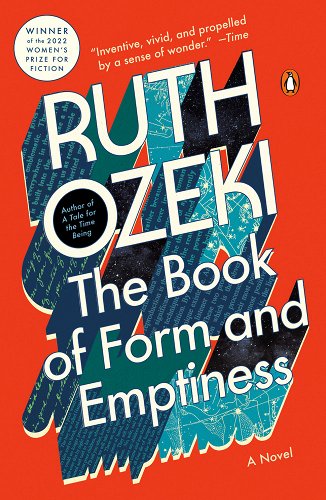
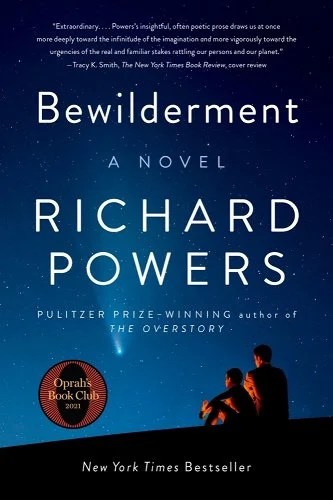
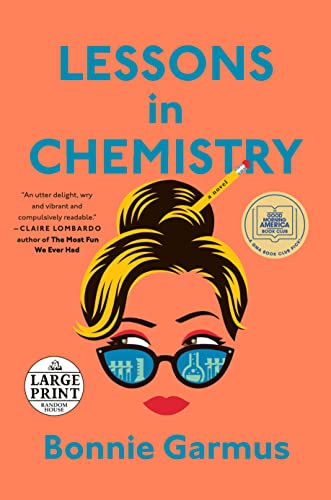
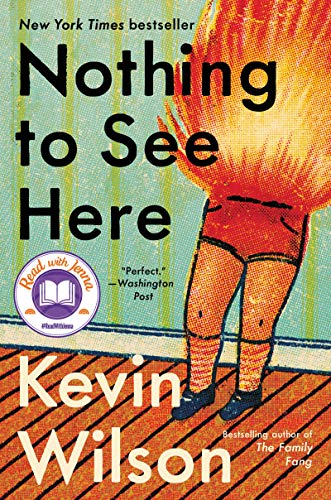
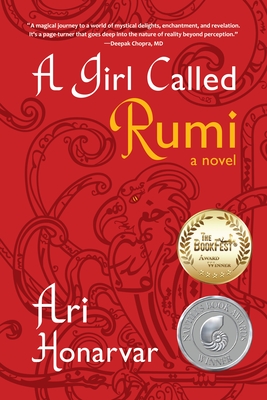
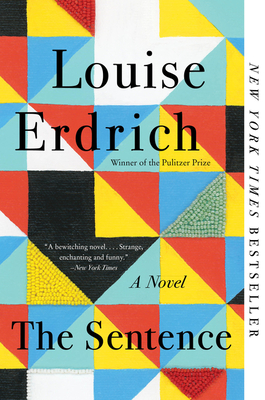
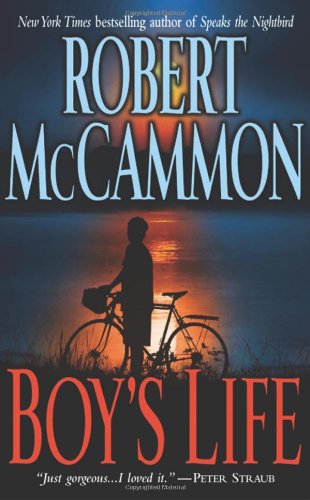
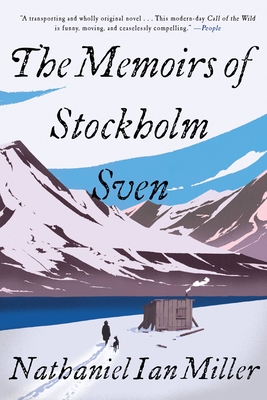
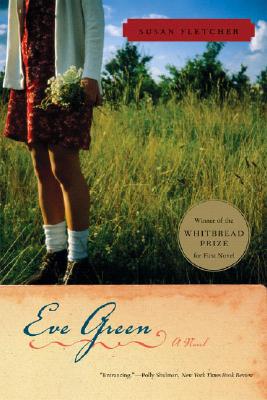
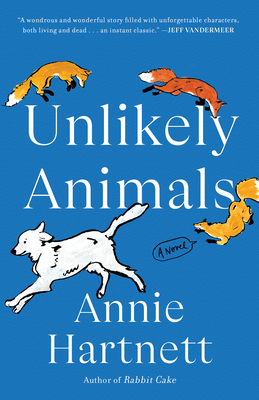
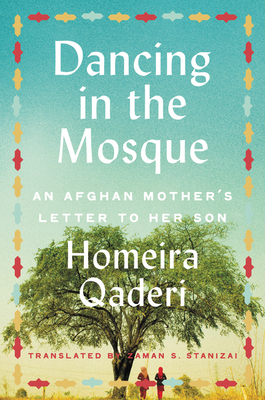
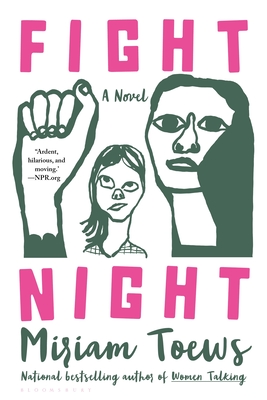
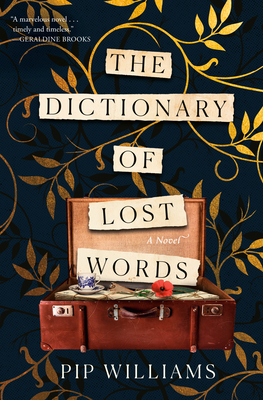
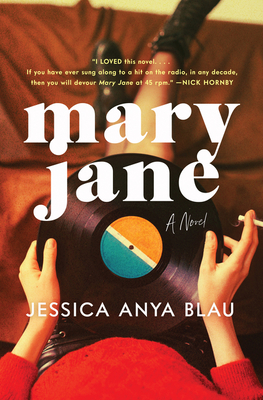
 What makes us into who we are? I wondered about that early on, thanks to four rows of biographies in the children’s section of Porter Public Library. They were shelved separately from other books, even other biographies, in the

 Laura Grace Weldon