Post Amusement Park Visit Syndrome

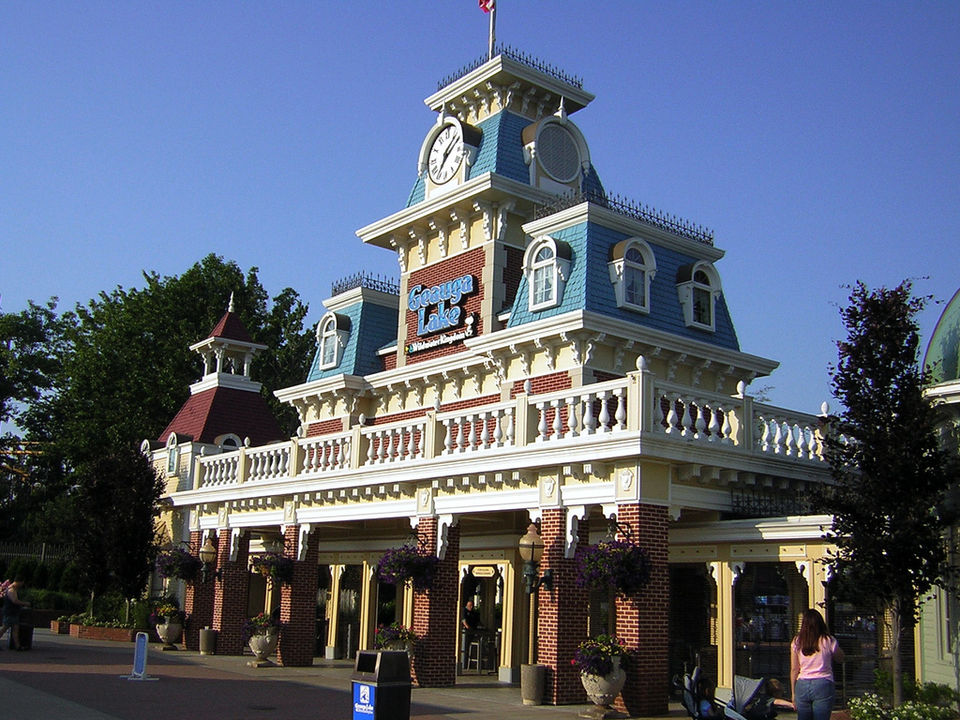
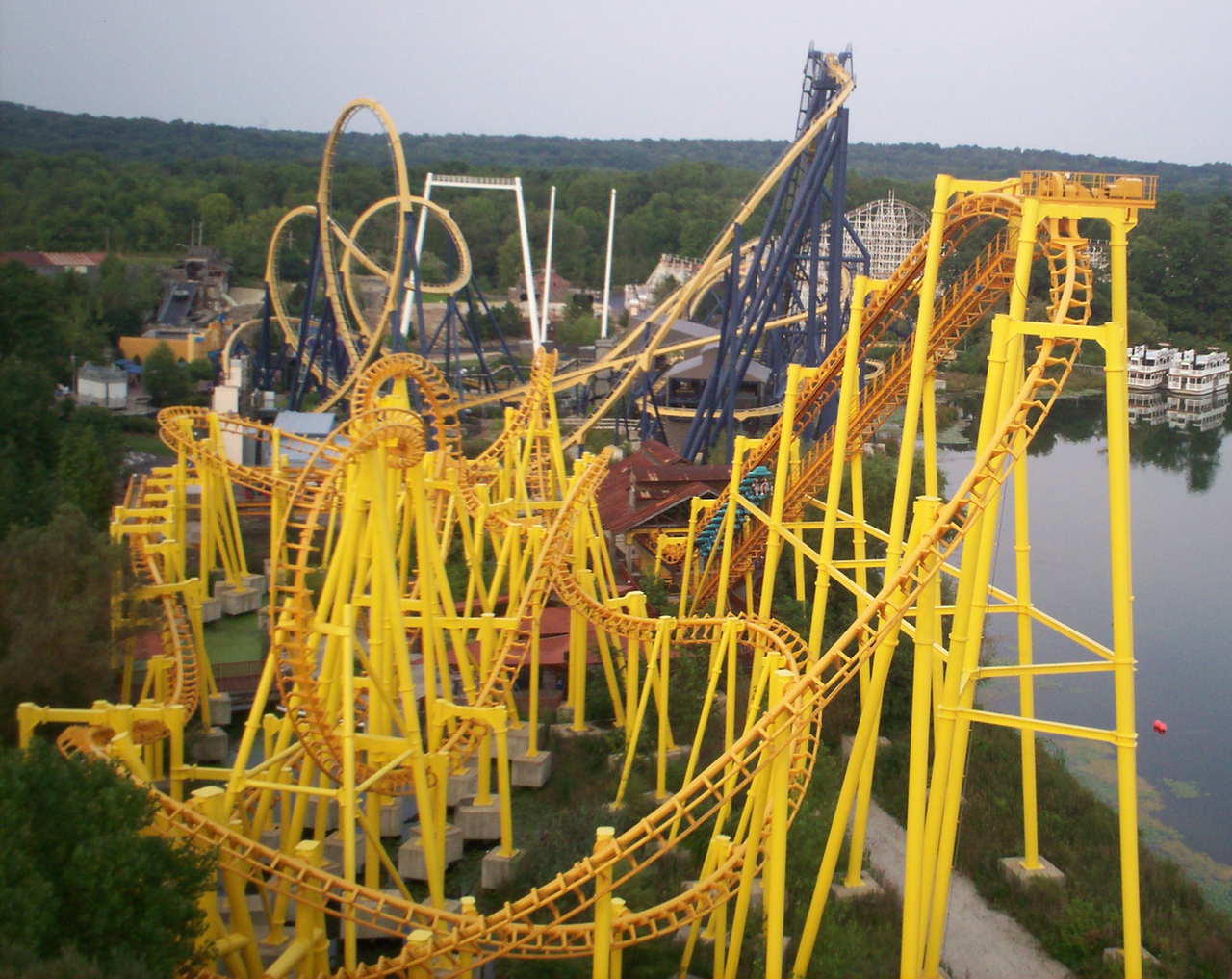
Once each summer, I’d take my four kids to Ohio’s Geauga Lake, a now-closed amusement park. The park put out entrance fee coupons that made it almost affordable. They also permitted visitors to bring in their own food, unlike the more enticing (and expensive) Cedar Point. I’d drag our red wagon behind me packed with food, diaper bag, cooler of drinks, and whoever was a toddler at the time. When we finally got home I’d hustle them through a quick scrub, pull on their pajamas, and shorten our evening sing together time so they could get to bed well past their usual bedtime.

I was in my 20s, then my 30s, energetic enough to leap up each morning toward whatever the day held. But every summer, after our amusement park visit, I found myself beyond exhausted. My whole being simply on the fritz. I had no idea what the problem might be. I gradually realized it was overwhelm. A long day of constant vigilance at a crowded venue keeping my kids in view. A long day of noise without a moment’s peace to sit somewhere quiet for a spell. A long drive there and back.

I learned to avoid planning anything the next day or two after our annual amusement park visit. It wasn’t just me. The kids needed time to chill out too. They’d lie on the couch reading or play in the backyard or draw pictures while listening to audiobooks. They didn’t want to go anywhere, didn’t want friends over, they just needed to BE. We were like those creatures from Dr. Seuss’ Sleep Book, the Collapsible Frinks.

That’s what this year has felt like to me. Like post amusement park visit syndrome. Every day’s news packed with atrocities committed in our names against people around the world and people down the street. Gut-punch news about this administration’s war against the environment, healthcare, education, civil rights, even civility. Nearly everyone I know is beyond overwhelm, no matter if they voted for or against. I’ve barely been able to write this year— no essays published and only a few poems. To close, here’s one of those poems, this one published in One Art: a journal of poetry:

I DREAM OF HUBBLE’S LAW

I’m standing in front of my mother, head tugged
while she braids my hair as she does every morning.
I am seven years old, she must be mid-30s.
Her lipstick is bright red, her hair nearly black.
Taster’s Choice freeze-dried coffee in her cup,
Cleveland news and weather on the radio.
My baby brother bangs his spoon,
smile-flinching each time it strikes.  
My sister and father are at the table, all of us
unaware we’re in my dreamworld,
unaware we are inexorably moving away
from each other the way stars grow more distant.
Stand still she says as she fastens a tiny rubber band
at the bottom of each braid so I don’t turn around
to hug her as I long to in my dream. I want to hang on
for dear life as galaxies move apart ever faster
in a universe widening toward absolute zero.

Roller coasters are fun, unless you can’t find a way to get off.

A Glorious Shade of Purple

I was stuck in the miseries this morning due to small funked up health problems and huge funked up world problems. I try, as a practice, to have a silent but earnest conversation with my insides when the miseries have a grip on me. I say to pain or fear or despair I see you, I acknowledge you, help me learn from you and beyond you. (Okay, sometimes my inner conversation isn’t all that polite.)

And I try, as a practice, to look around me with gratitude even if, like this morning, it felt like I was spreading a thin layer of appreciation over a turbulent inner mess. As I drove to meet someone I love for our weekly walk, I did what I could to savor the air’s spring freshness. I did what I could to notice light flickering through the trees, flower baskets hanging from storefronts, and the kindness of a driver waving another car ahead.

My mind drifted right back to the morass.

I don’t know how any of us go on with our ordinary lives lately. I am among those privileged enough to have my days largely unchanged, so far, despite—among other tragedies—a climate pushed past the tipping point, despite the ongoing genocide of the Palestinian people, despite all three branches of government stomping directly into authoritarianism. I’m aware my puny efforts to protest, write letters, support good causes, even drive around with a handmade protest sign on my car aren’t enough. I simply hope it’s a teensy contribution toward the transformative 3.5 percent rule invoked by Erica Chenoweth, author of Why Civil Resistance Works. After researching hundreds of social/political change movements over the last century, Dr. Chenoweth found that nonviolent campaigns are twice as likely to achieve their goals as violent campaigns. And although the exact dynamics depend on many factors, her data shows it takes around 3.5% of the population actively participating in the protests to ensure serious political change. But what are the chances it can happen here, I grumbled to myself.

And then I drove past a dumpster. A beautiful dumpster.

It was a deep purple, a purple most often seen in delphiniums, pansies, hydrangeas, and irises. The sort of purple that would look good as a velvet dress or painted across a domed ceiling scattered with gleaming constellations. My mind gladly rested on that color purple for the rest of the drive.

On my way home after the walk and an appointment, I went the long way just so I could take that dumpster’s picture. It was right outside a small locally owned flooring shop. As I got out of the car I realized the dumpster had recently been painted. I could almost see the former lettering under its shiny new color. Someone, maybe the shop owner, had chosen that color. Chosen to grace this useful, much-maligned object with beauty. For all I know, it’s the only dumpster that color for thousands of miles.

I’m plotting to drag my spouse to that shop to see if we can afford to do something about our kitchen’s falling apart linoleum. Whether we can or can’t, I’m going to tell the shop owner how much that glorious purple dumpster lifted my sagging spirits. As Alice Walker wrote in her magnificent The Color Purple, “I think it pisses God off if you walk by the color purple in a field somewhere and don’t notice it.”

Maybe that applies to the color purple anywhere we find it.

It’s Not Us Vs Them

Connie Lim, who performs as MILCK, co-wrote “Quiet” ten years ago. It was a very personal song in response to sexual assault and abuse she experienced in her teens. She sang it, along with a cappella singers, at the Women’s March in 2017. Their performance, captured on a phone, still brings tears to my eyes.

I was there at the march (late, because our bus broke down) along with a half million other marchers. There were military vehicles parked on street corners to deal with what the new administration assumed would be violence but, of course, it was an entirely peaceful rally. Many homeowners had welcome signs on their lawns, some put out offerings of water bottles and snacks. Everywhere we went our fellow marchers as well as DC businesses were gracious and helpful. After the march was over it took hours for thousands of buses to load up and head out from the parking lots, returning marchers to all parts of the country. On that dark January night they looked like ribbons of light pulling out onto the roads. 

Recently, Ms. Lim was asked by a woman if she, as a Republican, could also sing “Quiet.” On her Instagram page, Ms. Lim wrote,

“As a musician, a woman, and survivor of domestic violence, I felt grief to know that politics would create division to the point that someone would wonder if a song of survival could be for her, too. What if we can looked beyond… and wonder about what we have in common? I want to offer bridges through art. To create innovative coalitions that rise above the illusions of categories. We are entering a time where we must resist binary thinking. To seek the river beneath the river.”

We are not as polarized as we’re said to be here in America. Hear me out! I know there are vast differences in the spectrum from left to right. But in poll after poll, it’s clear we want stronger practices in place to keep our our water clean, our food safety assured, our roads and bridges maintained. We want decent workplaces and the best possible lives for our children.

Whatever our partisan affiliation, most humans want the same things. An affordable home, access to good food, meaningful work, quality healthcare, and enough time outside of work to do what brings us joy. We also want the rights assured by law including due process, equal protection under the law, the right to worship as we choose, to protest, and to vote in fair elections. Nearly all of us want our tax dollars do some good for actual people rather than giving it to big corporations and billionaires.

A recent Pew report showed 86% of Americans believe small businesses have a positive effect on this country. Only 29% believe the same about large corporations. A Navigator study found 7 out of 10 Americans say big corporations and the ultra rich are more responsible for the amount of taxes they pay than poor Americans who don’t pay taxes. And Americans are not doing well, financially. Overall, 76 percent of people in households making less than 100K describe themselves as struggling to make ends meet or unable to make ends meet.

New research shows striking bipartisan consensus on the challenges facing the next generation and the solutions to address them. When asked if the federal government should prioritize policies that benefit young people 88% of Republicans, 83% of Democrats, and 75% of independents agreed. Across parties, three-quarters or more of parents say a paid family, parental, and medical leave program for workers who need to provide short-term care for family members would make the lives of American children better, as well as more tax credits for programs that support families, and more government funding to help parents afford child care and after-school programs.

A recent Gallup poll showed 48 percent of Americans see climate change as a serious threat and 37 percent say they have been personally affected by an extreme weather event in their area within the past two years. The majority of people polled in 2024 agree climate change is human-driven. Three-quarters of Americans, regardless of where they live, say they experienced unusually hot or cold days this year. About half experienced extreme storms, 43 percent experienced flooding, 35 percent experienced droughts and water shortages, and a quarter experienced a wildfire. To avoid these extreme climate events, 1 in 5 Americans say they would consider moving. Six out of 10 Americans say they would support wind turbines and solar farms being built in their communities — that number includes over half of Republicans.

A sweeping majority of Americans, including Republicans, oppose cuts to Social Security, Medicare, and Medicaid. Sixty-two percent of U.S. adults, the highest percentage in more than a decade, say it is the federal government’s responsibility to ensure all Americans have healthcare coverage.

Let’s just take the well-being of children as an example. However people voted, it’s hard for me to imagine most of us really want the FDA to suspend quality control testing of milk, while also suspending programs ensuring accurate testing for bird flu and pathogens in dairy products. I don’t think we want to halt research on environmental hazards faced by children, including exposure to wildfire smoke, effects of pesticide exposure, and preventing forever chemicals like PFAS  from contaminating the food supply. I don’t believe most of us want funding indefinitely withdrawn that covers: investigations of child sexual abuse and internet crimes against children; response to reports of missing children; and preventing youth violence. I don’t think we want the farm-to-school grants cancelled—the ones buying fresh food from small local farmers for healthier school lunches. And there’s talk of eliminating Head Start programs altogether. These are just a few examples—from this week!— of the vicious cuts that stand in counterpoint to the lavish benefits afforded to the super rich as well as the largest corporations.

(I am still unable to imagine why anyone wants our tax dollars—somewhere in the region of 25 billion so far—to finance the ongoing genocide of the Palestinian people. Currently the number of unique and precious lives lost is 50,810 Palestinian and 1,706 Israeli human beings. Maybe my imagination is faulty.)

We are told, lectured, screamed at that the “other side” is out to get us. A majority of Americans polled say that legislators, pundits, and TV news personalities increase division in the country. At the same time, one in three Americans get most of their political information from friends both in real life and on social media. When our social circles are a monoculture of opinion we don’t learn from the stories and life experiences of people whose beliefs and opinions differ from ours. This not only diminishes mutual understanding, it fosters increasingly extreme viewpoints.

For many decades, Americans got their news from mostly local newspapers along with national news broadcasts hosted by folks like Walter Cronkite. It gave each community a closer look at what was happening around them— house fires, crimes, high school sports, city council votes— as well as a common national narrative that made some space for different opinions. Now people have different opinions based on different “facts.” Deliberately false stories and memes spread with a force too fast for fact checkers. And many refuse to believe fact checkers when lies are exposed. Despite jibes against “left-learning” and “mainstream media,” when the audience size of popular online shows — podcasts, streams, and other long-form content–is assessed for right-leaning or left-leaning ideological bent, it turns out conservative shows dominate the ecosystem. That holds true even when the content is not explicitly political but oriented to comedy, sports, gaming, or entertainment. Historian Anne Applebaum writes in her book, Twilight of Democracy,

“The issue is not merely one of false stories, incorrect facts, or even the election campaigns and spin doctors: the social media algorithms themselves encourage false perceptions of the world. People click on the news they want to hear; Facebook, YouTube, and Google then show them more of whatever it is that they already favor, whether it is a certain brand of soap or a particular form of politics. The algorithms radicalize those who use them too…

Because they have been designed to keep you online, the algorithms also favor emotions, especially anger and fear. And because the sites are addictive, they affect people in ways they don’t expect. Anger becomes a habit. Divisiveness becomes normal. [Online content] already helps shape how politicians and journalists interpret the world and portray it. Polarization has moved from the online world into reality.”

Our nervous systems can easily become accustomed to daily, hourly, even minute-by-minute doses of anger. As an emotion, anger feels energizing. It stomps the brakes on moral and rational perspectives because it originates from the more primordial parts of our brain. It may provide a rush, similar to thrill-seeking activities that trigger dopamine releases— the way gambling might do for someone addicted to betting on poker. Anger can actually serve as a comfort zone, connecting us with other like-minded people and distracting us from uncertainty, emptiness, or fear.

My wise and entirely charming friend Michael said, at our recent book group meeting, “Hate is the new energy drink.” Except it’s not new. Those with wealth and power have long fostered hatred to achieve their own aims. People screaming about immigration or immunizations or who is using what bathroom are distracted while the elite grab more and more for themselves. More of your rights, your security, your future.

This needs to stop. Instead we need to talk to each other, person to person. We need to truly listen and hear the stories behind the anger.

Open dialogue with the very people she condemned is what inspired Megan Phelps-Roper to renounce her membership in the extremist Westboro Baptist Church. It’s what led neo-Nazi skinhead Christian Picciolini to stop spreading hate and work to lead others away from such ideologies. It’s how Daryl Davis, as an African American, befriends Ku Klux Klan members in hopes they will have a change of heart.

As Brandon Stanton writes in Humans,

“Our struggles connect us. We relate to the challenges of other people much more than we relate to their victories. We empathize with pain much more than joy. The moment we truly see ourselves in another person is when we realize that we’ve felt the exact same pain…. Maybe pain is the most universal feeling. Maybe there’s an invisible, connective thread that runs between the loneliness of an old man and the hunger of an impoverished child. Maybe pain isn’t divisible… Recognizing pain in another person is the primary driver of empathy. It’s the beginning of compassion.”

That Guy

I’m standing in line at my usual Ohio-owned grocery. There are so many people in each register line that we’ve threaded ourselves into the aisles, people saying “I’m behind you” as they jockey their carts into place, with everyone leaving the center lane clear for shoppers still trying to finish shopping. Among people who don’t have their phones out, brief conversations pop up here and there over little things like the weather or an interesting item found in the clearance section. And then That Guy enters the line. Actually, cuts in the line until it’s pointed out to him that the line starts (hands waving) back there.

He’s an older man, maybe early 70s, hearty-sized in body and voice. He says a small aside to the woman he finds himself waiting behind, something about the long lines, and she briefly commiserates. That’s all it takes to get him started.

“Looks like nobody wants to work anymore,” he announces to everyone in the front of the store. “Bunch of losers these days,” he says, then looks around with pride as if his opinion sparkles.

I’m nearly to the register. The person waiting in front of me is a 20-something guy I’d insisted go ahead because he had only two items – a bouquet of flowers and a package of hot dog buns. He turned around at the commotion and we rolled our eyes at each other.

“Maybe he should apply to work here,” the younger guy says quietly.

I say, “Maybe the store needs to pay more.”

He nods. I add, “And maybe the millions of people with long covid can’t work.”

While we two are snarking, I realize the people now in line behind him as well as the woman in front of him are not snarking. “I worked 35 years. I earned my retirement,” he says. “I shouldn’t have to stand here like this.”

“The lines are moving pretty fast,” says the woman who had previously commiserated.

“What the hell is taking so long?” His voice goes up in volume. “Pardon my French, but all we’re trying to do is give this store our hard-earned money.” I think about all the checkout clerks whose difficult jobs are made worse by loud-mouths like him. About record-setting corporate profits driving inflation. About divisiveness stoked by pundits.

“I’m old,” he says. “I could die right here in line.”

A woman, probably about his age, is trying to get her cart past his to head down the cereal aisle.  “I’m a retired EMT, one of the first females to qualify in the state,” she says. “You won’t die as long as I’m here.”

I want to cheer at her take-no-crap kindness.

A couple sporting Cleveland Guardians hats are blocked as they try to pass. They stop for a moment, their round generous faces giving him the attention he so clearly needs. “I’m going to be retiring in a few years,” says the man. “Any advice?”

Asking advice, in so many circumstances, is one of the most respectful thing we humans can do for one another. I’m blown away by the wisdom of this question.

That Guy pauses in his general announcement-style monologue to give it a thought. “Yeah,” he says gruffly. “Don’t let your wife die before you do.”

Everyone seems to be listening now. The baseball fan woman rattles a jar in her cart. “Vitamins. I plan to stick around for a while.”

That Guy wishes them luck as they move on. His sadness briefly revealed, he gets back to his protective covering of bluster.

I just witnessed a lot more kindness than the zero kindness my thoughts showed this man. I know kindness is contagious. I know simply reflecting on our own gratitude can help others through the magic of heartbeat entrainment. It’s just not easy.

As I leave I see he is parked one car over from me. He shoves his cart over to the side, as if he isn’t planning to push it over to the cart carrel. “Want me to take that back for you?” I ask, fully expecting a snarl for an answer. “Naw, I got it, he says. “Here, let me take yours.”

“Thanks,” I tell him. “That’s really nice of you.”

He smiles, actually smiles back at me.

I’m going to try harder to see beyond behavior that rankles. And I’m going to keep fighting against every single thing his hateful bumper stickers proclaim.

Heavy Parcel

There can be no keener revelation of a society’s soul than the way in which it treats its children.” Nelson Mandela

Late this afternoon a car pulls in the drive, a woman leaps out with a package, my husband steps from the garage to take it. He sees she has a small child strapped in the backseat. She sees him seeing, says with a shrug, “No daycare, no other choice.”

When he tells me, my first response is guilt. We try (not always successfully) to order directly from companies, organizations, and makers rather than the Monolith Named After A Rainforest River. But still, that means delivery. Which brought this mother out today. This is how she earns enough to feed her family in a country that has zero assured benefits for parents.

I think about the choices our system (more specifically, our system of rapacious capitalism) forces parents to make right now.

Human babies need to be held and nurtured on their own schedules. The importance of secure attachment to parents/caregivers cannot be understated. As Bethany Saltman writes in The Cut, secure attachment in the first year has been shown to be:

“…more important than temperament, IQ, social class, and parenting style to a person’s development. A boom in attachment research now links adult attachment insecurity with a host of problems, from sleep disturbances, depression, and anxiety to a decreased concern with moral injustice…

Beyond all the research linking secure attachments to everything good, attachment is connected to something so profound it’s hard to describe. The literature calls it ‘mentalization:’ UCLA psychiatrist Dan Siegel refers to it as ‘mindsight.’ Basically, it’s the experience of knowing you have a mind and that everyone else has one, too. Then it’s one small step to see that others have feelings, too.” 

Twenty-five percent of new mothers in the U.S. return to work only two weeks after giving birth. Less than 10 percent of fathers have any paid leave available through their employers at all, although few fathers with this option take more than a week off due to concerns their employers will view them as less committed to the job. Research shows parental leave results in long-standing benefits for children and their parents. For example, each week of paid leave reduces the risk of postpartum depression for mothers. It also statistically reduces infant mortality. Fathers who take at least two weeks of paternity leave are more likely to be more involved in parenting, stay married, and have children who feel close to their fathers over the next ten years.  Sweden assures parents 56 weeks, Estonia 84 weeks with up to 166 weeks at lower pay, Japan 52 weeks or more, the U.S., zero.

Today I also read a tweet by Siyanda Mohutsiwa, who grew up in Botswana quite naturally helping out women and their newborns for weeks at a time. She writes,

One of western modernity’s greatest cruelties is the fact that couples are expected to raise newborns alone. I’ll never understand it and it really is an impossible thing… What I’m trying to say is this is not normal. Humans have been giving birth for millennia and nobody was expected to do it alone. It’s not normal to expect someone/a couple to raise an infant alone.

I don’t know who’s to blame. Obviously capitalism and its insistence that you can replace the functions of the extended family/community with products, gadgets, and sheer willpower. The lie that everything is a competition, and that “good mothers” don’t need help.

Humans are herd animals because we need lots of help. It’s not just because we’re social and it’s fun to banter and joke. It’s because we literally need help to make it through this life cycle called being human…

When I lived in a European city, I used to hear my neighbor sobbing alone with her baby. I thought to myself, if this is “civilization” then I don’t want any part of it.  

I wish I could have said to that delivery woman as I’ve said many times to friends, “Leave your kids here for the rest of your shift. It’s no problem at all –my house is full of books and toys and healthy food and comfy places to relax, come on back when you’re done working,” but of course, I couldn’t. We’re instructed nonstop to trust no one. Entire segments of the media have their viewers/listeners convinced they can’t even walk into a coffee shop without high power weaponry slung on their hips.

I used to carry extra board books, snacks, and toys in the diaper bag I continually toted. That’s because I encountered parents everywhere who were stuck in store lines or at the clinic who hadn’t found the time or mental energy or money to throw some child amusements into their bags. I’d hand something to the parent saying, “I have an extra, I don’t need it back” while their newly happy baby was gumming wooden keys or their no-longer-screaming toddler was carefully turning the thick pages of Rainbow Fish.

The box delivered today was heavy with cat food. I’m glad our cats have supplies on hand but can’t help but think how much I’d rather that mother’s child was running around, reading, and playing instead of being than stuck immobile in a car seat out of a system-created necessity for his mom to work all day delivering things so much less essential than mothering.

I’m sure she did everything possible to make the best of it. They probably sang together, listened to kids’ audiobooks, looked out the windows at cows and horses in our rural township. But still, this package of cat food weighs heavily here. It’s a fraction of the weight of injustice, but I can barely carry it while thinking of the people who bear greater weight every day.

Shoulders

by Naomi Shihab Nye

A man crosses the street in rain,
stepping gently, looking two times north and south,
because his son is asleep on his shoulder.

No car must splash him.
No car drive too near to his shadow.

This man carries the world’s most sensitive cargo
but he’s not marked.
Nowhere does his jacket say FRAGILE,
HANDLE WITH CARE.

His ear fills up with breathing.
He hears the hum of a boy’s dream
deep inside him.

We’re not going to be able
to live in this world
if we’re not willing to do what he’s doing
with one another.

The road will only be wide.
The rain will never stop falling.

Undivided

“Respect, I think, always implies imagination—the ability to see one another, across our inevitable differences, as living souls.”   ~ Wendell Berry

I’m afraid I’ve forgotten how to write non-political poems and some recent essays I turned in were just a few degrees shy of ranting. Over the last few years my usual peace/love/humor social media feed on Facebook and Twitter has started to read more like a women trying to jump higher than despair. Every morning it takes strength just to face the news. This isn’t who I want to be. Isn’t who I think we are.
Remember the bundle of sticks story, said to come from the enslaved storyteller Aesop over 2500 years ago?

A father is distressed by the constant quarreling among his sons. Nothing he says eases the discord. When their arguments became fierce, he asks one of his sons to bring him a bundle of sticks. He hands it in turn to each son, asking them to try to break it. None of them can. Then he unties the bundle and hands out individual sticks, which they break easily. “My sons,” says the father, “do you not see how certain it is that if you help each other, it will impossible for your enemies to injure you? But if you are divided among yourselves, you are no stronger than a single stick in that bundle.”

History tells us when ordinary people are pitted against one another, those divisions are fostered by people who benefit. Divisions keep the majority preoccupied while a tiny minority amasses ever more wealth and power. So-called divides are used to keep people tussling over religion, race, ethnicity, social issues, politics — all amped up by fear of change, fear of losing what little you’ve got to someone who isn’t just like you. Meanwhile, what little power and wealth ordinary people have is usurped easily as individual sticks are broken. When we don’t stand up for each other, we lose.

But we are not hopelessly divided. In fact, across so-called political divides we are growing closer on pivotal issues.

Climate Change

Results from a 2019 poll byThe Washington Post and the Kaiser Family Foundation show a strong majority of Americans — about 8 in 10 — say that human activity is fueling climate change.

There’s plenty of shared fear. Forty percent overall believe action to combat climate change must come in the next decade to ward off the worst consequences while 12% believe it’s already too late. These concerns cross party lines and are a significant change from a few years ago, when a 2014 Gallup poll found people ranked climate change among their lowest concerns, with a majority caring little or not at all about the issue.

How to tackle the problem? Nearly two-thirds of people polled support stricter fuel-efficiency standards for the country’s cars and trucks. While many are willing to pay more in taxes and utilities, a majority agree on two methods for funding climate action. Seven out of 10 say the money should come from increasing taxes on wealthy households. And six out of 10 favor raising taxes on companies that burn fossil fuels, even when told companies may pass costs along in the form of higher prices.


Immigrants 

A Pew Research Center fact sheet from early 2019 shows a strong majority of Americans (62%) say immigrants strengthen our country thanks to their hard work and talents. A total of 28% believe, instead, that immigrants burden the country by taking jobs, housing, and health care. This is a major reversal from attitudes prevalent 25 years ago, when a 1994 poll indicated 63% of Americans believed immigrants burdened the country while 31% said they strengthened it.

There are differences in opinion. Democrats overwhelmingly agree immigrants strengthen the nation (83%) while nearly half of Republicans saying they burden the nation (49%). But views among younger Republicans challenge older party views, with a majority (58%) of those under 39 years of age agreeing that immigrants strengthen the country. Notice again an increasing convergence of viewpoints.


Healthcare

The Commonwealth Fund’s 2019 survey found than two-thirds of people (68%) in states that have not expanded Medicaid favored expanding the program. A majority of Democrats (91%) and independents (74%) were in favor. Only 42% of Republicans overall approved, but 57% of Republicans most likely to be affected (making less than $30,350 annually) approved of expansion.

Despite confusion around this complicated issue, Americans are increasingly interested in some form of universal healthcare. A Kaiser Family Foundation poll found 58% of people approved when asked about  “a national health plan, sometimes called Medicare for All, in which all Americans would get their insurance from a single government plan.” In a CNN poll, over half (54%) said the government should provide a national health insurance program funded by taxes, although only 20% agreed it should entirely replace private health insurance. While there are strong differences of opinion a survey by RealClear Politics found healthcare was the top concern of voters, even Republicans were evenly split on supporting or not supporting Medicare for all.

Overall a significant majority of Americans believe workers should receive paid medical leave (85%) as well as parental leave (82%) following birth/adoption.


Economy and Money’s Influence    

 A 2020 Pew Research Center study on economic inequality found seven out of ten adults agree the U.S. economic system unfairly favors powerful interests.

Americans overall agree which groups have too much power over the economy. Eighty-four percent say politicians, 82% corporations, and 82% say the wealthy. Three-quarters agree health insurance companies have too much power, 64% say banks and other financial institutions, 61% say technology companies. There are differences of opinion within these categories, for example Republicans are more likely to say labor unions have too much power while Democrats believe corporate power is a greater concern, but there’s still plenty of common ground.

Americans in general also tend to dislike special interests interfering with elections. Eighty-four percent think money has too much influence in elections. Nearly 8 in 10 favor limits on both raising and spending money in congressional campaigns. Meanwhile, 78 percent of Americans, including 80 percent of Republicans, want to overturn the Supreme Court’s 2010 Citizens United decision that further opened the floodgates to corporate campaign spending, including spending from undisclosed sources.

What will it take to revive hope and work together for the common good?

My friend John Robinson, author of Mystical Activism: Transforming A World In Crisis, spoke in a recent interview about Earth’s sacredness and the peril our planet is in. He compared it to driving down the road and seeing a two-year-old wander into the street.  As he says, “You don’t keep driving and think to yourself, ‘that’s interesting, I wonder what’s going to happen.’ You jump out of the car, you stop all the other cars, and you grab that child to save him. That’s the kind of response that happens when we suddenly get how much in danger we are in and start responding to the world.”

It’s an apt analogy, not only because our instinctual response is to save the child no matter if leaping into the road endangers us, but also because it is an unconscious act of love. That’s where we are now. Life on earth is that child and the politics of the drivers going by don’t matter, the child is in peril.

That word “love” may be key. It’s found in what we are lacking, including a sense of community and shared purpose.  Across all so-called divides, we truly want the same things. Things like safety, freedom, meaning, a sense of belonging, hope for the future, a say in decisions that affect us. We may believe there are different routes to achieve these goals, but the goals are darn similar. That’s common ground.

We’ve been led to believe a brighter, more collaborative future is unrealistic, even impossible, but that’s a narrative that divides and breaks us just as effectively as tearing apart Aesop’s bundle of sticks. Howard Zinn reminded us in this article written a few years before his death,

There is a tendency to think that what we see in the present moment will continue. We forget how often we have been astonished by the sudden crumbling of institutions, by extraordinary changes in people’s thoughts, by unexpected eruptions of rebellion against tyrannies, by the quick collapse of systems of power that seemed invincible….

I keep encountering people who, in spite of all the evidence of terrible things happening everywhere, give me hope. Especially young people, in whom the future rests.

Positive change takes place when people work together regardless of naysayers, regardless of divisions fostered by those who seek to consolidate ever greater wealth and power. We’re here for more than short-term satisfactions. Leap up, save the baby from the road.

How Do You Stay Hopeful?

We are living in times that can overwhelm even the sturdiest among us. Each day’s news seems increasingly hard to bear. As the months drag by it wears us down in different ways. Outrage and anguish can fray our bodies. Addressing too many issues can fracture our effectiveness. Cynicism or complacency can hide our hearts, even from ourselves.

I reached out to friends on Facebook and Twitter seeking to find what others are doing to hold themselves up.  My question:

Please tell me what you are doing to remain hopeful in these times. If you are doing something, anything, to help turn the tide toward ethics and common sense please share that too.

A welcome tide of hope rushed back at me. I found it interesting that nearly all of it had to do with nurturing — nurturing relationships, creativity, possibilities, balance, and compassion. Here are some of the hope-inducing insights friends shared with me.

Find balance

Strengthening myself with compassionate activities like gardening, yoga and reading books by great minds. Really trying to be a better listener without feeling the need to always respond. Trying my best to raise empathetic kids who in turn will carry the torch on their own.

I kind of feel like light shines twice as bright in so much darkness.   ~Tobias Whitaker

Almost every Monday morning since the inauguration a small group of us meet at a local coffee shop and write postcards to our legislators. We also make phone calls and send faxes. Being with like-minded people helps. This week I am spending time with a great group of women in a cottage at a lake, eating, drinking, discussing books and authors and recharging my batteries.   ~Betty Kramer

I’ve never done anything that fills me with more hope than raising my little boy. The equation seems so clear. I put in love, reasonable limits, and real time in the moment and he grows up curious and kind. I reach out to  make our apartment a gathering place for other mothers too. We have a lot of hope that our generation can make a difference.   ~Rosie

I have planted seeds and trees, and I’ve spent time with the littles in the family. I’m doing some stuff in the studio, making things I love. I’ve registered young people to vote, and stood on a street corner on a cold winter morning honoring the kids who are organizing for change. I walk and/or hike almost daily. I drink good coffee. I send wee gifties to folks I care about, and leave things in public places to be found by strangers.

I rarely read the news, knowing that there is a lot of tough stuff going on. I am selective in what I listen to on the radio. I just, as my English mother-in-law used to say, keep chunking along.   ~Debra Bures

I keep working on getting people to vote. Two new voters yesterday! They previously did not vote because they did not like any of the options, but now see their responsibility…  Also, I get out in nature, with grandchildren, garden, sing, throw pots (but not against the wall). I’m involved with an amazing herbal healing group and love the alternative focus. I joined and participate in the Crooked River Timebank and that is a strong community building, for Mama Earth and her people, positive fun thing to be part of.    ~Carolyn Rames


Build connections

I talk to the person checking out my groceries. I ask the guy panhandling at the corner how he’s doing every single day and wait to hear what he’s got to say. I sit down with the maintenance guy in my building for a beer if he comes by. Clicking in with people does me good. The more people ignore each other the worse they make it.     ~Elgin

I find hope (lots and lots of hope) in the work of a group called Better Angels – here’s why. While attending our first convention I enjoyed three days of stimulating conversation with folks who politically are polar opposites and yet, because of a common desire to depolarize our country, we approached each other with positive intent and listened to one another with love. The goal? To learn to listen to understand how people think and believe – period. Not to debate to win or change another person’s mind. Just listen with love to hear and understand.  It was inspiring to say the least and, a universally positive experience for those who attended. As a result, my husband and I as well as many others both left and right leaning are committed to being trained to facilitate the peaceful exchange of ideas. We need to depolarize our country and we know that we can.   ~Leslie Boomer

Hone down to what you can do

I am working on getting my backyard certified as a backyard habitat for the National Wildlife Federation. I am also working at a glacial pace on 7 personal goals. I am trying to control a small portion of the world and make it better.   ~Katherine Clark

I am raising money to provide legal representation for immigrant children separated from their parents.   ~Brett

I decided to focus any activist leanings I have this year towards getting people to vote. I joined the local League of Women Voters and am trying to help with their events when I can.   ~Kathy

I stay involved in my community….serving on the board of directors and being active in my local community theatre, serving as President of the Friends of the Library and volunteering for the county parks. Being the change I want to see in the world starts with my neighborhood, imo. And I am raising daughters who are following my example.   ~Lissa

Look for what’s good

Focus on the world around and closest to you, those you love and touch and see and hear in your everyday life. We live in a time when choosing to separate yourself from the noisy, chaotic, distractions in the world is more difficult than ever, but even more essential. Essential for your own individual well-being, but I believe critical to humanity.

…Focus on the good. I guarantee if you look carefully at the world within your sphere of influence, those close to you, you will find goodness, strength and hope. You will be able to contribute to that. You will, in a very real sense, help to create peace in this world. I believe we can all do that. And if we did, can you imagine the impact?   ~Cheryl

Amplify beauty and meaning

My job as a music programmer for Crazy Wisdom in Ann Arbor is a huge help — booking musicians, hosting the shows and just being alongside people as they take a weekly break from all the craziness around us is a positive high point in every week. In a similar vein, hosting our house concert series keeps me grounded in my home, neighborhood and local community and gives me yet another opportunity to serve musicians, friends and family–all of whom are creative, vibrant, caring people doing their bit, every day, to “get us all back to the garden” which is my aim and goal as well. I post poetry on FB and I’ve been doing a “poetry post card” project with a friend of mine–we write a poem a day—or try to–on a postcard, sometimes adding a bit of art or whimsy to the cards–and we pop them in the post to each other. This also necessitates a walk into town to the PO (our postal carriers often neglect to pick up mail so I take it directly to the post office instead) and the walk takes me into my neighborhood–I get to see people, say “Hi” and maybe stop for a chat–I get some exercise and clear my head. I’m committed to doing everything I can to keep the world around me sane, centered and peaceful so I try to be deliberate in my choices, to choose, always, “the things that make for peace.”

I do experience discouragement–I sometimes feel that I’m not doing enough but I know that what I am doing is true to who I am–to my temperament, gifts and abilities and part of my effort is tuned to encouraging others who don’t feel as though they quite fit into the “activist” personality that they are still needed and that their gifts–their poetry, essays, music, food, presence–is “enough” because the last thing we need is a lot of people feeling helpless or getting the idea that there’s only one, right way to be “active” in making the world a better place.   ~Michelle Wilbert

Art, art, art (which includes writing). All forms of creative play. NOT watching or reading (so much of) the news. Meditation/chant/quiet time. And I’m a big subscriber to this way of thinking, as Cinelle Barnes said, “Sometimes, I think, laughing is a form of resistance. There’s nothing more annoying for an oppressor than to see the oppressed thriving in the midst of struggle. Joy is resistance, and so is hope.”   ~Paula Lambert

Do work that makes a difference

What brings me hope is how uncommonly simple it is to make peace person-to-person. This is my daily practice. I work front office for a high volume tire company dealing with customers, reps, employees, whatnot all day long. I do what needs to be done and at the same time consciously choose to see the person I’m dealing with as a Child of God (or soul or stillpoint or whatever you want to call it). It doesn’t take a second longer to pay attention with my eyes AND my spirit.  This changes everything for the better, believe me.   ~name withheld

The interviews I do for The MOON almost always inspire me. This morning I spoke with Earth Guardian Xiuhtezcatl, who has been a vocal champion for the Earth since he was six. He’s also a hip-hop artist and published author. His new book is “We rise.” Thank God.     ~Leslee Goodman

I am working with a local school to create a racially inclusive and safe community as well as advocate for youth.   ~Malaka

I find my job as a family therapist incredibly meaningful. I work with people who are greatly impacted by the political and economic realities, but who are also very resilient. For their sake I am able to rise above apathy. The personal relationship I develop with struggling clients fuels me to take greater steps in advocacy. By walking with them, just a little bit, I learn about the network of social services that is available. It seems that this network is fragile and not enough, but I meet incredible unsung professionals (social workers, teachers, therapists) who are good stewards of resources. There is energy in numbers. Oh, and I also don’t work more than my agency job description calls for. I go home and enjoy people I love.   ~Jennifer Olin-Hitt

My job is poorly paid and gets little respect, but I bring my all to it. I’m an aide in the 3 to 4-year-old section in one of St. Louis daycare companies. These little people are learning to express themselves, validate emotion, share, care, and analyze everything around them. No price can be put on their enthusiasm and love. I don’t know why today little kids don’t matter (or the people who watch them), but this is the future. After work I go home knowing I did my best.  ~Tiff

I signed six children up for Summer Reading today. And I accepted a donation of five hundred books from a woman’s mother’s estate; they will be sold to support educational programs for Cleveland youth at The Reading Room CLE.

I try to do what I can, and not spend energy on things I can’t control. So when the news went out that ICE was operating a checkpoint at 150th and Lorain, I shared the information, hoping to help people avoid the intersection. I don’t know what to do about this technically legal but horrifying behavior. Do we go take pictures? Protest? Knock over the ICE truck? I don’t know. I don’t know. But instead of spending the next three hours grieving into Facebook, I put down my computer, went out in my garage, and boxed books for the Reading Room. After three hours, I was exhausted, sweaty, and dirty. But those three hours will help children learn to read. I feel like that’s better than weeping into my laptop, alone, for an evening.

One more thing: all that weird, oddball stuff I do? My art, my performance poetry, my quirky fashion choices? People ask me where I get the ideas for these hobbies, what motivates me to spend my time on this stuff. But those are coping skills. They build my strength so I can stay healthy and help others. Our culture and economy depends on people using entertainment and pleasure-seeking to cope with the everyday brokenness of our lives. It works better, for me to be kind and creative. It works better than mani-pedis and salt baths and chocolate cake.    ~L.S. Quinn 

Take care of yourself

I’m immersed in news all day long. When I get home from work I ignore my phone. I go for a run with music in my ears and space between, have some dinner with my partner, then let the body tell me what it wants to do.  ~Jaxxon:

Spend as much time outside in the sunshine as humanly possible. (I can weep for humanity and get vitamin D at the same time!)   ~Kris Bordessa

I find that I have to continually pull myself back into the present moment to avoid being sucked into the maelstrom – to instead see from a more level-headed perspective. I try to remember to recenter and refrain from letting my body be impacted. I take care of refreshing my body, which is so closely connected to where the mind goes, and I get out into nature to keep an even bigger perspective.   ~Lillian Jones

I am cooking at home more. I’m growing pots on my balcony with peppers, tomatoes, and beans. When I make something homemade my senses are busy and I don’t think about how bad everything is getting, you know?  ~Franco

I’ve quit watching TV. And I’ve ramped up showing kindness to strangers and every person I meet at the library. Also, sending unspoken blessings to people on the highway as I commute. Finally, I’m donating food and money to the Sandusky immigrant cause. Just trying to turn up the light.   ~Laurie

As a friend of mine always says, “Read more poetry, eat more chocolate!”   ~Virginia Douglas

What about you? How do you stay hopeful?