Is Nature Somewhere Else?

connect with nature, look at the sky, peace, tranquility, research nature and health,

We tend to think of nature as separate. We imagine spending time “out there” hiking in some remote wilderness, drinking from mountain streams and observing creatures that have never faced highway traffic. There, in a place far from our busy lives, we might find peace, tranquility and some kind of deep connection to what is real.

If. We. Just. Found. Time. To. Get. There.

That’s part of the problem. Because we’re already there. We are nature, right down to the life processes of every cell. And what’s around us even in the smallest city apartment? Nature.

Nature is the food we eat, air we breathe, water we drink. It’s seedlings pushing up between cracks in the cement (and the cement itself, depending how you define it), birds lighting on utility poles, pollen making us sneeze, storm clouds swelling with rain. It’s a living planet in a universe of natural laws that continue to be revealed.

When we define nature as separate from us it’s easier to push it aside as something apart from our very life force.  This disconnect isn’t healthy for us or the planet.

In part it simply has to do with SEEING. I learned this when I helped conduct a psychology study in college.  We went to urban office buildings and asked people two questions. First, we asked each person to describe his or her mood. Second, we asked them to describe the current appearance of the sky. These people were in their offices or hallways when we talked to them and the windows in most buildings were shuttered with horizontal blinds ubiquitous during that decade, so the only way they could have described the sky is if they had paid attention on their way to work or during a break. Here’s the interesting part. The people who identified themselves as pessimistic, angry, depressed or in other negative terms were also the ones unable to describe the sky’s appearance. You guessed it. The happiest and most optimistic people either correctly described the sky or came very close.

That study was never published, but research continues to show that pausing to experience nature in our daily lives has a powerfully positive effect on our minds and bodies. Just a few minutes of regular exposure leads us to be more generous, creative, and enlivened.

So wherever we are, let’s pay attention. Let’s remind ourselves to look at the sky every day, not just for a moment but long enough to savor it (without declaring the weather good or bad). Let’s put our bodies into the experience by taking regular strolls and touching the bark of a tree, a flower’s soft petal, the texture of a rock. Let’s watch the habits of birds, squirrels, spiders and other creatures making their lives amongst ours. Let’s pick one tree near our homes and notice it as the seasons pass, as we would a quiet friend sharing the same neighborhood. It takes only a shift of awareness, but it can make a world of difference.

Nature is right here, moment to moment, in each breath we take. It connects us to what’s real and helps us be the people our planet needs right now.

How Big Are Your Moments?

hurry, multi-tasking, paying attention, living each moment, conscious living, cherishing loved ones, “Every moment is enormous, and it’s all we have.”   Natalie Goldberg

When my daughter was a baby she napped in the stroller. One time. This may stand out in my memory because it was so unusual. Or because I savored that wonderfully long nap in a babyhood troubled by chronic illness. But I think it’s because I consciously chose to hold on to the memory.

That day I pulled the stroller gently into the backyard. Tiny spring wildflowers sprouted everywhere in the expanse of weeds we called a lawn. The honey locust trees were in bloom, making the air smell particularly sweet. As I sat there watching my oldest child play and my daughter sleep, an ice cream truck passed a few streets away, adding a magical tune to the afternoon.  The springtime smells, the sun shining on my little boy, the soft untroubled look on my baby’s face, the complete peace of sitting on the back step are still with me.

Our lives are stitched together by what we notice and remember. Look back at any particular phase of your life. What you recall is constructed from what you paid attention to. Each moment there are sights, sounds, tastes, thoughts and feelings unique to your experience. The way you pay attention to those elements forms your memories. The shocking part? Looking back and realizing how few rich and full memories we really form.

That’s because we only really latch on to memories when we pay attention. When we’re engaged in the moment. Recall the last really memorable meal you had. It probably wasn’t one you ate in the car or standing at the kitchen counter. It was one you savored with full awareness of flavor, texture, scent. Most likely there were other important elements as well. Perhaps it was a meal shared with a new friend or made from a challenging cookbook. Perhaps it was a last meal you had before a loved one passed away, a meal you now try reconstruct in detail.

It’s easier than ever to miss our own lives. I’m guilty. Large chunks of mine have drifted by unheeded. Sure I was there. But I was distracted. I was multitasking. I was rummaging around in the past or fussing over the future rather than paying attention to the moment.

I won’t delude myself into believing that I have the capacity to stay in the moment. But I can try. And because my daughter has just come into the room I’ll be turning from the computer now to hear about her day.

*

*

*

*

Maybe Next Time courtesy of PORG

Dancing Babies & World Peace

dancing for peace, babies smile to music, net and music, research babies and music,

The magnificent blues guitarist Robert Lockwood, Jr., performed regularly not far from my childhood home. But the divides of race and radio kept me from hearing him play until I was an adult. Even when I started spending my babysitting money on music I was limited to what was available in stores within walking distance. Just like everyone else born before the net, my musical ear was limited to narrow channels of exposure.

As I got older and discovered what to me was new music, I felt my smaller world crack open. Music pours in past filters. Music, perhaps more than any other form of art, evokes a personal response. Unique as it may be to each musician, it’s also an expression of our shared humanity.

Turns out we’re born to be more receptive to music than to speech. According to a recent study babies respond to music, even regular drumbeats, with increased smiling. Even more surprising, this research shows that babies correlate their movements with the tempo and rhythm. They dance! And music gets a much greater response than spoken words. No wonder adults all over the world naturally engage babies in a sort of singsong-like call and response. We’re translating our language into one that is more evocative.

That’s what music does. It makes us known to one another.

Music is used to lull small ones to sleep, rouse teams to competition, woo lovers, worship, commemorate solemn occasions and celebrate. In some parts of the world music is a medium to intentionally and peacefully resolve conflicts. Through music we more fully grasp that all of us feel grief, love, fear, injustice, joy and moments of transcendence.

My children enjoy wider access to music of all kinds. They’ve seen Chinese opera, Tibetan throat singing, Lakota flute playing, Balinese gamelan and much more. They know more than I ever will as they seek out and share music across a huge range of styles. Entranced I wander upstairs to my daughter’s room, lured by the sounds of Le Mystere des voix Bulgares. I pay attention as my son enthuses about Inon Zur, composer of the orchestral music for inCrysis.

Theirs is the first generation to have the full advantage of the net and other music sharing technology. Across all divides, music can be a peacemaker. It can let us slide past cultural differences and language barriers to a place of mutual understanding.  It can let our children keep on dancing and smiling as they were born to do.

*

*

*

*

Little Girl Dancing courtesy of James Lee

Horse Boy: Because Autism Pushes Past Definitions

autism changing definition of normal, autism gifts,

We live in a time when limited definitions and restrictive boundaries no longer apply.

For example, autism.

People with autism themselves are changing what it means to be “normal.” The wild artist, the radical theorist, the creative scientist have long been held at arm’s length from the rest of us. So have many others who push the boundaries.

Amanda Baggs,  who doesn’t speak aloud but does speak through her keyboard, says that autism is a “constant conversation” with one’s surroundings. Ms. Baggs also actively communicates with a network of people around the world through her articles and forum posts. Videos she’s made have been viewed over a million times. Her voice makes a difference.

Which brings me to a powerful new documentary, The Horse Boy (and companion book The Horse Boy: A Memoir of Healing).

It shows the parents of five-year-old Rowan dealing with his tantrums, incontinence and most upsetting to them, their son’s distance. The mother, a psychology professor and the father, a human rights advocate who works with indigenous people around the world, apply diets, therapies, supplements and remarkable patience. Rowan’s screaming outbursts isolate the family. The couple, once world travelers, can barely manage a trip to a nearby park.

Although the father is a life-long equestrian, he keeps his unpredictable son away from horses. But one day Rowan runs to the next door neighbor’s horse. There an old mare reaches her head down and nuzzles the child as if he were her colt. Instinctively the father puts his son on the horse’s back. Rowan relaxes, lies down and talks easily.

A brief experience with a shamanistic healing ceremony that seems to be beneficial stirs Rowan’s parents to wonder where in the world they might find help for their son that pairs horses with shamanism. They end up going all the way to Mongolia.

There they don’t find miracles. But the journey, the horseback riding, the shamanic healing and the wide open landscape precipitates something beyond their understanding. Something happens that has to do with the mystery of autism itself. Although Rowan’s tantrums don’t go away, he also laughs, plays with other children, talks freely and becomes toilet trained. These improvements persist.

Autism is, whatever your perspective, now part of the human experience.  According to some studies, the incidence has risen to epidemic proportions of one in every 110 children. That’s a 50% increase from 1994. Other studies say the incidence may be a great deal higher.

This has been linked to heavy metals  such as mercury and aluminum exposure, to inflammatory syndrome affecting the gut, to a whole range of interrelated environmental factors which may disproportionately affect people with specific genetic or epigenic factors.

autism evolution, autism rights

A friend with two sons whose behavior puts them at the low functioning end of the autism spectrum says her boys, with their overt preference for screen-based technology, make her wonder if we’re pushing the envelope of evolution. “This is what more of our next generations will act like,” she tells me. “I’m not saying it’s good or bad. It’s where our choices have led us.”


Rowan’s father said a prayer before a wind-swept shine in Mongolia for all people touched in any way by autism. He asked that it be understood. He asked that the unknown gifts of autism be revealed.

May it be so.

*

*

*

*

*

*

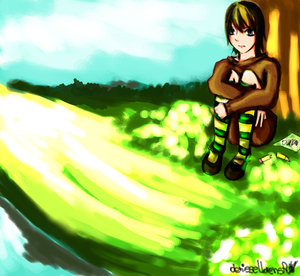
image titled “Autistic” courtesy of Tyora

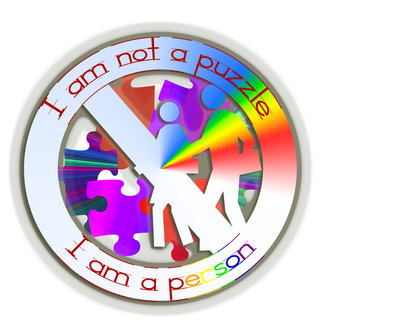
image titled “People Are Not Puzzles” courtesty of hgmuffin_stuff

Going to Hope in a Handbasket


“Not only is another world possible, she is on her way. On a quiet day, I can hear her breathing.”             Arundhati Roy

*

*

*


Fear sells. Blood and guts sell even better. What really grabs our attention? Out and out panic. That largely explains today’s so-called news channels, talk radio, actually much of commercial media. The worse it sounds, the greater audience share they grab and the more money they make. Trouble is, they also make up minds and harden hearts and plant misery where optimism could so easily flourish.

But they’re wrong.

Sure, it seems we’re in big trouble. Structures we count on to be stable are crumbling—finance, health care, education, consumption driven economies, us versus them mentalities, you name it.

Remember the parable of the mighty oak and thin reeds? The oak boasted of his immense girth and height, mocking the reeds all around him for their weaknesses. But the reeds could withstand wind, lightening and the weight of snow. The oak succumbed while the reeds survived, stronger than the oak in their ability to bend and stand again. Big institutions are fighting transparency, reform or annihilation with everything they’ve got, believing that strength means rigidity. Meanwhile a shift is happening on the grassroots level, as flexible and self-correcting as reeds in the wind.

Times of change are destabilizing and difficult, but ultimately valuable. After all, what’s broken, corrupt or simply no longer workable must be fully revealed before it’s healed or transformed into something much better.

Look more closely. Things are getting better all the time. In fact amazing evidence shows that we’ve long been on the path to health and harmony. Here are a few examples.

~

We’re Smarter.

Intelligence continues to increase from generation to generation. In fact, to accommodate continuously increasing intelligence the IQ test must be renormalized (standardized to keep the average test results at the 100). This is called the Flynn Effect.

Between 1932 and 1978, mean IQ scores in the U.S. rose 13.8 points. If your grandparent received IQ score results of 98 back in 1932 they’d have been deemed of average intelligence. That same grandparent, if administered today’s tests, would be considered to have a borderline mental disability by current scoring standards. IQ scores have risen even higher in some other countries: 27 points in the UK between 1942 to 1992. Of late, developing countries seem to be experiencing the biggest surge.

Many explanations have been proposed, but the increase can’t be definitively pinned on genetic improvements, improved nutrition, greater familiarity with testing or better schooling.

According to Cornell professor Stephen J. Ceci, the most direct gains are not in subjects that are taught (math, vocabulary) but are shown in parts of the test that seem unrelated to schooling (matrices, detecting similarities). In fact, test gains have been enormous in areas requiring the child to apply his or her own reasoning, such as arranging pictures to tell a story or putting shapes in a series. Although teaching children does return positive results, what a child learns through the natural stimulation of everyday life has a more profound effect. For example, a study to determine the effect of schooling on rural children in India found that the increase in overall intelligence from a year of age is twice the increase from that of attending a year of school.

IQ test scores don’t relate to what truly provides satisfaction in life. But the Flynn Effect is intriguing. Factors we can’t completely explain are giving us the intellectual capacities to deal with a ever more challenging world.

~

We’re Healthier.

Studies conducted by Robert W. Fogel, a Nobel laureate and economic historian at the University of Chicago, show that in a few hundred years human biology has changed in startling ways. We are more resistant to ill health, more likely to recover when faced with disease and less likely to live with chronic disability. We are also smarter and live longer. Fogel calls this radical improvement “technophysio evolution.”

An interview in the University of Chicago Magazine quotes Fogel as saying, “The phenomenon is not only unique to humankind, but unique among the 7,000 or so generations of human beings who have inhabited the earth.”

Fogel doesn’t necessary attribute the changes to genetic shifts.  Improvements in medical care, nutrition, sanitation and working conditions may cause epigenetic changes.  These are shifts in gene expression that can last through many generations without altering underlying DNA.

Information amassed by Fogel indicates that chronic diseases such as arthritis, heart disease and lung ailments are occurring 10 to 25 years later in life than they did 100 or 200 years ago. Interestingly, well-being may be more strongly affected by conditions each individual faces in utero and during the first few years of life than previously suspected.

Fogel’s most dramatic proof of technophysio evolution was found by comparing Civil War veterans to subsequent generations. Researchers examined health and longevity data of 45,000 Union Army veterans, including over 6,000 black soldiers. Military records revealed that young American men of that era commonly suffered debilitating health conditions. Approximately 65 percent of men from 18 to 25 years of age volunteered for the Union Army. But arthritis, tuberculosis, cardiovascular disease and blindness disqualified a quarter of them. And the military of that era wasn’t choosy. Incontinence and blindness in one eye didn’t disqualify a recruit. Even the youngest men lived with chronic disabilities. Fully one-sixth of volunteers between 16 to 19 years of age were rejected for serious health conditions.

By the time Civil War vets passed the age of 65, 68 percent of them suffered from arthritis, 76 percent from heart disease and over 50 percent from back problems. World War II veterans at the same age, in contrast, counted among their ranks 48 percent as arthritis sufferers, 39 percent with heart disease and 30 percent with back problems.

These remarkable health gains don’t diminish our current struggles with cancer, diabetes, Alzheimer’s disease, autism and other serious health conditions on the increase. Despite the blessing of bodies more resilient and healthy than those of our ancestors of just 150 years ago we suffer the effects of environmental toxins and nutritionally squalid diets. To fully accept the gift of health and energy from our ancestors, it seems we must expand our awareness to make positive changes here and now. That way our choices continue to benefit our descendants.

~

We’re More Peaceful.

We function best through cooperation and harmony. Even our body systems are in greatest sync when we are peaceful, according to studies at the Heart Math Institute. It may be taking us quite a while, as a species, to get accustomed to living in larger settled groups but it seems we’ve come a long way in the last few centuries.

And peace is how our species has come this far, despite what history tells us. According to anthropologist Douglas Fry, evidence shows that for 98 percent of human existence on earth we lived in small nomadic bands that thrived precisely because warfare was avoided. He presents compelling proof in his book, Beyond War: The Human Potential for Peace
along with the message that human beings have highly developed capacities to seek and maintain peace.

Psychologist Steven Pinker points out in an essay titled “A History of Violence” that public cat burnings were a popular form of entertainment in the sixteenth century.  Although we pay more attention to atrocities now than ever before, the horrors of slavery, genocide, barbaric punishment and vigilante justice were accepted as commonplace a little more than a century ago.

Empathy for people of another race or class? Not a typical attribute even a few generations ago. Pinker notes, “Conventional history has long shown that, in many ways, we have been getting kinder and gentler.”

As Pinker cites specific data, the good news gets better. For example, the homicide rate has declined from a rampant 24 murders per 100,000 Englishmen in the 14th century to 0.6 per 100,000 in the 1960’s (5.4 per 100,000 in the U.S. in 2008).

No matter what the angle, the view is good when we look at more recent U.S. history through this lens as well. Despite what ranting pundits and blaring news promos may indicate, crime rates have been steadily dropping per capita since the 1970’s.  Some analysts say by as much as 50 percent in 15 years.  Despite staggering economic losses, crime has continued to decline recently.

The ecumenical organization Project Ploughshares reports,  “Peacebuilding efforts do work. Although one conflict is too many for those being killed and wounded, there has been a significant decrease in the number and intensity of armed conflicts over the past 10 years.”

We’ve come a long way without direct efforts to educate each person in the ways of negotiation, mediation, intervention, reconciliation, heck, even listening skills. Imagine turning our attention toward cooperation and mutual respect. Surely acknowledging the human tendency toward peace welcomes greater possibilities for harmony in the years to come.

~

We Care.

Never before in history have so many people worked tirelessly and selflessly to benefit others. Paul Hawken writes in Blessed Unrest: How the Largest Social Movement in History Is Restoring Grace, Justice, and Beauty to the World
that the abolitionist movement was the first major movement by human beings to advocate on behalf of others without seeking advantage for themselves or their particular social or political group.  Since that time, such efforts have grown with astonishing vigor.

There are now over a million organizations on the planet working for environmental stewardship, social justice, the preservation of indigenous cultures, and much more.  These groups don’t seek wider acclaim, they seek to make a difference for the greater good.

Artist Chris Jordan has made a mandala of the names of those million-plus organizations.  His work is inspiring—-make sure you look at the images up close as well as the whole picture.

It’s time to turn our attention away from doom-shrieking media. While it’s valuable to be informed, such knowledge is useful only to the extent that it motivates us to turn more consciously in a positive direction.

A heavy heart, or worse, a hardened heart, makes it nearly impossible to raise a child or plant a garden or grow a benevolent future.

*

*

Creative Commons image

All Day Every Day Video Game Learning

All day, every day video game based schooling. Great.

A Popular Science article (print version, Jan 2010) extolls the virtues of a recently opened school in Manhattan designed around a  spanking new videogame curricula. Called Quest to Learn (Q2L) the school is heavily funded by interests (such as Intel) outside the NYC school district. And yes, every subject is taught via the medium of video games.

Another oh-gosh-isn’t-this-fabulous article appeared in the mass market magazine Parade and the flurry of media attention continues to accelerate. Soon every school child will be agitating to replace the boredom of classwork with the excitement of gaming.

Their eagerness will be nothing compared to the frenzy of those who make Big Decisions in education. Anything having to do with technology seems to make these folks feel they’re finally hip. Actually, they toss money at any curricula that promises to keep the little darlings quiet, busy and able to pass proficiency tests. In a few years you won’t be able to spit without hitting a school district boasting a version of this all day, every day video game schooling. Just great.

Q2L sounds impressive. Designed by the (soon to be rolling in bucks) Institute of Play, its curricula isn’t structured around ordinary educational games. Learning is integrated between subjects, offers hands-on components and promises to put the student in charge of his or her education. Q2L promotional materials assure parents their kids won’t be glassy-eyed screen droolers. But, and this is a huge but, it’s all day, every day.

Research tells us that high quality video games are known to promote rapid decision-making, logic, visual-spatial skills, risk assessment and intense focus. Author Steven Johnson notes in Everything Bad is Good for You that today’s technologies offer complex intellectual challenges that engage students in ways never before seen. All great. Except for a little thing we call balance.

Candy substituted for every meal, even with all the required vitamins, fiber and omega 3 fatty acids packed into it by a clever non-profit candy making institute, may make kids wildly happy but it still isn’t a real meal. An all day video gaming educational model may be new, shiny and sound perfectly thrilling but without balance it’s simply another way to train the next generation of workers to ignore the vital need for balance in their lives.

A truly balanced education is one that can’t be prescribed or predetermined by any curricula developer because each child is different. That’s that beauty of Democractic Schools, relaxed styles of homeschooling and unschooling. Those of us who educate this way know from experience that children, when raised in an atmosphere of loving trust and fully involved in the life of the community around them, tend naturally toward balance.

Video games may indeed be a wonderful way to learn but not all day, every day. They can be part of a wider concept of education.  It would be wonderful to see schools reverse the trends that have segregated and stymied the maturation of young people ever since modernization forced them into mandatory schooling.

For starters, today’s students could use a whole lot more of these missing elements to restore balance in each educational day.

Play. Not the sort of play that happens on carefully designed liability-friendly playgrounds or within the limits of       supervised games, but unstructured free play.  This sort of fun is actually essential for the development of imagination and innovative thinking as well as social and cognitive maturation.

Creative, hands-on engagement in open-ended work. The high scoring Icelandic and Finnish schools that keep our educational Big Deciders in a jealous froth aren’t test happy. Instead they include daily arts such as knitting, woodwork and felting while U.S. school kids rarely get to work with metal or wood in shop class let alone have the opportunity to paint at an easel.

Pursuit of interests. There may be no greater motivator than the ability to engage in one’s interests for hours, days, weeks or longer plus the freedom to move on when those interests are depleted.

Community involvement. Schools segregate young people from vibrant adults in the community precisely at the developmental stages when kids are primed to imitate, help and adhere to role models. No rote field trip or Skype interview can come close to collaboration and engagement in the real world around them.

Nature. People of all ages are missing out on the invigorating and focusing effects of spending regular time in nature.  Most of us suffer from Nature Deficit Disorder without recognizing how much is missing from our lives.  Even our eyes indicate that we’re intrinsically structured to be outdoors. New research indicates children who spend more time outdoors are much less likely to need eyeglasses. Something about the intensity of sunlight or the benefits of looking across wide open spaces seems to be a protective factor.

All day, every day video game based schooling. Another example of an educational trend taken too far in one direction. How great is that?

*

*

Creative Commons image credit http://www.glyphjockey.com/pix2/nsg2.jpg


Crazy Busy

simplify holidays, crazy busy, holiday frenzy solutions,

Orin Zebest’s work on Flickr

Who isn’t busy all the time? But around the holidays we’re crazy busy. At least women are, and those lights in our lives we call children make the pace even more frantic.

Sure we make all sorts of efforts to simplify and de-stress but for most of us the joys of holiday shopping, gifting, cooking, decorating, visiting, hosting, and merrymaking have to fit right into our regular (overburdened) schedules.

It’s not like we can make more time where there is none. Well, maybe we can. Or at least use our time differently. I confess to the Crazy Busy Syndrome but I fight back with these tactics.

Renounce the How-Does-She-Do-It-All Disease. You know the symptoms. You show excessive responsible because you’re sure no one else will do it (or do it right). You uphold traditions your family counts on. You pay close attention to get just the right gifts. You worry about money more than usual. You try to keep the focus on intangibles like faith and togetherness. When the frenzy is over you end up with an empty feeling. I’m the first to stand and admit that I’m still in recovery from this disease.

The cure? Talk to your loved ones about what means the most to them, then slice away the rest. If there’s disagreement, slice anyway.

Shun Those Voices. They’re everywhere around the holidays. They seem so genuine and alluring but their sole aim is to make you feel insufficient. They speak to you from TV, magazines, websites, blogs, store displays— let’s admit they’re ubiquitous. These voices tell you that you’re not enough. To compensate you must do more. Dress beautifully, make elaborate meals, buy lavish gifts and wrap them more ingeniously.

This is the only diet you need to go on. Don’t watch a single cooking show, don’t open one slick women’s magazine, stay away from Pinterest, and avoid stores as much as possible. You’ll have a lot more time, plus you won’t have to reassemble what’s left of your self esteem.

Screw Tradition. No, I don’t mean avoiding your house of worship or shunning Grandma’s house. I do mean it’s possible to celebrate the season without so much of the heavy Gotta Do It weight hanging over you.

Some of my most memorable holidays have actually been those that veered wildly from tradition. My family will not forget a holiday dinner at Rebecca’s house complete with walls of wet paint, an oven on fire, and a dog getting sick everywhere. The zinger, she was eager to show foreign guests how we celebrate here in the U.S!

If you’ve always gone to the movie theater to see the newest holiday releases after a day of shopping, skip both and go to a play at your community theater. If you’ve accepted every holiday invitation despite the costs of babysitters and lost sleep, limit your yes RSVPs to those events that are the most warm and wonderful. If you’ve always accommodated your kids’ requests for gifts because it’s Christmas or Hanukkah or Kwanzaa, put new limits on materialism —try emphasizing non-toy gifts or give four gifts in the categories of Want, Need, Wear, Read. If you’ve always driven around to see the holiday lights, instead go outside on a frosty night to sing together (even if only to a lone tree lit by moonlight). You’ll not only save time and money, you’ll also create new traditions.

Rethink Gift-Giving. Things have gotten out of hand. Children in this country once looked forward to a fresh orange, maybe a piece of candy and if they were lucky a toy or useful gift like a pocketknife or sewing kit. Historian Howard Chudacoff writes in Children at Play: An American History that most toys co-opt and control a child’s play. They’re better off with free time and objects they can use to fuel their imaginations (yes, a cardboard box).

I admit things got out of hand in my own house. In a quest for meaning (let’s rephrase that to my quest for meaning) we’ve always had handmade holidays. Yes, I’m one of those annoying people….. Meals from scratch, homemade organic cookies, handmade gifts. Each of my four children made gifts for everyone every year, gifts that took substantial effort such as woodworking, felting, and ceramics. My teens still make some of the gifts they give although thankfully I’m not the one coming up with the ideas and supervising the process. The last few years economic realities have made hand made gifts ever more necessary, for other gifts I turn to non-profit and artisan sources. Try products offered by non-profits you support, works of art sold at local galleries, and these resources for simple holiday giving.

Last Resort. This tactic is heavy duty, the one I bring out when I start to feel sorry for myself. Because we’re not crazy busy in comparison to women throughout history. We think we’re stressed? Our foremothers hauled water; carded, spun and sewed clothes; chopped firewood and maintained the stove they cooked on; ground grain and made bread each day; planted and weeded gardens, then canned or dried the harvest; stretched limited food reserves with careful planning to last until the next harvest; cared for babies, children and the elderly with no professional help; treated the sick, stitched wounds and prepared the dead for burial; well, you get the idea.

Worse, many many women in the world still do this sort of grinding labor each day. Typically, women in developing countries work 17 hours a day.  Our sisters receive a tenth of the world’s income while performing two-thirds of the world’s work. These harsh realities put any concept of busy or stressed right out of my head. For more information and ways to help, check out the wonderful book Half the Sky: Turning Oppression into Opportunity for Women Worldwide.

So fight the Crazy Busy Syndrome with all you’ve got. Remember to count your blessings, including the joy of not eating my homemade buckwheat cookies!