The Bomb & Me

alive because of the bomb, believe in fate, anti-war, nonviolence, anti-nuclear activist,

Why do we take any one path in our lives? Perhaps a mix of choices and abilities are simply stirred in the cauldron we call childhood. Or maybe there are elements we can’t fathom.

Here’s one reason for my wonderment.

I was one of those kids who worried about every chained dog and crying baby. I wanted to understand why the world contained cruelty and more, how I could fix it.  When I was ten years old I learned about the splitting of the atom. It struck me with cold horror, although I couldn’t articulate why. Before that I assumed most adults were looking out for the welfare of kids and trees and animals under their care. But once that information sank in I was afraid that grown ups were terribly misguided. When I asked questions I found out my country had dropped two atom bombs on Japan and that it now used nuclear power. Adult logic suddenly seemed like a fairy tale. It wasn’t until years later that I heard what J. Robert Oppenheimer, called the “father of the atomic bomb,” thought when the first one was detonated. A verse from the Bhagavad Gita came to his mind: “Now, I am become Death, the destroyer of worlds.” Cold horror indeed. Even on sunny days I thought about death.

As the child of conservative parents, I don’t recall any family discussions about nuclear weapons or nuclear energy, pro or con. The few times I asked I was told the bombs had to be dropped to end the war and nuclear power was a safe, clean form of energy. I kept to myself the chilling fear I felt whenever I thought about the splitting of atoms. That is, until my father’s old college roommate was in town. Before his visit I was told he was a smart man who had done well for himself. (In other words, little girls must be extra polite.) And I knew my father hadn’t seen this friend since before I was born. All good reasons to mind my manners and listen quietly to the adults talk. Which I did, until I heard him mention he was an engineer for a nuclear power plant. I gasped (not a polite response) and asked him about the dangers of radioactive waste.

He gestured to the light switch on the wall dismissively, asking, “Do you expect the lights to go on or do you know how to generate your own electricity?” As a child still afraid of the dark, I didn’t have much to say. But his response didn’t ease my concerns. That experience taught me to get the facts before I introduced a subject and also to do something about my concerns. Thank you sir.

I’m sure my ten-year-old self would be disappointed with me. I haven’t devoted myself to freeing the world of nuclear waste and nuclear weapons, nor to advancing peace. But it’s an issue that has resounded in my life. I worked with anti-nuclear weapons activist groups for years and taught nonviolence workshops even longer. I campaigned and testified against the opening of two nuclear plants in Ohio (unsuccessfully) and against a five state radioactive waste dump (successfully). When my children were small we attended Hiroshima Day observances each year, floating traditional lantern boats with messages of peace to commemorate the lives lost.  We also hosted a child from the Chernobyl region for five summers, a child we grew to love and whose health is still threatened by elevated background radiation in her homeland.

Then I learned what splitting the atom meant to me, personally.

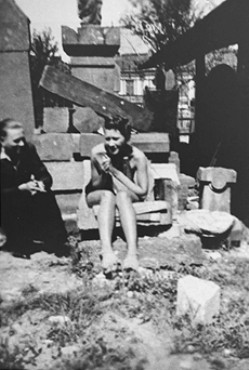
My father never had much to say about serving in the U.S. Navy in the closing months of World War II except that he had been a radar man. But in the last years of his life we heard more. He told us about one day in particular. He and the entire crew of their ship were called on deck. They thought it was to formally welcome a new commander. Instead they were given a classified briefing.

They were told all leaves were cancelled and all communication with home would be heavily censored. Their ship was being retrofitted to leave for an upcoming top-secret coordinated air and sea attack on Japan. Their ship would be third in line of the first fleet. It was considered a “sacrifice” ship. My father, a quiet religious teen who got drafted right out of high school, faced certain death along with the rest of his shipmates.

The US had commissioned a study on the human toll of invading Japan. It was estimated that somewhere between 1.7 to four million Allied casualties with between 400,000 to 800,000 lives lost, while a far more horrific five to ten million Japanese lives lost. The United States manufactured a half million Purple Hearts they expected to award after this invasion, so many that today they’re still using of the stockpile of those medals 80 years later.

A very short time later, the U.S. dropped two atomic bombs on Japan. My father lived to attend college, become a teacher, get married, and have a family because of the unspeakable violence wrought by those bombs. I am alive because of those bombs.

That I’ve felt driven since earliest childhood to advance a peaceful, nuclear free world now seems to have roots more mysterious than I can comprehend. I don’t know if that’s destiny at work,  but it calls me to believe that our paths are far more complex than we imagine.

fate, destiny, predestination, peacemaker, Now, I am become Death, the destroyer of worlds

Get Involved When It’s None Of Your Business

peace through non-violence, take a stand on violence, intervene in conflict, conflict resolution,

 Working in a retail job, you think you’ve become accustomed to bad behavior on the part of children as well as parents. But you are appalled to see a mother use an umbrella to spank a small boy.

Will intervening threaten the child or endanger your job?

Walking through a grocery store parking lot, you notice a crying toddler in the grocery cart and a woman screaming at the child as she loads packages in her car. She slaps the child’s face and arms as you walk past.

If you say anything will you make it worse?  


Looking out your apartment window you see a young man standing next to a motorcycle, pushing and yelling at a teenaged girl from the building who seems to be his girlfriend.

Would the police consider this abuse if you called?


Leaving work later than usual on a wintry evening you have the feeling you’re being followed. As you turn a corner you see an ill-dressed youth close behind you. He holds out a gun and asks for money.

Are there any options that don’t leave a victim?


Driving past a cluster of youths on a city street, you realize that they are clubbing a boy with a piece of wood. It’s safer for you to continue in traffic, but you want to defend this teen from his aggressors.

Can your heart and head agree on a course of action?

peace through pacifism, tactics of non-violence,

Violence is familiar. It’s highlighted in news, movies and video games. It erupts in our homes or homes nearby, even if few people admit it. It’s insidious and damaging. Violence at all levels, from the personal to the global, is highly ineffective in creating lasting positive change.

Yet we know very little about nonviolence. We may be aware of Mohandas Gandhi’s satyagraha. This philosophy, which Gandhi called “soul force,” inspired the passive resistance successfully used in the U.S. civil rights movement and the healing honesty of South Africa’s Truth and Reconciliation Commission. But most people don’t think these approaches are relevant. In fact, pacifism is often confused with those who are passive. Nothing could be further from the truth. Nonviolence requires a level of conviction and inner strength that makes violence look easy.

Nonviolence doesn’t imply lack of anger or conflict. Strong emotions like anger can be a catalyst for change; rallying us to become more aware, to take action or to seek help. Conflict is an inevitable part of human interaction. Dealing with conflict constructively, creatively, and with mutual regard lets conflict serve a useful purpose.

The tactics of nonviolence have worked throughout history. But, as it’s often said, history is written by the victors. Scholar Antony Adolf writes in Peace: A World History, “The champions of peace, momentous and everyday, intellectual and activist, expert professional and lay, have for too long been considered exceptions that prove this rule, when in actuality without their efforts there may not have been a history to live, let alone write.”

Nonviolent principles work today, although they continue to be little known. According to the Human Security Report, from the University of British Columbia, peacemaking efforts by the United Nations as well as voluntary activism continue to have a powerful impact. Although little reported by the media, the world has seen a significant decline in violence. The overall number of armed conflicts has declined by 40% in the last 16 years with the deadliest conflicts dropping by 80%. Three decades ago 90 countries were governed by authoritarian regimes; now fewer than 30 suffer this oppression.

volunteers save the world, non-violence in action, peacemaking, pacifism tactics,

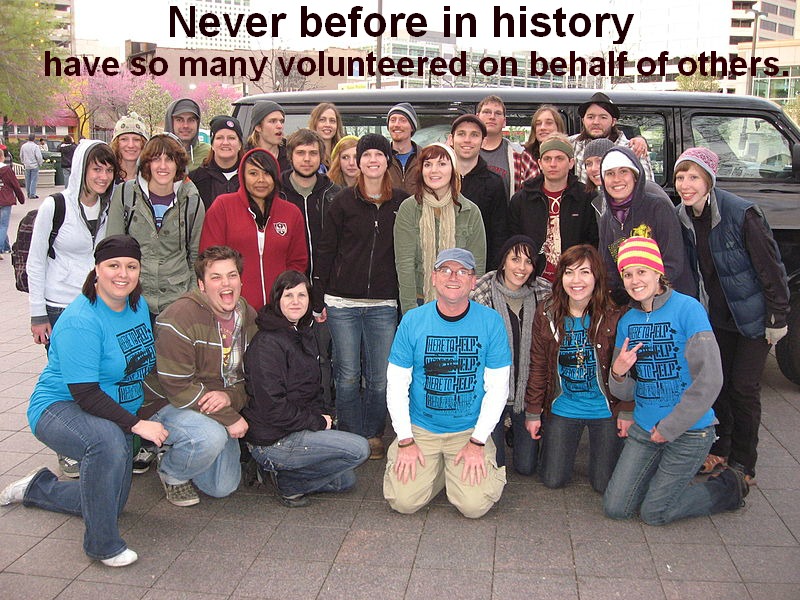
The efforts of individuals may make the biggest difference. Paul Hawken writes in Blessed Unrest: How the Largest Social Movement in History Is Restoring Grace, Justice, and Beauty to the World about the efforts of caring people everywhere around the world. Before the abolitionist movement there were pitifully few groups working on behalf of others. Since that time the number of people collaborating for the greater good has grown at an unprecedented rate. Now there are over a million organizations seeking environmental sustainability, social justice, cultural preservation, and peace. Hawkin says that never before in history have there been so many people working on behalf of others.

In fact the success of humankind is based on peaceful person to person, group to group interaction. The unwritten span of prehistory makes up 99% of our time on earth. Most anthropologists affirm that cooperation was pivotal for survival during this long stage, when people lived in nomadic hunter-gatherer bands. A lone human would not last long. No claws, fangs or heavy fur protected them. Interdependence was key. Together our forebears developed language, healing arts, and methods of procuring food. Cooperative efforts in child rearing, protection from predators, and shelter from the elements gave them a survival edge. This entire period of our development was characterized by generally peaceable human interactions. There’s minimal evidence of warfare in this span of prehistory. Planned aggression against others likely developed around the start of agriculture.

From the larger perspective of time we are barely out of prehistory, still adjusting to the complexities of civilization. As anthropologist Douglas P. Fry notes in Beyond War: The Human Potential for Peace, cooperation and empathy accurate represent our species. Violence is not “human nature.” We flourish best with gentle nurturance and continued cooperation.

violence tends to escalate, non-violent tactics,

So what’s the first nonviolence principle we should know? De-escalation. A major characteristic of violence, verbal as well as physical, is that it tends to escalate.  It is most easily reversed at the beginning and becomes progressively more difficult to stop as it spirals into more intense violence. Those who study the effects of intervention in violent situations have found when others object or actively intervene, their efforts tend to slow or stop the violence.  Dr. Ervin Staub, who survived under Nazi rule, reports in The Roots of Evil: The Origins of Genocide and Other Group Violence, that the Khmer Rouge in Cambodia and the Nazis in Germany began their campaigns of genocide with small persecutions which citizens allowed to continue.  He reports that action by “bystanders” (those who are not victim or perpetrator) empowers the victim and diminishes the power of the aggressor. But ignoring the suffering of others allows the violence to escalate.

That’s true in our daily lives as well. When we deal with signs of conflict right away, firmly and with compassion, we don’t permit problems to get worse. That’s just one principle of nonviolence. The more we know about nonviolence, the wider the range of options we have to choose from in each situation.

a

Comparison of violent versus nonviolent responses, developed by the late John Looney, founder of the Peace Grows course, Alternatives to Violence.

What about situations you might encounter at work, in a parking lot, in your neighborhood, while driving or walking down the street? All of the circumstances described at the beginning were actual experiences. Fortunately the people facing these situations had studied nonviolence and they decided to take a stand.

The store clerk who witnessed a mother using an umbrella to hit a child intervened quickly. She stepped next to the mother and said quietly, “You have to stop that right now.”

The mother was furious. She protested that she had the right to discipline her child. The clerk agreed, keeping her voice low and calm, “Yes, you do. But how you do it makes a difference.”

She listened as the child’s mother continued to argue with her, then said, “Can I tell you something? I’m sure my mother took good care of me. But she got mad easily and hit me a lot. Not one person ever stuck up for me. When I grew up I decided I’d never speak to her again and I haven’t. I’m not saying it’s the same for you and your child, but I just had to say something.”

The mother responded by describing to the clerk the many ways she was a good mother to her son. The tone of the woman’s voice as well as her attitude changed as she focused on her parenting strengths. On her way out of the store she picked up the child and said, “Momma loves you even when she’s mad, you know that don’t you?”

~~~~~

The man about to walk past the woman slapping her toddler in the parking lot had an idea. He reached into his pocket, pulled out a ten dollar bill and covertly dropped it near them. He made a show of leaning over and finding the bill.  He held it out to the woman and asked if it might be hers.

Although she insisted it was not her money he gave it to her, considering it money well spent. As they spoke he made some positive observations about her child. He sympathized with her difficulty, mentioning that when his kids were young he found it easiest to take along a few snacks and small toys to keep them busy. They talked and by the time he walked away the woman and toddler were both smiling. His simple act stopped the violence and for that moment he’d brought a positive element to the situation.

~~~~~

The neighbor who witnessed a motorcyclist pushing and yelling at his girlfriend decided he couldn’t stand by. He walked casually out of his apartment and just as he was about to pass the couple he paused. When the boyfriend noticed his glance the neighbor made an admiring comment about the bike. His attention disrupted the abuse. He and the young man struck up a brief conversation about motorcycles. His observations on treating the bike well may just as easily have been about treating a person with loving attention. By interrupting the abuse he offered the girl time to leave, if she chose, and he hoped it established a rapport that might be helpful if the girl wanted to talk at a later time.

~~~~~

The commuter walking late along a cold, dark street confronted by a gunman was afraid he might lose his wallet, coat, and perhaps his life.  He also empathized with the poorly dressed youth. Ignoring the gun and disrupting the man’s plan to make him a victim, he said, “It’s cold. Why don’t you take my jacket?”

As he took off the coat he kept talking about the wintry weather. He offered to purchase food, even give the young man money. The aggressor was confounded by the man’s generosity and lack of fear. Acting embarrassed, he refused the food, money and jacket. The commuter insisted the youth take the jacket as a gift. He may have gone home without his own jacket but he transformed a potential crime into an encounter of compassion.

~~~~~

The woman who drove past teens pummeling another youth with a piece of wood chose to stop her car in traffic. Standing at her open car door she called to them, telling them to stop what they were doing. They were surprised but held their ground. One jeered at her asking why she would care about some kid who was a stranger to her while the others laughed. She answered that she cared about all of them. And then she said she would stop if she saw any of them being hurt.

“Next time I might need to stop for you,” she told the youth who questioned her. Anger defused, they walked away. She left when she saw the youth who’d been hurt get up and walk in the other direction.

~~~~~

These people chose action over despair.  Their creative, unique solutions served as peaceful de-escalations of violent situations.  They may not have eliminated the causes or “solved” the issue but they pointed a way out.  Making a stand does make a difference.

Our anger and our concerns about violence can be shaped into purposeful, peaceful action. This is the greatest antidote to despair.

conflict resolution, de-escalation of violence, teaching non-violence, pacifism,

An earlier version of this piece appeared in Natural Life Magazine.

Peace Means Renouncing Islamophobia

Islamophobia

The principles of non-violence are little known and desperately needed. Here’s a simple take-away lesson. One major characteristic of violence, verbal as well as physical, is that it tends to escalate.  It is most easily reversed at the beginning and becomes progressively more difficult to stop as it spirals into more intense violence. Those who study the effects of intervention in violent situations have found that when others object or actively intervene, their efforts tend to slow or stop the violence.  Dr. Ervin Staub, who survived under Nazi rule, reports in The Roots of Evil, that the Khmer Rouge in Cambodia and the Nazis in Germany began their campaigns of genocide with small persecutions which citizens allowed to continue.  He reports that action by “bystanders” (those who are not victim or perpetrator) empowers the victim and diminishes the power of the aggressor. But ignoring the suffering of others allows the violence to escalate.

We’ve seen this principle in action more recently. Hate talk spread unchecked across all forms of media played a major part in creating the horrific ethnic violence in Serbia, in Rwanda, and in the Congo. Yes, there were reasoned objections but they weren’t loud enough or frequent enough to turn the tide.

Hate talk and repressive policies put into place sounds familiar. Today Muslim headscarves are banned in France, the construction of minarets are banned in Switzerland, Muslim travelers are profiled, and pundits advance the cause of prejudice unchecked. And now, the recent horrific acts of violence by Anders Breivik, an anti-Muslim terrorist.

How do we, the bystanders, intervene?

Be informed. Get your news from widely acclaimed Al Jazeera. Read Islamophobia by Chris Hedges and No god but God: The Origins, Evolution, and Future of Islam by Reza Aslan.

Step beyond a limiting cultural framework. If you have no Muslim friends, seek to make them in your community.

Take action when newscasters and pundits utter anti-Islamic rhetoric. Contact the network with your objections. Also let the sponsors of the show know you’ll boycott their products if these violations continue.

Take action when politicians use anti-Islamic rhetoric. Contact them to explain you’ll be voting them out of office.

Actively object if you hear anti-Islamic rhetoric in a personal conversation. Silence is generally taken for agreement.

Actively object if you witness prejudice against any Muslim person. This means intervening in your school or workplace as well as in public. Here are some tactics for non-violent intervention.

What other ways can we de-escalate Islamophobia?

Creating A Better World

“We become what we think about all day long.”
Ralph Waldo Emerson

positive thinking, the shift, better world attitude,

Anastasiya Markovich

Long before I became an adult I launched a quest. This was inspired by a something that weighed on my childish mind, an urgent calling to alleviate the suffering of others. Even when I was a misbehaving little girl who ignored her chores and fought with her sister (often), I still felt the weight of this obligation. My parents cancelled their subscriptions to news magazines to avoid my questions as well as my despair over every sorrowful photograph. And my entire family dreaded driving past a chained puppy or crying baby, knowing that I would agonize the rest of the day over this momentary glimpse out the car window.

For some reason my quest took the form of trying to understand why people acted cruelly. So in my spare time I read everything I could find on the history of suffering, evil, and misery. I learned about the Inquisition, U.S.betrayals of Native Americans, the Holocaust, the genocide ordered by the Khmer Rouge in Cambodia—if it was awful I studied it. I worked my way through every book and resource possible.

right thought, optimism changes world, hope,

Fritz Fuhrken

This project of mine stretched well into my teen and early adult years. It was grim. It haunted my dreams and colored what should have been youthful optimism. I began to realize that every single human has the capacity for cruelty. We just pretend we don’t. A bad mood may be contagious but the shadow we hide can wreak havoc on a personal and even a global level.

One day as I sat in the sunshine while my firstborn played nearby in the grass, my dear friend Leslie came over for a visit. She found me reading yet another horrific book, a stack of similarly dire non-fiction at my side. And she’d had it. She told me I was ignoring the beauty all around me to immerse myself in misery. She told me to look at the light shining on my child’s face, the bright green grass, and all the love in my life.

She was right, of course.

Still I defended my quest. I told her it was an obligation to know what was wrong with the world in order to right it. I waved around books that described the evils of pesticides, the horrors of factory farms, and the title I was currently reading, something about political prisoners.

She disagreed. She said it was time to focus on what was good.

I told her I was I finding good. What I read exposed me to heart-expanding accounts of people who demonstrated the best of humanity no matter their circumstances.  Those who were dying of hunger, yet gave their last bit of food to others.  Those who had no reason for hope but who kept art and music alive.  Those who faced the worst despair, but did not give in to it.  The best lesson I learned from years of study? Every single person has a choice, even if it seems there are no choices. That choice is the attitude they take.

the shift, making the shift, the secret in action, the secret applies to peace,

Fluxx

It was time to work on my own attitude.

Gradually I stopped trying to understand and fight against all the reasons for suffering. I also became a little less frantic about doing everything possible to counterbalance the wrong I saw everywhere. I noticed that people in activist groups I belonged to faced the world with the same despair I felt, battling evil so fiercely that they had no way to expand on all the good that also flourishes.

So I began volunteering less time to lost causes, marched in fewer protest rallies, and gave up stomping around with petitions. I did more that seemed to boost the positive—gardening, singing to my babies, and guerilla acts of encouragement.

I became certified to teach non-violence workshops which I taught to school systems, incarcerated teens, and senior citizens. As I taught, the lessons sunk in ever more deeply. The long and life-affirming history of non-violence can’t help but heal a heart heavy with the world’s troubles. The process of non-violence—reacting with love rather than hate—is more empowering than any other force we humans have ever used. It transforms greed, intolerance, and cruelty. It’s humanity’s way forward.

peace through non-violence, achieving world peace, optimism,

Solveigamundsen

Growing more positive, I began to find value in mistakes, doubt, crisis. A lifelong insomniac, I started sleeping a little better. Always one who tried to laugh rather than cry, I found myself laughing more— about falling downawkward encounters, and my near constant ability to embarrass myself.

It may seem difficult to sustain a positive outlook these days. My own family has been through grief, injustice, unemployment, and other sorrows. And our world struggles while formerly stable structures crumble. Just look at what’s happening to prescribe-and-placate medical models, inflexible financial institutions, condemning religious frameworks, and rigid corporations. But I believe these current conditions of breakup, economic chaos, and environmental decline are exactly those which are (slowly) leading to beneficial change. Collectively we’re waking up to the weakness of limited thinking and short-term fixes. Hopefully we’re also waking up to the reality that we’re in this together—rich and poor, developed and developing nations, young and old, left and right.

signs of hope in the world, peace emerging,

Jules Henri Lengrand

I’ve come to believe a better world is made by building on what works rather than focusing on what’s broken, as long as the truth is told about that brokenness and healing is sought.

I see beings on this planet linked in ways that defy description and see my fellow humans as heroes in the making.

And I see SO much good happening, good that’s too often overlooked. Consider:

1. War and global violence continue to decline.

Armed conflicts aren’t going up, they’re going down.

The world has seen a 70 percent decline in the number of high-intensity conflicts since the end of the Cold War era. Genocide is down 80 percent. Weapons sales between countries have diminished by 33 percent and the number of refugees has fallen by 45 percent. Even measuring from as little as 15 years ago, the number of armed conflicts has dropped from 44 to 28.

Why? Project Ploughshares credits peace building efforts.

Chances are, the reasons for peace are complex. Yet a stronger international resolve to focus on peace building and basic human rights is taking place. Imagine the far larger potential for enduring peace if we intentionally educate our children and ourselves in the proven methods of non-violence—-negotiation, mediation, reconciliation, even basic listening skills.

2. Freedom is stretching across the planet.

By evaluating variables including civil liberties, democratic institutions, and independent media it’s possible to assess how free each nation in the world really is. Back in 1973, 29 percent of nations were deemed free, 25 percent partially free, and 46 percent not free.

In a little over 35 years, the number of nations ruled by authoritarian regimes dropped from 90 to 30. Countries around the world considered to be free increased by 50 percent while those not free had dropped by more than half.

Independence has a long way to go. But positive signs—protests, dissent, political upheaval show us that ordinary people are speaking up for freedom.

3. Longevity is improving yet total population faces a downturn

Fulfilling the cherished hopes of their parents, more children around the world are born healthy. Mortality rates for those under five years of age have fallen by 60 percent since 1960.

Meanwhile, life expectancy has risen 21 years since the mid 1950’s. Try to suppress your optimism while looking at this analysis of longer lived well-being around the world.

This doesn’t mean the planet will be too crowded. Overall population will continue to rise for several more decades but we’re facing a major downturn. Already birth rates are near or below replacement rate in countries all over the world. Increased education and affluence tend to inspire women, no matter what country they live in, to invest their time and resources in fewer children. As Fred Pearce clearly explains in The Coming Population Crash: and Our Planet’s Surprising Future, our little Earth will likely reach a (painful) peak of 8 billion people around the year 2040, then the total number of human will begin to decline so rapidly that nations will struggle to keep their populations levels from slipping too low. They may create perks for becoming parents and incentives to attract immigrants.

4. Literacy rates continue to improve.

Global adult literacy rates have shot up from 56 percent in 1950 to nearly 84 percent today, the highest ever.

Women’s rates haven’t risen as quickly due to inequality and poverty, but in some areas, particularlyEast Asia, 90 percent more girls are able to read than 10 years ago. As female literacy goes up, other overall positive indicators tend to follow including decreased domestic violence, improved public health and greater financial stability.

5. Intelligence is on an upswing.

From generation to generation, we’re getting smarter. In fact, to accommodate continuously increasing intelligence the IQ test must be renormalized (standardized to keep the average test results at the 100). This is called the Flynn Effect.

Between 1932 and 1978, mean IQ scores in theU.S.rose 13.8 points. If your grandparent received IQ score results of 98 back in 1932 they’d have been deemed of average intelligence. That same grandparent, if administered today’s tests, would be considered to have a borderline mental disability by current scoring standards. IQ scores have risen even higher in some other countries. Of late, developing countries seem to be experiencing the biggest surge.

Plenty of explanations have been proposed, but the increase can’t be definitively pinned on genetic improvements, improved nutrition, greater familiarity with testing or better schooling.

According to Cornell professor Stephen J. Ceci, the most direct gains are not in subjects that are taught (math, vocabulary) but are shown in parts of the test that seem unrelated to schooling (matrices, detecting similarities). In fact, test gains have been enormous in areas requiring the child to apply his or her own reasoning, such as arranging pictures to tell a story or putting shapes in a series. Although teaching children does return positive results, what a child learns through the natural stimulation of everyday life has a more profound effect. For example, a study to determine the effect of schooling on rural children inIndia found that the increase in overall intelligence from a year of age is twice the increase from that of attending a year of school.

IQ test scores don’t relate to what truly provides satisfaction in life. But the Flynn Effect is intriguing. Factors we can’t completely explain are giving us the intellectual capacities to deal with an ever more challenging world.

6. Compassion is huge.

Never before in history have so many people worked tirelessly and selflessly to benefit others. Paul Hawken writes in Blessed Unrest: How the Largest Movement in the World Came into Being and Why No One Saw It Coming that the abolitionist movement was the first major movement by human beings to advocate on behalf of others without seeking advantage for themselves or their particular social or political group.  Since that time, such efforts have grown with astonishing vigor.

There are now over a million organizations on the planet working for environmental stewardship, social justice, the preservation of indigenous cultures, and much more.  These groups don’t seek wider acclaim, they seek to make a difference for the greater good.

Humanity, which is clever and kind enough to bring about so much improvement, is also awakening to the vital importance of living more sustainably on Earth.

I know we can live more peacefully and wisely.

Thank you Leslie.

global indicators of hope, better world emerging, the shift happening, the secret on a global scale,

Salvatore Di Giovanna

“When I despair, I remember that all through history the ways of truth
and love have always won. There have been tyrants, and murderers, and
for a time they can seem invincible, but in the end they always fall.
Think of it … always.”   Mahatma Gandhi

Gentle Nurturance=Gentle World?


A little girl about three years old trails behind her mother in the store. She seems tired and distracted, as if it’s difficult for her to keep up. Her mother is busily shopping while pushing a cart with a baby in a carrier at the front, oblivious as her daughter lags farther behind. Every minute or so the girl says, “Mommy,” but her mother doesn’t look back so the girl hurries to catch up. Not long after the mother turns to another aisle the little girl loses sight of her and wails loudly. Her mother, surely distracted and now embarrassed, hustles back to grab the child, shakes her, and through clenched teeth issues a threat. The child cries quietly and resumes following, more closely at first but again lags behind in the crowded store. A few aisles over she loses sight of her mother again. This time the mother picks the child up by the arm to smack her fiercely.

The problem continues to escalate. The entire time this family is in the store the mother repeatedly threatens and hits a child who may be ill, or needing a nap, or simply isn’t able to keep up. No one intervenes. In the checkout line they stand under an overhead TV screen blaring with news. Crime, war, and looting at the scene of a disaster are shown in vivid video clips. The little girl, tears still drying on her face, reaches up to the baby sleeping in the carrier and squeezes his toes until he too is crying.

Many of us probably see such scenes on a regular basis. Those of us who are parents know full well that gently nurturing a child’s growing body and mind isn’t always easy. Sometime days it feels as if good parenting requires sainthood. But gentle nurturance is the way that we adults constantly demonstrate, in hundreds of seemingly insignificant ways, that a child is a person worthy of love and consideration. We wipe a face softly rather than harshly, we take an extra moment to see what a child sees, we find ways to distract a grumpy toddler or a moody teenager, we share real work with our children so they know the satisfaction of a job well done, we turn away from our own amusements to take part in what delights our children, we teach our children to wait their turn, we cuddle and guide and care.

raise children tenderly for a more peaceful world

This doesn’t mean we empower children to do whatever they want or raise them without limits. It simply means that it’s possible to touch a child with kindness and respect, to consider situations from the child’s point of view, and whenever possible, to listen to what a child has to say.

Gentle nurturance resounds through a child’s entire life, bringing forth a greater potential for happiness and success. Children treated with love and consideration become adults who treat others well too.

no spanking leads to better behavior

There’s plenty of evidence that this is the case. Let’s take one example, that of corporal punishment. Ninety percent of American parents say they have spanked a toddler, 61 percent in the same week they were asked. If it “worked” parents who spank would have more compliant children. But that’s not the case. In fact, children tended to act out again within a few minutes after being spanked or hit by a parent.

Spanking leads to children who are more easily frustrated, have more frequent temper tantrums, demonstrate greater defiance, and who are more likely to physically harm others.

Spanking is also associated with lowered IQ scores. A U.S. study found children who were spanked had lower IQs four years later compared to those who were not spanked. The more frequently the children were spanked, the slower their intellectual development. Researchers speculate one factor may be that regular physical punishment is a chronic stressor for young children.

Negative consequences aren’t limited to childhood. Children who are punished by spanking, slapping, or grabbing even occasionally run a higher risk of growing up to have mental health problems, according to a study of nearly 35,000 people. Those issues include depression, anxiety, and drug or alcohol abuse as well as more complex illnesses such as narcissism and antisocial behavior.  

Even crime is associated with physical punishment. Take time to read this linked article, titled “The Influence of Corporal Punishment on Crime” by Adah Maurer, Ph.D. and James S. Wallerstein (courtesy of The Natural Child Project) which features data including the following chart:


Degree of physical punishment


Never

Rare

Moderate

Severe

Extreme

Violent inmates
at San Quentin

0%

0%

0%

0%

100%

Juvenile
Delinquents

0%

2%

3%

31%

64%

High School
drop-outs

0%

7%

23%

69%

0%

College
freshmen

2%

23%

40%

33%

0%

Professionals

5%

40%

36%

17%

0%

Corporal punishment is just one factor among many. There are plenty of other elements to consider as we raise children to respect themselves and others. Here are just a few. 

raising children peacefully

It has to do with consistent and fair family rules. 

It has to do with understanding a child’s temperament.

It has to do with free play  and plenty of time in nature.

It has to do with our expectations and our ability to listen.

It has to do with responsible media exposure.

It has to do with an understanding that we as a species are innately kind and cooperative.

And so much more.

But corporal punishment is the example I’ve used because there are larger cultural factors to consider when force is used on children, whether physical or other forms of coercion. There’s a connection between harsh treatment of children and harsh societies. Researchers Carol and Melvin Ember, in a journal article titled “Explaining Corporal Punishment of Children: A Cross-Cultural Study” conclude that force is commonly used against children in highly stratified societies, societies with low levels of democracy, and those with a propensity toward violence.

And there’s more evidence. James W. Prescott, former administrator at the National Institute of Child Health and Human Development, analyzed cross cultural data using 20,000 statistically significant correlations from 400 studies. The information included presence of physical punishment, freedom or repression of sexual practices, social status of women, degree of affection toward children. He concluded that societies based on affection were highly unlikely to be violent.

These conclusions are of global significance to you, me, and everyone else in today’s world.

peaceful world starts with parenting

This isn’t easy to see on an individual basis. Plenty of anecdotal accounts contradict these assertions, but individual exceptions don’t prove the point. I was raised by loving parents who, yes, spanked a few times and yes, tended to lose me in stores. I don’t see many after effects . (Well, I detest shopping.) The point remains. A gentler world can emerge from gently raised children.

This starts in our homes, stores, everywhere. I know what it’s like to shop with kids (I have four) so I can understand the time pressure and distraction the mother of that three-year-old girl must have been under. But each moment of parenting provides us with an opportunity to help our kids find positive solutions. This builds inner strength and fosters skills they’ll need to deal with future difficulties. Trouble is, parenting skills take patience, conscious attention, and lots of opportunities to observe other parents we admire. The time required is exactly what’s missing in the lives of busy parents. What are some things that could have helped when the little girl couldn’t keep up with her mother?

Connect. “Mommy needs to see where you are. I miss you when you lag behind.”

Empathize. “Oh Sweetie, you’re having trouble keeping up with Mommy.”

Problem solve. “How can we stay together?”

Engage her help. “Can you help me find the cereal you like? Do you remember if it’s in a yellow package?”

Distract her. “Let’s count all the other _____ in the store today (little girls, women with hats, times the loudspeaker interrupts, etc).”

Celebrate and appreciate. “I’m so glad you’re staying with Mommy and helping me watch the baby. Let’s _____ after we get home.”

And it would have helped if this mother had the resources to avoid taking a child to the store who was tired, or sick, or needing closer attention.

It’s important to recognize that in our society, parents tend to be isolated. A whole tribe of extended friends and family aren’t there to watch, guide, nurture, and enjoy each other’s children. Cultural forces of work and time pressure and distance divide us. Parenting is too often a solitary venture, performed under the gaze of strangers who judge one’s parenting in every store and sidewalk.

As Urie Bronfenbrenner noted, we need to understand what forces affect family so we can to best enable them  “to perform the magic feat of which they alone are capable: making  and keeping  human beings  human.”

Ima

Making Heroism Happen

Notice similar statements when people who have committed heroic acts are interviewed? They tend to say, “I wasn’t trying to be a hero, I was just doing what anyone would have done.”  (This from a man who climbed into a burning car to save a woman.)

we can all be heroes

Hero: Wesley Autrey

Or  “I don’t feel like I did something spectacular” (this from a man who leaped in front of an oncoming subway train to pull an unconscious man from the tracks.)

Hero: Jencie Fagan

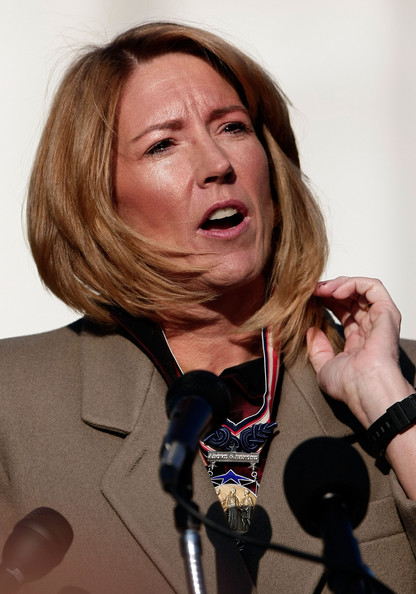
Or “I think anybody else would have done it.” (This from a teacher who stopped a school shooter by embracing him in a bear hug.)

The same rationale is heard from people who rise to heroic acts despite living with difficult circumstances of their own.

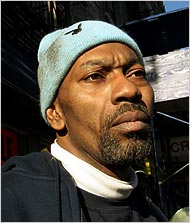
A homeless man who tried to tackle robbers during an attempted hold-up of a Brinks truck and memorized the license plate of their get-away car said, “You just gotta look out for what’s happening with people around you other than yourself.”

A teen with an extensive criminal record stole a bus to drive victims of Hurricane Katrina to safety. He explained, “The police was leaving people behind. I had to pick up people on the bus. The police didn’t want to do nothing. We stepped up and did what we had to  do.”

And a homeless man lost his few possessions after jumping into an icy river to rescue a drowning woman. He said “I just did what needed to be done because someone needed my help.”

what it takes to be a hero

Hero: Adan Abobaker

In their own words heroes continue to tell us that what they have done is not at all extraordinary. If we hold heroes apart from us as superhuman and describe their actions as unfathomably brave, we deny that all of us have the capacity to be heroes if the need arises.

We can develop that capacity. When I lead non-violence workshops we start by working on issues of empathy (identifying with the emotions, ideas, and attitudes of others) as well as empowerment to act on that empathy. Both are necessary to break through what’s been called the “bystander effect.” This was first identified by Ervin Staub, who survived under Nazi rule due to the kindness of others. Dr. Staub explains in  The Roots of Evil: The Origins of Genocide and Other Group Violence that it takes the willingness of those who are uninvolved (bystanders) to step in, advocating for the victim or victims, in order to halt the escalation of violence and to uphold the common good. Without such bystanders, atrocities such as war and genocide are “permitted” to happen.

The bystander effect is active on a smaller scale as well. Studies show if an emergency unfolds before a group of people they’re less likely to take action, basing their decisions on the behavior of those around them. If that same emergency presents itself in front of one person they are more likely to take action. We’ve all heard of these situations precisely because they’re so heinous.

What’s the difference between those who ignore suffering and those who are moved to alleviate suffering? People who have imperiled their lives for months or years to help others can give us some insight. Svetlana Broz, author of Good People in an Evil Time: Portraits of Complicity and Resistance in the Bosnian War, says it requires at least three attributes.

1. The courage to think for oneself, resisting conformity even at the risk of one’s own safety.

2. A moral core that inspires action.

3. The capacity to empathize with those who are dissimilar.

Hero: Zofia Baniecka, rescued 50 Jews during Holocaust

Eva Fogelman, author of Conscience and Courage: Rescuers of Jews During the Holocaust, writes that heroic acts tend to come from a deep sense of common humanity. The roots of this behavior may stem from early upbringing. Fogelman notes that many Holocaust rescuers themselves suffered and were sensitized to the suffering of others. They also tended to have been raised in loving families where self-worth was fostered and reason rather than punishment was used as discipline.

Social scientists still know quite a bit more about aberrant behavior than why people choose to do good. That’s changing according to Philip Zimbardo, author of The Lucifer Effect: Understanding How Good People Turn Evil.  Zimbardo conducted the now infamous 1971 Stanford Prison Experiment (check it out on this slide show) which demonstrated that psychologically normal people will instigate and take part in atrocities. Now Zimbardo is devoting himself to bringing forth the brighter side. He’s started an organization called  Heroic Imagination Project which aims to teach the rudiments of heroism.

Currently a pilot project, it consists of four main educational components taught over four weeks.

  1. Students initially learn about us versus them attitudes, unthinking obedience to authority, and other human tendencies which unwittingly allow cruelties to happen.
  2. Next they work on building empathic responses through listening, paying attention, and “walking a mile in the other guy’s shoes.”
  3. Then they study heroic stories, seeking role models and discovering that compassionate action does inspire.
  4. And finally they practice heroic behavior on a daily basis by translating their good intentions into action, no matter how small.

We don’t have to wait for a course. The steps taught by the Heroic Imagination Project are the building blocks of human decency, things we should teach our children every day and should continue to develop in ourselves.

We’re captivated by real heroes in the news and imaginary heroes in the movies because they call out the best in us. Such stories ask us to live up to our values, not only when we’re in extreme situations.

It’s also time to recognize unsung heroes around us everywhere. They don’t get publicity because their deeds don’t seem extraordinary. Unselfish acts performed a million times a minute weave us together as a caring species. We tend to the helpless, comfort the sorrowful, share knowledge, and create happiness. Such kindness is contagious, each act of compassion and cooperation spreading out in enlarging waves of goodwill. Such efforts may seem small, but they are the basis for making heroism happen.

Fostering the Flip Side of Gratitude

dark side of gratitude, responding to nay-sayers, when those in authority predict doom, when doctors are wrong, when teachers are wrong, when therapists are wrong,

Cajoled into seeing a friend’s obstetrician, the one she praised so highly, I came prepared with a list of questions folded in my jeans pocket. But I didn’t get a chance to ask about a doula, the Leboyer method, or anything else. The doctor walked in, greeted me and looked me over without performing an exam. Then he announced with certainty that I had “insufficient pelvic capacity.” He assured me that my petite size meant I would never be able to deliver a full-term baby.

“What do you mean?” I gasped.

“It’s nothing to worry about,” he said. “It just means you’ll require a Cesarean.”

I was six weeks pregnant.

I may have been young and expecting my first child, but I dared to question his judgment. He became indignant. A lecture followed about the number of babies he’d delivered. He went on about anoxia and brain damage, then intoned the words that surely convinced legions of women before me, “Do you want to endanger the life of your baby?”

That was all it took.

I never returned.

But how was this self-satisfied man to know if his assertion turned out to be valid?  I didn’t get back to him. Nor did I refute the next obstetrician whose office I also left after he told me my vegetarian diet would result in a sickly, underweight baby.

Although these physicians never knew if their dire predictions came true, I went on to deliver a 9 lb, 10 oz baby quite naturally. In subsequent years I had three more sizeable vegetarian-grown babies.

On behalf of each of my children I learned to speak up–forcefully and often. This pushed me right past the shyness I thought was an indelible part of my personality. Once I became comfortable speaking up I felt empowered to assert my feelings of gratitude as well.

According to Thanks!: How Practicing Gratitude Can Make You Happier and Living Life as a Thank You: The Transformative Power of Daily Gratitude, regularly practicing gratitude boosts our health and well-being. Small acts of kindness also create a ripple effect, generating more compassion in others. Sometimes it’s easier to thank those who are close to us but it’s powerful to acknowledge people who are consequential strangers or people we’ve never met but whose efforts make a difference.

My gratitude practice often takes the form of appreciative letter to strangers. I leave a note for a waitress whose cheery demeanor has healed me of some common sadness. I send a letter to a nursing home administrator describing the tender affection I witnessed an aide show a patient. I send written kudos to the cast of a locally produced play. They don’t take long to write although occasionally I have to make an effort to find out where to send one.

Not long ago I was delighted to finally locate the address of a local school bus driver. I regularly wait in my car as he stops on a 55 mph road and in only a few moments backs into a narrow entry way with the grace and dexterity of a ballroom dancer. So I wrote a letter to explain that seeing him drive with such skill gave me the sense one day I too might develop true mastery in my line of work.

I never sign my name. I think it’s better to write “your customer” or “fellow traveler” or whatever fits the situation. That way it isn’t about me, it’s about a wider sense of appreciation. Although I have to admit, I benefit too. Looking for the good in a situation changes my energy in a positive way.

But really, paying attention only to sweetness and light ignores the shadow. People in positions of authority need to know when their judgments or actions are harmful. All of us can learn from mistakes, unless somehow we’re deprived of the consequences of our words or actions. Today, many professionals are well insulated from those consequences unless they reach litigation.

I don’t advocate griping or threatening. I’m talking about communication that fosters understanding. A simple letter can spare future clients, students or patients the same struggles your family may have endured. Of course this isn’t necessary when the situation can be handled right away. But how many of us have faced long term predictions of doom? A family bed is nothing but bad parenting.  Without this surgery you’ll end up crippled. Homeschool and you’ll have a maladjusted child on your hands. Ritalin is the only solution for that behavior. After years of hearing such pronouncements I have come to realize that updating a professional on his or her assessment is another form of kindness. It’s the flip side of gratitude.

If you choose to get in touch with someone for these same reasons, here are guidelines that have worked for me.

1. Be clear about your own goals before writing that letter or email. Wait until you can proceed without anger. The person you are contacting will be unlikely to learn anything unless you maintain a positive and respectful tone throughout.

2. Refresh the recipient about your situation as it was when you were last in contact.

3. State clearly and kindly that (as a physician, teacher, therapist) he or she is in a position to help many people. You assume that as a matter of professional interest it would be helpful to know about the outcome of a situation he/she assessed.

4. Sticking only to the facts, explain how in your situation their judgment or actions were misguided. Then update with pertinent details.

5. If relevant, include research or other data which the professional can use to gain insight.

6. Wish this person well. Don’t expect or ask for follow up contact.

The highest response to nay-sayers is to flourish joyfully in our choices. So I respond  to those who predicted doom for my children who were held long and nursed often, to those who judged our learning and lifestyle choices harshly—we are well. For that I’m endlessly appreciative.

Lets try, whenever possible, to find the freedom right beyond the boundaries of old ideas. To do that we need to share the insight that comes from experience. There, even the flip side of gratitude turns toward wisdom.

when professional advice is wrong, shadow side of gratitude, finding peace rather than revenge, gratitude's underbelly,

A version of this piece first appeared in the Sept/Oct 2010 issue of Natural Life magazine

Writing Hands image courtesy of Jggy

A Childhood Idyll by William-Adolphe Bouguereau

9 Amazing Reasons To Be Optimistic

world betterment, global optimism, oneness, hope, peace, all will be well,

If you could scroll through history searching for an era where you’d like to spend a lifetime, what would attract you?

Probably peace and prosperity. Probably a time when the arts flourish and science is open to new wonders. Probably too, a time period when people behave morally, care for one another, and uphold higher ideals than selfishness.

Does it make a difference to your answer if you don’t get to choose where on Earth you’ll be born?  Into what class, gender, creed, and ability?

You’ll probably want to stay right here, right now.

Our 24 hour media attention on what’s terrifying and what’s superficial steers us away from the big picture.  That picture, looking at the wider view, is actually pretty heartening.

*

1. War and global violence continue to decline.

Armed conflicts aren’t going up, they’re going down.

The world has seen a 70 percent decline in the number of high-intensity conflicts since the end of the Cold War era. Genocide is down 80 percent. Weapons sales between countries have diminished by 33 percent and the number of refugees has fallen by 45 percent. Even measuring from as little as 15 years ago, the number of armed conflicts has dropped from 44 to 28.

Why? Project Ploughshares credits peace building efforts.

Chances are, the reasons for peace are complex. Yet a stronger international resolve to focus on peace building and basic human rights is taking place. Imagine the far larger potential for enduring peace if we intentionally educate our children and ourselves in the proven methods of non-violence—-negotiation, mediation, reconciliation, even basic listening skills.

*

2. Freedom is stretching across the planet.

By evaluating variables including civil liberties, democratic institutions, and independent media it’s possible to assess how free each nation in the world really is. Back in 1973, 29 percent of nations were deemed free, 25 percent partially free, and 46 percent not free.

In a little over 35 years, the number of nations ruled by authoritarian regimes dropped from 90 to 30. Countries around the world considered to be free increased by 50 percent while those not free had dropped by more than half.

Independence has a long way to go. And what we may not recognize as positive signs—protests, dissent, political upheaval—may very well be ordinary people speaking up for freedom.

*

3. Affluence is on the increase.

A shifting focus away from war, conflict, and chaos means that countries are better able to meet the needs of their citizens. Those 151 countries deemed free or partly free account for 95 % of the world’s gross domestic production (GDP).

The number of people living in poverty has dropped by 500 million people, although most of those successes are in a few key countries.  Since 1975 the world’s poor have seen their incomes grow faster than the world’s wealthy, meaning economic equality is increasing.

Of course, we make a mistake when we confuse affluence with well-being. After certain (surprisingly minimal) levels of health and safety are reached, money doesn’t buy happiness.

Current global conditions of institutional breakup, financial chaos, and environmental decline are exactly those which seem to be (slowly) leading to long-term beneficial change. Collectively we’re waking up to the limitations of short-term fixes and relentless economic expansion. Hopefully we’re also waking up to the reality that we’re in this together—rich and poor, developed and developing nations, young and old, left and right. We see in our own lives that what’s important can’t be measured by dollars alone. Things like good health, supportive relationships and a vital ecosystem.

There are plenty of other ways to define affluence. A fascinating measure of wealth lies in a quick look at how many hours of labor it once took the average worker to pay for light.  In ancient Babylonia it took over 50 hours to pay for an hour of poor light from a sesame-oil lamp. At the start of the last century, it would have taken the average worker a thousand hours to earn the money to buy candles equaling the light of a single 100 watt bulb. Today’s high efficiency lighting costs us less than a second of work.

*

4. Fewer people are hungry.

Hunger continues to drop although we have a long way to go. It’s staggering to realize that 925 million people are chronically hungry. But according to The Improving State of the World: Why We’re Living Longer, Healthier, More Comfortable Lives on a Cleaner Planet by Indur Goklany, global food supplies increased 24 percent per capita in the last 40 years. In developing countries the food supply increased at an even greater rate, 38 percent more food per person. Since 1950, the real global price of food commodities has declined 75 percent.

No one should go hungry. The future of global food justice relies on efforts to restore and protect biodiversity, stop the spread of genetically modified crops, and assure water rights.

*

5. Longevity is improving yet total population faces a downturn

Fulfilling the cherished hopes of their parents, more children around the world are born healthy. Mortality rates for those under five years of age have fallen by 60 percent since 1960.

Meanwhile, life expectancy has risen 21 years since the mid 1950’s.

This doesn’t mean the planet will be too crowded. Overall population will continue to rise for several more decades but we’re facing a major downturn. Already birth rates are near or below replacement rate in countries all over the world. Increased education and affluence tend to inspire women, no matter what country they live in, to invest their time and resources in fewer children. As Fred Pearce clearly explains in The Coming Population Crash: and Our Planet’s Surprising Future, our little Earth will likely reach a (painful) peak of 8 billion people around the year 2040, then the total number of human will begin to decline so rapidly that nations will struggle to keep their populations levels from slipping too low. They may create perks for becoming parents and incentives to attract immigrants.

*

6. Health continues to improve.

Studies conducted by Robert W. Fogel, a Nobel laureate and economic historian at the University of Chicago, show that in a few hundred years human biology has changed in startling ways. We are more resistant to ill health, more likely to recover when faced with disease and less likely to live with chronic disability. We are also smarter and live longer. Fogel calls this radical improvement “technophysio evolution.”

An interview quotes Fogel as saying, “The phenomenon is not only unique to humankind, but unique among the 7,000 or so generations of human beings who have inhabited the earth.”

Fogel doesn’t necessary attribute the changes to genetic shifts.  Improvements in medical care, nutrition, sanitation and working conditions may cause epigenetic changes. These are shifts in gene expression that can last through many generations without altering underlying DNA.

Information amassed by Fogel indicates that chronic diseases such as arthritis, heart disease and lung ailments are occurring 10 to 25 years later in life than they did 100 or 200 years ago. Interestingly, well-being may be more strongly affected by conditions each individual faces in utero and during the first few years of life than previously suspected.

These remarkable health gains don’t diminish our current struggles with cancer, diabetes, Alzheimer’s disease, autism and other serious health conditions on the increase. Despite the blessing of bodies more resilient and healthy than those of our ancestors of just 150 years ago we suffer the effects of environmental toxins and nutritionally inferior diets. To fully accept the gift of health and energy from our ancestors, we need to make the right choices to pass those benefits to our descendants.

*

7. Literacy rates continue to improve.

Global adult literacy rates have shot up from 56 percent in 1950 to nearly 84 percent today, the highest ever.

Women’s rates haven’t risen as quickly due to inequality and poverty, but in some areas, particularly East Asia, 90 percent more girls are able to read than 10 years ago. As female literacy goes up, other overall positive indicators tend to follow including decreased domestic violence, improved public health and greater financial stability.

*

8. Intelligence is on an upswing.

From generation to generation, we’re getting smarter. In fact, to accommodate continuously increasing intelligence the IQ test must be renormalized (standardized to keep the average test results at the 100). This is called the Flynn Effect.

Between 1932 and 1978, mean IQ scores in the U.S. rose 13.8 points. If your grandparent received IQ score results of 98 back in 1932 they’d have been deemed of average intelligence. That same grandparent, if administered today’s tests, would be considered to have a borderline mental disability by current scoring standards. IQ scores have risen even higher in some other countries. Of late, developing countries seem to be experiencing the biggest surge.

Plenty of explanations have been proposed, but the increase can’t be definitively pinned on genetic improvements, improved nutrition, greater familiarity with testing or better schooling.

According to Cornell professor Stephen J. Ceci, the most direct gains are not in subjects that are taught (math, vocabulary) but are shown in parts of the test that seem unrelated to schooling (matrices, detecting similarities). In fact, test gains have been enormous in areas requiring the child to apply his or her own reasoning, such as arranging pictures to tell a story or putting shapes in a series. Although teaching children does return positive results, what a child learns through the natural stimulation of everyday life has a more profound effect. For example, a study to determine the effect of schooling on rural children in India found that the increase in overall intelligence from a year of age is twice the increase from that of attending a year of school.

IQ test scores don’t relate to what truly provides satisfaction in life. But the Flynn Effect is intriguing. Factors we can’t completely explain are giving us the intellectual capacities to deal with an ever more challenging world.

*

9. Compassion is huge.

Never before in history have so many people worked tirelessly and selflessly to benefit others. Paul Hawken writes in Blessed Unrest: How the Largest Movement in the World Came into Being and Why No One Saw It Coming that the abolitionist movement was the first major movement by human beings to advocate on behalf of others without seeking advantage for themselves or their particular social or political group.  Since that time, such efforts have grown with astonishing vigor.

There are now over a million organizations on the planet working for environmental stewardship, social justice, the preservation of indigenous cultures, and much more.  These groups don’t seek wider acclaim, they seek to make a difference for the greater good.

Humanity, which is clever and kind enough to bring about so much improvement for one another, is awakening to the vital importance of living more sustainably on Earth. Unless we pull another planet out of the galaxy’s pocket in the next decade or two, we have to stop using up our precious blue green Earth. It’s time to turn our ingenuity to living well within our means. Peacefully, wisely, and with optimism.

world peace, ending world hunger, ending war, ending illiteracy, global optimism, heartening optimism,

Hand Globe image courtesy of HapciuMadam

Hummingbird image courtesy of PhapPuppy

I Know You Are But What Am I?

Quick, describe your neighbor. The friend you just talked to on the phone. And one other person you know.

Tally up the negatives and positives. What do they indicate?

Actually, they say a lot more about you than the people you’re describing.

Sages, poets and mystics have told us all along that what we perceive is who we are. Research indicates they were right. Our perceptions of others actually say much more about us.

According to a study in the July 2010 issue of Journal of Personality and Social Psychology, the tendency to assess people in our social networks positively is linked to our own

enthusiasm,

happiness,

kind-heartedness,

politeness,

emotional stability,

life satisfaction,

even how much others like us.

A lead researcher says, “Seeing others positively reveals our own positive traits.”

The opposite is also true. The study found that how negatively we view others is linked to our own unhappiness as well as a greater likelihood of problems such as depression, narcissism and antisocial behavior.

That explains a lot.

Sure, any three people we know are likely to have annoying traits. Who doesn’t? But as Carl Jung said, “Everything that irritates us about others can lead us to an understanding of ourselves.”

Often people whose behavior is most challenging turn out, in retrospect, to bring out new strengths in us. They illuminate what we don’t want to see, make us more aware and teach us to be better people ourselves.  Perhaps we’re drawn to the sandpaper that smoothes us our own imperfections.

It isn’t reasonable to cast a wholly positive light on every person. But knowing that what we see is what we enhance in ourselves, that can make all the difference.

*

*


A human being is essentially

a spirit-eye.

Whatever you really see,

you are that.

Rumi

*

*

Art courtesy of SkyHorizon