A New Curse Word

 relax your words,

We hear it all the time. Chances are we say it all the time.

I swear (hah!) it’s the curse of our era.

What’s up with you?

Busy

How’s work?

Busy

How are the kids?

Busy

What was your vacation like?

Busy

What’s next week like for you?

Busy

Ack!

We are busy, pulled in so many directions that we don’t have words powerful enough to describe how time starved we feel. Swamped, hectic, rushed, hurried, slammed, or crazy busy can’t come close.

I suspect that we aren’t busier, in terms of obligations using up our time, than someone our age might have been 100 years ago. Chances are those folks kept the house warm with coal shoveled into a furnace; worked long hours for poor pay in factories, mines, slaughterhouses or worse; traveled at low speeds to get where they were going; struggled to stay healthy in a population easily ravaged by flu, tuberculosis, polio, and other diseases; and put a lot of hands-on hours looking after their homes and families. Talk about busy.

But there’s something going on, because so many of us are constantly overwhelmed. I planned to have some handy studies to cite but the books I meant to consult, The Distraction Addiction and Time Warped were overdue before I’d gotten more than a few chapters in. (Partially the fault of more alluring library books like Someone, The Name of the WindAnd the Mountains Echoed.) And I was busy!

Since the sun’s magnetic field is about to flip, I’d be happy to blame our time hunger on a wavering magnetic sheet and extra cosmic rays but science tells us there’s not a noticeable effect.

Mostly, I’m tempted to point the finger at all those things fracturing our attention. I’m pretty sure that ample time for daydreaming and contemplation is essential to a sense of peace, no matter what’s going on in our lives.

Which gets me back to the curse word of our times, busy. I’ve decided that using it is a form of negative self-talk. So I’m not saying it anymore. It is banished from my vocabulary.

My friend Margaret is sure that our perception of time will slow down to a more manageable pace if we replace frantically busy words with words that describe a slower, more relaxed attitude. Maybe then our lives will slow down too. She suggests words like,

meander

amble

mosey

saunter

dawdle

You may be flinging yourself from store to store to get errands done. But consider describing it to yourself as strolling through stores, pondering some purchases, relaxing in check-out lines. A time-shift may just happen.

But give that attitude shift time, lots of room-to-stretch time.

no time, slow vocabulary, slow conversation, self-talk

Delight-Driven Willpower

positive habits, joyous willpower, happy habits,

Willpower isn’t a trait mastered by the strongest among us. It’s a form of energy that wears down if overused.

When you exert a lot of effort to stop several habits, you may be subtracting the very energy necessary to fulfill your intentions. For example, if frugality is new to you, you might vow to give up the morning latte, lunch out, buying magazines at the newsstand, and scrolling through online stores. You may give up so many habits at once that your willpower is taxed and you find yourself spending more or drinking more or arguing more once the weekend arrives. I don’t have a spending problem, not even close, but I do have plenty of habits I’d like to drop. They jangle at me like annoying wind chimes made entirely of what I want to change about myself.

We’re more likely to be successful when we take on one or two changes at a time, letting them become comfortable patterns before adding more. It’s commonly said that it takes at least 21 days to create a habit. Not too sure about that. If it’s a rewarding new habit it may have significant sticking power in a few days. If it’s a tough habit to drop (like my departure from eating wheat), it may still seem alluring years later. I know all about this. (Pizza, why do you call my name?)

And we have to remember there’s typically a gap between what we know and how well we apply it to our lives. A big gap that extends through four stages of competence. No wonder it’s hard to change.

We often associate self-discipline with the loss of short term pleasure (lose weight, save money, stop wasting so much time on Facebook). But for some of us with pretty decent impulse control, self-discipline can too easily tip into self-berating. Negativity gets us nowhere. It’s essential to be attuned to the positive, to see how we’re making progress rather than focusing on where we’re going wrong.

I think we should use willpower to cultivate delight in our lives rather than seeing it as a way of dropping bad habits. Those lovely new joys we’re practicing may very well nudge out what we don’t want in our lives as a side benefit.

Oh, and one more thought. Sharing our goals is a way of augmenting our willpower. That’s why I’m sharing my list.

Delights to Cultivate

1. Be a person who wears interesting hats.

2. Lie in the grass whenever possible.

3. Lean toward single-tasking. (That means you Pinterest.)

4. Tune in to sensory pleasure: birdsong, soft blankets, wind in the trees, warm soup. 

5. Keep ice water by my desk to inspire hydration (not to inspire klutz moves that might dampen my keyboard or phone).

6. Say positive things about myself (no more predicting future klutz moves).

7. Sigh whenever I want to, because it stimulates the vagus nerve. Ahhhh, that feels good.

8. Go barefoot more often.

9. Send oddities via snail mail.

10. Use gifts given to me rather than setting them aside for “good.”

11. Develop life lists.

12. Stretch my creativity by sketching for fun, without judgment.

13. Be happy with what I’m getting done rather than focus on what I haven’t accomplished.

14. Go on out-of-the-ordinary dates with my beloved. Maybe I can talk him into glassblowing lessons!

15.  Dye my hair pink. Okay, maybe a few streaks.

16. Honor the wisdom found in doing nothing.

What delights do YOU want to cultivate?

positive willpower, habits of joy,

Image:pixoti.deviantart.com

Look Up

nature exposure linked to nearsightedness, cloud appreciation, cloud collectors,

Summer. Perfect for lounging around doing nothing more than gazing at clouds. It’s a completely free pastime.

The traditional spot to indulge in this pleasurable activity is sitting in the grass. Better yet, lying on the grass. Stay there as clouds drift into view over treetops and roofs, slowly changing form. Linger long enough, you might insist you can feel the planet moving.

Looking at clouds is a perfect way to disengage from all the buzzing, ringing distractions that claw our attention to shreds. Those puffs of air vapor seem to invite contemplation. And that’s good. Daydreaming is so rejuvenating that it can boost creativity. It also helps us to relax, review emotion-laden situations calmly, generate new ideas, and get to know ourselves better.

When we let our minds wander, we’re in what neuroscience calls the “default mode network.”  An L.A. Times article titled, “An Idle Brain May Be The Self’s Workshop” notes,

“Just as sleep appears to play an important role in learning, memory consolidation and maintaining the body’s metabolic function, some scientists wonder whether unstructured mental time — time to zone out and daydream — might also play a key role in our mental well-being. If so, that’s a cautionary tale for a society that prizes productivity and takes a dim view of mind-wandering.”

Even when you don’t have time to lie in the grass, take the time to look up. You may notice there’s really no such thing as a less-than-fascinating sky. Raining, snowing, overcast, starry, it’s all lovely and always in a slightly different way.  It has to do with seeing, really seeing.

I learned this when I helped conduct a psychology study in college.  We went to urban office buildings and asked people two questions. First, we asked each person to describe his or her mood. Second, we asked them to describe the current appearance of the sky. These people were in their offices or hallways when we talked to them and the windows in most buildings were shuttered with horizontal blinds ubiquitous during that decade, so the only way they could have described the sky is if they had paid attention on their way to work or during a break. Here’s the interesting part. The people who identified themselves as pessimistic, angry, depressed or in other negative terms were also the ones unable to describe the sky’s appearance. You guessed it. The happiest and most optimistic people either correctly described the sky or came very close.

That study was never published, but research these days now indicates that pausing to experience nature in our daily lives is powerfully positive. Just a few minutes of regular exposure has been shown to improve our emotional and physical health. It leads us to be more generous, to enhance relationships and value community. The effect of nature, even looking out a window at nearby trees, seems to lead us, as one researcher noted, to be “our best selves.”

Go ahead, look at some clouds right now. You may see a cloud pig sailing a cloud boat. The sailboat may morph into French fries before the whole thing breaks apart into a shape resembling a bongo-playing octopus. Good thing the images we see in clouds aren’t a meterological Rorschach test.

stress relief, look at the sky,

Resources

Find out how nature-deprivation can affect your child’s eyesight.

Check out the Cloud Appreciation Society.  You can post photos to the online gallery, chat about all things cloudy on the forum, and live by their manifesto which includes a pledge to fight “blue-sky thinking.”

Consider becoming cloud collectors. Bird watchers keep a life list of their sightings, now cloud watchers can do the same with The Cloud Collector’s Handbook by Gavin Pretor-Pinney. Packed with beautiful photos, this is a perfect book for adults and kids to share as they “collect” different cloud types.

You might want to keep a handbook near a window or in your car, ready to help with identifications. Two of the best are The Cloudspotter’s Guide: The Science, History, and Culture of Clouds also by Gavin Pretor-Pinney and The Book of Clouds by John A. Day, who was known through his long career as Cloudman. Check out resources on Cloudman’s site including instructions for making a cloud discovery notebook, tips for photographing clouds, and cloud history.

More information available through the National Oceanic and Atmospheric Administration.

family fun cloud watching,

What’s The Perfect Age?

what is the perfect age,growing older is perfect, child is not an ungrown adult, baby is not an unformed child,

(Image:littlefantasy.deviantart.com)

There must be an ideal age floating around in our collective unconscious. This is such a fixed part of our media-driven culture that it’s hard to focus on it. But let’s give it a try. Allow a number come to you as you consider the following questions.

 What age do parents have in mind as they groom their kids for success?

 What age do kids have in mind as they imagine growing up?

 What age do older adults have in mind as they try to look and act younger?

I’m guessing it’s somewhere between 21 and 35, a time when we’re supposed to be brimming with youthful good looks and potential. Or maybe it’s not a number but just a fundamental belief that young adulthood is some sort of peak. Everything before that is preparation, everything after a slide toward old age.

Consciously or unconsciously, believing in this ideal age uses up a large part of all our other ages.

Consider how relentlessly the adult world prods children to get (or at least act) older. I know I’m somewhat guilty. I did my very best to savor the baby and toddler years but honestly, it’s hard. I found myself thinking that it would just get better after they finished teething, or could talk, or finally mastered toilet training. Even the most sainted in-the-moment parent will find him or herself bombarded with well-intended, future-oriented inquiries from others like, “Is she sleeping through the night?” and “Does he talk in sentences yet?” Such questions don’t stop as the child gets older, instead they have to do with bigger topics like academic abilities, athletic achievement, even popularity. Admiration is heaped on little ones who act much older than their developmental age, especially those children who exhibit social poise beyond their years, as if six-year-olds who act like six-year-olds are already somehow behind.

The pressure becomes more intense with each passing year. Parents often find themselves buying all sorts of educational toys and electronics, filling what could be free time with an ambitious schedule of practices and enrichment programs, and of course, pushing educational achievement. We’re told that these efforts “count” as if there’s a permanent record for eight-year-olds or 13-year-olds. There isn’t.

We’re assured that getting kids ahead in sports or hobbies will create passionate engagement, but research affirms that children build rewardingly intense interests when they are free to explore activities without adult pressure and interference

We’re led to believe that early academic accomplishment is the path to later success. Too often, that’s not true either. Success is closely linked to much more nuanced personal factors which develop quite nicely, research tells us, during free play, early participation in household tasks, conversation, and other experiences that foster self- control as well as an internal locus of control

Pushing our children toward adulthood takes us (and them) away from seeing that each of us are whole people exactly as we are. A baby is not an unformed child, a child is not an ungrown adult, an elder is not an age-ruined version of a once younger self.

Each of us is wonderfully unique. Of course we’re flawed and often foundering. But at the same time we are also brimming with emerging possibilities. We don’t have to paddle away from the moment we live in toward some ideal age. Doing so doesn’t just wish away right now, it also condemns every other age we live in to be something less.

Truly seeing our children and our elders as complete and whole, right now, means seeing ourselves that way too.

You’re Having A Perfect Day

today is perfect, unique day, gratitude reasons,

ilovemcl.deviantart.com

A hundred million babies are being soothed in loving arms, lulled to sleep by songs in every language. Those gently nurtured babies will grow up to change our lives in ways too marvelous to imagine.

children change the world, imagine future,

siobhan68.deviantart.com

Today Muslims pray, “Praise be to the Lord of the Universe who has created us and made us into tribes and nations. That we may know each other, not that we may despise each other.” Cloistered nuns petition God that our world be blessed with the wine of Christ’s love and peace. Tibetan Buddhists practice tonglen, breathing in the suffering of others and breathing out happiness for all beings.  Individuals meditate, chant, pray, or contemplate nature while sending light to each soul on earth. People of all faiths dance and sing in Dances of Universal Peace.

Right now, artists are creating something that never before existed. Their medium may be cake batter, dance steps, paint, tiny gems, huge beams, words, reclaimed trash, wool, glass, musical notes, or curved light. They bring vision into reality. The way they see transforms the way we see.

art, vision into reality, art shapes world,

onebadcat.net

Right now people in crisis are rising up, acting out of deep regard for one another in an ongoing testament to the compassion that defines us. Every second millions of people are selflessly working around the world to advance ecological sustainability, economic justice, human rights, political accountability, and peace. Unnoticed ordinary acts of kindness allow life to flourish as we nurture the youngest and tend to the oldest, share with those in need, and weave the web of mutuality that holds us together.

reasons for gratitude, inspiration, appreciate today,

samlim.deviantart.com

Right now people assumed to be dead are reviving, changed forever after by a near-death experience.  They reawaken to a life less focused on material success or narrow beliefs, and instead emphasize love, curiosity, and awe.

living in awe, it's all love,

flickr.com/photos/qthomasbower

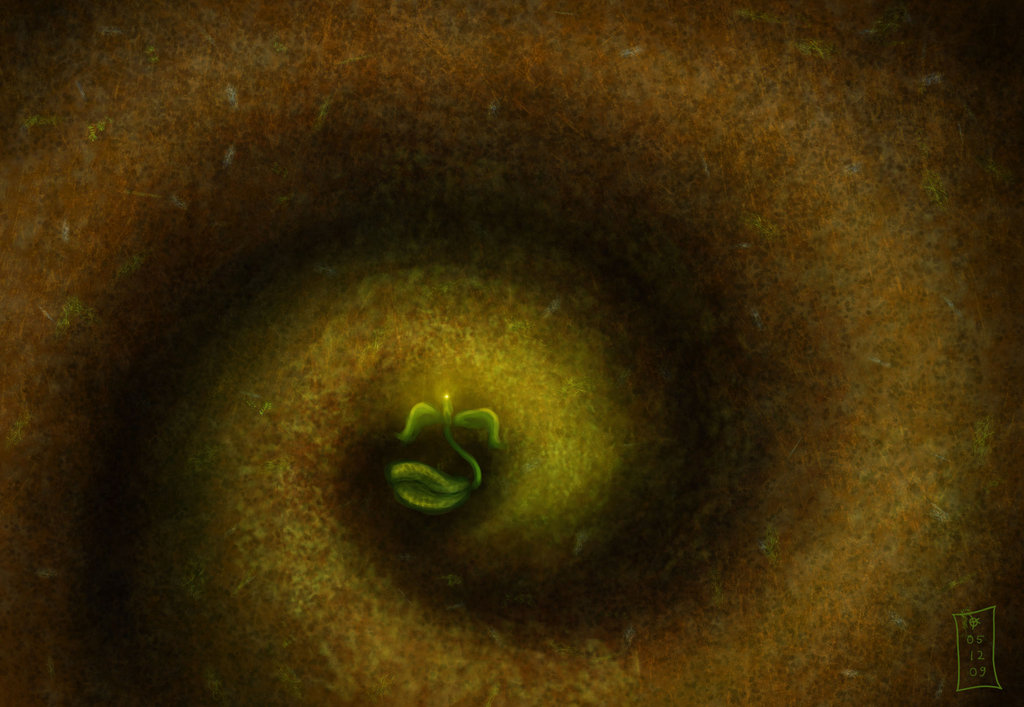
Right now you are fueled by a perfect circle: sunlight, soil, and the seed’s mysterious will. At this moment your extraordinary body is replacing millions of cells, pumping quarts of blood, actively defending your immunity, releasing precisely timed hormones and enzymes, operating on rhythms well beyond your perceptions.

perfect body, how body works,

gajitz.com

Today in an unimaginably vast universe, clouds of interstellar dust reflect the light of nearby stars. We are made of elements forged inside of stars that died out long before our own solar system emerged.

we are made of stars, perfect day,

nasa.gov

Each of us is unique, yet we are one being.

What an amazing day.

Googling Gooey Butter

online interfering with off-line, memories without internet,

Does the net affect our memories? Yes, but maybe not the way we think it does.

My sister and I were talking on the phone about one of the family trips we took as children. Our schoolteacher father and our stay-at-home mother hitched a tiny travel trailer up to the car to take their children to as many educational sites as possible each summer. That they managed months-long trips with two often squabbly girls and our toddler brother was remarkable. That they kept to a necessarily minuscule budget, even more so. They did this by never once buying prepared food of any kind. Every day at lunchtime we ate sandwiches on store brand white bread washed down with not-too-cold fruit drink, then got back in the car to keep driving. My mother cobbled together every evening meal using two aluminum pans, washing those pans and our plastic plates in a shoebox-sized sink. To me, an ungrateful and hermit-y little girl prone to motion sickness, these trips were a sort of educational hell.

Thankfully, one of our stops was in St. Louis to visit with my father’s only brother and his family. After weeks in a cramped trailer and even more cramped car, it was wonderful to spend the night sleeping in a roomy basement with cousins we hadn’t seen in years. We were even allowed to babysit ourselves while our parents went out to a restaurant. The adults brought us a rare treat, McDonalds, and we stayed up late talking and laughing. We showed our cousins how to draw grids on notebook paper to play Battleship. They showed us new card games. The next morning our aunt purchased some kind of St. Louis specialty for breakfast. Growing up in a household where doughnuts and store-bought cakes never crossed the threshold, this was unimaginable luxury. My sister and I remembered the sweet sticky coffee cake but not its unusual name.

After I got off the phone with her I got online to look it up. I got waylaid by flood warnings for St. Louis, so I checked maps to see if the water was rising by my uncle’s house. Then I was distracted by an article about pharmaceutical residue found in waterways. And of course I got sidelined by emails with editing questions, new article deadlines, some G chats that pleasantly used up too much time. Totally forgot my initial quest.

The next morning I saw the note I’d scribbled while talking to my sister. This time I vowed to focus for the few seconds necessary to Google it. I found the name of the confection almost immediately. It’s called Gooey Butter. I fussed around reading about how the cake is based on a baker’s mistake made back in the 1930’s and how customers swear allegiance to specific variations sold by different stores in St. Louis. I even looked at a few images, although none of them looked nearly as enticing as the cake I remember. Then I scrolled over to recipes. I was disappointed to note that nearly every one started with a yellow cake mix. I closed those screens sadly. I meant to email my sister the name of the cake but I’m pretty sure I instantly got caught up in the time flush that happens online. Probably never got around to it.

I realize with uncomfortable clarity that slurping up information online does little to deepen our experiences.  It would have been better to leave the cake unnamed in our memories, held on unfamiliar plates as we clustered around a vinyl tablecloth listening to our aunt say, “You’ve never had anything like it” while we tried the first sweet bite.

I succeeded in finding links to scratch recipes. Here’s the cream cheese version and the non-cream cheese version. I made the cream cheese version for my family, marginally healthier with organic ingredients. And if you ask someone who hails from St. Louis, be careful to avoid expressing your Gooey Butter preferences. Chances are, theirs are much more fervent. 

Good Butter, home version.

The Antidote Is Awe

cure for stress, coffee ritual, easing worry, finding peace,

My husband and I seek refuge on the porch each afternoon in a ritual known simply as “time for coffee.” Somehow just out the door we’re a step away from the pull of obligations and worries. Here we feel centered by the light through the trees or the sounds of birds or the strange lumbering grace of a bumblebee in the flowers.

Our lives, and yours too, are twisted into knots so complicated we can’t see where they start or end. Those complications are made of bills to be paid, old arguments that didn’t heal, long hours and too little sleep, by endless political bluster and the fallout it causes. It’s good to let go of those tangles, even for a while.

Today on the porch we watched an insect we’d never seen before. It skittered without visible wings, its body open like the spokes on a wheel or the arms of a star. It looked improbable as an undersea creature swimming in the air. We gaped in quiet wonder until it was out of sight.

A few moments of awe are all it takes to remind us that our lives aren’t about those knots. We are pulsing, breathing wonders ourselves in a world bursting with miracles.  It takes looking closely at only one thing to see those miracles, whether watching a spider spin her web or looking at fungi that seemed to spring up overnight.  We exist for so short a time on this beautiful planet. We clamor over concerns when our lives may be better measured by how much awe we allow ourselves.

I have things to do, but it’s time for coffee. I’m heading for the porch. Hope you do the same.

We are, perhaps, uniquely among the earth’s creatures, the worrying animal. We worry away our lives, fearing the future, discontent with the present, unable to take in the idea of dying, unable to sit still.   Lewis Thomas 

Reprint from my farm site Bit of Earth Farm

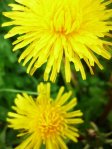
Eat Your Dandelions

dandelion recipe, dandelions for health, eat dandelions, don't kill dandelions,

Image courtesy of thaowurr.deviantart.com

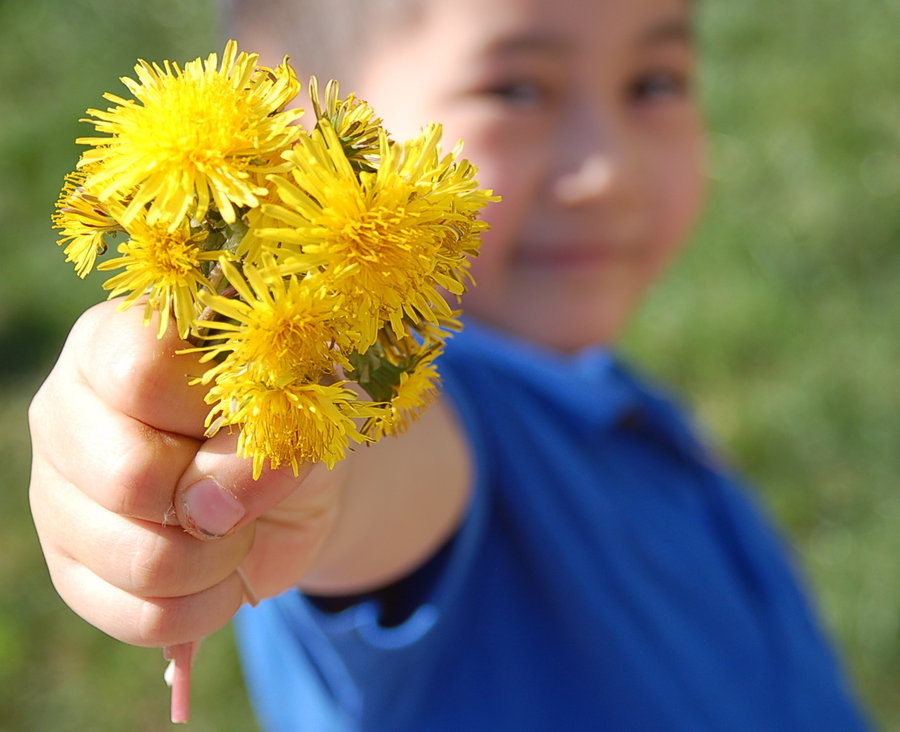
“You EAT them?” a little boy new to the neighborhood asks. He leans forward for the answer, his face ready to constrict in doubt.

Children already well acquainted with our family’s springtime ritual stop picking.

“Yeah!” they eagerly assure him, “They’re really good.”

They aren’t referring to a new vegetable in our garden. They’re talking about dandelions.

Herbalists tell us exactly what we need grows nearby. Those plants we call “weeds” may in fact remedy what ails us. They are so common that their properties are easily overlooked in a culture searching for packaged wellness. Plantain, mullein, comfrey,mint, mugwort,St. John’s wort, chicory and purslane spring up wild in my untreated lawn and garden. Weeds, but also powerful healers.

Today we’re picking dandelions in full flower. It isn’t about finding a remedy. For me the harvest is has to do with celebrating spring and affirming the beauty around us. For my children and our neighbors it’s about fun. I wait until the blooms are at their peak. Then I call friends and neighbors to announce, “Today is the day!”

Children spread out across the yard holding little baskets. A girl squats in front of each plant, pausing a long moment before she reaches out to pluck a flower from its stem. The  oldest boy in the group walks by many dandelion plants to pick only those growing in clusters. And the newest little boy falls silent, as the rest of the children do, taking delight in the seriousness of the harvest.

European settlers brought the dandelion plant to this continent for food and medicinal purposes. The perennial spread easily across most states. It’s a testament to the power of herbicide marketers that such a useful plant became so thoroughly despised. Standing under today’s blue sky, I look at exuberant yellow rosettes growing in bright green grass and feel sheer aesthetic pleasure.

After the children tire of picking we sit together on the porch and snip off the dandelion stems right up to the flower. We mothers look over their busy heads—blonde, brown, black—and smile as we watch them stay at this task with the kind of close attention children give to real work. One girl remarks that the flowers look like the sun. Another child says her grandmother told her that in the Old Country they call the plant by the same name as milk because of its white sap. The newest boy chooses to line the stems neatly along the wide porch planking, arranging and rearranging them by length.

Every aspect of a ritual holds significance so I pay attention to the warm breeze, the comfortable pulse of friendship, and flowers so soft against my fingers they remind me of a newborn’s hair.

When we’re done the flowers are rinsed in a colander, then it’s time to cook them. I’m not a fan of frying. There are better ways to preserve the flavor and nutrients in food. Consequently I’m not very skilled. But this is easy. The children, their mothers and I drop the flowers in a thin batter, scoop them out with slotted spoons and fry them a dozen at a time in shallow pans.

After the blossoms cool slightly on paper towels they’re put on two platters. One is tossed with powdered sugar and cinnamon, the other sprinkled with salt and pepper. Handfuls are eaten in the kitchen while we cook. Then we carry the platters outside. Children run off to play in grass polka dotted with bright yellow flowers. We adults sit on the porch laughing and talking.

It’s suggested that we should be eating healthfully prepared dandelion greens and roots rather than indulging in delectable fried blossoms. That sentence fades into a quiet moment as a breeze stirs new leaves on the trees and lifts our children’s hair. I feel enlivened. Everywhere, around me and inside me, it is spring.
eat dandelions, healthy dandelions, dandelion flower recipe, fried dandelions, dandelion blossom recipe, Flower Power Recipe

Gather dandelion flowers from areas free of chemical treatments or fertilizer. Pick in a sunny part of the day so the flowers are fully open, then prepare right away so flowers don’t close.

Cut away stem, as this is bitter, leaving only the green part holding the flower together.
Douse briefly in salt water (to flush out any lurking bugs). Dry flowers on dish towels while you prepare batter.
Ingredients
3 to 4 cups dandelion flowers, prepared as above

1 cup milk (dairy, soy, almond, coconut, any variety)

1 egg (or equivalent egg replacer product)
1 cup flour (slightly smaller amount of any whole grain alternative)
½ teaspoon salt
oil (frying is best with healthful oils which don’t break down at high temperatures, try safflower oil, coconut oil or olive oil)

Method

1. Combine milk, egg, flour and salt in wide bowl. Mix well. Heat an inch or two of oil in skillet (350-375 degrees).
2.  Drop a dozen or so blossoms into the batter, stir gently to coat. Lift out with slotted spoon or fork. It’s best to hold the bowl over the skillet as you drop each blossom into the hot oil.
3. Turn flowers over to brown on both sides. Remove with slotted spatula to drain briefly on paper towels. Continue to fry remaining flowers using same steps. Toss cooked dandelions with sugar and cinnamon. Or salt and your choice of savory flavoring such as garlic, pepper or chili powder.
4. Making flower fritters is a speedier method than frying individual flowers. Simply drop flowers and batter into the oil by the spoonful, then turn like a pancake. Serve with jam, maple syrup or honey. Or try savory toppings like mustard, ketchup or barbeque sauce. These fritters are endlessly adaptable. Try adding sunflower or sesame seeds to the batter and serve with either the sweet or savory toppings.

a (2)

What You May Not Know About Dandelions

The common dandelion, Taraxacum officinal, has been used in traditional medical systems around the world to boost nutrition as well as treat conditions of the liver, kidney and spleen; slow abnormal growths; improve digestion and more. Recently science has taken a closer look at this often scorned plant. No surprise, traditional wisdom holds up under scrutiny.

~Dandelion root stimulates the growth of 14 strains of bifidobacteria. This is good news, because bifidobacteria aid in digestion. Their presence in the gut is correlated with a lower incidence of allergies.

~Dandelions appear to fight cancer. Researchers testing for biologically active components to combat cancer proliferation and invasion note that dandelion extracts have value as “novel anti-cancer agent[s].” Their studies show dandelion leaf extract decreases growth of certain breast cancer cells and blocks invasion of prostate cancer. The root extract blocks invasion of other specific breast cancer cells  and also shows promise inhibiting skin cancer.

~Dandelions work as an anti-inflammatory and pain relieving agent.

~Dandelion extract lowers cholesterol. This, plus its anti-inflammatory and antioxidant qualities leads some researchers to believe that the plant may reduce the risk of atherosclerosis (hardening of the arteries).

~The plant’s leaves are an effective diuretic.

~Dandelion shows promise in diabetic treatment. It slows the glycemic response to carbohydrates, thereby helping to control blood sugar.

~Dandelion extract increases the action of estrogen and progesterone receptors. It may prove to be a useful treatment for reproductive hormone-related problems including PMS.

~ Leaves, roots and flowers of the humble dandelion are fully edible. USDA National Nutrient Database analysis proves that a festive array of nutrition awaits any lawn harvester. One cup of chopped fresh dandelion greens are extremely rich in vitamins K, A and C as well as good source of vitamin E, thiamin, riboflavin, vitamin B6,  calcium, iron, ,magnesium, manganese, fiber and omega-3 fatty acids.

~The flavonoids found in dandelions are valuable antioxidants and free radical scavengers.


This post is reprinted from an article that first appeared in Natural Life Magazine. 

Let The Youngest Teach You Mindfulness

child-paced, slow down, slow to appreciate,

Image from jesse.millan’s Flickr photostream

Ask any child. When adults meet them for the first time, standard questions include, “What do you want to be when you grow up?” right after classics like, “What grade are you in?” and “What’s your favorite subject?”

Such questions, unintentionally, gauge a child’s progress toward adulthood. That’s because adults tend to be future oriented. We’re distracted from the present moment by the need to plan and work toward any number of goals—what to do about dinner, how to juggle next week’s schedule, when bills can be paid. These distractions take our attention away from what is in the here and now. When we think ahead so often we have less time to notice, let alone appreciate, what makes up our lives minute by minute.

What is impatience except denying the value of the present moment? The watercolor effect of rain on the window, the meandering quality of a child’s conversation, the long wait for a pot to boil—these can be occasions to experience impatience or opportunities to breathe deeply and be present, gratefully.

Leaning so often toward the future unconsciously demonstrates to our children that later is more important than now. Yet as we know, later never comes. As long as we’re alive there’s always “later” to strive toward. Worse, we are surrounded by advertiser-driven messages telling us that we aren’t there yet, that we need to do more or become something more in order to have friends, be successful, find love.

The nature of early childhood is the perfect antidote to this hurry-up attitude. That is, if adults truly pay attention to the lessons the youngest model for us. Young children who are not yet pulled by the adult world’s messages are oriented to the present moment. When forced to disregard what is vital to their bodies and spirits—pretending, daydreaming, playing, snuggling—they rebel. They are who they are, where they are. They’re not caught up in the future tense which dimishes the here and now. They demonstrate the oldest way of knowing.

Pay close attention to the youngest children in your life. Let them help you learn solutions to our cultural overdrive.

As we slow down we have time to truly know each other and to truly know ourselves. We’re more aware of the messages our bodies send us and can act on those signals before they become symptoms. We have time to reflect. Time to remember our dreams when we awaken. After all, time is the only true wealth we have to spend.

slowing down, slow movement, child-pace, mindfulness, mindful living, mindful parenting,

Image from kla!’s Flicrk photostream

How To Time Travel

time travel, memory is time travel, storing memory, preserving memory,

Wikimedia Commons

My oldest is getting married. Yes, that outs me as old enough to have become a mother the year I graduated from college.

That itself seems strange, because I feel pretty much the same as I did at 14, back when I used to sneak out of the house wearing a halter top under whatever mom-approved top I wore over it. It’s such a distinct feeling that when I walk past my reflection in a store window I don’t instantly recognize the person hustling along, the woman carrying my purse and wearing my jacket. I have to remind myself, that’s me. My skinny insecure 14-year-old self is history.

Why can I access that time in my life so easily? Because I really remember being 14. Everything was new. Testing out the forbidden, suffering daily angst, uncovering adult hypocrisy, lying on my bedroom floor memorizing music lyrics. And vivid memory is the key to time travel.

In essence, our lives are made from what we notice and remember. When you look back at any particular phase of your life what you recall is constructed from what captured your attention, particularly those times when your emotions as well as your senses were engaged.

It’s a nasty surprise to realize how few truly full memories we manage to form. That’s because we only efficiently latch on to memories when we pay attention. We’re more likely to do so when the experience is new. That’s probably why we seek out emotionally charged thrills (roller coasters or white water rafting), get so much out of travel, and remember firsts like our first kiss or first attempt driving a stick shift.

The emotional and sensory experience of one’s first baby makes for lasting memories. Ordinary moments remain imprinted on my body as well as my mind from my son’s early years: a newborn slumped against me in sleep, a toddler crouching on sturdy legs to watch a beetle, an inquisitive child taking everything apart. As I watch this tall and capable young man go through the many rituals surrounding his upcoming wedding, I feel as if I exist in multifaceted time, sensing the layers of his childhood simultaneously with the present.

I know it’s easy to miss the simple grandeur all around us. I do it all the time. I get distracted, I multitask, I’m too busy to make eye contact and when I do I might very well be thinking of something else. But we have to live in the fullness of our lives right now. That means engaging in the sights, sounds, tastes, thoughts, and feelings unique to our own experience.

This moment, this day is yours to remember. Pay attention in such a way that you can time travel back to visit it.

And if you’d care to, describe in the comments the sights, sounds, and feelings of a memory that lets you travel in time.