Five Ways Frugal Living Benefits Kids

Sophie is a single mother raising a five-year-old boy. She’s working to establish her own house cleaning business after losing her job nearly two years ago. Sophie and her son live in a small trailer home.

Marissa and Jack run a thriving dental practice while raising five-year-old twin daughters. They live in a suburban home on several acres.

The five-year-olds from these families are at opposite ends of the economic spectrum. But their parents are raising them in remarkably similar ways. Frugally.

Although Sophie would prefer a more reliable income, she wouldn’t spend a cent more than she already does on herself or her son. She adheres closely to simple living tenets. Sophie grows as much food as possible in a community garden plot and makes meals from scratch. She and her son fully enjoy the free benefits of the local library and park system. On weekends, Sophie’s folk band crowds into her trailer for practice sessions. Her son is already learning how to play the harmonica and fiddle. Sophie believes he should rely on his imagination for fun rather than on toys. When she does buy him gifts, they tend to be modest items such as crayons or socks, or ones that have long- term use such as simple tools or sheet music.

Marissa and Jack choose to live simply in their own way. They buy clothing and their children’s playthings from thrift stores, exchange only homemade gifts, and emphasize having fun outdoors. They carefully consider expenditures based on their ethics. Health is a priority, so they buy only organic foods and belong to a CSA. Supporting the arts is another priority so they invest in original works to hang on their walls and regularly attend plays, concerts, and gallery events. They strongly believe in the importance of international travel. When they go to far-off places, they get around by bike or local mass transit, a method they find brings them closer to the cultures they’re visiting.

Many of us are living more frugally. It certainly eases financial strain. It also makes a difference in wider ways, from reducing our ecological footprint to promoting social justice.

Today’s relentlessly materialistic culture tells young people in every way possible that their identity is built on wearing, playing with, and using the very latest consumer products. That’s a heavy tide to fight against on the home front. But that tide is worth turning.

Living simply puts the emphasis on exactly the conditions that are best for our kids, now and as they grow into adulthood.

Shelter From Commercialism

Humanity has always raised her children with the stories, foods, rituals, and values of particular meaning to the people close to them. While there are undeniable benefits to today’s connections and conveniences, a major drawback is the way advertisers have insinuated themselves into the lives of even the youngest children. Nowadays, a child’s stories, foods, rituals, and values are more likely than ever provided by the marketplace. And we know what’s preached there – that meaning comes from what can be bought.

Every year, a 15 to 17 billion dollar marketing industry is aimed at our kids. That money is spent because it’s effective. It’s estimated that 565 billion dollars in purchases are influenced by four- to twelve-year-olds.

Susan Linn, who teaches psychiatry at Harvard Medical School, notes in Consuming Kids: The Hostile Takeover of Childhood, that psychological and neurological research is used to exploit the vulnerabilities of children. She writes, “The explosion of marketing aimed at kids today is precisely targeted, refined by scientific method, and honed by child psychologists – in short, it is more pervasive and intrusive than ever before.”

These strategies are not only employed in advertising itself but are embedded in Internet sites, video games, television, and movies. They’re designed into packaging, implicit in many playthings, and nearly ubiquitous in schools.

Young people have minimal defenses against such tactics. Children under the age of eight aren’t even able to understand the persuasive intent of advertising. And studies show that a network in the brain necessary for many introspective abilities – forming a self-image, understanding the ongoing story of one’s own life, and gaining insight into other people’s behavior – is profoundly weaker in young people. Those brain networks aren’t fully established until adulthood. Just at the stage when selfhood is forming, our children are most vulnerable to the messages of a consumer culture.

Those of us who live simply shelter our kids in different ways and to differing degrees. No matter what approach we take, it’s neither possible nor desirable to shelter teens the same way we shelter toddlers. That’s why it’s vital to raise our kids to be critical thinkers with a strong sense of self. Then they’re empowered to make their own fully informed choices.

Delayed Gratification

This is a biggie in the “you’ll thank me later” department because kids who are able to delay gratification are much more likely to do well as they grow up.

We model delayed gratification each time we choose to save, make do, or make it ourselves. We demonstrate it when the whole family adds coins to a jar until there’s enough to finance an anticipated event. We teach it when we help children find ways to earn and save for their own aims. And we show that it’s expected whether our kids have to wait to see a movie until it’s available at the library or wait until the next birthday for a new pair of jeans.

This may seem negative, particularly when popular culture constantly screams “have it now” and “get what you want.” But there are enormous positives. Our children become familiar with the pleasures of anticipation, which multiplies the eventual delight when a goal is reached. They also begin to internalize the ability to delay gratification. In multiple studies (cited in Daniel Goleman’s book Emotional Intelligence) children who were able to defer gratification grew into teens and young adults who were more socially competent, better able to deal with frustration, more dependable, reached higher educational attainments, and were effectively able to make and reach long-term goals.

Delayed gratification is related to impulse control. Research shows that a child’s ability to control his or her impulses at an early age is predictive of success even decades later as a healthy, financially stable, and positive member of the community. There are many ways to help kids gain the positive coping skills that help them control their impulses and delay gratification. It may be about waiting, but the outcome is extraordinary.

Happiness

Despite advertisers’ images of happy children playing with new toys and giddy teens dancing in designer hoodies, the facts are glaringly obvious. Things don’t make us happier. Children seem to understand the “time is money” conundrum. When their parents spend more time away from home earning an income, they have less time to spend with the family. In a nationwide poll of American kids ages nine to fourteen, ninety percent said they’d prefer increased time with friends and family over material possessions. And when asked if they could have one wish to change their parents’ jobs, sixty-three percent said they would like their mom or dad to have a job that gave them more time to do things together. Only thirteen percent wished their parents made more money.

The more materialistic young people are, the unhappier they tend to be. According to research cited in The High Price of Materialism by Tim Kasser, people who hold materialistic values are more likely to suffer from a whole dumpster load of problems. This includes aggressive behavior, insecurity, depression, low self-esteem, narcissism, even physical maladies. And when people place high value on material aims, they’re prone to have trouble with interpersonal relationships and intimacy. Materialism is also related to less independent thinking and lower value placed on being “true to oneself.” Of course, we want to spare our kids this festering personal mess.

How? We recognize that a sense of well-being depends on intangible qualities like warm interpersonal relationships and reasonable autonomy in one’s choices, exactly those things that money can’t buy. But what’s interesting is that materialism and unhappiness seem to “cause” each other. We all know people who exemplify this. Unhappy people tend to seek status and satisfaction in more transitory ways such as acquisition and appearance. When they do, they feel a temporary boost in happiness, which reinforces even greater materialism.

Studies show that happiness has much more to do with experiences than with possessions. A family camping trip will provide more lasting pleasure than a large purchase. That may be due to the way we access memories. Long after the experience is over, we have fuller sensory-based recall that’s invariably richer than any a purchase can provide.

It’s important to model a cheerful approach to simple living for our kids, but that’s not enough. To ward off materialistic attitudes, our children need the personal strength found in the self- worth that comes from supportive relationships and a sense of accomplishment. In a marvelous example of synchronicity, these are precisely what simple living reinforces in our daily lives. We consciously choose to do for our- selves, to spend more family time together, and to focus on active rather than passive entertainment.

Creativity and Enthusiasm

Many adults seem determined to keep kids busy by enrolling them in supervised activities. And they provide kids with plenty of distractions like toys, video games, and television. Unintentionally, these efforts teach children that fallow time is undesirable. But brain studies show that daydreaming, contemplation, even that uncomfortable condition we identify as “boredom” is vitally important. These natural periods of down time are necessary to incorporate higher level learning and to generate new ideas.

If we expect children to resolve their own boredom without resorting to electronic or other distractions, we help them access a wellspring of ideas that seem to come from nowhere, a wellspring they discover within. Frugal living is one way to preserve a slow pace and minimal distraction load, letting our children become familiar with generating their own ideas.

When we live frugally, we also tend to avoid popular methods of “enriching” our children’s lives such as academic preschool, specialty classes, coached sports, and other paid programs. That saves on fees. It also fosters the kind of expansive learning that’s natural for our species. Research continues to show that when adults are highly directive and exert influence even in the form of rewards or evaluation, their efforts actually diminish a child’s motivation, enthusiasm, creativity, and ability to innovate. Well-intended efforts to hone a child’s abilities through early instruction tend to be counterproductive.

That’s also true of play. Our kids don’t need expensive toys or games. Children’s creativity and resourcefulness flourish when they play without the structure imposed by most playthings. Imagination flows freely when they use what they find in the backyard to play act, build hideouts, or create their own games. In contrast, a toy linked to a movie release or a game with structured rules has predetermined uses and children are much less likely to innovate.

Stuart Brown and Christopher Vaughn write in Play: How it Shapes the Brain, Opens the Imagination, and Invigorates the Soul that, “play lies at the core of creativity and innovation.” It enhances development in areas such as emotional health, social skills, motivation, confidence, a sense of justice, and much more. Young people who maintain a playful nature into adulthood are, according to Brown and Vaughn, remarkably well suited for success. A playful adult is more flexible, humorous, optimistic, and efficient. They note that throughout life, “the ability to play is critical not only to being happy, but also to sustaining social relationships and being a creative, innovative person.”

When our frugal homes provide plenty of raw materials necessary for play without up-to-the-minute popular toys, we’re putting into place the best conditions for sustaining creativity and playfulness.

Self-Reliance And Responsibility

There’s a resoundingly positive impact on our children when we include them in the real work of maintaining our family home, yard, vehicles, and more. Children growing up in frugal households often have regular chores. While some complaining is natural, chores help children understand how things work. They see the benefits of saving as they do calculations for the family budget. They recognize what happens if they forget to take the dog out or don’t bring the laundry in from the line before it rains. They take extra pleasure in the warm fire from firewood they helped to stack. Chores also enable children to master useful skills that will help them become more self-reliant adults.

Taking on early responsibility brings long-term consequences. A study, starting in the 1930s, followed men from young adulthood to death. These men had very different lives; some were affluent Harvard graduates and others were impoverished inner city residents. The men who helped out with regular tasks starting at a young age were most likely to enjoy stability and good mental health.

And there’s more evidence. A long-term study followed children from early childhood to their mid-twenties. What led to success? Balancing all other variables, it was found that the best predictor of a young adult’s success was participation in household tasks at a young age. And we’re talking resounding success – including educational attainment, high intellectual capabilities, a career, and good relationships with family and friends.

The optimum age to get started is three or four years old. According to researchers, starting in the preteen or teen years doesn’t have a strong association with success, although children who take an active role early continue to help out as teens. It’s important to gear the task to the child. Parents should take care to present tasks that aren’t too difficult and that fit the child’s learning style, and not to “pay” for tasks directly or through an allowance tied to the work. Researchers also suggest that children be involved in choosing tasks, perhaps through family meetings or rotating chore charts.

They key to success may also lie in the sensory riches gained by hands-on tasks. Those of us who live simply tend to do more for ourselves. We may grind our own grain and make our own bread, we may raise chickens and barter the extra eggs for a local beekeeper’s honey, we may fix rather than replace what’s broken. And when our kids take part they also gain learning experiences that apply to many other areas of life.

Neurologist Frank Wilson explains in The Hand: How Its Use Shapes the Brain, Language, and Human Culture that brain development and hand use is inextricably connected. And Wilson found a transfer effect. As he studied people who were masters in all sorts of fields (surgeon, puppeteer, and guitarist to name a few), he found each of them had engaged in regular hands-on efforts during their formative years. Whether they grew up doing farm work, playing a musical instrument, or helping grandpa build birdhouses,Wilson says the hand-brain link activated “hidden physical roots . . . of passionate and creative work.”

Starting our kids on tasks at an early age blesses them with self-reliance and a greater likelihood of success. It also demonstrates to them day after day that their efforts are needed. A child can see the outcome of his or her efforts in a meal the whole family worked to get on the table. It feels good. It feels even better is when a parent says, “Thanks, I couldn’t have done it without you.” There’s not a commercial product out there that can create the same genuine satisfaction.

Sophie’s little boy and Marissa and Jack’s twin daughters know that satisfaction. Their young lives have ample time for play, working alongside adults, and warm family conversation. The children soak up their parents’ values while learning and growing largely free of commercial influences, at least for now. Their parents have never met each other but they have the same focus. They see simple living as an integral way to bring forth a more conscious and life sustaining future for their children.

First published in Natural Life Magazine  

Resources

Fairplay: childhood beyond brands

Alliance For Childhood

Shareable: solutions for the common good

What Movies Tell Girls

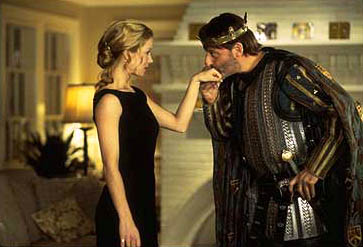
how movies affect girl's self-image, damaging effect of media on girls, For years my daughter’s favorite movie was Just Visiting. This old remake of an older hit French comedy was packed with plenty for my little girl to adore. Magic, time travel, and plenty of humor. Some quotes from the film are still in rotation as favorite family sayings. Although it didn’t lack for laughs, it was missing something more vital. Strong female roles. Sure, women star in the film. Passive, pretty characters who only gain a stronger sense of themselves through men. Well, there’s also a stereotypical witch. Don’t even get me started on that. I’m not about to stomp my foot and decry one B movie because the women’s roles aren’t up to good-for-my-daughter standards. But when I take a look at movies available in theaters and on Netflix, foot stomping seems imperative. In the real world girls and women have full, interesting lives. Their conversations are complex and rarely limited to shoes, hair styles, and attracting the “right” XY chromosomes. But in the entertainment world, females are often little more than gloss. Little more than women’s roles in the past. sexualized roles in movies, One way to gauge a female character’s presence in any movie is the Bechdel test. This method doesn’t imply that a particular movie has merit, it simply demonstrates character treatment based on gender. To pass the Bechdel test, a movie has to meet all of the following three qualifications:

  1. Have at least two female characters (with names known to the audience)
  2. who have a conversation with each other
  3. about something besides a male.

Recall the last five movies you saw. How many really pass the test? I’m not sure Just Visiting passes. But according to the Bechdel test database, recent movies such as Limitless, Pirates of the Caribbean: On Stranger Tides,  The Tree of Life, Water For Elephants, Your Highness, Beastly, I Am Number Four, The Lincoln Lawyer, No Strings Attached, Source Code, and Avatar don’t pass. Kids’ movies aren’t much better. Bechdel test failures include Hop, Rango, Rio, Jack and the Beanstalk, Megamind, The Secret of KellsFantastic Mr. Fox, Cloudy With a Chance of Meatballs, Ice AgeDawn of the Dinosaursand Shrek Forever After. Another way to pay attention to gender disparity in movies is to simply count the number of female speaking characters. Top movies for kids from 1990 to 2005 averaged less than one female out of every three speaking characters. And in both animated and live action movies from 1999 to 2006, researchers noted that females were outnumbered by males in speaking roles as well as crowd scenes. Worse, girls and women were typically portrayed in stereotypical, often hypersexualized roles. It seems girl power, even in today’s family films, has a lot to do with sexy clothes.

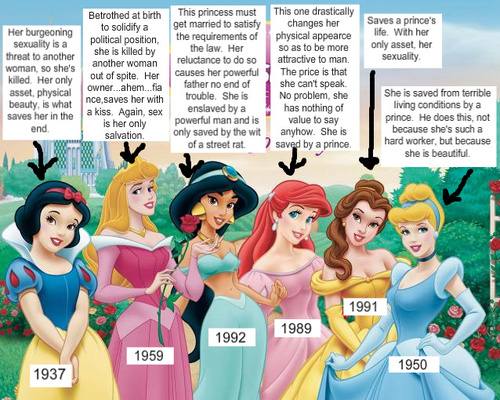
Jeff Brunner thesocietypages.org/socimages/2009/10/25/disney-princesses-deconstructed/

This gender disparity is more than annoying. It’s damaging. Sexualized stereotypes are linked to a slew of problems in girls as well as women including eating disorders, poor self-esteem, and depression. Girls and young women who frequently consume mainstream media content are more likely to believe that a woman’s value is based on physical attractiveness. Even very young girls are beginning to self-objectify, to think of themselves as objects to be evaluated by appearance. And there’s a lot of media consumption going on. Half of kids under six watch at least one DVD a day. That’s some heavy reinforcement of Hollywood ideals. In our house Just Visiting has given way to new favorites. I’ll be watching them with popcorn, a snuggly blanket, and some attitude. My foot is just itching to stomp. Here are a few resources to light the way. About Face Adios Barbie All Made Up: A Girl’s Guide to Seeing Through Celebrity Hype to Celebrate Real Beauty Beauty Redefined Body Drama: Real Girls, Real Bodies, Real Issues, Real Answers Body Outlaws: Rewriting the Rules of Beauty and Body Image Body Shots: Hollywood and the Culture of Eating Disorders (Excelsior Editions) Can’t Buy My Love: How Advertising Changes the Way We Think and Feel Cinderella Ate My Daughter: Dispatches from the Front Lines of the New Girlie-Girl Culture Mothers for a Human Future New Moon Girls Packaging Girlhood Pink Stinks Resolving the Confidence Crisis Taking Back Childhood Teen Voices The Body Project: An Intimate History of American Girls 101 Ways to Help Your Daughter Love Her Body

9 Amazing Reasons To Be Optimistic

world betterment, global optimism, oneness, hope, peace, all will be well,

If you could scroll through history searching for an era where you’d like to spend a lifetime, what would attract you?

Probably peace and prosperity. Probably a time when the arts flourish and science is open to new wonders. Probably too, a time period when people behave morally, care for one another, and uphold higher ideals than selfishness.

Does it make a difference to your answer if you don’t get to choose where on Earth you’ll be born?  Into what class, gender, creed, and ability?

You’ll probably want to stay right here, right now.

Our 24 hour media attention on what’s terrifying and what’s superficial steers us away from the big picture.  That picture, looking at the wider view, is actually pretty heartening.

*

1. War and global violence continue to decline.

Armed conflicts aren’t going up, they’re going down.

The world has seen a 70 percent decline in the number of high-intensity conflicts since the end of the Cold War era. Genocide is down 80 percent. Weapons sales between countries have diminished by 33 percent and the number of refugees has fallen by 45 percent. Even measuring from as little as 15 years ago, the number of armed conflicts has dropped from 44 to 28.

Why? Project Ploughshares credits peace building efforts.

Chances are, the reasons for peace are complex. Yet a stronger international resolve to focus on peace building and basic human rights is taking place. Imagine the far larger potential for enduring peace if we intentionally educate our children and ourselves in the proven methods of non-violence—-negotiation, mediation, reconciliation, even basic listening skills.

*

2. Freedom is stretching across the planet.

By evaluating variables including civil liberties, democratic institutions, and independent media it’s possible to assess how free each nation in the world really is. Back in 1973, 29 percent of nations were deemed free, 25 percent partially free, and 46 percent not free.

In a little over 35 years, the number of nations ruled by authoritarian regimes dropped from 90 to 30. Countries around the world considered to be free increased by 50 percent while those not free had dropped by more than half.

Independence has a long way to go. And what we may not recognize as positive signs—protests, dissent, political upheaval—may very well be ordinary people speaking up for freedom.

*

3. Affluence is on the increase.

A shifting focus away from war, conflict, and chaos means that countries are better able to meet the needs of their citizens. Those 151 countries deemed free or partly free account for 95 % of the world’s gross domestic production (GDP).

The number of people living in poverty has dropped by 500 million people, although most of those successes are in a few key countries.  Since 1975 the world’s poor have seen their incomes grow faster than the world’s wealthy, meaning economic equality is increasing.

Of course, we make a mistake when we confuse affluence with well-being. After certain (surprisingly minimal) levels of health and safety are reached, money doesn’t buy happiness.

Current global conditions of institutional breakup, financial chaos, and environmental decline are exactly those which seem to be (slowly) leading to long-term beneficial change. Collectively we’re waking up to the limitations of short-term fixes and relentless economic expansion. Hopefully we’re also waking up to the reality that we’re in this together—rich and poor, developed and developing nations, young and old, left and right. We see in our own lives that what’s important can’t be measured by dollars alone. Things like good health, supportive relationships and a vital ecosystem.

There are plenty of other ways to define affluence. A fascinating measure of wealth lies in a quick look at how many hours of labor it once took the average worker to pay for light.  In ancient Babylonia it took over 50 hours to pay for an hour of poor light from a sesame-oil lamp. At the start of the last century, it would have taken the average worker a thousand hours to earn the money to buy candles equaling the light of a single 100 watt bulb. Today’s high efficiency lighting costs us less than a second of work.

*

4. Fewer people are hungry.

Hunger continues to drop although we have a long way to go. It’s staggering to realize that 925 million people are chronically hungry. But according to The Improving State of the World: Why We’re Living Longer, Healthier, More Comfortable Lives on a Cleaner Planet by Indur Goklany, global food supplies increased 24 percent per capita in the last 40 years. In developing countries the food supply increased at an even greater rate, 38 percent more food per person. Since 1950, the real global price of food commodities has declined 75 percent.

No one should go hungry. The future of global food justice relies on efforts to restore and protect biodiversity, stop the spread of genetically modified crops, and assure water rights.

*

5. Longevity is improving yet total population faces a downturn

Fulfilling the cherished hopes of their parents, more children around the world are born healthy. Mortality rates for those under five years of age have fallen by 60 percent since 1960.

Meanwhile, life expectancy has risen 21 years since the mid 1950’s.

This doesn’t mean the planet will be too crowded. Overall population will continue to rise for several more decades but we’re facing a major downturn. Already birth rates are near or below replacement rate in countries all over the world. Increased education and affluence tend to inspire women, no matter what country they live in, to invest their time and resources in fewer children. As Fred Pearce clearly explains in The Coming Population Crash: and Our Planet’s Surprising Future, our little Earth will likely reach a (painful) peak of 8 billion people around the year 2040, then the total number of human will begin to decline so rapidly that nations will struggle to keep their populations levels from slipping too low. They may create perks for becoming parents and incentives to attract immigrants.

*

6. Health continues to improve.

Studies conducted by Robert W. Fogel, a Nobel laureate and economic historian at the University of Chicago, show that in a few hundred years human biology has changed in startling ways. We are more resistant to ill health, more likely to recover when faced with disease and less likely to live with chronic disability. We are also smarter and live longer. Fogel calls this radical improvement “technophysio evolution.”

An interview quotes Fogel as saying, “The phenomenon is not only unique to humankind, but unique among the 7,000 or so generations of human beings who have inhabited the earth.”

Fogel doesn’t necessary attribute the changes to genetic shifts.  Improvements in medical care, nutrition, sanitation and working conditions may cause epigenetic changes. These are shifts in gene expression that can last through many generations without altering underlying DNA.

Information amassed by Fogel indicates that chronic diseases such as arthritis, heart disease and lung ailments are occurring 10 to 25 years later in life than they did 100 or 200 years ago. Interestingly, well-being may be more strongly affected by conditions each individual faces in utero and during the first few years of life than previously suspected.

These remarkable health gains don’t diminish our current struggles with cancer, diabetes, Alzheimer’s disease, autism and other serious health conditions on the increase. Despite the blessing of bodies more resilient and healthy than those of our ancestors of just 150 years ago we suffer the effects of environmental toxins and nutritionally inferior diets. To fully accept the gift of health and energy from our ancestors, we need to make the right choices to pass those benefits to our descendants.

*

7. Literacy rates continue to improve.

Global adult literacy rates have shot up from 56 percent in 1950 to nearly 84 percent today, the highest ever.

Women’s rates haven’t risen as quickly due to inequality and poverty, but in some areas, particularly East Asia, 90 percent more girls are able to read than 10 years ago. As female literacy goes up, other overall positive indicators tend to follow including decreased domestic violence, improved public health and greater financial stability.

*

8. Intelligence is on an upswing.

From generation to generation, we’re getting smarter. In fact, to accommodate continuously increasing intelligence the IQ test must be renormalized (standardized to keep the average test results at the 100). This is called the Flynn Effect.

Between 1932 and 1978, mean IQ scores in the U.S. rose 13.8 points. If your grandparent received IQ score results of 98 back in 1932 they’d have been deemed of average intelligence. That same grandparent, if administered today’s tests, would be considered to have a borderline mental disability by current scoring standards. IQ scores have risen even higher in some other countries. Of late, developing countries seem to be experiencing the biggest surge.

Plenty of explanations have been proposed, but the increase can’t be definitively pinned on genetic improvements, improved nutrition, greater familiarity with testing or better schooling.

According to Cornell professor Stephen J. Ceci, the most direct gains are not in subjects that are taught (math, vocabulary) but are shown in parts of the test that seem unrelated to schooling (matrices, detecting similarities). In fact, test gains have been enormous in areas requiring the child to apply his or her own reasoning, such as arranging pictures to tell a story or putting shapes in a series. Although teaching children does return positive results, what a child learns through the natural stimulation of everyday life has a more profound effect. For example, a study to determine the effect of schooling on rural children in India found that the increase in overall intelligence from a year of age is twice the increase from that of attending a year of school.

IQ test scores don’t relate to what truly provides satisfaction in life. But the Flynn Effect is intriguing. Factors we can’t completely explain are giving us the intellectual capacities to deal with an ever more challenging world.

*

9. Compassion is huge.

Never before in history have so many people worked tirelessly and selflessly to benefit others. Paul Hawken writes in Blessed Unrest: How the Largest Movement in the World Came into Being and Why No One Saw It Coming that the abolitionist movement was the first major movement by human beings to advocate on behalf of others without seeking advantage for themselves or their particular social or political group.  Since that time, such efforts have grown with astonishing vigor.

There are now over a million organizations on the planet working for environmental stewardship, social justice, the preservation of indigenous cultures, and much more.  These groups don’t seek wider acclaim, they seek to make a difference for the greater good.

Humanity, which is clever and kind enough to bring about so much improvement for one another, is awakening to the vital importance of living more sustainably on Earth. Unless we pull another planet out of the galaxy’s pocket in the next decade or two, we have to stop using up our precious blue green Earth. It’s time to turn our ingenuity to living well within our means. Peacefully, wisely, and with optimism.

world peace, ending world hunger, ending war, ending illiteracy, global optimism, heartening optimism,

Hand Globe image courtesy of HapciuMadam

Hummingbird image courtesy of PhapPuppy

Do You Suffer From Mean World Syndrome?

tv overload, mean world syndrome, george gerbner, pessimism, fearful of strangers,

Do you turn on TV news most days? You’re probably not doing yourself or your family any favors.

What you bring into your home is tragedy, violence and the worst of human behavior. Study after study has shown that news programming tends to breed cynicism and helplessness.

Yes it’s important to be informed, but the kind of coverage found in network and cable news is usually superficial. And worse, it’s skewed to visuals and headlines chosen for shock value. That’s what boosts rating. In-depth information that advances real comprehension isn’t what TV news delivers. As a result, viewers are more likely to become pessimistic, fearful and unable to gauge reality.

Yes, really.

The phenomenon is called Mean World Syndrome.

It’s based on the research of George Gerbner. His analysis showed that the violent content of news and entertainment convinces viewers that the world is more dangerous than it actually is. Back when Gerbner did the bulk of his work, media was a smaller and quieter place. Now we have 24 hour access to news channels, movies, and shows as well as all kinds of net content.

Gerbner wrote,

Our studies have shown that growing up from infancy with this unprecedented diet of violence has three consequences, which, in combination, I call the “mean world syndrome.” What this means is that if you are growing up in a home where there is more than say three hours of television per day, for all practical purposes you live in a meaner world – and act accordingly – than your next-door neighbor who lives in the same world but watches less television. The programming reinforces the worst fears and apprehensions and paranoia of people.

And those who are convinced the world around them is a highly dangerous, unpredictable and unforgiving place have more than a heightened sense of insecurity. They are more likely to see violence as a solution to problems rather than to reason in more nuanced ways. Fear also drives them to take hard-line political and social attitudes.

When Gerbner testified before a congressional subcommittee in 1981, he said

Fearful people are more dependent, more easily manipulated and controlled, more susceptible to deceptively simple, strong, tough measures and hard-line measures…

mean world syndrome, news overload, cynicism and mass media, happy family without tv news,Hmmm.

Fact is, the world is NOT more violent.

Center for Media and Public Affairs did a study on network coverage of murder. Between 1990 and 1995, the murder rate in the U.S. went down thirteen percent. (It continues to go down.) But during that same period, network coverage of murders increased three hundred percent.

Try this antidote, an excerpt of a Steven Pinker article titled “We’re Getting Nicer Every Day: A History of Violence,”

The criminologist Manuel Eisner has assembled hundreds of homicide estimates from Western European localities that kept records at some point between 1200 and the mid-1990s. In every country he analyzed, murder rates declined steeply–for example, from 24 homicides per 100,000 Englishmen in the fourteenth century to 0.6 per 100,000 by the early 1960s.

On the scale of decades, comprehensive data again paint a shockingly happy picture:

Global violence has fallen steadily since the middle of the twentieth century.

According to the Human Security Brief 2006, the number of battle deaths in interstate wars has declined from more than 65,000 per year in the 1950s to less than 2,000 per year in this decade. In Western Europe and the Americas, the second half of the century saw a steep decline in the number of wars, military coups, and deadly ethnic riots.

Zooming in by a further power of ten exposes yet another reduction. After the cold war, every part of the world saw a steep drop-off in state-based conflicts, and those that do occur are more likely to end in negotiated settlements rather than being fought to the bitter end. Meanwhile, according to political scientist Barbara Harff, between 1989 and 2005 the number of campaigns of mass killing of civilians decreased by 90 percent.

The decline of killing and cruelty poses several challenges to our ability to make sense of the world. To begin with, how could so many people be so wrong about something so important? Partly, it’s because of a cognitive illusion: We estimate the probability of an event from how easy it is to recall examples. Scenes of carnage are more likely to be relayed to our living rooms and burned into our memories than footage of people dying of old age.”

Yes, we face harsh realities. I hardly need to recount them to you. But when crime, disaster, ecological devastation, famine, and other tragedies are presented as random occurrences nothing constructive is gained. Emotions like anger, fear, and sorrow can rouse us to positive action but only if action is an option. Sometimes that’s direct action, sometimes it’s seeking deeper understanding of how to prevent these occurrences from happening again.

Problems portrayed on movies and shows, problems relentlessly hyped in the news and by pundits—-well, they just seem so pervasive, so disconnected from causes, so impossible to change that we feel helpless to do anything about it. That’s another effect of Mean World Syndrome.

We end up pessimistic, which is bad for our own health and bad for the planet.

True, we humans may be more likely to pay attention to negatives than positives, a trait that probably helped us to survive in saber-tooth tiger days. But long progress of humanity has much more to do with our tendency to cooperate, form close relationships, and to care. We are hard-wired for compassion, not for the imaginary mean world.

*

*


Fight Mean World Syndrome

Get your news from sources that adhere closely to the highest journalistic standards.

Consider widening your perspective with international news.

Check out Center for Media Literacy. They offer resources to help young people develop critical thinking skills related to our world of mass media.

Read magazines about people and groups working for positive changes such as Ode and YES.

Enjoy some heartening news with Good News Network and Great News Network.

*

*

*


Fear image courtesy of Jimee, Jackie, Tom & Asha’s Flickr photostream.

When Girls Think Their Looks Mean Everything

lookism, girls who hate their looks, moms helping girls love themselves, mean girls, geek girls,

As little girls, Elissa’s friends were rambunctious and wholly themselves. They pursued their own interests with no concern for other people’s opinions. They drew comics featuring hilarious dialogue, danced and laughed simultaneously until they fell down in breathless mirth, conducted basement science experiments, and pretended they had super powers. Their mothers talked about how freely their girls expressed themselves, grateful to have strong daughters.

Then it started.

Like a relentless viral infection, one by one these girls succumbed to our appearance-obsessed culture. Elissa watched angrily as her friends were laden with heavy new concerns. They worried about what they looked like and what others thought of them. By 11, 12, or 13 years old they hid their unique interests and suppressed their considerable talents. Instead they maintained a near constant awareness of hair, make-up, clothes, body shape, who said what, and how everyone else reacted.

Threats, screaming outbursts, bleak despair became common. And that was just their mothers’ reaction to their daughters’ behavior. Helplessly witnessing what has become a female ritual of relentless self-scrutiny causes many of us to lose it.  We know all too well that the effort to constrict oneself into a mold is exhausting.

But who can blame our girls, let alone the adult women who continue to suffer painful confidence wounds, when impossible standards are the norm?  It’s almost as if we females are set up to fail at this appearance game. Oh wait, we are. Even the Beautiful People aren’t beautiful enough.

photoshopping, mena suvari, celebrity photoshop, teen beauty,

Celebrities “fail” too. Take a look at the already lovely Mena Suvari, model and actress whose acne is removed, pores eliminated, eyes brightened and skin smoothed.

Check out the before-photoshop pics of women like Kirsten Dunst, Alicia Silverstone, Christina Ricci, and others. Until they’re rendered plastic smooth and Barbie thin, they look somewhat like ordinary people.

And let’s not forget, reality shows have made transformation from ordinary to perfect an entertainment phenomenon in a society where make-overs for little girls and high heels for babies aren’t out of the question.

Image after image through their young lives, girls absorb an ever present lesson that females aren’t good enough as they are. Such lessons aren’t confined to images. Girls and women portrayed in movies are typically clad in sexualized clothes and lead one-dimensional lives.

What’s the effect?

Devastating, according to the American Psychological Association. Shame, anxiety, eating disorders, and depression. Girls judge their bodies harshly as young as the age of five.  No wonder a girl might choose keep the vitality of her true self hidden.

But there’s another side, often overlooked. Because Elissa and a few of her friends didn’t suffer (at least fully) the perils of lookism. They barreled through their pre-teen and teen years fueled by interests strong enough to hold them steady. Elissa poured her energy into a number of pursuits. She was a docent at the zoo, raised white rats, studied an ever increasing range of scientific interests, and moderated an online forum. One of her friends took up photography, becoming proficient in pinhole camera techniques and making albumen prints, while also advancing in a hockey league. Elissa noticed that girls who didn’t engage in the looks-first game were often ostracized by their more mainstream peers, but they also had strong friendships beyond school. Elissa, homeschooled through highschool, was one of those friends. She says she felt freer to follow her own interests without the pressures of school culture and advocated individuality to others.

As a teen, Elissa was angry at the influences that swayed so many of her other girlhood friends. She scorned their preoccupation with boys, clothes, body image, and interpersonal drama. But now Elissa is in her early 20’s. She’s reconnected with many of these same friends and learned a little about the adversity they suffered as they made their way through adolescence different than hers. One of her childhood friends became a mother at 15, another made multiple suicide attempts, still another struggles with bulimia. Elissa is sure the strengths from girlhood are still with all of them. She just doesn’t know how to let them know that their looks don’t define them.

Here are a few resources to light the way.

About Face

Adios Barbie

All Made Up: A Girl’s Guide to Seeing Through Celebrity Hype to Celebrate Real Beauty

Body Drama: Real Girls, Real Bodies, Real Issues, Real Answers

Body Outlaws: Rewriting the Rules of Beauty and Body Image

Can’t Buy My Love: How Advertising Changes the Way We Think and Feel

Mothers for a Human Future

New Moon Girls

Packaging Girlhood

Pink Stinks

Resolving the Confidence Crisis

Teen Voices

The Body Project: An Intimate History of American Girls

101 Ways to Help Your Daughter Love Her Body

*

*

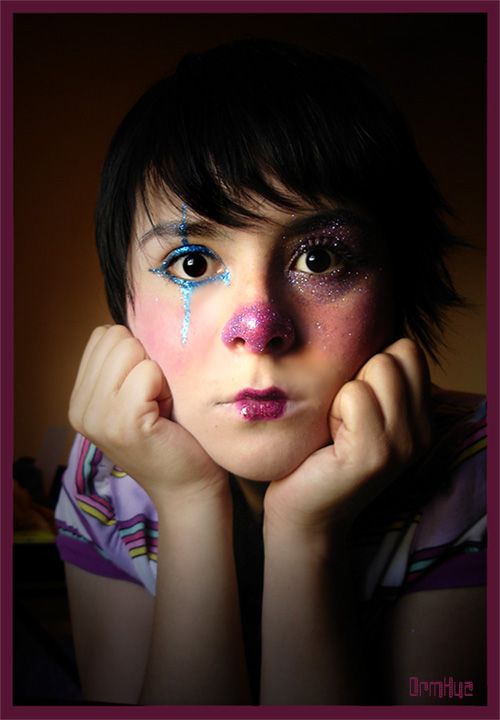
Trying to Be Happy courtesy of Orm Huz

Real Action Footage Hard to Find: World’s Most Powerful Force Rarely Filmed

*

*

*

*

*

*

*

*

Few talk about it. Fewer know much about its principles or how to apply them. Yet it has a profound impact, a long history and a reach nearly as wide as heaven. I’m talking about non-violence.

Sure, we know a bit about the civil rights movement and a bit about Mahatma Gandhi, but not much. Mainstream media focuses on the changes wrought by violence.

Pacifism is confused with those who are passive. Nothing could be further from the truth.

Consider Liberia. This nation was birthed by colonization and racism. It existed in oppression for over 150 years. A few years ago Liberia was a land torn apart. Dictator Charles Taylor’s reign imposed hunger and brutal killings on Liberia’s people. The rise of rebel groups made the situation worse. Children were forced to become soldiers. They roamed the countryside stealing, raping and killing. Villages were burned. Brutalized refugees crowded the cities. No one was safe. No one knew where to turn. The only answer lay in the powerful force of love in action, non-violence.

By 2003 women began gathering at their own risk to demand peace. They wore white and sang in the marketplace. They called themselves Women of Liberia Mass Action for Peace. Their numbers grew. Against tradition, Christian and Muslim women worked together—singing, praying, planning and insisting on love. They held signs as truckloads of soldiers drove past, the same men and boys who terrorized them. Their signs said, “We love you. Put down your guns.”

Ignored at first, their numbers grew. As peace marchers walked past, other women joined in from the streets. Children sang along. Women of Liberia Mass Action for Peace tactics included passive resistance, withholding sex (in part to avoid birthing children who would later be raped, killed or forced to become soldiers) and insisting on reconciliation. Finally they forced a meeting with President Taylor, where they made him promise to attend peace talks in Ghana. Then they bravely met with representatives of the rebel faction, who also agreed to attend the peace talks.

A delegation of Liberian women went to the talks in Ghana at their own expense. They waited outside the hotel where negotiations were held, wearing white as reminding presence. The men stayed in luxury, stalling as they attempted to get more and more power for themselves without agreeing to more rights for the citizenry. After weeks of these fruitless talks the women learned that an embassy in Liberia had been bombed and war there had intensified. Afraid for the families they’d left behind, they took another risk. Entering the hotel, one hundred women linked arms outside the doors of the negotiating hall. They intended to force the men to stay without food and water, privations Liberian refugees knew well, until they had reached an agreement. Guards threatened them. One of the rebels kicked at them.

Leymah Gbowee, a leader of Women of Liberia Mass Action stood. She began to take off her clothing. This was a last resort. It is taboo to see one’s sister, mother or grandmother unclothed. The guards backed down. Two weeks later an agreement was signed.

When Liberia held landmark elections, Ellen Johnson-Sirleaf became the African continent’s first elected female head of state. Yet look around. The extraordinarily brave, powerfully liberating work by Liberian women went largely unnoticed by major news organizations.  Heck, even the Liberia page on Wikipedia doesn’t cite their involvement. Stephen Colbert’s interview with Leymah Gbowee promos the sex strike angle.

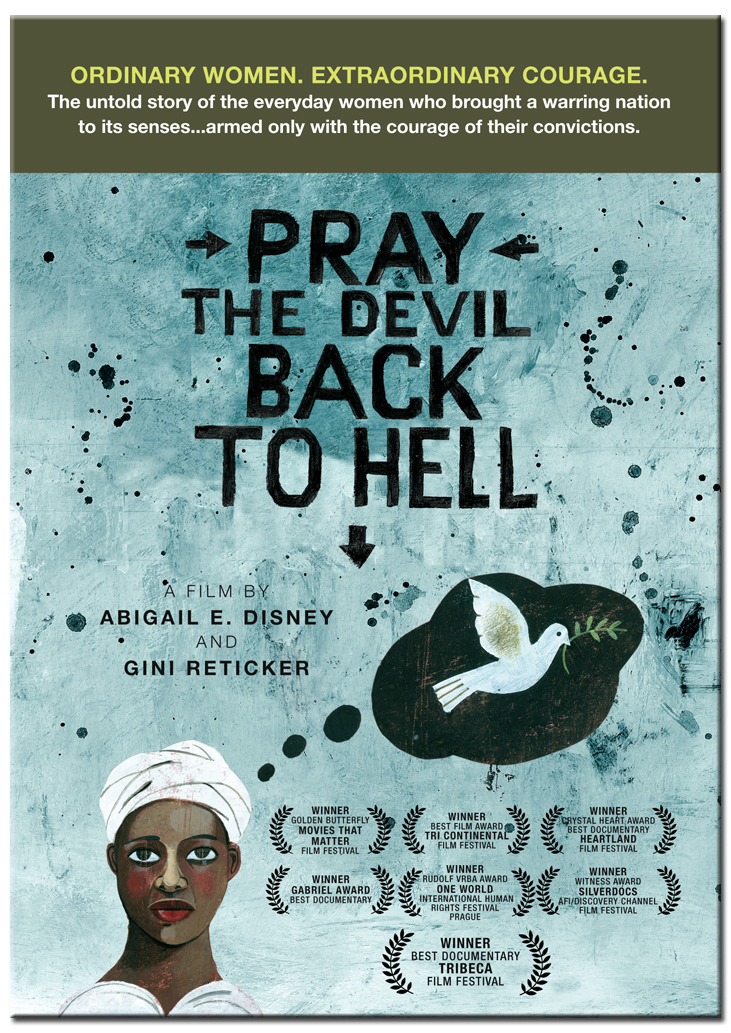
An extraordinary documentary about Women of Liberia Mass Action, called Pray the Devil Back to Hell came out in 2008.  Producer Abigail E. Disney couldn’t rely on footage shot by news organizations. They barely cover non-violence. Instead she managed to find three years of material on the peace movement that shifted the course of history from “private individuals who just happened to be there with cameras.”

We can do more than thank goodness.

We can use non-violence so that goodness is a force for change.

The Beauty of Ordinary People

“Not everything that can be counted counts, and not everything that counts can be counted.”

Einstein

*

*

*

*

The world is full of ordinary, wonderful people.

Ever since I learned about Randy Stang in Regina Brett’s Plain Dealer column his example of casual grace has helped me see greatness in a new way. Those who bring out the best in themselves have a way of doing that.

Most people who get media attention are nothing like us. They’re obnoxiously wealthy, phenomenally talented or otherwise good at accumulating fame.

A great deal of publicity is also devoted to those who bring out the worst in themselves. They commit crimes or wreak havoc more acceptably, perhaps as scornful political pundits.

Occasionally attention shines on people who devote themselves to a cause in ways we can’t imagine doing or who risk their lives to save a stranger. True heroes. We may marvel at their efforts but end up feeling worse about our own choices. Who can imagine sacrificing as these selfless people do?

But Randy Stang was not the sort of man who attracted attention. He lived with his family right by Bradley Park in Bay Village, Ohio. Tall lights lit up his yard till late at night. Enthusiastic yelling from nearby soccer, basketball and baseball games made for a noisy home. When Randy Stang heard about a proposed biking and skateboard park he decided to attend the public hearing. So did many of his neighbors.

He waited for his chance to talk holding three pages of notes. A middle school teacher spoke about the six years of resistance the skate park had already faced, saying Bradley Park was likely the last hope for local bikers and skateboarders. Residents also spoke, saying the noise and inconvenience of a skate park was unacceptable. They liked the idea of teens gathering somewhere but preferred that place be far from their backyards.

Finally it was Randy Stang’s turn to talk. He explained what it was like to live near the park. He mentioned the noise and lights. He noted that his garage had been broken into just two days before the public hearing.  Then he gave his opinion.

“I’m in favor of a skate and bike park in Bay Village in Bradley Park. I am wondering if the citizens against the park have no grandchildren, no children, or are not a child themselves.”

He finished, saying, “You want to put it just to the north of that baseball diamond there, probably about 50 feet from my yard.”

Then Randy Stang collapsed. A nurse and doctor performed CPR to no avail. But his efforts were not in vain. It looks like Bay Village will be building The Stang Memorial Skate and Bike Park.

People who are acclaimed every day in the media don’t exemplify us. It’s the uncelebrated lives of ordinary, wonderful people who form the bedrock of human existence. These people are next to you and across the world. Chances are they won’t gain notice unless they perish dramatically while simply being themselves.

Unselfish acts performed a million times a minute weave us together as a caring species. We tend to the helpless, comfort the sorrowful, share knowledge and create happiness. It happens most often in small, unnoticed ways. This is why I know humanity has every hope of skating ahead toward the very best possibilities.

*

*

Creative Commons photo collage


Going to Hope in a Handbasket


“Not only is another world possible, she is on her way. On a quiet day, I can hear her breathing.”             Arundhati Roy

*

*

*


Fear sells. Blood and guts sell even better. What really grabs our attention? Out and out panic. That largely explains today’s so-called news channels, talk radio, actually much of commercial media. The worse it sounds, the greater audience share they grab and the more money they make. Trouble is, they also make up minds and harden hearts and plant misery where optimism could so easily flourish.

But they’re wrong.

Sure, it seems we’re in big trouble. Structures we count on to be stable are crumbling—finance, health care, education, consumption driven economies, us versus them mentalities, you name it.

Remember the parable of the mighty oak and thin reeds? The oak boasted of his immense girth and height, mocking the reeds all around him for their weaknesses. But the reeds could withstand wind, lightening and the weight of snow. The oak succumbed while the reeds survived, stronger than the oak in their ability to bend and stand again. Big institutions are fighting transparency, reform or annihilation with everything they’ve got, believing that strength means rigidity. Meanwhile a shift is happening on the grassroots level, as flexible and self-correcting as reeds in the wind.

Times of change are destabilizing and difficult, but ultimately valuable. After all, what’s broken, corrupt or simply no longer workable must be fully revealed before it’s healed or transformed into something much better.

Look more closely. Things are getting better all the time. In fact amazing evidence shows that we’ve long been on the path to health and harmony. Here are a few examples.

~

We’re Smarter.

Intelligence continues to increase from generation to generation. In fact, to accommodate continuously increasing intelligence the IQ test must be renormalized (standardized to keep the average test results at the 100). This is called the Flynn Effect.

Between 1932 and 1978, mean IQ scores in the U.S. rose 13.8 points. If your grandparent received IQ score results of 98 back in 1932 they’d have been deemed of average intelligence. That same grandparent, if administered today’s tests, would be considered to have a borderline mental disability by current scoring standards. IQ scores have risen even higher in some other countries: 27 points in the UK between 1942 to 1992. Of late, developing countries seem to be experiencing the biggest surge.

Many explanations have been proposed, but the increase can’t be definitively pinned on genetic improvements, improved nutrition, greater familiarity with testing or better schooling.

According to Cornell professor Stephen J. Ceci, the most direct gains are not in subjects that are taught (math, vocabulary) but are shown in parts of the test that seem unrelated to schooling (matrices, detecting similarities). In fact, test gains have been enormous in areas requiring the child to apply his or her own reasoning, such as arranging pictures to tell a story or putting shapes in a series. Although teaching children does return positive results, what a child learns through the natural stimulation of everyday life has a more profound effect. For example, a study to determine the effect of schooling on rural children in India found that the increase in overall intelligence from a year of age is twice the increase from that of attending a year of school.

IQ test scores don’t relate to what truly provides satisfaction in life. But the Flynn Effect is intriguing. Factors we can’t completely explain are giving us the intellectual capacities to deal with a ever more challenging world.

~

We’re Healthier.

Studies conducted by Robert W. Fogel, a Nobel laureate and economic historian at the University of Chicago, show that in a few hundred years human biology has changed in startling ways. We are more resistant to ill health, more likely to recover when faced with disease and less likely to live with chronic disability. We are also smarter and live longer. Fogel calls this radical improvement “technophysio evolution.”

An interview in the University of Chicago Magazine quotes Fogel as saying, “The phenomenon is not only unique to humankind, but unique among the 7,000 or so generations of human beings who have inhabited the earth.”

Fogel doesn’t necessary attribute the changes to genetic shifts.  Improvements in medical care, nutrition, sanitation and working conditions may cause epigenetic changes.  These are shifts in gene expression that can last through many generations without altering underlying DNA.

Information amassed by Fogel indicates that chronic diseases such as arthritis, heart disease and lung ailments are occurring 10 to 25 years later in life than they did 100 or 200 years ago. Interestingly, well-being may be more strongly affected by conditions each individual faces in utero and during the first few years of life than previously suspected.

Fogel’s most dramatic proof of technophysio evolution was found by comparing Civil War veterans to subsequent generations. Researchers examined health and longevity data of 45,000 Union Army veterans, including over 6,000 black soldiers. Military records revealed that young American men of that era commonly suffered debilitating health conditions. Approximately 65 percent of men from 18 to 25 years of age volunteered for the Union Army. But arthritis, tuberculosis, cardiovascular disease and blindness disqualified a quarter of them. And the military of that era wasn’t choosy. Incontinence and blindness in one eye didn’t disqualify a recruit. Even the youngest men lived with chronic disabilities. Fully one-sixth of volunteers between 16 to 19 years of age were rejected for serious health conditions.

By the time Civil War vets passed the age of 65, 68 percent of them suffered from arthritis, 76 percent from heart disease and over 50 percent from back problems. World War II veterans at the same age, in contrast, counted among their ranks 48 percent as arthritis sufferers, 39 percent with heart disease and 30 percent with back problems.

These remarkable health gains don’t diminish our current struggles with cancer, diabetes, Alzheimer’s disease, autism and other serious health conditions on the increase. Despite the blessing of bodies more resilient and healthy than those of our ancestors of just 150 years ago we suffer the effects of environmental toxins and nutritionally squalid diets. To fully accept the gift of health and energy from our ancestors, it seems we must expand our awareness to make positive changes here and now. That way our choices continue to benefit our descendants.

~

We’re More Peaceful.

We function best through cooperation and harmony. Even our body systems are in greatest sync when we are peaceful, according to studies at the Heart Math Institute. It may be taking us quite a while, as a species, to get accustomed to living in larger settled groups but it seems we’ve come a long way in the last few centuries.

And peace is how our species has come this far, despite what history tells us. According to anthropologist Douglas Fry, evidence shows that for 98 percent of human existence on earth we lived in small nomadic bands that thrived precisely because warfare was avoided. He presents compelling proof in his book, Beyond War: The Human Potential for Peace
along with the message that human beings have highly developed capacities to seek and maintain peace.

Psychologist Steven Pinker points out in an essay titled “A History of Violence” that public cat burnings were a popular form of entertainment in the sixteenth century.  Although we pay more attention to atrocities now than ever before, the horrors of slavery, genocide, barbaric punishment and vigilante justice were accepted as commonplace a little more than a century ago.

Empathy for people of another race or class? Not a typical attribute even a few generations ago. Pinker notes, “Conventional history has long shown that, in many ways, we have been getting kinder and gentler.”

As Pinker cites specific data, the good news gets better. For example, the homicide rate has declined from a rampant 24 murders per 100,000 Englishmen in the 14th century to 0.6 per 100,000 in the 1960’s (5.4 per 100,000 in the U.S. in 2008).

No matter what the angle, the view is good when we look at more recent U.S. history through this lens as well. Despite what ranting pundits and blaring news promos may indicate, crime rates have been steadily dropping per capita since the 1970’s.  Some analysts say by as much as 50 percent in 15 years.  Despite staggering economic losses, crime has continued to decline recently.

The ecumenical organization Project Ploughshares reports,  “Peacebuilding efforts do work. Although one conflict is too many for those being killed and wounded, there has been a significant decrease in the number and intensity of armed conflicts over the past 10 years.”

We’ve come a long way without direct efforts to educate each person in the ways of negotiation, mediation, intervention, reconciliation, heck, even listening skills. Imagine turning our attention toward cooperation and mutual respect. Surely acknowledging the human tendency toward peace welcomes greater possibilities for harmony in the years to come.

~

We Care.

Never before in history have so many people worked tirelessly and selflessly to benefit others. Paul Hawken writes in Blessed Unrest: How the Largest Social Movement in History Is Restoring Grace, Justice, and Beauty to the World
that the abolitionist movement was the first major movement by human beings to advocate on behalf of others without seeking advantage for themselves or their particular social or political group.  Since that time, such efforts have grown with astonishing vigor.

There are now over a million organizations on the planet working for environmental stewardship, social justice, the preservation of indigenous cultures, and much more.  These groups don’t seek wider acclaim, they seek to make a difference for the greater good.

Artist Chris Jordan has made a mandala of the names of those million-plus organizations.  His work is inspiring—-make sure you look at the images up close as well as the whole picture.

It’s time to turn our attention away from doom-shrieking media. While it’s valuable to be informed, such knowledge is useful only to the extent that it motivates us to turn more consciously in a positive direction.

A heavy heart, or worse, a hardened heart, makes it nearly impossible to raise a child or plant a garden or grow a benevolent future.

*

*

Creative Commons image