How Big Are Your Moments?

hurry, multi-tasking, paying attention, living each moment, conscious living, cherishing loved ones, “Every moment is enormous, and it’s all we have.”   Natalie Goldberg

When my daughter was a baby she napped in the stroller. One time. This may stand out in my memory because it was so unusual. Or because I savored that wonderfully long nap in a babyhood troubled by chronic illness. But I think it’s because I consciously chose to hold on to the memory.

That day I pulled the stroller gently into the backyard. Tiny spring wildflowers sprouted everywhere in the expanse of weeds we called a lawn. The honey locust trees were in bloom, making the air smell particularly sweet. As I sat there watching my oldest child play and my daughter sleep, an ice cream truck passed a few streets away, adding a magical tune to the afternoon.  The springtime smells, the sun shining on my little boy, the soft untroubled look on my baby’s face, the complete peace of sitting on the back step are still with me.

Our lives are stitched together by what we notice and remember. Look back at any particular phase of your life. What you recall is constructed from what you paid attention to. Each moment there are sights, sounds, tastes, thoughts and feelings unique to your experience. The way you pay attention to those elements forms your memories. The shocking part? Looking back and realizing how few rich and full memories we really form.

That’s because we only really latch on to memories when we pay attention. When we’re engaged in the moment. Recall the last really memorable meal you had. It probably wasn’t one you ate in the car or standing at the kitchen counter. It was one you savored with full awareness of flavor, texture, scent. Most likely there were other important elements as well. Perhaps it was a meal shared with a new friend or made from a challenging cookbook. Perhaps it was a last meal you had before a loved one passed away, a meal you now try reconstruct in detail.

It’s easier than ever to miss our own lives. I’m guilty. Large chunks of mine have drifted by unheeded. Sure I was there. But I was distracted. I was multitasking. I was rummaging around in the past or fussing over the future rather than paying attention to the moment.

I won’t delude myself into believing that I have the capacity to stay in the moment. But I can try. And because my daughter has just come into the room I’ll be turning from the computer now to hear about her day.

*

*

*

*

Maybe Next Time courtesy of PORG

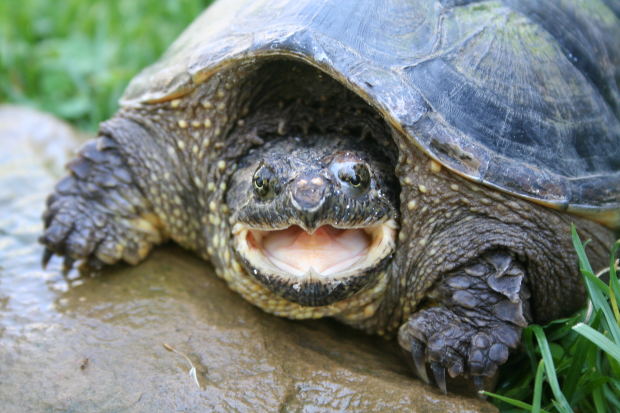
On the Beating Death of a Snapping Turtle

snapping turtle migration, snapping turtle endangered,

Our neighbor beat a snapping turtle to death. The life so cruelly taken stays with me.

Every spring we see snapping turtles near our pond. We’re glad to see them return. Perhaps their presence reassures us that our farm is bountiful and feeds them well. Or perhaps their yearly return is a ritual of sorts, acknowledging as rituals do that some things stay the same in a world where so much changes.

The turtles are quite noticeable as they move with prehistoric dignity through the grass. If we pass by they slide into the water. Sometimes we’ve had to move them (very carefully) out of the way of a tractor. Other times we’ve had to caution children or guests away from them.

They linger for at least a few weeks in early spring. Then the turtles, following timing triggered by their own reptilian wisdom, trek across neighboring property toward a large lake several thousand feet away.

But this time that turtle journey happened at the same time my neighbor went outside with his two children. He saw the turtle as a danger and decided it had to be eliminated for the safety of his children.

First he shot it. Yes, shot it. (We live in a rural area where guns are common.) Somehow gunshots didn’t have the desired effort. Thankfully they also didn’t ricochet off the turtle’s shell, creating a far more serious hazard.

Then he got out a heavy implement and, slamming down over and over again, he beat the turtle to a horrifying death.

Appallingly, my neighbor did what he assumed a good father does.

But this is what I can’t stop thinking about. There are pivotal moments in a child’s life when what we show them about the world stays with them. I mean more than the bloody sight of that turtle’s death, left to rot rather than killed for food. We can show them that nature is a part of us—-to experience with wonder, to treat with respect and to embrace as a unified whole. Or we can show them that nature is separate from us—-to use for our amusement, to treat with disdain, to attempt to control.

I realized this when my first child was a toddler, barely walking. He encountered an insect and paused before lifting his little white shoe to stomp on it. I showed him instead that we could squat down near the insect to watch it but not touch it. In those few minutes he looked carefully for the creature’s eyes, remarked on its feet and clapped in joyous astonishment when it unfolded wings and suddenly lifted away. After that he kept a careful watch for insects. His questions (What does it like for snacks? Does it go home to bed when it’s dark? How does it talk to other bugs?) showed he was thinking about what it might feel like to be an insect. He learned that some sting and bite, some hustle away on many legs, some wriggle into the ground. He learned awe tinged with caution.

That’s the moment my neighbor missed. He could have called his children to come look at the snapping turtle from a safe distance, his arm around the youngest, pointing out the its heavy shell and powerful jaws. He could have cautioned them to always tell an adult if they ever saw such a creature, and to never go anywhere near it. Snapping turtles can be dangerous. That’s why we teach our children to identify, avoid and respect those dangers. But we also need to weigh risk factors to put danger in perspective. A large snapping turtle crossing the yard offers good reason for caution. But there are far greater dangers facing children in my neighborhood. Cars going by on our 55 mph rural road. Guns in the home. Toxins released when garbage is burned in the backyard.

I’m sure we all have different opinions about what constitutes danger. Maybe the way we frame this says a lot about our worldview. *
a

Snapping Turtle Sidenotes My husband and I have both stopped at the side of the road to move snapping turtles out of the street. This is best done without hands or feet, just the encouragement of a window scraper’s blunt edge. The turtles snap grumpily, then lumber off to a shady drainage ditch. {Always move turtles in the direction they’re going. Migration urges them in that particular direction.) We do this because we’ve repeatedly seen drivers intentionally speed up to hit these slow-moving creatures. We’ve also seen drivers do the same to vultures, hawks and crows—-nature’s blessed carrion eaters who clean up our roadsides when a carcass lies in sad repose after meeting with a car.

I tried to find out why turtles might be traveling on roadways far from ponds and streams. Looking up the Common Snapping Turtle  (Chelydra serpentina) led to me find out more than I expected.

These long-lived turtles are important to the eco-system. They eat plant and animal matter, often scavenging. Docile in the water, they’re more aggressive on land. Food scarcity, pollution and habitat destruction may be forcing them to travel overland more than before.

Center for Biological Diversity is concerned about a massive increase in hunting and exporting turtles. These creatures, so integral to healthy aquatic ecosystems, are being sold to Asian countries, primarily China. Consumption of turtle meat there has driven many native species of turtles to extinction.

Eight states—Arkansas, Iowa, Kentucky, Louisiana, Missouri, Ohio, South Carolina, and Tennessee— permit unlimited harvesting of all turtle sizes, using lethal hoopnets and box traps in public and private waters. These devices box traps also capture, maim, kill, and drown protected turtle species, non-target fish, mammals and birds.

In our state, the Department of Natural Resources doesn’t monitor health or population trends of wild turtle populations. *

How to Raise Global Learners

raising global learners

Living on a farm we don’t have the time or the means to travel. But we want our children to be global citizens. We want them to truly understand how fully they are linked to their fellow beings on this beautiful blue green planet.

When they were small we read stories, ate the foods, played the games and celebrated festivals from far-off lands. As they got older we paid close attention to a rich variety of in-depth materials that helped us discover the global fibers that run through history, art, science, literature, really through any field of interest.

More than any materials we introduce, the connections my kids find most pivotal are those they make on their own, person-to-person across any distance. For example, one of my musician sons got interested in acoustics. He joined special interest forums to talk with fellow aficionados around the world about technical details of repairing historic microphones, the artistic nuances of found sound recordings, and other topics. Friendships developed. Now they converse about everything from politics to movies. Some day, when he travels overseas, he plans to take them up on their offers to stay in New Zealand, Finland, Brazil and elsewhere. Already he’s visited friends made online in the U.S., finding the rapport they developed holds fast in person as well.

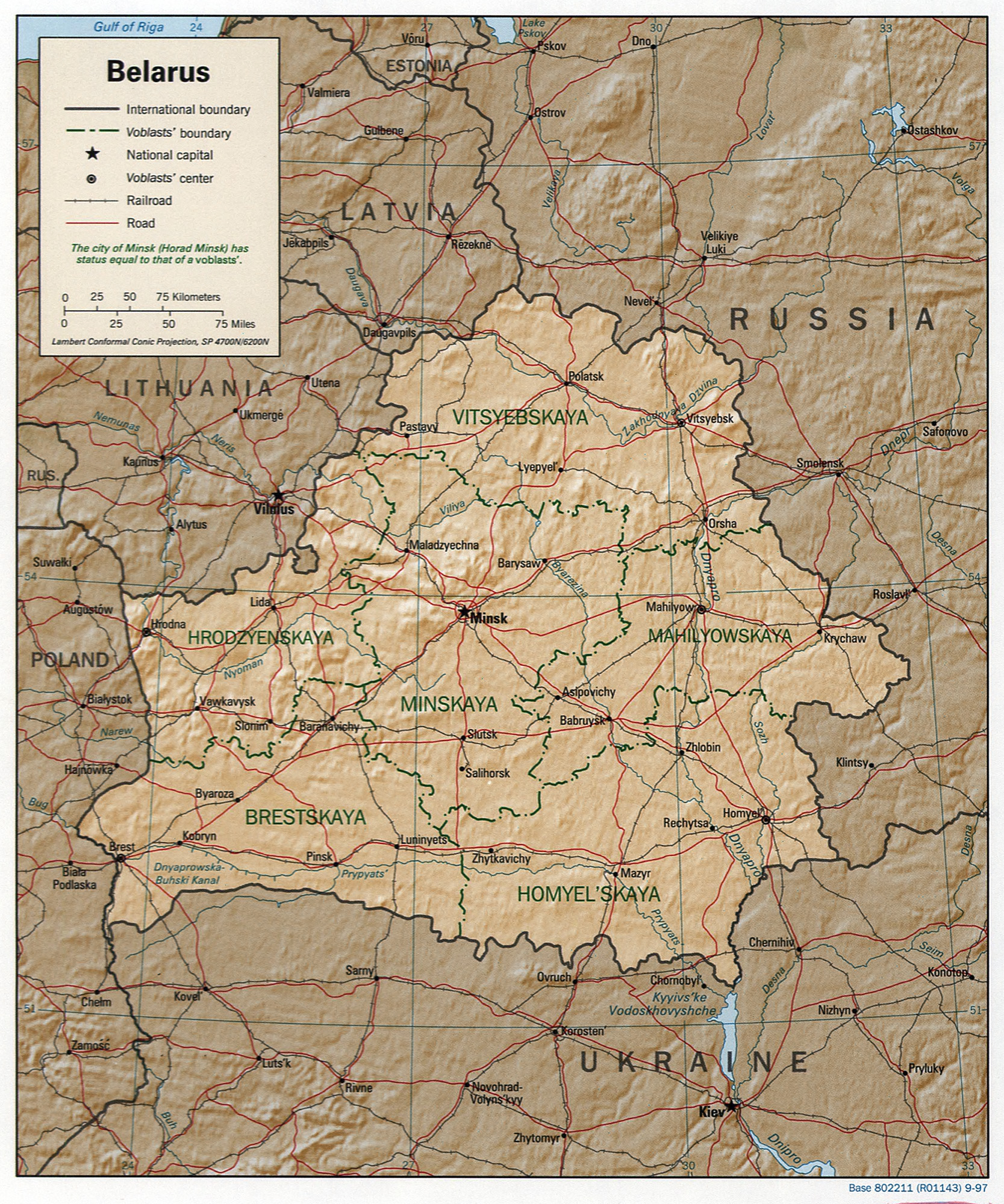
Perhaps the most important connections any of us can make are lasting, caring relationships with people who live far away. For our family, one of the most enduring relationships we made was with an effervescent girl from Belarus named Tatiana. She came as part of the medical program Children of Chernobyl. Even in her first week here, the strength of her personality more than made up for the few words of English she knew and our poor pronunciation of Russian words we thought we knew. Tatiana was horrified by my vegetarian meals, refused to participate in the activities my outdoor-loving children preferred and let us know that she hadn’t traveled so far to live like a peasant. She wanted to be entertained! Like anthropologists to our own culture, we explored shopping malls and tourist sites, we bought kids’ fast food meals for the prizes and went to amusement parks rather than wilderness areas. Tatiana displayed her brilliance in many ways, typically beating any of us at board games we’d played for years and she’d just learned. Tatiana lived with us for five summers. She became a member of our family, a family which feels to us as if it extends to Belarus.

Each connection made of understanding and caring warms our planet—but in a good way. Which leads me to recommend two new books about raising global citizens.

Growing Up Global: Raising Children to Be At Home in the World by Homa Sabet Tavangar is packed with enrichment ideas, games, service activities and resources to help raise children with the world in mind. Here are five great ideas from Tavangar’s book:

*Boost cultural understanding and fun by listening to pop music from around the world.  (I suggest using online translation to figure out the lyrics.)

*Talk about the origins and trading routes of products used every day in your home. Try tracing back a chocolate bar or t-shirt.

*Discover what foods are said to heal common health conditions. Lime juice in armpits is recommended in Paraguay to solve odor, ginger and green onion tea is recommended in China to cure a cold.

*Learn about practices for welcoming newborn babies into the family and community. Consider adapting customs to commemorate a new arrival in your family.

*Make humanitarian work a family affair. It’s possible to extend benevolent choices even to the search engine you use. Try http://www.ripple.org where 100% of search revenues help alleviate urgent global issues.

And for a vigorous “go there” perspective, give The New Global Student: Skip the SAT, Save Thousands on Tuition, and Get a Truly International Education by Maya Frost a read. A cure for any but the worst helicopter parents, Frost shows how learning in other countries best prepares today’s teens for the real global workplace. That means choices resulting in self-reliant, confident and bold adults.

Here are five great perspectives from Frost’s book.

*Stories throughout by young people who live and study abroad. Frost calls them “bold statements” and they offer invigorating examples of what travel can provide.

*Why Rotary International Youth Exchange program www.rotary.org offers the best exchange programs. Frost says it has to do with the network of volunteers around the globe providing support to families and students, the affordable price and the commitment to humanitarian work.

*The stage of life between fifteen and twenty, when pivotal life skills are being developed, the reach of our young people tends to be limited. As Frost writes, “They zero in on the fit of their jeans rather than on the fit of a cultural identity within a larger population, and they devote hours to enhancing the clarity of their skin instead of the clarity of their thinking. They are digging into a plate of pettiness because that is precisely what we’ve served them. They deserve–and are ready for–so much more.”

*How to arrange study abroad credits outside of university affiliated programs for more freedom and frugality.

*Ways to connect with helpful people in countries around the world.

*

May your children become global learners. May our shared home be one of peace and goodwill.

Our Kid’s Pursuits Are Their Own

Snake wrangler, computer geek, vintage auto restorer. These are a few of the identities one of my sons tries on as he masters areas of interest to him.

He used to patiently stalk alongside our creek and behind the woodpile to find snakes. He didn’t hurt them or even keep them for more than a few minutes. I’m not sure even now what the object was other than a pursuit of something that fascinated him. He brought many of his captives up to the house where we marveled at them before he released them. Personally I prefer to marvel at snakes from a healthy distance but I can squelch the shivers when necessary. He didn’t just wrangle snakes, he also studied huge reference books about snakes, drew pictures of snakes, talked about snakes. Then one day he moved on to other interests.

Mostly out of necessity he put together his first computer from cast-off parts. That started a new obsession: bettering computer operations. He became particularly intrigued by the cooling systems. I listened, or at least kept my head swiveled in his direction, as he gave excruciatingly in-depth explanations about cooling system modifications and the resultant effect on computer efficiency. He taught himself so well that he’s still paid to fix our friend’s computer problems, both software and hardware. Sometimes he shakes his head sadly at how poor cooling compromises these systems.

He became interested in auto restoration before he was old enough to drive. Using money earned by shoveling manure from horse stalls, he bought a 1973 Opel GT. He clearly relished the time and mess it took to carefully tear nearly everything out of the car. Now he is in the rebuilding phase, his progress limited to what parts he can afford.  He shares details with us at the dinner table and tracks each step with friends on forums. The day his little Opal is roadworthy I know that acclaim will come from friends, family and forum pals all over the world.

My husband owned his own computer business and has always fixed our cars, but he recognizes (sometimes to his chagrin) that our son prefers to go his own way as much as possible. In fact, when a question about computers or cars comes up it doesn’t always stay in the realm of consultation. It’s just as likely to become a spirited debate. That’s the nature of young people as they prove themselves, and we try to understand. (That is, as long as the tools are put away.)

We’ve noticed that eager parental encouragement doesn’t always translate to more eagerness on the part of our kids. Sometimes we like a hobby, lesson or interest much more than our kids do. Sometimes, even when they’re winning awards, they don’t want to continue. Or perhaps our excitement has put a damper on the pursuit. As our kids get older this becomes more evident.

We’ve learned our kids’ interests are their own. There’s no real value in forcing, cajoling or otherwise pressuring a young person to stay with an endeavor that has lost its allure. Kids in our house have to stick with chores and other work obligations, not interests.

Child development expert David Elkind notes in The Power of Play: Learning What Comes Naturally it’s a misconception that children should “stick” to a pursuit once they’ve started in order to build better staying power for adult challenges. As Elkind writes, “The common assumption that commitment transfers from one activity to another is wrong.”

Making sure that a young person pursues interests for his or her own reasons, not the parent’s, keeps motivation alive and passion genuine. Research backs this up.

Sure, we can foster our children’s enthusiasm with our approval and guidance when necessary. But we can also show them by example. We can pursue our own interests with the kind of joy and fervor that can’t help but inspire. That’s my newest excuse for my own art projects. I’m not making a mess, I’m providing a good example!

Don’t Bother Mom, She’s Blogging About Motherhood

child

Motherhood is oriented to firsts.

Our   baby’s first smile,

first step,

first word.

After the baby is born,

some firsts seem to take forever.

First smile, first tooth,

first time mom can have an uninterrupted conversation

or read a book and remember the contents.

The only hint that it’s

not all about firsts

comes from older women.

enjoy them while they're young,

They fuss over our darling babies with delight.

When they do,

our traitorous babies make liars of us:

cooing back as if they don’t have colic and diaper rash

and the incessant ability to dominate our lives.

These older women speak

in some kind of code

known only to those

whose babies are long grown up.

(Maybe a secret society.)

The way they operate is so

consistent that clearly

it’s a ritual of some kind.

child

There’s always a pause

in their baby chortling.

They look us in the eye

to say some version

of the very same thing.

“They’re little for such a short time.” Or,

“These years go by so fast.” Or,

“Enjoy every moment.”

They want us to know something they didn’t know,

that no one really knows fully

until their babies are grown


Despite the exhaustion and sleepless nights

and the loss of one’s free time

to the cutest loud smelly creature ever,

the earliest years

are packed with heart-filling wonder.

When our babies grow up

we see

motherhood is also

filled with lasts.

The last time we’ll change

a diaper is worthy of a

celebration, true.

There’s also a last

time holding a little

hand to cross a street,

the last tucking into bed,

the last book read aloud,

the last

of many

blessedly ordinary

expressions of love

once enfolded

into daily

life with a child.

Such “lasts” line the

way toward our child’s

adulthood. They

remind us to cherish

every moment.

As a mother who is now shorter

(okay, much shorter) than each of her four children,

I claim the right to coo over babies

and tell new mothers in all seriousness,

“these years go by so fast.”

I haven’t been invited into the secret society yet.

I hope there’s not a dress code.

I’m NOT wearing any damn red hat.

*

*

*

Creative Commons image credits

Baby hand http://www.flickr.com/photos/andrewmalone/1114928353/

Woman and baby  picasaweb.google.com/…/9NX5sOZc8XwaveIURkiqGw

Eye flickr.com/photos/43927576@N00/531269809

Woman and baby flickr.com/photos/jm_photos/2057212651/sizes/z/in/photostream/

Woman and baby flickr.com/photos/iandeth/1949150981/sizes/l/in/photostream/

Angel girl  flickr.com/photos/tianderson/286211866/

Baby  flickr.com/photos/50824868@N00/197011571

Little girl flickr.com/photos/40379737@N00/3812002166/

Boys in street flickr.com/photos/mcsimon/1266570816/

Reading aloud flickr.com/photos/j_regan/8197734711/sizes/c/in/photostream/

Boy in tree http://www.flickr.com/photos/takile/5809992860/sizes/z/in/photostream/

What Do You Do Every Day?

What do you do every day?

That’s what people wonder about homeschoolers. Sometimes they ask us point blank, “Okay you homeschool, but what do you DO every day?”

It seems like a huge mystery that we self-compose our days, living and learning without the structure school imposes. And yes, sometimes we ask each other too because it’s too easy to get in a rut, especially when we operate from a limited concept of what it means to educate.

It’s a blessed relief to happen upon accounts of other family’s homeschooling days in Home Education Magazine as well as books such as Real Lives: Eleven Teenagers Who Don’t Go to School Tell Their Own Stories by Grace Llewellyn, Homeschooling: A Patchwork of Days: Share a Day With 30 Homeschooling Families
by Nancy Lande and Homeschool Open House by Nancy Lande. Our grasp of the possibilities expand as we read each person’s perspective. We see that every homeschooling family flourishes somewhat differently. That is a freeing revelation.

The blog Homeschooling is Freedom is another place to glimpse tantalizingly different answers to “What do you do every day?” Here you can find new and archived interviews with homeschooling families. Through four simple questions, Debbie H.’s blog highlights the wonderfully flexible and enjoyable ways we learn in our own ways. Click here for some appalling revelations about the Weldon family.

*

*

Creative Commons image from Sean Dreilinger’s Flickr photostream

Materialism: What’s With Wanting So Much Stuff Anyway?


“You can’t have everything. Where would you put it?” Steven Wright


When times are hard, my husband and I tend to quote a few lines from an old movie called “The Jerk.”  Lines like, “All I need is this lamp and this chair, that’s all I need.”  Or, “It’s not the money, it’s the stuff.”  We chortle like merry imbeciles at our bad Steve Martin and Bernadette Peters impressions but really, materialism itself is pretty ridiculous.  What’s with wanting so much stuff anyway?

Accumulating material goods, past the point of sustaining a reasonably enjoyable and healthy lifestyle, is ironic if you think about it.  The simple equation of working for wages means that each expenditure represents more hours of life that you have to trade in to buy them.  You also require an ever larger space to store what you own.  If you run out of living quarters and garage space, you’ll wind up filling storage space too, then devote more working hours to paying rent on that.  Silly.

Sure, I hanker to own beautiful things. I particularly adore buying original art. That way I get the excuse of supporting someone else’s creative process while adding some beauty to my home.  I haven’t hung a new painting on our walls for too long because there are pesky bills to pay, but I still buy artwork to give as gifts.

Fortunately I’m twisted enough to get a kick out of frugality. For example, my husband and I still refuse to replace the last blanket we received as a wedding gift. It’s pretty tattered, but there’s something about waking up with our toes in blanket holes that strikes us funny.

We’ve also spared our kids indulgences like fancy toys, designer clothes or the thrill of being ferried around in a late model car.  For the first eight or so years of their lives they weren’t exposed to commercial television (except those glimpses at grandma’s house) and we didn’t make shopping a recreation, so they didn’t notice any painful contrast. Judging by peace they show now with worn jeans and scuffed shoes, they still don’t care too much.

There are reasons why some kids are more materialistic than others. A fascinating post on Half Full: Science for Raising Happy Kids explains,

“Turns out that there are two things that influence how materialistic kids are. The first is obvious: Consciously or not, we adults socialize kids to be materialistic. When parents—as well as peers and celebrities—model materialism, kids care more about wealth and luxury. So when parents are materialistic, kids are likely to follow suit. Same thing with television viewing: The more TV kids watch, the more likely they are to be materialistic.

The less obvious factor behind materialism has to do with the degree to which our needs are being filled. When people feel insecure or unfulfilled—because of poverty or because a basic psychological need like safety, competence, connectedness, or autonomy isn’t being met—they often to try to quell their insecurity by striving for wealth and a lot of fancy stuff. Because of this, relatively poor teenagers ironically tend to be more materialistic than wealthy ones. And less nurturing and more emotionally cold mothers tend to have more materialistic offspring.”

Yikes.

I can’t help but wonder if, metaphorically, this says something about our larger cultural obsession with stuff.  Are we as a people suffering from insecurity?  Sure.  And the more we listen to political pundits, the more insecure we feel.  Is there something about this current time that causes us to have unfilled needs for connectedness?  Having read Bowling Alone : The Collapse and Revival of American Community I’d have to agree with this too.

Materialism may feel good ever so briefly. Maybe seeking out, buying and bringing home the goods stimulates some primal instinct to hunt and gather. Maybe owning things makes us feel safe from deprivation (even while it increases our debt). Or it maybe it makes us feel worthwhile, at least on a superficial level.

Let’s face it, mindless consumption isn’t great for the planet. The developing world can’t live as we do in the U.S. without critically depleting what’s left of global resources. A shift of priorities is in order, one that asks us to be less selfish. Really, how hard can it be to give up lifestyles based on driving to big box stores in gas guzzlers to buy too much crap, then never paying off the resulting credit card debt? Better for us, better for the planet. Yet research indicates that people with the most materialistic attitudes care less about the environment than folks with stronger value systems.

Interestingly, materialistic attitudes aren’t good for individuals either. Studies have repeatedly found that the more a person focuses on the accumulation and ownership of stuff the less happy they are. They are more likely to suffer from depression, narcissism, low self-esteem, antisocial behavior and substance abuse. They’re also more likely to have health problems including headaches, backaches and digestive disorders. Clearly the gimme gimme approach doesn’t do squat for happiness. And really, whether we raise our children in a grand mansion or a small apartment the factors that go into making a family have very little to do with the things money can buy.

Happiness can be as simple as waking up next to someone you love, laughing because the blanket covering you is riddled with holes. What else do you need? Okay, maybe a lamp. And a chair.

Research cited from the following books:
Simple Prosperity: Finding Real Wealth in a Sustainable Lifestyle
The High Price of Materialism,
Less is More: Embracing Simplicity for a Healthy Planet, a Caring Economy and Lasting Happiness

Crazy Busy

simplify holidays, crazy busy, holiday frenzy solutions,

Orin Zebest’s work on Flickr

Who isn’t busy all the time? But around the holidays we’re crazy busy. At least women are, and those lights in our lives we call children make the pace even more frantic.

Sure we make all sorts of efforts to simplify and de-stress but for most of us the joys of holiday shopping, gifting, cooking, decorating, visiting, hosting, and merrymaking have to fit right into our regular (overburdened) schedules.

It’s not like we can make more time where there is none. Well, maybe we can. Or at least use our time differently. I confess to the Crazy Busy Syndrome but I fight back with these tactics.

Renounce the How-Does-She-Do-It-All Disease. You know the symptoms. You show excessive responsible because you’re sure no one else will do it (or do it right). You uphold traditions your family counts on. You pay close attention to get just the right gifts. You worry about money more than usual. You try to keep the focus on intangibles like faith and togetherness. When the frenzy is over you end up with an empty feeling. I’m the first to stand and admit that I’m still in recovery from this disease.

The cure? Talk to your loved ones about what means the most to them, then slice away the rest. If there’s disagreement, slice anyway.

Shun Those Voices. They’re everywhere around the holidays. They seem so genuine and alluring but their sole aim is to make you feel insufficient. They speak to you from TV, magazines, websites, blogs, store displays— let’s admit they’re ubiquitous. These voices tell you that you’re not enough. To compensate you must do more. Dress beautifully, make elaborate meals, buy lavish gifts and wrap them more ingeniously.

This is the only diet you need to go on. Don’t watch a single cooking show, don’t open one slick women’s magazine, stay away from Pinterest, and avoid stores as much as possible. You’ll have a lot more time, plus you won’t have to reassemble what’s left of your self esteem.

Screw Tradition. No, I don’t mean avoiding your house of worship or shunning Grandma’s house. I do mean it’s possible to celebrate the season without so much of the heavy Gotta Do It weight hanging over you.

Some of my most memorable holidays have actually been those that veered wildly from tradition. My family will not forget a holiday dinner at Rebecca’s house complete with walls of wet paint, an oven on fire, and a dog getting sick everywhere. The zinger, she was eager to show foreign guests how we celebrate here in the U.S!

If you’ve always gone to the movie theater to see the newest holiday releases after a day of shopping, skip both and go to a play at your community theater. If you’ve accepted every holiday invitation despite the costs of babysitters and lost sleep, limit your yes RSVPs to those events that are the most warm and wonderful. If you’ve always accommodated your kids’ requests for gifts because it’s Christmas or Hanukkah or Kwanzaa, put new limits on materialism —try emphasizing non-toy gifts or give four gifts in the categories of Want, Need, Wear, Read. If you’ve always driven around to see the holiday lights, instead go outside on a frosty night to sing together (even if only to a lone tree lit by moonlight). You’ll not only save time and money, you’ll also create new traditions.

Rethink Gift-Giving. Things have gotten out of hand. Children in this country once looked forward to a fresh orange, maybe a piece of candy and if they were lucky a toy or useful gift like a pocketknife or sewing kit. Historian Howard Chudacoff writes in Children at Play: An American History that most toys co-opt and control a child’s play. They’re better off with free time and objects they can use to fuel their imaginations (yes, a cardboard box).

I admit things got out of hand in my own house. In a quest for meaning (let’s rephrase that to my quest for meaning) we’ve always had handmade holidays. Yes, I’m one of those annoying people….. Meals from scratch, homemade organic cookies, handmade gifts. Each of my four children made gifts for everyone every year, gifts that took substantial effort such as woodworking, felting, and ceramics. My teens still make some of the gifts they give although thankfully I’m not the one coming up with the ideas and supervising the process. The last few years economic realities have made hand made gifts ever more necessary, for other gifts I turn to non-profit and artisan sources. Try products offered by non-profits you support, works of art sold at local galleries, and these resources for simple holiday giving.

Last Resort. This tactic is heavy duty, the one I bring out when I start to feel sorry for myself. Because we’re not crazy busy in comparison to women throughout history. We think we’re stressed? Our foremothers hauled water; carded, spun and sewed clothes; chopped firewood and maintained the stove they cooked on; ground grain and made bread each day; planted and weeded gardens, then canned or dried the harvest; stretched limited food reserves with careful planning to last until the next harvest; cared for babies, children and the elderly with no professional help; treated the sick, stitched wounds and prepared the dead for burial; well, you get the idea.

Worse, many many women in the world still do this sort of grinding labor each day. Typically, women in developing countries work 17 hours a day.  Our sisters receive a tenth of the world’s income while performing two-thirds of the world’s work. These harsh realities put any concept of busy or stressed right out of my head. For more information and ways to help, check out the wonderful book Half the Sky: Turning Oppression into Opportunity for Women Worldwide.

So fight the Crazy Busy Syndrome with all you’ve got. Remember to count your blessings, including the joy of not eating my homemade buckwheat cookies!