Leaving Little Love Letters

mother's love notes,

Image: Ebineyland

My mother regularly wrote little love letters to her children.  They started appearing on our pillows when we could first read, at least one every month or so. Sometimes her notes would reference something we did or said but mostly they simply gushed with affirmation. Her standard ran along the lines of, “You are the nicest, most wonderful seven-year-old in the whole world.”

Her one or two sentence notes were usually written on a scrap of paper. My mother made “scratch” paper out of junk mail and school fliers. She tore paper on the fold lines, getting three pieces out of a standard letter-sized sheet. This made the flip side of her little love letters unintentionally quirky, with references to bank policy or reminders about choir practice. My brother and sister got their own notes but we never mentioned them to each other. They were a private and cherished connection between mother and child.

By the time I was nine or ten years old I wrote little love letters to her too, hiding my notes in her shoe or tucked into her jewelry box. It was easy to tell when she’d found one. She’d dole out a big hug and whisper a line I’d written back to me.  It seems these notes meant as much to her as they did to me. After she died I ran across some of them stuffed into her favorite cookbook, effusive words penciled in my best handwriting.

I know all too well that family life sometimes scrapes us like sandpaper against those closest to us. We don’t talk enough about what amuses or delights us because we’re busy saying that the towels aren’t hung up, shoes are blocking the door, and food is left out on the counter. We may also be dealing with doubts kindled by worry and annoyances that can spark into anger.

Sure, we linger over tender moments that we wish could last forever. We praise the effort (as all those relationship experts tell us to do). But there’s something special when we take the time to write down our very best feelings for one another.  A note is a tangible expression unlike any other.

I won’t kid myself that I’ll ever write as many tiny love letters as my mother wrote in her life. But today I’ll be writing a few sentences to my loved ones and hiding those notes where they’ll find them. I know there’s a sense of completion when we say what’s in our hearts.

Five Ways to Transcend the School Mindset

child

School-like instruction has been around less than a fraction of one percent of the time we humans have been on earth. Yet humanity has thrived. That’s because we’re all born to be free range learners. We are born motivated to explore, play, emulate role models, challenge ourselves, make mistakes and try again—continually gaining mastery. That’s how everyone learns to walk and talk. That’s how young people have become capable adults throughout history. And that’s how we have advanced the arts, sciences, and technology. In the long view, school is the experiment.

But it’s hard to see beyond the school mindset because most of us went to school in our formative years. So when we think of education, we tend to view school as the standard even if we simultaneously realize that many parts of that model (found also in daycare, preschool, kids’ clubs, and enrichment programs) aren’t necessarily beneficial. Narrowing the innate way we learn can interfere with the full development of our gifts.

Here are five ways to get past the school mindset.

build divergent thinking, creative children, more imagination, creativity builds leaders, nurture divergent thinking,

Welcome divergent thinking

In today’s test-heavy schools the emphasis is on coming up with the correct answer, but we know that the effort to avoid making mistakes steers children away from naturally innovative perspectives. Divergent thinking generates ideas. It’s associated with people who are persistent, curious, and nonconforming. Research going back to the 1970’s shows that this generation of children are less imaginative and less able to produce original ideas. An extra whammy may very well be coming from increased participation in organized sports: more than a few hours a week appears to lower a child’s creativity.

This is dire news, because creativity is actually much more closely linked to adult accomplishment than IQ. In fact, 1,500 CEO’s listed creativity as the leading indicator of “leadership competency.

We don’t have to instruct kids in divergent thinking, just nurture it. Children are naturally inclined to question and explore. Remain open to their enthusiasms, encourage them to identify and solve problems no matter how unusual, and welcome the learning power of mistakes.

exercise and learning, overtaxed impulse control, full body learning, sensory education,

Value full body learning

School-like learning emphasizes the brain over the body. It narrows from there, emphasizing one hemisphere of the brain over the other with its focuses on left-brain analytical thinking. But children don’t learn easily when they spend so much time sitting still, eyes focused on a teacher or lesson or screen, their curiosity silenced and their movements limited. Children ache for more active involvement.

Research shows us that the rules necessary to keep a classroom full of kids in order all day, like being quiet and sitting still, can overtax a child’s ability to resist other impulses. The mismatch between school-like expectations and normal childhood development has resulted in millions of children being diagnosed with ADHD. (One of those kids was my third child, whose “symptoms” disappeared once we took him out of school and figured out how to homeschool such an active child.) 

What we need to remember is that the mind and body are exquisitely tuned to work together. Movement allows sensory input to stimulate the brain as it absorbs a flood of information. This is the way the brain builds new neural pathways, locking learning into memory. (Check out A Moving Child Is a Learning Child by Gill Connell and Cheryl McCarthy, Balanced and Barefoot by Angela Hanscom, as well as Spark by John J. Ratey for more on this.) Active, talkative, curious children aren’t “bad.” They’re normal.

If we look at movement we realize that even a very brain-y activity, reading, has to do with the body. Young children develop reading readiness in a variety of ways, including conversation and being read to, but also through physical activities that help their neurological pathways mature. These are activities children will do whenever given the opportunity, like swinging, skipping, climbing, walking, and swimming.

All the relentless activity of early childhood may very well be a sort of intrinsic wisdom built into them, because movement is key to keeping an active brain. Children who are more physically active actually increase the areas of their brains necessary for learning and memory. That doesn’t mean the antidote to the school mindset is a constant frenzy of activity. It does mean that children tend to self-regulate within loving safeguards. Every child needs to balance physical activity with other essentials like snuggling, daydreaming, and sufficient sleep. We simply need to remember that movement isn’t an enemy of education.

goldilocks effect, individualized education,

Build on the “Goldilocks effect”

This term came from researchers who demonstrate that we are cued to ignore information that’s too simple or too complex. Instead we’re drawn to and best able learn from situations that are “just right.” Sort of like the educational equivalent of Goldilocks on a porridge-testing quest.

The Goldilocks effect means you are attracted to what holds just the right amount of challenge for you right now.  Usually that means something that sparks your interest and holds it close to the edge of your abilities, encouraging you to push yourself to greater mastery. That’s the principle used to hold a player’s attention in video games. That’s what inspires artists, musicians, and athletes to ever greater accomplishments. That’s how kids who follow a passion of their own tend to learn and retain more than any prepared lesson could teach them.

Our kids tell what they’re ready to learn. They tell us through what bores them and fascinates them, what they’re drawn to and what they resist. They’re telling us that, until they’re ready, learning doesn’t stick.

 too much adult-run learning, stubborn kids, child-led learning, natural learning,

Diminish the focus on instruction

The school mindset leads us to believe that children benefit from lessons, the newest educational toys and electronics, coached sports at an early age, and other adult-designed, adult-led endeavors. Well-intentioned parents work hard to provide their children with these pricey advantages. We do this because we believe that learning flows from instruction. By that logic the more avenues of adult-directed learning, the more kids will benefit. But there’s very limited evidence that all this effort, time, and money results in learning of any real value. In fact, it appears too many structured activities diminish a child’s ability to set and reach goals independently. 

When we interfere too much with natural learning, children show us with stubbornness or disinterest that real education has very little to do with instruction. Learning has much more to do with curiosity, exploration, problem solving, and innovation. For example, if baby encounters a toy she’s never seen before, she will investigate to figure out the best way or a number of different ways to use it. That is, unless an adult demonstrates how to use it. Then all those other potential avenues tend to close and the baby is less likely to find multiple creative ways to use that toy.

Studies show that “helpful” adults providing direct instruction actually impede a child’s innate drive to creatively solve problems. This experience is repeated thousands of times a year in a child’s life, teaching her to look to authorities for solutions, and is known to shape more linear, less creative thinking.

This isn’t to say that all instruction is bad, by any means. It does mean that six long hours of school-based instruction plus afterschool adult-organized activities in sports or recreation or screen time supplants the kind of direct, open-ended, hands-on activity that’s more closely associated with learning. Most of the time this kind of learning is called play.

free play benefits, play versus learning, chores, self-regulation,

Recognize free play is learning 

Before a young child enters any form of schooling, his approach to as much of life as possible is playful. A walk is play, looking at a bug is play, listening to books being read is play, helping with chores is play. The school mindset separates what is deemed “educational” from the rest of a child’s experience. It leads us to believe that learning is specific, measurable, and best managed by experts.

A divide appears where before there was a seamless whole. Playful absorption in any activity is on one side in opposition to work and learning on another. This sets the inherent joy and meaning in all these things adrift. The energy that formerly prompted a child to explore, ask questions, and eagerly leap ahead becomes a social liability in school. But play is essential for kids, for teens, for all of us. (For more check out these two marvelous and very different books: Free to Learn by Peter Gray and A Playful Path by Bernie DeKoven.)

Free play promotes self-regulation and this is a biggie. It means the ability to control behavior, resist impulse, and exert self-control  —all critical factors in maturity. Play fosters learning in realms such as language, social skills, and spatial relations. It teaches a child to adapt, innovate, handle stress, and think independently. Even attention span increases in direct correlation to play.

That doesn’t mean a child’s entire day must be devoted to free play. There’s also a great deal to be learned from meaningful involvement in household responsibilities as well as community service.

why homeschool, democratic schools, raise successful children,

I want to nurture my children in such a way that they define success on their own terms. I hope that means they craft a life based on integrity, one that brings their unique gifts to the world. Homeschooling, for my family, gives us the freedom to go beyond narrow roads to success. (Democratic schools can also provide that freedom.) This is the way young people have learned throughout time. I’ve come to trust the way it works for my family.

Portions of this post excerpted from Free Range Learning.

On Being A Frugal Geek

cheap geek, materialism, frugal living, cheap interests, cheap homeschooling, There are plenty of assumptions about what geeks do. We own the most advanced technology. We see the latest movies, watch the newest series on subscription channels, play the most recently released video games. wouldn’t miss Maker Faire. If we collect anything, it’s probably awesomely obscure and sure to gain in value. All these things cost money.

I tend to geek out over less expensive interests. Outsider art, foreign films, poetry, recent neuroscience findings, nonviolence, mindfulness practices, the new acquisition section of the library—that sort of thing.

Still, stark economic realities have made penny pinching essential. Long ago I assumed I could afford more geeky indulgences once I got past pricey milestones like college, marriage, and new babies. Didn’t happen. Turns out sick kids, unemployment, and falling down houses are also expensive.

Instead, I’ve geeked out on frugality itself. I garden, preserve food, make homemade cheese, sew, repurpose, and concoct herbal remedies that look so vile my household prefers to stay healthy. I’ve advanced my career with little more than a not-so-new computer, a love of research, and library privileges. My kids have been dragged to every free concert and science program available, and know area nature preserves like their own backyard. They’ve become Makers almost entirely out of necessity, turning junk and other dirt cheap materials into marvels. Because every one of us goes deep into passions like forensics, turbocharger modifications, bagpipe playing, arachnid study, and advanced plasma welding techniques our dinner table conversations are strangely fascinating. We’re geeks all right, just frugal geeks. Maybe you are too. Mainstream assumptions about geeks don’t define us. GeekMom, where I’m a senior editor, agrees. As explained on the “about” page:

Being a geek is a state of mind, and that state of mind leads us to intensely explore our interests and approach the world with endless curiosity. When we want to get involved in something cool, we get really involved. In other words, we get geeky about it.

I know the research shows that frugal living benefits kids while materialism doesn’t. And I believe that living simply is good for the planet. That doesn’t mean I wouldn’t like a few geek frills, some day. More movies, newer gadgets, and the bucks to finally get to Maker Faire. While I’m dreaming, I’d like an invisible bike helmet too.

How does living frugally affect your geeky or not-so-geeky passions?

child

No Parrots Here

free range parenting, kids different than parents, children's interests, selfhood,

Image CC by 2.0 Ajari

Parenting would be easier if my children wanted to learn about the same things that I happen to love.

I once had the naive assumption that they would naturally develop my passion for environmentalism, muckraking journalism, anthropology, applied ethics, messy art, alternative medicine, and satire.  I knew these passions weren’t genetic, my parents were into playing bridge and visiting historical sites.  But I figured my children would absorb my fascination by osmosis.

Nope. More like reverse osmosis. They seem to feel that just living
with me is exposure enough to those topics.  More than enough.

I play tapes of peace songs and world music despite their feigned death throes.  I take them, all right, drag them, to tiny art galleries, odd ethnic restaurants, wildlife sanctuaries and community service projects. They point out that they’ve never owned hand held video games and on that basis alone could be considered culturally deprived.

I occasionally read periodicals aloud hoping to discuss important issues with them, which has caused them to say, “She’s ranting again.”  My grandiose art schemes, such as building a catapult to fling paint onto huge canvases, ala Jackson Pollack, are met with rolled eyeballs.  I only need to look serious a brief moment before my daughter alerts her siblings, with warnings like, “Oh no, mom’s launching into another sermon.  I think she’s on number 127, the Deeper Meaning of Things.”  I concoct homemade tinctures of herbal remedies which admittedly aren’t taste treats, but aren’t cause enough for them to call the kitchen Mom’s Evil Laboratory.  You get the idea.

They are certainly their own people.  They seem instinctively drawn to what I’m not. I can almost hear the screech as my brain cells are continually forced to expand to include their interests.

Several of them actually like organized activities like scouts and 4-H.  This requires meetings where I have to sit in a folding chair and behave myself.  I prefer spontaneous, free form events, like “Hey, lets paint a mural on that wall.”

I hide it well, but secretly I’m squeamish.  Naturally they bring me snakes, toads, beetles, spiders, and slugs.  They expect me to fawn over them.  I can only do a passable faux fawn.

I like safety precautions like helmets, seat belts, and peace accords.  My 10-year-old son adores skateboards, stunt biking, and tree climbing.  He plans to be a pilot. He talks to me about airfoils and ailerons.  I’d only fly if I were being awarded the Nobel Prize. Even then I’d probably ask if it could be delivered.

I’m a vegetarian.  Naturally, my daughter is smitten with dissecting.  She wants to be a forensic pathologist.  Supportively, I’ve purchased poor innocent creatures floating in formaldehyde, procured eyeballs and hearts from the butcher shop, even taken pictures of the gore she calls anatomy.  She proudly showed her grandmother the virtual autopsy web site.  My mother was intrigued.  I restrained myself from asking, “What happened to playing bridge?”

I have trouble with technical details.  I even require assistance getting film in and out of our vintage 35 mm camera.  I finally recognized this as an immutable fact after indulging myself in a few temper tantrums over broken film. Of course my oldest is a ham radio operator, builds authentic model railroad layouts, fixes our 1949 tractor, and stuns his boss into silence with his ability to fix highly exacting equipment. When he was six he patiently explained to me how to program the clock in our car.  I forgot what he said AS he was saying it.

I’ve been known to slip into situational ethics from my pillar of universal truths at times, but I’m always caught by my youngest.  “Why do you talk about cherishing all life if you want to get rid of the wasp nest in the attic?” he’ll say sweetly with seven-year-old logic.  “Why do you let the phone go to voice mail?  Isn’t that like lying?” Okay, maybe they are learning what I have to say, but I wish they wouldn’t use it against me.

Occasionally I’ll get their grudging admiration for silly feats, like my useless mental compendium of decades-old song lyrics or my willingness to sass authority figures. But more and more often we find that our interests intersect.  I can’t help but be awed by the uniqueness of what they find fascinating, and they can’t help but understand what I thrive on.  Best of all, we laugh together.

Parenting would be easier if they parroted my interests, but that would be indoctrination instead of exploration.  I’m glad they are their own people.  We all lean toward what helps us grow, like eager plants inclining towards sunlight even if it shines from different windows.

reprint from Home Education Magazine

Growing Up Sarcastic & Self-Sufficient On The Farm

homeschooling self-sufficiency, homeschooled siblings, diverse siblings, happy sibling rivalry,

Isabelle the cow. (Image: Claire Weldon)

“Come here Slug Weasel,” my daughter commands. Obediently her youngest brother does as she bids, helping her carry 50 pound bags of chicken feed to the barn on our little farm. They chat pleasantly on the way.

By pleasantly I mean he doesn’t just point out that her flip-flop clad feet are dirty. He says that they are festering toxic bacteria unknown to science and should be classified as biological weapons.

She doesn’t just notice he’s squinting, she pretends to worry about his sudden exposure to sunlight and insists that swiveling in a computer chair probably doesn’t afford him the musculature to carry more than the weight of his own hair. They laugh and talk all the way to the barn.  I smile in adoration.

I was raised to be quiet and deferential to others. (Fist-shake at outdated values.) Perhaps as a direct result, I wanted to insure that my own children felt free to be themselves. Homeschooling has given us that freedom. Natural learning and all sorts of friends serves as an antidote to cultural factors relentlessly trying to pressure young people into sameness.

There’s not much sameness going on here. My four offspring can fix old tractors, diagnose a chicken in respiratory distress, compose a bagpipe tune, design custom air cooling systems for computers, discuss the chytrid fungus currently decimating amphibian populations, randomly quote from old Futurama episodes, weld sculptures, and roast fantastically spicy potatoes. They get science on everything. They don’t, however, pay attention to fashion trends or celebrity gossip.

We’re all still in headlong pursuit of our interests. But now that everyone is older I’m left with wonderful memories of early learning, the kind that shifted easily between relaxation and adventure. We read for hours together sprawled on couches, managing to get out of pajamas and into clothes before lunch if we had places to go. My kids launched into ambitious projects, from building a trebuchet that propelled pumpkins across the pond to entering a national science contest that landed them prizes including a visit with an astronaut. Other equally ambitious ideas, like making a hovercraft, were more notable for their humorous failures. We gave homemade gifts that stemmed from woodworking, sewing and soldering projects. Other gifts, like a handmade theremin, were not as well received. We called exploding experiments “science,” invited everyone we knew for large-scale projects, threw strangely amusing parties, jaunted all over for concerts and plays, maxed out our library cards each week, hosted an international guest for six summers, and whenever possible learned directly from people who thrived on work they loved.

It’s not all in the realm of memory. My grown and nearly grown kids seek each other out for hours long discussions as well as weeks long backpacking trips. Conversation around the dinner table is a gallery of fervent opinions, esoteric interests, and very dry wit. I’m still smiling in adoration. Well, I’m also smiling because someone else carries all that chicken feed.

farm homeschooling, teen homeschooling,

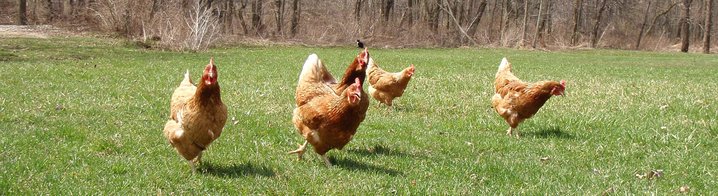
Fowl demonstrating free ranging. (Image: Claire Weldon)

This post originally appeared on Radio Free School

Summer Family Fun: 55 Ideas

outdoor activity ideas, fun for kids, family fun, smart fun, food fun, summer fun,

)

1. Have a watermelon speed spitting contest. “Outside, I said outside!”

2. Set up a bike, trike, or scooter obstacle course. Mark the course with sidewalk chalk or masking tape. The course may lead them around cones, through a sprinkler, under crepe paper streamers hanging from a tree branch, and on to a finish line. Then encourage kids to set up their own obstacle courses.

3. Hang water-filled balloons from your backyard swing set or low tree branch as splashy pinatas.

4. Make popsicles with secret ingredients, create edible worms, drink burb juice, serve food in tiny dishes, encourage kids to cook together. Here are dozens of other summer food fun ideas to try.

5.  Make story stones and let the storytelling begin.

6. Set up backyard bowling. Save 10 empty plastic bottles, set them up in a triangular pattern, then roll a ball toward them. This makes a satisfying clatter on the driveway. If you like, teach your kids how to keep score.

7. Go on a camera scavenger hunt. First choose a theme, like Ten Things That Move or A Dozen Signs of Summer. Then send kids out to grab some images. Encourage them to find creative, funny, and unusual ways to interpret the theme.

8. Pan fry dandelion flowers into tasty appetizers.

9. Encourage loose parts play.

10. Build a bat house.

11. Make your own ice cream sandwiches. Just glob ice cream between homemade or purchased cookies, wrap in plastic wrap and chill. Try different cookie and ice cream variations. Mix-ins work too, like bananas mashed into strawberry ice cream and stuck between two oatmeal cookies. You’ll have to do some immediate taste testing, part of the burden of innovation.

12. Encourage grubby fun. Designate an area of the yard where kids can play right in the dirt. They might want to set up a mudpie kitchen with a few cast-offs from your real kitchen. They might want to use the area to build mountains and valleys for their toy dinosaurs, cars, or action figures. They might want to dig holes, perhaps looking for archaeological finds using Hands-On Archaeology: Real-Life Activities for Kids as a guide.

13. Since they’re going to get dirty, you might want to let them set up a washing station to wash outdoor toys. Maybe neighborhood friends’ toys too.

14. Play classic outdoor games, the ones every kid used to know.

15. Let each child plant one “crop” in the garden that is his or hers to tend. Fast-growing plants like sugar snap peas, radishes, and green beans are ideal. Let the kid farmer in charge be the one to check regularly for weeds, watering needs, and harvest times. For more ideas check out Gardening Projects for Kids and for those of you without yards or community garden plots, try Kids’ Container Gardening.

16. Make soda bottle rockets.

17. Mail yourselves postcards when you go somewhere for the day, even around town. Later in the week kids will think it’s a hoot to get a card from themselves. Check out 37 other ways to have fun with snail mail.

18. Make your own “lava lamp.”

19. Let yeast blow up a balloon. Have kids write their names on balloons with a permanent marker. Using a funnel, let them fill each balloon with 1 teaspoon sugar and 1 teaspoon dry yeast. Add a little warm water to each balloon, tie shut, and shake to mix. Then put them outside on a hot sunny day. Check to see how big the balloons have gotten every ten minutes or so. Guess what might happen to balloons that get too big.

20. Designate your yard as a nature area.

21. Give the kids a budget and let them plan what the family will do next Saturday.

22. Throw a BYOB party. This is cheap, imagination-driven fun. You wield cutting implements and supply lots of tape. Guests are charged with one simple task: Bring. Your. Own. Box. Together kids can construct a fort or spaceship or whatever they please out of the boxes, then spend hours playing in it. There are plenty of other ways to amuse kids with cardboard boxes too.

23. Get out a big, somewhat complicated puzzle and work on it when it’s too hot to go outside.

24. Work with kids to create an outdoor water wall.

25. Make a worm tower or indoor worm farm For more information, check out Worms Eat My Garbage: How to Set Up and Maintain a Worm Composting System.

26. Slap the label “memory jar” on any large container and encourage your family to toss in slips of paper describing an ordinary day, funny family sayings, silly happenings, and other things that might slip your minds. This memory jar can become an important family tradition.

27. Throw a backyard batik party and enjoy messy art-making with a crowd.

28. See how far everyone can advance their hula hooping skills. You’ll want to provide a good example of enthusiasm. Here’s how to make a hoop that will fit your, ahem, grown-up hips.

29. Get retro and experience a drive-in movie with your kids. You can search this database to find one nearest you. If there’s no hope of finding one remotely close by, set up a backyard movie theater. You might want to invite the neighborhood for an ’80s family film fest. To give it that drive-in vibe, kids can make their own cars out of cardboard boxes. That way during the movie they can sit with their feet up on a cardboard dash and spill popcorn all over the cardboard interior without anyone bugging them about it.

30. Set up a backyard zip-line between two trees.

31. Investigate solar power. Make solar prints by arranging objects on photo-sensitive sheets in a SunPrint Paper Kit, then set outside to print like magic. Build a solar-powered cockroach using these Instructables directions. Assemble your own solar cooker and make lunch using only the sun’s rays for heat. You can find all sorts of plans here.

32. Make your own bubble solution. Or try bouncing bubbles, a recipe for durable bubbles with no glycerin needed.

33. Let little ones “paint” the house, car, driveway, and everything else. All that’s needed are wide paintbrushes and an empty paint can or small bucket of water. Water wiped on with a brush temporarily darkens many surfaces, giving toddlers the satisfying impression they are “painting.”  It dries quickly so they can paint again.

34. Perform good deeds. These are easy to do, even with toddlers, when you focus on Guerrilla Encouragement Acts. For more family volunteering ideas, check 40 Ways to Volunteer, Toddler to Teen.

35. Keep fruits like bananas, mangoes, pineapple, strawberries, and peaches in separate containers in the freezer. On different days let each child take a turn concocting a smoothie for the family by blending his or her choice of fruit with juice and/or yogurt in the blender. Serve in tiny cups for taste testing. Encourage the creator to come up with a name for the frozen delight, like Toby’s Tooth Freeze or Sadie’s Strawberry Slush.

36. Use an old clay pot to make a toad house in the yard.

37. Make temporary designs with fizzing sidewalk paint.

38. Hand out old sheets so kids can hang them from tree branches and swing sets to make hideouts. Or make them using hula hoops.

39. Make rainbow bubble snakes.

40. Attach a hat to a wire. Take it and a pair of shoes different places (house and yard, or on the town), documenting how an invisible person spends the day via photos.

41. Freeze fancy ice cubes. Tuck mint leaves, fresh berries, lemon wedges, or cut up fruit bits in ice cubes trays. You can also freeze lemonade or juice. Hydration suddenly seems more flavorful.

42. Use a bleach pen to decorate t-shirts, pillow cases, hats, tote bags.  A plain dark-colored background gives the best results.

43. Set up relay races. It’s a great way to get your loved ones to hop in sacks and crawl with laundry baskets. When summer is gone you’ll want those photos.

44. Cook something over a campfire or fire pit together. Standards are a hot dog or marshmallow on a stick, although you can find 100 other ideas in Campfire Cooking

45. Bat balloons around with pool noodles. Yes, the kids will sword fight with them. It’s inevitable.

46. For older kids, give in and make foam swords. For peace of mind you may also want to make foam-covered shields, foam body pads, and operate on a no-running-hits/no-face-hits rule. Any violation and parents get to use the swords. Or simply fence with cardboard tubes. The Cardboard Tube Fighting League rules are worthy indeed.

47. Make homemade playdough  using one of these six recipes. No mess to clean up indoors when they use it on a picnic table.

48. Try geocaching or become an orienteering family. Exercise, map skills, and outdoor fun!

49. On clear nights, go outside to look for constellations. This is just one special way to enjoy together the ever-shorter evenings as summer progresses. Savor the darkness together with full moon walks, playing flashlight games, telling tall tales, making shadow puppets, and more.

50. Encourage kids to throw corn cobs in the grass at your next picnic. Legend in my family says it distracts the bugs. When it’s clean up time, whoever picks up the most cobs wins a coveted window seat on the way home. Surely you can come up with a similar cob-related perk. Added plus, everyone wants to wash their gooey hands before leaving.

51. Turn part of a fence into a homemade chalkboard. Perfect for signs, tic tac toe, or graffiti-style inspiration.

52. Make homemade chalk.

53. Take a meal outdoors, sit on the grass, and eat directly from the plate without hands or utensils. We call this “trough feeding” and it’s been a summer tradition. Bet you can’t do it without laughing through the whole meal. Bet you’ll also find yourselves talking about how different animals eat.

54. Make sponge bombs out of cheap household sponges, then soak and use for tossing games. (For example, a target drawn in chalk on the driveway.) Unlike water balloons, these will last all summer. They also make a lovely smacking sound when dropped on an unsuspecting sibling from the top of a slide. I warned you…

55. Fill your passports. Well, homemade passports. Give each child a small blank book. Together with your kids make a list of parks, fairs, festivals, and other events you’d like to attend. Each time you do, bring back a souvenir. It might be a leaf, a ticket stub, or a photo. Paste it in the blank book with a sentence or two about the adventure. At the end of summer you’ll have a book of memories.


Some activities from Free Range Learning.

It Really Does Take A Village

takes a village to raise a child, don't raise children alone, parenting in isolation, isolated mother, community supported parenting,

onurrus.deviantart.com


You’ve heard the African proverb, “It takes a village to raise a child.” You’ve probably also noticed slap backs like, “I’ve seen the village and it’s not raising my kids.”

If we actually consider the proverb we see the wisdom it contains. Throughout nearly all eras of human history, parents weren’t isolated from a supportive network of other people. Grandparents, siblings, cousins, and friends not only nurtured children, they made good parenting much easier. When a baby cried there were other arms to carry it or carry on the mother’s tasks as she nursed. When a toddler played there were other eyes keeping watch. When a child was ready to learn there were people available to show him how to fashion reeds into a basket, to fish in the river, to tan hides, to choose the right plants to make medicines. When a teen sought role models there were many to emulate, people who had been guiding forces her whole life. Children grew up with an invaluable sense of connection to kinfolk and community.

Today we don’t benefit from the educational richness of traditional village life where children can see and take part in the real work necessary to sustain life. Few of us live near extended family members. But we can foster the development of our own “villages” in at least three ways. Here’s how it worked for me.

1. Establish a supportive network.

When my first child arrived I didn’t know another soul mothering a newborn. Although my parenting and life choices were far different than my mother’s, I found myself calling her nearly every day. It was comforting to talk to someone who cared that I’d been up all night, even if I had to filter out suggestions like feeding rice cereal to a newborn. I also started attending a nearby Le Leche League group to be around other mothers with small babies. There I found women who shared ideas, laughter, and lightly used baby clothes.

When we began homeschooling, once again I felt isolated. All my friends’ children were school bound. So I linked up with several homeschooling groups. Online is great but in-person is better in dozens of ways. My new homeschooling buddies and I had approaches to learning that spanned the spectrum from unschooling to school-at-home, but our lively conversations veered away from judgment. We cared about each other, looking forward to field trips and park days as much as our kids. We particularly enjoyed the way our kids’ unique curiosities blended, creating the kind of quirky fun so typical of homeschooled kids.

2. Create a “chosen” extended family.

Sure, I felt closer to my parents once I became a mother, but I also needed to expand my tribe. The first woman I met with a newborn became like a sister to me. We didn’t always agree on politics or religion but it didn’t matter. As more children came into both our families we watched each other’s kids, exchanged household items, went on day trips, and supported each other through crises.

My group of parent-friends expanded. This made it easy to take turns carpooling and babysitting. It also made for wonderfully boisterous get-togethers. My extended family also included a group of women who called themselves “crones,” new farming friends, and an elderly Scottish bagpipe instructor. These people cast all sorts of light in our lives.

3. Develop rich connections in the community.

When I moved it took a year to meet the people across the street. It was not an overtly friendly place. I was determined to make it into a real neighborhood. I invited people over for potlucks, Halloween parties, and all sorts of kid-centric fun. When new families moved in, I greeted them with homemade goods and an invite to my next event. It became a place where my kids felt known and accepted. One son learned small engine repair from a retired man who liked to tinker, another son liked to visit the guy a few doors down who sculpted in stone, my daughter sang impromptu operas in the front yard without a moment’s self-consciousness.

We stretched to make community connections as well. We struck up conversations that turned into remarkable learning experiences, giving us access to experts in all sorts of fields. My kids have spent years volunteering in Red Cross, recreation programs, wildlife rescue, and more. We make our home part of a larger village, for example hosting people from overseas, running a food co-op, and holding social action meetings. Like our home, the community became a place where my children’s interests were nourished. We have a village now. Whatever direction we extend a hand, we find a friendly hand waiting

Village building resources.

*Get in touch with family members, near or far. Reach out for support even if it doesn’t come in the exact flavor you’d prefer.

*Connect with other parents at the park, playgroups, and nature preserve. Build mutually supportive networks by exchanging your time and talents.

*Join groups that sustain your interests in a positive way. Ask for information about homeschooling groups and programs at your public library. If you are nursing a child, try your local Le Leche League chapter.  Consider joining the Holistic Moms Network. Find or start any sort of group on Meetup.com, from a stroller-pushing-dog-walking get-together to a kids’ chess club. 

*Enjoy the sense of belonging found in active membership in a church, charity, outdoor group, or any organization where families are welcome.

*Establish connections by becoming “regulars.” You may choose to go out for breakfast each Saturday at the same locally owned place where the staff knows your kids. You may help out at a CSA farm as a family. You’ll also feel more at home in your community through regular visits to your library, recreation center, and park.

*Be the neighbor you’d like to have. Extend kindness and warmth as you get to know people. Perform acts of service along with your kids, whether shoveling the driveway of an elderly neighbor or volunteering with Meals on Wheels. Even the smallest children can perform acts of kindness.

*Develop a tradition of community service. There are plenty of ways for kids, toddler to teen, can volunteer.  And help them get involved in civic affairs, clubs, and community organizations. They’re creating their own place in the village too.

it takes a village, community building for families,  isolated parents, parent friendships,

cozplayinsmed.deviantart.com

Fighting Crazed Holiday Syndrome

un-busy your holiday, un-crazy Christmas, slow Christmas, slow holiday,

Who isn’t busy all the time? But around the holidays we’re crazy busy. I venture to say women are especially busy and those lights in our lives we call children make the pace even more frantic.

Sure we make all sorts of efforts to simplify and de-stress but for most of us the joys of holiday shopping, gifting, cooking, decorating, visiting, hosting and merrymaking have to fit right into our regular (overburdened) schedules.

It’s not like we can make more time where there is none. Well, maybe we can. Or at least use our time differently. I confess to the Crazed Holiday Syndrome but I fight back with these tactics.

~

Screw Tradition. No, I don’t mean avoiding your house of worship or shunning Grandma’s house. I do mean it’s possible to celebrate the season without so much of the heavy Gotta Do It weight hanging over you.

Some of our most memorable holidays have actually been those that veered wildly from tradition. My family will not forget a holiday dinner at Becky’s house featuring walls of wet paint, an oven on fire, and a dog getting sick everywhere. The zinger? She was eager to show foreign guests how we celebrate here in the U.S.

Try doing things a little differently, a little more slowly. If you’ve always gone to the movie theater to see the newest holiday releases after a day of shopping, skip both and go to a play at your community theater. If you’ve accepted every holiday invitation despite the costs of babysitters, travel, and lost sleep instead limit your selections to a few events that are reliably warm and wonderful. If you’ve always made a big meal, consider ordering take-out from a locally owned restaurant and serve it on your best plates. If you’ve always accommodated your kids’ requests for gifts because it’s Christmas or Hanukah or Kwanzaa put new limits on materialism, letting them know you’ll consider one or two items they mark as their highest priorities. If you’ve always driven around to see the holiday lights, go outside on a frosty night to sing together (even if only to a lone tree lit by moonlight). You’ll not only save time and money, you’ll also create new traditions.

~

Renounce the How-Does-She-Do-It-All Disease. You know the symptoms. You show excessive responsible because you’re sure no one else will do it (or do it right). You uphold traditions your family counts on. You pay close attention to get just the right gifts. You worry about money more than usual. You try to keep the focus on intangibles like faith and togetherness. When the frenzy is over you end up with an empty feeling. I’m the first to stand and admit that I’m still in recovery from this disease.

The cure? Talk to your loved ones about what means the most to them, slice away the rest. If that doesn’t work, slice anyway.

~

Shun Those Voices. They’re everywhere around the holidays. They seem so genuine and alluring but their sole aim is to make you feel insufficient. They speak to you from Pinterest, Insta, store displays, TV commercials— let’s admit they’re ubiquitous. These voices tell you that you’re not enough. To compensate you must do more. Dress beautifully, make elaborate meals, buy lavish gifts (and wrap them a whole lot better too).

This is the only diet you need to go on. Don’t watch a single cooking show, don’t open one slick women’s magazine, avoid influencers on social media, and it’s best if you avoid stores as much as possible. You’ll have a lot more time plus you won’t have to reassemble what’s left of your self esteem.

~

Rethink Gift-Giving. Things have gotten out of hand. Children in this country once looked forward to a fresh orange, maybe a piece of candy and if they were lucky a toy or useful gift like a pocketknife or sewing kit. Historian Howard Chudacoff writes in Children at Play: An American History that most toys co-opt and control a child’s play. They’re better off with free time and objects they can use to fuel their imaginations (yes, a cardboard box). I even know a child being raised, quite happily, without a single purchased toy.

I admit things got out of hand in my own house. In a quest for meaning (let’s rephrase that to my quest for meaning) we’ve always had handmade holidays. Yes, I’m one of those annoying people….. Meals from scratch, homemade organic cookies, handmade gifts. Each of my four children made gifts for everyone every year, gifts that took substantial effort such as woodworking, felting, and ceramics. My teens still make some of the gifts they give although thankfully I’m not the one coming up with the ideas and supervising the process. The last few years economic realities have made hand made gifts ever more necessary, for other gifts I turn to non-profit and artisan sources. Try products offered by non-profits you support, works of art sold at local galleries, and consider these suggestions– memorable non-toy gifts for kids.

~

Last Resort. This tactic is heavy duty, the one I bring out when I start to feel sorry for myself. Because we’re not crazy busy in comparison to women throughout history. We think we’re stressed? Our foremothers hauled water; carded, spun and sewed clothes; chopped firewood and maintained the fire they cooked on; ground grain and made bread each day; planted and weeded gardens, then canned or dried the harvest; stretched limited food reserves with careful planning to last until the next harvest; cared for babies, children and the elderly with no professional help; treated the sick, stitched wounds and prepared the dead for burial; well, you get the idea.

Worse, many many women in the world still do this sort of grinding labor each day. Typically, women in developing countries work 17 hours a day.  Our sisters receive a tenth of the world’s income while performing two-thirds of the world’s work. These harsh realities put any concept of busy or stressed right out of my head. (For more information and ways to help, check out the wonderful book Half the Sky: Turning Oppression into Opportunity for Women Worldwide.)

So fight the Crazy Busy Syndrome with all you’ve got. Remember to count your blessings, including the joy of not eating my homemade buckwheat cookies.

Don’t Deprive Kids Of Risk

let kids take risks, don't overprotect,

jessicareeder’s flickr photostream

I publicly admitted to letting my teen take risks that would make most parents shudder. I’m not talking about the month long backpacking trip my 16-year-old took with his older brother and a friend. Nope, I’m talking about letting him meet up with middle-aged guys he talks to online.

The circumstances were perfectly suited to advancing his maturity as well as his skills. But to most parents, that decision marks me as a very bad mother. I’ll take that risk. Parenting has a lot to do with drawing the line between safe and unsafe. And then there’s that pesky line between good and bad.

It found it easier to see absolutes when my kids were babies. Bottle or breast, free play or playpen, guiding or scolding. The choices seemed easy. As they got older I didn’t lose my cherished parenting philosophies and obnoxiously healthy dietary scruples, but I did relax into the gray area. Some would say I’ve gotten too relaxed.

Every day I watch as parents pile their cars with their darling backpack-laden children, then transport them all the way to the end of the driveway where they sit, engines idling, until the school bus arrives. The reverse process takes place in the afternoon. These kids are spared more than the exercise required to get from house to curb. Presumably they’re also kept safe from potential child abduction. I don’t know if this is the case in your neighborhood but it’s a standard practice around here, even though I live in a rural township so small that it doesn’t have a single traffic light. (It’s rumored we may get lines painted on the streets.)

Despite the pastoral beauty of our area, kids rarely play outside. Clearly their parents are quite a bit more cautious than I am. Apparently this is a major trend. With the very best intentions kids are kept indoorswatched closely, even monitored. But why?

According to How to Live Dangerously by Warwick Cairns, “stranger danger” is so vastly overblown that you’d have to leave your child outside (statistically speaking) for about 500,000 years before he or she would be abducted by a stranger.

Violence against kids has markedly decreased and the overall crime rate continues to plummet. A teen is three times safer today than a teen in 1979. Sure, there was no Internet in the 70’s but online, the real danger to kids tends to be peer harassment. A larger danger? Kids who have no experience with real challenges.

Kids require escalating responsibility as well as escalating risk in order to grow toward a healthy adulthood. The common practice of delaying risk (and often responsibility as well) stems from the best motivations: love, concern for their safety, interest in staying closely involved. But today’s highly cautious approach to parenting actually inhibits a young person’s healthy development, according to Too Safe for Their Own Good: How Risk and Responsibility Help Teens Thrive by resilience expert Michael Ungar. It can result in young people who are overly anxious or who take unnecessarily dangerous risks. It can also leave them unprepared for adulthood.

The decisions I make for my family probably aren’t the ones you make for yours. I give my kids the go-ahead to build spud cannons in the name of science but I wouldn’t dream of giving them non-organic celery. I encourage them to join online special interest forums but abhor movies with gratuitous violence. It’s not easy to keep looking at where we draw the line, but just like you, I’ll risk anything for my kids.

How Kids Benefit From Real Responsibilities

hands on responsibilities for toddlers, household chores benefit kids,

Years ago my two older kids, about seven and nine at the time, were getting ready to wash the floor. A neighbor girl knocked at the door asking to play. When my son told her he was going to wash the floor first she begged to be included. Although this girl had more monetary advantages than my children could have imagined, she was entranced. She’d never seen kids doing chores, let alone kids in charge of cleaning a floor.

She pitched right in as they scooted furniture out of the way, then swept. I gave them a bucket of slightly soapy water and they went to work with rags, scooting across the wet floor on their knees like crabs, giggling as the floor got wetter and their scooting became sloshy sliding. Their method didn’t matter to me. I was holding the baby and diverting the toddler while peeling potatoes and finishing up a work-related call. I was pretty sure the floor would be somewhat cleaner when they were done. They dried it with towels, moved the furniture back with appropriate grunting and groaning, then slumped on the couch. They looked entirely relaxed, as people do when satisfied with a job well done. When I got off the phone I came in to thank them. They were admiring how the floor caught the light and cautioning our toddler to keep his sippy cup on the table.

After that day the neighbor girl asked if she could do chores every time she came over. It seemed funny at the time, but I think now that she recognized she’d been missing the sense of accomplishment and camaraderie found in working together.

The floors aren’t spotless in my house. The bathrooms are also far from perfect. But I’m totally at peace with this. That’s because my kids handle much of the cleaning around here. I’m happy to do the cooking (or more truthfully I have control issues about what goes into the food my family eats). And I don’t mind being the family laundry wench, although I know kids are capable of handling their own laundering tasks. But in the spirit of “we’re all in this together” I’ve expected my kids to handle a sizeable share of household (and farm) work ever since they were small. I still do.

Timing

Actually, starting young is the key. When toddlers beg to help fold laundry or wash the car with us it’s easier to send them off to play so we can get the job done ourselves. But this is exactly the time to foster a child’s natural helpfulness.

It’s also a powerful way to promote positive development in all sorts of areas. Research shows that children who participate in household tasks are more likely to succeed in adulthood.

Twenty years of data analyzed by professor Marty Rossmann at the University of Minnesota found that the best predictor of success in young adulthood on measures related to education completion, meeting career goals, and maintaining good relationships with family and friends was whether they had begun doing chores in the preschool years. This association did not hold up when young people did not begin helping out around the house until the mid-teen years. Even I.Q. scores had a weaker correlation with success than giving children early responsibilities.

Forty-five years of data from the Glueck Study of inner-city males (part of the longer-running Harvard Grant Study) found that willingness and ability to work in childhood — shown by holding part-time jobs, participating in household chores, or taking part in school clubs or sports — was a stronger predictor of adult mental health than factors such as social class or family problems.

The 2019 study “Associations Between Household Chores and Childhood Self-Competency” of nearly 10,000 U.S. children entering kindergarten in 2010/2011 assessed how regularly they participated in household chores. These same children were assessed again when they reached third grade for prosocial behavior, prosocial behavior, academics, and life satisfaction. Researchers concluded, “The frequency of chores in kindergarten was positively associated with a child’s perception of social, academic, and life satisfaction competencies in the third grade, independent of sex, family income, and parent education… Compared with children who regularly performed chores, children who rarely performed chores had greater odds of scoring in the bottom quintile on self-reported prosocial, academic ability, peer relationship, and life satisfaction scores.”

A small, more recent 2022 study, “Executive functions and household chores: Does engagement in chores predict children’s cognition?” of five to thirteen-year-old children affirms that both self-care chores (such as making one’s own snack) and family-care chores (such as helping make a family meal) significantly predicted improved executive functioning including working memory, flexible thinking, problem solving, follow-through, and self-control.

We tend to spend a lot on activities and products for our children assuming this enriches their lives but if they don’t get the chance to take on real responsibilities, we’re depriving them of key components of adult competency.

Young children clamor to be included. When a preschooler begs to help prepare dinner, he doesn’t want to play with cooking toys, he wants to participate in the real work that’s taking place. It slows us down to let him cut fresh mushrooms with a butter knife (and restraint to avoid criticizing or re-cutting), but a child recognizes his contribution toward dinner. He’s also more likely to eat it.

Movement and Hands-on Experience
how movement builds bodies and brains, chores=success,

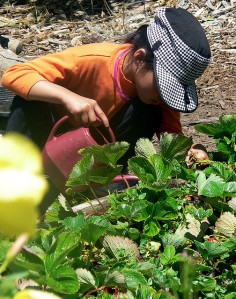
Helping out engages young children in activities that promote movement-cued development. This includes large motor activities like digging in the garden, carrying a watering can, putting away groceries, and sweeping with a broom. It also includes fine motor tasks like using a screwdriver and tearing lettuce for a salad.

Childhood is a period of major neuroplasticity, when learning actually changes the brain’s functional anatomy. Hands-on experiences are particularly vital at this time. In fact, the child who regularly engages with manipulatives (arranging veggies on a platter, setting the table, sorting socks) and applies real-world math (measuring and pouring coffee beans in the grinder, taking things apart and putting them together, following recipes) has a strong foundation of representational experience, which enables better understanding of abstract mathematical concepts when they are introduced later. These movement-based tasks are also closely linked to the brain development necessary for reading and writing. (Find out more about this in Sally Goddard Blythe’s wonderful book, The Well Balanced Child: Movement and Early Learning.)

Growing as a Person and a Family

chores build relationships,

Children accustomed to flashy toys and rapidly changing screen images may become so wired to this overstimulation that without it they’re bored. The slower pace of yard and household tasks can be an important antidote, especially when we’re willing to go at a child’s pace. Young children tend to balk when they’re hurried or left out. They show us, stubbornly and often loudly, that there’s nothing more important to them than the here and now. So whenever possible, slow down so you can make working together enjoyable. Letting a small child spread peanut butter, cut sandwiches, and pour milk into cups from a small pitcher affirms the value of the present moment. It also makes an ordinary lunch into a tea party.

The benefits don’t end for older children. Hands-on experience in all sorts of tasks and hobbies promotes learning, builds character, and helps to form the basis of our future selves. When neurologist Frank R. Wilson interviewed high achievers he found many credited their expertise to attributes learned through hands-on activities. In his book, The Hand: How Its Use Shapes the Brain, Language, and Human Culture, Wilson emphasizes that resourcefulness and self-definition arise from the use of our hands more than from the dictates of our educational system.

In a way, doing tasks together puts parent and child on more even ground. So often we parents are rushing to schlep our kids to practice or lessons or other kid-oriented events, making them the pivot around which a family’s activities revolve. Taking part in regular tasks together, even if we’re pulling weeds on opposite sides of the garden, affirms the sort of mutuality that advertisers tell us is only found in pricey vacations. Of course time afterwards for a nice game of hoops and some cold lemonade builds bonds too.

As our children grow, doing tasks together can continue to strengthen our relationships. Moments of meaningful interaction happen easily when washing dishes, folding laundry, fixing the car, or walking the dog together. Working on shared chores helps a child’s contemplative side emerge, prompting discussions that may never have happened otherwise. This is true between parent and child as well as between siblings. I remember my mother bemoaning the arrival of our dishwasher because we no longer took turns washing and drying, ending a relaxed half hour of post-dinner conversation each evening.

It’s easy to make these activities a tradition. Teenagers who have always helped out when a parent puts on snow tires, cleans out the basement for a yearly garage sale, or cans pickles may grumble when asked, but chances are they’d feel excluded if left out too. In part, who we are is defined by what we do. Growing up with hands-on lessons in taking initiative, practicing cooperation, and working towards a goal helps to shape character. And it transforms pickle-making from drudgery to an important family ritual.

Delayed Gratification
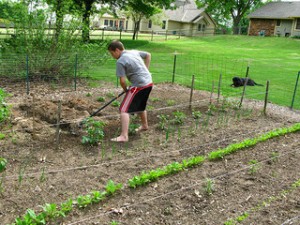
early responsibility for success in adulthood,

This is a biggie in the “you’ll thank me later” department because kids who are able to delay gratification are much more likely to do well as they grow up.

We model delayed gratification each time we choose to work for a later or larger goal. This includes saving, making do, and making it ourselves. We demonstrate it when the whole family pitches in to rake a neighbor’s leaves while she’s recovering from a broken hip. We teach it when we let a child see that if he doesn’t do the laundry when it’s his turn, there won’t be a clean team shirt to wear to the game. And we show that it’s expected every time our kids pitch in with the ordinary jobs necessary to run a household.

This may seem negative, particularly when popular culture constantly screams “have it now” and “get what you want.” But there are enormous positives. Our children become familiar with the pleasures of anticipation, which multiplies the eventual delight when a goal is reached. They also begin to internalize the ability to delay gratification.

This is pivotal for success. Multiple studies (cited in Daniel Goleman’s book Emotional Intelligence) found that children who were able to defer gratification grew into teens and young adults who were more socially competent, better able to deal with frustration, more dependable, reached higher educational attainments, and were effectively able to make and reach long-term goals. Delayed gratification is also related to impulse control. Research shows that a child’s ability to control his or her impulses at an early age is predictive of success even decades later as a healthy, financially stable, and positive member of the community.

Expecting children and teens to take an active part in running a household gives them plenty of opportunity to gain the positive coping skills that help them control their impulses and delay gratification. It may seem like returning to the old adage, work first, play later, but the benefits can be extraordinary.

Skill building

give kids real work, make chores meaningful,

Regular tasks allow our children to see for themselves how the world works. They grasp principles of science and math as a seed becomes a tree, as boards are transformed into bookshelves, as flour and yeast turn into bread. They develop traits such as patience. They are motivated to apply what they’re learning to more challenging endeavors of their own. Sure, it doesn’t hurt to know what it takes to grow the tomatoes, make the sauce, and prepare the beans for tonight’s enchiladas. But more importantly, as our children become proficient at the jobs necessary to sustain their families, they also see themselves as capable. That perception transfers across all endeavors.

There’s no denying that children who participate pick up useful skills. They see that maintenance is easier than waiting till the car or laptop breaks. They can set the table, toss a salad, make a sandwich, and boil pasta. Not right away, but eventually. While they are making real contributions to running the household they’re actively learning how to cook, launder, clean, make repairs, maintain a vehicle, budget expenses, and handle other tasks which are essential for an independent life once they’re adults. Wonderful lessons in cause and effect are reinforced when children complete work and benefit from the results. Seeing oneself as an agent of useful change, priceless.

They also learn from the examples we show them, such as how to handle pressure and ways to learn from mistakes. Whether we’re four or 40, gaining competency feels good. It doesn’t hurt to give credit where it’s due. So if your child has been busy chopping mangoes, strawberries, and pineapple into tasty chunks, try renaming the result “Sophie’s Special Fruit Salad” for extra reinforcement.

Purpose

meaningful chores for kids, finding purpose in chores, raising responsible kids, teaching delayed gratification, building impulse control,

When we stack firewood to prepare for the upcoming winter, make a gift to celebrate a friend’s good news, or change a favorite recipe to accommodate Grandpa’s diabetes, our efforts have purpose and value. As our children participate along with us, they feel the intrinsic satisfaction of doing something that has meaning.

So many educational tasks put before our children serve no purpose other than to instruct. But when learning is connected to something truly purposeful, it can’t help but kindle motivation.

From the earliest time our species lived on planet Earth, young children benefitted from the purposeful learning that comes when adults around them are engaged in practical activities — welcoming a child’s questions and eagerness to be included as entirely natural parts of growing up. It acknowledges that these essential skills are necessary for maintaining and belonging in a community.

Children feel honored to be included in real work that includes real challenges. If we pay attention, we see that’s just what they pretend to do when they play.

Beyond Chores

teaching impulse control, delaying gratification, families working together,

I’m not fond of the word “chores.” It implies that kids and adults have tasks that are set apart from the rest of our lives. Making work around the house and yard a regular part of our lives together seems more natural.

I think it’s valuable to get work done together as much as possible. For me, the simplest way to respond to grumbling has always been, “that’s just how we do it in our family,” without engaging in arguments on the topic. And of course balance is essential. Children and teens (well, all of us) need time for daydreaming, play, socializing, relaxation, projects, and all of life’s other joys.

My kids have their own chores, which they sometimes rotate. They haven’t always done them well or on time by any means. Accepting a floor as clean as a child will get it is part of having children participate. And I’m pretty laid back about things like clean bedrooms. (I remind them we try to adhere to the Firefighter Rule: Could emergency workers navigate a bedroom if necessary?) I understand that kids put less energy into tasks that don’t seem to have much importance. They recognize that a clean bedroom doesn’t affect our family’s functioning, while they know for sure that cutting and stacking firewood will keep our house warm. Hence, the firewood is done right while their rooms are often just short of scandalous.

We’ve never given them an allowance, mostly because we haven’t been able to afford it. Families have counted on children throughout history for work that was reliable and essential. Today we are fortunate that we don’t have to rely on our kids to survive, but we can expect them to contribute. The tasks may not be fun or interesting but they are necessary. They demonstrate to every child that he or she is a valuable contributor to the well-being of the family. And hearing, “Thanks, we couldn’t have done it without you,” feels good too.

I’m pretty sure growing up this way has contributed to how super responsible my kids are now in their teen and young adult years. They see a pile of boxes I need to load for our food co-op and carry them, never waiting for me to ask. They gladly stop whatever they’re doing to pitch in for an hour or all day when help is needed in the garage or barn or back yard. They are incredibly capable people who are far more astute and skilled than I’ll ever be. They can milk cows, fix tractors and cars, cut and bale hay, install plumbing, make meals, diagnose a sick chicken, hang drywall, identify spiders, back up their political opinions, weld, put on a roof, well, you get the idea. Sure, they have busy social lives and enjoy keeping their faces aimed at screens just like everyone else. But they recently spent an entire weekend helping a family member pack, move, and make repairs. They worked hard and displayed nothing but their usual good cheer. After exhausting 14 hour days I asked if they’d rather have skipped this particular task. Every one of them affirmed that it was no big deal. And I heard my words come back to me, “It’s just the way we do things in our family.”

Portions of this article were excerpted from Free Range Learning.