Guerrilla Encouragement Efforts

random acts of encouragement, small children can volunteer, guerrilla encouragement,  spreading happiness with kids,

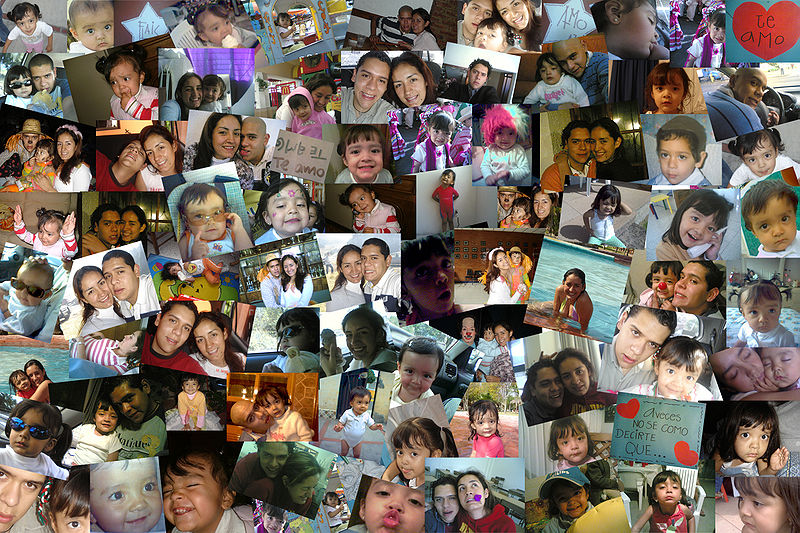
Image courtesy of drillina.deviantart.com

Chances are at some point in your life you’ve received encouragement from someone you didn’t know well or even know at all. It may have been a tiny gesture but it came at the right time.

~Maybe a note left in a library book serendipitously answered a question you’d been mulling over.

~Maybe a store clerk commented on how wonderfully inquisitive your child was just when you were despairing of her constant questions.

~Maybe something as simple as a stranger’s thoughtful compliment boosted your flagging spirits.

Such instances feel as if they’re meant to happen, stretching our perspective beyond the ordinary and helping us pause, contemplate, and renew the way we see our lives. Often they inspire us to spread the same feeling of encouragement to others.

I’ve had plenty of those moments. That’s why when my kids were very small we had a secret indulgence—-guerrilla encouragement efforts. Let’s call these GEE for short. They’re similar to the widely known Random Acts of Kindness but for us GEE were specifically focused on encouragement.  Here’s how we proceeded.

The easiest GEE are letting people know the job they do is appreciated. Since my kids were too little to write at that time, occasionally they dictated gratitude notes, like the one my oldest insisted on writing to a particular nurse’s aide he saw each week during nursing home visits. My kids gave homemade cookies to firefighters and freshly picked strawberries to librarians. A few times we were driving through a slow intersection at just the right pace for us to roll down the car window and give a cold bottle of water to a traffic cop. Handing over GEE offerings requires little more than simply saying, “thanks for what you do.” The look on our recipients’ faces filled us with expansiveness, as if the air suddenly became lighter. My kids liked to talk about these moments again and again.

Their favorite GEE giveaway involved grocery store popsicles, a treat normally illicit in our annoyingly make-it-from-scratch household. I let my little ones stand out front with a box of these popsicles. They could barely stand the excitement as the garbage truck rumbled closer and closer. Patiently they waited until the workers had finished upending our garbage cans, then they held out the popsicles shouting “thank you” over the roar of the truck’s grinder.  The guys were more thrilled than any of us anticipated, waving all the way down the street as they hung on the truck with purple, orange and red popsicles in their mouths.

What kept us talking and thinking much longer were GEE for people we would never meet. One time we decorated little film canisters with tiny sticker letters spelling out “treasure” or “for you.” We rolled up fortunes we’d made inside, then filled the canisters with nickels, dimes and quarters. We put them in the diaper bag planning to tuck them out-of-the-way spots for strangers to find. I thought it would take us weeks to locate perfect drop off places but the kids made a quest out of hiding every one the first time we went out. Our canisters ended up at the library, health food store, and park. For weeks afterward my kids speculated about who might have found these little treasures and they told each other stories about the outcomes they envisioned. My daughter announced one could have been found by a lady who needed exactly that amount to buy a kitten (my daughter named the kitten and recounted its adventures as she imagined the scenario). My son decided it one could have been found by a boy who needed to buy a compass to draw maps (and then my son promptly drew a whole series of maps). Although they asked to do this project over and over again, we only did it that once. Secretly I was concerned that the canisters would be tossed as junk before anyone ever opened them. I also had come to rely on household change for necessities, so that moment of largesse was a one time sacrifice.

Another GEE that really captured our imaginations? Talking stones. We were walking along Lake Erie and spied quite a few flat water-washed stones. Perfect surface for an encouraging note. The kids ran around the beach collecting the largest stones. They carefully washed the sand off at the water’s edge and set them out on our beach towel to dry in the sun. I used a permanent marker (although a finer point marker would have let me squeeze more words on each stone). Our plan was to write something encouraging on one side, then leave the stones scattered well above the high tide line. We came up with messages like “you rock” and “everything is just fine” and “be tender.” Schmucky, but it’s hard to think with preschoolers clamoring to redistribute stones in a gleeful reverse scavenger hunt. The kids liked the idea of leaving them for strangers to find and chortled over the idea of stones “talking.” We left that day happily speculating about who might find a stone and what it might mean to them. Quite possibly nothing. Or who knows, one of our stones might have spoken to just the right person.

With all that’s going on in the world, guerilla encouragement efforts seem strange, funny, and innocently optimistic. But each child is born to dance on this beautiful planet that’s turning, turning, turning toward greater hope. GEE, why not?

“As far as we can discern, the sole purpose of human existence is to kindle a light in the darkness of mere being.”    Carl G. Jung

What Makes A Street Into A Neighborhood?

neighborhood-building, block parties, pig pen parties, getting along with neighbors,

What makes a neighborhood? Sometimes that’s hard to figure out.

I’ve lived in a number of places. Not all of them seemed like neighborhoods. When I was first on my own I used to bemoan that my fellow renters could hardly be bothered to return a wave but someone kept stealing my newspaper. One day, walking home from the grocery store, I realized to my chagrin that I recognized names on mailboxes but couldn’t put faces to those names. I never did much to make that a neighborhood.

Then we moved to a little house. It was silly how hard it was to meet the neighbors. They’d wave but that’s about it. It took nearly a year to meet the older couple across the street. (They seemed old to me then because their kids were teenagers. Not so funny in retrospect.) Our mailbox was on their side of the street. I tried get my mail when one of them went out to collect theirs so I could introduce myself but they tended to scurry back in the house as if my nearly 5’3 stature blocked their share of sunlight. Finally I baked a loaf of bread, knocked on their door and said I was sorry we hadn’t gotten a chance to meet. They turned out to be lovely people. They still write long chatty updates to me years after we moved away.

I began to understand that it takes effort to make a real neighborhood. Change is carved out by a few people doing things differently (well, actually reawakening old ways).

I dug and planted a garden right by the sidewalk. Every time I tended it I was in close proximity to my neighbors, letting me say “hi” to people who walked by and wave at neighbors who drove by. I shared produce from my garden (sometimes leaving surprise zucchini and tomatoes on doorsteps with silly notes).

My kids were outside nearly every day. In their baby years they’d crawl in the grass or, if the ground was wet, play under a tree in a portable playpen. (I’m a believer in outdoor time even for babies.). As they got older they played outside for hours, sometime cavorting happily in the rain and sometimes shrieking with joy in the snow. I think the sheer presence of kids playing outside makes it enticing to other kids and makes it seem normal again to other parents.

When I could, I greeted people who moved onto our street with homemade goodies.

I also started inviting people over. In the fall we had bike parades where the kids spent a happy hour or so decorating their tricycles, scooters, and bikes to ride around the neighborhood in a grand procession before coming back to our house for a picnic. We had cookouts, Halloween parties, and Christmas caroling parties. We met up for working get-togethers such as picking apples with our kids, then devoting a moms-only evening to making applesauce. (Okay, that one time we drank wine and talked so long we had to get together another time to actually make the applesauce.)

The major neighborhood bonding events were our summer pig pen parties. These were grand messy BYOB affairs, as in bring your own bucket—of dirt. The dirt was dumped in a backyard kiddie pool and mixed by all the kids in attendance into perfectly creamy mud, which they used to coat themselves until they were recognizable only by bathing suit outlines. We put a garden hose at the top of our slide and the kids careened down in glorious streaks of mud. We handed out cans of shaving cream for use as body décor (with firm instructions to avoid faces because it’s not fun in the eyes). And we insisted the kids eat without utensils or hands, just direct face to plate. Like pigs. Of course these parties got out of hand once the grown-ups refused to sit in lawn chairs watching the kids have all the fun. Some neighbors showed up in pig masks, others showed up with water balloons sneakily hidden in baby strollers and little red wagons, others smuggled in massive auxiliary supplies of shaving cream. Normally well-behaved men used hoses to fill garbage cans with water, which they dumped over the heads of the few civilized mommies who thought they’d keep their hair looking nice. One year the entire assemblage of pig pen partiers were incensed that a regular pig pen attendee decided to stay home to repair a fence. All of us walked down to the street in wet, muddy, shaving cream-streaked glory to drag him to the party. His police chief father who was there helping him make the repairs looked seriously alarmed. We dragged him anyway.

One year a house caught fire down at the far end of the street that resulted in serious smoke damage. I had no problem getting donations from nearly every neighbor to help cover the family’s losses. It didn’t matter that few of us had met them. I dropped off the largess when their kids were in school so they wouldn’t feel beholden to anyone. It was anonymous except for the signature, “from your neighbors.”

That was years ago. Now we live on a small farm. Maybe because the houses are farther apart, maybe because it’s a small township, maybe it’s due to other complications but it has taken years to feel connected in a neighborly way. Yet it’s still a neighborhood. When a child is lost everyone turns out of their homes to tramp through the woods, fields, and streams until she’s found. When a car is stuck in a ditch, someone will get out a tractor to pull it free day or night, simply saying “no problem.” People offer the bounty from their fruit trees and willingly share equipment. I still harbor the ideal of a vibrant neighborhood but I’m grateful for the  goodwill we’ve slowly managed to find here. I’m learning that neighborhoods are different, and who we are is only part of that difference.

*


For neighborhood-building resources check out:

How to use Front Porch Forum to create caring neighborhoods by Bill McKibben (author of wonderful books such Deep Economy and Hope, Human and Wild.

How to organize a neighborhood work-sharing group.

How to create a more vibrant neigborhood.

How i-Neighbors can help you develop local networks.

How to share with your neighbors.

*

*


“Neighbors” image courtesy of Nirel

On Living Happily with Less

living on less, the shift, RFK, gross national product,

My husband is the bee inspector for two counties. He meets interesting people every time he goes out to another apiary. If he lingers after the heavy work of opening hives, the conversation invariably heads in the direction of self-reliance. People tend to talk about making home and equipment repairs, canning and freezing a garden’s bounty, earth-respecting ways of farming, living on less. It seems everywhere around us people are doing what they can to save. They’re also working harder to connect with others who have experience and talents to offer.

After two years of searching for full-time work my husband is well acquainted with these topics, but also because we’ve spent decades trying (sometimes with slapstick results) to live well on less. We make do, repurpose, and enjoy frugality without making a fuss about it. It’s a work in progress, as we’re still trying to gain reasonable proficiency in skills our great grandparents took for granted.

The times we live in are tossing millions of people in this direction whether they go willingly or scream all the way. It isn’t easy. It probably isn’t fair either. Our current economic downturn came after a long slide of wealth slipping from middle class hands into the tight grip of the wealthy. Nearly 8 million jobs are gone, many possibly for good. Yet the richest among us have actually increased their holdings.

Some of us have lost the illusion of security. Some of us have lost much more—jobs, health care, pension funds, and homes. All of us have been forced to grow a little. That’s part of a larger shift. Insecurity pushes us to pay closer attention to our core values. We’re recognizing that purchases don’t really buy happiness and as a result, saving more than we have in decades. We’re doing more for ourselves and still reaching out to help others.  We’re as ingenious, adaptable and happy as we choose to be.

The shift is even more noticeable when we see certain long-established structures around us breaking apart, with more cracks appearing every day. Just look at what’s happening to prescribe-and-placate medical models, inflexible financial institutions, condemning religious frameworks, and rigid corporations.

But these current conditions of breakup, economic chaos, and environmental decline are exactly those which are (slowly) leading to beneficial change. Collectively we’re waking up to the weakness of limited thinking and short-term fixes. Hopefully we’re also waking up to the reality that we’re in this together—rich and poor, developed and developing nations, young and old, left and right.

We see in our own lives that what’s important can’t be measured by dollars alone. Things like good health, supportive relationships, a vital ecosystem as well as economic security. Even the word “wealth” is derived from the Old English term “weal” which means “well-being.”

Less than two months before he was assassinated, RFK said in a speech,

“…America is deep in a malaise of spirit:  discouraging initiative, paralyzing will and action, and dividing Americans from one another, by their age, their views and by the color of their skin and I don’t think we have to accept that here in the United States of America.”

He went on to say,

“For too long, we seemed to have surrendered personal excellence and community values in the mere accumulation of material things…  The Gross National Product counts air pollution and cigarette advertising, and ambulances to clear our highways of carnage.  It counts special locks for our doors and the jails for the people who break them.  It counts the destruction of the redwood and the loss of our natural wonder in chaotic sprawl.  It counts napalm and counts nuclear warheads and armored cars for the police to fight the riots in our cities.  It counts Whitman’s rifle and Speck’s knife, and the television programs which glorify violence in order to sell toys to our children.”

“Yet the gross national product does not allow for the health of our children, the quality of their education or the joy of their play.  It does not include the beauty of our poetry or the strength of our marriages, the intelligence of our public debate or the integrity of our public officials.  It measures neither our wit nor our courage, neither our wisdom nor our learning, neither our compassion nor our devotion to our country, it measures everything in short, except that which makes life worthwhile.”

redefine the GDP, frugal living,

Time to clarify what we mean by well-being—for ourselves, our economy and our future.

*

*


*


Patchwork Living Bee post*

One with the Universe courtesy of Suvetar

Together courtesy of Morfa9977

Waiting For Superman, Really?

"waiting for superman," alternative education, democratic schools, test scores meaningless, charter schools bad, corporate influence in schools, educational freedom,

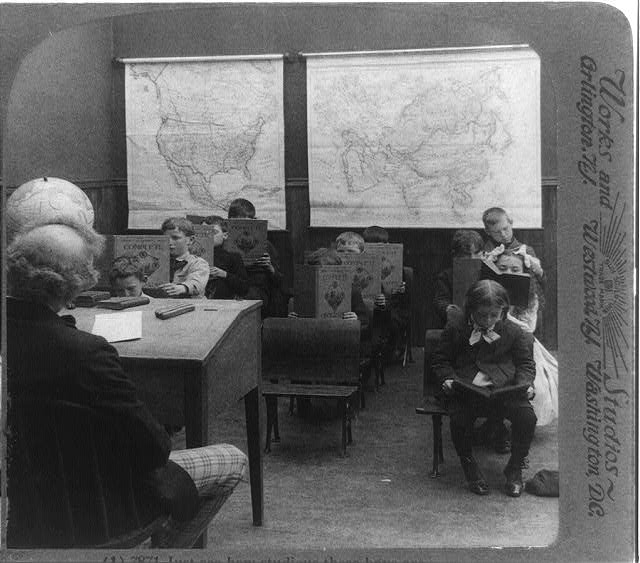
School in the old days may not have been ideal, but good teachers made all the difference. My father taught elementary school back when teachers had real options in the classroom. At least in his district, as long as his students generally covered the subject areas he was free to innovate. So he did. His fifth graders performed experiments, took care of the classroom snakes and rats, started school-based businesses, and perhaps most importantly, read and wrote about what they found interesting. Those days weren’t perfect by any means for students let alone teachers. But they’ve gotten worse. My father skedaddled out of the teaching business before standardized tests really hit education. But he saw the zombifying effect on schools, teachers and kids brought by high stakes testing.

Even in the best districts, attaining those all-important numbers eliminates opportunities for innovation and time to work with students’ interests. Those left behind see their schools under test-heavy siege charged with getting results or getting eliminated.  This drive also shapes the kind of material students see, relentlessly preparing them to reach higher for the Almighty Score while giving scant attention to more complex yet essential skills for higher learning like critical thinking, creativity, initiative, and persistence.

Test Scores are not the Last Judgment

We might believe policy-makers know what they’re doing. Surely they haven’t been restructuring education based on bare numbers unless they had substantial proven results. Greater competiveness on the world market or at least greater individual success?

Nope.

Here are the actual results in this excerpt from Free Range Learning:

It’s widely assumed that national test score rankings are vitally important indicators of a country’s future. To improve those rankings, national core standards are imposed with more frequent assessments to determine student achievement (meaning more testing).

Do test scores actually make a difference to a nation’s future?

Results from international mathematics and science tests from a fifty-year period were compared to future economic competitiveness by those countries in a study by Christopher H. Tienken. Across all indicators he could find minimal evidence that students’ high test scores produce value for their countries. He concluded that higher student test scores were unrelated to any factors consistently predictive of a developed country’s growth and competitiveness.

In another such analysis, Keith Baker, a former researcher for the U.S. Department of Education, examined achievement studies across the world to see if they reflected the success of participating nations. Using numerous comparisons, including national wealth, degree of democracy, economic growth and even happiness, Baker found no association between test scores and the success of advanced countries. Merely average test scores were correlated with successful nations while top test scores were not. Baker explains, “In short, the higher a nation’s test score 40 years ago, the worse its economic performance . . .”   He goes on to speculate whether testing [or forms of education emphasizing testing] itself may be damaging to a nation’s future

What about individual success?

In remarks to a Cato Institute Policy Forum, Alfie Kohn said, “Research has repeatedly classified kids on the basis of whether they tend to be deep or shallow thinkers, and, for elementary, middle, and high school students, a positive correlation has been found between shallow thinking and how well kids do on standardized tests. So an individual student’s high test scores are not usually a good sign.”

Why then do we push standardized tests if it has been shown that the results are counterproductive? Well, we’ve been told that this is the price children must pay in order to achieve success. This is profound evidence of societal shallow thinking, because the evidence doesn’t stack up.

Back in 1985, the research seeking to link academic success with later success was examined. It was appropriated titled “Do grades and tests predict adult accomplishment?”

The conclusion?

No.

The criteria for academic success isn’t a direct line to lifetime success. Studies show that grades and test scores do not necessarily correlate to later accomplishments in such areas as social leadership, the arts, or the sciences. Grades and tests only do a good job at predicting how well youth will do in subsequent academic grades and tests. They are not good predictors of success in real-life problem solving or career advancement.

For-Profit Charters are not the Promised Land

Now the much-touted documentary Waiting for Superman indicts today’s schools. The film hasn’t opened yet, but advance publicity makes it clear that solutions include whipping the teacher’s union into submission while tossing money at the problem. Waiting for Superman follows five families as they try to spare their kids the fate of bad public schools by enrolling them in promising charter and magnet schools.  These are surely among the best charter and magnet schools in the country. But with our tendency to simplify any message, this film will surely be used to advance public perception of all charter schools. And that’s a very short-sighted approach.

Yes, there are some good ones, even some great ones out there. But let’s consider for a moment that many charter schools are run by for-profit companies. Making public education into an opportunity for entrepreneurs is not the solution. Owners have to make money somewhere. As a result they pay teachers very little, emphasize public relations, and provide little more than a rote McSchool education. Meanwhile they rake in stacks of taxpayer cash. Some charter schools provide nothing more than all-day computer based curricula for students to use at home (co-opting the term “homeschooling”) or in poorly run facilities. Unlike public schools, many charter schools can handpick their students, resulting in better overall test and behavioral outcomes. Even when children gain entrance by random pick, there’s an undeniably positive effect on students and their families who feel they’ve gained a leg up.

I’m not against entrepreneurs. I’d simply prefer to see them turn their attention to wind turbines and solar cells. My concerns are based on what’s happening in my home state. Here in Ohio, White Hat Management, owned by David Brennan, is the largest charter school operator in the state and the third-largest in the U.S.  They may have the most dedicated teachers and support staff possible but management is out for the money. Currently 10 White Hat run schools are suing the company hoping to get out of contracts. Why?

An attorney for the charter schools comments, “White Hat Management is a for-profit company. Its interest in making a profit often conflicts with the schools’ goal to educate and show student progress. There are no real rules in place to make White Hat fully account for the nonprofit dollars they receive to manage Ohio charters.”

A Columbus Dispatch article noted Brennan was making nearly $1 million for each charter school his company operated.

It’s not as if charters are better. According to a Stanford University study, charter schools here in Ohio underperform compared to public schools.

That’s true across the nation as well.

Comparing data from 70 percent of all charter students in the country, attending one of 2,403 charter schools, it was found that these schools were no better and often worse than their public school counterparts. Comparing math achievement, charter students had gains in 17 percent of the cases. But charter schools had no impact in 46 percent and a negative impact in 37 percent.

We knew this back when President Bush enthusiastically promoted poorly ranked charter schools. Now we know, at least in the case of some for-profit ventures, the concerned voices of parents and community members aren’t likely to be heard beyond “press one for public relations.” They may, as in Ohio, have to sue to free themselves from money-changers right there in the temple of learning.

No Need to Wait, We’re the Super Heroes

The big changes in our society have come about as the result of ordinary people demanding accountability while making changes themselves. Everything from civil rights and environmental protections to natural childbirth—- our ideals, our struggle.

Waiting for Superman urges us to insist on similar changes in our schools. But change isn’t about throwing more money at the problem. It certainly isn’t about letting corporations get a stronger foothold in schools where BP writes science materials and advertising is ubiquitous.

The change highlighted in the film is spurred by concerned parents and amazing teachers like Jeffery Canada. I’m a big admirer of Canada’s work I read both his books Fist Stick Knife Gun: A Personal History of Violence in America and Reaching Up for Manhood: Transforming the Lives of Boys in America when they came out. The other teachers showcased in the film are equally creative, brilliant and caring.

Do we see the irony here? This film showcases innovative teachers and child-centered programs, holding them up as the last hope to “save” kids from bad public schools. Exactly the sort of conditions that benefitted my father’s public school classroom before high stakes testing and business models got in the way.

There’s no “silver bullet.” We’re talking kids here, kids who start out with curiosity and eagerness. Sure, we can funnel a few lottery winners into trendy themed schools like Q2L or we can recognize that all children are born to learn in the way that best suits them, as they do in Democratic Schools.

While tests measure what kids have yet to achieve, kids themselves more naturally seek to  engage in the wonderfully exciting work of mastery, guided by parents, teachers, grandparents, clergy, friends and the world around us. The strictures of school tend to limit learning, as I explain at length in my book which is one reason a few million of us homeschool, creating every day the kind of responsive and individualized education that best suits our children.

But that’s not workable for everyone. So let’s figure out what changes will really benefit our children and our communities.

1. Let’s find out about the holistic, uneven and delightfully unique ways that children learn.

2. Let’s look beyond trends, reading publications written by parents and teachers such as Education Revolution Magazine,  Rethinking Schools, and Encounter: Education for Meaning and Social Justice.

3. Let’s pay attention to the thoughtful, experience-informed work of today’s unsung educational luminaries including Ron Miller, Jerry Mintz, Chris Mercogliano.

4. And perhaps most importantly, lets pay attention to what those who love to learn have to say. Our kids tell us how they learn best each day not only through their enthusiasm but also through their stubbornness, anger, despair and numbness. They need to participate in meaningful work, to apply real skills, to pursue their own interests, to advance at their own speed in their own way, to model themselves after people they admire and to face challenges that inspire them. Every day. That’s how humanity advances.

The future is too important to do otherwise.


Six Ways Introduce Fine Arts Using The Happy Idiot Method

Artwork by Samuka

“You’re a frigging idiot.”

That’s what the guy behind us said. He spoke so loudly that two rows of concert-goers heard it. He didn’t even wait until the intermission to announce he considered us boorish.

I’m still not sure what upset him so much. My seven-year-old daughter had begged to attend what she called a “real performance” after enjoying a number of the Cleveland Orchestra’s Musical Rainbows concerts for young children. Nearly every day since she’d been three years old she put on recordings such as Beethoven Lives Upstairs,
Prokofiev – Peter and the Wolf,  Song of the Unicorn, and Mr. Bach Comes to Call.Sometimes she played,  sometimes she danced but mostly she drew pictures as she listened to compelling music woven around stories.

Going together to the concert was a rare night out for the two of us but I knew her three brothers weren’t as entranced by classical music. So that evening she and I dressed up, taking our eagerness to velvety seats not far from the stage. As the concert hall filled many people greeted us kindly. The musicians began to tune up and my daughter nodded at me. She knew this was her cue to be quiet until intermission.

Then the man behind us arrived. He squeezed past others, sat down and said aloud, “Oh no.” Because he exhaled so repeatedly and in such an exaggerated manner I wondered if he’d sat on something awful. Nope, the something awful was us.

Just as the conductor lifted his baton, the man behind us leaned forward as if to whisper, but his hissed words weren’t quiet at all. He said, “I paid good money for this seat. Your kid better not wreck it.” Then he muttered “idiot” under his breath. I turned around to look at him, more surprised than annoyed, but he wasn’t looking at me. He was glaring hatefully at my beautiful child.

The performance started and my daughter was enraptured. At times she looked over at me, squeezed my hand or leaned her head against me. Sometimes her hands floated just above her lap as if carried by sound. I paid close attention, hoping to hold the whole experience in my memory.

As the applause died down after the first piece the man behind us started sighing in exasperation. And he kept it up. I tried to notice what might have been bothering him. My daughter didn’t speak, didn’t hum along. She simply adored the music. But when the man started bumping my seat I turned my head to look at him. He was still glaring at my child.

For reasons of his own he was fed up. He looked at me and said loudly, “You’re a frigging idiot.”

The moment intermission began he stomped off and didn’t return. I hoped he’d find some peace despite possession by keep-children-out-of-concert-halls demons. But I’m no saint, I was pretty thrilled he left.

The woman next to my daughter assured us we weren’t the problem. An elderly gentleman at the end of our row, an orchestra patron for thirty years, said he hoped to see more children who loved classical music. By the time the musicians filed back some people had chatted with my daughter, happy to learn about her specific knowledge of that evening’s program. Others said, quite tactfully, that it was rare to see youngsters attend an evening concert.

A common perception is revealed by this experience. Fine arts and eager children don’t go together.

It’s not just one guy convinced the presence of a kid will ruin his evening. Most people set the arts aside as something special or worse, something for those who really know what they’re reading/seeing/hearing.

To me that’s the sort of separatist thinking that keeps fine arts in the underfunded, under appreciated realm where nearly extinct things go to die. But that’s how they’re introduced to most young people. Arts are imposed using the old “eat this spinach or you’ll be punished” method. Great way to inspire a hatred of spinach. And art. It isn’t woven into their lives and it doesn’t grab them (or at least many of them) in a way that’s personally meaningful. Instead fine arts are introduced in later grades. Students are lectured, assigned work, and graded. If they’re lucky they get extra doses of the arts doled out in guided museum visits and a class trip to see Shakespeare performed after weeks of preparation. The vitality is bled right out.

In Shakespeare’s time his plays were part of popular culture. People from all social classes crowded into the Globe Theatre where they enjoyed the bard’s social commentary, melodrama and comedy. Chances are they didn’t bother to analyze a thing. Chances are those plays did for them what art does when it means something to any of us, it illuminates.

I love the way young people discover and appreciate art when it isn’t imposed on them. These days my kids are older (teens and young adults). They enjoy fresh visual arts on YouTube, soaring new classical music scored for video games, and performances everywhere. Better yet, they aren’t passive. They connect and engage with it. During a recent discussion I overheard my kids relate the theme of a recent movie to Homer’s Odyssey, tie that to quotes from a Terry Pratchett book, then they were off parodying the theme using quotes from movies and song lyrics. Lightening fast, funny, and sharp. No curricula could possibly keep up.

My kids swam in the current of fine arts from the very beginning, as it flowed naturally with all the other influences in their lives.

Here’s the enjoyment-based, jump-right-in way we’ve always gotten comfy with fine arts in my family. (Caution, some may deem it idiotic.)

  1. Build in some fun. If you’re going to a concert in the park take along silent amusements for small people—a tiny stuffed animal that just might want to dance on its owner’s lap, drawing materials to capture impressions of the performers or the feeling of the music, a small treat that’s specific to concerts (consider bending that no lollipop rule). And if it isn’t much fun don’t stick around. Mosey off and wait until your children are older. And once your kids are older the experience is a greater pleasure for them if you let them invite a friend. We were often surprised to find that our 10th trip to a museum, where my kids clamored to see favorite sculptures and new exhibits, was the first trip for their friends.
  2. Make it an adventure. When you journey any distance to see a music performance, attend a play, or ramble through galleries make that stop one of several anticipated events.  Try to spot murals or other public art on the way. (When they were little my kids knew we’d arrived when they waved at the Guardians of Traffic pylons as we drove over the bridge to Cleveland.) Take a break in an ornate big city library, eat a packed lunch in a park, stroll through an open air market, pick up unusual snacks at an ethnic grocery, and let your child’s curiosity help guide the day’s events.  If part of the day incorporates a lot of sit down time (including the ride to and fro) be sure to balance that with movement, exploration, and sensory adventure.
  3. Tune it to the child’s level. Let preschoolers stroll as interest leads them through museums, especially art museums. You might decide to look for something specific on the way (one of my sons liked to spot animals, another son made it his quest to find anything airborne—birds, planes, angels, flying carpets).Make galleries a place of discovery. chat, ask questions, and when they lose interest it’s time to go.
  4. Make it an ordinary part of life. As with anything, it’s what you pay attention to that you magnify. Conversations about music, philosophy, or logic are just regular mealtime topics, brought up with the same casual interest as sports or the weather. Literary discussion with a four-year-old is easy. Simply talk about the picture book you’ve just read together. How could it have ended differently or gone on longer? Why do you think the main character acted that way or made that decision? Which character would you like to be in the story? Why?
  5. Start early. Listen to music as you nurse babies to sleep, imagining the wonderful association that child is making between sound and comfort (whether Bach or the blues). Hold up tiny ones to get a better look at paintings or sculpture. Indulge in sock puppet conversations with your toddlers. Dance and sing together unselfconsciously. Display your child’s artwork in frames and on shelves. Make CD’s available to kids for bedtime listening or quiet time, especially those by professional storytellers such as Odds Bodkins (who started my kids’ love of Homer’s Odyssey) and Jim Weiss. A great selection is available at Gentle Wind, Chinaberry, and your local library.
  6. Enjoy it the way you choose. Shakespeare’s work may spark fascination in a lavishly illustrated picture book such as Coville’s William Shakespeare’s The Tempest (Picture Yearling Book), an early chapter book such as Mayer’s The Tempest, or maybe a graphic novel like The Tempest The Graphic Novel (American English, Original Text). See The Tempest in any number of movies from productions done in 1928 to the newest, recasting Prospero as a woman. Check out how The Tempest has been interpreted by artists throughout the years. My kids appreciate a stage performance best after they know the story well, on their own terms, after bumping into it in books or movies or music. After seeing the play, one of my kids noted that it was written 400 years ago but names from The Tempest are still popular today— Miranda, Ariel, Antonio,Iris, Sebastian. That reminds me that the roots of what we care about today go much farther back than we imagine.

*

Find more suggestions in Free Range Learning.

*

*


*


Transferring Enthusiasm

transferring enthusiasm, infectious energy, alternative education, natural learning, community education, mentoring, entrepreneurship,

There is something vitally important transmitted when one person’s enthusiasm sets off a spark in others. This sort of spirit can’t be reproduced in any curriculum. That’s why, whenever possible, we learn from people who are passionate. Potters, chemists, bird watchers, dairy farmers, blacksmiths, historians, wildlife rehabilitators, wood carvers, entrepreneurs, air traffic controllers, geologists, musicians, engineers, chefs, astronomers, you name it.

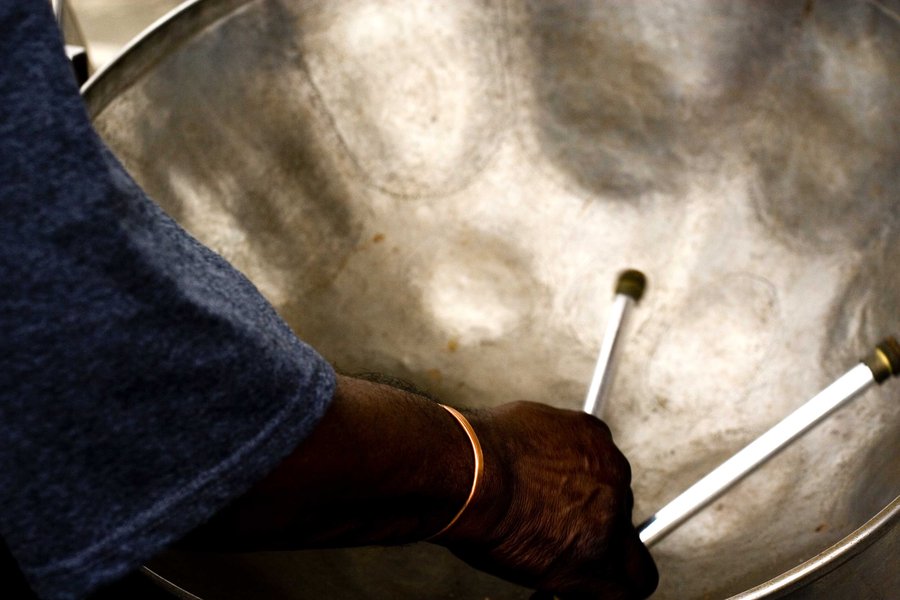
One time we drove to a part of town where we’d never gone. The address didn’t seem right, but around us friends were parking for a tour and discussion we’d scheduled at a local business. So we piled out and knocked at what looked like an abandoned warehouse. The door was pulled open by a man who welcomed us to his steel drum company. He seemed powered by perpetual gusto as he talked about the history of steel drums and his desire to preserve the music, factors which became the motivating force behind his company. He told about the shoestring nature of his own start-up and multiple problems with initial designs—- illustrating his tales with diagrams, tools and testimony from guys in the shop.

Our time there stretched out wonderfully as we played many different drums, including some extremely valuable models, and listened to recordings made in a studio he built on site. There’s no telling what particular element of that afternoon made an impression on the children and teens there. What he transmitted encompassed history, music, engineering, entrepreneurship, character-building, collaboration—all with an infectious energy.

Through any deep exploration we can uncover ever widening avenues of discovery, whether we search in archeology, cake decorating or steel drums. There are lessons to be learned that awaken us to greater wonders.

When we get a glimpse of those wonders through the eyes of others we’re not only learning. We’re sharing a source of pleasure. Asking people to impart some of what they’ve discovered and how they do it, well, that’s a gift because it lets them give us a taste of what, to them, has real sustenance.

That spark, carried from generation to generation, is how we humans have always built the future. As Antoine de Saint-Exupery wrote. “If you want to build a ship, don’t herd people together to collect wood and don’t assign them tasks and work but rather, teach them to long for the endless immensity of the sea.”

*

*

*

Steel Drum image courtesy of Michael Halley

The Beauty of Ordinary People

“Not everything that can be counted counts, and not everything that counts can be counted.”

Einstein

*

*

*

*

The world is full of ordinary, wonderful people.

Ever since I learned about Randy Stang in Regina Brett’s Plain Dealer column his example of casual grace has helped me see greatness in a new way. Those who bring out the best in themselves have a way of doing that.

Most people who get media attention are nothing like us. They’re obnoxiously wealthy, phenomenally talented or otherwise good at accumulating fame.

A great deal of publicity is also devoted to those who bring out the worst in themselves. They commit crimes or wreak havoc more acceptably, perhaps as scornful political pundits.

Occasionally attention shines on people who devote themselves to a cause in ways we can’t imagine doing or who risk their lives to save a stranger. True heroes. We may marvel at their efforts but end up feeling worse about our own choices. Who can imagine sacrificing as these selfless people do?

But Randy Stang was not the sort of man who attracted attention. He lived with his family right by Bradley Park in Bay Village, Ohio. Tall lights lit up his yard till late at night. Enthusiastic yelling from nearby soccer, basketball and baseball games made for a noisy home. When Randy Stang heard about a proposed biking and skateboard park he decided to attend the public hearing. So did many of his neighbors.

He waited for his chance to talk holding three pages of notes. A middle school teacher spoke about the six years of resistance the skate park had already faced, saying Bradley Park was likely the last hope for local bikers and skateboarders. Residents also spoke, saying the noise and inconvenience of a skate park was unacceptable. They liked the idea of teens gathering somewhere but preferred that place be far from their backyards.

Finally it was Randy Stang’s turn to talk. He explained what it was like to live near the park. He mentioned the noise and lights. He noted that his garage had been broken into just two days before the public hearing.  Then he gave his opinion.

“I’m in favor of a skate and bike park in Bay Village in Bradley Park. I am wondering if the citizens against the park have no grandchildren, no children, or are not a child themselves.”

He finished, saying, “You want to put it just to the north of that baseball diamond there, probably about 50 feet from my yard.”

Then Randy Stang collapsed. A nurse and doctor performed CPR to no avail. But his efforts were not in vain. It looks like Bay Village will be building The Stang Memorial Skate and Bike Park.

People who are acclaimed every day in the media don’t exemplify us. It’s the uncelebrated lives of ordinary, wonderful people who form the bedrock of human existence. These people are next to you and across the world. Chances are they won’t gain notice unless they perish dramatically while simply being themselves.

Unselfish acts performed a million times a minute weave us together as a caring species. We tend to the helpless, comfort the sorrowful, share knowledge and create happiness. It happens most often in small, unnoticed ways. This is why I know humanity has every hope of skating ahead toward the very best possibilities.

*

*

Creative Commons photo collage