We Don’t Need No Age Segregation

open-source teen learning, active learning, teen unschooling,

My teenaged son just spent the day with middle-aged guys he met online.

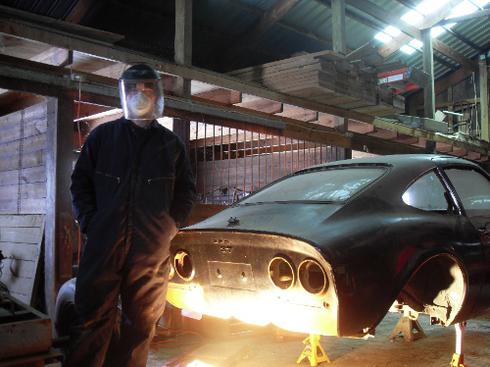
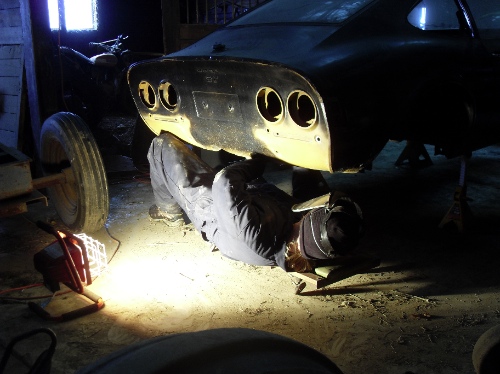
Let me explain. Before he could drive, my son earned enough money shoveling out horse stalls to buy a 1973 Opel GT. Or what was left of one.

The car sits out back in a dark barn, its classic little outline like a rough sketch waiting for functional automotive details to be filled in again. He is restoring it himself, but not alone. He’s in touch with an online community of automotive enthusiasts from around the world. They eagerly share experiences and resources on forums. They also boast, complain, and talk about their interests just as any friends do.

My son and his father have met some of these folks at auto meets and car shows. When my son discovered an Opel club not far from our family farm he was invited to join. Today he and his older brother drove out for a day-long gathering. Although my boys were the youngest by decades they enjoyed an open-hearted welcome.

Yes, I realize there are significant concerns about teens talking online with adults, let alone meeting them. I try to keep those concerns in perspective. Studies of online behavior by youth indicate the biggest risk they face is peer harassment, not sexual predation. Today’s young people are much more overprotected than previous generations even though violence against kids has markedly decreased and the overall crime rate continues to plummet. Overly cautious, restrictive parenting practices actually inhibit a teen’s growth toward maturity and responsibility. So I watch, ask questions, and recognize that my son benefits from online friends and mentors.

It’s a pivotal coming of age experience to be accepted by elders one admires. Until that time it’s hard to feel like an adult. These experiences are frequently depicted in movies, but children and teens in our culture are almost entirely segregated from meaningful and regular involvement with adults.

These days kids spend their formative years with age mates in day care, school, sports, and other activities. So their adult role models are largely those whose main function is to manage children. This subverts the way youth have learned and matured throughout human history. Children are drawn to watch, imitate, and gain useful skills. They want to see how people they admire handle a crisis, build a business, compose music, repair a car, and fall in love. Separate kids from purposeful, interesting interaction with adults and they have little to guide them other than their peers and the entertainment industry. That’s because our species learns by example. Ask any child development expert, neuroscientist, or great grandparent.

There are plenty of educational initiatives to bridge this gap, particularly for teens. These programs connect students with mentors or bring community members into schools to talk about their careers. While these efforts are admirable, such stopgap measures aren’t the way young people learn best. They need to spend appreciable time with people of all ages—observing, conversing, and taking on responsibility. Real responsibilities, real relationships.

Because my kids are homeschooled they’ve have more opportunities (and a lot more time) to hang out with interesting adults. My daughter volunteers for hours each week alongside a woman who rehabilitates birds of prey. Another of my sons has played bagpipes for years with an 80-something gent who once served as a Pipe Major for Scotland’s Black Watch. The age range of my kids’ friends spans decades. Natural mentors such as these are a rich source of authentic experience. And they’re in every community. It’s not hard to find them.

Along with other homeschooling families, my kids have also taken a close look at the workaday adult world. The owner of a steel drum company explained the history and science of drum-making, talked about the rewards and risks of entrepreneurship, then encouraged us to play the drums displayed there. An engineer took us through his testing facility and showed us how materials are developed for the space program. We’ve spent days with potters, woodworkers, architects, chemists, archeologists, stagehands, chefs, paramedics and others.

People rarely turn us down when we request the chance to learn from them. Perhaps the desire to pass along wisdom and experience to the next generation is encoded in our genes. Age segregation goes both ways–adults are also separated from most youth in our society. After an afternoon together we’ve gotten the same feedback again and again. These adults say they had no idea the work they do would be so interesting to kids. They marvel at the questions asked, observations made, and ideas proffered by youth that the media portrays as disaffected or worse. They shake hands with young people who a few hours ago were strangers and say, “Come back in a few years, I’d like to have you intern here,” or “We could use an engineer who thinks the way you do. Think about going into the field,” or “Thanks for coming. I’ve never had this much fun at work.”

So today my teenaged son hung out with fellow Opel aficionados. They trust he will drive his car out of the dark barn and into the sunlight soon. It will be a shared accomplishment, the kind of thing that happens all the time when young people aren’t separated from the wider community.
unschooling teens, homeschooling teens, teens free to learn,

I wrote this piece nearly two years ago for Shareable.com. Since then this son of mine has become a mechanical engineering student at a private college. His fellow classmates brought with them years of advanced placement math and science classes. The advantage he brought? Lots of hands-on experience, an active approach to learning, and insatiable curiosity. He’s at the top of his class.   
Engage The Window Box Effect

beauty heals, finding the positive, reversing urban decay, building a neighborhood,

CC 2.0 by ahisgett

When I was in college my professors enjoyed crushing what was left of our youthful optimism with miserable statistics about how bad everything was and how rapidly it was getting worse. (Even their cynicism was too small to envision our current issues.) I remember a semester-long course that had to do with reversing urban blight. After being taught about this dire and growing problem we were introduced to the standard remedies. Our professor scornfully dismissed every effort to reverse urban blight. The worst thing that could be done? Coming in from outside the community to impose a do-gooder solution. The only right thing to do was a vast overhaul of our economic structures. (Those structures are even shakier today.) I wrote sufficiently miserable papers to get an A but was left with quiet despair in my ever-hopeful heart.

Soon after that class I read about one woman’s experience of urban blight. She’d lived in the same house for decades, watching her neighborhood decline. There were few jobs and the ones available paid poorly, with no benefits or job security. She sadly listed the local businesses that had left, leaving her area with no grocery, beauty shop, or movie theater. The only places that remained were bars and corner stores selling little in the way of real food. People lost their homes and landlords took over, rarely keeping up the property. The city lost revenue, doing little to keep up with residents’ complaints. It seemed to her that young people were lost too. They swore in front of tiny children and their elders, hung out all hours on street corners, got into public fights, abused drugs. She was quoted as saying that people complained they got no respect from young people, when really the young people had no respect for themselves.

The reason she was being interviewed? She was credited with beginning a tiny urban renaissance that was evident on her street and slowly spreading through the neighborhood.

Here’s how it happened. She’d been in poor health and adjusting to widowhood. Her home had been well maintained over the years but like many wood-sided homes, it began to look shabby when too much time went by without new paint. After her husband died she didn’t do well keeping up with yard work and because the street had changed she rarely sat on the porch as she used to do in years past, chatting with neighbors and greeting young people by name as they went by. It wasn’t just friendliness. When everyone knows everyone, word of misdeeds travels home quicker than an unruly child can get in the door. And when a child really knows the elders on his or her street, they have many more potential role models to benefit them as they grow up. That’s the proverbial “village” it takes to raise a child.

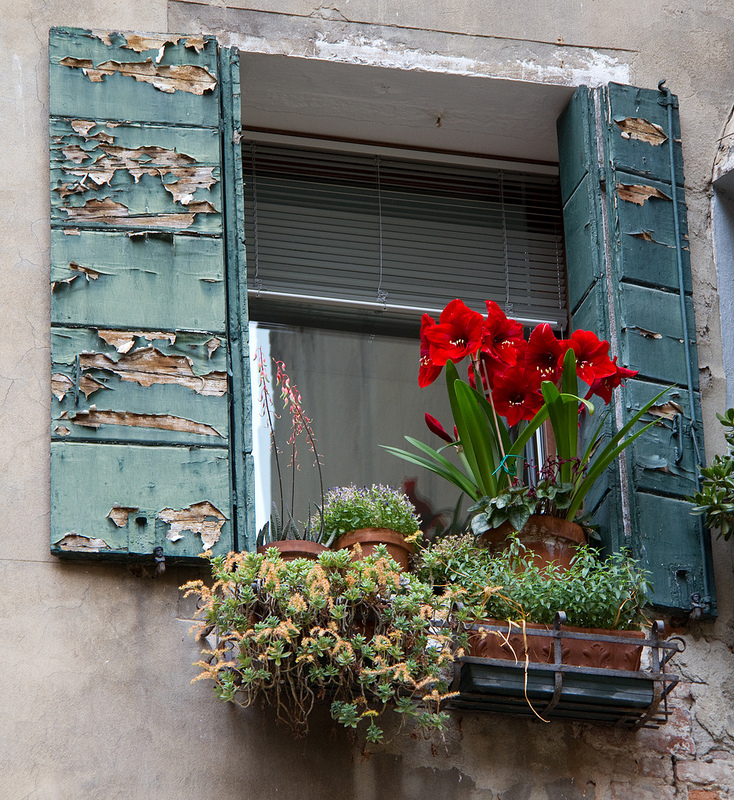
This woman wanted to do something. All she could afford was a few packets of flower seeds. She got out on a spring day to plant the seeds in her long-unused window boxes. She started sitting on her porch every afternoon after watering them, greeting those who went by even though she didn’t know them. Renters in houses where her friends once lived began talking to her. By the time the flowers were in bloom she noticed a difference on the street. She said that people were sweeping their porches and planting flowers of their own. Because they were trying, she got out there to do her part, attempting to take better care of her lawn, telling people who passed by that it was a good way to get exercise she needed. Every time she couldn’t get her mower to start she’d ask a teenager walking down the street to help her. Then before starting to mow, she’d ask for his or her name, shake hands, and thank that youth for doing a good deed by helping her. She made sure to greet those young people by name every time she saw them afterwards.

That summer one family painted their front door. Someone else cleaned up an empty lot that had been a dumping place for trash. People started sitting on their porches, waving to each other, stopping for conversation. It began to feel like a neighborhood again. Building on what’s positive is powerful indeed.

There are plenty of ways people are revitalizing their communities these days. They’re reclaiming empty lots as gardens or play places for their kids, running micro-businesses out of their homes, starting up tool-shares and neighborhood work groups. They’re using social media to connect and collaborate with each other. They’re mentoring kids in the neighborhood and finding ways to get kids more involved in the larger community.  Studies show that urban gardens and other revitalizing efforts make a difference, reducing the crime rate and fostering all sorts of positive relationships. An old theory, kind of the flip side of what I’m calling the Window Box Effect, was called Broken Windows Theory. It posited that minor examples of breakdown (like a few broken windows) leads to greater disorder, dragging down not only the appearance of an area but also leading to crime and property damage. This has largely been disproven because crime is actually deterred when people know they have the power to affect their communities and benefit from strong networks within those communities.

Sure, we have a lot to work to do rebuilding our sorry infrastructure and easing the ever-widening income gap. But it doesn’t hurt to remember that noticing a little beauty can amplify the greater beauty that’s everywhere, waiting to bloom.

There are plenty of ways to apply the Window Box Effect.

Tell me how the Window Box Effect works in your life.

Who We Are In A Crisis

how people act in disaster, survivor, true survivor behavior,

Versions of Survivor are watched all over the world. Forty-five countries have pitted contestants against the odds and shows are still filmed in Denmark, Croatia, Italy, Norway, Serbia, France, India, Israel, Spain, Sweden, Turkey, and the U.S. These series drop people in inhospitable places with minimal resources and ask them to cope successfully with unexpected challenges. It’s called “reality” television, although people in the real world face harder challenges every day.

Survivor shows have to be carefully structured with authoritarian rules and imposed competition. Otherwise contestants might resort to a very natural state. Not Lord of the Flies levels of cruelty and exclusion. No, something far worse for ratings. Cooperation.

In our non-reality TV lives we don’t live as separate entities battling for limited resources like wanna-be stars on an island bristling with cameras. We humans are wired to live in interdependent networks of people based on mutual support and compassion. Ninety-nine percent of humanity’s time on earth took place while we lived as nomadic hunter-gatherers, a time when we did not make war against each other. Anthropologists tell us that our species never would have survived without structuring our lives around sharing food and resources. This responsive caring is basic to who we are.

But somehow, after years of schooling where collaboration is redefined as cheating and recreation where play is turned into supervised competition, we adopt the idea that people are essentially selfish. Popular culture feeds this concept by elevating what’s superficial and materialistic, the better to shape us into perpetual consumers. Worse, we seem to think that selfishness can easily erupt into brutally dangerous behavior when disaster strikes. According to a remarkable book, A Paradise Built in Hell: The Extraordinary Communities That Arise in Disaster, the opposite is true.

Author Rebecca Solnit takes a close look at disasters including earthquakes, floods, and explosions. She finds tragedy and grief, but something else too, something rarely noticed. During and after these horrific crises there shines from the wreckage something extraordinary. People rise up as if liberated, regardless of their differences, to act out of deep regard for one another. They improvise, coordinate, create new social ties, and pour themselves into work that has no personal gain other than a sense of meaning. Such people express strangely transcendent feelings of joy, envisioning a greater and more altruistic community in the making. Even those suffering the most horrific misfortune often turn around to aid others and later remember it as the defining moment of their lives. This is a testament to the human spirit, as if disaster cracks us open to our better selves. As Solnit says, “The possibility of paradise is already within us as a default setting.”

Disaster is often compounded by those who believe that human nature is selfish and cruel. In many cases this is the drumbeat sounded by the media and acted on by authorities. An analysis of disasters shows that official efforts to deal with disaster tend to focus on this aspect, suppressing the efforts of ordinary people to help one another while increasing militaristic control. This deprives people of helping one another and compounds the crisis.

Solnit says that the enlivening purpose that truly comes to the fore as a result of disasters tells us something about ourselves. “Each of us enlarges the world by idealistic passion and engagement. Meaning must be sought out; it is not built into most people’s lives. The tasks that arise in disaster often restore this meaning.”

No one wants their blessedly ordinary lives wiped away by something unimaginably horrible. But it’s good to know, as Solnit says, who we are in a crisis gives us a “glimpse of who else we ourselves may be and what else our society could become.”

who we are in a crisis, humanity at its best in crisis,

This article first published in Wired

We Choose Our Own Role Models

role models, mentors, how role models shape, impact of role models,

Image courtesy of s2-s2.deviantart.com

There’s no predicting who we choose as our role models. Teachers, coaches, and religious leaders are held out as exemplary choices and for good reason, since mentors are linked to greater success in adulthood. Despite adults’ well-meaning efforts to foster or even assign mentors, each one of us is drawn to people we find inspiring. It’s only in looking back that we can see more clearly how our childhood role models play a part in shaping who we become.

This is obvious looking at my husband’s growing up years. He wanted to understand how the world around him worked, and like most children, he wanted to find out by getting right in the midst of what fascinated him rather than play with plastic hammers and screwdrivers. So he sought out neighbors who let him fix cars alongside them and who welcomed his help running their small businesses. What he gained from these experiences still benefit him.

It’s not as obvious in my life so I have to strain to make those connections. I had plenty of freedom to ride my bike and play without too much parental supervision, but seeking out other grown-ups never occurred to me. In fact I can only think of a single adult outside my family who made a lasting impression. Her name was Mrs. Dosey.

I met her during a criminal investigation. Well, sort of.

When I was around eight, my older sister developed a brief infatuation with espionage. She deemed herself a private investigator and permitted me to be her sidekick. We practiced sidling around without being seen, took notes on people’s behavior, and looked for a mystery to solve. My sister hit the jackpot when she discovered bones in a field across the street. Bones! This could be dangerous. My sister identified the house in closest proximity to the bones. It seemed like a strange place. The yard had almost no grass. Instead the front was crowded with strangely cropped trees and the back sported a clothesline (unheard of in our suburban neighborhood) and a jumble of fenced-in areas—sinister indeed. We practically trembled with fearful anticipation.  My sister instructed me to remain completely silent, she’d question the suspect.

When she rang the doorbell it was promptly opened by a sturdy middle-aged woman wearing an apron and orthopedic shoes, her hair mashed down by a hairnet. When she invited us in I noticed she had a trace of an accent. Against all parental advice about strangers, we walked meekly inside.

Mrs. Dosey was busy in the kitchen but gladly welcomed two girl detectives. She didn’t raise an eyebrow when questioned about bones. She explained that she raised ducks, which she slaughtered for meals on special occasions. Although it wasn’t the murder we anticipated, it was death nonetheless. My sister and I shivered.

Mrs. Dosey talked to us as she went back to her culinary project. We learned that the cropped trees in her front yard were an apple orchard and the back yard was crowded with vegetable gardens, berry bushes, and poultry pens. She served us milk and homemade cookies. We stayed quite a while, curiously watching her work.

Mrs. Dosey was assembling a wedding cake she’d made from scratch. She showed us how she was separating the layers using tiny soda bottles between them, to be covered by flowers from her yard. Finally she said we could come back another time, she had a few more things to finish before her daughter’s wedding that was taking place the next day. My sister and I weren’t even disappointed that our murder case had collapsed. We’d met someone who seemed like a different creature than the frosted hair moms of our generation.

It didn’t occur to me till years later that Mrs. Dosey was completely matter-of-fact about two little girls sitting at her kitchen table, inches from this towering confection. She was entirely unruffled on a day most mothers of the bride are harried, even though she’d made the dress, the cake, and if memory serves, was making the reception food as well.

I never knocked on Mrs. Dosey’s door again. My sister and I dropped the private eye business to become girl scientists. We waded into the pond in sight of Mrs. Dosey’s house observing duck behavior and slogged home covered with what we optimistically called “duck muck.” My mother, who began buying apples from Mrs. Dosey every fall, seemed to regard the woman as an oppressed version of her gender. She pointed out Mrs. Dosey’s heavy labor around the house and yard, noting that this woman rode a bike with a basket to the store every few days for groceries. The emphasis seemed to rest on evidence that Mr. Dosey didn’t share those burdens. To me, Mrs. Dosey seemed remarkably happy. And savvy as well. She waved when my sister and I were out but was wise enough to spare us that social indignity if we were waiting with friends at the school crossing near her house. I saw her on that bike for years after I left home. She never looked any older or any less cheerful.

I credit my husband’s role models for helping him grow up to be capable, positive, and wonderfully open-hearted. But not for a single moment have I ever linked my own life choices to Mrs. Dosey’s example. After all, I planned to change the world by elevating peace, ecological harmony, and justice. If I had time I hoped to fit in writing novels. And parenting. Okay, I also wanted thick hair and thin thighs.

None of that happened. I’m not a UN peace negotiator, my activism is local and my writing is gentle. I’m not blocking whaling ships with my fellow Greenpeace buddies, instead I tend to vegetable gardens and haul buckets of kitchen scraps to our livestock. My choices look more like Mrs. Dosey’s, although I can’t pretend for a moment that I’ll ever have her patience. I was raised to believe I could be accomplish anything if I worked hard enough but I’m learning that we can save the world right where we are. In part, that means opening the door on our busiest day ever to welcome the questions of little girls.

Who in your growing years made an impression on you and how do you see their impact in your life today?

Global Village Construction Set

It’s possible to plant 50 trees in one afternoon.

To press 5,000 bricks from the dirt beneath your feet in one day.

To build an affordable tractor in six days.

It’s possible thanks to the members of Open Source Ecology (OSE). They aren’t armchair visionaries. These engineers, farmers, and developers are dedicated to making communities sustainable and self-reliant. They’re taking on scarcity and inequality with open source enthusiasm

OSE got its start when Marcin Jakubowski’s tractor broke.  Well, lets back up a little. After Jakubowski earned a PhD in the physics of fusion energy, he bought a farm in Missouri where he grew fruit trees and raised goats. One day his tractor broke. He didn’t have the hands-on experience to fix it himself. But he hauled out some can-do attitude along with his welder and torch. He realized a tractor is simply a box with wheels, each powered by hydraulic motors.  So he bolted together square steel tubing to make one from scratch. It worked.

This inspired him to look beyond pricey, commercially made machines. He began to come up with versions that were hardy, low-cost, and constructed out of locally sourced or repurposed materials. His posted designs generated lots of enthusiasm and input. Participants began showing up to help build prototypes on project days, becoming OSE collaborators.

The idea evolved. They considered what it takes to build independent, sustainable communities that support farming, construction, small manufacturing,  and power generation. They came up with a list of the 50 machines most important for modern life including a hay baler, bakery oven, laser cutter, drill press, solar concentrator, and truck.  Low cost, industrial strength, DIY versions of these machines became known as the Global Village Construction Set.  The motors, parts, and other fittings of these machines are designed to be interchangeable. All the 3D designs, schematics, and instructional videos are posted on the OSE Wiki.

On average, constructing these machines costs about eight times less than comparable machines made by industrial manufacturers. As Jakubowski explained in his recent TED talk, “Our goal is a repository of published design so clear, so complete, that a single burned DVD is effectively a civilization starter kit. ..The implications are significant: a greater distribution of the means of production, environmentally sound supply chains, and a newly relevant DIY Maker culture can hope to transcend artificial scarcity.”

So often hope seems abstract.  This is tangible hope, made of steel. It puts independence and equality in reach for people in both the developed and developing world.  Welding never seemed so inspiring.

Originally published at Wired.com

The Boy With No Toys

why toys are bad for kids, overstimulated kids,

Before he was born, his mother decided her son would have no toys. Abandoned by the father, she was already a single parent. She made a living cleaning for other people. Most days she took the bus to affluent streets where children never seemed to play outside. As she vacuumed and scrubbed beautiful homes overfilled with possessions she paid close attention to what children did all day. Often they were gone at lessons, after school programs, or playdates. When they were home they usually sat staring at screens. Toys in their carefully decorated rooms appeared to be tossed around as if the small owners had no idea how to play, only how to root restlessly for entertainment.

She thought about it, talked to the oldest people she knew, and read everything she could. Then she informed anyone who cared to listen that her child would not have toys. Not a single purchased plaything.

Will (name changed) and his mother live in a small mobile home park. By most standards they are poor. Their income is well below the poverty line. They don’t have a TV or computer (although Will uses the computer at the library and watches the occasional TV program at babysitters’ homes). But their lives are rich in what matters. Together Will and his mom grow food on several shares of a community garden, bartering when they have extra produce. They make all their meals from scratch. These routines activate a whole array of learning opportunities for Will, quite naturally.

They are close to most of their neighbors in proximity as well as in friendliness. While his mother is working Will is cared for by several different seniors in their trailer park. He not only likes to help his mother garden, cook, and take care of their small home but he also likes to take part in helping his neighbors with small tasks. He carries groceries for certain ladies, helps an older gentleman with a birdhouse building hobby, and sometimes gets to assist another neighbor in automotive repairs.  He gets a lot out of these meaningful tasks.  Children long to take on real responsibility and make useful contributions. Giving them these opportunities promotes their development in important ways.

Sounds nice. But what about play?

natural play best for kids, free play, no toys,

When Will was a baby his mother made all sorts of toys. Most took no time at all. Food containers became stacking toys, a small water bottle with beans inside became a rattle, a sock stuffed with drier fuzz and tied in knots became a soft animal.

Will is now six years old. He plays as any child naturally does. He makes up games and turns all sorts of objects into toys. His mother saves money by not owning a car, so Will has commandeered a large portion of the shed that would normally be used as a garage. Mostly he uses it to stockpile his own resources. He has scrap wood, a few tools, and cans of nails. He likes to straighten bent nails for future projects, working carefully now that he recently discovered what smacking his fingers with a hammer feels like. Recently he found a discarded lawn mower tire, so he’s looking for three more tires to make a go-cart. In the evenings he likes to draw elaborate pictures of this upcoming project. He particularly enjoys playing in the soft dirt along the side of the shed where “robot men” he makes out of kitchen utensils use their potato peeler and wisk limbs to churn through the soil, leaving tracks as they clink. When he visits friends he happily plays with their toys, although he doesn’t always “get” that certain TV or movie-themed toys are limited to the plot-related storylines. So far he seems to have no urge to possess the same toys.

What about birthdays and holidays? Will’s mother does give him gifts. But she limits her gifts to useful items—crayons, clothes, tools, a compass. Each weekend her folk band practices at their mobile home. Will quickly mastered the harmonica and begged for time on the fiddle, so her big gift to him this year was a used child-sized fiddle. She urges the other adults in his life to gift him with experiences—a trip to the beach, a day of horseback riding, a visit to a museum. Out-of-town relatives now renew a children’s magazine subscription and send him regular snail mail letters, both of which are helping him learn to read with very little prompting.

natural child development,

Will’s childhood has a lot in common with the way children have learned and grown throughout history. As historian Howard Chudacoff notes in Children at Play: An American History, play is vital to development. It’s has everything to do with autonomy, exploration, imagination, and fun. It has very little to do with purchased playthings. In fact, structured programs and commercial toys actually tend to co-opt play.

Studies with rodents show those raised in enriched environments (toys and changing items in cage) have enhanced brain development compared to rats raised in a standard environment (plain cage, unchanging). We’ve misinterpreted these results. Rats don’t naturally live in boring, unchanging cages. They live in nature, which is by definition a challenging often constantly changing environment. In nature rats have far more complex lives than they ever might in a cage. Such an interesting life IS an enriched environment. It’s the same for children.

Sure there are devices that will “read” to a child. These are not more enriching than being read to by a responsive adult. And there are all sorts of adult-designed games. They’re not more fun or enticing than games kids make up on their own or with friends.

In fact, the overstimulation of blinking, beeping, passive entertainment isn’t beneficial for children. Joseph Chilton Pearce wrote in Evolution’s End: Claiming the Potential of Our Intelligence that the overload of television, electronics, and too many toys limits a child’s sensory awareness. Their brains and nervous systems accommodate intense bursts of sound, light, and color during their earliest years. Rather than developing the subtle awareness fostered by time spent in nature, in conversation, and in play they instead are wired to expect overstimulation. Without it, says Peace, they’re bored.

And yet, so many people are amused when tiny children are clearly pushed to the limits by a toy too overwhelming for them. (Every search for a video to illustrate this seems to think “baby scared by toy” is funny.)

The children Will’s mother cleans for, who are kept busy in adult-run programs and have access to electronic distractions, don’t have Will’s advantages. As he plays and innovates he’s actually promoting the kind of learning that translates to a lifetime of passionate interests. Studies show that children who are free to explore their interests without adult pressure and interference  are more autonomous, eagerly pursuing excellence through healthy engagement rather than heavy-handed adult pressure.

Ask the oldest person you know to share some memories about play from his or her childhood. Chances are you’ll hear about pick-up games, handmade toys, and free time that spun long summer days into marvels of imagination. That’s what Will’s mother wants for her child.

play develops intelligence, benefits of free play, deprive your kids of toys, handmade toys,

First published in Natural Life Magazine

Mentor: Fancy Name For Grown-Ups Kids Need

mentor, role model, adult pals for kids, children in the neighborhood, real work for kids,

image courtesy of LisaW123’s Flickr photostream

The little boy just wanted to “do stuff.”

His parents let him traipse around with his wagon on garbage collection day. He’d take home pieces of wood, carefully pulling out nails to store in a can, so he and his friends would have the necessary materials to build forts or go-carts. Occasionally he found small engines that he’d do his best to fix. No one intervened to tell him his pursuits weren’t safe, although he was expected to clean up any mess as well help around the house.

His neighbors didn’t mind having this kid appear whenever they did something interesting—fix a car, build a shed, tend a greenhouse full of plants, run a garage sale. He was eager to learn and even more eager to help, so they did what adults have done throughout time. They shooed him away occasionally but mostly they shared what they knew.

He made use of what he learned. By the time he was 12 or 13 years old, these neighbors let him take on their home and car repairs, recognizing he was able to do a more exacting job than they might have done themselves. He gained more than skills from the adults in his life. He may have been leaning over a car hood with Clyde, but he was also learning how to understand the function of each system by paying attention. It seemed he was only helping Mr. Christman with the heavy tasks of operated a greenhouse but he was also taking in something important about growing old with dignity. It appeared he was working alongside his grandfather but he was also seeing how reputation, honesty, and treating each person with respect builds a small business.

Because he developed richly rewarding relationships with people of all ages, relatives as well as neighbors, he had plenty of examples to draw on as he matured. He saw how different people handled decisions, disciplined their children, laughed off trouble, solved problems, stayed in love.

His experience was rare. It’s becoming rarer all the time.

Throughout nearly all of their childhood and teen years our kids are segregated in day care, school, sports, and other activities. Even when they benefit from the very best programs, if they’re restricted to the company of same-aged peers doing what adults consider educational and enriching they are deprived of the riches found through fully engaging in the wider world. This subverts the way youth have matured throughout human history, when children learned right in the context of family and community—freely able to watch, imitate, and foster relationships with people of all ages.

We put kids in an oddly uncomfortable position when most adults in their lives are focused on them. Children want to center themselves, not have adult attention centered on them. Kids long to model themselves after adults who are engaged in meaningful, interesting, and useful activities of their own. When their experience of adults is limited to those who are there to care for, educate, or entertain children (important callings but not all that adults can do) the dynamic is shifted. The age-old desire to gain mastery and take on responsibility, eagerly becoming a capable adult, doesn’t have the same pull.

There are plenty of educational initiatives to bridge this gap, particularly for teens. These programs connect students with mentors or bring community members into schools to talk about their careers. While these efforts are admirable, such stopgap measures aren’t the way young people learn best. They need to spend appreciable time with people of all ages—observing, conversing and taking on responsibility. Real responsibilities, real relationships.

How can we remedy this?

That little boy? He grew up to be a remarkably capable, beautifully open-hearted, and endlessly positive person. I married him.

mentor, building competence through imitation, children at work,

Bringing Kids Back To The Commons

involve kids in community, end age segregation, youth volunteers, business engagement with community, non-profit engagement with community, babies in nursing homes, daycare in nursing home,

Image by mollicles420.deviantart.com

Surely my baby was as good as a dog.

I’d read that nursing home residents benefited enormously from contact with therapy dogs. During and after dog visits these elders were more alert and in better moods. So I figured, why not bring my baby to a nursing home?

I contacted a nursing home around the corner. The administrator was enthusiastic. Then I talked friends into forming a nursing home-based playgroup for our infants and toddlers. They were somewhat wary, but agreed to give it a try. Finally I got a local store to donate a carpet remnant for our little ones to crawl and play on. Between visits, the nursing home could roll it up for storage. We were ready.

We met regularly at that nursing home for several years. Our babies grew into toddlers, the elders became our friends. Residents’ families and staff members often told us that our visits stimulated memories, generated activity, even inspired people who were mostly mute to say a few words. We were awed. Something as simple as our presence, sitting on the carpet playing with our children, made a difference to people whose once full lives were now constricted. We benefited too. We learned the value of advice given by people older than our grandparents. And we noticed how completely our toddlers accepted the physical and mental differences around them with natural grace. (Here’s how to set up your own playgroup in a nursing home.)

I’m still not sure why the very old and young are kept apart from life on the commons. Vital and engaged communities are made up of all ages. And children have fewer opportunities to take an active part than almost any adult. This shortchanges everyone.

Throughout history, the young of our species have learned by getting involved. Children long to take on real responsibilities and make useful contributions. This is how they advance in skill and maturity. That is, unless we restrict them to child-centered activities.

Young people are also drawn to seek mentors. They want to see how all sorts of people handle crises, start new enterprises, settle disputes, and stay in love. But today’s young people are largely kept from meaningful engagement with the wider community. They’re segregated by age not only in day care and school but also in most spheres of recreation, religion, and enrichment. When we keep kids from purposeful and interesting involvement with people of all ages they are pushed to find satisfaction in other (often less beneficial) ways. Meanwhile, our communities are deprived of their youthful energy and innovative outlook.

It doesn’t have to be that way. There are ways to reconnect children with our communities.

  1. Involve children by giving them real input and responsibility in civic groups, churches, co-ops, CSA’s, arts organizations, clubs, and neighborhood organizations. What about a child who is a dedicated rock enthusiast but the local lapidary club only accepts adult members? Propose a joint adult/child membership, giving that child the same (age factored) opportunities to build social capital in the club. A similar approach can be taken with organizations that refuse to take youthful volunteers. Offer to give your time in partnership with the child, a two-for-one volunteer bargain. Adult advocates are often necessary to pave the way for genuine youth involvement in many groups.
  2. Give children contact with the workaday world. They need to know people with a range of hobbies and careers. Seek out those who are passionate about chemistry, bird watching, farming, the Civil War, engineering, astronomy,  geology, blacksmithing, wood carving, well, you get the idea. Something vital is transmitted when one person’s enthusiasm sets off a spark of interest in a child. We’re rarely turned down when we ask to learn from others. People who love what they do can’t help but inspire kids and, they often tell me, the kids reignite their hope for the future of their work.
  3. Help local businesses tune in to children’s interests. For example, a bakery might hang children’s art on the walls, make meeting space available for a kids’ chess club, host Invent A Cookie contests, open the kitchen for tours, offer apprenticeships to aspiring young pastry chefs, teach parent-child baking classes, invite speakers to explain the science of yeast and flour, give cupcakes as prizes for youth community volunteer hours, etc. Businesses that are truly engaged in this way inspire loyal customers, they also enliven the community.
  4. Create age-bridging partnerships, as we did with babies and nursing home residents. Non-profit organizations are great places to start. One successful program called Girlfriend Circle started due to complaints. A group of women at a senior center often told a volunteer that they had no hope for the future because children “nowadays” are rude. The volunteer offered to set up a tea party for the ladies that included her daughters and their friends. At that first event the girls were seated between their older hostesses. Everyone enjoyed a lesson in napkin origami. Then they took part in a Q&A to learn about one another. After sharing refreshments both age groups were eager to meet again. The Girlfriend Circle met bi-monthly for several years, finding their friendships instructive and rewarding.
  5. Include young people in civic affairs, giving them genuine input into programs and policies. This works in Hampton, Virginia. Young people take leadership roles by holding conferences and open forums, advising municipal divisions, and helping to run the Hampton Youth Teen Center. City administration also includes a Youth Commission, with 24 youth commissioners, 3 youth planners, and one youth secretary–all high school age.
  6. Develop a tradition of service, starting at an early age. Need ideas? Here are 40 ways kids can volunteer, toddler to teen.

This comes full circle for me, right back to dogs and volunteering. A boy who’d once been a pint-sized member of the play group we held at the nursing home talked his family into raising puppies to be trained as service dogs. By the time he was 12 years old, this boy gave promotional talks about this program to clubs and schools. I attended one of his speeches. He started off with some anecdotes about exasperating puppies. Then he went on to describe the generosity and hope his family felt each time they attended graduation ceremonies for fully trained dogs, ready to serve. I know community involvement is a path to wholeness. I’m convinced it has a lot to do with this boy’s smile too.

Portions of this piece excerpted from Free Range Learning.

Do YOU Have A Choice?

stay at home mothering choice,
 
 
Today’s guest post is by Karyn Van Der Zwet from New Zealand. Her parenting advice is brilliant, based on science and loving interaction, and I can’t wait until her e-book is ready.  
 

When Germaine Greer wrote  The Female Eunuch, at the height of The Feminist Revolution, she suggested that motherhood should not be considered a substitute to a career. By the time she wrote The Whole Woman in 1999, she had done a complete 180 degree turn and called for proper state-funding for Stay at Home Mums.

She realised full-time mothering is as valuable to many women as being in paid work. She also realised there were benefits to society as a whole.

Children who feel well attached to their mothers do better at life. They make better decisions; they chose more mature friends and partners, and their relationships are more likely to last; they have a work ethic which is balanced with a sense of play; they are physically healthier and they have a stronger sense of community. And becoming properly attached takes intense commitment from one main carer for a long time.

Of course, just being at home doesn’t automatically mean that we’re doing the job that our children need us to do. Likewise, being at home doesn’t have to mean being a house-slave or turning off our brains. Attachment Theory (the science) suggests that a great mother is one who understands (intellectually or not) what her children need, according to their biology, and does her best to provide it. When she can’t manage  the full-time commitment (or chooses not to make it), she is the one who finds nurturing care for her child and does what she can to connect when she is at home. Great attachment can happen, and often does, but it’s a much more emotionally demanding experience for mothers when they aren’t around 24/7 for the first few years.

Truly giving children the emotional support their biology demands, especially in the first three years, is tough going for many of us. What we can give emotionally and consistently is largely dependent on the amount and degree of positive emotional experiences we have received. It’s the difference between intellectually understanding that we are loved by our parents, and feeling/knowing/living that experience of love. Remembering that our mothers had their own burdens to carry, and as adults we can make sense of their stories and understand they did the best they could at the time.

It’s much easier to understand how difficult things may have been for our mothers, when we’ve been mothers ourselves. We’ve all lived it: the act of mothering can be overwhelming, intense and, at times, threatening to our sense of self.

It seems odd to our modern-day western lives that the biology of human babies is so intensely demanding of their mothers. Of us. For many women it seems unfair. But equally, human biology never expected that we would have to mother in isolation or that we would have to do everything. Alone. Or that we would have to make the unnatural choice between our children and social isolation, and paid work and social contact.

Modern women were told we could do anything.

Which evolved into – we should do everything.

And now many of us have no option: we have to do everything.

The point? Well, to me, the main tenents of feminism are: honouring and respect women’s bodies; equity; and choice. Western women did not have the choice to work or to be educated in the past. Now many of us do not have the choice to stay at home as full-time mothers for as long as we want to.

Ten years ago in New Zealand when I was pregnant with our eldest son, the average single income could service a mortgage or pay the rent and still feed and clothe a family. Because of this, we have a much smaller mortgage than most people, and I have been able to choose to stay at home. It’s been tough going at times and luxuries are definitely luxuries – but I am content with my decision. Since we bought, house prices have more than doubled. Most New Zealand women cannot be at home with their children beyond basic maternity-leave for financial reasons. I understand this means we have ‘caught up’ with the rest of the western world. I am not convinced it’s progress.

In light of all this, here’s my questions for you all:

Have we traded supression by men for suppression by economics?

Did you have the choice to stay at home with your children for as long as you wished?

time crazed moms, lack of choice for mothers,

This was originally posted to World Moms Blog by Karyn Van Der Zwet of Napier, New Zealand. Karyn can also be found on her blog, kloppenmum on twitter @kloppenmum and on facebook: Karyn At Kloppenmum. 

References:
The Whole Woman, Germaine Greer, Anchor Books 1999
The Developing Mind, Daniel J Siegel, Guilford Press, 1999
Becoming Attached, Robert Karen, Oxford University Press, 1994

Peace Means Renouncing Islamophobia

Islamophobia

The principles of non-violence are little known and desperately needed. Here’s a simple take-away lesson. One major characteristic of violence, verbal as well as physical, is that it tends to escalate.  It is most easily reversed at the beginning and becomes progressively more difficult to stop as it spirals into more intense violence. Those who study the effects of intervention in violent situations have found that when others object or actively intervene, their efforts tend to slow or stop the violence.  Dr. Ervin Staub, who survived under Nazi rule, reports in The Roots of Evil, that the Khmer Rouge in Cambodia and the Nazis in Germany began their campaigns of genocide with small persecutions which citizens allowed to continue.  He reports that action by “bystanders” (those who are not victim or perpetrator) empowers the victim and diminishes the power of the aggressor. But ignoring the suffering of others allows the violence to escalate.

We’ve seen this principle in action more recently. Hate talk spread unchecked across all forms of media played a major part in creating the horrific ethnic violence in Serbia, in Rwanda, and in the Congo. Yes, there were reasoned objections but they weren’t loud enough or frequent enough to turn the tide.

Hate talk and repressive policies put into place sounds familiar. Today Muslim headscarves are banned in France, the construction of minarets are banned in Switzerland, Muslim travelers are profiled, and pundits advance the cause of prejudice unchecked. And now, the recent horrific acts of violence by Anders Breivik, an anti-Muslim terrorist.

How do we, the bystanders, intervene?

Be informed. Get your news from widely acclaimed Al Jazeera. Read Islamophobia by Chris Hedges and No god but God: The Origins, Evolution, and Future of Islam by Reza Aslan.

Step beyond a limiting cultural framework. If you have no Muslim friends, seek to make them in your community.

Take action when newscasters and pundits utter anti-Islamic rhetoric. Contact the network with your objections. Also let the sponsors of the show know you’ll boycott their products if these violations continue.

Take action when politicians use anti-Islamic rhetoric. Contact them to explain you’ll be voting them out of office.

Actively object if you hear anti-Islamic rhetoric in a personal conversation. Silence is generally taken for agreement.

Actively object if you witness prejudice against any Muslim person. This means intervening in your school or workplace as well as in public. Here are some tactics for non-violent intervention.

What other ways can we de-escalate Islamophobia?