Links & Updates 7-31-14


There’s so much birdsong that a moment of silence sounds odd. I remind myself to simply listen. Right now I’m sitting on the front porch with coffee, part of my casual daily awe ritual. Two girls are walking down the street with goats on leashes, a neighbor’s donkey is braying, and our garage is lit up like magic as my son welds something he’s designed. A perfect summer afternoon.

It’s peaceful, even productive around here. The man I love has built the most awesome kiwi arbor of all time AND a garden bell sculpture that’s now for sale in a the gallery of our artist friends Steve and Debra Bures. On our back porch are nearly two dozen hypertufa pots, drying after a recent backyard hypertufa-making party. And I’ve got two baskets of freshly picked green beans so we’ll be canning dilly beans soon.

Lately I’ve been amazingly blessed to receive a wealth of poetry-related gifts. I was a featured poet on Houseboat and a poem of mine appeared on Every Day Poems. My book Tending got a good review thanks to Fox Chase Review. Biggest gift was the wonderful review by Ivy Rutledge on Mom Egg Review that left me hand on heart stunned with gratitude.

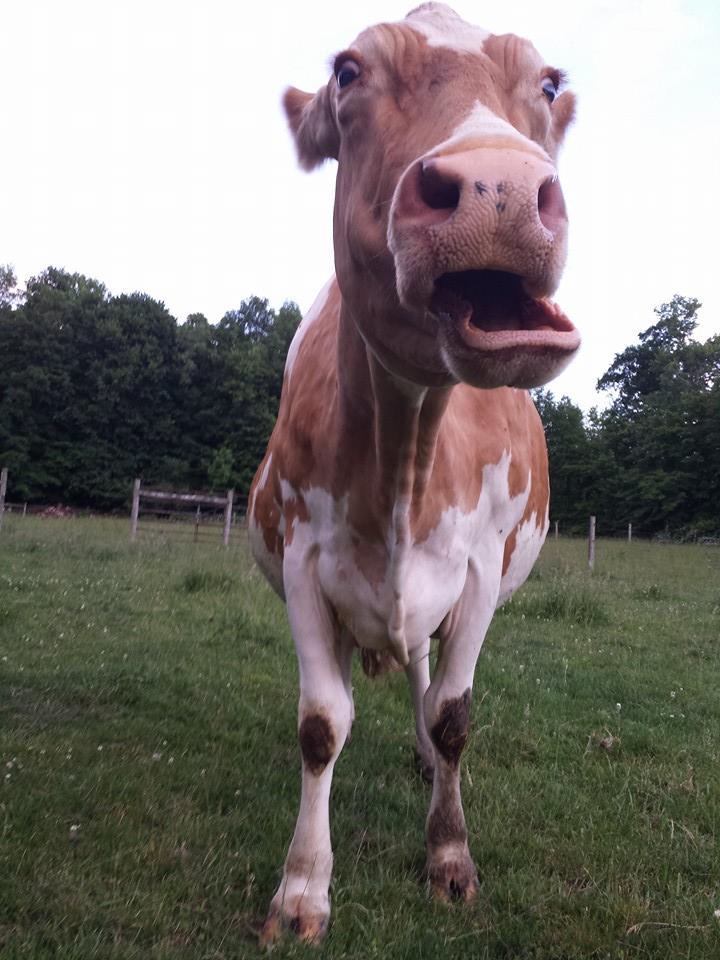
Before I move on to links I have to share this. My daughter took a picture that perfectly reveals our cow Isabelle’s personality.
BitofEarthFarm.com

Isabelle. Photo by Claire Weldon.

This photo is a meme waiting to happen. Have some caption ideas?


On to some links.

Illumination

Find a few thousand ancestors by connecting with others who are building a family tree of the entire human race. All seven billion members. You start small with a family sampling, entering the details you know. If a name on your tree matches a person on somebody else’s tree, then you are given the option to combine trees. With a click, your tree can double. Repeat this a few times and you will eventually be linked to a worldwide family tree. (Geni’s Big Tree is 77 million, and WikiTree’s is 7 million). There’s also a Global Family Reunion in the works!

Check out my strange theory (I’m sure others thought of it long before me) of why we care so much about celebrities.  

“The Shamanic View of Mental Illness” is a fascinating article by Malidoma Patrice Somé, who wrote one of my favorite autobiographies, Of Water and the Spirit: Ritual, Magic and Initiation in the Life of an African Shaman. He says,

Those who develop so-called mental disorders are those who are sensitive, which is viewed in Western culture as oversensitivity.  Indigenous cultures don’t see it that way and, as a result, sensitive people don’t experience themselves as overly sensitive.  In the West, “it is the overload of the culture they’re in that is just wrecking them,” observes Dr. Somé.  The frenetic pace, the bombardment of the senses, and the violent energy that characterize Western culture can overwhelm sensitive people.


Over ten years ago, African leaders pledged to invest more in agriculture. Too many nations have not kept that promise. So nineteen of the biggest musical stars on the continent have recorded a song asking them to keep the promise of supporting smallholder farmers. Each artist wrote his or her own verse, and the song features languages including Swahili, Pidgin, Shona, and Xhosa.


Earth Notes

An extraordinary large-scale international climate change project is underway in Africa. Eleven nations are collaborating to plant a 4,000 mile “wall of trees” across the east-west axis of the continent as a defense against the Sahara’s expanding desertification. Called the Great Green Wall, it will be nine miles wide and stretch along 4,300 miles, across the entire width of the African continent.

Many of us who care deeply about the earth plant gardens, not only to bring flowers and food into our lives but also to help pollinators. It’s startling news, but when we buy plants from nurseries and big box stores, we’re unwittingly bringing home the very same pesticide that’s been killing honeybees. That pesticide isn’t only a residue on the plant, it’s also exuded from the blossoms—-poisoning honeybees. Here are the details.

 

Jadav Payeng is known as the Forest Man. He lives in a hut in Assam, India with his wife and children. Since his teenage years he’s been planting and tending trees to combat deforestation, poaching, and large scale encroachment. So far he’s restored nearly 3,000 acres that are now inhabited by elephants, tigers, apes, rhinos, and other animals.


If you haven’t already, check out the extraordinary Scale of the Universe.


Mindful Living

I’ve spent a lot of years as an anti-nuke activist, working against nuclear weapons as well as nuclear power. What I learned about my connection to the atomic bombs dropped on Japan in WW II left me with questions about what drives us to do what we do. My article about this is called “The Bomb and Me.”

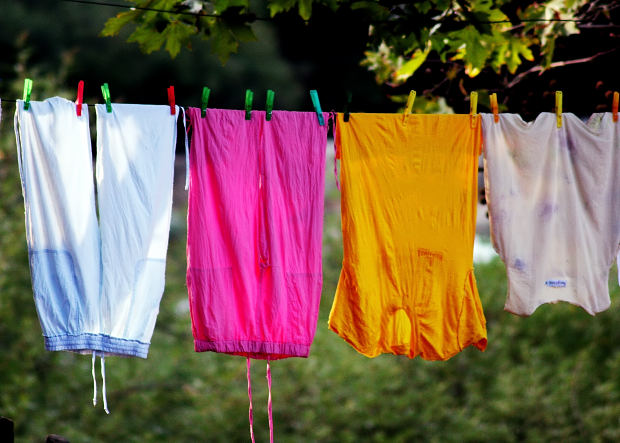
I also write in “Laundry Zen” about finding meaning in a task we normally consider mundane.
 

Here’s a wonderful bit of the Sagan Series featuring Feyman’s talk, “Think Like a Martian.”


Learning

“Advanced Math is Child’s Play.” I got a chance to interview natural math pioneer Maria Droujkova. She explains that, for young children, math is an enticing adventure that’s too often simplified into rote busy work.

It is as tragic as if parents were to read nothing but the alphabet to children, until they are ‘ready’ for something more complex. Or if kids had to learn ‘The Itsy-Bitsy Spider’ by heart before being allowed to listen to any more involved music.

“Trashing Teens.” Great article about the artificial immaturity forced on teens.  “American teens are subjected to more than 10 times as many restrictions as mainstream adults, twice as many restrictions as active-duty U.S. Marines, and even twice as many as incarcerated felons.” and “In this country, teens learn virtually everything they know from other teens, who are in turn highly influenced by certain aggressive industries. This makes no sense.” That’s what I’ve been saying!

Another study shows that too many structured activities can impair a child’s executive function.  You remember executive function, processes we develop in childhood to help us make decisions and work toward goals, the one that helps us be healthier and more successful in adulthood. processes that help us work toward achieving goals—like planning, decision making, manipulating information, switching between task.

Speaking of brains, here’s a study that shows spanking reduces the gray matter in a child’s brain. That gray matter is the key to learning self-control. The more gray matter you have in the decision-making, thought-processing part of your brain the better your ability to evaluate rewards and consequences. So the more you physically punish your kids for their lack of self-control, the less they have.

“Science Shows How Drummer’s Brains Are Different.”  Science tells us there’s a link between intelligence, good timing, and the part of the brain used for problem-solving. Researchers showed that just being around a steady rhythm actually improves cognitive function. “It’s hypothesized that drumming was integral to community-building and that sharing rhythms could be the sort of behavior necessary for the evolution of human society.”  Hence, drum circles.


Auditory Yes

2Cellos perform “Il Libro Dell’ Amore” with Zucchero.

Sam Baker performs “Angel.”

Anna-RF performs “Weeping Eyes.” (Next links post, I”ll be sharing an interview I am thrilled to do with this group.)
Raising Media Aware & Current Events Savvy Kids: 21 Resources

critical thinking for kids, current events for kids, think for yourself,

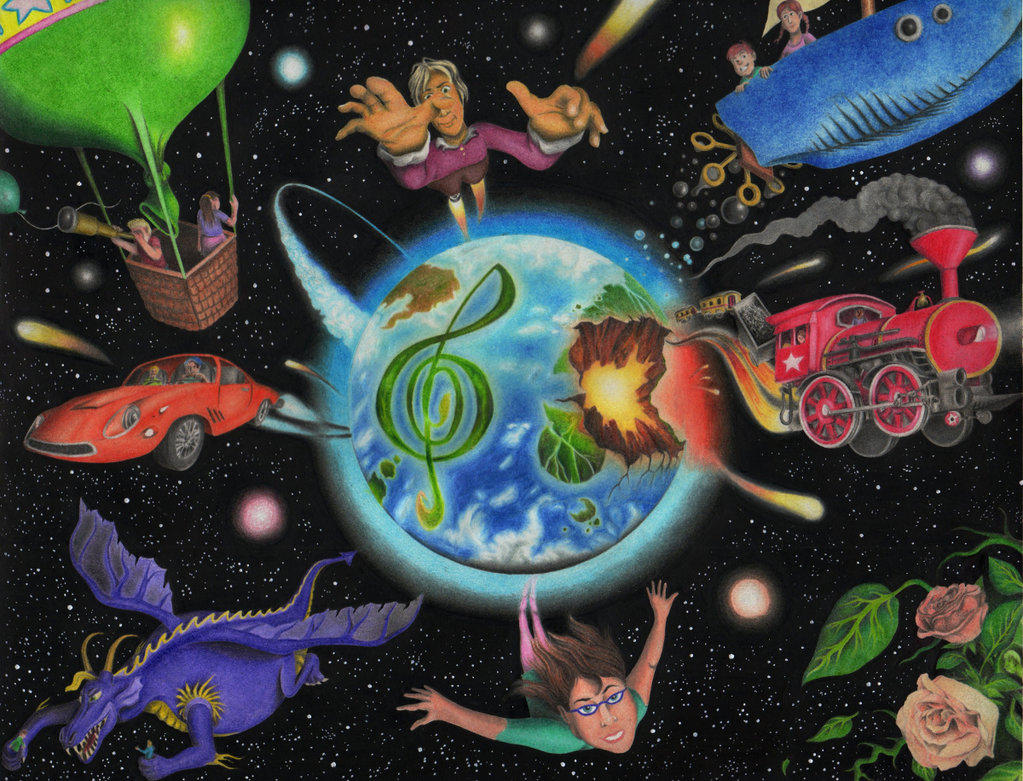
Critical thinking without media overload. It’s possible. (image: Kids in America)

We want to raise kids to be informed and active citizens without subjecting them to an information overload or current events-related despair. Here some activities and resources to make that easier.

1. Let current events become a regular topic. Just as you’d bring up any other subject that interests you, talk about topical issues in front of your kids. This is easy to do informally while driving or sitting around the dinner table.

2. Welcome their interests and opinions without trying to push your point of view. As they get older, help them see that using facts to bolster their talking points helps to convince others.

3. Model civil discourse. When people who disagree can engage in conversations with respect and integrity, they’re on the way to creating solutions. This is true in backyard squabbles, regional disputes, and diplomatic negotiations. A key is finding common ground. That happens after every person involved has access to the same information and feels that their input is understood. This is a critical skill to practice. Make it a part of your daily life for smaller issues so you can more easily use it when harder issues arise. Notice it in use by individuals and groups around the world.

4. Emphasize accurate and varied information sources so kids are equipped to think for themselves rather than led by popular opinion.

5. Hang a laminated world map on the wall. Notice where news happens and where friends travel. Mark places you’d like to go. Whiteboard markers wipe off this surface, so it’s easy to write directly on oceans and continents. This is also a subversive way to advance geographical knowledge.

6. Make timelines of your lives. Once kids have added details to their timelines such as when they lost the first tooth, got a dog, and moved into a new neighborhood help them go back to add events and discoveries that happened the same time. Continue the timeline on toward the future, speculating where you will live, what you will do, and what will be happening in the world around you. Getting kids to predict the future gives a lot of insight into their worldview.  You can also make a timeline for a grandparent, filling in newsworthy events, particularly those impacting the person’s life.

7. Get to know logical fallacies like guilt by association, appeal to fear, or red herring. By avoiding fallacies you can craft well-reasoned opinions while pointing out fallacies to deconstruct faulty arguments. Write some of the most common fallacies on place mats you use everyday or hang a list on the refrigerator to defuse squabbles. Get everyone involved by playing Logic Shrink, an entirely free game you can enjoy as you choose (basically everyone shouts out logical fallacies as they notice them committed by politicians, pundits, and others). Enjoy Ali Almossawi’s wonderful book An Illustrated Book of Bad Arguments, free online and also available hardcover or audio format.

8. Pay attention to positive news. Don’t let the family news diet center heavily on the negative. Subscribe to high quality children’s magazines such as Muse, Skipping Stones, Odyssey, New Moon Girls, and Kazoo. Get updates from KarmaTube and Good News Network. Talk about what kids have seen or heard that makes them feel optimistic.

9. Find age-appropriate news sources. Try Scholastic News, DoGo News, and the similarly named GoGo News, Kid’s Post (offered by The Washington Post), National Geographic Kids, News-o-Matic, and Time for Kids. Teens are likely to enjoy the news-based wit of The Daily Show  and Last Week Tonight.

10. Understand media input. There’s a heavy emphasis on celebrity worship, superficial attractiveness, material possessions, and violent use of power. As much as possible, counteract this through wise use family policies and a regular technology sabbath. There are excellent sources of information on media literacy including Campaign for a Commercial Free Childhood, Media Smarts, Center for Media Literacy, and National Association for Media Literacy Education.

11.Talk about the impact of marketing on daily decision-making. Point out product placements in movies, video games, and television shows. Notice how ads are targeted to specific markets. Talk about the way attractiveness is portrayed and the effect on self-image. Find out how marketing information is gathered on potential customers. Read Made You Look: How Advertising Works and Why You Should Know by Shari Graydon (for kids) and Can’t Buy My Love: How Advertising Changes the Way We Think and Feel by Jean Kilbourne.

12. Analyze the news. Check out the same story from different information outlets, maybe a major television station, a major newspaper, an alternative newspaper or site, social media, or blog commentary.  Notice what angles are reflected differently and what’s missing from a single news source. Is the media the message? Is there a commercial slant? Find out what’s behind the reporting with Source Watch which tracks the people and organizations shaping our public agenda and PR Watch which exposes public relations spin and propaganda.

13. Open up to reporting and commentary from other countries. PEARL World Youth News is an online international news service managed by students from around the world. OneWorld is a global information network designed to link people who see and share the news. Survival International and Cultural Survival are organizations sharing news about and advocating for the rights of indigenous peoples around the world. And check out links to dozens of links to far-flung news sources.

14. Play video games. Socially responsible games combine challenges with real life lessons about current situations. (Some are pretty heavy on the message.) Check out listings at Games for Change.

15. Report your own news. Capture the sights and sounds of your family, neighborhood, or travels in a family newspaper, blog, or video diary.

16. Consider the source. Watch the same topics covered in different news shows, such as conservative Fox and Friends versus liberal Rachel Maddow. Weigh assertions made by leaders in politics or business against historical example. Look up what a politician or pundit said on the topic years ago compared to now.

17. Look at coverage. Why are some stories headliners, others barely covered, and still others never reported? You might consider immediacy, negative impact (“bad” sells better than good), celebrity connection, and surprise factor.  What about stories Project Censored claims aren’t covered by mainstream outlets?

18.Think globally. Notice where toys, clothing and other household purchases are made, perhaps locating the country of origin on a map. Focus your interest on an area in the world, paying attention to the news, weather, and celebrations taking place there.  Put into place suggestions found in Growing Up Global: Raising Children to Be At Home in the World by Homa Sabet Tavangar and consider changes suggested in The New Global Student by Maya Frost. Check out the information shared by the United Nations Cyber School Bus.

19. Connect with people around the world.  Talk about issues with people on forums and social media. Pose and answer questions on Dropping Knowledge, an incredible resource where there are dozens of current discussions such as, “Why don’t schools teach us to form our own opinions?” and “Would a universal language help us get along?”

20. Compete. Student Cam is C-SPAN’s annual documentary competition for young people. We The People hosts competitions for middle school and high school students. Do Something honors young volunteers. Academic WorldQuest is a team game testing competitors’ knowledge of international affairs, geography, history, and culture.

21. Host an international visitor. (Here’s what happened when we did just that.) You might welcome an exchange student through well-established programs such as American Field Service, Youth for Understanding, Rotary Youth Exchange, or World Exchange. A short-term stay by a visiting professional might be more convenient, through Fulbright Scholar Program or National Council for International Visitors.

This is an excerpt from Free Range Learning

current events kids, teach critical thinking, teach media awareness,

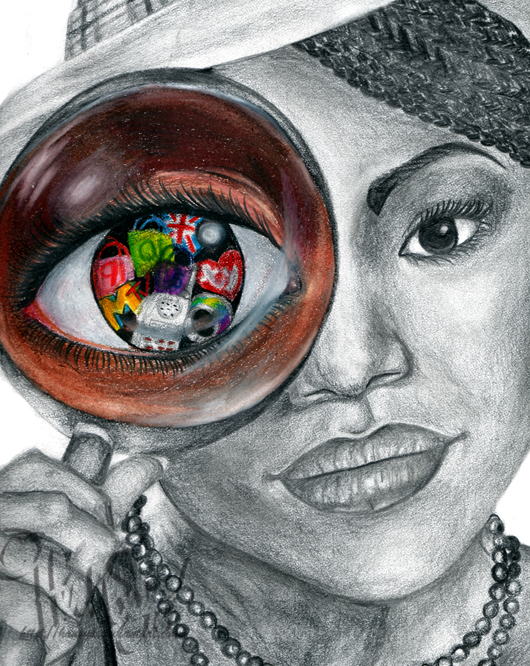
Look beyond. (image: Valley Magnification)

Angry Stranger’s Gift

angry stranger, gift of impatience, tolerance, soul moment,

Years ago I waited in a convenience store line in complete desperation. I was still bleeding after giving birth to my daughter and needed pads. The customer ahead of me was working her way into a snit because the store was out of an item she wanted. She refused to buy similar products the clerk offered. I stood behind this customer trying to keep from judging her (and failing). She was middle-aged or older, wearing expensive clothes and fussily styled hair, but what really defined her was the kind of self-absorption that turns a minor inconvenience into a personal offense. She demanded someone check the back room where she was sure the product languished due to employee laziness. She demanded to see the manager, who wasn’t there. She. Wouldn’t. Leave.

I was so exhausted that I simply wanted to curl up on the floor. It was the first time I’d left my baby’s hospital bed for more than a few minutes. My newborn suffered from a serious malady that hadn’t yet been diagnosed. She was increasingly losing weight and vigor. All the while I missed my three-year-old fiercely. I hadn’t seen him for days aside from brief hugs in the parking lot. I spent all my time by my baby’s side. It was a triumph when I could get her to nurse for a few moments. Sleep deprived and terrified for my baby girl, I clung onto hope like a parasite.

The customer ahead of me was now yelling. I assumed she’d had no greater trouble in her life than being deprived of a convenience store product. I realized that she may have been older than my own mother, but she had less maturity than my firstborn who knew enough to respect other people and more importantly, to care about them.

I’d been in the hospital environment for so many days that simply driving to the store was a sensory overload. Bright sunlight, traffic, people engaged in daily activities were all so overwhelming that I felt like a tourist visiting for the first time. Maybe that’s why I felt a sudden tenderness for the customer ahead of me. It was as if some surface reality melted away to expose this woman’s beautiful soul. I didn’t know if she was going through a difficulty that left her frantic to have her needs, any needs, recognized. Or if she had experienced so few difficulties that she hadn’t developed any tolerance for disappointment. It didn’t matter. I saw her as utterly perfect. In that moment I felt nothing less than love.

Just then she whirled around and left. I exchanged a look of solidarity with the clerk, made my purchase, and drove back to the hospital. That encounter not only gave me a powerful surge of energy, it also boosted my spirits in a way I can’t explain. It was a boost that lasted. All these years later I remain grateful.

43 Strangely Interesting Ways to End Dull Date Nights

 end dull date night, best evening out plans, fun dates, unexpectedly romantic dates,


When we were dating, my husband and I usually took the easy way out: dinner and a movie. Sure, sometimes we attended live performances, went canoeing, or hiked, but we mostly stayed in the dinner and movie rut. Now that the kids are older, we’re looking for ways to make our time together more memorable than ever before.  So far I’ve come up with 43 ideas for livening up date night. (They’re just as fun with friends or kids.)

1. Challenge each other to a triathlon of your own devising. You might compete in air hockey, tongue twisters, and onion ring eating. Next time, come up with three different triathlon events.

2. Create scavenger hunts for each other. You can do this by hiding clues, old style. Or use apps like Munzee and Klikaklu.

3. Play in a Zorb or any similar giant human-sized bubble.

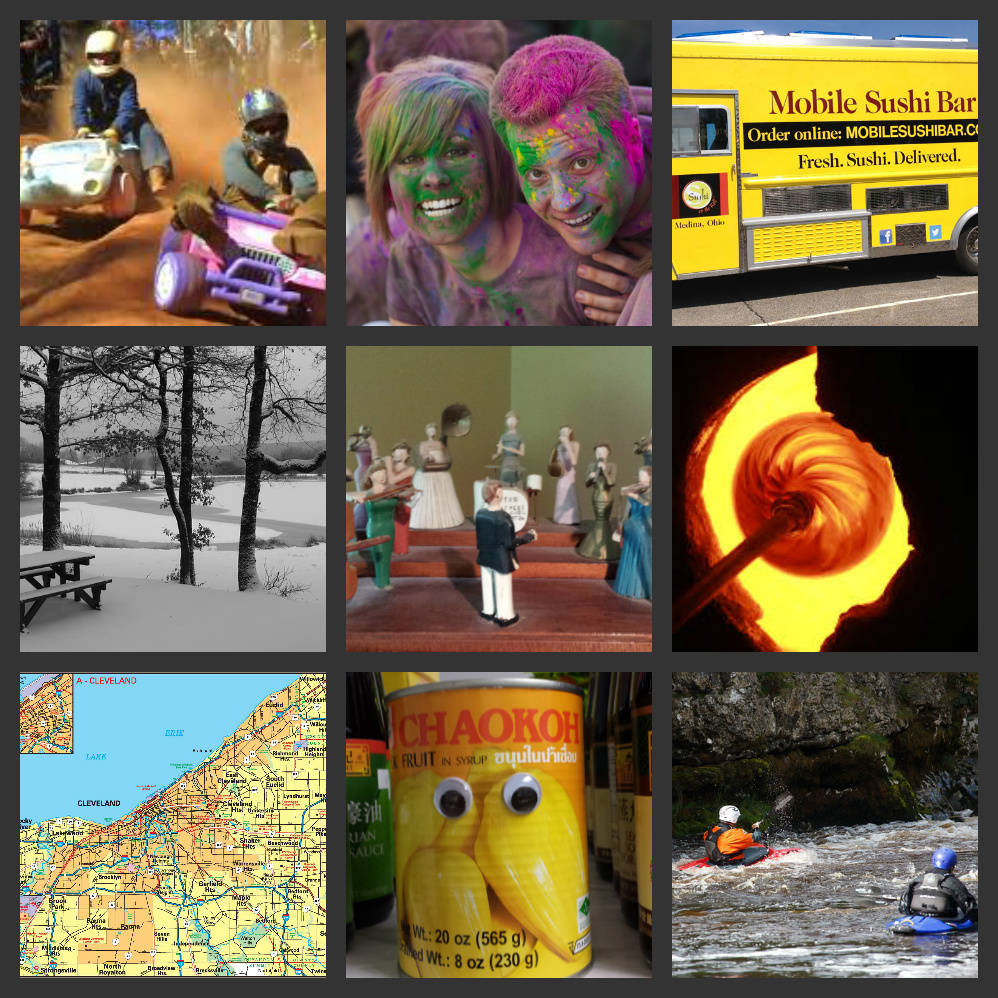
4. Learn glassblowing at a local art academy.

5. Climb as many things as possible: a wall, a fence, some corralled grocery carts. Take photo evidence of how you get high.

6. Or just climb trees. You probably haven’t done that since you were a kid. You might find a tree you can both climb to sit happily like a pair of love birds.

7. Get together with friends to watch a movie none of you have seen. The catch is watching it muted, inventing dialogue to accompany the screen action.

8. Go on an alternative identity date, either the two of you or with a group of friends. On the way everyone makes up his or her own identity. Make an effort to play along with that identity: call each other by the chosen faux names, enjoy elaborating on your character’s backstory, and interact with strangers through that identity. At the end of the experiment it’s fun to talk about how it felt to try on an alternative self. And if you’ve taken photos, check to see if anyone held their faces or bodies differently. The sense of observing yourself from the lens of another persona can be illuminating.

9. Go Barbie Jeep racing. (This is one of my life goals.) It’ll take some advance planning, some friends, and plenty of thrift store ride-on toys.

10. Go to an attraction in your area that’s embarrassingly tourist-oriented.

11. Visit friends. Throughout the evening, move as many things three inches to the left as possible without them noticing.

12.  Toss Holi Colors at each other. Best followed up with a water fight…  

13. Buy all sorts of flowers, then hand them out at a senior center.

14. Sit together in a cafe to write a short horror story or sci-fi thriller. Or romance if that sounds fun. Only rule: when you need dialogue, incorporate conversation you pick up via eavesdropping.

15. Ask the oldest people you know to tell you about games they played growing up. Then play them, if possible, with those elders.

16.  Try a winter picnic. Choose a bright snowy day, hike off to a perfect spot, then open some thermal containers of hot soup to enjoy with warm-you-from-the-inside drinks.

17. Visit a haunted house. Or volunteer for one.

18. Go cloud collecting. Bird watchers keep a life list of their sightings, cloud watchers can do the same with The Cloud Collector’s Handbook by Gavin Pretor-Pinney. You might want to keep a handbook at the ready to help with identifications. Two of the best are The Cloudspotter’s Guide: The Science, History, and Culture of Clouds also by Gavin Pretor-Pinney and The Book of Clouds by John A. Day, who was known through his long career as Cloudman. Check out resources on Cloudman’s site including instructions for making a cloud discovery notebook, tips for photographing clouds, and cloud history.

19. Eat outside. Pick up something tasty to eat at the park, or the waterside. This is far more alluring when it’s dark outside.

20. Grab a roll or two of quarters and play at a place that still has arcade games.

21. Take selfies trying every option on your phone or every filter offered by Instagram.

22. Tour a brewery or distillery. Take taste notes, each one referencing a video or book. For example, “This beer is Game of Thrones, epic yet vengefully dark.”

23. After nightfall use sidewalk chalk to leave behind some temporary graffiti in an unexpected spot.

24. Relax on a silent date. Read together in a beautiful place or get a massage together.

25. Find a good people-watching spot and make up stories about the people you see: their names, where they’re going, what they’re thinking about, and so on.

26.  Attach a hat to a wire. Take it and a pair of shoes around town, documenting how an invisible person spends the day via photos.

27. Go where the food trucks are. There’s often live music and if not, at least a lively atmosphere.

28. Cook together. Try a science-y cookbooks like The Hungry Scientist Handbook: Electric Birthday Cakes, Edible Origami, and Other DIY Projects for Techies, Tinkerers, and Foodiesby Patrick Buckley and Lily Binns, The Engineer’s Cookbook by Kari Ojala, and Cooking for Geeks: Real Science, Great Hacks, and Good Food by Jeff Potter. Or lighten up with silly cookbooks like Funny Food: 365 Fun, Healthy, Silly, Creative Breakfasts by Bill and Claire Wurtzel.

29. Try stand up paddle boarding.

30. Take a tour in your area. Unless someone visits from out of town, chances are you don’t check out what your area has to offer. If you’re from the Cleveland area (as I am) you can tour on foot, by bike, trolley, boat, or bus to discover all sorts of obscure places. Tours, as you may remember from field trips as a kid, tend to leave you marveling at the tour guide’s bad jokes as much as the amazing range of information they share.

31. Set free books you’ve already read by registering them with Book Crossing. Leave them in random places around town like a dentist’s office, a park bench, a coffee shop, a hospital waiting room. But do it with a twist. Before releasing them, tuck a note in each book addressed to the next reader.

32. Take a toy figure with you to random areas and photo document it enjoying the evening.

33. Sit around a fire. If you can’t build a campfire, use a fire bowl or fire pit. There’s something timeless about watching flames. Silence feels comfortable, thoughts drift, and you both relax.

34. Try hooping. Find out how advanced hooping has become and learn how to make a hoop that will fit your, ahem, grown-up hips.

35. Rent or borrow some kind of conveyance new to you: scooter, wave runner, snowmobile, snowshoes, kayak, vintage car, or (my preference) an adult-sized Big Wheel. 

36. Dream up unexpectedly silly items to mail, unwrapped, to friends and family members. Maybe a playground ball (“have a ball!) to a friend who has recently become a stay-at-home dad, a St. Joseph statue to a family member trying to sell her house, or a small handheld fan (“we’re fans!”) to someone who landed a lead role in an upcoming play. Just slap an address and message right on the object.  All you need is a legible address and the correct postage. You both might feel a little silly standing in line at the post office with an address-adorned plush honey badger (perhaps to celebrate someone’s undaunted approach to a problem) but it’ll be worth the look on your recipient’s face when opening the mailbox. There  are plenty of other ways to amuse oneself, postally too.

37. Go to a slam poetry event.

38. Make each other something at a pottery or woodworking class.

39. Seek out the marvels of outsider art in your area, savor, buy if possible. (We bought an amazing piece made by an elderly man out of wood scraps and cotton balls. It’s pictured in the center of the photo collage above.)

40. Grab a copy of your local entertainment paper. Open to listings of music, stand-up comedy, and other entertainment. Close your eyes and pick something to do.

41. Participate in a mud run which is, you guessed it, muddy. You’ll probably have time to practice before a mud run scheduled in your area.

42. Get a pile of friends together to play J’Accuse, Humans vs. Zombies, or any of the other amazing games compiled by Bernie DeKoven.

43. Go eyebombing. Very simply, it’s the act of putting sticky googly eyes on inanimate objects. As described on eyebombing.com, “Ultimately the goal is to humanize the streets, and bring sunshine to people passing by.” Buy a package or two of googly eyes and start looking for where they belong. For inspiration, check out the eyebombing flickr group.  Then enjoy your quest.  Anthropomorphizing a mustard bottle never seemed so right.

Originally published by Wired.com


Poetry’s Origin Story or Why Drink Skáldskapar Mjaðar

I have never heard the Norse version of how poetry was created. But thanks to Sam, who is reading The Prose Edda for the sheer pleasure of it, I now know about Skáldskapar Mjaðar: the Mead of Poetic Inspiration.
origins of poetry, Norse study, homeschooling,

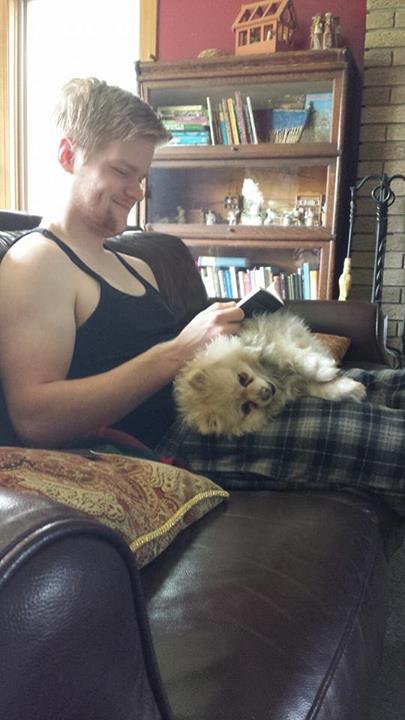
Sam reading The Prose Edda using a Pomeranian bookrest.

Here’s the story as I understand it.

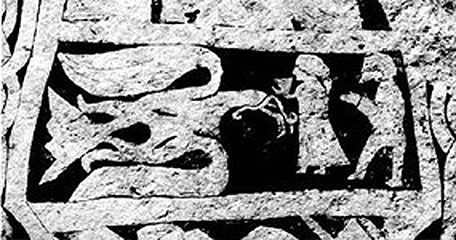
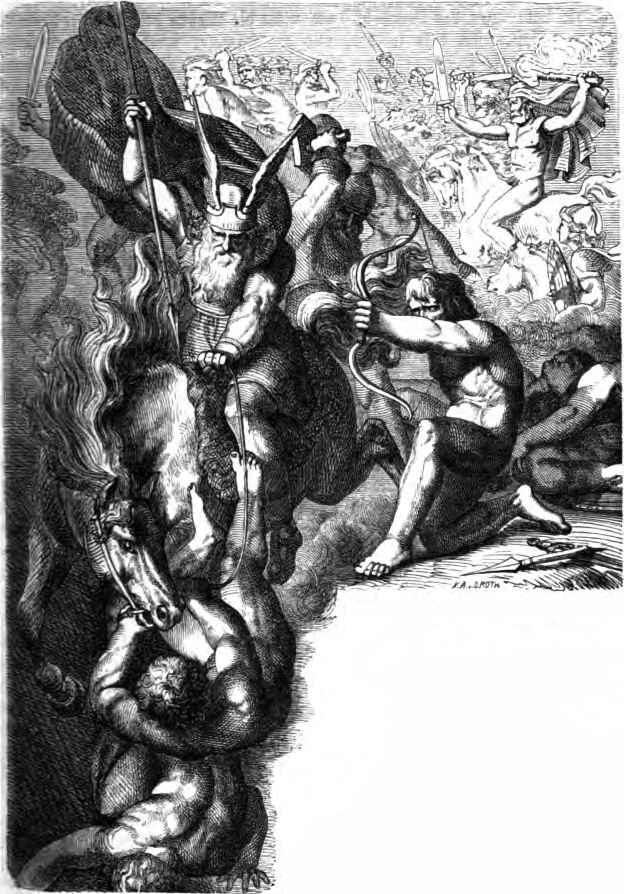
The Æsir Against the Vanir (wikimedia.org)

The Æsir Against the Vanir (wikimedia.org)

Groups of warmongering Norse gods, Vanir and Æsir, agreed to a truce after a long and bitter battle. Each side spat in a vat to preserve the peace.  The gods decided to keep the agreement safe by shaping their spittle into the form of a man they named Kvasir.

Kvasir was the wisest man on earth. He traveled the world— teaching, spreading knowledge, and correctly answering every question posed to him. (A lesson on the benefits of peace…)

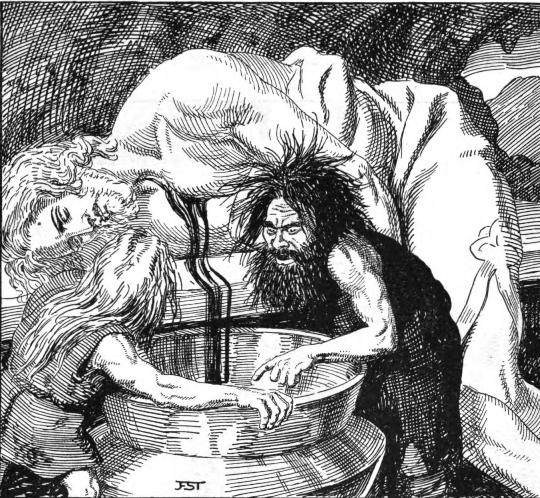
But alas, evil dwarves Fjalar and Galar murdered Kvasir. They drained his blood and distilled it in Odhrǫrir, the magic caldron. (Apparently smarts are a downfall. The dwarves told the gods that Kvasir’s intelligence had suffocated him.)

Draining Kvasir's blood. ( germanicmythology.com)

Draining Kvasir’s blood. ( germanicmythology.com)

Kvasir’s blood was mixed with honey to create the Mead of Poetic Inspiration. Poetry had once been the province of gods. But this drink held the power to turn all who imbibed it into skalds (poets) and blessed them with wisdom. Thus, skaldship spread.
child 2

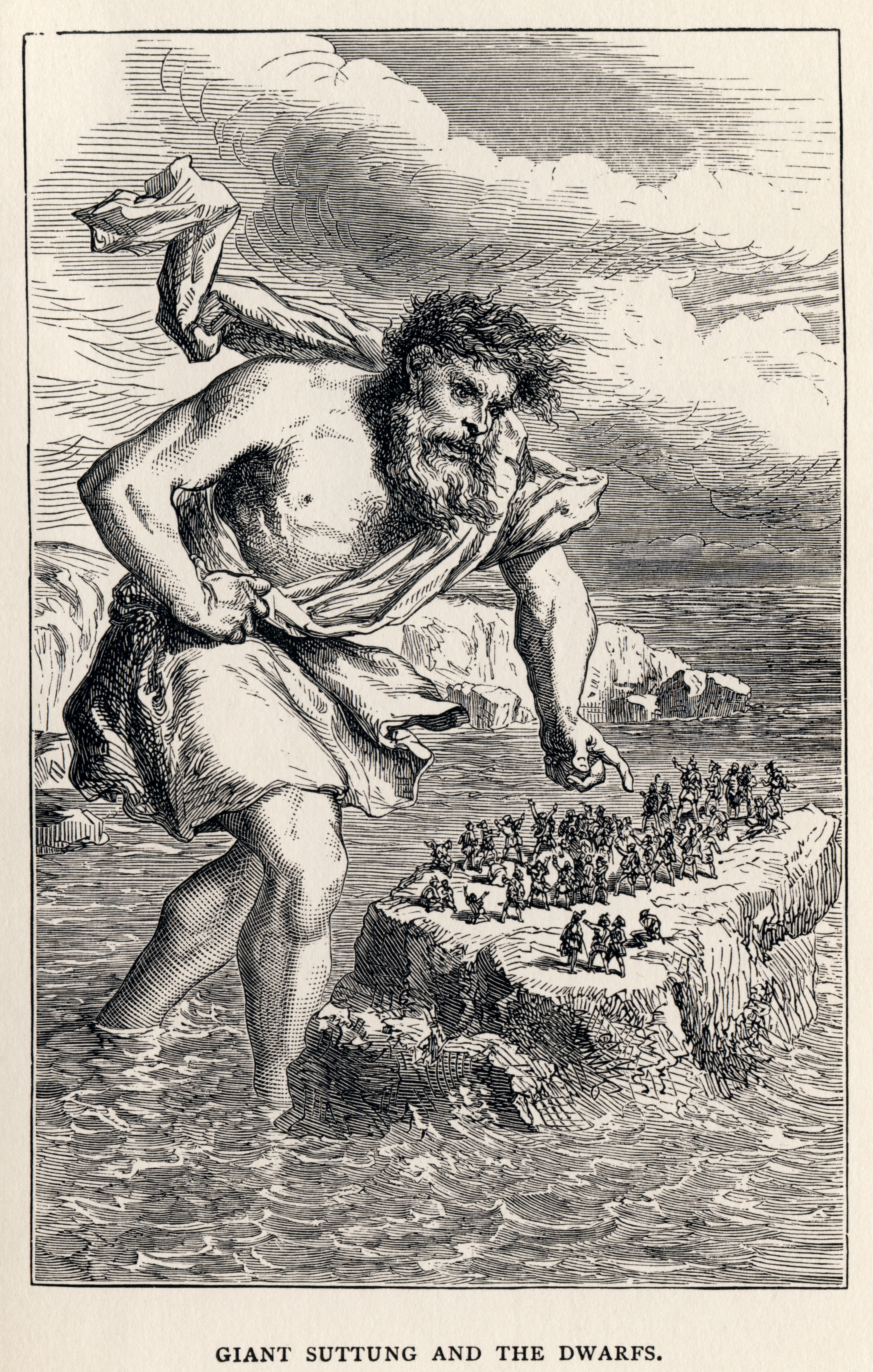
Along came the giant Suttung. He sought revenge on the dwarves because they had killed his father, the giant Gilling, for sport. Suttung seized their precious mead and hid it in the center of a mountain with his daughter Gunnlöð standing guard.

Gunnlöð (wikimedia.org)

Gunnlöð (wikimedia.org)

But Óðin (a.k.a. Odin) was displeased that so vital a nectar was hidden in a remote cavern. Óðin was a biggie in the Norse pantheon. He was known as King of Asgard, ruler of the Aesir, father of the thunder god Thor and associated with battle, victory, death, wisdom, prophecy, and the hunt.

Òðinn (no.wikipedia.org)

Òðinn (no.wikipedia.org)

So Óðin disguised himself as a man and wooed Gunnlöð. After three nights of sex he got her to agree to offer him three sips of the mead. But he tricked her (or by some accounts she succumbed entirely to his charms). He emptied the first vessel with his first sip. His second swallow emptied the second vessel. His last swallow emptied the last vessel. Holding all the divine mead in his mouth, Óðin changed into an eagle and headed back to Asgard.

Óðin as an eagle. (norse-mythology.org)

Óðin as an eagle. (norse-mythology.org)

Suttung transformed into an eagle as well and gave chase. Óðin hurtled over the mountains. His people saw him coming and put out vessels in the courtyard. Óðin swooped low and spat the blessed mead into those containers. In the frenzy of the pursuit some of the mead came out “backwards.”

Yes, Óðin shat it.

Anyone that wants it can take that portion. It’s called skáldfífla hlutr, the rhymester’s share. It’s the portion for inferior poets.

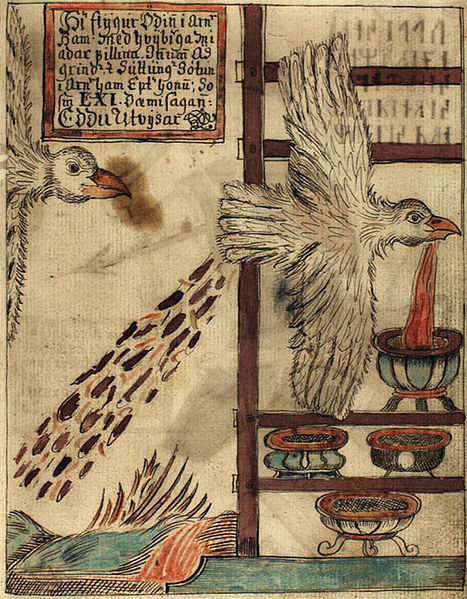
Óðin pursued by Suttung, both in eagle form. Note the Mead of Poetic Inspiration being spat into vessels, with the mead for inferior poets coming out the other end. (en.wikipedia.org)

Óðin pursued by Suttung, both in eagle form. Note the Mead of Poetic Inspiration being spat into vessels, with the mead for inferior poets coming out the other end. (en.wikipedia.org)

Hey, I’ll take whatever portion I can get.


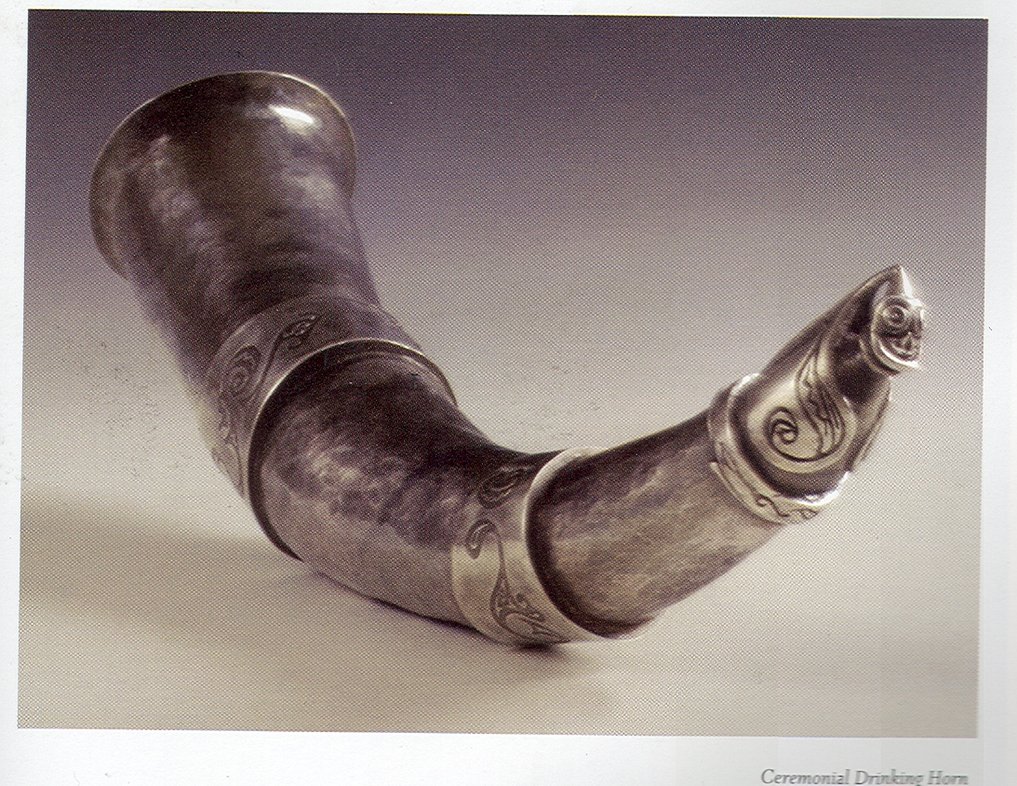
Ceremonial drinking horn. (smithing-chick.deviantart.com)

Ceremonial drinking horn. (smithing-chick)

Free Range Chickens & Free Range Learning

free range learning, captive kids, natural learning, confined chickens,

“Don’t help, Mom,” Claire says as I go to pick up the three-day-old chick. So I watch instead. It’s peeping helplessly at the side of the ramp leading up to the chicken coop. The mother hen and her other chicks are already at the top but this chick can’t find the way. The hen answers each of its cheeps of distress with distinctive low clucks. After repeated attempts to hop directly up to its mother the chick turns and scurries back, finds the bottom of the ramp, and hurries to the comfort of her waiting wings.

“See?” Claire says. “It’s already learning.”

I’m amazed that a chick that tiny could learn to go away from the sound of its mother’s voice in order to find her, but it did. I guess I still need to trust that things tend to work out fine without well-intended intervention.

Reams of instructional books once languished on our shelves. Shiny packaged educational programs with CDs sat waiting for my children to learn foreign language, history, and math. But they always had better things to do. Sometimes that looked a lot like reading a book on the couch, looking things up on the net, or lying by the pond with the dogs. Other times that looked like gathering oddities from the dusty basement for an experiment. Or like all of us hustling off to a field trip with friends. The textbooks came in handy as references; the fussier educational materials were packed away in boxes to pass along. We knew another new homeschooler would need to go through the same ritual of grumbling over them.

My children have ample opportunities to explore their interests out here in the country. Currently Ben restores old farm equipment in anticipation of running his own farm some day. He’s so busy that some of his projects have become long-term decor out near the beehives. Flowering vines decorate hay rake tines and birds nest atop a combine. Right now he’s making a custom desk out of a circular saw blade for a friend. The garage glows as he welds, one of the many skills he taught himself.

Claire observes everything with a scientist’s eye. She journals about her hikes in the woods, her daily farm chores, and her volunteer work rehabilitating birds of prey. One summer she made a practice of examining a dead muskrat as the decomposition process reduced it to a skeleton. Her descriptions of it (yes, at the dinner table) clearly demonstrated how wondrous she found the natural world, even though her age group is depicted as finding more meaning at the shopping mall.

When Kirby isn’t playing his guitar or bagpipes or computer games, he likes to stroll around with a camera. His photos show that he sees things in a different light. He’s interested in the science and art of sound, and using the money he earned from cleaning stalls at local horse farms he’s made his bedroom into a recording studio. Friends come to record their music. He can edit out the laughter.

Sam, who was once the master of finding snakes and toads everywhere on our property, is now intrigued with greater feats than grabbing hapless creatures. He investigates the engineering behind propulsion systems and then conducts his own experiments. This involves shooting tennis balls, potatoes, or pumpkins long distances (often in collusion with his brothers). He’s been talking about designing advanced fuel systems for cars. And he’s started restoring a vintage Opel he bought with his own savings although he’s not old enough to drive.

While Claire and I watch chickens, she points out how the newly hatched chicks are perfectly suited to learn naturally. Days old, these tiny fluff balls listen and respond to different sounds from their mother which clearly tell them where to find food and when to run for cover under her wings. They range across our property while staying close to their mother. They locate each other through the underbrush, ramble into the pasture under the cow’s feet safely, and come into the coop at dusk as the older chickens do.

“Compare them to chicks we bought from the hatchery,” Claire says.

I see what she means.

Many times we have purchased a batch of day-old chicks and kept them in a large indoor pen. We brought them out of the house each day to a grassy enclosure so they could forage, but the chicks raised for their first two months with their age-mates were very different from the chicks hatched by their mothers and raised with the flock. The confined chicks were more sickly, panicked easily, and were more overtly aggressive or passive. Even after they were released out with the flock it took them quite a while to catch up. They didn’t problem-solve as easily. And it took them longer to react naturally, such as taking flight and roosting in low branches when sensing danger. Overall they were less likely to survive.

Interestingly, agricultural extension offices and poultry manuals insist that the treatment we’ve given the confined chicks is the only correct way. Their expert advice includes maintaining them on a diet of protein-enhanced feed, keeping them under warming lights, and watching over them carefully for their own good. Not being hatched by and raised by a hen.

Aside from small family farms like ours there are few chickens living in natural conditions—roaming freely in pastures and woods without fences, choosing their own food and affiliation groups, living with mixed age flock. (Right now we have 30 laying hens, five  roosters, three chicks, a few geriatric hens.) Even chickens described as “free range” are left inside with a small door open to a cramped outdoor pen to meet that definition. This door can be a single opening inaccessible to the hundreds of chickens in the flock.

Claire, who has experienced both schooling and homeschooling, can’t help but see a comparison. “Doesn’t that remind you of how people treat children? Experts supposedly know what’s right for them. I mean, how can anyone learn if they’re stuck in the same situation all the time? You learn as things come up.”

Confinement education, especially when based on tactics that feel like coercion to students, isn’t a whole education. Children thrive as free-range learners. They want to be a meaningful part of family and community, aware of their place as both givers and receivers. They’re cued to advance the growth of their minds, bodies, and spirits in ways unique to them. Their curiosity prompts them to explore and challenge themselves, gradually integrating what they’ve learned to advance their own possibilities. Although there are worlds of difference between raising children and raising chickens, we can trust that learning freely comes naturally to them both.

free range kids, free range learning,

Image: superfry

This is a throwback post, originally published in Home Education Magazine

A Free Guide to Being Human

fun expert, make life fun, fun at work,

This volume should really be titled A Guide to Being Human. I recommend you read only a page or two at a time. Let it sink in. Apply it. Revel in it.

It’s authored by game designer and deep fun theorist Bernie DeKoven. I got the chance to interview Bernie last year and immediately found myself wishing he were my next door neighbor. (I still do.) For 40-something years Bernie has been promoting playfulness. He was instrumental in the New Games movement and a pioneer in computer game design. He’s developed games for the likes of Lego, Ideal Toy Company, Mattel Toys, and Children’s Television Workshop. He’s collected little-known games, created new ones, researched the value of fun, and organized all sorts of play events.

The book is actually titled A Playful Path and it’s jam-packed with awesomeness. It’s made up of tools and ideas to inspire the possibility-building, wide-open glory of playfulness. DeKoven writes,

Fun is at the heart of things—of things like family, marriage, happiness, peace, community, health; things like science and art, math and literature; like thinking and imagining, inventing and pretending.

Sure, the playful path can enhance relationships, advance careers, and  promote health. It can also help us deepen into who we truly are, beyond the limits of rules and score-keeping. As DeKoven calls it, becoming “embiggened.”

For adults, following a playful path is a practice, something you put into practice, and then practice some more. When you were a kid, it wasn’t a practice. It was what you did, always. You had to be reminded not to be playful. And you were. O, yes, you were. But now that you have become what you, as a kid, called “an adult,” you find that play is something you have to remind yourself to do, playful is something you have to allow yourself to be.

And once you again take up that playful path you knew so well, you discover that it’s different, you’re different. You can play much more deeply than you could before. You are stronger, you understand more, you have more power, better toys. You discover that you, as a playful being, can choose a different way of being. A way of being as large as life. A way of being you, infinitely.

Written in short one to two page segments, A Playful Path is perfect to read on an as-needed basis, sort of an antidote to all the not-fun that drags us down.  A Playful Path is an entertaining book. It’s also wise, true, and entirely useful. Just like play. Get your copy in paperback or as a free e-book.

For more Bernie in your life you can keep up with him on G+ and Facebook, stay current with his blog. and read MIT Press’ re-release of his groundbreaking book, The Well-Played Game: A Player’s Philosophy. Oh, and be sure to bookmark his collection of games!

Bernie DeKoven, A Playful Path,

Play is how we have learned to learn. Instructions? We don’t need no stinkin’ instructions.  Bernie DeKoven

Living Beyond Boundaries Thanks To Dad

couldn't have done it without you. Father's Day, father's support, thanks Dad,

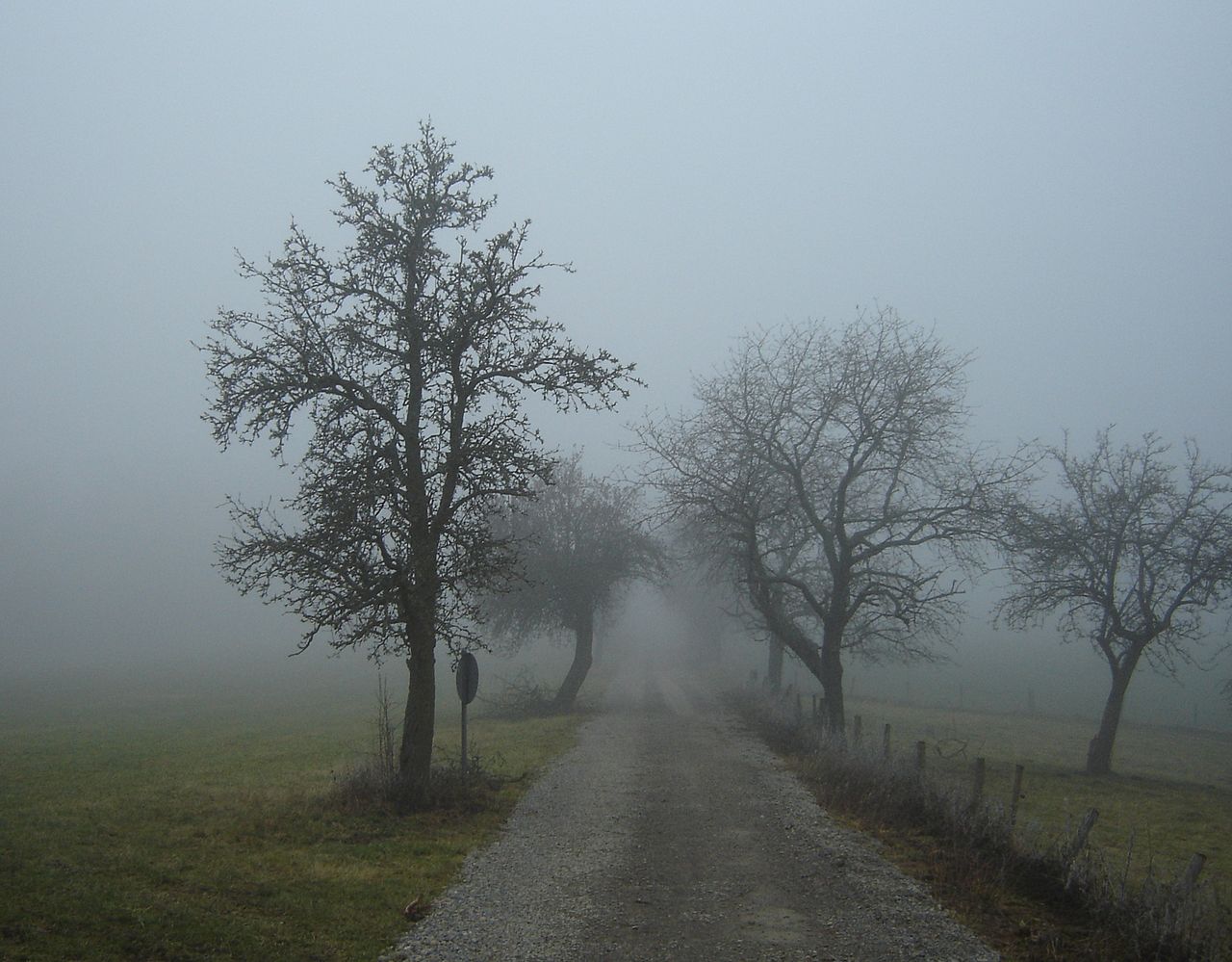
Image: Florian K

Living beyond the boundaries of streetlights, I often drive on dark country roads where fog hides in the hillsides. Sometimes only tendrils of mist reach up from the ground. More often I’m engulfed in clouds so heavy that the road is obscured. Straining to see the turns on these narrow lanes, I’m not stressed. I smile. I’m thinking of my father.

“People call this kind of heavy fog ‘pea soup,’” my father had explained to me when I was a first grader.

Although he leaned intently over the steering wheel, he easily kept up our conversation. “But it doesn’t look like soup to me,” he asked. “What would you call it?”

Beyond our windshield it looked like a white wall as our headlights reflected off the water vapor. His voice remained cheerful. He told me about being a radar man in the Navy and described the sound of foghorns.

“What we’re going to do, Honey, is blow the car horn to let other cars know we’re coming. It’ll be our foghorn. That way we can navigate our way past the fog.”

We drove on through the dark, he and I, talking and laughing and pretending we were piloting a ship through the waves. Before each bend he gave a blast on the car horn. It was delicious to me—my daddy taking part in a giant game of pretend. And better yet, engaging in the forbidden act of making noise, waking up the night to say we’re here.

My father never let on that the ride that night was dangerous or that the prattling of a little girl was hard on his concentration.

Although his own childhood was marred by the early death of his father, his mother’s chronic illness, and the hard work that comes with poverty, he overcame those limitations. He went on to a career as a public school teacher where he helped hundreds of other children find the best in themselves.

I know he had a way of making me feel important, no matter the task. On our camping trips he assigned me the job of signaling as he backed up the trailer. At home I got to help with all sorts of repairs. Once when I wanted to help him install a hot water tank he didn’t let on that an eight-year-old would be in the way. Instead he said what he really wanted was for me to read him some poetry because that would make a difficult job more pleasant. He put me safely on a stool a few feet away where I read aloud from a junior book of verse while he wrestled with the chore. Occasionally he sat back on his heels in appreciation at the end of a poem. He talked about discovering the great poets when he got to college, even described the large brown book he’d saved from a literature class for his own children to enjoy some day. When he was done, he said he couldn’t have done it without me, the same thing he always said.

He never found that big book of poetry he’d hoped to share. But my father gave me something more precious.  Complete acceptance. And when a girl has that kind of love from her father she carries with her the self-assurance to transcend any boundaries.

My dad always shrugged off praise and begged his kids not to bother giving him gifts. So each year when Father’s Day rolled around I bought a blank card. Inside I wrote him a fond memory of my childhood and how that resonated in my sometimes challenging life.

This is my fourth Father’s Day without my dad. If I could I’d tell him, “I couldn’t have done it without you.”

thanks Dad, dad as lighthouse,

Originally published on Wired. 

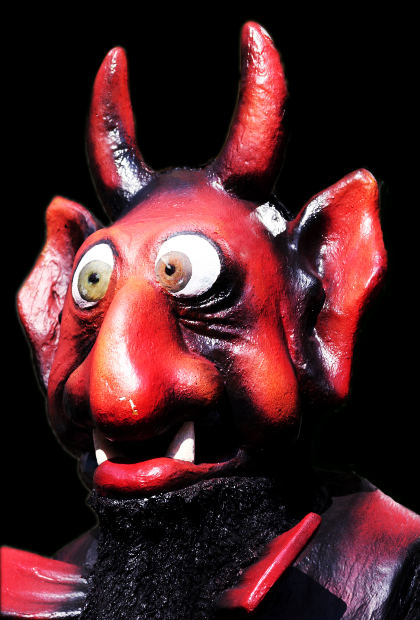
Idleness Is Not The Devil’s Workshop

wive's tales, idleness is the devil's workshop, parent bad example,

Workshop? What workshop?

Portuguese  Cabeça vazia é oficina do diabo (An empty head is the devil’s workshop)

French “L’oisiveté est la mère de tous les vices” ( Idleness is the mother of all vices )

Egyptian Arabic
الإيد البطّالة نجسة el-eed el-baTTaala negsa   (roughly translated: the idle hand is impure)

Finnish   Laiskuus on kaikkien paheiden äiti.  (Laziness is the mother of all the vices)

Spanish  “La pereza es la madre de todos los vicios” (“Laziness is the mother of all vices”)

Italian “L’ozio è il padre dei vizi” (Idleness is the father of the vices)

When I was growing up my mother used to say, “idleness is the devil’s workshop.” Apparently this is one powerful saying, because variations of the same adage can be found in Finland, China, France, Italy, Egypt, Portugal—actually in nearly every country. Hearing this must have affected my character development. If I have a few spare moments I can’t rest until I find something useful to do.

Well, that is, until a few years ago. My husband and I were meeting friends for dinner in about an hour. I figured I could finish the plantings for our back balcony if I hurried. I carried a nearly empty bag of potting soil from the shed. On second thought, I dragged a heavy new bag just in case I needed more. My youngest, Sam, who was 8 at the time, offered to help. Together we scooped soil into the pots and spoke companionably to the seeds and plants as we tucked them in, introducing them to their new homes and pot-mates.

We tamped the dirt down, watered each from our iron-rich rusty sprinkling can and stood back to admire our work. The pots offered plenty of space for the plants to fill in yet already they were abundantly textured with greenery and blooms. Our large back balcony would be graced with color. As soon as I got the pots up there.

“Are we going to carry all of these through the house?” Sam asked doubtfully.

“Good question,” I said.

The balcony has no stairs. Carrying the muddy pots through the house, past a jumping dog, and out on the balcony didn’t seem like the most reasonable idea. I thought of an easier method. Our house is built into a gentle slope, so the balcony is almost low enough for me to hoist the pots above my head and onto the balcony floor. Afterwards I could walk through the house unimpeded to arrange them as I pleased.

When I announced this plan to Sam he didn’t seem convinced. He was downright alarmed when I pulled a chair directly under the balcony’s edge.

“Mom, isn’t that the chair you got from the garbage?”

“Yes, someone it threw out, but it’s still perfectly good,” I told him. “Remember? We’re going to sand and paint it. It’ll look great outside.”

“But you’re not going to stand on it now are you?” he asked.

“It’s fine, see?” I stood on it to demonstrate the chair’s worthiness. It held as firm as a rickety discarded wooden dining room chair could.

“Now hand me the first pot, Honey,” I said confidently. “I’ll just scoot it up on the porch.”

“That’s not safe Mom.”

“Come on, it’ll be fine,” I told him. “You’ve gotta try new ideas sometimes.” Clearly I wasn’t passing along my mother’s time-honored adages. Ones like, “Pride goeth before a fall” or “Better safe than sorry.”

He handed me the first pot. I wasn’t quite as steady as I’d expected and the pot was a lot heavier than I thought it was, but I was determined to be a good example for my little boy. I hoisted the pot up and onto the balcony floor just slightly over my head. I didn’t even make too many “ooof” noises in the process.

“See,” I said, somewhat euphoric with success, “it’s not hard at all.”

Sam continued handing the newly planted pots up to me as I smiled encouragingly down at his trusting blue eyes. When the last of the plants were finally lined up above us, I smugly explained to Sam from my lofty perch on the chair that it’s important to trust ourselves. After all, I said, how would anything ever get done except the same old way?

Just about to hop down from the chair, I noticed the unopened bag of potting soil. That would be handy to have in the house. I could repot some houseplants in the laundry tub without making a mess.

He hauled the heavy bag from the ground and, with some effort, hoisted it up to me. I grabbed it. It was much heavier than the pots and worse yet wobbly as soil shifted inside the plastic. I reached up, extending my arms as far as I could reach. I still couldn’t get the bag quite high enough to slide onto the balcony floor. I stood on my tiptoes, the bag teetering above my head.

The unusual pressure on the potting soil bag took its toll.

The bag split wide open.

Keep in mind that some reactions are beyond our control. So when my eyebrows tensed and my mouth opened in an involuntary expression of surprise and dismay, it just so happened that this took place at the exact second that the bag’s contents sprung free. It emptied in a sudden rush, piles of dirt cascading in my hair, down my collar, and directly into my open mouth.

I jumped off the chair and did an improvised dance to shake potting soil from my hair and clothes, spitting dirt and laughing while I whirled around the backyard. Sam, bless his heart, never said, “I told you so.”

Later that evening as we enjoyed dinner with friends (my hair still wet from a hurried scrub) I realized the old adage about idleness and the devil didn’t really suit me. I’m giving up the tendency to fill each moment with a useful task. When I have a little time a-wasting I remind myself that all work and no play makes a woman spit dirt.

bad example, kid's common sense, lack of common sense,

An old story from our farm site. 

Recognizing Each Child’s Particular Genius


Free Range Learning, children's gifts,

A child’s gifts can be difficult to recognize, perhaps because they tend to unfold in mysterious ways. What we might consider idiosyncrasies or problems may very well indicate a child’s strengths. Oftentimes we can’t see the whole picture until long after the child has grown into adulthood. It’s worth remembering we can’t easily see our own gifts either, even though they have whispered to us of destiny or wounded us where they were denied.

A little girl creates chaos with her toys. She won’t put blocks away with other blocks nor put socks in her dresser drawer. As a preschooler she creates groupings that go together with logic only she understands. One such collection is made up of red blocks, a striped sock, spoons, and marbles. She sings to herself while she rearranges these items over and over. The girl is punished when she refuses to put her puzzles away in the correct box or her tea set dishes back together. She continues making and playing with these strangely ordered sets but hides them to avoid getting in trouble. This phase passes when she is about nine years old. Now an adult, she is conducting post-doctoral studies relating to string theory. She explains her work as a physicist has to do with finding common equations among disparate natural forces.

A young boy’s high energy frustrates his parents. As a preschooler he climbs on furniture and curtain rods, even repeatedly tries to scale the kitchen cabinets. When he becomes a preteen he breaks his collarbone skateboarding. He is caught shoplifting at 13. His parents are frightened when he says he “only feels alive on the edge.” Around the age of 15 he becomes fascinated with rock-climbing. His fellow climbers, mostly in their 20’s, also love the adrenaline rush that comes from adventure sports but help him gain perspective about his responsibility to himself and other climbers. His ability to focus on the cliff face boosts his confidence on the ground. At 19 he is already certified as a mountain search and rescue volunteer. He is thinking of going to school to become an emergency medical technician.

James Hillman explains in his book, The Soul’s Code,

I want us to envision that what children go through has to do with finding a place in the world for their specific calling. They are trying to live two lives at once, the one they were born with and the one of the place and among the people they were born into. The entire image of a destiny is packed into a tiny acorn, the seed of a huge oak on small shoulders. And its call rings loud and persistent and is as demanding as any scolding voice from the surroundings. The call shows in the tantrums and obstinacies, in the shyness and retreats, that seem to set the child against our world but that may be protections of the world it comes with and comes from.

Yehudi Menuhin, one of the preeminent violinists of the 20th century, became fascinated when he heard classical music on the radio as a three year old. He wanted to feel the same rich notes coming out of a violin in his hands. His parents lovingly presented him with a toy fiddle. He drew the bow across the strings and was horrified at the cheap squawk the toy made. Enraged, he threw the instrument across the room and broke it. His imagination had already taken him to the place in himself where beautiful music was made and he was unable to bear that awful sound. We normally call that behavior a “tantrum.”

Then there’s R. Buckminster Fuller, whose young adult years were marked with struggle. As a college student he hired an entire dance troupe to entertain a party, and in that one night of excess he squandered all the tuition money his family saved to send him to school. In his 20’s he was a mechanic, meat-packer, and Navy commander before starting a business that left him bankrupt. After his daughter died of polio he began drinking heavily. By conventional wisdom he’d be considered a total failure at this point. But while contemplating suicide, Fuller decided instead to live his life as an experiment to find out if one penniless individual could benefit humanity. He called himself Guinea Pig B. Without credentials or training Fuller worked as an engineer and architect, inventing such designs as the geodesic dome and advancing the concept of sustainable development. He wrote more than 30 books and registered dozens of patents. Fuller once said, “Everybody is born a genius. Society de-geniuses them.”

Few young people have clear indications of their gifts. Most have multiple abilities. A single true calling is rarely anyone’s lot in life as it is for a legendary artist or inventor. Instead, a mix of ready potential waits, offering a life of balance among many options. When we emphasize a child’s particular strengths we help that child to flourish, no matter if those gifts fall within mainstream academic subjects or broader personal capacities. Traits such as a highly developed sense of justice, a way with animals, a love of organization, a contemplative nature, the knack for getting others to cooperate—-these are of inestimable value, far more important skills than good grades on a spelling test.

Free Range Learning, all kids geniuses,

Although society confuses genius with IQ scores, such scores don’t determine what an individual will do with his or her intelligence. In fact, studies have shown that specific personality traits are better predictors of success than I.Q. scores. Genius has more to do with using one’s gifts. In Roman mythology each man was seen as having a genius within (and each woman its corollary, a juno) which functioned like a guardian of intellectual powers or ancestral talent.

What today’s innovators bring to any discipline, whether history or art or technology, is a sort of persistent childlike wonder. They are able to see with fresh eyes. They can’t be dissuaded from what they want to do and often what they do is highly original. Sometimes these people have a difficult personal journey before using their gifts. Their paths are not easy or risk-free, but the lessons learned from making mistakes can lead to strength of character.

We must leave ample space for these gifts to unfold. This takes time and understanding. The alternative deprives not only the child, it also deprives our world of what that child might become.

Acknowledging that each person is born with innate abilities waiting to manifest doesn’t imply our children are destined for greatness in the popular sense of power or wealth. It means that children are cued to develop their own personal greatness. This unfolding is a lifelong process for each of us as we work toward our capabilities for fulfillment, joy, health, meaning, and that intangible sense of well-being that comes of using one’s gifts.


This article is an excerpt from the book Free Range Learning. It was also published in Life Learning Magazine.