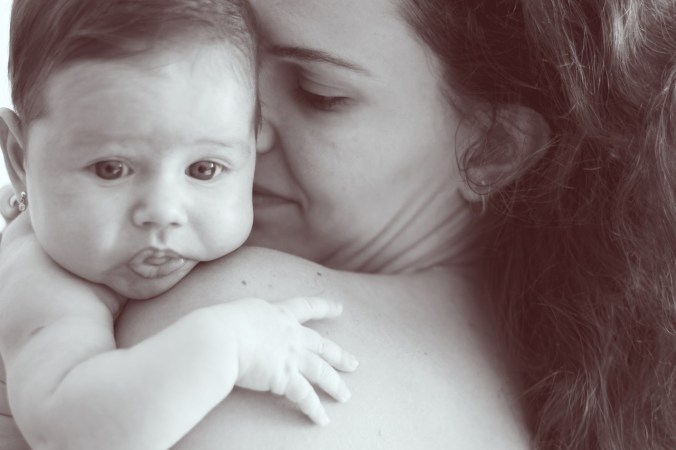
Play Hints At Who We Are


play reveals who we are

“In our play we reveal what kind of people we are.” ~Ovid

What is play? It has nothing to do with structure imposed by adults. Psychiatrist Stuart Brown, founder of the National Institute for Play, describes play as most basically “purposeless, repetitive, pleasurable, spontaneous actions.” Sometimes this is driven by curiosity and the urge to discover. Sometimes it is imaginative play. Sometimes it’s  rough and tumble play, the kind that necessarily puts the player at risk and involves anti-gravity moves such as jumping. This description is true whether we’re talking about puppies, otters, crows, or people.

The “higher” a species ranks in intelligence, the more they play.

A research team led by ethologists Robert and Johanna Fagan spent 15 years, many of them sitting in trees, studying how bears play in the wild. Of the bears they observed, the individuals that played more often as cubs and through adulthood lived longer and healthier lives. They also left behind more offspring.

A study of ground squirrels found those that played were more coordinated (a big deal for squirrels) and grew up to be more successful parents.

And we know a lot about the importance of play for rats. They even laugh (a rat version of laughter) when tickled.  Compelling research shows the more young rats actively played, the more rapidly their brains grew and their learning abilities increased. (The same correlations seem to be true for children’s play as well.)

Young creatures, including humans, play  has to do with movement and excitement. It’s a highly sensory way to experience socially important peaks and lows, winning and losing, threat and relief from threat. It helps participants learn to understand the intentions of others. It also lets them learn to handle stressors and practice different reactions,  gradually teaching them through experience to respond appropriately when they face much more demanding emotional and physical challenges later in life.

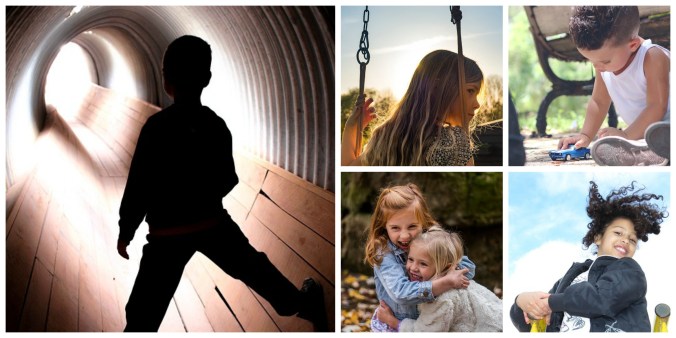
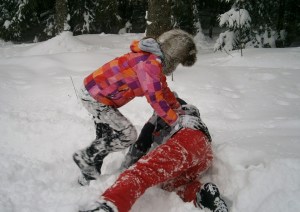
This is helpful to remember when kids are wrestling, climbing, chasing, running, giggling, tumbling, and making a mess. It’s even more helpful to remember when they’re arguing, grabbing, yelling, complaining, shrieking, and otherwise demonstrating that melodrama is inseparable from play. All of that physical and emotional energy is important practice for becoming reasonable, responsible adults.

why kids play fight

Play can also tell us a great deal about what’s forefront in children’s lives.

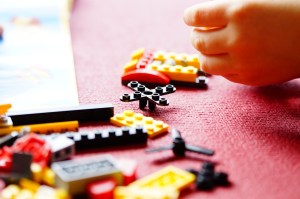
When my oldest child started kindergarten his play reflected the more authoritarian structure he was adjusting to and interactions with the different people he encountered each morning. He balanced that by seeking out more time in the garage hammering nails into scrap wood, more time riding his bike, and more time playing Legos than before he’d started school —- all reassuringly favorite activities to discharge the day’s emotions. And he and his best friend Sara started playing “school bus.” They sat in chairs or on the ground behind each other while acting out what they observed on their daily bus rides. They took turns quite politely repeating some pretty awful slurs they heard from kids on the bus, and then repeating back the driver’s rather belligerent responses. Their play not only helped them work through their experiences, it helped us alert the school to what was happening.

Play can also inform us about temperament, innate abilities, and about where different individuals find joy.   Here are two examples, taken from Free Range Learning of children expressing who they are through play.

A little girl creates chaos with her toys. She won’t put blocks away with other blocks nor put socks in her dresser drawer. As a preschooler she creates groupings that go together with logic only she understands. One such collection is made up of red blocks, a striped sock, spoons, and marbles. She sings to herself while she rearranges these items over and over. The girl is punished when she refuses to put her puzzles away in the correct box or her tea set dishes back together. She continues making and playing with these strangely ordered sets but hides them to avoid getting in trouble. This phase passes when she is about nine years old. Now an adult, she is conducting post-doctoral studies relating to string theory. She explains her work as a physicist has to do with finding common equations among disparate natural forces.

A young boy’s high energy frustrates his parents. As a preschooler he climbs on furniture and curtain rods, even repeatedly tries to scale the kitchen cabinets. When he becomes a preteen he breaks his collarbone skateboarding. He is caught shoplifting at 13. His parents are frightened when he says he “only feels alive on the edge.” Around the age of 15 he becomes fascinated with rock-climbing. His fellow climbers, mostly in their 20’s, also love the adrenaline rush that comes from adventure sports but help him gain perspective about his responsibility to himself and other climbers. His ability to focus on the cliff face boosts his confidence on the ground. At 19 he is already certified as a mountain search and rescue volunteer. He is thinking of going to school to become an emergency medical technician.

Stuart Brown says that looking back at our own unique “play history” can tell us a great deal about ourselves. He asks us to let ourselves drift back to our earliest and most resonant play memories. He suggests asking older family members about what we played when we were very young.  He goes on to say,

Explore backwards as far as you can go to the most clear, joyful, playful image that you have whether it’s with a toy, on a birthday, or on a vacation. And begin to build to build from the emotion of that into how that connects with your life now. ..

How to rediscover play if you’ve let it slide? Move your body. Dig up your memories of what brought you pleasure as a child. Take cues from “the experts” — the children in your life today. Do what makes you happy, and what transports you beyond a sense of the clock, your schedule, that deadline — beyond time.

As my dear friend and mentor Bernie DeKoven reminds us,

Playfulness is a practice that shapes our souls. It connects us. It is an act of belief in ourselves, a vehicle whose wheels are powered by our faith in life, bringing us to places of wonder, moments of joy. It is almost the last thing to leave us before we leave all together forever.

Flapping My Wings

body awareness when recovering

“Wing” by Skia

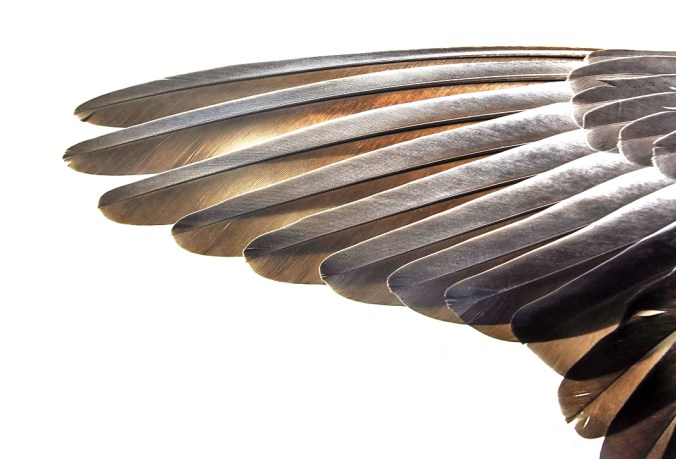
Some mornings when I get up, I walk to the front door to let the dogs out while flapping my wings.  I waft them up and down as if they’re moving me through thermals high in the air, then when I get to the hall I pull them in and flap a bit more fervently as if my bird-self is flying through a narrow pass. By the time I open the door for the dogs I’m just a regular frowsy-haired morning person staring out at the dawn. My wings are arms again.

I act pretty normal most of the time, although I do have moments. I sing made-up songs, balance silly things on my head, quietly misbehave to keep myself amused in restaurants, laugh at the inopportune times, and am chronically too curious for my own good. I’m not sure this qualifies me as officially eccentric but it has been known to tax the patience of people who love me.

My family hasn’t bothered to ask me why, in the privacy of our home, my arms occasionally turn into wings. I haven’t wondered why either until I thought about it this morning while in that Realm of Insight, the shower.

Two thoughts occurred to me. One is a faint memory of an adult telling me to put my arms down and behave myself.  I recall this as happening in a cinder block room that smelled faintly musty, so probably Sunday school. I may have been happily twirling in my Sunday dress with my arms up like a ballerina or been a fairy sprinkling magic dust or been, as now, a bird. I’m guessing I was probably four or five years old since the adult in this memory is visible only as legs and hips. That memory is colored by vast shame. (I must have been a ridiculously sensitive child.) A thousand similar reminders to be a good girl left me with my arms down, flying nowhere. I can assure you, that’s no fun. I’m still in recovery from excessive politeness. I’m progressing well, thank you.

The other thought is how darn good it feels to move this way. My arms and hands move, of course. They reach upper kitchen shelves, lift eggs from nest boxes, greedily stack up library books, hug dear people —- but much of the day my arms and hands are in pretty static positions typing or reading or driving. Basic body boredom. Biomechanist Katy Bowman, author of Move Your DNA, says our bodies crave natural movement. Instead of regimented exercise, she advocates moving throughout the day in lively ways that feel nourishing to us. She calls this nutritious movement. Try flapping your arms like wings. Does it feels wonderful to you too?

Our bodies are internal guidance systems with immeasurable storehouses of wisdom to share with us, as long as we actually take the time to pay attention. I understood my baby’s world better when I let his movements choreograph my own. Mirroring my children’s actions took me back to what it was like to be a child.  I even got some surprising insight into my own poor posture when I gave myself a few minutes to go fully into a slumped position, ready to find out what that slump had to tell me.

Maybe bodies are on my mind because I’ve had a bit of a health setback and spent a few days in the hospital recently. I still feel like someone hit me with a shovel, although thankfully now it doesn’t feel like as big a hit with as large a shovel as it did before.

We may think we’ve already learned the lessons difficult times have to teach, but there’s always more to learn. Here are some lessons I’ve revisited lately:

  • The bright light of gratitude has a way of shining fear away (even in the terrifying confines of a closed MRI) and it’s possible to be grateful for the dark stuff too.
  • It always helps to pay attention to where in our bodies we feel good —  right now for me it feels marvelous to breathe deeply, to stretch, to laugh, to sleep.
  • What feels healing is different for different people. For me it’s time in nature, hugs, time to create, stories other people share, good books, new ideas, playfulness, and more hugs. (Pretty much the same joys I’d list any time.)
  • When our arms want to be wings, let them be wings.

A Backpackful of Nothing

teenaged boys, seeking freedom

Backpack, by benson3k4

Why Bottles Litter Interstate Hillsides


On a steep slope behind an ODOT fence

meant to keep deer off the road,

suburban boys gather. Each brings

microbrews found in upscale fridges

or energy drinks sloshed with vodka.

They lean away from the ground’s tilt.

Drink, brag, smoke, jeer, jostle for position.


The highway courses endlessly below them,

overpasses and underpasses heading six directions,

every vehicle steering away.

Traffic noise fills the night, fills their bodies,

amps up a signature restlessness.

In earlier eras, boys their age claimed

homesteads, climbed ship rigging,

set type, shaped glass, forged iron.

Instead they’re here on this cold night,

words steam

fading into exhaust-heavy air.


Every day in every boy’s memory,

they’ve been graded on doing

a backpackful of nothing.

Here they snap saplings, toss bottles,

sometimes hoist the drunkest kid

halfway over the fence. They’re told

you’ve got your whole life ahead of you

but wonder, unspoken, how they’ll ever

muster enough speed to merge

onto the lanes taking them there.

Laura Grace Weldon


Originally published by Rise Up Review.  Find more poetry in my collection, Tending. 

36 Poetry-Infused Movies

36 poetry-infused films

You don’t have to stretch your movie-watching habits far to include movies infused with poetry. Here’s a short, by no means comprehensive list.


Biopics (often loosely) based on poets’ lives

Neruda  dramatizes the search for the Nobel Prize-winning Chilean poet during the 1940’s, when he became a fugitive in his own country due to his Communist leanings.

A Quiet Passion explores Emily Dickinson’s life from her school days to her later years.

Kill Your Darlings looks at a 1944 murder that draws together beat generation poets Allen Ginsberg, Jack Kerouac and William Burroughs.

Howl looks at the 1957 obscenity trial against Allen Ginsberg.

Set Fire to the Stars portrays a week in 1950, when aspiring poet John Brinnin takes his idol, Dylan Thomas, on a retreat in hopes of readying the legendary poet for a series of poetry readings in the U.S.

Reaching for the Moon  Elizabeth Bishop took a trip to Rio in 1951, intending to stay only long enough to battle her drinking problem, but met and fell in love with famed architect Lota de Macedo Soares, staying 20 years.

Total Eclipse is a dramatized account of Arthur Rimbaud’s affair with Paul Verlaine.

Sylvia tells of the relationship between poets Ted Hughes and Sylvia Plath.

The Basketball Diaries is a harrowing story of athleticism, addiction, and redemption based on poet Jim Carroll’s autobiography.

Barfly is based on Charles Bukowski tumultuous life.

Before Night Falls is adapted from the memoir of Cuban poet Reinaldo Arenas, who was jailed for ‘ideological deviation’ and forced to denounce his own work.

Piñero tells the story of Puerto Rican poet-playwright Miguel Piñero, whose urban poetry is recognized as a forerunner to rap and hip-hop.

An Angel at my Table tells the story of Nene Janet Paterson Clutha, a New Zealand woman who published under the name Janet Frame.  After years of psychiatric institutionalization, Frame was scheduled for a lobotomy that was cancelled when, just days before the procedure, her début publication of short stories was unexpectedly awarded a national literary prize.

Mrs. Parker and the Vicious Circle brings the Algonquin Round Table to life in this portrayal of Dorothy Parker.

Tom & Viv depicts  T. S. Eliot‘s brief marriage to muse Vivienne Haigh-Wood.

Endless Poetry portrays Alejandro Jodorowsky’s young adulthood of the 1940s and 50s, in the electric capital city of Santiago. There, he decides to become a poet and is introduced into the bohemian and artistic circle of the time.


Movies inspired by poems

O Brother, Where Art Thou? is the Coen brothers’ version of Homer’s “Odyssey.”

Mulans story comes from the ancient Chinese poem “The Ballad of Mulan.”

The Raven by Edgar Allen Poe  has been made into several movies, the most recent starring John Cusack.

Jabberwocky is a poem found in Lewis Carroll’s novel Through the Looking-Glass, and What Alice Found There. The nonsense poem added words such as “chortle” and “galumphing” to the English language.  This nonsense movie is directed by Monty Python alumnus Terry Gilliam.

Much Ado About Nothing, OthelloHamlet, well, there are dozens of movies versions of Shakespeare’s poetic plays. Dozens more are based on his work, including The Lion KingShe’s the Man, and Akira Kurosawa’s Ran

Beowulf comes from the oldest surviving epic poem of Old English.

Bright Star is inspired by a poem of the same name by John Keats, about his love for Fanny Brawne.

Braveheart is based on the the epic written by makar Blind Harry, “The Actes and Deidis of the Illustre and Vallyeant Campioun Schir William Wallace.”

Troy is based on Homer’s epic Iliad.

Horton Hears a Who! or any of the Dr. Seuss movies, are all based on the imaginatively rhyming books by Theodor Seuss Geisel.


Movies about poetry

Paterson takes place during one week of a poetry-writing bus driver’s life, and includes a meeting with a stranger who loves poetry.

Poetry, detailing an elderly woman’s first poem, gets a rare 100 percent rating on Rotten Tomatoes.

Elling is a deadpan comedic Norwegian film about two men, Elling and Kjell,  who are released from a state institution. Elling discovers he is a poet and bring his work to the public in an unusual way.

Henry Fool is about an ex-convict who encourages a friend to become a poet.

Poetic Justice includes several poems by Maya Angelou.

Big Bad Love highlights the struggles of a poet and writer dealing with his own war memories and alcoholism. Based on the short stories of Mississippi writer Larry Brown, Brown’s own poems and those of William Carlos Williams, are in the film.

Slam is about a young man’s dedication to spoken word poetry after his release from prison.

Dead Poets SocietyRobin Williams plays an English teacher in an East Coast boys’ prep school who inspires his students to love poetry, among other life lessons. The film, which popularized the tradition of carpe diem poems, features verse by Frost, Tennyson, and Shakespeare.

Shakespeare in LoveThe endeavors of a young William Shakespeare, with allusions to Shakespeare’s later work.

The Kindergarten Teacher is the story of an Israeli kindergarten teacher who is convinced that one of her students is a poetry prodigy, and becomes obsessed with what she perceives as his ability.


Library Angels

library angels, or how the right book just appears

“Coincidence is the word we use when we can’t see the levers and pulleys.”  ~Emma Bull

Sometimes the book you need just appears. You never imagined it exists and then suddenly bam, it’s right there in your hand.

Maybe that book sets you off on a new quest, or lightens your weighted heart, or snaps on a mental light switch. You’re never quite the same afterwards.

This happens to me pretty often.

Most commonly, the book I need drops from the shelf or persistently gets in my way when I’m looking for another book at the library. This occurred more frequently back in those golden-hued days when my favorite library was tightly packed with tall stacks of books.  It required some wandering and often some teetering on a wooden stool to find a particular book. That gave a book that needed to find me a chance to fling itself in my direction.

The right book for me also once appeared in a used book inside the wrong dust cover and another time was left on a dirty seat next to me in a muffler repair shop.

Such delightful happenstance isn’t confined to books. Utterly necessary articles, quotes, interviews, and poems appear as if by magic in my life as well. In The Roots of Coincidence, Arthur Koestler calls this literary synchronicity the work of “library angels.” 

British author Rebecca West told Koestler about her experience with a library angel back in 1972. She had been researching a specific episode of the Nuremberg war crimes trials.

I looked up the trials in the library and was horrified to find they are published in a form almost useless to the researcher. They are abstracts, and are cataloged under arbitrary headings. After hours of search I went along the line of shelves to an assistant librarian and said, “I can’t find it, there’s no clue, it may be in any of these volumes.” I put my hand on one volume and took it out and carelessly looked at it, and it was not only the right volume, but I had opened it at the right page.

Aleksandr  Solzhenitsyn writes about another such strange coincidence in The Gulag Archipelago. While he was incarcerated in Leningrad, a new prisoner was brought in. The man was a renown physicist who happened to be obsessed with working through a technical problem, but it required certain mathematical tables. There was no chance of getting those tables, since the only books permitted in the prison were works of Party propaganda distributed to the cells at random. One week a library worker came around and passed out the very book the physicist needed. The scientist memorized the necessary tables before the mistake was noticed and the book confiscated.

My library angel experiences aren’t as gobsmackingly surreal as these two examples by any means, but I’ll take all the positive coincidences I can even if I don’t know what mysterious force to credit. Library angels? A benevolent God who speaks to the bookish among us on our own wavelength? The universal consciousness at work? (They’re all names for Mystery well beyond our understanding anyway…) It doesn’t matter, when a book shows up unexpectedly I have learned to pay attention.

I’d love to hear your stories of coincidence, word-related or otherwise.

Finally, Then

poem for procrastinators


Finally, Then


After dinner is over, dishes clean,

their porcelain lips stacked in smiles

behind the cupboard door.


After your desk is organized,

emails sent, final draft finished,

your to-do list a flock of check marks,

migratory birds flapping

down the column and out

to the horizon of a light-suffused land

called Everything is Done.


Finally, you can do whatever it is

you say you’ve always wanted to do.

Or not said, because naming can sometimes

dilute a dream’s dark essence.


But there’s bank overdraft to fix,

unread library books to return,

another doctor’s appointment,

and these days when you accelerate,

your car makes a screaming noise

like a small trapped animal.

You can picture its curled body

and dark eyes, terrified your speed

will toss it onto the moving parts

of a machine made only to go.

Maybe, after you get it fixed,

clear up a few other things,

finally, then, you’ll have time.

Laura Grace Weldon


Originally published by Great Lakes Review.  Find more poetry in my collection, Tending. 


14 Ways to Give Kids the Confidence They Need to Shape the Future

Raising confident kids who will shape the future.

As each generation does, our children will grow up to shape the world. They need plenty of creativity and enthusiasm for the task ahead. Nurturing them in loving relationships with plenty of freedom to play is wonderful preparation. Here are some other positive ways to foster their confidence as they grow.

1. Encourage make-believe worlds. Give kids plenty of unscheduled time where they’re free to daydream and play. Sometimes their make-believe is constructed of nothing you can see, sometimes with blocks or dress-up clothes, sometimes it’s under a blanket thrown over a table. Make-believe builds a connection from the world that is to the world that can be.

2. Tell family stories. Share funny, silly, and hopeful stories of long-gone relatives. Tell stories of your childhood and young adult years, especially the mistakes and hard lessons kids can identify with. Tell them about their own earliest days including what they were like as babies and toddlers. Kids who  know such stories develop a strong sense of belonging, which researchers call best single predictor of children’s emotional health and happiness.”

3. Read stories. Through fiction, children imagine themselves living the lives of characters and begin to grasp what it’s like in different places and different circumstances.  This practice of recognizing other worldviews helps to develop tolerance and empathy.

4. Point out what people are doing every day to bring about a brighter future, both in good times and times of great difficulty. Note your own positive choices — perhaps contacting your legislators, planting a garden, walking instead of driving. When a sudden crisis arises in your area, a house fire or flood, point out how quickly people work together to care for one another. We humans tend to show the best of ourselves in the worst of times.

5. Let current events become a regular topic. Just as you’d bring up any other subject that interests you, talk about topical issues in front of your kids. This is easy to do informally while driving or sitting around the dinner table. In addition to being more aware of issues, studies show that kids develop better reasoning skills when they grow up in families where social and political issues are common topics.

6. Welcome young people’s opinions without overemphasizing your point of view. Dissent equips kids to think for themselves. As they get older, help them see that using facts and approaching discussions logically can help convince others. (Here are some logic resources.)

7. Hang a laminated world map on the wall. Notice where news happens, where friends travel, where their favorite movies and music comes from. Mark places you’d like to go. Whiteboard markers wipe off this surface, so it’s easy to write directly on oceans and continents. (This is also a subversive way to advance geographical knowledge.)

8. Embrace kids’ interests and let them see you pursue your own. Many of us are raising young people whose passions aren’t remotely similar to our own, yet these very passions help advance the possibilities we bring to the future.

9. Get kids to predict the future. This not only provides insight into their hopes and fears, it’s a way of talking about the kind of future they want to live in and what steps can be taken to make it happen.

10. Stay tuned to what’s positive. Avoid a heavy media diet of news or crime shows. Even as little as a few hours a day can result in drastically increased cynicism, fear, and lack of trust in others — what’s been called mean world syndrome

11. Bring quality media into your kids’ lives with magazines such as MuseSkipping StonesOdyssey, New Moon Girls, and Kazoo. Get updates from KarmaTube and Good News Network. Talk about what kids have seen or heard that makes them feel optimistic. For age-appropriate news sources try Scholastic NewsDoGo News, and the similarly named GoGo NewsKid’s Post (offered by The Washington Post), National Geographic KidsNews-o-Matic, and Time for Kids. Teens are likely to enjoy the news-based wit of The Daily Show  and Last Week Tonight.

12. Think globally. Notice where toys, clothing and other household purchases come from, perhaps locating the place of origin on a map. Focus your attention on a specific area in the world that interests you, paying attention to the news, weather, and celebrations taking place there. If at all possible, host an international visitor.

13. Travel and immerse yourselves in local communities as much as possible. Get off the main roads, eat where the locals eat, walk or bike as much as possible. Skip hotels, instead staying in homes through Airbnb, Home Exchange,  or other such programs. According to The New Global Student by Maya Frost, travel provides extraordinary benefits, especially as preteens and teens are forming their identity and sense of agency in the world.

14. Volunteer. This  is a pivotal way to shows kids we can make a better world, right now, directly in our own communities. There are all sorts of ways kids can volunteer, from toddlers to teens.

How do you help kids become world builders?

Portions of this post are excerpted from Free Range Learning.

Mathematical Improbabilities


Welcome


Eyes, fingertips, tongues

form one from two.

Yield three.


You.


Snowflake fingerprints,

tiny palms creased with foreknowledge,

DNA whirling proteins

into the plot of a new story.


Despite vast mathematical improbabilities

here you are.

Your mother’s hundred thousand eggs

your father’s five trillion sperm,

a one-in-five-hundred-million-million-million

chance of your existence.


Our gladness is incalculable.


Laura Grace Weldon


Find more poetry in my collection, Tending. 

The Cage of Habituation

not seeing life's wonders

The first time you saw a butterfly you were probably only a year old—still rather new to the planet. You were undoubtedly astonished. This fluttering petal of color didn’t conform to categories you were beginning to understand like “bird” or “bug.”  Your brain and body were surely enchanted.

Science tells us awe expands our perception of time.  Perhaps our early years take up so much more space in our memories because of all those firsts — jumping in a puddle, leaping from a diving board, riding a bike, driving a car, falling in love.

This has to do with habituation. The term simply means we respond very little or not at all to what we become accustomed to. For example, if you move to an apartment near an airport you’ll notice the loud, intrusive sound as each plane passes over. Eventually you’ll habituate and barely notice, if at all. We habituate to minor annoyances like noise pollution (although it can still affect our health). We also habituate to far more serious problems  — unhappy relationships, difficult working conditions, fractious politics.

Our minds habituate in order to make things easy for us. Heck, we can read right through misspellings because we’ve gotten accustomed to letter groupings that form words.

Aoccdrnig to a rscheearch at Cmabrigde Uinervtisy, it deosn’t mttaer in waht oredr the ltteers in a wrod are, the olny iprmoetnt tihng is taht the frist and lsat ltteer be at the rghit pclae.

Our eyes march through such sentences and our brains make sense of them, even if they’re nonsense.

Habituation is also what drains clichés of meaning. When phrases like “out of the box”  or”caught red-handed” were first uttered they were ingenious, but repetition means we’re so inured that don’t pause for a moment to consider boxes or red hands.

Our brains gloss over what’s commonplace to such an extent that we’re not really looking as we walk through our homes or offices, not thinking as we open a drawer to take out a spoon, barely aware of the route as we drive the same streets to the same stores.

Patterned behaviors ease our progress through the day. But they make our lives so automatic that they don’t feel lived, either. Sipping coffee after 4,000 cups isn’t the same as sipping it the first few times. Tucking your child into bed becomes routine as putting on your shoes. The more familiar an experience is, the less fully we experience it. That’s true of ice cream, friendships, changing seasons, and marriages. The marvel of a single leaf that feeds on sunlight, breathing out what we need to breathe in, rarely registers as more than an object making up the word “tree.”

We have to allow our minds to habituate, at least much of the time. If we didn’t, if we truly perceived the wonders around us, we’d fall to our knees in astonishment every moment.

But let’s enjoy as much awe-drenched living as we can.  To that end, here are two quick suggestions to get past habituation, when we choose.

The first is developing a gratitude practice. Pause several times a day, breathe in deeply and exhale fully, then let yourself appreciate something right there in the moment. The chewy texture of the bagel you’re eating, the excited chatter of children tussling over a toy, the bliss of a headache gone, the relief of enough money to pay your utility bills, the lovely relaxed feeling of a yawn.  As John Milton wrote,  “Gratitude bestows reverence, allowing us to encounter everyday epiphanies, those transcendent moments of awe that change forever how we experience life and the world. ”

The second is noticing moments of wonder. Many of us happen upon moments of wonderment in nature. (Nature isn’t somewhere else, it’s everywhere around us.) But the experience of awe isn’t limited to the natural world. It’s wherever you find it —the riff of a hilarious conversation, skiing on unbroken snow, opening to a spiritual insight, collaborating closely with a team, listening to music that transports you, reading an extraordinary writer’s work, coming across unexpected beauty. Part of this has to do with simply paying attention, but also to leaving more room in our lives for awe-inspiring experiences.

Let’s be as alive to our moments as we can. That way every butterfly still seems new.


The Language We Speak Shapes Us

interesting words in other languages

When I was in elementary school, my cool cousin Arlene attended high school in Germany as a foreign exchange student. The whole concept of leaving one’s home and one’s language was inconceivable to an anxious little kid like me. Arlene’s coolness factor instantly became far vaster.

I saw her when she came home that summer. It was one of those extended family get-togethers where younger kids eat at separate tables, but I did my best to stare at her from afar. It was obvious to me her time in Europe had already made her more sophisticated than our not-well-traveled adult relatives. I’d always wanted to be like her (and like her older sister Laura and our second cousin Linda) but that jig was up. I could never hope to be as confident and poised as she was after her time abroad. I listened carefully when she answered a question about polishing her language skills. I’ve never forgotten what she said.

“You know you’ve got it when you start to dream in another language.”

To speak another language seemed amazing . To dream in it was, to me, unimaginable.

Our thoughts, or at least our perspectives, may very well be shaped by the language(s) we speak. The structure of language matters because of the way it categorizes and labels —shaping our view of reality.

One recent study looked at people who spoke both German and English, as well as those who spoke only one of those languages. Research subjects were shown video clips of people walking towards their cars, cycling towards stores, and so on. Because of the way the separate languages work, German monolingual speakers tended to describe the entirety of the scene, including the person’s action as well as their apparent goal. English monolingual speakers tended to describe only the person’s actions. When it came to people fluent in both languages, Germans who spoke English were goal-focused when tested in their home countries unless they were primed to speak and think in English, in which case they were action-focused. And English speakers who spoke German were more action-focused unless they were primed to speak and think in German, in which case they were more goal-focused. So the language they were using to both think and speak affected they way they described a scene. Okay, maybe that’s just semantics.

But there are enormous benefits to thinking in another language. For example, people who are bilingual appear to make better choices when they think them through in a non-native language. Researcher Boaz Keysar who studies decision bias, writes,  “A foreign language provides a distancing mechanism that moves people from the immediate intuitive system to a more deliberate mode of thinking.”

And there are drawbacks. The language we speak may affect how we think about and see other people. Even people of our own ethnicityResearch shows that Israeli Arabs who speak both Arabic and Hebrew show weaker positive associations with common Arabic names when tested in the Hebrew language. This research says a great deal about culture as well as language.

Our words come not only from our mouths, they come from our worldview. In the Mohawk language, for example, the individual doesn’t stand alone but is in spoken of in relationship to a larger whole.  While in English we’d say “to bury,” in Mohawk it is said as “to wrap his body with the blanket of our Mother Earth.” And when one is ill, it’s not said, “I am sick” but instead, “the sickness has come to me.”

I am sadly monolingual now that my Spanish lessons from middle school have faded from memory. But I am fascinated by language, especially terms for which there are no equivalents in English. We’ve all experienced ideas too large to explain and feelings inexpressible through mere words. Surely every language contains words that convey something crucial yet untranslatable, concepts that are perfectly clear in one tongue yet come out as awkwardly clumped phrases in other languages. They are unique to the geography and culture, yet globally relevant. Here are a few examples.

The Turkish word huzur literally means “presence” but takes on larger connotations having to do with serenity, particularly the inner peace that comes from living in a routine.

The Indonesian word jayus refers to a joke told so poorly that others cannot help but laugh.

The Irish word leaspáin describes those illusory flickering lights that dance before one’s eyes, caused by exhaustion or a knock on the head.

The  Yup’ik word name Ellam Yua is not only the name for the deity considered “person of the universe” but also has to do with one’s spiritual debt to the nature, an outlook of generosity or grace, and awareness of the soul inherent in all beings and things.

The Italian word commuovere often translates as “heartwarming,” but is typically used to refer to a story that moved you to tears.

The Welsh word hiraeth is translated as “homesickness” but means much more. It implies a sense of belonging to the land itself and, when away, an emptiness that can only be filled by returning to Wales. Even then, it’s a yearning that can’t entirely be met, a wistfulness for something that no longer exists.

The Japanese word tsundoku is leaving a book unread after purchasing it.

The Greek word μεράκι (meraki) means enthusiasm and attention to aesthetic outcome when performing a task, however ordinary.

The Iroquois or Haudenosaunee word ondinnonk can refer to the innermost aspect of one’s nature as well as to a soul wish as expressed in dreams.

The Swedish word gökotta means to wake up early specifically to go outside and hear the first birds sing.

The Thai word nam jai translates literally as ‘water heart,’ and refers to the selfless nature of a person who gives without any expectation of anything in return.

The Korean word hwabyung describes the stress-induced illness of repressed anger, particularly related to unfairness that cannot be addressed.

The Russian word poshlost means what is trashy and vulgar but pretends to be profound or beautiful. To apply the deadly label of poshlism to something is not only an aesthetic judgment but also a moral indictment.

The Italian word vendemmia simply translates to “grape harvest,” but means much more — the sense of community and celebration that comes with the harvest.

The Yiddish word trepverter means a witty retort you think of only when it’s too late to use.

The Tamil word kindal is to praise a person so much that the praise turns into a insult or teasing.

The German word torschlusspanik translates as “gate-closing panic” and is used to describe the fear of diminishing opportunities as one ages.

The Hokkien (Chinese dialect) word lau hong translates as “leaked air” and describes food that’s meant to be crispy or hard, such as crackers, turned soft.

The German word kummerspeck refers to excess weight gained from emotional overeating. Literally, grief bacon.

The Portuguese word saudade refers to an intense, overwhelming longing for something that may never exist, such as an impossibly perfect soulmate.

The Japanese word yūgen names the sense that nature possesses a mysterious beauty that can be seen but not understood.

The Yup’ik term ataucimek umyuarluteng means being of one mind. It refers to the the way people in relationship, whether a couple or a village, flourishes when they function in agreement rather than pushing one’s own purpose ahead of others.