Is Nature Somewhere Else?

connect with nature, look at the sky, peace, tranquility, research nature and health,

We tend to think of nature as separate. We imagine spending time “out there” hiking in some remote wilderness, drinking from mountain streams and observing creatures that have never faced highway traffic. There, in a place far from our busy lives, we might find peace, tranquility and some kind of deep connection to what is real.

If. We. Just. Found. Time. To. Get. There.

That’s part of the problem. Because we’re already there. We are nature, right down to the life processes of every cell. And what’s around us even in the smallest city apartment? Nature.

Nature is the food we eat, air we breathe, water we drink. It’s seedlings pushing up between cracks in the cement (and the cement itself, depending how you define it), birds lighting on utility poles, pollen making us sneeze, storm clouds swelling with rain. It’s a living planet in a universe of natural laws that continue to be revealed.

When we define nature as separate from us it’s easier to push it aside as something apart from our very life force.  This disconnect isn’t healthy for us or the planet.

In part it simply has to do with SEEING. I learned this when I helped conduct a psychology study in college.  We went to urban office buildings and asked people two questions. First, we asked each person to describe his or her mood. Second, we asked them to describe the current appearance of the sky. These people were in their offices or hallways when we talked to them and the windows in most buildings were shuttered with horizontal blinds ubiquitous during that decade, so the only way they could have described the sky is if they had paid attention on their way to work or during a break. Here’s the interesting part. The people who identified themselves as pessimistic, angry, depressed or in other negative terms were also the ones unable to describe the sky’s appearance. You guessed it. The happiest and most optimistic people either correctly described the sky or came very close.

That study was never published, but research continues to show that pausing to experience nature in our daily lives has a powerfully positive effect on our minds and bodies. Just a few minutes of regular exposure leads us to be more generous, creative, and enlivened.

So wherever we are, let’s pay attention. Let’s remind ourselves to look at the sky every day, not just for a moment but long enough to savor it (without declaring the weather good or bad). Let’s put our bodies into the experience by taking regular strolls and touching the bark of a tree, a flower’s soft petal, the texture of a rock. Let’s watch the habits of birds, squirrels, spiders and other creatures making their lives amongst ours. Let’s pick one tree near our homes and notice it as the seasons pass, as we would a quiet friend sharing the same neighborhood. It takes only a shift of awareness, but it can make a world of difference.

Nature is right here, moment to moment, in each breath we take. It connects us to what’s real and helps us be the people our planet needs right now.

How Big Are Your Moments?

hurry, multi-tasking, paying attention, living each moment, conscious living, cherishing loved ones, “Every moment is enormous, and it’s all we have.”   Natalie Goldberg

When my daughter was a baby she napped in the stroller. One time. This may stand out in my memory because it was so unusual. Or because I savored that wonderfully long nap in a babyhood troubled by chronic illness. But I think it’s because I consciously chose to hold on to the memory.

That day I pulled the stroller gently into the backyard. Tiny spring wildflowers sprouted everywhere in the expanse of weeds we called a lawn. The honey locust trees were in bloom, making the air smell particularly sweet. As I sat there watching my oldest child play and my daughter sleep, an ice cream truck passed a few streets away, adding a magical tune to the afternoon.  The springtime smells, the sun shining on my little boy, the soft untroubled look on my baby’s face, the complete peace of sitting on the back step are still with me.

Our lives are stitched together by what we notice and remember. Look back at any particular phase of your life. What you recall is constructed from what you paid attention to. Each moment there are sights, sounds, tastes, thoughts and feelings unique to your experience. The way you pay attention to those elements forms your memories. The shocking part? Looking back and realizing how few rich and full memories we really form.

That’s because we only really latch on to memories when we pay attention. When we’re engaged in the moment. Recall the last really memorable meal you had. It probably wasn’t one you ate in the car or standing at the kitchen counter. It was one you savored with full awareness of flavor, texture, scent. Most likely there were other important elements as well. Perhaps it was a meal shared with a new friend or made from a challenging cookbook. Perhaps it was a last meal you had before a loved one passed away, a meal you now try reconstruct in detail.

It’s easier than ever to miss our own lives. I’m guilty. Large chunks of mine have drifted by unheeded. Sure I was there. But I was distracted. I was multitasking. I was rummaging around in the past or fussing over the future rather than paying attention to the moment.

I won’t delude myself into believing that I have the capacity to stay in the moment. But I can try. And because my daughter has just come into the room I’ll be turning from the computer now to hear about her day.

*

*

*

*

Maybe Next Time courtesy of PORG

Dancing Babies & World Peace

dancing for peace, babies smile to music, net and music, research babies and music,

The magnificent blues guitarist Robert Lockwood, Jr., performed regularly not far from my childhood home. But the divides of race and radio kept me from hearing him play until I was an adult. Even when I started spending my babysitting money on music I was limited to what was available in stores within walking distance. Just like everyone else born before the net, my musical ear was limited to narrow channels of exposure.

As I got older and discovered what to me was new music, I felt my smaller world crack open. Music pours in past filters. Music, perhaps more than any other form of art, evokes a personal response. Unique as it may be to each musician, it’s also an expression of our shared humanity.

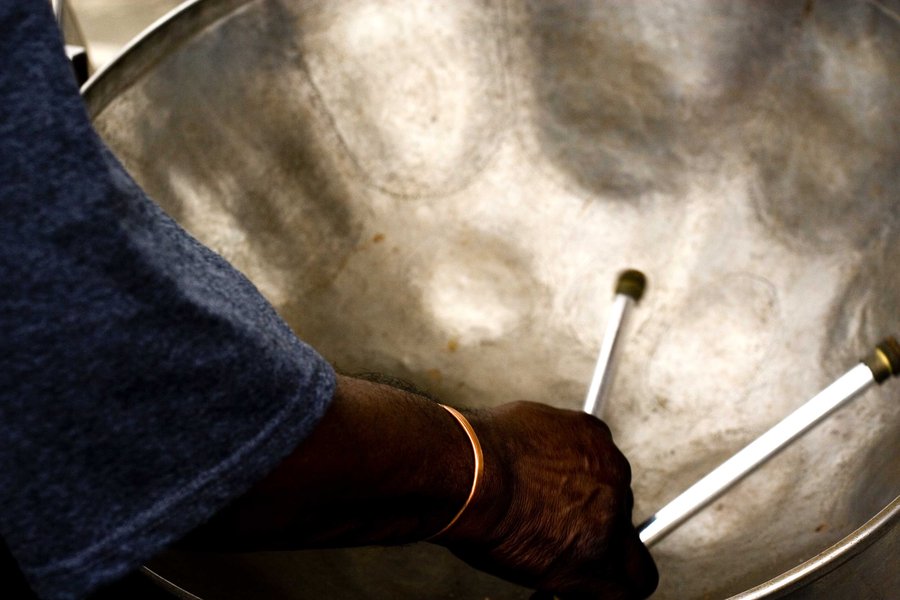
Turns out we’re born to be more receptive to music than to speech. According to a recent study babies respond to music, even regular drumbeats, with increased smiling. Even more surprising, this research shows that babies correlate their movements with the tempo and rhythm. They dance! And music gets a much greater response than spoken words. No wonder adults all over the world naturally engage babies in a sort of singsong-like call and response. We’re translating our language into one that is more evocative.

That’s what music does. It makes us known to one another.

Music is used to lull small ones to sleep, rouse teams to competition, woo lovers, worship, commemorate solemn occasions and celebrate. In some parts of the world music is a medium to intentionally and peacefully resolve conflicts. Through music we more fully grasp that all of us feel grief, love, fear, injustice, joy and moments of transcendence.

My children enjoy wider access to music of all kinds. They’ve seen Chinese opera, Tibetan throat singing, Lakota flute playing, Balinese gamelan and much more. They know more than I ever will as they seek out and share music across a huge range of styles. Entranced I wander upstairs to my daughter’s room, lured by the sounds of Le Mystere des voix Bulgares. I pay attention as my son enthuses about Inon Zur, composer of the orchestral music for inCrysis.

Theirs is the first generation to have the full advantage of the net and other music sharing technology. Across all divides, music can be a peacemaker. It can let us slide past cultural differences and language barriers to a place of mutual understanding.  It can let our children keep on dancing and smiling as they were born to do.

*

*

*

*

Little Girl Dancing courtesy of James Lee

Horse Boy: Because Autism Pushes Past Definitions

autism changing definition of normal, autism gifts,

We live in a time when limited definitions and restrictive boundaries no longer apply.

For example, autism.

People with autism themselves are changing what it means to be “normal.” The wild artist, the radical theorist, the creative scientist have long been held at arm’s length from the rest of us. So have many others who push the boundaries.

Amanda Baggs,  who doesn’t speak aloud but does speak through her keyboard, says that autism is a “constant conversation” with one’s surroundings. Ms. Baggs also actively communicates with a network of people around the world through her articles and forum posts. Videos she’s made have been viewed over a million times. Her voice makes a difference.

Which brings me to a powerful new documentary, The Horse Boy (and companion book The Horse Boy: A Memoir of Healing).

It shows the parents of five-year-old Rowan dealing with his tantrums, incontinence and most upsetting to them, their son’s distance. The mother, a psychology professor and the father, a human rights advocate who works with indigenous people around the world, apply diets, therapies, supplements and remarkable patience. Rowan’s screaming outbursts isolate the family. The couple, once world travelers, can barely manage a trip to a nearby park.

Although the father is a life-long equestrian, he keeps his unpredictable son away from horses. But one day Rowan runs to the next door neighbor’s horse. There an old mare reaches her head down and nuzzles the child as if he were her colt. Instinctively the father puts his son on the horse’s back. Rowan relaxes, lies down and talks easily.

A brief experience with a shamanistic healing ceremony that seems to be beneficial stirs Rowan’s parents to wonder where in the world they might find help for their son that pairs horses with shamanism. They end up going all the way to Mongolia.

There they don’t find miracles. But the journey, the horseback riding, the shamanic healing and the wide open landscape precipitates something beyond their understanding. Something happens that has to do with the mystery of autism itself. Although Rowan’s tantrums don’t go away, he also laughs, plays with other children, talks freely and becomes toilet trained. These improvements persist.

Autism is, whatever your perspective, now part of the human experience.  According to some studies, the incidence has risen to epidemic proportions of one in every 110 children. That’s a 50% increase from 1994. Other studies say the incidence may be a great deal higher.

This has been linked to heavy metals  such as mercury and aluminum exposure, to inflammatory syndrome affecting the gut, to a whole range of interrelated environmental factors which may disproportionately affect people with specific genetic or epigenic factors.

autism evolution, autism rights

A friend with two sons whose behavior puts them at the low functioning end of the autism spectrum says her boys, with their overt preference for screen-based technology, make her wonder if we’re pushing the envelope of evolution. “This is what more of our next generations will act like,” she tells me. “I’m not saying it’s good or bad. It’s where our choices have led us.”


Rowan’s father said a prayer before a wind-swept shine in Mongolia for all people touched in any way by autism. He asked that it be understood. He asked that the unknown gifts of autism be revealed.

May it be so.

*

*

*

*

*

*

image titled “Autistic” courtesy of Tyora

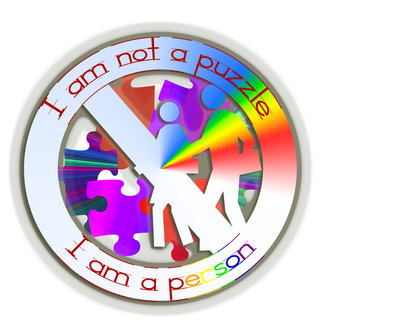
image titled “People Are Not Puzzles” courtesty of hgmuffin_stuff

For Brainpower & Focus, Try Clapping

Mom was right.

The older I get the more I recognize the wisdom my mother applied in parenting. For example, she believed that traditional games held their value. We played croquet in the back yard—-a lawn game that went out of fashion soon after the Victorian era. We played Battleship using only graph paper and pencils. And we played all kinds of clapping games, from Pat a Cake to silly counting rhymes.

Turns out I owe my mother thanks for more than my straight hair and tendency to burn immediately upon exposure to the sun. I owe her thanks for those games, particularly the hand-clapping ones.

New research finds hand-clapping rhymes and songs are directly linked to cognitive skills.

Dr. Idit Sulkin, of the Ben-Gurion University Music Science Lab, found that young children who naturally play hand-clapping games are better spellers, have neater handwriting and better overall writing skills.

Intrigued, she conducted further research. For ten weeks she engaged groups of children, ages 6 to 10, in a program of either music appreciation or hand-clapping. Very quickly the children’s cognitive abilities improved, but only those taking part in hand-clapping songs.

She also interviewed teachers and joined in when children sang in their classrooms. She was trying to understand why they tend to enjoy hand-clapping songs until a certain age, when other activities such as sports become dominant. Dr. Sulkin observed, these activities serve as a developmental platform to enhance children’s needs — emotional, sociological, physiological and cognitive. It’s a transition stage that leads them to the next phases of growing up.”

Interestingly, Dr. Sulkin also found that hand-clapping songs also benefit adults. When adults engage in these games from childhood they report feeling less tense and their mood improves. They also become more focused and alert.

Clapping and singing, clapping and chanting—-this is found across all cultures in religious ceremonies, solemn rituals, joyous celebrations and to accompany storytellers.  The experience of calling and clapping may speak to something deeper in us.  Maybe we all should play a round of Miss Suzy or Cee Cee My Playmate at the start of every political debate, business meeting or extended family get-together.

*

*

*

*

Clapping Hands sketch courtesy of  sycen

On the Beating Death of a Snapping Turtle

snapping turtle migration, snapping turtle endangered,

Our neighbor beat a snapping turtle to death. The life so cruelly taken stays with me.

Every spring we see snapping turtles near our pond. We’re glad to see them return. Perhaps their presence reassures us that our farm is bountiful and feeds them well. Or perhaps their yearly return is a ritual of sorts, acknowledging as rituals do that some things stay the same in a world where so much changes.

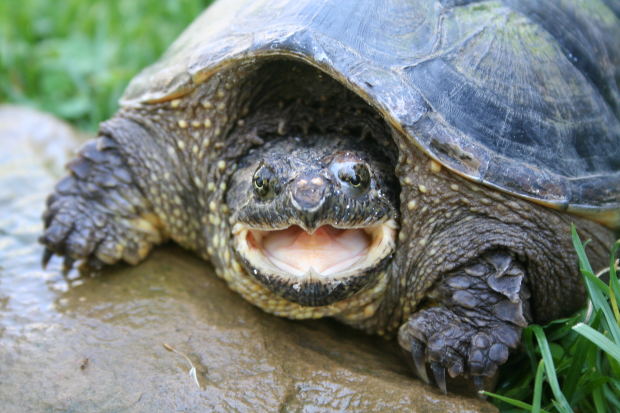
The turtles are quite noticeable as they move with prehistoric dignity through the grass. If we pass by they slide into the water. Sometimes we’ve had to move them (very carefully) out of the way of a tractor. Other times we’ve had to caution children or guests away from them.

They linger for at least a few weeks in early spring. Then the turtles, following timing triggered by their own reptilian wisdom, trek across neighboring property toward a large lake several thousand feet away.

But this time that turtle journey happened at the same time my neighbor went outside with his two children. He saw the turtle as a danger and decided it had to be eliminated for the safety of his children.

First he shot it. Yes, shot it. (We live in a rural area where guns are common.) Somehow gunshots didn’t have the desired effort. Thankfully they also didn’t ricochet off the turtle’s shell, creating a far more serious hazard.

Then he got out a heavy implement and, slamming down over and over again, he beat the turtle to a horrifying death.

Appallingly, my neighbor did what he assumed a good father does.

But this is what I can’t stop thinking about. There are pivotal moments in a child’s life when what we show them about the world stays with them. I mean more than the bloody sight of that turtle’s death, left to rot rather than killed for food. We can show them that nature is a part of us—-to experience with wonder, to treat with respect and to embrace as a unified whole. Or we can show them that nature is separate from us—-to use for our amusement, to treat with disdain, to attempt to control.

I realized this when my first child was a toddler, barely walking. He encountered an insect and paused before lifting his little white shoe to stomp on it. I showed him instead that we could squat down near the insect to watch it but not touch it. In those few minutes he looked carefully for the creature’s eyes, remarked on its feet and clapped in joyous astonishment when it unfolded wings and suddenly lifted away. After that he kept a careful watch for insects. His questions (What does it like for snacks? Does it go home to bed when it’s dark? How does it talk to other bugs?) showed he was thinking about what it might feel like to be an insect. He learned that some sting and bite, some hustle away on many legs, some wriggle into the ground. He learned awe tinged with caution.

That’s the moment my neighbor missed. He could have called his children to come look at the snapping turtle from a safe distance, his arm around the youngest, pointing out the its heavy shell and powerful jaws. He could have cautioned them to always tell an adult if they ever saw such a creature, and to never go anywhere near it. Snapping turtles can be dangerous. That’s why we teach our children to identify, avoid and respect those dangers. But we also need to weigh risk factors to put danger in perspective. A large snapping turtle crossing the yard offers good reason for caution. But there are far greater dangers facing children in my neighborhood. Cars going by on our 55 mph rural road. Guns in the home. Toxins released when garbage is burned in the backyard.

I’m sure we all have different opinions about what constitutes danger. Maybe the way we frame this says a lot about our worldview. *

a

Snapping Turtle Sidenotes My husband and I have both stopped at the side of the road to move snapping turtles out of the street. This is best done without hands or feet, just the encouragement of a window scraper’s blunt edge. The turtles snap grumpily, then lumber off to a shady drainage ditch. {Always move turtles in the direction they’re going. Migration urges them in that particular direction.) We do this because we’ve repeatedly seen drivers intentionally speed up to hit these slow-moving creatures. We’ve also seen drivers do the same to vultures, hawks and crows—-nature’s blessed carrion eaters who clean up our roadsides when a carcass lies in sad repose after meeting with a car.

I tried to find out why turtles might be traveling on roadways far from ponds and streams. Looking up the Common Snapping Turtle  (Chelydra serpentina) led to me find out more than I expected.

These long-lived turtles are important to the eco-system. They eat plant and animal matter, often scavenging. Docile in the water, they’re more aggressive on land. Food scarcity, pollution and habitat destruction may be forcing them to travel overland more than before.

Center for Biological Diversity is concerned about a massive increase in hunting and exporting turtles. These creatures, so integral to healthy aquatic ecosystems, are being sold to Asian countries, primarily China. Consumption of turtle meat there has driven many native species of turtles to extinction.

Eight states—Arkansas, Iowa, Kentucky, Louisiana, Missouri, Ohio, South Carolina, and Tennessee— permit unlimited harvesting of all turtle sizes, using lethal hoopnets and box traps in public and private waters. These devices box traps also capture, maim, kill, and drown protected turtle species, non-target fish, mammals and birds.

In our state, the Department of Natural Resources doesn’t monitor health or population trends of wild turtle populations. *

Race to Nowhere?

Most mornings of their lives my kids have slept until they were ready to wake and then curled up on the couch to read until they felt ready to leap into the day. They’ve delved into topics of interest to them, sometimes in great depth. They’ve explored, wandered and spent time with people of all ages. They’ve never had homework or tests. (Well, till they hit driver’s license exam age.) They’ve worked hard at chores because it’s necessary to keep our small farm going  but never had to work hard to look a certain way or fight for popularity. They’re a relaxed, confident bunch who define success on their own terms.

Homeschooling gives them time to grow into their own possibilities. Time to develop inner strength. Time to be themselves in a world that relentlessly pushes children toward narrow definitions of success. Apparently it also gives them a break from the crushing pressure portrayed in the documentary Race to Nowhere.

As one expert says in the documentary, “When success is defined by high grades, test scores and trophies we know that we end up with unprepared, disengaged, exhausted and unhealthy kids.”

Today’s current methods of schooling, despite noble intentions, work against curiosity, creativity, critical thinking, close relationships, community connections and a culture of collaboration.

Natural learning isn’t just the antidote to this kind of soul-crushing pressure. It’s the way young people have learned throughout time. It’s time to redefine success on our own terms. Let our children sleep in. Let them dream. Let them wake to their own possibilities.

*

*

*

Image courtesy of Jay Doodles

Lament of an UnNerd

*

Gray-haired guys in line ahead of me at the coffee shop text with casual ease, order fabulously complicated drinks and manage to pay in one smooth motion.

I’m too cheap to have texting as an option on my phone and too clumsy to text anyway. I’m not confessing anything about dropping change I meant to put in the tip jar or knocking over biscotti on display (although really, that display was clogging up counter space).

The upside of no texting? I read and write unimpeded at that same coffee shop while all around me tiny rectangles brrrr and thumbs tat in a display remarkably similar to old sci fi versions of humans controlled by robotic forces. The downside of no texting? I’m forced to leave voice mails on my cell phone. According to the hilarious (frightening) site How Not To Act Old leaving voice mail decidedly marks a person as well beyond their 20’s. Not a problem, the casual observer could tell that about me from my boring hair and tendency to knock over biscotti.

*

My son’s 80-something bagpipe instructor pirates and shares music.

I still buy CD’s and don’t own an iPod. I’m glad that wind through the trees is the soundtrack to my daily walk, but really, if I got around to gathering music in handy digital form I’d spend forever assembling it. I’d cheerfully search out lost tracks from vastly unappreciated musicians like Frazier & Debolt. I’d linger over the task while choosing a ridiculous array of opera, Scandinavian folk and Mongolian throat singing. Then with my short attention span I’d probably weary of each piece after one listen.

Wind in the trees is free.

*

And one last lament. Thank Gawd I live with tech support. I happen to love these people but their presence here is also vital to my work life. If I don’t get immediate help when trying to deal with simple problems like unzipping old files sent by certain maniacal interview subjects I tend to shriek at the blameless screen.

That scares the dogs sprawled at my feet, which activates my ever-ready guilt, forcing me right out of the house and off for a walk with wind as my soundtrack or, if the tech problem is really serious, off to a coffee shop where an innocent display is just waiting to tip over. Perhaps it’s a message that I should develop a taste for biscotti.

*

*

*

*

Creative Commons images

texting thumbs courtesy of TheKat11 http://thekat11.deviantart.com/art/Texting-100020644

pirate image courtesy of mrs.mcD’s photostream flickr.com/photos/cordandme/492100572/

biscotti image courtesy of La Mia Cucina’s photostream  flickr.com/photos/25901168@N00/313577580/

How to Raise Global Learners

raising global learners

Living on a farm we don’t have the time or the means to travel. But we want our children to be global citizens. We want them to truly understand how fully they are linked to their fellow beings on this beautiful blue green planet.

When they were small we read stories, ate the foods, played the games and celebrated festivals from far-off lands. As they got older we paid close attention to a rich variety of in-depth materials that helped us discover the global fibers that run through history, art, science, literature, really through any field of interest.

More than any materials we introduce, the connections my kids find most pivotal are those they make on their own, person-to-person across any distance. For example, one of my musician sons got interested in acoustics. He joined special interest forums to talk with fellow aficionados around the world about technical details of repairing historic microphones, the artistic nuances of found sound recordings, and other topics. Friendships developed. Now they converse about everything from politics to movies. Some day, when he travels overseas, he plans to take them up on their offers to stay in New Zealand, Finland, Brazil and elsewhere. Already he’s visited friends made online in the U.S., finding the rapport they developed holds fast in person as well.

Perhaps the most important connections any of us can make are lasting, caring relationships with people who live far away. For our family, one of the most enduring relationships we made was with an effervescent girl from Belarus named Tatiana. She came as part of the medical program Children of Chernobyl. Even in her first week here, the strength of her personality more than made up for the few words of English she knew and our poor pronunciation of Russian words we thought we knew. Tatiana was horrified by my vegetarian meals, refused to participate in the activities my outdoor-loving children preferred and let us know that she hadn’t traveled so far to live like a peasant. She wanted to be entertained! Like anthropologists to our own culture, we explored shopping malls and tourist sites, we bought kids’ fast food meals for the prizes and went to amusement parks rather than wilderness areas. Tatiana displayed her brilliance in many ways, typically beating any of us at board games we’d played for years and she’d just learned. Tatiana lived with us for five summers. She became a member of our family, a family which feels to us as if it extends to Belarus.

Each connection made of understanding and caring warms our planet—but in a good way. Which leads me to recommend two new books about raising global citizens.

Growing Up Global: Raising Children to Be At Home in the World by Homa Sabet Tavangar is packed with enrichment ideas, games, service activities and resources to help raise children with the world in mind. Here are five great ideas from Tavangar’s book:

*Boost cultural understanding and fun by listening to pop music from around the world.  (I suggest using online translation to figure out the lyrics.)

*Talk about the origins and trading routes of products used every day in your home. Try tracing back a chocolate bar or t-shirt.

*Discover what foods are said to heal common health conditions. Lime juice in armpits is recommended in Paraguay to solve odor, ginger and green onion tea is recommended in China to cure a cold.

*Learn about practices for welcoming newborn babies into the family and community. Consider adapting customs to commemorate a new arrival in your family.

*Make humanitarian work a family affair. It’s possible to extend benevolent choices even to the search engine you use. Try http://www.ripple.org where 100% of search revenues help alleviate urgent global issues.

And for a vigorous “go there” perspective, give The New Global Student: Skip the SAT, Save Thousands on Tuition, and Get a Truly International Education by Maya Frost a read. A cure for any but the worst helicopter parents, Frost shows how learning in other countries best prepares today’s teens for the real global workplace. That means choices resulting in self-reliant, confident and bold adults.

Here are five great perspectives from Frost’s book.

*Stories throughout by young people who live and study abroad. Frost calls them “bold statements” and they offer invigorating examples of what travel can provide.

*Why Rotary International Youth Exchange program www.rotary.org offers the best exchange programs. Frost says it has to do with the network of volunteers around the globe providing support to families and students, the affordable price and the commitment to humanitarian work.

*The stage of life between fifteen and twenty, when pivotal life skills are being developed, the reach of our young people tends to be limited. As Frost writes, “They zero in on the fit of their jeans rather than on the fit of a cultural identity within a larger population, and they devote hours to enhancing the clarity of their skin instead of the clarity of their thinking. They are digging into a plate of pettiness because that is precisely what we’ve served them. They deserve–and are ready for–so much more.”

*How to arrange study abroad credits outside of university affiliated programs for more freedom and frugality.

*Ways to connect with helpful people in countries around the world.

*

May your children become global learners. May our shared home be one of peace and goodwill.