Creating A Better World

“We become what we think about all day long.”
Ralph Waldo Emerson

positive thinking, the shift, better world attitude,

Anastasiya Markovich

Long before I became an adult I launched a quest. This was inspired by a something that weighed on my childish mind, an urgent calling to alleviate the suffering of others. Even when I was a misbehaving little girl who ignored her chores and fought with her sister (often), I still felt the weight of this obligation. My parents cancelled their subscriptions to news magazines to avoid my questions as well as my despair over every sorrowful photograph. And my entire family dreaded driving past a chained puppy or crying baby, knowing that I would agonize the rest of the day over this momentary glimpse out the car window.

For some reason my quest took the form of trying to understand why people acted cruelly. So in my spare time I read everything I could find on the history of suffering, evil, and misery. I learned about the Inquisition, U.S.betrayals of Native Americans, the Holocaust, the genocide ordered by the Khmer Rouge in Cambodia—if it was awful I studied it. I worked my way through every book and resource possible.

right thought, optimism changes world, hope,

Fritz Fuhrken

This project of mine stretched well into my teen and early adult years. It was grim. It haunted my dreams and colored what should have been youthful optimism. I began to realize that every single human has the capacity for cruelty. We just pretend we don’t. A bad mood may be contagious but the shadow we hide can wreak havoc on a personal and even a global level.

One day as I sat in the sunshine while my firstborn played nearby in the grass, my dear friend Leslie came over for a visit. She found me reading yet another horrific book, a stack of similarly dire non-fiction at my side. And she’d had it. She told me I was ignoring the beauty all around me to immerse myself in misery. She told me to look at the light shining on my child’s face, the bright green grass, and all the love in my life.

She was right, of course.

Still I defended my quest. I told her it was an obligation to know what was wrong with the world in order to right it. I waved around books that described the evils of pesticides, the horrors of factory farms, and the title I was currently reading, something about political prisoners.

She disagreed. She said it was time to focus on what was good.

I told her I was I finding good. What I read exposed me to heart-expanding accounts of people who demonstrated the best of humanity no matter their circumstances.  Those who were dying of hunger, yet gave their last bit of food to others.  Those who had no reason for hope but who kept art and music alive.  Those who faced the worst despair, but did not give in to it.  The best lesson I learned from years of study? Every single person has a choice, even if it seems there are no choices. That choice is the attitude they take.

the shift, making the shift, the secret in action, the secret applies to peace,

Fluxx

It was time to work on my own attitude.

Gradually I stopped trying to understand and fight against all the reasons for suffering. I also became a little less frantic about doing everything possible to counterbalance the wrong I saw everywhere. I noticed that people in activist groups I belonged to faced the world with the same despair I felt, battling evil so fiercely that they had no way to expand on all the good that also flourishes.

So I began volunteering less time to lost causes, marched in fewer protest rallies, and gave up stomping around with petitions. I did more that seemed to boost the positive—gardening, singing to my babies, and guerilla acts of encouragement.

I became certified to teach non-violence workshops which I taught to school systems, incarcerated teens, and senior citizens. As I taught, the lessons sunk in ever more deeply. The long and life-affirming history of non-violence can’t help but heal a heart heavy with the world’s troubles. The process of non-violence—reacting with love rather than hate—is more empowering than any other force we humans have ever used. It transforms greed, intolerance, and cruelty. It’s humanity’s way forward.

peace through non-violence, achieving world peace, optimism,

Solveigamundsen

Growing more positive, I began to find value in mistakes, doubt, crisis. A lifelong insomniac, I started sleeping a little better. Always one who tried to laugh rather than cry, I found myself laughing more— about falling downawkward encounters, and my near constant ability to embarrass myself.

It may seem difficult to sustain a positive outlook these days. My own family has been through grief, injustice, unemployment, and other sorrows. And our world struggles while formerly stable structures crumble. Just look at what’s happening to prescribe-and-placate medical models, inflexible financial institutions, condemning religious frameworks, and rigid corporations. But I believe these current conditions of breakup, economic chaos, and environmental decline are exactly those which are (slowly) leading to beneficial change. Collectively we’re waking up to the weakness of limited thinking and short-term fixes. Hopefully we’re also waking up to the reality that we’re in this together—rich and poor, developed and developing nations, young and old, left and right.

signs of hope in the world, peace emerging,

Jules Henri Lengrand

I’ve come to believe a better world is made by building on what works rather than focusing on what’s broken, as long as the truth is told about that brokenness and healing is sought.

I see beings on this planet linked in ways that defy description and see my fellow humans as heroes in the making.

And I see SO much good happening, good that’s too often overlooked. Consider:

1. War and global violence continue to decline.

Armed conflicts aren’t going up, they’re going down.

The world has seen a 70 percent decline in the number of high-intensity conflicts since the end of the Cold War era. Genocide is down 80 percent. Weapons sales between countries have diminished by 33 percent and the number of refugees has fallen by 45 percent. Even measuring from as little as 15 years ago, the number of armed conflicts has dropped from 44 to 28.

Why? Project Ploughshares credits peace building efforts.

Chances are, the reasons for peace are complex. Yet a stronger international resolve to focus on peace building and basic human rights is taking place. Imagine the far larger potential for enduring peace if we intentionally educate our children and ourselves in the proven methods of non-violence—-negotiation, mediation, reconciliation, even basic listening skills.

2. Freedom is stretching across the planet.

By evaluating variables including civil liberties, democratic institutions, and independent media it’s possible to assess how free each nation in the world really is. Back in 1973, 29 percent of nations were deemed free, 25 percent partially free, and 46 percent not free.

In a little over 35 years, the number of nations ruled by authoritarian regimes dropped from 90 to 30. Countries around the world considered to be free increased by 50 percent while those not free had dropped by more than half.

Independence has a long way to go. But positive signs—protests, dissent, political upheaval show us that ordinary people are speaking up for freedom.

3. Longevity is improving yet total population faces a downturn

Fulfilling the cherished hopes of their parents, more children around the world are born healthy. Mortality rates for those under five years of age have fallen by 60 percent since 1960.

Meanwhile, life expectancy has risen 21 years since the mid 1950’s. Try to suppress your optimism while looking at this analysis of longer lived well-being around the world.

This doesn’t mean the planet will be too crowded. Overall population will continue to rise for several more decades but we’re facing a major downturn. Already birth rates are near or below replacement rate in countries all over the world. Increased education and affluence tend to inspire women, no matter what country they live in, to invest their time and resources in fewer children. As Fred Pearce clearly explains in The Coming Population Crash: and Our Planet’s Surprising Future, our little Earth will likely reach a (painful) peak of 8 billion people around the year 2040, then the total number of human will begin to decline so rapidly that nations will struggle to keep their populations levels from slipping too low. They may create perks for becoming parents and incentives to attract immigrants.

4. Literacy rates continue to improve.

Global adult literacy rates have shot up from 56 percent in 1950 to nearly 84 percent today, the highest ever.

Women’s rates haven’t risen as quickly due to inequality and poverty, but in some areas, particularlyEast Asia, 90 percent more girls are able to read than 10 years ago. As female literacy goes up, other overall positive indicators tend to follow including decreased domestic violence, improved public health and greater financial stability.

5. Intelligence is on an upswing.

From generation to generation, we’re getting smarter. In fact, to accommodate continuously increasing intelligence the IQ test must be renormalized (standardized to keep the average test results at the 100). This is called the Flynn Effect.

Between 1932 and 1978, mean IQ scores in theU.S.rose 13.8 points. If your grandparent received IQ score results of 98 back in 1932 they’d have been deemed of average intelligence. That same grandparent, if administered today’s tests, would be considered to have a borderline mental disability by current scoring standards. IQ scores have risen even higher in some other countries. Of late, developing countries seem to be experiencing the biggest surge.

Plenty of explanations have been proposed, but the increase can’t be definitively pinned on genetic improvements, improved nutrition, greater familiarity with testing or better schooling.

According to Cornell professor Stephen J. Ceci, the most direct gains are not in subjects that are taught (math, vocabulary) but are shown in parts of the test that seem unrelated to schooling (matrices, detecting similarities). In fact, test gains have been enormous in areas requiring the child to apply his or her own reasoning, such as arranging pictures to tell a story or putting shapes in a series. Although teaching children does return positive results, what a child learns through the natural stimulation of everyday life has a more profound effect. For example, a study to determine the effect of schooling on rural children inIndia found that the increase in overall intelligence from a year of age is twice the increase from that of attending a year of school.

IQ test scores don’t relate to what truly provides satisfaction in life. But the Flynn Effect is intriguing. Factors we can’t completely explain are giving us the intellectual capacities to deal with an ever more challenging world.

6. Compassion is huge.

Never before in history have so many people worked tirelessly and selflessly to benefit others. Paul Hawken writes in Blessed Unrest: How the Largest Movement in the World Came into Being and Why No One Saw It Coming that the abolitionist movement was the first major movement by human beings to advocate on behalf of others without seeking advantage for themselves or their particular social or political group.  Since that time, such efforts have grown with astonishing vigor.

There are now over a million organizations on the planet working for environmental stewardship, social justice, the preservation of indigenous cultures, and much more.  These groups don’t seek wider acclaim, they seek to make a difference for the greater good.

Humanity, which is clever and kind enough to bring about so much improvement, is also awakening to the vital importance of living more sustainably on Earth.

I know we can live more peacefully and wisely.

Thank you Leslie.

global indicators of hope, better world emerging, the shift happening, the secret on a global scale,

Salvatore Di Giovanna

“When I despair, I remember that all through history the ways of truth
and love have always won. There have been tyrants, and murderers, and
for a time they can seem invincible, but in the end they always fall.
Think of it … always.”   Mahatma Gandhi

Gentle Nurturance=Gentle World?


A little girl about three years old trails behind her mother in the store. She seems tired and distracted, as if it’s difficult for her to keep up. Her mother is busily shopping while pushing a cart with a baby in a carrier at the front, oblivious as her daughter lags farther behind. Every minute or so the girl says, “Mommy,” but her mother doesn’t look back so the girl hurries to catch up. Not long after the mother turns to another aisle the little girl loses sight of her and wails loudly. Her mother, surely distracted and now embarrassed, hustles back to grab the child, shakes her, and through clenched teeth issues a threat. The child cries quietly and resumes following, more closely at first but again lags behind in the crowded store. A few aisles over she loses sight of her mother again. This time the mother picks the child up by the arm to smack her fiercely.

The problem continues to escalate. The entire time this family is in the store the mother repeatedly threatens and hits a child who may be ill, or needing a nap, or simply isn’t able to keep up. No one intervenes. In the checkout line they stand under an overhead TV screen blaring with news. Crime, war, and looting at the scene of a disaster are shown in vivid video clips. The little girl, tears still drying on her face, reaches up to the baby sleeping in the carrier and squeezes his toes until he too is crying.

Many of us probably see such scenes on a regular basis. Those of us who are parents know full well that gently nurturing a child’s growing body and mind isn’t always easy. Sometime days it feels as if good parenting requires sainthood. But gentle nurturance is the way that we adults constantly demonstrate, in hundreds of seemingly insignificant ways, that a child is a person worthy of love and consideration. We wipe a face softly rather than harshly, we take an extra moment to see what a child sees, we find ways to distract a grumpy toddler or a moody teenager, we share real work with our children so they know the satisfaction of a job well done, we turn away from our own amusements to take part in what delights our children, we teach our children to wait their turn, we cuddle and guide and care.

raise children tenderly for a more peaceful world

This doesn’t mean we empower children to do whatever they want or raise them without limits. It simply means that it’s possible to touch a child with kindness and respect, to consider situations from the child’s point of view, and whenever possible, to listen to what a child has to say.

Gentle nurturance resounds through a child’s entire life, bringing forth a greater potential for happiness and success. Children treated with love and consideration become adults who treat others well too.

no spanking leads to better behavior

There’s plenty of evidence that this is the case. Let’s take one example, that of corporal punishment. Ninety percent of American parents say they have spanked a toddler, 61 percent in the same week they were asked. If it “worked” parents who spank would have more compliant children. But that’s not the case. In fact, children tended to act out again within a few minutes after being spanked or hit by a parent.

Spanking leads to children who are more easily frustrated, have more frequent temper tantrums, demonstrate greater defiance, and who are more likely to physically harm others.

Spanking is also associated with lowered IQ scores. A U.S. study found children who were spanked had lower IQs four years later compared to those who were not spanked. The more frequently the children were spanked, the slower their intellectual development. Researchers speculate one factor may be that regular physical punishment is a chronic stressor for young children.

Negative consequences aren’t limited to childhood. Children who are punished by spanking, slapping, or grabbing even occasionally run a higher risk of growing up to have mental health problems, according to a study of nearly 35,000 people. Those issues include depression, anxiety, and drug or alcohol abuse as well as more complex illnesses such as narcissism and antisocial behavior.  

Even crime is associated with physical punishment. Take time to read this linked article, titled “The Influence of Corporal Punishment on Crime” by Adah Maurer, Ph.D. and James S. Wallerstein (courtesy of The Natural Child Project) which features data including the following chart:


Degree of physical punishment


Never

Rare

Moderate

Severe

Extreme

Violent inmates
at San Quentin

0%

0%

0%

0%

100%

Juvenile
Delinquents

0%

2%

3%

31%

64%

High School
drop-outs

0%

7%

23%

69%

0%

College
freshmen

2%

23%

40%

33%

0%

Professionals

5%

40%

36%

17%

0%

Corporal punishment is just one factor among many. There are plenty of other elements to consider as we raise children to respect themselves and others. Here are just a few. 

raising children peacefully

It has to do with consistent and fair family rules. 

It has to do with understanding a child’s temperament.

It has to do with free play  and plenty of time in nature.

It has to do with our expectations and our ability to listen.

It has to do with responsible media exposure.

It has to do with an understanding that we as a species are innately kind and cooperative.

And so much more.

But corporal punishment is the example I’ve used because there are larger cultural factors to consider when force is used on children, whether physical or other forms of coercion. There’s a connection between harsh treatment of children and harsh societies. Researchers Carol and Melvin Ember, in a journal article titled “Explaining Corporal Punishment of Children: A Cross-Cultural Study” conclude that force is commonly used against children in highly stratified societies, societies with low levels of democracy, and those with a propensity toward violence.

And there’s more evidence. James W. Prescott, former administrator at the National Institute of Child Health and Human Development, analyzed cross cultural data using 20,000 statistically significant correlations from 400 studies. The information included presence of physical punishment, freedom or repression of sexual practices, social status of women, degree of affection toward children. He concluded that societies based on affection were highly unlikely to be violent.

These conclusions are of global significance to you, me, and everyone else in today’s world.

peaceful world starts with parenting

This isn’t easy to see on an individual basis. Plenty of anecdotal accounts contradict these assertions, but individual exceptions don’t prove the point. I was raised by loving parents who, yes, spanked a few times and yes, tended to lose me in stores. I don’t see many after effects . (Well, I detest shopping.) The point remains. A gentler world can emerge from gently raised children.

This starts in our homes, stores, everywhere. I know what it’s like to shop with kids (I have four) so I can understand the time pressure and distraction the mother of that three-year-old girl must have been under. But each moment of parenting provides us with an opportunity to help our kids find positive solutions. This builds inner strength and fosters skills they’ll need to deal with future difficulties. Trouble is, parenting skills take patience, conscious attention, and lots of opportunities to observe other parents we admire. The time required is exactly what’s missing in the lives of busy parents. What are some things that could have helped when the little girl couldn’t keep up with her mother?

Connect. “Mommy needs to see where you are. I miss you when you lag behind.”

Empathize. “Oh Sweetie, you’re having trouble keeping up with Mommy.”

Problem solve. “How can we stay together?”

Engage her help. “Can you help me find the cereal you like? Do you remember if it’s in a yellow package?”

Distract her. “Let’s count all the other _____ in the store today (little girls, women with hats, times the loudspeaker interrupts, etc).”

Celebrate and appreciate. “I’m so glad you’re staying with Mommy and helping me watch the baby. Let’s _____ after we get home.”

And it would have helped if this mother had the resources to avoid taking a child to the store who was tired, or sick, or needing closer attention.

It’s important to recognize that in our society, parents tend to be isolated. A whole tribe of extended friends and family aren’t there to watch, guide, nurture, and enjoy each other’s children. Cultural forces of work and time pressure and distance divide us. Parenting is too often a solitary venture, performed under the gaze of strangers who judge one’s parenting in every store and sidewalk.

As Urie Bronfenbrenner noted, we need to understand what forces affect family so we can to best enable them  “to perform the magic feat of which they alone are capable: making  and keeping  human beings  human.”

Ima

Are You A Baboon Or A Bonobo?

competitive parents, parenting one upmanship

I’m waiting in a movie theater line behind two women who are clearly friends. And rivals.

“Max won front line seats to this weekend’s game. It’s the first month the school is offering prizes for the highest overall score and Max is their first winner. Already we can see the advantages of this new school.”

“That’s so nice for him. Jeffrey really prefers playing football to just sitting there watching it. The coach keeps telling us that Jeffrey is a natural and sure to get a Big Ten scholarship.”

“Don’t you worry about him tackling when he’s so young? I heard that high school football players can get brain damage and Jeffrey is only 14, probably smaller than the other players. It’s such a risk.”

“That’s so sweet of you to be concerned. But Jeffrey isn’t taking a risk. He’s learning to look out for himself. That makes a difference in the real world. I’m more concerned for Max, insulated by that private school from experiences that could toughen him up. He’s such a nice guy, I’m worried for him.”

Barbed remarks just kept coming from their smiling mouths.

Yes, I’m a biased observer. I prefer what’s gentle, inclusive, and nature-based. This generally works for me. I say “generally” because I’m hampered when communicating with certain people—those who one-up each over with how perfect their lives are or, conversely, spar about who has it worse. I’m well aware that it’s best to listen with empathy but sometimes I can’t help myself. I just want to get out of the way. That’s because these conversations remind me of angry primates flinging poo.

Turns out there’s something to that image. Biological anthropologist Gwen Dewar noted that the “verbal sniping, snobbery, one-ups-manship, and cruelty” of mean moms has a striking parallel in the animal kingdom. Yup, she’s talking about monkeys and apes.

Females in certain monkey societies live in dominance hierarchies. There are perks for those at the top of the social ladder such as better food and first choice of sleeping places. In bad times, higher ranking females and their offspring are more likely to survive. Social rankings don’t budge. Top monkey moms make sure their daughters share their status. Low-ranking monkey moms can’t do anything to help their daughters move from up from the bottom. And middle-ranking moms can only ensure that their daughters stay in that relatively comfortable spot.

This stratification happens because monkey mothers are pushy. Top monkey moms enlist their powerful relatives in an ongoing campaign to make low-ranking monkeys defer to their daughters. As Dewar puts it, “These girls learn to be snobs. To form social cliques. To harass their social inferiors and toady to their social betters.” At a young age, monkeys know who pushes and who gets pushed. They work hard to assert their own status in order to pass that status (and the survival benefits) along to their daughters.

peaceful versus pushy parents,

The analogy isn’t perfect. Humans are pushy for reasons more complex than access to food and better choices of sleeping spots. Plus, we have even more reasons not to be pushy.

But even primates are hard to categorize. Only certain species, like baboons, live in groups with the female dominance hierarchies that Dewar likened to “mean moms.” Other species are wonderfully egalitarian, with strong female alliances, like the bonobos.

Bonobos live in matriarchal peace-loving groups. One of the many ways they get along is by frequently offering each other casual sexual stimulation, which rules out suggesting bonobo style friendship to moms waiting in line at the movie theater.

Putting that particular bonobo feel-good formula aside, what primate-like politics do you observe in your fellow humans? How about you? Baboon or bonobo?

Healing Power of a Good Snort

end despair now, silly cure for bad mood, cure depression,

"Nimm dich selbst bei der Nase" ("take yourself by your nose")

 No one is upbeat all the time. Well, there are a few people but clearly they are NOT paying much attention to what’s going on around them. And admit it, none of us like their ridiculously peppy good cheer. I realize I have a lot to say about  listeningappreciating the dark stuff, the influence of our perceptions, the curative power of smiling, and dealing with life’s crap. But even the most dedicated optimist falls into a pit of despair occasionally. I’m assuming this is normal. After all, the human experience is all about contrast. Joy/pain. Elation/dread. Hope/trepidation. And we don’t come equipped with mood jumper cables to recharge us.
*

Or do we? Because I’ve discovered a cure for this common malaise. 

Don’t get me wrong. I know a positive attitude takes work. But sometimes all the saintly effort in the world can’t ease melancholy. And just past melancholy lurks despair. I don’t know about you, but I fall into that dreaded Pit of Futility on occasion. My efforts seem useless, my energy sapped, the meaning of life comes up for serious questioning.  I was there recently.  This was not a chuckhole of depression.  This was a pit. Until I was cured in an instant. Let me explain.


I was sliding down a precipice without the resolve to help myself.  I went on for days wearing a fake smile and false enthusiasm to cover my wretchedness.  I was so weary that I accomplished little.  I longed for a dark cave to crawl into, but found myself dragging the cave along as I went through the day’s tasks.

Then it happened.

I was out to do errands on a Tuesday in my usual hurry. The streets near our home were clogged with workers spreading that toxic stench known as asphalt. While waiting for the flagman to wave me on I developed an asphalt-related headache. I dragged through my stops without my usual energy, mentally lashing myself for not being more efficient. To top it off I forgot something on the way home and had to stop at one of those Waystations of Overpayment, the convenience store. Another confirmation that I couldn’t get my sh*t together. Great. At the convenience store I grabbed what I needed. Yes, it was toilet paper. Of course I’d forgot to order from the co-op, forcing me to buy the evil non-recycled version in a multi-pack appropriately giant sized to deal with our large household.

After my purchase was completed I began to walk out of the door. I was carrying my overstuffed purse plus the large bag with my purchase. As I stepped to cross the threshold an older gentleman hustled up in a hurry to do a kindness. He stopped directly in the doorway, awkwardly attempting to hold the door open for me from within the entranceway. That left his body in the way of my body which was already encumbered by aforementioned purse and large shopping bag.

Stepping past him involved a bit of reconfiguring. Instead of the normal space between strangers, this doorway maneuver placed our faces a few short inches apart from one another. I composed a grateful expression and prepared to deliver my depressed person’s falsely perky “thank you” when he said something.

It was a sentence, but I didn’t catch a word of it. Maybe it was garbled, maybe accented, maybe my hearing was addled by a crinkling 12 pack of toilet paper.

So I overcompensated.

I nodded and tried to look grateful while adding a cheery but short laugh to my intended “thank you.” (That cheery laugh was supposed to indicate comprehension.) I was also simultaneously turning sideways to accommodate him, my bag, my purse and myself in the door.

Somehow this was all too complicated in my low ebb state. I was performing too many exhale efforts without inhaling at the right moment. My words and my laugh got tangled. Saliva threatened to roll out. I made an effort to keep from drooling while smiling, still attempting to toss that “thank you” out.

While my facial and verbal contortions were getting mixed up, my body insisted on breathing. That inhale was unexpectedly violent.

Inches away from this elderly man’s kindly face I SNORTED. Not a delicate snort. It was a huge unintended nasal vibration with the typical horse-y sort of snort-related facial expression. It was so loud it seemed everything around me shuddered. If there were a Richter scale for vocalizations, this sound was at least a 6.9 in the scale of damage potential.

Shocked, I skittered away to my car without seeing his reaction to my nose-related doorway thuggery. I barely got the car door closed before I let loose with hysterical laughter. Tears burst out and sprung over my smile-stretched cheeks. I imagined snort echoes still reverberating in the small store. I pictured the cashier shaking her head in consternation. I practically heard this gentleman return home saying, “Mavis, the strangest thing happened…”

Urged by my imperiled continence I started the car and headed home.  I drove past the construction site braying with laughter.  The flagman waved me on with a curious look at my wide-mouthed glee.

Strangely, I felt great. The weight of angst had completely lifted. Everyone I told the story of my depression-curing snort felt great too, probably out of relief that they weren’t along on that fateful Tuesday.

It’s absurd.   Sure we grow in strength and character from our crises, but sometimes we have to shed our pretensions of strength and act like a character.  I’m telling you, there are untapped healing powers in a finely tuned snort.


The Trouble With Principles

what should a poet do, living up to one's ethics, sticking to principles,

Image courtesy of amythepirate.deviantart.com

I’m struggling with a decision that should be easily made. It isn’t a heady question of global importance. Nope. It’s much more mundane.

It’s a question of principle.

sigh

I’ve spent some time (and even more time ) writing about how the Teach & Test approach to education screws up our species’ wonderful inborn drive to seek out learning and retain that learning.

I’ve also spent a bit of time writing poetry. I authored a collaborative chapbook (long since out of print) back when I wrote poetry in partnership with nursing home residents. My poems are published here and there for the six people who read tiny literary journals and the three people who buy small press poetry anthologies. And a collection of my poetry, Tending,  has been published.

The engine fueling a non-fiction writer’s work is entirely different than the inspiration that sparks a poet’s poems into being. The non-fiction writer wants to get ideas across. The poet wants her words felt.

These two motivations probably shouldn’t tussle.

Today they are. That’s because this poet was asked something that made this non-fiction writer snort. A poem of mine, published last year in the Christian Science Monitor, has been selected for use in tens of thousands of high school assessment tests.

Yes, those same tests I rail against.

I don’t for a moment assume that my poem was selected on its merits. The piece happens to be riddled with imagery and metaphor, well suited to torture teenagers with questions designed to make them further detest poetry.

But I didn’t turn down the request right away. I’m not sure why (except that I’m a weak weak person to whom they’re offering $350 for the rights). The very concept violates my principles.

I also have the desire to let that poem stay alive. Poems live only while they’re read or when their lines are remembered. Most poems have a lifespan comparable to that of a mayfly. And yes, I have a ridiculous hope that one teen in the midst of a test might feel the poem.

I’ll probably send the official multipage form back with permission denied written where my signature should be. But I haven’t done it yet.

What would you do?

(And if you’re curious, here’s the poem.)

*

                        Why the Window Washer Reads Poetry   

for Michael, who carried poems in his work shirt pocket


He lowers himself

on a seat they call a cradle, rocking

in harnesses strung long-armed

from the roof.

*

Swiping windows clean

he spends his day

outside looking in.

*

Mirrors refract light into his eyes

telescopes point down

photographs face away,

layers of dust

unifying everything.

*

Tethered and counterbalanced

these sky janitors hang,

names stitched on blue shirts

for birds to read.

Squeegees in hand they

arc lightly back and forth across

the building’s eyes

descend a floor, dance again.

*

While the crew catches up

he pauses, takes a slim volume from his pocket

and balancing there,

36 stories above the street,

reads a poem or two

in which the reader is invariably placed

inside

looking out.

*

Laura Grace Weldon


Imaginary Motherhood

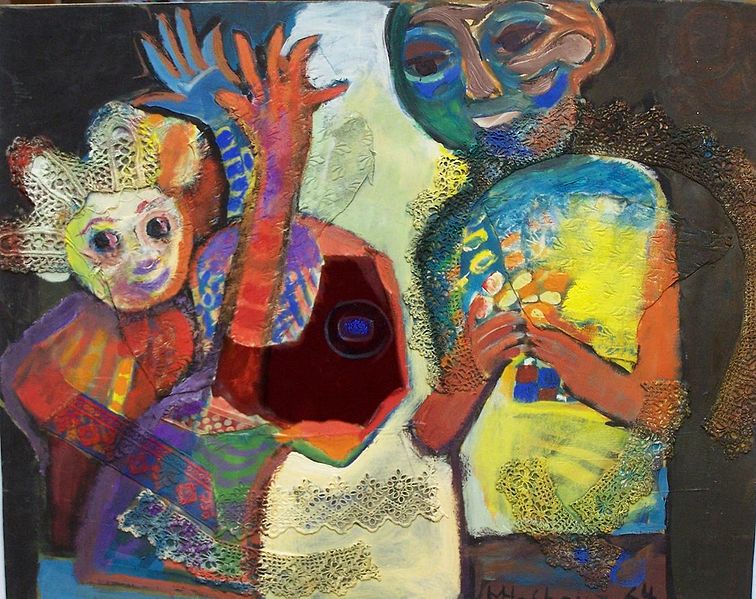
Belakane und Feirefil by Margret Hofheinz-Döring

I’m a much better mother in my imagination than in reality.

That imaginary mother has casual grace and unflappable calm. She doesn’t speak in funny accents or talk to inanimate objects. She also has the confidence to wear a bathing suit. In public. Without scuttling around using a small hut as a beach wrap. But I digress.

In my imagination I sparkle with enthusiasm for trigonometry and better yet, can explain it. I drive everywhere for everyone without grumbling about contributing to global warming. In fact, I am the mother my teens long for. I tell them I’ve secretly been saving up for one son’s trip to New Zealand to study spiders and another son’s year long trek along the Pan-American trail. As they leave I wave goodbye cheerfully.

The real me doesn’t sparkle unless craft supplies get loose.

I’m guilty of excusing myself to hide in the bathroom when my offspring go into lengthy monologues about topics I’ll never fathom. I ply my family with goodies in a not-so-subtle way of getting them to watch the documentaries I want to watch, even though it is entirely necessity after that endless German film about Mongolian salt miners. The stories retold with great hilarity by my kids usually feature my tendency to trip over invisible objects and my exaggerated startle reflex.

In my imagination I cook using recipes instead of improvising. When my children ask, “What are we having for dinner?” I’m able to answer with the names of actual dishes. This reassures them that someone, somewhere has taste-tested the food before them. This also spares me the daily trauma of watching my offspring tolerate meals made with home grown vegetables, dark scary grains, spontaneously seasoned sauces, and no names for anything.

“Why,” my son once asked, “can’t we try the kind of macaroni and cheese that comes in a box? It’s really bright yellow!” He regretted the question instantly, because unlike that imaginary mother who laughs sweetly at such questions, the real mother explains things. Or according to the daughter in the family, she rants.

In my imagination I am never preoccupied, never busy. When sought out I’m fully attentive. When my children look up from their pursuits they find my adoring eyes, but not often enough that they think I’m creepy and plot to institutionalize me. My wonderfully creative life inspires my children to live their own dreams (while still getting their omega-3 fatty acids and sufficient rest).

The real me falls terribly short.

I kvetch. I get tears in my eyes easily, even from poignant long distance ads. I juggle obligations badly while tossing out sarcastic asides like a performing seal. I plot giant world-saving accomplishments while forgetting to water the plants. I fuss and grumble and speaking of short, I’m also shorter than everyone in the house. That can’t be right. In my imagination I am tall.

In my imagination our family spends every evening together as we used to when the kids were small, back when we snuggled on the couch reading books, making puppets out of our socks, and making up games out of nothing. Although now we wouldn’t all fit on the same couch and the kids would suffer withdrawal symptoms away from glowing screens and friends.

But still, the vision of togetherness keeps the imaginary mother in me happy. She is able to hold on to every moment of the kids’ earliest years. She builds precise memories of each squabble and laugh and each child’s way of drifting slowly toward his or her larger self because she knows the actual mother, me, never could have imagined how fast time would go by. For real.

bittersweet motherhood, children nearly grown, being a better mom,

Nachtgespräch by Margret Hofheinz-Döring


16 Ways To Spark Creativity

how to be creative,

1. Get out of your head and back to your senses. Touch, smell, and taste. Reach out and feel the texture of bricks as you walk by a building. Forgo utensils to eat with your hands. Notice the sensation of cool water sliding down your throat as you drink. Be in your body.

2. Avoid your playlist. Listen to music from a genre or part of the world completely unfamiliar to you. Music is a language more evocative than speech.

spark your creativity,

3. Better yet, try silence. The constant presence of media playing in our homes, cars, and public places dulls the essential connection we have to our inner selves.

eliminate blocks to productivity,

4. List your aggravations. Highlight the ones you have control over. Cross out the ones you don’t have control over. It’s a smaller list now isn’t it? Once you stop fretting so much you have energy for more generative pursuits.

why you should doodle,

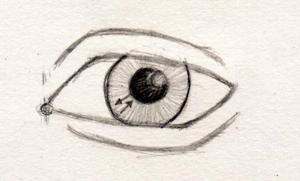
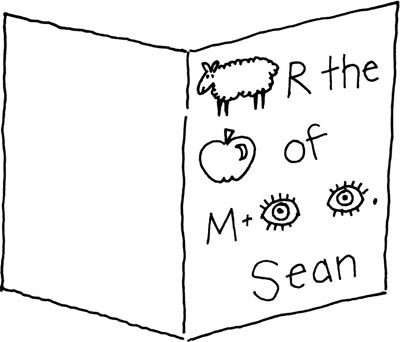
5. Doodle. What seems like an aimless activity is a great way to allow your brain to idle while creative impulses emerge. And the doodles themselves may tell you something.
fun is good for your brain,

6. Play. We function best mentally and physically when we indulge in the free form fun sort of play that calls on us to improvise, move, and laugh. If you’ve forgotten how, consult a three-year-old.

Mateo Inurria: Daydream

7. Welcome daydreams, they fuel our creative lives.

Familia

8. Seek metaphors. Challenge yourself to discern a “message” in the first billboard you see, first sentence you hear when you turn on music, or first visual that appears when you flick on the TV.

Margret Hofheinz-Döring/ Galerie Brigitte Mauch Göppingen

9. Listen to your dreams. Before falling asleep, ask for a dream message. Remind yourself to remember the dream. As you waken, pull the threads of your dream into your conscious awareness and let it inform your day.

“Sprich! Ich höre Dir zu”

10. Imagine your own burning questions are being asked of you by someone you love dearly. Then answer as if you’re talking to that person. Your responses tend to be more wide open, innovative, and kind when responding to someone you love, much narrower within your own “self-talk.”

spark your creativity,

11. Keep creative thinking notebooks, as da Vinci did. Use them to make quick sketches and doodles, note ideas, write observations, free associate, draw mindmaps, and keep track of your inspirations.

creativity exercises,

Bjørn Christian Tørrissen

12. View issues from all angles. Don’t accept what you’re told or think what you’re expected to think.

Danny Gregory

13. Don’t wait till you have more time or life gets easier. Cultivate a passion that has been dormant too long. Pick up that paintbrush, practice your guitar, try out for that play, take those glassblowing classes, learn to sail. For inspiration, take a look at Everyday Matters. Author Danny Gregory’s wife became paralyzed in an accident. While caring for her and their infant son, Gregory decided to start drawing. His study of color, value, and ordinary beauty helped to heal their family too. And you don’t want to miss his extraordinary new book, Art Before Breakfast: A Zillion Ways to be More Creative No Matter How Busy You Are.

teach yourself to be more creative,

14. Make an effort to connect regularly with something in nature. Watch the same tree as it changes throughout the seasons, pay attention to a body of water in different weather conditions, take an evening walk (no matter the temperature) each time there’s full moon.

Mary Barnes

15. Cultivate flow, what’s also called being “in the zone.” That’s the feeling of being fully absorbed in your activity. Time is irrelevant, in fact you may feel at one with the project whether it’s sailing, gardening, sculpting, composing, or welding.

16. Do something unusual (for you) every day. Try an unfamiliar food, drive a different route, make up your own lyrics to a song, compliment a stranger, make a unique board game out of an old one, laugh off an irritation, use a new word three different times, lie in the grass, write affirmations on your underwear, leave encouraging notes in books, compose an anti-thank you letter, go on a media fast, use binoculars, chew every bite ten times, do somersaults.

There is a vitality, a life force, an energy, a quickening that is translated through you into action, and because there is only one of you in all of time, this expression is unique. And if you block it, it will never exist through any other medium and it will be lost. The world will not have it. It is not your business to determine how good it is nor how valuable nor how it compares with other expressions. It is your business to keep it yours clearly and directly, to keep the channel open. You do not even have to believe in yourself or your work. You have to keep yourself open and aware to the urges that motivate you. Keep the channel open.       -Martha Graham

7 Ways To Access Your Body’s Unique “Knowing”

developing body based awareness, raising consciousness, paying attention,

Ever notice that the smallest children seem to be one with their bodies? Unlike us, they don’t value their thoughts over their senses. They also don’t get caught up in ruminating about what isn’t directly part of the moment. Past or future: irrelevant. Other people’s opinions of their appearance: irrelevant. They are tuned to the sensory world around and within them.

This state of awareness may be similar to the state that was essential for our earliest ancestors, whose attention to the here-and-now ensured survival. Eons ago, hunter-gatherers had to be alert for scents, sights, and sounds of potential food or danger. Chances are this alertness included respect for the body’s way of knowing—unease felt in the belly, anticipation in the throat, restlessness in the limbs—signaling awareness transcending overt indicators. And they had to be able to respond appropriately and meaningfully in an instant. Pausing to consider their options would have let the antelope get away or given the bear time to attack. The people who were most attuned to their body’s perceptions (inner as well as outer) were more likely to live, passing along those abilities to the next generation. We have the same capacities today although typically they’re pushed well below our awareness.

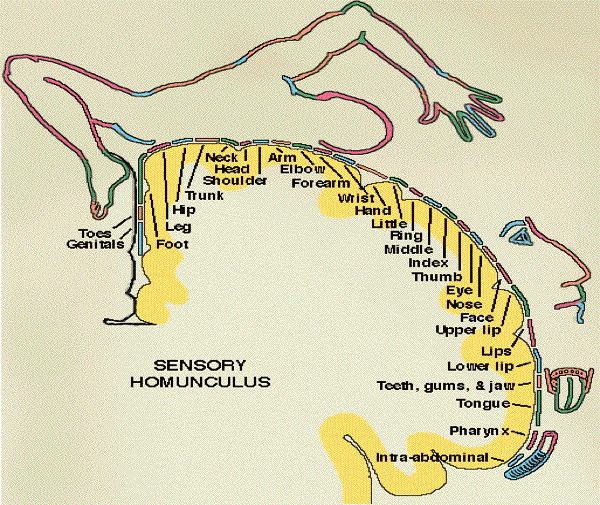
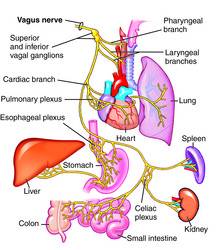
Powerful nerves connect our brains with our digestive system, heart, lungs, and other organs. And this communication is sensory. It isn’t top down, with our brains bossing around our bodies. Instead 90 percent of the information goes the other way, with the gut informing the brain.  The network of nerves along our digestive system is so significant that researchers call it the enteric brain.

Our impulses and emotions are influenced (perhaps generated) by the nerves in our gut. Our brains then work to logically explain the emotion, as Candace Pert explains in her groundbreaking book, Molecules Of Emotion.

Our intuition and reasoning is also influenced by our enteric brain. This ability to know without thinking about it is what Malcolm Gladwell termed “adaptive unconscious” in his bestseller Blink. We constantly process data from all around us (as well as within us) below the level of conscious awareness. Accessing and understanding this information is part of what makes us safe and happy.  What we call feeling good is a sense of accord with this innate bodily knowing, transmitted to us directly as a visceral sensation.

We drive ourselves and our children away from this awareness when we emphasize head over body, when we value thoughts but dismiss that knowing  in our very cells. We worsen the problem when we adopt the standard practice of valuing one hemisphere of the brain over the other.

So what are some ways to tune ourselves to this bodily knowing? 

1. Notice how the youngest children perceive reality. They have an innate ability to assign unique meanings and interpret creatively. They haven’t yet learned the boundaries of acceptable/unacceptable forms of knowing. Simply watching, listening to, and living within the reality of a very young child can stretch your perceptions and re-awaken your awareness.

2. Avoid the distraction of multitasking. This fractures your attention into tiny (often useless) pieces.

3. Devote time each day to simple practices which cultivate awareness. Daydream. Contemplate a flame, or the evening sky, or a tree. Meditate. Take a walk that’s focused entirely on sensation—-the feeling of your feet as they touch and push away from the ground with each step, the whoosh of air in and out of your lungs, the temperature of the outdoor air as it contacts your exposed skin. Eat slowly. Look into a loved one’s eyes.

4. Practice using your intuition. With regular use, your gut sense and intuitive hunches will become more reliable. Try using the classic Intuition Workout by Nancy Rosanoff.

5. Check out what Eugene Gendlin calls focusing.   We’ve been talking about the feeling of knowing that lies deep in us, related to the way our bodies carry concerns or life situations. According to Gendlin’s book Focusing, these perceptions can be accessed using specific steps of clear bodily attention. This opens up knowingness as it is “felt” and garners direct information that comes from the center of one’s being.

6. Pay attention to your dreams. When you waken, spend a few moments relishing the feelings and images you just experienced in the dreamworld. Let them enter your waking body and waking consciousness. They are specific to you, and have unique purpose that transcends analysis. They are another form of direct knowing.

7. Ask your body questions and “listen” as answers arrive in the form of images, physical sensations, memories, or emotions. You may want to ask a headache why it’s occurring or ask your throat why it feels tight. Learn to recognize metaphors in your body’s answers.

“My belief is in the blood and flesh as being wiser than the intellect. The body-unconscious is where life bubbles up in us. It is how we know that we are alive, alive to the depths of our souls and in touch somewhere with the vivid reaches of the cosmos.” D.H. Lawrence 


What’s Up On The Farm

It’s quiet on our little farm. Spring hasn’t really arrived in Ohio. Although I’m starting heritage tomato seeds, they’re waiting to spout in front of a window that still frosts over most nights. And it’s quiet on our farm website too. So this week I’m sharing a few posts from our farm site. It’s like a hello from my life to yours.

Great Things Aren’t Always So Great explains why our house nearly fell apart.

Idleness Isn’t Always the Devil’s Workshop outs me as a mom who isn’t always the best example.

Trying to Grow Potatoes Instead of Magic Mushrooms describes my first attempt to grow potatoes and the method I’ve since adopted.

Hopefully some useful advice is offered in Why Kids Belong in the Kitchen and 12 Ways to Raise Happy Healthy Eaters.

And yes, plenty of barely disguised ranting is noticeable in Small Town Values Bitch-Slap the Economic CrisisGreenwashing the Gates Foundation Way, and Cow Powered Treadmills, Really?

Eager to hear a hello from your life to mine.

How To Listen & How To Be Heard

what's real listening, are you listening, how to pay attention, being ignored,

Katerina Omelchuk “Beginning”

“Do you really want a dead cat on your desk?”

When a teacher took a parent’s phone call at the end of another busy school day, she was taken aback by the question. She couldn’t figure out why a first grader in her class came home telling his mother that their recently deceased family pet had to be on the teacher’s desk the next morning.

Then she realized what must have happened. At the beginning of each school day, children clustered around her desk in the few minutes available before the bell rang. They were all eager to talk.

“Fish sticks are yucky so I want to change my lunch ticket.”

“Want to see me do jumping jacks?”

“This picture of me and my bike is for you.”

“Here’s a note from my mom.”

Any of us would suffer from limited focus if we tried to listen to kids clamoring for attention while also monitoring a classroom. To compensate, this teacher tended to look only briefly at the child doing the talking. She often told them to put whatever they had to offer on her desk. Thinking back, she realized she never even heard the little boy say that that his cat had died. She just gave him an automatic response. “Put it on my desk.”

It doesn’t feel good to be disregarded. It shuts us down, diminishes our sense of worth, even leads to misunderstandings that can be epic in scale.

And you know when you aren’t being really heard.

It goes both ways. We may not be heard often or heard well. We also may not be very good listeners.

Like that teacher, we’re often wedged into circumstances that aren’t conducive to listening. The potential distractions are greater than ever. Ear buds in, smart phones on, screens blaring in all but a few restaurants and waiting rooms, we multitask our way to fractured attention. And limited listening. As a result we don’t hear, really hear. And we don’t feel heard.

We can consciously enhance listening skills. It’s about paying attention, tuning in to others, and limiting distractions. That helps us to hear and to be heard.

Psychiatrist Daniel N. Stern is an expert on attunement, particularly as it develops in infancy. And Dr. Stern’s research has led to this resounding conclusion. When a child or adult doesn’t give as well as receive sufficiently empathic responses they tend to resort to less healthy methods of filling their needs.

A woman who took one of my non-violence workshops turned in a paper containing an excerpt from the book Soul Work: A Field Guide for Spiritual Seekers, which explored Stern’s work. I take the liberty of including a passage here. Check yourself against Stern’s scale of attuned responses in your interactions with your partner, co-workers, children, extended family, and friends.

Scale of Attuned Responses

Beyond Unresponsive: The person you are talking with interrupts you in the middle of your sentence and shifts to a different topic.

Unresponsive: The person obviously isn’t listening, only waiting for you to stop talking. When you finish, the person shifts to an entirely different topic.

Indirectly Unresponsive: The other person says or implies, “Well, you shouldn’t feel that way.”

Self-Referential Free Association: The person says something like, “Oh yeah, that reminds me of the time when I…” or “Well you think you had it bad—listen to what happened to me,” and makes no other reference to anything you have said.

Free Association: The person responds to your statement by going off on a tangent and making only an indirect reference to what you said.

Impersonal/Nonnurturing: The person indicates she has heard you but offers no sympathetic or empathic response. Basically her stance is, “That’s the way the cookie crumbles.”

Superficial: Although the person responds by saying, “Yeah I know what you mean,” she does not sound sincere or empathic.

Adequate: The person shows evidence that he heard what you said but does not show interest or follow up your statement by encouraging you to expand upon it.

Responsive: The person not only hears what you said but also inquires further so that you can elaborate. He asks questions that demonstrate interest.

Resonant: The person indicates that she emotionally resonates with what you have said by responding with statements that show she is trying to imagine what you are experiencing (e.g., “I can imagine that you feel terrible…”).

Really listening and really being heard. It spares us from more than a dead cat on the desk. It’s an eyes open, hearts open path to wholeness.

Half Life

We walk through half our life
as if it were a fever dream

barely touching the ground

our eyes half open
our heart half closed.

Not half knowing who we are
we watch the ghost of us drift
from room to room
through friends and lovers
never quite as real as advertised.

Not saying half we mean
or meaning half we say
we dream ourselves
from birth to birth
seeking some true self.

Until the fever breaks
and the heart can not abide
a moment longer
as the rest of us awakens,
summoned from the dream,
not half caring for anything but love.

Stephen Levine, from Breaking the Drought: Visions of Grace


how to listen, how to know if you are heard, attuning yourself to real responses, what it means to listen,

Alfons Anders “Begegnung”